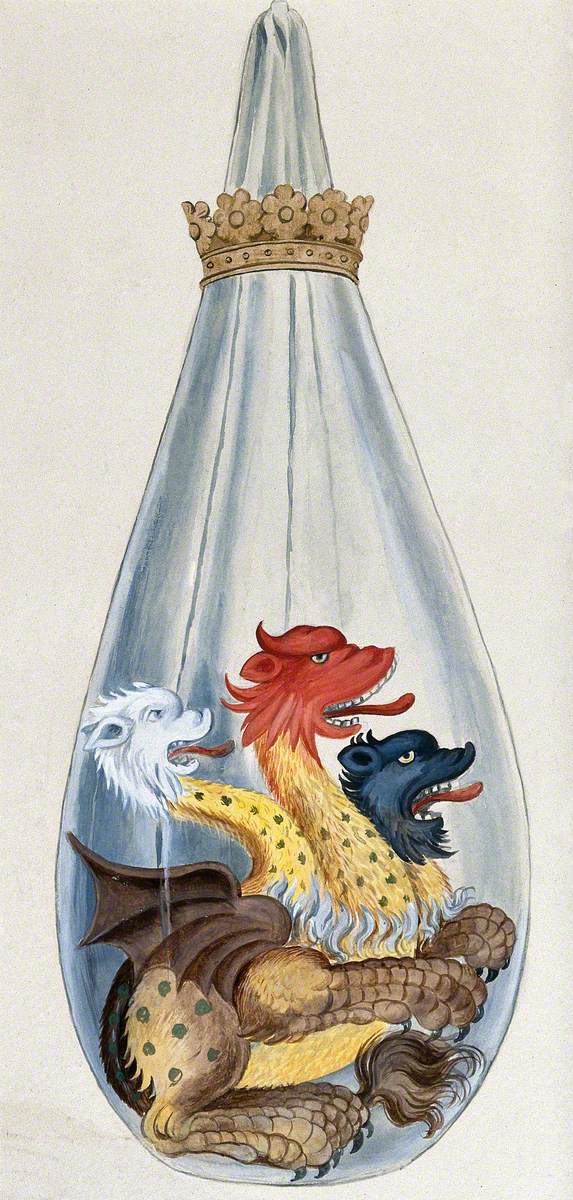
A Three-Headed Monster in an Alchemical Flask, Representing the Composition of the Alchemical Philosopher’s Stone: Salt, Sulphur, and Mercury, c. 1909 by Edith A. Ibbs (1863–1937).
A Three-Headed Monster in an Alchemical Flask, Representing the Composition of the Alchemical Philosopher’s Stone: Salt, Sulphur, and Mercury, c. 1909 by Edith A. Ibbs (1863–1937).
A decade ago I finally tossed out most of the contents of an old shoebox crammed with high-school nostalgia. Notes from ex-girlfriends, summer postcards, flyers from local shows, a handful of choice mixtapes. Some Polaroids. Our stupid band’s stupid lyrics, which we usually forgot or simply abandoned live. There was even a pair of fat shoelaces. The pain of return always hits me hard at such times, and I got dizzy. That box was crammed the scraps of an older life.
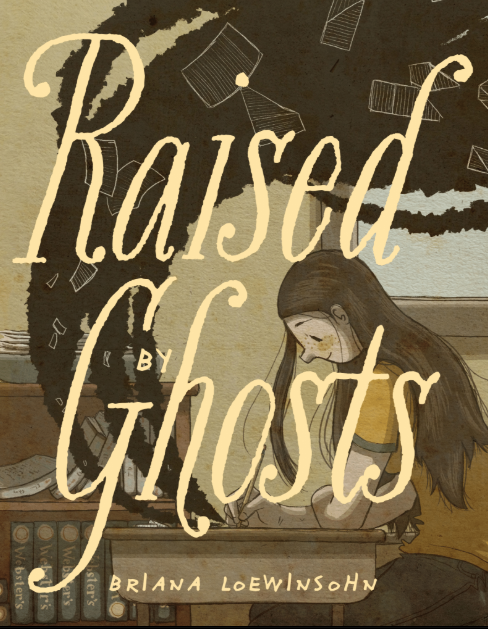
The preceding paragraph is an unfair opening to a review of Briana Loewinsohn’s excellent graphic memoir Raised by Ghosts. Reading Raised by Ghosts felt like opening that old shoebox: painful, dizzying, beautiful. Loewinsohn is one of us, one of us to borrow a chant from Tod Browning’s Freaks. “Sometimes I feel like I am an alien at this school…But there are other aliens here,” protagonist Briana writes in her diary.
Raised by Ghosts covers Briana’s seven rough years through middle and high school. These are the gay nineties. The narrator, like Loewinsohn herself, is about my age, which makes reading Raised by Ghosts an eerie act of self-recognition. It’s not a conventional memoir—it doesn’t hold your hand or deliver a clean, linear narrative. Instead, it moves like memory does: in flashes, in vignettes, in small sensory moments that coalesce into something greater than the sum of their parts. Everything here feels true. We have here the relics of a teenage moondream, those little ghosts of the past that flicker through memory like frayed photos freed from the rubberbanded bundle in an old Converse box. Briana’s adolescence unfurls as an ebb and flow of loneliness and acceptance among fellow weirdos. She finds her people, but never quite makes the scene; she dances at the live show but finds as much fun in playing cards in the back.
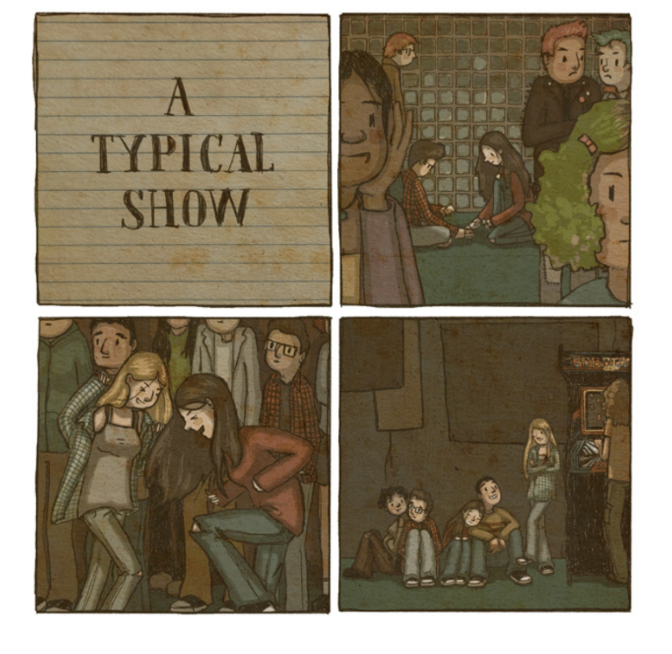
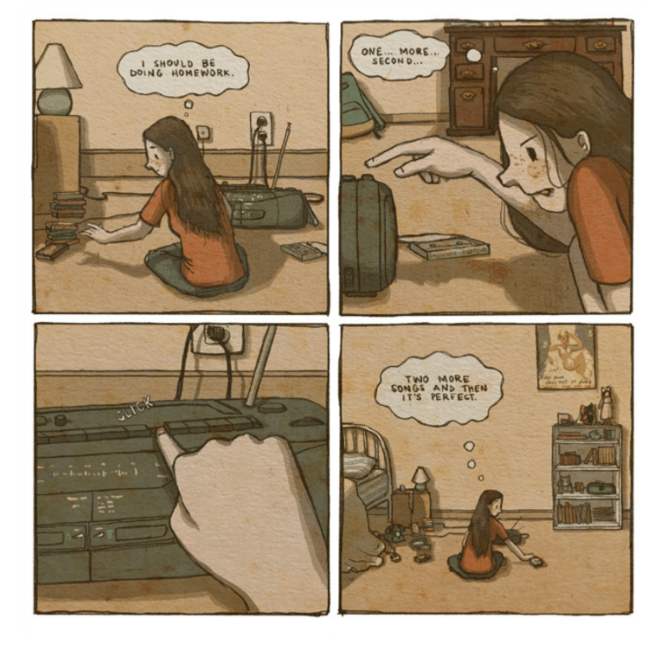
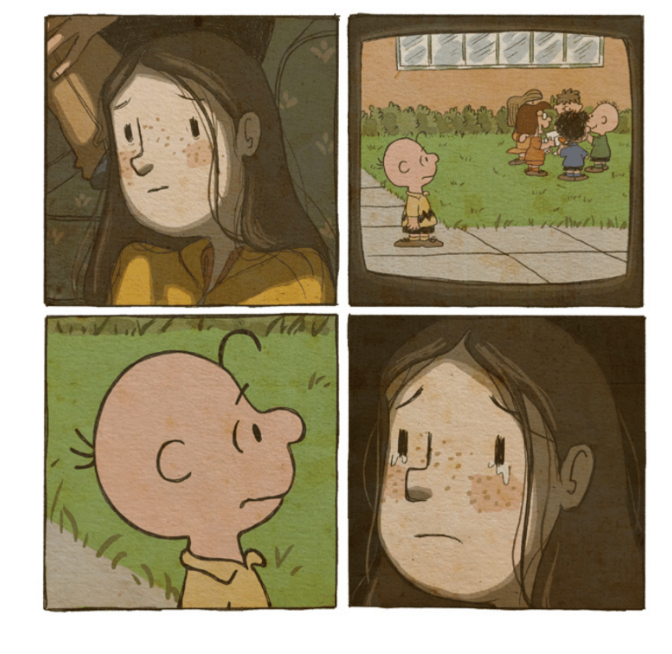
Loewinsohn’s art conveys Raised by Ghosts’ emotional weight. Soft, muted tones in drab olive and rust hues fill square panels that often resemble fading Polaroids. Candids and close-ups capture the messiness of high school. Briana is a sympathetic and endearing character, her sensitivity registering in ways she cannot understand herself, as when she skips out on a living-room VHS double feature. Oliver Stone’s Natural Born Killers would be way too much after the tragedy of You’re a Good Man, Charlie Brown.
Loewinsohn includes full handwritten pages to accompany the traditional comic strips in Raised by Ghosts. These handwritten pages serve as a kind of diary, but often take on subtle visual changes that suggest other media. Often, the handwritten pages mimic the form of the long notes bored Briana composes in class to pass to friends. A passage composed on graph paper praises the note-writing skills of a particular friend; the technique suggests this friend prefers squares to lines. A passage on a brown paper lunch bag reflects on how Briana’s father always takes the time to write her name in detailed, expressive lettering. The variations of handwritten pages enrich the narrative and subtly inform us of Briana’s artistic development.
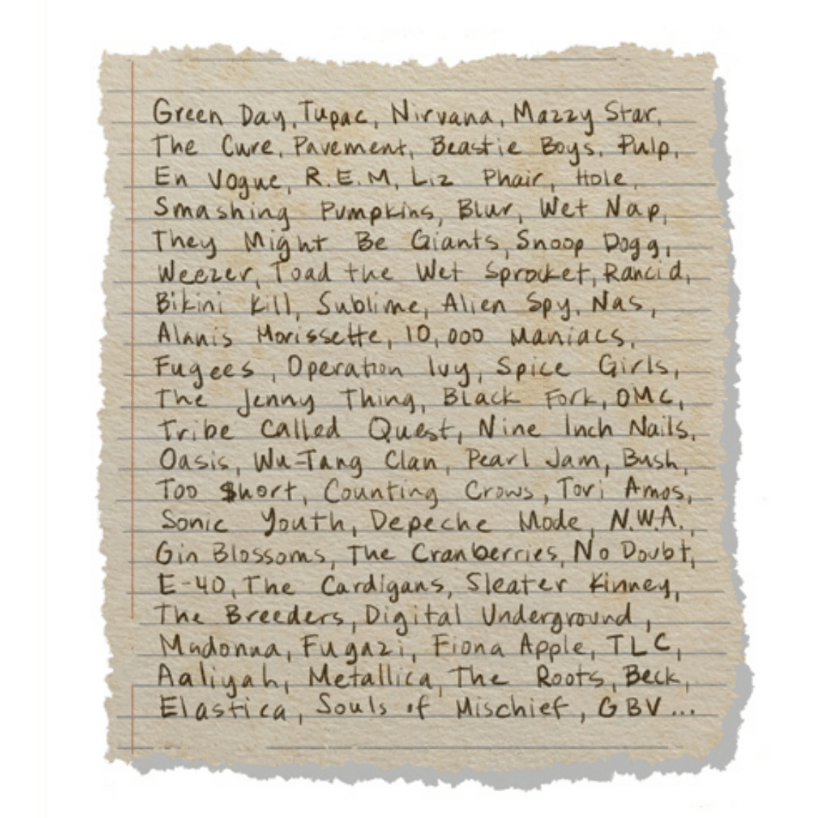
My favorite of the handwritten passages though is simply a list of bands scrawled on lined paper. When I got to that page, about a third of the way into Raised by Ghosts, I was already persuaded by the book–but the page of band names seemed so utterly true, so beautiful and banal. We used to do that, I thought, and: Why did we used to do that? knowing the answer has no good intellectual answer.
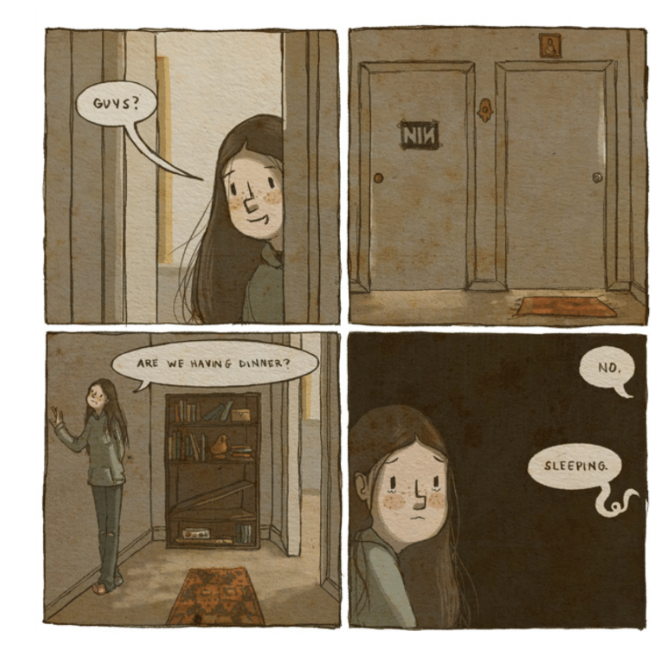
But let’s get to the ghosts. Loewinsohn never “shows” us Briana’s parents, yet the picture we get of them is hardly incomplete: a distant, detached mother and a father in arrested development. “I would say I was raised in an AA meeting,” Briana remarks of her mother, noting that it’s often hard for single mothers to find childcare. Of her father’s abode: “My pop’s house is a combination of Indiana Jones’ office, Pee Wee’s playhouse, and an opium den. I am kinda like a roommate here.”
Publisher Fantagraphics labels Raised by Ghosts as a “young adult graphic novel,” and teenagers will likely identify with Briana’s story—the loneliness, the search for belonging, the quiet acts of self-definition. They may also feel a strange twinge of envy for a world that no longer exists. Being a latchkey kid could be lonely, but it was not without its freedoms. Those of us who were teenage weirdos in the nineties will see in Loewinsohn’s memoir not a young adult novel, but rather a reflective elegy composed by a mature artist in control of her talent. Raised by Ghosts lingers like the echo of an old song in your dim memory — you know the one, right? It’s a memoir about growing up in the margins, about finding meaning in scraps and silence, about turning absence into something tangible. It haunts, in the very best way.
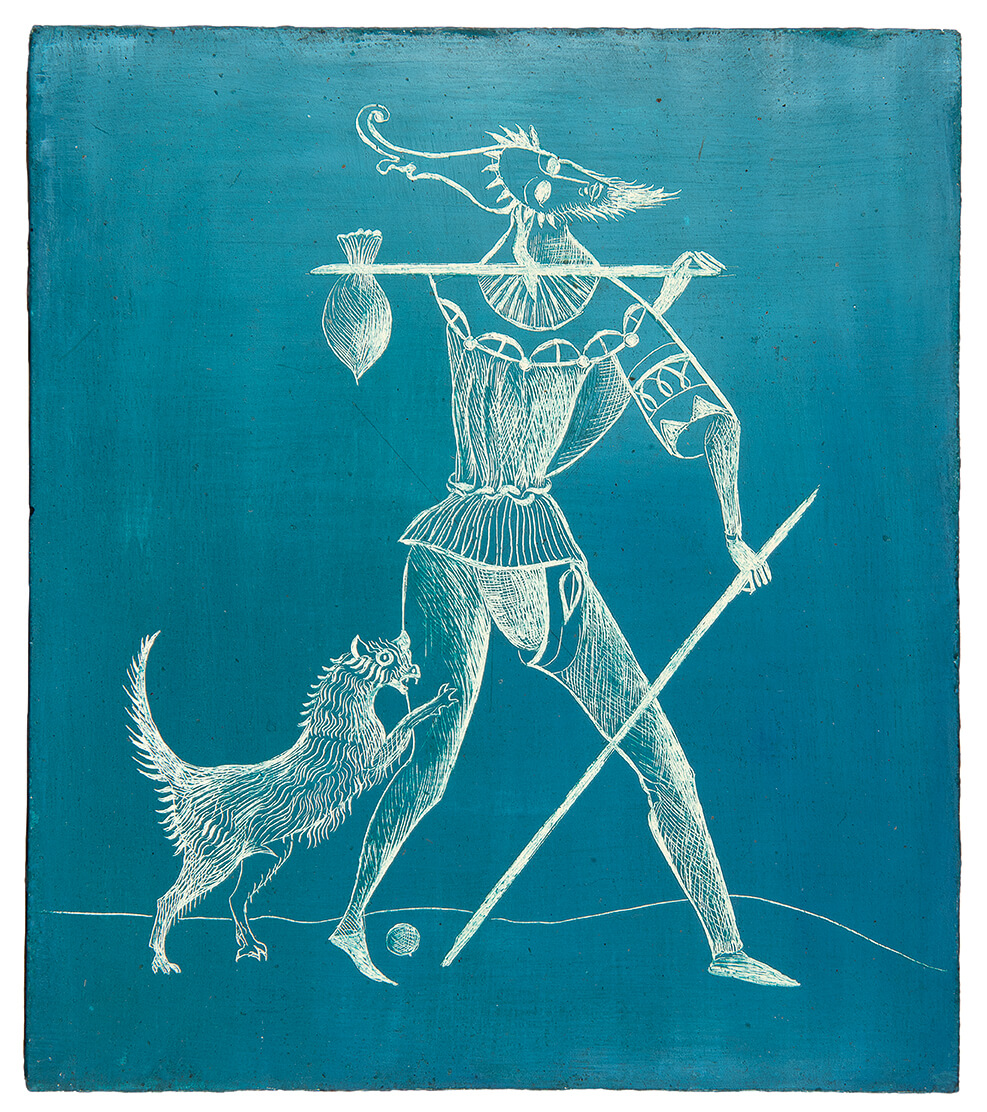
The Fool, 1955 by Leonora Carrington (1917 – 2011)
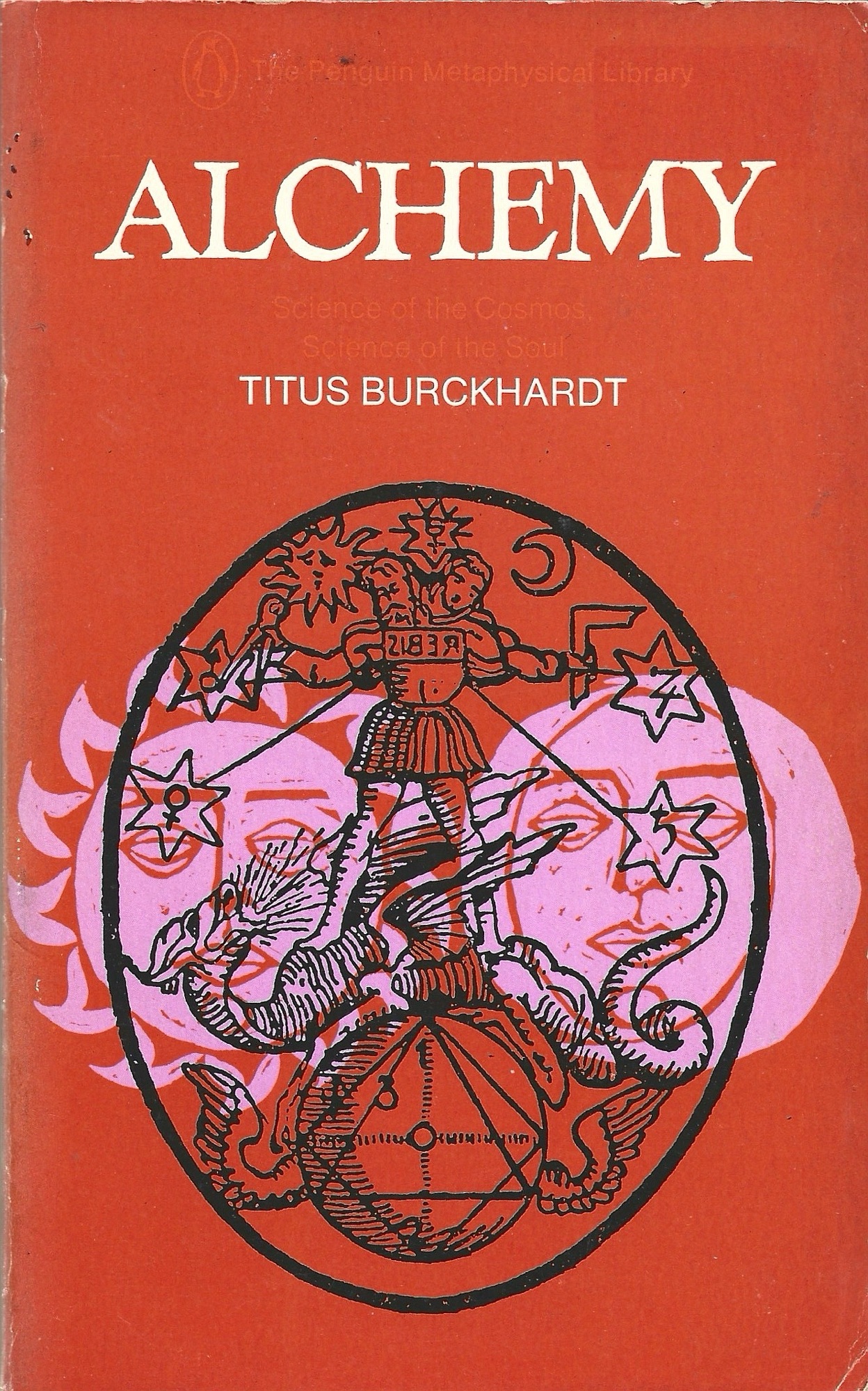
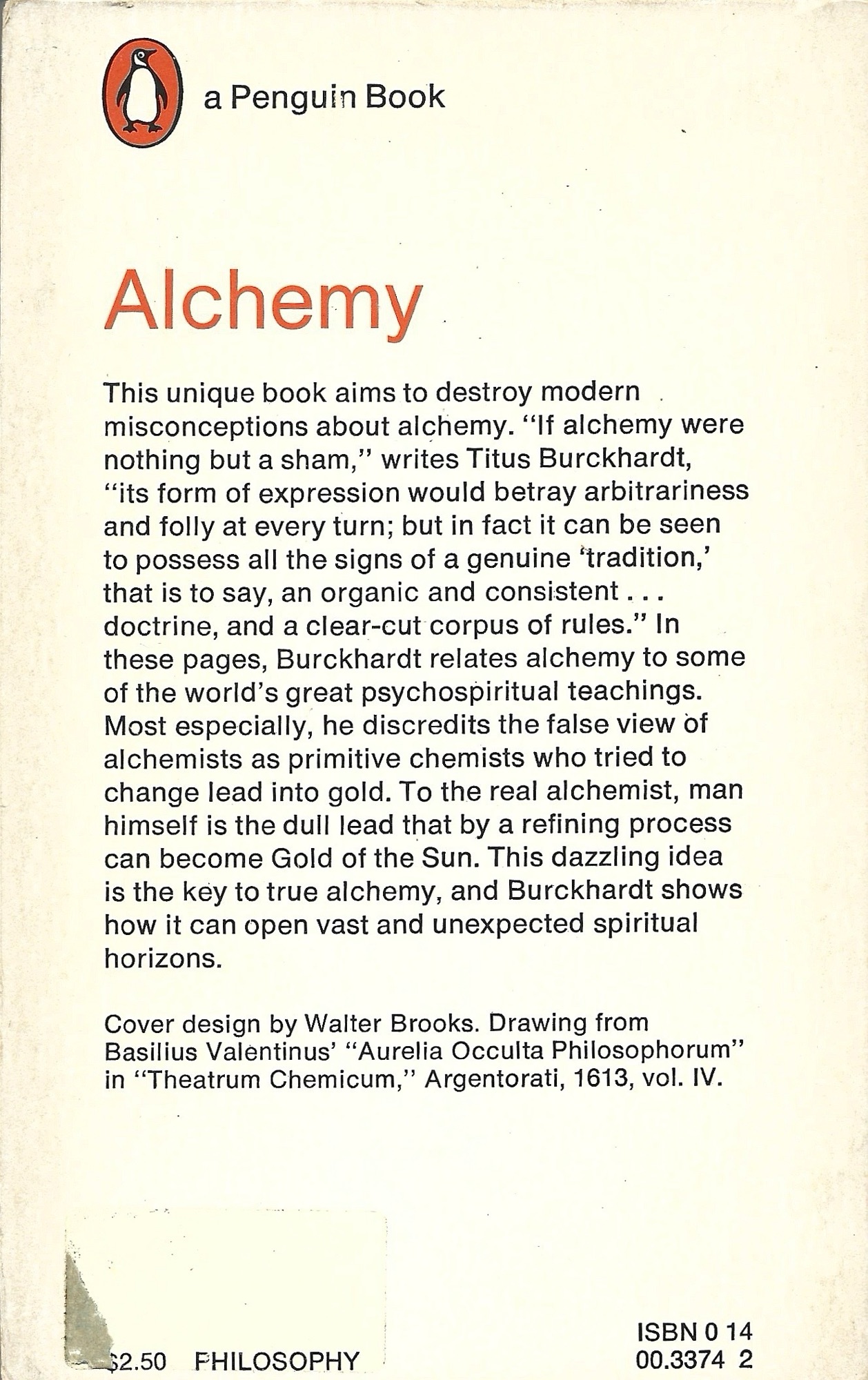
Alchemy, 1960, Titus Burckhardt. Translation by William Stoddart. Penguin Books (1971). Cover design by Walter Brooks employing an illustration from Basilius Valentinus’ Aurelia Occulta Philosophorum. 206 pages.
From Alchemy:
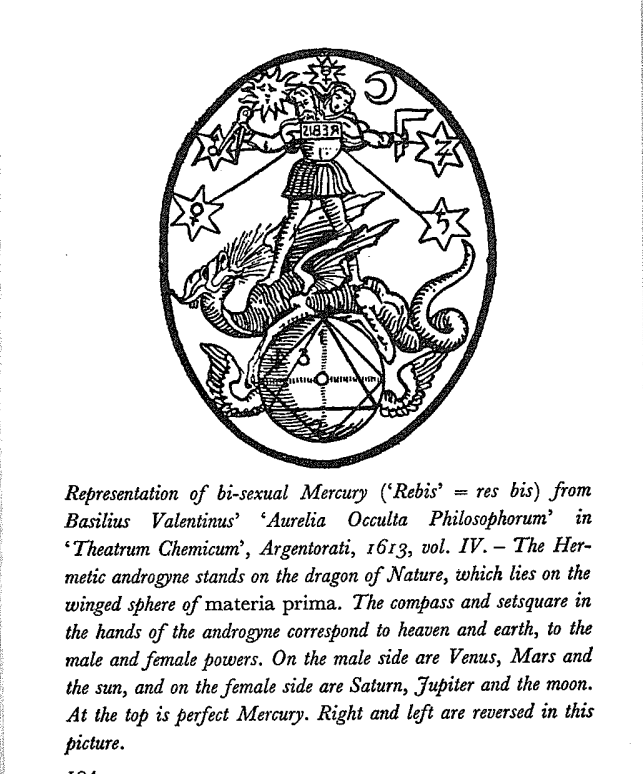
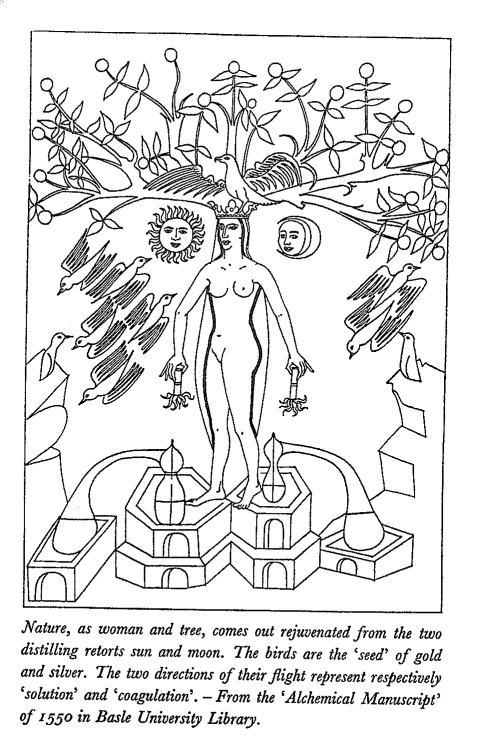
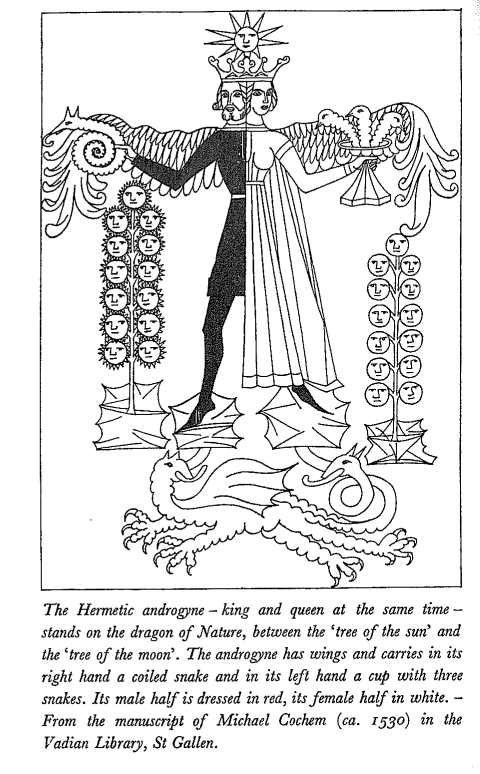
“The Boat”
by
Robert Walser
translated by Tom Whalen
I think I’ve written this scene before, but I’ll write it once again. In a boat, midway upon the lake, sit a man and woman. High above in the dark sky stands the moon. The night is still and warm, just right for this dreamy love adventure. Is the man in the boat an abductor? Is the woman the happy, enchanted victim? This we don’t know; we see only how they both kiss each other. The dark mountain lies like a giant on the glistening water. On the shore lies a castle or country house with a lighted window. No noise, no sound. Everything is wrapped in a black, sweet silence. The stars tremble high above in the sky and also upward from far below out of the sky which lies on the surface of the water. The water is the friend of the moon, it has pulled it down to itself, and now they kiss, the water and the moon, like boyfriend and girlfriend. The beautiful moon has sunk into the water like a daring young prince into a flood of peril. He is reflected in the water like a beautiful affectionate soul reflected in another love-thirsty soul. It’s marvelous how the moon resembles the lover drowned in pleasure, and how the water resembles the happy mistress hugging and embracing her kingly love. In the boat, the man and woman are completely still. A long kiss holds them captive. The oars lie lazily on the water. Are they happy, will they be happy, the two here in the boat, the two who kiss one another, the two upon whom the moon shines, the two who are in love?

I’m excited about Zuzana Brabcová’s novel Ceilings, in English translation by Tereza Novická. Here’s publisher Twisted Spoon’s blurb:
Kin to the work of Leonora Carrington and Unica Zürn, Ceilings is a polyphonic novel that takes place in a mental hospital in Prague where the “narrator” is undergoing detox treatment for substance abuse. As the borders blur between inner experience and the outer world, between reality and dream, as the walls and ceilings hemming in the desire for freedom fantastically break open as if into the unknown and gender fluidly shifts between brother and sister, who are one and the same, Brabcová’s flights of imagination portray how difficult it is to “come out of oneself” and to engage with the other in a multifarious world that demands it of us, no matter how ambivalently.
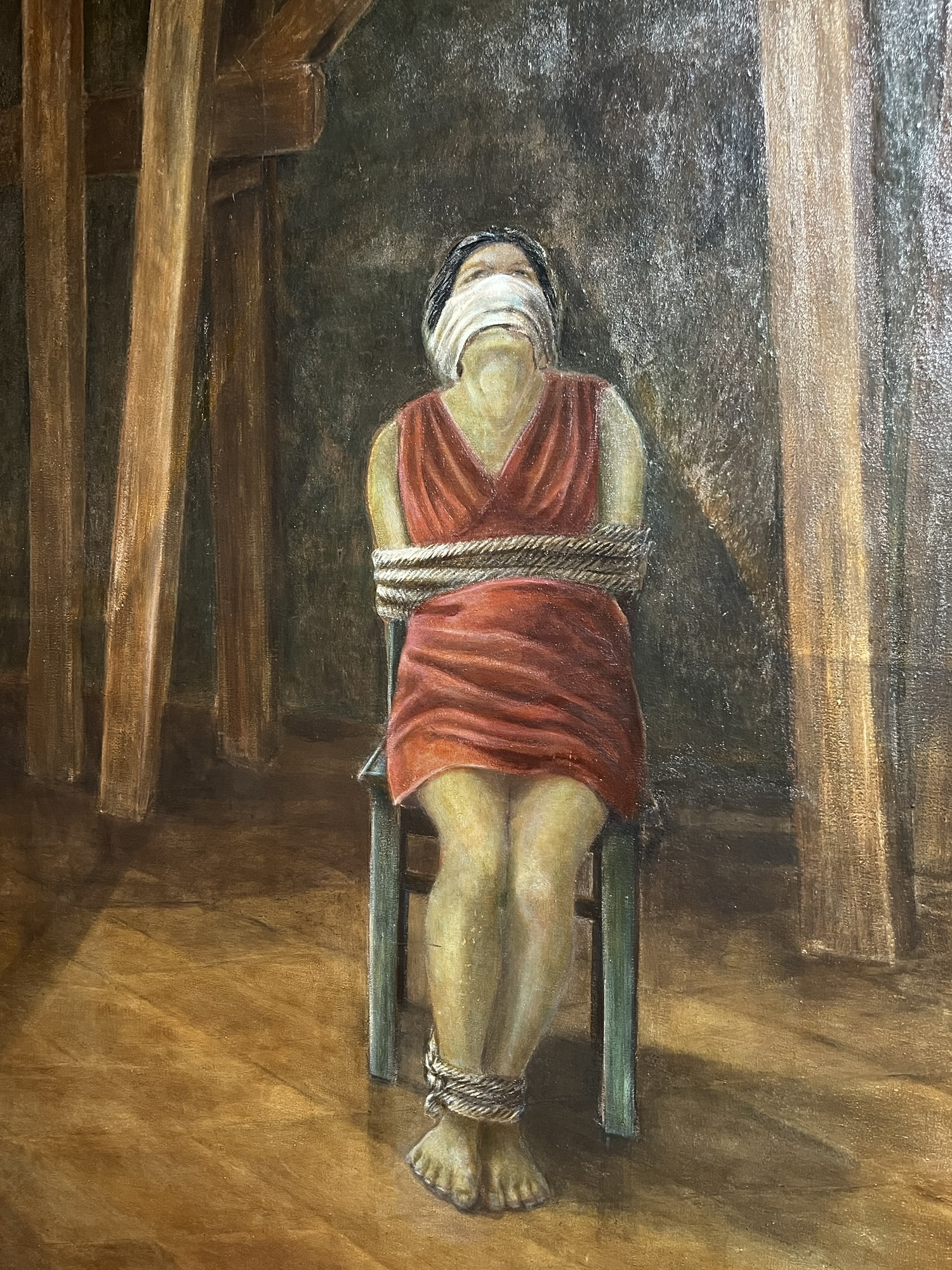
The Wait (Detail) 1980 by María Teresa Morán (1939-2017)
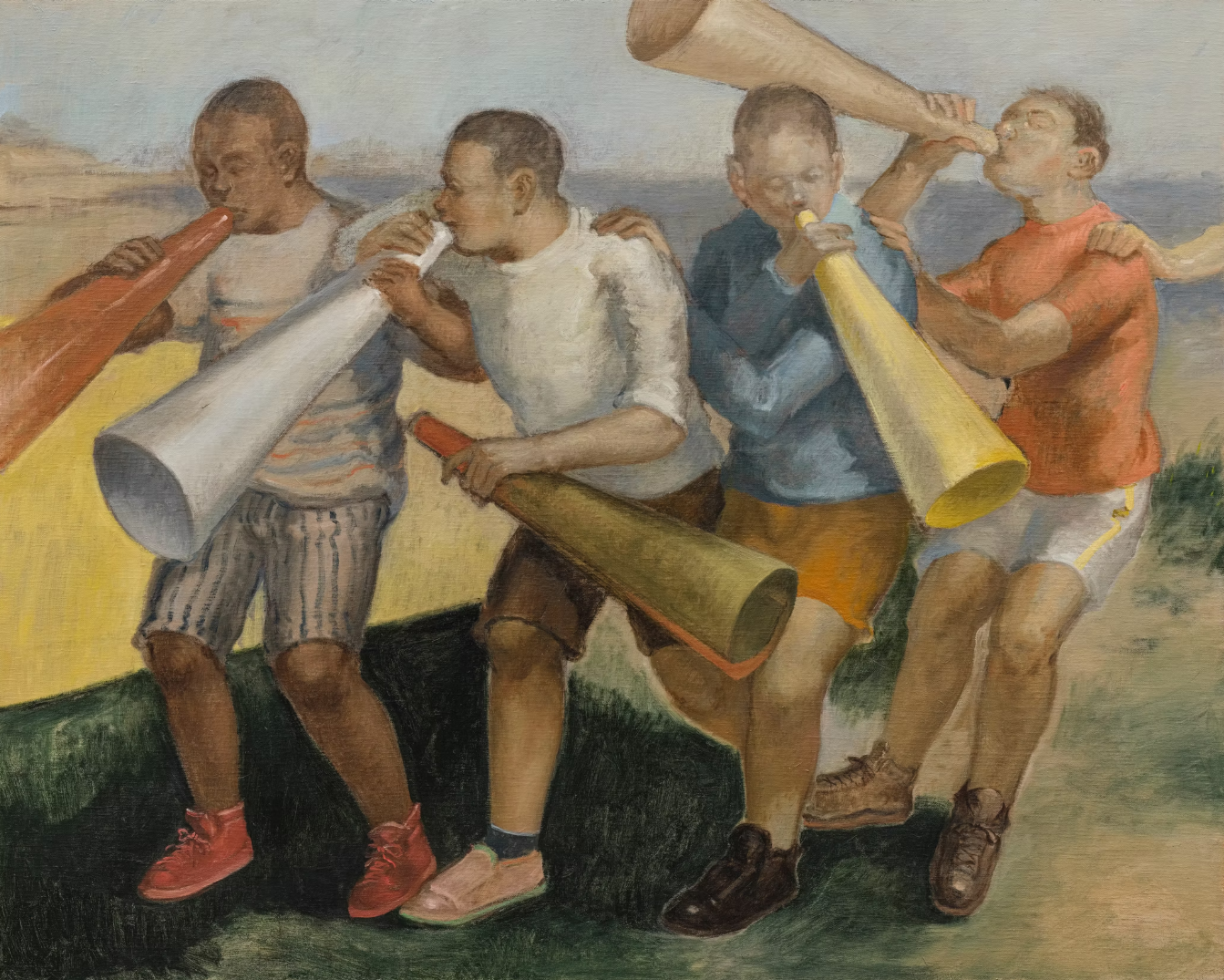
Propaganda III, 2022 by Chen Ching-Yuan (b. 1984)

Fleeing Man, 1965 by Leon Golub (1922-2004)
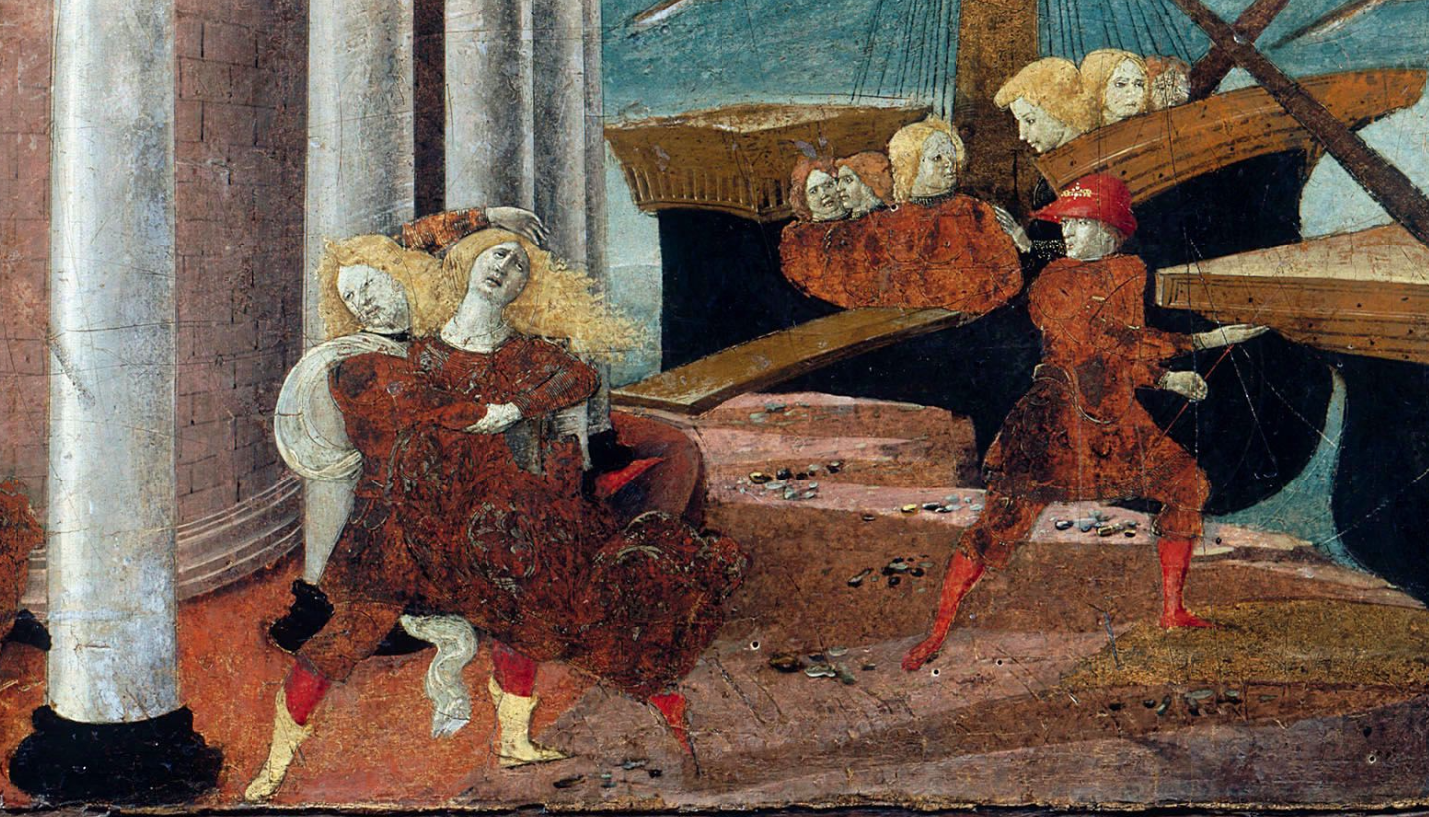
Abduction of Helen (detail), c. 1470 by Liberale da Verona (1445–1527)
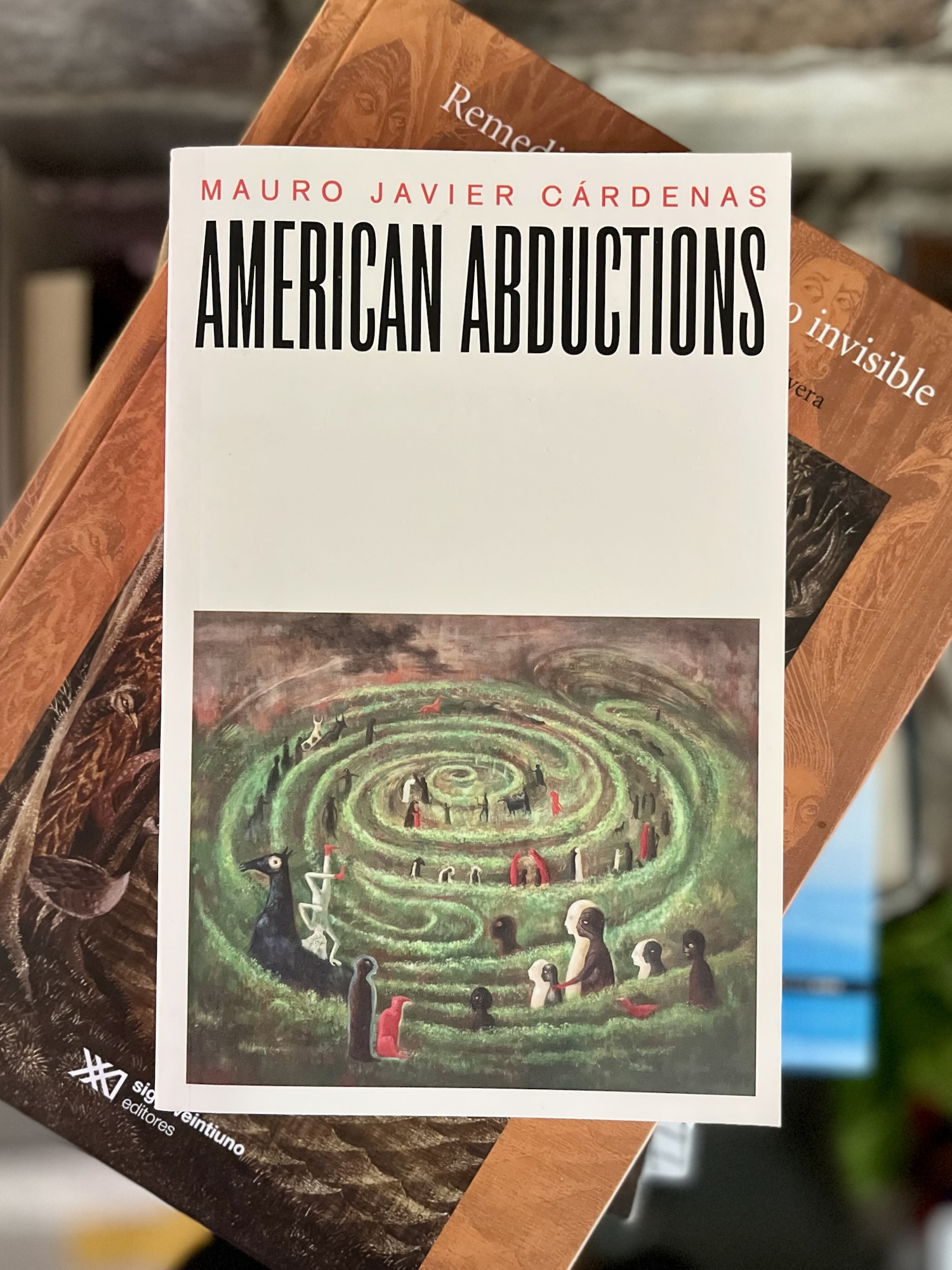
Mauro Javier Cárdenas’s American Abductions is a novel of relentless, layered consciousness, its immersive, labyrinthine sentences pulling the reader into a fugue of voices, memories, and anxieties. American Abductions takes place in a proximal version of the United States, a digital carceral state where palefaced goons kidnap Latin Americans. Sometimes the abductees are deported; sometimes they are disappeared. Sometimes they tell stories.
The dystopia here is hardly a YA world-building exercise full of hope and heroics. Instead, the novel moves through fragmented, fevered perspectives, primarily those of sisters Ada and Eva their disappeared father, Antonio, a novelist abducted by the Pale Americans, the faceless bureaucratic enforcers of this new regime. The novel oscillates between Ada and Eva’s attempts to reconstruct what happened, Antonio’s own recursive, metafictional writing, and interjections from various other voices—family members, interrogators, digital surveillance logs—until the narrative itself becomes a reflection of the fragmented reality the characters are trapped within.
Yes, American Abductions is bleak, but it is not merely dystopian horror. Cárdenas builds his world through a dizzying interplay of language, wielding the long, unspooling sentence with the precision of Bernhard, Krasznahorkai, and Sebald. Each chapter is a single winding comma splice that careens from realism to surrealism. Cárdenas’s run-ons layer and loop back on themselves, rhetorically mirroring the characters’ attempts to make sense of their unraveling world.
The book moves forward with an absurdist energy that resists despair, its rhythms and repetitions building not just a critique of authoritarian power but something stranger, something more human—an exploration of consciousness itself, an attempt, perhaps, to make a grand “statement of missingnessness,” to borrow one of the character’s phrases.
The effect is hypnotic, dreamlike, sometimes nightmarish, but often, surprisingly, very funny. There is a dark, absurdist humor in the way bureaucratic jargon collides with intimate grief, in the way digital surveillance reports are laced with banal observations, in the way Antonio’s own metafictional writing seems to both clarify and obscure the truth of his disappearance. The novel is not just about authoritarian violence but about how language itself is manipulated under such regimes—how it obfuscates, justifies, betrays, resists. At times, American Abductions reads like a political thriller rewritten as a fever dream, at others, like a linguistic experiment that spirals into a meditation on memory, exile, and state terror.
American Abductions is not just unsettlingly prescient. Rather, it obliquely underscores the U.S. surveillance state’s direct lineage to Latin America’s Dirty Wars. Governments systematically disappeared those deemed threats to the state—intellectuals, activists, ordinary people unlucky enough to be caught in the wrong place at the wrong time. Cárdenas’s dystopia does not just critique contemporary American immigration policies; it situates them within a long history of state-sanctioned violence in the Americas.
The novel’s themes take on chilling immediacy when considered alongside the real-world abductions of those who speak truth to power, like Mahmoud Khalil and Rumeysa Ozturk. Indeed, the disturbing video footage of Ozturk’s kidnapping by masked men this week has gone viral, echoing the opening of American Abductions, wherein we learn that Ada has captured “that moment when the American abductors captured her father as he was driving her and her sister to school, which she recorded on her phone.” Ada’s video goes viral, mutates, becomes its own beast:
…and later, after her father had been captured and hundreds of thousands of people around the world were watching her video of her father asking what have I done, officer, the supervisory official probably watched it too and left an anonymous comment below it that said ice / ice baby great job ICE, illegal is illegal and wrong is wrong bye you forgot the crybaby in the backseat, for years Ada arguing in her mind with the thousands of messages berating her and her father, even after she discovered some of the comments had been manufactured by bots controlled by a Pale American in Salt Lake City — twelve million to go please continue to remove the illegal alien infestation — except the comments by Doctor Sueño, of course, which made no sense to anyone but her, just as it made no sense to anyone but her to feel, for no more than a few seconds, proud that the supervisory official of the supervisory official of the supervisory official in an agency building had taken time out of his busy schedule to focus on her father — if enough time passes, Doctor Sueño says, even the most preposterous possibilities will navigate the sea of your mind — cry like an eagle / to the sea — just as it made no sense to anyone but her to laugh at some of the videos her video had spawned for instance the video of her video but with sappy music instead of her sister politely asking the abductors where were they taking her father, as if someone figured hey no one’s going to feel sorry enough for you people let me add sad violin music to the video of your father saying I’ve done nothing wrong, officer, or how about the video from a self proclaimed irreverent news organization from China that, via computer animation as if from an obsolete video game, replicated the trajectory from her house to the sensitive location as if it were a car chase, the abductors rushing to drag her father out of the car as if it were a drug bust, the video game representation of Ada recording her father’s capture with her phone from the backseat of the car, waterfalls of tears surging from her eyes, no not waterfalls, more like someone’s comical representation of lawn sprinklers superimposed on the eyes of the video game representation of me…
Apologies if I’ve let the run-on run on too long — but you’ll have wanted a taste of Cárdenas’s style, no? His sentences, unbroken and unrelenting, mimic the inexorability of history itself—cycles of erasure, resistance, recovery, and repetition. American Abductions is not just a novel about the present; it is a novel that recognizes the past has never ended. Its characters, trapped in linguistic torrents of grief and absurdity, seem painfully aware that history is repeating itself. And yet, as despairing as that recognition might be, American Abductions refuses to be silent. It makes its “statement of missingnessness” loud, insistent, impossible to ignore, resisting erasure, demanding we listen. Very highly recommended.
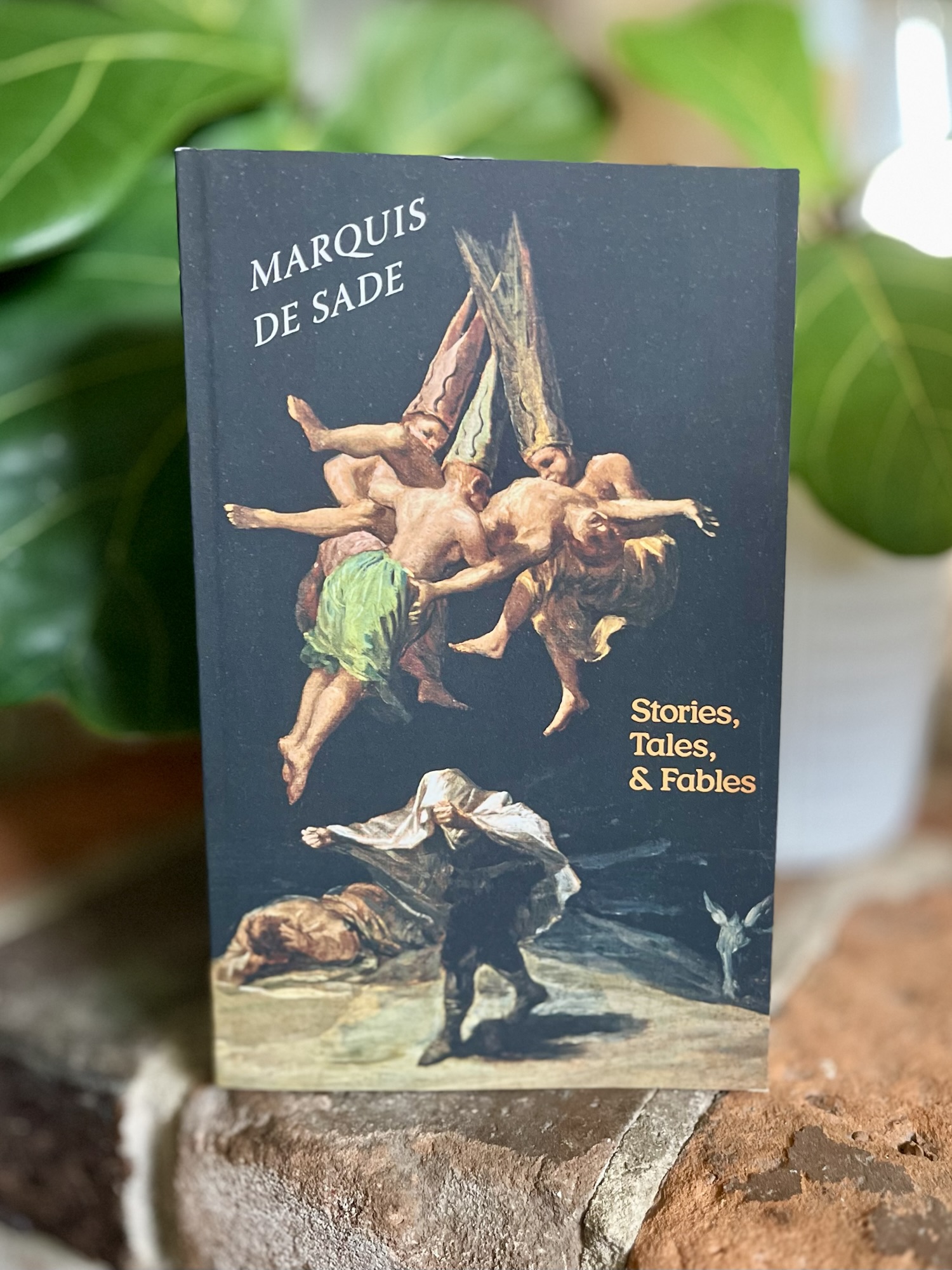
I’m excited about this one — R.J. Dent’s translation of the Marquis de Sade’s short work from Contra Mundum. Their blurb:
Written in his Bastille cell in the years between 120 Days of Sodom and Justine, this is the first English translation of Marquis de Sade’s collection of short works, Stories, Tales, and Fables.
Essential reading for all Sade devotees, Stories, Tales, and Fables is an introduction for those who are not yet familiar with the work of this controversial French literary innovator. The short works in this collection range from the dramatic novella, Dorci, to comic tales such as The Duped Judge. Whether he is writing bawdy, exuberant comedies, supernatural tales, or human tragedies, Sade is essentially a moralist, and his exploration of the darker side of human nature remains as relevant to our society as it was to his own.
Psychologically perceptive and defiantly unconventional, Stories, Tales, and Fables reveals the compelling force of Sade’s narrative powers. An accomplished and artful fiction writer, Sade, like all great writers, asks penetrating questions about society, life, and humanity. This collection also includes a selection of Sade’s non-fiction, ranging from his insightful survey of the novelist’s art, Some Thoughts on the Novel, to his Last Will and Testament, as well as several essays about Sade’s work by renowned authors including Apollinaire, Heine, Masson, Anatole France and Paul Ėluard.
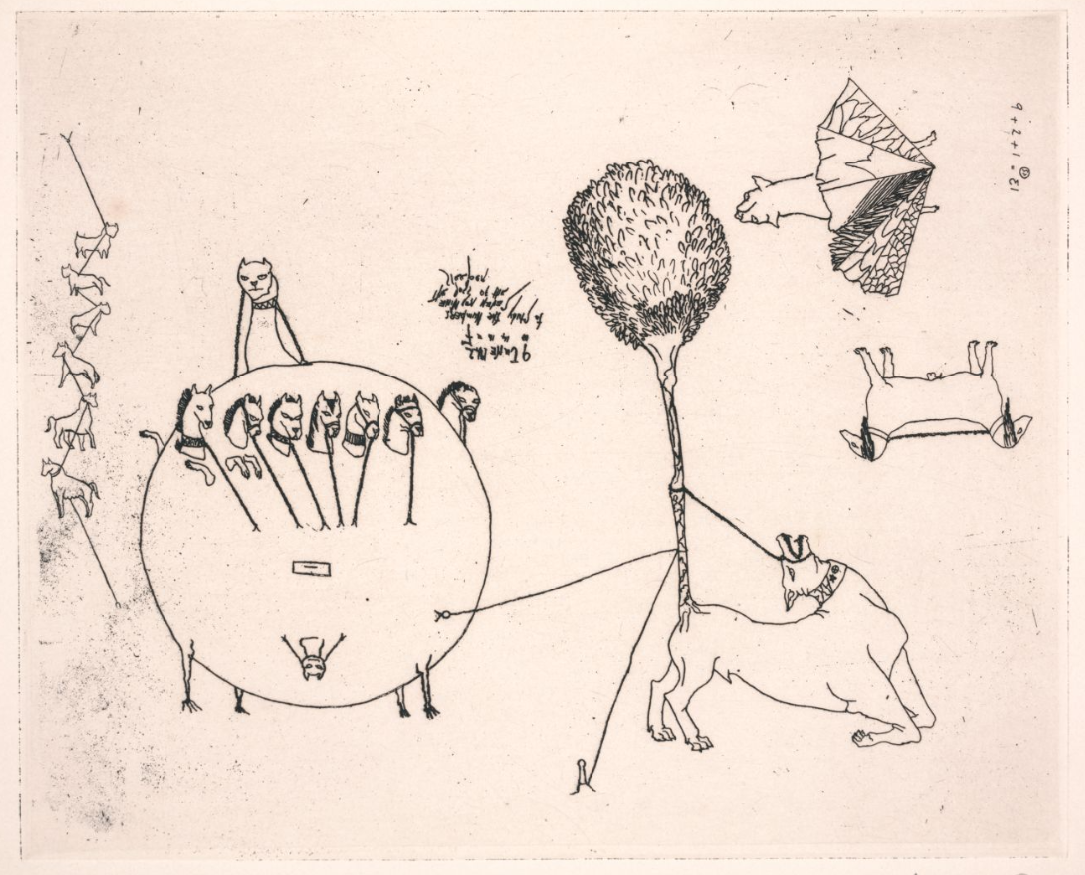
To Study the Numbers, 1941 by Leonora Carrington (1917 – 2011)
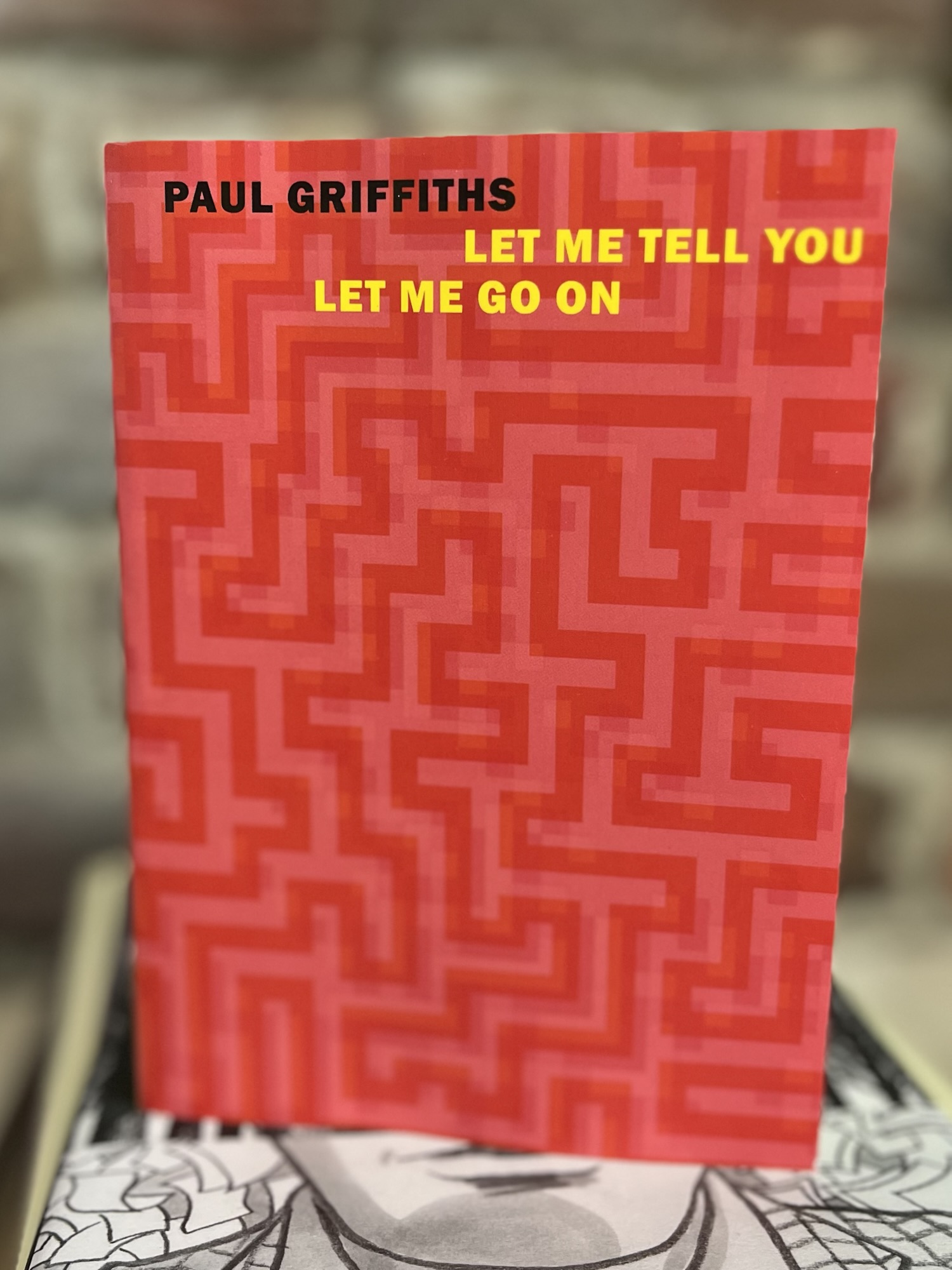
Paul Griffiths’ Ophelia novels are collected in one volume from NYRB for a US release:
“So: now I come to speak.” With this line, Shakespeare’s Ophelia starts telling her story. In let me tell you, this newly revealed woman uses exactly the same words Shakespeare gave her in Hamlet, shifted as in a kaleidoscope to create a very different voice: her own. We hear her personal narrative from childhood to the moments before the start of the play, when she knows she has a fateful decision to make. Along the way, we discover whole new angles on her father, her brother, the prince, and other characters who come out from behind the curtain.
In let me go on, her decision made, she refashions herself. Emerging from her old world, she explores a new one, of magical variety yet coherent. As she goes in search of what she may still become, she meets a new cast of characters, some poignant, some hilarious. Paul Griffiths gives this remarkable protagonist—and us—a play-full of humor, poignancy, passion, adventure, and a great many surprises.
“The Last Contract: William T. Vollmann’s Battle to Publish an American Epic” is a nice long essay by Alexander Sorondo. First few paragraphs:
A few years ago, the novelist William T. Vollmann was diagnosed with colon cancer. The prognosis wasn’t great but he went ahead with the treatment. A length of intestine drawn out and snipped. It was awful but it worked. The cancer went into remission.
Then his daughter died.
Then he got dropped by his publisher.
Then he got hit by a car.
Then he got a pulmonary embolism.
But things are looking up.
William T. Vollmann spent “twelve or fifteen years” researching and writing a novel about the CIA called A Table for Fortune; as of this writing it has a few back-channel blurbs from editors and assistants who’ve caught glimpses and say it might be his masterpiece, or at the very least a new sort of achievement for him. But when he finished it, in 2022, he turned it over to his publisher, the final installment of a multi-book contract (although even that part gets complicated), and that’s when, to use Vollmann’s words, “Viking fired me.”
His publisher of thirty years.
It’s more complicated than that.
For starters, when he first turned it in, A Table for Fortune was 3,000 pages.
Read the rest of “The Last Contract: William T. Vollmann’s Battle to Publish an American Epic.”
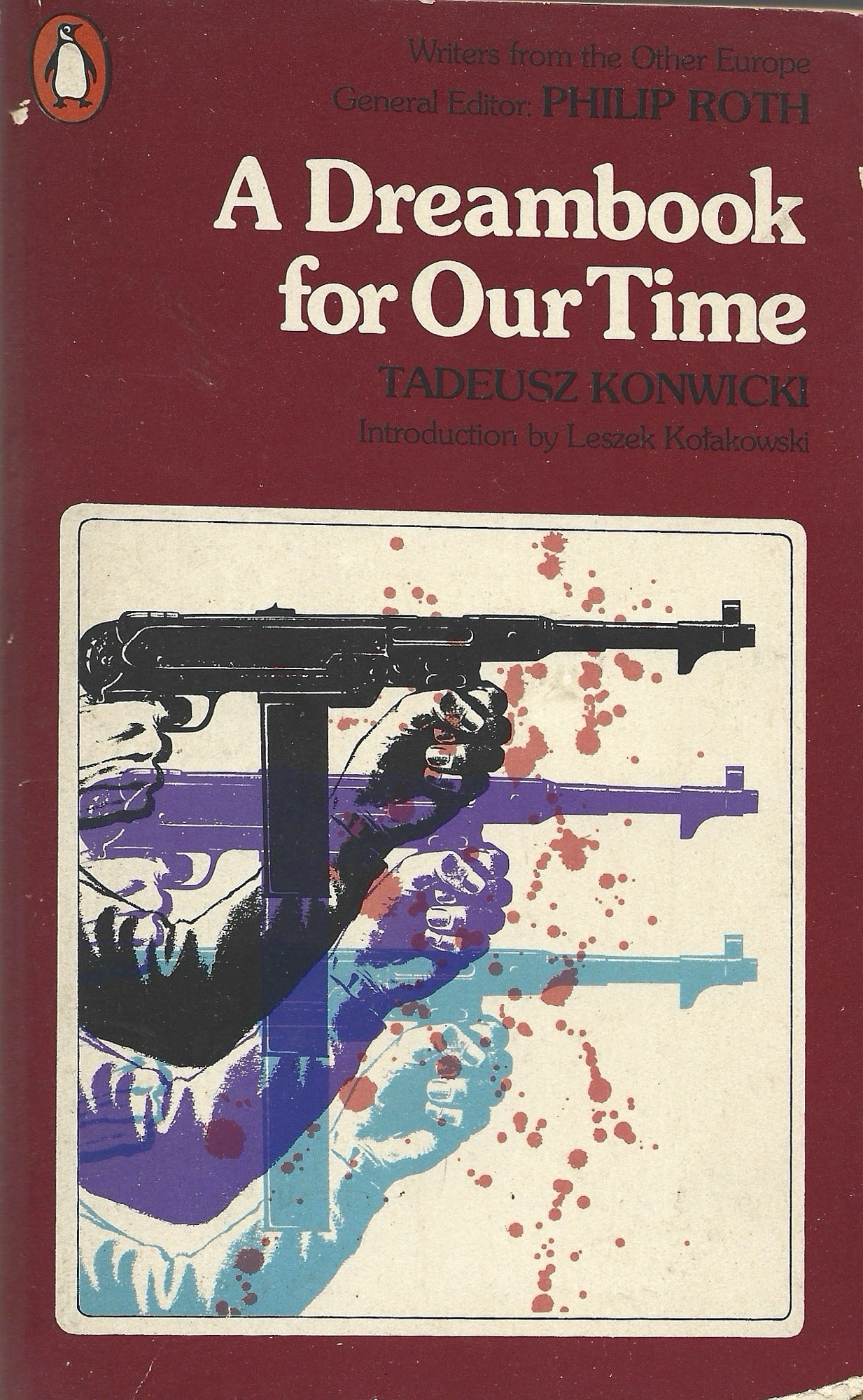

A Dreambook for Our Time, 1963, Tadeusz Konwicki. Translation by David Welsh. Penguin Books (1976). Cover illustration by Christopher Davis; cover design by Walter Brooks. 282 pages.
 Biblioklept