Blueprint for a Temple — Francesca Woodman

dp264181

A Balloon Site, Coventry — Laura Knight

a_balloon_site_coventry_1943_art-_iwm_art_ld_2750

“Take a Look at That Baby” — John Fahey

The Apparition in the Forest — Moritz von Schwind

3088-079

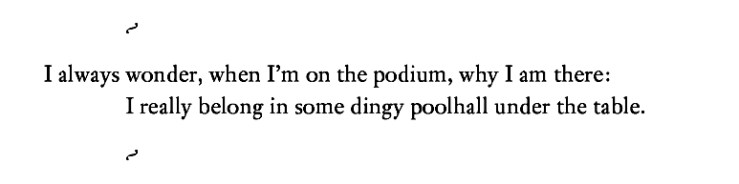
Belong (Theodore Roethke)

screenshot-2016-11-17-at-5

(From Straw for the Fire: From the Notebooks of Theodore Roethke, 1943-63).

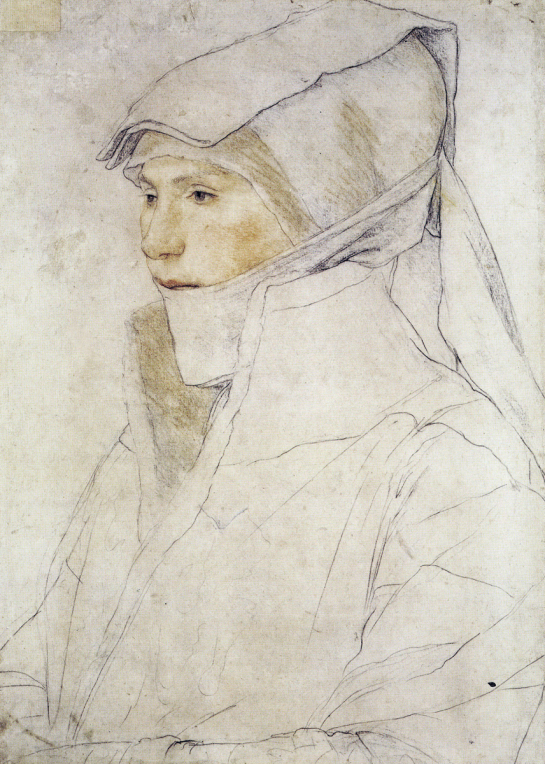
Dorothea Meyer — Hans Holbein the Younger

dorothea_meyer_chalk_drawing_by_hans_holbein_the_younger

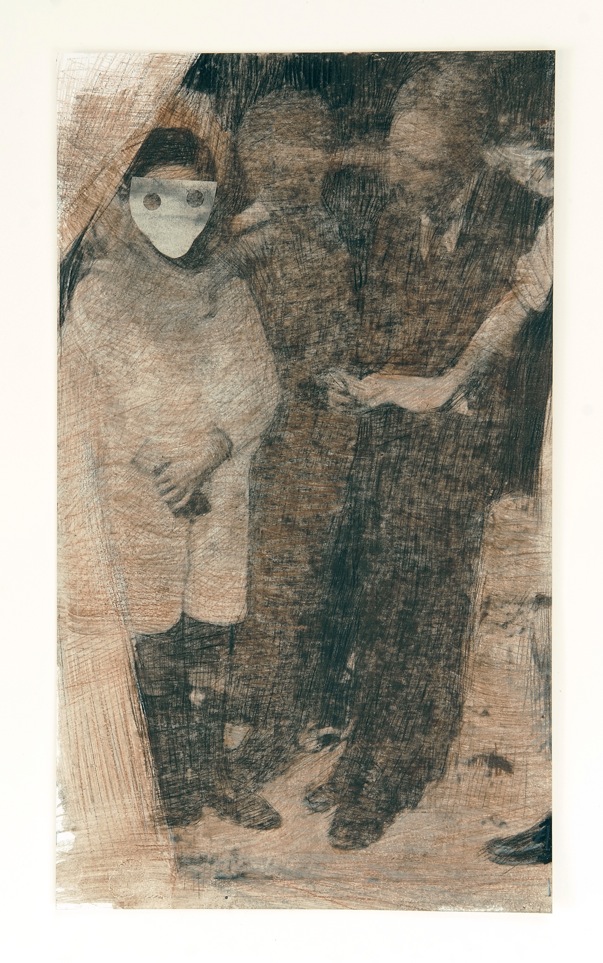
Moody Wedding — Francesco Balsamo

02balsamo_2012

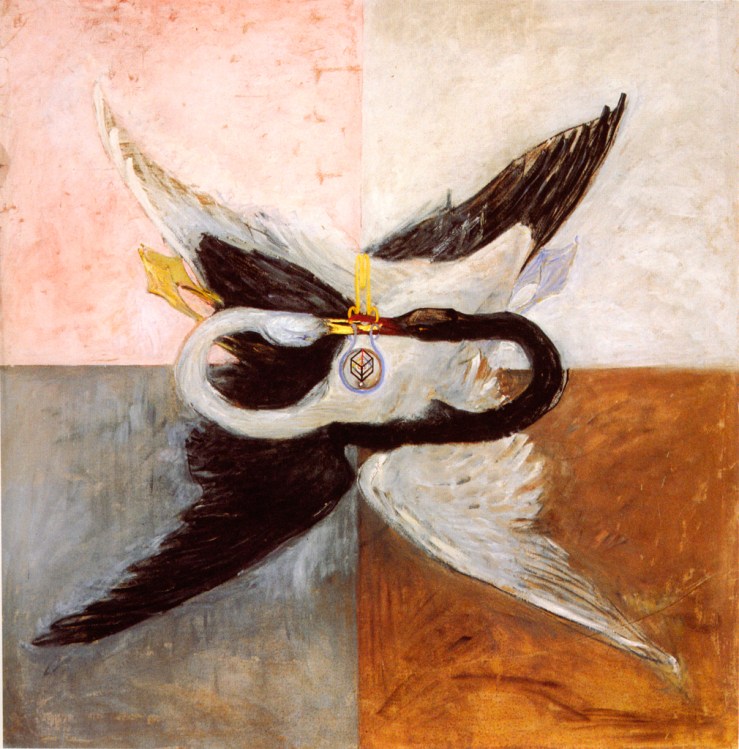
Swan — Hilma af Klint

svanen-1914

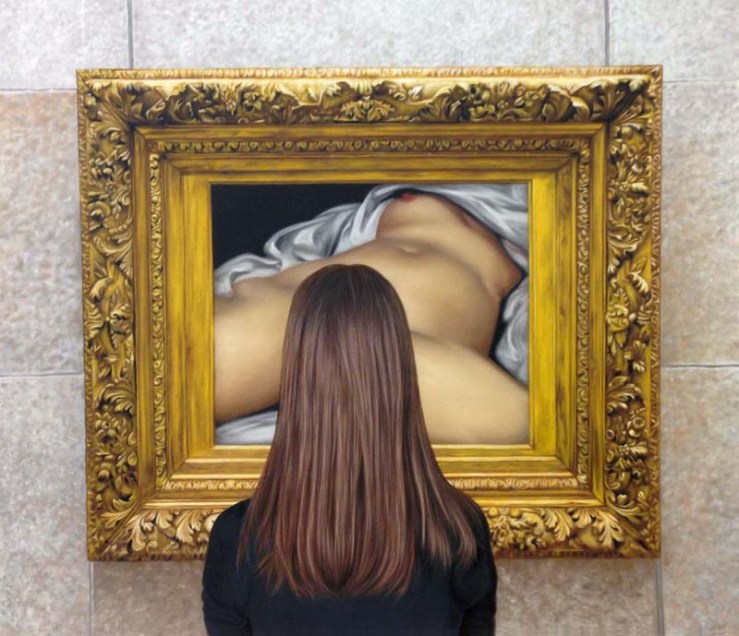
The End of the World — Marc Dennis

marc-dennis__-1-for-website

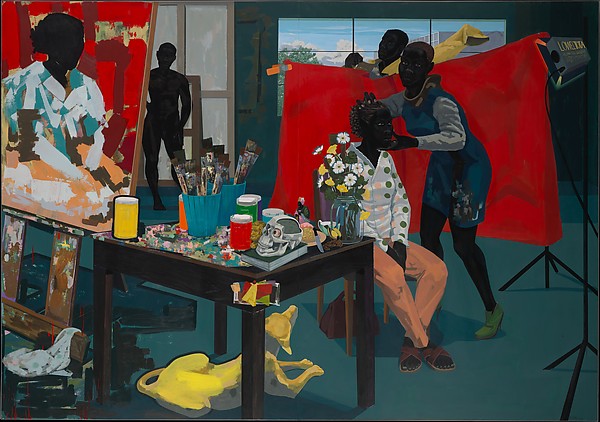
Untitled (Studio) — Kerry James Marshall

dp362047

From Angel Series, Roma, September 1977 — Francesca Woodman

From Angel Series, Roma, September 1977 1977 by Francesca Woodman 1958-1981

Civics and selfishness (David Foster Wallace)

Chapter 19 David Foster Wallace’s The Pale King (or, §19, if you prefer the book’s conceit) begins with this paragraph—

‘There’s something very interesting about civics and selfishness, and we get to ride the crest of it. Here in the US, we expect government and law to be our conscience. Our superego, you could say. It has something to do with liberal individualism, and something to do with capitalism, but I don’t understand much of the theoretical aspect—what I see is what I live in. Americans are in a way crazy. We infantilize ourselves. We don’t think of ourselves as citizens—parts of something larger to which we have profound responsibilities. We think of ourselves as citizens when it comes to our rights and privileges, but not our responsibilities. We abdicate our civic responsibilities to the government and expect the government, in effect, to legislate morality. I’m talking mostly about economics and business, because that’s my area.’

‘What do we do to stop the decline?’

I riffed on §19 of The Pale King here and here.

“The Gorgon’s Head,” a myth retold by Nathaniel Hawthorne

rackham_05_wonderbook_danaeclaspedchild
Danaë and her son Perseus put in a Chest and Cast into the Sea, Arthur Rackham, 1914

“The Gorgon’s Head”

excerpted from A Wonder Book for Girls and Boys

by Nathaniel Hawthorne


Perseus was the son of Danae, who was the daughter of a king. And when Perseus was a very little boy, some wicked people put his mother and himself into a chest, and set them afloat upon the sea. The wind blew freshly, and drove the chest away from the shore, and the uneasy billows tossed it up and down; while Danae clasped her child closely to her bosom, and dreaded that some big wave would dash its foamy crest over them both. The chest sailed on, however, and neither sank nor was upset; until, when night was coming, it floated so near an island that it got entangled in a fisherman’s nets, and was drawn out high and dry upon the sand. The island was called Seriphus, and it was reigned over by King Polydectes, who happened to be the fisherman’s brother.

This fisherman, I am glad to tell you, was an exceedingly humane and upright man. He showed great kindness to Danae and her little boy; and continued to befriend them, until Perseus had grown to be a handsome youth, very strong and active, and skilful in the use of arms. Long before this time, King Polydectes had seen the two strangers—the mother and her child—who had come to his dominions in a floating chest. As he was not good and kind, like his brother the fisherman, but extremely wicked, he resolved to send Perseus on a dangerous enterprise, in which he would probably be killed, and then to do some great mischief to Danae herself. So this bad-hearted king spent a long while in considering what was the most dangerous thing that a young man could possibly undertake to perform. At last, having hit upon an enterprise that promised to turn out as fatally as he desired, he sent for the youthful Perseus.

The young man came to the palace, and found the king sitting upon his throne.

“Perseus,” said King Polydectes, smiling craftily upon him, “you are grown up a fine young man. You and your good mother have received a great deal of kindness from myself, as well as from my worthy brother the fisherman, and I suppose you would not be sorry to repay some of it.”

“Please your Majesty,” answered Perseus, “I would willingly risk my life to do so.”

“Well, then,” continued the king, still with a curving smile on his lips, “I have a little adventure to propose to you; and, as you are a brave and enterprising youth, you will doubtless look upon it as a great piece of good luck to have so rare an opportunity of distinguishing yourself. You must know, my good Perseus, I think of getting married to the beautiful Princess Hippodamia; and it is customary, on these occasions, to make the bride a present of some far-fetched and elegant curiosity. I have been a little perplexed, I must honestly confess, where to obtain anything likely to please a princess of her exquisite taste. But, this morning, I flatter myself, I have thought of precisely the article.”

“And can I assist your Majesty in obtaining it?” cried Perseus, eagerly. Continue reading ““The Gorgon’s Head,” a myth retold by Nathaniel Hawthorne”

Reading/Have Read/Should Write About

img_4252

I don’t know.

I feel like I’ve got nothing in me.

It’s easier to work from what’s outside of me lately, so I’ve been doing these Gravity’s Rainbow annotations; I “finished” (not the right verb) a third reading this weekend and then dipped back into it again—this time in the middle. I was thinking of doing a “how to read Gravity’s Rainbow” post but that seems fucking pretentious. I love the book though.

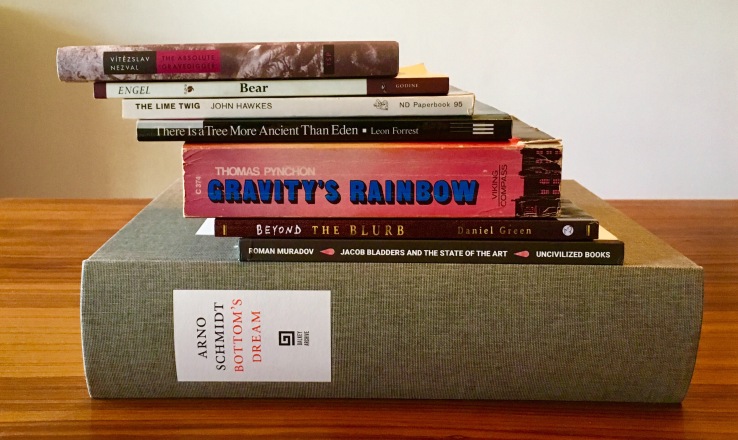
This stack looks big, but it’s not really—most of the other books there are slim volumes I worked into my reread of Gravity’s Rainbow. Little breaks, of a sort.

But not that big book at the bottom.

That big book at the bottom, Bottom’s Dream? Hm. Not sure about this guy. It’s too big to read. I mean physically. It’s unwieldy, uncomfortable, uncurlupwithable. I can’t get a rhythm going there.

Roman Muradov’s Jacob Bladders and the State of the Art will get a full review soon; the book starts with the best opening line of read in a contemporary story in years: “READER YOU HAVE NO WORTH.”

Daniel Green’s Beyond the Blurb will also get a review, sort of, soon (the book is a critical survey of literary criticism, making a review of it especially difficult to me). I have n interview with Green in the works.

Not pictured here because it’s an e-book is Scott Esposito’s The Missing Books. Esposito’s book is a continuing project, a “curated directory of books that do not exist, but should.” I read it in one sitting and was frankly jealous that I hadn’t written it.

Leon Forrest’s There Is a Tree More Ancient Than Eden is a novel I read in a blur, a kind of fever dream postmodern pastiche, a narrative unstuck in time and yet wholly about a specific time and place and past and consciousness. I need to read it again; like so many so-called “experimental” novels, a first reading is highly impressionistic but also confusing. Forrest throws you in the deep end. The prose is liquid, viscous, and you’re swimming around for edges, contours to grab onto. Just a marvelous strange read, and it deserves better than I’m giving it here—I mean, I think the novel deserves way more attention, and I’ll attend to it again.

Vítězslav Nezval’s 1937 poetry collection The Absolute Gravedigger is new in English translation by Stephan Delbos and Tereza Novická (Twisted Spoon Press). I hadn’t read Nezval before now, but I did see Jaromil Jireš’s film adaptation of his novel Valerie and Her Week of Wonders; if you know it, you’ll perhaps have an idea of some of Gravedigger’s rich dark weird flavor. There’s something of Bosch or Goya in the spare poems—somehow simultaneously bleak but vivid, morose but witty. The cityscapes, the entropy, the impressionistic details here all melded into my Pynchon-addled brain with the immediate post-War Zone of Gravity’s Rainbow: broken bits of civilization twitching into new combinations of reality.

Marian Engel’s Bear is this wonderfully lucid story of a bibliographer who goes to a remote island to document the contents (and library) of an old semi-famous house. Engel’s sentences are too good; there’s something fresh and restorative about the prose that echoes the plot, which is both simple and bizarre. Also, the bibliographer has a sexual relationship with a bear.

I read the first half of John Hawkes’s The Lime Twig over two short plane rides. I might have finished it, but I had to read every paragraph twice. I haven’t picked it up since the election on Tuesday. Maybe this post will motivate me to pick it up. Here’s Flannery O’Connor’s so very accurate blurb from the back cover:

You suffer The Lime Twig like a dream. It seems to be something that is happening to you, that you want to escape from but can’t. The reader even has that slight feeling of suffocation that you have when you can’t wake up and some evil is being worked on you.

Evil is being worked on you.


Jon Brion talks about scoring Punch-Drunk Love

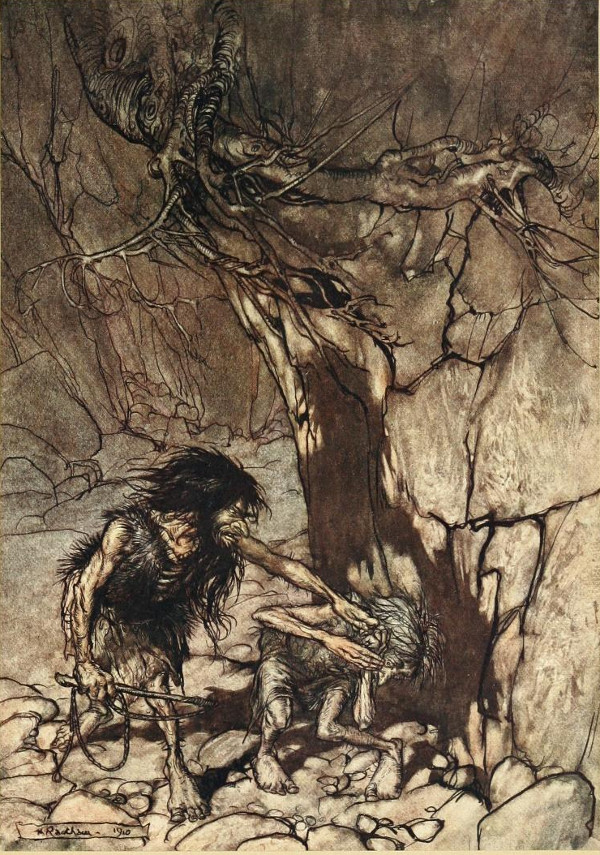
Mime, Howling — Arthur Rackham

mime-howling-oh-oh

Sunday Comics

img_4253-1

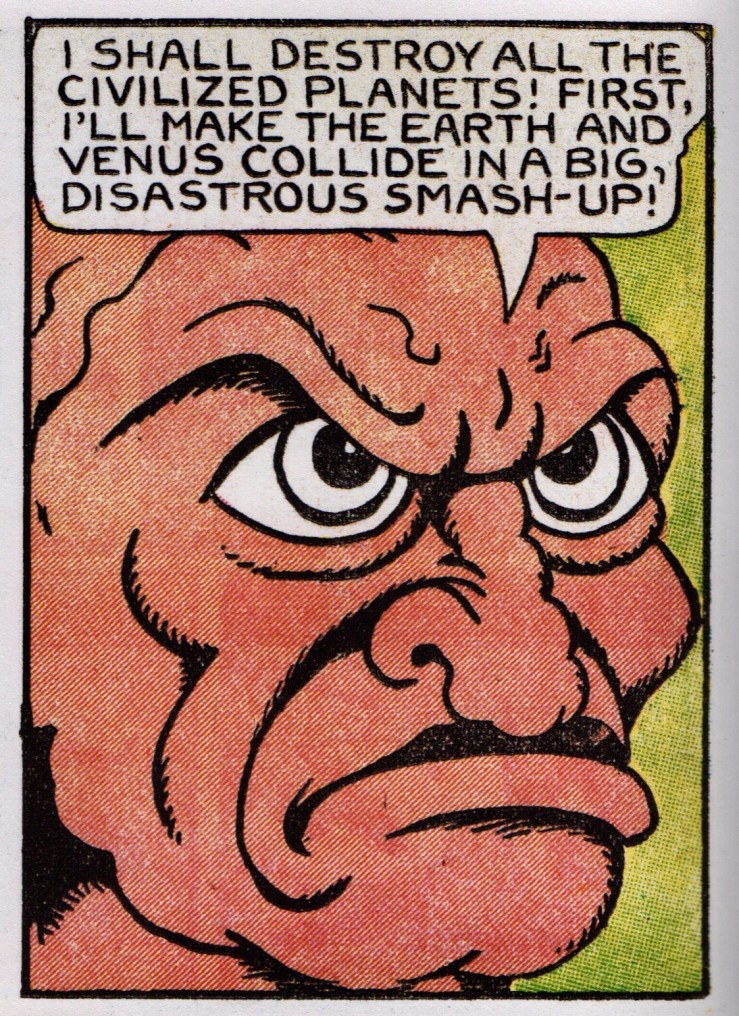
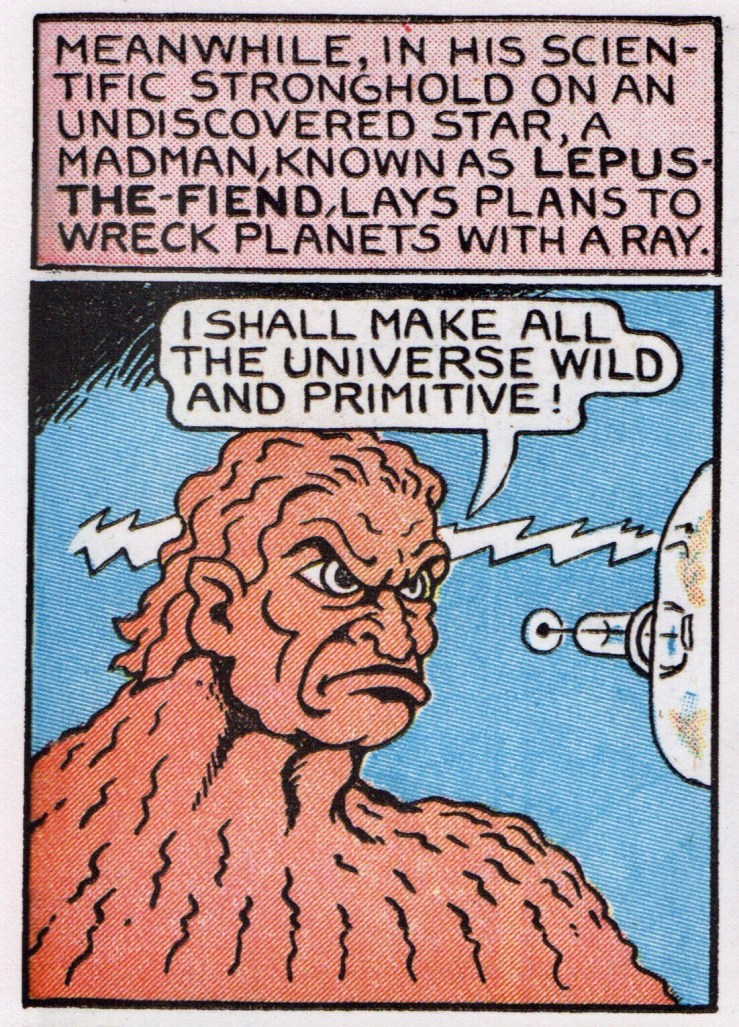
Panels this week from Fletcher Hanks (from I Shall Destroy All the Civilized Planets!, Fantagraphics Books, 2007).

img_4253-2img_4253img_4254img_4256-1img_4256