What book have you started the most times without ever finishing?

img_2691

What book have you started the most times without ever finishing?

I asked this question on Twitter a few days ago (and then asked it a few more times, probably annoying some of the nice people who follow me), and I’ll write a bit about some of the responses later this week. I’m hoping too that some of this blog’s readers will share the novel (or novels) they’ve opened the most times without actually ever finishing.

I got to dwelling on the question a bit after talking with two friends, separately, over the past few weeks, both of whom were having a tough time with Gravity’s Rainbow. Up until last year, Gravity’s Rainbow would easily have been my first answer to this question. How many times did I try to read it between 1997 and 2015? Probably like, what, once a year? At least? And while I don’t think Gravity’s Rainbow is the best starting place for Pynchon, the book is endlessly rewarding, and fits nicely into a little mental shelf comprised of books I made plenty of false starts on before finally finishing (Moby-DickUlyssesInfinite Jest…titles that cropped up on Twitter in answer to my silly question).

Gravity’s Rainbow impacted me so much that I immediately reread it. But I don’t think I would’ve gotten there if I hadn’t read more Pynchon first—and honestly, if I didn’t trust certain critics, if I didn’t trust the book’s reputation. But what about all the books I keep cracking open but can’t quite crack into? Am I missing something? I’m probably missing something.

I rounded up most of the novels I could think of that I’ve tried to read at least four times (conspicuously absent is Dostoevsky’s The Idiot, which I’ve tried to read, hell, what four times? Five including an audiobook?)—I’ll riff a little on them. (As an aside: There are certain books I’ll probably never “finish,” that I have no aim of finishing, which I’m not riffing on here—I’ll write about them separately. The include Tristram ShandyThe Anatomy of MelancholyDon Quixote, and Finnegans Wake).

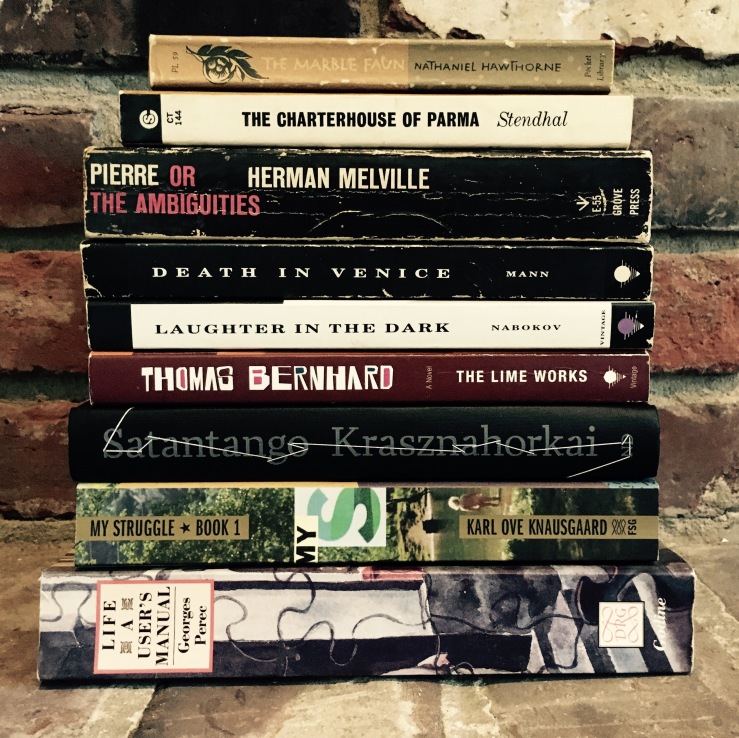
 Nathaniel Hawthorne is one of my favorite writers, yet I can’t get past Ch. 6 of The Marble Faun. His pal Melville’s Moby-Dick is easily one of my favorite books, one that I return to again and again, and yet I can’t seem to get through Pierre without skimming. I “read” the book in grad school, but I didn’t really read it. I’m fairly determined to read both of these, if only to ameliorate my shame as a would-be completist.

Stendhal’s The Charterhouse of Parma is another book I’m determined to finish (at some point, not now! Not today!—is there another translation besides the Moncrieff?!). If the bookmark in the edition above is true, I made it to page 43 on my last attempt (stopping in the middle of a chapter—never a good sign).

By my wholly unscientific calculations, Thomas Mann’s Death in Venice is the book I’ve started and quit the most times. It’s not even a novel. It’s barely a novella. I should be able to finish it. Maybe it’s a stamina issue. Maybe if I could just sit and read it in one go…

I’ll never finish Nabokov’s Laughter in the Dark, but I tried to finish it repeatedly because I, uh, took it from a bookstore without, uh, purchasing it first—the only time I ever did such a thing. When I was a kid. A stupid kid. I confessed (on this blog, years ago—not to the store. The store is gone).

I think I might have read too much Thomas Bernhard too fast, because I keep stalling out on The Lime Works. To be fair, it’s almost impossible for me to read Bernhard in hot or warm weather, and I live in Florida, so the Thomas-Bernhard-reading-weather window is slim. Next winter.

Watching Tarr’s film adaptation of Laszlo Krasznahorkai’s Satantango was difficult enough. (No, I did not do it one sitting). I tried. I tried. I doubt I’ll ever try again.

My Struggle, Book 1. Again, I tried, I tried. Several times. I can’t get down with Knausgaard.

I’ve tried to read Georges Perec’s Life A User’s Manual every summer for a few years now, and I’m not really sure why I can’t get past Part I (about 75 pages or so in). Every time I start into Life, I feel as if I’m missing something, as if some of its humor or complexity is lost on me. Maybe I need something like A User’s Manual for Life A User’s Manual.

I’m sure I’m forgetting plenty of titles (I’m really great at not finishing novels)—but these are the ones that stand out in recent years.

By way of closing: I’m almost finished with Stanley Elkin’s 1975 novel The Franchiser, which would’ve been on this list just a few months ago.

And again, I’d love to hear what novel (or novels) you’ve started the most times without finishing (yet!).
 

Damn, a new Aphex Twin vid

Noon — John Singer Sargent

ap50-130-154d

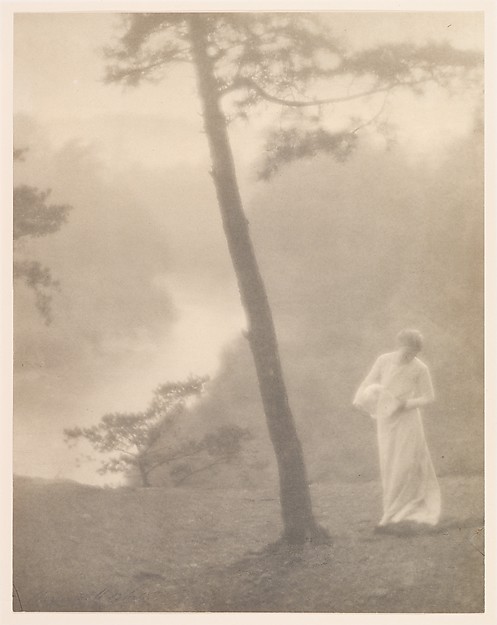
Morning — Clarence H. White

dp257135

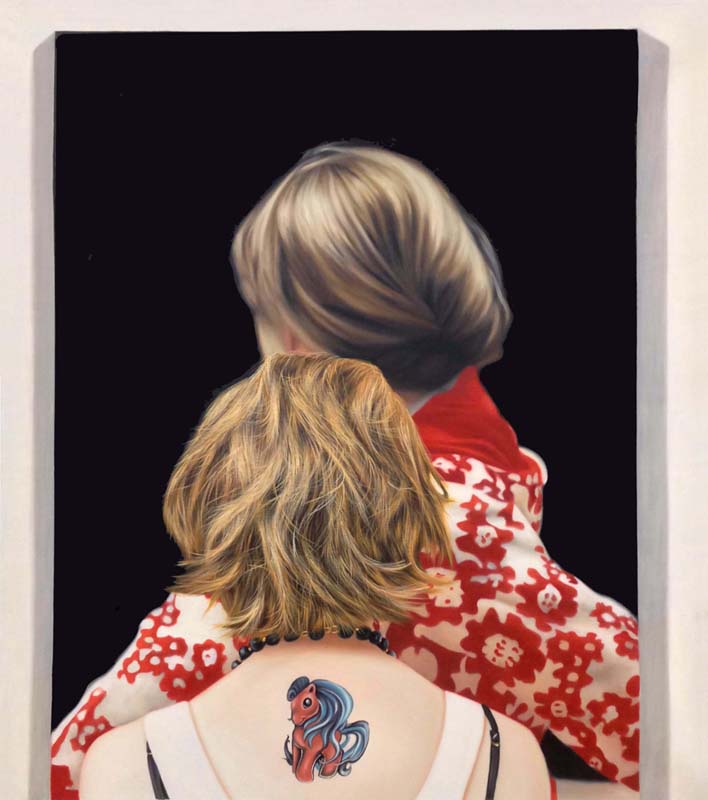
Betty, Lawyer, Pony — Marc Dennis

marc-dennis__-4-for-website

Read “The Demon Lover,” a short story by Elizabeth Bowen

“The Demon Lover”

by

Elizabeth Bowen


Toward the end of her day in London Mrs. Drover went round to her shut-up house to look for several things she wanted to take away. Some belonged to herself, some to her family, who were by now used to their country life. It was late August; it had been a steamy, showery day: At the moment the trees down the pavement glittered in an escape of humid yellow afternoon sun. Against the next batch of clouds, already piling up ink-dark, broken chimneys and parapets stood out. In her once familiar street, as in any unused channel, an unfamiliar queerness had silted up; a cat wove itself in and out of railings, but no human eye watched Mrs. Drover’s return. Shifting some parcels under her arm, she slowly forced round her latchkey in an unwilling lock, then gave the door, which had warped, a push with her knee. Dead air came out to meet her as she went in.

The staircase window having been boarded up, no light came down into the hall. But one door, she could just see, stood ajar, so she went quickly through into the room and unshuttered the big window in there. Now the prosaic woman, looking about her, was more perplexed than she knew by everything that she saw, by traces of her long former habit of life—the yellow smoke stain up the white marble mantelpiece, the ring left by a vase on the top of the escritoire; the bruise in the wallpaper where, on the door being thrown open widely, the china handle had always hit the wall. The piano, having gone away to be stored, had left what looked like claw marks on its part of the parquet. Though not much dust had seeped in, each object wore a film of another kind; and, the only ventilation being the chimney, the whole drawing room smelled of the cold hearth. Mrs. Drover put down her parcels on the escritoire and left the room to proceed upstairs; the things she wanted were in a bedroom chest. Continue reading “Read “The Demon Lover,” a short story by Elizabeth Bowen”

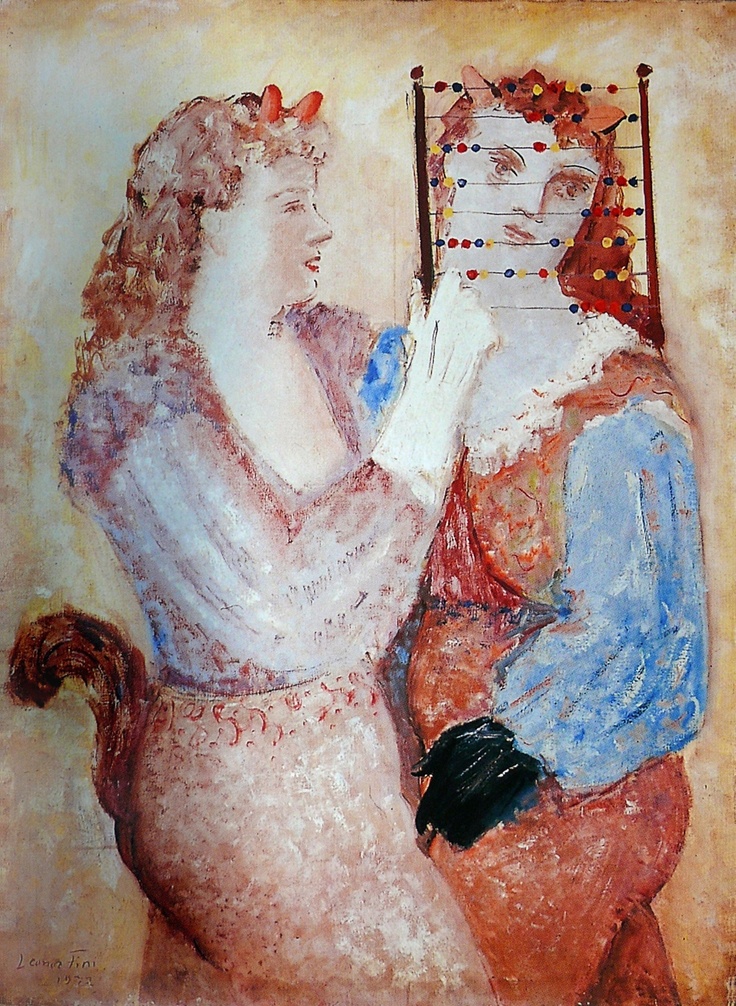
Girl Friends — Leonor Fini

girl-friends-1952

Three Books

img_2676

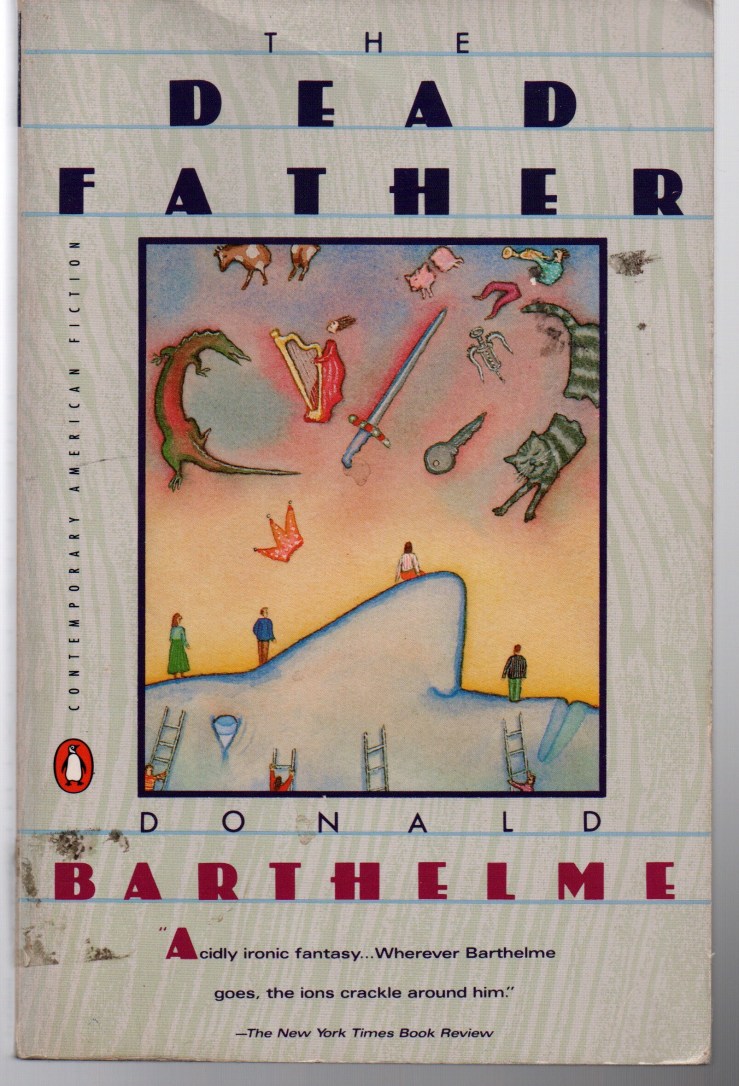
The Dead Father by Donald Barthleme. Penguin paperback, 1986. Cover design by Todd Radom; cover illustration by Lonnie Sue Johnson.

Saturn, Orpheus, Lear, Nobodaddy. A sleeping undead giant, a quest. Good angry fun. I’ll say it’s my favorite Barthelme today (answers will change in the future).

img_2674

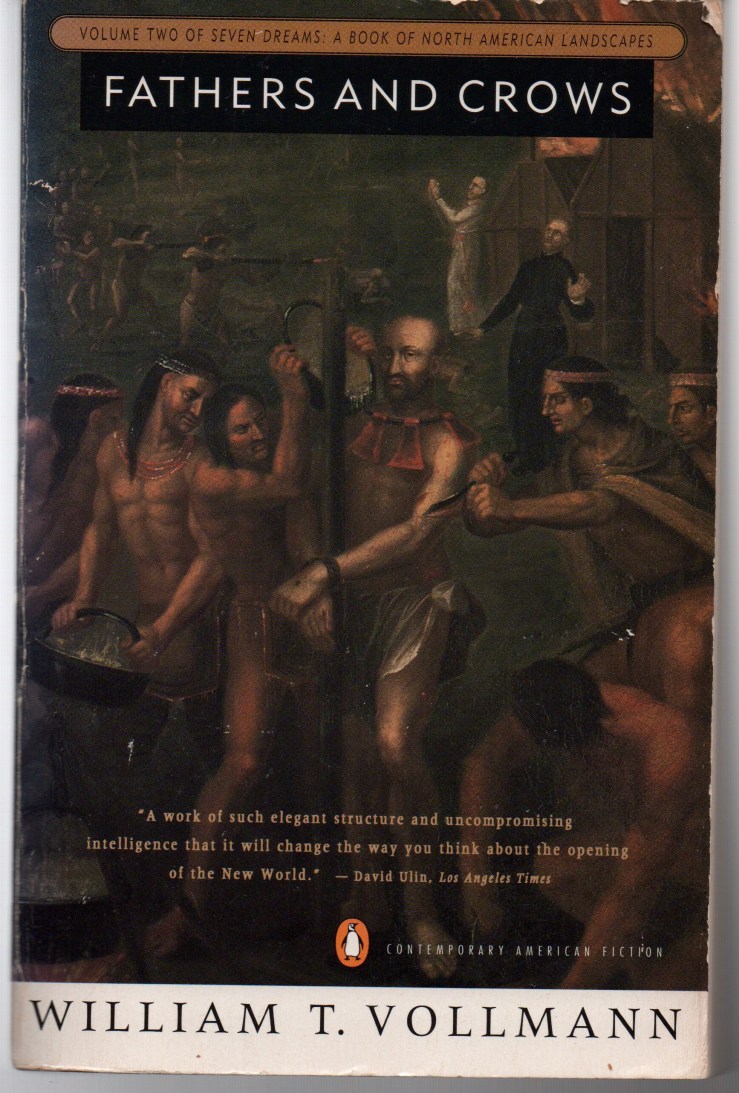
Fathers and Crows by William T. Vollmann. Penguin paperback, 1992. (An enormous paperback—990 pages—it flops slightly on the scanner, refuses to square up neatly). Cover design by Daniel Rembert employing a detail from a painting titled Le Martyrs des missionaires Jesuites (credited to “Anonymous”).

Different fathers, maybe, than the ones celebrated today, Father’s Day, the conceit I’ve lazily tied my Three Books post to…Jesuits. Or maybe they are the fathers. How many times have I tried all of this novel? If you’re interested in Vollmann’s Seven Dreams series, start with The Ice-Shirt or The Rifles instead.

img_2678

King Lear by William Shakespeare. Edited by R.A. Foakes. Arden, 1997. Cover design by Interbrand Newell and Sorrell; illustration by the Douglas Brothers.

Lear is maybe my favorite fictional father. I don’t know why. The man is a fool, but a pitiable one. Maybe I just love the play that much—its abjection, its darkness, its insanity. Out vile jelly, etc. Happy Father’s Day!


To find a lost father (Donald Barthelme)

To find a lost father: The first problem in finding a lost father is to lose him, decisively. Often he will wander away from home and lose himself. Often he will remain at home but still be “lost” in every true sense, locked away in an upper room, or in a workshop, or in the contemplation of beauty, or in the contemplation of a secret life. He may, every evening, pick up his gold-headed cane, wrap himself in his cloak, and depart, leaving behind, on the coffee table, a sealed laundry bag in which there is an address at which he may be reached, in case of war. War, as is well known, is a place at which many fathers are lost, sometimes temporarily, sometimes forever. Fathers are frequently lost on expeditions of various kinds (the journey to the interior). The five best places to seek this kind of lost father are Nepal, Rupert’s Land, Mount Elbrus, Paris, and the agora. The five kinds of vegetation in which fathers most often lose themselves are needle-leaved forest, broad-leaved forest mainly evergreen, broad-leaved forest mainly deciduous, mixed needle-leaved and broad-leaved forest, and tundra. The five kinds of things fathers were wearing when last seen are caftans, bush jackets, parkas, Confederate gray, and ordinary business suits. Armed with these clues then, you may place an advertisement in the newspaper: Lost, in Paris, on or about February 24, a broad-leaf-loving father, 6’ 2”, wearing a blue caftan, may be armed and dangerous, we don’t know, answers to the name Old Hickory. Reward. Having completed this futile exercise, you are then free to think about what is really important. Do you really want to find this father? What if, when you find him, he speaks to you in the same tone he used before he lost himself? Will he again place nails in your mother, in her elbows and back of the knee? Remember the javelin. Have you any reason to believe that it will not, once again, flash through the seven-o’clock-in-the-evening air? What we are attempting to determine is simple: Under what conditions do you wish to live? Yes, he “nervously twiddles the stem of his wineglass.” Do you wish to watch him do so on into the last quarter of the present century? I don’t think so. Let him take those mannerisms, and what they portend, to Borneo, they will be new to Borneo. Perhaps in Borneo he will also nervously twiddle the stem of, etc., but he will not be brave enough to manufacture, there the explosion of which this is a sign. Throwing the roast through the mirror. Thrusting a belch big as an opened umbrella into the middle of something someone else is trying to say. Beating you, either with a wet, knotted rawhide, or with an ordinary belt. Ignore that empty chair at the head of the table. Give thanks.

From Donald Barthelme’s novel The Dead Father.

Portrait of the Artist’s Father

Repin

Degas

Escher

Freud

Continue reading “Portrait of the Artist’s Father”

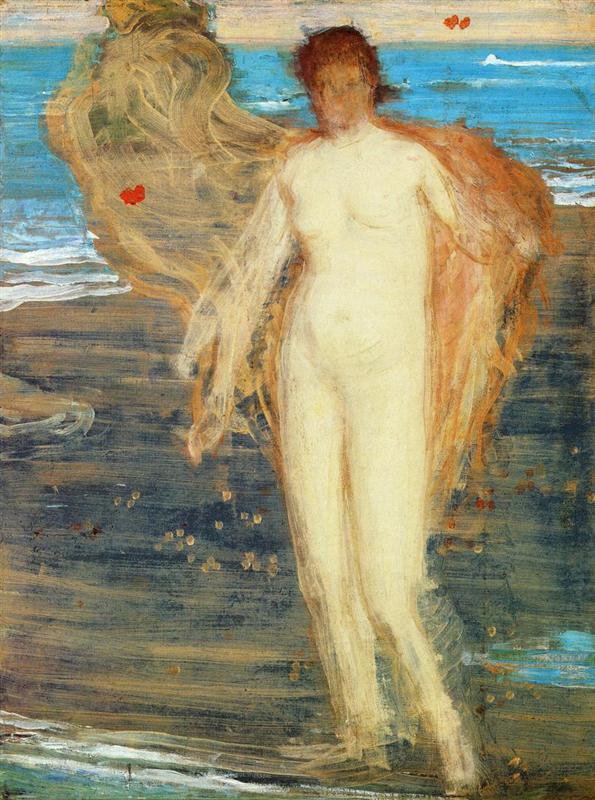
Venus with Organist — James McNeill Whistler

venus-with-organisthalfhd

A graceful little beast | Nathaniel Hawthorne’s journal entry for June 18, 1838

 June 18th.–A walk in North Salem in the decline of yesterday afternoon,–beautiful weather, bright, sunny, with a western or northwestern wind just cool enough, and a slight superfluity of heat. The verdure, both of trees and grass, is now in its prime, the leaves elastic, all life. The grass-fields are plenteously bestrewn with white-weed, large spaces looking as white as a sheet of snow, at a distance, yet with an indescribably warmer tinge than snow,–living white, intermixed with living green. The hills and hollows beyond the Cold Spring copiously shaded, principally with oaks of good growth, and some walnut-trees, with the rich sun brightening in the midst of the open spaces, and mellowing and fading into the shade,–and single trees, with their cool spot of shade, in the waste of sun: quite a picture of beauty, gently picturesque. The surface of the land is so varied, with woodland mingled, that the eye cannot reach far away, except now and then in vistas perhaps across the river, showing houses, or a church and surrounding village, in Upper Beverly. In one of the sunny bits of pasture, walled irregularly in with oak-shade, I saw a gray mare feeding, and, as I drew near, a colt sprang up from amid the grass,–a very small colt. He looked me in the face, and I tried to startle him, so as to make him gallop; but he stretched his long legs, one after another, walked quietly to his mother, and began to suck,–just wetting his lips, not being very hungry. Then he rubbed his head, alternately, with each hind leg. He was a graceful little beast.

I bathed in the cove, overhung with maples and walnuts, the water cool and thrilling. At a distance it sparkled bright and blue in the breeze and sun. There were jelly-fish swimming about, and several left to melt away on the shore. On the shore, sprouting amongst the sand and gravel, I found samphire, growing somewhat like asparagus. It is an excellent salad at this season, salt, yet with an herb-like vivacity, and very tender. I strolled slowly through the pastures, watching my long shadow making grave, fantastic gestures in the sun. It is a pretty sight to see the sunshine brightening the entrance of a road which shortly becomes deeply overshadowed by trees on both sides. At the Cold Spring, three little girls, from six to nine, were seated on the stones in which the fountain is set, and paddling in the water. It was a pretty picture, and would have been prettier, if they had shown bare little legs, instead of pantalets. Very large trees overhung them, and the sun was so nearly gone down that a pleasant gloom made the spot sombre, in contrast with these light and laughing little figures. On perceiving me, they rose up, tittering among themselves. It seemed that there was a sort of playful malice in those who first saw me; for they allowed the other to keep on paddling, without warning her of my approach. I passed along, and heard them come chattering behind.

Nathaniel Hawthorne’s journal entry for June 15, 1838. From Passages from the American Note-Books.

Seven new(ish) books from indie presses

img_2658

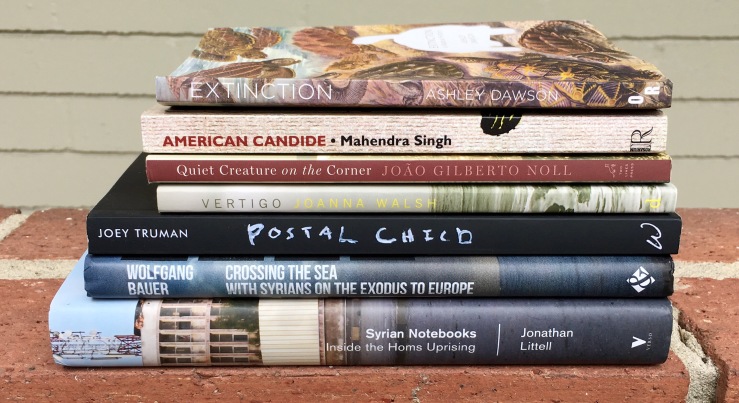
It’s summer so maybe you need some books to read. Indie presses are the bestest.

Extinction by Ashley Dawson from OR Books. This is a devastating little big book about, a sustained attack on “capitalism’s global attack on the commons, the great trove of air, water, plants, and creatures that has been regarded traditionally as the inheritance of humanity as a whole.” We won’t be able to shop our way out of the apocalypse. (I wrote about it in more depth here).

American Candide by Mahendra Singh from Rosarium. I reviewed American Candide earlier this year on Biblioklept, writing:

Singh’s update-reboot-translation of Candide fittingly answers Voltaire’s pessimistic prescience with not just bitter affirmations of contemporary predation and evil, but also with an eye toward entertainment—to the affirmations of laughter.

Quiet Creature on the Corner by João Gilberto Noll (English translation by Adam Morris) from Two Lines PressIn my recent review, I wrote that

Quiet Creature on the Corner is a nightmarish, abject, kinetic, surreal, picaresque read, a mysterious prose-poem that resists allegorical interpretation. I read it and then I read it again. It’s a puzzle. I enjoyed it tremendously.

Vertigo by Joanna Walsh from DorothyThe stories here hum and hang together, evoking consciousness—consciousness’s anxieties, desires, its imaginative consolations. Vertigo is simultaneously disorienting and familiar, often quite funny, and sometimes a bit sad.

Postal Child by Joey Truman from Whisk(e)y TitNot a “bit sad” but “sad sad.” Abject and cruel and terrifying. But also…funny? Maybe?

Crossing the Sea with Syrians on the Exodus to Europe by Wolfgang Bauer with photographs by Stanislav Krupar; (English translation by Sarah Prybus). From And Other StoriesBrutal and moving reportage.

Syrian Notebooks: Inside the Homs Uprising by Jonathan Littell (English translation by Charlotte Mandell). From VersoThree weeks reporting from hell—terse, precise, and raw. Littell functions as eyes and ears and a body, a concrete sensing thing, an immediate thing, a thing that doesn’t try to synthesize or process or otherwise mediate what is happening to him.

Ganymede and Zeus — Giulio Campagnola

hb_37-3-10

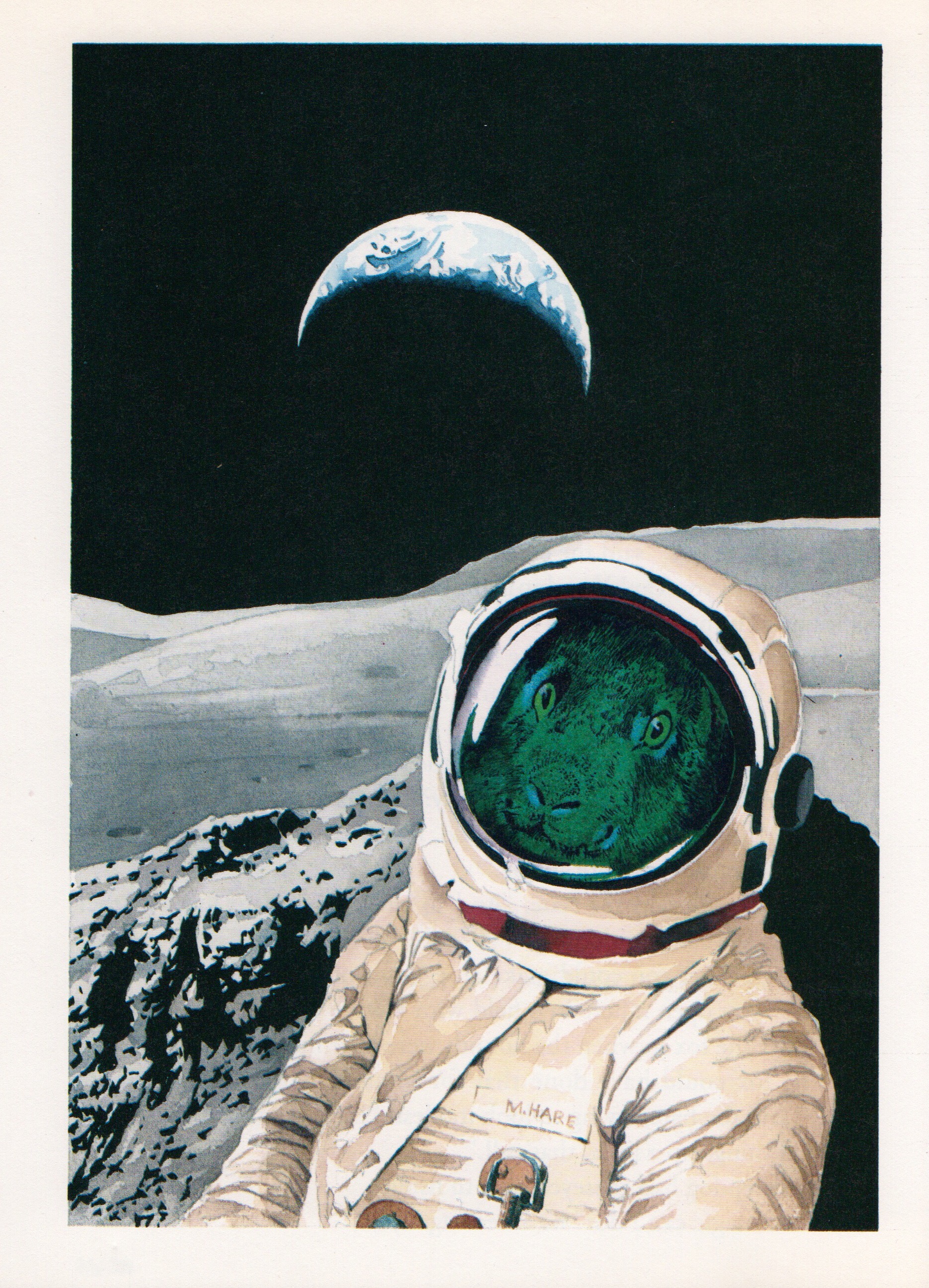
The Hare and His Magic — Barry Moser

img_2649

Barry Moser’s illustration for Lynne Reid Banks’s “The Hare in His Magic.” From The Magic Hare, Avon, 1994.

The dwarfing, warping, distorting influence (From James Weldon Johnson’s Autobiography of an Ex-Colored Man)

Since I have grown older I have often gone back and tried to analyze the change that came into my life after that fateful day in school. There did come a radical change, and, young as I was, I felt fully conscious of it, though I did not fully comprehend it. Like my first spanking, it is one of the few incidents in my life that I can remember clearly. In the life of everyone there is a limited number of unhappy experiences which are not written upon the memory, but stamped there with a die; and in long years after, they can be called up in detail, and every emotion that was stirred by them can be lived through anew; these are the tragedies of life. We may grow to include some of them among the trivial incidents of childhood—a broken toy, a promise made to us which was not kept, a harsh, heart-piercing word—but these, too, as well as the bitter experiences and disappointments of mature years, are the tragedies of life.

And so I have often lived through that hour, that day, that week, in which was wrought the miracle of my transition from one world into another; for I did indeed pass into another world. From that time I looked out through other eyes, my thoughts were colored, my words dictated, my actions limited by one dominating, all-pervading idea which constantly increased in force and weight until I finally realized in it a great, tangible fact.

And this is the dwarfing, warping, distorting influence which operates upon each and every colored man in the United States. He is forced to take his outlook on all things, not from the viewpoint of a citizen, or a man, or even a human being, but from the viewpoint of a colored man. It is wonderful to me that the race has progressed so broadly as it has, since most of its thought and all of its activity must run through the narrow neck of this one funnel.

And it is this, too, which makes the colored people of this country, in reality, a mystery to the whites. It is a difficult thing for a white man to learn what a colored man really thinks; because, generally, with the latter an additional and different light must be brought to bear on what he thinks; and his thoughts are often influenced by considerations so delicate and subtle that it would be impossible for him to confess or explain them to one of the opposite race. This gives to every colored man, in proportion to his intellectuality, a sort of dual personality; there is one phase of him which is disclosed only in the freemasonry of his own race. I have often watched with interest and sometimes with amazement even ignorant colored men under cover of broad grins and minstrel antics maintain this dualism in the presence of white men.

I believe it to be a fact that the colored people of this country know and understand the white people better than the white people know and understand them.

From Ch. 2 of James Weldon Johnson’s novel The Autobiography of an Ex-Colored Man. First published anonymously in 1912, and later reissued in 1927 under Johnson’s (now famous) name, Autobiography is an under-read classic, a fascinating and complex condensation of racism, colorism, and class in early twentieth-century America. Johnson was born on this day in 1871 in Jacksonville, Florida.