Inn Scene — Adriaen van Ostade

inn-scenelarge

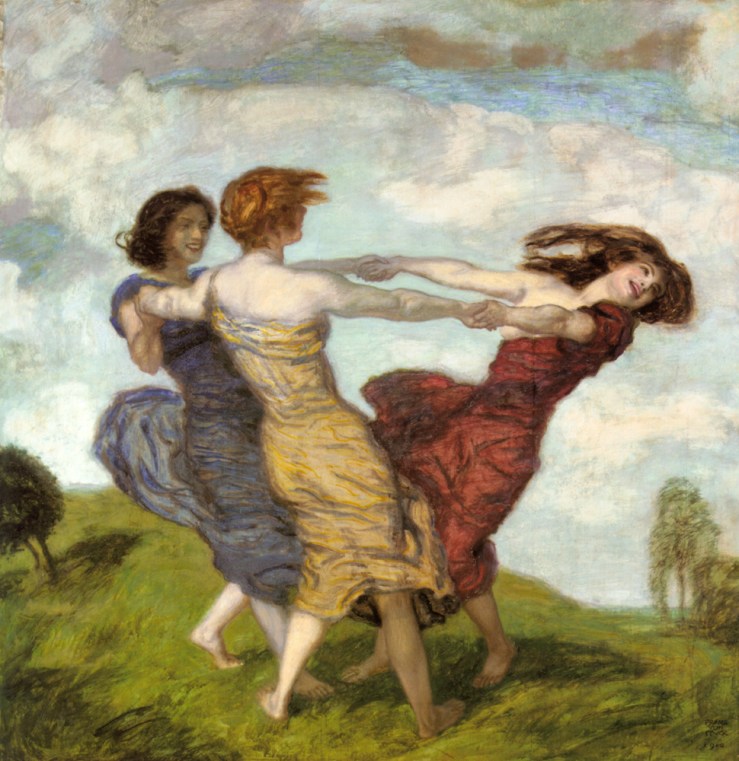
Sounds of Spring — Franz Stuck

sounds-of-spring-1910

Audiobook Riff 1 (a non-definitive list (mine) and a Maqroll anecdote (not mine))

I got a lovely email, with the subject line “Audiobooks,” a few weeks ago from a guy named Ben. Basically, he asked me to do a post on some of my favorite audiobooks, which I suppose I could’ve done fairly easy as a list (and which, yes, if you want to drop down, I will list below, oh-so-non-definitively)—but after thinking about his question, I thought I might break the post up into a couple of posts on audiobooks in general—the excellent ones, the average ones, the terrible ones afflicted by readers who misread the material; the audiobooks I’m auditing now/recently; childhood favorites (on vinyl!); hell, maybe even a totally pretentious post called “How to listen to audiobooks” or some such garbage.

Before I go on though, let me share Ben’s email (he gave me his permission), which is mostly a marvelous anecdote about Álvaro Mutis’s Maqroll novellas:

After reading your post on The Adventures and Misadventures of Maqroll, I immediately ordered the book and read it with my father as we travelled through Borneo, passing it back and forth every dozen pages. The reading became even more significant as we reached the passage in which Maqroll is laid up sick in Northridge, California, in an area surrounded by orange groves. This area is where my father spent his childhood. Reading Maqroll with my father on that trip stands as my most meaningful reading experience. I thank you for putting us onto that book.

Have you done a post yet on your favorite audiobooks? I’d like to get your recommendations. I recall you mentioning a few in previous posts, but could not track them down. Keep at it.

Ben’s Maqroll story surely deserves a response in full, fleshed out detail, and my next post will discuss in detail why I praise the following audio productions. But for now a list (sans, alas, Álvaro Mutis: our Gaviero Maqroll has not found his way into an audiobook yet, at least to my knowledge).

In no real order, and by no means definitive, a list of eight perfect or near-perfect audiobooks:

Herman Melville’s Moby-Dick, as read by William Hootkins

James Joyce’s Ulysses RTÉ’s 1982 full cast production (that second link links to a free download!).

Virginia Woolf’s Orlando, as read by Claire Higgins

J.R.R. Tolkien’s The Hobbit, as read by Nicol Williamson

William Gaddis’s J R, as read by Nick Sullivan

Cormac McCarthy’s Blood Meridian, as read by Richard Poe

Gordon Lish’s The Collected Fictions of Gordon Lish, as read by Gordon Lish 

Denis Johnson’s Train Dreams, as read by Will Patton

Three Books

img_1930

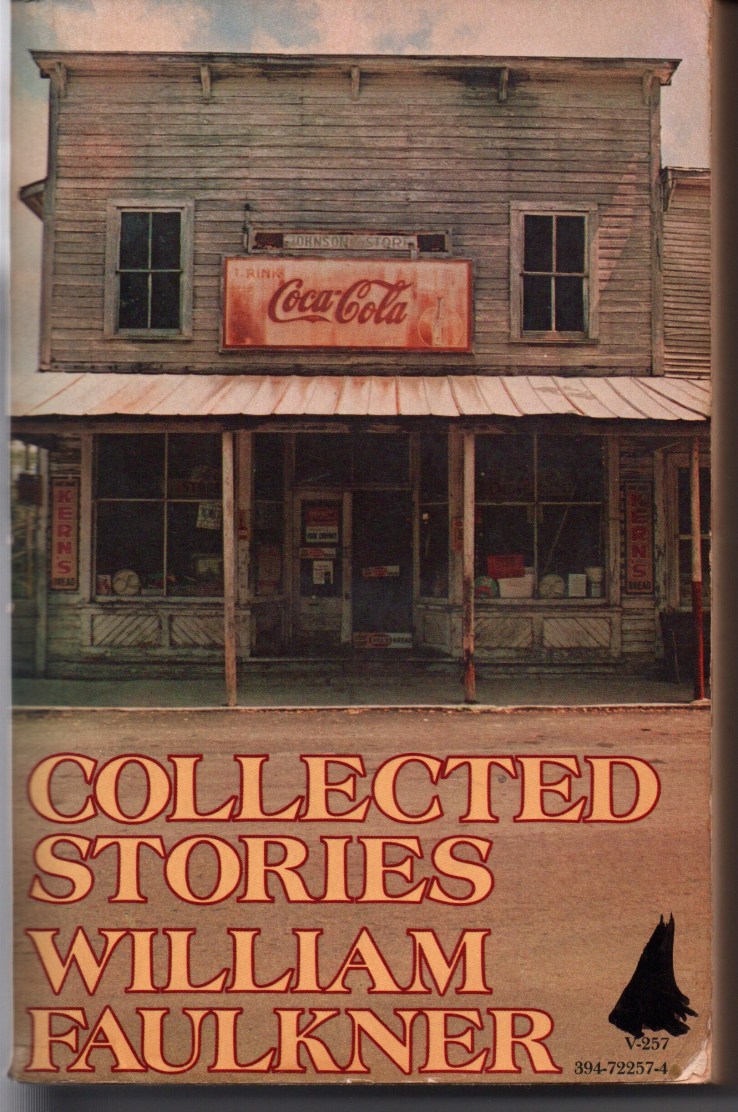
Collected Stories by William Faulkner. 1977 first edition trade paperback from Vintage. This book is 900 pages, exactly, not including the ancillary pages that detail publication dates and rights, as well as Vintage’s back catalog—and yet not one of those pages manages to credit the cover designer or photographer.

I’ve been reading/re-reading this very slowly, with the loose goal of finishing this year.

img_1929

Nausicaä of the Valley of the Wind, Vol. 4 by Hayao Miyazaki. English translation by David Lewis and Toren Smith. Studio Ghibli Library edition by Viz Media, 2010. No designer credited, but the cover is by Miyazaki and I imagine we can probably credit Studio Ghibli with the design.

I started rereading Nausicaä this week after revisiting Princess Mononoke this week. Then I got horribly ill, and the only stuff I can really read when I’m really sick are comics. I scanned Vol. 4 for this week’s Three Books post; I finished it pretty late last night. Vol 5-7 remain.

img_1931

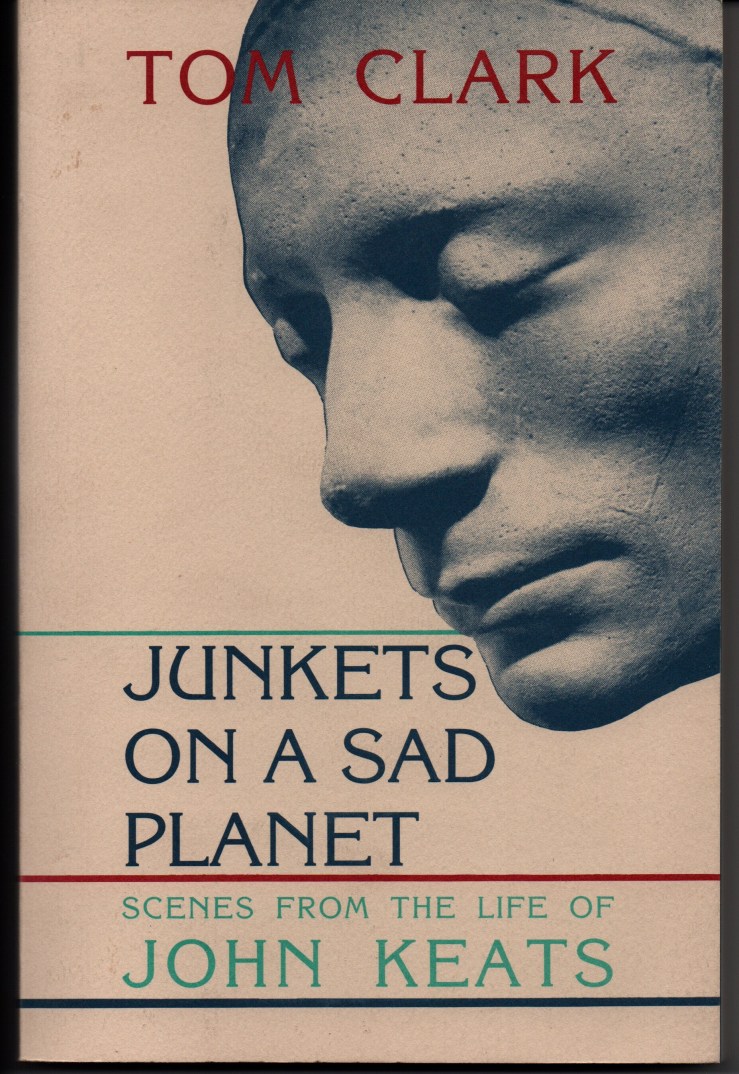
Junkets on a Sad Planet by Tom Clark. First edition trade paperback by Black Sparrow Press, 1994. Cover design by Barbara Martin. The image is of Benjamin Robert Haydon’s life mask for John Keats (from a photo by Christopher Oxford).

I awoke around 1am in the middle of last week, and unable to sleep, I wandered to our den and randomly took this from the shelf to begin reading/rereading. The book (its title is a pun) is difficult to explain, a beautiful experience, rich. Here’s Clark’s own description: “…an extended reflection on the modern poet’s life, as Keats lived it. The book may be read by turns as poetic novel, biography in verse, allegorical masque, historical oratorio for several voices.”

“Memoirs of a Madman” — Nikolai Gogol

Poprishchin, Ilya Repin (1882)


“Memoirs of a Madman”

by

Nikolai Gogol

English translation by Claud Field

from The Mantle and Other Stories


October 3rd. — A strange occurrence has taken place today. I got up fairly late, and when Mawra brought me my clean boots, I asked her how late it was. When I heard it had long struck ten, I dressed as quickly as possible.

To tell the truth, I would rather not have gone to the office at all today, for I know beforehand that our department-chief will look as sour as vinegar. For some time past he has been in the habit of saying to me, “Look here, my friend; there is something wrong with your head. You often rush about as though you were possessed. Then you make such confused abstracts of the documents that the devil himself cannot make them out; you write the title without any capital letters, and add neither the date nor the docket-number.” The long-legged scoundrel! He is certainly envious of me, because I sit in the director’s work-room, and mend His Excellency’s pens. In a word, I should not have gone to the office if I had not hoped to meet the accountant, and perhaps squeeze a little advance out of this skinflint.

A terrible man, this accountant! As for his advancing one’s salary once in a way — you might sooner expect the skies to fall. You may beg and beseech him, and be on the very verge of ruin — this grey devil won’t budge an inch. At the same time, his own cook at home, as all the world knows, boxes his ears.

I really don’t see what good one gets by serving in our department. There are no plums there. In the fiscal and judicial offices it is quite different. There some ungainly fellow sits in a corner and writes and writes; he has such a shabby coat and such an ugly mug that one would like to spit on both of them. But you should see what a splendid country-house he has rented. He would not condescend to accept a gilt porcelain cup as a present. “You can give that to your family doctor,” he would say. Nothing less than a pair of chestnut horses, a fine carriage, or a beaver-fur coat worth three hundred roubles would be good enough for him. And yet he seems so mild and quiet, and asks so amiably, “Please lend me your penknife; I wish to mend my pen.” Nevertheless, he knows how to scarify a petitioner till he has hardly a whole stitch left on his body. Continue reading ““Memoirs of a Madman” — Nikolai Gogol”

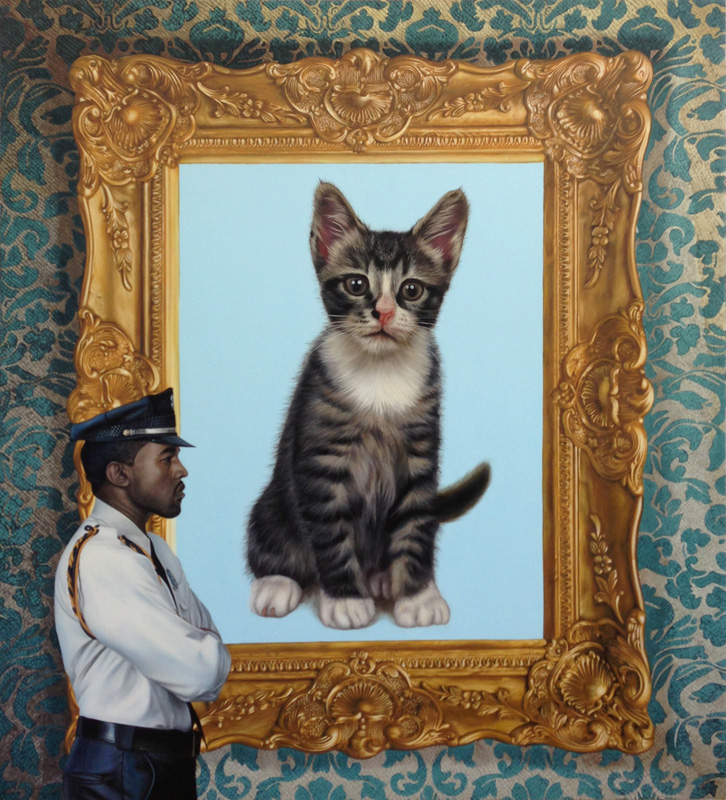
The Measure of All Things — Marc Dennis

marc-dennis-the-measure-of-all-things_2013_oil_on_linen_66x72inches

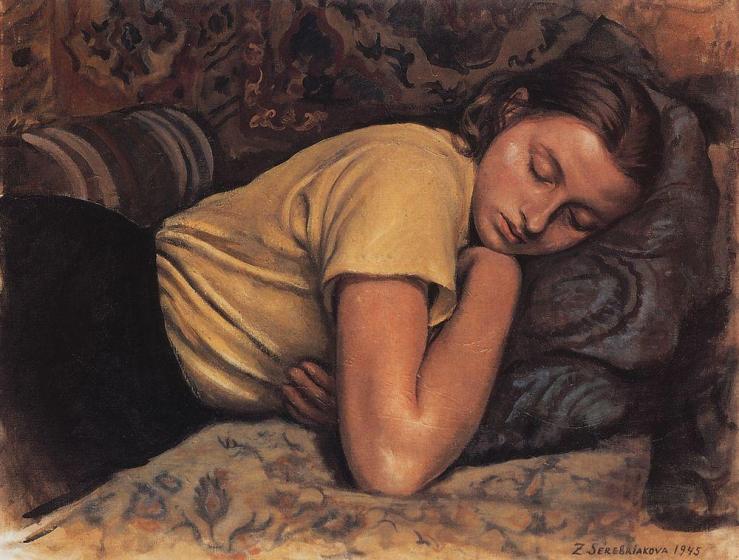
Sleeping Katya — Zinaida Serebriakova

sleeping-katya-1945

Ceiling of Ganshoin Temple at Obuse — Katsushika Hokusai

ceiling-of-ganshoin-temple-at-obuse

Dictionaries (William H. Gass)

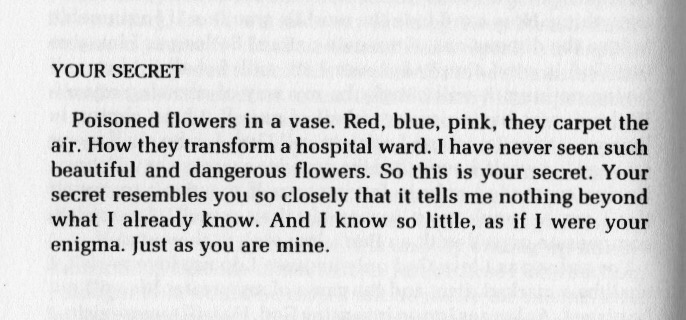
Dictionaries are supposed to influence usage. Usage is what dictionaries record. “This is what we have meant,” they say; “continue in the same vein so that communication will be accurate, reliable, and fluent.” Then the next dictionary will record that fidelity, and issue the same command, which will complete the cycle. Among users, however, there are many who are incompetent, inventive, or disobedient. The French Academy tries to drive strays back into the herd. English has no comparable guardian and its speakers lack every discipline. Soon meanings have multiplied or slid or mushed, and niceties—delicate distinctions—lost along the way. In this haphazard fashion, influence has come to mean a kind of causality that operates only through the agency of a consciousness. Where this puts the stars, I’m not sure. Because of smog or city glare, we often don’t even know the stars are there.

From: William H. Gass’s essay “Influence.” Collected in A Temple of Texts.

Breakup Comics (Samplerman)

tumblr_o4ystjfeu11u3qyk4o1_1280

Illustration for Oscar Wilde’s “The Star-Child” — James Hill

img_1927

From The Heritage Press collection The Short Stories of Oscar Wilde (1968), featuring paintings by James Hill.


“The Star-Child”

by

Oscar Wilde


Once upon a time two poor Woodcutters were making their way home through a great pine-forest.  It was winter, and a night of bitter cold.  The snow lay thick upon the ground, and upon the branches of the trees: the frost kept snapping the little twigs on either side of them, as they passed: and when they came to the Mountain-Torrent she was hanging motionless in air, for the Ice-King had kissed her.

So cold was it that even the animals and the birds did not know what to make of it.

‘Ugh!’ snarled the Wolf, as he limped through the brushwood with his tail between his legs, ‘this is perfectly monstrous weather.  Why doesn’t the Government look to it?’

‘Weet! weet! weet!’ twittered the green Linnets, ‘the old Earth is dead and they have laid her out in her white shroud.’

‘The Earth is going to be married, and this is her bridal dress,’ whispered the Turtle-doves to each other.  Their little pink feet were quite frost-bitten, but they felt that it was their duty to take a romantic view of the situation. Continue reading “Illustration for Oscar Wilde’s “The Star-Child” — James Hill”

House — Erik Thor Sandberg

54b338d02ba24eddef5c6976de2a2557

Allegory of Man’s Choice between Virtue and Vice (detail) — Frans Francken the Younger

Screenshot 2016-03-18 at 8.15.19 PM

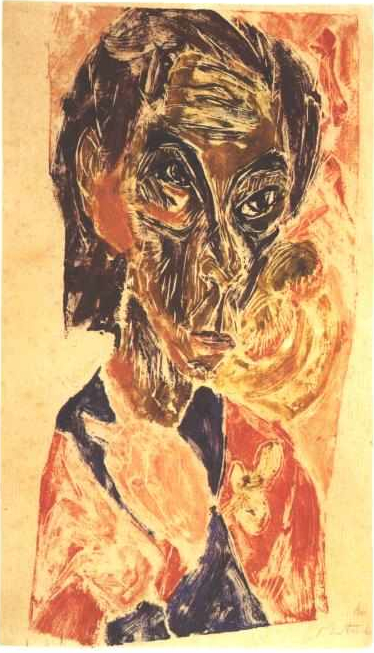
Head of a Sick Man — Ernst Ludwig Kirchner

head-of-a-sick-man

Extinction, Gilgamesh, Miyazaki’s Wolfchild, etc. (A Riff)

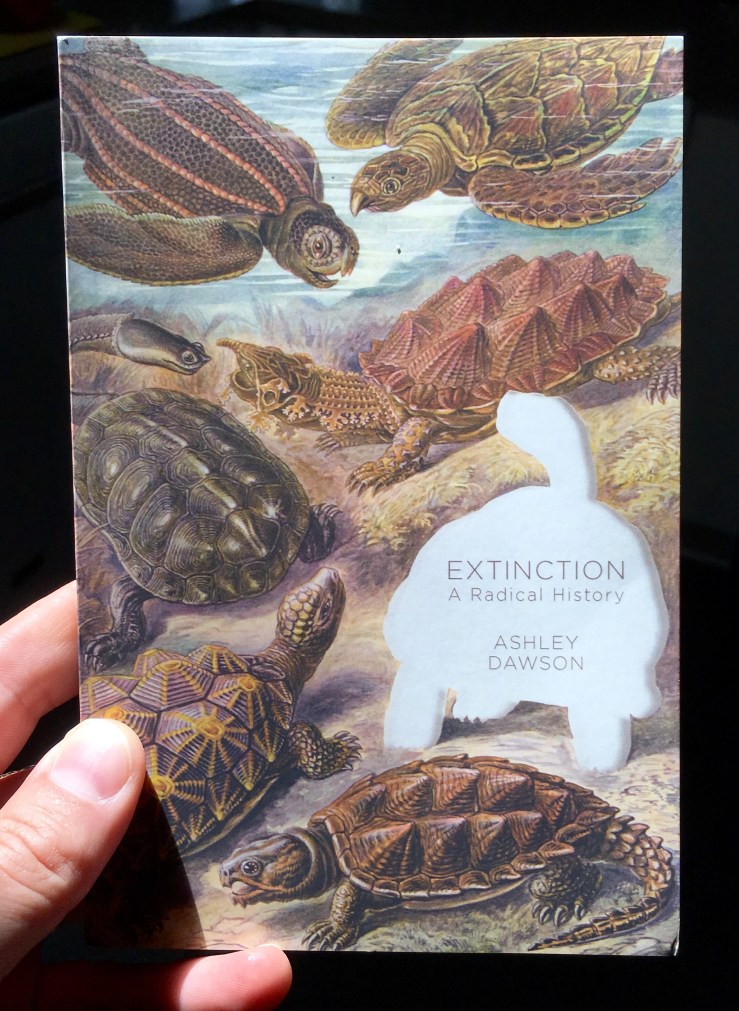
img_1916

Reading the introduction to Ashley Dawson’s Extinction: A Radical History this afternoon (forthcoming from OR Books), I felt a surreal yet nevertheless familiar twinge of apocalypse anxiety creeping into my right eye, where it tussled around. Is unnerved the metaphor I look for, here? Or is my response more literal? “Extinction is the product of a global attack on the commons, the great trove of air, water, plants and creatures, as well as collectively created cultural forms such as language, that have been regarded traditionally as the inheritance of humanity as a whole,” writes Dawson, and I nod my head. Dawson continues: “capital of course depends on continuous commodification of this environment to sustain its growth.” I nod some more. “Indeed, there is no clearer example of the tendency of capital accumulation to destroy its own conditions of reproduction than the sixth extinction.” More nodding, more anxiety.

Chapter 2 of Extinction, “An Etiology of the Present Catastrophe,” assuages (not its intent, thank gawd) some of my anxiety by beginning with a passage from old ancient historical literature. Dawson gives us a passage from The Epic of Gilgamesh; we get Gilgamesh and his homeboy Enkidu killing the forest guardian spirit Humbaba. I’m more at home in literature, in history, outside of the awful present (I’m thinking that later in the book, in chapters titled “Anti-Extinction” and “Radical Conservation,” that Dawson might like call on me to do something other than to extol the virtues of Thoreau and Emerson to college sophomores. (And nod in agreement with him)).

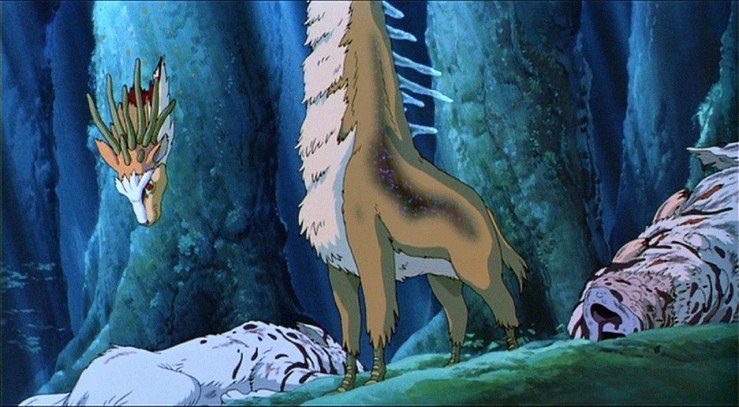
But so and anyway, reading this prefatory paragraph from Gilgamesh, I made the immediate imaginative leap that literature licenses me: the episode that Dawson has invoked, this city-statesman vs. nature narrative featuring Gilgamesh straight up beheading the forest protector—well, that’s the central conflict/plot in Hayao Miyazki’s 1997 film Mononoke-hime (rendered in English as Princess Mononoke, but I think better translated as Spirit-Monster Wolfchild or something like that, although no one asked me).

More on that in a second, but first, Dawson again, from the middle of “An Etiology of the Present Catastrophe,” wherein we move from literature to history to the present:

The violence generated by what geologists call the Holocene epoch was directed not just at other human beings but also at nature. Indeed what is perhaps humanity’s first work of literature, the Epic of Gilgamesh (1800 BCE), hinges on a mythic battle with natural forces. In the epic, the protagonist Gilgamesh, not content with having built the walls of his city-state, seeks immortality by fighting and beheading Humbaba, a giant spirit who protects the sacred cedar groves of Lebanon. Gilgamesh’s victory over Humbaba is a pyrrhic one, for it causes the god of wind and storm to curse Gilgamesh. We know from written records of the period that Gilgamesh’s defeat of the tree god reflects real ecological pressures on the Sumerian empire of the time. As the empire expanded, it exhausted its early sources of timber. Sumerian warriors were consequently forced to travel to the distant mountains to the north in order to harvest cedar and pine trees, which they then ferried down the river to Sumer. These journeys were perilous since tribes who populated the mountains resisted the Sumerians’ deforestation of their land.

Dawson goes on to to detail how the Sumerians’ short-sighted, expansion-oriented agricultural methods led to the downfall of their empire: A scarcity of timber and farming practices that led to a “salt-soaked earth” led to Iraq’s modern deserts.

Before my eye starts twitching again let me return (retreat) to Miyazaki—
111

—well, I watched Princess Mononoke just this Saturday, the Saturday before Easter—for like the first time in a decade. (We watch his films all the time with our kids (PonyoTotoro, and Spirited Away especially), but not Mononoke, which is too abject and violent yet for their tender years. And not Porco Rosso, which isn’t really for kids. Or The Wind Rises).

Anyway: So: Mononoke, I was thinking, rewatching it, was/is this wonderfully, beautiful, aesthetically astonishing take on the beginning of industrialization, and the weaponization of industry, and, like man vs nature, in a primordial sense. It’s also a Japanese Western, a meditation on purity and defilement, and a study of sorts on a feral child. Not having seen it in some time, I was perhaps most struck by how complex, brave, and intriguing I found the industrialist arms-designer/manufacturer Lady Eboshi (voiced by Minnie Driver). She fights against the forest gods, she destroys and pollutes nature, she creates new weapons capable of killing people with a proficiency not yet seen on this earth. And yet at the same time, she finds a home for lepers and prostitutes—and not just a home, but a reason to be, an agency, an existential calling outside of the feudal system that would otherwise reject them. She’s the most human character in the film, perhaps. Miyazaki’s villains are rarely absolute. They are gray, human. And in their complicated, seemingly realistic humanity, I find the consolation of fantasy, yes?

So in viewing Mononoke this Easter eve—well maybe it was the wine I drank transubstantiating (or do I mean consubstantiating?) my blurred vision toward something more (an aesthetic illusion)—

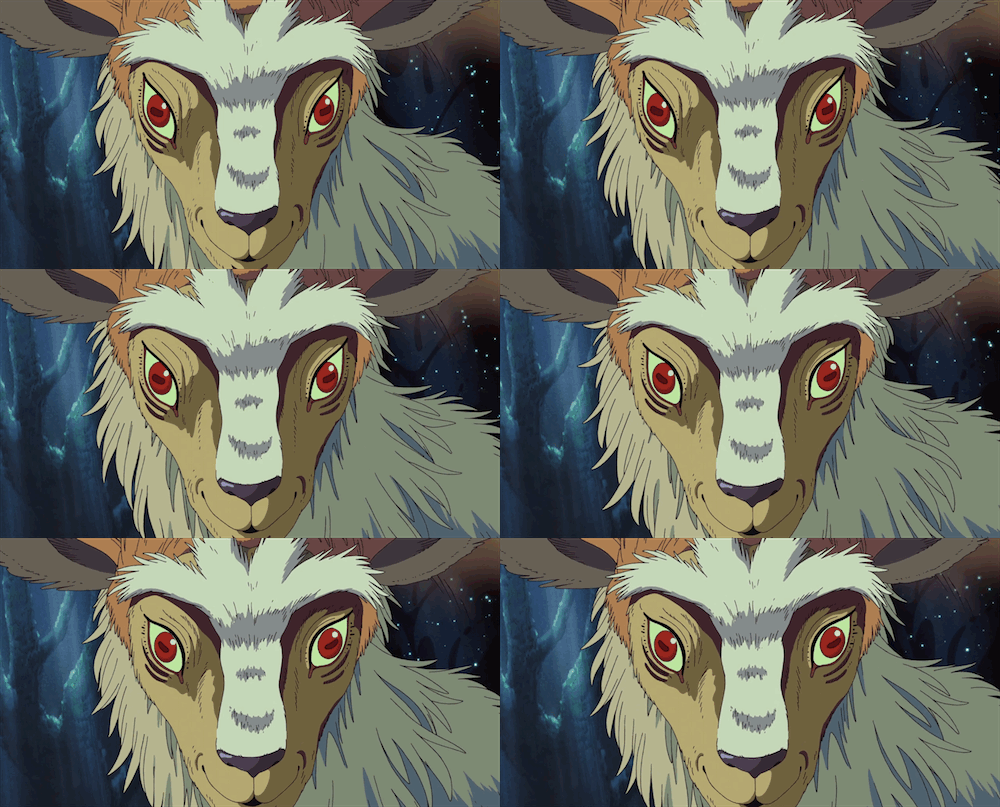
—or and but anyway, so in Mononoke, I found some kind of synthesis, some kind of reconciliation between the wolfchild (Princess Mononoke, human-divine emissary of the old gods, the human not in nature but of and for nature) and the film’s protagonist (the self-exiled marked man Ashitaka—a cursed wanderer like Cain).
tumblr_inline_o1qoyqk5ln1t6t6sv_500

But no redemption. Or maybe only aesthetic redemption—which is ultimately anaesthetic, no? The rebirth in Mononoke—spoilers, maybe sorry—well the rebirth is predicated on the same sacrifices (same same but different) detailed in the Easter story.  Self-sacrifice: Obliteration of self. The tree-god-guardian—as in Gilgamesh—is beheaded. But Miyazaki contrives a heroic restoration of the godhead, one that turns the literal megafauna creature into a metaphor, an idea—a concept of nature to be attended to—stewarded by—humankind. This is wish-fulfillment, of course.

But hey and so: that fantastic wonderful megafauna, eh? They range and lumber and speak and act and assert agency throughout Mononoke. Boars, wolves, elk. A kirin. Hell, apes. In Extinction, Dawson takes us through the mass extinction of the megafauna that once trudged and bounded over the earth, detailing the “Pleistocene wave of megadeath.” (Should I note that saber tooth tigers and giant sloths and wooly mammoths populated my childhood fantasies more than any T-rex or triceratops?). We—that is humans—we are the big animals now, elephants be damned! (Dawson opens his book with the shocking line “His face was hacked off.” This, in reference to the elephant Satao, felled by poachers). Is it my dreams and fantasies that I find consolation in? In aesthetics? In the crusty rime of religion that sticks to my consciousness?

Extinction frightens me—wait, I said that already, forgive me, I’ve been applying anaesthetics, okay—Dawson’s take is realurgentvital. It makes me face that I prefer my ecological criticism couched in the fantasy of the fantasy-past (Mononoke) or the doomed-but-hey-maybe-not-so-doomed-future (I’ll call here on Mononoke’s twin, Miyazaki’s 1984 epic Nausicaä of the Valley of the Windas an example). But prefer is not the right mode/verb here (and neither is the spirit of this riff, a solipsistic navel-gazing blog of myself). This failure is my failure.

Maybe skip ahead, eh?— “The struggle to preserve global biodiversity must be seen as an integral part of a broader fight to challenge an economic and social system based on feckless, suicidal, expansion,” Dawson writes later. And skimming ahead more, I see notes on regenesis, ideas toward rewilding. Dawson’s last paragraphs—damn me, I skipped way ahead, looking for rhetorical solace—point toward “a human capacity to dream and to build a more just, more biologically diverse world.” A rhetorical flourish is easy but Dawson’s claim here is real—a future requires imagination, but an imagination beyond solace, beyond consolation. Miyazaki’s ecoverses perhaps point toward an imaginative collective future—or perhaps don’t. I don’t have a rhetorical flourish to finish off this riff.