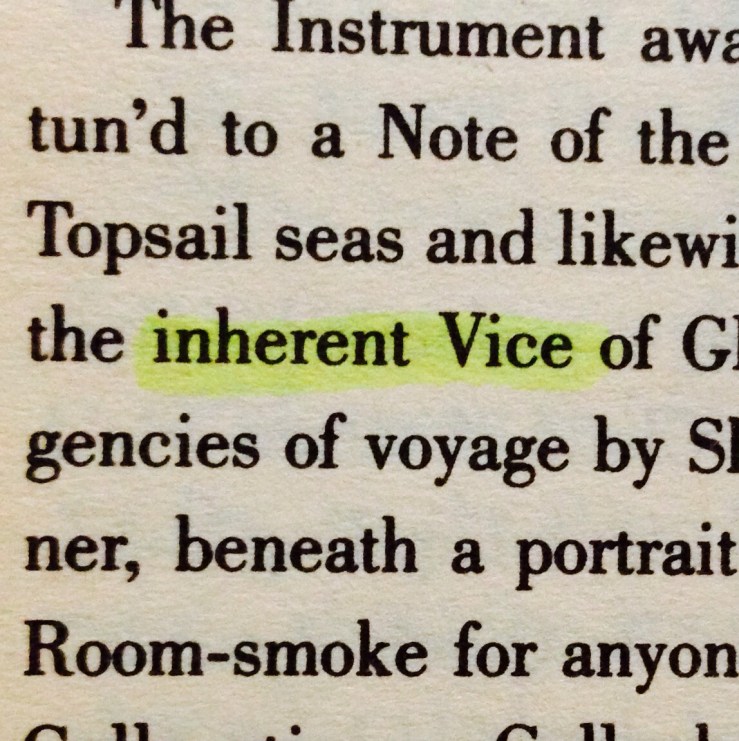
From page 272, chapter 27 of Thomas Pynchon’s novel Mason & Dixon. The phrase “against the day” appeared in chapter 13, on page 125. Perhaps I should be on the lookout for the phrase “bleeding edge.”

From page 272, chapter 27 of Thomas Pynchon’s novel Mason & Dixon. The phrase “against the day” appeared in chapter 13, on page 125. Perhaps I should be on the lookout for the phrase “bleeding edge.”

A. Okay. So I finished the first section of Mason & Dixon a few days ago. I’m now at the part where our titular heroes are smoking weed and eating snacks with George Washington. I can’t possibly handle all the material I’ve read so far—even in a riff (here’s the first riff for anyone inclined)—so instead I’ll annotate a few passages from Ch. 19, one of my favorite episodes so far.
B. Setting and context: 1762. “The George,” a pub in Gloucestershire (Mason’s home county). The patrons at the tavern are heatedly discussing the eleven days that went “missing” when the British moved from the Julian calendar to the Gregorian calendar.
One (satirical) source for this controversy comes from William Hogarth’s 1755 painting An Election Entertainment; in the detail below, you can read (barely) the slogan “Give us our Eleven Days” on the black banner under the man’s foot.

A bit more context, via History Today:
In 1750 England and her empire, including the American colonies, still adhered to the old Julian calendar, which was now eleven days ahead of the Gregorian calendar, introduced in 1582 by Pope Gregory XIII and in use in most of Europe.
Attempts in the sixteenth and seventeenth centuries to adopt the new calendar had broken on the rock of the Church of England, which denounced it as popish. The prime mover in changing the situation was George Parker, second Earl of Macclesfield, a keen astronomer and a Fellow of the Royal Society. He was assisted in his calculations by his friend James Bradley…
I emphasized Bradley—Mason’s mentor—and Macclesfield as they are minor characters in this episode.
Basically, the pub patrons demand that Mason explain what happened to the missing eleven days.
C. Okay—so this whole episode, this discussion of time and space clearly helps underline the big themes of Mason & Dixon: How to measure the intangible, the invisible—how to pin down the metaphysical to the physical—how to know and how to not know. (Hence all the paranoia). Continue reading “Thomas Pynchon’s Mason & Dixon (Second Riff: The Pygmies’ Discovery of Great Britain)”
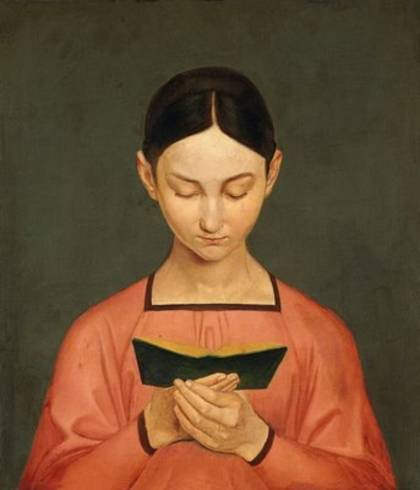


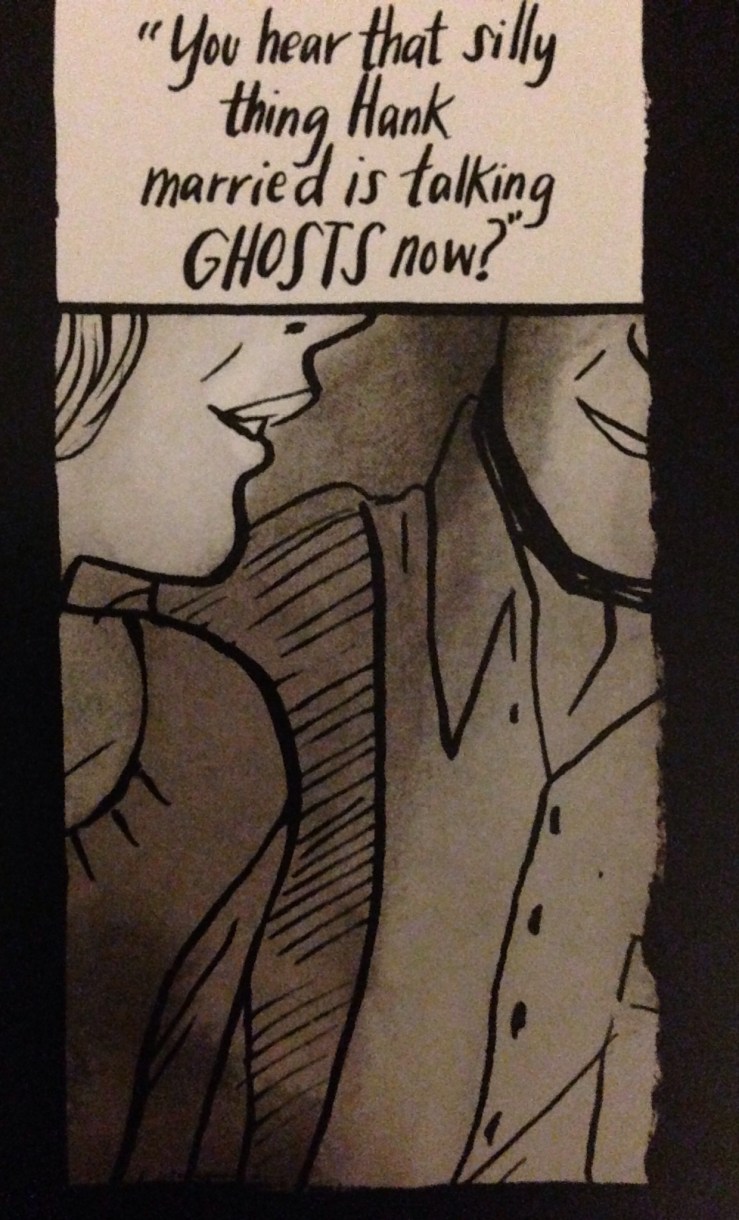
I was pleasantly surprised when a copy of Emily Carroll’s issue of Frontier came in Friday’s mail. I tried to read it right away but a domestic chore intervened—which ended up working out better, really. I read it in bed by the light of my iPhone’s flashlight, which is exactly as god intended.

Publisher Youth in Decline’s blurb:
Our final issue of 2014 features an eerie and stunning original comic by Emily Carroll titled, “Ann by the Bed.” Experience the dreadful tale of Ann Herron’s bloody murder, and the awful legacy that persists today in Southern Ontario.

Full review forthcoming. Until then, check out Carroll’s excellent comics,“The Prince and the Sea,” and “His Face All Red.”


“The Sentimentality of William Tavener”
by
Willa Cather
It takes a strong woman to make any sort of success of living in the West, and Hester undoubtedly was that. When people spoke of William Tavener as the most prosperous farmer in McPherson County, they usually added that his wife was a “good manager.” She was an executive woman, quick of tongue and something of an imperatrix. The only reason her husband did not consult her about his business was that she did not wait to be consulted.
It would have been quite impossible for one man, within the limited sphere of human action, to follow all Hester’s advice, but in the end William usually acted upon some of her suggestions. When she incessantly denounced the “shiftlessness” of letting a new threshing machine stand unprotected in the open, he eventually built a shed for it. When she sniffed contemptuously at his notion of fencing a hog corral with sod walls, he made a spiritless beginning on the structure—merely to “show his temper,” as she put it—but in the end he went off quietly to town and bought enough barbed wire to complete the fence. When the first heavy rains came on, and the pigs rooted down the sod wall and made little paths all over it to facilitate their ascent, he heard his wife relate with relish the story of the little pig that built a mud house, to the minister at the dinner table, and William’s gravity never relaxed for an instant. Silence, indeed, was William’s refuge and his strength.
William set his boys a wholesome example to respect their mother. People who knew him very well suspected that he even admired her. He was a hard man towards his neighbors, and even towards his sons; grasping, determined and ambitious. Continue reading “Read Willa Cather’s short story “The Sentimentality of William Tavener””



 Biblioklept