The Cranky Brilliance of Dwight Macdonald | Masscult and Midcult Reviewed

20140625-134004-49204118.jpg
Masscult and Midcult: Essays Against the American Grain
 (NYRB) collects ten pieces by cultural critic Dwight Macdonald. First published between the late 1950s and the early 1970s, the essays here feature varied subjects, always attacked through the same critical lens. Whether he’s excoriating late-period Hemingway, deriding structural linguistics, lamenting the Revised Standard Version of the Bible, or chewing up a now-forgotten bestseller, Macdonald centers the brunt of his attack on the creeping “impostures and vulgarizations” of what he called Masscult and Midcult.

In “Masscult and Midcult,” the longest and perhaps most effective essay in the collection, Macdonald defines, illustrates, and analyzes his neologisms against the historical backdrop of a rising commercial culture. “Masscult is bad in a new way,” he tells us,” it doesn’t even have the theoretical possibility of being good . . . It is not just unsuccessful art. It is non-art. It is even anti-art.” He continues:

Masscult offers its customers neither an emotional catharsis nor an aesthetic experience, for these demand effort. The production line grinds out a uniform product whose humble aim is not even entertainment, for this too implies life and hence effort, but merely distraction. It may be stimulating or narcotic, but it must be easy to assimilate. It asks nothing of its audience, for it is “totally subjected to the spectator. And it gives nothing.

Macdonald views Masscult as the unfortunate inevitability of capitalism and the burgeoning middle class—or, more appropriately, Middlebrow class. Macdonald is deeply concerned with the location of brows, referring to himself as Highbrow throughout the collection (even once casually dropping We highbrows, a little bone to the reader, perhaps). He repeatedly points out that the virtue of Lowbrowness is that the Lowbrow know where their brows are in relation to higher brows. Folk art is not just acceptable, it’s good stuff, important in its hierarchical relationship to High Art. It’s those damn Middlebrows that cause confusion. For Macdonald, Midcult is thus the real threat:

…the danger to High Culture is not so much from Masscult as from a peculiar hybrid bred from the latter’s unnatural intercourse with the former. A whole middle culture has come into existence and it threatens to absorb both its parents. This intermediate form—let us call it Midcult—has the essential qualities of Masscult—the formula, the built-in reaction, the lack of any standard except popularity—but it decently covers them with a cultural figleaf. In Masscult the trick is plain—to please the crowd by any means. But Midcult has it both ways: it pretends to respect the standards of High Culture while in fact it waters them down and vulgarizes them. 

Macdonald uses case samples from Hemingway, Thornton Wilder, Archibald MacLeish, and Stephen Vincent Benet to demonstrate the creeping vulgarity of Midcult posing as High Art.  

Indeed, Macdonald almost always focuses on negative examples, perhaps taking for granted that his audience will be guided to a better understanding of High Culture through…I don’t know? Osmosis? He clearly shows a strong affection for the Modernists (up through Faulkner, with a special love for Joyce and Picasso), but the essays in the collection rarely explore in detail exactly why the good stuff is so good. He comes closest in “Updating the Bible” when he points out that the Revised Standard Version strips too much of the King James Version’s poetic strangeness, poetic strangeness that startles, engages, and demands the attention—the work—of the reader. Elsewhere, he connects the avant-garde of the Modernists to an aesthetic tradition going back to the Renaissance (and Periclean Greece before it), and while these moments are satisfying, they are hardly explored with the same vigor Macdonald applies to pulling away Midcult’s figleaf.

Neither does Macdonald prescribe medicine to go along with his devastating diagnoses. To a reader who felt his criticism should be more constructive, Dwight Macdonald replies: “I’ve always specialized in negative criticism—literary, political, cinematic, cultural—because I’ve found so few contemporary products about which I could be ‘constructive’ without hating myself in the morning.” A succinct summary of the entire book, that.

Something of the force of Macdonald’s personality evinces in that reply, a combative, cranky, brilliant personality that asserts the nuances of its own subjectivity as if they were Aesthetic Law. And Macdonald is so, so, so perceptive, building each case thoroughly on textual grounds—citation, history, context—that make me blush here for not attempting his thoroughness in kind. But that would take more space and time than We Postmoderns should like to allot, no? (Maybe this review would gain more rhetorical force were I to simply make it a list of cat gifs).

Macdonald’s diagnoses remain prescient. His 1958 annihilation of James Gould Cozzens’s novel By Loved Possessed takes to task not just the author, but also the Masscult audience that made the book a best seller and the Midcult critics who sanctified the book’s artistic merits. With a few simple substitutions, the essay might be updated to critique Jonathan Franzen’s Freedom. In “The String Untuned,” ostensibly a review of the Third Edition of Webster’s New International Dictionary, Macdonald complains that the influence of structuralism, whatever merits it may have, has crumbled the authority of lexicography to the point that they “have untuned the string, made a sop of the solid structure of English, and encouraged the language to eat up” previous authorities. Essays like “The Book-of-the-Millennium Club” and “The Triumph of Fact” critique the increasing American tendency to look only for self-improvement in Art—to look for not just the digested form, but the predigested form. A footnote to “Masscult and Midcult” puts it plainly: “the Midcult audience always wants to be Told.” Ours is a time of explainer sites, listicles, speed-reading apps, and “curators” who boil entire works of philosophy down to feel-good quotes aimed at the reader’s desire for self-improvement and self-satisfaction.

Some gaps and miscalculations mar Masscult and Midcult. There’s no reckoning with the approach of postmodernism—or if there is, such a reckoning only evinces in the denial that an artful synthesis of the High and Low might be possible. (It’s worth noting here that Macdonald views Ulysses as a critique of vulgar culture, not a synthesis of vulgar culture. What would he make of Pynchon?). And while Macdonald beats up on poor Norman Rockwell, there’s nothing in the collection that deals with the nascent Pop Art movement. (Perhaps Warhol was too Midcult to merit mention; perhaps Macdonald did write about Pop Art somewhere else). His hatred for rock and roll feels purely reactionary, and his insistence that rock’s superior jazz is a folk art (and not a High Art) is just plain wrong. Also, Macdonald, for all his talk of the avant-garde and challenging comfortable conventions, writes exclusively about white men. There are few mentions of persons of color or women in the collection. I wonder what Macdonald thought of Flannery O’Connor, say, who succinctly echoed his own views when she wrote: “Art never responds to the wish to make it democratic; it is not for everybody; it is only for those who are willing to undergo the effort needed to understand it.”

At the core of these essays though is a cranky brilliance, a burning, engaging intelligence that seeks to upend simple, comfortable assumptions about how we view, interact with, and think about art. Are we to be mere consumers—and not just consumers, but infantilized consumers, baby birds gulping down material that’s already been predigested for us? Or are we willing to put in the work, to dare strong strangeness—to be confused, to not know, to feel discomfort, alienation, newnessMasscult and Midcult doesn’t just evoke these questions, it formally answers them by challenging and provoking, offering a critical rubric for winnowing the wheat from the chaff, or, to use Macdonald’s metaphor, escaping “not only from the Masscult depths but also from the agreeable ooze of the Midcult swamp.” For all the apparent bitterness, there’s something nourishing here. Macdonald’s essays retain a critical power that transcends their ostensible subjects, a power that rips the poseur’s figleaf away. Great stuff.    


“Technologies of Heartbreak” — Josephine Demme

tumblr_n7osgziyJc1qzh8wko1_1280

Illustration for a syllabus by Ben Marcus. (via)

German Cases — Jörg Immendorff

Far From — Dorothea Tanning

One of the Daughters of the Dragon King Who Lives in the Bottom of the Sea — Utagawa Kuniyoshi

Destroy corporate rock! (SST Records TV Commercial)

The Hundred-Year House (Book Acquired, 6.19.2014)

20140621-192942-70182350.jpg

Wonderful cover on Rebecca Makkai’s The Hundred-Year House, new in hardback from Penguin this summer. Blurb from the author’s site:

When Doug’s mother-in-law offers up the coach house at Laurelfield, her hundred-year-old estate north of Chicago, Doug and his wife Zee accept. Doug is fascinated by the house’s previous life as an artists’ colony, and hopes to find something archival there about the poet Edwin Parfitt, who was in residence at Laurelfield in the twenties (and whose work happens to be Doug’s area of scholarship). When he learns that there are file cabinets full of colony materials in the attic, Doug is anxious to get to work and save his career—but his mother-in-law refuses him access. With help from friends, Doug finally does access the Parfitt file—only to find far stranger and more disturbing material than he bargained for.

Doug may never learn all the house’s secrets, but the reader does, as the narrative zips back in time from 1999 to 1955 and 1929. We see the autumn right after the colony’s demise, when its newlywed owners are more at the mercy of the place’s lingering staff than they could imagine; and we see it as a bustling artists’ community fighting for survival in the last, heady days of the 1920s.

Through it all, the residents of Laurelfield are both plagued and blessed by the strange legacy of Laurelfield’s original owners: extraordinary luck, whether good or bad.


My Eyes in the Time of Apparition — August Natterer

My first meeting with Oscar Wilde was an astonishment (W.B. Yeats)

My first meeting with Oscar Wilde was an astonishment. I never before heard a man talking with perfect sentences, as if he had written them all over night with labour and yet all spontaneous. There was present that night at Henley’s, by right of propinquity or of accident, a man full of the secret spite of dulness, who interrupted from time to time, and always to check or disorder thought; and I noticed with what mastery he was foiled and thrown. I noticed, too, that the impression of artificiality that I think all Wilde’s listeners have recorded came from the perfect rounding of the sentences and from the deliberation that made it possible. That very impression helped him, as the effect of metre, or of the antithetical prose of the seventeenth century, which is itself a true metre, helped its writers, for he could pass without incongruity from some unforeseen, swift stroke of wit to elaborate reverie. I heard him say a few nights later: “Give me The Winter’s Tale, ‘Daffodils that come before the swallow dare’ but not King Lear. What is King Lear but poor life staggering in the fog?” and the slow, carefully modulated cadence sounded natural to my ears. That first night he praised Walter Pater’s Studies in the History of the Renaissance: “It is my golden book; I never travel anywhere without it; but it is the very flower of decadence: the last trumpet should have sounded the moment it was written.” “But,” said the dull man, “would you not have given us time to read it?” “Oh no,” was the retort, “there would have been plenty of time afterwards—in either world.” I think he seemed to us, baffled as we were by youth, or by infirmity, a triumphant figure, and to some of us a figure from another age, an audacious Italian fifteenth century figure. A few weeks before I had heard one of my father’s friends, an official in a publishing firm that had employed both Wilde and Henley as editors, blaming Henley who was “no use except under control” and praising Wilde, “so indolent but such a genius”; and now the firm became the topic of our talk. “How often do you go to the office?” said Henley. “I used to go three times a week,” said Wilde, “for an hour a day but I have since struck off one of the days.” “My God,” said Henley, “I went five times a week for five hours a day and when I wanted to strike off a day they had a special committee meeting.” “Furthermore,” was Wilde’s answer, “I never answered their letters. I have known men come to London full of bright prospects and seen themcomplete wrecks in a few months through a habit of answering letters.” He too knew how to keep our elders in their place, and his method was plainly the more successful, for Henley had been dismissed. “No he is not an aesthete,” Henley commented later, being somewhat embarrassed by Wilde’s Pre-Raphaelite entanglement; “one soon finds that he is a scholar and a gentleman.” And when I dined with Wilde a few days afterwards he began at once, “I had to strain every nerve to equal that man at all”; and I was too loyal to speak my thought: “You and not he said all the brilliant things.” He like the rest of us had felt the strain of an intensity that seemed to hold life at the point of drama. He had said on that first meeting “The basis of literary friendship is mixing the poisoned bowl”; and for a few weeks Henley and he became close friends till, the astonishment of their meeting over, diversity of character and ambition pushed them apart, and, with half the cavern helping, Henley began mixing the poisoned bowl for Wilde. Yet Henley never wholly lost that first admiration, for after Wilde’s downfall he said to me: “Why did he do it? I told my lads to attack him and yet we might have fought under his banner.”

From W.B. Yeats’s autobiography, The Trembling of the Veil.

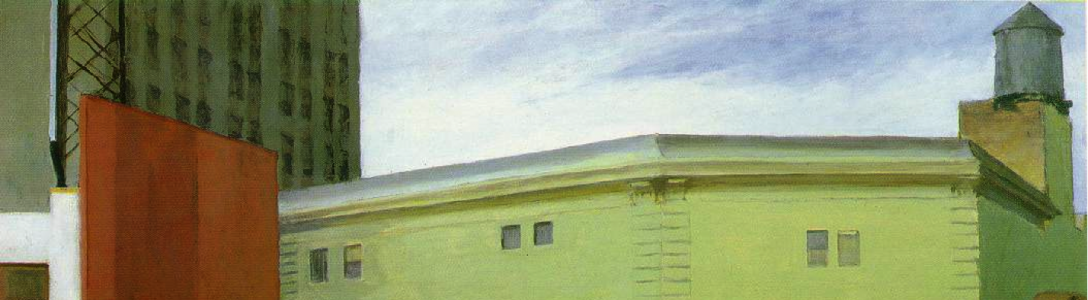
Girl Reading (Thinking of Edward Hopper) — Kiko Esperilla

kiko esperilla

“Quasimodo” — Tom Clark

20140623-182727-66447266.jpg

Film Poster for Wong Kar Wai’s The Grandmaster — Vania Zouravliov

filmz.ru

Books Acquired (Second Week of June, 2014)

20140621-192932-70172308.jpg

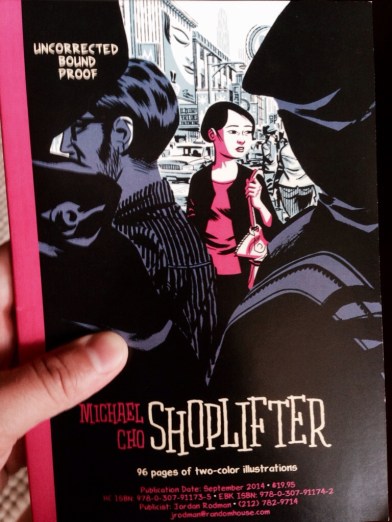
Two historicalish fictions.

First, Merivel: A Man of His Time by Rose Tremain, which is new in trade paperback; the hardback received good reviews last year. Pub’s blurb:

The wonderful new historical novel set in seventeenth-century England from Rose Tremain, author of Restoration (shortlisted for the Booker Prize), The Road Home (winner of the Orange Prize) and Trespass (a Richard & Judy pick). Merivel has been called ‘wonderfully entertaining’ (Guardian Books of the Year) and ‘an unadulterated delight’ (Independent) and has been shortlisted for the Walter Scott Prize for Historical Fiction.

The gaudy years of the Restoration are long gone and Robert Merivel, physician and courtier to King Charles II, sets off for the French court in search of a fresh start. But royal life at the Palace of Versailles – all glitter in front and squalor behind – leaves him in despair, until a chance encounter with the seductive Madame de Flamanville, allows him to dream of a different future.
But will that future ever be his? Summoned home urgently to attend to the ailing King, Merivel finds his loyalty and skill tested to their limits.

20140621-192930-70170223.jpg

Also: Peter Tremayne’s The Seventh Trumpet:

When a murdered corpse of an unknown young noble is discovered, Fidelma of Cashel is brought in to investigate, in Peter Tremayne’s The Seventh Trumpet

Ireland, AD 670. When the body of a murdered young noble is discovered not far from Cashel, the King calls upon his sister, Fidelma, and her companion Eadulf to investigate. Fidelma, in addition to being the sister of the king, is a dailaigh—an advocate of the Brehon Law Courts—and has a particular talent for resolving the thorniest of mysteries.

But this time, Fidelma and Eadulf have very little to work with—the only clue to the noble’s identity is an emblem originating from the nearby kingdom of Laign. Could the murder be somehow related to the wave of violence erupting in the western lands of the kingdom? The turmoil there is being stirred up by an unknown fanatical figure who claims to have been summoned by “the seventh angel” to remove the “impure of faith.” Fidelma and Eadulf, once again grappling with a tangled skein of murder and intrigue, must somehow learn what connects the dead noble, a murdered alcoholic priest, and an abbot who has turned his monastery into a military fortress. When it appears that things cannot get more complex, Fidelma herself is abducted, and Eadulf must rescue her before the mystery can be solved.

Automat (I) — Michaël Borremans

“A Seventeenth-Century Story” — A. A. Milne

“A Seventeenth-Century Story”

by

A. A. Milne 

There is a story in every name in that first column of The Times- -Births, Marriages, and Deaths—down which we glance each morning, but, unless the name is known to us, we do not bother about the stories of other people. They are those not very interesting people, our contemporaries. But in a country churchyard a name on an old tombstone will set us wondering a little. What sort of life came to an end there a hundred years ago?

In the parish register we shall find the whole history of them; when they were born, when they were married, how many children they had, when they died—a skeleton of their lives which we can clothe with our fancies and make living again. Simple lives, we make them, in that pleasant countryside; “Man comes and tills the field and lies beneath”; that is all. Simple work, simple pleasures, and a simple death.

Of course we are wrong. There were passions and pains in those lives; tragedies perhaps. The tombstones and the registers say nothing of them; or, if they say it, it is in a cypher to which we have not the key. Yet sometimes the key is almost in our hands. Here is a story from the register of a village church— four entries only, but they hide a tragedy which with a little imagination we can almost piece together for ourselves. Continue reading ““A Seventeenth-Century Story” — A. A. Milne”