“How Can I Love You If You Won’t Lie Down?” — Silver Jews

Six (More) Stoner Novels (And a Bonus Short Story)

A few years ago, to celebrate 4/20, Sam Munson at the Daily Beast wrote an article praising “The Best Stoner Novels.” Not a bad list—Wonder Boys, sure, Invisible Man, a bit of a stretch, The Savage Detectives, a very big stretch, but sure, why not. Anyway, six more stoner novels (not that we advocate the smoking of the weed)—

Junkie, William Burroughs

Burroughs’s (surprisingly lucid) early novel Junkie may take its name from heroin, but it’s full of weed smoking. Lesson: weed smoking leads to heroin. And the inevitable search for yage.

Inherent Vice, Thomas Pynchon

Doc Sportello, the wonky PI at the off-center of Pynchon’s California noir, is always in the process of lighting another joint, if not burning his fingers on the edges of a roach. A fuzzy mystery with smoky corners.

Infinite Jest, David Foster Wallace

Hal Incandenza, protagonist of Wallace’s opus, spends much of his time hiding in the tunnels of Enfield Tennis Academy, feeding his bizarre marijuana addiction, which is, in many ways, more of an addiction to a secret ritual than to a substance. Hal’s hardly the only character in IJ who likes his Mary Jane; there’s a difficult section near the novel’s beginning that features a minor character preparing to go on a major weed binge. His pre-smoking anxiety works as a challenge to any reader seeking to enter the world of Infinite Jest.

The Lord of the Rings, J.R.R. Tolkien

I’m pretty sure “pipe-weed” isn’t tobacco.

Chronic City, Jonathan Lethem

I kind of hated Chronic City, a novel where characters seem to light up joints on every other page. It seems to have been written in an ambling, rambling fog, absent of any sense of immediacy, urgency, or, uh, plot. Bloodless stuff, but, again, very smoky.

Stoner, John Williams

Okay. Stoner has nothing to do with marijuana. But, hey, it’s called Stoner, right?

Bonus short story: Raymond Carver’s “Cathedral”

Carver’s classic story features a myopic narrator who comes up against his own shortcomings when he meets an old friend of his wife, a blind man who ironically sees deeper than he does. After drinking too much booze, they spark up, share a doob, and take in a documentary about European cathedrals. Great stuff.
The Anatomy of Violence (Book Acquired, Some Time Last Week)

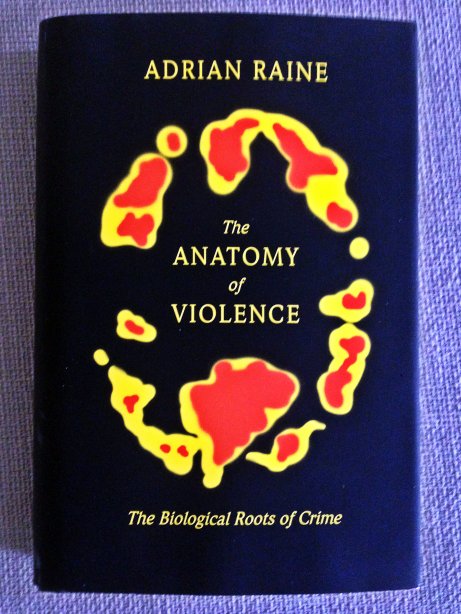
IMG_5191

Adrian Raine’s The Anatomy of ViolencePublisher Random House’s blurb:

Why do some innocent kids grow up to become cold-blooded serial killers? Is bad biology partly to blame? For more than three decades Adrian Raine has been researching the biological roots of violence and establishing neurocriminology, a new field that applies neuroscience techniques to investigate the causes and cures of crime. In The Anatomy of Violence, Raine dissects the criminal mind with a fascinating, readable, and far-reaching scientific journey into the body of evidence that reveals the brain to be a key culprit in crime causation.Raine documents from genetic research that the seeds of sin are sown early in life, giving rise to abnormal physiological functioning that cultivates crime. Drawing on classical case studies of well-known killers in history—including Richard Speck, Ted Kaczynski, and Henry Lee Lucas—Raine illustrates how impairments to brain areas controlling our ability to experience fear, make good decisions, and feel guilt predispose us to violence. He contends that killers can actually be coldhearted: something as simple as a low resting heart rate can give rise to violence. But arguing that biology is not destiny, he also sketches out provocative new biosocial treatment approaches that can change the brain and prevent violence.

Finally, Raine tackles the thorny legal and ethical dilemmas posed by his research, visualizing a futuristic brave new world where our increasing ability to identify violent offenders early in life might shape crime-prevention policies, for good and bad. Will we sacrifice our notions of privacy and civil rights to identify children as potential killers in the hopes of helping both offenders and victims? How should we punish individuals with little to no control over their violent behavior? And should parenting require a license? The Anatomy of Violence offers a revolutionary appraisal of our understanding of criminal offending, while also raising provocative questions that challenge our core human values of free will, responsibility, and punishment.

Weed Burner — Vincent van Gogh

Moon Weed

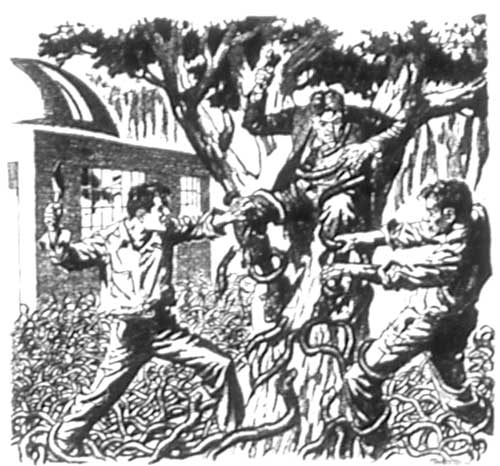
“The Moon Weed” by Harl Vincent

Bart hacked and hacked at the rubbery growth.


Hobart Madison pursed his lips in a whistle of incredulous surprise as he regarded the object that lay in the palm of his hand. An ordinary pebble, it seemed to be, but a pebble in which a strange fire smouldered and showed itself here and there through the dull surface.

“Would you mind repeating what you just said, Van?” he asked.

“You heard me the first time. I say that that’s a diamond and that it came from the moon.” Carl Vanderventer glared at his friend in resentment of his doubting tone.

“Mean to tell me you’ve been there? To the moon?”

“Certainly not. I’m not a Jules Verne adventurer. But I’m telling you that stone is a diamond of the first water and that it came from the moon. Weighs over a hundred carats, too. You can have it appraised yourself if you think I’m kidding you.”

Bart Madison laughed. “Don’t get sore, Van,” he said. “I’m not doubting your word. But Lord, man—the thing’s so incredible! It takes a little time to soak in. And you say there are more?”

“Sure. This one’s the largest of five I’ve found so far. And there’s other stuff, too. Wait till you see. Fossils, beetles and things. I tell you, Bart, the moon was inhabited at one time. I’ve the evidence and I want you to be the first to see it.” The eyes of the young scientist shone with excitement as he saw that his friend was roused to intense interest.

“So that’s what all your experimenting has been aimed at. No wonder it cost so much.”

“Yes, and you’ve been a brick for financing me. Never asked a question, either. But Bart, it’ll all come back to you now. Know how much that stone’s worth?”

“Plenty, I guess. But, forget about the financing and all that. Where’s this laboratory of yours?” Madison had pushed his chair back from his desk and was reaching for his hat.

“Over in the Ramapo Mountains, not far from Tuxedo. I’ll have you there in two hours. Sure you can spare the time to go out there now?” Vanderventer was enthusiastically eager.

“Spare the time? You just try and keep me from going!”

Neither of them noticed the sinister figure that lurked outside the door which led into the adjoining office. They chattered excitedly as they passed into the outer hall and made for the elevator.

(Read the rest of “The Moon Weed,” originally published in Astounding Stories, August, 1931)

Turin Spring — Giorgio de Chirico

Even Dwarfs Started Small — Werner Herzog (Full Film)

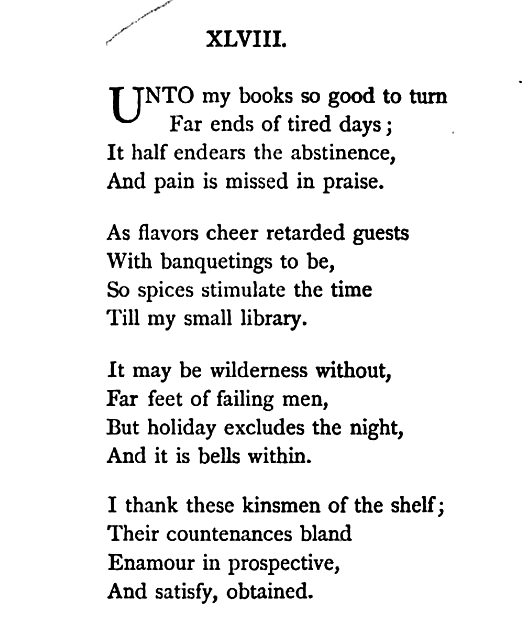
“Unto my books so good to turn” — Emily Dickinson

Capture

Spiegel im Spiegel — Vincent Desiderio

Desiderio_Spiegel_im_Spiegel

(More/via).

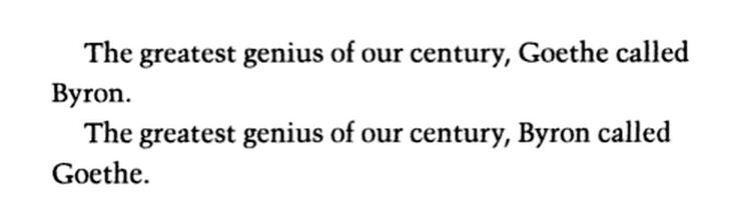
Mutual Appreciation Society (David Markson)

Capture

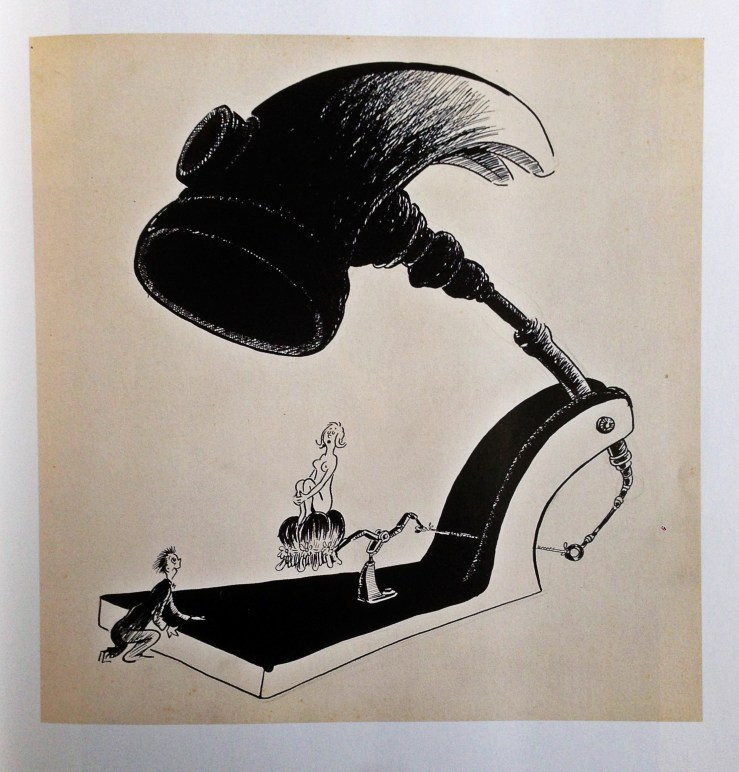
Untitled — Dr. Seuss

IMG_5181

“Reflections for Gentlemen-jockeys” — Franz Kafka

“Reflections for Gentlemen-jockeys” by Franz Kafka

When you think it over, winning a race is nothing to sigh for. The fame of being hailed as the best rider in the country is too intoxicating a pleasure when the applause strikes up not to bring a reaction the morning after.

The envy of your opponents, cunning and fairly influential men, must trouble you in the narrow enclosure you now traverse after the flat racecourse, which soon lay empty before you save for some laggards of the previous round, small figures charging the horizon.

Many of your friends are rushing to gather their winnings and only cry ‘Hurrah!’ to you over their shoulders from distant pay boxes; your best friends laid no bet on your horse, since they feared that they would have to be angry with you if you lost, and now that your horse has come in first and they have won nothing, they turn away as you pass and prefer to look along the stands.

Your rivals behind you, firmly in the saddle, are trying to ignore the bad luck that has befallen them and the injustice they have somehow suffered; they are putting a brave new face on things, as if a different race were due to start, and this time a serious one after such child’s play.

For many ladies the victor cuts a ridiculous figure because he is swelling with importance and yet cannot cope with the never-ending handshaking, saluting, bowing, and waving, while the defeated keep their mouths shut and casually pat the necks of their whinnying horses.

And finally from the now overcast sky rain actually begins to fall.

Still Life with Skull, Candle and Book — Paul Cezanne

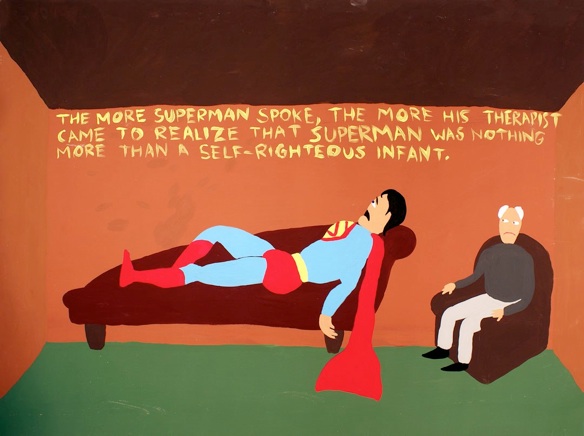
The More Superman Spoke — Jayson Musson

07.-supermanstherapist

(Via/more).

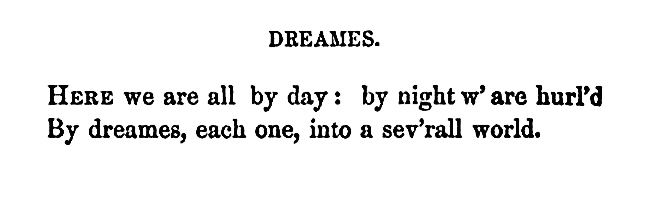
“Dreames” — Robert Herrick

Capture

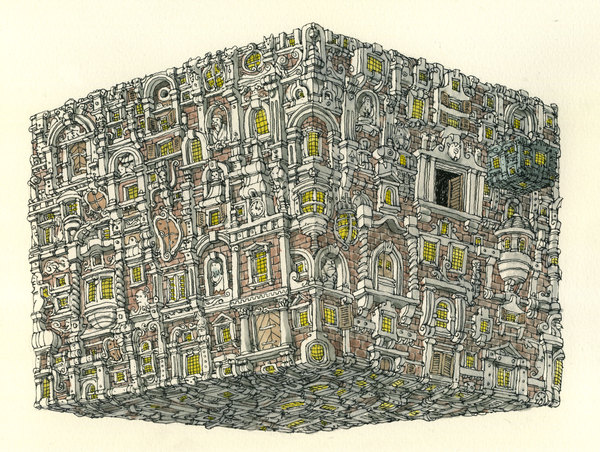
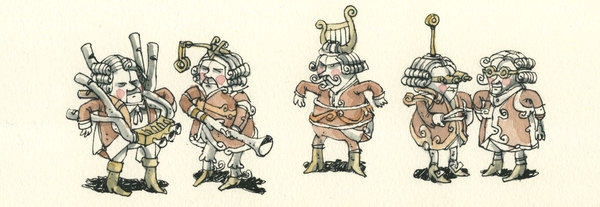
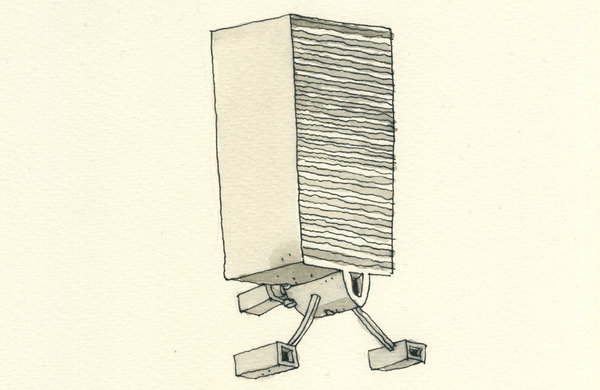
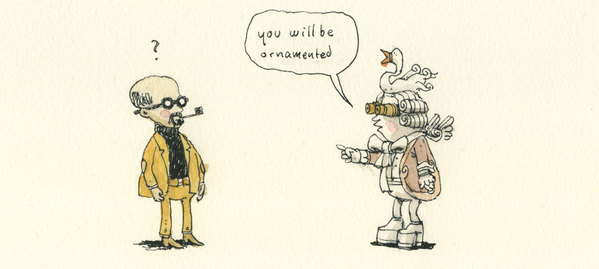
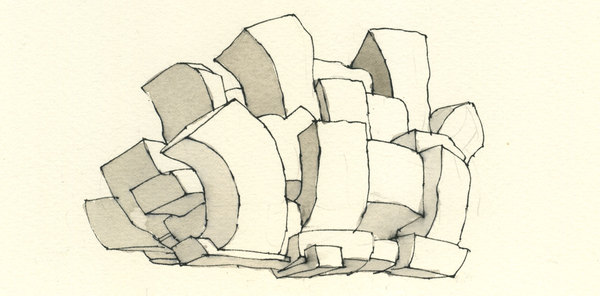
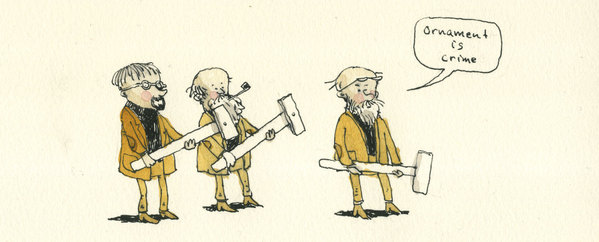
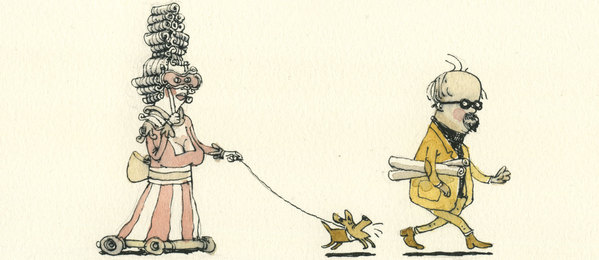
Rococo Borg vs The Association of Modernist Architects — Mattias Adolfsson

40217880c836c870cb687c970a768e25 ee3d359221e41d11679a7b9d33aed9b5 a2cd72731b785e607097b4c8b735f4d6 7688231f53421d922bac64efd0c2f60f 3784ff3670c6b426c1a9b917d7fe90b5 0d3eafe6b0376dba4bee0ba7106ea61d 2804392f9ac746cd0c020391846ae23b

(More/via).

Tim O’Brien Tells a War Story (And Explains Why He Writes)