Gonzo: The Life and Work of Dr. Hunter S. Thompson (2008 Documentary)

Paperback Island (Lovely and Vibrant Book Acquired, 4.05.2013)

20130405-161009.jpg

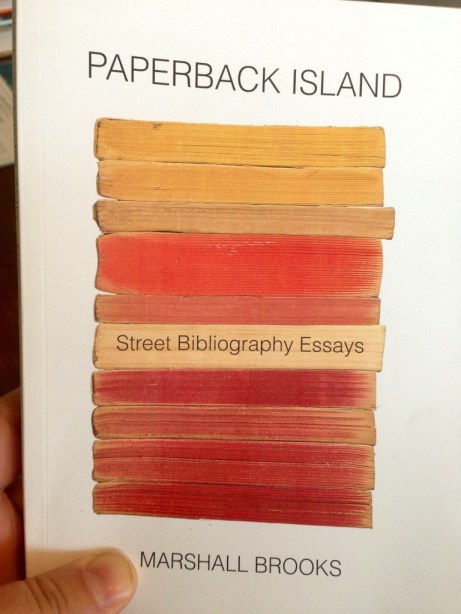
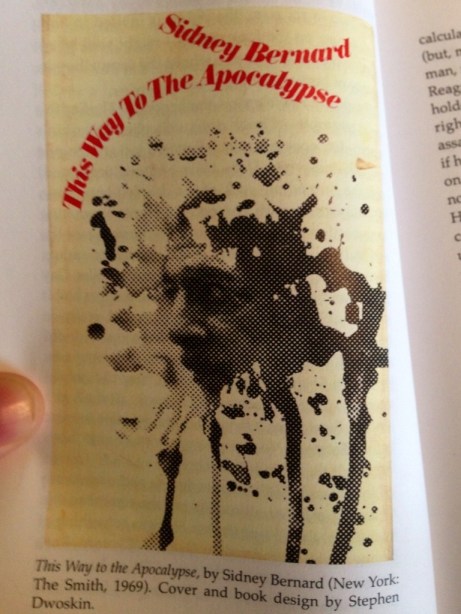
Marshall Brook’s memoir-in-essays, Paperback Island arrived at Biblioklept World Headquarters today. Brooks’s book snagged me into an hour of reading I hadn’t planned on doing, even from the preface (I usually skim or skip prefaces, but Brooks’s hooked me—he opens at Tuli Kupferberg’s funeral and then talks about reading a book that required him to actually stay in the author’s apartment). There’s an opening memoir about an adolescent friendship that revolves around books; this essay could easily tread into schmaltz but instead intrigues and foregrounds what comes next. The following essay, “Sid,” is about Sidney Bernard’s book This Way to the Apocalypse, which I now want to read.

20130405-161019.jpg

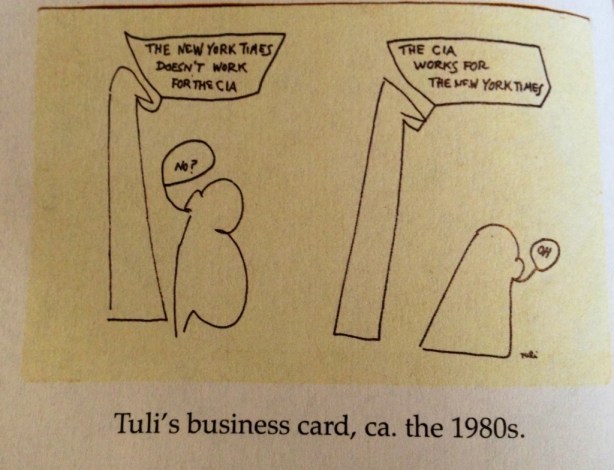
This is followed by a piece on Tuli Kupferberg, whose funeral seems to serve as a galvanizing force throughout the essays. Anyway, I kept reading, and this is obviously not a review, just an enthusiastic entry on the blog, a sort of, yes, this is a beautiful, perhaps melancholy, but beautiful book, a book about books, writers, libraries…full review to come.

20130405-161013.jpg


Dull Melancholy/Fantastical Chimeras

Capture

“What writing means to me” (Don DeLillo)

delillo

(Don DeLillo, in a 1982 interview with Contemporary Literature).

New Trailer for Baz Luhrmann’s Adaptation of The Great Gatsby

I reviewed the first full trailer for Baz Luhrmann’s adaptation of F. Scott Fitzgerald’s The Great Gatsby back in early summer of last year. The film, originally slated for a Christmas 2012 release, was delayed supposedly to finish effects, add new music (featured in this trailer), and give the film a higher-profile summer release.


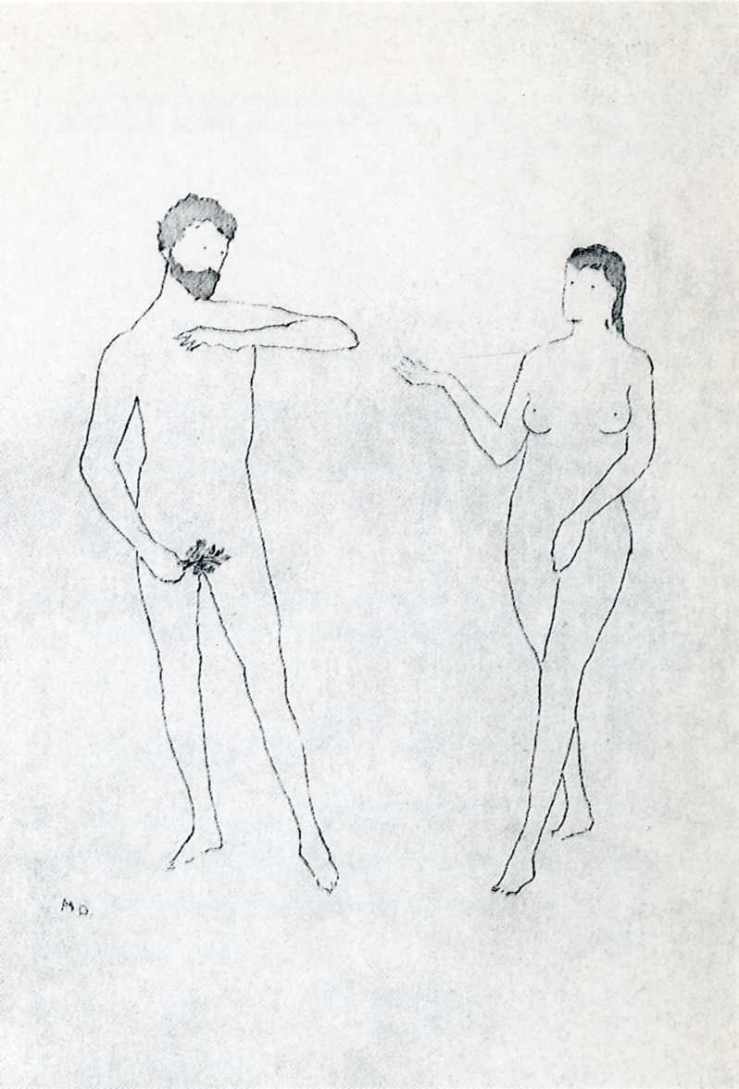
Selected Details after Cranach — Marcel Duchamp

selected-details-after-cranach-1968

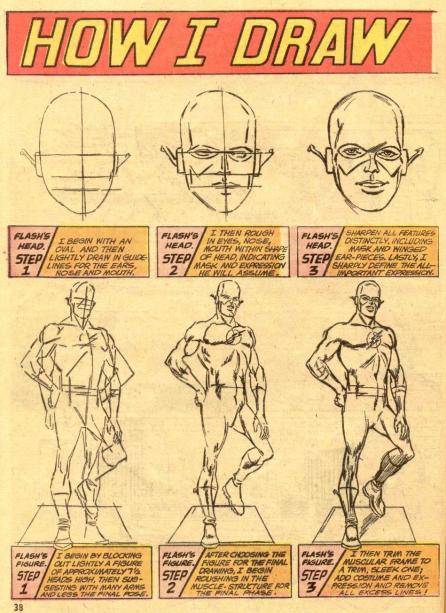
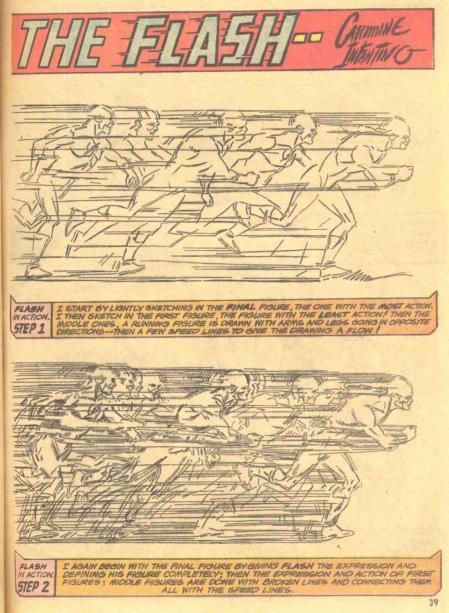
RIP Carmine Infantino

carmine infantino. how i draw the flash. 001carmine infantino. how i draw the flash. 002

RIP comic book artist and editor Carmine Infantino, 1925-2013.

Obituary / images via.

“The Prophetic Pictures” — Nathaniel Hawthorne

“The Prophetic Pictures” by Nathaniel Hawthorne

“But this painter!” cried Walter Ludlow, with animation. “He not only excels in his peculiar art, but possesses vast acquirements in all other learning and science. He talks Hebrew with Dr. Mather and gives lectures in anatomy to Dr. Boylston. In a word, he will meet the best-instructed man among us on his own ground. Moreover, he is a polished gentleman, a citizen of the world—yes, a true cosmopolite; for he will speak like a native of each clime and country on the globe, except our own forests, whither he is now going. Nor is all this what I most admire in him.”

“Indeed!” said Elinor, who had listened with a women’s interest to the description of such a man. “Yet this is admirable enough.”

“Surely it is,” replied her lover, “but far less so than his natural gift of adapting himself to every variety of character, insomuch that all men—and all women too, Elinor—shall find a mirror of themselves in this wonderful painter. But the greatest wonder is yet to be told.”

“Nay, if he have more wonderful attributes than these,” said Elinor, laughing, “Boston is a perilous abode for the poor gentleman. Are you telling me of a painter, or a wizard?” Continue reading ““The Prophetic Pictures” — Nathaniel Hawthorne”

Girl Reading — Harold Knight

knight-girl-reading

Disintegration Loop 1.1 — William Basinski


RIP Roger Ebert

roger-ebert-twitter-photo-051210-xlg

RIP Roger Ebert, 1942-2013

Roger Ebert had a tremendous impact on how I thought about criticism and how a review should be written, voiced, pitched. I didn’t always agree with the guy, but I loved watching his show (usually more than the films he and Siskel reviewed) and reading his reviews, and I loved following him on Twitter, where I’ll miss him most I guess.

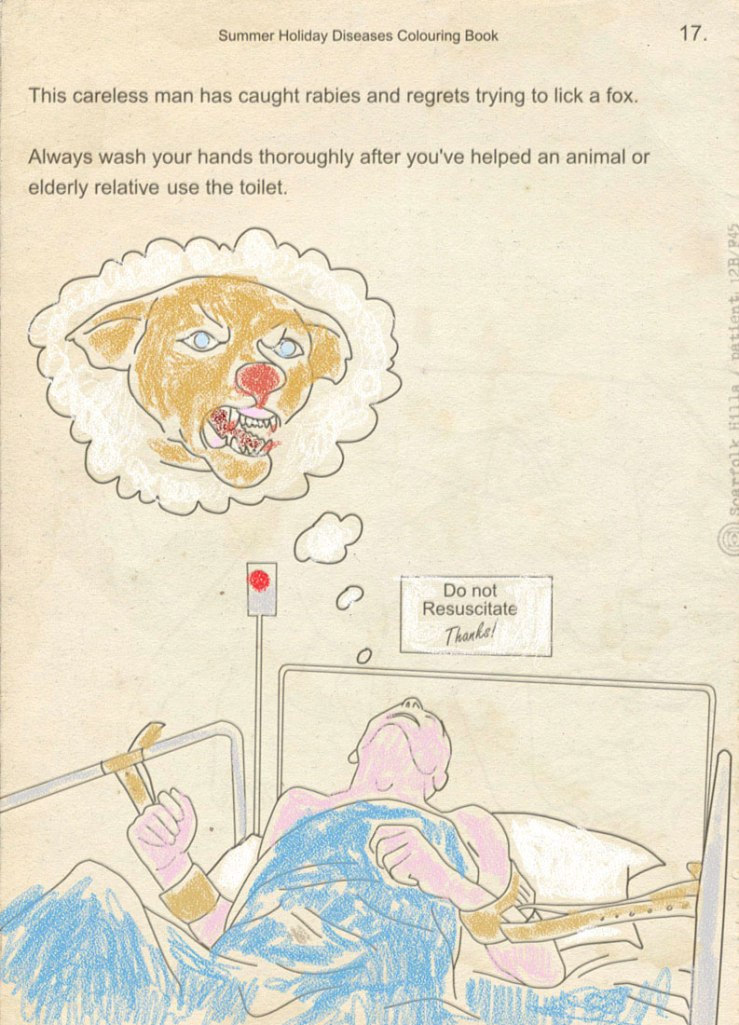
Summer Holiday Diseases Colouring Book

colouringwww-scarfolk-blogspot-com

(Scarfolk Council is so good/weird/spooky that it’s basically unfair…)

“If a nation’s literature declines, the nation atrophies and decays” (Ezra Pound)

ep

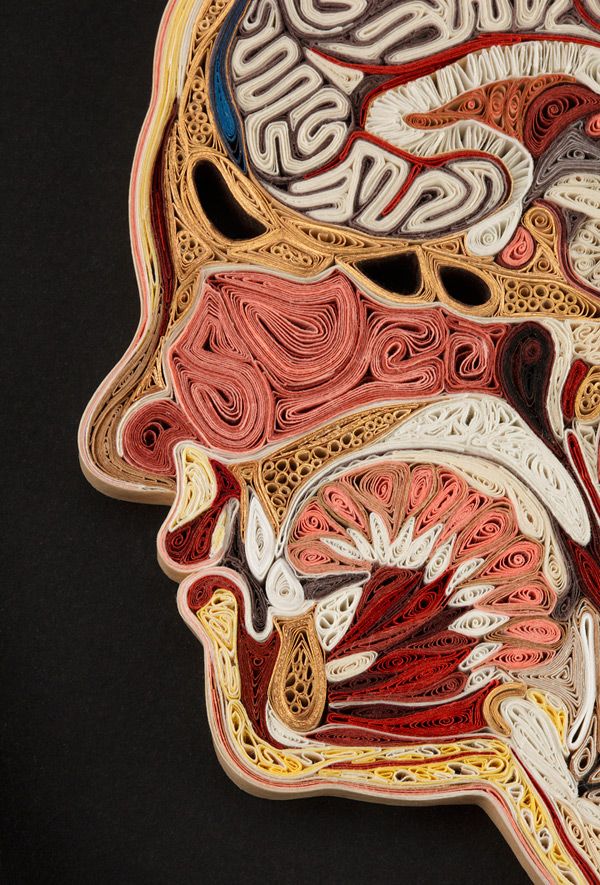
Profile (Detail) — Lisa Nilsson

Lisa-Nilsson1

(More).

“Beyond the Bayou” — Kate Chopin

“Beyond the Bayou” by Kate Chopin

The bayou curved like a crescent around the point of land on which La Folle’s cabin stood. Between the stream and the hut lay a big abandoned field, where cattle were pastured when the bayou supplied them with water enough. Through the woods that spread back into unknown regions the woman had drawn an imaginary line, and past this circle she never stepped. This was the form of her only mania.

She was now a large, gaunt black woman, past thirty-five. Her real name was Jacqueline, but every one on the plantation called her La Folle, because in childhood she had been frightened literally “out of her senses,” and had never wholly regained them.

It was when there had been skirmishing and sharpshooting all day in the woods. Evening was near when P’tit Maitre, black with powder and crimson with blood, had staggered into the cabin of Jacqueline’s mother, his pursuers close at his heels. The sight had stunned her childish reason.

She dwelt alone in her solitary cabin, for the rest of the quarters had long since been removed beyond her sight and knowledge. She had more physical strength than most men, and made her patch of cotton and corn and tobacco like the best of them. But of the world beyond the bayou she had long known nothing, save what her morbid fancy conceived.

People at Bellissime had grown used to her and her way, and they thought nothing of it. Even when “Old Mis'” died, they did not wonder that La Folle had not crossed the bayou, but had stood upon her side of it, wailing and lamenting.

P’tit Maitre was now the owner of Bellissime. He was a middle-aged man, with a family of beautiful daughters about him, and a little son whom La Folle loved as if he had been her own. She called him Cheri, and so did every one else because she did.

None of the girls had ever been to her what Cheri was. They had each and all loved to be with her, and to listen to her wondrous stories of things that always happened “yonda, beyon’ de bayou.”

But none of them had stroked her black hand quite as Cheri did, nor rested their heads against her knee so confidingly, nor fallen asleep in her arms as he used to do. For Cheri hardly did such things now, since he had become the proud possessor of a gun, and had had his black curls cut off.

That summer—the summer Cheri gave La Folle two black curls tied with a knot of red ribbon—the water ran so low in the bayou that even the little children at Bellissime were able to cross it on foot, and the cattle were sent to pasture down by the river. La Folle was sorry when they were gone, for she loved these dumb companions well, and liked to feel that they were there, and to hear them browsing by night up to her own enclosure. Continue reading ““Beyond the Bayou” — Kate Chopin”

Woman Reading at a Dressing Table — Henri Matisse

Image of James Joyce — Louis Le Brocquy

Image of James Joyce 1977 by Louis Le Brocquy born 1916

(Via).