William Gibson on Blood Meridian

At The GuardianWilliam Gibson says Cormac McCarthy’s Blood Meridian is his most memorable holiday read—

If that’s holiday as in “utterly removed from any sense of immediate surroundings”, my most memorable holiday reading is Cormac McCarthy’s Blood Meridian, which I started in the cab on the way to Vancouver airport, headed for a first trip to Berlin where I was doing something, I wasn’t sure what, with Samuel Delany and Wim Wenders at the Kunsthalle. I am uncertain as to the year, likely it was 1991, before the publication of All the Pretty Horses. I had recently read McCarthy’s astonishing The Orchard Keeper, and on the urging of the friend who had recommended that, I began Blood Meridian. I remember nothing else, door to door, between my home in Vancouver and the hotel room in which I finished the book in Berlin. I awoke from it as from some terribly potent dream, and found myself, quite unexpectedly, in a strange city. Being Berlin, and particularly then, it was a very strange city. A few nights later, over in the east, I continued to experience intense overlays of Blood Meridian. Indeed, I think those overlays helped me better comprehend what I was seeing, and not to panic. The Judge, I knew, would understand all of this.

A Poem for Father’s Day — Robert Hayden’s “Those Winter Sundays”

Robert Hayden’s poem “Those Winter Sundays”–

Sundays too my father got up early
and put his clothes on in the blueblack cold,
then with cracked hands that ached
from labor in the weekday weather made
banked fires blaze. No one ever thanked him.

I’d wake and hear the cold splintering, breaking.
When the rooms were warm, he’d call,
and slowly I would rise and dress,
fearing the chronic angers of that house,

Speaking indifferently to him,
who had driven out the cold
and polished my good shoes as well.
What did I know, what did I know
of love’s austere and lonely offices?

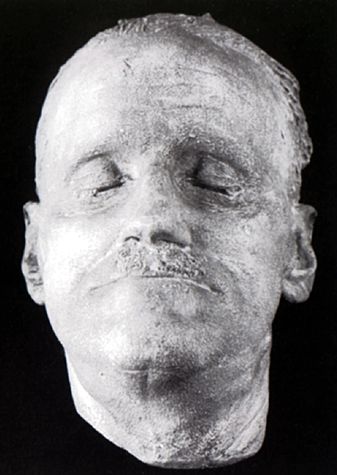
William Shakespeare’s Death Mask

Bad Dad

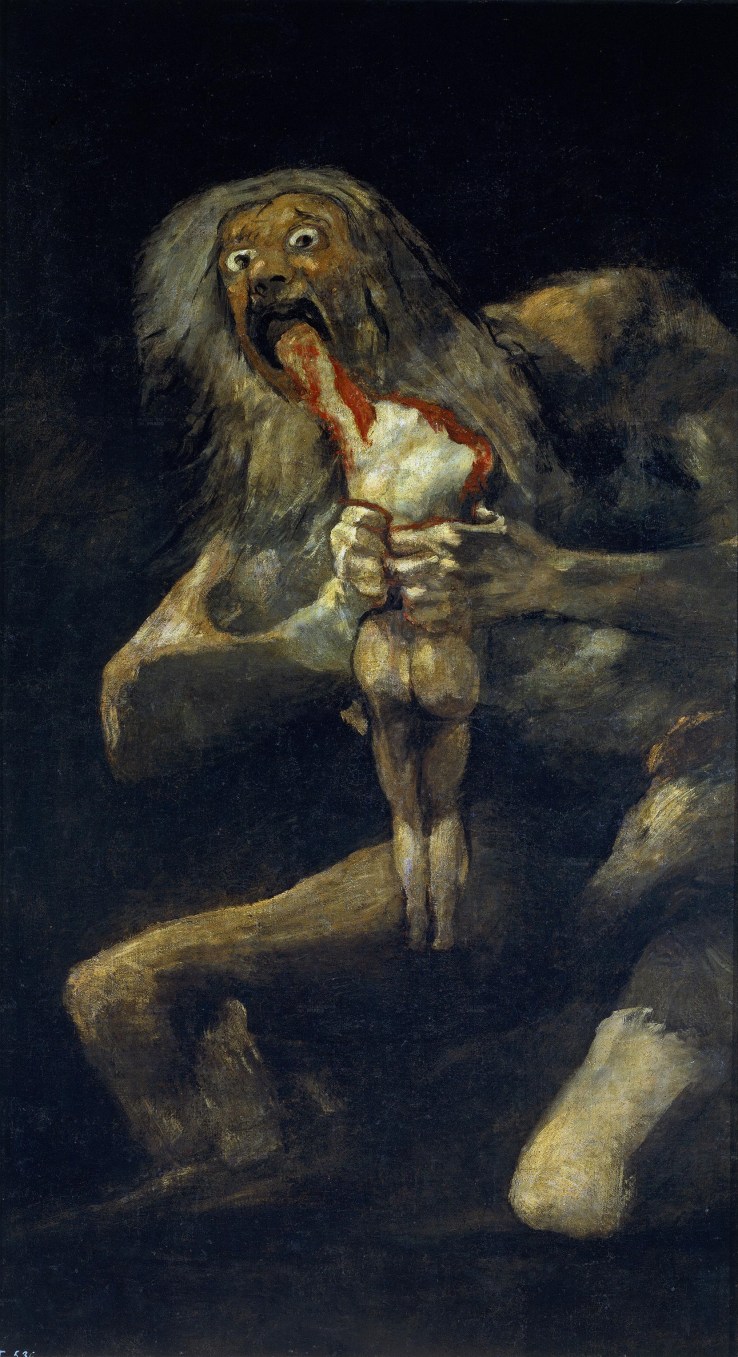
Saturn Devouring His Son -- Goya

Slavoj Žižek on Fatherhood

Biblioklept Interviews Novelist Ed Lynskey About Appalachian Crime Noir and His New Novel Lake Charles

Ed Lynskey’s new novel Lake Charles (new this month from Wildside Press) explores the seamy underbelly of a rural Tennessee community. The book balances traditional crime fiction tropes (fast plotting, hairpin turns, terse dialog, and good old-fashioned violence) with a strong evocation of setting. Lynskey’s novel should make a nice addition to anyone’s summer beach reading schedule. He was kind enough to talk to us over a series of emails about Lake Charles, archetypes vs. stereotypes, violence, and more.

Biblioklept: Your new novel Lake Charles is a crime thriller set in the backwoods of Tennessee in 1979, which you paint as a criminal hotbed riddled with police corruption, a huge marijuana operation, a young lady mysteriously disappeared, and all other sorts of dark intrigue. The setting seems intrinsic to the plot—did the novel originate as an evocation of place, or did the story come first? Or perhaps a mixture of both?

Ed Lynskey: The setting came first. I’ve carried the place inside me since I was a teenager visiting the Great Smoky Mountains in Tennessee. The real Lake Charles is a manmade body of water, not a natural one and that genesis alone corrupts it. The lake had enjoyed a glorious past when it was used for recreation and pleasure, but now the earthen dam is leaky, and the water is scummy, stagnant, and brackish. That’s how I pictured the unsavory setting, and then I molded the criminal elements around Lake Charles. The manmade lake used in James Dickey’s novel Deliverance was in the back of my mind though I’d only seen the film and didn’t read his novel until after Lake Charles got published. Reviewers have cited the native characters as “rednecks” and “hillbillies.” I view those handy labels as a shallow stereotypes. It’s true wild things go on in the boonies. On the other hand, I live in Washington, D.C., and every night on the local news I can see a galore of murders, mayhem, corruption, drug rings, and kidnappings. So the major crimes thrive and seethe everywhere.

Ed Lynskey

B: I’m from the South, and I often find myself feeling offended at certain portrayals of Southerners, which, if done incorrectly, tend to skew to the grotesque. I imagine that a writer never wants to produce a stereotype, but at the same time, certain genres necessitate particular archetypal figures to fulfill reader expectations (not to mention basic plot functions). When crafting a crime noir piece like Lake Charles, do you feel any tension between what is stereotypical and what is archetypal?

EL: The characters in Lake Charles hail from a small mountain town in Tennessee. Though they’re a little rough around the edges and turn violent if pushed enough, I don’t choose to view them as a stereotype. The challenge for the writer, as I see it, is to make the characters familiar enough to the readers but to also keep the characters’ personalities distinct and original. Stereotypes are here to stay. Rick Bragg tells the funny anecdote how his New York City editor wrote in the comment “doublewide what?” on his manuscript. Try hard as they might, they just don’t get it. But getting back to Lake Charles, I wanted a young protagonist, and an older guy who’s a war vet to serve as his mentor because the plot needed that dynamic to be set up. I believe the war vet is probably a flatter character, but the protagonist is coming of age, so I hope he’s a more complex character.

B: I like the relationship between Mr. Kuzawa, the archetypal wise (but gruff) older man, and Brendan Fishback, the protagonist who narrates Lake Charles. Brendan is definitely in over his head, but there’s a certain relief in his having Kuzawa as a mentor. Still, you put Brendan in a lot of trouble. When you were drafting the novel, did you have a clear trajectory for Brendan’s finding a way out of the mess he’s in? Or was it part of your writing process to ensnare your protagonist and see how he might extricate himself?

EL: Lake Charles has gone through numerous revisions, and I don’t recall what my original strategy was for creating Brendan as the protagonist. I knew he was in a heap of trouble, as they like to say down South, but I didn’t think he had the right savvy to find a way out of his sticky jam. If he figured it all out on his own, he’d come off as seeming unbelievable and less credible as the narrator. I’m not sure if Kuzawa is too much of a James Bondian know-it-all who steers Brendan through the wickets. He’s a bit larger-than-life. Sometimes you meet people who seem to suck all the air out of a room with their forceful personality.

B: Switching gears for a moment, Lake Charles isn’t your only novel being published this year, right? Can you tell us a little about your other new books?

EL: You bet. Thank you for asking, too. Quiet Anchorage coming out this spring is a small town cozy mystery featuring two senior amateur sleuths who’re sisters. Their favorite niece is falsely arrested for the murder of her boyfriend, and of course her aunts flew to her defense. I wrote QA to take a break from the noir and hardboiled arena and to have a little fun. The reviews have been generally upbeat and favorable. So, I hope I can publish the second title as a new series next year. The third book, The Zinc Zoo, is the next title in my PI Frank Johnson mystery series. Frank has moved to the suburbs but still manages to get into difficult cases with prickly clients. I’m not sure when TZZ will be out. The publisher has been dealing with a serious family illness since the start of the year. The snazzy front cover art has been finished, so hopefully things will pick up again soon.

B: Three books in a year (plus several novels in the past five or six years)—-that’s fairly prolific. Are you composing these novels simultaneously?

EL: Is it prolific? I never really thought of it that way, but I can see your point, sure. I can’t work on two books at the same time. The plots and characters cross-talk in my brain, and I get things mixed up. I just work steady on one project at a time. I usually woodshed a project for several months before I go back to revise it for presentation. For instance, Lake Charles took me ten years to write from a short story into a published novel. Plus when the economy first went (and still lags) south, I didn’t publish any books for over 18 months. Stuff was just in the pipeline waiting to come out. The erratic schedule makes it more difficult to promote the project because it means I drop whatever I’m working on and shift to do the marketing bit.

B: Clearly you’re having to do some marketing now—but what future projects do you have cooking?

EL: The two large projects looming immediately ahead for me are the second title in the small town cozy mystery series and the large mob novel set in Washington, D.C. But that’s how I envision things today. It’s a fluid situation not because so much is happening as I’m hustling the new projects here and there.

B:  Have you ever stolen a book?
EL: I don’t believe I’ve ever filched a new book from a store. I know there was a book swap in the Bermuda bed & breakfast where you left a book if you took one. I think I traded a baseball book for a mystery. That’s about as close as I can get to that situation.

Nine Classic Paintings Revisited — Peter Greenaway Lectures on Art, Education, and More

(Via the nice people of Open Culture).

Biblioklept Does Bloomsday

Bloomsday blah blah blah — (all links lead to Biblioklept posts (yeah, we’re solipsists around here))—

How to read Ulysses

James Joyce talks dirty

Filming Finnegans

William Faulkner’s Joyce anxiety

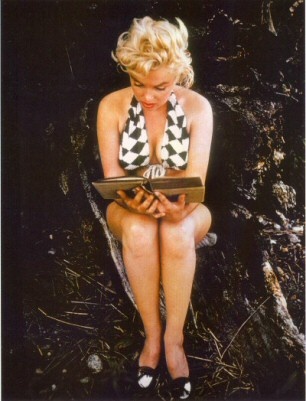
Marilyn Monroe reads Molly 

Biblioklept’s lousy review (the review is lousy, not the book) of Dubliners

Joyce’s entry on the 1901 Irish Census

Biblioklept’s review (not so lousy, the review) of a superior full-cast audio recording of Ulysses

James Joyce explains why Odysseus is the most “complete man’ in literature

Leopold’s Bloom’s recipe for burnt kidney breakfast

James Joyce’s death mask—


“Don’t Take Any Notice of What I’m Going to Say Because I Don’t Know What I’m Talking About” — Tom Stoppard on the Artist’s Bladder

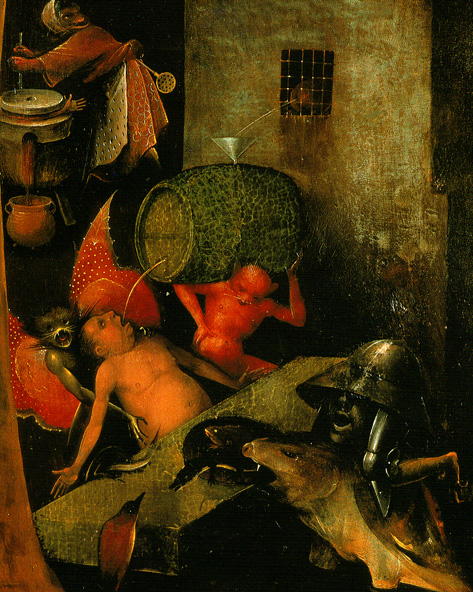
The Cask — Hieronymous Bosch

Is American Psycho Profound, Artistic Nihilism or Stupid, Shallow Nihilism? — Bret Easton Ellis vs David Foster Wallace

Bret Easton Ellis’s controversial novel American Psycho turns 20 this year. The folks at Vintage were kind enough to send me a copy of the book to promote the anniversary, and despite a mounding stack of review copies, I took a few hours to re-read parts of Ellis’s third novel.

I’ve only read two Ellis books and I remember the reading of them distinctly, precisely; I remember how I picked them up and where I was and what I was doing and all that jazz. The first was Ellis’s début Less Than Zero, a slim, ugly little novel that I read in one night. I was fifteen, spending a summer with my aunt and uncle, living in my cousin’s old bedroom. Less Than Zero was part of a cache of books that included Hunter S. Thompson’s Fear and Loathing in Las Vegas, Anthony Scaduto’s Bob Dylan biography, some Hemingway and Fitzgerald novels, One Flew Over the Cuckoo’s Nest, and a Kurt Vonnegut starter kit. In short, a life changing library, and most of it went home with me in my Jansport (somewhat surreptitiously, although I’m sure if I had asked I would have received). Only I didn’t take Less Than Zero, despite reading it all in one sick night, and then reading it again in pieces over the summer. The book hurt my stomach. The drugs were not the Looney Tunes business in HST’s book—they were the symptom of a blank nihilism I simply couldn’t identify with. The scene where the kids casually watch a snuff film horrified me. And the rape scene. Well. It was the first time I read something that genuinely disturbed me in a non-child, non-Grimm’s way — in a way where I felt moral outrage from an adult-psyche-type-position (whatever that means). The book genuinely concerned me; I was afraid such people existed.

I read American Psycho in 2002. I was traveling through Thailand for a month, trading books at guest houses and shops as I went, and the only book I remember being more ubiquitous than American Psycho was Alex Garland’s The Beach (which, yes, I also read there). I had seen and quite enjoyed Mary Harron’s 2000 film adaptation of American Psycho, which had the good sense to treat the whole matter as a piece of cartoonish black comedy. In Harron’s hands, the hyperbolic exploits of Patrick Bateman are considerably less ambiguous than the book’s depiction; Harron  clearly marks the narrative violence as Bateman’s internal fantasies. Of course, one of literature’s greatest tools is ambiguity, and Ellis’s American Psycho revels in it. In a sense, this is the book’s defining nihilism: its total unwillingness to make a definitive judgment about its protagonist’s violence. Instead, American Psycho’s claims to satire rely on the implicit force of the reader’s sense of humanity and morality; like Less Than Zero before it, we have a flat narrative, an utter lack of self-reflection or internal psychology. Ellis gives us only concrete contours, cocaine, hydrochloric acid, chainsaws, and a laundry list of brand names. These are novels without interiors.

American Psycho, utterly concrete, deeply ironic, and occasionally funny, is a strange beach read, but a beach read nonetheless (although all that gristle and blood (and oh the rat!) won’t go down easy for many folks). When I read it in 2002 I found it neither shocking or enlightening, just precise and ugly and grotesque, a numbing progression of concrete descriptions of clothes and restaurants punctuated by ridiculous violence. Its one-note satire would find a better home in a short story. A short short story. I’ve spent the past few days reading through its sections again, trying to reassess it against the backdrop of my current literary estimations of Bret Easton Ellis, which I hate to admit are largely informed not only by his own acerbic personality, but also by (or perhaps more accurately against) his agon with David Foster Wallace.

BEE vs. DFW is not exactly news. Ellis (b. 1964) and Wallace (b. 1962) both published their first novels in the mid-eighties. Less Than Zero made 21-year-old Ellis a star, a likely “voice of his generation.” The Broom of the System didn’t exactly go gangbusters for Wallace, but its voluminous scope, Pynchonian silliness, and its willingness to pick up the postmodern games that Ellis and the other new minimalists seemed to reject announced a major new talent who was willing to both think and feel—to go beyond the surfaces. Indeed, Wallace’s entire project might be defined as setting himself apart from the cool, detached irony that characterizes Ellis’s ethos. In a 1993 interview with Larry McCaffery,Wallace decries fiction that devotes
“a lot of energy to creating expectations and then taking pleasure in disappointing them. You can see this clearly in something like Ellis’s American Psycho: it panders shamelessly to the audience’s sadism for a while, but by the end it’s clear that the sadism’s real object is the reader herself.” I think this is an apt criticism. American Psycho is torture porn encased in a thin veneer of social satire with no interior substance. Here’s Wallace at length—

 I think it’s a kind of black cynicism about today’s world that Ellis and certain others depend on for their readership. Look, if the contemporary condition is hopelessly shitty, insipid, materialistic, emotionally retarded, sadomasochistic, and stupid, then I (or any writer) can get away with slapping together stories with characters who are stupid, vapid, emotionally retarded, which is easy, because these sorts of characters require no development. With descriptions that are simply lists of brand-name consumer products. Where stupid people say insipid stuff to each other. If what’s always distinguished bad writing—flat characters, a narrative world that’s cliched and not recognizably human, etc.—is also a description of today’s world, then bad writing becomes an ingenious mimesis of a bad world. If readers simply believe the world is stupid and shallow and mean, then Ellis can write a mean shallow stupid novel that becomes a mordant deadpan commentary on the badness of everything. Look man, we’d probably most of us agree that these are dark times, and stupid ones, but do we need fiction that does nothing but dramatize how dark and stupid everything is? In dark times, the definition of good art would seem to be art that locates and applies CPR to those elements of what’s human and magical that still live and glow despite the times’ darkness. Really good fiction could have as dark a worldview as it wished, but it’d find a way both to depict this world and to illuminate the possibilities for being alive and human in it. You can defend Psycho as being a sort of performative digest of late-eighties social problems, but it’s no more than that.

Four years before the interview—and two years before the publication of American Psycho—Wallace mocked Ellis’s void, vacuous characters in “Girl with Curious Hair,” a story about a yuppie on LSD at a Keith Jarrett concert.  With no affective life, Sick Puppy (as his low life punk rock friends call him) feels nothing. He cannot enjoy his wealth, his position—not even his acid trip. He can’t even enjoy sex unless he can burn his partner as he’s being fellated. As Marshall Boswell points out in his study Understanding David Foster Wallace, “the story eerily forecasts . . . American Psycho . . . in a grisly and hilarious pastiche of Ellis’ preposterously benumbed prose.”

Perhaps Wallace’s greatest critique of nihilism — greatest in that it escapes the confines of Ellis and his ilk’s literary purview — is Don Gately, erstwhile hero of Infinite Jest, a recovering Demerol addict and small time thief whose painful day-to-day existence figures as the existential struggle against bleak, overwhelming nothingness. Gately is the heart and spirit of IJ, a big sad throbbing heart that, to quote Wallace out of context (from above), is the writer’s way “to depict this [dark] world and to illuminate the possibilities for being alive and human in it.”

Ellis perhaps perceives a character like Gately and his illuminating possibilities as simply too affected. Last summer, at a reading in Hackney, England, Easton offered the following—

Question: David Foster Wallace – as an American writer, what is your opinion now that he has died?

Answer: Is it too soon? It’s too soon right? Well I don’t rate him. The journalism is pedestrian, the stories scattered and full of that Midwestern faux-sentimentality, and Infinite Jest is unreadable. His life story and his battle with depression however is really quite touching . . .

Then there was this cryptic tweet a few months ago—

I’m not sure what Ellis’s tweet meant, and attendees of the Hackney reading claim that he was more considered and measured in his tone than the actual words of his response seem to entail. His end of the agon with Wallace is also rife with its own set of problems—his contemporary is dead, horribly dead, a suicide, (the kind of death that makes an essay like this one, an essay that claims to find affirmation of life in DFW and empty nihilism BEE, particularly hard to swallow, I suppose)—making it all the harder to respond. I read his “too soon” remark from the Hackney reading to be in earnest.

But Ellis’s tweets are not part of his literary corpus (even though they can be entertaining), and Wallace’s suicide is not part of his text. So, I return to those texts—

Wallace’s last effort, The Pale King, contrasts strongly with American Psycho. Wallace’s novel is fractured, heteroglossic, crammed with ideas, and at times purposefully taxing on its reader’s attention. American Psycho is concise (even if its plot is messy and episodic), imagistic, lacks even the pretense of allowing a controlling voice other than Bateman’s into the narrative, and, in its fetishistic, sexualized violence, is a work designed to lock its reader’s attention in a sensationalized vice grip. It’s id-bait par excellence, seductive and stylish. Its greatest achievement may be to fool some readers into believing that its violence is simply part and parcel of its intention of being a scathing satire. The book then relies heavily — too heavily — on an exterior morality system to weigh its flat, static characters, characters who face incredible trauma and yet never process it (or even attempt to process it). And I am not just speaking of Bateman. Consider the dry cleaner who repeatedly removes bloodstains, or the maid  who mops up brain bits without a single question. Then there are the faceless, indistinguishable alpha males who populate Bateman’s yuppie corporate world, and their requisite fiancées and mistresses, weak watery women the narrative repeatedly condemns. These characters lack meaning or depth; they are essentially probable replicants of Bateman, the implication being that psychopathic tendencies lurk everywhere, that the modern condition preempts empathy or human understanding or plain old common decency. The savvy reader is supposed to admire Ellis’s satire of capitalist vacuity, and admittedly, there are some very funny riffs (Bateman’s bits on popular music like Huey Lewis and the News and Whitney Houston, replicated in the film version, still hold up well). But I think Wallace is correct when he asserts that the real violence is ultimately inflicted on the reader. Ellis’s violence is not the same as Flannery O’Connor’s, who used the shock of murder in her stories to explore the possibility of awe, transcendence, and revelation in a desacralized world. Wallace’s The Pale King tries to sanctify the costs of life (death and taxes and the deep existential crisis these costs entail) in a world that has largely abandoned the sacred, in a society where many people are incapable or unwilling to think empathetically about their relation to (via taxes and social institutions) other humans whom they do not personally know. Ellis’s American Psycho is a cartoonish, lopsided distortion of a descralized world. Its affective power is purely externalized, generated from the reader’s moral core. It replaces feeling with violence; it replaces ideas with the illusion of ideas. Its closest claim to art is its satirical power, which is ultimately puddle-shallow (did we really need Ellis to tell us that yuppies are uncaring, shallow and materialistic?) Writers need not be morally instructive, but good books are guided by a vision. Ellis’s vision is pure, bleak nihilism, abyssal and unreflecting, asking little from its reader other than to play voyeur to murder and giving back nothing in return.
“If I Were to Write for People in General, I Would Have to Drastically Lower My Estimation of the Intelligence of My Reader” — William Vollmann on Difficult Books

In a 1993 interview with Larry McCaffery, William Vollmann explains why he doesn’t worry about book sales—

LM: You Bright and Risen Angels is a long, difficult, obsessive work. Were you aware when you were writing it that it was going to be difficult for this book to attract a large audience? In other words, is audience much of a consideration for you when you’re starting out with something, or do you just write the book you feel compelled to write?

WV: I just make the best book that I can and try to not worry about audience or if it will sell. The odds are against you, so why abuse your talent for the sake of a chimera? The only real pleasure for me in writing comes from pleasing myself. What readers think is interesting and illuminating (and it may even be correct), but that is nothing compared to the excitement of seeing a world develop. Besides, even though I like most individuals I meet, I have a pretty low opinion of people in general. So if I were to write for people in general, I would have to drastically lower my estimation of the intelligence of my reader. Rather than doing that, I write the way it seems the book has to appear. I don’t think that’s egotistic. There are often things I would like to include in my books—things about me personally and other materials—that I feel I have to leave out because they aren’t relevant to the book. I’m fairly ruthless along those lines, because I try to let nothing come in the way of what’s best for the book. If that means that the book won’t sell or that a publisher won’t buy it, then that’s my problem. I’ll suffer for that, but I won’t let the book suffer for it.

HBS — Fensler

Jeremy Bentham’s Death Mask


(More dead Bentham).

Alejandro Jodorowsky Documentary (BBC, For One Week Only)

The AV Club Interviews Comix Journalist Joe Sacco

The AV Club interviews Biblioklept fave Joe Sacco, whose books Palestine and Safe Area Goražde should be required reading for any thinking person. Sacco explores some of the messiest, ugliest terrains in the world, plumbing disaster and war with heart, wit, and insight (read our post on Sacco for more, including links to shorter works). From the interview—

AVC: You got out of journalism school in 1981, so in addition to the shift in public perception about comics as an adult medium, your career has also spanned a profound shift in the journalism industry. Do you think in some ways you’ve been the beneficiary of that?

JS: As many problems as I have with the mainstream media and the way it goes about its business, I’d say at least journalists were, for the most part, trained in discrimination. I have my problems, mostly with editorial decisions in bigger cities, in editorial offices as opposed to with columnists or reporters. I realize that, as time’s gone by with the new media—I’m talking about the electronic media—you could see a shift to emphasis on visuals and on shorter attention spans. I’m sorry, in a way, if my work is a beneficiary of that. I would hope my work has other attributes that have led to a success. But I can’t know for sure, you know? I think the comics market is the only growing part of the publishing industry, of the book-publishing trade. It’s increasing its share as time goes by. I think it also has to do with the sheer weight of good work that’s out there now—obviously not just my work. There are many other great cartoonists working in fiction and other fields that are just really doing work that has to be looked at, that you cannot ignore.

The Four and Twenty Elders Casting Their Crowns Before the Divine Throne — William Blake