
The following citations are culled from a search of Harper’s Index that used the term “Christmas.” (If it’s not obvious, the numbers before each datum are the month and year that Harper’s originally published the datum in its Index)–
12/84 Number of robots FAO Schwarz expects to sell this Christmas season: 10,000
12/84 Total number of recordings of “White Christmas” that have been sold: 150,431,669
12/84 Chance of a white Christmas in New York: 23%
In Minneapolis: 73%
12/85 Percentage of Jewish households in the United States that had Christmas trees in 1984: 12
12/85 Rank of “Grandma Got Run Over by a Reindeer,” among all Christmas singles, in sales last year: 1
12/87 Price of a pound of reindeer meat at Lobel’s Prime Meats in New York City: $14.98
12/88 Estimated cost of a partridge in a pear tree, retail: $39.95
12/89 Percentage of Americans who say they didn’t get what they wanted for Christmas last year: 6
12/89 Percentage of Americans who say they ate plum pudding last Christmas: 1
12/89 Ratio of U. S. households that have real Christmas trees to those that have artificial Christmas trees: 1:1
12/90 Average number of Christmas cards received by an American household each December: 26
12/91 Estimated number of cookies that will be left out for Santa Claus this Christmas Eve: 84,000,000
12/92 Price paid at auction in October for a 1942 Christmas card signed by Adolf Hitler: $3,025
12/93 Maximum speed at which the seeds of the dwarf mistletoe are expelled when ripe, in miles per hour: 60
12/93 Price of a life-sized computer-controlled triceratops, from the Neiman Marcus Christmas catalogue: $93,000
12/93 Percentage of Americans who say they enjoy Christmas shopping “a great deal”: 28
12/93 Pages of forms an applicant must fill out to be considered for the position of elf at Macy’s: 10
12/95 Fee charged by a California design firm to place a string of lights on an outdoor Christmas tree, lights not included: $75
12/96 Estimated number of Americans hospitalized last year for injuries involving the ingestion of Christmas ornaments: 687
12/97 Chance that an American adult can name all of Santa’s reindeer: 1 in 4
12/98 Year in which Christmas celebrations, plum pudding, and mince pie were outlawed in England: 1647
12/00 Minutes required to take in “the true story of Christmas ” at Little Rock’s Living Nativity drive-through: 2
12/01 Number of Montreal stores vandalized last year for mounting Christmas displays in November: 14
12/02 Chances of getting a hotel room in Bethlehem on Christmas in 2000 and 2001, respectively: 0, 9 in 10
Chance that a Bethlehem hotel expects to be open this Christmas: 1 in 5
12/02 Rank of a burning Yule-log video loop among the top-rated 8-10 a.m. TV shows in New York City last Christmas: 1
12/03 Estimated number of artificial Christmas trees displayed in U.S. homes each year for every real one: 2.6
12/05 Miles per hour of two low-flying Danish fighter jets in February when they startled a reindeer named Rudolph to death: 450
Amount his owner, a professional Santa, was paid by the Air Force in September to buy a new Rudolph: $5,000
12/06 Number of worldwide incidents last Christmas of “Santarchy,” which involves roving mobs of unruly Santas: 29
Number of fruitcakes that drunken Santas catapulted into the air at the event in Portland, Oregon: 6
1/07 Percentage change since 1970 in the height of the National Christmas Tree: +63
12/07 Number of golf clubs a Phoenix tourism group is sending to troops overseas as part of its “Operation White Christmas”: 14,000
12/07 Number of Christmas trees FedExed last year to U.S. troops: 11,854
12/07 Number of seconds it takes a synthetic Christmas tree to burn: 32
12/08 Percentage of U.S. Christmas trees purchased in 2001 and 2007, respectively, that were artificial: 21, 36

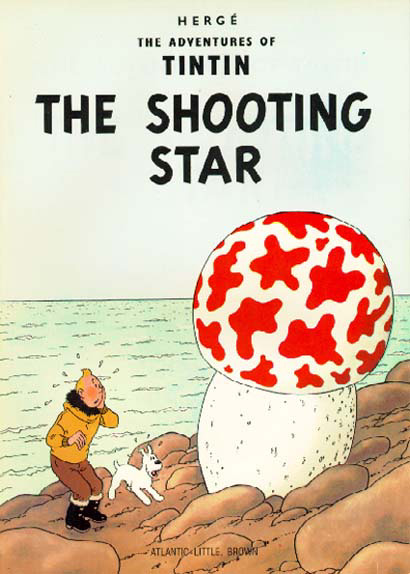
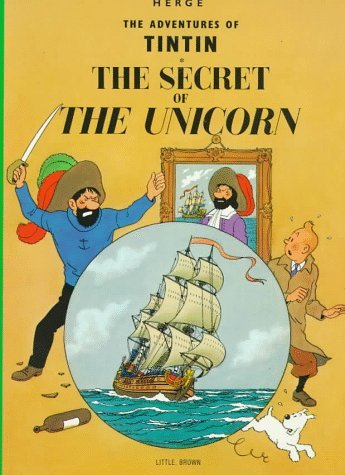
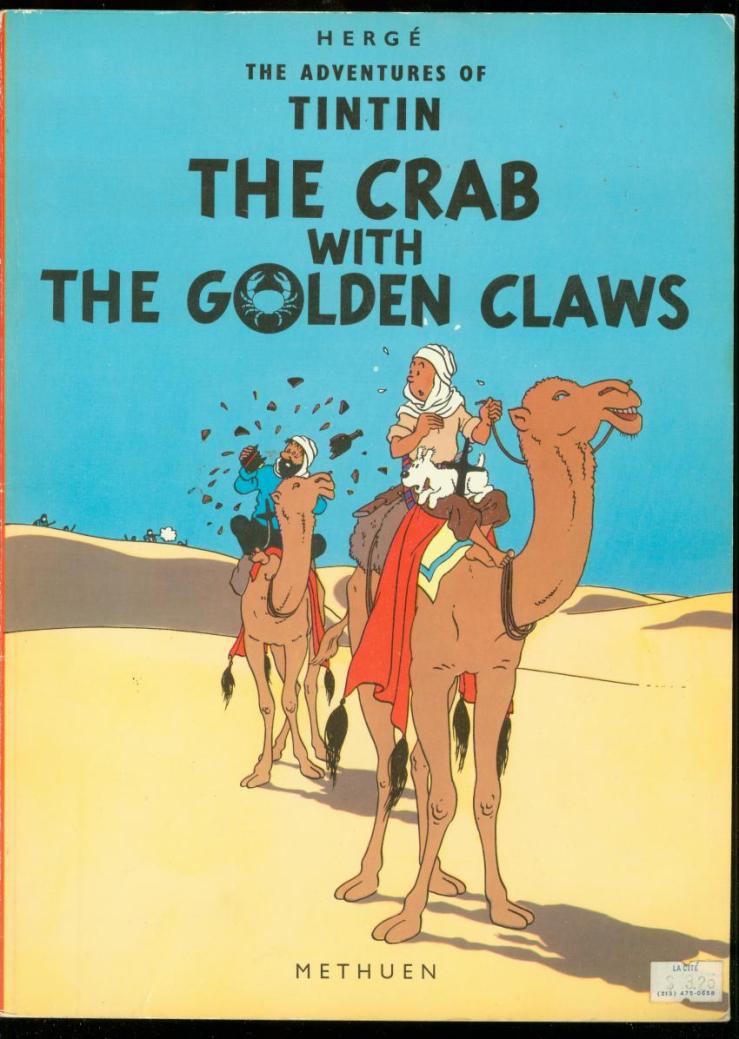 I’ve long been interested in Hergé’s Belgian comic series Tintin, which chronicles the adventures of Tintin, boy reporter, and his faithful dog Snowy. When a batch of hardback three-in-one editions showed up at my favorite used book store I picked up Vol. 3, which collects The Crab with the Golden Claws, The Shooting Star, and The Secret of the Unicorn. I read The Crab with the Golden Claws in one pleasant sitting that night and finished the other two adventures in similar fashion. Then I went back to the bookshop and picked up the other four three-in-one editions they had in stock.
 Hergé’s clean, efficient style evokes beautiful and strange worlds. His economy of storytelling is simply brilliant; he knows how to connote his characters’ movements–including some sweaty action sequences–and he also knows how to move the plot forward without resorting to talking heads (although you will find the occasional expository-friendly radio broadcast pop up in a Tintin comic). It’s when Hergé drops a luscious market scene or a crowded basement-dungeon larded with antiquities that the art in Tintin shines. Hergé’s great talent is to evoke a startling sense of place for each setting in his comics, a fully-realized set that creates a sort of visual (and emotional) baseline for the reader. This allows for the cleaner, crisper panels to relay action without clutter. Hergé’s knack for storytelling cannot be underestimated either. He blends high adventure with slapstick and verbal comedy, much of it courtesy Tintin’s foils: the Thompsons, bungling detectives, precisely, who provide Tintin with many of his cases; Haddock; and Snowy, of course.
 If you know a bit about Hergé’s Tintin series, you may know that its depiction of non-white and non-European characters has come under attack in recent years;


 Biblioklept