
 Michael Wiley is a mystery writer and professor of British Romantic literature and culture at the University of North Florida. He’s published academic volumes about geography and migration in Romantic literature, but we spoke to him about the latest edition in his detective series, The Bad Kitty Lounge. Dr. Wiley was kind enough to talk to us via email about ambiguity and resolution in mystery fiction, giving readers what they want, and the prospects of Wordsworth with a Glock. The Bad Kitty Lounge is available new in hardcover from Minotuar/St. Martin’s. Read more press at Michael Wiley’s website.
Biblioklept: Your new novel The Bad Kitty Lounge picks up with P.I. Joe Kozmarski, the protagonist from your first novel The Last Striptease; both books are set in Chicago. When you were working on Striptease did you envision it as the beginning of a series?
Michael Wiley: I did. To tell the truth, The Last Striptease catches the story already in motion. I wrote an earlier Joe Kozmarski manuscript that I called Little Girl Lost, almost got published, and then tucked into a box, where it remains. I liked the character and the settings well enough that I wrote a new manuscript, which became The Last Striptease. I had set Little Girl Lost in August and Last Striptease in September, so when I started writing The Bad Kitty Lounge I decided to set it in October and aim for a series that covers each month of the year. There’s no great logic to aiming for a twelve-book series, but it seems as good of a number as any.
B: There’s a tradition in detective fiction of recurring characters (Chandler’s Marlowe comes immediately to mind). When you are writing these books, do you consciously follow or inject tropes of mystery and crime fiction? How important is it to give mystery readers what they want?
MW: It’s always important to give readers what they want. But readers might not know what they want until a book gives it to them. In genre fiction and mysteries and thrillers in particular, conventions matter, but if a writer sticks too closely to conventions the result is cliché. The key isn’t to ignore the conventions but to finesse them, use them in new ways, invert or subvert them. The best mysteries, I think, are recognizable in form but still manage to surprise us and give us great unanticipated pleasures. Before Chandler’s Marlowe, there’s Arthur Conan Doyle’s Sherlock Holmes, and before Holmes, there’s Poe’s Dupin. Each of the greats has reinvented the form in big ways and has given readers what they’ve always wanted without knowing that they’ve wanted it. The rest of us innovate where we can.
B: Sometimes though it seems that writers who experiment too much with genre conventions can subvert, invert, or innovate in ways that trample on some of the great pleasures of mysteries and thrillers. I’m thinking explicitly about novels like Jonathan Lethem’s Gun, with Occasional Music, which weds PK Dick with hard boiled noir, or Thomas Pynchon’s recent exercise Inherent Vice. Such books prize ambiguity, which leads to a shaggy dog story. There’s certainly a pleasure in reading them but many of us read mysteries because Dupin or Sherlock Holmes or Marlowe (or whomever) actually solves the case. How important do you think it is to give mystery readers an answer or solution? What place does ambiguity have in your detective fiction?
MW: Right. Most of the best mystery writing right now includes at least some ambiguity, though. I’ve been reading and re-reading James Lee Burke’s Dave Robicheaux books lately, and while each of them solves a case at hand, we never have the sense that Robicheaux has restored a proper order to the universe. Just the opposite: we know that the universe is deeply screwed up and that Robicheaux is as much a part of the problem as he is part of the solution. Aside from that, some of Burke’s villains pop up again in later books even after we’re sure that Robicheaux has put them to rest.
My own books resolve crimes. At the end, we know who did what and when and why. But my books are also full of moral ambiguity. Some of the guilty parties don’t get punished. Some of the innocent parties do. Good people sometimes do bad things for either good or bad reasons. Bad people sometimes do good things. We get answers but we don’t necessarily like them.
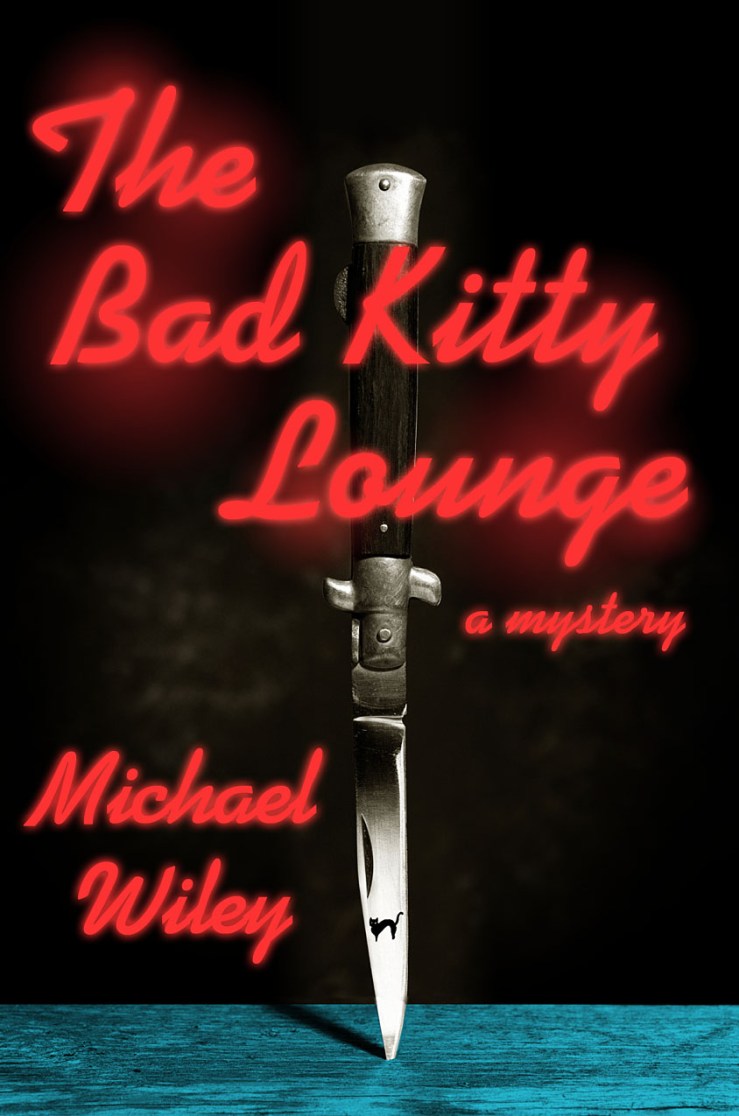
B: I realize that I may have been putting carts before horses with some of these questions–can you tell us a little bit about the plot of The Bad Kitty Lounge?
MW: I like carts before horses. Here’s a synopsis that I wrote for the book flap:
Greg Samuelson, an unassuming bookkeeper, has hired Joe Kozmarski to dig up dirt on his wife and her lover Eric Stone. But now Samuelson has taken matters into his own hands. It looks like he’s torched Stone’s Mercedes, killed his boss, and then shot himself, all in the space of an hour. The police think they know how to put together this ugly puzzle. But as Kozmarski discovers, nothing’s ever simple. Eric Stone wants to hire Kozmarski to clear Samuelson. Samuelson’s dead boss, known as the Virginity Nun, has a saintly reputation but a red-hot past. And a gang led by an aging 1960s radical shows up in Kozmarski’s office with a backpack full of payoff money, warning him to turn a blind eye to murder. At the same time, Kozmarski is working things out with his ex-wife, Corrine, his new partner, Lucinda Juarez, and his live-in nephew, Jason. If the bad guys don’t do Kozmarski in, his family might.
In short, it’s a gritty hardboiled mystery set in Chicago. If your sense of humor runs the way mine does, it has some laughs. Booklist Magazine calls it “howlingly funny.” That may be overstating the case, but I appreciate the compliment.
B: Books critics must always be forgiven hyperbole, positive and negative.
You’re a professor of English literature; specifically, you’re an expert on the British Romantic poets. You might tire of this question–and forgive me if so–but do elements of British Romanticism find their way, consciously or not, into your detective fiction? It seems like a detective’s mission would be at odds with the spirit of Keats’s Negative Capability.
MW: From my perspective, it’s easier to deal with the positive hyperbolic criticism than the negative.
I once told an editor jokingly that I planned to write a mystery featuring William Wordsworth with a Glock. To my surprise, the editor was enthusiastic. I suppose there’s a market for these books. Abe Lincoln: Vampire Hunter has been doing well, and Pride and Prejudice and Zombies was a hit.
I mostly think of my day job as a British Romanticist as being separate from my night job as a writer of pulp fiction, but I know that that the two intersect and inform each other. Wordsworth and Raymond Chandler are two of the great English-language locodescriptive writers, and they’ve both influenced my handling of place. William Blake deals with ideas of innocence and experience, good and evil, and heaven and hell in ways that no noir writer has ever surpassed. And Lord Byron is great for moral ambiguity, as is S.T. Coleridge though in different ways.
So, I’ll probably get to that Wordsworth-with-a-Glock manuscript sooner or later.
B: Wordsworth with a Glock sounds great. Then you could write John Keats Vs. The Lamia; make it a graphic novel. Or just a screenplay. For now though, is the next Kozmarski book already in the works?
MW: I see a series here. My friend Kelli Stanley has set mysteries in ancient Rome. She calls them “Roman Noir.” I’ll just add a “tic” and I’ll have “Romantic Noir.” In the meantime, Joe Kozmarski will ride again. St. Martin’s Minotaur has said that they want to publish the third in the series. It’s done, it’s called A Bad Night’s Sleep, and it’s the best one yet. It should be out in 2011.
B: You teach full time and have a family–how do you make time to write? What advice could you give to young writers who want to develop that kind of discipline?
There’s never enough time in the day — or the week or the year — to write a book. There are thousands of excuses for doing something else, and nearly all of the excuses are good. I accept these facts and then write anyway. I write in the morning before breakfast if I can, or write in the evenings after the kids are in bed. I write in between. And when I’m not writing, I’m often thinking about plot, characters, and setting.
I draw from my own experience when I give advice, which is very simply (and annoyingly) this: “Just write.” Writing seems to me to be more of an act of will than of discipline. Don’t spend time worrying that you’re not writing enough; don’t spend time thinking about the act of writing (unless that’s the subject of your short story or novel) — Spend your time writing. Tell your story. Then revise it. Then think of another story and tell it. Oh, and when you’re not telling or revising or thinking of new details for your story, read other people’s stories and learn from them. That seems important too: others have told better stories than I’ll ever tell. I can learn from them. We all can.
B: Have you ever stolen a book?
MW: No. But I hope someone steals one of mine.



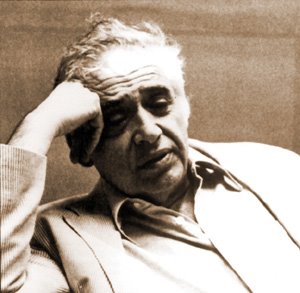 In his essay “Shakespeare in Bloom,” critic James Wood performs one of the strangest, most backhanded (and yet earnest) defenses I’ve ever read of Harold Bloom‘s aesthetic reaction to (what Bloom has called) “The School of Resentment” — deconstruction, Marxism, gender and queer theory, postcolonial theory, all that good stuff. Wood comes out strong, arguing, that in his prolific output, Bloom “has kidnapped the whole of the English literature and has been releasing his hostages, one by one, over a lifetime, on his own spirited terms.” Wood suggests that “this ceaselessness has produced some hurried, fantastical, and repetitive work,” before going on to throw around words like “garrulous” and “shallow.” Wood then takes Bloom to task over his famous (and improbable) claim that “Shakespeare invented us,” situating the claim against Bloom’s own most famous theory, the anxiety of influence. Wood says–
 As we bring up the term again, we should note that we consider it a bit pejorative and utterly reactionary, and, to borrow from (and perhaps misapply) Wood, shallow. Wood points out that “Deconstruction brings a generalized suspicion to bear on language and in particular on metaphor (or ‘rhetoric’), which it suspects of hiding something–namely, its own metaphoricity.” In short, literature always metaphorizes, and thus hides, some other impulse, one always politicized. Wood continues: “Political criticism, including cultural materialism, converts Freud’s analytical suspicions into political ones. . . . The poem is read as if it were covering something up, as if it were an alibi that is rather too fluent to be entirely trusted.” It must be interrogated to reveal its secret, the secret prejudices of its age. Wood continues, after a page or two–
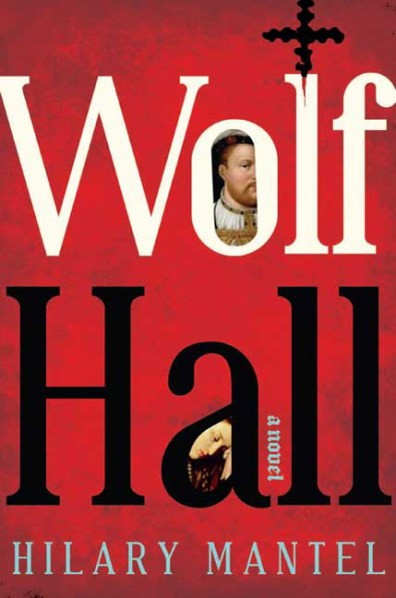 I’m coming to the end of Hilary Mantel’s brilliant treatment of the Tudor saga, Wolf Hall. Sign of a great book: when it’s finished, I will miss her characters, particularly her hero Thomas Cromwell, presented here as a self-made harbinger of the Renaissance, a complicated protagonist who was loyal to his benefactor Cardinal Wolsey even though he despised the abuses of the Church. Mantel’s Cromwell reminds us that the adjective “Machiavellian” need not be a pejorative, applied only to evil Iago or crooked Richard III. The Cromwell of Wolf Hall presages a more egalitarian–modern–extension of power. Cromwell here is not simply pragmatic (although he is pragmatic), he also has a purpose: he sees the coming changes of Europe, the rise of the mercantile class signaling economic power over monarchial authority. Yet he’s loyal to Henry VIII, and even the scheming Boleyns. “Arrange your face” is one of the book’s constant mantras; another is “Choose your prince.” Mantel’s Cromwell is intelligent and admirable; the sorrows of the loss of his wife and daughter tinge his life but do not dominate it; he can be cruel when the situation merits it but would rather not be. I doubt that many people wanted yet another telling of the Tudor drama–but aren’t we always looking for a great book? Wolf Hall demonstrates that it’s not the subject that matters but the quality of the writing. Highly recommended.
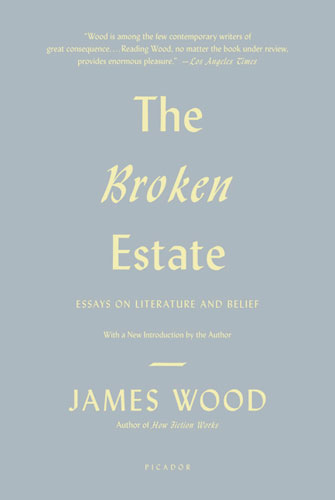
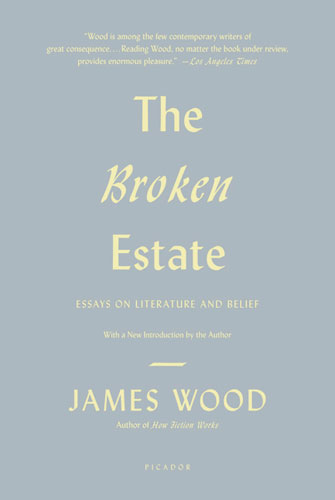 Cromwell’s greatest foil in Wolf Hall is Thomas More, who is also the subject of the first essay in James Wood’s collection The Broken Estate. I got my review copy in the mail late last week, so it was pure serendipity that I should read “Sir Thomas More: A Man for One Season” after a full day of listening to Wolf Hall (did I neglect to mention that I listened to the audio book? Sorry). Wood is harsher on More than Mantel; whereas she lets us despise him within the logic and framework of the Tudor court, Wood aims to find a contemporary secular standard from which to judge him. He finds license to do so through the work of John Stuart Mill, citing the influential essay On Liberty. Wood writes:
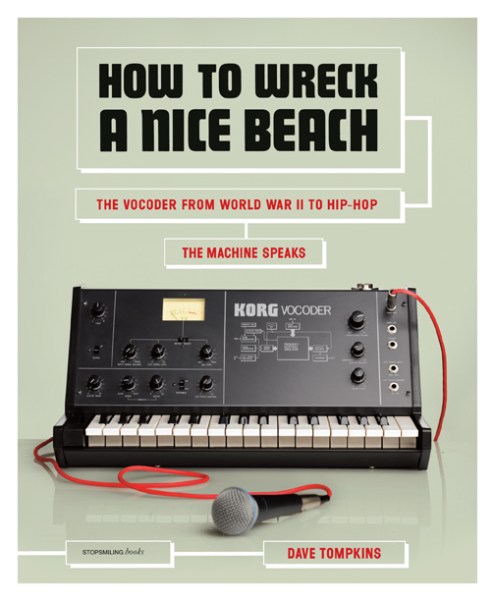 If you missed this morning’s interview on NPR with Dave Tompkins on his new book How to Wreck a Nice Beach (
 Loved loved loved Nick McDonell’s collection of reportage on the US Army in Iraq, The End of Major Combat Operations. It’s not the sort of thing that I’d normally pick up, so I’m glad that it showed up as half of
  Deirdre Madden’s novel Molly Fox’s Birthday takes place over the course of just one summer day in Dublin, Ireland. Perhaps that sounds a bit familiar, but Madden can’t be accused of trying to riff off Ulysses–even if her book is funny and erudite. Molly Fox, a famous stage actor, is abroad for a few months; in the interim her playwright friend, the unnamed narrator, takes residence in her home. The book opens with a strange dream sequence, full of joy and mystery, which ushers in a host of questions about the intertwined past of the narrator, Molly, and a TV art critic named Andrew. Madden’s book is a sustained investigation into how our friendships endure–and change–over the course of all the masks we wear. Molly Fox’s Birthday, a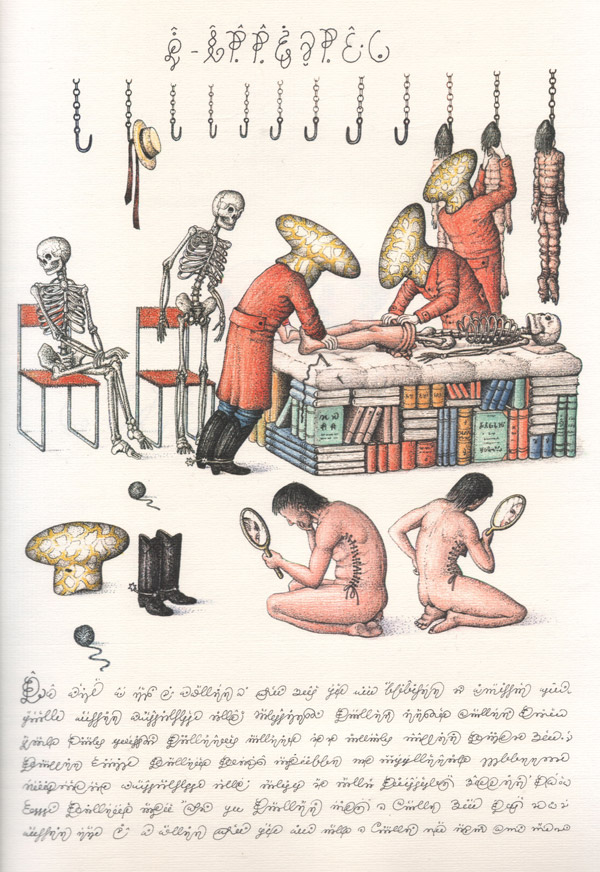


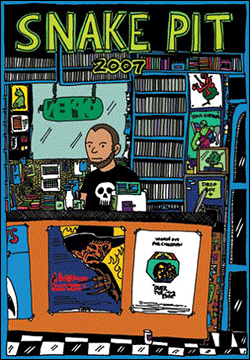
 Jacksonville Public Library’s Zine Collection is one of the first–and largest– such collections in the Southeastern United States. Librarian and collection archivist Josh Jubinsky was kind enough to talk to Biblioklept about the collection, the essence of punk, the future of zines in an increasingly technologically-mediated world, and the million-fart bill. We corresponded via email, although we could have done the interview in person easily–in full disclosure, I should mention that Josh lives down the street from Biblioklept World Headquarters.
 JJ: One that I really enjoyed and I wish I saw more of is A La Maison. It’s a french zine, written in English though. It’s a guide to the city of Lyon, France by some people who live there. Definitely a punk perspective on the city, maybe like a punk travel guide. It goes through the city section by section with what bars, falafel places and record stores are best. And it comes with a CDR of all these bands from Lyon. It’s amazing. The people who put out the zine set up a show for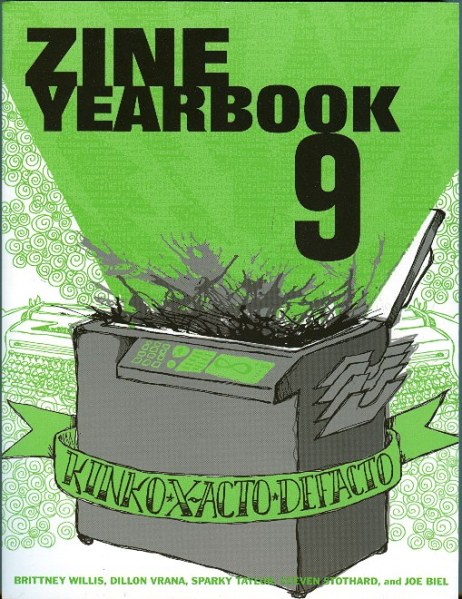
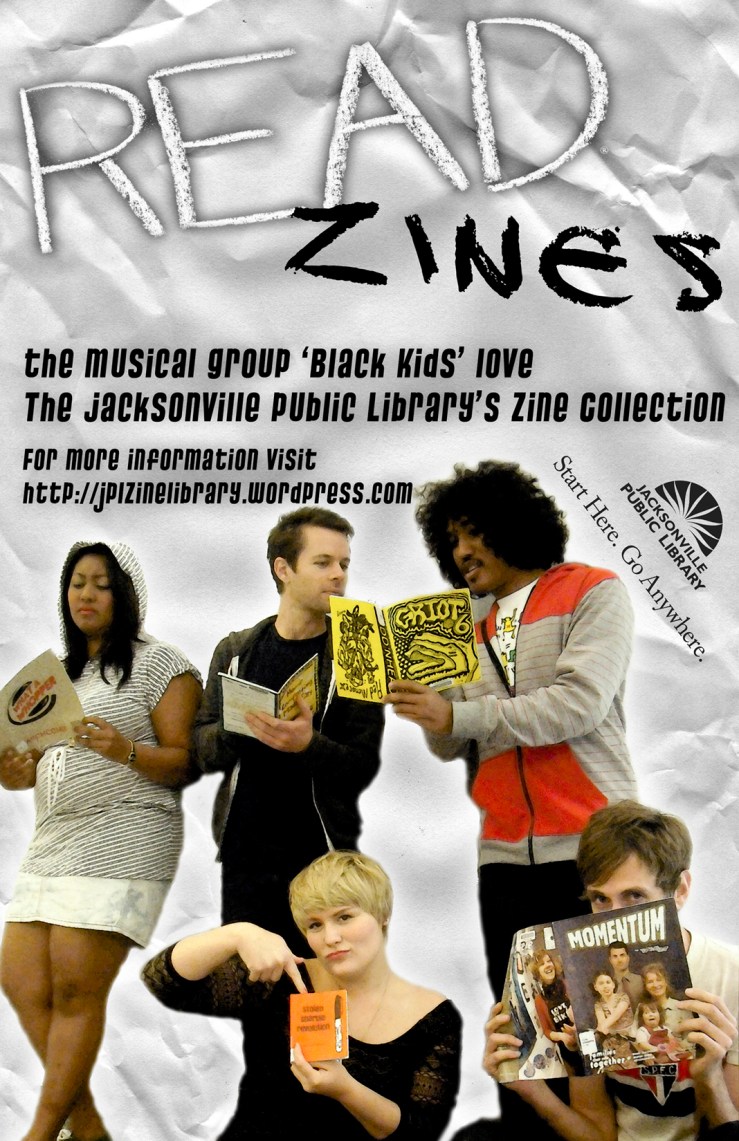 JJ: Maybe this sounds like an overused reason for me (since it’s the same main reason I give when people ask why I have records), but, essentially that zines are tangible. Personally, that tangibility helps me remember them. I can barely tell you what I read online yesterday, but I can tell you about the book or zine I’m reading. You can bring zines along when you go on a tour or go fishing or go to the bathroom or sit in the park – and you don’t have to have an expensive device you must charge to read them. They also exude a sense of time and place. A zine is self-contained, obviously not in literary or musical references, but you can’t get bored with it and click to an updated version. You can’t add it to your blog reader. Like a record, it’s not convenient. It’s romantic. You aren’t jogging while listening to an audio book – you aren’t trying to maximize productivity. You sit, enjoy and get fresh air at the same time.
 Biblioklept