
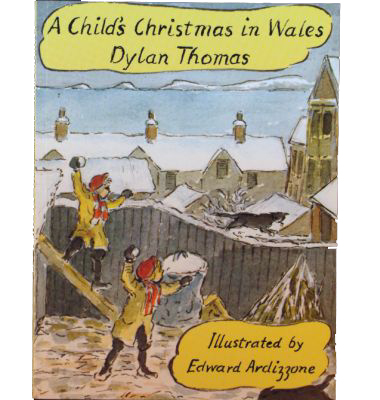
 When he wasn’t busy drinking himself to death, Dylan Thomas wrote some pretty awesome poems and stories, and the Welshman had quite the knack for reading them aloud. Check out his sonorous reading of “A Child’s Christmas in Wales,” a lovely impressionistic series of vignettes about Useful vs. Useless Presents, ever-present Uncles, eating with the fam, letter-carriers, etc. Good stuff. Fellow Welshman John Cale wrote his own version of “A Child’s Christmas in Wales.” It’s on his pretty-good record Paris 1919. Merry Xmas!
The Best Books of 2008
We read many, many books this year, but most of the books we read–especially the very best ones–were not published this year. And as usual, we’re always playing catch up. Case in point: we finally finished Roberto Bolaño’s much-lauded-in-2007 hit The Savage Detectives just last month, and despite feeling that it was kinda overrated we couldn’t help picking up his much-lauded-in-2008 hit 2666 at Green Apple Books in San Francisco this weekend (sidebar that will not surprise any San Francisco reader: San Francisco has the best book shops. Sick). So, we will spend at least the first part of 2009 getting through that massive tome.
Bar none, the best book we read in 2008 was Cormac McCarthy’s masterpiece Blood Meridian, published back in 1985. So good we read it twice, and so should you. We also loved loved loved Philip Pullman’s Nietzschean sci-fi trilogy His Dark Materials. Finally, we must highly recommend E.L. Doctorow’s novel Ragtime, which we finally got around to reading this year (last week, so, no review). This book is great, and you will wonder why you haven’t read it before now. A somewhat neglected classic. But. Let us move on.

There were a couple of fantastic highlights in 2008, of course, most notably Toni Morrison’s A Mercy, a novel on which we cannot heap enough praise. In a time of overstuffed, overlong novels, A Mercy is rich and complex yet lean at just over 170 pages, and, as many critics and reviewers have pointed out, the novel serves as a touching counterpoint for her 1988 masterpiece Beloved.

We also loved–and frequently returned to–Slavoj Žižek’s Violence, a work of cultural criticism that managed to be fun and infuriating and serious and frivolous at the same time. Too often reviewers fall back on hackneyed phrases like “thought provoking,” but Žižek’s work really is provoking, often to the point of confrontation. Like Plato, Nietzsche, and Derrida before him, Žižek is the gadfly, the upsetter, the spoiler. He has earned his haters.
The Paris Review Interviews, Volume III and The O. Henry Prize Stories collections were also sublime–great interviews, great stories, lovely tasty morsels. Ralph Ellison, William Carlos Williams, Stephen Millhauser–what’s not to love? We also really were digging Mark Reibstein and Ed Young’s sumptuous children’s book, Wabi Sabi. You’d think a book that included a haiku on each page would be cheesy or cloying or too precious, but no. Great stuff.

We’d also be remiss not to give props (again) to Wendell Berry’s essay “Faustian Economics,” published in the May, 2008 issue of Harper’s. Berry’s piece is beautiful and sad and timely, and everyone should read it. It was one of the best things we read all year. Speaking of Harper’s, the latest issue includes–along with a touching memorial to critic John Leonard, who died last month–the remarks of those who spoke (including Zadie Smith and Don DeLillo) at David Foster Wallace’s memorial service this October. Wallace’s suicide was and is awful, and remarking on it in a “Best of 2008” section seems tacky, but we can’t help it. We love his work and are sad that there won’t be any more, or at least much more, or at least any “finished” work from the man, but, as George Saunders puts it in his portion of the memorial: “In time–but not yet–the sadness that there will be no new stories from him will be replaced by a deepening awareness of what a treasure we have in the existing work.” So, if we remark on DFW here, it is only because he was one of the best, and he died this year, and in some sense, we need to remark on it yet again, despite having written too much already.
But let’s not end on a sad or sour note. Plenty of great reads in 2008, and surely we neglected a tome or three in this rehash, but hey, we’re human, we err, etc. We look forward to more reading in 2009, and perhaps, improbably (we lie to ourselves, who doesn’t though?) we may actually defeat that stack of books by the bed, on the night stand, on the coffee table.
The Eight Best Songs of 2008
In no particular order…
Fleet Foxes – “White Winter Hymnal”
Beyoncé (Sasha Fierce) – “Single Ladies”
Crystal Castles – “Crimewave”
Deerhunter – “Nothing Ever Happened”
Kanye West – “Love Lockdown”
Marnie Stern – “Transformer”
Max Tundra – “Will Get Fooled Again”
MIA – “Paper Planes”
The Eight Best Albums of 2008
2008 was a relatively disappointing year in music. My Bloody Valentine played some shows, but didn’t put out that album they promised. Axl Rose put out Chinese Democracy, and, um, yeah. Plenty of our favorite bands put out decent but inessential albums (we’re looking at you, Stephen Malkmus, Lambchop, Stereolab, Deerhoof, Destroyer, Girl Talk, Wolf Parade, Max Tundra, and Magnetic Fields), while other cherished artists hit (what will hopefully be) their nadir (Fiery Furnaces’ interminable live album, Mercury Rev’s atrocity, Silver Jews’ unfun silliness). Chalk it up to heightened expectations and an engorged sense of entitlement derived from a decade of internet piracy. Still, there were some great records that came out this year. These were our favorite. We haven’t spent much time putting them in order, but the top three are pretty concrete.
THE EIGHT BEST ALBUMS OF 2008
My Morning Jacket, Evil Urges
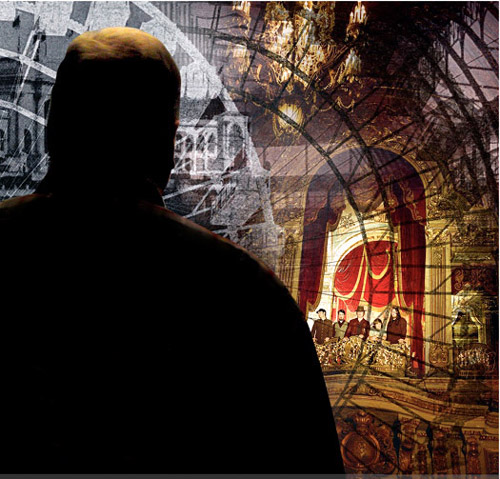
People kind of hated this album, but we thought it was a hoot. Sure, in a sense, it wasn’t Z Part II, but it did live up to that 2006 effort’s relentless genre-hopping. From the opening title track’s clumsy soul-singing, to the James Taylor schmaltz of “Sec Walkin,” to the Cameo-isms of “Highly Suspicious” (peanut butter puddin’ surprise, anyone?) the album is all over the place. But we like that. “Smokin’ from Shootin'” is lovely, and album closer “Touch Me I’m Going to Scream pt 2” is funtastic krautrock done right. If Ween had made Evil Urges, we’re sure it would’ve been roundly lauded. I guess there was a general concern that MMJ were serious about these songs. Give it a second (or first!) listen.
Fucked Up, The Chemistry of Modern Life

So Kevin Shields didn’t get a new MBV record out. So what? The Chemistry of Modern Life isn’t a substitution or replacement, but an extension of MBV’s signature shoegaze sound, only brought up to date for the angry aughties via vocalist Pink Eye’s hardcore vocals. Fucked Up’s record is sorta like putting all those great SST records you grew up on (early Dinosaur, Black Flag, the Minutemen, Sister) in a blender. Great result.
Gang Gang Dance, Saint Dymphna
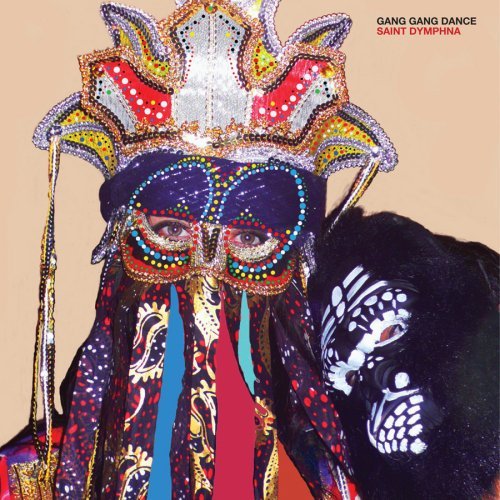
Speaking of blending influences, Gang Gang Dance’s Saint Dymphna does a great job of mixing genres and cultures without ever seeming calculated or cynical or hackneyed. Tracks like “First Communion” and “House Jam” are fun and serious psychedelic dance music, and “Princes,” guest-starring rapper Tinchy Stryder sorta creates a new genre all together. We like.
Fennesz, Black Sea
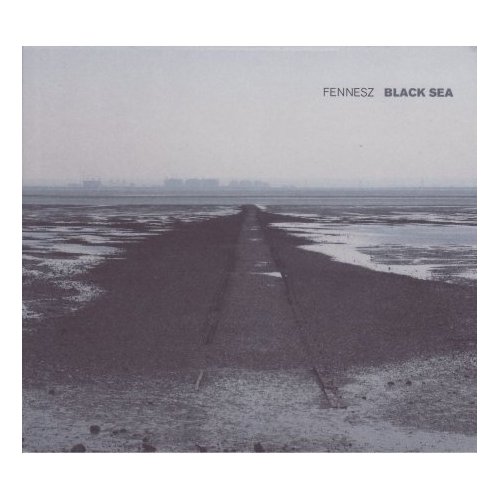 Black Sea might be a strange counterpart to Fucked Up’s Chemistry. It’s harsher than Endless Summer, and lacks the warmth of Venice, but Christian Fennesz’s new album–like Fucked Up’s–orchestrates beauty from (cognitive) dissonance and distills some of the grim anger that’s characterized world politics for the latter part of this decade into a thick, sometimes lovely-sometimes frightening haze. A record that the listener is asked to feel.
Animal Collective, Water Curses
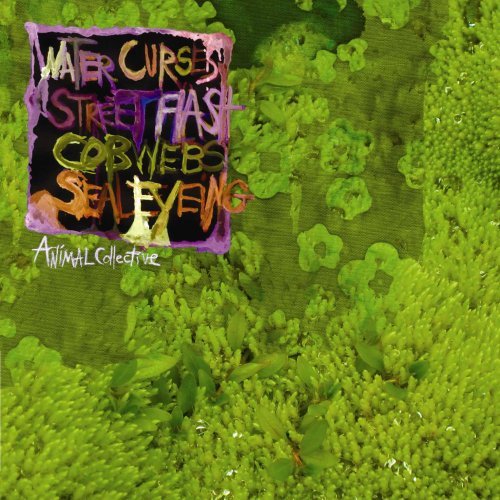
Sure, it’s an EP, but Animal Collective’s Water Curses was on repeat around Biblioklept World Headquarters for most of the year. The jovial title track has a pop immediacy that doesn’t wear out its welcome even after the hundredth listen, but it’s Avey Tare’s “Street Flash,” weird and beautiful and slow, that really steals the show. Water Curses is that rare gem, a series of outtakes that actually outshines the album from which they were excised (Strawberry Jam). Animal Collective have proven to be one of the best new bands of this rapidly aging decade, and the recently-leaked “Brother Sport” from their upcoming LP indicates that they will only get better with age.
TV On The Radio, Dear Science
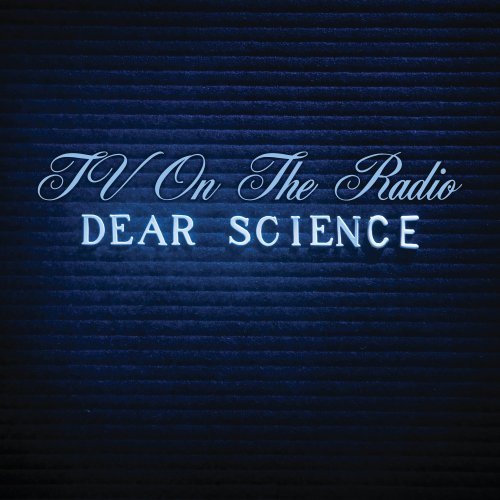
Chock full of hooks, horn blasts, and hand claps, Dear Science should sound cluttered and overstuffed. Instead, TV On The Radio have followed up 2006’s outstanding effort Return to Cookie Mountain with a fantastic pop rock record, where all the bells and whistles (including the horn section from Antibalas) simply add to the listening experience. Where Cookie Mountain‘s songs seemed constructed out of gorgeous textures layered around Tunde Adebimpe’s sonorous voice, Dear Science comes across as a more focused album comprised of radio-ready songs. Opener “Halfway Home” builds to epic speed, “Crying” is death-disco done perfect, “Dancing Choose” channels “Subterranean Homesick Blues” in both its anger and its humor, while songs like “Family Tree” and “Love Dog” showcase Adebimpe’s cathartic voice. What many of the bands detractors might not get is that funky tracks like “Golden Age” and “Red Dress” should be pop radio staples right now–TV On The Radio aren’t experimental art rock, they’re an alternate future-now for pop music.
Bonnie “Prince” Billy, Lie Down in the Light
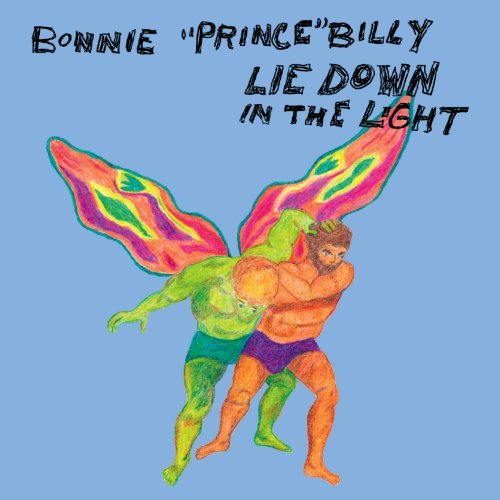
We are pretty old. In fact, we’re old enough to have thought it was weird when the Palace Brothers became Palace Music (this didn’t get in the way of loving Viva Last Blues (which we listened to on audiocassette, on our Walkman!)). So by the time Palace had become Will Oldham had become Bonnie “Prince” Billy, there were so many 7″s and Spanish import EPs and live bootlegs (oh the live bootlegs!) that it all became a bit too much to keep track of. Not to say that we didn’t enjoy Ease on Down the Road or the strange strings on The Letting Go, but Will seems to put out a new record every Tuesday. So we were slow to respond to Lie Down in the Light. Which is a shame. Because it is probably his best record. We imagine that many people interested in Oldham might be daunted by his vast back catalog. If you, dear reader, are such a person, take heed: Lie Down in the Light is a fantastic place to start. The songs on Lie Down are about family and friends, singing, sex, closeness, and a good, good God. The death, weirdness, incest, loss, and stark pain that’s permeated many of Oldham’s previous recordings might seem absent here, but that darkness is here–in Oldham’s voice. How else could he sound so convincing on the title track when he sings: “Who’s gonna hold my heart / Who’s gonna be my own own own? / Who’s gonna know when all is dark that she is not alone?”
The Walkmen, You & Me
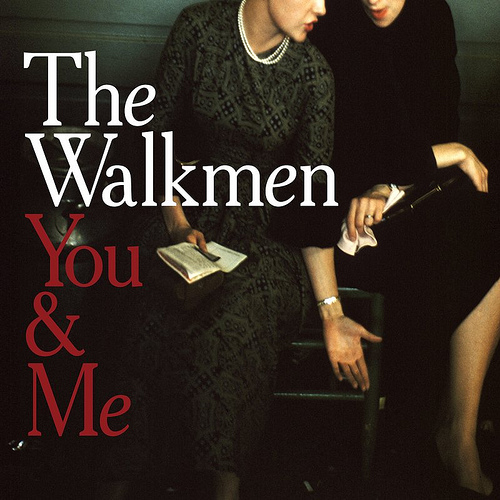
A night album, a moon album, a growler, a grower. We listened to it once, and then put it on again. And then again. And then again. Let’s start with the music: the main instrument is Hamilton Leithauser’s world-weary voice, and the rest of the band works around it, with meticulous percussion and bass lines that carry the musicality of each song. The guitars, organs, and extra touches like horns and strings are used to grand effect, but never crowd the track. And the music is really, really great. Adding another layer of complexity to You & Me, Leithauser’s lyrics seem to tell an impressionistic story over the course of the album’s fifty minutes. The opener, “Dónde Está la Playa,” seems to tell the story of a soured affair with a married woman the narrator has while on vacation. The same narrator seems to move, quite literally, through the songs, lamenting about a life on the road while also recognizing the small joys and adventures that come with such a lifestyle. On “Seven Years of Holidays,” Leithauser cries “Well, I’ve traveled so far and I’m worn / And I’ve lived in a suitcase for too long” before conceding that “The whole world around us is too small.” On the gorgeous and lilting “Red Moon,” he pines: “Tomorrow morning / I hope to be home / By your side,” but he has to admit that “The riptide is pulling me under / I’m drifting, drifting away.” Tracks like “New Country” and “Canadian Girl” take a more positive outlook, but it’s the stellar build of “In the New Year” that best captures the feel of the album. “Oh, I’m just like you, I never hear the bad news / And I never will” Leithauser growls over a triumphant organ riff. “We won by a landslide / Our troubles are over” he continues, before taking the dream to a hyperbole beyond reality: “My sisters are married to all of my friends.” But as the song builds, the organ becomes dissonant, breaking into the sweetness of the fantasy. By the end of the album, the fantasy is totally punctured, as evidenced in the wistful closer “If Only It Were True.” And that’s when the listener hits repeat. You & Me is an album-album, not simply a collection of great songs, and we’d love to hear more works like this next year. Great stuff.
A Very Sun Ra Xmas
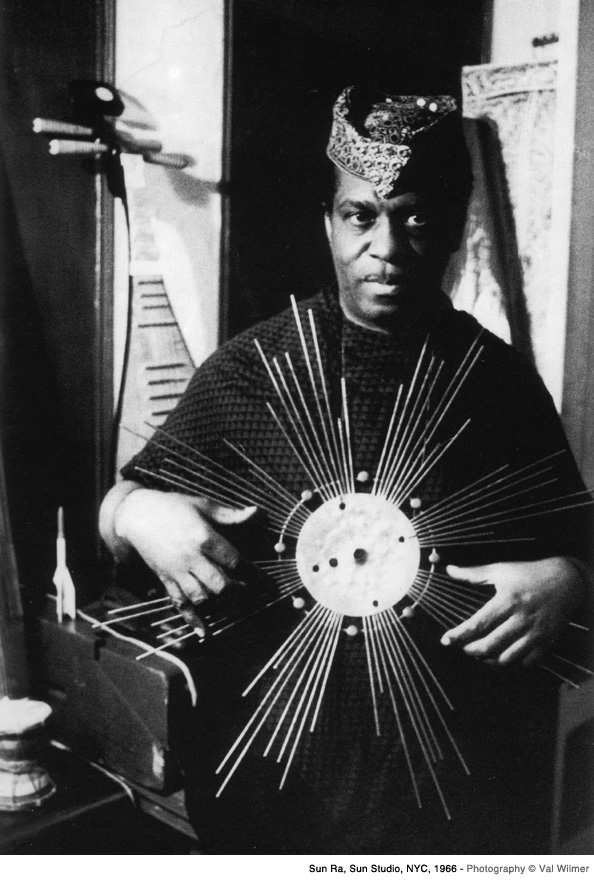
We love Christmas music. We especially love the track, “It’s Christmas Time,” by Sun Ra’s early doo-wop group The Qualities. We first were made aware of the track via Yo La Tengo’s lovely rendition on their 2002 EP, Merry Christmas from Yo La Tengo.
The image of Sun Ra is from the Sun Ra Picture Archive, a totally radical site. And you should go there. And you should download these songs. And you should listen to them. And bring good cheer to all your friends and neighbors.
The Only Earthly Certainty Is Oblivion
Check out this odd, possibly disturbing clip from the obscure 1986 claymation masterpiece, The Adventures of Mark Twain. Bizarre, fun stuff.
A Mercy — Toni Morrison
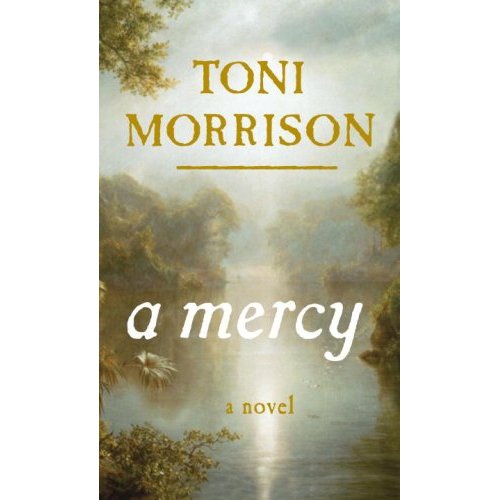
With her latest novel A Mercy, Toni Morrison offers up more evidence of why she is possibly America’s greatest living author. As in earlier works like Sula, Song of Solomon, and Beloved, in A Mercy Morrison examines the strange intersections of race and geography, family and culture, memory and storytelling. And like those great novels before it, at the center of A Mercy (a center, mind you that Morrison frequently works to decenter) is that great post-modern question: what is identity?
The late-seventeenth-century America of A Mercy is at once paradoxically both alien and familiar. This America is seemingly wild and free and unconstrained, yet the land–purchased with the blood of the native Indians–is worked by slaves and indentured servants. The freedom to be viciously intolerant of anyone else’s religion abounds. A lazy eye might get you burned for a witch. Life is cheap and difficult, but there is also much beauty here, and for a time, the makeshift family of characters who populate A Mercy seems happy enough. Morrison’s genius in this novel, however, is to only present these moments of contentment and happiness in fragments, interspersed between each of her character’ desires for freedom, future, family, and ultimately, self. We see glimpses of one character’s joys or sufferings through the eyes of another character, a technique that builds and layers and enriches a narrative where, honestly, very little happens. A farmer-turned-trader gets sick and dies, never finishing the house he was building. Then his wife gets sick, and sends her young slave to get the blacksmith, a free black man, who she believes can heal her. By the time he arrives, she’s better, but her ersatz family is forever sundered. Summarized, the linear plot sounds thin, but the depth of storytelling around Morrison’s deceptively simple story is marvelous. Morrison achieves this depth via the different voices and perspectives that propel her novel.
The voice of the young enslaved girl Florens initiates the novel with the enigmatic opening line, “Don’t be afraid.” Her opening command both engages and disorients (and, sign of a great novel, begs to be read again after completing the book). “Stranger things happen all the time everywhere,” she recognizes, before asking “One question is who is responsible? Another is can you read?” Right away, Morrison tells us this a novel about how to read, where to find cause, and possibly, how to create one’s own agency in a world that makes slaves and servants–or food–out of almost everybody.

This question of agency runs throughout each of the chapters that alternate with Florens’s first person narrative. There’s Jacob Vaark, who takes Florens as part of a debt owed him by a fading aristocrat. Vaark is disgusted at the aristocrat’s lavish lifestyle, and although the slave trade repels him – “God help me if this is not the most wretched business” – he agrees to take Florens at the pleading of her mother (Florens will be haunted forever by what she interprets as abandonment). Vaark is, however, smitten by the slaver’s elaborate house and vows to build one just as grand. His attempt to build a castle from his own labor in the New World, a castle free from any title or rank or order is his own claim to agency. There’s also the voice of his wife Rebekkah, who spends her chapter in a pox-ridden fever dream that dips and floats and weaves through time and space. Her father essentially sells her mail-order to Jacob. She leaves the dirty, crowded Old World on a dirty, crowded ship. Stuck in dark steerage, she makes a community with a group of whores, “Women of and for men,” who, in transit, exist in a strange uncomfortable comfort, a “blank where a past did not haunt nor a future beckon.” Rebekkah will attempt to forge another strange, transitory family when she arrives in America. She grows quickly to love Jacob; soon, she even loves Lina, the enslaved Indian girl Jacob buys for both pity and service. Lina and Rebekkah forge an alliance, weathering the death of the Vaark’s children, as well as Jacob’s extended absences as he expands his trade. They are less ready to accept another foundling, Sorrow, who Jacob brings home (solely for pity); a little bit crazy (“daft”), she spends much of the novel mysteriously pregnant. However, Lina quickly warms to Florens, treating her as her own daughter, even if Rebekkah will not. Also there are Scully and Willard, two indentured servants who may never gain their freedom. Willard imagines the family they all comprise: “A good-hearted couple (parents), and three female servants (sisters, say) and them helpful sons.” But it’s not family, or community, or the idea of a country that A Mercy will validate. Instead, the novel suggests these concepts are ultimately transitory–like a passage over the Atlantic–and that there can only be a claiming of self.
Throughout the book, some characters gain agency, others die trying, and several lose themselves to grief and loss. But it’s Florens’s narrative that binds the text. She grows from a lovesick kid, desperate to please everyone, to a realized person with a conscious sense of her self. “The beginning begins with the shoes,” she says. “When a child I am never able to abide being barefoot and always beg for shoes, anybody’s shoes.” By the end of the novel she can go barefoot, free, in a sense, the soles of her feet “hard as cypress” – and this New World requires hard soles. And even if Morrison suggests that we need to learn to walk, hard-soled on our own feet, there is a great pleasure–a sad, sometimes sour, shocking pleasure–to be gained in walking for just a little while in these characters’ shoes. Very highly recommended.
A Mercy is now available from Knopf.
Roughing It

- The American cover isn’t bad…
Simon Mason’s The Rough Guide to Classic Novels covers “a selection of 229 novels . . . from 36 countries, published between 1604 and 2002.” Roughly pocket-sized (if you have big pockets), Classic Novels provides short, simple summaries of each of the books, outlining the plot as well as contextualizing the relative importance of the novel. Mason also recommends the best English translations and discusses film adaptations (quite even-handedly), where applicable. He also includes a “Where to Go Next” bullet for each novel. Sometimes these suggestions work: liked Brave New World? Then check out Russell Hoban’s Riddley Walker. Other times, they’re a bit nonsensical–does anyone really go to A Portrait of the Artist as a Young Man after they’ve made it through Ulysses?

- …but we prefer the British cover
But this criticism is mere quibbling; Mason does a great job with an almost impossible task–after all what books would you cover in such a limited space (and you’d have to include Ulysses, and you’d have to give it pride of place over the Portrait, right?). Simon admits in his preface that inevitably “the selection is a personal one, and not likely to be the same as anyone else’s.” Of course he includes the “classics” that will jump to anyone’s mind–Jane Eyre, War and Peace, Moby-Dick, etc., but he also includes works by Toni Morrison, Don DeLillo, and Haruki Murakami, along with dozens and dozens of books I’ve never heard of, but now feel that I simply must read. And in exposing a potential reader to a book they’ve never heard of, Classic Novels is a success.
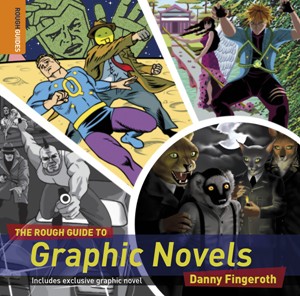
If Danny Fingeroth’s The Rough Guide to Graphic Novels is less successful than Mason’s Classic Novels, that shortcoming is in his attempt to sanctify a canon in a medium that is still often misunderstood as a genre. While most of us will readily agree that Don Quixote and The Catcher in the Rye are classics, the canonical works of the comic book medium still need some sorting out, and many fans of graphic novels will find Fingeroth’s language a bit too-definitive. After a great first chapter that asks “What Is a Graphic Novel?,” a brief history of the comic book story-telling medium, and his own comic, “For Art’s Sake,” (a fun but forgettable overview of the graphic story-telling arts from an artist’s perspective), Fingeroth initiates the bulk of the book, “The Canon: The Sixty Best Graphic Novels.” As if his language weren’t definitive enough, he kicks the section off with “Ten Graphic Novels Everyone Should Read.” And while Fingeroth’s “Canon” and top-ten list are full of obvious choices that should certainly be there–Spiegelman‘s Maus, Satrapi’s Persepolis, Charles Burns’s Black Hole, Clowes‘s Ghost World–there are also gaping holes on one hand and complete over-representation on the other, as well as some real head-scratchers thrown in to boot. Why, for instance, does Fingeroth include Frank Miller’s The Dark Knight Strikes Again over its vastly superior and more influential predecessor, The Dark Knight Returns? Why is Sin City canonized at all? Although Alan Moore’s From Hell is canonized, why is his controversial recent novel Lost Girls included over work like Watchmen, V for Vendetta, or Saga of Swamp Thing–all books that had a tremendous impact on comic book storytelling? Why does Dave Sim’s massive contribution Cerebus get glossed over in a single sentence, while Kyle Baker’s trifling missive Why I Hate Saturn is given pride of place on the top ten list? Fingeroth could’ve saved himself a lot of nitpicking by simply changing his language a bit to at least admit that his choices are subjective. Far more satisfying is the next chapter, “The Icons,” covering some of the most influential persons in comic history, including Robert Crumb, Chris Ware, Joe Sacco, and the Hernandez Brothers. I would’ve liked to have seen this chapter expanded quite a bit (perhaps at the expense of the superfluous chapter on manga); if The Rough Guide to Graphic Novels is to be a starting place for new readers interested in this medium, “The Icons” best represents that starting place. Those interested in discovering graphic novels they haven’t heard of will also be pleased with the many full-page art reproductions throughout the book, probably its best feature. Despite its flaws, however, there is something admirable about Fingeroth’s attempt to create a canon out of a medium that has for far too long been marginalized.
The Rough Guide to Classic Novels and The Rough Guide to Graphic Novels are now available from Rough Guides,
After the jump: Fingeroth’s top ten list vs. Biblioklept’s top ten list–
The Savage Detectives — Roberto Bolaño

I give up. I don’t know how to review The Savage Detectives.
Everyone told me I was supposed to love this book, but I didn’t. There, that’s a review. Not a good review, but there. I can’t remember a book ever taking me so long to finish or a book that I put down so often. When I truly love a book, I am moved. Often physically. Sometimes I have to stand up to read a book, I’m so moved. That’s a good book. (I never had to stand up during The Savage Detectives, although I often had to force myself to read thoroughly and not just skim). When I truly love a book, I’m a little sad and deflated when it’s over. I know a book is great if I’m compelled to go back and immediately reread sections. (Again, with Detectives, this didn’t happen). But it looks like I’m trashing the book. I shouldn’t. It has a lot going for it.
I read the first 140 pages, the journal entries of young Garcia Madero, in a blur. Funny and passionate, Madero’s voice explodes with the immediacy and intensity of youth. He joins up with the visceral realists, a group of anti-establishment poets (who no one cares about). Led by two enigmatic outsiders, Ulises Lima and Arturo Belano, the visceral realists gripe about the state of Mexican and Latin American literature, screw around, and argue with each other (no one else will listen to them). Madero paints Mexico City in the mid-1970s as vibrant, a place full of poetry and art. He becomes a biblioklept, God bless him (yet he ethically agrees not to steal from a poor old blind bookseller). He writes poems. He has sex. He runs away from home, sort of. There’s a breathless energy to Madero’s narrative that makes the book hard to put down, and the first section of The Savage Detectives, “Mexicans Lost in Mexico” culminates in one of the book’s most exciting events. Madero, Lima, and Belano help a young girl named Lupe escape from her belligerent pimp. Then, that portion of the story unresolved, the narrative shifts dramatically.
In the second section, “The Savage Detectives,” we are treated to, or subjected to, or made to endure, or made to navigate–pick your verb, please–over 450 pages of (one-sided) interviews spanning 20 years. Some of the interviewees appear consistently throughout this section, like Amadeo Salvatierra, who helps Lima and Belano in their quest to find the lost original visceral realist, Cesárea Tinajero. Other voices only pop up once to tell a weird story about Lima or Belano–or more accurately, a weird story about themselves with Lima or Belano playing bit parts. Some of these stories, like Lima’s strange time in a Tel Aviv prison, or Belano’s tenure as a national park guard in France are great; other times they are painfully tedious or repetitive (you know, like real life).
Technically, The Savage Detectives is quite an achievement. The myriad stories in the book’s main section represent the fragmented narratives that might compose a person’s life–a series of perspectives that others have about us, views that can never add up to a unified truth. The bulk of these stories are very much about poetry, art, and travel. Like Joyce’s Ulysses, Detectives is a peripatetic novel, full of specific locations and very, very explicit directions (Joyce famously claimed that were Dublin destroyed in a catastrophe, it could be rebuilt based on his novel; the same seems true for Bolaño’s Mexico City). Also like Ulysses, Detectives is an epic about the banal, ordinary things that fill our lives: jobs and eating and getting to places and having one’s friendships sour and being disappointed and so on. Lots and lots of “and so on.” This isn’t to say that there aren’t moments of heroism and adventure–saving kids from satanic caves, stow-away sea voyages, and dodging bullets from Liberian rebels make for interesting narrative peaks. However, most of the novel remains rooted in a realism that is often dreadfully visceral in its painstaking replication of just how depressing a life could be. As the seventies and eighties turn into the nineties, things get more bleak and more depressing for Lima and Belano. And it all adds up to an incomplete picture (literally; check out the last page of the book if you don’t believe me).

By the time we return to Madero’s journals in the third and final part of the novel, “The Sonora Desert,” the sadness and deflation of the previous section infects and tints every aspect of the narrative. Lima and Belano, with Madero and Lupe in tow, search desperately for the forgotten poet Cesárea Tinajero. Their search works as a pitiful parallel to “The Savage Detectives” section, a comment on the elusive nature of identity, and the strange disappointments that punctuate our expectations. Even the novel’s climactic ending seems understated after the monolithic middle section. And while this deflationary technique is undoubtedly a carefully considered conceit on Bolaño’s part, the payoff for the reader–this reader anyway–did not merit the effort and concentration that the book required. Or, to put it another way, after hours of time invested, I was unmoved.
As rave reviews of the English translation of his last novel 2666 begin seeping out of the critical woodwork (this month’s Harper’s has devoted a full four pages to the book), it seems that Bolaño will top most critics’ lists again this year. At over 900 pages and reportedly full of grim, bleak violence, it’s hard to imagine 2666 will be any easier to get through, and as FS&G summarily ignored our requests for a review copy, there’s no pressing obligation, I suppose. The critical praise heaped on 2666 this year will surely lead interested readers to The Savage Detectives. I think Mark Twain’s infamous note at the beginning of The Adventures of Huckleberry Finn would provide the best warning to these potential readers: “Persons attempting to find a motive in this narrative will be prosecuted; persons attempting to find a moral in it will be banished; persons attempting to find a plot in it will be shot.” While no serious critic could dismiss Bolaño’s lyrical skill and complex control of the many voices that populate Detectives, I think a number of readers–serious readers–would not be wrong for considering the tome a bit overrated.
The Tenth Muse — Judith Jones
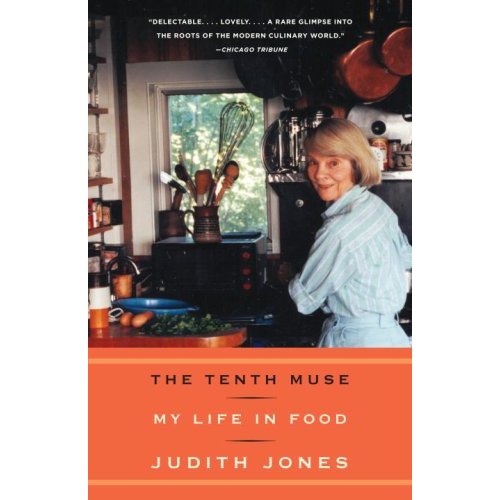
Judith Jones’s memoir The Tenth Muse, aptly subtitled My Life in Food, chronicles the life of one of the most influential foodies you’ve never heard of. The book moves quickly through Jones’s terse blueblooded Vermont childhood, through her time at Bennington College, and her first trip to Paris, all the while keeping Jones’s passion for food as its focus. This passion leads her to move to Paris after her college days, where she and future husband (and fellow writer) Evan Jones can eat pâté to their hearts’ content while palling around with writers, artists, and other beautiful people (even Balthus pops up in her narrative here). After some years of bohemian bliss, Jones returns to the U.S. to champion Julia Child, working hard to get her seminal cook book Mastering the Art of French Cooking to an American audience (she also manages to get The Diary of Anne Frank translated for publication as well). Shocked at the paltry selection of fresh foods in New York City, Jones and her now-husband Evan learn to make many of the fine French foods they enjoyed in their Paris days. At the same time, they continue to introduce a wider audience of Americans to cooks like James Beard, M.F.K. Fisher and Edna Lewis. Through it all, food (rich, thick, luscious French food) remains the primary focus, with the art of writing–and editing–a close second. Jones’s narrative abounds with anecdotes of chefs (Claudia Roden, Lidia Bastianich), editors, and writers (Camus, Capote, Updike), but readers who pine for psychological introspection or juicy melodrama won’t find much to chew on here.
Jones tends to gloss over information that most memoirs would milk for maximum drama. Evan was married when she first began living with him, a fact that would’ve scandalized many women in the 1950s but here goes largely unremarked. Two teenage children are adopted with little explanation or follow-up. Even the focus of Jones’s mastectomy returns to food, her pre-op meal, which Evans sneaks in to the hospital (“good pâté de campagne, some ripe cheese, a baguette, and a bottle of wine”). Also, readers who tend to pay attention to matters of class and economics might find Jones’s complete lack of self-reflection on how her wealth and background have allowed her to live and eat so richly a bit distasteful, particularly when she rails against the state of the modern American kitchen (too unused, or too full of processed, “quick and easy solutions.” Jones would have us killing and dressing beavers we catch on our vast estates, apparently. (Relax, I’m exaggerating (although she does prepare a beaver her son-in-law shoots)–but seriously, preparing a duck for dinner is not nearly as easy as she cheerily suggests)). But ultimately in The Tenth Muse, such lack of reflection simply leaves room for the food, which is really why you want to read this book anyway.
Jones caps off her book with over 80 pages of recipes, lovingly arranged in their own sort of narrative, one that parallels her life story. Jones includes favorite dishes from her early youth (“Spaghetti and Cheese”), plenty of French favorites (“Boudin Blanc,” simple “Baguettes,” “Brains with a Mustard Coating”), and recipes from her country estate (“Gooseberry Tart”). The selection of recipes at the end, “Cooking for One,” inspired by her continued love of complex cooking even after the death of her husband, is particularly poignant (Jones includes seven things to make from one duck).
The Tenth Muse may not meet the usual memoir-reader’s needs for salacious detail or analytical introspection, but those who simply want a glimpse into the life of an influential foodie–and some great recipes to boot–will not be disappointed. Recommended.
The Tenth Muse is now available in paperback from Anchor Books.
A Desolation, A Simplicity, to Which the Trappings of a Gaudy World Make a Strange Back-ground

In Section IV of his Prelude, William Wordsworth evokes the most moving encounter with a veteran of war that I have ever read. At first reticent to be anything but a voyeur, the narrator (Wordsworth, in all likelihood), slips “into the shade/ Of a thick hawthorn” to spy on the “meagre man” with a “ghastly” mouth “in military garb” resting on a “mile-stone.” As the poor ex-soldier, “Companionless,” begins to issue “low muttered sounds, as if of pain / Or some uneasy though,” the narrator shakes his “heart’s specious cowardice” and hails the veteran as a human being, asking for his story. It turns out that the guy is slowly–and with great difficulty–returning to his “native home.” Wordsworth takes the veteran to a nearby friend’s house for companionship and rest, before returning to his own home in a contemplative mood. Full text of the “Discharged Soldier” episode after the jump–
The Wasted Vigil — Nadeem Aslam
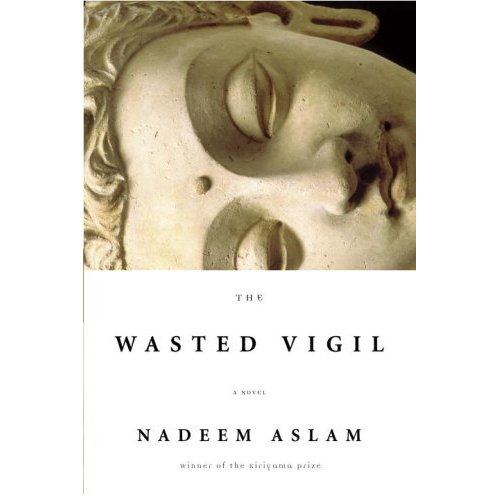
Nadeem Aslam’s new novel The Wasted Vigil ambitiously attempts to contextualize three decades of conflict in Afghanistan through the lives of its three main characters: Marcus, an English doctor living near Tora Bora, whose Afghani wife was killed by the Taliban, Lara, a Russian woman searching for her missing brother who disappeared during the Soviet invasion, and David, the ex-CIA operative tortured by his past. There’s also the young Islamic fundamentalist Casa, who dreams of jihad–possibly the novel’s most interesting character. Aslam weaves these stories together in a meditation on art and war, beauty and violence, and family and politics, never shying away from the brutality of a good stoning or elective amputation.
The Wasted Vigil works best when Aslam restrains his language and communicates in a more journalistic style. These moments are few and far between, however; most of the time, Aslam is overly concerned with explicitly announcing every allusion and broadly indicating the critical or aesthetic importance of even the slightest of his characters’ actions. Aslam’s prose is far more satisfying when he backs away from overblown, overwritten sentences and simply lets his readers figure out what’s going on for themselves. That said, Aslam can certainly turn an artful phrase–it’s just that artful phrase piled upon artful phrase becomes showy, even tacky. Restraint allows prose to build rhythmically and payoff meaningfully, but there isn’t enough restraint here.
Of course, Aslam’s subject matter is hardly restrained. Afghanistan is a place of remarkable violence and brutality, but also a place rich with history and culture. Perhaps Aslam’s editors believed his audience deserved an overtly complex representation of Afghanistan, and perhaps they are right in this belief. After all, the country has been very much in the background of the West’s political conscience for the past decade (translating in to big success for other books about Afghanistan, notably Khaled Hosseini’s The Kite Runner). Undoubtedly, there are a great many who will enjoy The Wasted Vigil. Those fascinated with Afghanistan and its sad, strange, violent history will have more than enough to mull over in this elaborate, intelligent, thoughtful novel.
The Wasted Vigil is now available in hardback from Knopf.
John Leonard, 1939-2008

American critic John Leonard died of lung cancer last Wednesday. From The New York Times obituary:
John Leonard, a widely influential and enduringly visible cultural critic known for the breadth of his knowledge, the depth of his inquiries and the lavish passion of his prose, died on Wednesday in Manhattan. He was 69 and lived in Manhattan. . . .
As a critic, Mr. Leonard was far less interested in saying yea or nay about a work of art than he was in scrutinizing the who, the what and the why of it. His writing opened a window onto the contemporary American scene, examining a book or film or television show as it was shaped by the cultural winds of the day.
Amid the thicket of book galleys he received each week, Mr. Leonard often spied glimmers that other critics had not yet noticed. He was known as an early champion of a string of writers who are now household names, among them Mary Gordon, Maxine Hong Kingston and the Nobel Prize winners Toni Morrison and Gabriel García Márquez.
Mr. Leonard’s prose was known not only for its erudition, but also for its sheer revelry in the sounds and sentences of English. Stylistic hallmarks included wit, wordplay, a carefully constructed acerbity and a syntax so unabashedly baroque that some readers found it overwhelming. The comma seemed to have been invented expressly for him.
I’ve subscribed to Harper’s for about a decade now, and in that time John Leonard’s “New Books” column has been not only one of my favorite features of the magazine, but also an inspirational guide on how to review a book. Leonard knew how to show why a book mattered; he also knew how to capture the essence of not just the plot but the author’s style in just a few short lines–something that’s really, really tough to do. I read one of Leonard’s last reviews, a write up of Toni Morrison’s latest A Mercy in this month’s Harper’s, just last Monday to a group of my high school students who were interested in Morrison’s work. The review made one of them say: “I want to read that book.” I think there is no higher compliment for any critic. John Leonard will be missed.
A Respite from Cynicism
I am a cynic and skeptic of the worst kind, the type of person who claims to be a realist but who secretly knows that he is a hopeless pessimist. And yet I cannot help but feel more than a little relieved and lightened, very much in spite of myself, at our country’s overwhelming endorsement of a new ideology, one that I believe is different and separate from the politics that survived on the perpetuation of the myth of a “culture war.” I’m talking about Barrack Obama, President Elect, if I haven’t been clear enough.
I’m not naive enough to believe that Obama isn’t a politician, fallible like all before him, and I’m not giddy or silly enough to think of him as a Jesusian savior of America. When the conservative movement mocked Obama’s followers for seemingly seeing in the man a messiah figure, what they didn’t understand was the radical break that Obama represented. It is not so much Obama the man that we longed for, but the idea of Obama–the idea of someone radically different from everything that had come before. And in electing Obama–and the idea of Obama–we immediately achieved something, as Americans, that is wholly independent of anything Obama will do over the next four years as President. We showed the world that our democracy works and that we as a people are not the ignorant xenophobic fundamentalists that the Bush administration worked so hard to paint us as.
I’ve been thinking these past few days about Michelle Obama’s infamous comment during the campaign that she felt proud to be an American for the first time in her adult life. The comment was fodder for right wingers, of course, and at the time it seemed like a bit of a blunder even to some Obama supporters. But now I see it in a new way. My adult life has essentially taken place in this decade, the Bush decade, the 9/11 decade (I turned 21 in the year 2000). While I’ve had moments of pride in individual Americans, it’s been hard to see the (regressive) movement of our country in any positive light. I remember being a child, being taught and believing that this was a special country, a different country, a country that people wanted to come to because it was special and different. In my adult life in this decade, I’ve watched our ideological stock plummet around the globe. I’ve found myself, while traveling abroad, having to explain–with quite a bit of difficulty–that we’re not all ignorant fundamentalists in America. That thinking critically was actually once considered patriotic. That America was really a much better place than its elected leadership exemplified. The policies of the Bush administration–and the nation’s acquiescent and apathetic response to them–slowly drained my energy and hardened my pessimism in politics and people into a thick, cynical shell. I am amazed at how quickly the November 4th, 2008 election shattered this shell.
I know that Obama will make mistakes, that he will have to engage in the same kind of political gamesmanship that every other president has had to in order to push their agenda. But again, to paraphrase Obama himself, this isn’t about him–this is about us, the U.S., and our declared mandate for political and cultural change in this country. So while I will keep my skeptical reservations and pessimism about politics and the two-party system that we let dominate this country, I can’t help but feel a restoration of pride and a sense of possibility for this country.
Jesse Jackson’s Tears
I was surprised by the emotional response I had to Obama’s sweeping win last night–or rather, I was surprised by the emotional response that I had to the emotional responses I saw on my television. But it was these images of Jesse Jackson crying that intrigued me–and continue to intrigue me–the most:
What are we seeing here? Jackson’s tears, his clenched jaw, his bared teeth–all stand out in strange relief against the cheering, joyous faces around him. What is he thinking? What is he feeling? What is the word for how he feels? Is this catharsis?
Raw and complex, Jackson’s response is not gleeful joy, but some kind of release–not elation, but deflation, it seems. Indeed, Jackson’s tears, his face, seem to reflect and signal the aspiration of a lifetime’s work–his work–achieved now in a different man, a new man, a man for a new and different time. In some sense–and perhaps I’m way overboard here–it seems that Jackson is working through some deep Oedipal anxieties. And yet such a cathartic response, such a purging also seems to indicate and symbolize a dramatic shift in America’s narrative.
In any case, in our heavily mediated age of instant news and “reality TV” (an age saturated with information and scant on wisdom or reflection), Jackson’s tears strike me viscerally. They are wholly real, the abject edges of turmoil and pain, but also the strange fruit of over fifty years of the Civil Rights movement. And while Obama’s ascendancy in no way changes the past, it changes the future, and delivers a promise to the rest of the world that America truly is a land of freedom, opportunity, and hope.
A Swordless Conflict
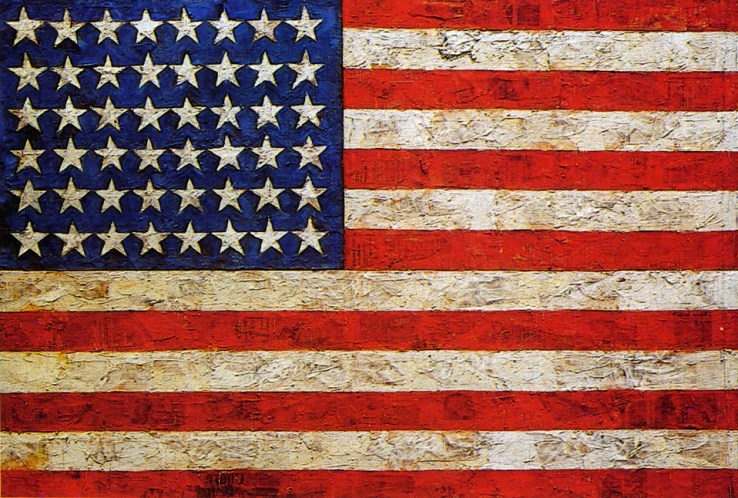
“Election Day, November, 1884” by Walt Whitman
If I should need to name, O Western World, your powerfulest scene and
show,
‘Twould not be you, Niagara–nor you, ye limitless prairies–nor
your huge rifts of canyons, Colorado,
Nor you, Yosemite–nor Yellowstone, with all its spasmic
geyser-loops ascending to the skies, appearing and disappearing,
Nor Oregon’s white cones–nor Huron’s belt of mighty lakes–nor
Mississippi’s stream:
–This seething hemisphere’s humanity, as now, I’d name–the still
small voice vibrating–America’s choosing day,
(The heart of it not in the chosen–the act itself the main, the
quadriennial choosing,)
The stretch of North and South arous’d–sea-board and inland–
Texas to Maine–the Prairie States–Vermont, Virginia, California,
The final ballot-shower from East to West–the paradox and conflict,
The countless snow-flakes falling–(a swordless conflict,
Yet more than all Rome’s wars of old, or modern Napoleon’s:) the
peaceful choice of all,
Or good or ill humanity–welcoming the darker odds, the dross:
–Foams and ferments the wine? it serves to purify–while the heart
pants, life glows:
These stormy gusts and winds waft precious ships,
Swell’d Washington’s, Jefferson’s, Lincoln’s sails.
DFW Memorialized, Homer Endorses Obama, Sarah Palin Is Never in on the Joke, and Hope for a New Zeitgeist
So let’s just say we’re too anxious around here to run a proper book review, okay? I promise to have reviews of new books up after Election Day. In the meantime–
Great, thorough, and touching essay by David Lipsky at Rolling Stone: “The Lost Years and Last Days of David Foster Wallace.” Check it out. Also, there are plenty of online accounts of the DFW memorial last week at NYU’s Skirball Center, but I thought Andy Battaglia’s eyewitness account was pretty moving.
Also–
It leaked a few weeks ago, but it was nice to see Homer Simpson endorse Obama on this year’s Treehouse of Horror episode–
(The best part of the episode was the Mad Men parody, though).
Speaking of election humor, Sarah Palin continues to be a comedy goldmine. How could she be so readily duped by a French Canadian pretending to be President Sarkozy? She’s fucking stupid, that’s how. I’m reminded of her appearance on SNL a few weeks ago–unjustifiably lauded–where she smirked along as if she were actually in on the joke, and not being simply mocked.
Speaking of ignorance and ugliness, the aughties in America have been culturally and politically awful. Beginning with the one-two punch of the 2000 election debacle and the nightmare of the 9/11 attacks, this past decade has been an embarrassing series of disastrous blunders for the United States government, coupled with a spike in civic apathy at home. The results: our stock has fallen in the rest of the world’s eyes and a large portion of Americans have found solace and even pride in ignorance and xenophobia (what else could explain the ascendancy of an ignoramus like Palin?)
And for all the great things that I’ve experienced in my personal life this past decade (marriage, fatherhood), the idea of another decade like the aughties–selfish and cruel and ignorant–seems miserable. The Bush administration–and the American people who supported them–has been working hard to usher in a New Dark Age. Yet in the past few days I’ve seen some of my cynicism fall away, as I see friends and acquaintances and complete strangers excited about the prospect of change for this country. Watching Obama in Cleveland tonight, I found myself moved and excited and hopeful, not just for Tuesday, or for a new President in January, but for a whole new spirit in this country, one that embraces progressive ideals and puts them into action.
 Biblioklept