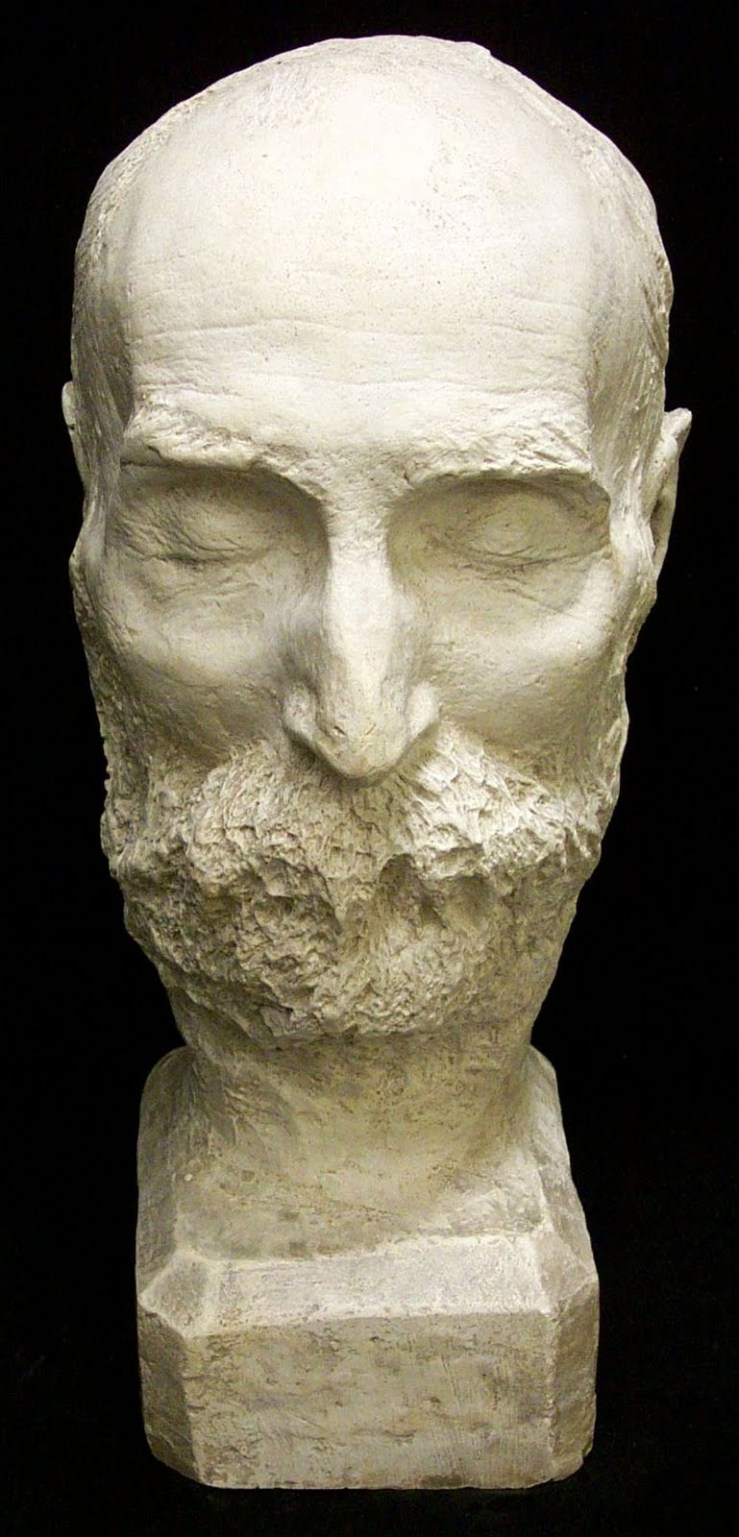
Read more about Walt Whitman’s death mask here. Read Whitman’s poem “Starting from Paumonak,” where he claims “I will show that nothing can happen more beautiful than death.”
Read more about Walt Whitman’s death mask here. Read Whitman’s poem “Starting from Paumonak,” where he claims “I will show that nothing can happen more beautiful than death.”

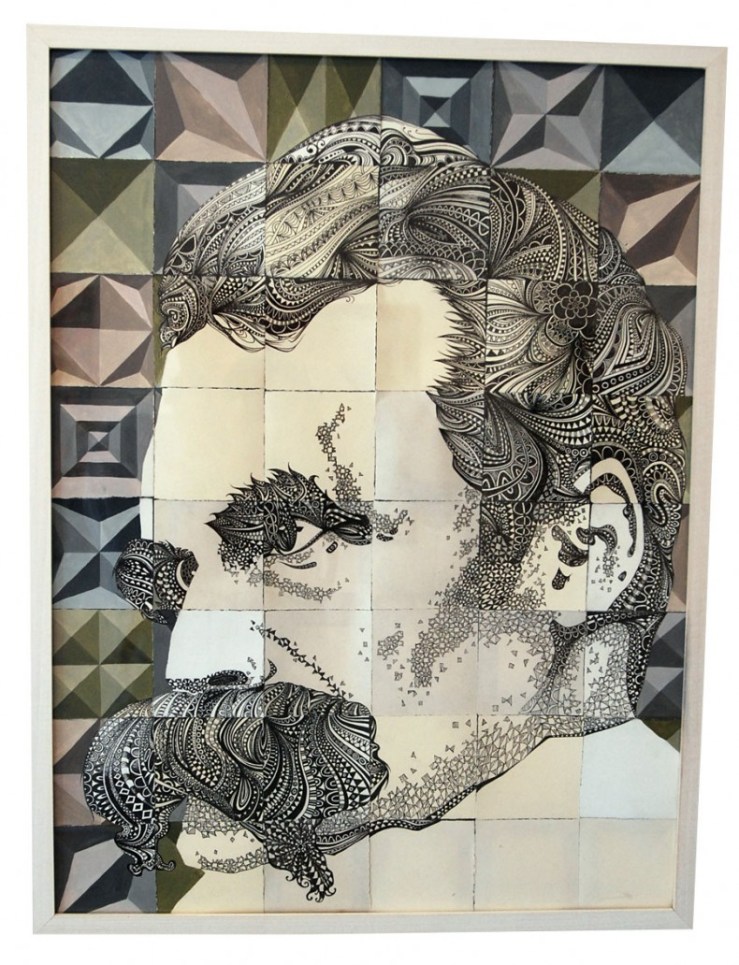
I love this portrait of Roberto Bolaño by Phillip Fivel Nessen.
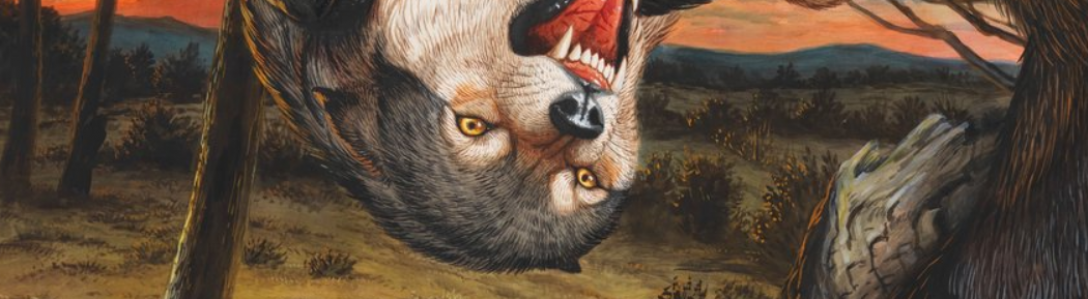
James Jean’s Rift looks pretty cool. More here.
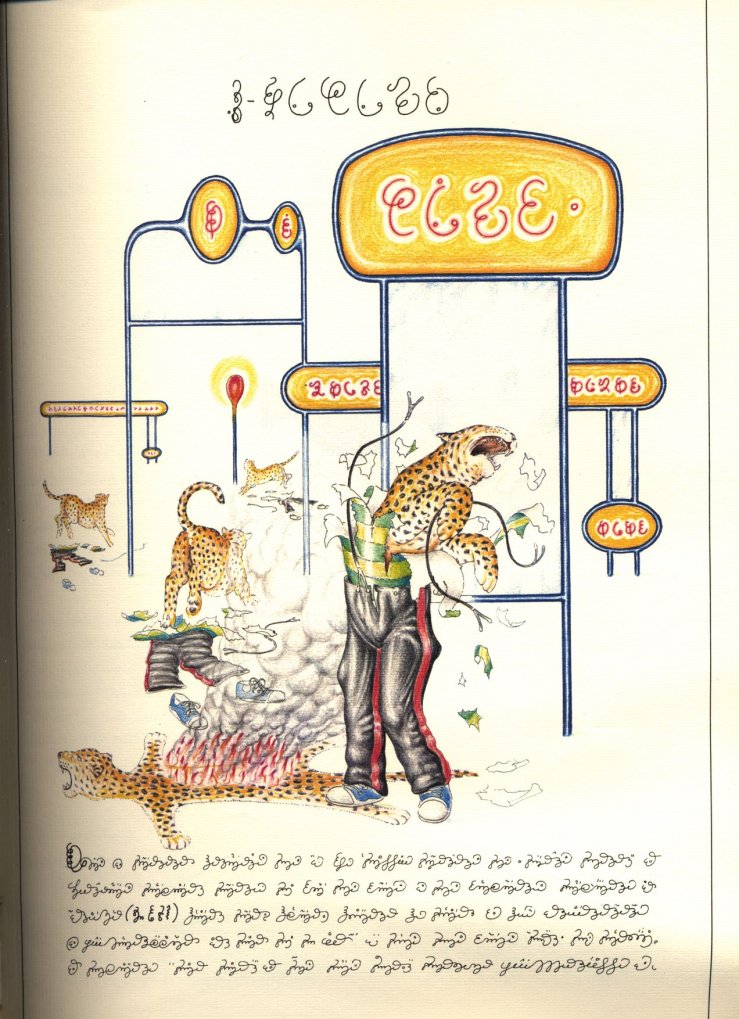
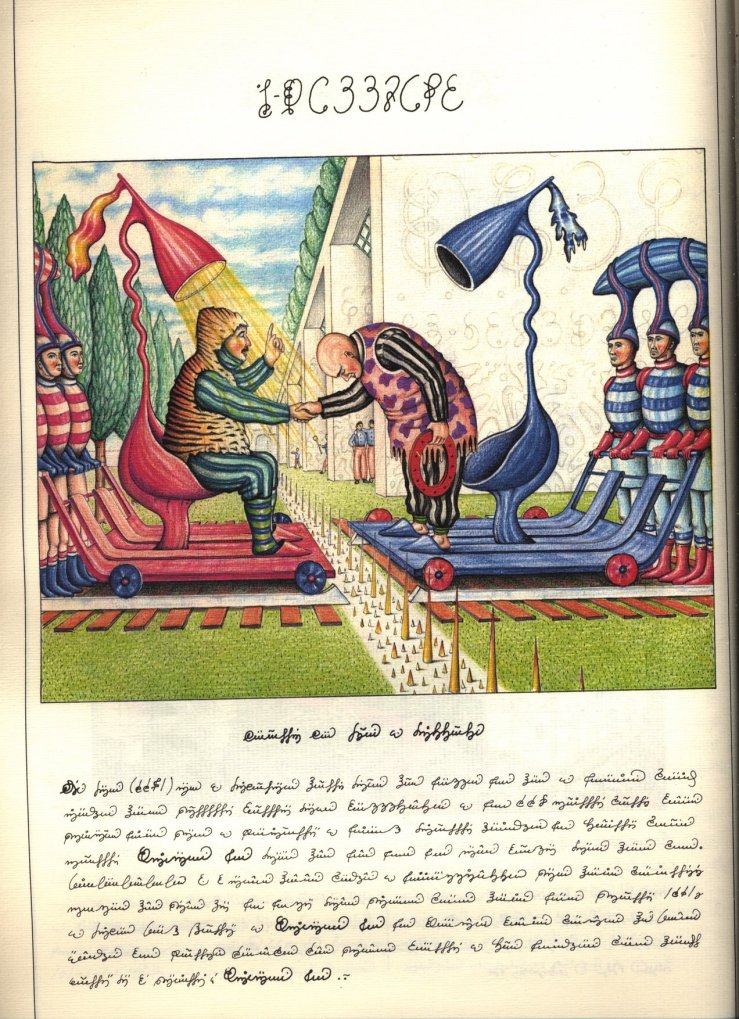
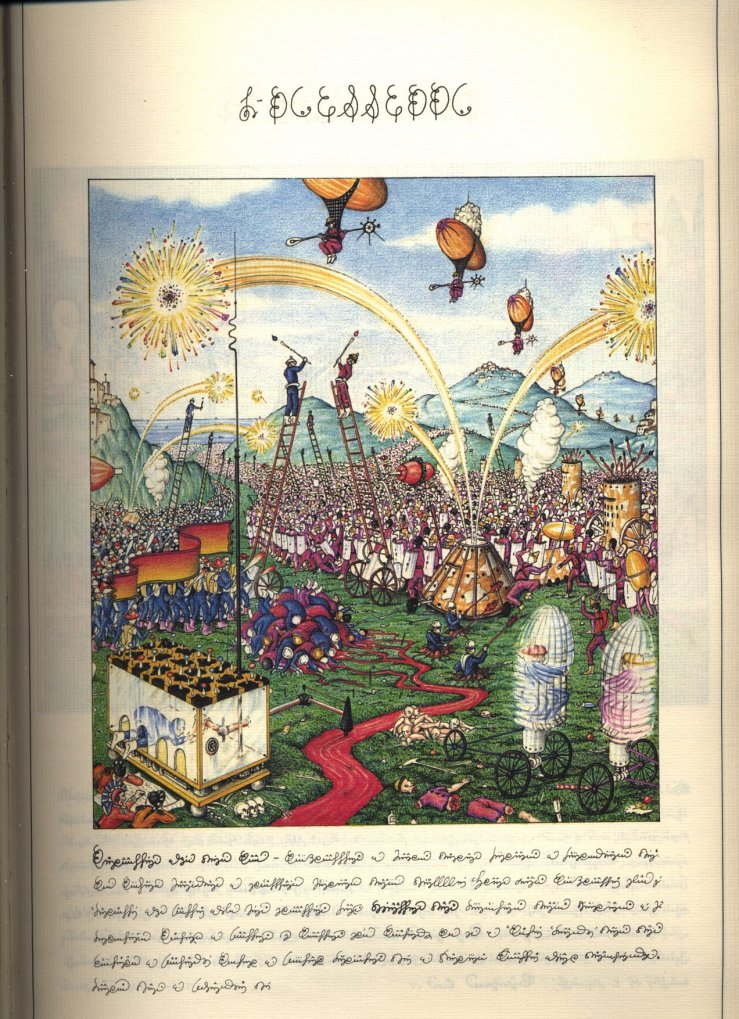
More images from Luigi Serafini’s surreal cryptoencyclopedia, Codex Seraphinianus. Learn more by reading Justin Taylor’s essay from the May 2007 issue of The Believer.


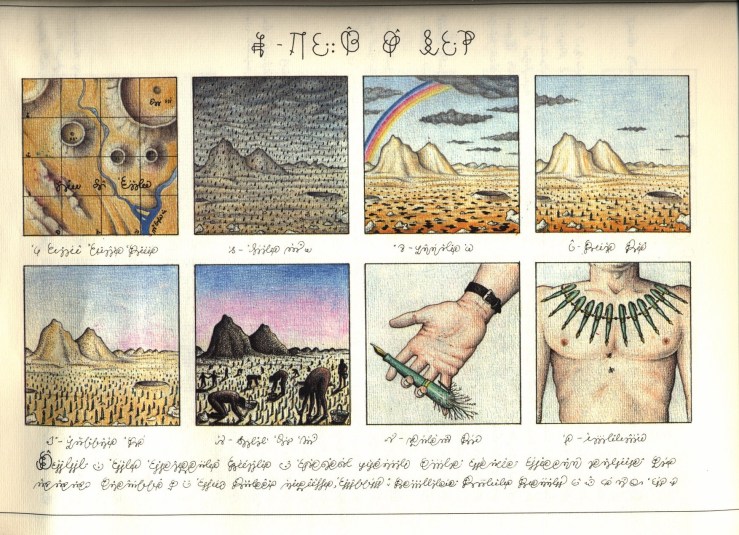

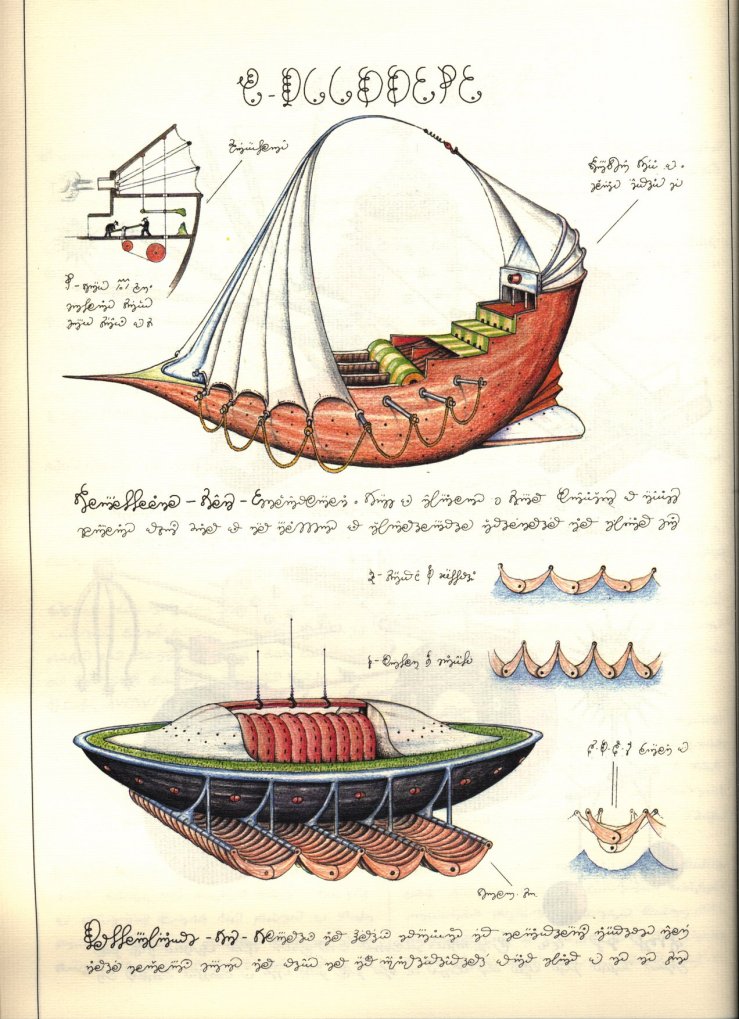
Images from Luigi Serafini’s surreal cryptoencyclopedia, Codex Seraphinianus. Learn more by reading Justin Taylor’s essay from the May 2007 issue of The Believer.




I’m enamored with a set of paintings by Japanese artist Tetsuya Ishida that has floated around the internet lately. (See iterations here, here, and here). Ishida’s paintings depict young, sad Japanese people who have transformed into (or always were?) banal objects or insect-like animals. Ishida’s figures are often constrained into claustrophobic spaces, with pained expressions evincing despair and anxiety. There’s a paradoxical loneliness in his works as well: his protagonists are often surrounded by others who have also metamorphosed into machine-like beings, automatons performing sinister operations on the protagonists.
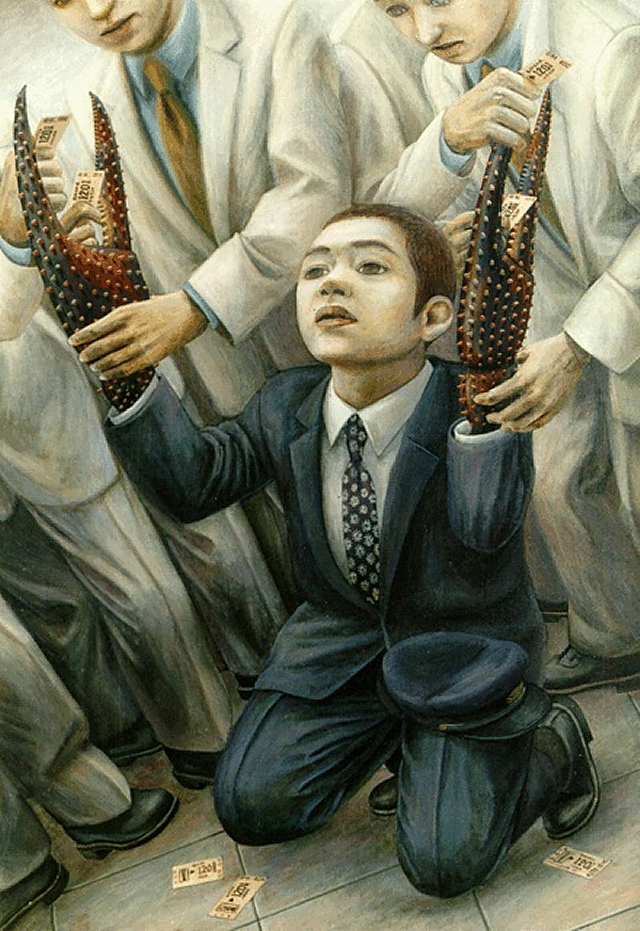
Ishida’s themes of the salaryman’s despair at the strictures of a modernized, hyper-industrialized society where conformity is prized are distinctly Japanese, but they also resonate beyond that culture. They are Kafkaesque, tapping into the alienation that the individual faces in an increasingly absurd, bureaucratic, mechanized world that turns people into cogs, bugs, things. Ishida was killed when he was hit by a train in 2005–his death was likely a suicide.
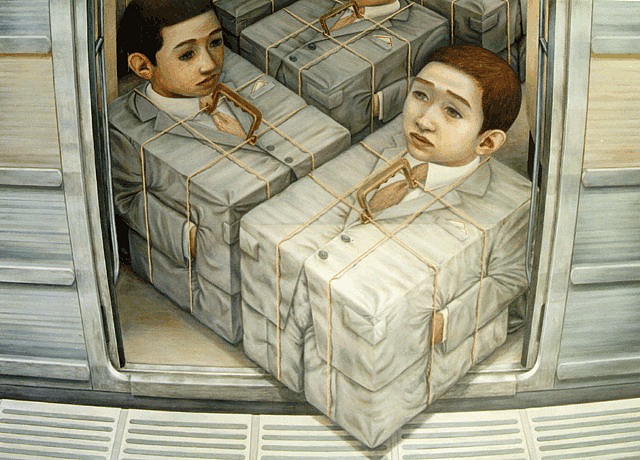
In both subject and stylistic execution, Ishida’s work is reminiscent of American artist George Tooker‘s paintings of the alienation and anxieties produced by urban bureaucracy.

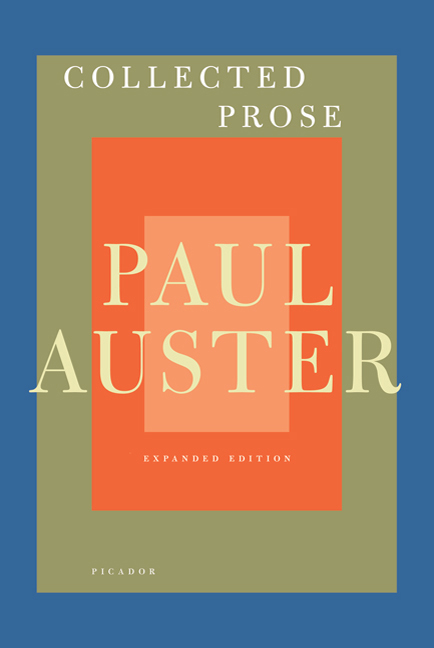
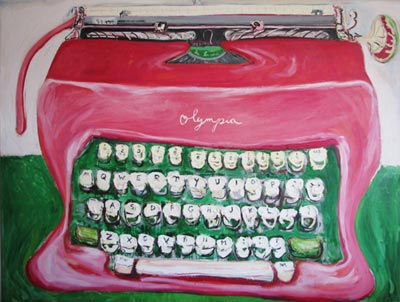
This month, the good folks at Picador are issuing an expanded edition of Paul Auster’s essays, memoirs, prefaces, true stories, anecdotes, and interviews. Inconspicuously titled Collected Prose and running to just under six hundred pages, the volume includes Auster’s début work The Invention of Solitude in its entirety. Solitude is a strange blend of personal memoir, an account of the young writer’s reaction to and relationship with the death (and life) of his father, as well as a philosophical meditation on the absurdity of family, art, and time. Collected Prose also includes the later memoir, Hand to Mouth, a reflective piece on Auster’s early failures as he tries to make it as a writer, including his time in Paris, his marriage to Lydia Davis, his hunger, and his poverty. While Solitude inaugurates many of the experimental structures and postmodern tropes that Auster would be identified with throughout his career as a novelist, the flatter, more direct style of Hand to Mouth is more indicative of the tone of much of Collected Prose. There’s a journalistic directness and keen earnestness to Auster’s essays that perhaps belie his postmodern bona fides. That’s a good thing, allowing Auster to communicate directly about his sometimes challenging subjects to a wider audience. Style aside, both of the book-length memoirs at the front end of Collected Prose neatly delineate the themes that preoccupy much of the rest of the book: art, language, writing, writers, poverty, absurdity, movement, New York City, and so on. And although the book turns away from Auster’s memoirs and true stories in its second half, presenting his essays, editorials, and prefaces, there’s still a sharp sense of Auster in each essay. These are personal essays. Auster writes about his friend Philippe Petite, the French high-wire artist; he writes about the literal hunger artists face, using Knut Hamsun and Franz Kafka as examples; he writes a vindication for Dada daddy Hugo Ball; he writes on over half a dozen relatively obscure poets to let us know why they matter. There are wonderful little moments, like “The Story of My Typewriter,” where Auster exclaims his love for his quiet Olympia (he buys 50 typewriter ribbons fearing the specie’s eventual extinction). The book reprints the Sam Messner paintings that originally accompanied Auster’s text (or, perhaps, vice versa).
Another great moment is the essay “Hawthorne at Home,” which takes a look at a little known piece by Nathaniel Hawthorne called Twenty Days with Julian & Little Bunny. Hawthorne’s piece is more or less a straightforward narrative account of Hawthorne alone with his five-year old son Julian and his pet rabbit for three weeks while wife Sophia visited the Peabodys. While Auster gives the reader a lesson on Hawthorne and his composition of The Scarlet Letter here, the essay focuses on the idyllic charm of a father and son, a rare subject in Hawthorne’s oeuvre. As a bonus, Herman Melville makes a cameo. “Hawthorne at Home” is the sort of essay that makes you want to go read the source material; it sent me hunting for a used copy of American Notebooks.
As one might imagine, Collected Prose is absolutely larded with writers, and lovingly so. Auster does not suffer from the inclination toward meanness that so many critics feel toward their peers, perhaps because he writes foremost from the perspective of an artist. Not that it’s difficult to praise Art Spiegelman (“The Art of Worry”) or pray for Salman Rushdie (um, “A Prayer for Salman Rushdie”) or speak to the genius of Samuel Beckett (“Remembering Beckett on His One Hundredth Birthday”) and Jim Jarmusch (“Night on Earth: New York”)–but Auster illuminates their work in a way that transcends the postmodern concerns of technique, place, and politics, and speaks directly to a certain aesthetic excellence. His love for storytellers extends beyond the pros, of course, evinced in his work with NPR’s National Story Project. He credits wife Siri with coming up with the idea of having NPR listeners write and submit their own original stories, but his enthusiasm for her idea resonates in his warm preface to the eventual book that collected the listeners’ submissions. Auster writes, “I learned that I am not alone in my belief that the more we understand of the world, the more elusive and confounding that world becomes.” The world becomes more “confounding” after the 9/11 attacks, of course, and like so many other writers Auster attempted to somehow measure the tragedy in words. “Random Notes–September 11, 2001–4:00 PM” is a scrap, a fragment, a shell-shocked missive that ends with the haunting words “And so the twenty-first century finally begins.”
It might be misleading to call Collected Prose a good introduction to Paul Auster’s nonfiction–can a work so comprehensive, so massive be a mere starting point?–but it is a great introduction, so there. It’s also a fantastic overview of critical, literary, and artistic theory, written from a deeply personal perspective. Let’s hope that fifteen years from now we’ll have another expanded edition of Auster’s prose; in the meantime, we can look forward to his new novel Sunset Park this November. Highly recommended.
Photographer Andrew Bush’s instillation Speech Acts combines two photographs of book shelves–one of Jacques Derrida’s and one of John Searle’s. Derrida and Searle rumbled over the primacy of speech vs. writing in the 1970s (read Derrida’s seminal essay “Signature Event Context” for more).


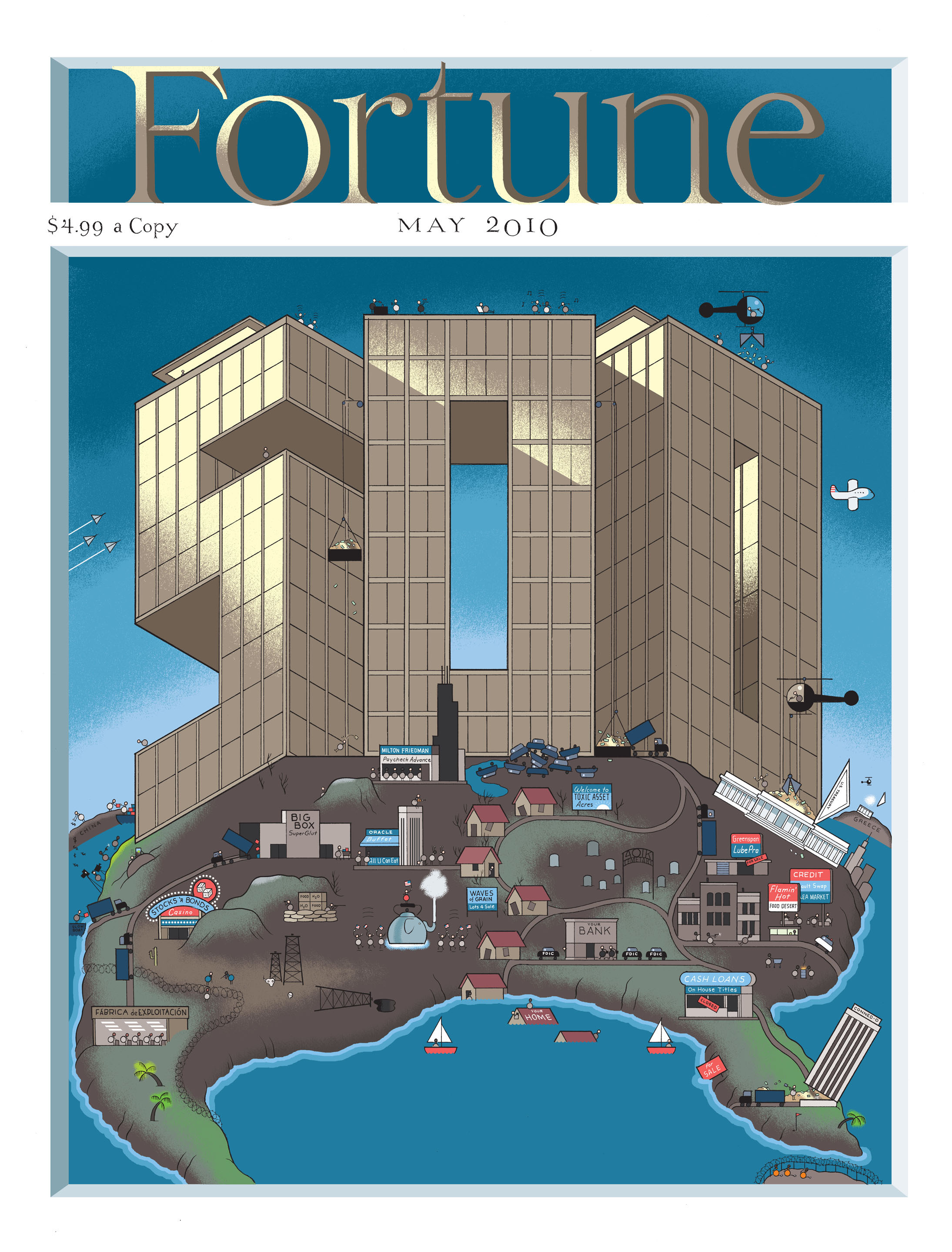
Cartoonist Chris Ware’s rejected cover for Fortune magazine. Guess his satire was too sharp. Via RW730:
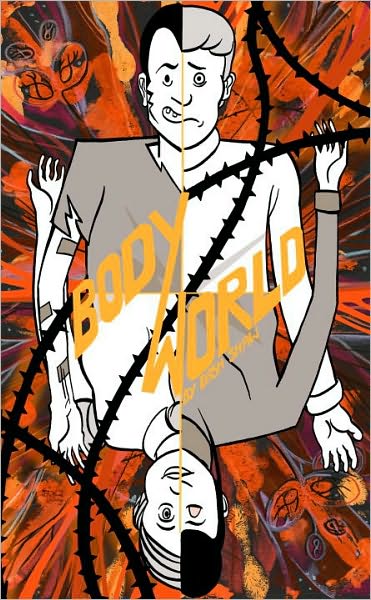
In the future Dash Shaw proposes in his graphic novel BodyWorld, the Second Civil War and rapid industrial growth have left most of America a concrete sprawl by 2060. An exception is Boney Borough, a (literal) green zone somewhere on the Atlantic seaboard. This small secluded town is a new Eden in an otherwise gray world. Enter Professor Paulie Panther, a fuck-up par excellence. He goes to Boney Borough as part of a freelance mission to find out about a new, strange plant he’s found there via the internet. Professor Panther, you see, is a botanist and poet, a would-be scientist who finds out about the psychopharmacological properties of plants by smoking them up in big fat joints (when he’s not too busy trying to commit suicide or stumbling around on one or more of the various drugs to which he’s addicted). Professor Panther is the perfect acerbic foil to the homogeneous folk of Boney Borough. He gets hot for teacher Jem Jewel, turns-on Peach Pearl, the small town girl who wants to go to the big city, and pisses off and confuses her dumb jock boyfriend Billy-Bob Borg. The alliterative names (along with Shaw’s sharp, cartoonish style) recall–and subvert–the classic all-Americanism of Archie comics. Professor Panther soon discovers that the mystery plant, when smoked, grants the user strange telepathic abilities–namely, users sense the “body-mind” of the bodies of others around them.
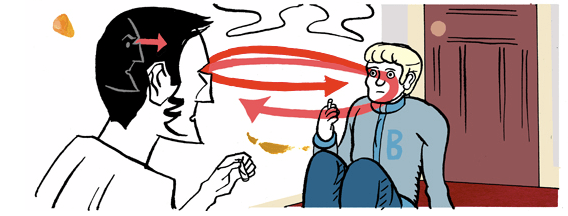
The plant’s telepathic effects allow Shaw to explore what happens within a literalized I-see-you-seeing-me-seeing-you-seeing-me (seeing-y0u-seeing-me . . .) structure. His bright Pop Art goes Cubist in psychedelic trip scenes, superimposing images to show a surreal conflation of not just the melding of two people’s pasts and presents, but those people’s perceptions of past and present. Very heady stuff–but seeing Shaw’s work is superior to my description, of course. Observe, as Panther sees Pearl seeing Panther seeing Pearl idealizing their attempt at romance:
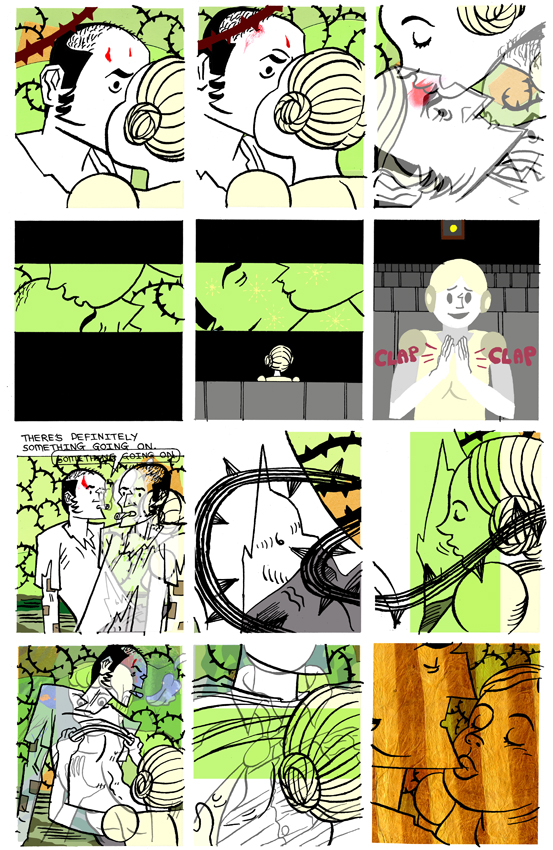
BodyWorld is sardonically humorous in its psychoanalytic visions, guided in no small part by Professor Panther’s hilarious outsider perspective, but also tempered by Shaw’s larger project, a sci-fi satire of American exurbanist insularity. We wrote earlier this month about science fiction’s tendency to work within the dichotomy of wastelands and green zones, and Shaw’s work is no exception. His marvelous trick is to keep us within the green zone of Boney Borough the whole time and to make us identify with a waster, Panther. The greatest irony is that in this futurist vision, the zombies are the ones in the green zone.
Not everyone’s a conformist though. There are exceptions, of course, especially in the seedy Outer Rim where Panther takes up transient residence. We meet a psychotic latter-day Johnny Appleseed who certainly shares Panther’s weirdo proclivities. The episode is a marvelous spoof on the corny “origin stories” standard in Golden and Silver Age comics, with Shaw’s treatment more loving than mocking. To tell more about this weirdo might spoil the climax of Shaw’s graphic novel, and we don’t want to do that, of course, because you’re going to want to read it, aren’t you? Suffice to say that it’s part and parcel of Shaw’s program, a sweet and sour subversion of the 1950s comics and contemporary conformist groupthink politics. Shaw owes some debt to the neat precision, spacing, and rhythm of Chris Ware, as well as the haunting inks and sharp wit of Charles Burns but it would be a mistake to see this young talent as anything but original. Still, while we’re making comparisons: Richard Kelly could make a messy, sprawling treasure of a film out of BodyWorld.
You can read all of BodyWorld now at Shaw’s website, or you can do what I did and read Pantheon’s new graphic novel version (Pantheon, you will remember, brought us the David Mazzucchelli’s outstanding graphic novel Asterios Polyp). Either way, you should read it. Highly recommended.
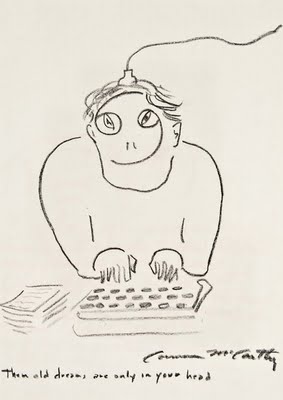
From Burt Britton’s collection of self-portraits, um, Self-portrait. McSweeney’s 34 has taken the work as inspiration. See a full gallery here, including portraits from Jorge Luis Borges, Maurice Sendak, and Margaret Atwood, among others. This goofy Cormac McCarthy self-portrait is priceless, especially from a guy famous for images of trees hanging with dead babies.
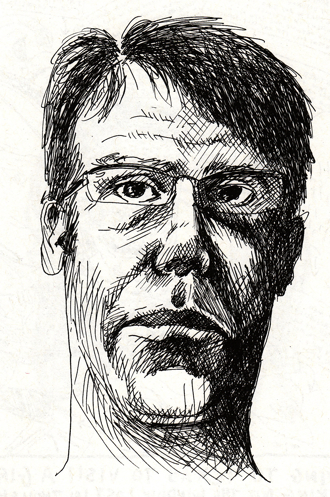
From McSweeney’s 34, out now.
Stéphane Massa-Bidal (aka Hulk4598, aka Rétrofuturs) created these fantastic “book covers” for internet services late last year, so you might’ve already seen them; anyway, they fit nicely into Biblioklept’s Book Covers Week. Massa-Bidal’s images of familiar web two point oh apps masquerading as book covers remind us that book covers are their own special medium, and that we perhaps read the information in book covers in its own special way, regardless of whether the book actually exists or not (or, in this case, exists as something other than a book. See also: Spacesick’s “I Can Read Movies” Series).

Got an hour to kill? Lose yourself in the surreal world of French artist Moebius (Jean Giraud) at this cool little gallery. Moebius’s art taps into the mythological, exploring themes that seem at once both strangely familiar but also wildly divergent from our expectations. We love his pictures best when there are no cartoon speech bubbles imposing language on the scene; far better to engage him in his projects of imagination. Great stuff.


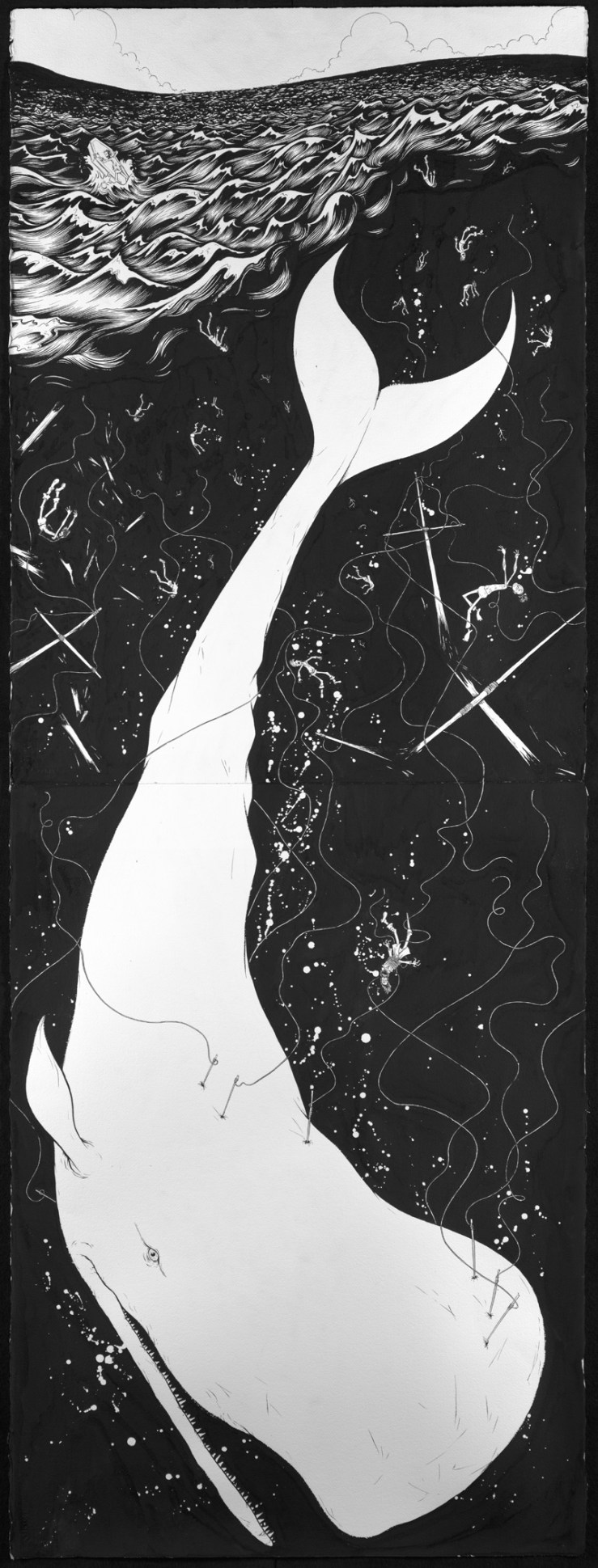
So, I’m on my fourth trip through Herman Melville’s masterpiece, Moby-Dick, courtesy of an excellent unabridged audio version read with aplomb, gusto, humor, and great pathos by the late character-actor William Hootkins. I’ll’ go out on a limb and suggest that Hootkins’s reading is so nuanced and attuned to Ishmael’s voice and Melville’s purpose that it would make a great starting point for anyone (unnecessarily) daunted by Melville’s big book.
I’ve been enjoying the book more than ever this time, in part because, knowing its themes, plot, and tone, I can relax a bit more and enjoy its nuance and humor, its weird little nooks and crannies. I’m also really digging Matt Kish’s mixed-media illustrations for the book. Kish is illustrating each page of his 552 page Signet Classics Edition–the same edition I used for a graduate seminar years ago. Kish’s art is fresh, fun, and invigorating; it’s also quite thoughtful in its interpretation of Melville’s text, and never fussy. You can check out an easy-to-use visual index here, or visit his blog here.