
From Joseph T. Shipley’s The Origin of English Words: A Discursive Dictionary of Indo-European Roots.
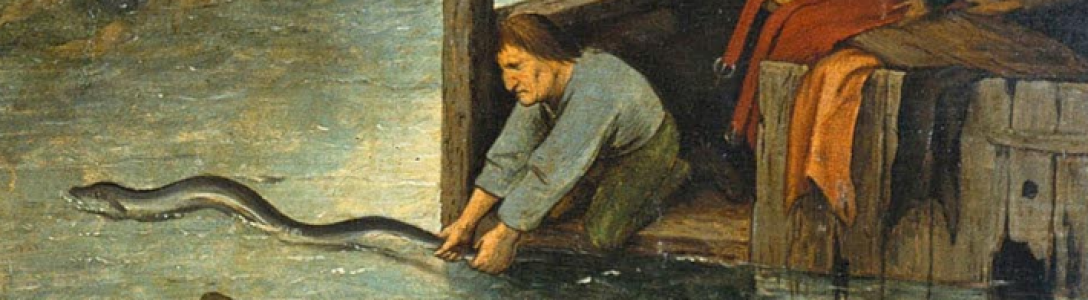
From Joseph T. Shipley’s The Origin of English Words: A Discursive Dictionary of Indo-European Roots.
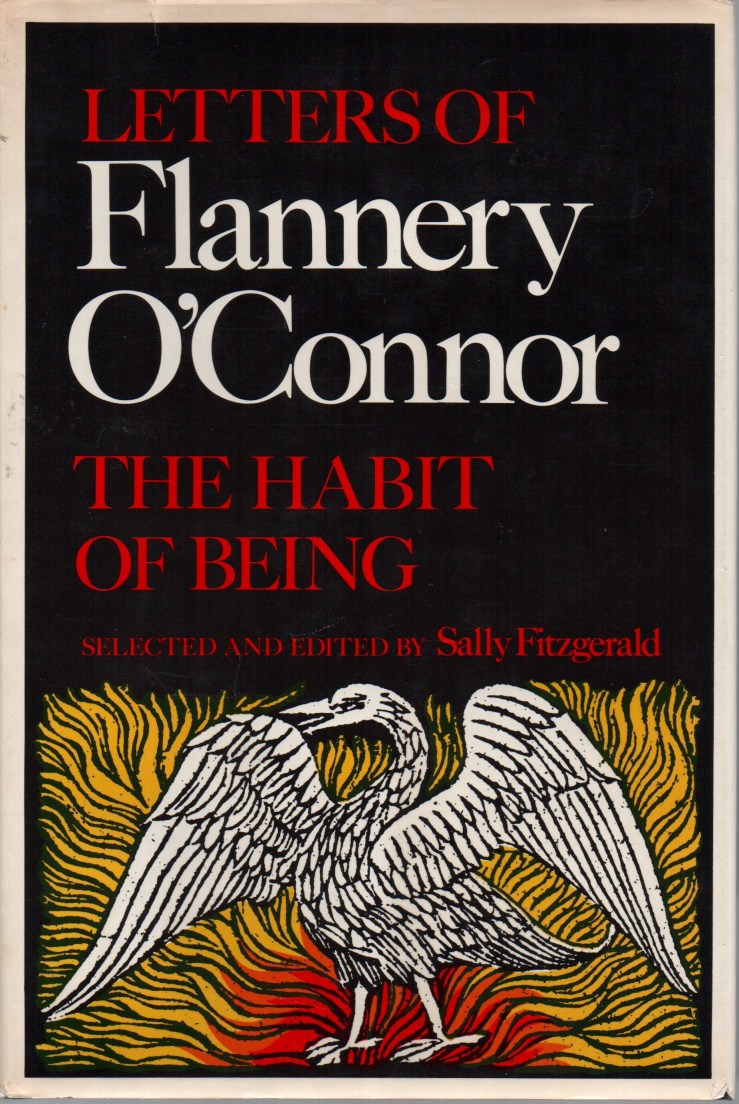
The Habit of Being: Letters of Flannery O’Connor. Edited by Sally Fitzgerald. 1979 2nd edition hardback from FS&G. Jacket design by Janet Halverson. A marvelous book—Fitzgerald’s editing is wonderful here—there’s a rich index that makes this book a pick me up and read me anytime kind of resource. Particularly great are O’Connor’s letters to ‘A,’ a smart reader whom O’Connor struck up a friendship with in letters.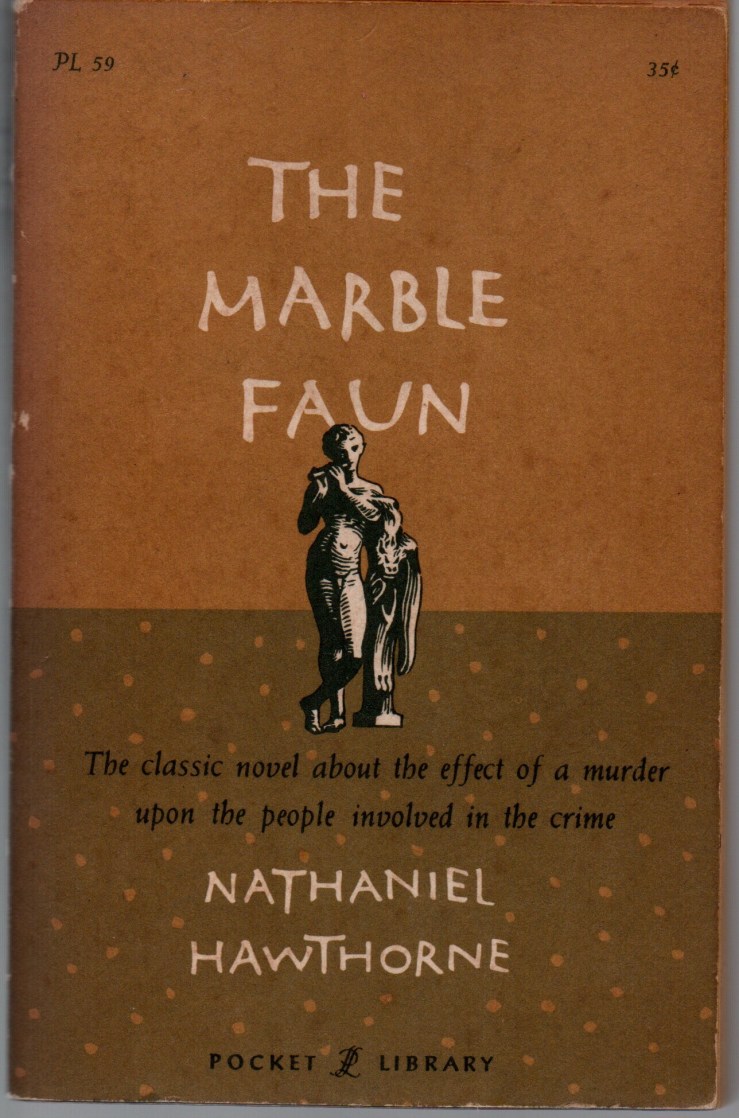
The Marble Faun; or The Romance of Monte Beni by Nathaniel Hawthorne. 1958 mass market paperback by Pocket Books. No designer credited. I love this cover and design—simple and elegant. The Marble Faun is the only Hawthorne novel (book, really) that I’ve yet to read.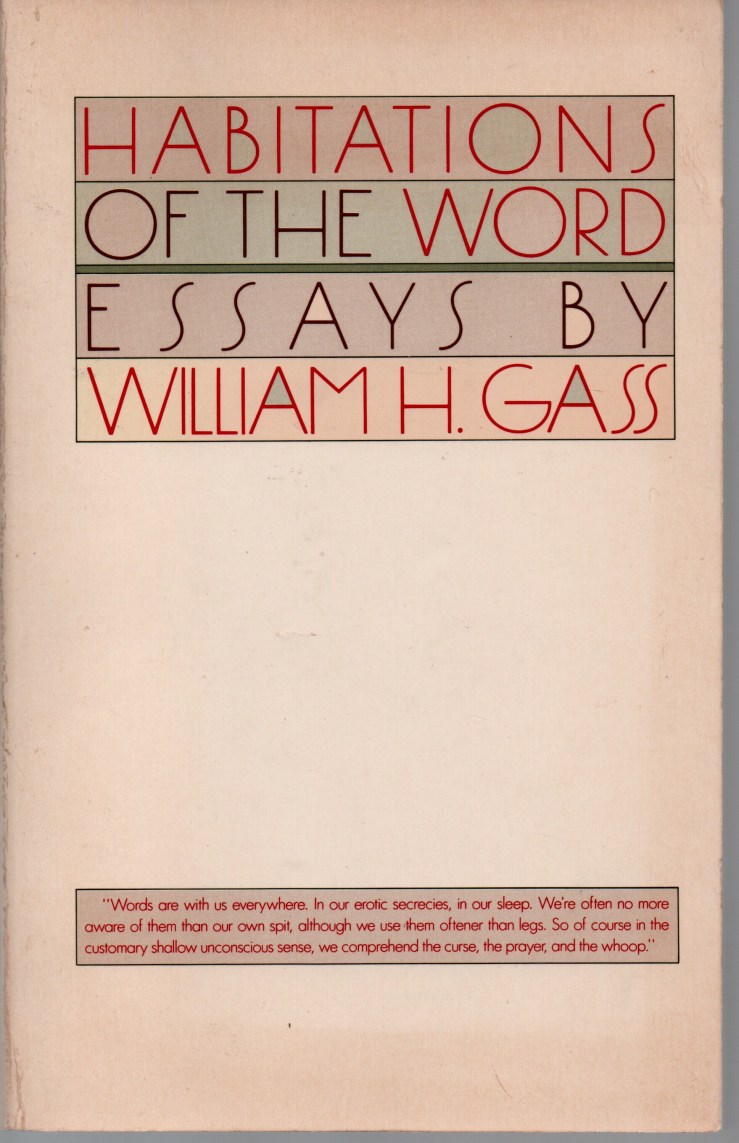
Habitations of the Word: Essays by William H. Gass. 1985 trade paperback by Touchstone/Simon and Schuster. Cover design by Koppel & Scher—and what a great design! (The quotation on the cover is from Gass’s essay “The Soul Inside the Sentence”). I had pulled this book out to find some lines from the first essay, “Emerson and the Essay,” for an American lit class I’m teaching. The essays collected here are brilliant stuff—literary criticism that surpasses “literary criticism.”
I reread Cormac McCarthy’s Suttree in September and considered if Suttree dies at the end.
Then I reread Blood Meridian for the umpteenth time.
I reviewed Penguin Classics bicentennial edition of Jane Austen’s Emma.
I had somehow never read Ursula K. Le Guin’s The Lathe of Heaven before October of 2015.
I also read Autobiography of Red and Red Doc> by Anne Carson during September-October, but erased everything I tried to write on them. I found Autobiography particularly excellent—a real How is this possible? kind of read.
Unrelated tiger by Utagawa Kunisada:


Daydream, which is to thought as the nebula is to the star, borders on sleep, and is concerned with it as its frontier. An atmosphere inhabited by living transparencies: there’s a beginning of the unknown. But beyond it the Possible opens out, immense. Other beings, other facts, are there. No supernaturalism, only the occult continuation of infinite nature … Sleep is in contact with the Possible, which we also call the improbable. The world of the night is a world. Night, as night, is a universe … The dark things of the unknown world become neighbors of man, whether by true communication or by a visionary enlargement of the distances of the abyss … and the sleeper, not quite seeing, not quite unconscious, glimpses the strange animalities, weird vegetations, terrible or radiant pallors, ghosts, masks, figures, hydras, confusions, moonless moonlights, obscure unmakings of miracle, growths and vanishings within a murky depth, shapes floating in shadow, the whole mystery which we call Dreaming, and which is nothing other than the approach of an invisible reality. The dream is the aquarium of Night.
— VICTOR HUGO, LES TRAVAILLEURS DE LA MER
The Hugo citation comes from Ursula K. Le Guin’s 1971 novel The Lathe of Heaven—Le Guin uses it as a preface to the seventh chapter. It’s beautiful on its own; it also functions as a kind of poetic summary of The Lathe of Heaven.
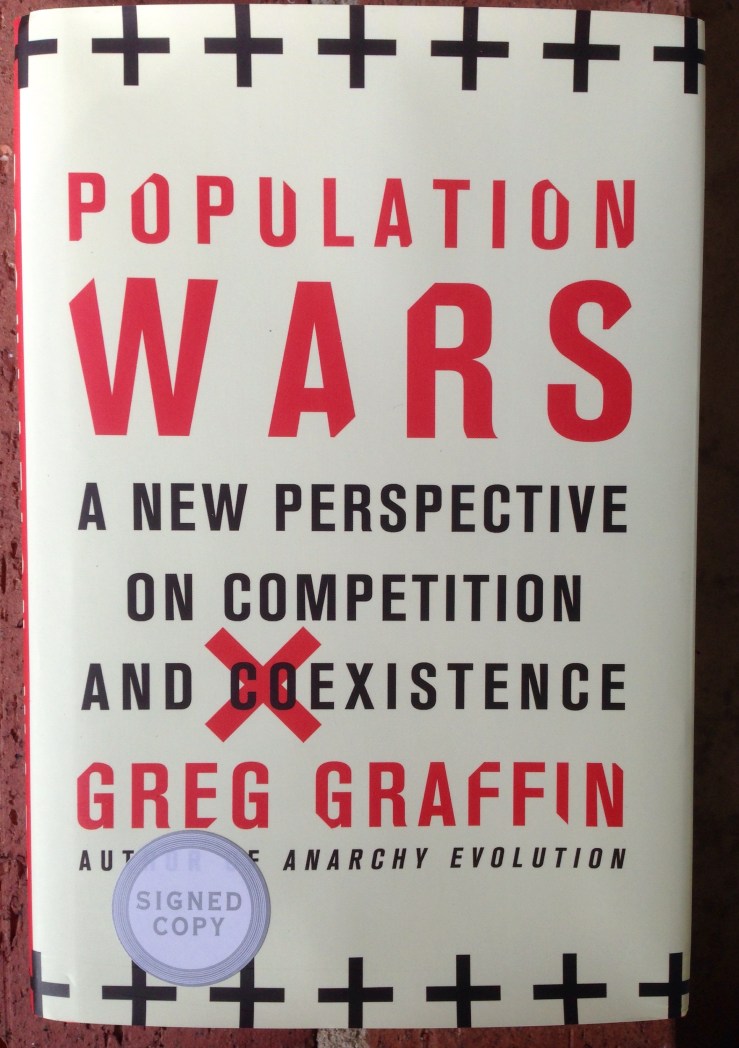
Greg Graffin is probably best known for his work as the leader of Bad Religion, a band he formed when he was 15. Graffin is also an academic and author. His latest book, Population Wars, makes a compelling argument for coexistence. It’s an accessible and persuasive read, rooted in biology and hope. (And of the three books I’ve read by indie rockers of yore this year, it’s easily the best). Publisher Thomas Dunne’s blurb:
From the very beginning, life on Earth has been defined by war. Today those first wars continue to be fought around and inside us, influencing our individual behavior and that of civilization as a whole. War between populations—whether between different species or between rival groups of humans—is seen as an inevitable part of the evolutionary process. The popular concept of survival of the fittest explains and often excuses these actions.
In Population Wars, Greg Graffin points to where the mainstream view of evolutionary theory has led us astray. That misunderstanding has allowed us to justify wars on every level, whether against bacterial colonies or human societies, even when other, less violent solutions may be available. Through tales of mass extinctions, developing immune systems, human warfare, the American industrial heartland, and our degrading modern environment, Graffin demonstrates how an oversimplified idea of war, with its victorious winners and vanquished losers, prevents us from responding to the real problems we face. Along the way, Graffin reveals a paradox: When we challenge conventional definitions of war, we are left with a new problem—how to define ourselves.
Population Wars is a paradigm-shifting book about why humans behave the way they do and the ancient history that explains that behavior. In reading it, you’ll see why we need to rethink the reasons for war, not only the human military kind but also Darwin’s “war of nature,” and find hope for a less violent future for mankind.




The Crack-Up by F. Scott Fitzgerald; edited by Edmund Wilson. A 1956 New Directions mass market paperback. No designer credited. The Crack-Up collects autobiographical pieces by Fitzgerald, along with letters and essays by some of Fitzgerald’s contemporaries and near-contemporaries—but the highlight is the inclusion of Fitzgerald’s note-books. (I shamelessly plundered them on this blog for years). Its cover is black and white and gray.
An Armful of Warm Girl by W.M. Spackman. 1981 trade paperback edition by Van Vactor & Goodheart. Cover design by Leslie Evans. A perfect little novella, with a perfect opening page. Its cover is black and white and gray.

Flee by Evan Dara. 2013 trade paperback edition by Aurora. Design by Todd Michael Bushman. Blogged about it here and here. Its cover is black and white and gray.
 (More/about; via).
In Kazuo Ishiguro’s 2015 novel The Buried Giant, a metaphysical mist engulfs sixth-century Britain, clouding the memories of all who inhabit the land. Saxons and Britons alike cannot recall their bellicose past. Against this mist, elderly Britons Axl and Beatrice seek their long-lost son. They meet a Saxon warrior who hunts an ancient she-dragon he’s vowed to slay. He’s aided by a youth, Edwin, who’s been exiled from his village after being bitten by a mythic creature. King Arthur’s aged nephew Sir Gawain lingers as a courtly protector, a figure from an already-bygone era; the mist seems to slowly rot his brain and his conscience, pushing him into paranoia and madness. There are Charonic ferrymen and awful ogres; there are mad monks and terrible pixies. A hellhound, a dragon, a poisoned goat. Rivers and mountains and crypts and villages. But most of all that mist.

Ishiguro makes the reader experience that mist. He obscures. The action that occurs—and yes, there’s action here, measured action (often measured in a literal sense)—the action that occurs in The Buried Giant is almost always oblique, shadowed, indistinct, but also very mechanical. The memory-mist renders the world treacherous, immediate, a dark, vague place that offers its travelers no purchase of reference. Deceptive.
Forgive me for quoting at such length, but I think a longish passage here shows how and what Ishiguro is doing. Almost all of our principals are here, underground—note their procession, their movement—a constant motif in the novel, movement, single file or side by side—and the presence of a light, illumination—also a motif. Note the variety of interpretations of not knowing, not seeing, note the simple horror:
They went on into the tunnel, Sir Gawain leading, Axl following with the flame, Beatrice holding his arm from behind, and Edwin now at the rear. There was no option but to go in single file, the passage remaining narrow, and the ceiling of dangling moss and sinewy roots grew lower and lower until even Beatrice had to stoop. Axl did his best to hold the candle high, but the breeze in the tunnel was now stronger, and he was often obliged to lower it and cover the flame with his other hand. Sir Gawain though never complained, and his shape going before them, sword raised over his shoulder, seemed never to vary. Then Beatrice let out an exclamation and tugged Axl’s arm.
“What is it, princess?”
“Oh, Axl, stop! My foot touched something then, but your candle moved too quickly.”
“What of it, princess? We have to move on.”
“Axl, I thought it a child! My foot touched it and I saw it before your light passed. Oh, I believe it’s a small child long dead!”
“There, princess, don’t distress yourself. Where was it you saw it?”
“Come, come, friends,” Sir Gawain said from the dark. “Many things in this place are best left unseen.”
Beatrice seemed not to hear the knight. “It was over here, Axl. Bring the flame this way. Down there, Axl, shine it down there, though I dread to see its poor face again!”
Despite his counsel, Sir Gawain had doubled back, and Edwin too was now at Beatrice’s side. Axl crouched forward and moved the candle here and there, revealing damp earth, tree roots and stones. Then the flame illuminated a large bat lying on its back as though peacefully asleep, wings stretched right out. Its fur looked wet and sticky. The pig-like face was hairless, and little puddles had formed in the cavities of the outspread wings. The creature might indeed have been sleeping but for what was on the front of its torso. As Axl brought the flame even closer, they all stared at the circular hole extending from just below the bat’s breast down to its belly, taking in parts of the ribcage to either side. The wound was peculiarly clean, as though someone had taken a bite from a crisp apple.
“What could have done work like this?” Axl asked.
He must have moved the candle too swiftly, for at that moment the flame guttered and went out.
Ishiguro gives us mystery, interpretation, and then an incomplete, ambiguous revelation. (This is the basic structure of the novel). Beatrice never relents in her belief that she’s stumbled over a dead child. Brimming with lost children and lost parents and orphans, The Buried Giant is a novel of erasures. But an erasure leaves a trace, a violent, visceral marking into the page’s blankness. Revelation through absence.
We would have no plot, not really, without some overcoming of blankness, and Axl in particular overcomes the mist in his quest. A backstory fleshes out, in watery strokes albeit. The Buried Giant, as far as fantasy epics go, is awfully indistinct. Or rather, Ishiguro offers only mechanical and immediate glimpses into this world, a Britain on the cusp of the Middle Ages. Through Axl’s consciousness (and conscience), we see the vital precision in hand-to-hand combat, for example. Its patience, its slowness, its dependence on muscle memory. Or perhaps (dare I say) more boringly, we feel the very real peril involved in walking in the wild dark as an elderly person. The thrills in The Buried Giant come not from its sword and sorcery costumes, but from its Kafkaesque edges and gaps. This is a novel about not knowing.
And it’s here that The Buried Giant is most successful—as an evocation of not knowing. Axl and Beatrice’s quest unfolds as a series of choices and consequences severed, for the most part, from the anchor of memory. There’s an episodic vibe to the novel, a sense that it’s making itself up as it goes along. (It’s not). The novel strongly reminded me of some of the old RPGs I’d play on a Commodore 64 as a kid. The graphics weren’t great and I had to use my imagination a lot. The games were sometimes frustrating and slow. But perhaps you want a more, uh, literary comparison? Something more recent too? The Buried Giant recalls Ishiguro’s short story “A Village after Dark” a lot more than, say, A Game of Thrones or The Lord of the Rings. It’s a fantasy novel, but one that feels etiolated, its vivid colors drained. More Gustave Doré than Gustave Moreau.
While a precise indistinctness (forgive the oxymoron) is part of The Buried Giant’s program, there’s nothing indistinct about its heroes’ love for each other. Axl and Beatrice, A & B—can I say I came to love them? Or if I didn’t quite love them, I was rooting for them, say? Rooting for their survival, but specifically their survival as a they, a shared survival. Ishiguro successfully communicates their intimacy, their romance, their love, a love threatened by both the natural world and the supernatural return of lost memory. Their relationship is the heart of the novel upon which Ishiguro fixes his themes of memory, justice, vengeance, and love. Ishiguro’s commentary on those themes ultimately may feel pessimistic to many readers, particularly in the novel’s conclusion.
Excepting the ones that we love and return to and obsess over, we retain little of the novels that we read. What memories remain are kernels—the outline of a plot, a strange lingering phrase or detail, a bright or bold character, a theme, an idea, an image. It’s the love between Axl and Beatrice that I’ll likely recall most strongly from the shadows of The Buried Giant. If we can’t remember, we can at least experience.

Dear Biblioklepters,
I recently had the chance to interview the marvelous David Shook about the equally marvelous Like a New Sun, a book of contemporary indigenous Mexican poetry, which he edited and co-translated. You can read the interview over at Asymptote’s blog.
I first read about Asymptote here on Biblioklept a few years ago. I’m happy to share that I have joined their ranks as Interview Features Editor, and that this is my first interview with them. Check back often for more interviews with translators, poets, novelists, and more.
Shameless plug over! Thanks for reading.
-Ryan M.
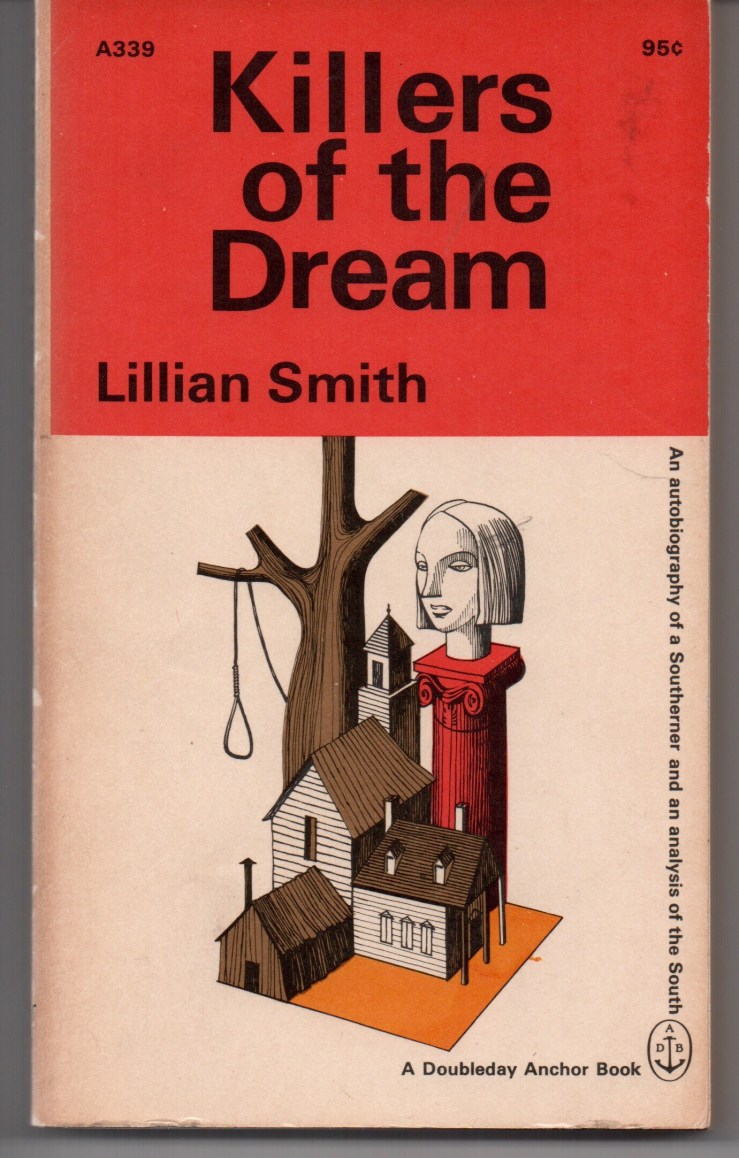
Killers of the Dream by Lillian Smith. Doubleday Anchor, 1963 mass market paperback edition. Cover design by George Giusti. Smith’s memoir-essay-critique is an underappreciated masterful dissection of the South in particular and humanity in general.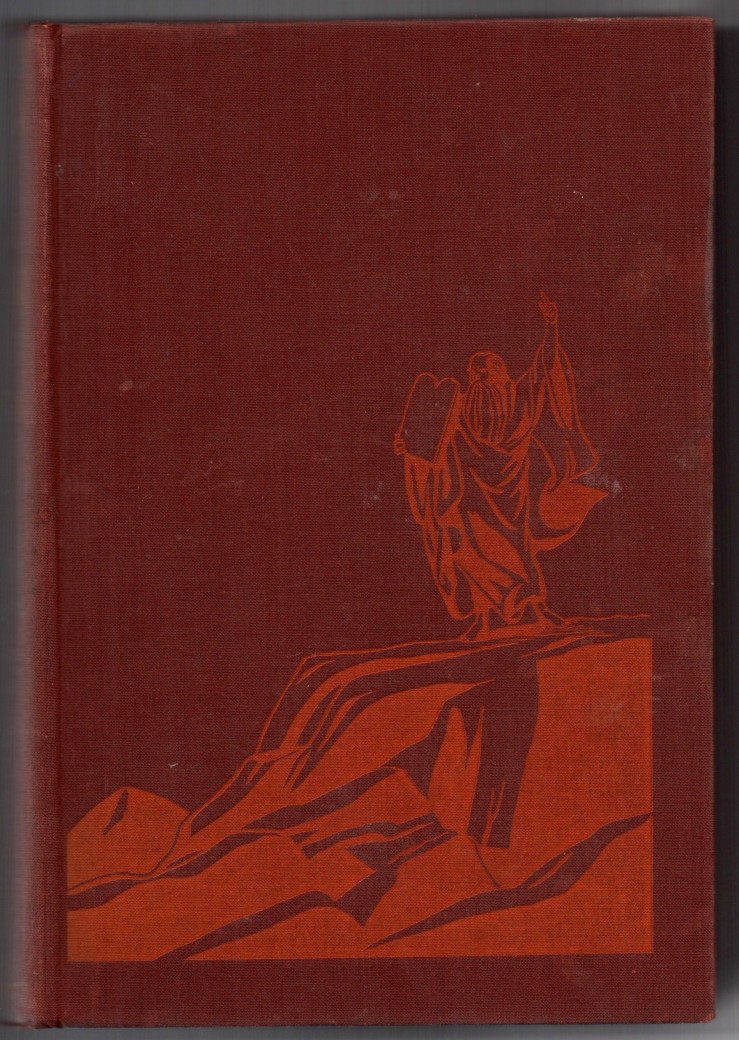
Moses, Man of the Mountain by Zora Neale Hurston. First-edition clothbound hardback from J. B. Lippincott, 1939. The dust jacket is missing, and no designer is credited in the book. I picked this up for eight dollars a few years ago. I lent my paperback copy to a student years ago; she never returned it. (Good for her!).
Afro-Cuban Tales by Lydia Cabrera. 2004 trade paperback by the University of Nebraska Press. Book design by R. Eckersley; cover illustration by Lydia Cabrera. Cabrera (1899-1991), an ethnographer, went beyond documenting the tales and fables of her native Cuba: she synthesized them into new tellings, new variations (not unlike Zora Neale Hurston’s folklore work in Mules and Men and Tell My Horse). Cabrera deserves a wider audience.


From the forthcoming The Art of the Lord of the Rings, which collects Tolkiens’s preparatory drawings for his epic. Via/more at Wired.

W. G. Sebald’s writing has been widely recognized for its intense, nuanced engagement with the Holocaust, the Allied bombing of Germany in WWII, and other episodes of violence throughout history. Through his inventive use of narrative form and juxtaposition of image and text, Sebald’s work has offered readers new ways to think about remembering and representing trauma.
In Sebald’s Vision, Carol Jacobs examines the author’s prose, novels, and poems, illuminating the ethical and aesthetic questions that shaped his remarkable oeuvre. Through the trope of “vision,” Jacobs explores aspects of Sebald’s writing and the way the author’s indirect depiction of events highlights the ethical imperative of representing history while at the same time calling into question the possibility of such representation.
Jacobs’s lucid readings of Sebald’s work also consider his famous juxtaposition of images and use of citations to explain his interest in the vagaries of perception. Isolating different ideas of vision in some of his most noted works, including Rings of Saturn, Austerlitz, and After Nature, as well as in Sebald’s interviews, poetry, art criticism, and his lecture Air War and Literature, Jacobs introduces new perspectives for understanding the distinctiveness of Sebald’s work and its profound moral implications.
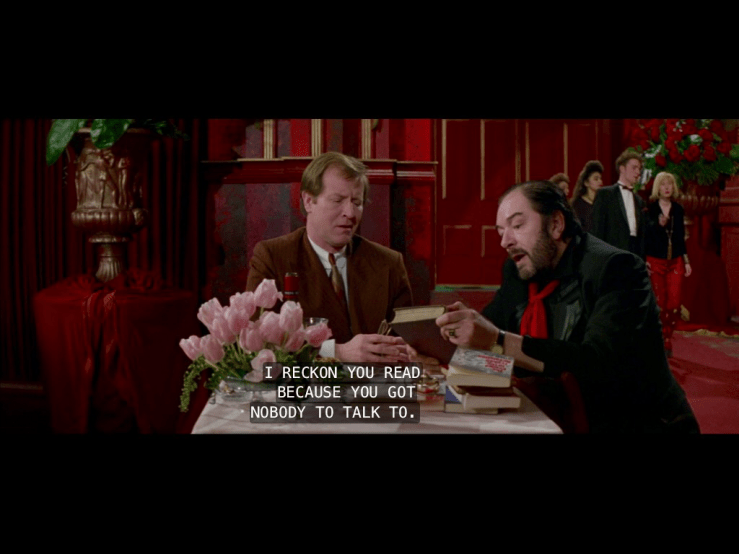
From The Cook, the Thief, His Wife & Her Lover (1989). Directed by Peter Greenaway. Cinematography by Sacha Vierny.
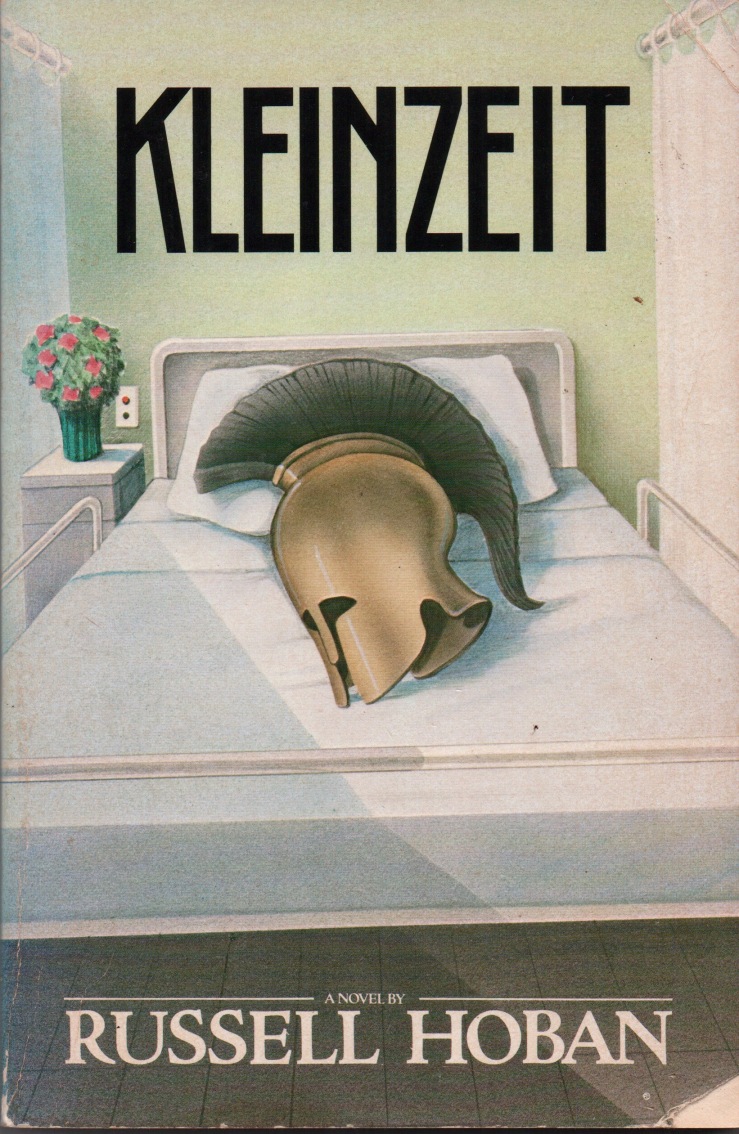
Kleinzeit by Russell Hoban. 1983 Summit Books trade paperback edition. Cover design by Fred Marcellino. A stark and funny retelling of the Orpheus myth, Hoban’s second novel obsesses over illness and art. Fans of Tom McCarthy might dig this one.
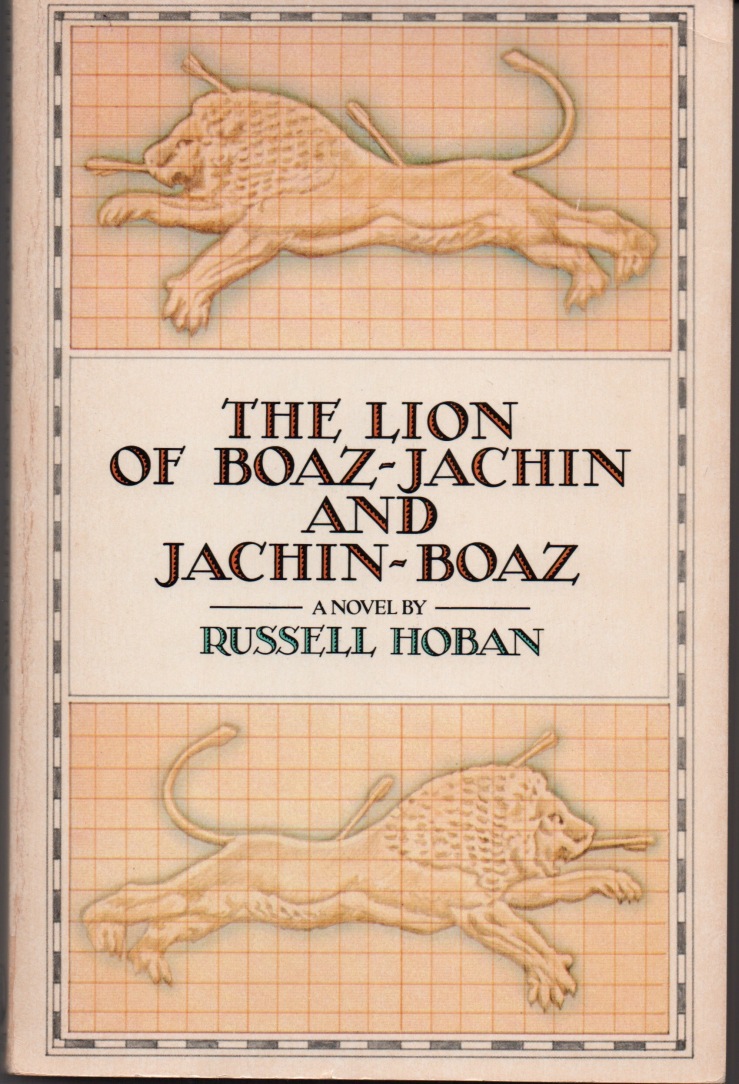 The Lion of Boaz-Jachin and Jachin-Boaz by Russell Hoban. 1983 Summit Books trade paperback edition. Cover design by Fred Marcellino. Hoban’s first novel. Not my favorite Hoban.
 Pilgermann by Russell Hoban. 1984 Washington Square Press trade paperback. No designer is credited, but look closely under the horse’s fore hooves and note the signature “Rowena” — Rowena Morrill. (Note also the pig and naked lady). Pilgermann, Hoban’s follow-up (and somehow-sequel) to Riddley Walker, was the occasion for this Sunday’s Three Books post. I was reminded of this strange, wicked, dark, funny, apocalyptic book as I finished a reread of Cormac McCarthy’s Blood Meridian and began Kazuo Ishiguro’s The Buried Giant this weekend. Pilgermann is difficult but rewarding, and probably underappreciated, even as a cult novel.

