
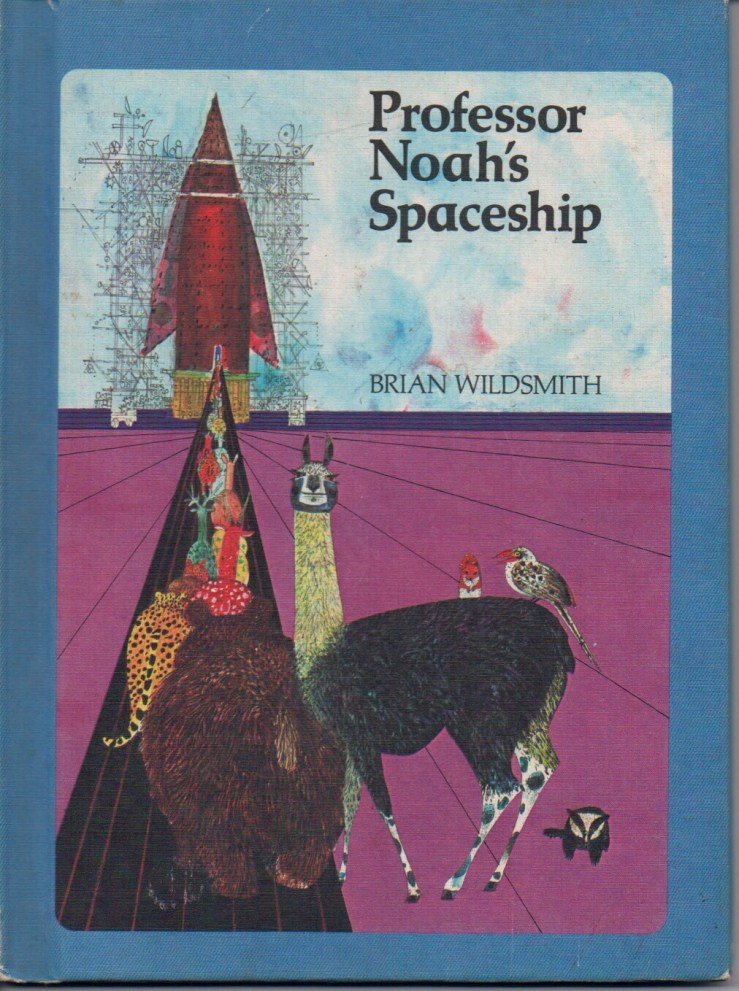
Professor Noah’s Spaceship by Brian Wilsdsmith. First edition hardback by Oxford University Press, 1980; distributed through Macmillan Book Clubs. Design, cover, and art by Brian Wildsmith. This book is too beautiful.
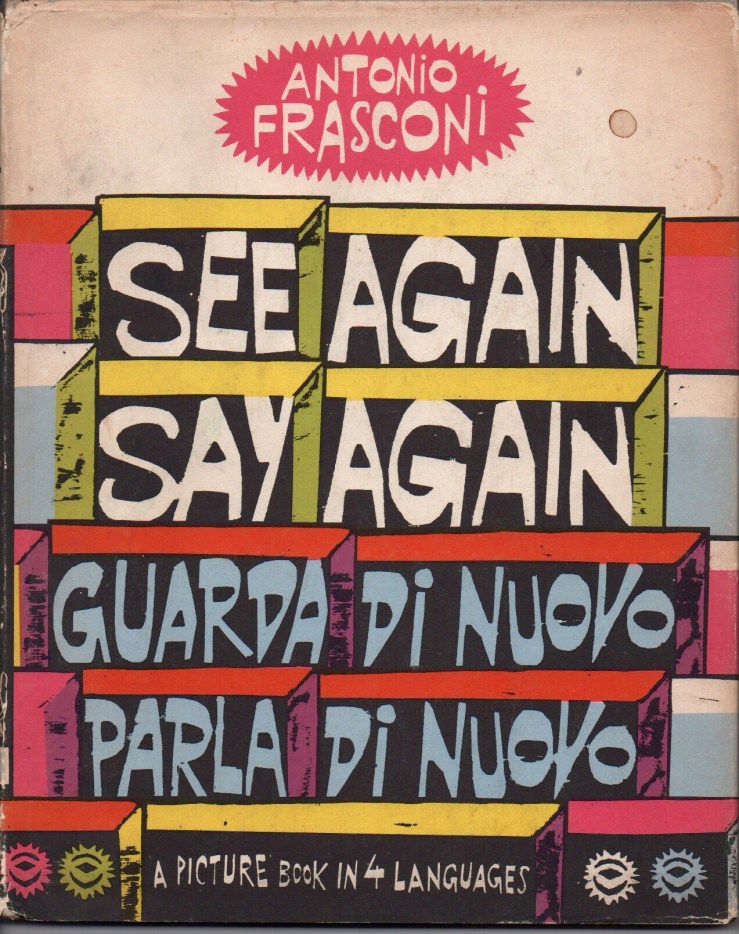
See Again, Say Again by Antonio Frasconi. First edition oversized hardback published by Hacourt, Brace and World, 1964. Cover design, fonts, and woodcuts by Antonio Frasconi.
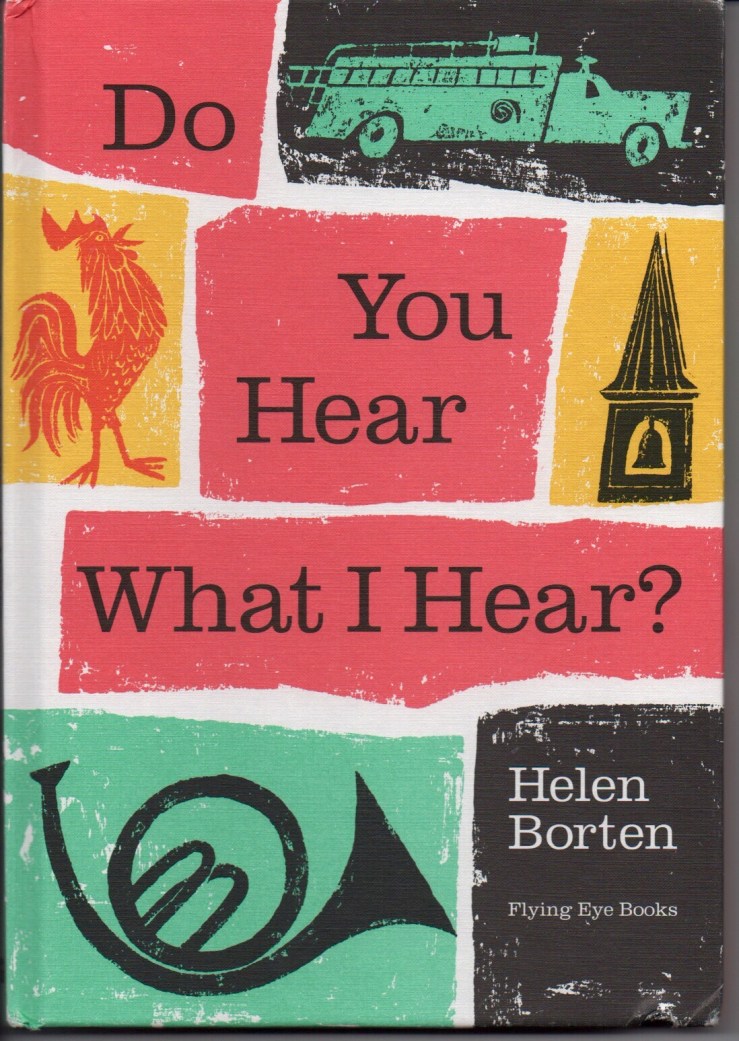
Do You Hear What I Hear? by Helen Borten. First edition hardback reprint by Flying Eye Books, a division of Nobrow; the book was originally published in 1960. Illustration and design by Helen Borten. Nowbrow kindly sent me a copy of Do You Hear What I Hear?—the book is beautiful, the text is lovely—Borten’s technique is to represent sound—or rather the feeling of sound (which is to say, the feeling of the feeling of sound) through language and art. Like any great children’s book, Do You Hear What I Hear? is best read out loud, and my five-year-old son loved it so much that I had to read it again to him immediately after the first reading. We’ve read it a few times since then. Great stuff.



















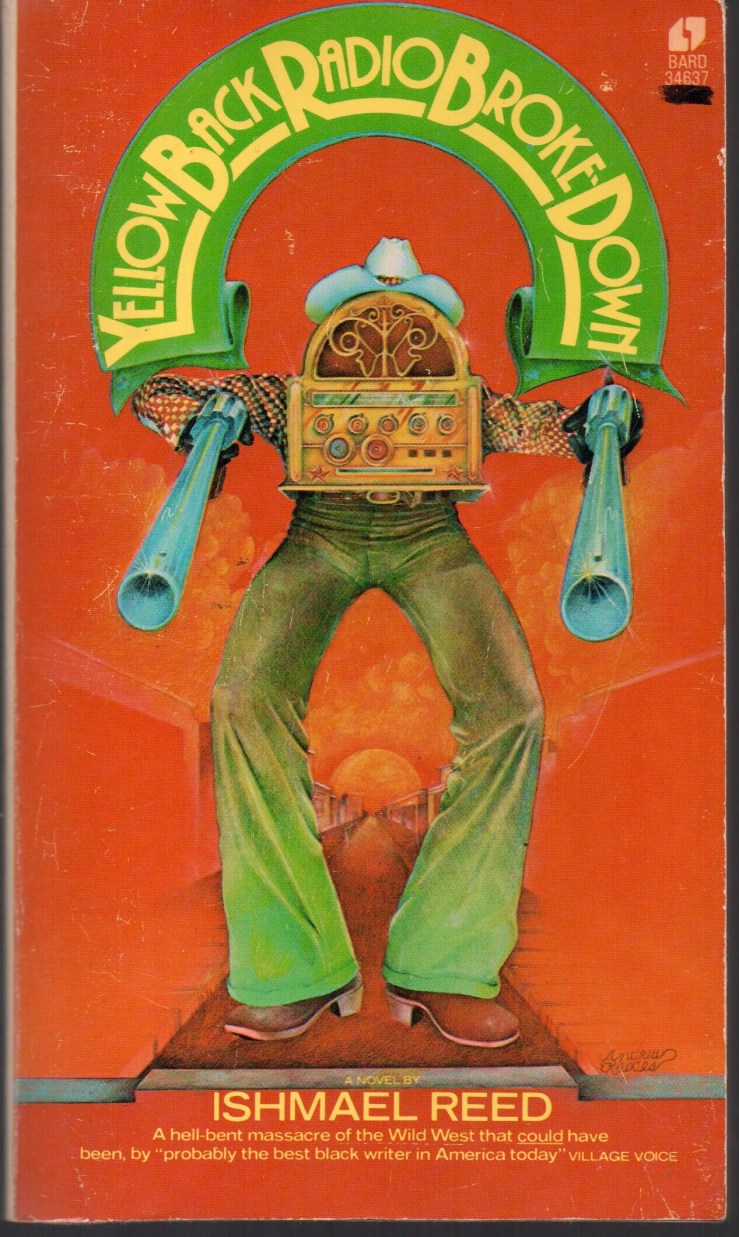
 The Free-Lance Pallbearers by Ishmael Reed. 1969 mass market paperback by Bantam Books. No designer or illustrator credited. I finished this last week—a slim, strange, dazzling work.
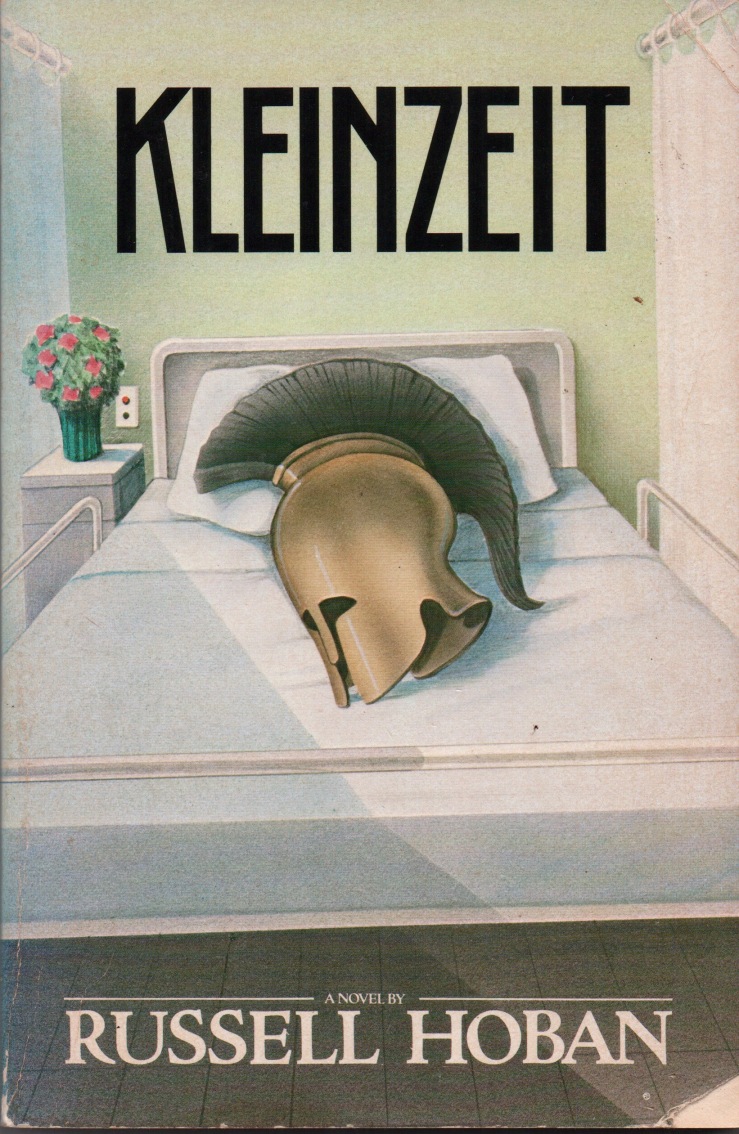
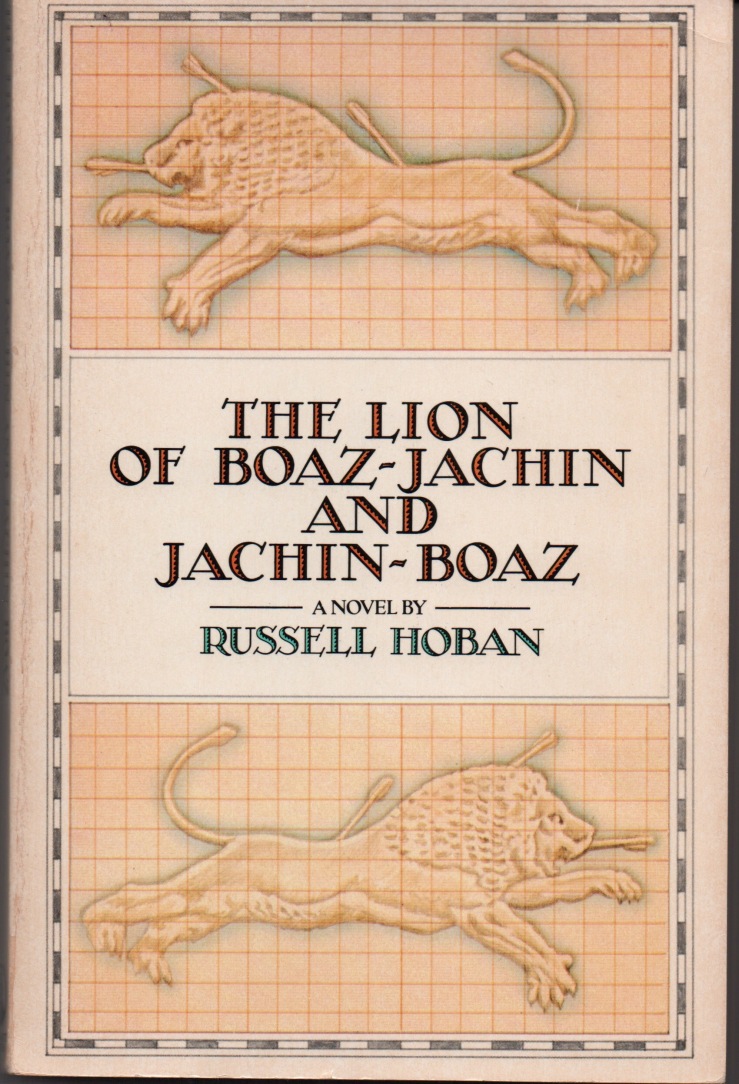 The Lion of Boaz-Jachin and Jachin-Boaz by Russell Hoban. 1983 Summit Books trade paperback edition. Cover design by Fred Marcellino. Hoban’s first novel. Not my favorite Hoban.
 Pilgermann by Russell Hoban. 1984 Washington Square Press trade paperback. No designer is credited, but look closely under the horse’s fore hooves and note the signature “Rowena” — Rowena Morrill. (Note also the pig and naked lady). Pilgermann, Hoban’s follow-up (and somehow-sequel) to Riddley Walker, was the occasion for this Sunday’s Three Books post. I was reminded of this strange, wicked, dark, funny, apocalyptic book as I finished a reread of Cormac McCarthy’s Blood Meridian and began Kazuo Ishiguro’s The Buried Giant this weekend. Pilgermann is difficult but rewarding, and probably underappreciated, even as a cult novel.

