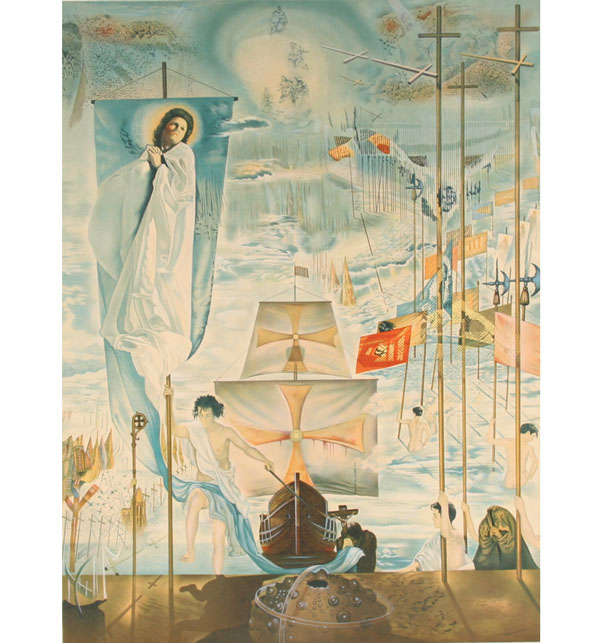
Anthems in New Tongues I Hear Saluting Me (Whitman/Dali)


Salvador Dali Museum.
Salvador Dalí, The Discovery of America by Christopher Columbus

“Prayer of Columbus” by Walt Whitman

A batter’d, wreck’d old man,
Thrown on this savage shore, far, far from home,
Pent by the sea and dark rebellious brows, twelve dreary months,
Sore, stiff with many toils, sicken’d and nigh to death,
I take my way along the island’s edge,
Venting a heavy heart.
I am too full of woe!
Haply I may not live another day;
I cannot rest O God, I cannot eat or drink or sleep,
Till I put forth myself, my prayer, once more to Thee,
Breathe, bathe myself once more in Thee, commune with Thee,
Report myself once more to Thee.
Thou knowest my years entire, my life,
My long and crowded life of active work, not adoration merely;
Thou knowest the prayers and vigils of my youth,
Thou knowest my manhood’s solemn and visionary meditations,
Thou knowest how before I commenced I devoted all to come to Thee,
Thou knowest I have in age ratified all those vows and strictly kept them,
Thou knowest I have not once lost nor faith nor ecstasy in Thee,
In shackles, prison’d, in disgrace, repining not,
Accepting all from Thee, as duly come from Thee.
All my emprises have been fill’d with Thee,
My speculations, plans, begun and carried on in thoughts of Thee,
Sailing the deep or journeying the land for Thee;
Intentions, purports, aspirations mine, leaving results to Thee.
O I am sure they really came from Thee,
The urge, the ardor, the unconquerable will,

The potent, felt, interior command, stronger than words,

A message from the Heavens whispering to me even in sleep,
These sped me on.
By me and these the work so far accomplish’d,
By me earth’s elder cloy’d and stifled lands uncloy’d, unloos’d,
By me the hemispheres rounded and tied, the unknown to the known.
The end I know not, it is all in Thee,
Or small or great I know not–haply what broad fields, what lands,
Haply the brutish measureless human undergrowth I know,
Transplanted there may rise to stature, knowledge worthy Thee,
Haply the swords I know may there indeed be turn’d to reaping-tools,
Haply the lifeless cross I know, Europe’s dead cross, may bud and
blossom there.
One effort more, my altar this bleak sand;
That Thou O God my life hast lighted,
With ray of light, steady, ineffable, vouchsafed of Thee,
Light rare untellable, lighting the very light,
Beyond all signs, descriptions, languages;
For that O God, be it my latest word, here on my knees,
Old, poor, and paralyzed, I thank Thee.
My terminus near,
The clouds already closing in upon me,
The voyage balk’d, the course disputed, lost,
I yield my ships to Thee.
My hands, my limbs grow nerveless,
My brain feels rack’d, bewilder’d,
Let the old timbers part, I will not part,
I will cling fast to Thee, O God, though the waves buffet me,
Thee, Thee at least I know.
Is it the prophet’s thought I speak, or am I raving?
What do I know of life? what of myself?
I know not even my own work past or present,
Dim ever-shifting guesses of it spread before me,
Of newer better worlds, their mighty parturition,
Mocking, perplexing me.
And these things I see suddenly, what mean they?
As if some miracle, some hand divine unseal’d my eyes,
Shadowy vast shapes smile through the air and sky,
And on the distant waves sail countless ships,
And anthems in new tongues I hear saluting me.
 

“Lobster,” a Poem by Anne Sexton


“Lobster” by Anne Sexton:

A shoe with legs,
a stone dropped from heaven,
he does his mournful work alone,
he is the old prospector for golf,
with secret dreams of God-heads and fish heads.
Until suddenly a cradle fastens round him
and his is trapped as the U.S.A. sleeps.
Somewhere far off a woman lights a cigarette;
somewhere far off a car goes over a bridge;
somewhere far off a bank is held up.
This is the world the lobster knows not of.
He is the old hunting dog of the sea
who in the morning will rise from it
and be undrowned
and they will take his perfect green body
and paint it red

(Thanks Jescie).


Read “Bobok,” a Short Story by Fyodor Dostoevsky

“Bobok,” a short story by Fyodor Dostoevsky:

Bobok — From Somebody’s Diary

Semyon Ardalyonovitch said to me all of a sudden the day before yesterday: “Why, will you ever be sober, Ivan Ivano- vitch? Tell me that, pray.”

A strange requirement. I did not resent it, I am a timid man; but here they have actually made me out mad. An artist painted my portrait as it happened: “After all, you are a literary man,” he said. I submitted, he exhibited it. I read: “Go and look at that morbid face suggesting insanity.”

It may be so, but think of putting it so bluntly into print. In print everything ought to be decorous; there ought to be ideals, while instead of that…

Say it indirectly, at least; that’s what you have style for. But no, he doesn’t care to do it indirectly. Nowadays humour and a fine style have disappeared, and abuse is accepted as wit. I do not resent it: but God knows I am not enough of a literary man to go out of my mind. I have written a novel, it has not been published. I have written articles – they have been refused. Those articles I took about from one editor to another; everywhere they refused them: you have no salt they told me. “What sort of salt do you want?” I asked with a eer. “Attic salt?”

They did not even understand, For the most part I translate from the French for the booksellers. I write advertisements for shopkeepers too: “Unique opportunity! Fine tea, from our own plantations… ” I made a nice little sum over a panegyric on his deceased excellency Pyotr Matveyitch. I compiled the “Art of pleasing the ladies”, a commission from a bookseller. I have brought out some six little works of this kind in the course of my life. I am thinking of making a collection of the bons mobs of Voltaire, but am afraid it may seem a little flat to our people. Voltaire’s no good now; nowadays we want a cudgel, not Voltaire. We knock each other’s last teeth out nowadays. Well, so that’s the whole extent of my literary activity. Though indeed I do send round letters to the editors gratis and fully signed. I give them all sorts of counsels and admonitions, criticise and point out the true path. The letter I sent last week to an editor’s office was the fortieth I had sent in the last two years. I have wasted four roubles over stamps alone for them. My temper is at the bottom of it all.

I believe that the artist who painted me did so not for the sake of literature, but for the sake of two symmetrical warts on my forehead, a natural phenomenon, he would say. They have no ideas, so now they are out for phenomena. And didn’t he succeed in getting my warts in his portrait – to the life. That is what they call realism.

Continue reading “Read “Bobok,” a Short Story by Fyodor Dostoevsky”

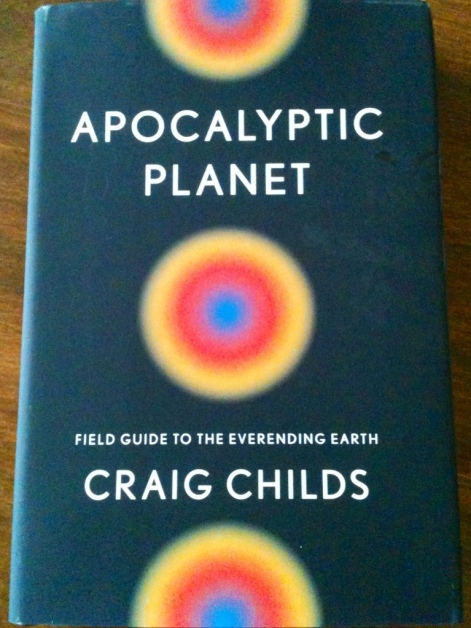
Apocalyptic Planet/The Book of Job: When Bad Things Happened to a Good Person (Books Acquired, 9.14.2012)

20120914-170929.jpg

Two new review copies from the good people at Pantheon.

First, Apocalyptic Planet, which looks pretty cool. Pub copy:

The earth has died many times, and it always comes back looking different. In an exhilarating, surprising exploration of our planet, Craig Childs takes readers on a firsthand journey through apocalypse, touching the truth behind the speculation.Apocalyptic Planet is a combination of science and adventure that reveals the ways in which our world is constantly moving toward its end and how we can change our place within the cycles and episodes that rule it.

In this riveting narrative, Childs makes clear that ours is not a stable planet, that it is prone to sudden, violent natural disasters and extremes of climate. Alternate futures, many not so pretty, are constantly waiting in the wings. Childs refutes the idea of an apocalyptic end to the earth and finds clues to its more inevitable end in some of the most physically challenging places on the globe. He travels from the deserts of Chile, the driest in the world, to the genetic wasteland of central Iowa to the site of the drowned land bridge of the Bering Sea, uncovering the micro-cataclysms that predict the macro: forthcoming ice ages, super-volcanoes, and the conclusion of planetary life cycles. Childs delivers a sensual feast in his descriptions of the natural world and a bounty of unequivocal science that provides us with an unprecedented understanding of our future.

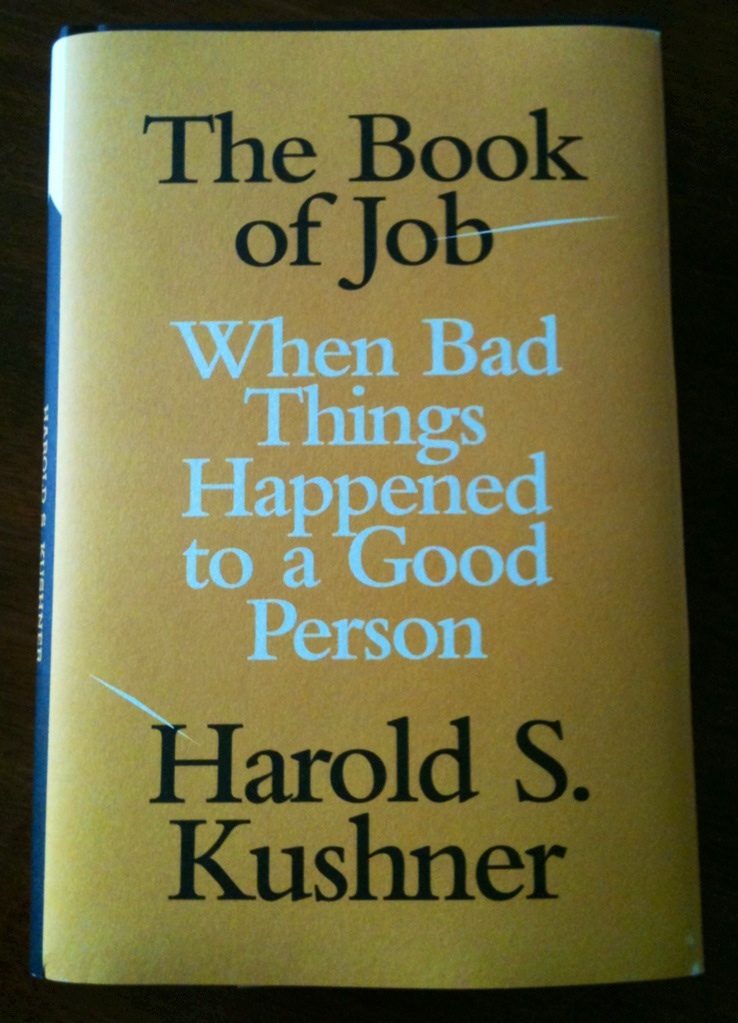
I suppose I’m less enthusiastic about Harold Kushner’s take on The Book of Job

20120914-170918.jpg

Here’s the pub copy:

From one of our most trusted spiritual advisers, a thoughtful, illuminating guide to that most fascinating of biblical texts, the book of Job, and what it can teach us about living in a troubled world.

The story of Job is one of unjust things happening to a good man. Yet after losing everything, Job—though confused, angry, and questioning God—refuses to reject his faith, although he challenges some central aspects of it. Rabbi Harold S. Kushner examines the questions raised by Job’s experience, questions that have challenged wisdom seekers and worshippers for centuries. What kind of God permits such bad things to happen to good people? Why does God test loyal followers? Can a truly good God be all-powerful?

Rooted in the text, the critical tradition that surrounds it, and the author’s own profoundly moral thinking, Kushner’s study gives us the book of Job as a touchstone for our time. Taking lessons from historical and personal tragedy, Kushner teaches us about what can and cannot be controlled, about the power of faith when all seems dark, and about our ability to find God.

Rigorous and insightful yet deeply affecting, The Book of Job is balm for a distressed age—and Rabbi Kushner’s most important book since When Bad Things Happen to Good People.

“John Mortonson’s Funeral” — Ambrose Bierce

“John Mortonson’s Funeral,” a very short story by Ambrose Bierce

John Mortonson was dead: his lines in ‘the tragedy “Man”‘ had all been spoken and he had left the stage.

The body rested in a fine mahogany coffin fitted with a plate of glass. All arrangements for the funeral had been so well attended to that had the deceased known he would doubtless have approved. The face, as it showed under the glass, was not disagreeable to look upon: it bore a faint smile, and as the death had been painless, had not been distorted beyond the repairing power of the undertaker. At two o’clock of the afternoon the friends were to assemble to pay their last tribute of respect to one who had no further need of friends and respect. The surviving members of the family came severally every few minutes to the casket and wept above the placid features beneath the glass. This did them no good; it did no good to John Mortonson; but in the presence of death reason and philosophy are silent.

As the hour of two approached the friends began to arrive and after offering such consolation to the stricken relatives as the proprieties of the occasion required, solemnly seated themselves about the room with an augmented consciousness of their importance in the scheme funereal. Then the minister came, and in that overshadowing presence the lesser lights went into eclipse. His entrance was followed by that of the widow, whose lamentations filled the room. She approached the casket and after leaning her face against the cold glass for a moment was gently led to a seat near her daughter. Mournfully and low the man of God began his eulogy of the dead, and his doleful voice, mingled with the sobbing which it was its purpose to stimulate and sustain, rose and fell, seemed to come and go, like the sound of a sullen sea. The gloomy day grew darker as he spoke; a curtain of cloud underspread the sky and a few drops of rain fell audibly. It seemed as if all nature were weeping for John Mortonson.

When the minister had finished his eulogy with prayer a hymn was sung and the pall-bearers took their places beside the bier. As the last notes of the hymn died away the widow ran to the coffin, cast herself upon it and sobbed hysterically. Gradually, however, she yielded to dissuasion, becoming more composed; and as the minister was in the act of leading her away her eyes sought the face of the dead beneath the glass. She threw up her arms and with a shriek fell backward insensible.

     The mourners sprang forward to the coffin, the friends followed, and as the clock on the mantel solemnly struck three all were staring down upon the face of John Mortonson, deceased.

They turned away, sick and faint. One man, trying in his terror to escape the awful sight, stumbled against the coffin so heavily as to knock away one of its frail supports. The coffin fell to the floor, the glass was shattered to bits by the concussion.

From the opening crawled John Mortonson’s cat, which lazily leapt to the floor, sat up, tranquilly wiped its crimson muzzle with a forepaw, then walked with dignity from the room.


“Morality Is the Adjustment of Matter to Its Environment” — H.P. Lovecraft

Morality is the adjustment of matter to its environment—the natural arrangement of molecules. More especially it may be considered as dealing with organic molecules. Conventionally it is the science of reconciling the animal Homo (more or less) sapiens to the forces and conditions with which he is surrounded. It is linked with religion only so far as the natural elements it deals with are deified and personified. Morality antedated the Christian religion, and has many times risen superior to coexistent religions. It has powerful support from very non-religious human impulses. Personally, I am intensely moral and intensely irreligious. My morality can be traced to two distinct sources, scientific and aesthetic. My love of truth is outraged by the flagrant disturbance of sociological relations involved in so-called wrong; whilst my aesthetic sense is outraged and disgusted with the violations of taste and harmony thereupon attendant. But to me the question presents no ground for connexion with the grovelling instinct of religion. However—you may exclude me from the argument, if you will. I am unduly secluded though unavoidably so. We will deal only with materials that may presumably lie within my feeble reach. Only one more touch of ego. I am not at all passive or indifferent in my zeal for a high morality. But I cannot consider morality the essence of religion, as you seem to. In discussing religion, the whole fabric must bear examination before the uses or purposes are considered. We must investigate the cause as well as alleged effects if we are to define the relation between the two, and the reality of the former. And more, granting that the phenomenon of faith is indeed the true cause of the observed moral effects; the absolute basis of that phenomenon remains to be examined. The issue between theists and atheists is certainly not, as you seem to think, the mere question of whether religion is useful or detrimental.

— From H.P. Lovecraft’s 1918 letter to his friend Maurice W. Moe; the letter is collected in The Portable Atheist (ed. Christopher Hitchens).

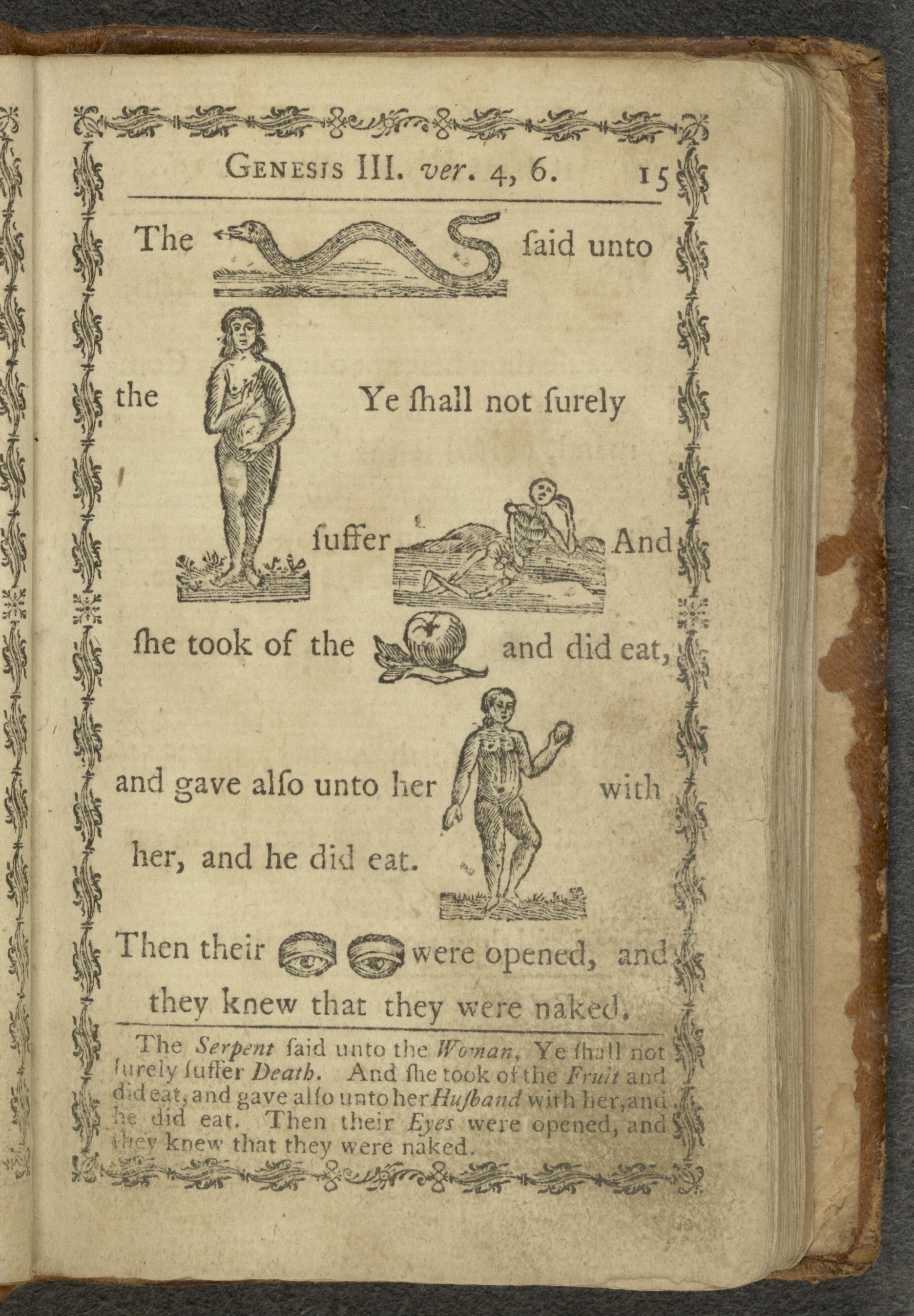
Temptation and Fall — Genesis 3.4-6 (From A Curious Hieroglyphick Bible, 1788)

(From A curious hieroglyphick Bible, or, Select passages in the Old and New Testaments, represented with emblematical figures, for the amusement of youth : designed chiefly to familiarize tender age, in a pleasing and diverting manner, with early ideas of the Holy Scriptures : to which are subjoined, a short account of the lives of the Evangelists, and other pieces / illustrated with nearly five hundred cuts. 1788).

“Authenticity’s Wiped Out” — A Passage from William Gaddis’s Last Novel, Agapē Agape

William Gaddis’s last novel Agapē Agape is a bitter, funny rant, a monologic stream-of-consciousness that, through its extreme powers of synthesis, spills over into heteroglossic eruptions, a carnival of erudite voices. Driven by terrible physical pain, hints of madness, and, most of all, the need to “explain all this” before he dies, the voice of the novel (surely Gaddis himself) channels cultural historian Johan Huizinga and philosopher Walter Benjamin into a conversation about the conflict of art and commerce set against the backdrop of the rise of mass culture:

. . . falls right into line doesn’t it, collapse of authenticity collapse of religion collapse of values what Huizinga called one of the most important phases in the history of civilization, and Walter Benjamin picks it up in his Art in the Age of Mechanical Reproduction in this heap somewhere, the authentic work of art is based in ritual he says, and wait Mr. Benjamin, got to get in there the romantic mid-eighteenth century aesthetic pleasure in the worship of art was the privilege of the few. I was saying, Mr. Huizinga, that the authentic work of art had its base in ritual, and mass reproduction freed it from this parasitical dependence. Ah, quite so Mr. Benjamin quite so, turn of the century religion was losing its steam and art came in as its substitute would you say? Absolutely Mr. Huizinga, and I’d add that this massive technical reproduction of works of art could be manipulated, changed the way the masses looked at art and manipulated them. Inadvertently Mr. Benjamin you might say that art now became public property, for the simply educated Mona Lisa and the Last Supper became calendar art to hang over the kitchen sink. Absolutely Mr. Huizinga, Paul Valery saw it coming, visual and auditory images brought into homes from far away like water gas and electricity and finally, God help us all, the television. Positively Mr. Benjamin, with mechanization, advertising artworks made directly for a market what America’s all about. Always has been, Mr. Huizinga. Always has been, Mr. Benjamin. Everything becomes an item of commerce and the market names the price. And the price becomes the criterion for everything. Absolutely Mr. Huizinga! Authenticity’s wiped out when the uniqueness of every reality is overcome by the acceptance of its reproduction, so art is designed for its reproducibility. Give them the choice, Mr. Benjamin, and the mass will always choose the fake. Choose the fake, Mr. Huizinga! Authenticity’s wiped out, it’s wiped out Mr. Benjamin. Wiped out, Mr. Huizinga. Choose the fake, Mr. Benjamin. Absolutely, Mr. Huizinga! Positively Mr. Benjamowww! Good God! a way to find a sharp pencil just sit still avoid stress stop singing what, anybody heard me they’d think I was losing my, that I’d lost it yes maybe I have . . .

“Sources Agree Rock Swoon Has No Past” — Barry Hannah Short Story

“Sources Agree Rock Swoon Has No Past” by Barry Hannah. This short short was published in the June 2000 issue of Harper’s from a reading Hannah gave in 1986 at the Sigma Tao Delta Society at the University of Mississippi. The story appeared in Hannah’s 1988 novel Hey Jack!:

“Pa. Is it really true the old eat their young?”

Gives pause.

“Couldn’t rightly say, son. I’m a mid man. Feels like I’m walking on ice meself. Go on down to the barn, ask Grandpa.”

Grandpa’s down there in the back shadows, some loose bales around his old brogies. Seems to be humming and eating, pulling a nail out of a rotten piece of board with a pair of pliers.

“Is it true, Grandpa?”

“Wyoming’s not my home . . .”

“Yer nuts, Grandpa.”

Sings, “Ate ol’ Granny in a choo-choo car”

Kid goes to the hut to see Grandpa’s father. Withered beyond longevity, a tiny man in dwarf’s overalls, deeply addicted to codeine and Valium, fears colored people; occasionally makes scratching protests on his old violin, which has become too large for him. Every disease has had its success with him. Now he’s bare;u a scab demanding infrequent nutrients. Bald as a beige croquet ball, he rolls his own.

They’ve fixed him up a mike with a cord into an ancient Silvertone amplifying box. Even his snores can be heard, slightly, out in the yard.

“Double Gramps, is it true that the old eat their young?”

“God damn, I’m old!” blasts over the kid, feedback piercing too. The old man faints, recovers, goes into a codeine wither.

“But my question. Please, Double Gramps.”

Almost accidentally, the old man fits bow to fiddle and scrawls out the grand trio of “Stars and Stripes Forever.” Endlessly. It goes on the entire afternoon, amplifier picking up a prouder stroke here and there, screeching.

The kid grows up, a rock star, aging at twenty-three. He’s already eating the young by the thousands when the second though hits him.

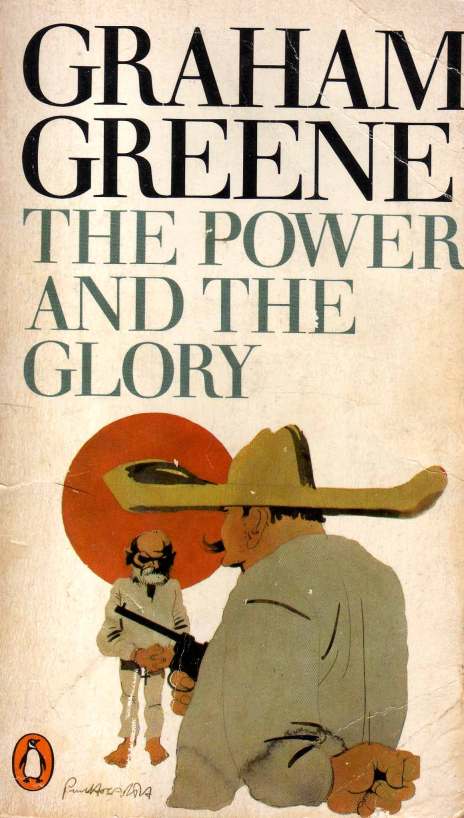
“The Priest Is Us”: The Power and The Glory, Graham Greene’s Adventure of Religion and Faith

The Gospels are powerful not simply because Christ performed miracles and taught kindness, strength, and humility. Humanity has long attributed to certain individuals impossible deeds, tremendous suffering, and inordinate wisdom. We survey the collective memory and search for meaning in the lives of renowned teachers so that they might serve as an example during our own unpredictable, harrowing journey. What separates the story of Jesus from the stories of other merely great people in history is the idea that God manifested itself to humans as a human: wracked with doubt, vulnerable to temptation, victim of unimaginable pain.  Although he taught that love is the first commandment, Christ was flailed, tortured, left to die on a cross between two thieves, all ostensibly for no benefit but our own.  Wasn’t it Borges who said that every story is either the Odyssey or the Crucifixion?  The stories we tell each other, in their reflection, become the same nothing cycle of words, told again and again, a record of our inadequacy and cowardice.

Graham Greene, in his short and powerful novel The Power and the Glory, considers the life and death of Jesus as he narrates the life of a man brought low by pride and circumstances. The last priest someplace in southwestern Mexico flees from the authorities.  His hunters seek to free the peasant farmers who populate the land from exploitation and superstition with their own imperfect liberation theologies: the abolition of superstition and private property; the self-sufficiency that follows honest labor.  The men in red shirts ride horses and believe in the impending, always near, revolution.  On the back of a mule, the father sneaks from town to town, trying to fulfill his duty, but without understanding the significance of the words that tumble clumsily from his mouth in Latin. He performs sacred rites in exchange for sanctuary until even a hiding spot is denied to him. The police have started to execute men and boys in villages who they believe have colluded to shelter this wayward man of God.

As the priest travels, he finds himself stripped not only of the vestments of his profession: his chalice, his incense, his robes, and his bible, but his own air of invincibility, privilege and comfort. Exposed, fearful, living in a state of mortal sin and unable to confess, this fallen man of God, like Christ himself, is destroyed.  The priest is, by his own admission, a bad one. He drinks heavily and thinks too much of his own comfort. Led to his profession not so much by attention to the divine will but by a desire for status and privilege, during his exile he recalls fondly dinners lavish dinners with wealthy members of his assembly and the gifts they gave him. While he may have seen that the most of his flock made a meager living on small farms after taxes and fees paid to local bosses, he never stopped to consider the meaning of his own observations, busying himself instead with ambitions for his own greater glory. He is, for the first half of the book, greedy, proud, and self-concerned.

But, as he eludes the authorities and traverses the country, he becomes, in Greene’s capable hands, a symbol of redemption and an affirmation of a full but unrealized life.  Words that lacked meaning help to ameliorate the strongest pain he has ever felt. He is jailed, extorted, and rejected by the people who love him the most, but in humiliation finds real faith.  Performing the sacred rites of his profession, he confronts the banality of evil and comes to finally realize the true power of the promise he brought to those who came to him:

He had an immense self-importance; he was unable to picture a world in which he was only a typical part — a world of treachery, violence, and lust in which his shame was altogether insignificant. How often the priest had heard the same confession — Man was so limited he hadn’t even the ingenuity to invent a new vice: the animals knew as much. It was for this world that Christ had did; the more evil you saw and heard about you, the greater glory lay around the death. It was too easy to die for what was good or beautiful, for home or children or a civilization — it needed a God to die for the half-hearted and the corrupt.

This is a book about religion and faith, but The Power and the Glory doesn’t require its reader to have an inclination towards either.  It is an adventure story, recounted in bold, confident sentences, about a normal man who fears that incorrect choices will cause him to suffer. This fear is real and it manifests itself in the priest’s moral and ethical dilemmas.  We are asked to ponder those things that lead from sadness to strength.  The priest is us: we see ourselves completely in him and give him our sympathy.

Gods Without Men — Hari Kunzu (Book Aquired 2.27.2012)

20120228-172842.jpg

I kind of love the cover of Hari Kunzru’s Gods Without Men: it’s all Keith Haring acid late eightiesish. Big hardback book from Knopf. Their write up:

In the desert, you see, there is everything and nothing . . . It is God without men.
—Honoré de Balzac, Une passion dans le désert, 1830

Jaz and Lisa Matharu are plunged into a surreal public hell after their son, Raj, vanishes during a family vacation in the California desert. However, the Mojave is a place of strange power, and before Raj reappears inexplicably unharmed—but not unchanged—the fate of this young family will intersect with that of many others, echoing the stories of all those who have traveled before them.

Driven by the energy and cunning of Coyote, the mythic, shape-shifting trickster, Gods Without Men is full of big ideas, but centered on flesh-and-blood characters who converge at an odd, remote town in the shadow of a rock formation called the Pinnacles. Viscerally gripping and intellectually engaging, it is, above all, a heartfelt exploration of the search for pattern and meaning in a chaotic universe.

“The Discharged Soldier” — William Wordsworth

Drawing of Adrian Jones by Michael Fay

In Section IV of his Prelude, William Wordsworth evokes the most moving encounter with a veteran of war that I have ever read. At first reticent to be anything but a voyeur, the narrator (Wordsworth, in all likelihood), slips “into the shade/ Of a thick hawthorn” to spy on the “meagre man” with a “ghastly” mouth “in military garb” resting on a “mile-stone.” As the poor ex-soldier, “Companionless,” begins to issue “low muttered sounds, as if of pain / Or some uneasy though,” the narrator shakes his “heart’s specious cowardice” and hails the veteran as a human being, asking for his story. It turns out that the guy is slowly—and with great difficulty—returning to his “native home.” Wordsworth takes the veteran to a nearby friend’s house for companionship and rest, before returning to his own home in a contemplative mood. Full text of  “The Discharged Soldier”—

No living thing appeared in earth or air,
And, save the flowing water’s peaceful voice,
Sound there was none–but, lo! an uncouth shape,
Shown by a sudden turning of the road,
So near that, slipping back into the shade
Of a thick hawthorn, I could mark him well, 390
Myself unseen. He was of stature tall,
A span above man’s common measure, tall,
Stiff, lank, and upright; a more meagre man
Was never seen before by night or day.
Long were his arms, pallid his hands; his mouth
Looked ghastly in the moonlight: from behind,
A mile-stone propped him; I could also ken
That he was clothed in military garb,
Though faded, yet entire. Companionless,
No dog attending, by no staff sustained, 400
He stood, and in his very dress appeared
A desolation, a simplicity,
To which the trappings of a gaudy world
Make a strange back-ground. From his lips, ere long,
Issued low muttered sounds, as if of pain
Or some uneasy thought; yet still his form
Kept the same awful steadiness–at his feet
His shadow lay, and moved not. From self-blame
Not wholly free, I watched him thus; at length
Subduing my heart’s specious cowardice, 410
I left the shady nook where I had stood
And hailed him. Slowly from his resting-place
He rose, and with a lean and wasted arm
In measured gesture lifted to his head
Returned my salutation; then resumed
His station as before; and when I asked
His history, the veteran, in reply,
Was neither slow nor eager; but, unmoved,
And with a quiet uncomplaining voice,
A stately air of mild indifference, 420
He told in few plain words a soldier’s tale–
That in the Tropic Islands he had served,
Whence he had landed scarcely three weeks past;
That on his landing he had been dismissed,
And now was travelling towards his native home.
This heard, I said, in pity, “Come with me.”
He stooped, and straightway from the ground took up
An oaken staff by me yet unobserved–
A staff which must have dropped from his slack hand
And lay till now neglected in the grass. 430
Though weak his step and cautious, he appeared
To travel without pain, and I beheld,
With an astonishment but ill suppressed,
His ghostly figure moving at my side;
Nor could I, while we journeyed thus, forbear
To turn from present hardships to the past,
And speak of war, battle, and pestilence,
Sprinkling this talk with questions, better spared,
On what he might himself have seen or felt.
He all the while was in demeanour calm, 440
Concise in answer; solemn and sublime
He might have seemed, but that in all he said
There was a strange half-absence, as of one
Knowing too well the importance of his theme,
But feeling it no longer. Our discourse
Soon ended, and together on we passed
In silence through a wood gloomy and still.
Up-turning, then, along an open field,
We reached a cottage. At the door I knocked,
And earnestly to charitable care 450
Commended him as a poor friendless man,
Belated and by sickness overcome.
Assured that now the traveller would repose
In comfort, I entreated that henceforth
He would not linger in the public ways,
But ask for timely furtherance and help
Such as his state required. At this reproof,
With the same ghastly mildness in his look,
He said, “My trust is in the God of Heaven,
And in the eye of him who passes me!” 460

The cottage door was speedily unbarred,
And now the soldier touched his hat once more
With his lean hand, and in a faltering voice,
Whose tone bespake reviving interests
Till then unfelt, he thanked me; I returned
The farewell blessing of the patient man,
And so we parted. Back I cast a look,
And lingered near the door a little space,
Then sought with quiet heart my distant home.

“Hagar & Ishmael” — An Excerpt from an Unfinished Joseph Heller Novel

“Hagar & Ishmael” is an excerpt from an unfinished Joseph Heller novel (and yes, we know it’s not new to the internet. It was published by some magazine called The Paris Review a few years ago)–

It wasn’t my idea. Sarah thought of it first. But I was excited from the time she said so, and I began to wash myself everywhere every day, and to keep myself clean after noontime too. I was happy as a lark and chirped and flitted everywhere like a cute little bird, singing to myself merrily and winking to my friends and giggling behind my hands, after Sarah raised the question and Abraham moved me into his quarters to be near him, where I could be watched. Of course I would not have said no even if I could have, and of course I was excited by this chance. I was the envy of almost all of the other women, even of those with husbands.

For a week or more he would not touch me, until it was clear I was not already pregnant with another man’s child, and then for another week also after that, until I was free of the curse and he knew I was not unclean. These people are funny that way, he and Sarah, and Lot and his wife too, before they moved off with their daughters and all their household to dwell away from us in Sodom. Once I lay with Abraham and bore him his son, no other man in the camp came near me again, or seemed to want to, even long after. By the end of one month I was with child. Abraham sent me back and did not use me that way again, although I made eyes at him a lot to show that I wanted him to.

I cannot say truthfully which one of the two of us started the trouble, whether it was Sarah with her envy or me with my vanity and disrespect that kindled the enmity between us and destroyed the feelings of friendship between mistress and slave that had been in all ways favorable since they bought me with money and took me up out of Egypt with them. Probably, it was both. I was Egyptian and a servant, she was his blood relation, a half sister. But she was aged and barren, and I was younger and carrying her husband’s child, the son or daughter of her master that she herself had not been able to bear, and they had been married long.

I could not contain my happiness and my pride in myself and certainly did not wish to hide them. My conceit grew with my belly, expanding without shame. Soon everyone knew I had Abraham’s child. I made sure of that.