Halloween all year long | Notes on Thomas Pynchon’s Shadow Ticket, Ch. 8-14

Notes on Chapters 1-7 here.

I’m quite a bit further into the novel than where I’m going to have to leave off in these notes, but there will not be any so-called spoilers/discussion of material past Chapter 14

My general take on Shadow Ticket though: This is probably Pynchon’s most accessible novel. It’s fun, funny, and breezy, but it also kinda sorta bridges Against the Day to Gravity’s Rainbow — and not just in a timeline sense, but also thematically.


Chapter 8:

Hicks’s protege Skeet brings Hicks down to the “clubhouse” under the Holton Street Viaduct. Pynchon continues to develop the glow-in-the dark horror film motif, describing, “Cobwebs of purple light from radio tubes with imperfect vacuums inside…A dozen speakers going at once…Pieces of electrical gear blinking and chirping at each other, like a lab in a movie belonging to a scientist not entirely in his right mind.” 

The mad scientist monitoring all these wild signals is pretty harmless though. It’s “a kid named Drover in a set of earphones.” Drover shows off the amplified ukulele he’s crafted: “Kid out in Waukesha showed me…You want the real Tom Swift, it’s this Lester kid, calls himself Red, playing hillbilly guitar up and down Bluemound Road for nickels and dimes, drive-ins, roadhouse parking lots, gets to where he needs to be heard over the traffic, so he figured this out.”

This Lester aka Rhubarb Red is, of course, Les Paul, whose artistic and technological contributions and innovations to 20th-century popular music cannot be overstated. I think his licks sound fresh today.

Pynchon has long been concerned with the intersection of art and technology; of how a signal can cut through noise.

Skeet has brought Hicks to the “clubhouse” under the viaduct to connect with Stuffy Keegan, whose REO Speed Wagon was exploded by unknown entities in Shadow Ticket’s opening chapter. Things get very, very Pynchonian here—a U-13 submarine is prowling the depths of Lake Michigan, apparently there to pick up Stuffy. Hicks is in disbelief. Drover has a hard time picking up a human voice from the sub, and declares that, “everybody must be down below at the bowling alley.” Hicks is even more incredulous: “Bowling alley on a submarine, Drover?”  — setting up an execrable/wonderful Pynchonian joke that pivots on a Jules Verne novel’s title.

The episode ends with Stuffy disappearing somewhere, although Hicks is loath to believe he left on a submarine. Chapter 8 concludes with a less-skeptical Skeet pointing out that Stuffy “Kept saying things like ‘Maybe I’m a ghost now and I’m haunting you,’” again underscoring the novel’s horror-film motif.


Chapter 9 might be summarized by its opening line: “Skeet shows up at the office next day with an out-of-town tomato who causes a certain commotion.” 

This fair lady is one “Fancy Vivid” (geez Thomas); no one in the detective agency can quite believe that she wants to hire them to find disappeared Stuffy, whom she loves dearly. She’s hip to the submarine thing too: He ever say anything to you about a submarine? …Kept wanting to know if I’d ever been on one, if I’d like to go for a ride on one. At first I thought it was some kind of sex talk.”

Like the previous chapter, this one ends with a Gothic note. Hicks goes into a reverie while looking through old files, dreams he’s “in Chicago, or something calling itself that, up North Clark, across the suicides’ bridge, deep in that part of the North Side known as The Shadows.” In this space that is “haunted to saturation by the unquiet spirits of hanged men and women, white, Negro, and American Indian,” he encounters too the spirit of Stuffy who pleads for his help. “Only a dream,” Hicks tells himself.


Chapter 10:

When we first met Hicks’s Uncle Lefty back in Ch. 4, he espoused his sympathies for Adolf Hitler; in Ch. 10, after a casserole dinner, he takes his nephew to a Nazi bar, the New Nuremberg LanesHicks, as yet unaware of the bar’s fascist sympathies, nevertheless picks up on the weird vibes:

“All normal as club soda, yet somehow…too normal, yes something is making a chill creep across Hicks’s scalp, the Sombrero of Uneasiness, as it’s known in the racket. Something here is off. A bowling alley is supposed to be an oasis of beer and sociability, busy with cheerful keglers, popcorn by the bucketful, crosscurrents of flirtation, now and then somebody actually doing some bowling. But this crowd here, no, these customers are only pretending to bowl…”

These people are all American Nazis.

Hicks runs into Ooly Schaufl (“Going by Ulrich these days”), an old associate from his strike-breaking day. The scene underlines a theme developing in the novel: Hicks slowly starting to realize which side of the line he belongs on. The reunion is broken up by the Feds though — prohisdry agents, in the novel’s parlance.

Hicks makes his escape. At the next casserole night, Uncle Lefty gives Hicks the plot-moving-forward tip that Pynchon has frequently deployed thus far in Shadow Ticket, telling him to check out the under-radar as-yet-unopened FBI office in Milwaukee.


Chapter 11 begins with more Gothic intentions; Hicks approaches local the local FBI headquarters, which appears something closer to a haunted house:

“On days of low winter light the federal courthouse can take on a sinister look, a setting for a story best not told at bedtime, the jagged profile of an evil castle against pale light reflected off the Lake, bell tower, archways, gargoyles, haunted shadows, Halloween all year long.”

In Shadow Ticket, the goofy Gothicism of glaring gargoyles butts up against the realer, deeper horror of encroaching fascism abroad and a burgeoning police state at home — and worse, the twisting, bundling of these forces. Hicks gets twisted into it; the feds want him to be their agent too.


Chapter 12 begins with Hicks’s boss Boynt going full tilt paranoid, Pynchonian style:

“The federals who had you in are likely just a front, OK? It’s the outfit that’s behind them, a nationwide syndicate of financial tycoons, all organized in constant touch against the forces of evil, namely everything to the left of Herbert Hoover. Worried about the next election, worried this latest Roosevelt if he gets in might decide to step out on his own, and even if he does revert to type after all, it might not be in time to stop the Red apocalypse that’s got them spooked out of what they think of as their wits.”

The outfit, the syndicate–Boynt ties the forces of right-wing capitalism to outright fascist gangsterism. He redirects his detective’s attention to the cheese heiress case, and the pair take off to the Airmont’s lawyers’ office. There, Hicks is asked if he’s “aware of the American Indian belief, referenced in depositions filed on Miss Airmont’s behalf, that once you save somebody’s life, you’re responsible for them in perpetuity?” (This routine gets brought up again and again.)


Chapter 13:

Hicks heads out to the Airmont mansion to do some recon on missing heiress Daphne. There, he picks up on chatter about “the recent Bruno Airmont Dairy Metaphysics Symposium held annually at the Department of Cheese Studies at the UW branch in Sheboygan, this year featuring the deep and perennial question, ‘Does cheese, considered as a living entity, also possess consciousness?'” 

The philosophical riffing gives way to a brief overview of the Airmont cheese fortune, which was built in  no small part upon the brief success of a product called “Radio-Cheez…designed to stay fresh forever, in or out of the icebox, thanks to a secret, indeed obsessionally proprietary, radioactive ingredient.” 

1921 magazine advertisement for Undark, a product of the Radium Luminous Material Corporation

The narrator reminds us that this was “radium’s grand hour of popularity, when it’s still medical wisdom to seek as many ways as possible to introduce radiation into the human body—radioactive mineral water, patent radium elixirs and aphrodisiacs, radium suppositories,” before bringing up the “Radium Girls” of “nearby Ottawa, Illinois [who] were employed in painting numbers on glow-in-the-dark clock dials, licking their brushes every so often to keep them finely pointed.”

The sad story of the Radium Girls has been well documented. It is another case of real-life horror in Shadow Ticket butting up against Pynchon’s zanier play-acting theatrical horrors. The Radium Girls’ case eventually led to expanded labor protections in the United States, making them ideal Pynchonian heroes.

Cheese conspiracies develop in this chapter; we learn that “The year 1930 happened to be the 1776 of the cheese business.” Bruno Airmont, the “Al Capone of Cheese” befriends the Al Capone (“And what is it you’re the Al Capone of again?”).

At the Airmont compound we also meet G. Rodney Flaunch, “a onetime male flapper” and fiancé to departed Daphne and mom, Mrs. Vivacia Airmont.


And in Chapter 14 we finally get the backstory of Hicks and Daphne’s meet-cute. Daphne’s in disguise and on the run from “Winnetka Shores Psychopathic, a ritzy banana plantation in the neighborhood, overseen by a Dr. Swampscott Vobe, M.D. Known for a susceptibility to anything newfangled, Dr. Vobe has somehow gotten it into his head that the patients at WSP are all available to him as lab material to try out his therapy ideas on, free of charge. Drugs, electricity, rays. Dr. Vobe is specially interested in rays.”

More mad scientist Halloween-all-the-time shit. They escape via rumrunner–the boat, not the drink–and Hicks drops the heiress at an Ojibwe reservation (she claims it was her finishing school). There are more horror notes — references to werewolves and windigos — and again the note that if you save a person’s life you are forever responsible for it:

“And if I say thanks but no thanks, what happens, I get an arrow through my head?”

“You don’t have to be all that way about it either, white man.”


I’ve left out noting all the drinks in Shadow Ticket thus far — I leave that task for Drunk Pynchon! — but I have to bring up two from this chapter. The first is Hicks’s Old Log Cabin Presbyterian, which sounds fucking delicious. The second is Dippy Chazz’s Wisconsin Old Fashioned: “Korbel brandy, 7UP lithiated lemon soda, and, sharing the toothpick with a cherry, a pickled Brussels sprout.” Initially, I thought this had to be a Pynchonian invention — but it’s not. From Toby Cecchini’s case study of the cocktail in The New York Times:

 It’s more a family of drinks, revolving around a central theme. There are four main ways to order it: sweet, with 7 Up; sour (which is not), with sour mix or Squirt; “press” with half 7 Up and half seltzer; or seltzer only. There are regional garnish customizations using pickled vegetables — including mushrooms, asparagus, cucumbers, tomatoes, brussels sprouts and olives — that seem counterintuitive until you taste the salty, vinegar tang playing off of the spice of the bitters and the sweet thrum of the brandy. By God, our great-grandparents were on to something.
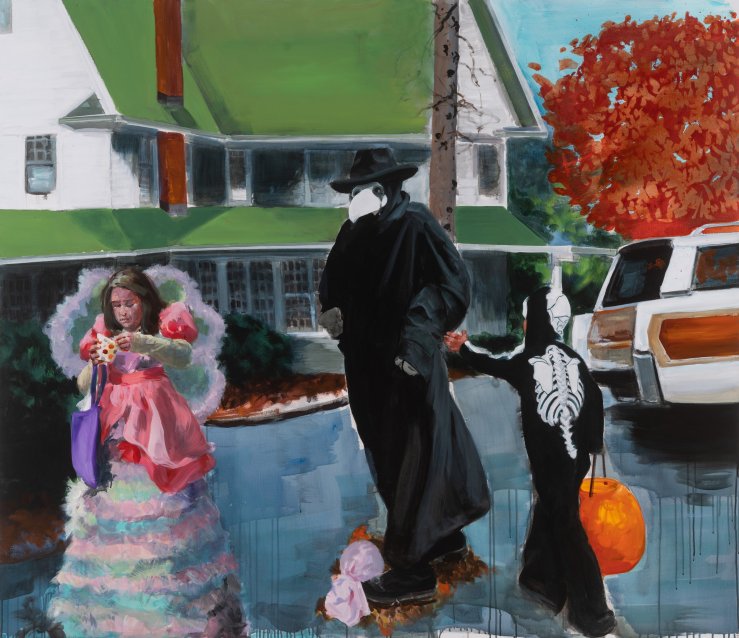
Please Wait, Sir — Eric Fischl


Please Wait, Sir, 2022 by Eric Fischl (b. 1948)

Read “All Hallows,” a spooky short story by Walter de la Mare

“All Hallows”

by

Walter de la Mare


And because time in itselfe…can receive no alteration, the hallowing…must consist in the shape or countenance which we put upon the affaires that are incident in these days.

—Richard Hooker


It was about half-past three on an August afternoon when I found myself for the first time looking down upon All Hallows. And at glimpse of it, fatigue and vexation passed away. I stood ‘at gaze’, as the old phrase goes—like the two children of Israel sent in to spy out the Promised Land. How often the imagined transcends the real. Not so All Hallows. Having at last reached the end of my journey—flies, dust, heat, wind—having at last come limping out upon the green sea-bluff beneath which lay its walls—I confess the actuality excelled my feeble dreams of it.

What most astonished me, perhaps, was the sense not so much of its age, its austerity, or even its solitude, but its air of abandonment. It lay couched there as if in hiding in its narrow sea-bay. Not a sound was in the air; not a jackdaw clapped its wings among its turrets. No other roof, not even a chimney, was in sight; only the dark-blue arch of the sky; the narrow snowline of the ebbing tide; and that gaunt coast fading away into the haze of a west over which were already gathering the veils of sunset.

We had met, then, at an appropriate hour and season. And yet—I wonder. For it was certainly not the ‘beauty’ of All Hallows, lulled as if into a dream in this serenity of air and heavens, which was to leave the sharpest impression upon me. And what kind of first showing would it have made, I speculated, if an autumnal gale had been shrilling and trumpeting across its narrow bay—clots of wind-borne spume floating among its dusky pinnacles—and the roar of the sea echoing against its walls! Imagine it frozen stark in winter, icy hoar-frost edging its every boss, moulding, finial, crocket, cusp!

Indeed, are there not works of man, legacies of a half-forgotten past, scattered across this human world of ours from China to Peru, which seem to daunt the imagination with their incomprehensibility? Incomprehensible, I mean, in the sense that the passion that inspired and conceived them is incomprehensible. Viewed in the light of the passing day, they might be the monuments of a race of demi-gods. And yet, if we could but free ourselves from our timidities, and follies, we might realize that even we ourselves have an obligation to leave behind us similar memorials—testaments to the creative and faithful genius not so much of the individual as of Humanity itself.

However that may be, it was my own personal fortune to see All Hallows for the first time in the heat of the Dog Days, after a journey which could hardly be justified except by its end. At this moment of the afternoon the great church almost cheated one into the belief that it was possessed of a life of its own. It lay, as I say, couched in its natural hollow, basking under the dark dome of the heavens like some half-fossilized monster that might at any moment stir and awaken out of the swoon to which the wand of the enchanter had committed it. And with every inch of the sun’s descending journey it changed its appearance.

That is the charm of such things. Man himself, says the philosopher, is the sport of change. His life and the life around him are but the flotsam of a perpetual flux. Yet, haunted by ideals, egged on by impossibilities, he builds his vision of the changeless; and time diversifies it with its colours and its ‘effects’ at leisure. It was drawing near to harvest now; the summer was nearly over; the corn would soon be in stook; the season of silence had come, not even the robins had yet begun to practice their autumnal lament. I should have come earlier. Continue reading “Read “All Hallows,” a spooky short story by Walter de la Mare”

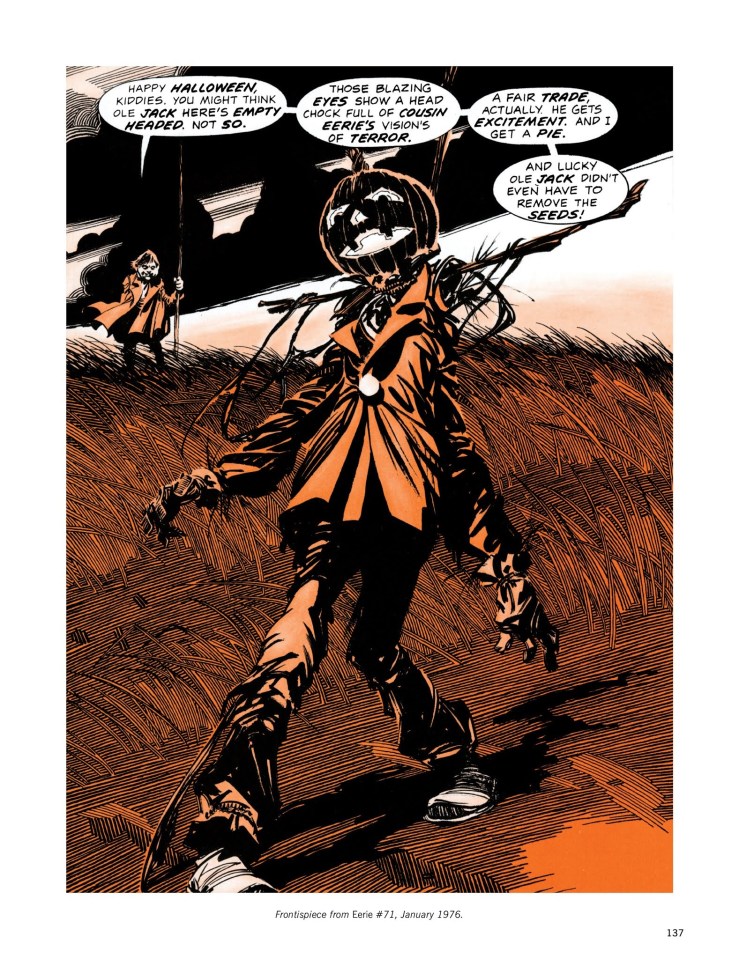
Happy Halloween, Kiddies | Bernie Wrightson

Frontispiece from Eerie #71 by Bernie Wrightson (1948-2017)

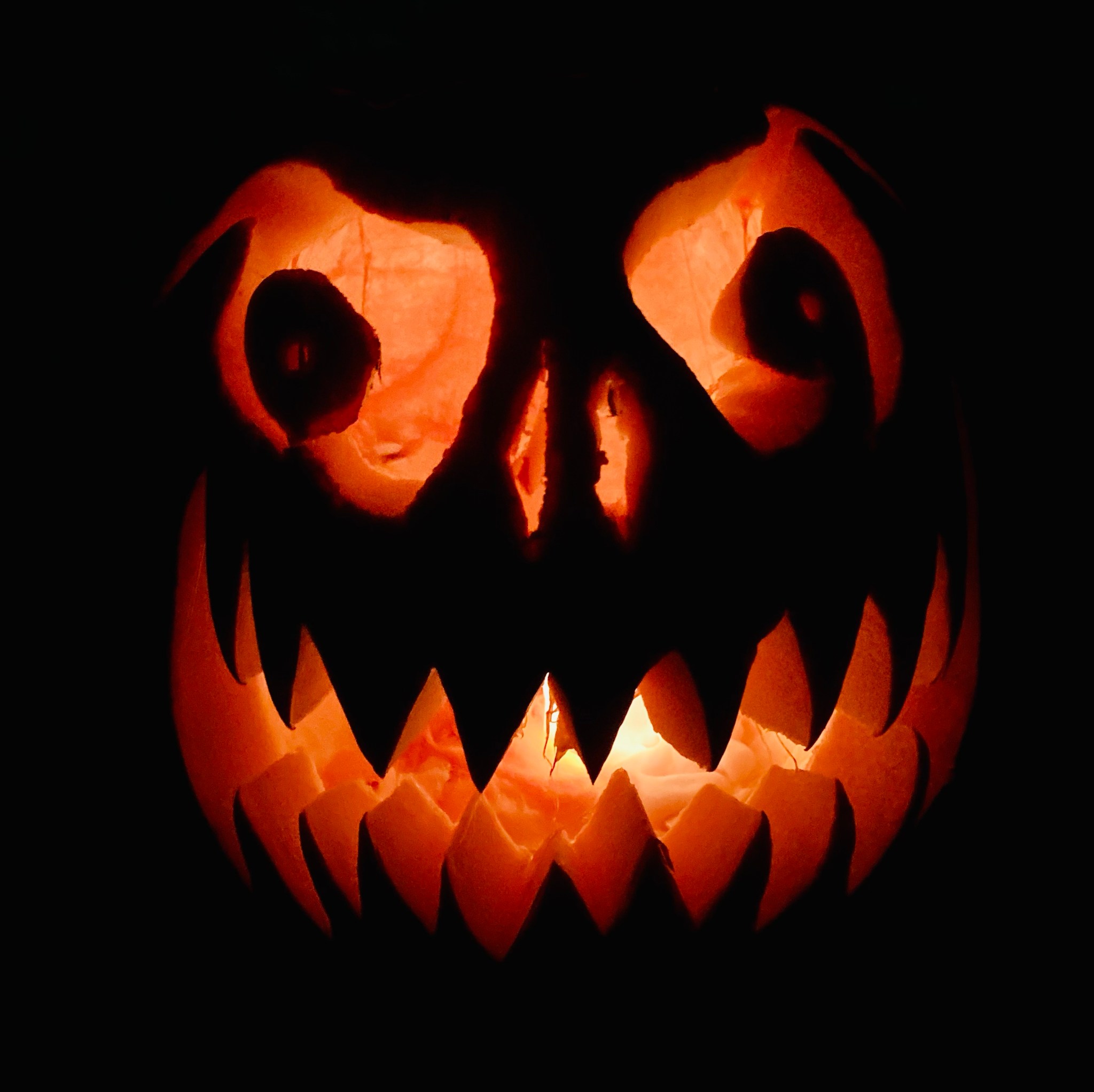
Jack O’Lantern, 2021

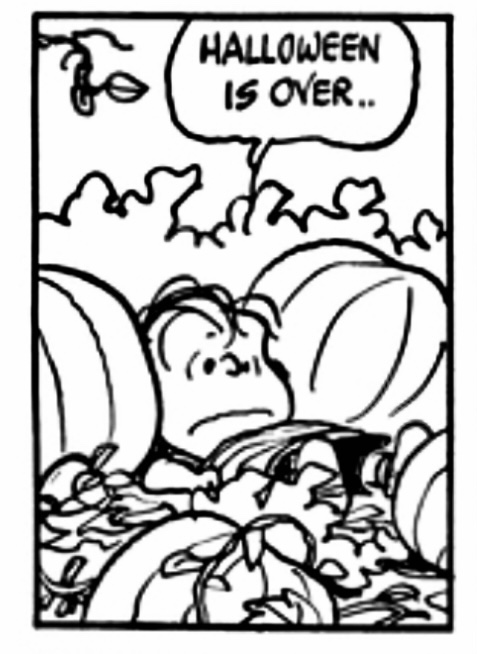
Halloween is over (Peanuts)

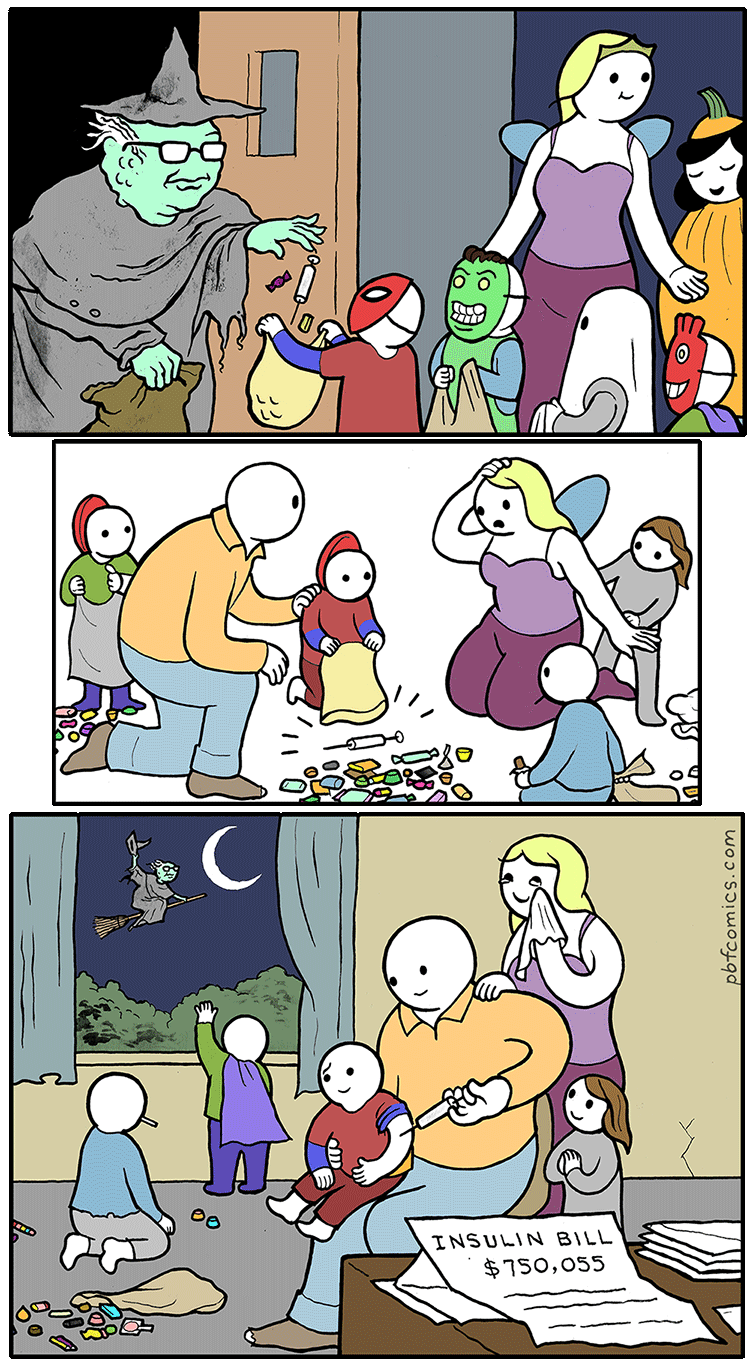
The Treat (Perry Bible Fellowship)

“Concerning the Dead” — Zora Neale Hurston

img_2990

“Concerning the Dead”

by

Zora Neale Hurston

from Mules and Men


There are many superstitions concerning the dead.

All over the South and in the Bahamas the spirits of the dead have great power which is used chiefly to harm. it Will be noted how frequently graveyard dust is required in the practice of hoodoo, goofer dust as it is often called.

It is to be noted that in nearly all of the killing ceremonies the cemetery is used.

The Ewe-speaking peoples of the west coast of Africa all make offerings of food and drink ?particularly libations of palm wine and banana beer upon the graves of the ancestor. It is to be noted in America that the spirit is always given a pint of good whiskey. He is frequently also paid for his labor in cash.

It is well known that church members are buried with their feet to the east so that they will arise on that last day facing the rising sun. Sinners are buried facing the opposite direction. The theory is that sunlight will do them harm rather than good, as they will no doubt wish to hide their faces from an angry God.

Ghosts cannot cross water?so that if a hoodoo doctor wishes to sic a dead spirit upon a man who lives across water, he must first hold the mirror ceremony to fetch the victim from across the water.

People who die from the sick bed may walk any night, but

Friday night is the night of the people who died in the dark who were executed. These people have never been in the light.

They died with the black cap over the face. Thus, they are blind. On Friday nights they visit the folks who died from sick beds and they lead the blind ones wherever they wish to visit.

Ghosts feel hot and smell faintish. According to testimony all except those who died in the dark may visit their former homes every night at twelve o’clock. But they must be back in the cemetery at two o’clock sharp or they will be shut out by the watchman and must wander about for the rest of the night. That is why the living are frightened by seeing ghosts at times. Some spirit has lingered too long with the living person it still loves and has been shut out from home.

Pop Drummond of Fernandina, Fla., says they are not asleep at all. They “Sings and has church and has a happy time, but some are spiteful and show themselves to scare folks.” Their voices are high and thin. Some ghosts grow very fat if they get plenty to eat. They are very fond of honey. Some who have been to the holy place wear seven?starred crowns and arc very “suscautious” and sensible.

Dirt from sinners’ graves is supposed to be very powerful, but some hoodoo doctors will use only that from the graves of infants. They say that the sinner’s grave is powerful to kill, but his spirit is likely to get unruly and kill others for the pleasure of killing. It is too dangerous to commission.

The spirit newly released from the body is likely to be destructive. This is why a cloth is thrown over the face of a clock in the death chamber and the looking glass is covered over. The clock will never run again, nor will the mirror ever cast any more reflections if they are not covered so that the spirit cannot see them.

When it rains at a funeral it is said that God wishes to wash their tracks off the face of the earth, they were so displeasing to him.

If a murder victim is buried in a sitting position, the murderer will be speedily brought to justice. The victim sitting before the throne is able to demand that justice be done. If he is lying prone he cannot do this.

A fresh egg in the hand of a murder victim will prevent the murderer’s going far from the scene. The egg represents life, and so the dead victim is holding the life of the murderer in his hand.

Sometimes the dead are offended by acts of the living and slap the face of the living. When this happens, the head is slapped one?sided and the victim can never straighten his neck. Speak gently to ghosts, and do not abuse the children of the dead.

It is not good to answer the first time that your name is called. It may be a spirit and if you answer it, you will die shortly. They never call more than once at a time, so by waiting you will miss probable death.

“hist whist” — e.e. cummings

“hist whist”

by

e.e. cummings


hist      whist
little ghostthings
tip-toe
twinkle-toe
little twitchy
witches and tingling
goblins
hob-a-nob     hob-a-nob
little hoppy happy
toad in tweeds
tweeds
little itchy mousies
with scuttling
eyes    rustle and run     and
hidehidehide
whisk
whisk     look out for the old woman
with the wart on her nose
what she’ll do to yer
nobody knows
for she knows the devil     ooch
the devil     ouch
the devil
ach     the great
green
dancing
devil
devil
devil
devil
        wheeEEE

“All Hallow’s Eve” — Dorothea Tanning

“All Hallow’s Eve”

by

Dorothea Tanning


Be perfect, make it otherwise.
Yesterday is torn in shreds.
Lightning’s thousand sulfur eyes
Rip apart the breathing beds.
Hear bones crack and pulverize.
Doom creeps in on rubber treads.
Countless overwrought housewives,
Minds unraveling like threads,
Try lipstick shades to tranquilize
Fears of age and general dreads.
Sit tight, be perfect, swat the spies,
Don’t take faucets for fountainheads.
Drink tasty antidotes. Otherwise
You and the werewolf: newlyweds.


Three Books

2019-10-27_164045

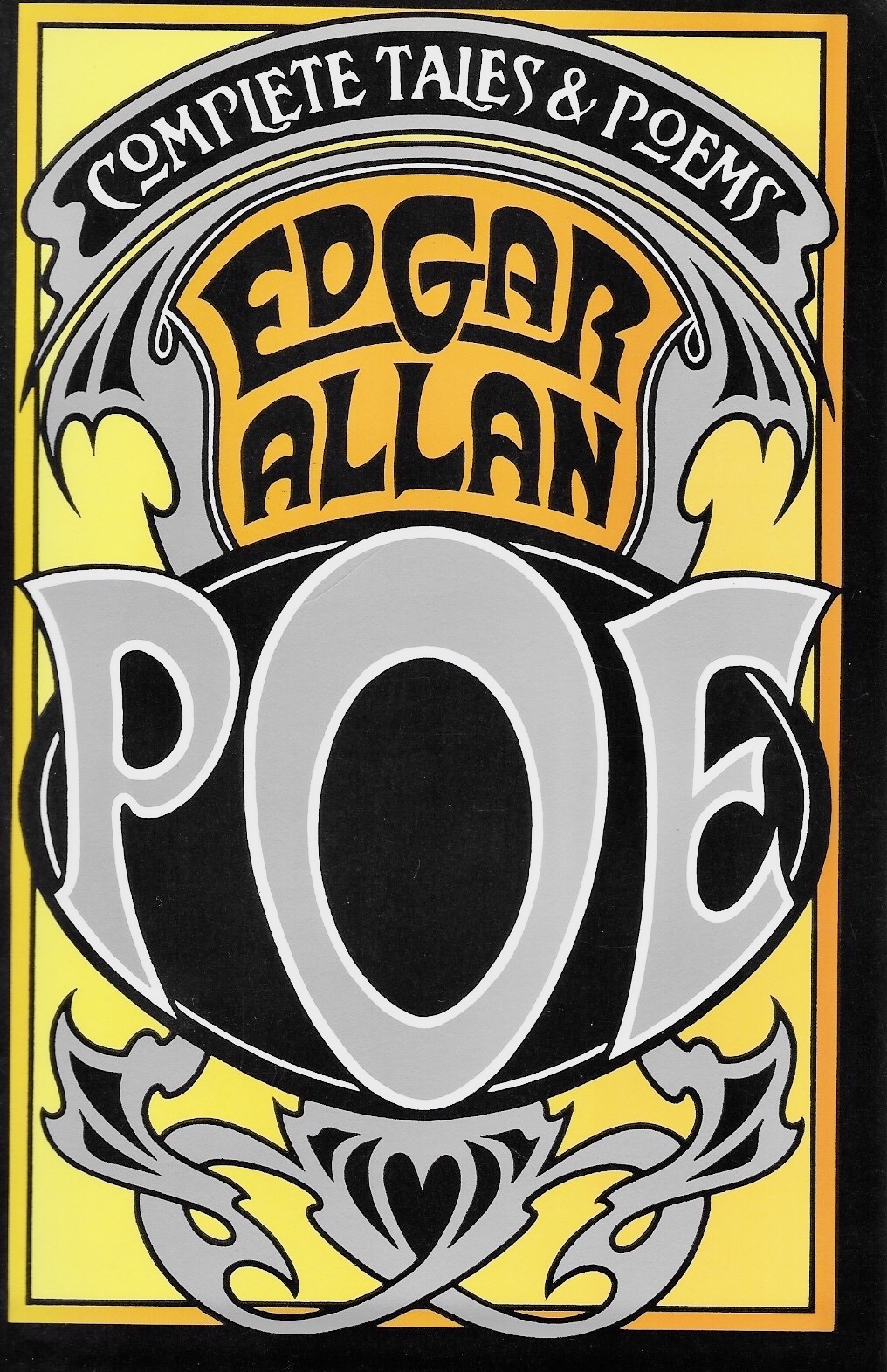
Complete Tales & Poems by Edgar Allan Poe. Fat trade paperback by Vintage; most recent date indicates 1975 but that can’t be right. No designer credited.

You know Poe.

2019-10-27_164045_1-1

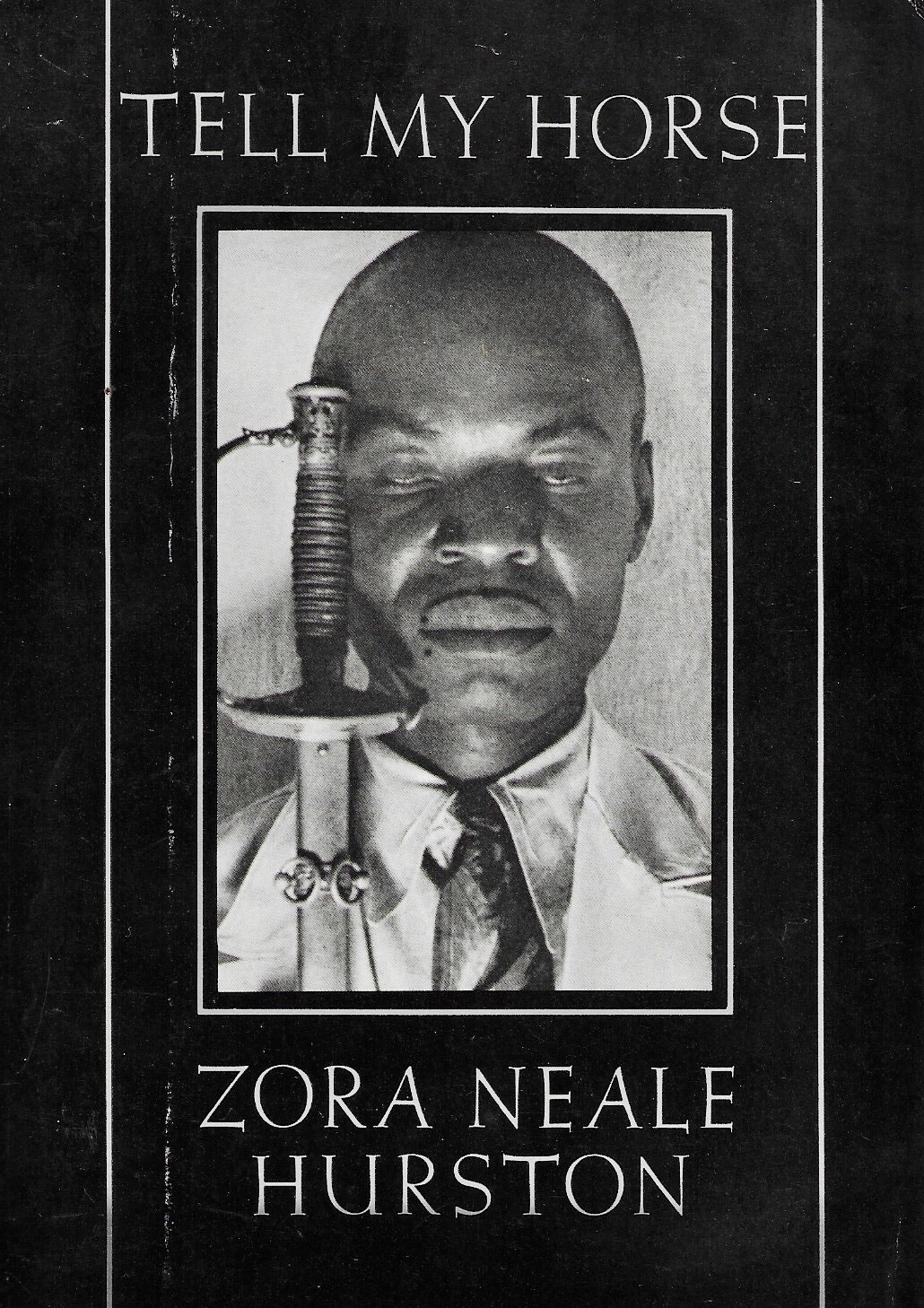
Tell My Horse by Zora Neale Hurston. 1983 trade paperback edition from Turtle Island. Neither designer nor photographer are credited.

A wonderful and weird trip to Jamaica and Haiti…and zombies!

2019-10-27_164045_2

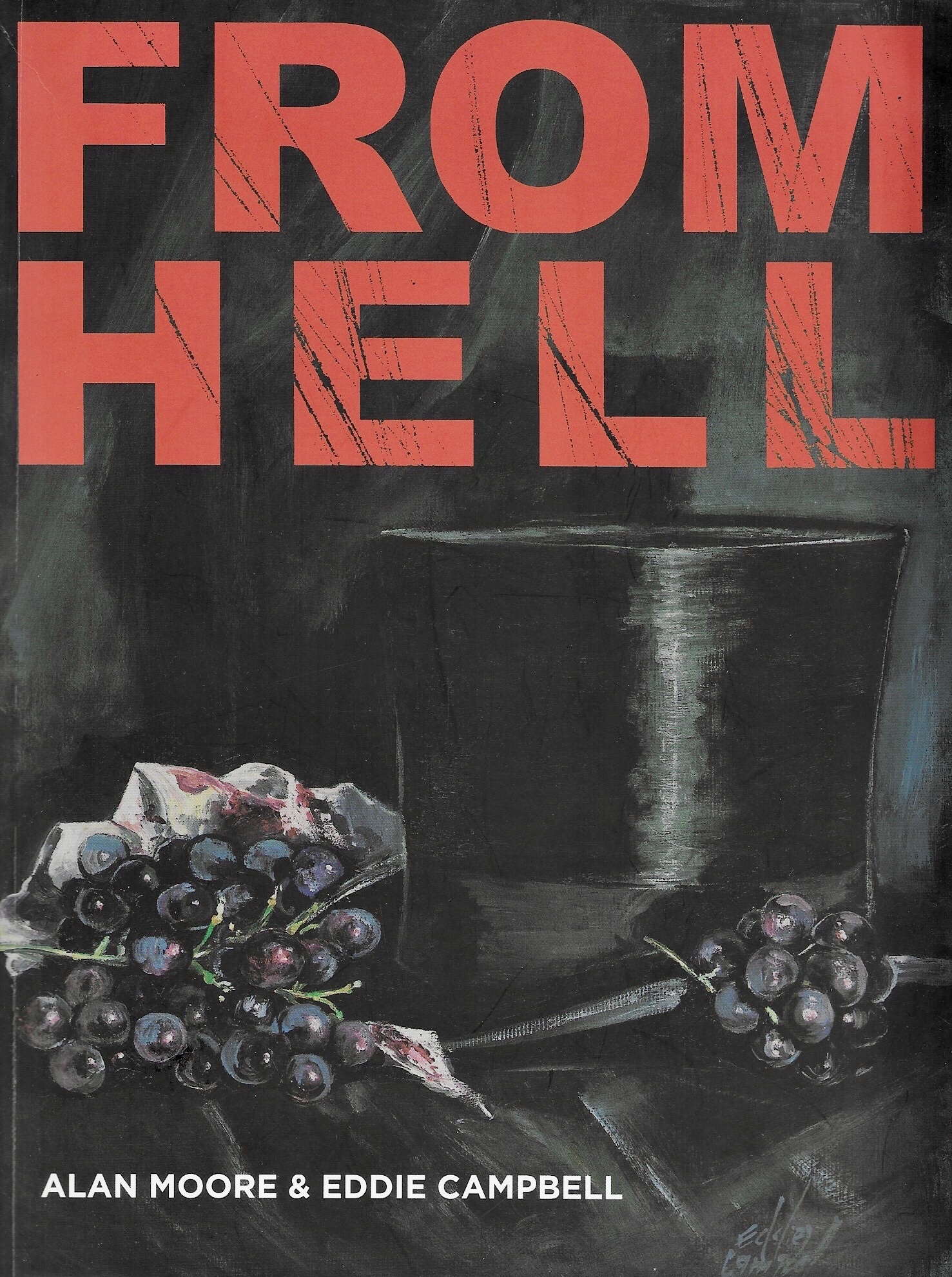
From Hell by Alan Moore & Eddie Campbell. 2004 irregular-big trade paperback from Top Shelf. No designer/artist credited, but it’s clearly Campbell’s work.

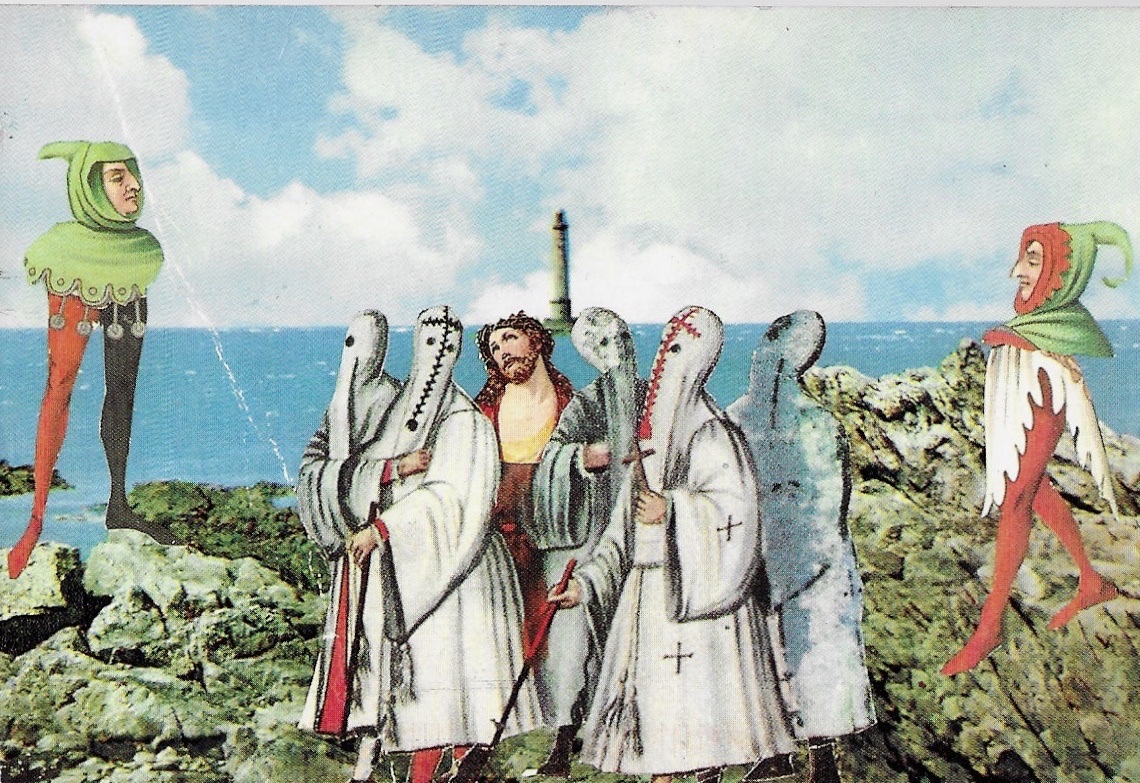
One of my favorite scary novels ever. I reviewed it like a decade ago on this site. I found this postcard in it, a collage by the surealist Jacques Prévert:

2019-10-27_170449

The postcard, from James Cooke, included this text, a quote of Cormac McCarthy’s horror novel Blood Meridian:

They entered the city haggard and filthy and reeking with the blood of the citizenry for whose protection they had contracted.

James won a postcard-based contest on this site like a decade ago, god love him.


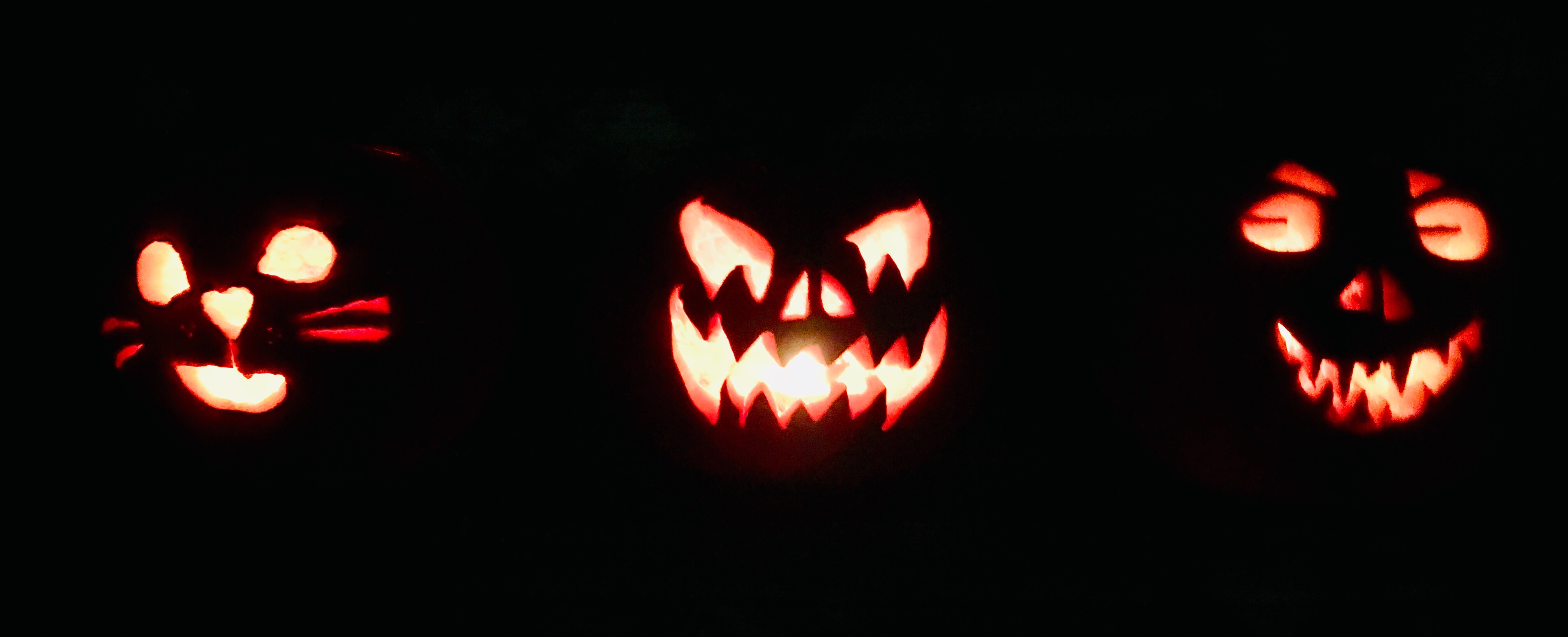
Jack O’ Lanterns 2018

img_1387

Happy Halloween!

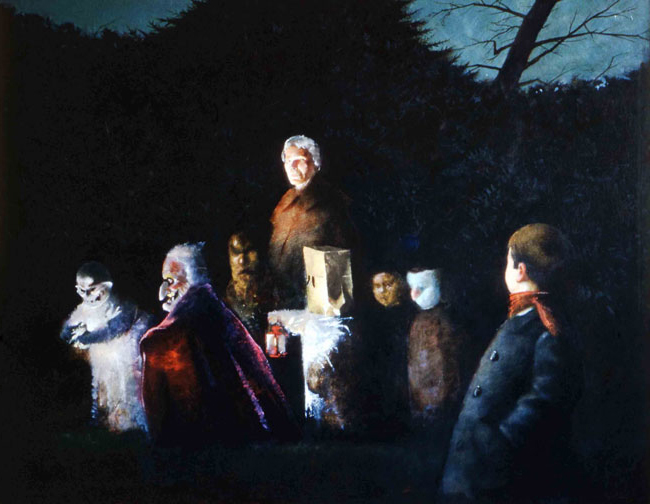
Halloween — Julio Larraz

halloween

Halloween, 1973 by Julio Larraz (b. 1944)

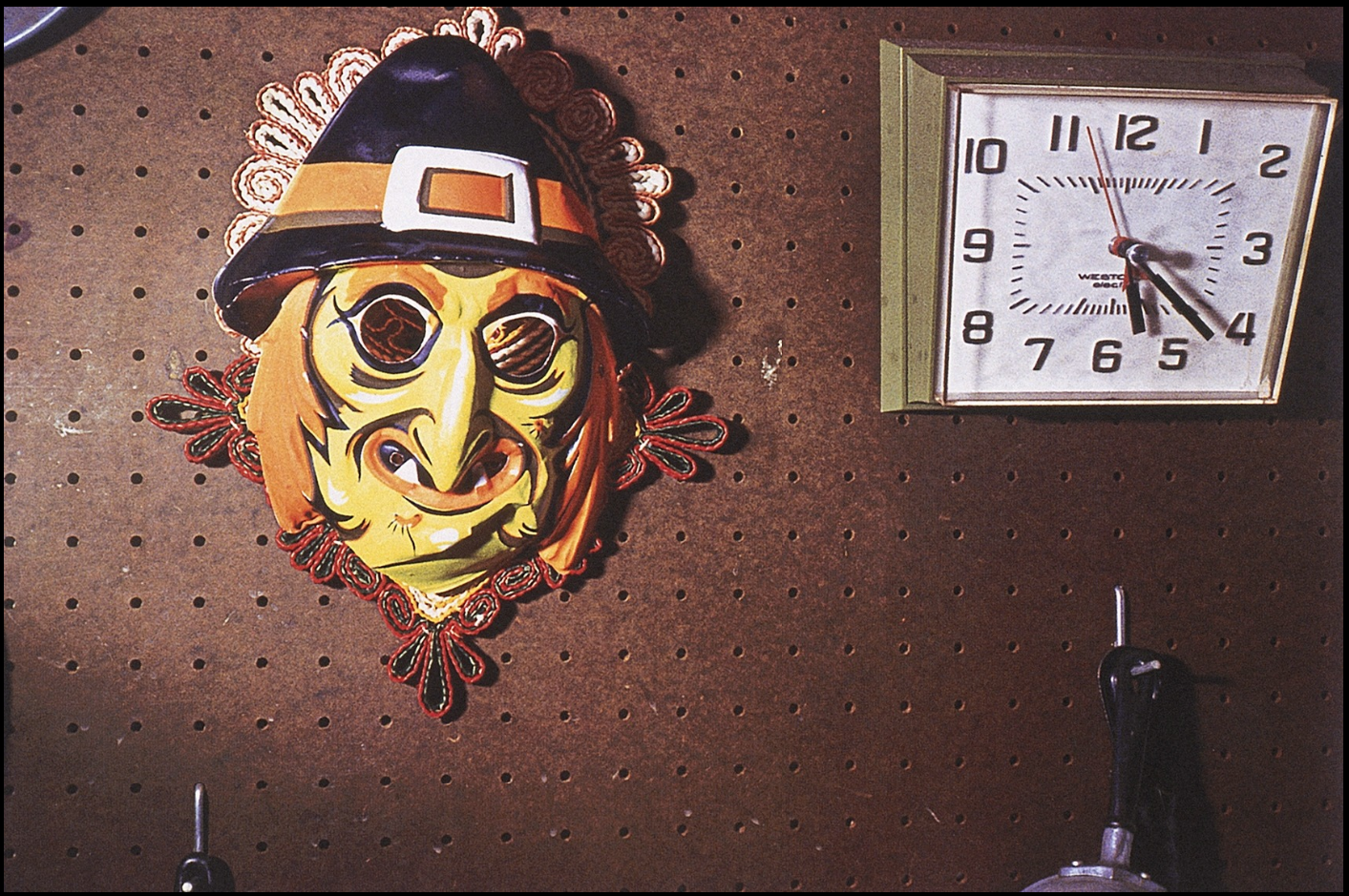
Untitled (Mask) — William Eggleston

eggleston

Untitled (from Los Alamos), 1966-74 by William Eggleston (b. 1939)

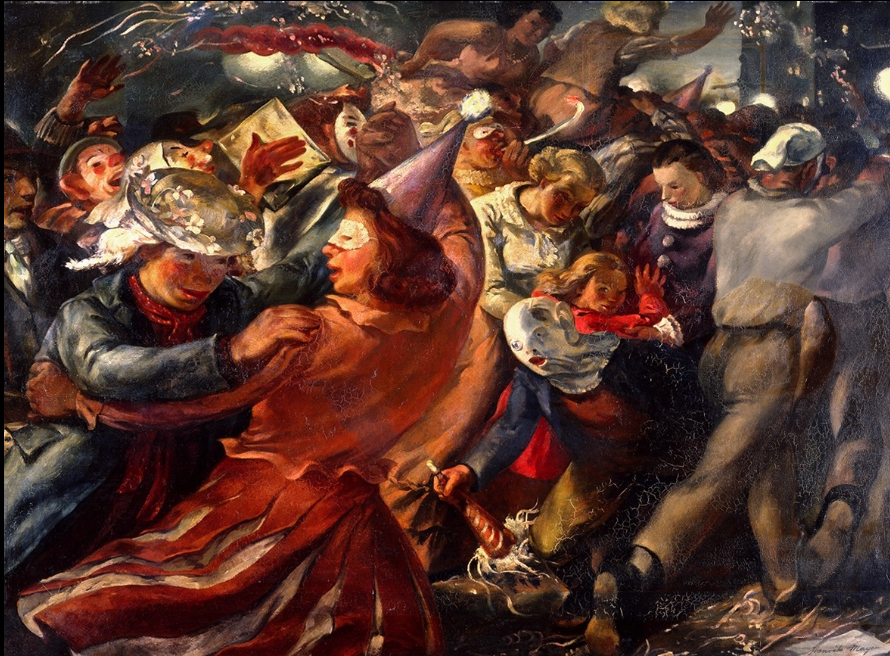
Halloween Carnival — Henrik Martin Mayer

Screenshot 2018-10-11 at 7.15.22 PM

Halloween Carnival, 1938 by Henrik Martin Mayer (1909-1972)

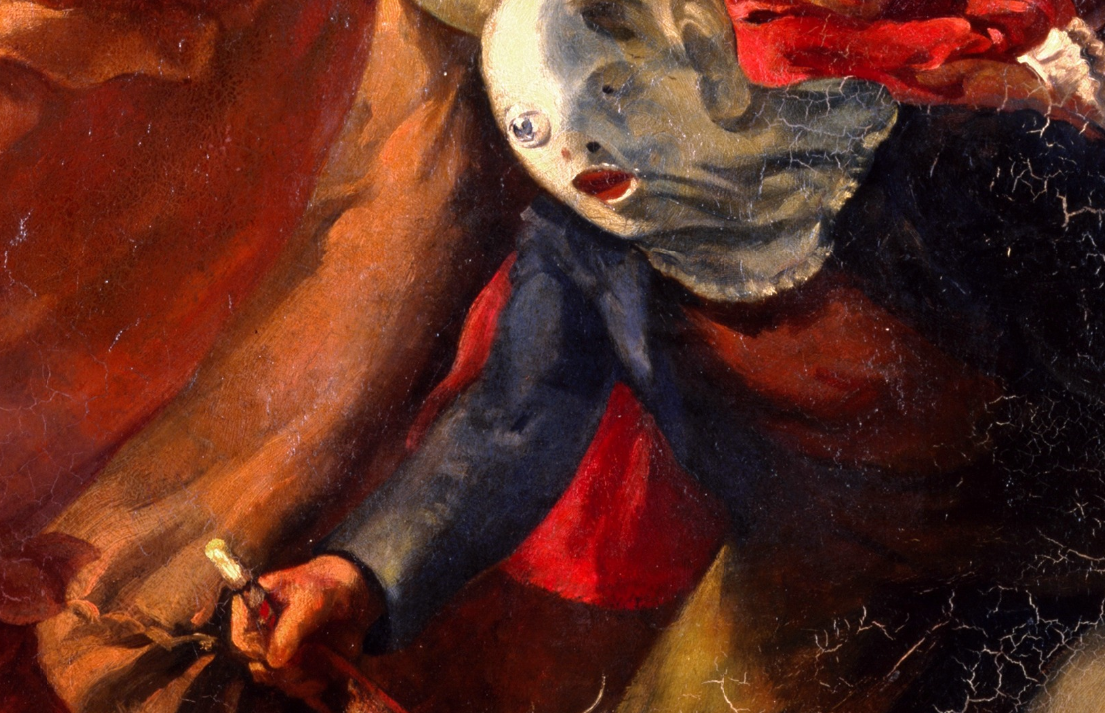
Halloween Carnival (detail) — Henrik Martin Mayer

Screenshot 2018-10-11 at 7.15.42 PM

Detail from Halloween Carnival, 1938 by Henrik Martin Mayer (1909-1972)

Halloween Party — Philip Guston

Screenshot 2018-10-11 at 7.11.48 PM
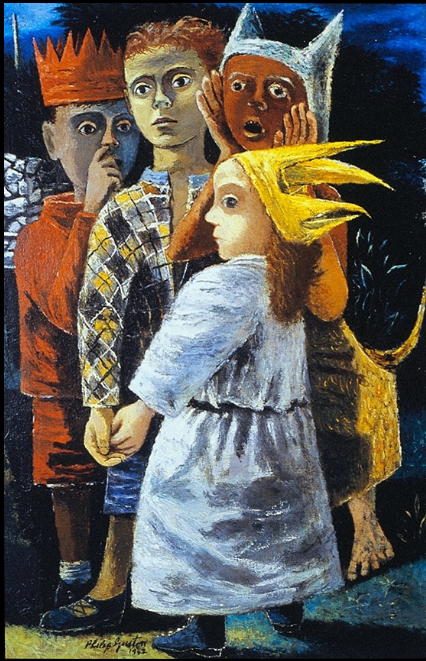
Halloween Party, 1942 by Philp Guston (1913-1980)