Anagogical vision (Flannery O’Connor)

The kind of vision the fiction writer needs to have, or to develop, in order to increase the meaning of his story is called anagogical vision, and that is the kind of vision that is able to see different levels of reality in one image or one situation. The medieval commentators on Scripture found three kinds of meaning in the literal level of the sacred text: one they called allegorical, in which one fact pointed to another; one they called tropological, or moral, which had to do with what should be done; and one they called anagogical, which had to do with the Divine life and our participation in it. Although this was a method applied to biblical exegesis, it was also an attitude toward all of
creation, and a way of reading nature which included most possibilities, and I think it is this enlarged view of the human scene that the fiction writer has to cultivate if he is ever going to write stories that have any chance of becoming a permanent part of our literature. It seems to be a paradox that the larger and more complex the personal view, the easier it is to compress it into fiction.

From Flannery O’Connor’s essay “The Nature and Aim of Fiction.”

Three activated sensuous strokes (Flannery O’Connor)

A lady who writes, and whom I admire very much, wrote me that she had learned from Flaubert that it takes at least three activated sensuous strokes to make an object real; and she believes that this is connected with our having five senses. If you’re deprived of any of them, you’re in a bad way, but if you’re deprived of more than two at once, you almost aren’t present.

All the sentences in Madame Bovary could be examined with wonder, but there is one in particular that always stops me in admiration. Flaubert has just shown us Emma at the piano with Charles watching her. He says, “She struck the notes with aplomb and ran from top to bottom of the keyboard without a break. Thus shaken up, the old instrument, whose strings buzzed, could be heard at the other end of the village when the window was open, and often the bailiff’s clerk, passing along the highroad, bareheaded and in list slippers, stopped to listen, his sheet of paper in his hand.”

The more you look at a sentence like that, the more you can learn from it. At one end of it, we are with Emma and this very solid instrument “whose strings buzzed,” and at the other end of it we are across the village with this very concrete clerk in his list slippers. With regard to what happens to Emma in the rest of the novel, we may think that it makes no difference that the instrument has buzzing strings or that the clerk wears list slippers and has a piece of paper in his hand, but Flaubert had to create a believable village to put Emma in. It’s always necessary to remember that the fiction writer is much less immediately concerned with grand ideas and bristling emotions than he is with putting list slippers on clerks.

Now of course this is something that some people learn only to abuse. This is one reason that strict naturalism is a dead end in fiction. In a strictly naturalistic work the detail is there because it is natural to life, not because it is natural to the work. In a work of art we can be extremely literal, without being in the least naturalistic. Art is selective, and its truthfulness is the truthfulness of the essential that creates movement.

From Flannery O’Connor’s essay “The Nature and Aim of Fiction.”

It is difficult in life to be good, and difficult in art to portray goodness (Iris Murdoch)

INTERVIEWER

You’ve said that “one constantly takes prototypes from literature who may actually influence one’s conduct.” Could you give specific examples?

MURDOCH

Did I say that? Good heavens, I can’t remember the context. Of course, one feels affection for, or identifies with, certain fictional characters. My two favorites are Achilles and Mr. Knightley. This shows the difficulty of thinking of characters who might influence one. I could reflect upon characters in Dickens, Dostoyevsky, Tolstoy; these writers particularly come to mind—wise moralistic writers who portray the complexity of morality and the difficulty of being good.

Plato remarks in The Republic that bad characters are volatile and interesting, whereas good characters are dull and always the same. This certainly indicates a literary problem. It is difficult in life to be good, and difficult in art to portray goodness. Perhaps we don’t know much about goodness. Attractive bad characters in fiction may corrupt people, who think, So that’s OK. Inspiration from good characters may be rarer and harder, yet Alyosha in The Brothers Karamazov and the grandmother in Proust’s novel exist. I think one is influenced by the whole moral atmosphere of literary works, just as we are influenced by Shakespeare, a great exemplar for the novelist. In the most effortless manner he portrays moral dilemmas, good and evil, and the differences and the struggle between them. I think he is a deeply religious writer. He doesn’t portray religion directly in the plays, but it is certainly there, a sense of the spiritual, of goodness, of self-sacrifice, of reconciliation, and of forgiveness. I think that is the absolutely prime example of how we ought to tell a story—invent characters and convey something dramatic, which at the same time has deep spiritual significance.

From Irish Murdoch’s Paris Review interview.

Complaint to God (Alasdair Gray’s Lanark)

The more he worked the more the furious figure of God kept popping in and having to be removed: God driving out Adam and Eve for learning to tell right from wrong, God preferring meat to vegetables and making the first planter hate the first herdsman, God wiping the slate of the world clean with water and leaving only enough numbers to start multiplying again, God fouling up language to prevent the united nations reaching him at Babel, God telling a people to invade, exterminate and enslave for him, then letting other people do the same back. Disaster followed disaster to the horizon until Thaw wanted to block it with the hill and gibbet where God, sick to death of his own violent nature, tried to let divine mercy into the world by getting hung as the criminal he was. It was comical to think he achieved that by telling folk to love and not hurt each other. Thaw groaned aloud and said, “I don’t enjoy hounding you like this, but I refuse to gloss the facts. I admire most of your work. I don’t even resent the ice ages, even if they did make my ancestors carnivorous. I’m astonished by your way of leading fertility into disaster, then repairing the disaster with more fertility. If you were a busy dung beetle pushing the sun above the skyline, if you had the head of a hawk or the horns and legs of a goat I would understand and sympathize. If you headed a squabbling committee of Greek departmental chiefs I would sympathize. But your book claims you are a man, the one perfect man of whom we are imperfect copies. And then you have the bad taste to put yourself in it. Only the miracle of my genius stops me feeling depressed about this, and even so my brushes are clogged by theology, that bastard of the sciences. Let me remember that a painting, before it is anything else, is a surface on which colours are arranged in a certain order.

From Alasdair Gray’s novel Lanark.

Very few people who are supposedly interested in writing are interested in writing well (Flannery O’Connor)

But there is a wide spread curiosity about writers and how they work, and when a writer talks on this subject, there are always misconceptions and mental rubble for him to clear away before he can even begin to see what he wants to talk about. I am not, of course, as innocent as I look. I know well enough that very few people who are supposedly interested in writing are interested in writing well. They’re interested in publishing something, and if possible in making a “killing.” They are interested in seeing their names at the top of something printed, it matters not what. And they seem to feel that this can be accomplished by learning certain things about working habits and about markets and about what subjects are currently acceptable.

From “The Nature and Aim of Fiction” by Flannery O’Connor. Collected in Mystery and Manners.

RIP Walter Dean Myers

21712_myers_walter_dean

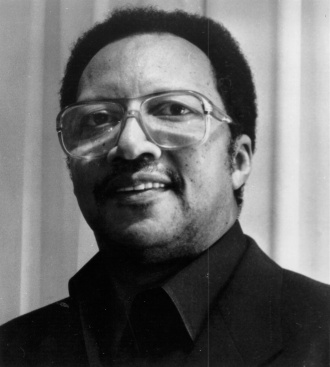
RIP Walter Dean Myers, 1937-2014

Books transmit values. They explore our common humanity. What is the message when some children are not represented in those books? Where are the future white personnel managers going to get their ideas of people of color? Where are the future white loan officers and future white politicians going to get their knowledge of people of color? Where are black children going to get a sense of who they are and what they can be?

–From a March, 2014 piece Myers published in The New York Times entitled “Where Are the People of Color in Children’s Books?”

I taught for seven years in an inner city high school. I cannot overstate how important Myers’s books were to my students. His novel Monster—a classic—was one of the first books I wrote about on Biblioklept. I love the book, and I loved reading it with my students. Monster was an especially effective bridge to others by Myers–Slam!, HoopsBad BoyThe Beast—and one of my favorites, Fallen Angels—but I also saw it turn kids who hated reading into voracious readers. I read Myers myself as a young teen (his book Scorpions is especially good), but reading them again with my students revealed a depth and precision I hadn’t detected as a kid. Those books are all true, even the ones that are made up. RIP Walter Dean Myers.

A Riff on Stuff I Wish I’d Written About In the First Half of 2014

1. Leaving the Sea, Ben Marcus: A weird and (thankfully) uneven collection that begins with New Yorkerish stories of a post-Lish stripe (like darker than Lipsyte stuff) and unravels (thankfully) into sketches and thought experiments and outright bizarre blips. Abjection, abjection, abjection. The final story “The Moors” is a minor masterpiece.

2. Novels and stories, Donald Barthelme: A desire to write something big and long on Barthelme seems to get in the way of my writing anything about Barthelme. Something short then? Okay: Barthelme is all about sex. He posits sex as the solution (or at least consolation) for the problems of language, family, identity, etc.

3. Enormous Changes at the Last Minute and The Little Disturbances of Man by Grace Paley: I gorged on these precise, sad, funny stories, probably consuming too many at once (by the end of Little Disturbances I had the same stomach ache I got after eating too much of Barthelme’s Sixty Stories at once).

4. Concrete by Thomas Bernhard: Unlike the other novels I’ve read by Bernhard, Concrete seems to offer some kind of vision of moral capability, one which the narrator is unable to fully grasp, but which is nevertheless made available to the reader in the book’s final moments, accessible only through the novel’s layers of storytelling. Continue reading “A Riff on Stuff I Wish I’d Written About In the First Half of 2014”

Selections from One-Star Amazon Reviews of Joyce’s Ulysses

[Ed. note: The following citations come from one-star Amazon reviews of James Joyce’s Ulysses. To be clear, I think Ulysses is a marvelous, rewarding read. While one or two of the reviews are tongue-in-cheek, most one-star reviews of the book are from very, very angry readers who feel duped]

I can sum this book up in two words: “Ass Beating”.

What an awful book this is?

I bought this having been a huge fan of the cartoon series, but Mr Joyce has taken a winning formula and produced a prize turkey. After 20 pages not only had Ulysses failed to even board his spaceship, but I had no idea at all what on earth was going on. Verdict: Rubbish.

When an English/American writer try to explain his/her ideas about life(I mention ideas about meaning,purpose and philosophy of life)and when he/she try to do this with complicated ideas and long sentences(or like very short ones especially in this particular book);what his/her work become to is:A tremendous nonsense!!!

Thi’ got to be the worst, I- I – I mean the worst ever written book ever. Know why? ‘Cause he’ such a showoff, know what I MEAN? He’s ingenious I’ll giv’ ’em that, but ingenuity my friends tire and enervate. Get to the point and stick to it ‘s my motto.

This is one of those books that “smart” people like to “read.”

The grammar is so disjointed as to make it nearly impossible to read.

Ulysses is basically an unbridled attack on the very ideas of heroism, romantic love and sexual fulfillment, and objective literary expression.

What’s with all the foreign languages?

It has no real meaning.

It is a blasphemy that it ever was published.

Anyone who tells you they’ve read this so-called book all the way through is probably lying through their teeth.It is impossible to endure this torture.

A babbling, senseless tome upheld by “literary luminaries” who fear being cast into the tasteless bourgeois darkness for dissent? Yes, that’s the gist.

I discovered that the novel was not what I though it would be.

Joyce is an aesthetic bother of Marcel Duchamp (known for The Fountain, a urinal, now a museum piece) and John Cage (the composer of pieces for prepared piano, where the piano’s strings are mangled with trash.

Two positive things I can say about James Joyce is that he has a great sounding name and he gives wonderful titles to his works.

Ask yourself – are you going to enjoy a book that neccesitates your literature teacher lie next to you and explain its ‘sophistication’ to you ?

It’s the worst book which has ever been written.

Unless you really hate yourself, do not attempt to read this book.

The truth is this book stinks. For one thing it is vulgar, which, I hate to disappoint anyone, requires no talent at all. This is a talent any six year-old boy possesses.

The book is not so good, it is boring, it is a colection of words and a continuous experimentation of styles that, unhappily, do not mean anything to the meaning of the story; that is, the book’s language is snobbish and useless. Those who say that “love” such a writing are to be thought about as non-readers or as victims of a literary abnormality.

…the single most destructive piece of Literature ever written…

I’m all for challenging reads, but not for gibberish which academics persist in labeling erudition.

This book is extremely dull!!! My book club decided to read this book after one of the members visited the James Joyce tower in Ireland, which the author supposedly wrote part of the book in.

Ulysses is a failed novel because Joyce was a bad writer (shown by his other works).

In conclusion, Don’t read the book. Burn it hard. Do not let your children read the book—it will mutilate their brain cells.

Hedda Gabler, 21st Century Woman — Ralph Niese

hedda_21st_century_woman_by_bruno83

C’mon (Life in Hell)

cmon

Portrait of Walt Whitman — Thomas Wilmer Dewing

“Indian Camp” — Ernest Hemingway

“Indian Camp”

by

Ernest Hemingway  

At the lake shore there was another rowboat drawn up. The two Indians stood waiting.

Nick and his father got in the stern of the boat and the Indians shoved it off and one of them got in to row. Uncle George sat in the stern of the camp rowboat. The young Indian shoved the camp boat off and got in to row Uncle George.

The two boats started off in the dark. Nick heard the oarlocks of the other boat quite a way ahead of them in the mist. The Indians rowed with quick choppy strokes. Nick lay back with his father’s arm around him. It was cold on the water. The Indian who was rowing them was working very hard, but the other boat moved further ahead in the mist all the time.

“Where are we going, Dad?” Nick asked.

“Over to the Indian camp. There is an Indian lady very sick.”

“Oh,” said Nick.

Across the bay they found the other boat beached. Uncle George was smoking a cigar in the dark. The young Indian pulled the boat way up on the beach. Uncle George gave both the Indians cigars. Continue reading ““Indian Camp” — Ernest Hemingway”

“Flavia and Her Artists” — Willa Cather

“Flavia and Her Artists”

by

Willa Cather    

As the train neared Tarrytown, Imogen Willard began to wonder why she had consented to be one of Flavia’s house party at all. She had not felt enthusiastic about it since leaving the city, and was experiencing a prolonged ebb of purpose, a current of chilling indecision, under which she vainly sought for the motive which had induced her to accept Flavia’s invitation. Continue reading ““Flavia and Her Artists” — Willa Cather”

“As books multiply to an unmanageable excess, selection becomes more and more a necessity for readers” (Thomas De Quincey)

As books multiply to an unmanageable excess, selection becomes more and more a necessity for readers, and the power of selection more and more a desperate problem for the busy part of readers. The possibility of selecting wisely is becoming continually more hopeless as the necessity for selection is becoming continually more pressing. Exactly as the growing weight of books overlays and stifles the power of comparison, pari passu is the call for comparison the more clamorous; and thus arises a duty correspondingly more urgent of searching and revising until everything spurious has been weeded out from amongst the Flora of our highest literature, and until the waste of time for those who have so little at their command is reduced to a minimum. For, where the good cannot be read in its twentieth part, the more requisite it is that no part of the bad should steal an hour of the available time; and it is not to be endured that people without a minute to spare should be obliged first of all to read a book before they can ascertain whether in fact it is worth reading. The public cannot read by proxy as regards the good which it is to appropriate, but it can as regards the poison which it is to escape. And thus, as literature expands, becoming continually more of a household necessity, the duty resting upon critics (who are the vicarious readers for the public) becomes continually more urgent — of reviewing all works that may be supposed to have benefited too much or too indiscriminately by the superstition of a name. The praegustatores should have tasted of every cup, and reported its quality, before the public call for it; and, above all, they should have done this in all cases of the higher literature — that is, of literature properly so called.

From Thomas De Quincey’s essay “The Literature of Knowlege and the Literature of Power,” part of The Poetry of Pope.

Kierkegaard is an ugly hunchback loser

kierkegaardKate Beaton is the best.


(And Yet Another) Moby-Dick (Book Acquired, 4.18.2014)

20140504-091858.jpg

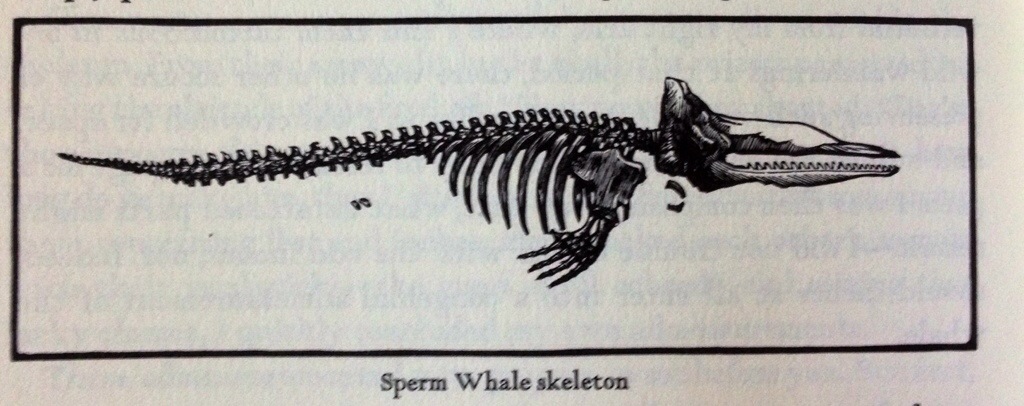
So I bought yet another copy of Moby-Dick, despite the many several editions already in our home.

I’d looked for an edition of the Barry Moser illustrated M-D for years—casually, in used book shops—but after a few (ahem) glasses of chardonnay, I bought one for next to nothing on eBay.

Moser’s etchings are superb, of course, and they most often illustrate the technical, scientific, or historical aspects of the novel. Great stuff.

20140504-091909.jpg

20140504-091923.jpg

20140504-091931.jpg

With the assurance of a sleepwalker (William T. Vollmann)

Their slave-sister Guthrún, marriage-chained to Huns on the other side of the dark wood, sent Gunnar and Hogni a ring wound around with wolf’s hair to warn them not to come; but such devices cannot be guaranteed even in dreams. As the two brothers gazed across the hall-fire at the emissary who sat expectantly or ironically silent in the high-seat, Hogni murmured: Our way’d be fairly fanged, if we rode to claim the gifts he promises us! . . .—And then, raising golden mead-horns in the toasts which kingship requires, they accepted the Hunnish invitation. They could do nothing else, being trapped, as I said, in a fatal dream. While their vassals wept, they sleepwalked down the wooden hall, helmed themselves, mounted horses, and galloped through Myrkvith Forest to their foemen’s castle where Guthrún likewise wept to see them, crying: Betrayed!—Gunnar replied: Too late, sister . . .—for when dreams become nightmares it is ever too late.

When on Z-Day 1936 the Chancellor of Germany, a certain Adolf Hitler, orders twenty-five thousand soldiers across six bridges into the Rhineland Zone, he too fears the future. Unlike Gunnar, he appears pale. Frowning, he grips his left wrist in his right. He’s forsworn mead. He eats only fruits, vegetables and little Viennese cakes. Clenching his teeth, he strides anxiously to and fro. But slowly his voice deepens, becomes a snarling shout. He swallows. His voice sinks. In a monotone he announces: At this moment, German troops are on the march.

What will the English answer? Nothing, for it’s Saturday, when every lord sits on his country estate, counting money, drinking champagne with Jews. The French are more inclined than they to prove his banesmen . . .

Here comes an ultimatum! His head twitches like a gun recoiling on its carriage. He grips the limp forelock which perpetually falls across his face. But then the English tell the French: The Germans, after all, are only going into their own back garden.—By then it’s too late, too late.

I know what I should have done, if I’d been the French, laughs Hitler. I should have struck! And I should not have allowed a single German soldier to cross the Rhine!

To his vassals and henchmen in Munich he chants: I go the way that Providence dictates, with the assurance of a sleepwalker.—They applaud him. The white-armed Hunnish maidens scream with joy.

From William Vollmann’s Europe Central. 

For the past 100 pages or so, Vollmann has referred to Hitler as the sleepwalker (I’m almost positive that the word Hitler hasn’t been used in the text up until now), and while context has made it clear that this sleepwalker is Hitler, the source of the moniker is only clarified at this point.