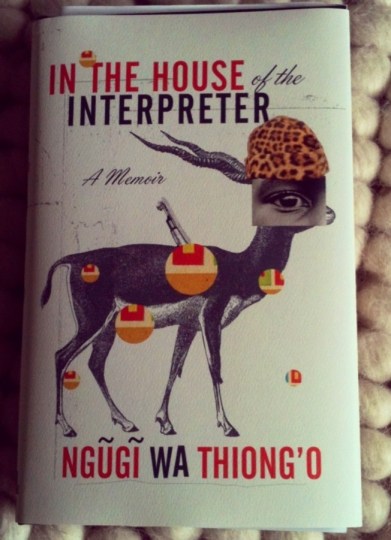
Ngugi wa Thiong’o’s Memoir — In the House of the Interpreter (Book Acquired, 10.24.2012)

20121025-161753.jpg

In the House of the Interpreter is a memoir from Ngugi wa Thiong’o. It’s new next month in hardback from Pantheon (lovely cover/design, on this one, Pantheon people. Seriously). Their blurb:

World-renowned Kenyan novelist, poet, playwright, and literary critic Ng˜ug˜ý wa Thiong’o gives us the second volume of his memoirs in the wake of his critically acclaimed Dreams in a Time of War.

In the House of the Interpreter richly and poignantly evokes the author’s life and times at boarding school—the first secondary educational institution in British-ruled Kenya—in the 1950s, against the backdrop of the tumultuous Mau Mau Uprising for independence and Kenyan sovereignty. While Ng˜ug˜ý has been enjoying scouting trips, chess tournaments, and reading about the fictional RAF pilot adventurer Biggles at the prestigious Alliance High School near Nairobi, things have been changing rapidly at home. Poised as he is between two worlds, Ng˜ug˜ý returns home for his first visit since starting school to find his house razed and the entire village moved up the road, closer to a guard checkpoint. Later, his brother Good Wallace, a member of the insurgency, is captured by the British and taken to a concentration camp. As for Ng˜ug˜ý himself, he falls victim to the forces of colonialism in the person of a police officer encountered on a bus journey, and he is thrown into jail for six days. In his second year at Alliance High School, the boarding school that was his haven in a heartless world is shattered by investigations, charges of disloyalty, and the politics of civil unrest.

In the House of the Interpreter hauntingly describes the formative experiences of a young man who would become a world-class writer and, as a political dissident, a moral compass to us all. It is a winning celebration of the implacable determination of youth and the power of hope.


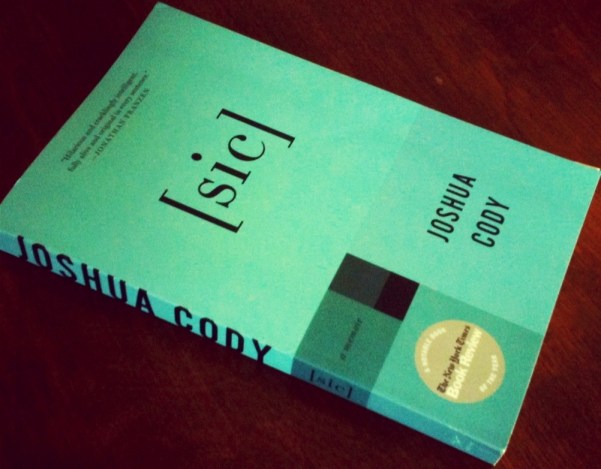
I Didn’t Like Joshua Cody’s Memoir [sic]

20121023-160233.jpg

Joshua Cody’s memoir [sic] showed up at Biblioklept World Headquarters a few weeks ago and despite my prejudices, I coasted through it over a few afternoons.

Those prejudices:

1) It’s a memoir.

2) There’s a Jonathan Franzen blurb on the cover.

3) The title [sic] is an unbearably too-clever pun (and this from a guy who loves puns).

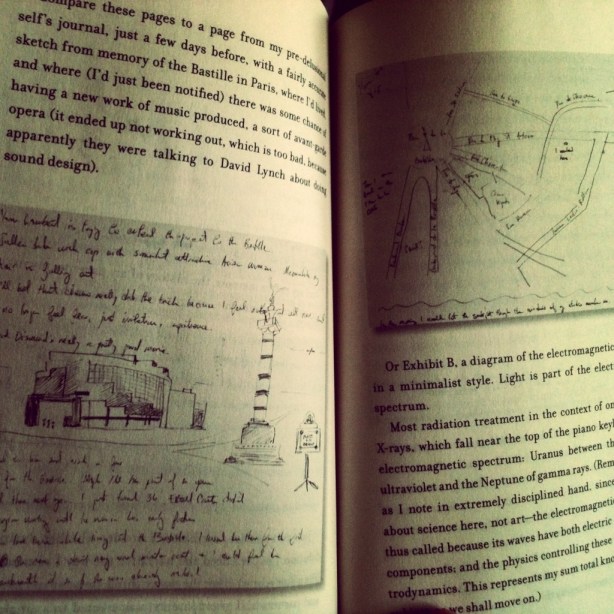
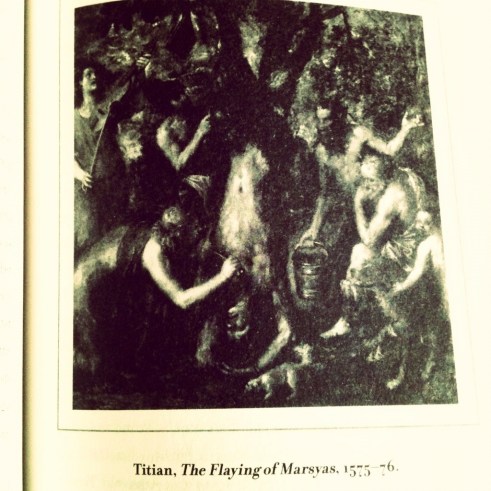
The first thing I noticed about [sic] were the pictures : paintings, maps, charts, sketches, lists, collages, other texts, and so on interspersed throughout the text. I like pictures in books.

20121023-160240.jpg

The way that Cody uses these illustrations at first reminded me of  W.G. Sebald, who employed pictures in novels like Austerlitz and The Rings of Saturn in an oblique, documentary approach.

Cody is less oblique than Sebald, and perhaps flippant too. He doesn’t namecheck Sebald, at any rate, unlike David Byrne, who openly admitted to following Sebald’s path in his 2008 memoir Bicycle Diaries. (Cody does namecheck David Byrne though).

Then I edged my way into the plot, such as it is. I’ll lazily let publisher W.W. Norton summarize:

Joshua Cody, a brilliant young composer, was about to receive his PhD when he was diagnosed with an aggressive form of cancer. Facing a bone marrow transplant and full radiation, he charts his struggle: the fury, the tendency to self-destruction, and the ruthless grasping for life and sensation; the encounter with beautiful Ariel, who gives him cocaine and a blow job in a Manhattan restaurant following his first treatment; the detailed morphine fantasy complete with a bride called Valentina while, in reality, hospital staff are pinning him to his bed.

Moving effortlessly between references to Don Giovanni and the Rolling Stones, Ezra Pound and Buffalo Bill, and studded with pages from his own diaries and hospital notebooks, [sic] is a mesmerizing, hallucinatory glimpse into a young man’s battle against disease and a celebration of art, language, music, and life.

20121023-160248.jpg

As Norton’s summary suggests, Cody’s memoir is highly discursive and playful, loaded with references to art, music, and literature. Digressions on figures like David Foster Wallace, Orson Welles, or Alexander Theroux lard the book—indeed, they often seem to edge out the story Cody intends to tell, his cancer memoir. He seems reticent to fully engage his own feelings, instead layering reference upon reference. These references become insufferable at times—are we supposed to care that Cody met David Lynch and would like to be his friend, or that Cody briefly studied ancient Greek? Cody is so busy trying to impress the reader that he forgets to express meaning.

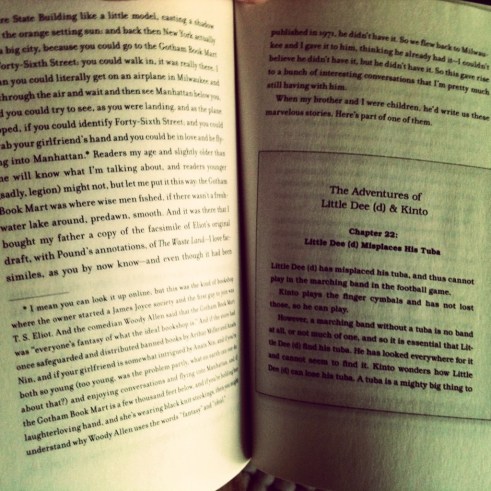
We see this reticence, this turning away from, here over two pages: Cody moves from a story about buying a facsimile copy of Pound’s notes on the original draft of The Wasteland to a lengthy footnote that manages to name drop James Joyce, T.S. Eliot, Woody Allen, Anaïs Nin, and Henry Miller (in just two sentences!) and then into a facsimile reproduction of one of the stories his brother would write for him as a child:

20121023-160254.jpg

The big problem with Cody’s memoir is that it never feels particularly real. I enjoy discursive referential postmodernism as much as the next fella, but [sic] often fails to cohere around a central idea, let alone an emotion. When Cody describes dating a stripper/dominatrix, it feels like a party trick, an inflated anecdote—there’s no emotional core, no contemplative connection to his illness. Other sexual episodes read like a parody of Henry Miller.

As its title suggests, [sic] is a dodge, a bait-and-switch, an evasion. Cody is clearly very clever—but a dazzling display of cleverness can’t sustain a narrative.

Paul Auster’s Winter Journal (Book Acquired Some Time Over the July 4th Holiday)

20120711-100349.jpg

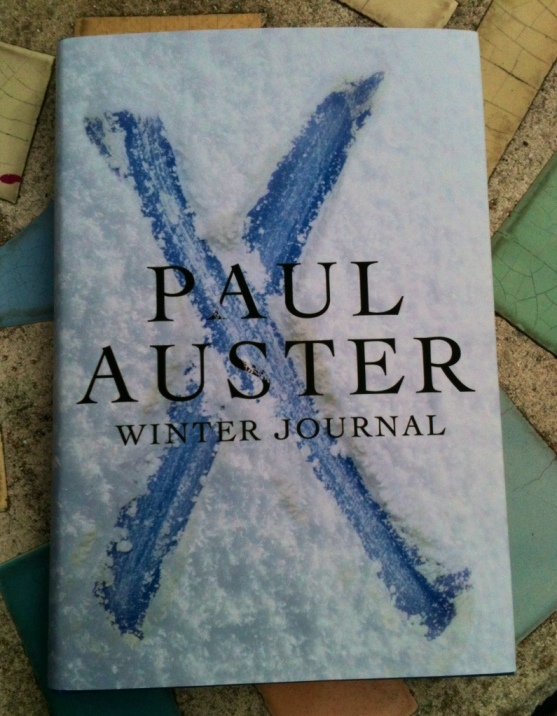
I was pleasantly surprised to find Paul Auster’s forthcoming memoir Winter Journal in the mail after being away for a week. I had mixed feelings about Auster’s last novel Sunset Park, but I dig his nonfiction, and I opened Winter Journal randomly to an episode where the adolescent Auster loses his virginity to a hooker in a passage that’s both tender and funny, so this one seems promising. (It’s also written entirely in the second person pronoun).

Publisher Henry Holt’s blurb:

Facing his sixty-third winter, internationally acclaimed novelist Paul Auster sits down to write a history of his body and its sensations—both pleasurable and painful.

Thirty years after the publication of The Invention of Solitude, in which he wrote so movingly about fatherhood, Auster gives us a second unconventional memoir in which he writes about his mother’s life and death. Winter Journal is a highly personal meditation on the body, time, and memory, by one of our most intellectually elegant writers.

Despair/Food (Books Acquired 6.08.2012)

20120611-150115.jpg

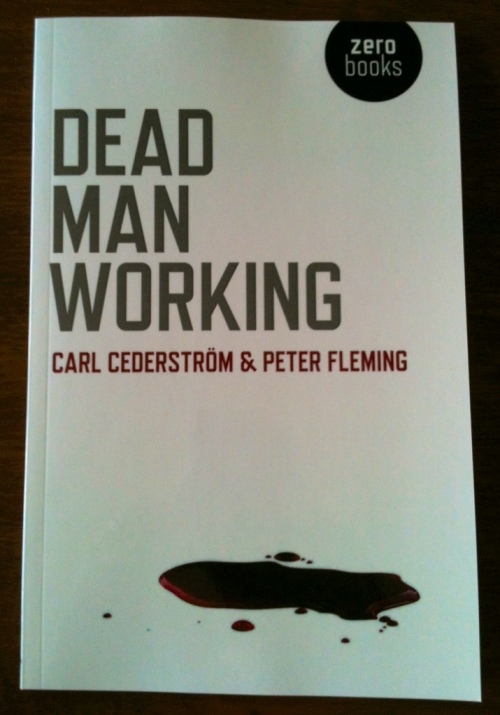
 Dead Man Working is the latest from Carl Cederström (whose discussions with Simon Critchley became How to Stop Living and Start Worrying) and Peter Fleming. The book explores the existential despair of workers in our post-capitalist age. (It’s funnier than that description might suggest). Publisher Zer0’s blurb:

Capitalism has become strange. Ironically, while the ‘age of work’ seems to have come to an end, working has assumed a total presence – a ‘worker’s society’ in the worst sense of the term – where everyone finds themselves obsessed with it. So what does the worker tell us today? ‘I feel drained, empty – dead’; This book tells the story of the dead man working. It follows this figure through the daily tedium of the office, to the humiliating mandatory team building exercise, to awkward encounters with the funky boss who pretends to hate capitalism and tells you to be authentic. In this society, the experience of work is not of dying…but neither of living. It is one of a living death. And yet, the dead man working is nevertheless compelled to wear the exterior signs of life, to throw a pretty smile, feign enthusiasm and make a half-baked joke. When the corporation has colonized life itself, even our dreams, the question of escape becomes ever more pressing, ever more desperate.

Full review on deck.

20120611-150100.jpg

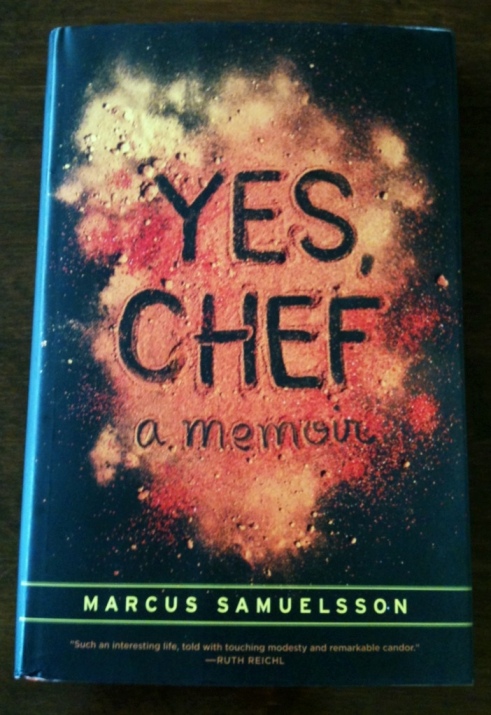
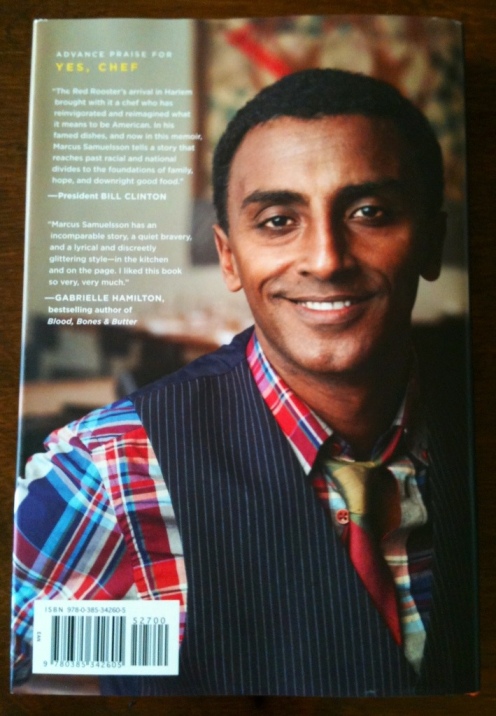
Yes, Chef is Marcus Samuelsson’s memoir. If that name sounds familiar, you might recognize his face:

20120611-150108.jpg

Publisher Random House’s blurb:

Marcus Samuelsson was only three years old when he, his mother, and his sister—all battling tuberculosis—walked seventy-five miles to a hospital in the Ethiopian capital city of Addis Adaba. Tragically, his mother succumbed to the disease shortly after she arrived, but Marcus and his sister recovered, and one year later they were welcomed into a loving middle-class white family in Göteborg, Sweden. It was there that Marcus’s new grandmother, Helga, sparked in him a lifelong passion for food and cooking with her pan-fried herring, her freshly baked bread, and her signature roast chicken. From a very early age, there was little question what Marcus was going to be when he grew up.

Yes, Chef chronicles Marcus Samuelsson’s remarkable journey from Helga’s humble kitchen to some of the most demanding and cutthroat restaurants in Switzerland and France, from his grueling stints on cruise ships to his arrival in New York City, where his outsize talent and ambition finally come together at Aquavit, earning him a coveted New York Times three-star rating at the age of twenty-four. But Samuelsson’s career of  “chasing flavors,” as he calls it, had only just begun—in the intervening years, there have been White House state dinners, career crises, reality show triumphs and, most important, the opening of the beloved Red Rooster in Harlem. At Red Rooster, Samuelsson has fufilled his dream of creating a truly diverse, multiracial dining room—a place where presidents and prime ministers rub elbows with jazz musicians, aspiring artists, bus drivers, and nurses. It is a place where an orphan from Ethiopia, raised in Sweden, living in America, can feel at home.

With disarming honesty and intimacy, Samuelsson also opens up about his failures—the price of ambition, in human terms—and recounts his emotional journey, as a grown man, to meet the father he never knew. Yes, Chef is a tale of personal discovery, unshakable determination, and the passionate, playful pursuit of flavors—one man’s struggle to find a place for himself in the kitchen, and in the world.

Books Acquired, 1.17.2012—Or, Here’s What’s New from Picador This Month

20120121-100054.jpg

The kind people at Picador sent me a box of books, including a memoir (Margaux Fragoso’s Tiger, Tiger), a few novels (The Lover’s Dictionary by David Levithan; Ralph Sassone’s The Intimates; Alan Glynn’s noir thriller Bloodland; Dieter Schlesak’s The Druggist of Auschwitz, which purports to be a “documentary novel”; and Zoë Heller’s first novel, Everything You Know), and a work of political science (Ari Berman’s Herding Donkeys).

A box of books is a bit overwhelming, but I make it a point to spend some time with every book that comes into Biblioklept World Headquarters. Here’s some thoughts on these.

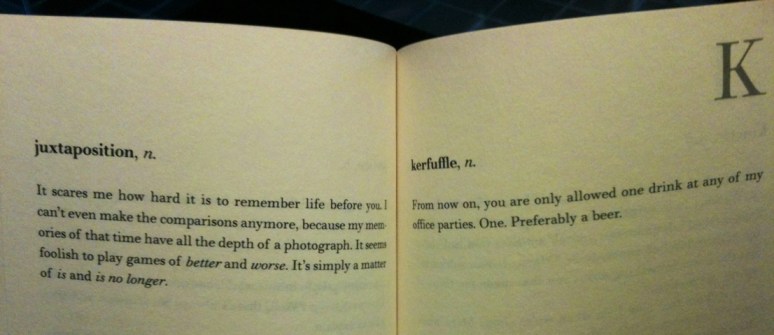
I actually ended up reading almost all of The Lover’s Dictionary, despite it having the word “lover” in the title, which, jeez. When my wife picked it up, she said something like, “How can they call this a novel?” — fair question, because the book is structured like a dictionary. In point of illustration:

20120121-100117.jpg

I’ve got a bigger post on Levithan’s book coming up, one that tries to situate it in the context of other non-novelly novels—but in short it is a novel, a very contemporary one that tells the oldest story in the proverbial book (boy meets girl) in an elliptical way that suits our post-information age. Like I said more to come, but for now: The Lover’s Dictionary is funny, occasionally cruel, too-often saccharine, awfully real, sometimes deeply flawed, but consistently engaging (sorry for all the adverbs).

I imagine Margaux Fragoso’s memoir Tiger, Tiger will capture the fascination of a large audience, but half an hour of the book was almost more than I could bear. Not because Fragoso can’t write—far from it, in fact—but her subject matter, which is to say her stolen childhood, is rendered too raw,   too real for me; there’s nothing pulpy or lurid about Fragoso’s work, nor is there the aesthetic sheen of Lolita to gloss any of the ugly, sordid details.  Kathryn Harrison ponders the question of Tiger, Tiger’s audience in her favorable review at The New York Times:

So who — other than voyeurs looking for a sustained close-up of a pedophile in action — will want to read this book? To bear witness to a numbingly long series of violations of a child by a man who has honed his wickedness for decades is not more pleasant than it sounds. As a society we energetically oppose sexual abuse; as individuals most of us shy away from investigating a relationship characterized by creepy kisses and inappropriate fondling. Worse, we defend cowardice by calling it discretion — minding our own business. Maybe a book like “Tiger, Tiger” can help us be a little braver. Certainly, it took courage to write.

20120121-100131.jpg

Ralph Sassone’s The Intimates: sex scenes (straight and gay); lots of notations about parents; lots of characters.

Dieter Schlesak’s The Druggist of Auschwitz: This “documentary novel” blends actual testimony from the Frankfurt Auschwitz Trial, interviews with camp guards and prisoners, and fictional narrative to tell the true story of Dr. Victor Capesius, an SS officer who worked with Mengele. The book is less gimmicky than it sounds in this description, and if its documentary elements are blunter and less ambiguous than W.G. Sebald’s historical fragments, I suppose that’s what the subject matter merits.

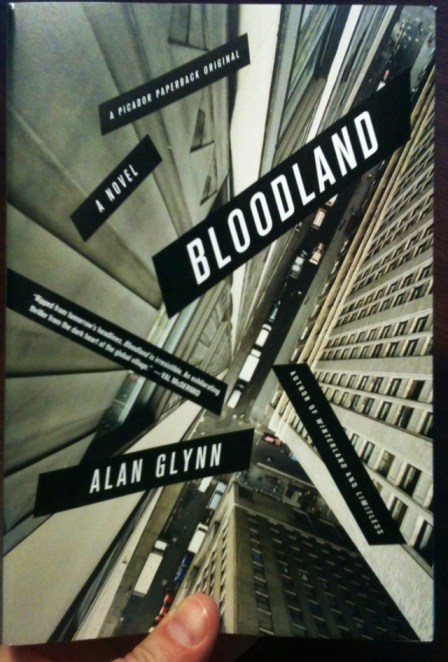
Alan Glynn’s new novel Bloodland (a Picador paperback original) is a noirish thriller set against the backdrop of political and corporate intrigue. Glynn writes with terse immediacy, telegraphing the plot in short punchy sentences that recall James Ellroy (without the finnicky slang). The book reads almost like a movie script, vivid and concrete. It’s a fast-paced page turner with a smart plot, just the sort of thing one wants from a thriller.

20120121-103504.jpg

Herding Donkeys by Ari Berman: Honestly not my thing, but if you want to read about the DNC from the time of Howard Dean to the rise of Barrack Obama, this is probably a book for you.

Zoë Heller’s Everything You Know: This is new in paperback again after over a decade. The story focuses on a cantankerous, unlikable son-of-a-bitch named Willy Muller. Things aren’t going well for him: he’s just suffered a heart attack, his daughter’s committed suicide, and the public still believes he murdered his wife. No wonder he hates humanity. Heller is probably most famous for her novel Notes on a Scandal, which was adapted into an excellent film in 2006.

Biblioklept’s picks: The Lover’s Dictionary; Tiger, Tiger; Bloodland.

Book Acquired, 12.12.2011

20111214-204653.jpg

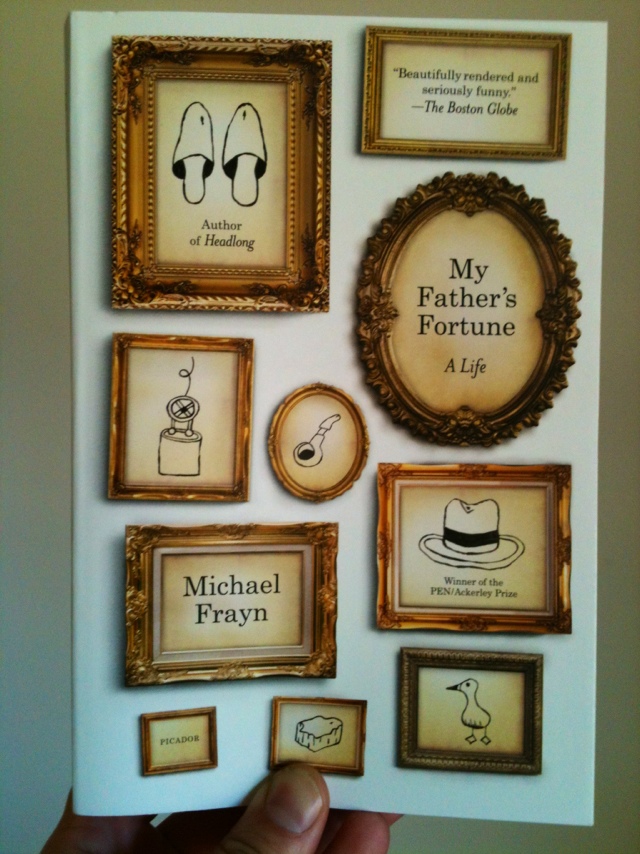
Michael Frayn’s memoir My Father’s Fortune. Publisher Picador’s (trade paperback) description:

Winner of the PEN/Ackerley Prize

Award-winning playwright and novelist Michael Frayn “makes the family memoir his own” (The Daily Telegraph) as he tells the story of his father, Tom Frayn. A clever lad, an asbestos salesman with a winning smile and a racetrack vocabulary, Tom Frayn emerged undaunted from a childhood spent in two rooms with six other people, all of them deaf. And undaunted he stayed, through German rockets, feckless in-laws, and his own increasing deafness; through the setback of a son as bafflingly slow-witted as the father was quick on his feet; through the shockingly sudden tragedy that darkened his life. As Peter Kemp wrote in The Sunday Times (London), “Frayn has never written with more searching brilliance than in his quest for his past.”

In Brief — New Books from Gabrielle Hamilton, Meg Howrey, and Frances Stonor Saunders

The memoir-in-food is something of a cliché at this point, but Gabrielle Hamilton’s new book Blood, Bones & Butter came with enough accolades (including a glowing blurb from Anthony Bourdain) and positive early reviews (like Kakutani’s at The NYT) for me to spend a few hours thumbing through it. Much has been made of Hamilton’s writing bona fides (an MFA in fiction writing from University of Michigan), and while she can put a sentence together without relying on the stock phrases and tropes that lard most memoirs these days, that skill wouldn’t really matter if she didn’t have a tale to tell. Blood, Bones & Butter follows a strange culinary career (it’s subtitled The Inadvertent Education of a Reluctant Chef), complete with drug abuse, theft, and, of course cooking. Only I wish there was more cooking, more time in the kitchen, the butcher’s, the market. Instead, Hamilton seems to channel her (often mean-spirited) energy on her family; her parents’ divorce hangs over the narrative like a Greek tragedy, and her own attitude toward her husband is bizarre, to say the least. The results are mixed, but fans of food-writing à la Bourdain’s Kitchen Confidential will likely enjoy Blood, Bones & Butter. New in hardback from Random House.

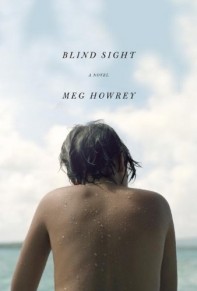
Meg Howrey’s new novel Blind Sight tells the story of Luke Prescott, a bright, introspective seventeen year old obsessed with brain biology. Raised by a hippie mother and two half-sisters, Luke gets the opportunity to the summer before college with his estranged father, a famous television star. In Los Angeles, Luke gets to know his father better, sorting out the difference between public persona and private truth; this process in turn leads Luke to re-evaluate his own sense of identity. There’s also some pot-smoking and sex. Howrey moves the narrative between Luke’s first-person voice (in the past tense) to a third person present tense narrator. At times this disjunction seems like a lazy shorthand to allow the reader to see something Luke can’t see (or doesn’t want the reader to see), but it works nicely on the whole, underlining the gaps between truth and belief that the novel seeks to explore. Blind Sight is new in hardback from Pantheon.

In The Woman Who Shot Mussolini, Frances Stonor Saunders plays historical detective, reconstructing the story of Violet Gibson, who fired on Mussolini in April of 1926 (she grazed his nose). Gibson, the daughter of the Lord Chancellor of Ireland, was 50 when she shot Mussolini, and perhaps more than a little crazy. She was almost lynched after shooting Il Duce, but the not-so-benevolent dictator pardoned her, and she was quickly returned to England, where she spent the rest of her life in an insane asylum. Saunders’s book explores whether Gibson’s attack was the motivation of an insane woman or part of a bigger conspiracy theory, illustrating her mystery with poignant black and white photos. And although Saunders focuses on the little-known Gibson, she works to draw parallels between the would-be assassin and Mussolini. Saunders’s exploration of an otherwise unremarked upon episode balances historical scholarship with the pacing and rhythm of an historical thriller. New in trade paperback edition from Picador.

Baby, We Were Meant for Each Other — NPR’s Scott Simon’s New Memoir in Praise of Adoption

If you listen to NPR, you’re likely familiar with Scott Simon, host of Weekend Edition. In his new memoir Baby We Were Meant for Each Other, Simon shares his own experiences adopting two girls from China, his daughters Elise and Lina. In addition to sharing his own story, Simon highlights moving tales from a dozen other families, including sportswriter Frank Deford and Freakonomics author Steve Levitt. Simon mixes pathos and humor and his detailed, unflinching narrative is deeply emotional without ever coming across as maudlin or mawkish. While an argument for adoption seems to be relatively common sense, Simon reveals that the process is declining in America, largely because of advances in fertility science. He also makes an impassioned case against China’s one-child policy as a human rights crime against women. In a recent profile at Bookpage, Simon said “The Chinese permit an astonishingly small percentage of orphaned and abandoned children to be adopted. To me, that is absolutely flabbergasting. The government policy on adoption is addressing political, economic and social goals that have almost nothing to do with the best interests of children. Now that we have two little girls from China who are part of our family, we need to speak out about it.” At first glance Simon’s memoir will likely resonate mostly with those who’ve experienced adoption first-hand, but a closer look reveals a narrative that taps into an experience that we all share–what it means to part of a family. Baby, We Were Meant for Each Other is new in hardback from Random House.

New(ish) Memoirs from Nathan Rabin, Sloane Crosley, and James Ellroy

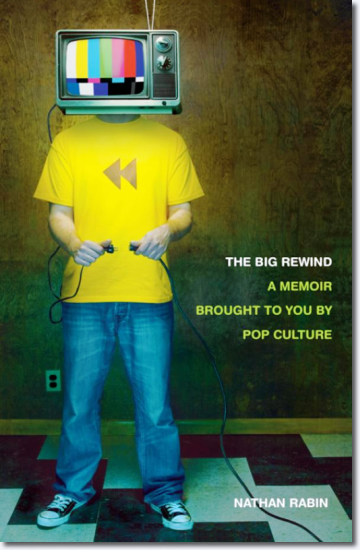
Nearly a  year after earning good reviews, Nathan Rabin’s memoir The Big Rewind is now available in paperback (the cover sports the claim that the book now includes “EVEN MORE BITING WIT AND UNWISE CANDOR”). Rabin, if you don’t know, is the head writer for the AV Club, a website I am hopelessly addicted to; he’s also responsible for some of the site’s best regular columns, including “My Year of Flops,” where he revisits films that, y’know, flopped, “THEN! That’s What They Called Music!,” where he subjects himself to listening to and writing about those NOW! CDs, and “Nashville or Bust,” a year-long analysis of country music from an avowed hip-hop fan. If I sound prejudicially predisposed to liking Rabin’s memoir, I am. I can’t help it. In The Big Rewind, Rabin revisits the various pop culture touchstones through which he lived his strange, often sad life–so Tarantino’s Reservoir Dogs becomes the lens through which he details his thankless years working for Blockbuster and Nirvana’s In Utero is a key to understanding Rabin’s time in a group foster home. There’s a story arc–depression, a missing mother, suicide attempts, redemption–and plenty of irony to keep it under control. At the same time, there’s too much heart in Rabin’s writing for you not to care. Recommended. The Big Rewind is new in trade paperback from Scribner.

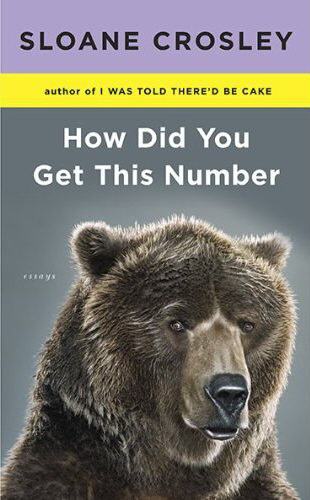
Sloane Crosley’s new collection of memory essays, How Did You Get This Number, finds the witty, observational young lass being witty and observational in and out of New York City–but mostly in. There are trips to Portugal and Paris, and a weird wedding in Alaska. There’s a remembrance of all the childhood pets that didn’t make it. There’s a story about buying furniture of questionable origin off the back of a truck. At times Crosley’s archness can be grating, as dry observations pile one upon the other, but her gift for exacting, sharp detail and her willingness to let her guard down at just the right moment in most of the selections make for a funny and compelling read. I’m still not sure why there’s no question mark in the title, though. How Did You Get This Number is new in hardback from Riverhead Books.

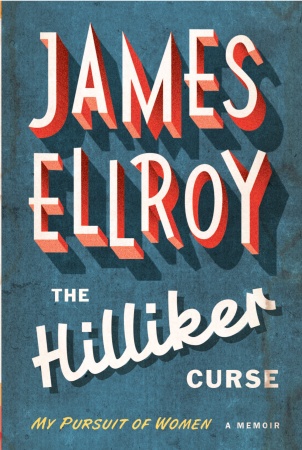
I just got my advance review copy of James Ellroy’s forthcoming memoir The Hilliker Curse, so I haven’t had time to read much of it, but the story so far is morbidly fascinating (like, you know, an Ellroy novel. But this is real. Because it’s a memoir). In 1958, James’s mother Jean Hilliker had divorced her husband and begun binge drinking. When she hit him one night, the ten year old boy wished that she would die. Three months later she was found murdered on the side of the road–the case remains unsolved. The memoir details Ellroy’s extreme guilt; his sincere belief that he had literally cursed his mother pollutes his life, particularly in his complex relationships with women. Full review forthcoming. The Hilliker Curse is available September 7th, 2010 from Knopf.

Biblioklept Interviews Adam Langer about His New Book, The Thieves of Manhattan

Adam Langer’s newest novel, The Thieves of Manhattan hits bookstores across the country this week. It’s a smart, funny hybrid that blends and bends genres with startling results. Adam was kind enough to talk to Biblioklept over a series of emails about his new book, truth vs stuff that actually happened, literary hoaxes, and being mistaken for the author of The Magicians. You can read more about Adam Langer at his website, including info on his previous novels Crossing California, The Washington Story, and Ellington Boulevard, and his memoir My Father’s Bonus March. The Thieves of Manhattan is available from Spiegel & Grau.

Biblioklept: Your new novel (or novel-posing-as-memoir-posing-as-novel-posing-as-memoir . . .) The Thieves of Manhattan is about a con game, a literary hoax, and the problems of art and truth, love and theft. It’s also a send-up of the publishing industry and a clever adventure story with a noir flavor and a self-referential sense of humor. I want to talk about all of that, but let’s begin with your protagonist, Ian Minot, a barista with literary aspirations. Early in the novel, he attends a Manhattan party crammed with literary types, most of whom he thinks are poseurs and hacks. At the same time, under his bitterness, we sense that he’d love to be a part of that world. How much of Ian’s experiences correlate to your own with the publishing world? How much hyperbole is in your satire?

Adam Langer: Looking back on writing Thieves, it’s sometimes hard for me to remember exactly where the reality ends and the satirical hyperbole begins. At some point, fact and fiction fuses in my mind, which is, of course, one of the themes of the book. On the one hand, it’s totally true that, as an editor of Book Magazine, I attended many a literary wingding in which actual events described at the book took place. Yes, just as Francine Prose happily greets our hero until she realizes she has confused him with someone else, I too was happily greeted by Ms. Prose until she realized that she thought I was Lev Grossman (Argh). On the other hand, though, a majority of Ian’s experiences and Ian’s biography emerge completely from my imagination—my resumé has a lot of odd items on it, but New York barista isn’t one of them. I liken this experience of melding the actual with the fanciful to one of those live action/animation movies like Who Framed Roger Rabbit? or Mary Poppins, in which the two coexist to create another reality.

B: At the beginning of Thieves, Ian is writing “small,” realistic, character-based stories that no one wants to read. He enters into a literary con with a man named Roth to produce a big adventure story that they will sell as a memoir–as “true,” despite how improbable and fantastical it is. Thieves is in many ways an analysis on our modern obsession for true stories (and the way that “truth” can unravel). Why do people demand truth–even when it might not be what they really want from a narrative?

AL: I think we, or at least speaking for myself, I do want truth from a narrative. When I read a book or see a movie, I do want it to resonate; I want it to either connect with my viewpoints or to challenge them and make me rethink them; I don’t like when my BS-o-meter is constantly going off. But I think people often get bogged down when they confuse Truth with Stuff That Actually Happened. Tim O’Brien has an awesome essay on this topic that kind of blew my mind when I was in college. As for me, I’d much rather read a story of space aliens or baboons or Elizabeth Barrett Browning’s dog that rang true than a self-aggrandizing purportedly-true memoir or celebrity autobiography. There’s a line in Steve Toltz’s A Fraction of the Whole, which I quite liked–”If someone said to me, ‘I’ve got this great story to tell you, and every word of it is an absolute lie!’ I’d be on the edge of my seat.” That line has stuck with me. Also, more prosaically, in the publishing industry, there’s a perception that, with the decline of traditional book coverage, a good novel isn’t enough anymore, that the author needs a compelling biography as well. Ian certainly has this perception and part of his frustration is that he assumes his lack of success is directly related to his lack of an interesting autobiography. He later learns he was wrong regarding just about all of his
perceptions.

B: In his recent book Reality Hunger, David Shields makes a point similar to yours that audiences “get bogged down when they confuse Truth with Stuff That Actually Happened.” Shields also calls for the extinction of the “novelly novel” or the “novel qua novel” — he wants hybrid or “remix” novels. Thieves strikes me as such a novel, clearly in its treatment of memoir vs. novel, but also in its self-aware incorporation of genre fiction tropes from adventure stories and crime noir. Had you tried your hand at crime fiction or adventure tales before Thieves? Were there any difficulties you faced in crafting your hoax story?

AL: I haven’t read Reality Hunger, but my sense is that Shields is probably a lot more dogmatic in his views than I am. I’m not particularly interested in rendering any particular literary form “extinct,” except maybe the genre of Manifestoes That Declare Certain Literary Forms Extinct. I’m a fan of novelly novels just as I am a fan of remix novels or hybrid novels. I love writers who experiment with form and writers who hew to the “well-made-novel” and haven’t advanced past the 19th Century. Though Thieves probably does fit the definition of hybrid or remix, I don’t think that’s all I’ll be writing from now on. As for crime fiction, I’ve dabbled. In fact, the first novel I wrote after moving to New York in 2000 was a thriller of sorts set in the publishing world and concerned a research assistant to a crime novelist who becomes chief suspect once that novelist disappears. It had a lot of problems, and I haven’t taken it out of the drawer in about nine years. Although I have other crime/genre fiction ideas, I think my tastes and skills tend more towards character-based, comic social novels. But putting together the hoax plot was really a blast or a hoot or something like that. It was really incredible fun to try. Normally, when I’m writing, I read certain books to inspire me; while writing Thieves, I was religiously doing New York Times crossword puzzles.

B: Speaking of crossed-words, your narrator Ian uses a rhetorical device that will stand out to many readers: he substitutes the names of famous authors, alter-egos, and literary characters for words he associates them with–so, sex becomes “chinaski,” after Bukowski’s stand-in, a bed becomes a “proust,” a thick head of hair becomes a “chabon,” and so on. How did you come up with this idea?

AL: Well, it seemed to me that so many thrillers I’ve read are filled with jargon, whether hard-boiled patois or technical procedural details, that I thought my narrator needed his own lingo. At the same time, the lingo worked for me because it established Ian’s mindset, one completely immersed in the contemporary literary universe. Before I even started Thieves, I heard this voice that spoke in this literary slang, much of which I didn’t wind up using because I didn’t want to overdose on it. The idea of the slang is that it should be understandable in context without anyone needing to understand or even care about what is being referenced.

B: There is an “answer key,” though–a glossary at the end. Was that your idea? Or was that a publisher’s or editor’s inclusion?

AL: My idea, and I was just having fun with the glossary. I don’t like when readers can flip to the last page and see how it turns out. So, my previous books have featured glossaries, an index, and in the case of Ellington Boulevard, song lyrics.

B: Like you, I’m a big fan of literary hoaxes–so one of my favorite passages in Thieves was a detailed list of various literary forgeries and hoaxes, many of which I’d never heard of, like Li-Hung Chang or the works of Emanuel Morgan and Anne Knish. How much of Thieves was born of your interest in literary hoaxes, and how much research did you do along the way?

AL:: I’ve always been fascinated by literary hoaxes and, while editing Thieves, I was reading as many as I could including the titles you mention, as well as watching great literary hoax movies such as Orson Welles’s F For Fake and Forbidden Lies, the documentary about Norma Khouri, and some awesome YouTube footage of “Margaret B. Jones.” I was slightly disheartened to note how many literary hoaxes have been forgotten. My personal favorites are the Diary of a Young Lady of Fashion in 1764-5 by Madalen King Hall aka Cleone Knox, an incredibly fun read, and the poems of the fictional “Ern Malley,” who has some great turns of phrase no matter how nonsensical. I have no idea what “I am still the black swan of trespass on alien waters” means, but man, it sounds cool.

B: While we’re on literary hoaxes, one of my favorite things about Thieves is that both Clifford Irving and Laura Albert (aka JT LeRoy) blurb it, and then, in the plot, a hoaxer agrees to blurb Ian’s book. How did the Albert/LeRoy blurb come about?

AL: I actually take a very active part in soliciting blurbs for my books, which is partially related to control freakishness and partially related to the fact that, as an author, I much prefer hearing from other writers than from editors, publicists or agents. Clifford Irving’s was the first blurb I got for the book, and getting it was remarkably simple. I found his agent, wrote her a letter that she forwarded to him. We had a very gentlemanly correspondence. I sent him the book and he provided a very generous endorsement. As for Laura, we were introduced via a mutual friend and, after I sent her a galley of the book, we traded dozens of e-mails back and forth and had a number of hilarious, wild and profane telephone conversations. She’s a lot of fun to talk to and correspond with.

My initial idea was to have writers blurb as their alter egos or writer characters in their books—Steven King would write as Jack Torrance, Gary Shteyngart would write as Jerry Shteynfarb, Michael Chabon would write as Grady Tripp, and so on. But I was advised that this would be confusing and most readers who got the joke would think that the blurbs were fake.

B: Have you ever stolen a book?

AL: When I was about eleven, I shoplifted a copy of Arthur C. Clarke’s Fountains of Paradise from Rosen’s Drug Store on Devon Avenue a few blocks away from my house in Chicago. But I felt guilty about it, so the next day, I actually wound up sneaking it back.
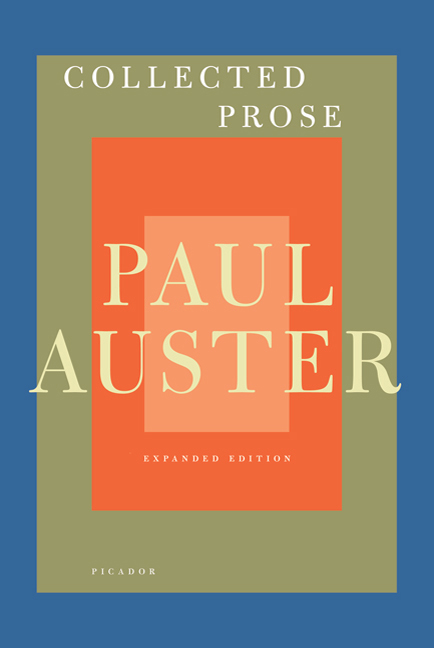
Collected Prose — Paul Auster

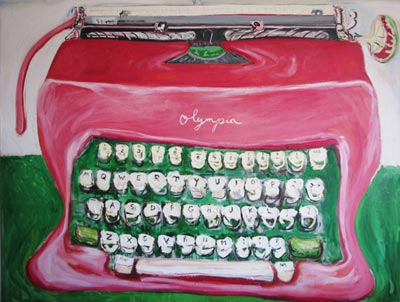
This month, the good folks at Picador are issuing an expanded edition of Paul Auster’s essays, memoirs, prefaces, true stories, anecdotes, and interviews. Inconspicuously titled Collected Prose and running to just under six hundred pages, the volume includes Auster’s début work The Invention of Solitude in its entirety. Solitude is a strange blend of personal memoir, an account of the young writer’s reaction to and relationship with the death (and life) of his father, as well as a philosophical meditation on the absurdity of family, art, and time. Collected Prose also includes the later memoir, Hand to Mouth, a reflective piece on Auster’s early failures as he tries to make it as a writer, including his time in Paris, his marriage to Lydia Davis, his hunger, and his poverty. While Solitude inaugurates many of the experimental structures and postmodern tropes that Auster would be identified with throughout his career as a novelist, the flatter, more direct style of Hand to Mouth is more indicative of the tone of much of Collected Prose. There’s a journalistic directness and keen earnestness to Auster’s essays that perhaps belie his postmodern bona fides. That’s a good thing, allowing Auster to communicate directly about his sometimes challenging subjects to a wider audience. Style aside, both of the book-length memoirs at the front end of Collected Prose neatly delineate the themes that preoccupy much of the rest of the book: art, language, writing, writers, poverty, absurdity, movement, New York City, and so on. And although the book turns away from Auster’s memoirs and true stories in its second half, presenting his essays, editorials, and prefaces, there’s still a sharp sense of Auster in each essay. These are personal essays. Auster writes about his friend Philippe Petite, the French high-wire artist; he writes about the literal hunger artists face, using Knut Hamsun and Franz Kafka as examples; he writes a vindication for Dada daddy Hugo Ball; he writes on over half a dozen relatively obscure poets to let us know why they matter. There are wonderful little moments, like “The Story of My Typewriter,” where Auster exclaims his love for his quiet Olympia (he buys 50 typewriter ribbons fearing the specie’s eventual extinction). The book reprints the Sam Messner paintings that originally accompanied Auster’s text (or, perhaps, vice versa).

Another great moment is the essay “Hawthorne at Home,” which takes a look at a little known piece by Nathaniel Hawthorne called Twenty Days with Julian & Little Bunny. Hawthorne’s piece is more or less a straightforward narrative account of Hawthorne alone with his five-year old son Julian and his pet rabbit for three weeks while wife Sophia visited the Peabodys. While Auster gives the reader a lesson on Hawthorne and his composition of The Scarlet Letter here, the essay focuses on the idyllic charm of a father and son, a rare subject in Hawthorne’s oeuvre. As a bonus, Herman Melville makes a cameo. “Hawthorne at Home” is the sort of essay that makes you want to go read the source material; it sent me hunting for a used copy of American Notebooks.

As one might imagine, Collected Prose is absolutely larded with writers, and lovingly so. Auster does not suffer from the inclination toward meanness that so many critics feel toward their peers, perhaps because he writes foremost from the perspective of an artist. Not that it’s difficult to praise Art Spiegelman (“The Art of Worry”) or pray for Salman Rushdie (um, “A Prayer for Salman Rushdie”) or speak to the genius of Samuel Beckett (“Remembering Beckett on His One Hundredth Birthday”) and Jim Jarmusch (“Night on Earth: New York”)–but Auster illuminates their work in a way that transcends the postmodern concerns of technique, place, and politics, and speaks directly to a certain aesthetic excellence. His love for storytellers extends beyond the pros, of course, evinced in his work with NPR’s National Story Project. He credits wife Siri with coming up with the idea of having NPR listeners write and submit their own original stories, but his enthusiasm for her idea resonates in his warm preface to the eventual book that collected the listeners’ submissions. Auster writes, “I learned that I am not alone in my belief that the more we understand of the world, the more elusive and confounding that world becomes.” The world becomes more “confounding” after the 9/11 attacks, of course, and like so many other writers Auster attempted to somehow measure the tragedy in words. “Random Notes–September 11, 2001–4:00 PM” is a scrap, a fragment, a shell-shocked missive that ends with the haunting words “And so the twenty-first century finally begins.”

It might be misleading to call Collected Prose a good introduction to Paul Auster’s nonfiction–can a work so comprehensive, so massive be a mere starting point?–but it is a great introduction, so there. It’s also a fantastic overview of critical, literary, and artistic theory, written from a deeply personal perspective. Let’s hope that fifteen years from now we’ll have another expanded edition of Auster’s prose; in the meantime, we can look forward to his new novel Sunset Park this November. Highly recommended.

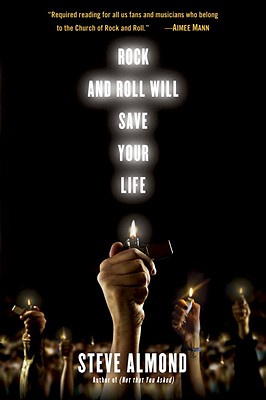
Rock and Roll Will Save Your Life — Steve Almond

Rock and Roll Will Save Your Life, Steve Almond’s new memoir-via-music-journalism, is far fresher, funnier, and insightful than its dopey name or silly cover will attest. Not that Rock and Roll Will Save Your Life is a wholly terrible name (even presented in cruciform arrangement), or that the unironic waving of lighters in the air is an awfully hokey image–but both seem counter-intuitive to the playful, self-deprecating spirit of Almond’s book. I suppose that the publisher wants to highlight a rock-as-religion motif that kinda sorta exists in the book (further compounded by the pull-quote from Aimee Mann: “Required reading for all us fans and musicians who belong to the Church of Rock and Roll”). Almond’s book is, I suppose, about being religious about music–that is, about being fanatical, crazy, bonkers about music. He calls these people–he is Exhibit #1, of course–Drooling Fanatics, or DFs for short. Drooling Fanatics are

. . . wannabes, geeks, professional worshippers, the sort of guys and dolls who walk around with songs ringing in our ears at all hours, who acquire albums compulsively, who fall in love with one record per week minimum and cannot resist telling other people–people frankly not interested–what they should be listening to and why and forcing homemade compilations into their hands and then calling them to see what they thought of these compilations, in particular the syncopated handclaps on track fourteen.

You might know some Drooling Fanatics; I know many of them. In fact, I have some DF-tendencies myself that I manage to keep in check. It’s this keen sense of self-awareness–geek-awareness–that makes Almond’s memoir so charming and engaging, particularly when he’s recounting interviews and experiences with obscure also-rans like Nil Lara, Bob Schneider, and Joe Henry. Almond’s devotion to these lesser-known artists permeates his text. His Drooling Fanaticism makes a great case for their music and even as he rants that they didn’t gain the fame and superstardom they surely deserve, he also admits that part of the Drooling Fanatic’s love for his or her artist is the special love of knowing something the rest of the world doesn’t know. Not that Almond doesn’t have various run-ins with famous people. An interview with Dave Grohl leads to Almond’s epiphany near the end of the book that being a good father and husband, doing your job to the best of your ability, and engaging fully in your own life is more important than the illusion of fame or “artistic integrity.”

Yes, “epiphany” is right–Almond’s memoir manages to avoid most pitfalls of that genre, but it still follows a recognizable arc, right up to a moment of insight and maturation. Almond punctuates this loosely-chronological framework with lists that claim to take the piss out of rock critics (who notoriously love to make lists) but, are, of course, lists. They don’t add anything to the book and they will certainly date it, and Almond’s entire chapter of lists of rock star kid names is mildly amusing but ultimately distracting. Far more successful are the “Reluctant Exegesis” sections of the book, where Almond interprets the lyrics of swill like Toto’s “Africa” and Air Supply’s “All out of Love” (he finds shades of Heidegger in the latter). These tongue-in-cheek exercises show Almond’s humorous tone as well as his skill as a critic; they also fit neatly into his memoir, contributing to the narrative proper.

Almond’s book is refreshing, both as a memoir and as a form of rock criticism. Music critics and memoirists alike are far-too often self-serious, even solemn about their work. Almond’s memoir reveals that the coolness meant to exude from many modern music critics is really an overt symptom of Drooling Fanaticism, a pose meant to close (or at least reconcile) the gap between artist and reviewer. Almond fills that gap with heartfelt joy, and, best of all, he achieves the real job of any music critic–he makes you want to listen to the stuff he’s writing about for yourself. Recommended.

Rock and Roll Will Save Your Life is available April 13 from Random House.

Reviews in Brief: All the Living, The Winter Vault, and Jenniemae & James

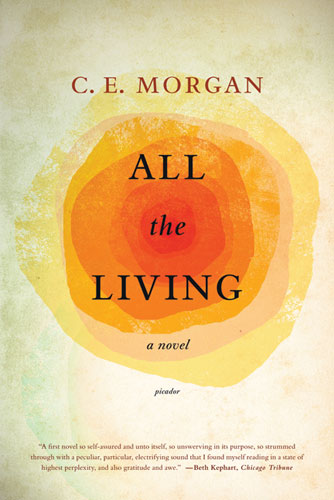
In her debut novel, All the Living, C.E. Morgan tells the story of Aloma, a would-be pianist who forgoes her dreams of artistic freedom to play wifey to her young lover Orren who must take sole responsibility of running the family tobacco farm after his family dies in a car accident. Aloma knows nothing about farming and even less about the grief Orren suffers. She’s an orphan herself, but with no memory of her own parents, she finds it hard to connect to overworked Orren as he slowly slips away. A nearby minister who hires her to play church services paradoxically relieves and exacerbates Almoa’s despair when he enters her life. Morgan’s novel is a slow-burn, often painful, sometimes slow, but also guided by a poetic spirituality that resists easy interpretations. (Oh, and she’ll also make you run for a thesaurus every few pages). All the Living is new in trade paperback from Picador, available now.
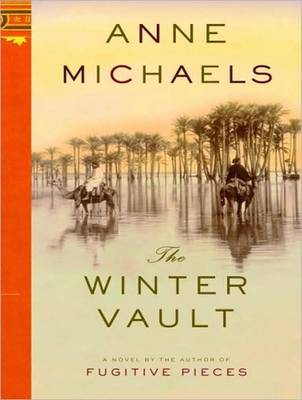
Anne Michaels’s The Winter Vault begins in Egypt, in 1964, where Canadian engineer Avery Escher is part of a team trying to help the Nubians who will be displaced by the Aswan High Dam. He and his wife Jean share a houseboat on the Nile, but what might have been a year of romantic adventure devolves into the tragedy of a culture displaced and a family eroded. The pair separate and return to Canada, where Jean takes up with Lucjan whose stories of Nazi-occupied Warsaw inform the novel’s second half. The Winter Vault is poetically dense and often overly-lyrical, sometimes offering self-important and ponderous dialogues in place of concise plotting. And while Michaels treats the tragedies of the occupied Poles and Nubians with a certain sensitivity, her engagement veers awfully close to what Lee Siegel has termed Nice Writing.The Winter Vault is new in trade paperback from Vintage on April 6, 2010.

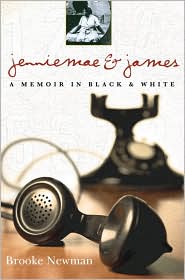
Jenniemae & James is Brooke Newman‘s new memoir about her father’s unlikely relationship with the family maid. James Newman was a brilliant mathematician (he coined the term “googol”); Jenniemae Harrington “was an underestimated, underappreciated, extremely overweight woman who was very religious, dirt poor, and illiterate.” Newman wants us to see a unique–and deep–friendship between the pair that defies 1940s/50s norms in Washington D.C., but it’s hard not to think that there’s at least some whitewashing going on here. Undoubtedly the two shared an affinity and connected through a love of numbers, but it’s hard to see more in this than an employer-employee relationship–and one still colored by the politics of the pre-Civil Rights era. Jenniemae, black mammy, sassy, Southern, larger-than-life, quick with folk wisdom and colorful quips–it all seems like a one-sided vision, a take on the Magical Negro trope that resists human complexity. Still, Newman’s tone is sincere, her pacing is swift, and the book reads with the pathos that memoir lovers demand. Jenniemae & James is new in hardback from Harmony/Random House March 30, 2010
My Father’s Bonus March — Adam Langer

51znHZk3mAL._SS500_

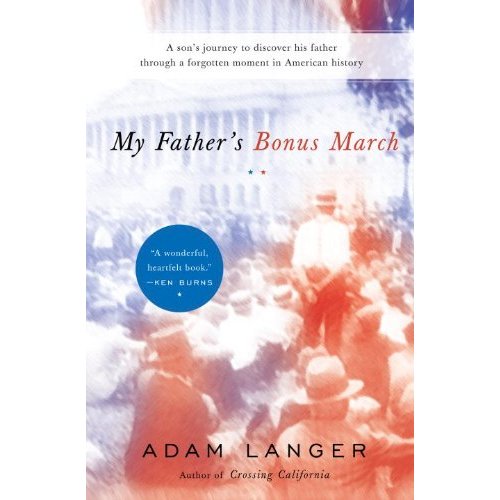
Early in his new memoir My Father’s Bonus March, Adam Langer writes: “It seems appropriate that the most dramatic event in my relationship with my father might be one that I can’t actually remember happening.” Langer then goes on to describe a particularly colorful episode at an old-timey barbershop, wherein he, as a young lad, chokes on a piece of hard candy and is saved by his dad. “My father would never tell me this story,” Langer concludes, revealing the sense of disconnection at the heart of his book. Simply put, My Father’s Bonus March is Langer’s attempt to know, or at least understand his father. Strangely, he uses his father’s passion for a little-remembered event in American history as a means to better know his father, who passed away in 2005, leaving Langer with a sense of unfinished business.

In 1932, a group of WWI Veterans and their families (and sympathizers) camped out in Washington D.C. in protest: it was the middle of the Great Depression and the vets were demanding the bonuses they were promised. (The book’s jacket calls this “a forgotten moment in American history, but I’d like to go on record that, after the intensive hell that was Ms. Bone’s first-period AP US History class, I knew exactly what the bonus march was before I got the review copy). Langer’s father was seven at the time of the protest, but his father served in WWI, and, in any case, it left enough of an impression on him that writing a book on the subject became a life-long dream. Langer’s project is to complete that dream–which he does, quite successfully. Langer’s historical investigation is thorough without dreariness; he draws not just from first-hand sources, like newspapers and editorials covering the march, but also the memoirs and diaries of figures like Eisenhower and Studs Terkel, as well as the work of novelists like John Dos Passos. He even interviews neocon Norman Podhoretz and Bonus March aficionado John Kerry.

Langer’s scholarship is successful, but more affective are his interviews with people who knew his father, including cousins, neighbors, and classmates. Langer has the good sense to present their comments as first-hand accounts, presented with little context. Their stories build a concrete, vivid depiction of Langer’s predominantly Jewish old Chicago West Side neighborhood (“‘GVS’ is what we called it. The Great Vest Side,” one witness recalls). I wish Langer had employed this straightforward documentary technique more often in his memoir as its succinctness and clarity achieves an emotional immediacy in contrast to Langer’s prose passages, which sometimes come across as sentimental or too-artfully constructed. This is simply a matter of taste, of course; I prefer my memoirs raw, and I occasionally found myself grimacing at some of Langer’s constructions, like a trip with his brother to the Hoover Presidential Library or the opening scene with his daughter on the stoop.

At its core, My Father’s Bonus March successfully evokes the reality of one of literature’s oldest narratives–the attempt of the son to know his elusive father (Telemachus and Odysseus, Oedipus and Laius, Stephen and Simon Dedalus, etc.), and it does so with affecting aplomb. Whether we really need another story about a son trying to understand his distant dad is beside the point–Langer has found an inventive and rewarding way to do so. I can’t end without mentioning that at the same time I was reading Bonus March, I also happened to read another memoir about a son trying to better understand his elusive father, Stephen Elliott’s recent essay My Father’s Murder” (published in last month’s issue of The Believer). Elliot’s terse, frank, reportorial style is in direct contrast with Langer’s overt sentimentality, yet both authors are working toward the same theme–one that clearly resonates across styles and genres. With this in mind, I think plenty of readers out there will both identify with and enjoy Langer’s memoir.

My Father’s Bonus March is available October 20th, 2009 from Spiegel & Grau.

Bicycle Diaries – David Byrne

byrnecovx-large

David Byrne’s new book, Bicycle Diaries (new in hardback from Viking), is an engaging, discursive, and often meditative memoir about the Talking Heads founder’s strange experiences bicycling through some of the world’s most distinct cities. Byrne uses W.G. Sebald’s The Rings of Saturn (one of our favorite books) as an entry point for his book. Like Sebald, Byrne attempts to synthesize history, memory, art, architecture, philosophy, science, and a host of other subjects in his writings on cities like Berlin, London, Manila, Istanbul, and San Francisco. The result is a book that is profound and very readable; Byrne communicates complex ideas in ways that are both fun to read and also highly relevant to an age of changing attitudes about how we are to get where we are going.

While hardly a political screed, Bicycle Diaries does contain a central argument: plainly put, Byrne suggests that cities that are bicycle-friendly tend to be more human-friendly, and that the modern/industrial reliance on cars and trucks has resulted in fundamental disconnects between people and their communities. In the first chapter, “American Cities,” Byrne surveys a number of decidedly unglamorous American cities like Pittsburgh, Baltimore, and Columbus, as well as smaller towns like Sweetwater, Texas. Byrne’s discussion of Detroit is particularly affecting. From the vantage of his bicycle, Byrne sees a Detroit most will miss, a place of modern ruins and decay. “In a car, one would have sought out a freeway, one of the notorious concrete arteries, and would never have seen any of this stuff,” Byrne writes. “Riding for hours right next to it was visceral and heartbreaking–in ways that looking at ancient ruins aren’t. I recommend it.”

Byrne repeatedly communicates this will to immediacy, for unmediated experiences in Bicycle Diaries. He’s the explorer of the real, trying to understand why folks don’t ride bikes in Buenos Aires, or trying to figure out the cultural significance of Imelda Marcos to the people of the Philippines, or pondering the brutal fauna of Australia. Byrne’s bike rides, as well as his music and art careers, give the book something like a center, but Bicycle Diaries thrives on digressions, asides on ring tones or the Stasi or amateur backyard wrestling or the history of PowerPoint. We loved these moments: it’s when Byrne relates the sad history of George Eastman, founder of Kodak, or when he tells the story of Australian outlaw legend Ned Kelly that Byrne best communicates the thrill of exploration.

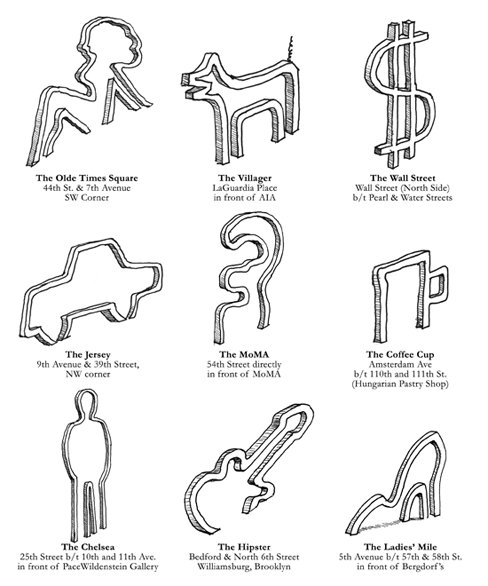
Byrne’s voice is ever-earnest and never didactic. There’s a plainness and honesty to his delivery that often seems in direct contrast with the content of his message. And this is the key to the book’s success–and perhaps, more generally speaking, Byrne’s career–this ability to see, to suspend the biases and blocks and filters that too often mediate our perception, and to actually see what is actually around us. From his earliest days in the Talking Heads, Byrne displayed an uncanny knack for turning his eyes on his own culture like an alien ethnographer, yet he always did it with empathy and engagement, and never with smack of clinical remove that might otherwise characterize such a project. In Bicycle Diaries, Byrne approaches America’s reliance on roads and oil and cars with an admirable pragmatism. Where some might scold (and, implicitly, ride a high horse), Byrne is always positive, pointing out the numerous advantages of returning to a community-oriented way of life, with bicycling as a simple and efficient means of getting around in lieu of the cars–and attendant urban/suburban/exurban sprawl–that keep us separated. Byrne also suggests a number of ways that communities and cities can work toward making bicycling a more viable option for their citizens. He even provides a few fun bicycle rack designs for his hometown New York (and yes, they got made).

david_byrne_bike_racks

Finally, we’d be remiss if we didn’t mention that the book itself is a beautiful aesthetic object. Why don’t more publishers skip those annoying, flimsy dust jackets, and opt instead for something like Bicycle Diaries lovely embossed cloth deal? Just a thought. There are lots and lots of black and white photographs, many by Byrne himself, that genuinely shed light on Byrne’s narrative (the design here is of course reminiscent of Sebald’s use of photographs, only Byrne’s aren’t cryptic and actually make sense in the text). It’s great to love both the content and the design of a book, but we’d really expect nothing less from Byrne. It’s also great when a hero of ours lives up to and then surpasses our expectations–we’ve always loved Byrne’s music and his ideas, so it’s great that we can add books to that list. Highly recommended.

New in Paperback: Novels from Marilynne Robinson and Per Petterson and Memoirs from Michelle Maisto and Michael Greenberg

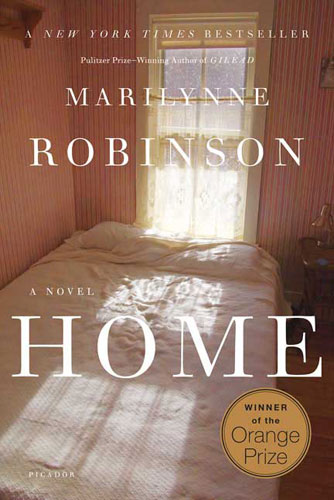
mr_home

Home, Marilynne Robinson‘s follow-up to her 2004 Pulitzer Prize winning novel Gilead, tells the story of Jack Boughton, the miscreant prodigal son of Reverend Boughton (narrator of Gilead). Jack returns home after twenty years of petty theft and carousing to find his father dying and his sanctimonious sister Glory coping with a broken heart. Robinson handles the pain and secrets of the Boughton family in prose that is both spare and beautiful; there’s a simplicity here that belies the extraordinary spiritual puzzles into which Robinson’s characters delve. The result is that odd rarity: a literary novel of complexity and depth that’s also an ease and pleasure to digest, even in all its bitterness. Home is available in trade paperback from Picador September 8th, 2009.

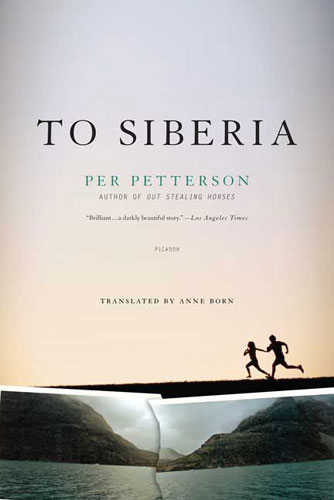
tosiberia

Also new in trade paperback from Picador on September 8th is Per Petterson’s novel To Siberia. Translated by Anne Born, To Siberia is the story of a Danish girl who lives in the isolated northernmost Jutland peninsula. Wishing to escape her neglectful parents and suicidal grandfather, she dreams of exotic Siberia. Set during the WWII Nazi occupation, To Siberia rhetorically mirrors the grim, cold reality of that era. Petterson delivers his tale in a crisp, almost brittle manner. There’s a translucence to the prose, a Nordic frankness that makes Petterson’s presentation of the girl’s infatuation with her older brother Jesper doubly strange. Her love and desire for him veers toward almost mythical incest, yet Petterson’s restraint reins in even the barest hints of hyperbole, leaving the reader to her own inferences. Like the grim story of Hans and Gretel, or the story of the tin soldier and his beloved ballerina, To Siberia is painful in its bleakness, but also beautiful in its imaginative underpinnings.

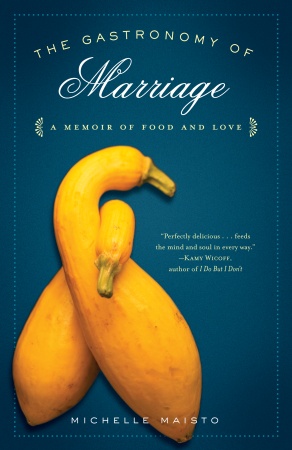
gastronomy

Michelle Maisto’s memoir The Gastronomy of Marriage, a Random House trade paperback original available September 8th, 2009, tells the story of Michelle’s courtship and marriage with her husband Rich, using the dining table as a lens to examine romantic relationships. Like many recent books about food, Gastronomy is interspersed with recipes, some of which sound pretty good (like the one for artichoke pie). Maisto’s is a memoir about planning for a wedding, told from a female perspective, and it might not have the widest appeal for many male readers, but it is well-written, if light, fare.

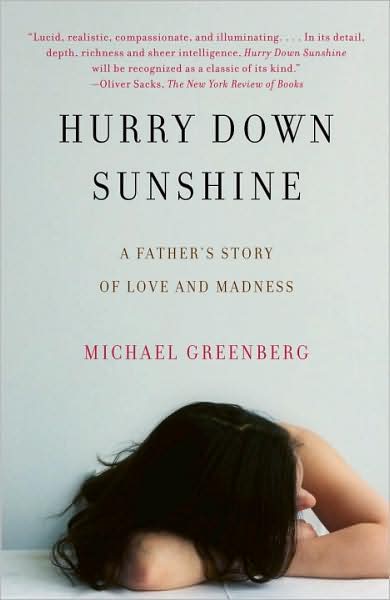
hurry down

Far heavier is Michael Greenberg’s memoir Hurry Down Sunshine. Released in hardback last year to high critical acclaim, Greenberg’s memoir relates the true story of his daughter’s manic breakdown and subsequent committal to a mental hospital. Written in a spare, even terse style, with present-tense immediacy, Greenberg telegraphs his despair and frustration about his daughter’s condition with harrowing results. Greenberg even waxes a little on James Joyce’s own troubles with his daughter Lucia, as well as the poet Robert Lowell‘s bouts of manic depression.Literary angles aside, the book is not so much about his daughter’s mental condition, in the end, as it is about his own challenges as the parent of an ill child. Hurry Down Sunshine is available in trade paperback from Vintage books, September 8th, 2009.

“What Lies Beyond Violent Drunkeness” — Guy Debord on Drinking Booze

guydebord1jv7

In the following short chapter from his 1989 memoir Panegryic, Volume 1, Situationist mastermind Guy Debord writes a love letter to alcohol. He explains why he loves to drink, what he loves to drink, and where he loves to drink, and he does so with a scholar’s flair for quotation and an anarchic humor. Towards the end, he attacks the current state of mass-produced wines, liquors, and beers, complaining that regional flavors and varieties are being destroyed. Great stuff!

Wines, spirits and beers: the moments when some of them became essential and the moments when they returned have traced out the main course and meanders of days, weeks and years. Two or three other passions, which I will talk about, have almost continually taken up a lot of space in this life. But drinking has been the most constant and the most present. Among the small number of things that I have liked and known how to do well, what I have assuredly known how to do best is drink. Even though I have read a lot, I have drunk even more. I have written much less than most people who write; but I have drunk much more than most people who drink. I can count myself among those of whom Baltasar Gracián, thinking about an elite distinguishable only among the Germans — but here very unfair, to the detriment of the French, as I think I have shown — could say: “There are those who have got drunk only once, but it has lasted them a lifetime.” […]

Continue reading ““What Lies Beyond Violent Drunkeness” — Guy Debord on Drinking Booze”