
Oh Well, Whatever, Nevermind (Kurt Cobain Reconsidered)

I was twelve years old when Nirvana’s landmark record Nevermind came out in September of 1991 and supposedly changed the American cultural landscape forever. I was the perfect age to be radically influenced by the onset of the whole grunge thing. Before I got a hold of Nevermind, my favorite records were R.E.M’s Out of Time and De La Soul’s De La Soul is Dead, both of which had come out a few months earlier that year. I also really, really loved Aerosmith’s Greatest Hits (you know…the red album), and U2’s The Joshua Tree. These were some of the earliest CDs I ever owned, and reflecting on this now, it seems odd that my favorite albums could also be brand new, contemporary.

I mention a few of the CDs I owned because I think I’m a relatively typical audiophile of the age group I’m discussing here (roughly, persons born between 1975-1981, although these dates, as I write them, seem awfully silly and arbitrary). I had already outgrown dumb hair metal and had begun to realize that most of the hip-hop I was listening to was not nearly as offensive as I thought it should be. I wanted something new and different and weird, and by the beginning of the seventh grade I’d already begun to scour Rolling Stone, which still had a modicum of cultural relevance in the early nineties. I was also cherry-picking from cool movie soundtracks, and to this day I know that the soundtrack to the oh-so-forgettable 1990 film Pump Up the Volume (Christian Slater as pirate DJ leads a minor youth rebellion) had as much to do with the forging of my musical taste as any other source: this is where I was exposed to two of the bands that would help forge my musical taste for the next decade, Pixies and The Sonic Youth. So, like many other young audiophiles, by the end of 1991–around the time “Smells Like Teen Spirit” was blowing up–I was already moving away from “mainstream” music as quickly as I knew how. Only Nirvana became the new mainstream, grunge became a fashion status, and, feeling like a cultural movement that I was barely even tangentially a part of had been commodified and commercialized, I had rejected the whole thing by the time I had gotten to high school in 1993. This meant rejecting wholesale a number of albums I had loved throughout middle school.

The same month Nevermind came out, so did the Red Hot Chili Pepper’s Blood Sugar Sex Magik, spawning the massive hit “Under the Bridge.” Pearl Jam’s debut Ten came out a month before Nevermind, but really didn’t pick up steam until mid ’92–grunge was in full effect by then; it too produced a mega-hit with “Jeremy.” U2’s Achtung Baby dropped in November–at this point they seemed like the elder statesmen of what was now so brashly defined as “alternative” music (“Alternative to what?” we wondered). “One” was a smash hit. The aforementioned R.E.M. album Out of Time became the year’s critical favorite, with “Losing My Religion” as one of the most unexpected number-ones of 1991. By the end of 1992, U2 and R.E.M. were “the most important bands in the world,” according to every music and entertainment magazine, and Nirvana was getting major credit for initiating a cultural revolution. I loved all of these albums dearly, and, as I mentioned above, denied all of them just a few short years later in favor of a new wave of independent label music–bands like Pavement, Superchunk, and the Archers of Loaf–bands that probably would never have achieved such successful careers without the aforementioned mega-hits that prompted the shift in cultural zeitgeist.
I present all of this evidence merely to point out that the success of these bands–contrasted with the other crap that was happening at the end of the 80s and beginning of the 90s, like White Snake and The New Kids on the Block and Warrant and Nelson and C + C Music Factory–points to something larger than the force of Nevermind alone. (It’s worth pointing out here that Guns N’ Roses released Use Your Illusion I & II a week before Nevermind; these albums had a number of hits including the monster-success of “November Rain,” and, in retrospect, I believe, for all their cock-rockery, are more akin to the albums indicative of paradigm shift I described above than to the hair metal schlock they’re often identified with). Nevermind is often credited with spearheading a musical/cultural “revolution”; this “revolution” in music was already well underway though.

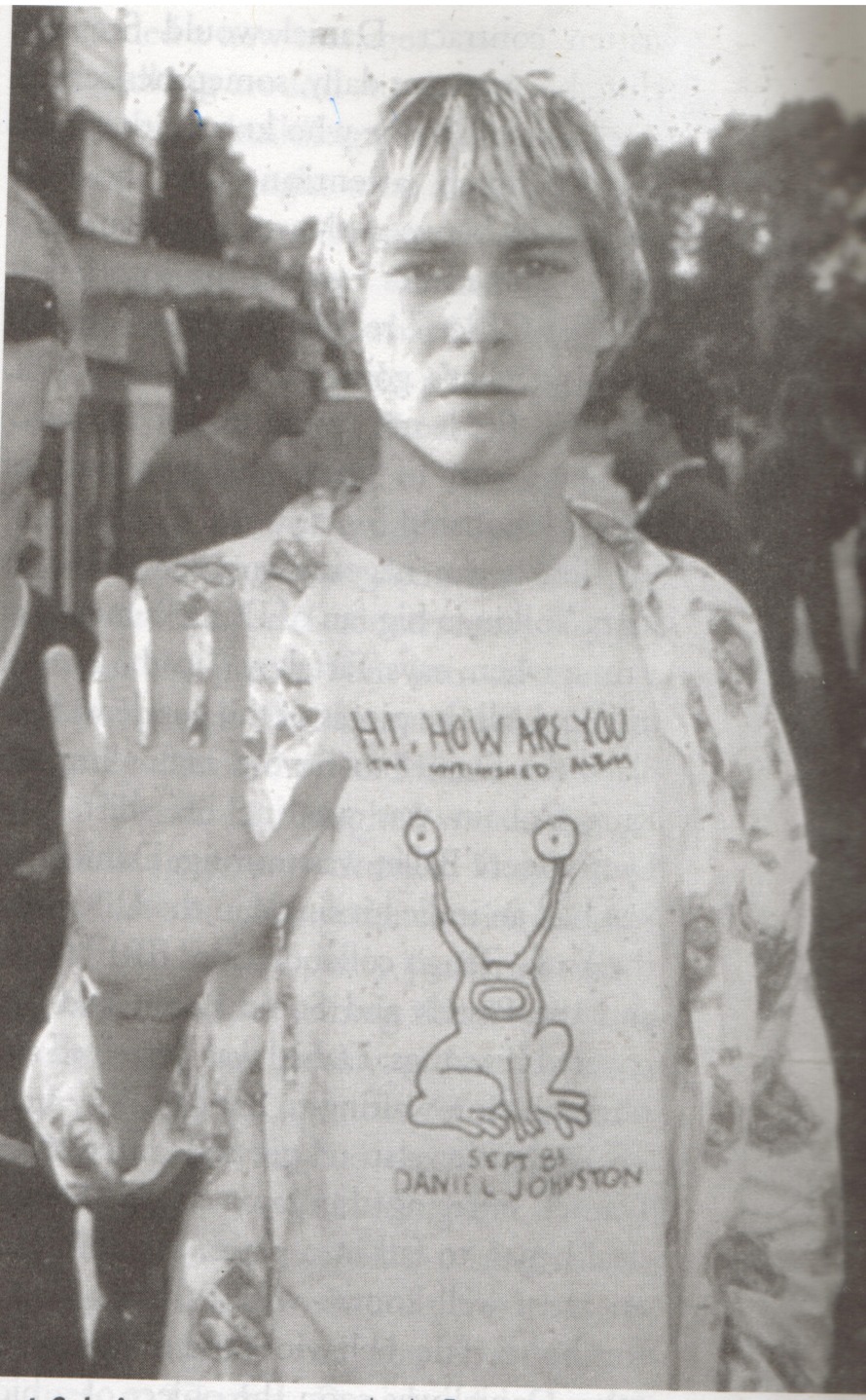
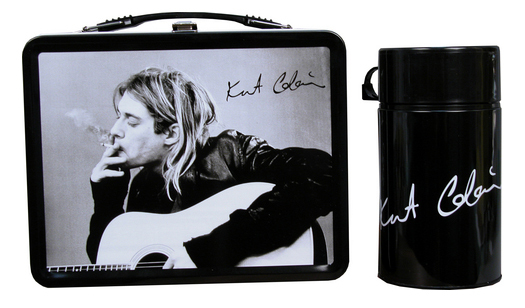
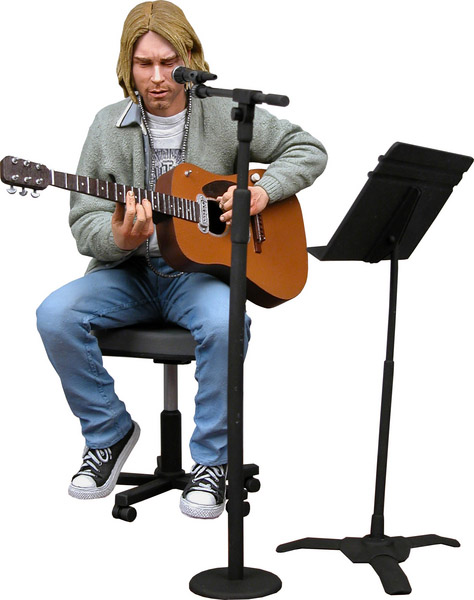
To be sure, Nevermind is a great album, but its cultural cache has more to do with the figure of Kurt Cobain than its relevance and popularity at the time (to see how the myth of Nevermind has grown, simply look at Rolling Stone‘s successive reviews of the album, from 1991, 1992, and 2004, respectively: the magazine gives the album three out of five stars, then four, before finally awarding it five stars thirteen years after the fact). Millions of kids saw Cobain wear Daniel Johnston t-shirts, reference the Melvins, and admit that his songs were really just crude Pixies ripoffs. Cobain, in short, exposed millions of regular kids to an angrier, rougher youth culture, a truly underground music that could react to the failed youth culture of the (now old) boomer generation of the 1960s, which had been forcing an illusory idealization of that decade down our throats forever. Ironically, it was this same boomer generation that greedily milked grunge for all it was worth, commodifying youth culture again into a twisted joke, a stupid lunch box, an action figure, a t-shirt at the mall. No wonder Cobain offed himself.
So why write about this now? It’s been 20 years, and there hasn’t been a record like Nevermind or mega-hits as salient, and dare I suggest meaningful, as “Smells Like Teen Spirit,” “Losing My Religion,” “Under the Bridge,” “One,” or “Jeremy” for quite sometime. The success in the mid-nineties of bands like Smashing Pumpkins and Soundgarden–bands that I didn’t hate but made fun of–seems strange now. Even the music of those elegant bachelors, the Stone Temple Pilots–grunge 2.0–seems oddly strong when held up against the watered-down drivel that passes for contemporary hard rock. Youth music today is archly, ironically aware of its own cultural position and its own performativity in a marketplace. I’m sickened by even thinking of the toothless fourth generation emo-or-whatever-you-wanna-call-it derived from Green Day (another band I didn’t hate but but made fun of) that passes for “pop-punk.” In all its silly winking at the audience, its safe-as-milk non-personality, much of this music represents the ultimate commodifiaction and commercialization of “punk”–the aesthetic that Nevermind helped to re-ignite. (In another genre, hip-hop, after 30 years of existence, has claimed its right–with a sharp vengeance–to be as stupid as any other form of music. Don’t get me started). The irony Cobain and others explored was never a smart-assed irony that coyly winked at the audience, inviting them to laugh along with whatever cultural references were being rehashed; Cobain’s irony was mean and angry–it was a critique of American hegemonic mall culture. Current youth music, rock, emo, whatever it is, is simply a celebration of greedy materialism hiding under the thinnest ironic sheen.

And here’s what I think is the saddest part: I don’t think there can be another Nevermind. To be sure, there will always be fantastic, landmark, music-changing records–I have no doubt about that (see: 1997’s OK Computer f’r’instance). But a record that channels a truly punk aesthetic into mainstream American consciousness is simply not going to happen again. For over fifteen years, critics (and executives) have been looking to award “next big thing” status to just about anyone (do you remember when the Chemical Brothers were supposed to be the “next big thing”? You don’t?). The internet has changed the old model. In the past, records like Nevermind propagated a “trickle-down” effect, if you will–kids in the heartland see Cobain give the Raincoats props, buy Raincoats’ records, get into X-Ray Spex, get into Black Flag, get into Pavement, whatever. In contrast, the internet provides a diffusion model of immediately accessible cultural immersion. Anyone with a DSL connection and a few hours to kill on Allmusic can access indie culture. And that’s a good thing. But still: I’ll get nostalgic here: in the old days, we used to write to the labels and get catalogs and order music via snail mail. We used to buy albums on pure faith that they were good. You couldn’t just click on an mp3 (or steal entire albums on p2p networks or over torrents). But I’m not railing against the internet. I think it’s great that a kid in Montana can become thoroughly exposed to Drag City records or the works of Big Black in just a week. But that will never translate into a wide-scale youth culture shift. Instead, we’ll continue to have what we have now: lots of really, really shitty music on radio and TV. And this is our culture.
There won’t be another Beatles or another Sex Pistols–there won’t be another group that challenges our collective cultural sensibility to make a large jump. There won’t even be an Elvis or a Madonna, a performer that challenges our ethics and morality. Instead, we will continue to have watered-down crap on mainstream media, as well as plenty of choices for those who take the time to look. But those choices will be marginalized, kept on the sidelines out of mainstream American-consciousness, and what we’ll lose is an opportunity to progress and enrich the entirety of our culture. Who knows though–I could be wrong; perhaps I’m just old and out of touch. Perhaps a wholly new and dynamic artist or group will come out that will capture the anti-establishment roots of rock and roll and inspirit a new and dramatically different course in contemporary youth culture. But I don’t see it happening again. I hope I’m wrong.

[Editorial note: We ran a slightly different (but pretty much the same) version of this post in April of 2008]

Nilsson and Ringo Do Lame Comedy at the 1973 Grammys

Alice Coltrane Harp Solo

Book Xylophone

[Via Ebert].

Biblioklept Interviews Filmmaker Paul Festa

Paul Festa

Musician, writer, and filmmaker Paul Festa contacted me a few months ago to point out that I’d used a still of Harold Bloom from his film Apparition of the Eternal Church without crediting him. It was the nicest possible email in the world, and after a few pleasant exchanges, he sent me a copy of Apparition along with his new film, The Glitter Emergency. Both films are marked by humor, pathos, and a deep love for music. Paul was kind enough to talk with me about his work over a series of emails. For more info, check out his website.

Biblioklept: Your new film The Glitter Emergency is about a girl with a peg leg who dreams about being a ballerina. There’s a humor in the film that highlights some of the dramatic absurdity to the premise, but there’s also a lot of pathos there. How did the idea for the film come about?

Paul Festa: The germ of the plot itself came from an act Matthew Simmons had me accompany on violin many years ago, when his drag persona Peggy L’Eggs came out onstage as a one-legged ballerina on a rollerskate. But what precipitated the making of the film last year was a profound career crisis that came between the death of an extremely important and beloved mentor and my 40th birthday. I’d worked seriously – feverishly – to become a violinist, but a repetitive strain injury curtailed my musical career. Then I put all that energy and commitment into becoming a writer, but I didn’t achieve any success until almost by accident I became a filmmaker with my experimental documentary Apparition of the Eternal Church, a no-budget personal project that went on to screen throughout the US and Europe and win prizes and get very well reviewed. So at the age of 39 I found my energies and time divided between music, fiction and film, and none of the above had coalesced into a sustainable career and I still didn’t know, squarely into my middle age, what I was going to be when I grew up.

I spent December of 2009 and much of January lying awake through the night listening to my heart beat and it was in that period of grief for my mentor, and panic about my life, that I came up with the idea for this film that would be a comedic metaphor for my experience as an injured artist who finds his way back to his art through supernatural intervention. In the peg-leg ballerina’s case, it’s the vial of Enchanted Glitter; in my own case, it’s film, which enabled me to resume my life as a professional musician. And in both cases, it’s an enchantment much like Dumbo’s feather, a suspension of our self-doubt more than any external magical agent that permits us to do extraordinary things with our lives.

Biblioklept: The Glitter Emergency — at least most of it — is stylized as an early silent film: black and white, placards for dialog and titles, even the jumpiness of an old reel-to-reel machine is replicated. Was this form always part of the project? What prompted your decision to shoot the film this way?

PF: The silent-film aesthetic was there from the get-go, and for several reasons. First of all, the whole project is a star vehicle for Peggy L’Eggs, and as a film presence she was born sixty years too late — she’s Clara Bow and Lillian Gish and Stan Laurel all rolled into one. Second, the convention of silent film, with dialogue represented in intertitles, works perfectly with what I do at the intersection of music and film. In the usual relationship, music is there to serve film, to color it emotionally as soundtrack. What I do is the other way around – I’m using film to illuminate or dramatize music. And so the music has to play uninterrupted, and intertitles work perfectly. When you think of it, it happens in both my films – the last third of Apparition of the Eternal Church consists of silent images of the interview subjects, and text titles, and organ music accompanying.

I don’t have any formal education in film, but when I was a kid my father used to take me to the Avenue Theater out on San Bruno Avenue in San Francisco, where every Friday night they would show a silent film and an early talkie, the silent accompanied on the theater’s Wurlitzer by an old guy named Bob Vaughn who had accompanied these films when they first came out in the 20s. So the look and feel are second nature for me, as they are for my co-director Kevin Clarke, who came up with a lot of the signature silent-film flourishes in Glitter.

Biblioklept: You bring up your first film, Apparition of the Eternal Church, which again is obviously very much about music. The film begins by having a number of people listening to the music of Messiaen on headphones and reacting to it, discussing it, emoting to it, puzzling over it — but the music is withheld from the audience for quite some time. I found it very, very frustrating! Was this by design? What’s the story behind Apparition?

PF: I would never intentionally frustrate an audience, though I might withhold satisfaction for a half hour as Apparition does. The reason for the structure of that film is again to serve the music, to preserve our ability to hear it whole and to some extent on its own terms. I had filmmakers advise me that the film could only work if I dosed out the music in parcels, letting the audience hear it piece by piece, fading it in and out throughout the interviews. I never seriously considered this option – as the playwright Karen Hartman observes early in the film, you don’t talk over Messiaen! It’s not background music. So that is an experience – a trial – I reserved for the interview subjects and spared the audience. And I spared the music from being chopped up and presented piecemeal, which would have rendered it meaningless for the following reason: the piece is composed of two sonic pyramids, one short and preliminary, the next reaching up to what Messiaen understands to be God. If you present a pyramid in pieces, you have a pile of stones and they don’t do anything, much less ascend to heaven.

So my options were to play the music first, before the interviews, to play it after, or not to play it at all. I tend to think the option I chose results in the least frustration – but everyone experiences the film, and the music, differently.

Biblioklept: For the record, I don’t think the frustration is negative at all — the withholding primes anticipation to a level that passes, I don’t know, an itch, I suppose. I wanted to hear what your subjects were hearing. Speaking of the subjects, how did you get people involved in the film? There’s such a wide range of interviewees there, from Harold Bloom to Squeaky Blonde. How long did it all come together?

PF: The subject of frustration in Messiaen is interesting, because some people – including much more sophisticated musicians than I – find a disturbing lack of direction or resolution in his music. It’s static to them – it floats, an object in space that gets bigger or smaller as its relation to you changes, but beyond the change in that spatial relationship it’s not doing anything and it drives you bonkers. And I think that frustration is a species of the torture that eternity threatens, the emptiness of life without end. For theological reasons Messiaen can’t intend that dark gloss on eternal life, and it’s pretty far from my experience of the music, but plenty of people experience it. Hence John Rogers’s observation that despite what the composer intends to portray, “this is what hell is like.”

I interviewed 115 people for Apparition, and 31 are in the film — some of them for just one or two clips. The first interview was with the harpsichord virtuoso and early music guru Albert Fuller, who had taught me chamber music when I was a student at Juilliard in the early 90s, and who taught me in large part by putting on music and talking through it, describing what he heard in “the theater of his imagination,” as he called it. Albert’s interview was so great — so wide ranging ad surprising, starting in laughter and ending in tears — that I felt I needed to keep going. I interviewed pretty much everyone I could get to put on the headphones and sign a release – anyone who walked into my apartment. Several of my English mentors are in the film – I took Bloom’s Shakespeare seminar at Yale, and Rogers’s Milton and Spencer courses, and several classes with Wayne Koestenbaum. Michael Warner, who now heads the Yale English department, I met along with several other cast members in the woods of Tennessee at a gathering of the Radical Faeries. I spent most of three years collecting the interviews, a pace I recommend to anyone doing a project like this.

Biblioklept: You’ll be presenting both movies later this month (in Santa Cruz) with live musical accompaniment. Have you done that before? What can audiences hope to see and hear?

PF: Both Apparition of the Eternal Church and The Glitter Emergency are blessed with having had numerous screenings with live musical accompaniment. Apparition has screened accompanied by some great church organs in the US and Europe, including St. Bartholomew’s Church in New York and Grace Cathedral here in San Francisco. I’ve accompanied Glitter on violin at every public screening since we premiered the rough cut in May of last year. And while the two films have screened before as a double bill, this is the first time both will screen together with live music. In addition to the films and music, the audience should expect a robust discussion afterward. The screening is sponsored by UCSC, where both films screened last year to a terrific film history class where I got some of the most intelligent questions and commentary of any post-screening Q&A.

Biblioklept: Have you ever stolen a book?

PF: I’ve stolen a lot of books, most significantly Virginia Woolf’s Orlando and Thomas di Cantimpre’s Life of Christina Mirabilis. I’ve been boiling them down with some Bible and Franzen and a pinch of Milton and dimly remembered Steinbeck and any year now am expecting it to yield my first novel, Heaven Descending, a sort of bildungsroman amid a world of Hollywood lowlives and Radical Faerie medical marijuana farmers that sparkles with magical realism and catastrophic drug busts. In the fall I had seven weeks at Yaddo in which I laid the foundation for the fourth draft but work on two new films has prevented me from making any progress since New Year’s. Next year is a big year for the project; it turns 10.

The Glitter Emergency will have its Midwest premiere at the Chicago International Movies & Music Festival on Thursday, April 14, at 7:30 p.m., at the Wicker Park Art Center, launching a program that features Kenneth Anger’s two masterpieces, Lucifer Rising and Scorpio Rising – all with live musical accompaniment.

“I Loves You Porgy” — Nina Simone

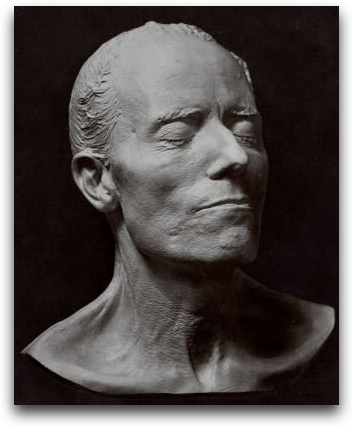
Mahler’s Death Mask

Heroes of 2010 — MGMT

“Peace on Earth/Little Drummer Boy” — Will Ferrell & John C. Reilly

Vodpod videos no longer available.

Heroes of 2010 — PS22 Chorus

What Kind of Songs Did Johnny Cash Love?

“I love songs about horses, railroads, land, judgment day, family, hard times, whiskey, courtship, marriage, adultery, separation, murder, war, prison, rambling, damnation, home, salvation, death, pride, humor, piety, rebellion, patriotism, larceny, determination, tragedy, rowdiness, heartbreak and love. And Mother and God.”

From the liner notes to American Recordings. I read the quote here.

Brian Eno Interviewed

Dick Flash (jeez, what a great name) of Pork Magazine (another great name) interviews mad genius Brian Eno:

Kanye West Halloween Mask

“. . . the horror . . .” (Via).

Odds and Ends

At A Piece of Monologue, Rhys Tranter reviews Simon Critchley’s “philosophical antidote to the self-help manual,” How to Stop Living and Start Worrying. Read our review of Critchley’s The Book of Dead Philosophers here.

MobyLives expands Flavorwire’s post on author photo clichés to include Melville House authors.

Here’s an author photo we love: Harold Bloom wearing big headphones and looking kinda skeptical and very green (the image is by Paul Festa from his film Apparition of the Eternal Church)–

If you still haven’t done your Juggalo Studies homework for this week, read Camille Dodero’s inspired report from this year’s The Gathering (at The Village Voice). And then watch “Miracles” again, because, hey, it only gets better. It still shocks the eyelids.

We love this tumblr (or is it tumblog?)–Anatomy–even if it looks like they aren’t doing much these days. C’mon guys. We need more gifs like this–

Finally, check out Stanford Kay’s series of paintings of books and bookshelves, “Gutenberg Variations.” Like abstract expressionism, only good (via) —

Charles Burns/Krzysztof Penderecki Mash-up

Okay, “mash-up” might not be the best term, but this video is pretty cool. YouTube user songtotube sets cartoonist Charles Burns’s segment from Peur(s) du Noir to a section of Krzysztof Penderecki’s “Polymorphia.”  Good creepy fun. Or not.

“The Ludlow Massacre” — Woody Guthrie

Read Howard Zinn on The Ludlow Massacre. Happy Labor Day!

RIP Satoshi Kon

Japanese filmmaker Satoshi Kon died yesterday at the young age of 47, apparently from cancer. Kon’s films included Tokyo Godfathers, Perfect Blue, Millennium Actress, and Paprika, visually stunning and emotionally resonant works that helped to prove that manga was a medium, not a genre. More here. Watch the parade scene from Paprika. Chaotic eye candy.