Biblioklept Interviews Novelist Lars Iyer

Lars Iyer’s first novel Spurious (Melville House) is by turns, witty, sad, and profound, and garnered serious acclaim on its release earlier this year. Spurious originated in a blog of the same name. There are two sequels on the way—Dogma should be on shelves in early 2012, and Exodus the year after. Lars teaches philosophy at Newcastle University (so it’s no wonder that Spurious reads like a discursive philosophy course by way of the Marx brothers). Lars was kind enough to talk to Biblioklept in depth about his work and writing. In addition to his teaching, writing, and blogging, you will also find Lars on Twitter.

Biblioklept: Your novel Spurious began as a blog and then was published by Melville House, a thriving indie publisher that also began life as a blog. At a recent talk you gave at the HowTheLightGetsIn philosophy and music festival, you discuss the freedom blogging allows for writers to develop their “legitimate strangeness.” Why is “legitimate strangeness” important for writers, and how does blogging help facilitate it?

Lars Iyer: Sometimes it is necessary to depart. Sometimes it is necessary to leave it all behind. That’s how I understood the act of blogging, back when I started Spurious, the blog which shares the same name as the novel.

As someone who had made some progress as an academic – a journey which implies valuable training as well as compromise and despair – I thought a kind of exodus was necessary, from existing forms of published writing. Leave it all behind!, I told myself. Leave the Egypt of introductory books and academic journals and edited collections behind. Leave the slave-drivers behind, and the sense you have of being a slave. Leave capitalism and capitalist relations behind. Leave behind any sense of the importance of career and advancement. Leave behind those relationships that are modelled on investment and return.

Sometimes a kind of solitude is necessary. You need to be alone, to regather your forces, to marshall your strength. But what is really necessary is a solitude in community. You’re on your own, depending on your own resources. But your solitude is lightened: because you know that there are others like you, who have likewise expelled themselves from captivity; because you know that others share your sense of disgust and self-disgust, that they too have gone out to the desert to do battle with the demons sent by capitalism into each of our souls; because there are others, like you, who see writing as both scourge and liberation, others who see it as a spiritual trial, others looking to destroy who they were and be reborn, and to keep themselves in rebirth.

In the end, the desert is paradise, and the world the blogger has left behind, with its whips and fleshpots, is the real desert.

Cultivate your legitimate strangeness: that was my mantra. ‘Cultivate’, because it is a struggle, a kind of asceticism. To drive the demons out, you have to know that they are there. A kind of self-knowledge is necessary – not the petty narcissism we find in the ‘misery memoir’, but a growing awareness of those forces that have constituted you, that have made you what you are. ‘Your legitimate strangeness’: ‘Your’, because it is yours, your space, the person you are, that you have become, even as you might alter this space, remake it. ‘Legitimate’ – that part of you that is not yet subsumed by capitalism, that free part of yourself that is not a slave. ‘Strangeness’ – because it must appear strange to the slaves and their masters, to everyone around you.

Why is this important to the writer? Some of us write because of our alienation. We have had no one to speak to, no friends, no conversations. There was no one around. Thoreau went to the woods to find himself. We went to our rooms. We went to literature, and philosophy, without knowing anything of literature and philosophy. We worked on our own.

There is something pathetic about this. Shouldn’t we have been fighting the world instead? Shouldn’t we have been ready on the barricades? But there were no barricades. There was no solidarity. We belonged to nothing, and had gone a little mad, a little reclusive, from belonging to nothing.

In one sense, since we lacked education, lacked culture, since our world was not one which valued the ideas and writers that we came to, our exodus was pathetic. We were imitators, play-pretending at being what we are not. We’d come too late; the party was over. We stood in the ruins, and the ruins mocked us. What could we have achieved, that had not been achieved to a much higher level before? What could we have made, that had not already been made, and much more competently, much more measuredly? We lacked the basic skills. We lacked the ability to write – even that. We lacked the breadth of culture, the breadth of scholarship.

But seen in another light, we discovered ourselves as outsiders, like those outsider artists who practiced their vocation outside of institutions. What we made was crude and simple, true — especially when compared to what went before – but it did have a certain power to affect. It had an urgency, a desperation, which might, perhaps, appeal to others. We were capable of only scraps and fragments, to be sure – dreck – but dreck marked by a moving sincerity.

I wondered – and this was the beginning of Spurious, the novel, and of its sequels – whether there was a way of folding this sense of posthumousness, of coming too late and lacking the old skills, into the practice of writing. Maybe it was time to come back from the desert, which had taught me only the extent and depth of my stupidity. Maybe it was time to write with a new kind of writing . . .

A Portrait of the Novelist as a Smiling Man

Biblioklept: That “sense of posthumousness, of coming too late” figures heavily in Spurious. Is Spurious the “new kind of writing” you are aiming for? While the book has a fragmentary, even elliptical quality, it also reminds me of novels in the picaresque tradition. What form does this new kind of writing you invoke take?

LI: Spurious is a book on its hands and knees. For me, it feels like the last book, the last burst of laughter before the world ends. But it also feels like the first one, because it has loosened the hold of the past. It says: a whole form of literary pretence is over.

Writing to a friend, in 1916, before the composition and publication of the work that would make him famous, the philosopher Franz Rosenzweig wrote, ‘My true book will appear only as an opus posthumum: I do not want to have to defend it or know about its “influence”’. He writes something similar, a year later, in another letter: ‘I will only truly speak after my death …, I place my entire life beneath the sign of that “posthumousness”’. Rosenzweig was confident that there would be a culture to evaluate his work. He was confident that there would be a place for his posthumous work among the greats – that there would still be greats, such that he might find his place among them. He was sure, in other words, that the old world would continue as it was; that there would still be master-works, still be the geniuses who wrote them, and still be the critics whose evaluations would be trusted by a general public.

A similar confidence in an author today would be a sign of delusion. Literature is one strand among many in our multi-braided culture. True, it retains something of its prestige; it is studied at universities, reviewed in serious newspapers — but it occupies an increasingly marginal role. The ‘great names’ are, for the most part, only cultural markers, ready for commercialisation (Kafka oven gloves in the tourist shop in Prague; the Brontë Balti House in Haworth; the Pride and Prejudice fully immersive interactive environment). But it is not only marginalisation that should be feared; recognition, too, should be. I think of the stupidity of documentary ‘infotainment’ on writers and artists, and rise of the vast, say-everything biography, that says nothing at all (as Mark Fisher has written, the biography is an end of history form, making the reassuring claim that ‘it was all about people’).

Literature continues. But it does so, in contemporary literary fiction, as a kind of empty form. As the anonymous blogger of Life Unfurnished has put it: contemporary literary fiction gives ‘the appearance alone of literature’; it is a genre ‘in which, for the writer, the sense of Writing Literature is dominant, and, for the reader, the sense of Reading Literature is dominant’.

Reviewing Jean-Luc Godard’s film Every Man For Himself, Pauline Kael writes, ‘I got the feeling that Godard doesn’t believe in anything anymore; he just wants to make movies, but maybe he doesn’t really believe in movies anymore, either’. Without agreeing with Kael’s assessment of Godard, I’d like to paraphrase her formulation: I think literary writers want to write literary fiction without believing in literature – without, indeed, believing in anything at all.

It seems to me that the literary gestures are worn out – the creation of character, plot, the contrivance of high-literary language and style as much as the avoidance of high-literary language and style, and the abandonment of most elements of the creation of character and plot. The ‘short, elliptical sentences’ of which the blogger of Life Unfurnished writes, the ‘absence of fulsome description’, the ‘signs of iconoclastic casualness’, the ‘colloquialisms’, the ‘lack of trajectory’, the ‘air of the incidental’: all are likewise exhausted.

What, then, is to be done? As writers, as readers, we are posthumous. We’ve come too late. We no longer believe in literature. Once you accept this non-belief, once you affirm it in a particular way, then something may be possible.

Witold Gombrowicz seems to advocating a return to older forms of literary insouciance: ‘Where are the good old days, when Rabelais wrote as a child might pee against a tree, to relieve himself? The old days when literature took a deep breath and created itself freely, among people, for people!’ But we cannot simply return to Rabelais, as Gombrowicz knew. Too much has happened! If a kind of self-consciousness is a distinguishing mark of the contemporary literary novelist, this is not something that can be relinquished altogether. The role of centuries of writing – of the rise of the nineteenth century bourgeois novel, of modernism and so on – must be marked.

But it can be marked by portraying our distance now from the conditions in which the great works of literature and philosophy were written. W. and Lars, the characters in Spurious, revere Rosenzweig. But this is also reverence for a culture that would deem Rosenzweig and his work important – a culture that is completely different from the one which W. and Lars occupy. True, they revere contemporary masters, too – the filmmaker Béla Tarr, for example – but Tarr lives far away, in very different conditions. W. and Lars occupy the world of the present, and the world that valued the ideas they value, the world that sustained those ideas and nurtured their production, has disappeared. Much of the humour of the book comes from the fact that its characters are men out of time – gasping in awe at Rosenzweig’s work at one moment, leafing through gossip magazines at another; proclaiming a great love of Kafka one minute, playing Doom on a mobile phone the next.

It is in this sense that there might appear to be an overlap between Spurious and novels in the picaresque tradition, which extends from sixteenth century Spain to the present day. Picaresque, it has been argued, appears as a result of a tension between an old world and a new one. The Spain of the first picaresque novels was in a period of difficult transition, from the stability of the medieval order to the age of a new, self-assertive individuality. Poverty and war were all around. The picaresque is produced in a world where human solidarity is lacking, and the individual no longer has a place in the world. The episodic journeys of the picaresque novel reflect the lack of coherence of its central characters, the lack of secure identity – a kind of cosmic loneliness.

Some picaresque features can be found in Spurious. The novel is episodic, and its characters lack a place in the world, even a place in history. W. and Lars play-pretend at various roles, trying on the mantle of the religious person or the philosophical thinker. W., in particular, yearns after friendship. But the characters are not roguish, as the picaro of a picaresque novel is supposed to be. W. is perfectly sincere. And picaros do not usually come in pairs.

Biblioklept: Speaking of your pair Lars and W., there’s a strong friendship there that strikes me as very realistic and actually quite moving. Reading Spurious I was reminded strongly of one of my own friendships, which is perhaps based on equal parts degradation and love. Lars and W. evoke both extreme pathos and a kind of deep existential anxiety that manifests in humor. Parts of Spurious read almost like verbal slapstick (if that metaphor can hold any water). How important is humor—what do you think the humor in Spurious is “doing”?

LI: Humour? I’m with Gilbert Sorrentino: ‘In a country such as ours we have reached a point at which there is hardly anything left to do but laugh or cry. It’s a kind of hysterical laughter, it’s strained and unreasoning laughter, or it is a morbid, bleak sobbing. I don’t think that anything is going to get changed in this country except that it’s going to become grimmer’.

Sorrentino’s referring to the USA, but he could just as well be referring to the UK. We lack the grounds for belief, for hope, for a future. There’s economic disaster — not simply the credit crunch, but neoliberalism in general: corporatisation, unemployment, job insecurity, casualisation, the privatisation of public utilities. Beyond this, there are the effects of climate change: drought and hunger, failure of whole nations, wars, migrants. The temptation of ‘morbid, bleak sobbing’ is extreme, as is the desire to drink oneself into oblivion like the barflies in Béla Tarr films.

Sometimes, it feels that there is an imposture in the very fact of being alive. It is as though getting out of bed in these terrible conditions were already an imposture, let alone trying to think or write. What can we do, really do, about the disaster? ‘To hope is to contradict the future’, Cioran says somewhere. Better to lie down and wait for the end. Better to give up before you begin.

‘I think joy is a lack of understanding of the situation in which we find ourselves’, Andrei Tarkovsky says, with marvellous ill-temper. And, on another occasion: ‘I accept happiness only in children and the elderly, with all others I am intolerant’. It’s true that joy and happiness seem ill-suited to our times, all the more in that joy and happiness are promoted in that ideology of positivity which is everywhere today. But perhaps there is a sense in which one might legitimately laugh at the apocalypse, albeit with what Sorrentino calls a ‘hysterical laughter’.

A sage in the Ramayana tells us that there are three things which are real: god, human folly, and laughter. ‘Since the first two surpass human comprehension’, he says, ‘we must do what we can with the third’. So we must laugh at folly, laugh at greed and smugness, opportunism and corruption, as eternal flaws in the human condition; laugh, and dream of a better world, knowing that it won’t come.

But this kind of laughter is too genial for me. It treats human folly as eternal, which I’m sure in many ways it is, but ignores suffering, dying, the real hell of our globalised world. And I worry that it also spares the one who laughs. True, you can laugh retrospectively at your own stupidities. What an idiot I was when I young!, you might say. But there is a broader sense in which we are, each of us, implicated in the present state of the world. It is our responsibility, in some important way. For me, to laugh sagely at one’s own foolishness is still too little.

What is the humour of Spurious doing, then? As many reviews of the novel have shown, the ‘verbal slapstick’ of the characters is part of a whole tradition of double acts and comic routines. I wanted W.’s insults of Lars to exhibit the same virtuosity as the physical humour of the Marx Brothers or Buster Keaton. I think there is a whole art of the insult. But I think something else is going in the novel, too.

Alenka Zupančič argues that comedies are never truly intersubjective. ‘[C]omedy is above all a dialogical genre’, she grants; but comic heroes are ‘extracted, by their passion, from the world of the normal intersubjective communication’. What they are really doing is seeking ‘to converse solely with their ‘it/id”’. Dialogues, in comedy, are really monologues; the hero is really only obsessed with his basic, chaos-ridden drives. As Zupančič suggests, ‘The comedy of such dialogues does not come from witty and clever exchanges between two subjects, or from local misunderstandings that make (comic) sense on another level of dialogue, but from the fact that the character is not really present in the dialogue he is engaged in’. On this account, the cruelty of the ‘verbal slapstick’ of the friendship in Spurious, which sees W. continually berating his poor friend, would actually be directed at W. himself. W., the only candidate for being the ‘comic hero’ of Spurious, would use Lars as merely the occasion for the continuation of his monologue.

But this interpretation doesn’t quite work for me, either. The ‘it’ that drives the exchanges of the characters is not only a feature of W.’s psychic makeup, of the chaos of his drives. Both characters are mesmerised by a real disaster. And both — particularly W. — are mesmerised by their partial responsibility for this disaster. The ‘strained and unreasoning’ laughter of Spurious is a response to the grimness of the world that is of our making.

Biblioklept: For me, that “strained and unreasoning” laughter is a big part of why I enjoyed the book—I identified with the characters. Spurious isn’t really, to borrow a phrase from David Shields, a “novelly-novel,” but it does have elements of a “novelly-novel” (including characters with whom some readers will strongly identify). At the same time, its short sections, fragmentary nature, and willingness to cite entire paragraphs of other texts point to a new kind of writing, one perhaps anchored in its origins as a blog. How did you compose Spurious? How does the novel differ from the blog?

LI: ‘A page is good only when we turn it and find life urging along …’, says one of Calvino’s characters in Our Ancestors. I hope that’s what a reader can find in Spurious: life urging along. I hope readers recognise something of their own friendships in that of W. and Lars. Spurious is not, I think, a ‘novelly-novel’. It’s new in some way – it has characters, some elements of plot, but it doesn’t resemble other books. And I think this is due to its origins. Blogging, and then combining different categories of posts, allowed me to discover, through editing, a new kind of novel.

Blogging demands immediacy. Telling the story of W. and Lars, I couldn’t rely on readers having followed it from the start. Every day, with my blog posts, I had to present these characters and their situation anew, and in a manner vivid enough to engage any potential reader. In doing so, I felt rather like the writer of a strip cartoon. Charles Schultz’s Peanuts had longer narrative arcs, but each sequence he published in daily newspapers had to stand on its own. Likewise with the posts at the blog. Each post had to have its own internal drama, a kind of ‘verbal slapstick’, even as it could be contained within a larger narrative arc.

My loyalty was, for a long time, to the readers of my blog, and I produced new material for them daily. But I thought some of the thematic strands developing at the blog – the trips to Freiburg and Dundee, for example, or the reflections on Kafka and on the Messiah – were being obscured by the quantity and disparateness of W. and Lars material. A selection had to be made. This is where the work of editing began, of the practice of literary montage that would lead to Spurious.

Tarkovsky, in his book about film, narrates the long process of assembling the various fragments that comprise the finished film, Mirror. ‘I am seeking a principle of montage which would permit me to show the subjective logic — the thought, the dream, the memory — instead of the logic of the subject’, he said. He was looking for a way to combine various elements – short narrative sequences, pieces of music and poetry, etc. – into a living whole.

I was doing the same thing, in my own way. Spurious is a hybrid of many elements of the blog. There was a story about W. and Lars, but also one about damp –– a real story, which I wrote about at the blog. I added quotations, too, as well as incorporating the narratives of the lives of various thinkers. And I edited until I felt that life was urging along.

Biblioklept: Have you ever stolen a book?

LI: I have thousands of pages of photocopies, which I made, full of ardour, during my first jobs as an academic. I thought I’d never get a permanent job, and wanted to make my own library of knock-off books in my rented room. Perse, Trakl, Tsvetayeva, Duras, and so many others: no printed book could mean as much to me as my annotated duplicates.

In Brief — New Books from Gabrielle Hamilton, Meg Howrey, and Frances Stonor Saunders

The memoir-in-food is something of a cliché at this point, but Gabrielle Hamilton’s new book Blood, Bones & Butter came with enough accolades (including a glowing blurb from Anthony Bourdain) and positive early reviews (like Kakutani’s at The NYT) for me to spend a few hours thumbing through it. Much has been made of Hamilton’s writing bona fides (an MFA in fiction writing from University of Michigan), and while she can put a sentence together without relying on the stock phrases and tropes that lard most memoirs these days, that skill wouldn’t really matter if she didn’t have a tale to tell. Blood, Bones & Butter follows a strange culinary career (it’s subtitled The Inadvertent Education of a Reluctant Chef), complete with drug abuse, theft, and, of course cooking. Only I wish there was more cooking, more time in the kitchen, the butcher’s, the market. Instead, Hamilton seems to channel her (often mean-spirited) energy on her family; her parents’ divorce hangs over the narrative like a Greek tragedy, and her own attitude toward her husband is bizarre, to say the least. The results are mixed, but fans of food-writing à la Bourdain’s Kitchen Confidential will likely enjoy Blood, Bones & Butter. New in hardback from Random House.
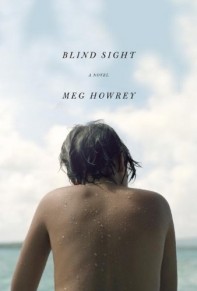
Meg Howrey’s new novel Blind Sight tells the story of Luke Prescott, a bright, introspective seventeen year old obsessed with brain biology. Raised by a hippie mother and two half-sisters, Luke gets the opportunity to the summer before college with his estranged father, a famous television star. In Los Angeles, Luke gets to know his father better, sorting out the difference between public persona and private truth; this process in turn leads Luke to re-evaluate his own sense of identity. There’s also some pot-smoking and sex. Howrey moves the narrative between Luke’s first-person voice (in the past tense) to a third person present tense narrator. At times this disjunction seems like a lazy shorthand to allow the reader to see something Luke can’t see (or doesn’t want the reader to see), but it works nicely on the whole, underlining the gaps between truth and belief that the novel seeks to explore. Blind Sight is new in hardback from Pantheon.

In The Woman Who Shot Mussolini, Frances Stonor Saunders plays historical detective, reconstructing the story of Violet Gibson, who fired on Mussolini in April of 1926 (she grazed his nose). Gibson, the daughter of the Lord Chancellor of Ireland, was 50 when she shot Mussolini, and perhaps more than a little crazy. She was almost lynched after shooting Il Duce, but the not-so-benevolent dictator pardoned her, and she was quickly returned to England, where she spent the rest of her life in an insane asylum. Saunders’s book explores whether Gibson’s attack was the motivation of an insane woman or part of a bigger conspiracy theory, illustrating her mystery with poignant black and white photos. And although Saunders focuses on the little-known Gibson, she works to draw parallels between the would-be assassin and Mussolini. Saunders’s exploration of an otherwise unremarked upon episode balances historical scholarship with the pacing and rhythm of an historical thriller. New in trade paperback edition from Picador.

“There Are at Least Two or Three Masturbation Scenes” — Sam Lipsyte Defends His Novel The Ask

“It Comes Straight from Freud” — Tom McCarthy Talks about His Novel C

The National Post profiles Tom McCarthy about his new novel C. Here are a few choice lines from McCarthy–

  • “I think the historical thing is a red herring. I don’t see C as a historical novel. I see it as completely contemporary. It’s about media and our relation to media and to emerging new media and to networks.”
  • “It comes straight from Freud. Trauma is the condition of our identity. Trauma is the most basic condition of our existence.”
  • “It’s a dual trauma, Serge’s seduction by Sophie his sister and then the loss of the sister.”
  • “The way I got the idea with the book was I had a long-standing fascination with this movie by Jean Cocteau, Orphée, his retelling of the Orpheus myth.”
  • “Orpheus in this movie interfaces with the underworld via a radio and what he picks up are the voices of the dead poets.”

From Cocteau’s Orphée–

Polar Madness! — Aurorarama’s Book Trailer

We’re loving Jean-Christophe Valtat‘s new book Aurorarama, a steampunk-romance-high-adventure-academic satire-etc. set in the alternaworld of New Venice, an Arctic metropolis. Check out this post at MobyLives for a chance to win a copy of the book.

Cloud Atlas — David Mitchell

Friedrich Nietzsche famously wrote that “There are no facts, only interpretations.” David Mitchell takes this idea to heart in his 2004 novel Cloud Atlas, using six nested narratives to mull over Nietzschean matters of truth and perspective, the will to power, what it means to be a slave or a master, and the different methods by which one might narrativize one’s life. At its core, Cloud Atlas works to illustrate Nietzsche’s hypothesis of eternal recurrence, the idea that we live our lives again and again. To wit, each of the central characters in Cloud Atlas‘s six sections seems to be a reincarnation of a previous one. Mitchell arranges his narrative like a matryoshka doll, interrupting the first five stories with Scheherazade-style cliffhangers. Each narrative propels the book’s chronology forward a century or more until reaching a crescendo in a post-apocalyptic world, the only section that remains uninterrupted. Mitchell then resumes each narrative, working backward through time to his starting point in 1850, with The Pacific Journal of Adam Ewing.

The Pacific Journal of Adam Ewing features a naïve American’s tour of the South Pacific, focusing roughly on his trek from New Zealand to Hawaii. The journal’s style readily and purposefully recalls Herman Melville; indeed, Ewing himself professes to be a fan of Melville. Early in Ewing’s journal–which is to say, early in the novel Cloud Atlas–we are treated to (or subjected to) a somewhat lengthy description of the enslavement and slaughter of the pacifist Moriori tribes of the Chatham Islands at the hands of the Māori. Here, Mitchell introduces his novel’s dominant theme of slavery and civilization. Again and again in Cloud Atlas, we find groups of people preying upon other people, enslaving them and decimating their cultures. The Pacific Journal reiterates this theme when Ewing helps to rescue an enslaved Moriori who has escaped his slavers by stowing away; the episode also echoes the relationship between Ishmael and Queequeg, of course.

The next episode, Letters from Zedelghem, features a young bisexual composer named Frobisher; his narrative comprises letters he sends to his best-friend (and sometime lover) Rufus Sixsmith. Frobisher’s robust voice is one of the great achievements of Cloud Atlas; he finds music everywhere and in everything, and even though he repeatedly gets himself into terrible situations (which are always entirely his own fault) it’s hard not to feel for him. In debt and on the lam, he finds work as an amanuensis in Belgium, laboring under an aged, sometimes-despotic composer named Ayrs. Ayrs enlists Frobisher’s talents in creating a work named “Eternal Recurrence,” but ends up stealing most of his ideas. The Frobisher narrative is the only section to explicitly name Nietzsche and his ideas. Given the setting–Belgium, 1931, Europe precariously dangling before the precipice of another war–there’s a certain ambivalence toward Nietzsche perhaps, or at least a tacit acknowledgment that ideas like the Will to Power might be radically misapplied. Letters also most openly alludes to the structure of Cloud Atlas. In its second part–which is to say its conclusion, which is to say near the end of Cloud Atlas–Frobisher writes the following–

Spent the fortnight gone in the music room, reworking my year’s fragments into a “sextet for overlapping soloists”: piano, clarinet, ‘cello, flute, oboe, and violin, each in its own language of key, scale, and color. In the first set, each solo is interrupted by its successor: in the second, each interruption is recontinued, in order. Revolutionary or gimmicky?

Frobisher’s question perhaps reflects Mitchell’s own reticence over his complicated structure; in any case, it amounts to a post-modern wink. Frobisher’s narrative also initiates the book’s process of connecting the narratives, as each protagonist finds a copy of the earlier principal’s story. Frobisher finds Ewing’s Journal and devours it; in one of the book’s funnier moments, he scolds Ewing’s naïvety, comparing him to Captain Delano in Melville’s Benito Cereno. Frobisher’s criticism is apt. With its themes of slavery and mastery, truth and representation, and exterior and interior, there is probably no book that Cloud Atlas echoes as strongly as Benito Cereno.

Mitchell moves from a wonderful and witty approximation of the epistolary novel into a dull exercise in boilerplate fiction with the next narrative. Half-Lives: The First Luisa Rey Mystery follows the adventures of a plucky newspaper reporter in the 1970s as she tries to reveal a multinational corporation’s evil doings to the public. Aided by the report of a scientist named Rufus Sixsmith (yes, that Rufus Sixsmith), Luisa plunges into a world of intrigue and mystery and blah blah blah. Half-Lives intends to comment on airport novels, but Mitchell outdoes himself with the bad writing–it’s easily the weakest section of Cloud Atlas, and although it plays with the novel’s overarching themes it does little to enlarge or invigorate them. It does, however, introduce the comet-shaped birthmark that connects the heroes of these tales as they are born and reborn.

Mitchell seems more at home in the amplified voice that propels The Ghastly Ordeal of Timothy Cavendish. Set in and outside of London in the near future–that is to say, our near future–The Ghastly Ordeal is probably the funniest section of Cloud Atlas. Cavendish, the aging publisher of a small vanity press, finds success (and trouble) when one of his authors openly murders a critic. A dispute over royalties finds him hitting the road and fleeing for safety outside the urbane confines of London. Soon, he’s held prison in a home for the elderly somewhere in the barbaric north. Cavendish is scowling, imperious, overeducated, and arch; his racism and classism seem to belong to a different age and he’s prone to hyperbole (scratch that–he’s all hyperbole). Cavendish’s narrative is deeply reactionary: early in, he relates being mugged by a group of school girls, and the episode seems to come from A Clockwork Orange. How honest he is here, of course, is under suspicion, but that’s kinda sorta the whole point of Cloud Atlas. Cavendish’s narrative is the hardest to place stylistically–it doesn’t immediately resonate with any of the genre tropes that characterize the other section–but I suppose that there’s something of the post-Modernist (as opposed to postmodernist, of course) white-male-reactionary flavor to his Ordeal–hints of Saul Bellow, Updike, Roth perhaps? I’m not sure. The Ghastly Ordeal is the most contemporaneous episode of Cloud Atlas, so its tropes may be harder to spot.

The dystopian tropes of An Orison of Sonmi-451 are more readily apparent. Orison jumps centuries ahead, pointing to a future where an imperial Korean dominates what’s left of the non-burned Earth. Corporations have replaced government and consumerism has replaced religion. The rigid class structure that has developed relies on a slave class of fabricants–genetically modified clones–who perform dangerous jobs and manual labor. The narrative unfolds as an interview with Sonmi-451, a fabricant who “ascends,” positioning her in a level of unprecedented self-awareness that positions her to become the signal in a revolution to end slavery. There’s more to Orison than I can possibly unpack here, an observation that cuts both ways for Cloud Atlas. On one hand, Mitchell’s dystopia is repellent and enchanting, grimy and brightly lit, a world of fascinating extrapolations that mirror and satire contemporary society. On the other hand, Orison is overstuffed; its seams show the strains of containment. One gets the sense that Mitchell’s had to restrain an entire novel here, and the frequent need to dump exposition on his readers undercuts his otherwise nimble prose. (Alternately, the clunky exposition dumping might be a reference to Philip K. Dick). Mitchell is clearly comfortable working in the idiom of Orwell and Huxley (Sonmi explicitly references both writers, by the by), but the second half of Orison–the descending half, if you will–cannot reclaim the energy of its first part. Beyond Orison, a sense of contraction rules the second half of Cloud Atlas.

Perhaps the deflation in the novel’s second half results from its triumphant middle passage, Sloosha’s Crossin’ an’ Ev’rythin’ After. Dystopia moves to post-apocalypse, and maybe a thousand years after the time of Ewing, we are back in the Pacific, in the Hawaiian islands, where a man named Zachry spins one of the better adventure yarns I’ve heard in some time. Mitchell writes Sloosha’s Crossin’ in an invented argot that readily (and purposefully) recalls Russell Hoban’s post-apocalyptic masterpiece Riddley Walker. Like that book, Sloosha’s Crossin’ showcases an environment removed from the apocalypse–the narrative is more about how civilizations might reform after a fall. When a woman named Meronym from a “tribe” called the Prescients comes to stay with Zachry’s family, the stress between civilization and savagery comes to a head. The Prescients seem to be the last group of people on earth with any vestige of command over prelapsarian technology. Meronym (who bears a comet-shaped birthmark) does her best not to intervene in the day-to-day life of the family, but when the Kona, an aggressive tribe of slavers attack, she finds her self unable not to act. As the central, unbroken narrative of Cloud Atlas, Sloosha’s Crossin’ must both climax the novel as well as tie its disparate ends to its organizing themes. It doesn’t disappoint, both encapsulating, repeating, and commenting on the various slave-slaver narratives that run through the rest of the text. When the Kona attack Zachry’s Valleysmen, we see eternal recurrence–Māori slaughtering Moriori, Christian colonials ousting aboriginals, corporations using their fabricants for slave labor. A dialogue between Zachry and Meronym (delivered in Zachry’s argot, of course) spells out the novel’s concerns. Zachry asks Meronym if it’s “better to be savage’n to be Civ’lized?” She replies–

What’s the naked meanin’ b’hind them two words?

Savages ain’t got no laws, I said, but Civ’lizeds got laws.

Deeper’n that it’s this. The savage sat’fies his needs now. He’s hungry, he’ll eat. He’s angry, he’ll knuckly. He’s swellin’, he’ll shoot up a woman. His master is his will, an if his will say soes “Kill” he’ll kill. Like fangy animals.

Yay, that was the Kona.

Now the Civ’lized got the same needs too, but he sees further. He’ll eat half his food now, yay, but plant half so he won’t go hungry ‘morrow. He’s angry, he’ll stop’n’ think why so he won’t get angry next time. He’s swellin’, well, he’s got sisses an’ daughters what need respectin’ so he’ll respect his bros’ sisses and daughters. his will is his slave, an’ if his will say soes, “Don’t!” he won’t, nay.

What we see here is, I believe, a subtle reading of Nietzsche’s famous, infamous, and not-so-well understood concept of the will to power. Meronym’s solution to save endangered humanity is not blind adherence to conventional morality but rather an individual’s ability to overcome his or her animal instincts to thrive. The Übermensch enslaves his own will, his id, and preserves his ego.

As Sloosha’s Crossin’ concludes and Cloud Atlas moves outward and back into the past, there’s a twin sense of deflation and redemption. Orision does not have the room it needs to breathe; although Sonmi’s inevitable martyrdom follows a narrative logic that Sloosha’s Crossin’ more than justifies, it feels undercooked. The second half of the Cavendish narrative is more fulfilling. No spoilers. Mitchell manages to shoehorn a strange missive by a physicist into the second half of Luisa Rey; it’s only a page and a half, it doesn’t really belong there, and it’s the most interesting thing about the whole narrative. Like Frobisher’s description of his sextet, it functions as one description of the book. Luisa gets to hear that sextet, by the way; she special orders one of only fifty pressings. Frobisher’s narrative I’ve remarked upon at some length, so I will leave it alone by saying that it’s one of the finer points of Cloud Atlas and noting that it ends with a specific invocation of Nietzsche’s idea of eternal recurrence. The Journal of Adam Ewing is also very satisfying; in many ways it has to be, for it is the beginning and the end and the second end (and thus new beginning) of the novel. Ewing’s experiences–which, to leap right through the chain of protagonists, must also be Meronym’s experiences–lead him to reject the common morality of his time. As the novel concludes, he elects to return to the United States as a committed abolitionist, his stated mission in life to fight slavery in all its forms.

Cloud Atlas is a postmodern novel through and through. It riffs on genre and style with a keen awareness of textuality, an overt reliance on intertextuality, and a formally experimental schema that, as one of its principals puts it, might be “Revolutionary or gimmicky.” It lovingly pairs the high with the low, the philosophical with the vulgar, the musical with the mud, and its best moments do so seamlessly and gracefully. It’s a very good read–a fun read–and readers daunted by its structure need not be: Mitchell has created a book that they in many ways probably already know–they just don’t know that they know it like this. Highly recommended.

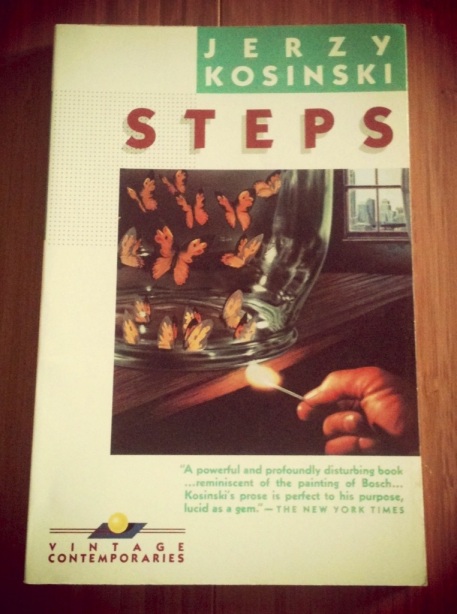
Steps — Jerzy Kosinski

One of the many small vignettes that comprise Jerzy Kosinski’s 1968 book Steps begins with the narrator going to a zoo to see an octopus that is slowly killing itself by consuming its own tentacles. The piece ends with the same narrator discovering that a woman he’s picked up off the street is actually a man. In between, he experiences sexual frustration with a rich married woman. The piece is less than three pages long.

There’s force and vitality and horror in Steps, all compressed into lucid, compact little scenes. In terms of plot, some scenes connect to others, while most don’t. The book is unified by its themes of repression and alienation, its economy of rhythm, and, most especially, the consistent tone of its narrator. In the end, it doesn’t matter if it’s the same man relating all of these strange experiences because the way he relates them links them and enlarges them. At a remove, Steps is probably about a Polish man’s difficulties under the harsh Soviet regime at home played against his experiences as a new immigrant to the United States and its bizarre codes of capitalism. But this summary is pale against the sinister light of Kosinski’s prose. Consider the vignette at the top of the review, which begins with an autophagous octopus and ends with a transvestite. In the world of Steps, these are not wacky or even grotesque details, trotted out for ironic bemusement; no, they’re grim bits of sadness and horror. At the outset of another vignette, a man is pinned down while his girlfriend is gang-raped. In time he begins to resent her, and then to treat her as an object–literally–forcing other objects upon her. The vignette ends at a drunken party with the girlfriend carried away by a half dozen party guests who will likely ravage her. The narrator simply leaves. Another scene illuminates the mind of an architect who designed concentration camps. “Rats have to be removed,” one speaker says to another. “Rats aren’t murdered–we get rid of them; or, to use a better word, they are eliminated; this act of elimination is empty of all meaning. There’s no ritual in it, no symbolism. That’s why in the concentration camps my friend designed, the victim never remained individuals; they became as identical as rats. They existed only to be killed.” In another vignette, a man discovers a woman locked in a metal cage inside a barn. He alerts the authorities, but only after a sinister thought — “It occurred to me that we were alone in the barn and that she was totally defenseless. . . . I thought there was something very tempting in this situation, where one could become completely oneself with another human being.” But the woman in the cage is insane; she can’t acknowledge the absolute identification that the narrator desires. These scenes of violence, control, power, and alienation repeat throughout Steps, all underpinned by the narrator’s extreme wish to connect and communicate with another. Even when he’s asphyxiating butterflies or throwing bottles at an old man, he wishes for some attainment of beauty, some conjunction of human understanding–even if its coded in fear and pain.

In his New York Times review of Steps, Hugh Kenner rightly compared it to Céline and Kafka. It’s not just the isolation and anxiety, but also the concrete prose, the lucidity of narrative, the cohesion of what should be utterly surreal into grim reality. And there’s the humor too–shocking at times, usually mean, proof of humanity, but also at the expense of humanity. David Foster Wallace also compared Steps to Kafka in his semi-famous write-up for Salon, “Five direly underappreciated U.S. novels > 1960.” Here’s Wallace: “Steps gets called a novel but it is really a collection of unbelievably creepy little allegorical tableaux done in a terse elegant voice that’s like nothing else anywhere ever. Only Kafka’s fragments get anywhere close to where Kosinski goes in this book, which is better than everything else he ever did combined.” Where Kosinski goes in this book, of course, is not for everyone. There’s no obvious moral or aesthetic instruction here; no conventional plot; no character arcs to behold–not even character names, for that matter. Even the rewards of Steps are likely to be couched in what we generally regard as negative language: the book is disturbing, upsetting, shocking. But isn’t that why we read? To be moved, to have our patterns disrupted–fried even? Steps goes to places that many will not wish to venture, but that’s their loss. Very highly recommended.

Beyond Black — Hilary Mantel

In Hilary Mantel’s 2005 novel Beyond Black, a fat psychic named Alison endures the harrowing torment of a collective of ghosts she calls the Fiends, the spirits of cruel men from her childhood. When a young, aimless woman named Colette comes into Alison’s life and assumes managerial duties for her career, Alison’s bilious past comes to a head. Colette engineers more and better gigs for Alison (the death of Princess Diana causes a huge spike in business), who, despite her genuine psychic talents, must nonetheless run the kind of scam the “punters” in her audience crave. Colette and Alison soon move in together, buying a new house in a quiet, boring suburb outside of London; their prefab homestead is drawn in sharp contrast to the slums of Aldershot where Alison grew up–the novel’s second setting. As Beyond Black progresses, contemporary suburban Britain increasingly crumbles into Alison’s grim, greasy past in Aldershot. Alison’s chief tormentor is, ironically, her “spirit guide,” a mean little man named Morris, a one-time frequent customer for Alison’s prostitute mother. Alison, like many victims, has suppressed much of her grotesque childhood, but it’s hard to black out everything with psychic baggage like Morris weighing her down. In time, more and more of the Fiends reemerge, forcing Alison to confront her mother and the abuse they both suffered at the hands of those awful men. As the book lurches to its chilling climax, Alison asserts independence, casting out her metaphysical and psychological demons.

At its core, Beyond Black asks what it means to be haunted and how one might survive an abusive past whole and intact. A slim specter of a character named Gloria floats through the book. The Fiends, whose vile antics are sometimes compared to a gypsy circus, have dismembered Gloria with the old saw trick. In Alison’s memory, pieces of Gloria are scattered around her childhood home, parceled out, fed to dogs, transported in boxes at midnight, hidden. Alison’s awful mother frequently alludes to Alison herself being “sawed up,” a metaphor that dances on the literal as we come to realize that the old drunk has pimped out her daughter repeatedly. Mantel’s novel investigates the return of the repressed, and although she gives us something like a happy ending, the book’s central thesis seems to be that pain cannot be abandoned or hidden, but only mitigated through direct confrontation.

The book’s humor does nothing to lighten its grim subject–if anything it exacerbates and confounds the darkness at the heart of Beyond Black. Mantel’s gift for dialogue fleshes out her characters (even the spectral ones), and while the book aims for a satirical tone at times, its characters are too richly drawn to be mere cutouts in a stage production. Mantel’s satire of contemporary English life is sharp and bleak; you laugh a little and then feel bad for laughing and a page later you’re horrified. It’s a successful book in that respect. It’s one real weakness is in the character of Colette, whose voice gives way to Alison’s past by the book’s end. This is actually no problem, as Colette’s narrative life is not nearly as interesting as Alison’s psychic traumas; Colette is, however, catalyst for the changes in Alison’s life. It would’ve been nice to see more resolution here, but I suppose Beyond Black hews closer to real life here, with all its messy loose ends.

I chose to read Beyond Black because I enjoyed Mantel’s recent Booker Prize winner Wolf Hall so much. The books have little in common other than being well-written and tightly paced, and I think that anyone who wanted more Mantel after an introduction via Wolf Hall would do right to pick up Beyond Black. Recommended. Beyond Black is available in trade paperback from Picador.

Tom McCarthy Talks C

Tom McCarthy on Technology and the Novel

Great essay today at The Guardian from Tom McCarthy, author of Remainder and the the forthcoming, highly-anticipated C. McCarthy discusses technology, modernity, and literature, mulling over writers like Blake, Cervantes, Shelley, Joyce, and Ballard. He also talks about some of the research that went into C. From his essay:

C takes place, specifically, between 1898 and 1922. The dates aren’t accidental: they mark the period between Marconi’s early short-distance radio experiments and the founding of that centralised state broadcaster of entertainment, news and propaganda that we still know as the BBC. In 1922, Britain was erecting, in its colonial territory Egypt, the first long-distance pylons of its proposed imperial wireless chain – and as it went about this, it lost Egypt, which gained independence in February of that year. For ancient Egyptians, “pylons” were gateways to the underworld: these modern ones came to symbolise bereavement on a national scale. In November, also in Egypt, Howard Carter disinterred what would become the most famous family crypt of all time. 1922 was also modernism’s annus mirabilis, seeing the publication of The Waste Land, in which voices, dialogues and even weather reports drift in and out of audibility as its author-operator fiddles with his literary dial – and Ulysses, a huge textual switchboard in which the themes of death and media are plugged into each other time and again.

Look for our full review of C sometime next week.

The Thousand Autumns of Jacob de Zoet — David Mitchell

At some point, almost every character in David Mitchell’s new novel, The Thousand Autumns of Jacob de Zoet tells a story. The book teems with storytellers and their stories, overflows with compact bildungsromans, wistful jeremiads, high adventures drawn in miniature, comic escapades, bizarre folk tales, and romantic myths, all pressed into the service of the book’s larger narrative, the story of Jacob de Zoet, a Dutchman in Shogunate era Japan. In 1799, the relative starting point for this massive novel, Japan limited economic trade with Europeans to the Dutch East India Company, who, with a few rare exceptions, were not permitted to touch Japanese soil. Instead, the Dutch were confined to the man-made isle of Dejima in the bay of Nagasaki. With its rich cultural mishmash, claustrophobic isolation, and strange hybrid nature, Dejima makes a fascinating platform for Mitchell’s tale.

Most reviews of Mitchell’s new book have squared it against his earlier novels, particularly his experimental opus Cloud Atlas (The Guardian‘s review even begins by asking “Does it matter what books a novelist has written before? Should readers need to know an author’s preceding works fully to grasp the new one?”). The reason for this is plain. By and large, Thousand Autumns is a conventional historical novel, a straightforward linear narrative that combines a forbidden love triangle story with elements of high adventure. There are good guys and bad guys, Enlightened thinkers and scheming crooks, warriors and spies, and even an evil monk who may or may not have supernatural powers. Thousand Autumns (like its main setting Dejima) is richly detailed but hermetically sealed; what leaks from that seal are its myriad stories, its capacity for storytelling. This effusion of stories also marks the novel, I believe, as something more than the conventional historical novel it is purported to be. Even more interesting though is the space the novel is occupying in a current literary debate–is The Thousand Autumns of Jacob de Zoet a postmodern novel or not? The rest of my review will discuss this issue, along with James Wood’s review at The New Yorker and Dave Eggers’s review at The New York Times. The simple answer, of course, is that it doesn’t matter whether the book is postmodern or something else–it’s a very good book, I enjoyed it very much, and you probably will too. I encourage you to read Wood’s precis, which I’ve excised here, and then pick up the book. Anyone else interested in the foolish minutiae of what may or may not make a book postmodern or post-postmodern or something else may wish to continue (or not).

Here’s James Wood, using Mitchell’s oeuvre to dither over the fact that “The serious literary novel is at an interesting moment of transition” —

If postmodernism came after modernism, what comes after postmodernism? For that is where we are. “Post-postmodernism” tends toward an infinite stutter. “After postmodernism” suggests a severance that has not occurred. We might settle for “late postmodernism,” a term that suggests the peculiar statelessness of contemporary fiction, which finds itself wandering—not unhappily—between tradition and novelty, realism and anti-realism, the mass audience and the élitist critic. Thus David Mitchell can follow a “postmodern” novel with a “traditional” comic bildungsroman, and then follow that with a conventional historical novel. It is hard to know whether this statelessness is difficult freedom or easy imprisonment, but the more ambitious contemporary fiction will often blend a bewildering variety of elements and historical techniques [. . .]

Dave Eggers, however, feels no need to look for machinations beyond straightforward storytelling. He claims that Thousand Autumns retains the

[. . .] narrative tendencies [of Mitchell’s earlier works] while abandoning the structural complexities often (and often wrongly) called postmodern. This new book is a straight-up, linear, third-person historical novel, an achingly romantic story of forbidden love and something of a rescue tale — all taking place off the coast of Japan, circa 1799. Postmodern it’s not.”

There’s a certain reticence in Eggers’s review to situate Thousand Autumns against anything but itself, including even the rest of Mitchell’s works. In contrast, Wood spends the first half of his review positioning Mitchell’s postmodernism, throughout both his novels (against each other), and as the oeuvre of one author (against other authors). For Wood, Thousand Autumns, because of “its self-enclosed quality [. . .] represents an assertion of pure fictionality.” He continues, arguing that “although the book contains no literary games, it is itself a kind of long game.” Wood would like to see in Thousand Autumns‘s discrete self-containedness a kind of literary gesture, perhaps a sort of conventional historical novel (in scare quotes) that is so conventional as to efface all signs of self-awareness (and thus erase the scare quotes around the gesture). At the same time, Wood recognizes the power of storytelling in the book, asserting that this feature is what makes it a “representative late-postmodern document.” Wood continues:

In place of the grave silence that was the great theme of early postmodernism (or late modernism, if you prefer), language announcing a postwar exhaustion, its own impossibility, as in the work of Beckett or Blanchot, there is a confident profusion of narratives, an often comic abundance of story-making. Never, when reading Mitchell, does the reader worry that language may not be adequate to the task, and this seems to me both a fabulous fortune and a metaphysical deficiency.

These last sentiments are where I strongly disagree with Wood (as perhaps my lede attests)–the greatest strength of Mitchell’s work here is the fabulous fortune of its abundant storytelling. Far from being a metaphysical deficiency, the characters in Thousand Autumns, major and minor, repeatedly transcend their social, spiritual, economic, psychological, and physical confinement via storytelling. Again and again language breaks characters away from their isolation or imprisonment, gives them access to adventure and romance–to spirit. Ultimately, Wood condemns the book for this “metaphysical deficiency,” arguing that “the reader wants a kind of moral or metaphysical pressure that is absent, and that has ceded all the ground to pure storytelling.” (In Wood’s critical body, it is always “the reader,” never “this reader”). I think that the pleasure and power of pure storytelling is its own end, and perhaps it is this recognition that leads Eggers to pronounce of the book simply that “Postmodern it’s not.” And while this declaration is ultimately a more reader-friendly take on Thousand Autumns, it’s also clear to see how the experimental nature of Mitchell’s previous work calls for Wood’s need to place the novel, to situate it against a developing canon (even if Wood chooses ultimately to deny its status).

Wood is perhaps right in his assertion that the term “post-postmodernism” leads to an “infinite stutter.” Still, post-postmodernism ultimately seems more fitting to describe Thousand Autumns than Wood’s “late postmodernism.” The Thousand Autumns of Jacob de Zoet cunningly sets the spiky traps of language and then gracefully leaps over them. Like David Foster Wallace and William Vollmann–two writers who I believe mark the beginnings of post-postmodernism–Mitchell wants to transcend postmodernism’s ironic vision, and storytelling–giving his characters voices–is a means to this end. Perhaps it is Mitchell’s earnestness in conveying the power of storytelling leads Wood to conclude Thousand Autumns “a kind of fantasy [. . .] Or, rather, it is a brilliant fairy tale; and even nightingales, as a Russian proverb has it, can’t live off fairy tales.” If, finally, Thousand Autumns is not a late postmodernist historical fiction but indeed a fairy tale, then it’s worth noting that it’s a particularly enjoyable and nourishing one. Highly recommended.

In Brief — New (and Not So New) Noir Novels

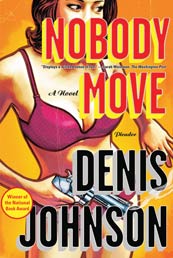
Got a great little gang of new noir (or at least noirish) novels from Picador last week. These handsome trade paperbacks are all available April 27, 2010. Full reviews all around forthcoming, but until then–

Denis Johnson’s Nobody Move is a tight snare drum of a comedy crime novel. Jimmy Luntz, still decked out in his white barbershop chorus tux (don’t ask) gets into trouble with a big gorilla he owns money too. On the run, he meets smoldering bombshell Anita. More trouble ensues. Nobody Move, originally serialized in Playboy, is a dark, funny genre exercise propelled by Johnson’s sharp dialogue and keen eye for detail. Johnson’s restraint and economy demonstrate writerly chops, but its his story and his characters that made me stay up too late reading last night.
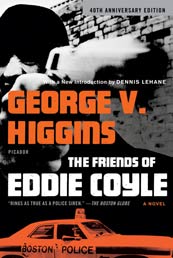
I’m kind of embarrassed that I’d never heard of George V. Higgins’s seminal crime novel, The Friends of Eddie Coyle, the story of a down-on-his luck gunrunner trying to get a break on a three-year sentence. Picador’s new edition celebrates the book’s 40th anniversary. Higgins’s electric dialogue thrusts the reader right into the action, trading narrative clarity for a smoky milieu of backroom deals and gritty alleys. But my phrasing here sounds way too corny and trite. Forgive me, I don’t really know how to write about good crime fiction because I’m so unused to it. I’ll lazily favorably compare The Friends of Eddie Coyle to David Simon’s Baltimore crime epic The Wire.

I’ve been too engrossed with Coyle and Nobody Move the past few days to do more than skim over Clancy Martin’s How to Sell, a novel about grifters and scam artists in the jewelery world, but I did read and very much enjoy its first chapter, where the protagonist pawns his mother’s wedding ring (“the only precious thing she had left”) and yet still manages to keep reader sympathy (mine, at least). Martin worked for years in the fine jewelery business. He also translates Nietzsche and Kierkegaard. Zadie Smith says of How to Sell: “It’s a little like Dennis Cooper with a philosophical intelligence, or Raymond Carver without hope. But mostly it’s like itself.” I like that.
If you’re still not in a  noirish mood, I’ll make one more attempt to piqué your interest. In what has to be one of the greatest opening shots in the history of cinema, Orson Welles begins his dark crime thriller Touch of Evil with a continuous tracking shot of a car that . . . hang on, I shouldn’t tell you what happens if you don’t know yet. Just watch the scene. It mines the same border-horror that those other noir-masters Roberto Bolaño and David Lynch also evoke so well.

Yann Martel Talks About His New Novel, Beatrice and Virgil

Yann Martel talks about autobiography, animals, and more in his new novel Beatrice and Virgil.

Reviews in Brief: All the Living, The Winter Vault, and Jenniemae & James

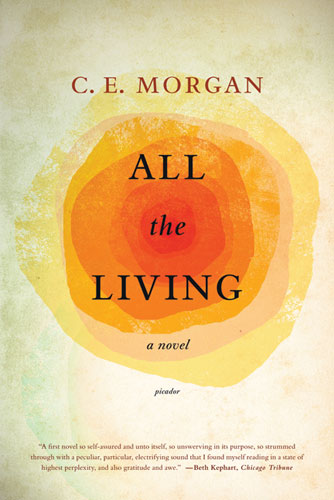
In her debut novel, All the Living, C.E. Morgan tells the story of Aloma, a would-be pianist who forgoes her dreams of artistic freedom to play wifey to her young lover Orren who must take sole responsibility of running the family tobacco farm after his family dies in a car accident. Aloma knows nothing about farming and even less about the grief Orren suffers. She’s an orphan herself, but with no memory of her own parents, she finds it hard to connect to overworked Orren as he slowly slips away. A nearby minister who hires her to play church services paradoxically relieves and exacerbates Almoa’s despair when he enters her life. Morgan’s novel is a slow-burn, often painful, sometimes slow, but also guided by a poetic spirituality that resists easy interpretations. (Oh, and she’ll also make you run for a thesaurus every few pages). All the Living is new in trade paperback from Picador, available now.
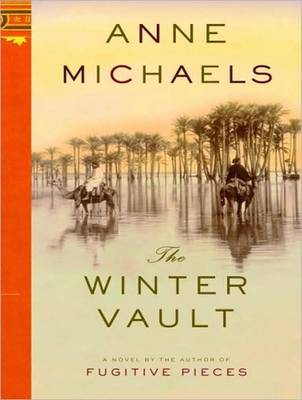
Anne Michaels’s The Winter Vault begins in Egypt, in 1964, where Canadian engineer Avery Escher is part of a team trying to help the Nubians who will be displaced by the Aswan High Dam. He and his wife Jean share a houseboat on the Nile, but what might have been a year of romantic adventure devolves into the tragedy of a culture displaced and a family eroded. The pair separate and return to Canada, where Jean takes up with Lucjan whose stories of Nazi-occupied Warsaw inform the novel’s second half. The Winter Vault is poetically dense and often overly-lyrical, sometimes offering self-important and ponderous dialogues in place of concise plotting. And while Michaels treats the tragedies of the occupied Poles and Nubians with a certain sensitivity, her engagement veers awfully close to what Lee Siegel has termed Nice Writing.The Winter Vault is new in trade paperback from Vintage on April 6, 2010.

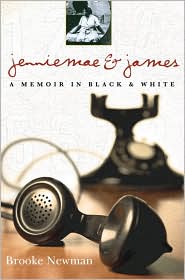
Jenniemae & James is Brooke Newman‘s new memoir about her father’s unlikely relationship with the family maid. James Newman was a brilliant mathematician (he coined the term “googol”); Jenniemae Harrington “was an underestimated, underappreciated, extremely overweight woman who was very religious, dirt poor, and illiterate.” Newman wants us to see a unique–and deep–friendship between the pair that defies 1940s/50s norms in Washington D.C., but it’s hard not to think that there’s at least some whitewashing going on here. Undoubtedly the two shared an affinity and connected through a love of numbers, but it’s hard to see more in this than an employer-employee relationship–and one still colored by the politics of the pre-Civil Rights era. Jenniemae, black mammy, sassy, Southern, larger-than-life, quick with folk wisdom and colorful quips–it all seems like a one-sided vision, a take on the Magical Negro trope that resists human complexity. Still, Newman’s tone is sincere, her pacing is swift, and the book reads with the pathos that memoir lovers demand. Jenniemae & James is new in hardback from Harmony/Random House March 30, 2010
Reality Hunger — David Shields

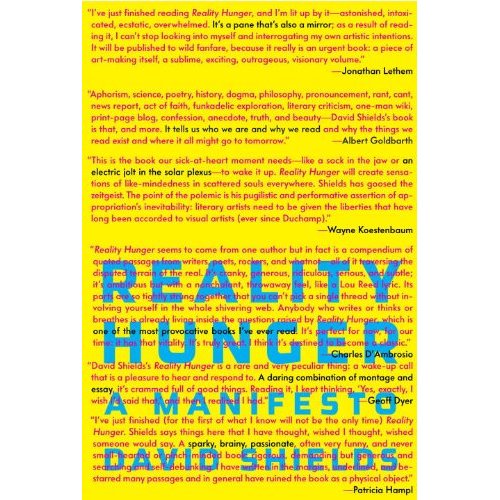
Just what, exactly, is David Shields’s Reality Hunger supposed to be about? He’s brazen enough to slap the subtitle “A Manifesto” right there under the title, suggesting a work of sustained principles calling for something to change or happen for some reason, but after reading the damn thing, I still have no real idea what he really wants or why I should care. If I had to venture a guess, it seems that Shields is suggesting that we quit reading, writing, and publishing “standard novels” and that “realism” in letters can only be located in lyric essays and other works free from genre constraint (even the memoir is too artificial for Shields, and autobiography ultimately represents facts without truth).

I think what he really wants is authenticity, which repeatedly gets called “reality,” a term he (repeatedly) fails to satisfactorily define. Reality Hunger seems to argue that authenticity in the 21st century must take the form of synthesis, must chop up and recombine disparate elements, genres, cultural artifacts. To that end, Shields’s book is a tour-de-force of citation and appropriation. Aspiring toward an aphoristic tone, Shields organizes the book into 618 short sections over 200 or so pages; most of the sections are not his work, but come rather from myriad sources across different cultures and eras. I have no problem with this (c’mon, this is Biblioklept!) and Shields clearly demonstrates that the practice is hardly new in the history of story-telling, rhetoric, or philosophy.

My real problem is the self-seriousness of it all. Shields aspires to “break” reality into his text by reapportioning and recombining varied citations, but this bid for authenticity is, of course, utterly artificial, often stolid, and not nearly as fun as such a playful medium would suggest. Even worse, it’s not really a proper synthesis; that is, in stacking bits of other people’s work together with some of his own thin connective tissue, Shields hasn’t achieved an authentic blend or, to use a term he’d hate, anything novel, anything new. The jarring stylistic shifts between sections will lead serious readers repeatedly to the book’s appendix to find out who originated the words Shields is copping.

If Reality Hunger approaches having a point, it comes in the book’s penultimate chapter, “Manifesto.” Here, he attacks “standard novels.” The term is appropriated from W.G. Sebald, a writer of marvelous and strange novels that Shields would love to be essays. In one of the few original lines in the book, Shields dismissively writes that “Novel qua novel is a form of nostalgia.” He goes on to argue that the personal/lyric essay is more closely aligned with philosophy, history, and science than novels, and that novels no longer have any legitimate response to these more “real” concerns. Which is utter bullshit, really, and seems more than anything to prove that Shields is probably not that well-read, despite his massive cut and paste catalog. Not that I think that he’s not that well-read. He just picks and chooses, according to his taste, what novels get to escape being “standard.” How can one read contemporary masterpieces like The Rings of Saturn or Infinite Jest or 2666 or Underworld and honestly say that they don’t hold value? Shields, of course, does/would presumably find room for these in his “manifesto.”

The most embarrassing chapter of Reality Hunger, “Hip-hop,” also reveals the most about Shields’s program. It’s also one of the few chapters to feature long sections of Shields’s own original prose. In a turgid, humorless, overly-analytical “defense” of hip-hop and “sampling culture,” Shields describes how hip-hop works, riffing on the function of “realness” in hip-hop, and grasping at the larger implications of a normalized recombinant art form within modern culture. And though I agree with pretty much everything that Shields has to say about piracy and copyright laws, the drastic artificiality of his style and tone is really too much here. It’s like someone trying to explain why a joke is funny.

The worst though is Shields’s assertion that “Our culture is obsessed with real events because we experience hardly any.” The sentence itself is a clever bit of sophistry that falls apart under any real scrutiny. I can name a dozen “real events” that I experienced in the last few hours alone, including eating dinner with my family, talking with my wife, and putting my daughter to bed. Complaining that we are denied “real events,” like the mopes Shields cites from Douglas Coupland’s Generation X who lament their “McLives,” is a way of excusing ourselves from the intensity of being present–at all times–in our own lives. The vapid philosophy of the spoiled whiners in Reality Bites wasn’t attractive back in the early nineties and it’s downright repellent now.

So what does it all add up to? I think that Reality Hunger works well as a description of post-postmodernity. And as much as I’ve ranted against it here it’s actually quite enjoyable as a compendium of clever quotations. As a manifesto though, it’s an utter failure. To be fair, he had no shot of convincing me that the novel is or should be dead. There’s just too much evidence to the contrary.

Reality Hunger is now available in hardback from Knopf.

Three New Novels: Brothers, Amberville, and The Post-War Dream

The stack of promo copies and galleys at Biblioklept World Headquarters has built to an unmanageable and untenable tower of tasks that we are simply not up to of late. It’s not like we’re not reading, but we do have a day job! While we do request certain new books from publishers, most of what comes into our esteemed hallows is unsolicited, and a lot of it is honestly pretty dull stuff. However, we have a tidy little pile of new books that we’re going to read in full as soon as we can get to them, and it seems only right to share with our Esteemed Readers in a timely manner.

brothers

First up is Chinese author Yu Hua’s titanic Brothers, the engrossing and often ribald story of two step-brothers, Baldy Li and Song Gang. Brothers moves from the quiet village life of the brothers’ native Liu Town, through the Cultural Revolution, and into China’s contemporary economic and technological boom. At over 600 pages, the novel seemed a bit daunting, but we read the first 50 pages at a steady clip. Honestly, Yu Hua had us at the fourth page, when Baldy Li indulges in a bit of nasty voyeurism in a public restroom. Check the pithy wisdom:

Nowadays women’s bare butts aren’t worth much, since they can be found virtually everywhere. But back then things were different. It used to be that women’s bottoms were a considered a rare and precious commodity that you couldn’t trade for gold or silver or pearls. To see one, you had to go peeping in a public toilet . . .

We’re really enjoying Brothers so far, and the book seems destined to break Yu Hua’s funny and poignant voice to a Western audience. Here’s a pretty cool in-depth profile on Yu Hua by the New York Times. Full of weird vignettes, crude humor, and a frank look at a very different culture, we think this will be one of the highlights of 2009. Brothers is now available in hardback from Pantheon Books.

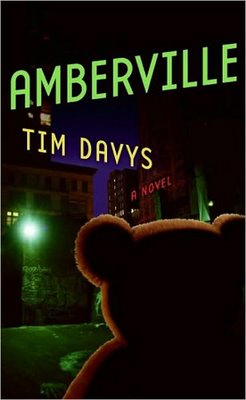
amberville

We’re not really big fans of detective noir, but Tim Davys’s Amberville seems to do the genre justice despite its big twist–the characters are all stuffed animals. In Davys’s debut novel, dark secrets from Eric Bear’s past come back to haunt him and challenge his legit prominence as a high-powered ad exec. The first two chapters were okay–Davys certainly has his noir tropes and rhythms down–but we had a hard time getting over the stuffed animal conceit. Still, readers who like their noir twisted–or fans of fantasy may get a kick out of Amberville, available now in hardback from HarperCollins.

postwardreampreview

New in paperback next month from Anchor Books, Mitch Cullin’s novel The Post-War Dream tells the story of two retirees in Arizona. After his wife Debra becomes gravely ill, Hollis finally confronts the trauma of his past, rooted in his experiences as a soldier in the Korean War. We have to admit that the plot description sounded a bit…hmmmm… “not our speed” would be a polite way to put it, we suppose (honestly, the idea of reading about an old married retired couple didn’t sound that interesting), but the first three chapters were very good, a bit strange, and intriguing enough to keep us going. Plus the book is dedicated to Howe Gelb–how weird is that? Those unfamiliar with Cullins might know his novel Tideland from its film adaptation a few years ago by Terry Gilliam. Those unfamiliar with Terry Gilliam have our permission to give up.

The Sunset Limited — Cormac McCarthy

thesunsetlimited

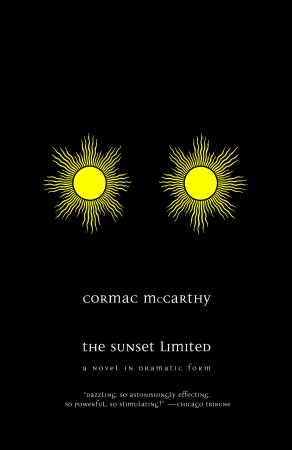
Cormac McCarthy’s The Sunset Limited is a lean, spare dialectic between two characters named simply “Black” and “White.” Black, a recovering addict who found Jesus in prison, saves White, an aging professor, who attempts to kill himself by jumping in front of a commuter train, the Sunset Limited. Black keeps White in his apartment, probing the older man’s justification for suicide. White makes it very clear that he intends to finish the job the moment he can leave Black’s apartment, leading Black to stall the professor through argument and storytelling. As such, Black sustains most of the book’s driving questions about morality, redemption, and love for one’s fellows, until near the end, when White unleashes a tirade of nihilism. As the story charges to its climactic conclusion, it becomes clear that it is not just White’s soul at stake, but also Black’s own spirituality.

The cover of The Sunset Limited attests that the book is “A Novel in Dramatic Form,” a conceit that may divide many of McCarthy’s admirers. The language here is precise and visceral, loaded with meaningful ideas yet also utterly concrete. McCarthy’s grasp of colloquial diction shines through these two voices, carrying the story forward in a hurtling momentum with minimal stage directions. Still, some readers may feel cheated out of McCarthy’s rich prose in this bare story (they need only to pick up Blood Meridian or The Road or All the Pretty Horses, of course). I found the story engaging, poignant, dark, and often surprisingly funny, and I read it in one taut sitting. The Sunset Limited is not the starting place for those interested in McCarthy, but fans who’ve yet to read it will probably enjoy it quite a bit. I’m already anticipating a second reading. Highly recommended.