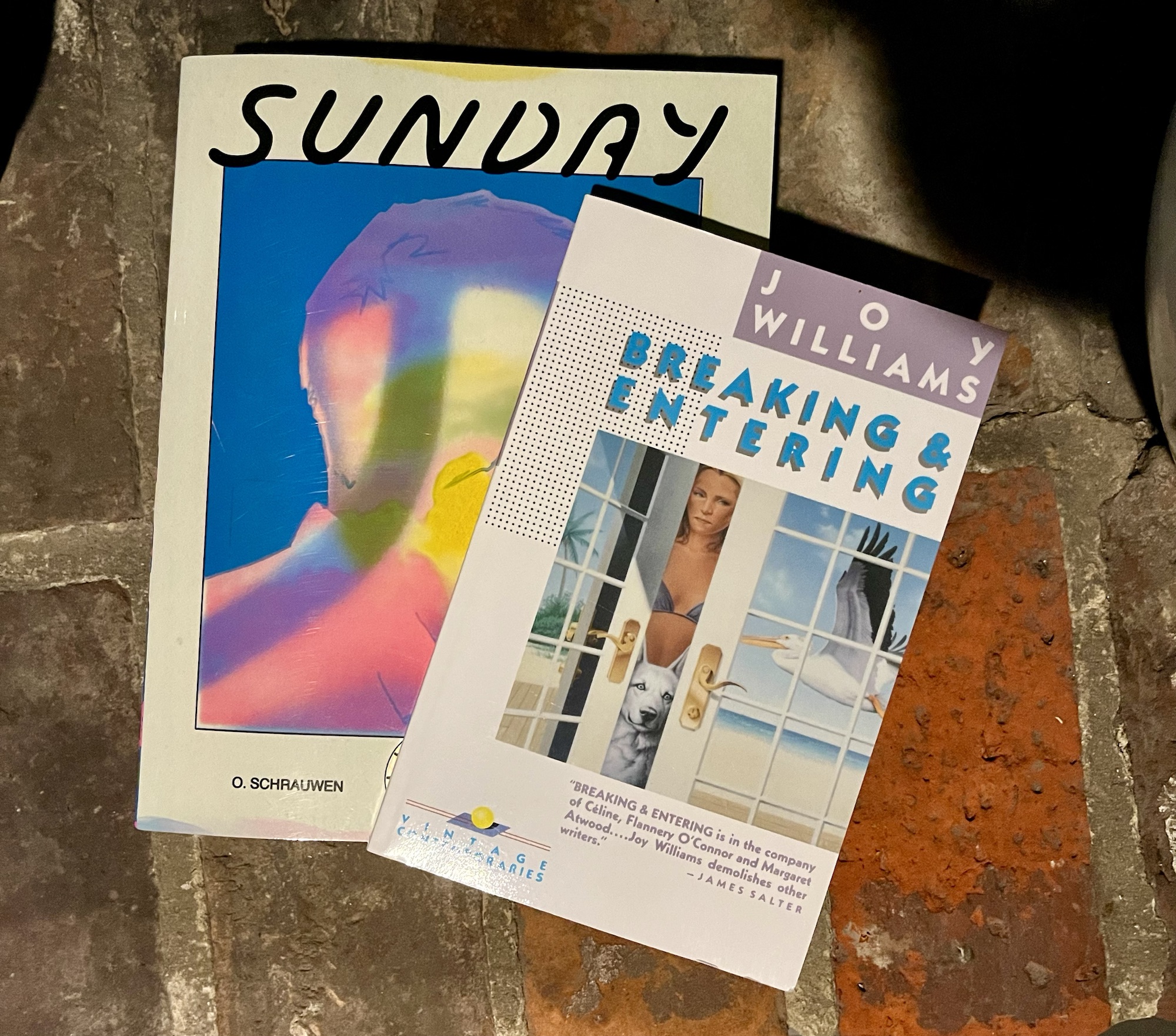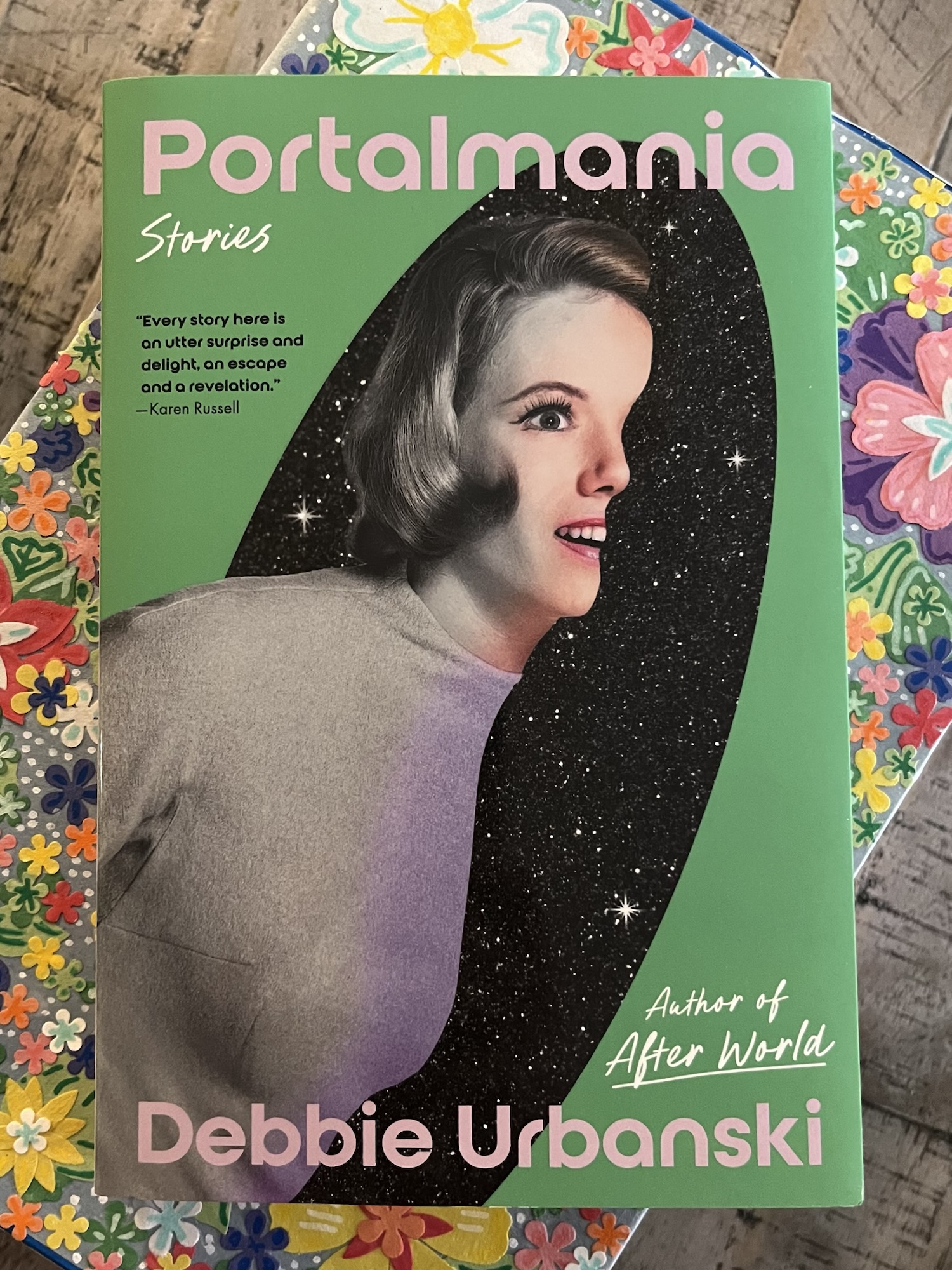
Thirteen ways of looking at a portal | A review of Debbie Urbanski’s Portalmania

Debbie Urbanski’s new collection Portalmania is a metatextual tangle of science fiction, fantasy, and horror where portals don’t offer escape so much as expose the fractures beneath family, love, and identity. Her characters navigate asexuality, neurodivergence, and the quiet violence of domestic life against an uneasy backdrop of porous reality. At any moment a portal might appear, or a mutation might take hold, or, a wife might sell her daughter to a witch to assassinate her husband. Nothing is stable in Portalmania.

There are nine stories in Portalmania. Or maybe there are ten stories. Or eleven. Or maybe thirteen. If there are thirteen stories, maybe I could riff on that Wallace Stevens poem for my review titles (that would be too fucking precious and obnoxious though, wouldn’t it).

There are nine or ten or eleven or thirteen discrete “stories” in Portalmania, depending on how you want to count or what you want to count as a discrete story. But this need to count, or, more precisely, to pin down what-something-is-and-is-not, runs counter to the spirit of Portalmania, whose heroes push back on the definitions that are literal placeholders, linguistic lines that bind identities.

Perhaps the biggest through-line of the nineteneleventhirteen stories in Portalmania is the big ole question: What is love? In the story “How to Kiss a Hojacki,” a character puts the problem succinctly, writing a note to her husband: “We need to redefine love.

The opening story, “The Promise of a Portal,” helps to establish a realistic world punctured by magical sci-fi. In “Promise,” we come to understand portals as personal escape hatches away from the humdrum domesticity of family life. “I think you can love people–children, mothers–and still want to leave them,” the hero of the story muses. These same portals pop up throughout the collection, creating continuity so that the nine (or are we saying thirteen? I misremember) stories here read more like a loose, discontinuous novel.

The second story, “How to Kiss a Hojacki,” also introduces a sci-fi conceit that repeats in the collection. In this story women transform into “Wonderfuls” — “Hojackis,” “Smith-Smiths,” or “Tangers” — asexual beings who must fight for their autonomy against a reactionary Trumpian politician who campaigns on interring them in camps.

“Hojacki” hovers around the viewpoint of a husband who is becoming increasingly resentful and sexually frustrated with his changing wife. He is unwilling to even try to redefine love: “having sex is how people love each other,” he contends. “Hojacki” is most fascinating when set in context against the stories at the back end of Portalmania, which deal far more directly with themes of asexuality, sexual coercion, and marital rape. While it would be a stretch to say Urbanski depicts the husband sympathetically, her rendering is nevertheless nuanced enough to be later deconstructed in far more visceral detail in stories like “The Dirty Golden Yellow House,” “Hysteria,” and “Some Personal Arguments in Support of the BetterYou (Based on Early Interactions).”

“The Dirty Golden Yellow House” is the strongest piece in Portalmania. It rewrites “How to Kiss a Hojacki” (and reimagines Charlotte Perkins Gilman’s “The Yellow Wall-Paper”) from the perspective of an asexual writer trapped in a marriage marked by marital rape and emotional coercion. “Yellow House” combines elements of fairy tales and Gothic horror with the more prosaic forms of the essay and the internet forum to yield a harrowing story. “Yellow House” also quickly registers as a metatextual tale, a self-deconstructing narrative that pauses early to take would-be critics to task:

Certain reviewers and readers have already started complaining about my recent stories, both their thematic similarities and their very specific view of relationships. I have examples. From one reviewer: Other than the overt political addition to the obvious social metaphors which helps extend this to novelette length, this [one of my stories] is exactly like the same author’s [another one of my stories] in being an overlong underplotted offputtingly narrated story of a repugnant asexual wife and a repugnant husband and their repugnant relationship. From another reviewer: It [one of my stories] is probablsending a message about something—menopause maybe?… I have no clue what the ending is supposed to mean.From a reader: My takeaway is that the story [one of my stories] was an exercise in catharsis for the author, and has no real value as a morality tale beyond—

My past self slams her (our?) body against the window glass. Has she not been clear enough. Here is what she expects in my writing: revenge, on me, on him, on them, on the structure of the story itself, and if I ever consider not placing her at the bloody heart of whatever I write, she will do this to me. She acts out what she will do to me. There is so much blood.

Angry, self-aware, and emotionally scorching, “Yellow House” nevertheless offers sparks of mean humor. The narrator observes that her “neighbors staked colorful rainbow signs into their front yard: WE BELIEVE LOVE IS LOVE AND KINDNESS IS EVERYTHING.” While the sentiment of the sign might be progressive, the tautology “love is love” is reductive and unhelpful in a book where redefining what love is is the (de)central problem. 

Another highlight of the collection is “LK-32-C,” a triptych of stories about a troubled child’s fantasy world. (We might count “LK-32-C” as three stories, not one; each section has its own title.) The narratives in “LK-32-C” seem to run in concurrent yet divergent directions, where fantasy punctures reality or vice versa. In one such topsy-turvy moment, a distraught mother dreams up a magical totem of familial security: “if anyone questioned whether or not there was some love here, she could have pointed to that sphere.”

And again, in “The Portal,” fantasy punctures reality and metatextuality punctures the narrative. Our narrator interrupts building her fantasy world to tell us that,

I do realize that, as an author, I’m not supposed to let my other worlds become utopias. At least, that was one successful writer’s advice to me when I told him I was working on this story. He explained that when portal worlds are utopias, it’s like a flashing neon sign that says lazy writing. If we want such fantastic places to be believable (and who doesn’t want their writing to be believed?), they have to possess a substantial dark side.

Our author-hero’s rejoinder points out that the dark side is the absence of the utopia: “What if I’m trying to create an untroubled and pleasant world that might haunt someone for as long as they could remember it?” We’re always looking for that perfect portal.

Not everything in Portalmania works. “How to Kiss a Hojacki” has a great premise but its collapse into a political satire is dissatisfying. “Long May My Land Be Bright” is the weakest link in the collection. Its central conceit is that there are literal rifts in the USA, which create two separate antithetical political-cultural realities. It’s not that I’m not sympathetic to the sentiment here, it’s just that I think the metaphor should be pushed even further, to more absurd places.

I’m also not sure how I feel about Urbanski’s decision to include a tenth chapter in her book titled “Story Notes.” By the time I got to the (ostensibly)-last story “The Portal,” I was having a really hard time keeping all the New Criticism, death-of-the-author, grad-school reading training stuff out of my head. With its constant metatextual interruptions and its deeply– personal themes, it became very, very difficult not to read Portalmania as in part a work of autofiction. So the notion of “Story Notes” both intrigued and repelled me. Here is how “Story Notes” begins:

One of the indisputably vital roles of the modern reader is to tease out what is autobiographically true for the fiction writer versus what that writer made up in their stories. What is fiction after all if not a porthole into the author’s private life? So allow me to get this out of the way: Everything you’ve read in Portalmania (or will read, depending on your preferred order) actually happened to me. The portals, the lack of portals, the witches, the monsters, the ghosts, the murders, the space travel of beloved family members—every story in this collection is a factual account of my own experience. And now that you know this, I can spend the remaining space of these notes discussing whatever I want.

And I suppose she does discuss whatever she wants in the notes.

If we are counting “Story Notes” as a story, there are ten stories in Portalmania. If we keep reading after “Story Notes,” there is a final piece, “Coda” an unlisted hidden track of sorts. I love the decision to put this last, brief, and strong piece after “Story Notes.” “Coda” revisits the themes of Portalmania and concludes by pointing to “a terrifying and wide-open future,” which is what I suppose we can all expect as we fumble toward our own redefinition of love, storytelling, and escape. Good stuff.
Blog about recent (non)reading

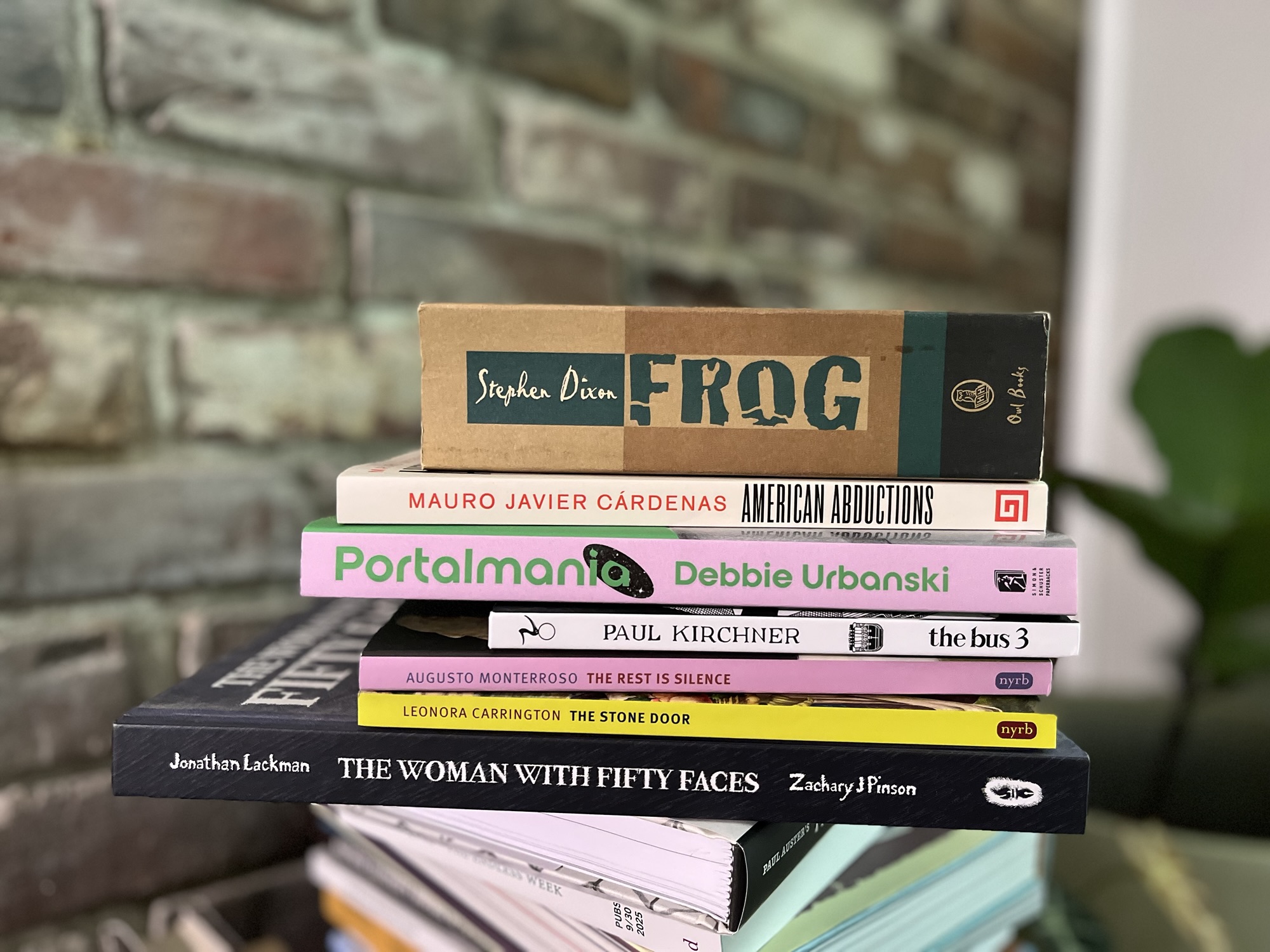
I read one novel in May 2025, the historical graphic biography The Woman with Fifty Faces: Maria Lani and the Greatest Art Heist That Never Was, by Jon Lackman and Zack Pinson. I think it was the only book I’ve read in full in the past two months. It was excellent and I owe it a full review.

I’ve read so so so many Wikipedia pages lately, tunneling down there almost every night (even all night) over the last six weeks. Last night I think I started, for some reason I can’t recall, on Julia Lennon’s page, maybe around eleven pm, and a few hours later I was reading about the visual systems of cuttlefish (this is when my wife woke up and told me to go to sleep). I didn’t start Leonora Carrington’s The Stone Door and I didn’t finish Augusto Monterroso’s The Rest Is Silence, even though they were on my cute little night stand.

I read a big chunk of The Rest Is Silence last Monday at the beach. I took my son and his friends there; despite their claims to being “goth” (or whatever, false claims) they wanted to hang out all day at Hannah Park. So we did that. I walked for a few miles and then discreetly drank a carton of sauvignon blanc and almost finished The Rest Is Silence and then promptly forgot all of the feeling of having read it, having replaced that feeling with the blazing Florida heat (a heat obscured by a heavy gray Atlantic breeze). There was a camp of young musicians wading in the water. I don’t know how I recognized them as teenage musicians, other than years of recognizing such persons in public — the same way I can recognize, say, college football coaches out for barbecue on a Saturday afternoon or late Friday. Some people just look like some people. I chatted with one of the music camp coaches. A lot of these kids hadn’t ever been to the ocean, he assured me, which he didn’t have to. Their movements against the waves showed it. I’m sure they are all graceful with their chosen instruments. Like I said, the slim novella was gone. The sand covered it over (this is a stupid metaphor; I am all rotten inside lately).

I have also not finished Paul Kirchner’s The Bus 3, mostly because I wanted to not finish it, to save it for a different shade of my disposition that is sure to arrive any day now. I love what Paul Kirchner has done, and I have never felt the strips whimsical; or, rather, their whimsy struck me as wise, a sharper whimsy. I’m having a hard time laughing lately.

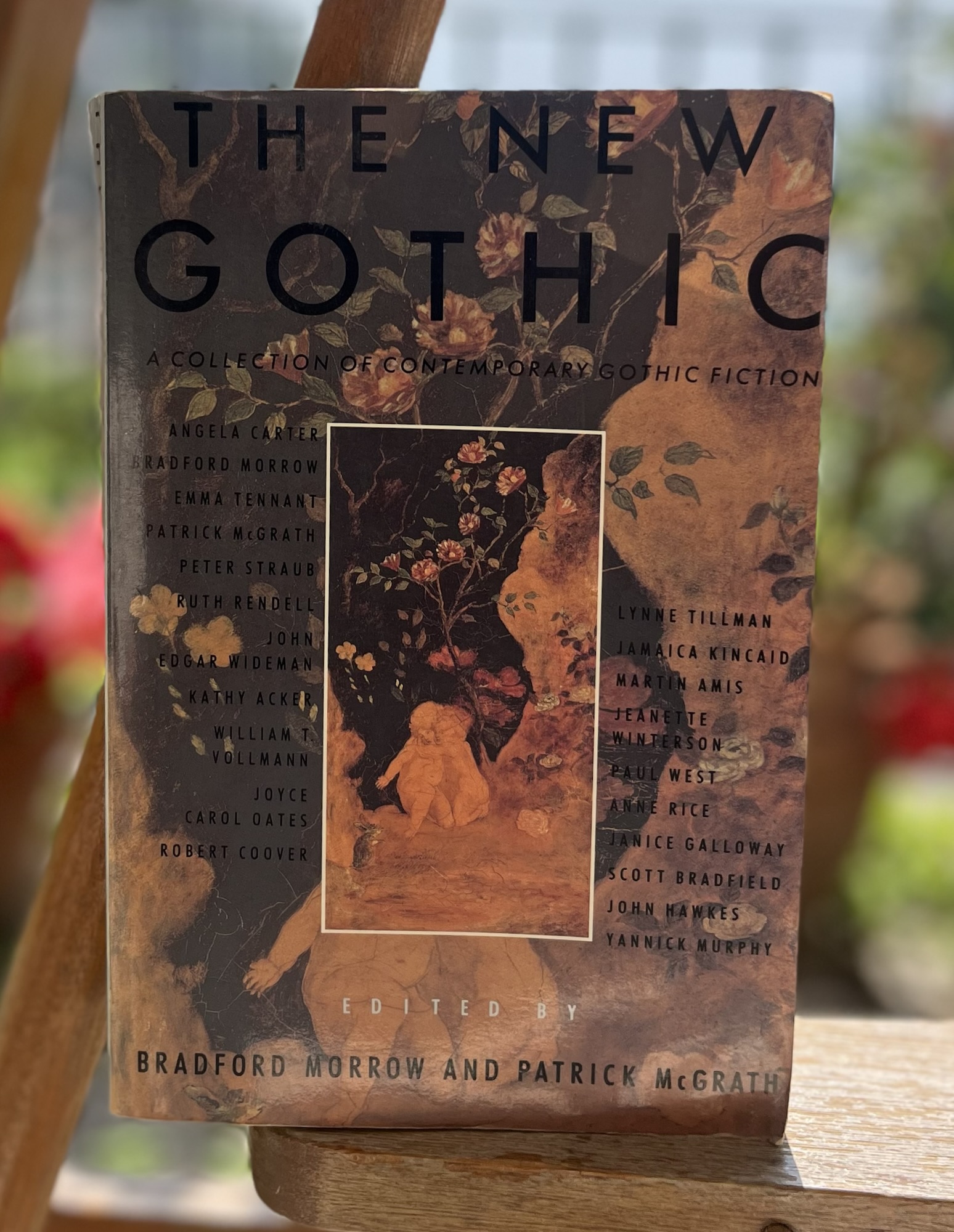
I read a big chunk of an anthology called The New Gothic about three weeks ago. It was in the house we — we my family, my wife and kids — were staying at in Minori, a smallish town in the Amalfi Coast of Italy. We spent the first fifteen days of June in Italy to celebrate my daughter’s 18th birthday and high school graduation. In a lovely little house on the side of a mountain (maybe it was a big hill, I’m a Florida boy), in a small shelf of mostly non-English language books, I picked out The New Gothic and read tales by Coover, Carter, Vollmann and others. The book is a love letter to Poe, really, with a wonderful introductory essay by editors Bradford Morrow and Patrick McGrath.

The story that really stood out though was Lynne Tillman’s “A Dead Summer.” This particular paragraph made me cry:

The Mets were doing better, but with so many new players on the team, she didn’t have the same relationship to them. Her dead friend had loved the Mets too. Sometimes she watched a game just for him, as if he could use her as a medium. She was sure his spirit was hovering near her, especially at those times. But she did not speak of this to her boyfriend who was talking about breaking up. That night she let him gag her. She didn’t have anything to say anyway, not anything worthwhile. She read that the Ku Klux Klan had marched in Palm Beach.

The story is about grief and bad dreams set against a terrifying American political backdrop. The notion of witnessing something so that one’s dead friend might use your eyes as a medium is what did me in. I’ve had such thoughts a few times in the last two months after my best friend died unexpectedly, moments where I thought I might somehow channel his spirit to, say, listen to the new Pulp record. But I don’t think he’s haunting me.

(I didn’t steal The New Gothic from the house in Minori, although I thought about it for two or three minutes.)

I have almost finished reading the stories in Debbie Urbanski’s collection Portalmania (it is a “collection” but I suspect it is a stealth novel — about escapes, transitions, aesexuality, monsters, uh, portals, etc.). Review to come. (I will absolutely get might shit together, any day now.)

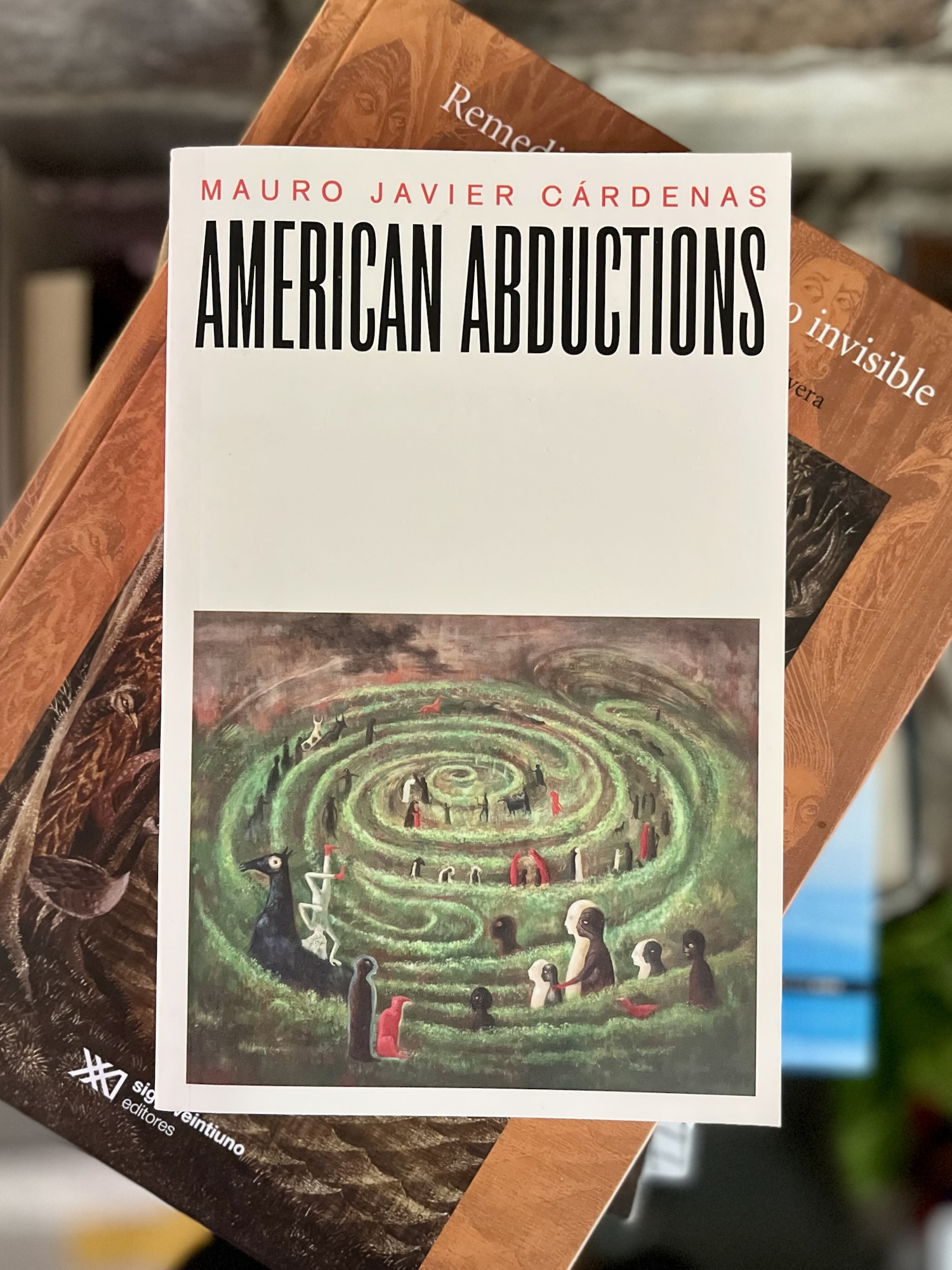
I read and reviewed Mauro Javier Cárdenas’s American Abductions back in March. It’s only in this stack — this organizing picture that I use as an outline — because it is the most timely novel in America right now. It is a novel I read, loved, and highly recommend. Its narrative power surpasses the timeliness I’ve imposed upon it.

I was, what?, maybe 200, 225 pages? into Stephen Dixon’s massive novel Frog before I abandoned it. I was really loving it, its tics, repetitions, its noisy monotonous howl, its droll jabs at normal fucking people. It could have been one of my favorite novels ever, I think, but I’m not sure I’ll ever wade back in. I tried a few times, but it’s all enmeshed with some bad intense feelings I felt in early May.

Which is what? I guess? another way of saying that reading is just a series of feelings for me now. Maybe at some point I thought of reading novels as an intellectual exercise, and maybe at one point I turned that into an ideal of an aesthetics of reading — but I don’t care about any of that shit now.

I believe in reading for

pleasure

pain

other feelings, in between and otherwise.

And another Moby-Dick

Herman Melville’s 1851 novel Moby-Dick is probably my favorite book.

***

Years ago at an awful dinner party a man I didn’t know asked me What do you do?, by which he meant how I made money to live, or, maybe charitably, if I had a specific profession. When I told him it had something to do with literature and college students he followed up with a question no stranger should aim at another stranger-

-So what’s your favorite book then?

-Moby-Dick is my favorite book, I offered, this being my somewhat standard answer then.

-Oh no, I mean, what’s your real favorite booknot just the one you say to impress people?

Okay Gravity’s Rainbow is my favorite book.

-I haven’t read that one yet but I like Tom Clancy too. 

***

A dear friend at our house this weekend, under truly awful circumstances, circumstances that have no bearing on this riff, claimed to have counted “eighteen copies” of Moby-Dick around the house. As far as I could tell, there are only about thirteen, including a children’s pop up version and three comic book adaptations (I don’t know how he would’ve found the comic adaptations, as they are slim and I think in drawer or box). He asked for one; I offered him the UC Press edition illustrated by Barry Moser, the one I’d used the last time I reread Moby-Dick. He opted instead for the most recent Norton Critical Edition, which a rep sent me a few years ago.

***

The last time I reread Moby-Dick I used the UC Press edition illustrated by Barry Moser. This was in 2021. I ended up writing forty riffs on the novel, likely trying the patience of any regular readers of this blog.

***

If you’re not up for forty riffs, I wrote a very short riff on this very long book back in 2013.

***

The two preceding notes are my way of saying: Moby-Dick is probably my favorite novel; it’s fantastic and I’ve written about it in both short and long form, and I think anyone can read it and should–it’s funny, sad, thrilling, captivating, meditative, beguiling, baffling–a thing larger than its own frame, certainly larger than its author and his era. And so now–

***

I have another Moby-Dick. This one is designed and illustrated by Dmitry Samarov. It’s about 650 pages, and is a pleasing, squarish shape that rests easy in the hands (a contrast to the coffin-shaped Norton Critical Editions). The pages are not too bright (I hate bright white pages) nor too crisp; the spine is not so rigid that one seeks to break it before setting about the business of checking into the Spouter Inn. It is a very readable copy — relaxed, not too heavy and not too cramped, no precious footnotes. And there are Samarov’s sketches.

***

***

Rifling (or is it riffling? I can never remember) through this edition today, reading a few passages aloud even, just to feel myself go a little crazy and then get a small relief from that craze, the dominant sense I got from Samarov’s accompanying sketches is something like this: Someone riffing along to Ishmael’s ghost-voice, not competing with it nor trying to turn the mechanics of its verbs and nouns and adjectives into a mimetic representation of action or thought. I think the drawings, as a body, rather approximate something like an aesthetic ear tuned to Ishmael’s wail: scratchy ink lines tangle into and out of shapes in a discourse with the narrative. Others tuned to the voice might on any given page jot down a note or circle a phrase or even, dare, dream of a crowded footnote; Samarov offers a sketch. His love for the novel comes through.

***

If you haven’t read Moby-Dick, you should. Samarov’s edition is a worthy entry into the fold. Check it out.


Riff on some Friends of the Library Sale acquisitions

My move over the last few years when I go to a Friends of the Library Sale is to fill the ten dollar paper bag with a handful of pristine trade paperbacks I think will recoup the ten bucks in trade at my local used bookstore. I then pick through for titles to bolster my children’s growing personal libraries and for books that I might want to give away to friends, family, and students. And maybe I might get lucky with some overlooked gem — a first edition, a rarity, an oddity.

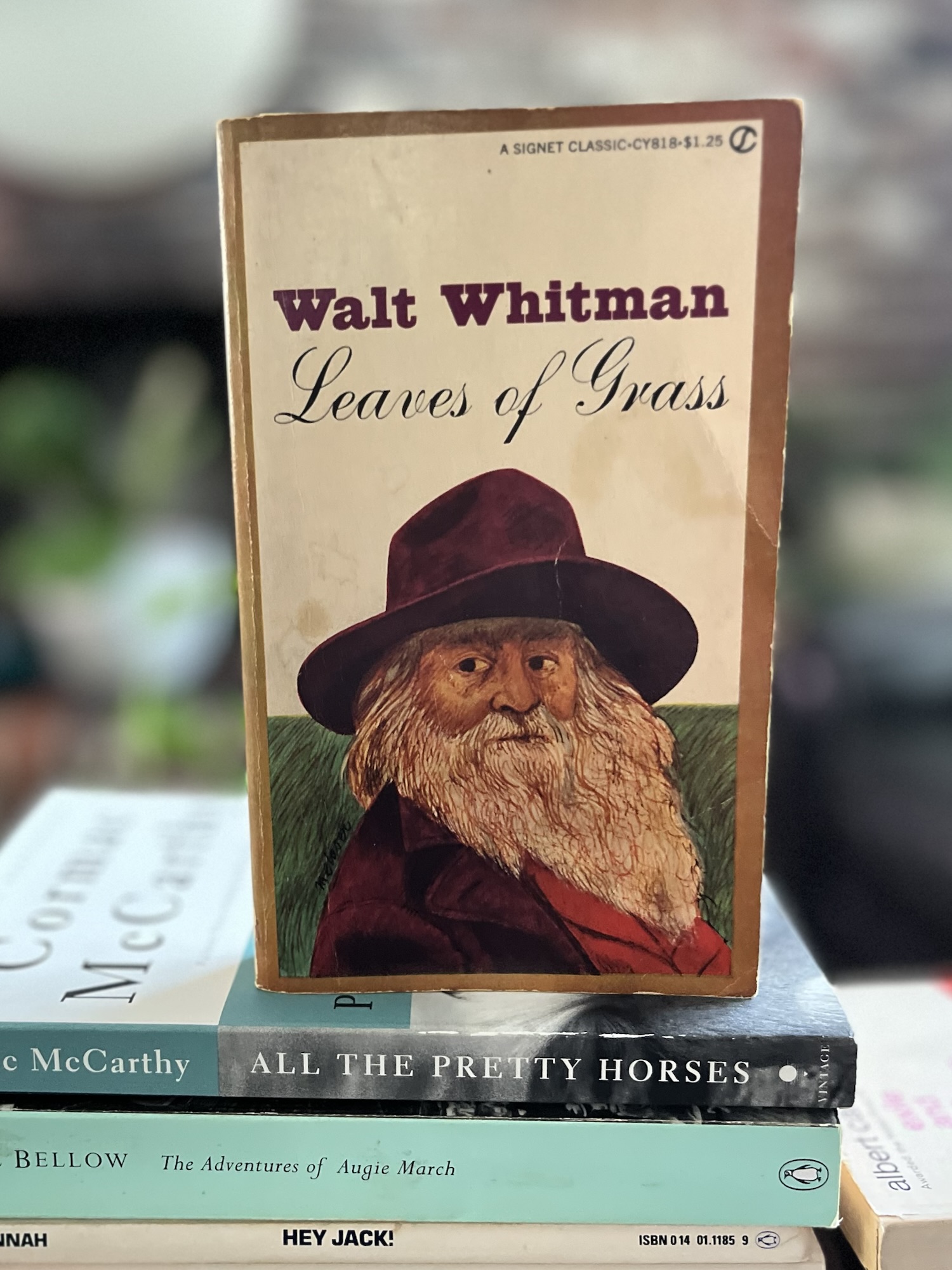
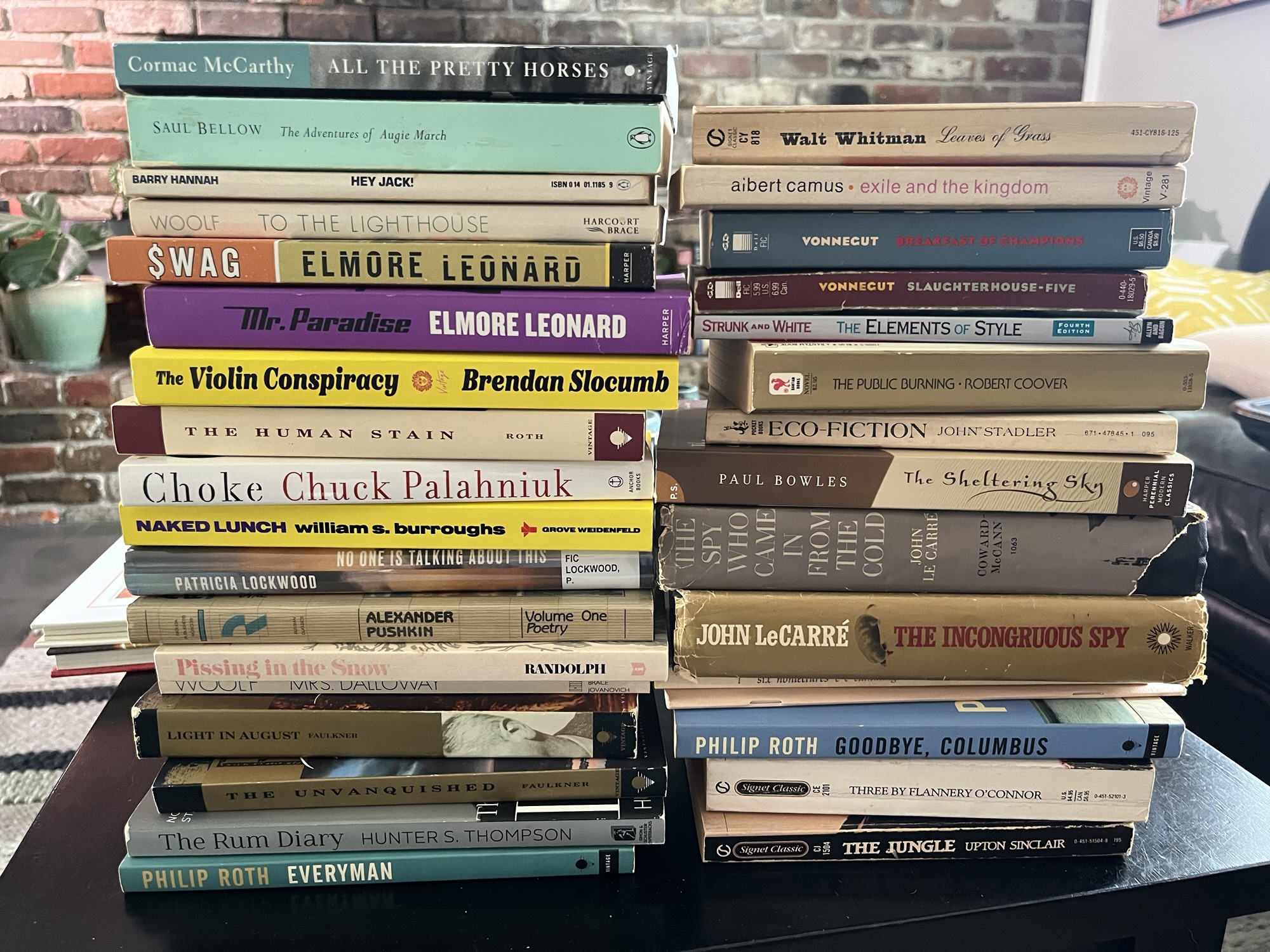
Most of what I picked up today was for my son to pick through. He took the Camus, Vonnegut, O’Connor, Palahniuk, and McCarthy. My daughter had zero interest in any of the haul.

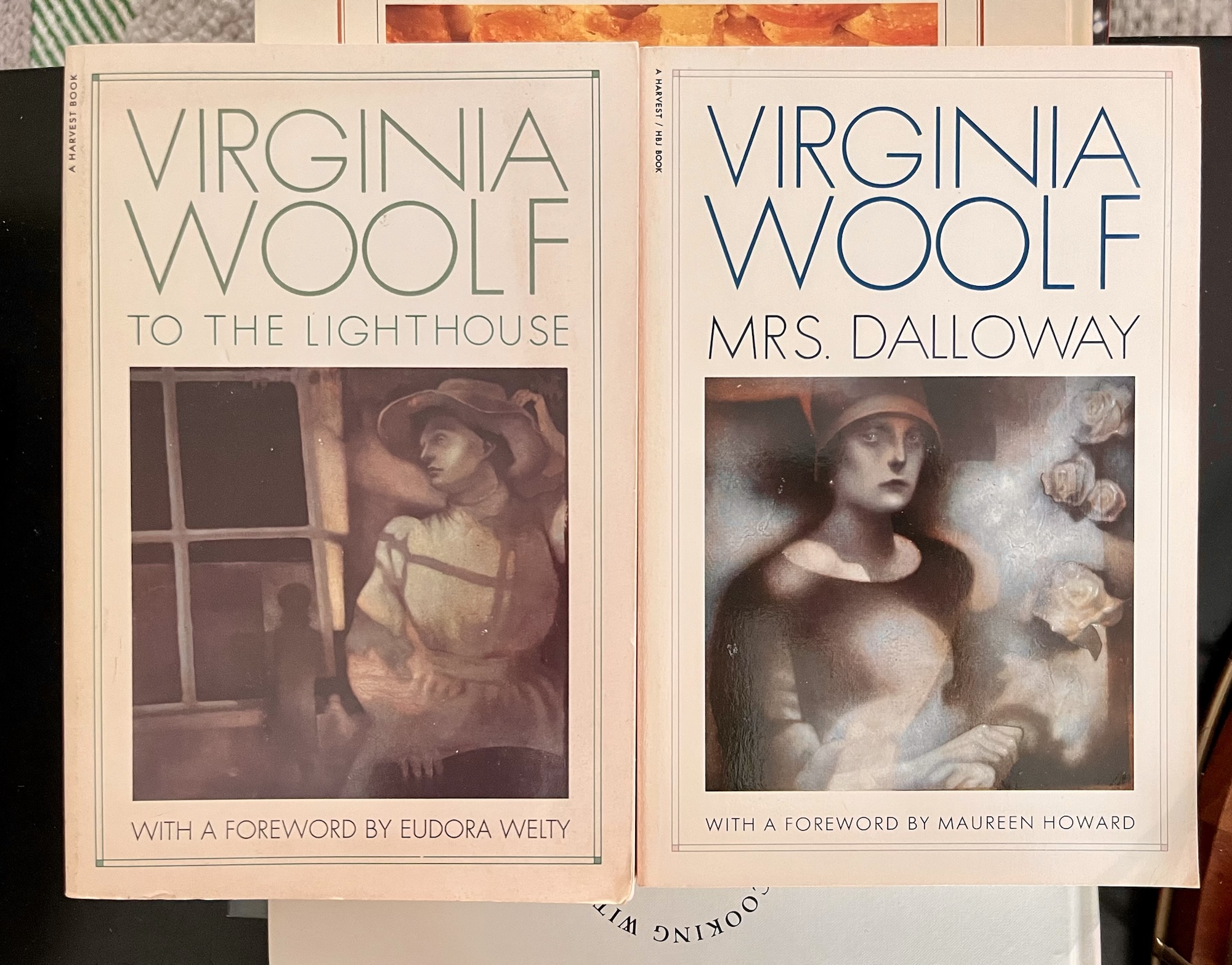
I wound up with several of the exact same editions of titles I already own (Camus’ Exile and Kingdom; Faulkner’s A Light in August; William Burroughs’ Naked Lunch) and lots of books we already have in other editions, most of which I’ll give away or trade. But I’ll be happy to trade out the cheap mass markets of Mrs. Dalloway and To the Lighthouse I’ve had forever in favor of these HBJ Woolfs (Wolves?):

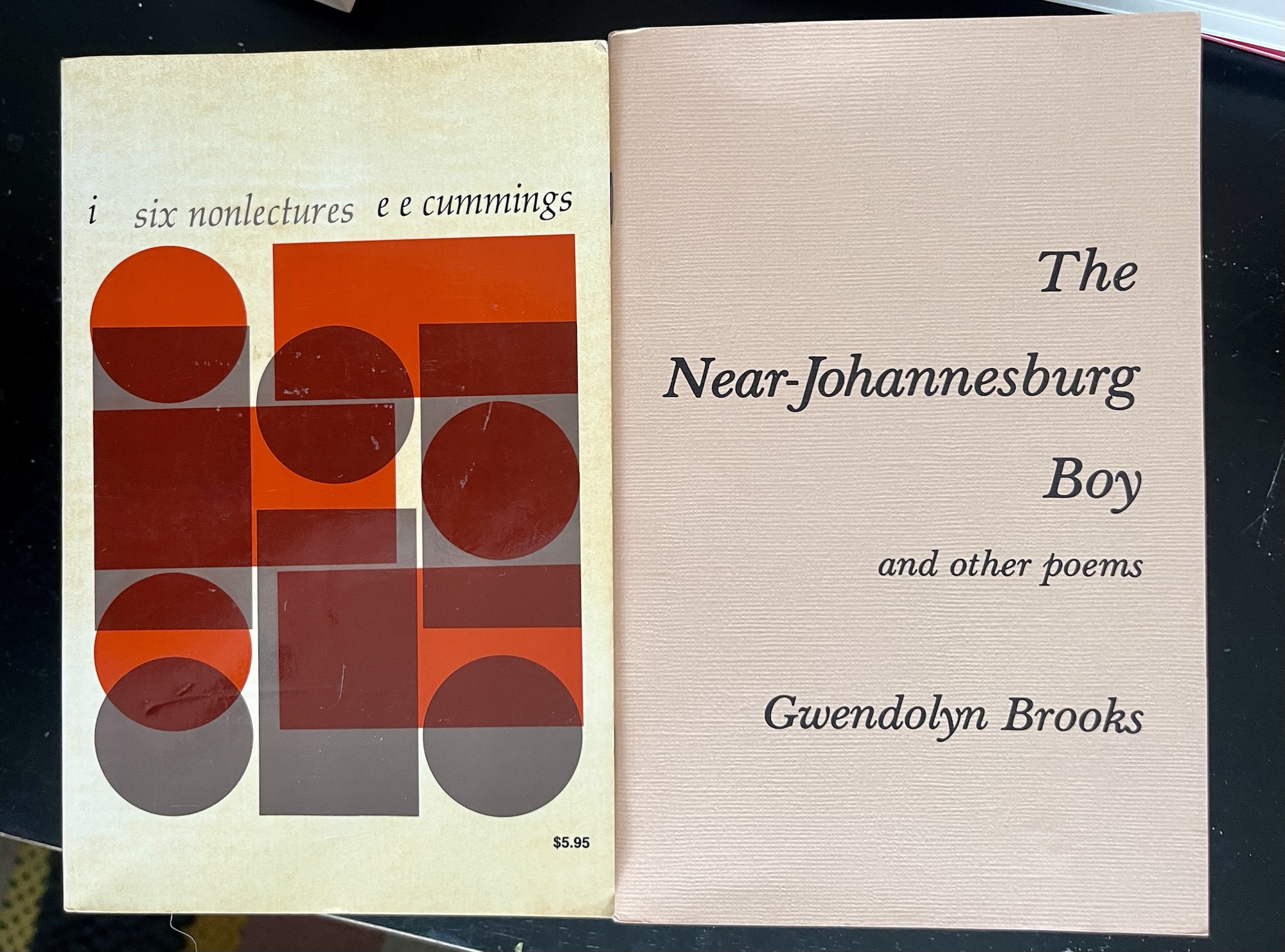
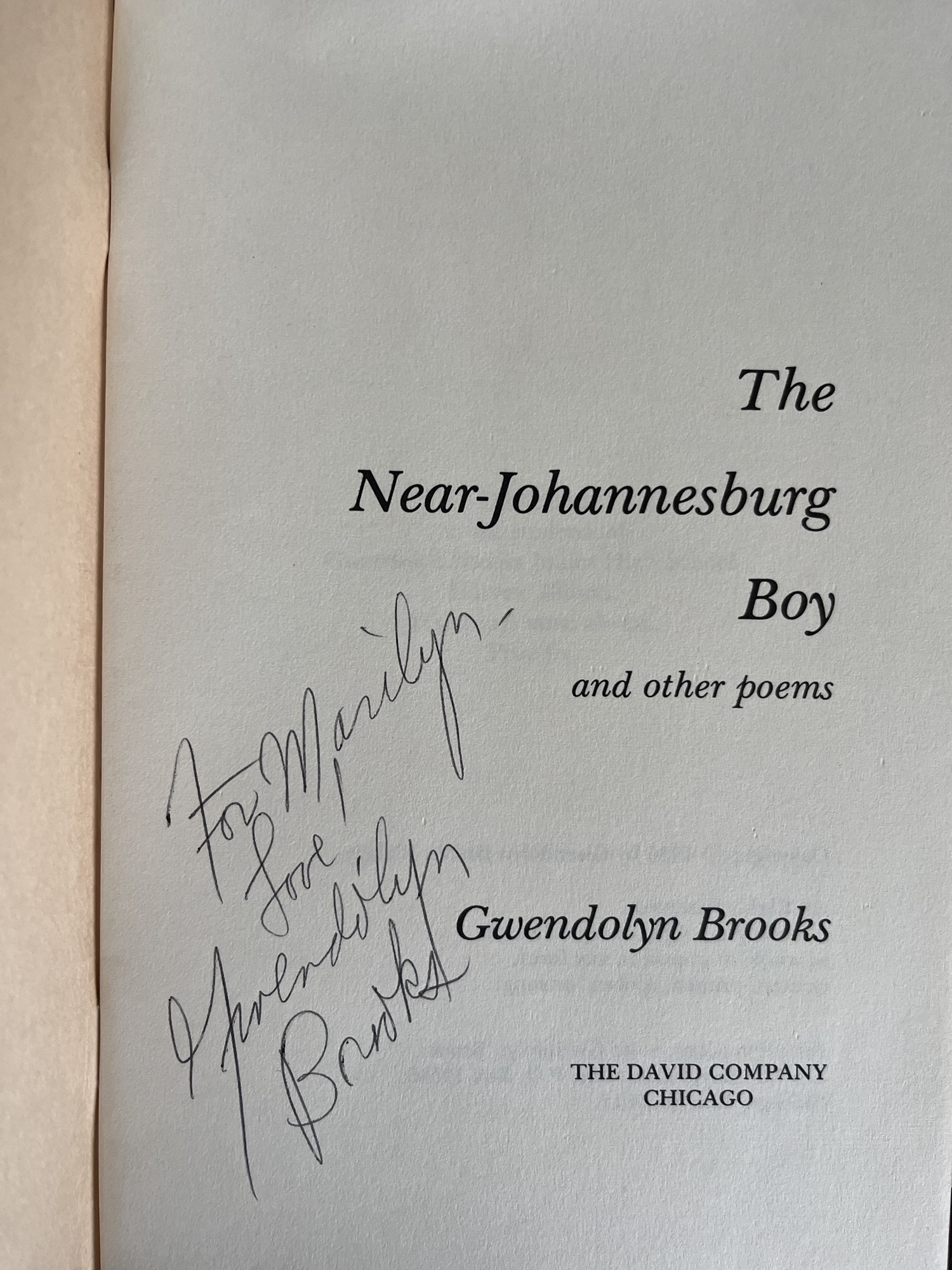
My two favorite finds today were cummings’ six nonlectures (the midcentury cover is lovely) and a Gwendolyn Brooks chapbook, The Near-Johannesburg Boy:

It wasn’t until I got home that I realized the Brooks’ chapbook was signed:

I had actually found two signed Brooks’ books at my favorite local used shop, also both inscribed to “Marilyn” (one was Blacks; I can’t remember the other one; they were both priced a bit beyond my casual range).

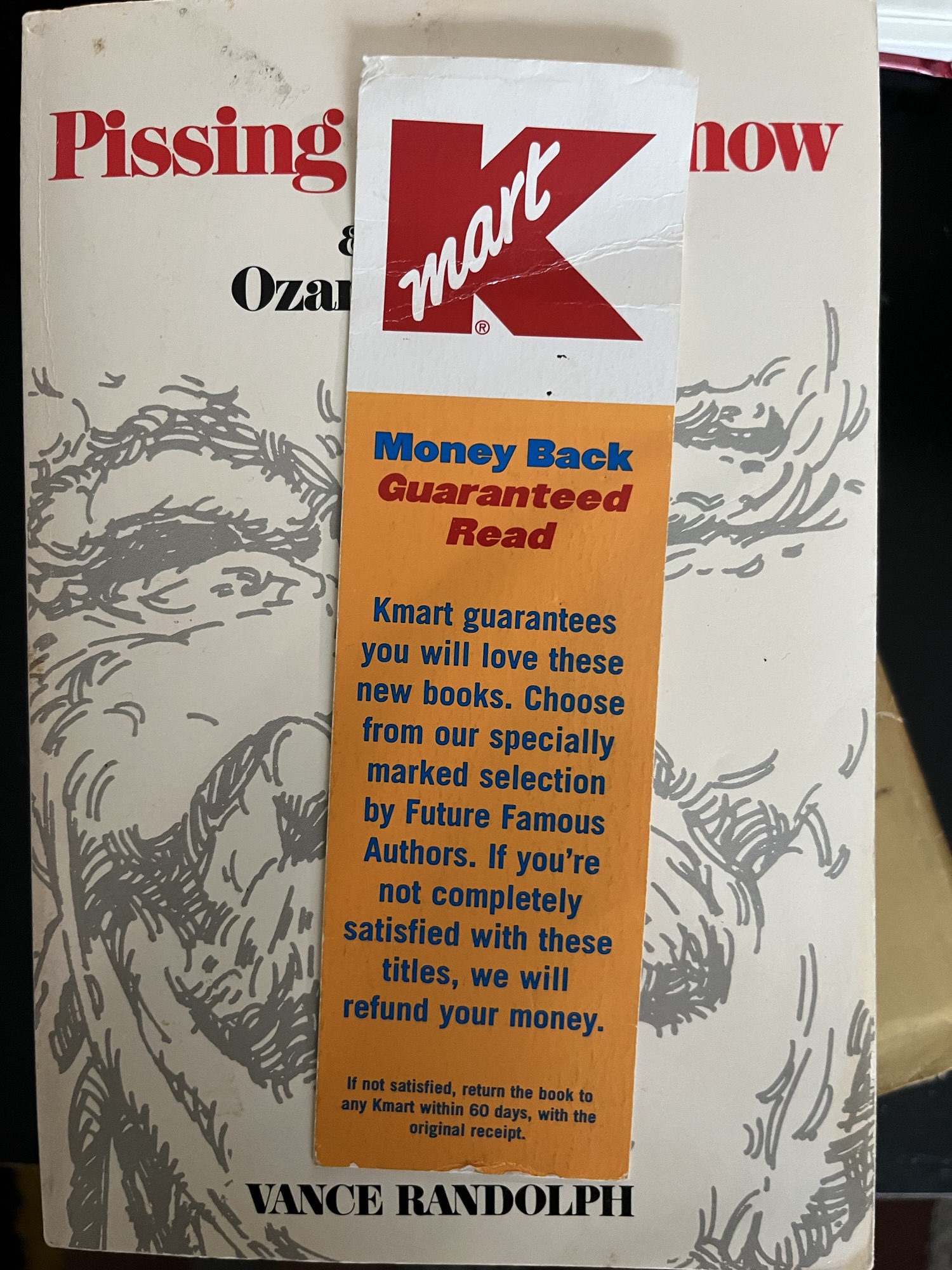
But maybe my favorite find was this Kmart bookmark:

The Kmart bookmark was tucked into a trade paperback University of Illinois Press copy of Randolph’s Pissing in the Snow. I doubt the collection of Ozark folktales was originally purchased at Kmart. But who knows.

Pissing in the Snow was one of the first books I wrote about on this blog, nearly twenty years ago. I look forward to passing it on to a student sooner or later.


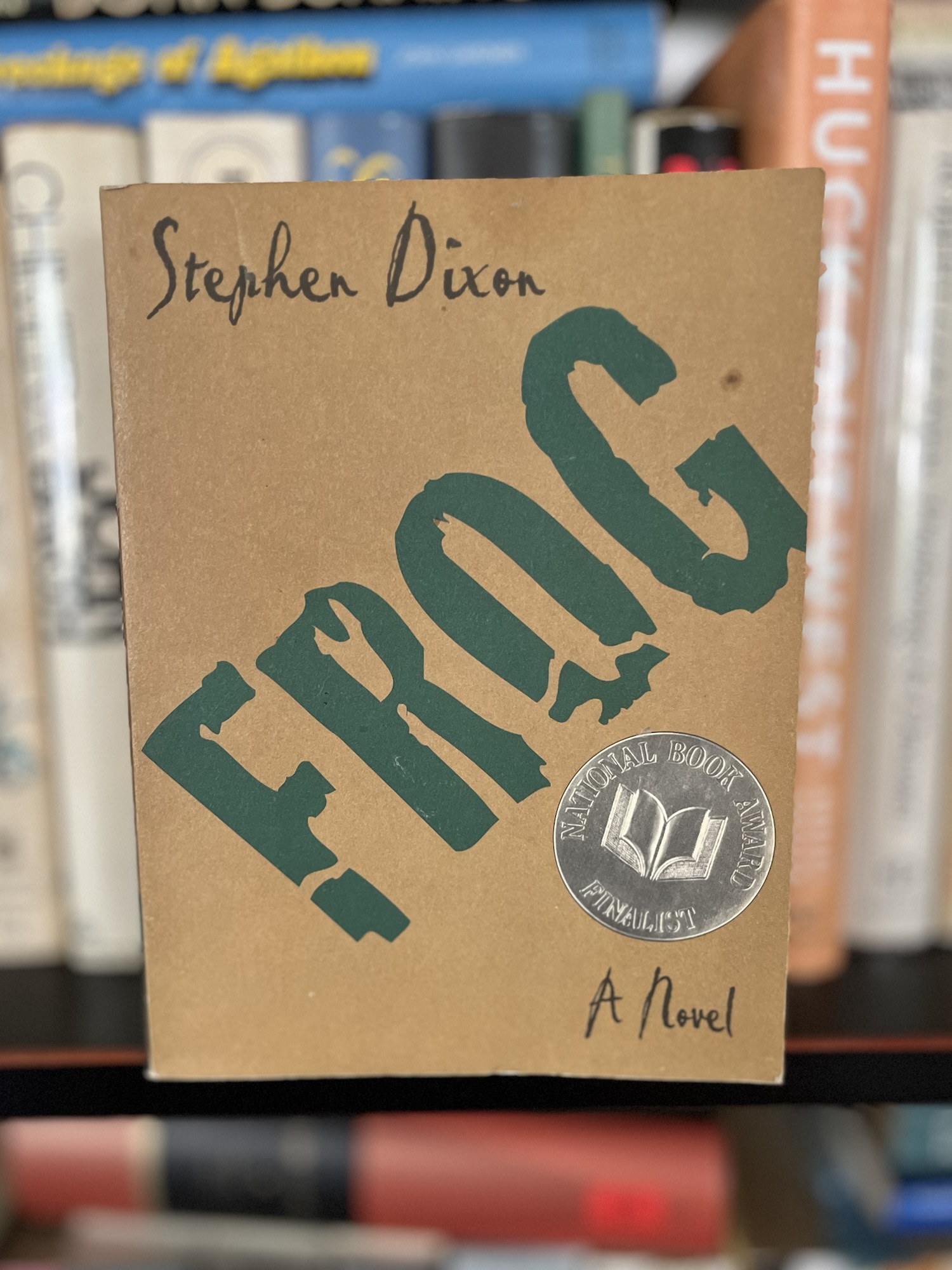
873 words from Stephen Dixon’s 1991 novel Frog, followed by 469 words on Stephen Dixon’s 1991 novel Frog

Here are 873 words from Stephen Dixon’s long looping loopy lucid antilaconic 1991 novel Frog; the words are a segment of the ninth chapter, “Frog’s Brother”:

Alex was the only passenger on the freighter. His father’s patient called his son in England and asked as a favor to the man who’s treated his family’s teeth for forty years if he could take Alex aboard free. Alex was in London then, wanted to get back home, had little money, could have borrowed plane or ocean liner fare from his parents or Jerry, wanted the experience of being on a freighter during a long crossing. Though he got free passage, he asked to work without pay at any job the captain wanted him to. He’ll clean latrines, even, he said in his last letter to Howard. Anything the lowest-grade seaman does, just to get the full feel of it and perhaps seaman’s papers for a paid trip later. He was a newsman turned fiction writer. Two months after the ship disappeared a parcel of manuscripts arrived at their parents’ apartment from England by surface mail. Maybe the manuscripts he didn’t much care about. Maybe the ones he cared most about he took with him on the ship. Howard read the stories and vignettes soon after and then some of them every three or four years till about ten years ago. He never found them very good, but Alex was just starting. Two diaries and some oriental figurines in the parcel also, and lots of letters from his parents, brothers, friends. He’d traveled around the world. Saved up for three years to do it. Did it for a year. A prostitute in a dilapidated hut in a small village outside Bangkok. Why’s that experience come to mind first? It was in a letter to Howard, not the diaries. He searched the diaries for it, thinking an elaboration of it might be interesting, revealing, sexually exciting. She was fourteen years old. That made Alex sad. She asked him to marry her. She said she’d be devoted, would learn to cook and make love American, bear him many children if he wanted, all boys if he wanted (she knew how), would return to grade school. He gave her his silver ID bracelet, pleaded with her to give up prostitution. Then he did it a third time with her the same day and came back the next. Talk about hypocrisy! he said. What’s the trick of turning a customer into a suitor? he asked. But one who’ll be good to her and an adequate provider. If he knew, he’d give it to her. Sent her a pearl necklace from Manila. If he got a venereal disease from her he’d worry more about her than himself. He might go back for her before he leaves for India, or send for her once he gets back to America, and maybe even marry her when she comes of age. Keep this between them just in case it does happen. Taught English to Malaysian businessmen for a month. Met two old men in New Guinea—Canadians—who were living the primitive jungle life. They were good friends of his till they tried to drug and rape him. He’s afraid he had to kick them both in the balls to get out of there and then steal their canoe to get back to town. Fell in love with a witch. Read Proust’s Remembrances in five nearly sleepless days, an experience that’s left him dreaming of the books every night for the last six weeks. A Goan fortuneteller told him his trip would end badly. He said to go home by plane, don’t sail. Remind him when the time comes, for the man wouldn’t take any money. Had a fifteen-year-old girl in Nairobi. What can he tell Howard?—he likes young girls. It’s more than just the way their hair blows and breasts point and bellybuttons dimple and thighs are so even. Maybe it’s because of all the girls who barely let him pet them when he was a teenager. Rode a camel through part of the Sahara. Ate lizard, locusts, grasshoppers, grubs. Never felt very Jewish before till he started hitting all the old synagogues and Jewish cemeteries he could find in the Orient and Middle East. Wait’ll he gets to Poland and Prague and also tries to look the old families up. He’s afraid it’s converted him, but not to the point of wearing a skullcap. Hitchhiked with a sixteen-year-old sabra through Turkey and Yugoslavia, though she might have been younger. When she had to go back she said she thinks he got her pregnant—her device wasn’t put in right a few times, she was so new at it. He told her he’s heard that one before, but if she has the baby and the calendrical configurations fix it as his, or just if she still says it is, he’ll love and provide for it, adopt it if she wishes and take it to America with or without her or emigrate to Israel if she prefers, marry her if that’s what she wants—she’s quite striking and clever and potentially very artistic and smart. He’s written what he thinks is fairly decent work recently, he said in his last letter. He’s glad he’s found something he wants to do for the next twenty to thirty years, has Howard?

The titular “Frog’s Brother” is Alex. (“Frog,” by the way, is “Howard,” the protagonist of Frog.) Alex’s freighter goes missing in the North Atlantic; the ship is never recovered nor are lifeboats. No bodies. The only evidence of the disaster is absence.

In this absence, Frog imagines and reimagines Alex’s death at sea in different looping cycles; these reimaginings are also framed within Frog’s attempt to accurately recall his receiving the news that his brother Alex is lost at sea–was it by phone, that he received this awful news? in his other brother’s apartment? what were the specific conditions of this heartbreak?

Imagining and then reimagining the specific details of a horrifying, horrible, horrendous event is the rhetorical gist of Dixon’s 1995 follow-up to Frog, Interstate, a fucked-up eight-way riff on the narrator’s daughter’s murder by way of random highway violence.

I have read around 120 of Fog’s near 800 pages, and many of those pages feature the same rhetorical and narratological techniques or repetitions with differences that were so off-centered in Interstate: fraying phrases, looping tics, paranoid passages. In the absence of the one thing, Dixon’s narrators pony up iteration after iteration, something after something. But the narrators know that there’s not enough somethings to ever even come close to approximating everything. The iterations sharpen and highlight the beauty of the absence’s abyss.

That abyss was real, or true, or True, for Stephen Dixon, whose brother “Jimmy, a magazine writer, died in 1960 when the freighter he was on in the North Atlantic disappeared,” as the New York Times reported in Dixon’s 2019 obituary. The Times obituary continued: “Mr. Dixon felt that he was continuing his brother’s work. Jimmy Dixon had a short story published after his death.” If Jimmy Dixon was prototype to Alex Frogbrother, what are we to make of the fantastic paraphrase of his letters, above? The passage reads like a bizarre failed adventure tale, something we might expect from William T. Vollmann, who, with his heart of gold, tried to “free” sex workers. It’s also quite queasy when it comes to sex (a constant I’ve noticed in Dixon): “What can he tell Howard?—he likes young girls,” our narrator flatly, grossly reports.

The saddest and realest bit might be this though, the admission that “Howard read the stories and vignettes soon after and then some of them every three or four years till about ten years ago. He never found them very good, but Alex was just starting.” But Alex was just starting. The last bit of the section, “He’s glad he’s found something he wants to do for the next twenty to thirty years, has Howard?” seems both boon and curse, a door that opens and shuts simultaneously, cursing our Stephen Dixon, our Frog, to write write write write write write write write write…


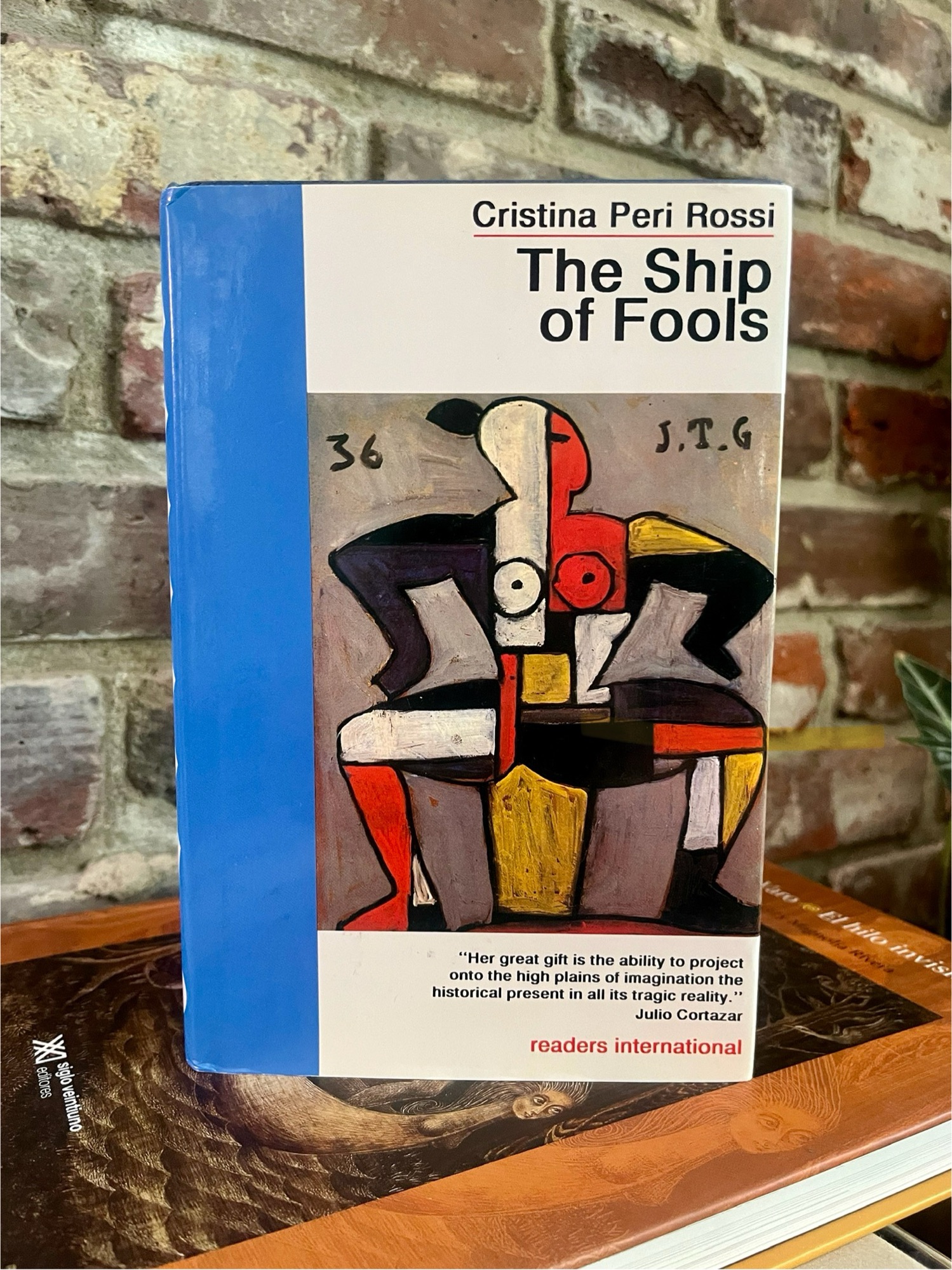
Cristina Peri Rossi’s The Ship of Fools is a surreal novel of exile and dislocation

The Ship of Fools by Cristina Peri Rossi, first published in 1984 and released in English translation by Psiche Hughes in 1989, is a novel of dislocation—political, psychological, and existential. Its protagonist, Ecks, drifts from place to place in a world that feels suspended between dream and memory, never quite solid: “He felt he was travelling not in space but backwards in time.” That sense of slippage—temporal, emotional, narrative—is central to the book’s effect.

Plot is secondary, if it exists at all. The novel drifts like a bottle at sea: beautiful, opaque, marked by the presence of something urgent inside—but sealed, floating, unmoored. Like Renata Adler’s Speedboat or Ann Quin’s Passsages, this is a novel that prefers jump cuts to journeys, broken signals to neat resolutions. It unfolds in fragments, circular musings, moments of stasis that shimmer with strange possibility. At one point, a character suggests that “conversation is more a question of style than ideas,” a description of the novel itself. Style is idea in The Ship of Fools. The syntax itself seems to think.

There are recurring characters, loose thematic arcs, and strange moments of connection, but the novel often seems to turn away from linearity. It’s what the book itself calls “a story without progress,” or perhaps a tapestry of passing encounters and unresolved longings. There’s a Bolañoesque sense of drift to it, too—a wandering narrator collecting impressions like scars, haunted by disappearances that resist explanation. At the same time, there’s something in the intensity of The Ship of Fools—its visceral depictions of trauma and social rupture—that evokes the furious lyricism of Fernanda Melchor’s Hurricane Season. Both authors understand that political horror isn’t always best addressed by realism—it seeps in more disturbingly through atmosphere, voice, and repetition.

Peri Rossi was herself an exile, having fled the civic-military dictatorship of Uruguay in 1972. She fled the regime, first to Barcelona and later Paris, and this personal history pulses quietly through every page. The Ship of Fools isn’t autobiographical in the conventional sense, but its texture is soaked with the disorienting logic of exile: the sense of being always elsewhere, never quite present, both seen and unseen.

One of the pleasures of The Ship of Fools is the way it captures fleeting impressions in striking, lyrical language. Descriptions of people and places often feel like fragments from a half-remembered dream. The narrator describes a girl “bursting with youth; with that radiant beauty which, more than a quality of feature or of line, is the result of organic perfection that only later would begin to fall apart, breaking its essential but precarious harmony.” Elsewhere, the sea is evoked with the precision of a surrealist painting: “Green eyes and wide sea, swinging hips and plunging necklines. The sea was rolling like the water in a glass. Or the ship was. The ship was a glass floating on the high tide.” It’s not hard to imagine Jodorowsky filming this image—bodies on a tilting horizon, symbolic without being decipherable.

Beneath the dreamlike surface runs a steady current of political urgency. Ecks is an exile, and many of the novel’s characters—some named, some merely sketched—are displaced or disappeared. “To disappear is no longer voluntary,” the narrator tells us, “but acquires passive form: ‘We are being disappeared.’” It’s a haunting line that collapses grammar and violence in a single breath. One character, laboring in a sinister “camp for the disappeared,” wonders “if there was still any point in measuring time by the clock, when it seemed like ten years to him and twenty to his friend suffering agonies about him.” These grim lines are delivered without sentimentality, but with unmistakable clarity. The book never lectures. It haunts instead.

The novel’s philosophical core is found in its reflections on art, memory, and identity. One of the longest and most striking passages describes the medieval Tapestry of Creation:

There the missing parts unfurl, fragments intimating the larger harmony of the universe. What we love in any structure is a vision of the world that gives order to chaos, an hypothesis which is comprehensible and restores our faith, atoning for our having fled and scattered before life’s brutal disorder. We value in art the exercise of mind and emotion that can make sense of the universe without reducing its complexity. Immersed in such art one could live one’s life, engaged in a perfectly rational discourse whose meaning cannot be questioned because it resides in an image containing the whole universe.

What surprises and will always surprise is the notion that a single mind could conceive of such a convincing and pleasing structure, moreover a happy one, a structure which as well as being a metaphor is also a reality.

This longing for order—however temporary or illusory—is deeply felt throughout the novel, even as its own structure resists resolution. The moment we seek meaning, it slips sideways. Identity, like narrative, fractures under pressure.

That same ambiguity runs through the book’s treatment of gender. Lucía, one of the more vivid figures in Ecks’s drifting life, is described as “dressed in men’s clothes,” her appearance perfectly androgynous. Ecks is both drawn to and overwhelmed by her. “He saw the unfolding of two parallel worlds… yet inseparably connected in such a way that the triumph of one would cause the death of both.” Later, another character remarks, “Don’t we all attribute ourselves a sex? And spend our lives proving it?” Gender is not a stable identity but a performative act—one repeated until it congeals into something that passes for truth.

Memory and history, too, are always in motion. “Ship captains and sailors of the past were those who best knew the universe,” the narrator reflects. Their journals once held the world’s accumulated knowledge: “One referred…to these journals” to understand distant plants, animals, and stars. But now, “they stopped writing and their main tasks became trade and war…Their journeys are now shorter and safer. But also less interesting.” It’s a quiet lament for a world that’s abandoned curiosity for control.

Ecks himself seems increasingly hollowed out by this world. “I stopped my work. Since then wheat and chaff have mixed. Under the grey sky the horizon is a smudge, and no voice answers.” His sense of loss—of self, of direction, of connection—is profound. “I shall lose,” he thought, and then: “I’ve already lost.” Like a Bolaño narrator spiraling through half-empty towns or an Ann Quin character trying to read meaning into chaos, he is less a man than a vessel for disappearance.

And yet, The Ship of Fools still finds a kind of poetry in this fragmentation:

Dreams have their own logic; only in the ambiguity of daylight do we need to reason and compare, to pin down the weft of things. Dreams are so persuasive, they need no argument.

Peri Rossi’s novel lives in that twilight logic, where estrangement becomes its own kind of truth. Exile, here, is not just a matter of borders—it is a way of seeing. “Those who live always in the same place… do not realize that to be a stranger is a temporary situation, one that can be altered; in fact they assume that some men are strangers and others not. They believe that one is born — and does not become — a stranger.” In The Ship of Fools, everyone becomes a stranger, even to themselves.

In the end, the novel is both deeply political and deeply personal. It captures what it feels like to live under systems that make life feel increasingly unreal, to grasp for meaning in a world of exiles and silence, to lose and keep losing—and yet keep imagining, keep remembering, keep writing. Our days, the novel suggests, “are no different from the past, except in the number of tyrants, their systematic methods and the cold logic with which they lead the world to madness.”

Although it is often bitterly funny, The Ship of Fools is not a cheerful book. But it lingers like a half-remembered dream, like the texture of a forgotten language, like a map you keep reading even after the landmarks have vanished. Very highly recommended.

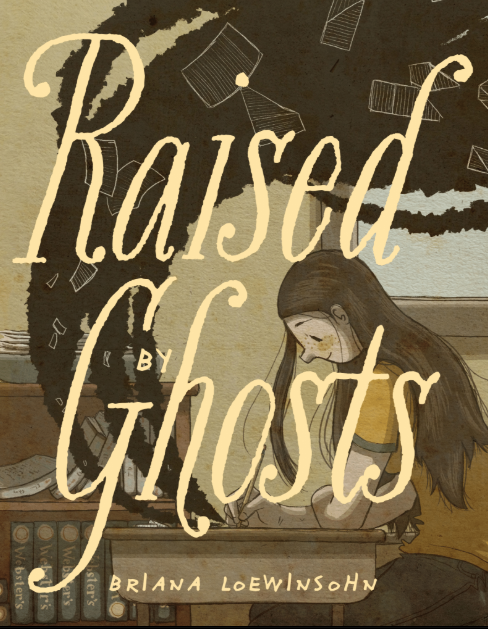
Briana Loewinsohn’s graphic novel Raised by Ghosts turns absence into haunting art

A decade ago I finally tossed out most of the contents of an old shoebox crammed with high-school nostalgia. Notes from ex-girlfriends, summer postcards, flyers from local shows, a handful of choice mixtapes. Some Polaroids. Our stupid band’s stupid lyrics, which we usually forgot or simply abandoned live. There was even a pair of fat shoelaces. The pain of return always hits me hard at such times, and I got dizzy. That box was crammed the scraps of an older life.

The preceding paragraph is an unfair opening to a review of Briana Loewinsohn’s excellent graphic memoir Raised by Ghosts. Reading Raised by Ghosts felt like opening that old shoebox: painful, dizzying, beautiful. Loewinsohn is one of usone of us to borrow a chant from Tod Browning’s Freaks. “Sometimes I feel like I am an alien at this school…But there are other aliens here,” protagonist Briana writes in her diary.

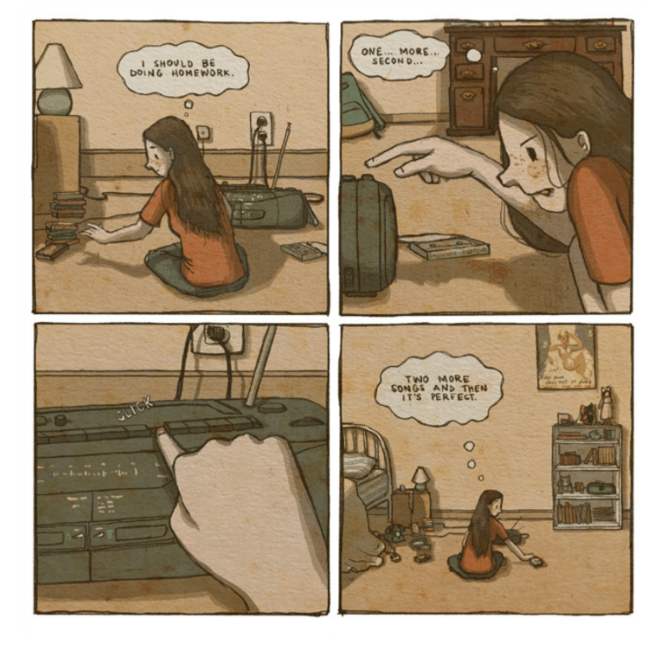
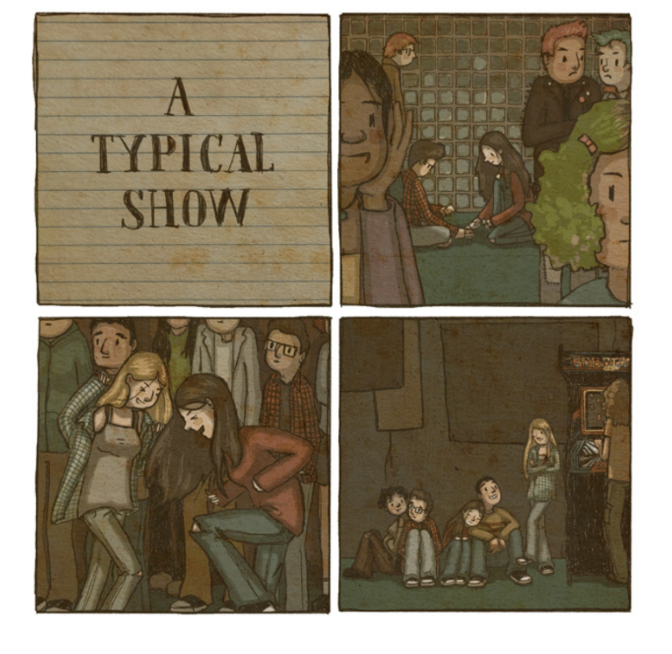
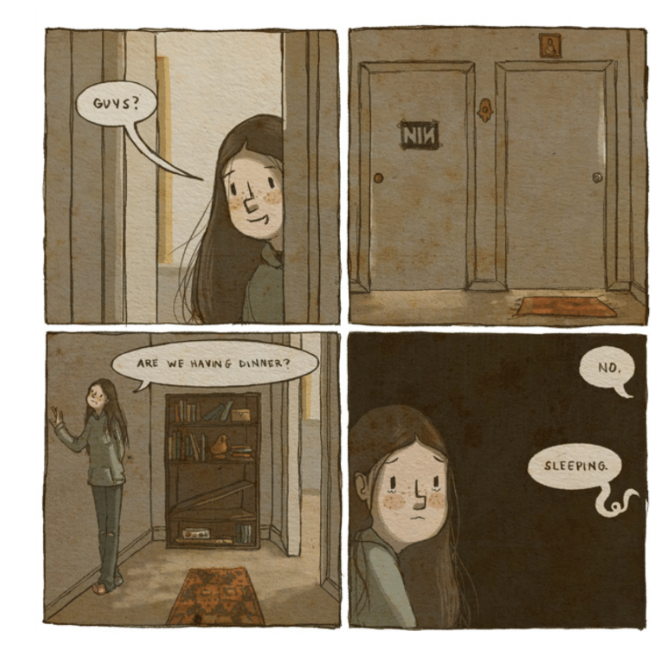
Raised by Ghosts covers Briana’s seven rough years through middle and high school. These are the gay nineties. The narrator, like Loewinsohn herself, is about my age, which makes reading Raised by Ghosts an eerie act of self-recognition. It’s not a conventional memoir—it doesn’t hold your hand or deliver a clean, linear narrative. Instead, it moves like memory does: in flashes, in vignettes, in small sensory moments that coalesce into something greater than the sum of their parts. Everything here feels true. We have here the relics of a teenage moondream, those little ghosts of the past that flicker through memory like frayed photos freed from the rubberbanded bundle in an old Converse box. Briana’s adolescence unfurls as an ebb and flow of loneliness and acceptance among fellow weirdos. She finds her people, but never quite makes the scene; she dances at the live show but finds as much fun in playing cards in the back.

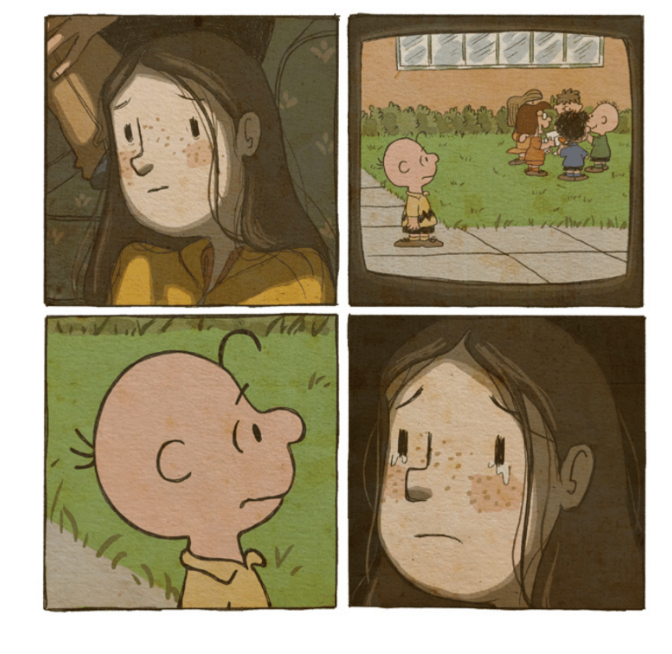
Loewinsohn’s art conveys Raised by Ghosts’ emotional weight. Soft, muted tones in drab olive and rust hues fill square panels that often resemble fading Polaroids. Candids and close-ups capture the messiness of high school. Briana is a sympathetic and endearing character, her sensitivity registering in ways she cannot understand herself, as when she skips out on a living-room VHS double feature. Oliver Stone’s Natural Born Killers would be way too much after the tragedy of You’re a Good Man, Charlie Brown.

Loewinsohn includes full handwritten pages to accompany the traditional comic strips in Raised by Ghosts. These handwritten pages serve as a kind of diary, but often take on subtle visual changes that suggest other media. Often, the handwritten pages mimic the form of the long notes bored Briana composes in class to pass to friends. A passage composed on graph paper praises the note-writing skills of a particular friend; the technique suggests this friend prefers squares to lines. A passage on a brown paper lunch bag reflects on how Briana’s father always takes the time to write her name in detailed, expressive lettering. The variations of handwritten pages enrich the narrative and subtly inform us of Briana’s artistic development.

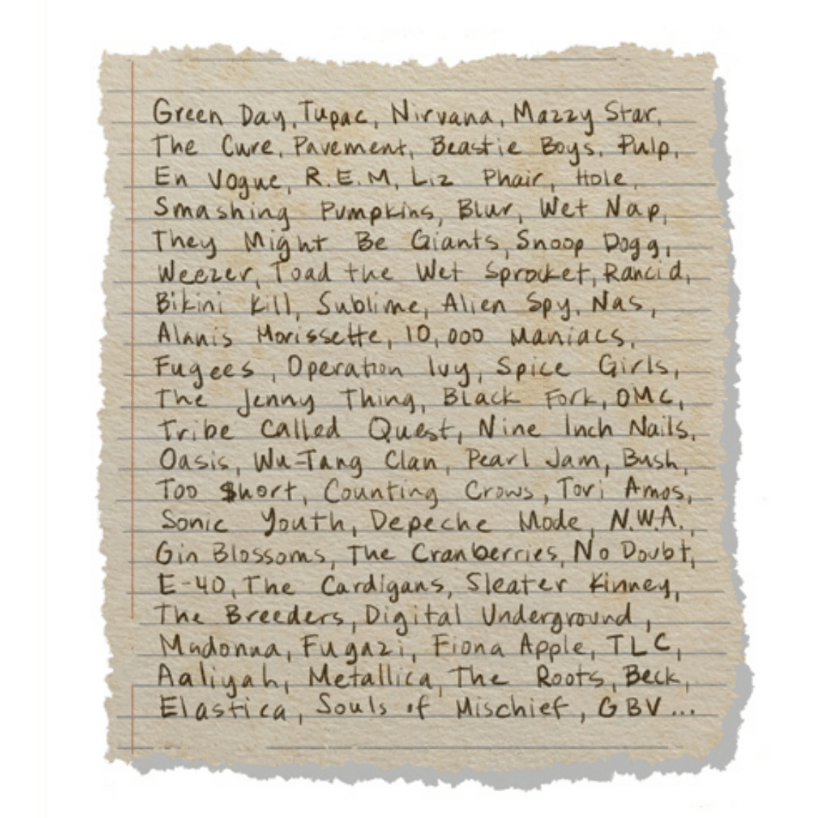
My favorite of the handwritten passages though is simply a list of bands scrawled on lined paper. When I got to that page, about a third of the way into Raised by Ghosts, I was already persuaded by the book–but the page of band names seemed so utterly true, so beautiful and banal. We used to do that, I thought, and: Why did we used to do that? knowing the answer has no good intellectual answer.

But let’s get to the ghosts. Loewinsohn never “shows” us Briana’s parents, yet the picture we get of them is hardly incomplete: a distant, detached mother and a father in arrested development. “I would say I was raised in an AA meeting,” Briana remarks of her mother, noting that it’s often hard for single mothers to find childcare. Of her father’s abode: “My pop’s house is a combination of Indiana Jones’ office, Pee Wee’s playhouse, and an opium den. I am kinda like a roommate here.”

Briana’s parents exist in Raised by Ghosts the way memories of the absent often do—fragmented, elusive, more felt than seen. Loewinsohn never lets them fully materialize, yet their presence, or lack thereof, shapes Briana’s interactions with her world. Neither parent offers Briana guidance. She’s a latchkey kid left to cobble her own sense of belonging among friends, music, and the small rituals of adolescence. In the absence of stability, she builds meaning from mixtapes, handwritten notes, and fleeting moments of connection.

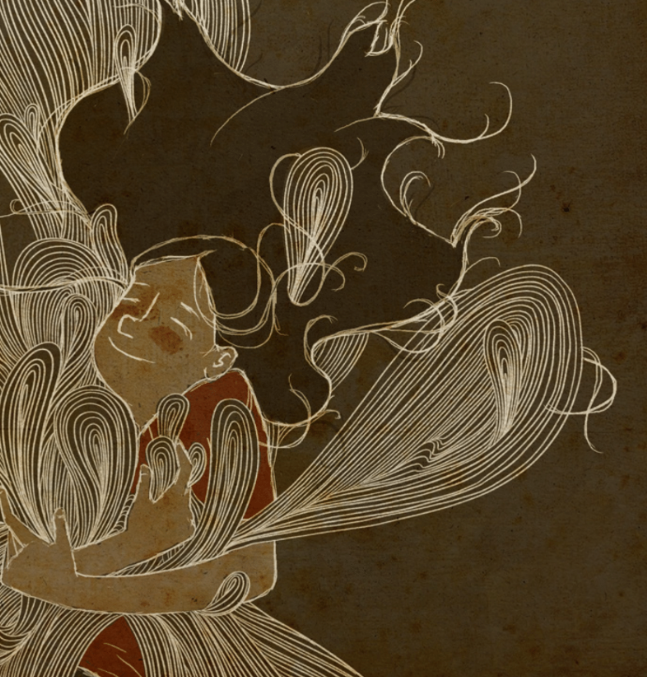
And art. The memoir climaxes in a moment of transformation—an act of self-possession and, ultimately, self-creation. Throughout Raised by Ghosts, Briana moves through a world shaped by absence, by the ghosts of parents who are physically present but emotionally distant. Yet, in the book’s remarkable penultimate sequence, she steps beyond that absence, beyond memory’s hazy grip, into a space that is entirely her own. The panels swirl into a dreamscape of shifting lines—formless and chaotic at first—until Briana gathers them together, lassoing meaning from the void. It is a moment of artistic alchemy, where creation becomes a form of agency, a way to shape her own narrative rather than just mimic one. When she carries those lines from dream to waking life, the transition is profound: she is no longer just a kid collecting relics of meaning from the world around her—she is an artist, making meaning herself.

Publisher Fantagraphics labels Raised by Ghosts as a “young adult graphic novel,” and teenagers will likely identify with Briana’s story—the loneliness, the search for belonging, the quiet acts of self-definition. They may also feel a strange twinge of envy for a world that no longer exists. Being a latchkey kid could be lonely, but it was not without its freedoms. Those of us who were teenage weirdos in the nineties will see in Loewinsohn’s memoir not a young adult novel, but rather a reflective elegy composed by a mature artist in control of her talent. Raised by Ghosts lingers like the echo of an old song in your dim memory — you know the one, right? It’s a memoir about growing up in the margins, about finding meaning in scraps and silence, about turning absence into something tangible. It haunts, in the very best way.

Statements of missingnessness | On Mauro Javier Cárdenas’s prescient novel American Abductions

Mauro Javier Cárdenas’s American Abductions is a novel of relentless, layered consciousness, its immersive, labyrinthine sentences pulling the reader into a fugue of voices, memories, and anxieties. American Abductions takes place in a proximal version of the United States, a digital carceral state where palefaced goons kidnap Latin Americans. Sometimes the abductees are deported; sometimes they are disappeared. Sometimes they tell stories.

The dystopia here is hardly a YA world-building exercise full of hope and heroics. Instead, the novel moves through fragmented, fevered perspectives, primarily those of sisters Ada and Eva their disappeared father, Antonio, a novelist abducted by the Pale Americans, the faceless bureaucratic enforcers of this new regime. The novel oscillates between Ada and Eva’s attempts to reconstruct what happened, Antonio’s own recursive, metafictional writing, and interjections from various other voices—family members, interrogators, digital surveillance logs—until the narrative itself becomes a reflection of the fragmented reality the characters are trapped within.

Yes, American Abductions is bleak, but it is not merely dystopian horror. Cárdenas builds his world through a dizzying interplay of language, wielding the long, unspooling sentence with the precision of Bernhard, Krasznahorkai, and Sebald. Each chapter is a single winding comma splice that careens from realism to surrealism. Cárdenas’s run-ons layer and loop back on themselves, rhetorically mirroring the characters’ attempts to make sense of their unraveling world.

The book moves forward with an absurdist energy that resists despair, its rhythms and repetitions building not just a critique of authoritarian power but something stranger, something more human—an exploration of consciousness itself, an attempt, perhaps, to make a grand “statement of missingnessness,” to borrow one of the character’s phrases.

The effect is hypnotic, dreamlike, sometimes nightmarish, but often, surprisingly, very funny. There is a dark, absurdist humor in the way bureaucratic jargon collides with intimate grief, in the way digital surveillance reports are laced with banal observations, in the way Antonio’s own metafictional writing seems to both clarify and obscure the truth of his disappearance. The novel is not just about authoritarian violence but about how language itself is manipulated under such regimes—how it obfuscates, justifies, betrays, resists. At times, American Abductions reads like a political thriller rewritten as a fever dream, at others, like a linguistic experiment that spirals into a meditation on memory, exile, and state terror.

American Abductions is not just unsettlingly prescient. Rather, it obliquely underscores the U.S. surveillance state’s direct lineage to Latin America’s Dirty Wars. Governments systematically disappeared those deemed threats to the state—intellectuals, activists, ordinary people unlucky enough to be caught in the wrong place at the wrong time. Cárdenas’s dystopia does not just critique contemporary American immigration policies; it situates them within a long history of state-sanctioned violence in the Americas.

The novel’s themes take on chilling immediacy when considered alongside the real-world abductions of those who speak truth to power, like Mahmoud Khalil and Rumeysa Ozturk. Indeed, the disturbing video footage of Ozturk’s kidnapping by masked men this week has gone viral, echoing the opening of American Abductions, wherein we learn that Ada has captured “that moment when the American abductors captured her father as he was driving her and her sister to school, which she recorded on her phone.” Ada’s video goes viral, mutates, becomes its own beast:

…and later, after her father had been captured and hundreds of thousands of people around the world were watching her video of her father asking what have I done, officer, the supervisory official probably watched it too and left an anonymous comment below it that said ice / ice baby great job ICE, illegal is illegal and wrong is wrong bye you forgot the crybaby in the backseat, for years Ada arguing in her mind with the thousands of messages berating her and her father, even after she discovered some of the comments had been manufactured by bots controlled by a Pale American in Salt Lake City — twelve million to go please continue to remove the illegal alien infestation — except the comments by Doctor Sueño, of course, which made no sense to anyone but her, just as it made no sense to anyone but her to feel, for no more than a few seconds, proud that the supervisory official of the supervisory official of the supervisory official in an agency building had taken time out of his busy schedule to focus on her father — if enough time passes, Doctor Sueño says, even the most preposterous possibilities will navigate the sea of your mind — cry like an eagle / to the sea — just as it made no sense to anyone but her to laugh at some of the videos her video had spawned for instance the video of her video but with sappy music instead of her sister politely asking the abductors where were they taking her father, as if someone figured hey no one’s going to feel sorry enough for you people let me add sad violin music to the video of your father saying I’ve done nothing wrong, officer, or how about the video from a self proclaimed irreverent news organization from China that, via computer animation as if from an obsolete video game, replicated the trajectory from her house to the sensitive location as if it were a car chase, the abductors rushing to drag her father out of the car as if it were a drug bust, the video game representation of Ada recording her father’s capture with her phone from the backseat of the car, waterfalls of tears surging from her eyes, no not waterfalls, more like someone’s comical representation of lawn sprinklers superimposed on the eyes of the video game representation of me…

Apologies if I’ve let the run-on run on too long — but you’ll have wanted a taste of Cárdenas’s style, no? His sentences, unbroken and unrelenting, mimic the inexorability of history itself—cycles of erasure, resistance, recovery, and repetition. American Abductions is not just a novel about the present; it is a novel that recognizes the past has never ended. Its characters, trapped in linguistic torrents of grief and absurdity, seem painfully aware that history is repeating itself. And yet, as despairing as that recognition might be, American Abductions refuses to be silent. It makes its “statement of missingnessness” loud, insistent, impossible to ignore, resisting erasure, demanding we listen. Very highly recommended.

A run-on sentence on Gabriel García Márquez’s delirious novel The Autumn of the Patriarch

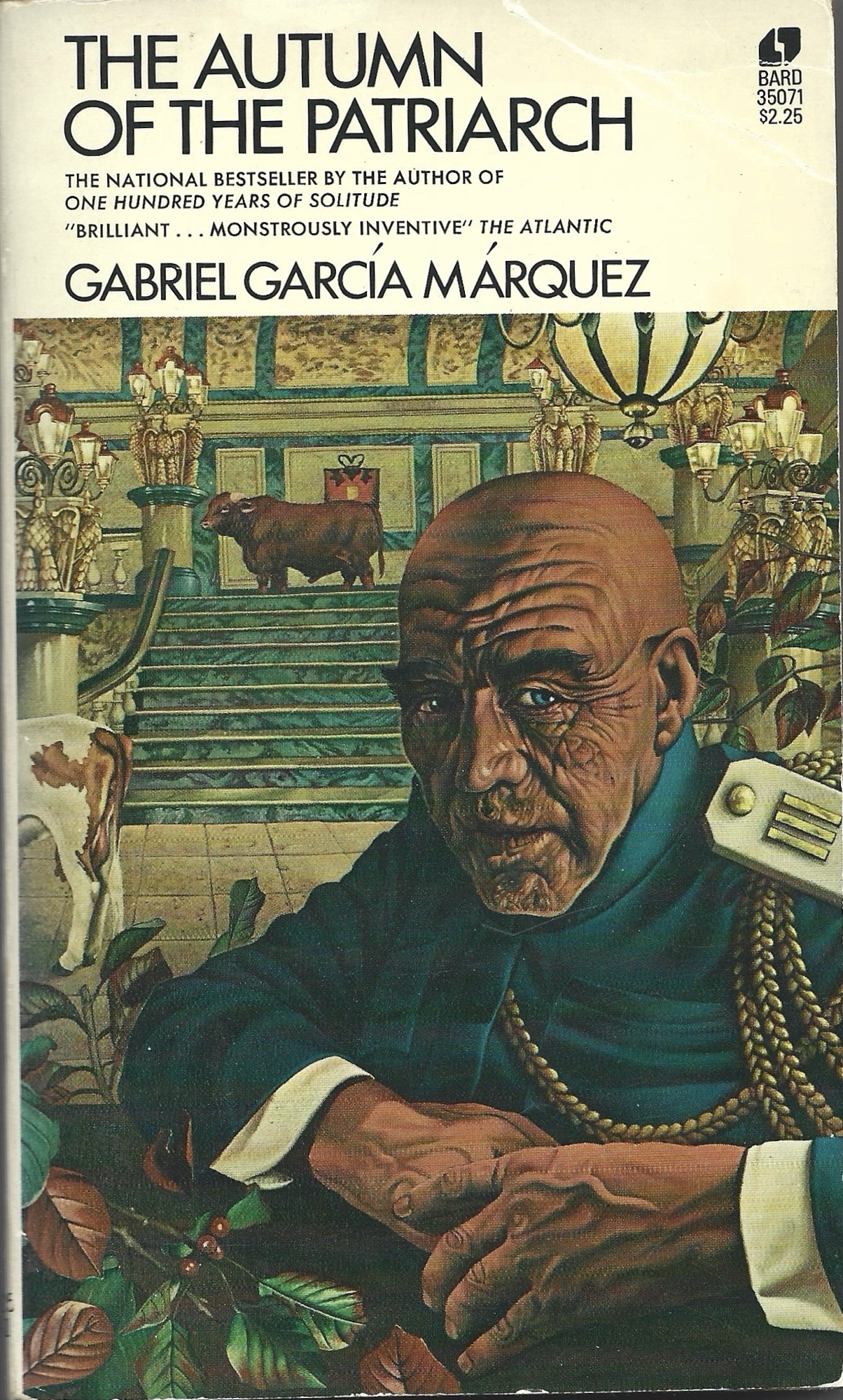
Gabriel García Márquez’s The Autumn of the Patriarch isn’t so much a novel as it is a delirium, a swamp fever, a sun-bleached hallucination stretched across centuries, a beast that coils and uncoils, bloated with its own rot, a thing that does not begin or end but only festers, looping back on itself in great, heaving tides of unpunctuated or undepunctuated or mispunctuated thought, García Márquez dragging us under, drowning us in the mind or minds of the titular dictator, a paranoid consciousness so swollen with its own power that it warps reality itself, a man who reigns forever and is always dying, whose past rewrites itself with every breath, whose power is infinite and yet always slipping, slipping, slipping through his fingers like the stolen sea, parceled off and shipped to Arizona, because why not, because what is truth if not what he declares it to be, because when you have lived for centuries, when your general is served up at a Thyestean feast, when your nation’s children are disappeared to an island, never to return, when the cattle are branded with your mark, when the very hour itself is subject to your whim, then nothing is real, nothing but the fear, the violence, the rape, the predation, the endless grinding machinery of power that must sustain itself, and so we cycle, we spiral, we convulse through six sections, six deaths, six endless iterations of his reign, six grotesque confirmations that absolute power is an ouroboros swallowing its own tail, devouring itself, erasing itself, until nothing is left but the silence of his ruin, the empty palace where his corpse will be found again and again, where his legacy is nothing but absence, and translator Gregory Rabassa—mad saint, linguistic necromancer—renders it all in English without breaking the spell, his translation a relentless incantation that doesn’t just mimic the novel’s crushing, hypnotic cadence but becomes it, suffocating, pressing, forcing you to inhabit the mind of this eternal, rotting god-tyrant, this cosmic mistake, this doomed and doom-dealing beast whose power, no matter how total, will crumble, will fade, will rot, will vanish into nothing, just like everything else.

Eight notes on Stephen Dixon’s novel Interstate

1,  It upset me deeply, reading Stephen Dixon’s 1995 novel Interstate. It fucked me up a little bit, and then a little bit more, addicted to reading it as I was over two weeks in a new year.

2,  What is it about, Stephen Dixon’s 1995 novel Interstate? I mean, you probably won’t like it, but that wasn’t the stupid rhetorical question that led this point. (And also but maybe like, you will like it.) Interstate was a finalist for the 1995 National Book Award. It didn’t win. The NBA’s website’s one-sentence summary fucks up: “In the author’s first novel since Frog, a Finalist for the National Book Award, a father mentally replays, in eight variations, the shooting of his daughters on an interstate highway.”

3,  There is (or is it are?) one too many esses in the NBA’s summary of Stephen Dixon’s 1995 novel Interstate—there are two daughters, plural, but only one is shot, and shot tragically, awfully, fatally—and really, as its variations play out, it’s not entirely clear if anyone was shot, if anyone was even on the highway, if anyone was even real. Are all the so-called events of the novel simply (there’s no simply about it) in the narrator’s imagination? “…but there I go again, the world’s easiest and most desirable copy out, the dream,” muses the narrator at one point. Not even a dream though, it’s all just words.

4,  It’s all “just” words, and if someone told me they read and hated Stephen Dixon’s 1995 novel Interstate, I’d shrug and ask if they made it all the way through all the words and still hated it. If someone told me that they made it all the way through Interstate and found it to be a strange and unappealing writing experiment, I’d mildly agree with them, and then tell them that I loved that particular flavor and if they didn’t like that particular flavor, well, cool.

5,  If someone read all the words in Stephen Dixon’s 1995 novel Interstate and concluded that it seemed like an ambitious and highly-achieved creative writing exercise — writing experiment, rather — I’d likely initially agree and then hedge a bit before mumbling something like, I don’t think it was an exercise or experiment on the author Stephen Dixon’s part. It might make for experimental reading, but I think he absolutely knew what he was doing; this wasn’t practice or exercise — it was the real thing.

6, I have, thus far, done a lousy job, not even really a job, of describing the force of language in Stephen Dixon’s 1995 novel Interstate. Normally I’d crib a few choice passages—and to be clear, Interstate s fat and juicy with choice passages—but we are talking about long, twisty, tangled passages, sentences that go on for pages, sentences that find the predicate verb sundered for a few paragraphs from its eventual object, sentences that move us through thought, how divergent thought can be how, how imprecise, indirect, yet still sharp and often painful. An easy, lazy comparison would be to liken Dixon’s paragraphs to Thomas Bernhard’s (although Dixon denied the influence, much like William Gaddis did in his final novel)—there’s a different flavor here but our guys are working in a similar mode. (Think too of László Krasznahorkai or Gabriel García Márquez or Faulkner or Mauro Javier Cárdenas or any number of practitioners of the long paragraph). John Domini, in his contemporary review in the Portland Oregonian (reprinted in his excellent collection The Sea-God’s Herb) does a better job of describing Dixon’s style than I can do:

Characters talk themselves through backwaters of memory (sometimes creating comic relief) or sail into dreamy what-ifs, all in order to put off some looming and drear inevitability. In conversation, one may mention an important insight that he or she has to share, then spiral away through a half-dozen distractions before revealing what matters. The format feels like a natural fit to the shuttered claustrophobia of worry and loss. So do the jam-packed paragraphs, sometimes running several pages without a break. Better still, these blocks of talky phrasing flicker with light, even (every now and again) with happier possibilities.”

(Maybe I just wanted to quote that lovely phrase of Domini’s, “blocks of talky phrasing flicker with light.”)

7,  “Better still, these blocks of talky phrasing flicker with light, even (every now and again) with happier possibilities,” Domini wrote of Stephen Dixon’s 1995 novel Interstate. The last of Dixon’s eight Interstates is an unexpected gift — a happy ending, or, rather a banal ending, a plain ending, an ending without tragedy or comedy or epic heroism. An ending where everyone gets to bed in time to fit in a little light reading before shuteye. It sounds hokey when I write it out, but there’s nothing trite about the conclusion. The reader purchases this moment of catharsis from all the terror (and horrifying comedy, which I’ve neglected in this riff and will continue to neglect) — the reader purchases the cathartic conclusion from the preceding horror.

8,  I wonder how I might have reacted to Stephen Dixon’s 1995 novel Interstate if I had read it, say, when it was first published, back when I was a junior in high school. Or how would I have reacted to it ten years after that, not yet a parent? (And writing these thoughts out now, I realize that, more than anything by Bernhard or Krasznahorkai or Faulkner or the other Dixon I’ve read, Interstate most reminds me of (at least at this moment that I write) of Frank Capra’s 1946 film It’s a Wonderful Life. I’ve watched It’s a Wonderful Life once a year for the past four decades, finding it strangely different every few years — first baffling and even a bit scary, then boring, then exasperating, infuriating even, then schmaltzy, sentimental, ludicrous, and then magical, endearing, heartbreaking, perfect–I’ve veered off course, where was I?) I wonder how being a parent has colored my psychic engagement with the novel Interstate? I was not so much manipulated by the tragedy of losing a child through violent, chaotic, meaningless death but rather the more banal tragedy the novel repeatedly engages — losing a child through half-neglect, through half-listening, through selfishness, through an inability to focus on now — not really so much losing a child but losing out on connections, memories, time you’ll never get back. It fucked me up, Interstate, and I don’t think I’d like to go down its road again — but I loved it. Very highly recommended.

Donald Barthelme’s Forty Stories in reverse, Part V

Previously,

Stories 40-36

Stories 35-32

Stories 31-28

Stories 27-24

23 . “A Few Moments of Sleeping and Waking” (Unspeakable Practices, Unnatural Acts, 1968)

I’ve been reading the stories in Forty Stories as kinda-sorta palate cleansers, usually ingesting one or two between novels; my method is to take a few initial notes to come back to, cross-reference against Tracy Daugherty’s Barthelme biography Hiding Man, and then riff on my general impression. Sometimes a few weeks go by from the time I’ve read or reread one of these stories and the time I actually get around to writing about them. Until now, the title alone has activated some memory or aesthetic impression about the story, but “A Few Moments of Sleeping and Waking” was a total blank for me. I suppose in my memory it simply segued out of the story that preceded it in Barthelme’s excellent 1968 sophomore collection, Unspeakable Practices, Unnatural Acts. That story was “Edward and Pia,” metapseudoautobiographical stand-ins for Barthelme and his third wife Birgit. “A Few Moments” is more droll low-stakes tension between the pair; there’s a little here on films and dreams and their interpretations. The best bit of the story is a moment on cabbage:

Pia was chopping up an enormous cabbage, a cabbage big as a basketball. The cabbage was of an extraordinary size. It was a big cabbage.
“That’s a big cabbage,” Edward said.
“Big,” Pia said.
They regarded the enormous cabbage God had placed in the world for supper.

22 . “The Flight of Pigeons from the Palace” (Sadness, 1972)

A lovely little story, so short and sweet it really can’t be summarized! But I’ll give it a shot: “The Flight” is a comic riff on the audience’s addiction to novelty and sensation. The third-person “we” who narrates “Flight” is a kind of postmodern carnival barker, barking new wonders into existence:

The lineup for opening night included:

A startlingly handsome man

A Grand Cham

A tulip craze

The Prime Rate

Edgar Allan Poe

A colored light

We asked ourselves: How can we improve the show?

We auditioned an explosion.

Barthelme’s not really a moralist, hardly a Hawthorne, but I think he does offer oblique lessons, or warnings really, to his reader. “Flight” culminates thus:

The supply of strange ideas is not endless.

The development of new wonders is not like the production of canned goods. Some things appear to be wonders in the beginning, but when you become familiar with them, are not wonderful at all.

The story concludes in the threatening specter of newly-contracted volcano.

21 . “At the Tolstoy Museum” (City Life, 1970)

Like “Flight,” “At the Tolstoy Museum” is one of Barthelme’s literal cut-and-paste collage stories — that is, a story to include the author’s own visual collages, juxtaposed against his verbal collages. In “Flight,” the collages seem incidental. They aren’t exactly affectations, and they don’t add anything to the story–but they don’t detract either. The visual collages in “At the Tolstoy Museum” are deployed more judiciously, serving as punchlines that resound off of the narrator’s flat, affectless pose:

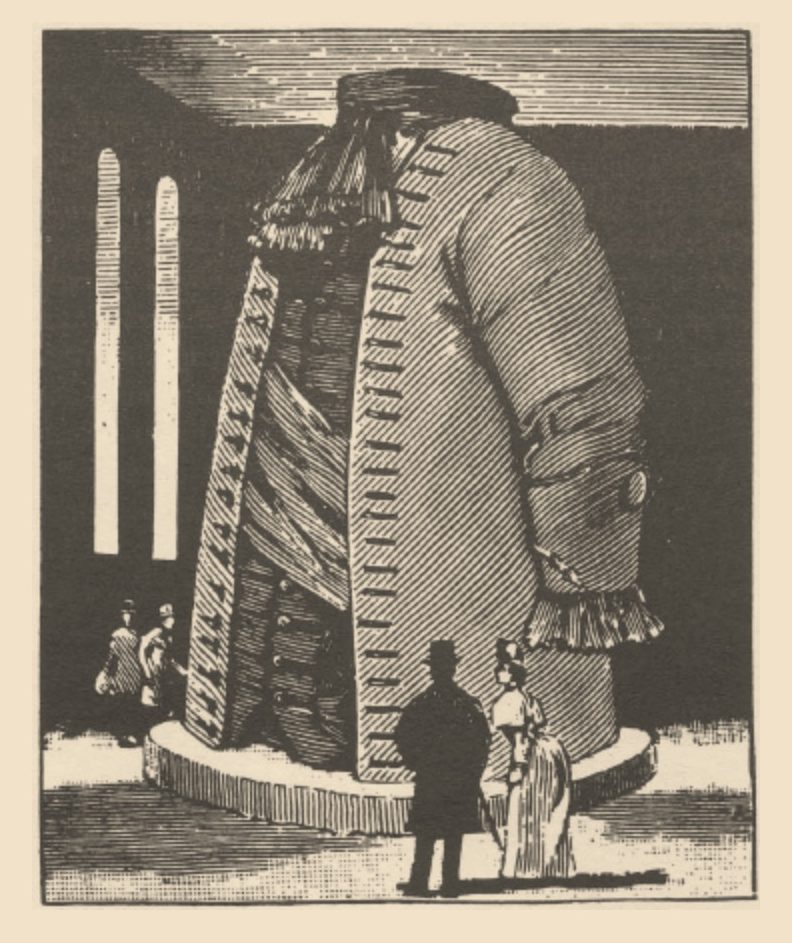
I was eating a sandwich at the Tolstoy Museum. The Tolstoy Museum is made of stone—many stones, cunningly wrought Viewed from the street, it has the aspect of three stacked boxes: the first, second, and third levels. These are of increasing size. The first level is, say, the size of a shoebox, the second level the size of a case of whiskey, and the third level the size of a box that contained a new overcoat. The amazing cantilever of the third level has been much talked about. The glass floor there allows one to look straight down and provides a “floating” feeling. The entire building, viewed from the street, suggests that it is about to fall on you. This the architects relate to Tolstoy’s moral authority.

Tolstoy’s Coat

In Hiding Man, Daugherty relates that after “At the Tolstoy Museum” was published in The New Yorker (24 May 1969) “a family from Holly Hill, Florida [wrote to the magazine to learn the location of the Tolstoy Museum.” About two weeks later, Tolstoy’s daughter, the Countess Alexandra L. Tolstoy sent a more indignant letter to the magazine, referring to the story as “Donald Barthelme’s absurd article…What is the aim of such an article? To make people laugh? … How funny! Ha, ha, ha.” Great stuff all around.

20 . “The Wound” (Amateurs, 1976)

A surreal sketch featuring a bullfighter, his mother, his mistress, a bishop, and a famous aficionado (of, implicitly, bullfighting, and, explicitly, breasts), as well as a cast of grumbling minions and peons. Barthelme’s stories are often collage-like, anti-real, hyper-real, or outright absurd, but they are, at least in my estimation, rarely dreamlike. But “The Wound” moves like a dream — a brief, stifled dream, one that reveals something about himself to the dreamer, who later might lament, But I already knew that, like the Bishop who laments his therapy:

The Bishop begins to talk about his psychoanalysis: “I am a different man now,” the Bishop says. “Gloomier, duller, more fearful. In the name of the Holy Ghost, you would not believe what I see under the bed, in the middle of the night.” The Bishop laughs heartily. The torero joins him. The torero’s mistress is filming the Bishop. “I was happier with my whiskey,” the Bishop says, laughing even harder.

The Queen of Gypsies arrives, claiming wounds. There’s “An ecstasy of shrinking” and the final vision of “an immense black bull” blocking the door way. It “begins to ring, like a telephone.”

“The Wound” is a short example that might be handed off to any young person clamoring for meaning or theme or symbolism from every text they read. Sometimes it’s just a dream, a goof, an aesthetic gesture. Sometimes there’s just a surreal punchline that needs to erupt, like a giant black bull ringing like a telephone, blocking the only exit in sight.

On Tove Jansson’s odd and touching illustrations for Alice’s Adventures in Wonderland

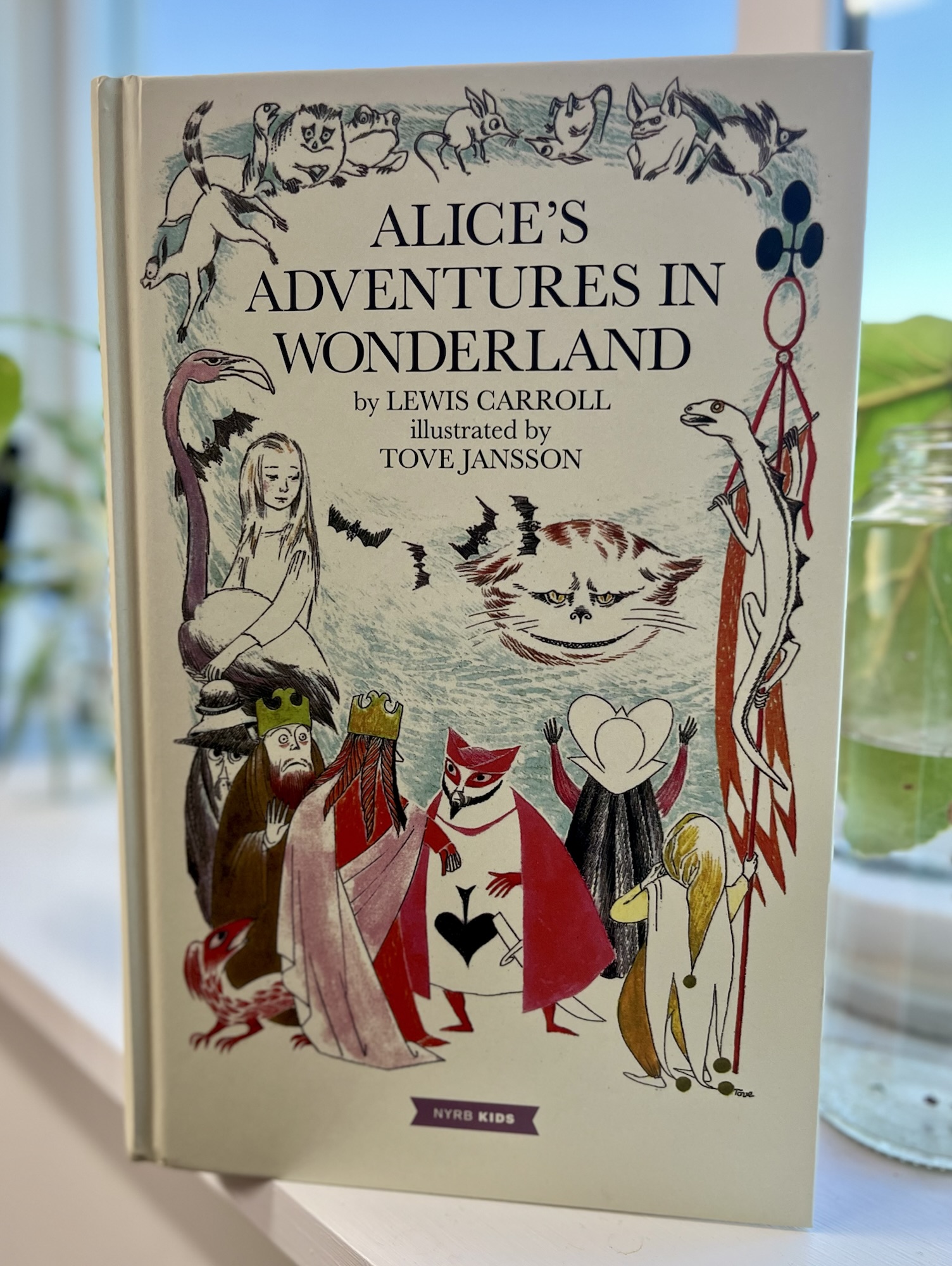
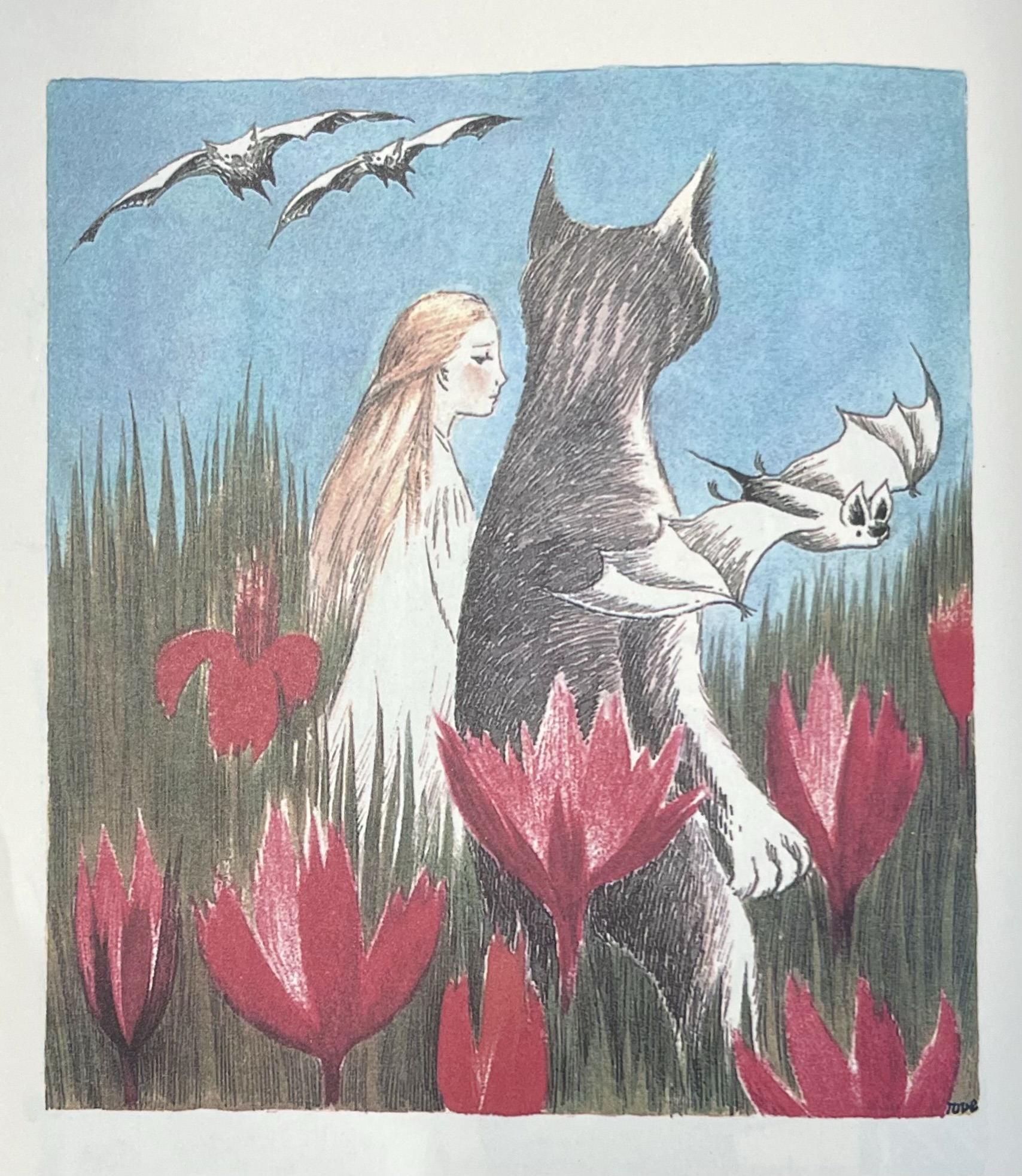
This fall–just in time for the holiday season–the NYRB Kids imprint has published an edition of Lewis Carroll’s classic Alice’s Adventures in Wonderland illustrated by the Finnish author and artist Tove Jansson. Jansson is most famous for her Moomin books, which remain an influential cult favorite with kids and adults alike. She illustrated Carroll’s Alice in 1966 for a Finnish audience; this NRYB edition is the first English-language version of the book. There are illustrations on almost every page of the book; most are black and white sketches — doodles, portraits, marginalia — but there are also many full-color full-pagers, like this odd image about a dozen pages in:

Here we have Alice and her cat Dinah, transformed into a shadowy, even sinister figure, large, bipedal. Bats float in the background, echoing Goya’s famous print El sueño de la razón produce monstruos. The image accompanies Alice’s initial descent into her underland wonderland:  “Down, down, down. There was nothing else to do, so Alice soon began talking again,” addressing Dinah, who will “miss me very much to-night, I should think!” Wonderlanding if Dinah might catch a bat, which is something like a mouse, maybe, “Alice began to get rather sleepy, and went on saying to herself, in a dreamy sort of way, ‘Do cats eat bats? Do cats eat bats?’ and sometimes, ‘Do bats eat cats?; for, you see, as she couldn’t answer either question, it didn’t much matter which way she put it.” Jansson’s red flowers suggest poppies, contributing to the scene’s slightly-menacing yet dreamlike vibe. The image ultimately echoes the myth of Hades and Persephone.

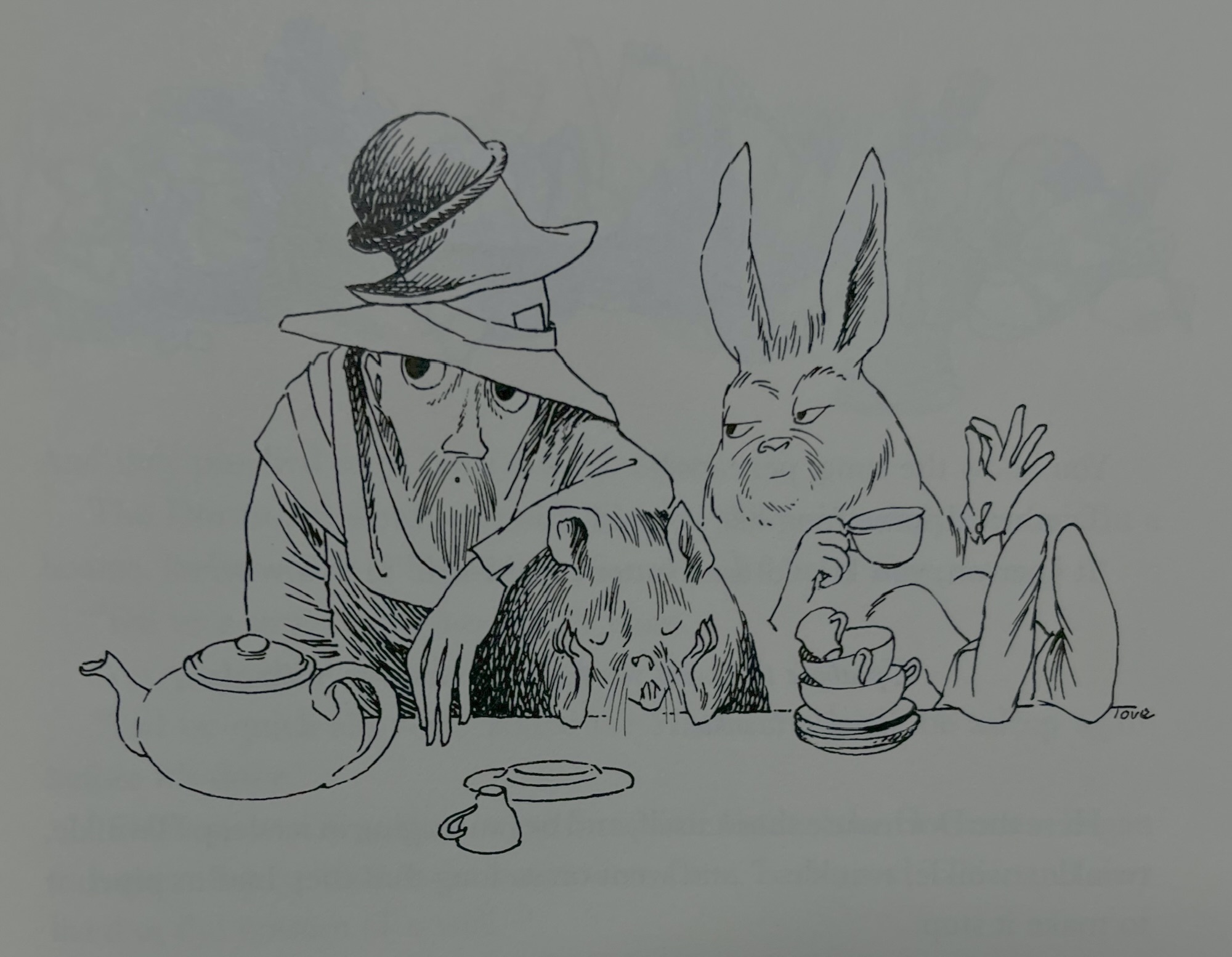
All the classic characters are here, of course, rendered in Jansson’s sensitive ink. Consider this infamous trio —

There was a table set out under a tree in front of the house, and the March Hare and the Hatter were having tea at it: a Dormouse was sitting between them, fast asleep, and the other two were using it as a cushion, resting their elbows on it, and talking over its head.

I love Jansson’s take on the Hatter; he’s not the outright clown we often see in post-Disneyfied takes on the character, but rather a creature rendered in subtle pathos. The March Hare is smug; the Dormouse is miserable.

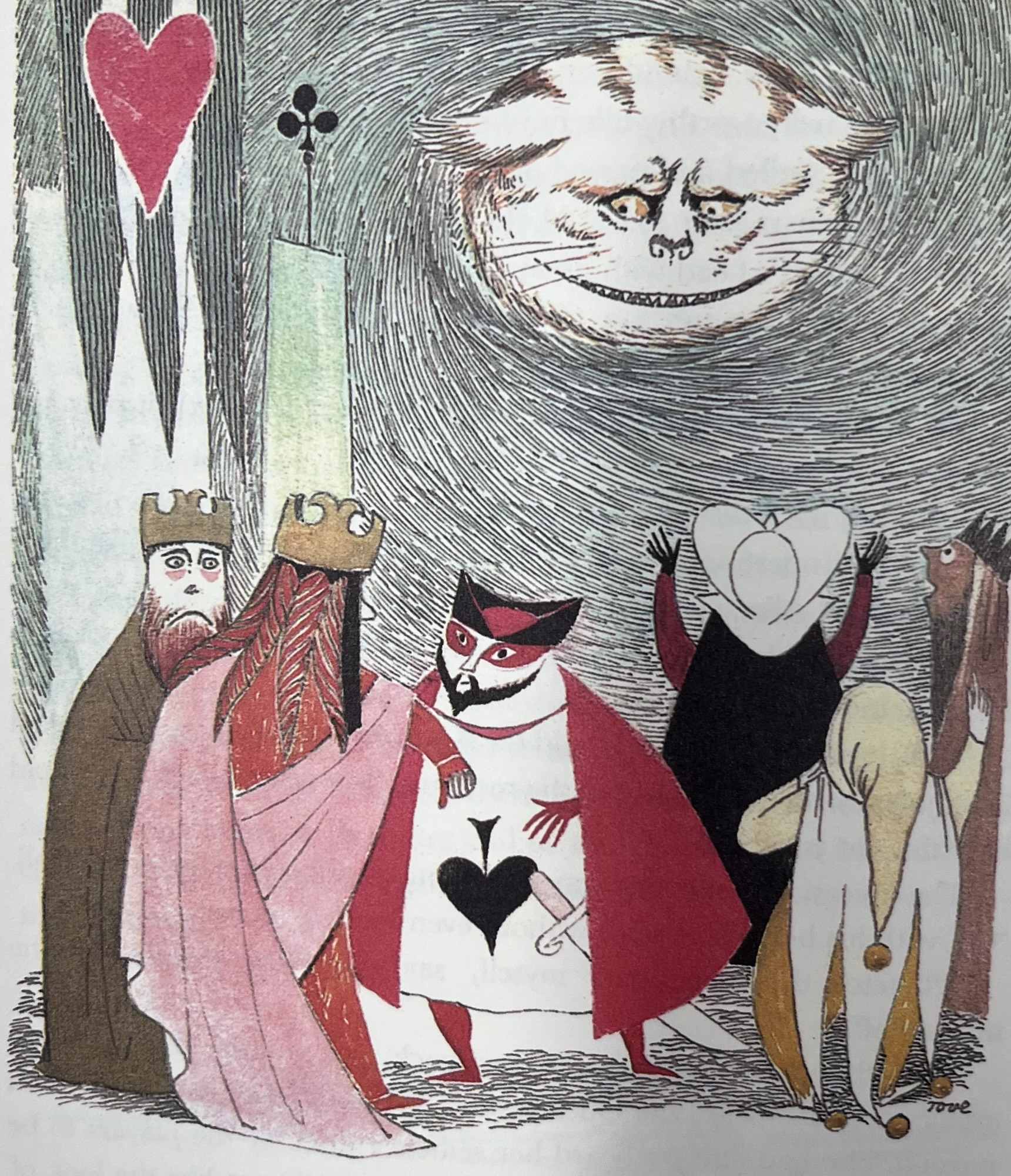
And you’ll want a glimpse of the famous Cheshire cat who appears (and disappears) during the Queen’s croquet match:

Jansson’s figures here remind one of the surrealist Remedios Varo’s strange, even ominous characters. Like Varo and fellow surrealist Leonora Carrington, Jansson’s art treads a thin line between whimsical and sinister — a perfect reflection of Carroll’s Alice, which we might remember fondly as a story of magical adventures, when really it is much closer to a horror story, a tale of being sucked into an underworld devoid of reason and logic, ruled by menacing, capricious, and ultimately invisible forces. It is, in short, a true reflection of childhood,m. Great stuff.
Donald Barthelme’s Forty Stories in reverse, Part IV

Previously,

Stories 40-36

Stories 35-32

Stories 31-28

27. “Some of Us Had Been Threatening Our Friend Colby” (Amateurs, 1976)

This is probably the first essential story in Forty Stories—maybe at the end of this silly project I’ll put together something like Fifty Stories, whittling down Sixty Stories and Forty Stories. Here are the first few sentences:

Some of us had been threatening our friend Colby for a long time, because of the way he had been behaving. And now he’d gone too far, so we decided to hang him. Colby argued that just because he had gone too far (he did not deny that he had gone too far) did not mean that he should be subjected to hanging. Going too far, he said, was something everybody did sometimes. We didn’t pay much attention to this argument. We asked him what sort of music he would like played at the hanging. He said he’d think about it but it would take him a while to decide.

Colby finally settles on Ive’s Fourth Symphony.

“Some of Us” showcases in a non-showy way the best of Barthelme—absurdity balanced by syntactic restraint; surreal humor weighted in the visceral specter of impending violence. It’s a very, very funny story, and while I think it resists simple allegorical interpretation, it’s nevertheless a little parcel of domestic fascism in practice. Great stuff. Read “Some of Us Had Been Threatening Our Friend Colby”  here.

26. “Pepperoni” (first published in The New Yorker, 23 Nov. 1980)

Published over four decades ago, “Pepperoni” is a depressingly prescient riff on what happens when capital decides to take over journalism. Newspapers become just another widget, a slice of pepperoni, a trifle, a nothing to sell and sell and resell:

Financially, the paper is quite healthy. The paper’s timber-lands, mining interests, pulp and paper operations, book, magazine, corrugated-box, and greeting-card divisions, film, radio, television, and cable companies, and data-processing and satellite-communications groups are all flourishing, with overall return on invested capital increasing at about eleven percent a year.

Despite the vertical integration, all is not well: “But top management is discouraged and saddened, and middle management is drinking too much.” Barthelme’s hyperbole is jaunty in 1980, where the paper’s “editorials have been subcontracted to Texas Instruments, and the obituaries to Nabisco, so that the staff will have ‘more time to think.'” But in 2024 it reads as a grim warning about the gross intersection of capital and journalism. Read “Pepperoni” here.

25. “Sentence” (City Life, 1970)

I mean what if I just…

Or a long sentence moving at a certain pace down the page aiming for the bottom-if not the bottom of this page then some other page-where it can rest, or stop for a moment to think out the questions raised by its own (temporary) existence, which ends when the page is turned, or the sentence falls out of the mind that holds it (temporarily) in some kind of embrace, not necessarily an ardent one, but more perhaps the kind of embrace enjoyed (or endured), by a wife who has just waked up and is on her way to the bathroom in the morning to wash her hair, and is bumped into by her husband, who has been lounging at the breakfast table reading the newspaper, and doesn’t see her coming out of the bedroom, but, when he bumps into her, or is bumped into by her, raises his hands to embrace her lightly, transiently, because he knows that if he gives her a real embrace so early in the morning, before she has properly shaken the dreams out of her head, and got her duds on, she won’t respond, and may even become slightly angry, and say something wounding, and so the husband invests in this embrace not so much physical or emotional pressure as he might, because he doesn’t want to waste anything-with this sort of feeling, then, the sentence passes through the mind more or less, and there is another way of describing the situation too, which is to say that the sentence crawls through the mind like something someone says to you while you are listening very hard to the FM radio, some rock group there, with its thrilling sound, and so, with your attention or the major part of it at least already rewarded, there is not much mind room you can give to the remark, especially considering that you have probably just quarreled with that person, the maker of the remark, over the radio being too loud, or something like that, and the view you take, of the remark, is that you’d really rather not hear it, but if you have to hear it, you want to listen to it for the smallest possible length of time, and during a commercial, because immediately after the commercial they’re going to play a new rock song by your favorite group, a cut that has never been aired before, and you want to hear it and respond to it in a new way, a way that accords with whatever you’re feeling at the moment, or might feel, if the threat of new experience could be (temporarily) overbalanced by the promise of possible positive benefits, or what the mind construes as such, remembering that these are often, really, disguised defeats (not that such defeats are not, at times, good for your character, teaching you that it is not by success alone that one surmounts life, but that setbacks, too, contribute to that roughening of the personality that, by providing a textured surface to place against that of life, enables you to leave slight traces, or smudges, on the face of human history-your mark) and after all, benefit-seeking always has something of the smell of raw vanity about it, as if you wished to decorate your own brow with laurel, or wear your medals to a cookout, when the invitation had said nothing about them, and although the ego is always hungry (we are told) it is well to remember that ongoing success is nearly as meaningless as ongoing lack of success, which can make you sick, and that it is good to leave a few crumbs on the table for the rest of your brethren, not to sweep it all into the little beaded purse of your soul but to allow others, too, part of the gratification, and if you share in this way you will find the clouds smiling on you, and the postman bringing you letters, and bicycles available when you want to rent them, and many other signs, however guarded and limited, of the community’s (temporary) approval of you, or at least of it’s willingness to let you believe (temporarily) that it finds you not so lacking in commendable virtues as it had previously allowed you to think, from its scorn of your merits, as it might be put, or anyway its consistent refusal to recognize your basic humanness and its secret blackball of the project of your remaining alive, made in executive session by its ruling bodies, which, as everyone knows, carry out concealed programs of reward and punishment, under the rose, causing faint alterations of the status quo, behind your back, at various points along the periphery of community life, together with other enterprises not dissimilar in tone, such as producing films that have special qualities, or attributes, such as a film where the second half of it is a holy mystery, and girls and women are not permitted to see it, or writing novels in which the final chapter is a plastic bag filled with water, which you can touch, but not drink: in this way, or ways, the underground mental life of the collectivity is botched, or denied, or turned into something else never imagined by the planners, who, returning from the latest seminar in crisis management and being asked what they have learned, say they have learned how to throw up their hands; the sentence meanwhile, although not insensible of these considerations, has a festering conscience of its own, which persuades it to follow its star, and to move with all deliberate speed from one place to another, without losing any of the “riders” it may have picked up just being there, on the page, and turning this way and that, to see what is over there, under that oddly-shaped tree, or over there, reflected in the rain barrel of the imagination, even though it is true that in our young manhood we were taught that short, punchy sentences were best (but what did he mean? doesn’t “punchy” mean punch-drunk? I think he probably intended to say “short, punching sentences,” meaning sentences that lashed out at you, bloodying your brain if possible, and looking up the word just now I came across the nearby “punkah,” which is a large fan suspended from the ceiling in India, operated by an attendant pulling a rope-that is what I want for my sentence, to keep it cool!) we are mature enough now to stand the shock of learning that much of what we were taught in our youth was wrong, or improperly understood by those who were teaching it, or perhaps shaded a bit, the shading resulting from the personal needs of the teachers, who as human beings had a tendency to introduce some of their heart’s blood into their work, and sometimes this may not have been of the first water, this heart’s blood, and even if they thought they were moving the “knowledge” out, as the Board of Education had mandated, they could have noticed that their sentences weren’t having the knockdown power of the new weapons whose bullets tumble end-over-end (but it is true that we didn’t have these weapons at that time) and they might have taken into account the fundamental dubiousness of their project (but all the intelligently conceived projects have been eaten up already, like the moon and the stars) leaving us, in our best clothes, with only things to do like conducting vigorous wars of attrition against our wives, who have now thoroughly come awake, and slipped into their striped bells, and pulled sweaters over their torsi, and adamantly refused to wear any bras under the sweaters, carefully explaining the political significance of this refusal to anyone who will listen, or look, but not touch, because that has nothing to do with it, so they say; leaving us, as it were, with only things to do like floating sheets of Reynolds Wrap around the room, trying to find out how many we can keep in the air at the same time, which at least gives us a sense of participation, as though we were Buddha, looking down at the mystery of your smile, which needs to be investigated, and I think I’ll do that right now, while there’s still enough light, if you’ll sit down over there, in the best chair, and take off all your clothes, and put your feet in that electric toe caddy (which prevents pneumonia) and slip into this permanent press hospital gown, to cover your nakedness-why, if you do all that, we’ll be ready to begin! after I wash my hands, because you pick up an amazing amount of exuviae in this city, just by walking around in the open air, and nodding to acquaintances, and speaking to friends, and copulating with lovers, in the ordinary course (and death to our enemies! by and by)-but I’m getting a little uptight, just about washing my hands, because I can’t find the soap, which somebody has used and not put back in the soap dish, all of which is extremely irritating, if you have a beautiful patient sitting in the examining room, naked inside her gown, and peering at her moles in the mirror, with her immense brown eyes following your every movement (when they are not watching the moles, expecting them, as in a Disney nature film, to exfoliate) and her immense brown head wondering what you’re going to do to her, the pierced places in the head letting that question leak out, while the therapist decides just to wash his hands in plain water, and hang the soap! and does so, and then looks around for a towel, but all the towels have been collected by the towel service, and are not there, so he wipes his hands on his pants, in the back (so as to avoid suspicious stains on the front) thinking: what must she think of me? and, all this is very unprofessional and at-sea looking! trying to visualize the contretemps from her point of view, if she has one (but how can she? she is not in the washroom) and then stopping, because it is finally his own point of view that he cares about and not hers, and with this firmly in mind, and a light, confident step, such as you might find in the works of Bulwer-Lytton, he enters the space she occupies so prettily and, taking her by the hand, proceeds to tear off the stiff white hospital gown (but no, we cannot have that kind of pornographic merde in this majestic and high-minded sentence, which will probably end up in the Library of Congress) (that was just something that took place inside his consciousness, as he looked at her, and since we know that consciousness is always consciousness of something, she is not entirely without responsibility in the matter) so, then, taking her by the hand, he falls into the stupendous white puree of her abyss, no, I mean rather that he asks her how long it has been since her last visit, and she says a fortnight, and he shudders, and tells her that with a condition like hers (she is an immensely popular soldier, and her troops win all their battles by pretending to be forests, the enemy discovering, at the last moment, that those trees they have eaten their lunch under have eyes and swords) (which reminds me of the performance, in 1845, of Robert-Houdin, called The Fantastic Orange Tree, wherein Robert-Houdin borrowed a lady’s handkerchief, rubbed it between his hands and passed it into the center of an egg, after which he passed the egg into the center of a lemon, after which he passed the lemon into the center of an orange, then pressed the orange between his hands, making it smaller and smaller, until only a powder remained, whereupon he asked for a small potted orange tree and sprinkled the powder thereupon, upon which the tree burst into blossom, the blossoms turning into oranges, the oranges turning into butterflies, and the butterflies turning into beautiful young ladies, who then married members of the audience), a condition so damaging to real-time social intercourse of any kind, the best thing she can do is give up, and lay down her arms, and he will lie down in them, and together they will permit themselves a bit of the old slap and tickle, she wearing only her Mr. Christopher medal, on its silver chain, and he (for such is the latitude granted the professional classes) worrying about the sentence, about its thin wires of dramatic tension, which have been omitted, about whether we should write down some natural events occurring in the sky (birds, lightning bolts), and about a possible coup d’etat within the sentence, whereby its chief verb would be-but at this moment a messenger rushes into the sentence, bleeding from a hat of thorns he’s wearing, and cries out: “You don’t know what you’re doing! Stop making this sentence, and begin instead to make Moholy-Nagy cocktails, for those are what we really need, on the frontiers of bad behavior!” and then he falls to the floor, and a trap door opens under him, and he falls through that, into a damp pit where a blue narwhal waits, its horn poised (but maybe the weight of the messenger, falling from such a height, will break off the horn)-thus, considering everything very carefully, in the sweet light of the ceremonial axes, in the run-mad skimble-skamble of information sickness, we must make a decision as to whether we should proceed, or go back, in the latter case enjoying the pathos of eradication, in which the former case reading an erotic advertisement which begins, How to Make Your Mouth a Blowtorch of Excitement (but wouldn’t that overtax our mouthwashes?) attempting, during the pause, while our burned mouths are being smeared with fat, to imagine a better sentence, worthier, more meaningful, like those in the Declaration of Independence, or a bank statement showing that you have seven thousand kroner more than you thought you had-a statement summing up the unreasonable demands that you make on life, and one that also asks the question, if you can imagine these demands, why are they not routinely met, tall fool? but of course it is not that query that this infected sentence has set out to answer (and hello! to our girl friend, Rosetta Stone, who has stuck by us through thick and thin) but some other query that we shall some day discover the nature of, and here comes Ludwig, the expert on sentence construction we have borrowed from the Bauhaus, who will-“Guten Tag, Ludwig!”-probably find a way to cure the sentence’s sprawl, by using the improved way of thinking developed in Weimer-“I am sorry to inform you that the Bauhaus no longer exists, that all of the great masters who formerly thought there are either dead or retired, and that I myself have been reduced to constructing books on how to pass the examination for police sergeant”-and Ludwig falls through the Tugendhat House into the history of man-made objects; a disappointment, to be sure, but it reminds us that the sentence itself is a man-made object, not the one we wanted of course, but still a construction of man, a structure to be treasured for its weakness, as opposed to the strength of stones

Is good if not great.

24. “The Temptation of St. Anthony” (Sadness, 1972)

After rereading this one, the thought that dominated my stupid brain was, How the fuck did an editor allow DB to use the word “ineffable” four times in this short story? He uses a version of the word here, in this nice little excerpt in which one of the things that St. Anthony did was the passive doing of being mugged:

 There was the ineffableness I’ve already mentioned, and there were certain things that he did. He was mugged, for example. That doesn’t happen too often here, but it happened to him. It was at night, somebody jumped on him from behind, grabbed him around the neck and began going through his pockets. The man only got a few dollars, and then he threw St. Anthony down on the sidewalk (he put one leg in front of the saint’s legs and shoved him) and then began to run away. St. Anthony called after him, held up his hand, and said, “Don’t you want the watch?” It was a good watch, a Bulova. The man was thunderstruck. He actually came back and took the watch off St. Anthony’s wrist. He didn’t know what to think. He hesitated for a minute and then asked St. Anthony if he had bus fare home. The saint said it didn’t matter, it wasn’t far, he could walk. Then the mugger ran away again.

If not essential, “St. Anthony” is a robust and colorful example of DB riffing in his prime. Read “The Temptation of St. Anthony” here.

Donald Barthelme’s Forty Stories in reverse, Part III

Previously,

Stories 40-36

Stories 35-32

31. “Sakrete” (first published in The New Yorker, 25 Sep. 1983)

“Sakrete” is a silly little domestic riff about garbage can theft, rats, and an alcoholic trying to work with concrete. It’s not a very good story and I have no idea why it was included in Forty Stories. I do like that it shows a general respect for garbage cans and garbage collection (very interested parties should check out Stephen Dixon’s excellent novel Garbage). Here is the last paragraph, the highlight of the story:

 There are now no garbage cans on our street—no garbage cans left to steal. A committee of rats has joined with the Special Provisional committee in order to deal with the situation, which, the rats have made known, is attracting unwelcome rat elements from other areas of the city. Members of the two committees exchange secret grips, grips that I know not of. My wife drives groups of rats here and there in her yellow Pontiac convertible, attending important meetings. The crisis, she says, will be a long one. She has never been happier.

30. “Porcupines At The University” (Amateurs, 1976)

Another trifle—am I regretting this project, this rereading of Forty Stories? The stories in Sixty Stories are so, so much stronger—and those stories were organized chronologically. Going backwards through these is not really going backwards through time, through the artist’s anti-maturation, but rather just, like, making it more difficult to find one’s place in a book. “Porcupines” is a goof on academia that — and I say this as a compliment — at best reads like an alcoholic’s surrealist riff on a college film. Skip it!

29. “The Catechist” (Sadness , 1972)

This is a good story, “The Catechist.” But also a very Catholic one, without being, like, small-c catholic. There’s a bit of narrativizing here that Barthelme would eventually dispense with in his dialogues, the form that he would eventually settle on for his short stories. I say “settle on” but Barthelme died quite young, or, it seems to me, at 45, quite young—dying at 58. Barthelme died from throat cancer, probably a result of his alcoholism (pure conjecture on my part, this last clause):

The catechist reads from his book. “The candidate should be questioned as to his motives for becoming a Christian.”
I think: My motives?
He says: “Tell me about yourself.”
I say: “I’m forty. I have bad eyes. An enlarged liver.”
“That’s the alcohol,” he says.
“Yes,” I say.
“You’re very much like your father, there.”
“A shade more avid.”

28. “Lightning” (Overnight to Many Distant Cities, 1983)

This is a great story. Or at least a very good story, unexpectedly so, written a mode approaching near-realism or even near-dirty-realism. Was Barthelme flexing his muscles in the mirror after having read a story by Raymond Carver? Probably not, but I like to imagine it (I imagine his muscles beefier and musclier than they likely were). “Lightning” has a fairly straightforward ( and unBarthelemesque) plot:

Edward Connors, on assignment for Folks, set out to interview nine people who had been struck by lightning. “Nine?” he said to his editor, Penfield. “Nine, ten,” said Penfield, “doesn’t matter, but it has to be more than eight.” “Why?” asked Connors, and Penfield said that the layout was scheduled for five pages and they wanted at least two people who had been struck by lightning per page plus somebody pretty sensational for the opening page. “Slightly wonderful,” said Penfield, “nice body, I don’t have to tell you, somebody with a special face. Also, struck by lightning.”

The story is ultimately a romantic comedy, with reporter Edward finally finding his “face”:

People would dig slant wells for this woman, go out into a producing field with a tank truck in the dead of night and take off five thousand gallons of somebody else’s crude, write fanciful checks, establish Pyramid Clubs with tony marble-and-gold headquarters on Zurich’s Bahnhofstrasse. What did he have to offer?

He finds something to offer. This is probably the best one yet in Forty Stories (in reverse, anyway).

Paul Valéry’s Monsieur Teste (Book acquired, 14 Nov. 2024)

Got a review copy of Paul Valéry’s Monsieur Teste, a slim lil fellow from NYRB in translation by Charlotte Mandell. The back cover includes a blurb from William H. Gass—

Monsieur Teste is a monster, and is meant to be—an awesome, wholly individualized machine—yet in a sense he is also the sort of inhuman being Valéry aimed to become himself: a Narcissus of the best kind, a scientific observer of consciousness, a man untroubled by inroads of worldly trivia, who vacations in his head the way a Platonist finds his Florida in the realm of Forms.

What the fuck does Gass mean by “Florida” here? I really want to know.


This style of post, the book acquired post, is an established, which is to say tired, blog post format on this blog, Biblioklept, probably going back a decade now, born from a glut of review copies piling up, mostly unasked for but many asked for, books that stack up their own measures of guilt, unread, or then maybe read, months, years later—but the post style is ephemeral, yes, fluffy, sure, embarrassing even maybe. The form is stale; I apologize. I do think the Valéry book seems pretty cool.


I have a not-insubstantial stack of newly acquired new (and used books) stacked on the cherry side table by the black leather couch that I should have made book acquired posts about. These have piled up over the last few weeks. These are not interesting sentences (several of the books seem very interesting).


I am not going to find the new form I want here, am I?


When I was a freshman in high school, my then-girlfriend’s older brother gave me a mixtape that a girl had given him. He didn’t like anything on the mixtape; he liked Buddy Holly. I can’t remember why he gave me the tape—I think I saw it in his car and asked about it. But it ended up changing my life in some ways, as small giant things like songs or books or films can do when they come over you at the right time and place.

There were a few bands on the tape that I knew or had heard of, and even some I owned albums by, like the Cure and the Smiths. But for the most part, the tape opened a new aural world to me. I heard My Bloody Valentine, Big Star, Ride, the Cocteau Twins, and This Mortal Coil, among others, for the first time. There were also two songs by one band: Slowdive’s “When the Sun Hits” and “Dagger.”


(This particular blog post is no longer about acquiring a Valéry translation; it is about something else.)


Those songs are from Slowdive’s 1993 classic Souvlaki. I owned it on cassette. That cassette melted, just slightly, on the top of my 1985 Camry’s dashboard in like August of 1995. The tape was just warped enough not to fit into a cassette deck. I liked to imagine how it would sound. The next year, my lucky privileged ass found a used CD of Slowdive’s follow-up, Pygmallion on a school trip to London. Slowdive kinda sorta broke up after that.


I have always been a proponent of bands breaking up. I think a decade is long enough; get what you need done in five or six albums and move on. There are many many exceptions to this rule. But generally, I don’t think beloved bands—by which I means bands beloved by me—should keep going on too long. And if they break up, they should stay broken.


But I bought Slowdive’s 2017 reunion album Slowdive used at a St. Petersburg record store and listened to it again and again, amazed at how strong it was, how true to form. My kids liked it a lot. And then they put out a record last year, Everything Is Alive—I like that one too (not as good as the self titled one).


(There’s no point to any of this; I might’ve had some wine; I might just feel like writing.)


I guess if you’d told me back in ’95 or ’05 or even ’15 that I’d see a reunited Slowdive twice in one year I’d say that that sounded silly. (The ’15 version of me that had seen Dinosaur Jr.’s dinosaur act wouldn’t have been interested.) But we went out into the woods to see Slowdive this Sunday. They played the St. Augustine Amphitheatre to a large, strange, diverse crowd, out there in the Florida air. A band named Wisp, TikTok famous I’m told, opened, and they were pretty good. But Slowdive was perfect—better than back in May in Atlanta—echo and reverb ringing out into Anastasia State Park.


We stayed in a cheap motel off of AIA that night—another sign of my age. When I was younger, I could drive six hours, watch a band, and drive the six hours back without blinking. We are about 45 minutes from St. Augustine. It was a nice night out.


A younger version of me could’ve read the 80 pages of Paul Valéry’s Monsieur Teste in the time it took to twiddle my thumbs in this post and write a real (and likely bad) review to boot. Again, apologies. I’m getting old, a dinosaur act. But I can’t break up, not now.


Slowdive, St. Augustine Amphitheatre, 10 Nov. 2024 Slowdive, St. Augustine Amphitheatre, 10 Nov. 2024

6 Nov. 2024

Like a lot of US Americans I didn’t sleep too well last night. I went to bed too late and I rustled myself into some form of consciousness way too early. A veteran of past election eves, I did not overimbibe, but still felt groggy enough and well just plain like well disconcerted discombobulated discouraged enough to cancel meetings with my classes for the day. I didn’t have anything to give.

While I was in no way shocked by the results of the 2024 elections, I am nevertheless big-w Worried about all the things that may unfold, quickly, and without organized opposition, in the next six months. As has been the case for most of the presidential elections I’ve voted in, I voted against a candidate instead of for a candidate. I knew in Florida that my vote probably wouldn’t matter too much anyway.

I made myself go outside of my house into “Florida,” into Northeast Florida, which is, of course, also inside of my house, Florida, but I went outside early to take the air and look around. It was also garbage day in the neighborhood. I had a can with some nasty double-bagged rotten Jack O’Lanterns. We carved them on Halloween night and they wilted to a gray and black fuzz swarmed over with pestilence. I had to scrape their guts into the garden bed and hose the whole mess down. It’s not supposed to be this hot here this time of year, only it is and it has been, like regularly, consistently, predictably for well over a decade. The Florida air I stepped out into was gross: sticky, muggy, humidity near ninety percent and maybe 82° at nine in the morning. It did not feel like summer nor fall, but some other gross fifth season. None of this was colored by mood.

My mood was and is grim. I knew that voting for the incumbent’s proxy was simply kicking a can down the road; I knew that I was endorsing a system I had no belief in and that no one else I knew really seemed to believe in. I think I wanted just a little bit of the latter half of the 20th century to trickle down to my children, who are no longer really children. But it felt like a gross summer’s eve on this fall morning, and I remembered that climate change, which is to say global warming, which is to say the warming of the earth’s habitable surface as the result of fossil fuels—this so-called “climate change” didn’t even seem to be a blip in this election cycle. Again: kicking the can down the road, whistling past the graveyard, etc. Ostriches don’t really bury their heads in the sand though, and we all gotta know that the bill for the twentieth century is way past overdue.

But ostensibly this is a blog about literature or art; I don’t think anyone comes here for me to rant. So what am I reading?

I have been reading two books (three, really, or maybe more) and auditing two books. Audiobooks first: I am about half way through Dan Simmons’ Fall of Hyperion and I want to quit. I liked Hyperion but this one is just…I don’t have anything to say about it, except that I am sympathetic to Simmons’ anti-imperialist critique and I’m generally simpatico with his appropriation of the Romantics into a sci-fi epic (although, like, where the fuck is Blake?)—but the first book Hyperion was much better. Maybe it’s because he had a form to steal (Chaucer’s Canterbury Tales). I listen to this book in waking hours: drivingcooking, chores, etc.

The other audiobook is a fantastic rendition of John le Carré’s Tinker Tailor Soldier Spy. I do not listen to this book during waking hours; I fall asleep to it (or to Reich’s Music for Eighteen Musicians or to Sleep’s Holy Mountain or something else). Specifically, I’ve been falling asleep somewhere between chapters seven and eight this week. I love this book so much. I love the film version that came out like ten plus years ago, with Gary Oldman as Smiley. I used to love falling asleep to that film. I don’t actually know what happens in the narrative.


The two books I switch between before falling asleep to Tinker Tailor Soldier Spy:

Olivier Schrauwen’s Sunday and Joy Williams’ Breaking and Entering.

Sunday is a true graphic novel: that term, “graphic novel,” a marketing gambit I’m sure, gets appended to pretty much any cartoonists’ self-contained work of, say, fifty-plus pages. But a lot of what we (and we includes very much me) call graphic novels are really short stories in comix/cartooning form. Schrauwen’s effort is a real novel, a real graphic novel a la allah ah lah lah From Hell or Jimmy Corrigan. It’s really fucking great, and if this weren’t a low-effort I am writing this for me and not you post, I would tell you why I think it’s really fucking great (I would describe the story, the so-called story, such as it is; I would riff on all the motifs; I would get lost in the coloring. I would I would I would…)

The other book I’ve been reading, the one I read after I read a chapter of Sunday and before I fall asleep to Tinker Tailor Soldier Spy is Joy Williams’ 1988 novel Breaking and Entering, which is about a strange young couple who, like, break and enter and then live in other people’s houses. These other people are snowbirds, although I don’t think Williams actually employs the term: people who own houses on the barrier islands of Florida’s Gulf Coast which they, like, inhabit only a scant season or two a year. Breaking and Entering is very, very Florida, crammed with weirdos and tragedies, farcical, ironic, and thickly sauced in the laugh-cry flavor. I’m not sure exactly where it’s set, but I do know that I do know the general area—again, the barrier islands, skinny shining strips of weird between the Gulf and the Tampa Bay. Not my haunts, exactly, northeastern Florida man that I am, but still the locus of so many of my fondest memories, the places I return to, where my family is, where the cars and boats stacked up in the streets of Pass-a-Grille and Treasure Island and St. Pete Beach after the once-in-a-century storms that happen several times in a season, after Helene, after Milton, where the houses faltered folded soaked, where the snowbirds can defer their false falls and warm winters in favor of safer stabler climes, where the locals pledge a future allegiance against the heat, the water, the wind, the salt. A future against the future.

Donald Barthelme’s Forty Stories in reverse, Part II

Previously,

Stories 40-36

35. ” Overnight to Many Distant Cities” (Overnight to Many Distant Cities, 1983)

In Hiding Man, his 2010 Barthelme biography, Tracy Daugherty notes that Barthelme’s collection Overnight to Many Distant Cities was not particularly well-received by critics. Reviews were a mix of bafflement and derision, as Daugherty has it, which fits the tone near the end of Hiding Man: a career winding-down—Barthelme a happy father, content with a teaching gig, and committed to a new form for his stories, now pared down to spare and often oblique dialogues. Daugherty relays a detail from a rejection letter from Barthelme’s (one-time) champion at the New Yorker, Roger Angell: “Well, maybe we’ll learn to read you. It won’t be the first time that happened.”

In my estimation, Barthelme’s later stories do not diverge too radically from his earlier work. The techniques may have evolved (or devolved, if you like), but collage and pastiche are still a major mode, domestic themes prevail, and Our Bard is ever the ironist.

Barthelme sprinkles vignettes throughout Overnight to Many Distant Cities (like Hemingway’s In Our Time); its title track, coming at the end of the collection, is a travelogue in vignettes with our narrator and his family visiting places like Paris, London, Copenhagen… The story is essentially a series of anecdotes and arch asides (“Asked her opinion of Versailles, my daughter said she thought it was overdecorated”), and, as Barthelme’s wife Marion disclosed in Daugherty’s book, some of the material was directly drawn from their honeymoon in Barcelona (“In Barcelona the lights went out”). A taste:

In Stockholm we ate reindeer steak and I told the Prime Minister… That the price of booze was too high. Twenty dollars for a bottle of J&B! He (Olof Palme) agreed, most politely, and said that they financed the Army that way. The conference we were attending was held at a workers’ vacation center somewhat outside the city. Shamelessly, I asked for a double bed, there were none, we pushed two single beds together. An Israeli journalist sat on the two single beds drinking our costly whiskey and explaining the devilish policies of the Likud. Then it was time to go play with the Africans. A poet who had been for a time a Minister of Culture explained why he had burned a grand piano on the lawn in front of the Ministry. “The piano,” he said, “is not the national instrument of Uganda.”

Is it essential Barthelme? Of course not. But it’s nice enough.

34. ” The Film” (first published as “A Film” in the The New Yorker, September 26, 1970)

A nice little story that never quite transcends it’s marvelous opening lines:

Things have never been better, except that the child, one of the stars of our film, has just been stolen by vandals, and this will slow down the progress of the film somewhat, if not bring it to a halt. But might not this incident, which is not without its own human drama, be made part of the story line?

I just went back and read the last lines though, and they are also very good:

Truth! That is another thing they said our film wouldn’t contain. I had simply forgotten about it, in contemplating the series of triumphs that is my private life.

33. “110 West Sixty-First Street” (Amateurs, 1976)

An ugly tragic domestic comedy in just over a dozen paragraphs: Paul and Eugenie are trying to get over the death of their infant by going to erotic films. It doesn’t work; they take up cruelty–

“You are extremely self-righteous,” Eugenie said to Paul. “That is the one thing I can’t stand in a man. Sometimes I want to scream.”

“You are a slut without the courage to go out and be one,” Paul replied. “Why don’t you go to one of those bars and pick up somebody, for God’s sake?”

“It wouldn’t do any good,” Eugenie said.

32. “Captain Blood” (Overnight to Many Distant Cities, 1983)

So like one of my favorite things that Melville does in Moby-Dick is turn the whole thing into a drama, a play that is taking place in the narrator-cum-Ishmael’s consciousness, with Starbuck and Stubb milling and mulling on various decks, soliloquizing. And while the Captain Blood of “Captain Blood” is no Ahab, he’s still a compellingly goofy brooder:

Blood, at dawn, a solitary figure pacing the foredeck. The world of piracy is wide, and at the same time, narrow. One can be gallant all day long, and still end up with a spider monkey for a wife. And what does his mother think of him?

This isn’t Barthelme at his best—that stock was poured into Sixty Stories—but it’s still the jaunty, boyish fun flavor that I want when I dip into his stuff.