“Vladimir,” a very short story by Robert Walser

“Vladimir”

by

Robert Walser

translated by Tom Whalen and Carol Gehrig


We shall call him Vladimir, since it is a rare name and in point of fact he was unique. Those to whom he appeared foolish tried to win a glance, a word from him, which he rarely gave. In inferior clothes he behaved more sanguinely than in elegant ones, and was basically a good person who merely made the mistake of falsely attributing and affixing to himself faults which he did not have. He was hard primarily on himself. Isn’t that inexcusable?

Once he lived with a married couple and was impossible to drive away. “It is time that you left us alone,” was intimated to him; he seemed hardly able to imagine it, saw the woman smiling and the man turn pale. He was chivalry itself. Serving always gave him a lofty notion of the bliss of existence. He could not see pretty women burdened with small boxes, packages, and so on, without springing forth and expressing the wish to be helpful, at which he first always fought back the slightest fear of intruding.

From whence did Vladimir descend? Well, certainly from none other than his parents. It seems peculiar that he admits when down on his luck to having often been happy, when successful to having been morose, and that he says the driving force of his existence is his industriousness. No one ever saw such a satisfied and at the same time dissatisfied man. No one was quicker and in the very next instant more irresolute.

Once a girl promised to meet him at such and such a time and then kept him waiting. This came as a surprise to him. Another asserted, “It befits you to be swindled. Do you not have a peculiar predilection for jokes which border on disregard?”

“You are mistaken,” is all he answered.

He never bore a person a grudge, because “I, too, have often played unfairly with people.”

At the ladies’ cafe he was amused by the mimicry and expressions of the customers. By the way, he was no friend of too many diversions, as much as he valued them by way of exception. He thought about everything only to forget it in an instant, was a good reckoner because he did not permit his feelings to have power over his mind.

The women thought little of him, but not without always becoming interested in him again. They called him timid, but he likewise them. They played with and feared him.

To one lady, who flaunted her wealth before him in perhaps too clever a manner, he was most courteous, as one is when one feels for that person nothing. He found uncultured girls inspired by their need for instruction and on the other hand also such who have read everything and now wished to be almost ignorant. For injustices suffered he never avenged himself and perhaps avenged himself sufficiently in just this way. Those who did not treat him as he had wished, he let go, dropped; that is to say, he accustomed himself to not thinking about many unpleasant things. That’s how he protected his soul from confusion, his thoughts from unhealthy hardness.

Music put him in a tender mood, as it does most people. If he saw himself favoured by a girl, it seemed as if she wished to hold him down, and he kept clear of her. He was as suspicious as a southerner, of himself as well as others; frequently jealous but never for long, because his self-respect quickly freed him from the persecution of envy, envy which to him seemed hardly awakened, unfounded, and of no substance.

Once he lost a friend, and said to himself, “He’s losing as much as I.” He worshipped a woman until she made one error, and it was no longer possible for him to pine for her. A rash remark from her had the result that he laughed at her, and he was happy about it. Feeling sorry for her, he no longer needed to be sorry for himself.

He stayed young and used his strength for the acquiring and exercise of attention to people who most needed not to be glanced over insensitively, the feeble and the aged. Do we speak too highly of him?

Sometimes he carries on like a gad-about-town, visits so-called vulgar dives. There are people around who rebuke him for it, but who would themselves gladly be mirthful, which their spheres so seldom allow. He has had imitators, but the original remains himself. Imitation, by the way, is quite natural.

Copies can also be appealing, but only from the original can great value come.
“Knocking,” a very short story by Robert Walser

“Knocking”

by

Robert Walser

translated by Tom Whalen and Carol Gehrig


I am completely beat, this head hurts me.

Yesterday, the day before yesterday, the day before the day before yesterday, my landlady knocked.

“May I know why you are knocking?” I asked her.

This timid question was turned down with the response: “You are pretentious.”

Subtle questions are perceived as impertinent.

One should always make a lot of noise.

Knocking is a true pleasure, listening to it less so. Knockers don’t hear their knocking; i.e., they hear it, but it doesn’t disturb them. Each thump has something agreeable for the originator. I know that from my own experience. One believes oneself brave when making a racket.

There’s that knocking again.

Apparently it’s a rug being worked on. I envy all those who, thrashing, exercise harmlessly.

An instructor once took several students over his knee and spanked them thoroughly, to impress upon them that bars exist only for adults. I also was among the group beneficially beaten.

Anyone who wants to hang a picture on the wall must first pound in a nail. To this end, one must knock.

“Your knocking disturbs me.”

“That doesn’t concern me.”

“Good, then I shall compliantly see to the removal of this irritation.”

“It won’t hurt you.”

A polite conversation, don’t you agree?

Knocking, knocking! I’d like to stop up my ears.

Also, I once dusted as a servant the Persian carpets for the household of a count. The sound of it echoed through the magnificent landscape.

Clothes, mattresses, etc., are beaten.

So a modern city is full of knocking. Anyone who worries over something inevitable seems a simpleton.

“Go ahead, knock as much as you like.”

“Is that meant ironically?”

“Yes, a little.”

“The Boat,” a very short story by Robert Walser

“The Boat”

by

Robert Walser

translated by Tom Whalen


I think I’ve written this scene before, but I’ll write it once again. In a boat, midway upon the lake, sit a man and woman. High above in the dark sky stands the moon. The night is still and warm, just right for this dreamy love adventure. Is the man in the boat an abductor? Is the woman the happy, enchanted victim? This we don’t know; we see only how they both kiss each other. The dark mountain lies like a giant on the glistening water. On the shore lies a castle or country house with a lighted window. No noise, no sound. Everything is wrapped in a black, sweet silence. The stars tremble high above in the sky and also upward from far below out of the sky which lies on the surface of the water. The water is the friend of the moon, it has pulled it down to itself, and now they kiss, the water and the moon, like boyfriend and girlfriend. The beautiful moon has sunk into the water like a daring young prince into a flood of peril. He is reflected in the water like a beautiful affectionate soul reflected in another love-thirsty soul. It’s marvelous how the moon resembles the lover drowned in pleasure, and how the water resembles the happy mistress hugging and embracing her kingly love. In the boat, the man and woman are completely still. A long kiss holds them captive. The oars lie lazily on the water. Are they happy, will they be happy, the two here in the boat, the two who kiss one another, the two upon whom the moon shines, the two who are in love?

“The Little Berliner” — Robert Walser

“The Little Berliner”

by

Robert Walser

Translated by Harriett Watts


PAPA boxed my ears today, in a most fond and fatherly manner, of course. I had used the expression: “Father, you must be nuts.” It was indeed a bit careless of me. “Ladies should employ exquisite language,” our German teacher says. She’s horrible. But Papa won’t allow me to ridicule her, and perhaps he’s right. After all, one does go to school to exhibit a certain zeal for learning and a certain respect. Besides, it is cheap and vulgar to discover funny things in a fellow human being and then to laugh at them. Young ladies should accustom themselves to the fine and the noble—I quite see that. No one desires any work from me, no one will ever demand it of me; but everyone will expect to find that I am refined in my ways. Shall I enter some profession in later life? Of course not! I’ll be an elegant young wife; I shall get married. It is possible that I’ll torment my husband. But that would be terrible. One always despises oneself whenever one feels the need to despise someone else. I am twelve years old. I must be very precocious—otherwise, I would never think of such things. Shall I have children? And how will that come about? If my future husband isn’t a despicable human being, then, yes, then I’m sure of it, I shall have a child. Then I shall bring up this child. But I still have to be brought up myself. What silly thoughts one can have!

Berlin is the most beautiful, the most cultivated city in the world. I would be detestable if I weren’t unshakably convinced of this. Doesn’t the Kaiser live here? Would he need to live here if he didn’t like it here best of all? The other day I saw the royal children in an open car. They are enchanting. The crown prince looks like a high-spirited young god, and how beautiful seemed the noble lady at his side. She was completely hidden in fragrant furs. It seemed that blossoms rained down upon the pair out of the blue sky. The Tiergarten is marvelous. I go walking there almost every day with our young lady, the governess. One can go for hours under the green trees, on straight or winding paths. Even Father, who doesn’t really need to be enthusiastic about anything, is enthusiastic about the Tiergarten. Father is a cultivated man. I’m convinced he loves me madly. It would be horrible if he read this, but I shall tear up what I have written. Actually, it is not at all fitting to be still so silly and immature and, at the same time, already want to keep a diary. But, from time to time, one becomes somewhat bored, and then one easily gives way to what is not quite right. The governess is very nice. Well, I mean, in general. She is devoted and she loves me. In addition, she has real respect for Papa—that is the most important thing. She is slender of figure. Our previous governess was fat as a frog. She always seemed to be about to burst. She was English. She’s still English today, of course, but from the moment she allowed herself liberties, she was no longer our concern. Father kicked her out.

The two of us, Papa and I, are soon to take a trip. It is that time of the year now when respectable people simply have to take a trip. Isn’t it a suspicious sort of person who doesn’t take a trip at such a time of blossoming and blooming? Papa goes to the seashore and apparently lies there day after day and lets himself be baked dark brown by the summer sun. He always looks healthiest in September. The paleness of exhaustion is not becoming to his face. Incidentally, I myself love the suntanned look in a man’s face. It is as if he had just come home from war. Isn’t that just like a child’s nonsense? Well, I’m still a child, of course. As far as I’m concerned, I’m taking a trip to the south. First of all, a little while to Munich and then to Venice, where a person who is unspeakably close to me lives—Mama. For reasons whose depths I cannot understand and consequently cannot evaluate, my parents live apart. Most of the time I live with Father. But naturally Mother also has the right to possess me at least for a while. I can scarcely wait for the approaching trip. I like to travel, and I think that almost all people must like to travel. One boards the train, it departs, and off it goes into the distance. One sits and is carried into the remote unknown. How well-off I am, really! What do I know of need, of poverty? Nothing at all. I also don’t find it the least bit necessary that I should experience anything so base. But I do feel sorry for the poor children. I would jump out the window under such conditions. Continue reading ““The Little Berliner” — Robert Walser”

“Kienast,” a very short story by Robert Walser

“Kienast”

by

Robert Walser

translated by Tom Whalen and Carol Gehrig


Kienast was the name of a man who wanted nothing to do with anything. Even in his youth he stood out unpleasantly as an unwilling sort. As a child he gave his parents much grief, and later, as a citizen, his fellow citizens. It didn’t matter what time of day you wanted to talk to him, you would never get from him a friendly or fellowly word. Indignant, invidious was his behavior, and his conduct was repulsive. Guys like this Kienast probably believed it a sacrilege if they were kind or obliging to people. But have no fear: he was neither kind nor courteous. Of that he wanted to hear nothing. “Nonsense,” he grumbled at everything desiring his attention. “I’m really sorry, but I have no time,” he was in the habit of angrily mumbling as soon as someone came to him with a request. Those were duped folks who went to Kienast with a request. They didn’t get much from him, because there was no trace of considerateness to be found in him. He didn’t want to know even the least of it. Should Kienast once have done something good for somebody, something which, so to say, was in the general interest, he would have said coldheartedly, “Goodbye, au revoir,” by which he meant to say, “Please leave me alone.” He was interested only in personal gain, and he had eyes only for his supreme profit. Everything else concerned him little or preferably not at all. Of it he wanted to know absolutely nothing. Should anyone expect a willingness or even a sacrifice of him, he nasaled, “What next, I wonder?” by which he meant to say, “If you will be so kind as not to molest me with such matters.” Or he said, “Remember me, please, it will make me happy,” or very simply just, “Bonsoir.” Community, church, and country seemed in no way to concern him. In his opinion, community affairs were looked after solely by jackasses; whoever needed the church in any way was in Kienast’s eyes a sheep, and for those who loved their country, he possessed not the least understanding. Tell me, dear readers, you who are aglow with patriotism for fatherland and motherland, what do you think should be done with the Kienasts? Wouldn’t it be a splendid, yes even a sublime task to beat them in great haste and with the proper carefulness to a pulp? Gently! It has been seen to that such gentlemen will not remain eternally undisturbed. One day someone knocked at Kienast’s door, someone who evidently did not allow himself to be turned away with a “Bonjour” or with a “Bonsoir” or with a “What next!” or with a “Sorry, I’m in a real hurry,” or with a “Please leave me alone.” “Come, I can use you,” said the peculiar stranger. “You are really exquisite. But what’s the matter with you? Do you think I have time to lose? That’s the limit! Remember me, it will make me happy. Sorry I have no time, so goodbye, au revoir.” Such or similar things Kienast wanted to answer; however, as he opened his mouth to say what he was thinking, he became sick to death, he was deathly pale, it was too late to say anything else, not one more word passed over his lips. It was Death who had come to him, it was all no use. Death makes its work brief. All his “Nonsenses” did no more good and all his beautiful “Bonjours” and “Bonsoirs” had an end. It was all over with scorn and mockery and with cold-heartedness. Oh, God, is such living a life? Would you like to live so lifelessly, so godlessly? To be so inhuman among human beings? Could someone cry out about you or about me if we had lived like Kienast? Could someone regret my death? Might it not be then that this or that person could almost be delighted about my departure?

“Nothing at All,” a very short story by Robert Walser

“Nothing at All”

by

Robert Walser

Translated by Tom Whalen and Carol Gehrig


A woman who was only just a little flighty went to town to buy something good for supper for herself and her husband. Of course, many a woman has gone shopping and in so doing been just a little absentminded. So in no way is this story new; all the same, I shall continue and relate that the woman who had wanted to buy something good for supper for herself and her husband and for this reason had gone to town did not exactly have her mind on the matter. Over and over she considered what delights and delicacies she could buy for herself and her husband, but since she didn’t, as already mentioned, exactly have her mind on the matter and was a little absentminded, she came to no decision, and it seemed that she did not exactly know what she really wanted. “It must be something that can be made quickly since it’s already late, my time is limited,” she thought. God! She was, you know, only just a little flighty and did not exactly have her mind on the matter. Impartiality and objectivity are fine and good. But the woman here was not particularly objective, rather a little absentminded and flighty. Over and over she considered but came, as already mentioned, to no decision. The ability to make a decision is fine and good. But this woman possessed no such ability. She wanted to buy something really good and delicious for herself and her husband to eat. And for this fine reason she went to town; but she simply did not succeed, she simply did not succeed. Over and over she considered. She wasn’t lacking in good will, she certainly wasn’t lacking in good intentions, she was just a little flighty, didn’t have her mind on the matter, and therefore didn’t succeed. It isn’t good when minds aren’t on the matter, and, in a word, the woman finally got disgusted, and she went home with nothing at all.

“What delicious and good, exquisite and fine, sensible and intelligent food did you buy for supper?” asked the husband when he saw his good-looking, nice little wife come home.

She replied: “I bought nothing at all.”

“How’s that?” asked the husband.

She said: “Over and over I considered, but came to no decision, because the choice was too difficult for me to make. Also it was already late, and my time was limited. I wasn’t lacking in good will or the best of all intentions, but I just didn’t have my mind on the matter. Believe me, dear husband, it’s really terrible when you don’t keep your mind on a matter. It seems that I was only just a little flighty and because of that I didn’t succeed. I went to town and I wanted to buy something truly delicious and good for me and you, I wasn’t lacking in good will, over and over I considered, but the choice was too difficult and my mind wasn’t on the matter, and therefore I didn’t succeed, and therefore I bought nothing at all. We will have to be satisfied today with nothing at all for once, won’t we. Nothing at all can be prepared most quickly and, at any rate, doesn’t cause indigestion. Should you be angry with me for this? I can’t believe that.”

So for once, or for a change, they ate nothing at all at night, and the good upright husband was in no way angry, he was too chivalrous, too mannerly, and too well-behaved for that. He would never have dared to make an unpleasant face, he was much too cultivated. A good husband doesn’t do something like that. And so they ate nothing at all and were both satisfied, for it tasted exceptionally good to them. His wife’s idea to prefer nothing at all for a change the good husband found quite charming, and while he maintained that he was convinced she had had a delightful inspiration, he feigned his great joy, whereby he indeed concealed how welcome a nutritious, honest supper like, e.g., a hearty, valiant apple mash would have been.

Many other things would have probably tasted better to him than nothing at all.

No such thing as life and existence, but rather something that constituted them together and without separation | Werner Herzog

Werner Herzog: At night, when it gets really cold, at three or four o’clock in the morning, there are people in New York City who live like Neanderthals—they come out at three o’clock, when it gets so cold they can no longer bear it. People gather in an empty, totally deserted street and set the trash cans on fire just to warm themselves, and they do so without saying a word. That’s how it is there, only nobody sees it.

Kraft Wetzel: So all these years had little to do with globetrotting and wanderlust?

Werner Herzog: It’s really like a desperate search for . . . well, for some place I can exist. By existence I mean something different from life. I’ve become increasingly more aware that there’s a big difference between life and existence, and that it’s important to even have an existence. There are many people for whom life and existence diverge and apparently have nothing to do with each other. It’s easier to say it in biographical terms: Take [Franz] Kafka or Robert Walser. Kafka was just an employee of an insurance company. I also think there’s something like a modern tendency for life and existence to deviate more and more. That happened earlier as well, but on a much smaller scale than it does now. Now you have people without existence—that is, they have lives but no existence. Let me put it this way: I was recently in Brittany, where they have big old farm houses, each with just a single room, where the family and the cattle all live together. There are many legends and poems, which they sang, that come from there. I can imagine that for someone who lived back then in such a family community, there was no such thing as life and existence, but rather something that constituted them together and without separation.

From a 1976 interview of Werner Herzog.

“The Job Application” — Robert Walser

“The Job Application”

by

Robert Walser

translated by Christopher Middleton


ESTEEMED GENTLEMEN,

I am a poor, young, unemployed person in the business field, my name is Wenzel, I am seeking a suitable position, and I take the liberty of asking you, nicely and politely, if perhaps in your airy, bright, amiable rooms such a position might be free. I know that your good firm is large, proud, old, and rich, thus I may yield to the pleasing supposition that a nice, easy, pretty little place would be available, into which, as into a kind of warm cubbyhole, I can slip. I am excellently suited, you should know, to occupy just such a modest haven, for my nature is altogether delicate, and I am essentially a quiet, polite, and dreamy child, who is made to feel cheerful by people thinking of him that he does not ask for much, and allowing him to take possession of a very, very small patch of existence, where he can be useful in his own way and thus feel at ease. A quiet, sweet, small place in the shade has always been the tender substance of all my dreams, and if now the illusions I have about you grow so intense as to make me hope that my dream, young and old, might be transformed into delicious, vivid reality, then you have, in me, the most zealous and most loyal servitor, who will take it as a matter of conscience to discharge precisely and punctually all his duties. Large and difficult tasks I cannot perform, and obligations of a far-ranging sort are too strenuous for my mind. I am not particularly clever, and first and foremost I do not like to strain my intelligence overmuch. I am a dreamer rather than a thinker, a zero rather than a force, dim rather than sharp. Assuredly there exists in your extensive institution, which I imagine to be overflowing with main and subsidiary functions and offices, work of the kind that one can do as in a dream? —I am, to put it frankly, a Chinese; that is to say, a person who deems everything small and modest to be beautiful and pleasing, and to whom all that is big and exacting is fearsome and horrid. I know only the need to feel at my ease, so that each day I can thank God for life’s boon, with all its blessings. The passion to go far in the world is unknown to me. Africa with its deserts is to me not more foreign. Well, so now you know what sort of a person I am. —I write, as you see, a graceful and fluent hand, and you need not imagine me to be entirely without intelligence. My mind is clear, but it refuses to grasp things that are many, or too many by far, shunning them. I am sincere and honest, and I am aware that this signifies precious little in the world in which we live, so I shall be waiting, esteemed gentlemen, to see what it will be your pleasure to reply to your respectful servant, positively drowning in obedience,

Wenzel

“Nervous,” a very short story by Robert Walser

“Nervous”

by

Robert Walser

translated by Christopher Middleton


I am a little worn out, raddled, squashed, downtrodden, shot full of holes. Mortars have mortared me to bits. I am a little crumbly, decaying, yes, yes. I am sinking and drying up a little. I am a bit scalded and scorched, yes, yes. That’s what it does to you. That’s life. I am not old, not in the least, certainly I am not eighty, by no means, but I am not sixteen any more either. Quite definitely I am a bit old and used up. That’s what it does to you. I am decaying a little, and I am crumbling, peeling a little. That’s life. Am I a little bit over the hill? Hmm! Maybe. But that doesn’t make me eighty, not by a long way. I am very tough, I can vouch for that. I am no longer young, but I am not old yet, definitely not. I am aging, fading a little, but that doesn’t matter; I am not yet altogether old, though I am probably a little nervous and over the hill. It’s natural that one should crumble a bit with the passage of time, but that doesn’t matter. I am not very nervous, to be sure, I just have a few grouches. Sometimes I am a bit weird and grouchy, but that doesn’t mean I am altogether lost, I hope. I don’t propose to hope that I am lost, for I repeat, I am uncommonly hard and tough. I am holding out and holding on. I am fairly fearless. But nervous I am, a little, undoubtedly I am, very probably I am, possibly I am a little nervous. I hope that I am a little nervous. No, I don’t hope so, one doesn’t hope for such things, but I am afraid so, yes, afraid so. Fear is more appropriate here than hope, no doubt about it. But I certainly am not fear-stricken, that I might be nervous, quite definitely not. I have grouches, but I am not afraid of the grouches. They inspire me with no fear at all. “You are nervous,” someone might tell me, and I would reply cold-bloodedly, “My dear sir, I know that quite well, I know that I am a little worn out and nervous.” And I would smile, very nobly and coolly, while saying this, which would perhaps annoy the other person a little. A person who refrains from getting annoyed is not yet lost. If I do not get annoyed about my nerves, then undoubtedly I still have good nerves, it’s clear as daylight, and illuminating. It dawns on me that I have grouches, that I am a little nervous, but it dawns on me in equal measure that I am cold-blooded, which makes me uncommonly glad, and that I am blithe in spirit, although I am aging a little, crumbling and fading, which is quite natural and something I therefore understand very well. “You are nervous,” someone might come up to me and say. “Yes, I am uncommonly nervous,” would be my reply, and secretly I would laugh at the big lie. “We are all a little nervous,” I would perhaps say, and laugh at the big truth. If a person can still laugh, he is not yet entirely nervous; if a person can accept a truth, he is not yet entirely nervous; anyone who can keep calm when he hears of some distress is not yet entirely nervous. Or if someone came up to me and said: “Oh, you are totally nervous,” then quite simply I would reply in nice polite terms: “Oh, I am totally nervous, I know I am.” And the matter would be closed. Grouches, grouches, one must have them, and one must have the courage to live with them. That’s the nicest way to live. Nobody should be afraid of his little bit of weirdness. Fear is altogether foolish. “You are very nervous!” “Yes, come by all means and calmly tell me so! Thank you!”

That, or something like it, is what I’d say, having my gentle and courteous bit of fun. Let man be courteous, warm, and kind, and if someone tells him he’s totally nervous, still there’s no need at all for him to believe it.

“Detective Novel” — Robert Walser

“Detective Novel”

by

Robert Walser

translated by Tom Whalen


HE PRETENDED to possess technical expertise. Anyway, the title seemed quite brilliant. I resolved to learn more and started reading him, but he left much to be desired. Both he and his author lacked a certain finesse. He seemed to have no place to call home. How can I cuddle up to someone who isn’t comfortable with himself? His sentences were laborious paths for those who tread on them. I remember far more beautiful rambles and gladly admit this, since I gain by this admission. He was viewed quite kindly. An attempt to create interesting situations was discovered with delight. Already the first chapter stretched out to the most accommodating length imaginable. Each paragraph elicited from me a grateful yawn. By the way, I think the time of the detective novel is over. The puzzling disappearance of refined, charming people doesn’t seem very fresh these days. Authors have operated more than enough with chemicals and the like. I did my best to succumb to his charms, but alas I failed in this endeavor. Perhaps I lack the openness, I said, smiling at one of those persons (I mean myself) unsympathetic to some new releases. In fact, I find it aggravating to say yes to everything. In the course of the events he let me gaze into a Russian female. It may be that I’m expressing myself a bit sloppily here. All in all, for what he was, I found him unable to live up to himself. I hold his father responsible that I’m pained by his existence. My contemporaries may note his innocuousness. But can a detective novel be innocuous? Doesn’t he fail when, instead of arousing suspense, he allows us to be bored in his presence? Ambitious lackey, it would be best if you vanished. That you were published was your misfortune. Whoever reads you pities you. Whoever investigates you has to laugh at you, though, alas, alas, you’re innocent! In any case, you’re not what you should be. What you could be if things had turned out right you aren’t, because things didn’t turn out right. Fare thee well, unwarranted detective novel.

“The Nobel Prize” — Robert Walser

“The Nobel Prize”

by

Robert Walser

translated by Tom Whalen


Today, thank God, I’m back in the pink again, which I definitely deserve because I’m a nice person. How was it for me yesterday? I was emotionally ill. Full of thoughts, I ran about vehemently and at the same time galled. And why was that? I believed my colleague Hopeful had won the Nobel Prize in Literature. A notice in the paper had fooled me. How gullible I am! I took my countryman High-hope for the happiest person and myself in consequence for the unhappiest. I imagined all the pretty girls had already composed the most talented satirical poems about me. Yet nevertheless, with what strength, what grandeur I conducted myself! With what composure I strode forth. I can barely describe it. In any case I’m satisfied with myself. I had received an apparently hard blow, but inwardly I did not refuse, not even for a minute, to accept the perfidy of fate. This morning I checked and learned that Persistence, not Hopeful, had received the Nobel Prize. Persistence is someone whom I do not begrudge the honor. The sensations one has. Regarding my dear compatriot Hopejoy, I can calm myself. This pleases me, and since I’m full of joy, I can allow myself to be seen again. Yesterday I thought I had become impossible to my countrymen. Thankfully this unpleasant notion had to retreat. My friend Hopeful is at work. I want to be as well. I can now. I’m capable of this anew. To the same extent that Persistence was crowned with the Nobel Prize, I am crowned with the most cheerful serenity. Yesterday I was like a snapped-off plant, while today I’m a sturdy tree. What illusions can do to us! Brain power, you’re weird! Now that this Nobel Prize business no longer weighs on me, how noble I seem. Yes, the world is gay and serious.

“Ghosts” — Robert Walser

“Ghosts”

by

Robert Walser

translated by Tom Whalen


I don’t know if it can be to my advantage to review a kind of dime novel in which, as far as I can remember, there stood in a pretty little town a haunted tower.

In my opinion ghosts are very modern. It seems to me it’s become fashionable to believe, with a certain persistent willfulness, in inexplicable appearances.

One must admit this takes courage. As for me, I lived temporarily, if I dare say so straight out, in a bright, wide, two-windowed room. One night I awoke in bed and saw, on one of the armchairs or stools that came with the room, someone sitting.

Something nonexistent was existent, for when I had gone nearer to inspect or examine the place, the something (undoubtedly I was dealing with a ghost here) had evaporated.

To return to my little booklet in which, among other things, a young woman danced: it’s been quite some time since I perused this work, which dealt mainly with an ingenious Hans who, in all innocence and innocuousness, pulled off, as it were, a stroke of genius.

The landscape seemed to me delightfully sketched; the subject matter revolved as much around money as around love. A little river that stretched around the town the author had charmingly entrusted to blab mysterious things. The brooklet in this regard proved to be immensely talented, since it busily burbled and babbled night and day.

Attentively I listened in on the engaging story. Roles were swapped, young sophisticated girls sat in the pleasing interiors of music stores, into which one glanced in passing.

Hans proved to be a complications-disentangler.

I like to imagine my up-to-the-minute diction as tabloidish. I hope this will be judged kindly.

A beautiful woman sat interestingly ghostlike, I mean conspicuously thin, thus in fashion, at a window. Hans bestowed upon her his interest. In his eyes lay so much justifiable or baseless melancholy that the woman leapt up in bewilderment.

These and similar events occurred in the little volume whose author I don’t name because he hardly wishes it. There are little books we read as if we’re eating something delicious. We quickly forget them. After a certain amount of time, perhaps we recall them again. They’re like people we’re capable of loving because they’re not difficult. I also wish this for what I have written here.

“Two Little Things” — Robert Walser

tw

“The Man with the Pumpkin Head,” a very short story by Robert Walser

Three Books

img_1820

Madness and Civilization by Michel Foucault. English translation by Richard Howard. Second edition Pantheon hardback, 1965. Cover design by Pan Visual, featuring a detail from Bosch’s Christ Carrying the Cross.

img_1819

Correction by Thomas Bernhard. English translation by Sophie Wilkins. 1983 first edition trade paperback by Aventura. Cover design by Keith Sheridan featuring an illustration by Marshall Arisman. I wrote about Correction here.

img_1818

The Tanners by Robert Walser. English translation by Susan Bernofsky. Irregular-sized trade paperback by New Directions, 2009. Cover design by Erik Rieselbach.

Three Books

IMG_1041

Masquerade and Other Stories by Robert Walser. English translation by Susan Bernofsky. 1990 trade paperback published by The Johns Hopkins UP. Cover design and lettering by Ann Walston. The illustration is a detail from Adolf Wölfli’s 1917 Arnica Flower. This was the first Walser I read.IMG_1042 IMG_1043

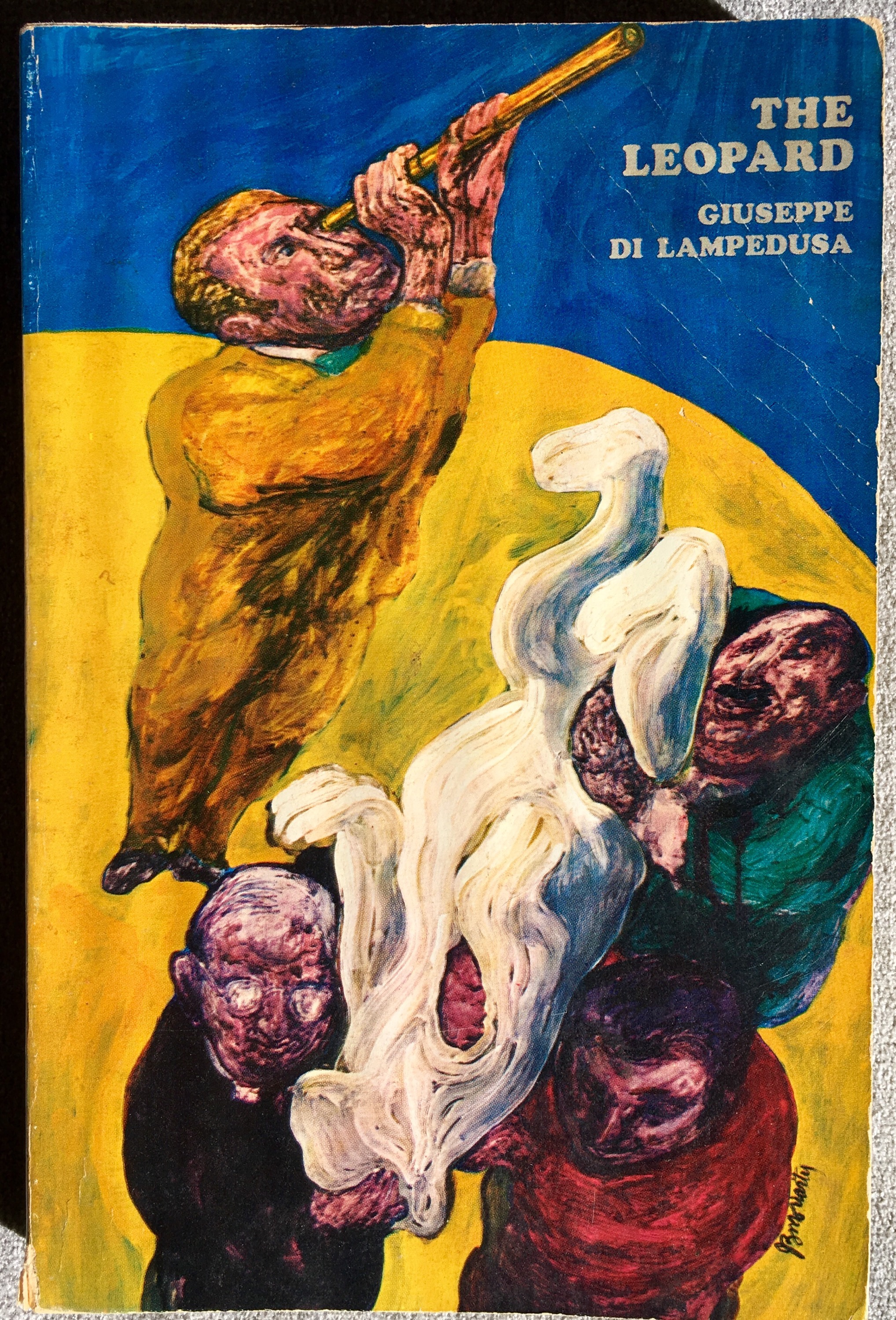
The Leopard by Giuseppe di Lampedusa. English translation by Archibald Colqhoun. A 1966 trade paperback from Time Life Books. Cover design by Jerome Moriarty. I’m not sure why, but I just love the design of this book—I love that there’s no blurb on the back too.IMG_1017

The Left Hand of Darkness by Ursula K. Le Guin. First printing of an Ace Books mass market paperback. No designer is credited, but the cover art, reminiscent of Gustav Klimt, is by Leo and Diane Dillon.

The reader is dreaming (Robert Walser/Karl Walser/Lydia Davis)

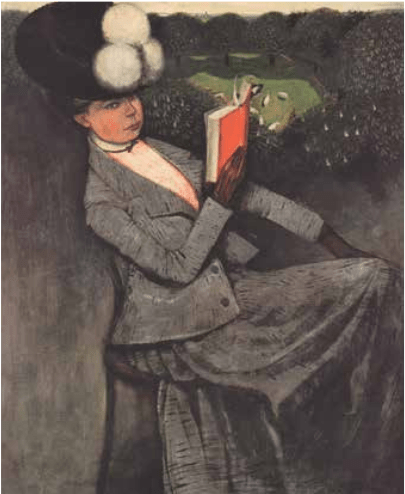
A young lady, a girl of perhaps twenty, is sitting in a chair and reading a book. Or she has just been diligently reading, and now she is reflecting on what she has read. This often happens, that someone who is reading must pause, because all sorts of ideas having to do with the book keenly engage him. The reader is dreaming; perhaps she is comparing the subject matter of the book to her own experiences hitherto; she is thinking about the hero of the book, while she fancies herself almost its heroine.

screenshot-slack-files-com-2015-11-03-15-19-11

Read the rest of Robert Walser’s microessay “Portrait of a Lady” (trans. by Lydia Davis) at The Offing. The painting–Portrait of a Lady—is by Karl Walser, Robert’s older brother.