Thomas Pynchon’s Shadow Ticket (Book acquired, 30 Sept. 2025)

Here are the first four paragraphs of Thomas Pynchon’s ninth novel Shadow Ticket:
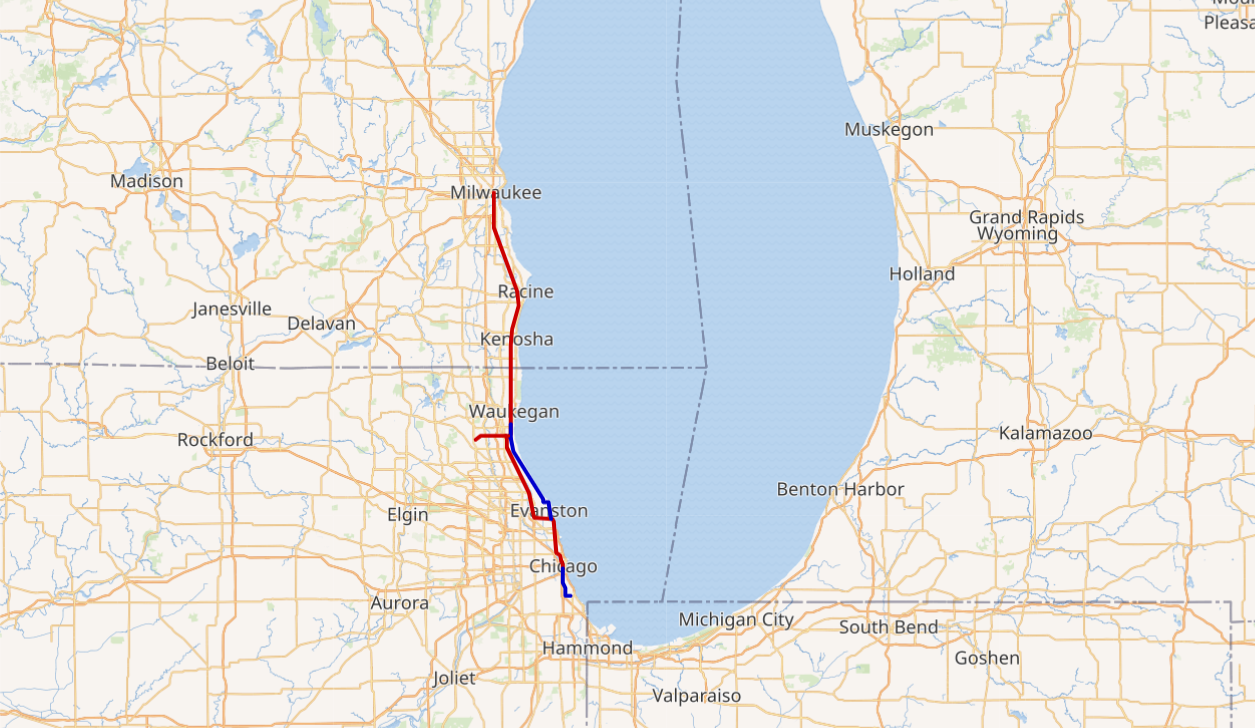
When trouble comes to town, it usually takes the North Shore Line. What with tough times down the Lake in Chicago, changes in the wind, Prohibition repeal just around the corner, Big Al in the federal pokey in Atlanta, Outfit affairs grown jumpy and unpredictable, anybody needing an excuse to get out of town in a hurry comes breezing up here to Milwaukee, where it seldom gets more serious than somebody stole somebody’s fish.

 Hicks McTaggart has been ankling around the Third Ward all day keeping an eye on a couple of tourists in Borsalinos and black camel hair overcoats up from the home office at 22nd and Wabash down the Lake, the Chicago Outfit handling whatever needs to be taken care of in Milwaukee since Vito Guardalabene cashed in his chips ten years ago, though Vito’s successor Pete Guardalabene is still considered head man in the Ward, gets his picture in the social pages smiling at weddings and so forth.

 Loitering in the alleyway in back of Pasquale’s Bella Palermo, Hicks can hear sounds of noodle-flexing sociability, smell spaghetti sauce and garlic frying and sfinciuni bagherese baking over an olive-branch fire, and it’s making him hungry, though this close to payday his lunch menu is a thermos of coffee and a buttermilk cruller stashed in a pocket someplace.

 The explosion when it comes seems to be from somewhere across the river and nearer the Lake. Forks and glassware pause between tabletop and mouth, as if everybody’s observing a moment of stillness, and nobody seems surprised.

An explosion! There we go.

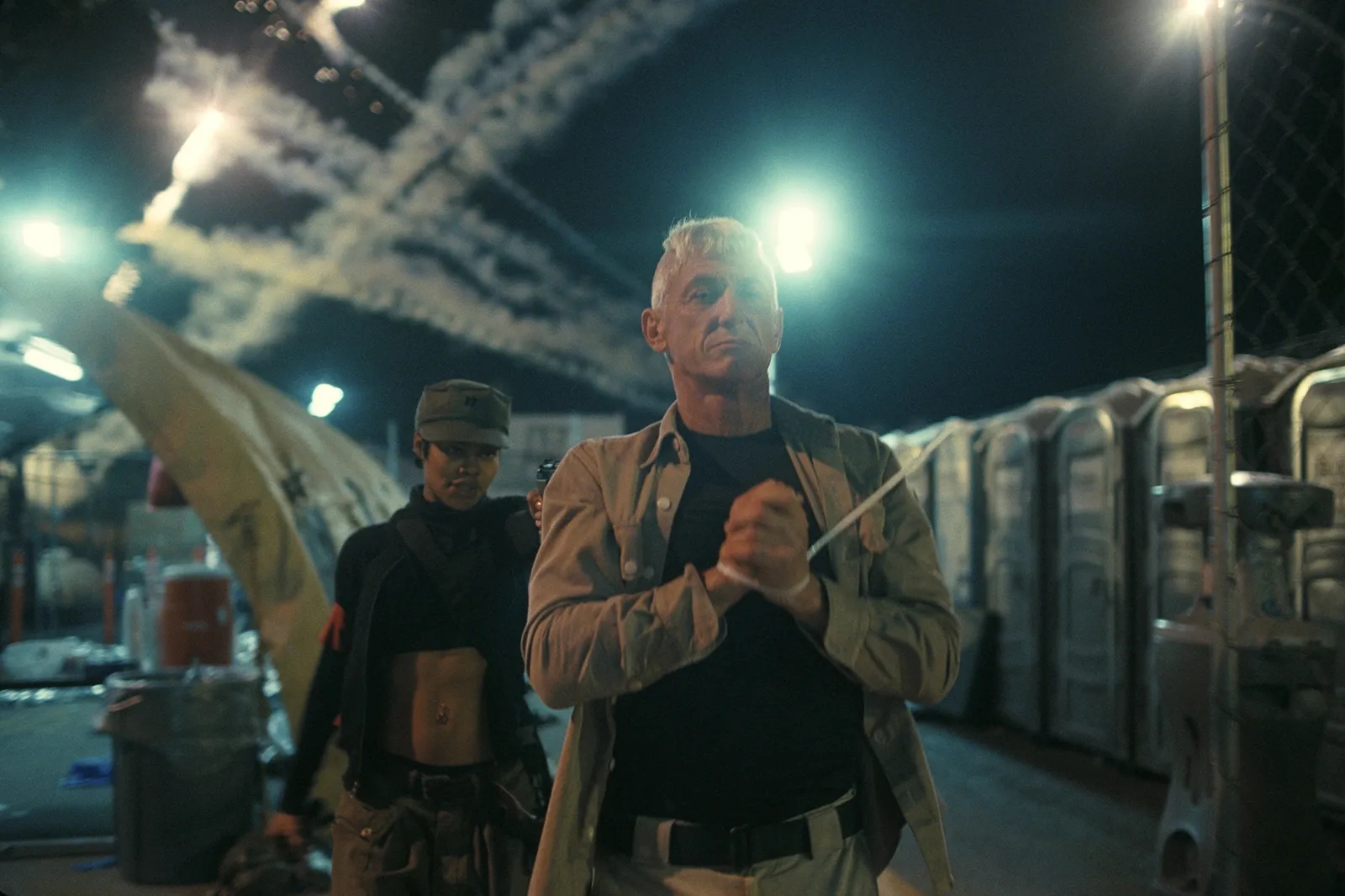
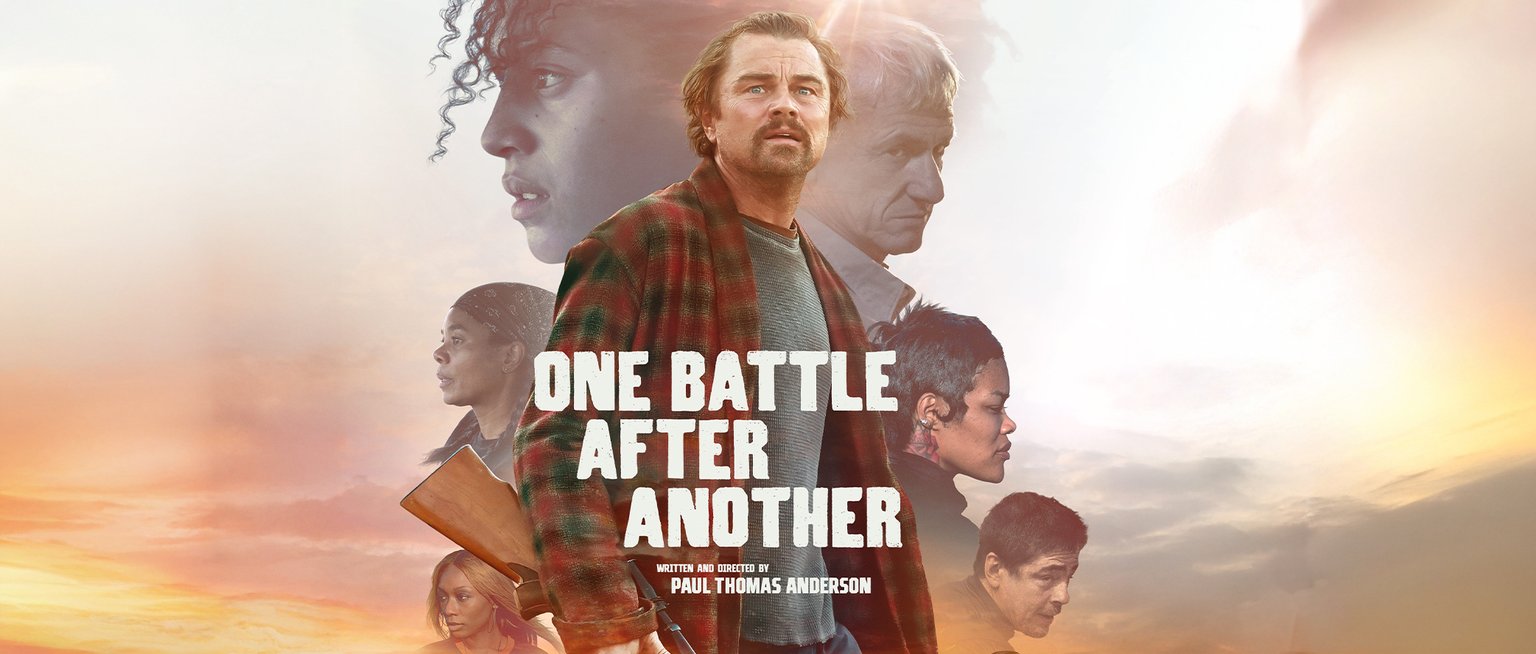
Paul Thomas Anderson’s One Battle After Another is a frenetic, vital reimagining of Thomas Pynchon’s Vineland

Paul Thomas Anderson’s One Battle After Another takes Thomas Pynchon’s 1990 novel Vineland and sets it ablaze, reshaping its abstract paranoia and fractured narrative into something both deliriously immediate and ominously timeless.

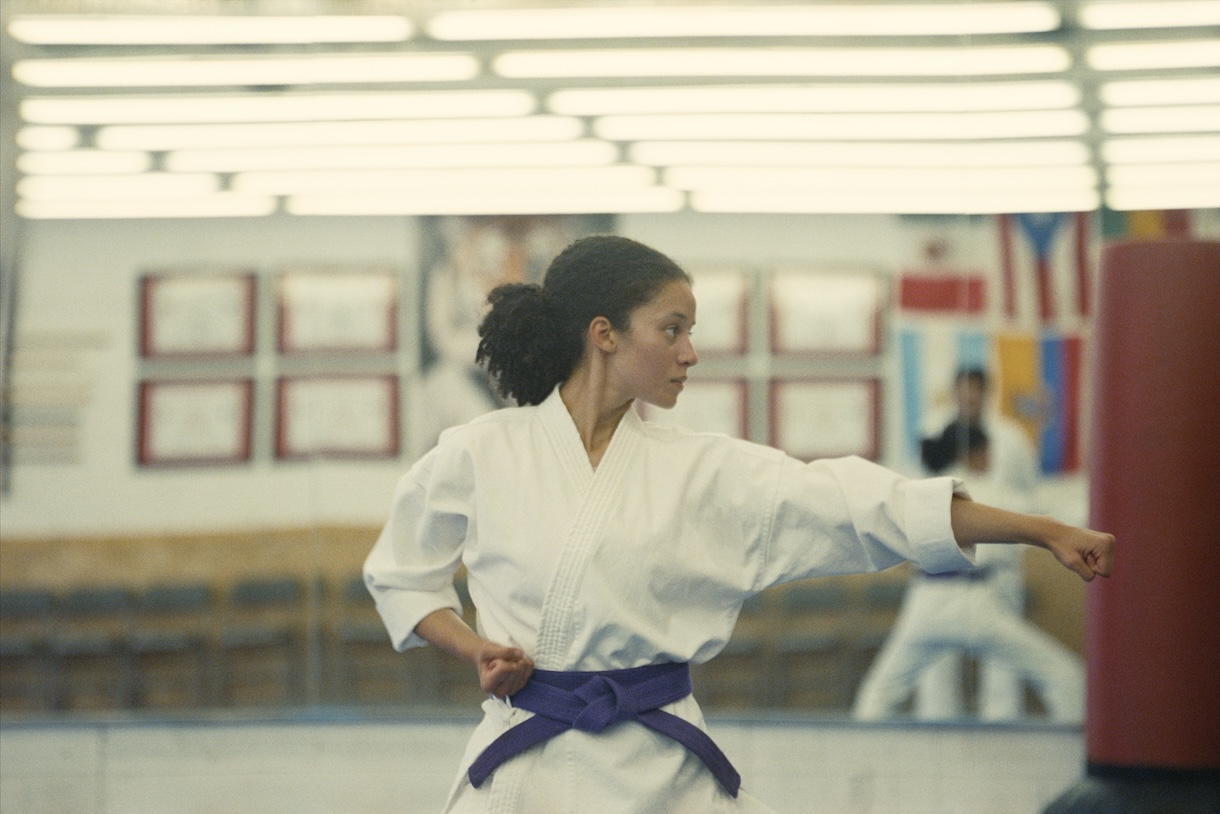
The bones of Pynchon’s original are still present: a family broken by state violence; a daughter growing up without a mother; a father caught between shame and reluctant resistance. In PTA’s feverish recasting of Vineland, Zoyd Wheeler becomes Bob Ferguson (Leonardo DiCaprio), a former “Rocket Man” revolutionary burning out the past in a haze of weed smoke. Frenesi Gates is reimagined as Perfidia Beverly Hills (Teyana Taylor), a revolutionary addicted to the sexual thrill of power. Prairie Wheeler morphs into Willa (Chase Infiniti — and like wow jeez that’s a Pynchonian name the young actress has there, isn’t it?). And villainous Brock Vond is warped into Colonel Lockjaw (Sean Penn), a grotesque embodiment of authoritarian menace. Timelines collapse into themselves, Reagan-era dread transposes into our own disturbed now. Vineland is set in 1984; in One Battle After Another, PTA shows that we’ve never really moved on from that dystopian year. PTA condenses Vineland’s sprawling flashbacks and absurd digressions into an action-forward narrative that’s far more linear yet equally dizzying. The result is enthralling.

The film’s plot might be distilled simply from its title. One Battle After Another follows the trajectory of most of Pynchon’s fiction: individual resistance to authoritarian evil. In PTA’s film, that resistance takes the form of the French 75, a loose clandestine revolutionary group to which Bob and his partner Perfidia once belonged. There’s really no retiring for French 75 agents though, and soon Willa is tangled in the same web her parents sought to sunder in their radical actions. Penn’s maniacal Colonel Lockjaw hunts her down. She’s on the run, and so is papa Bob.

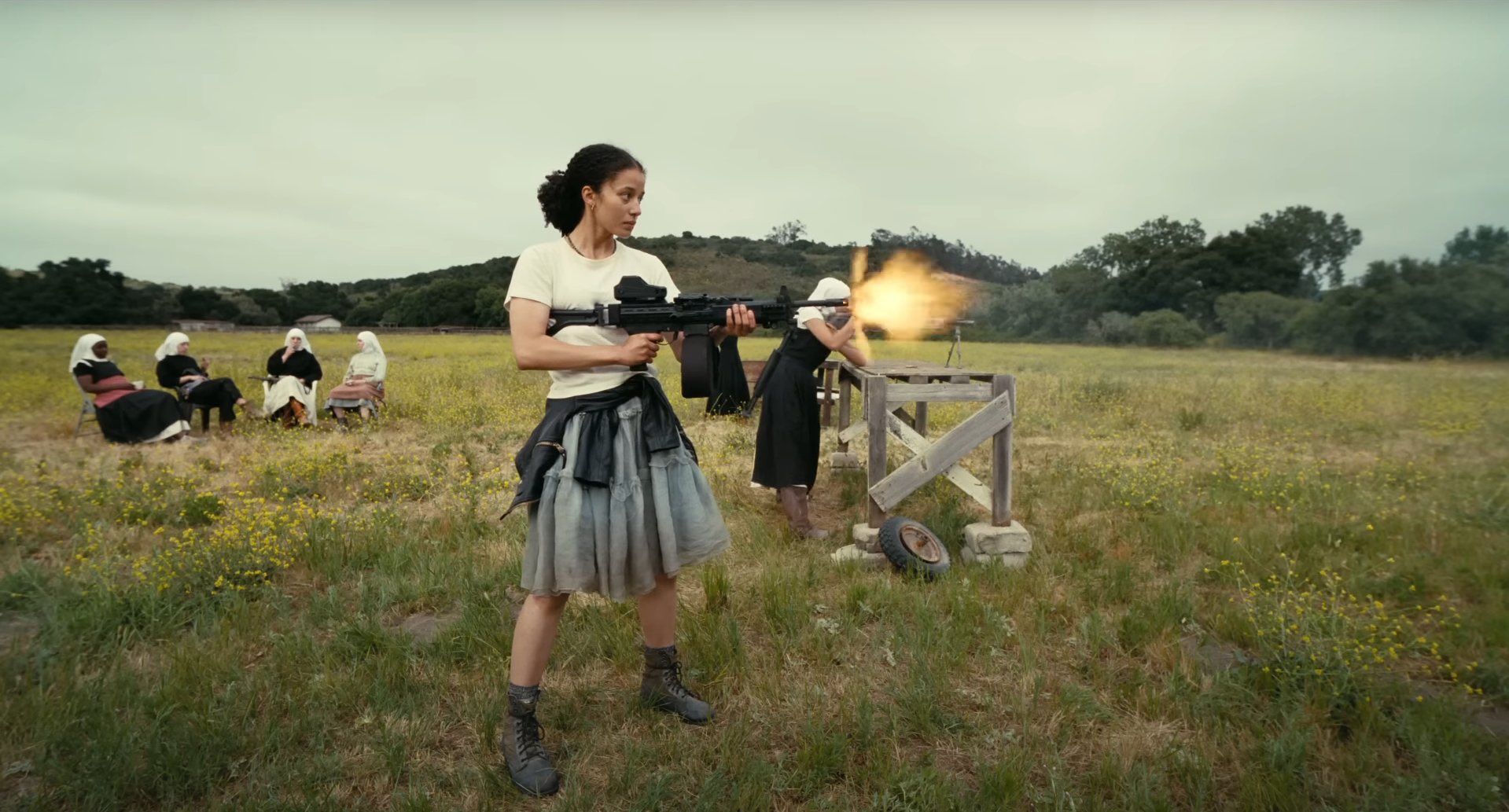
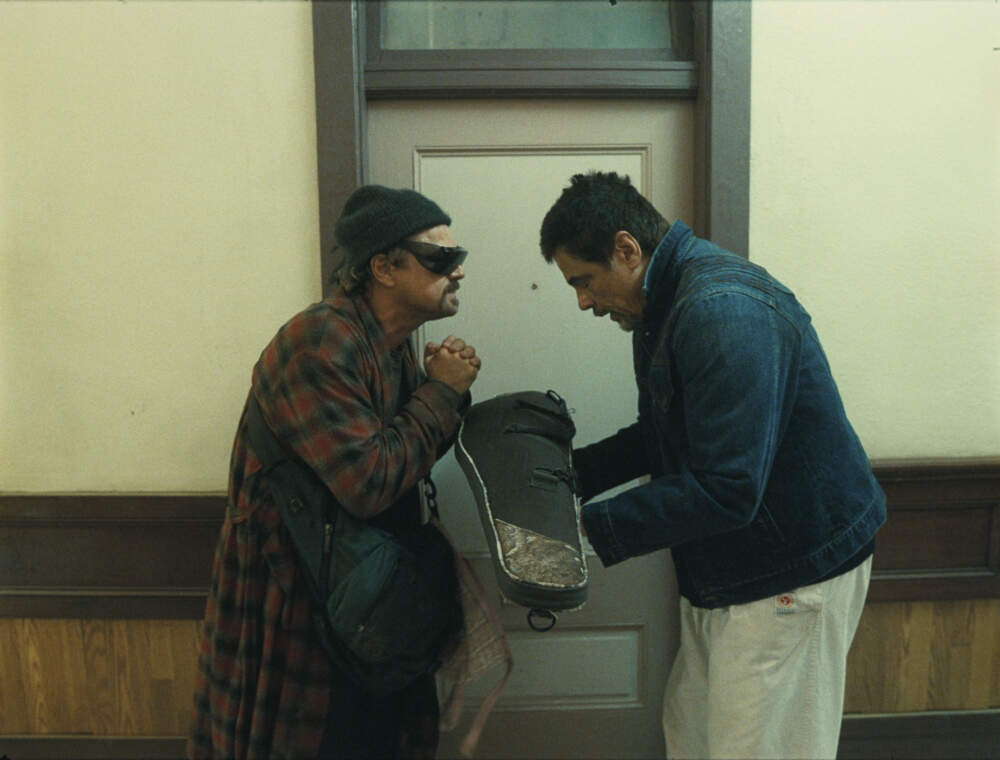
Pynchon’s novels frequently contrast Us vs Them systems — preterite vs. elect; misfits vs. authoritarians; freaks vs. the Man. And like Pynchon’s work, One Battle After Another shows the invisible overlapping and hierarchical confusions these Us/Them systems engender. The French 75’s sympathies directly correlate with the values of the immigrant community in Baktan Cross, the fictional sanctuary city Bob and Willa take refuge in. The de facto leader of these immigrants, Francisco (Benicio Del Toro), aids Bob in his fevered search for Willa. Francisco’s zen calm offers a counterbalance to Bob’s mania. Another Us group are the Sisters of the Brave Beaver (One Battle After another is crammed with Pynchonian vagina jokes), weed-growing nuns who offer Willa a brief safe harbor.

These disparate pockets of rebellion resist the tyranny of the modern racist capitalist system, embodied by Colonel Lockjaw and the military forces he commands (seemingly without any government oversight). We first meet Lockjaw running a migrant detention center — one of many timely PTA updates to Vineland — and his weird, forced, masochistic machismo plays out on the screen with a mix of menace and despair. For all his power and evil though, there’s yet another Them he isn’t part of. That would be the Christmas Adventurers Club, a shadowy cabal of elites on a racist mission to rid the world of “freaks.” Lockjaw would do quite literally anything to become a member of this club; his drive to to become even more Them propels the narrative while showing that Us-Them systems rely on hierarchies to perpetuate oppression.

One Battle After Another zigzags through a whirlwind of absurdity, suffocating paranoia, and frantic action. The film balances chaotic humor with a darker exploration of the emotional impulses that underlie power and attraction. Colonel Lockjaw’s obsessive fixation on Perfidia (arguably the film’s closest connection to Vineland) underscores the irrational power dynamics of obsession and control. PTA frames their relationship—along with Lockjaw’s obsession with Willa—as a twisted mirror reflecting the power imbalances that define both the personal and the political in Us-Them systems. PTA’s films have always explored systems of exploitation that grind people down and the outsiders who try to navigate them; One Battle After Another is, thus far, his most sustained, howling effort in this vein.

The film is gorgeous, too, as fans would expect from PTA. Michael Bauman’s cinematography conveys frenzied energy without sacrificing cohesion or clarity. There are several outstanding set pieces, including a beautiful sequence in which Bob does his best to keep up with a trio of skateboarders traversing rooftops at night, their figures silhouetted against the flames of a riot below. The film’s climactic three-car chase scene is particularly magnificent, its every twist and turn symbolizing not just physical pursuit, but deeper spirals of control, conflict, and paranoia. It made me physical ill. (That’s high praise.)

And while, yes, One Battle After Another is a bona fide action film, it’s still larded with strange little morsels that we’d expect from a PTA film — the image of Lockjaw licking his comb before taking it to his hair, his face contorted in anxious hope, or Bob, in his threadworn bathrobe, shoplifting a pair of cheap sunglasses. (Parenthetically, while the bathrobe is on my mind — Battle plays as a sinister inversion to The Big Lebowski. I will file the pair away for a future double feature.) One of the film’s funniest moments comes from Willa, who, despite being apparently subjugated by Lockjaw, nevertheless delivers the kind of crushing blow that can only come from a teen: “Why is your shirt so tight?” Indeed, Chase Infiniti’s portrayal of Willa is a revelation. In a movie crammed with paranoia and plot twists, she imbues in Willa a kind of moral force. She’s not an anchor exactly, because nothing is steady here. But maybe she’s the string you follow through the labyrinth.

One Battle After Another is almost three hours long, but it never drags, thanks to the tight direction and enthralling plot. Long-time PTA collaborator Jonny Greenwood’s score also keeps the film moving at a quick pace. The score is ever-present — something that usually irritates me in a film — but here the music provides emotional cohesion. It’s also just really fucking pretty.  Frenetic drumming and altered pianos meet up with swelling strings that suggest sirens, banshees. Take “Mean Alley,” for example, which initially greets the ear as if the guitar is out of tune, but then coheres into beautiful dissonance. And although Greenwood’s wall-to-wall score leaves little room for the needle drops we might expect from a PTA joint, the film deploys Tom Petty’s “American Girl” in a moment of transcendent bliss that brought a tear to my eye.

Pynchon has always soundtracked his novels. Pynchonwiki gives close to 400 musical references for Vineland, but I don’t think any of these tracks ended up in One Battle After Another. My giving this data is a weak way of transitioning to the sentence, This is a film inspired by Vineland, not an adaptation of it. And while PTA captures the soul of the book, the vibe, or spirit, or whatever you like to call it, is decidedly different: darker, edgier, uglier. He captures the same strange humor and frustration of Vineland, but it’s amplified here with a chaotic energy that matches our current moment.

It’s also instructive to compare One Battle After Another to PTA’s earlier Pynchon adaptation, Inherent Vice. While Inherent Vice was a hazy sunsoaked journey through the disorienting aftereffects of the muddled sixties, One Battle After Another feels darker, more urgent, as if the timeline of history has compressed itself into an unyielding present. Both films deal with the fracturing of the American dream, but One Battle After Another does so with a sharper edge, drawing clearer political parallels. In some ways, PTA’s Inherent Vice is closer to Pynchon’s Vineland in tone and theme, less angular, more forgiving.

With both of his Pynchon films, PTA foregrounds a sweet final note, a belief in love as a sustaining force against Them. To borrow my favorite lines from Pynchon’s opus Gravity’s Rainbow: “They are in love. Fuck the war.” In his adaptation of Inherent Vice, PTA pulled a loose thread from the novel to neatly weave back into a prettier picture. He allows Doc Sportello to restore the heroin-addicted musician Coy to his family. One Battle offers a similarly fractured, imperfect restoration of family, a rewriting of rat-sins answered on the ghost of radio waves. He cleans up Pynchon’s messiness, but doesn’t sacrifice the deep danger that underwrites radical love.

One Battle After Another feels dangerously prescient, or, more accurately, a diagnosis of the big ugly now. In PTA’s Inherent Vice, there was an underlying fractured partnership between Us and Them; weirdo Doc Sportello tried to find some kind of brotherhood of man with The Man, Detective Bigfoot. No humanity can be extended to Lockjaw — not even from the club that will refuse him. They are unforgiving of any perceived impurity. The themes of mass surveillance, state violence, and detention resonate deeply in today’s climate. The recent death of Assata Shakur—possibly one inspiration for Perfidia Beverly Hills—adds a haunting layer to the film’s exploration of systemic oppression, the ways in which the state seeks to control and erase voices of resistance. The political urgency is palpable, and will undoubtedly alienate a large section of the genpop normies that Warner Brothers has heavily advertised the film to. Some folks will always root for Them.

But fuck Them. One Battle After Another is a triumph, a dizzying, chaotic masterpiece that never loses its grip on the present—one battle after another, all too real, all too important. See it on the biggest screen you can.

Another Dalloway

Virginia Woolf’s modernist classic Mrs Dalloway is getting a centennial update from publisher NYRB. The new edition is edited by literary critic Edward Mendelson, who makes a persuasive case for his version of the text in the book’s afterword, an essay with the appropriately flat title “The Text of This Edition.” “This edition is an attempt to provide the least bad, perhaps, among many possible editions,” Mendelson writes, before appending after a semicolon: “other editors will rank it more harshly.” I imagine it’s hard work to tidy a giant.

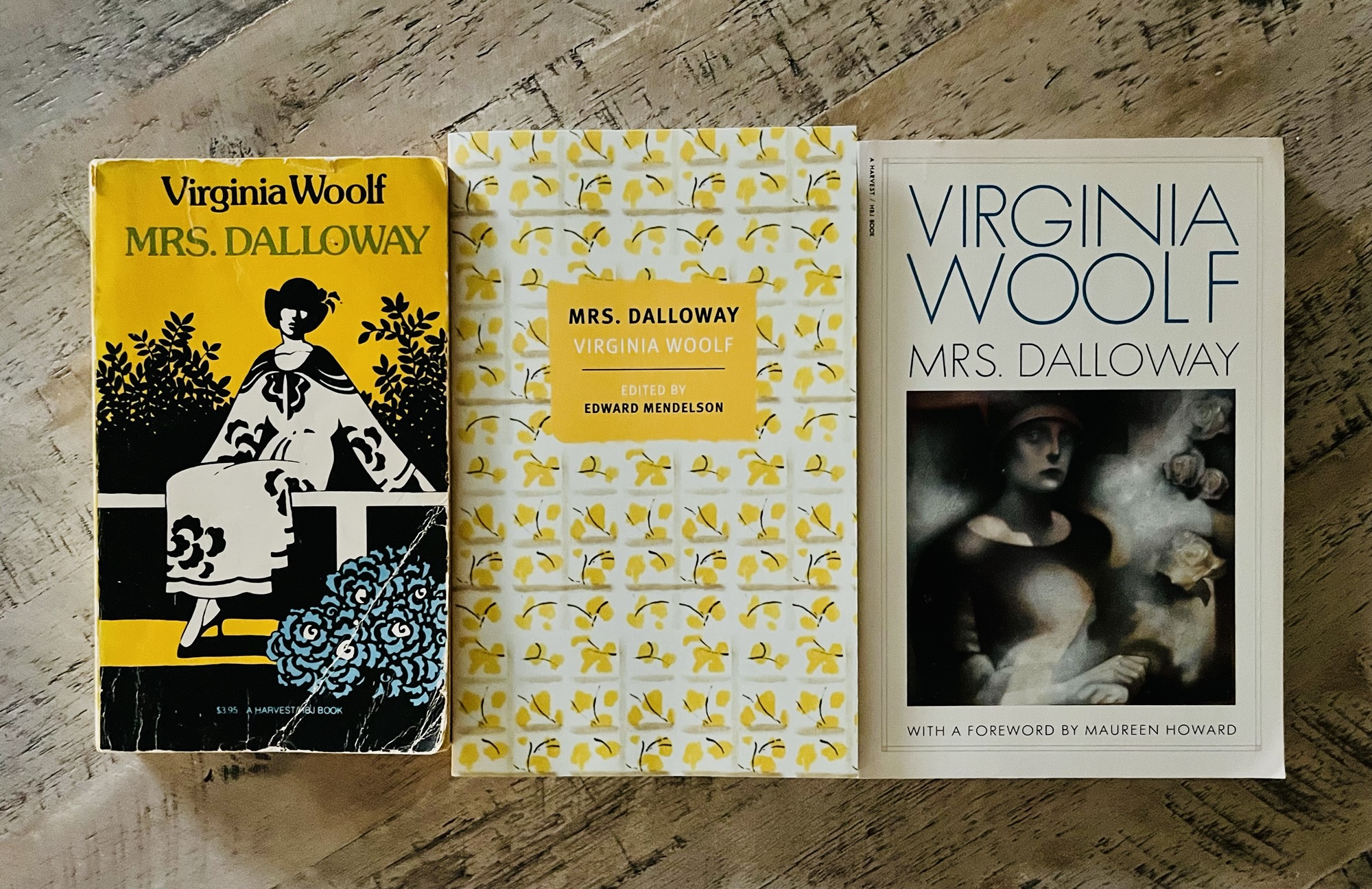
As a point of comparison, I pulled out the HBJ mass-market paperback of Mrs Dalloway that I read at least three times years and years ago; there’s no front or back matter, no intro or afterword, not even a credit for the lovely art. I (a version of myself) had scribbled “symbol is not universal” in the narrow margin of page 41; underlined “narrower and narrower” on page 45; boxed a paragraph catching salmon freely on page 152. Two photographs fell from the book — a picture of my wife and my infant daughter, c. 2008; the other, a picture of my wife and her eighteen-years-younger brother, also an infant in the picture, also held by wife, c. 1998. Those are probably the years I read the book. The older person made more scribbles, I think. What I most remember of the novel Mrs Dalloway is the WWI veteran, Septimus; I recall his anguish as a throbbing (organizing) pulse in the novel’s so-called stream-of-consciousness style. I remember generally enjoying the novel, but preferring Woolf’s Orlando; I remember a sort of sneer on the face of a fellow grad student after this declaration. Orlando is a more fun book, a picaresque sci-fi gender jaunt. I suppose Dalloway is more, like, important.

As another point of comparison, I pulled out the 1990 HBJ trade paperback of Mrs Dalloway that I picked up at the beginning of the summer at a Friends of the Library sale. I wrote in a post about those acquisitions that, “…I’ll be happy to trade out the cheap mass markets of Mrs. Dalloway and To the Lighthouse I’ve had forever in favor of these HBJ Woolfs (Wolves?)” — but that’s not true. I’ve decided I love the cheap mass market Dalloway. (A sixteen-year-old picture of my wife and daughter falling out of it didn’t hurt.) This 1990 edition features a 1981 introduction by novelist Maureen Howard. She voices her intro in the first-person plural, an unfortunate choice that we employed on this blog in our earlier years, insecure as we were. The occasion of Ms Howard’s introduction is, I think–we think, we mean–the fiftieth anniversary of the novel’s publication, although that math doesn’t add up. I dig Susan Gallagher’s cover art.

The cover for the new NYRB edition features a “specially commissioned” cover that pays “tribute to the original designs by Hogarth Press.” The publisher notes that forthcoming “new editions of To the Lighthouse and The Waves [reprinted] in celebration of their respective centenaries” will also get the cover updates. These editions are also Mendelson edits.

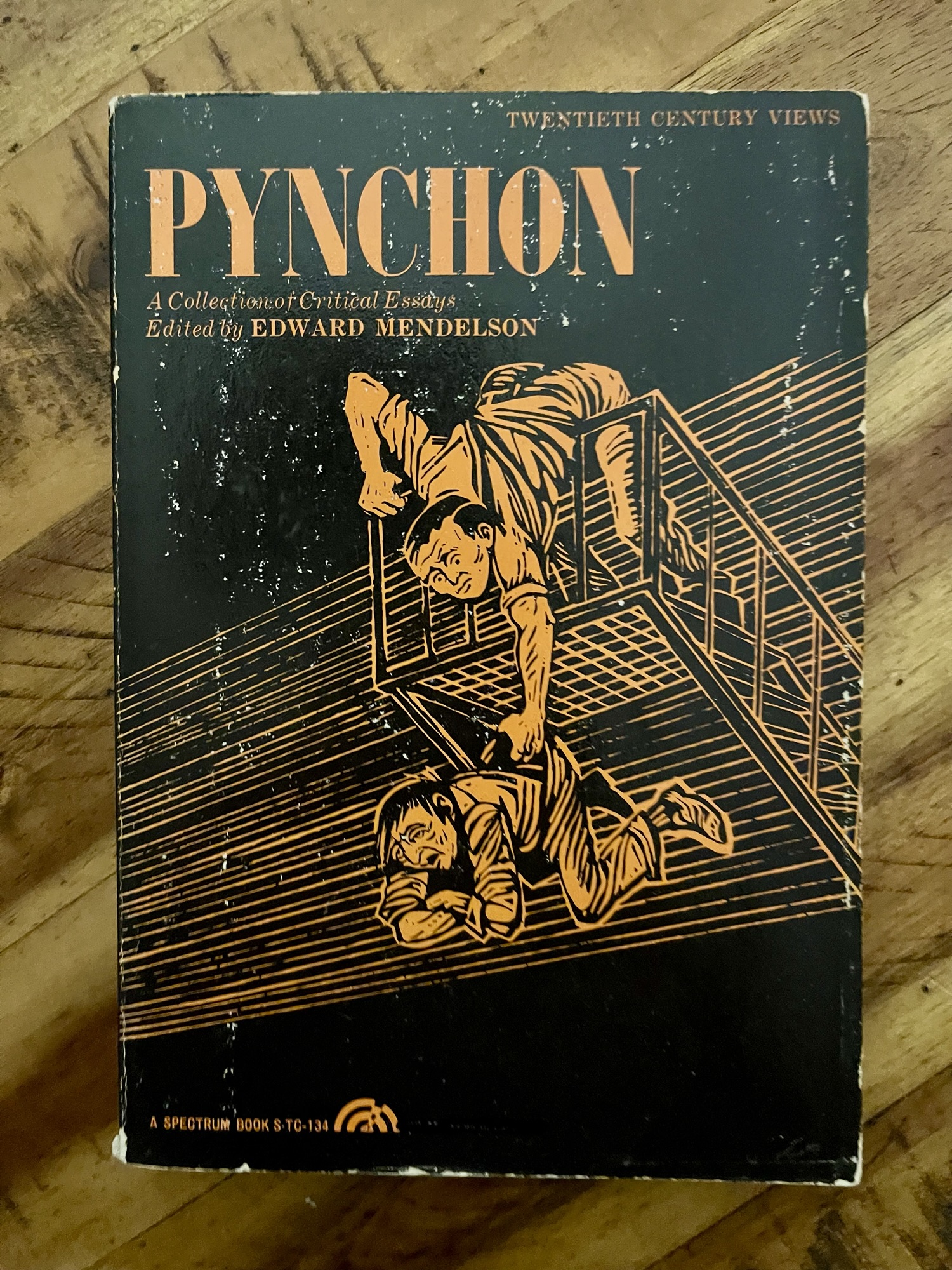
I mostly know Mendelson as the editor of Pynchon: A Collection of Critical Essays, and as the author of “The Sacred, the Profane, and The Crying of Lot 49.”

NYRB’s edition of Mrs Dalloway publishes next month.

Annotations on The Guardian’s ranking of Thomas Pynchon’s books

Thomas Pynchon’s ninth novel Shadow Ticket is out fifty days from now. In anticipation, there’s a piece today in The Guardian by John Keenan ranking Pynchon’s books to date.

I undertook a similar silly project just over a year ago on this blog in a post titled “A(nother) completely subjective and thoroughly unnecessary ranking of Thomas Pynchon’s novels” (this list was a correction to a previous 2018 list I foolishly compiled). Lists like these are obviously personal judgments (like, opinions man).

But Keenan’s list is wrong. So here are my annotations.

9. Keenan selects Slow Learner, writing,

A collection of early short stories that is chiefly of interest for the introduction, in which the author spells out why he thinks they fail. Pynchon does not spare himself but, unfortunately, he is right. For aficionados only.

I didn’t include Slow Learner in my rankings because it is not a novel. Pynchon’s intro to it is probably the best thing in it. I agree with Keenan’s assessment here.

8. Keenan selects Against the Day, writing,

Practically plotless, prolix and gargantuan, this novel landed with a thump following a nine-year gap. Characters fragment and double in a bewildering array, the style pastiches pulp novels, adventure stories and science fiction. It does not add up to more than the sum of its admittedly ingenious parts.

This assessment is egregious. Against the Day is perhaps the most directly political of Pynchon’s novels, and, in my estimation, the clearest (if not the most concise) expression of Pynchon’s political sympathies. I ranked it #3, writing: “I think this novel would make an excellent American history textbook. Its thesis: resist the military-industrial-entertainment-complex. Start here!

7. Keenan selects Bleeding Edge, writing,

Pynchon’s most recent novel is a lightweight. The protagonist, Maxine Tarnow, mother of two, longsuffering partner to a feckless financier, finds herself chasing shadows around Manhattan’s Silicon Alley. Maxine’s skills as a fraud investigator are put to the test unravelling the machinations of the nasty controller of a computer security firm who will do anything to get his hands on a virtual reality simulator called DeepArcher (geddit?). There are plentiful puns, red herrings and surnames that serve as possibly unhelpful acronyms – the usual Pynchon ingredients, in other words. Here they fail to cohere into an entirely satisfying whole.

Bleeding Edge is not top-tier Pynchon, but it’s hardly lightweight. I ranked it #6, writing,

Reading Bleeding Edge helped evoke all the weirdness the 2000s were about to lay out for us. It made me angry again, or reminded me of the anger that I’d sustain for most of the decade. It reminded me of our huge ideological failure after 9/11, an ideological failure we are watching somehow fail even more today.  But I also loved the novel’s unexpectedly sweet domestic plot, and found a kind of solace even in its affirmation of family, even as its final image pointed to the kind of radical inconclusiveness at the heart of being a parent.

6. Keenan selects Vineland, writing,

It is 1984, the year of Reagan’s re-election but for Zoyd Wheeler, Los Angeles-based veteran of the radical left, time has stopped. His wife, Frenesi, has left him to raise their daughter, Prairie, alone and he resorts to dismal acts of self-sabotage in order to qualify for government benefits. Prairie, in turn, flees the family coop to track down her mother, a subversive turned informant in league with federal baddy Brock Vond. Pynchon’s themes are prescient – surveillance, media saturation, generational miscommunication – but his aim is off.

I don’t think “Pynchon’s aim is off” is the best metaphor here. I think he hits what he shoots at — his targets are clear, and he’s an author, right? His characters are props he can set out where he likes, guaranteeing a bullseye. But that’s not always satisfying. I think the execution of Vineland is a bit slapdash. The book has always had cult status among Pynchon aficionados, perhaps stemming from a contrarian spirit. Paul Thomas Anderson’s (very) loose film adaptation, One Battle After Another, has also appeared to prompt a lot of reading, rereading, and online chatter about Vineland. I ranked it last in my list, at #8, writing that, “Vineland is ultimately depressing and easily my least-favorite Pynchon novel, but it does have some exquisite prose moments.

5. Keenan selects V., writing,

Sincerity is not a quality readily associated with Pynchon, but his debut novel displays an affection for his characters that would later take second place to irony. The story bounces between Benny Profane, unemployed sailor, and Herbert Stencil, obsessive seeker of the elusive V. The language shows its age in places, but the plight of people determined to keep themselves in the dark is as relevant as ever.

I love V. and also had it at #5 on my list. Keenan is right that “sincerity” is not associated with Pynchon, but absolutely incorrect that Pynchon’s mode of affection is displaced by irony in the later novels. It’s clear that Pynchon loves Jeremiah Dixon, Charles Mason, Webb Traverse, Roger Mexico, Maxine Tarnow, etc. In my list, I wrote,

I’ll repeat my endorsement that “V. makes a good starting place for anyone new to Pynchon” and recommend that anyone interested in Pynchon but daunted by the scope check out the book from their library and read the ninth chapter, the story of of Kurt Mondaugen.

4. Keenan selects The Crying of Lot 49, writing,

The author regretted publishing this novel but he was being unduly harsh on himself. Short, funny and shot through with allusions you can choose to follow or ignore, the story of Oedipa Maas’s search for the meaning behind the supposed rivalry of postal companies is the literary equivalent of non-Euclidean geometry.

I also had Crying at #4. I wrote,

The Crying of Lot 49 is probably a better novel than V. but I think I like V. better. 49 is very funny and showcases Pynchon’s tonality of paranoia/hope wrapped up in zaniness/horror. It’s an excellent sophomore novel, but also dense, claustrophobic even. I guess I like the Pynchon sprawl a bit better.

3. Keenan selects Inherent Vice, writing,

Wilfully weird, often sordid and occasionally borderline unintelligible, Pynchon’s seventh novel was adapted for the big screen by Paul Thomas Anderson in 2014. The adaptation was nominated for an Oscar, making Pynchon as mainstream as he’s ever likely to get. Larry “Doc” Sportello is a private investigator with a broken heart and a huge appetite for marijuana. His ex-girlfriend reappears out of nowhere, implores Doc to find her married lover, then promptly vanishes again. At the heart of the murky tale lurks the sinister presence of the Golden Fang, a vessel that means, as Doc surmises, “a lot of things to a lot of people” – all of them unsavoury.

I love Inherent Vice, but it’s hardly top-three! I had it at #7, above Vineland.

2. Keenan selects Gravity’s Rainbow, writing,

This kaleidoscopic tour de force cemented Pynchon’s reputation as a writer of baffling, farcical and profound genius. A chief delight is his brilliant ear for dialogue which is given full rein in this twisted tale of allied intelligence officers, Nazis, scientists and seers united by a MacGuffin in the shape of a mysterious rocket. The action arcs from London under bombardment to a postwar zone of surrender. What is striking is how the themes explored here – forever wars, technological domination, uncontrollable cartels – have become staples of internet discourse.

I had Mason & Dixon at #2 and Gravity’s Rainbow at #1.

1 . Keenan selects Mason & Dixon, writing,

Pynchon gives the 18th-century novel a postmodern twist to explore the relationship between Charles Mason and Jeremiah Dixon. . . The author layers fact over anachronistic fiction, scientific inquiry over conspiratorial rumour, and tragedy over knockabout farce, in a virtuoso display of storytelling. . . It is a ripping yarn spun for the incredulous enjoyment of both the cleric’s family and the grateful reader.

Here’s what I wrote in my (thoroughly unnecessary) list:

2. Mason & Dixon (1997)

A measurement of the world and a story about friendship. It would be Pynchon’s best novel if he hadn’t written—

1. Gravity’s Rainbow (1973)

The best book.

Rankings are stupid fun, and I appreciate Keenan giving me an opening for some stupid fun on a Monday morning when I should really be prepping for the onset of the fall semester. I’ll close with a more honest ranking — all of these books are good, most are excellent, and at least two are American classics. It might be better to rank Pynchon’s oeuvre on one of those dorky tier lists.

So here is my dorky unnecessary Pynchon tier list:

Far from a sickness, violence may be an attempt to communicate, or to be who you really are | Thomas Pynchon

But in the white culture outside, in that creepy world full of precardiac Mustang drivers who scream insults at one another only when the windows are up; of large corporations where Niceguymanship is the standing order regardless of whose executive back one may be endeavoring to stab; of an enormous priest caste of shrinks who counsel moderation and compromise as the answer to all forms of hassle; among so much well-behaved unreality, it is next to impossible to understand how Watts may truly feel about violence. In terms of strict reality, violence may be a means to getting money, for example, no more dishonest than collecting exorbitant carrying charges from a customer on relief, as white merchants here still do. Far from a sickness, violence may be an attempt to communicate, or to be who you really are.

From “A Journey Into The Mind of Watts,” 1966 by Thomas Pynchon.

    Lucky day | Stray thoughts on the announcement of Thomas Pynchon’s novel Shadow Ticket

    Panel from Nancy, Ernie Bushmiller, 23 Oct.1954

    For about a decade, a common social media joke (common enough among a certain stripe of nerd) has run something like, Thomas Pynchon seems to be writing the U.S.A. reality right now; another common (enough) social media rejoinder amounts to something like, No way Pynchon would write this reality—too sloppy, too lazy, too obvious. Too stupid. 

    I just deleted an entire paragraph on Too stupid. I think we’re all attuned to the unfunny absurdity of the zeitgeist, and I think that as zany and goofy as Pynchon is in his byzantine plots, he wouldn’t muck with, say, RFK’s kid’s brain worm telling him to remove fluoride and bring back the plague. Just too stupid! And the stupidity is all bound up in evil, cruelty, pain. I hate it! Maybe you hate it too. The news, whatever “the news” means, seems to be uniformly bad. One might apply this statement throughout history, I suppose, so maybe I just mean: It (all of it) just gets worse.

    So I take any good news as a gift.

    And on Wednesday morning there was some, at least in my book, very good news: Penguin Random House announced a new novel from Thomas Pynchon. I had not expected another novel from Pynchon, who will turn 88 next month. If I’m really honest, I might have expected, like, a different headline about Pynchon.

    The new novel, to be published this fall, is titled Shadow Ticket. Shadow Ticket is a rad title for a novel! I’ve had it rattling around my head. Pynchon has a history of using phrases from his novels for titles of future books, but as far as I can tell by searching ebooks, the phrase shadow ticket doesn’t appear in his published oeuvre. Simple internet searches for the phrase return publisher Penguin Random House’s announcement of the novel Shadow Ticket by Thomas Pynchon; the OED database has nothing. Unlike inherent vice or leading edgeshadow ticket seems to have no clear corollary to the uh, real world.

    Perhaps the title might be a reference to the shadowy voyage of the novel’s purported protagonist, Hicks McTaggart, whom the blurb (presumably penned by TP) declares finds himself “shanghaied onto a transoceanic liner, ending up eventually in Hungary where there’s no shoreline.” I suppose that’s one kind of shadow ticket.

    There’s a lot of predictably Pynchonesque picaresquery in the blurb: an “heiress of a Wisconsin cheese fortune,” “swing musicians, practitioners of the paranormal, outlaw motorcyclists,” and pastries. The novel is set in 1932 and the blurb notes that Hicks will find himself “entangled with Nazis, Soviet agents, British counterspies.” The blurb also tells us that Hicks is “a one-time strikebreaker turned private eye” — one of Them, or at least, a one-time agent of Them. Perhaps Shadow Ticket might read as a bridge between Pynchon’s grand opuses on the emerging 20th-century—the critique of labor and capital in Against the Day segueing into the explosion of Gravity’s Rainbow. 

    But we’ll just have to wait. The announcement for Shadow Ticket came on a week of lucky days for me, or lucky-feeling days, I suppose I mean. I watched my alma mater’s basketball team win the national championship for the third time on Monday night — I’d watched almost all of their games since November — and woke up on Tuesday feeling elated (I also won my work’s March Madness pool). News of forthcoming albums by bands I’d loved in my youth like Pulp, Stereolab, and Tortoise also gave me that odd feeling of something to look forward to, something on the horizon that wasn’t just more horrible shit.

    And I can wait in hope, I suppose, or at least in absurd appreciation like Sluggo in Ernie Bushmiller’s Nancy strip of 23 Oct. 1954, who finds surreal intercession in the form of a potted plant descending from the heavens to land upon his bald crown. I too wish I could crack this walnut.

    Thomas Pynchon’s new novel Shadow Ticket to publish in October, 2025

    Vogue Gorilla with Miss Harper — Eduardo Paolozzi

    Vogue Gorilla with Miss Harper, 1972 by Eduardo Paolozzi (1924–2005)

    To insist on the miraculous is to deny to the machine at least some of its claims on us, to assert the limited wish that living things, earthly and otherwise, may on occasion become Bad and Big enough to take part in transcendent doings. By this theory, for example, King Kong (?-1933) becomes your classic Luddite saint. The final dialogue in the movie, you recall, goes: ”Well, the airplanes got him.” ”No . . . it was Beauty killed the Beast.”

    –Thomas Pynchon, “Is It O.K. To Be a Luddite?”


    Thomas Pynchon’s Recipe for the Crocodile, a Traditional Anarchist Cocktail

    “I’ll be in the bar,” said Reef. Yzles-Bains was in fact one of the few places on the continent of Europe where a sober Anarchist could find a decent Crocodile—equal amounts of rum, absinthe, and the grape spirits known as trois-six—a traditional Anarchist favorite, which Loïc the bartender, a veteran of the Paris Commune, claimed to have been present at the invention of.

    A cocktail recipe from Thomas Pynchon’s novel Against the Day. (More on trois-six here; good luck finding real absinthe).

    Bonus recipe: Kit Traverse’s drink invention:

    “‘Love in the Shadows of Pera,’ ” Kit said. “It’s just Creme de Menthe and beer.”

    Gravity’s Rainbow annotations (so far)

    img_4025

    I’ll be adding to these and then doing more the next time (?!) I read Gravity’s Rainbow.*

    Pages 82-83: The White Visitation, etc.

    Page 103: Black Markets, King Kong, etc.

    Pages 148-49: Preterite/Elect, Lurianic Kabbalah, Uncanny X-Men, etc.

    Page 203: Rainbows, Fuck-yous, Plastic Man, etc.

    Pages 204-05: Paper, mise en abyme, a silkenness of girls, etc.

    Page 256: “Real America,” Hughes contra Whitman, BANZAI!, etc.

    Pages 257-58: The War, nimbus clouds, Zoot Suit Riot!, etc.

    Page 299: Tannhäuser, horny expectations, etc.

    Page 364: Knights and fools, dendrites and axons, etc.

    Pages 412-13:  Ouroboros, organic chemistry, tarot, etc.

    Page 419: Innocence, experience, Wm Blake, Wagner’s Ring cycle, etc.

    Page 539: Critical Mass, Weismann’s tarot reading, Rilke, hymns, etc.

    Pages 627-28: Optimum time, barrage balloons, Wall of Death, etc.

    Pages 712-13: The Man has a branch office in each of our brains. We might be freaks, but We are not doomed and We are not Their pets.

    A(nother) completely subjective and thoroughly unnecessary ranking of Thomas Pynchon’s novels


    In 2018—six years ago—on Thomas Pynchon’s 81st birthday, I put together a thoroughly unnecessary ranking of his eight novels. I’m somewhat ashamed of the post, as I included two novels I had abandoned a few times—Vineland and Bleeding Edge. Three years ago, on Pynchon’s 84th birthday, I wrote a few sentences on each of Pynchon’s novels, having, at that point, made my way through all of them. The first post, perhaps because it contains the word “ranking” in its title gets far more traffic to this day than the more thoughtful and finished post from 2021. Indeed, the “ranking” post regularly shows up in the top ten percentile of my weekly and monthly stats on Biblioklept, which, I guess, has bothered me enough to write this (thoroughly unnecessary still) “ranking.”

    I know that if I were to approach Pynchon’s eight novels on eight different days, I’d likely end up with a consistent #1, #2, #3, and #8—but the other spots would shift depending on my memory or fancy or whatever spell I’d fallen under, chemical, metaphysical or otherwise. But here’s the list I came up with today.

    8. Vineland (1990)

    In my 2018 post (where I ranked Vineland at number 7) I noted that “Vineland seems to have a strange status for Pynchon cultists—its a cult novel in an oeuvre of cult novels,” and I’ve found that intuition confirmed over the years. I stick by my assertion in my 2021 post in which I asserted that “Vineland is ultimately depressing and easily my least-favorite Pynchon novel, but it does have some exquisite prose moments.” I’m sure I’ll revisit it before seeing Paul Thomas Anderson’s film adaptation though.

    7. Inherent Vice (2009)

    Speaking of Paul Thomas Anderson—I think I like his film adaptation of Inherent Vice more than I like the novel. And I love Inherent Vice. But I think PTA provides an emotional ballast that gives the narrative a center that’s missing from Pynchon’s novel (which is, likely, the point, or at least the byproduct of Pynchon’s shaggy dogging it). (I originally ranked Inherent Vice at number 6).

    6. Bleeding Edge (2013)

    So I finally found my way into Bleeding Edge in the earliest weeks of the COVID-19 lockdown. I’d stuck the book at the bottom of my 2018 list. I’m not really sure why I stalled out on—maybe it feels the closest to my own timeline of any Pynchon novel. Anyway, it’s one I want to revisit again soon. I riffed on it some in 2020, writing “Pynchon captures a time in America during which I was, at least theoretically, becoming an adult (a becoming which may or may not have happened yet). Reading Bleeding Edge helped evoke all the weirdness the 2000s were about to lay out for us. It made me angry again, or reminded me of the anger that I’d sustain for most of the decade. It reminded me of our huge ideological failure after 9/11, an ideological failure we are watching somehow fail even more today.  But I also loved the novel’s unexpectedly sweet domestic plot, and found a kind of solace even in its affirmation of family, even as its final image pointed to the kind of radical inconclusiveness at the heart of being a parent.”

    5. V. (1963)

    So from here on out my rankings are identical to my stupid 2018 list, with that big caveat that I would easily swap, say, V. and 49 here. I’ll repeat my endorsement that “V. makes a good starting place for anyone new to Pynchon” and recommend that anyone interested in Pynchon but daunted by the scope check out the book from their library and read the ninth chapter, the story of of Kurt Mondaugen.

    4. The Crying of Lot 49 (1966)

    The Crying of Lot 49 is probably a better novel than V. but I think I like V. better. 49 is very funny and showcases Pynchon’s tonality of paranoia/hope wrapped up in zaniness/horror. It’s an excellent sophomore novel, but also dense, claustrophobic even. I guess I like the Pynchon sprawl a bit better.

    3. Against the Day  (2006)

    Speaking of sprawl: Against the Day is Pynchon’s biggest novel, just fat and giddy and overstuffed with goodies. I think this novel would make an excellent American history textbook. Its thesis: resist the military-industrial-entertainment-complex. Start here!

    2. Mason & Dixon (1997)

    A measurement of the world and a story about friendship. It would be Pynchon’s best novel if he hadn’t written—

    1. Gravity’s Rainbow (1973)

    The best book. I reread it earlier this summer and it’s roomier and stranger and more rewarding each time.

    Mass-market Monday | Thomas Pynchon’s V.

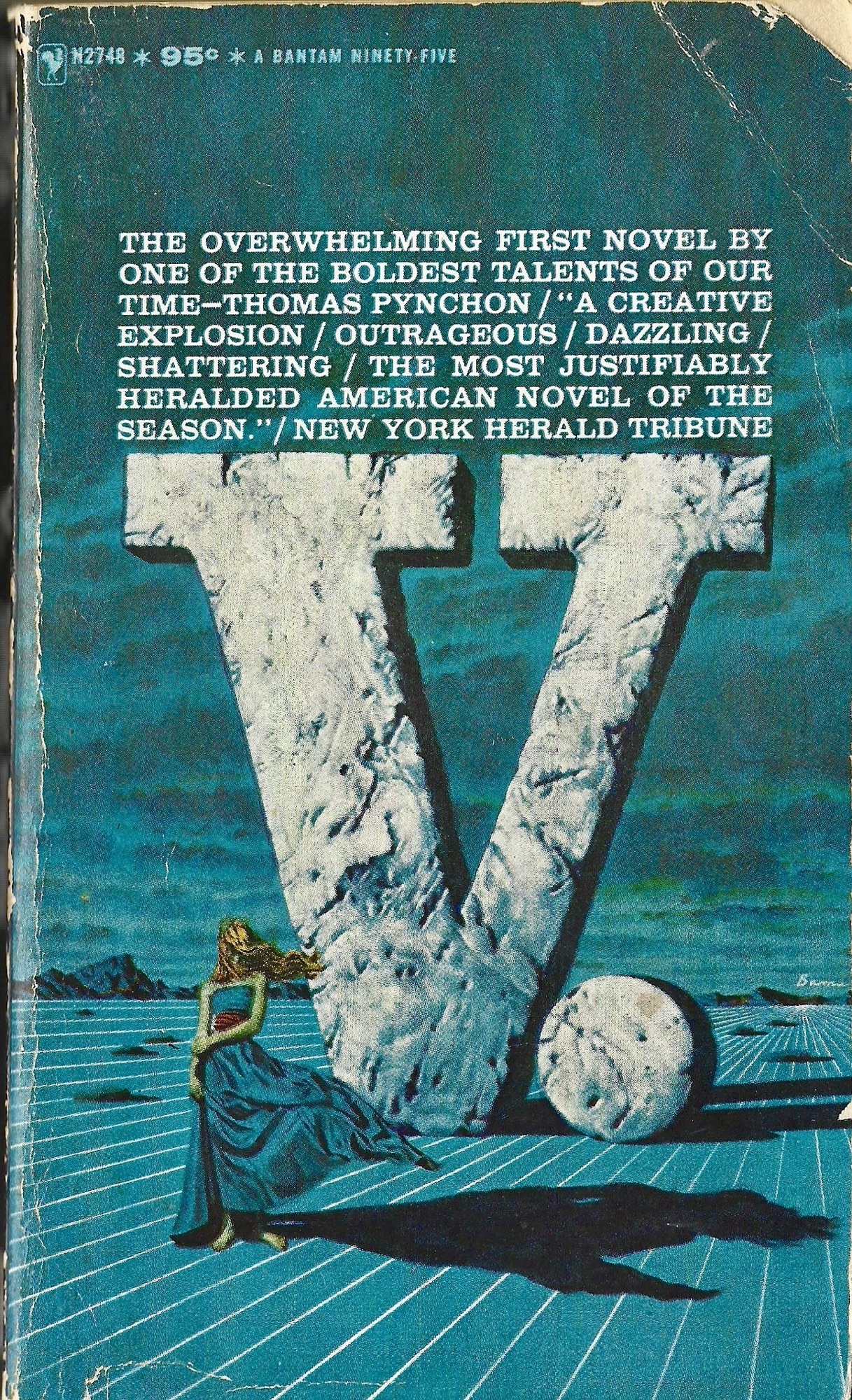
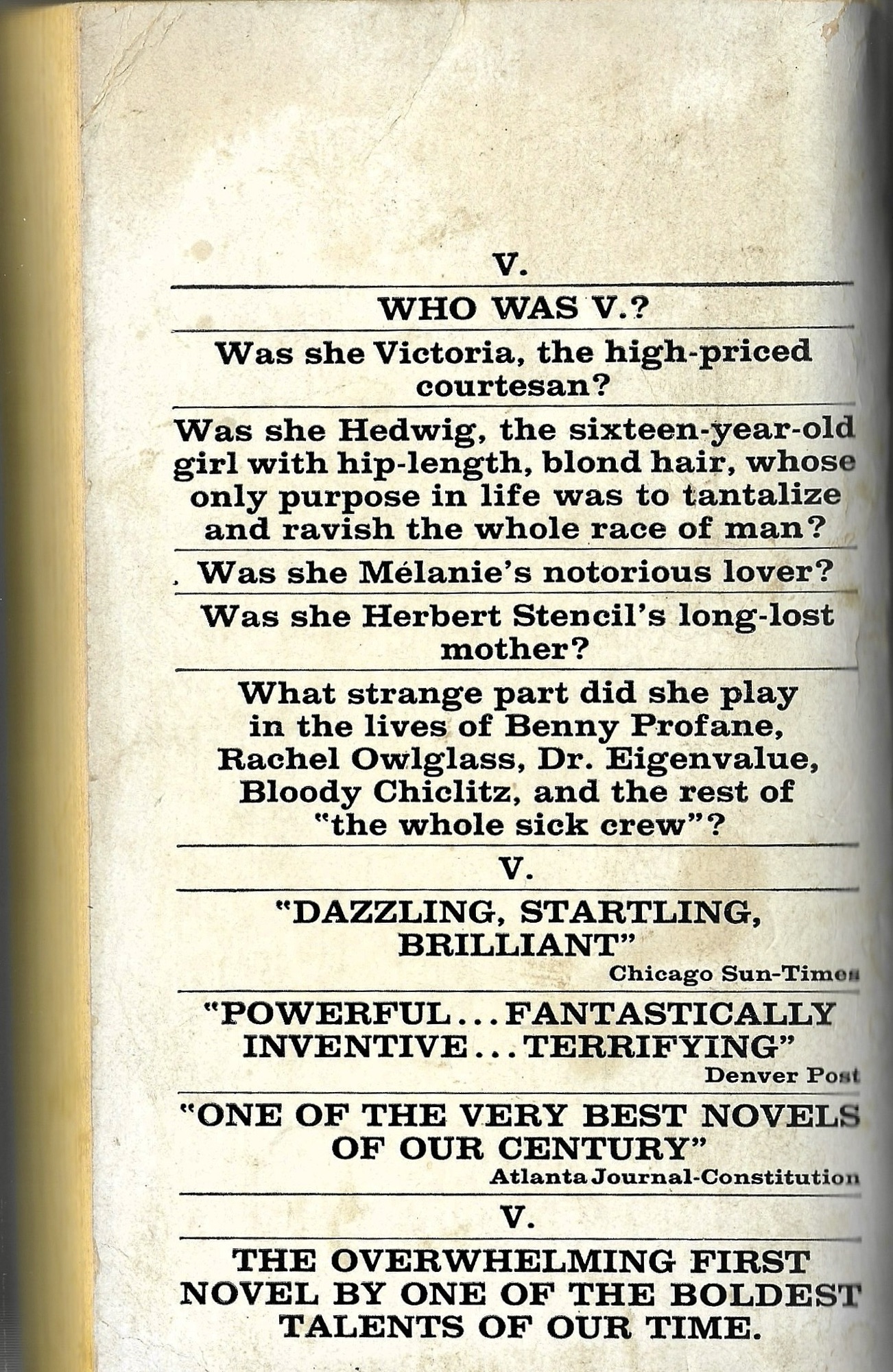
    V., Thomas Pynchon. Bantam Books, third printing (1964). No cover artist credited. 463 pages.

    Although artist James Bama is not credited, you can see his signature on the right side of the cover, just above the horizon.

    I reread V. a few years back, concluding my piece with,

    The grist, grit, and horror of the big postwar world will cling to the present. Nobody’s stepping down from heaven, or Heaven, and there are no magic words—but there is a kind of love, a loving with your mouth shut, a kind of radical, earnest, transcendent love that Pynchon evokes, soils, and sanctifies here.

    Biblioklept Does Atlanta (Books acquired, some time last week)

    Last week, the wife and I drove five hours north to Atlanta, Georgia where we stayed five days in the Cabbagetown neighborhood. Our ostensible purpose was an anniversary trip focused around a Slowdive concert last Friday, but I think we really went to just hang out and eat and drink away from our kids for a few nights. It was famous times.

    The Slowdive concert itself was excellent, despite the best efforts of the awful opening band, a dubious and I must assume ironic project called Drab Majesty, and the sound system at the The Eastern. The venue seemed ill-equipped to handle the tonality of either band. I don’t want to sound like a very old man but it was Too Fucking Loud. Opener Drab Majesty, whose sound came from a single guitar, a single synth, and, I’m guessing, a few loop pedals, seemed to have plugged directly into the PA system. It was the absolute worst sound I’ve ever heard. (Earlier that day, driving in awful Atlanta traffic, we listened to a seventeen-minute Merzbow song on the alternate band of Georgia Tech’s WREK radio station; although Merzbow is “noise” music, that song had more musicality, tonality, and depth of rhythm than Drab Majesty.)

    Slowdive was excellent live–much more of a rock sound than I’d expected; I’ve really enjoyed their two newer records, particularly the self-titled one from a few years back, but the songs from Souvlaki sounded particularly fierce live. The setlist was great, and they closed with a cover of Syd Barrett’s “Golden Hair” that might have gone on for 10 or 12 minutes; it was hypnotic. Here is the single picture I took during the show:

    But books—

    Without children about and with my wife having to work half days from the rented garage apartment, I had enough time to indulge going to pretty much any bookstore I wanted to in Atlanta. I ended up sticking mostly to East Atlanta where we were staying though.

    I had been to A Capella Books a few years ago and had somehow entirely missed their used book annex, which had some really great stuff in it, including a first edition of Blood Meridian and Joseph McElroy’s Women and Men. I ended up chatting with the owner Frank for a bit; a very nice guy, he showed me his personal collection of Vintage Contemporaries and we talked in general about our shared sickness of book collecting. I left with Mauro Javier Cárdenas’s new novel American Abductions and a first-edition hardback of McCarthy’s Cities of the Plain. This second purchase seems to have initiated the trip’s theme of buying editions of books I already own—but now I have all three Knopf editions of The Border Trilogy, so everyone can sleep easier.

    I stopped by Criminal Records in Little Five Points and didn’t pick anything up, although I’m happy to see that CDs have made such a comeback. (I almost certainly would have bought the new Gastr del Sol box set if it was out yet.) I then made my way to Bibliotech Books in Candler Park. The proprietor assured me that he was in the process of reorganizing, but the store was frankly a mess. One bookcase was organized by the color of the book’s spines. The inventory seemed to be someone’s childhood and adolescent books.

    I headed to Virginia Highland Books, a perfectly-respectable book shop in the perfectly-respectable Virginia Highland neighborhood. The perfectly-respectable inventory was not particularly interesting, although I imagine it perfectly suits the perfectly-respectable clientele. On the way to Virginia Highland Books, at a red light, I found myself stopped next to something called Videodrome, so of course I pulled in. I got dizzy in Videodrome a DVD-rental shop stuffed with thousands and thousands of cult films, non-English language films, art films, concert films…amazing stuff. The only thing I could compare it to were some of the rental shops I’d gone to decades ago when I lived in Tokyo. I mean, this place had the Cannibal Ferox soundtrack on vinyl. I spoke to the proprietor for a while. He gave me a sticker. I saw him at the Slowdive show the next night but left him alone.

    My last bookshop visit that day was to Bookish, a small indie spot specializing in books by women. I liked the store but was honestly too tired to look around much after two tallboys at a PBR-themed bar in Virginia Highland.

    Over the next few days, I visited three more bookshops, all more or less by chance. We went to Decatur, simply to check it out, and parked in Decatur Square right in front of Little Shop of Stories. Framed original artwork by visiting authors adorns the walls of this children’s bookshop, and there’s a life-sized reproduction of the room from Margaret Wise Brown’s classic Good Night Moon that one can hang out in. I felt a little melancholy that our children have outgrown children’s books.

    On the way back to Atlanta, we swung by Eagle Eye Books, a Decatur spot specializing in used books (with a large collection of vintage sci-fi hardbacks in a back room). They have several carts of dollar books that are supposedly accessible 24/7—there are lock boxes to slide your dollars into. I ended up picking up different editions of two books I already own: Wells Tower’s Everything Ravaged, Everything Burned in hardback and the 1985 Elisabeth Sifton Books/Penguin Books printing of William Gaddis’s J R. The J R is basically falling apart and is crammed with annotations; I love it. I gave three crumpled dollars over for these two books and then drove back to our garage apartment so we could walk to tacos and then the concert.

    The mid-morning after the Slowdive concert we hung out for a while at the Virginia Highland Porchfest. We parked at the Ponce City Market to walk to Porchfest and on the way back stopped at Posman Books. I’d been there before, and while it’s basically a gift shop, its literature section is surprisingly robust, and it even offers a decent number of Spanish-language novels. The vibe at Porchfest was more frat-boys-drinking-sixers and sunburned golf dads than it was hippies and freaks. The neighborhood is Nice, with plenty of In This House signs declaring Attested Beliefs. We felt more at home in Cabbagetown, with its murals and ambivalence, even if our own presence as fucking tourists made us balk at times. But in a plant shop in Virginia Highland, we did meet an interesting clerk who let me take a photograph of their Pynchon tattoo. So that was pretty cool.

    Atlanta I heart you.


    Gravity’s Rainbow — annotations and illustrations for pages 627-28 | Our optimum time is 8 May

    Page 628 from Zak Smith’s Pictures Showing What Happens on Each Page of Thomas Pynchon’s Novel Gravity’s Rainbow (2006)

    A week before she1 left, she came out to “The White Visitation”2 for the last time. Except for the negligible rump of PISCES, the place was a loony bin again. The barrage-balloon cables3 lay rusting across the sodden meadows, going to flakes, to ions and earth4—tendons that sang in the violent nights, among the sirens wailing in thirds smooth as distant wind, among the drumbeats of bombs, now lying slack, old, in hard twists of metal ash. Forget-me-nots boil everywhere underfoot, and ants crowd, bustling with a sense of kingdom. Commas, brimstones, painted ladies coast on the thermoclines along the cliffs.5 Jessica has cut fringes since Roger saw her last, and is going through the usual anxiety—“It looks utterly horrible, you don’t have to say it. . . .”

    “It’s utterly swoony,” sez Roger, “I love it.”

    “You’re making fun.”

    “Jess, why are we talking about haircuts for God’s sake?”6

    While somewhere, out beyond the Channel, a barrier difficult as the wall of Death7 to a novice medium, Leftenant Slothrop, corrupted, given up on, creeps over the face of the Zone. Roger doesn’t want to give him up: Roger wants to do what’s right. “I just can’t leave the poor twit out there, can I? They’re trying to destroy him—”8

    But, “Roger,” she’d smile, “it’s spring. We’re at peace.”9

    No, we’re not. It’s another bit of propaganda. Something the P.W.E. planted10. Now gentlemen as you’ve seen from the studies our optimum time is 8 May11, just before the traditional Whitsun exodus, schools letting out, weather projections for an excellent growing season, coal requirements beginning their seasonal decline, giving us a few months’ grace to get our Ruhr interests back on their feet—no, he sees only the same flows of power, the same impoverishments he’s been thrashing around in since ’3912. His girl is about to be taken away to Germany, when she ought to be demobbed like everyone else. No channel upward that will show either of them any hope of escape13. There’s something still on, don’t call it a “war” if it makes you nervous, maybe the death rate’s gone down a point or two, beer in cans is back at last and there were a lot of people in Trafalgar Square one night not so long ago . . . but Their enterprise goes on.

    The sad fact, lacerating his heart, laying open his emptiness, is that Jessica believes Them14. “The War” was the condition she needed for being with Roger. “Peace” allows her to leave him. His resources, next to Theirs, are too meager.

    1 The she here, for those wishing to tune in, is Jessica Swanlake, who has decided post-War to return to her normie roots: she will choose a petite bourgeoisie life with Beaver/Jeremy, and reject Roger Mexico (and, implicitly, refuse the Counterforce and the mission to save Tyrone Slothrop).

    2 Normally wouldn’t give a gloss for this, as its so late in the novel, but it’s been like eight years since I’ve done one of these, so: Pynchon Wiki gives the following description for the White Visitation:

    former mental hospital located in the fictional town of Ick Regis on the coast of southern England; now part of SOE [Special Operations Executive; aka the “Firm”]; location of PISCES; D-Wing still has “loonies”; “devoted to psychological warfare”

    I like to imagine The White Visitation as a kind X-Men scenario–or, more geekily, an X-Force scenario–a group of the freaky preterite using their weird powers for Maybe Good. But at this point, post eurowar, it’s all over, a “negligible rump” to be absorbed into post-war administrative Control.

    3 I’ve read Gravity’s Rainbow like half a dozen times and rusting barrage-balloon cables is the kind of image I just keep going past, just kinda sorta like, letting my imagination fill in the details. But doing these posts makes me stop and look around a bit. A description from Keith Thomson’s website:

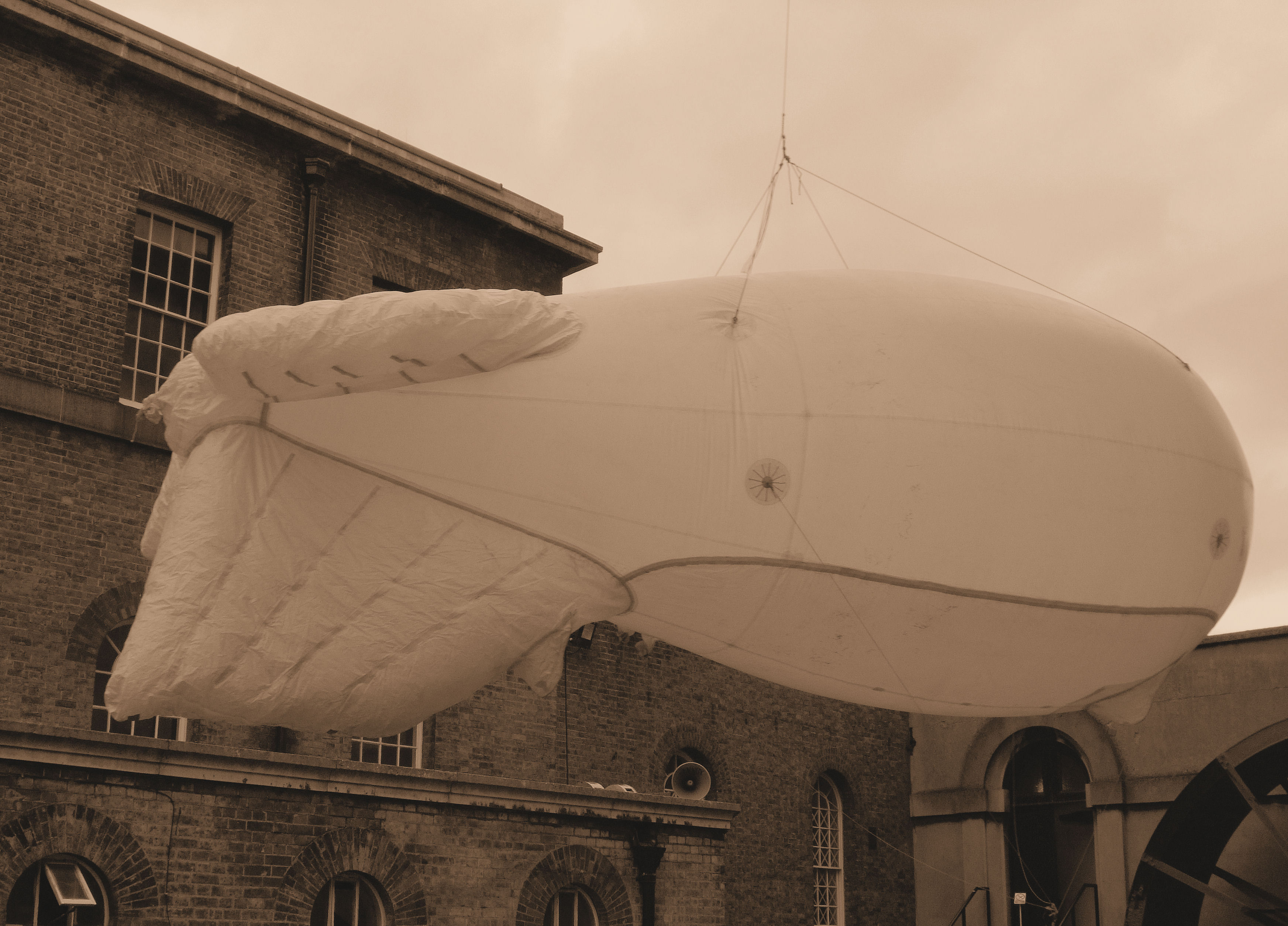
    Barrage balloons are large balloons tethered to the ground or the deck of a ship with metal cables. They are deployed as a defense against low-level air attack, damaging aircraft on collision with the cables or, at the least, making flying in the vicinity treacherous.

    1940s Barrage Balloon At The Kew Bridge Steam Museum, London. Jim Linwood.

    4 Everything in the Zone is disintegrating–including Our Hero Tyrone Slothrop.

    5 “Commas, brimstones, painted ladies coast on the thermoclines along the cliffs” — an absolutely gorgeous sentence, and also one we might pass over at this fragmented, surreal section of the novel as a bit of surrealist poetry.

    But it’s not—these are butterflies. From Pynchon Wiki:

    627.28-29 Commas, brimstones, painted ladies
    Three taxa of butterflies. The Comma (Polygonia c-album) is one of the anglewings; sulfur-yellow brimstones are in the genus Gonepteryx in the family Pieridae; painted ladies are in the genus Vanessa. The Comma is named for a so-shaped white mark on the underside of its hindwing; a similarly-marked North American congener is called the Question Mark (P. interrogationis).

    Cigarette card depicting a fanciful “brimstone butterfly”

    6 “Can’t say it often enough–change your hair, change your life,” Inherent Vice.

    7 “Wall of Death,” Richard and Linda Thompson, 1982:

    Let me ride on the Wall of Death one more time / You can waste your time on the other rides / This is the nearest to being alive / Oh let me take my chances on the Wall of Death / You can go with the crazy people in the Crooked House / You can fly away on the Rocket or spin in the Mouse / The Tunnel of Love might amuse you / Noah’s Ark might confuse you / But let me take my chances on the Wall of Death

    8 Every time I go through Gravity’s Rainbow, I find Slothrop’s fate more distressing and dispiriting—but also more inspiring. I think what’s important to remember here is that Roger Mexico is a numbers guy, a statistics guy—in 2024 terms, he might be a spreadsheet guy, a potential money guy. But he finds himself dedicated to Something Bigger Even If It Destroys Him, which means dedicating hope to the ever-fragmenting figure of Tyrone Slothrop, who, through his dispersal, might sow new seeds.

    9 A devastating reversal of “They are in love. Fuck the war,” the lines we get from our first meeting of the failed lovers.

    10 Political Warfare Executive (an iteration of Them). From Pynchon Wiki:

    In 1940, MIR and Section D were combined with the War Office to form the Special Operations Executive (SOE). A “black” (sub rosa) propaganda section of SOE, created by the Foreign Office and named “Electra House,” was attached to the SOE in 1940 to become the Political Warfare Executive (PWE), charged with political and psychological warfare.

    11 Thomas Ruggles Pynchon was born on 8 May 1937. Today is his 87th birthday.

    If you’re the kinda weirdo who likes to celebrate Pynchon’s work and legacy, indulge in Pynchon in Public Day.

    Steven Weisenburger’s 2nd’ edition of the Companion gives the following gloss on the date:

    8 May, just before the traditional Whitsun exodus. Recall that part 2 ends with Pointsman and crew spending “Whitsun by the sea” (V269.26n). This traditional British holiday weekend fell on May 20 in 1945.

    12 Roger Mexico “sees only the same flows of power, the same impoverishments” that he’s seen throughout the war. Unlike Jessica, he’s hep now to the knowledge that “the real business of the War is buying and selling.”

    13 Pynchon here reiterates one of GR’s central themes, of the preterite vs the elect, of a “channel upward” or crashing down. The theme permeates the book, right from its opening lines. Consider the novel’s fourth sentence “The Evacuation still proceeds, but it’s all theatre.” The opening “evacuation” scene is surreal and apocalyptic, with each potential evacuee hearing an inner voice that cruelly coos, “You didn’t really believe you’d be saved. Come, we all know who we are by now. No one was ever going to take the trouble to save you, old fellow. . . .” The narrator’s very early note that “it’s all theatre” is one of Pynchon’s central diagnoses of power in GR, and one that not every character comes to fully understand. As if to underline that it’s all kayfabe, Pynchon ends GR by introducing a new character, Richard M. Zhlubb, a parody of Nixon. Zhlubb is the night manager of the Orpheus Theatre.

    14 I think what finally most breaks Roger’s heart isn’t the loss of Jessica, but that “Jessica believes Them.” She’s subscribed to the theater of “war” and “peace,” an illusion that can no longer comfort Roger.

    Gravity’s Rainbow — annotations and illustrations for pages 712-13 | The Man has a branch office in each of our brains

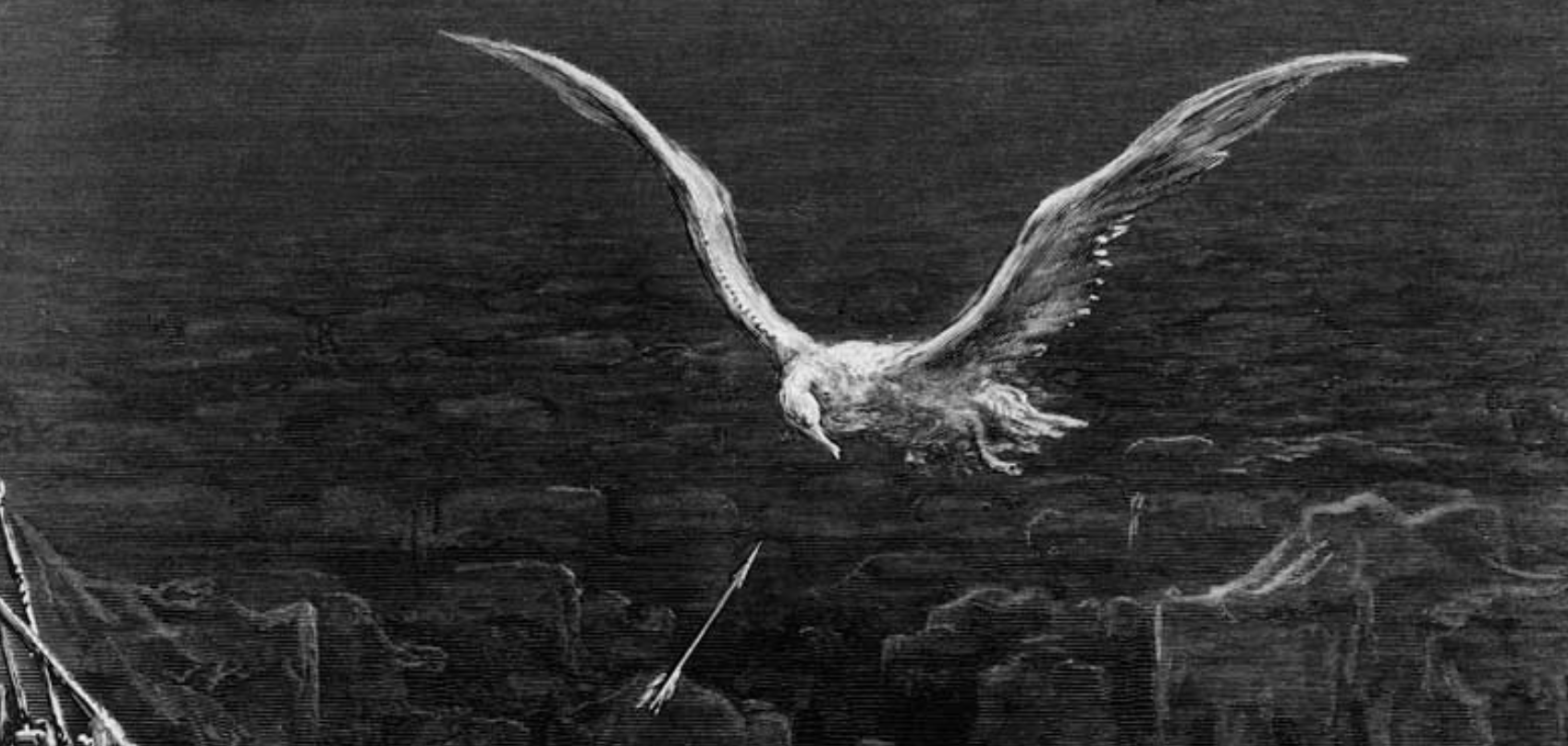
    Illustration for Coleridge’s The Rime of the Ancient Mariner, Gustave Doré, 1876

    Well1, if the Counterforce2 knew better what those categories3 concealed, they might be in a better position to disarm, de-penis and dismantle the Man4. But they don’t. Actually they do, but they don’t admit it. Sad but true. They are as schizoid, as double-minded in the massive presence of money, as any of the rest of us, and that’s the hard fact5. The Man has a branch office in each of our brains, his corporate emblem is a white albatross, each local rep has a cover known as the Ego, and their mission in this world is Bad Shit6. We do know what’s going on, and we let it go on7. As long as we can see them, stare at them, those massively moneyed, once in a while. As long as they allow us a glimpse, however rarely. We need that. And how they know it–how often, under what conditions. . . .8 We ought to be seeing much popular-magazine coverage on the order of The Night Rog and Beaver Fought Over Jessica While She Cried in Krupp’s Arms, and drool over every blurry photo–9

    Roger must have been dreaming10 for a minute here of the sweaty evenings of Thermidor11: the failed Counterforce, the glamorous ex-rebels, half-suspected but still enjoying official immunity and sly love, camera-worthy wherever they carry on . . . doomed pet freaks.

    They will use us. We will help legitimize Them12, though They don’t need it really, it’s another dividend for Them, nice but not critical. . . .

    Oh yes, isn’t that exactly what They’ll do.

    1 Well, hell, the last time I composed one of these silly annotations posts was way back in the unfortunate Fall of 2016, when I lost my goddamn mind for a while. I never made any notes on the novel’s final quadrant, “The Counterforce,” and never mustered any more notes when I reread GR in 2020. Over the past two weeks, I listened to George Guidall’s excellent narration in a long, long audiobook that kept me good company through some serious Spring cleaning projects. As has been the case in each of my treks through GR, I found it intensely prescient, a wonderful, terrifying diagnosis of the grand ugly 20th c. that we will never recover from.

    2 I’ve read Gravity’s Rainbow all the way through six or seven times now, and each time I always find myself buoyed by the Counterforce—Pynchon’s heroic band of preterite rebels who resist the forces of Control. And every time I reread it I seem to forget that the Counterforce fails—the Counterforce (I dare not use the appropriate pronoun they, for They is the enemy of the Counterforce’s We) simply can’t stop the coming new world order of the military-industrial-entertainment complex. The short passage I’ve selected here, with Counterforce hero and one-time lover Roger Mexico as its medium, showcases one of the many reasons the Counterforce will fail.

    3 Those categories refers to Pynchon’s previous paragraph, an academic spoof highlighting various “albatross nosologies”; nosology refers to the classification of diseases; the albatross is a metaphorical curse, of course.

    Illustration for Coleridge’s The Rime of the Ancient Mariner, Gustave Doré, 1876

    4 The Man: authority, control, They, the force, the fuzz, the cops, the heat, the money guys, the enemies of art, love, and the human soul…

    5 A depressing notion, of course, and one Pynchon would return to in his 1990 follow-up to GRVineland, a novel that parodied the so-called counterculture of the 1960’s massive ideological failure, to, like, follow through with any true revolutionary project. 

    6 The economic metaphors here are appropriate. Again, fuck the money guys whose mission in this world is Bad Shit.

    7 An even more depressing notion—that the double-mindedness of Counterforce consciousness includes knowing that we let the Bad Shit go on; maybe our resistant spirit curdles into a brittle apathy; maybe we overindulge in mindless pleasures; maybe we explode. 

    mindless-pleasures
    An early trial cover for GR, featuring one of its working titles, Mindless Pleasures

    8 The date of publication for this post coincides with the May 6, 2024 annual Met Gala, a capitalist spectacle of wealth and fame costumed in the trappings of art. This year’s ticket is $75,000, more than the average U.S. salary. And yet it might be fair to consider that those “massively moneyed” costumed revelers at the Met Gala aren’t even really the true massively moneyed, but rather their avatars, projected on innumerable screens, avatars of mindless pleasures to distract us from all the Bad Shit the massively moneyed are up to.

    9 Pynchon here plays on lurid tabloid headlines that aren’t too different from the ones we see today, reconfiguring the one-time lovers Jessica and Roger as the elect, figures of celebration. It’s all fantasy though—literally; as the next lines seem to suggest, we’ve been in Roger’s addled mind. Pynchon’s headline reminds me of Donald Barthelme’s 1964 short story “Me and Miss Mandible,” which includes a list of trashy titles about Elizabeth Taylor, Debbie Reynolds, and Eddie Fisher like “The Private Life of Eddie and Liz,” “Debbie Gets Her Man Back?” and “Eddie’s Taylor-Made Love Nest.”

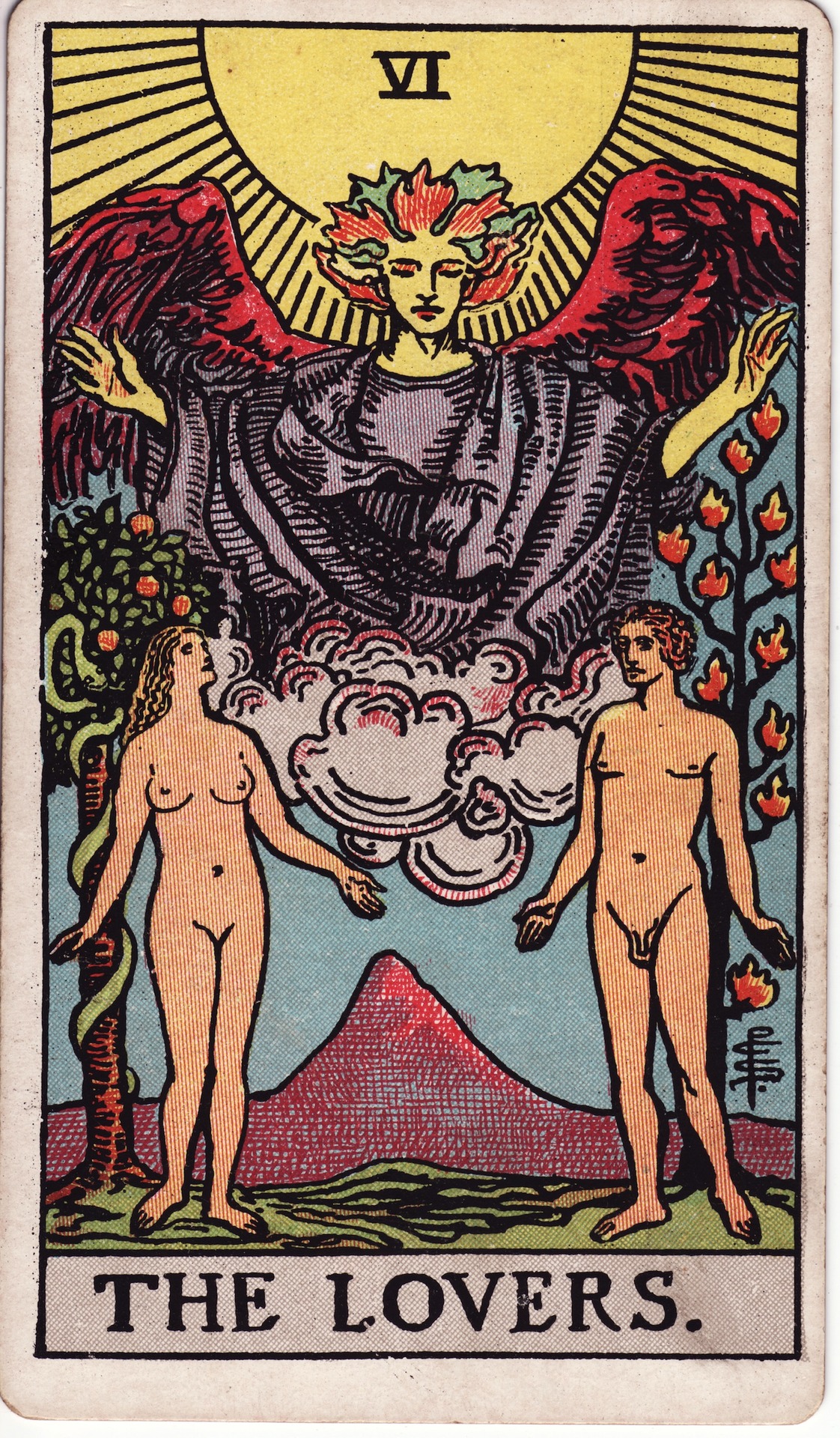
    I found the wartime love affair between Jessica and Roger more depressing this time than in previous reads of Gravity’s Rainbow. When we first meet them, we get one of the best lines in the novel: “They are in love. Fuck the war.” But it is the war that licenses their love; in its absence (or, really dormancy), a bureaucratizing control subsumes their ardor. They fail.

    The Lovers card from the Rider–Waite tarot deck

    10 The gerund dreaming here helps to foreground Roger’s current tabloid-headline-revenge-against-the-powers-that-be-fantasy as fantasy while also analeptically connecting the post-WW2 Counterforce’s nebulous mission to the fallout of the French Revolution. Dreaming also suggests that Roger is the “narrator” of this section; it also reminds me of Roger’s mentor Pirate Prentice, whose dream (of failed escape, “all theater”) initiates Gravity’s Rainbow. Pirate’s psychic power is to inhabit the fantasies of others; this is also Thomas Pynchon’s power.

    11 In the second edition of his A Companion to Gravity’s Rainbow, Steven Weisenburger gives the following gloss:

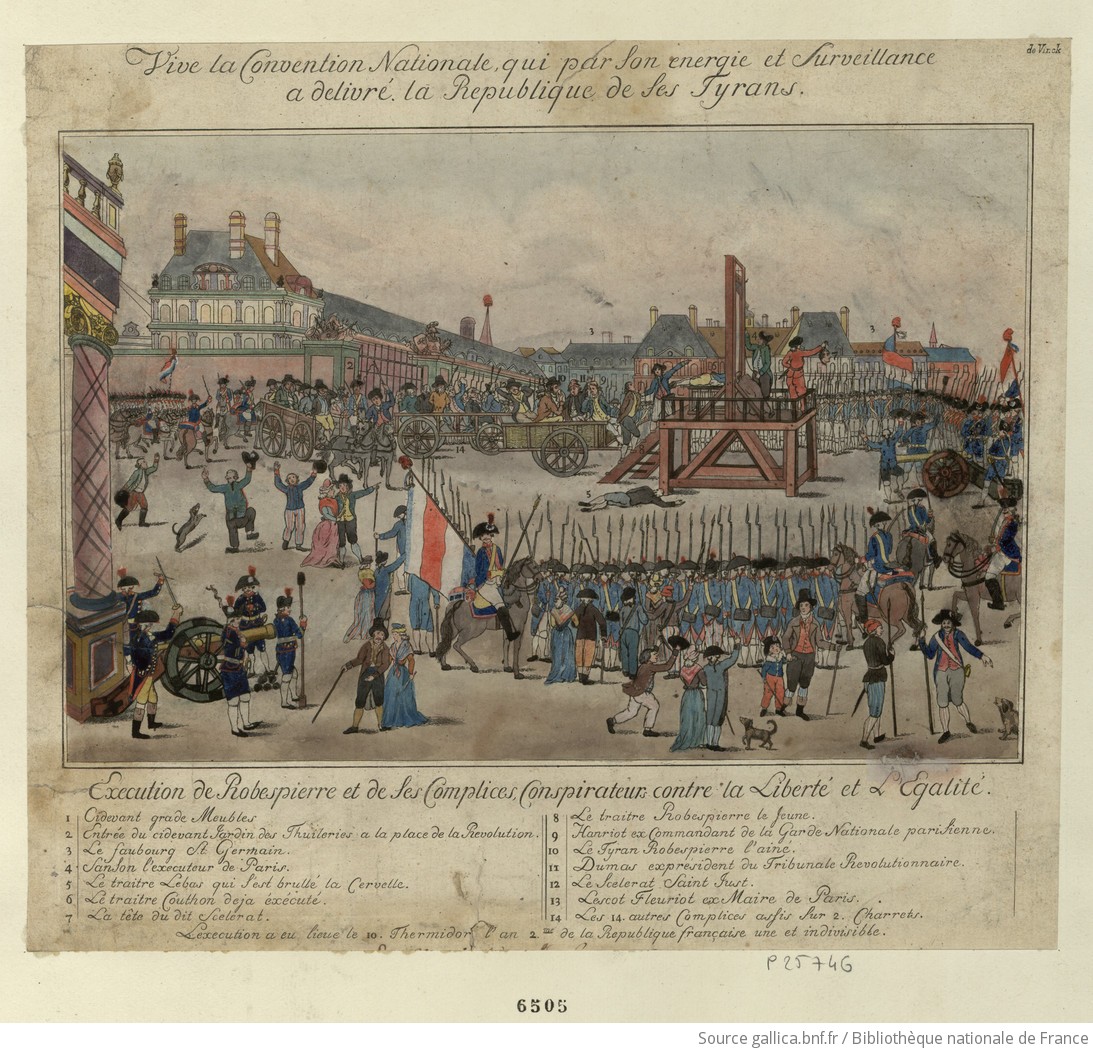
    If Roger Mexico is dreaming of these evenings, then his dreams contain a warning. Thermidor was the eleventh month of the French revolutionary calendar, corresponding to the period from July 19 to August 17. Moreover, it was on the eighth of Thermidor, in the French Revolution’s second year (in other words, July 27, 1794), that Robespierre, Saint-Just, and other leaders of massive redistribution of wealth and upheaval of the aristocratic order, known as the Reign of Terror, were arrested and, the next day, executed.

    Weisenburger’s annotation here is a significant update from the Companion’s first edition, which essentially gives a brief definition of what Thermidor was without any greater political or historical context.

    The Pynchon Wiki Gravity’s Rainbow annotation gives the following,  which repeats (or precedes?) Weisenburger’s note, adding also that, “In one of his newspaper articles later, Pynchon would speak of the Nixon years as a ‘Thermidorian reaction’ to the 1960s.”

    I have no idea what “one of his newspaper articles” is being referenced here. What immediately came to mind was likely “Is It Okay to Be a Luddite?” or “Nearer, My Couch, to Thee,” both of which appeared in The New York Times, and neither of which, as far as I can tell, use the phrase “Thermidorian reaction” or “Nixon.” (In “Luddite,” Pynchon does refer to the French Revolution—and also gives us a nice little summary of Roger’s complaint against Power in our little passage here: “there is now a permanent power establishment of admirals, generals and corporate CEO’s, up against whom us average poor bastards are completely outclassed”). The closest phrasing I can find to the Pynchon Wiki’s framing comes from a 2016 essay by James Liner that primarily deals with Inherent Vice. Liner writes: “Even in the Thermidor of Nixon’s 1970s, on the eve of the Reagan/Thatcher ’80s, Doc holds fast to utopian hope and the possibility of antisystemic praxis.”

    Execution de Robespierre et de ses complices conspirateurs contre la liberté et l’egalité : vive la Convention nationale qui par son energie et Surveillance a delivré la Republique de ses Tyrans

    12 Doomed pet freaks. The money guys will put the counterculture on the market as a Fuck You to freaks and rubes alike, icing on their cake.

    Don’t legitimize their grasping at capital as culture. 

    We might be freaks, but We are not doomed and We are not Their pets. 

    John Barth’s brief description of Donald Barthelme’s so-called postmodernist dinners

    1fa8c7cbf8dc977653f7750905725da4
    Photograph from “The Postmodernists Dinner,” 1983 by Jill Krementz (b. 1940)

    In John Barth’s 1989 New York Times eulogy for Donald Barthelme, Barth gives a brief description of two so-called postmodernist dinners, both of which I’ve written on this blog before.

    …though [Barthelme] tsked at the critical tendency to group certain writers against certain others ”as if we were football teams” – praising these as the true ”post-contemporaries” or whatever, and consigning those to some outer darkness of the passe – he freely acknowledged his admiration for such of his ”teammates,” in those critics’ view, as Robert Coover, Stanley Elkin, William Gaddis, William Gass, John Hawkes, Thomas Pynchon and Kurt Vonnegut, among others. A few springs ago, he and his wife, Marion, presided over a memorable Greenwich Village dinner party for most of these and their companions (together with his agent, Lynn Nesbit, whom Donald called ”the mother of postmodernism”). In 1988, on the occasion of John Hawkes’s academic retirement, Robert Coover impresarioed a more formal reunion of that team, complete with readings and symposia, at Brown University. Donald’s throat cancer had by then already announced itself – another, elsewhere, would be the death of him – but he gave one more of his perfectly antitheatrical virtuoso readings.

    More on the first dinner here.

    More on the second dinner here.

    It’s Boxing Day (Gravity’s Rainbow)

    Inside the bowl, the two goldfish are making a Pisces sign, head-to-tail and very still. Penelope sits and peers into their world. There is a little sunken galleon, a china diver in a diving suit, pretty stones and shells she and her sisters have brought back from the sea.

    Aunt Jessica and Uncle Roger are out in the kitchen, hugging and kissing. Elizabeth is teasing Claire in the hallway. Their mother is in the W.C. Sooty the cat sleeps in a chair, a black thundercloud on the way to something else, who happens right now to look like a cat. It’s Boxing Day. The evening’s very still. The last rocket bomb was an hour ago, somewhere south. Claire got a golliwog, Penelope a sweater, Elizabeth a frock that Penelope will grow into.

    The pantomime Roger took them all to see this afternoon was Hansel and Gretel. Claire immediately took off under the seats where others were moving about by secret paths, a flash of braid or of white collar now and then among the tall attentive uncles in uniform, the coat-draped backs of seats. On stage Hansel, who was supposed to be a boy but was really a tall girl in tights and smock, cowered inside the cage. The funny old Witch foamed at the mouth and climbed the scenery. And pretty Gretel waited by the Oven for her chance. . . .

    Then the Germans dropped a rocket just down the street from the theatre. A few of the little babies started crying. They were scared. Gretel, who was just winding up with her broom to hit the Witch right in the bum, stopped: put the broom down, in the gathering silence stepped to the footlights, and sang:

    Oh, don’t let it get you,

    It will if they let you, but there’s

    Something I’ll bet you can’t see—

    It’s big and it’s nasty and it’s right over there,

    It’s waiting to get its sticky claws in your hair!

    Oh, the greengrocer’s wishing on a rainbow today,

    And the dustman is tying his tie . . .

    And it all goes along to the same jolly song,

    With a peppermint face in the sky!

    “Now sing along,” she smiled, and actually got the audience, even Roger, to sing:

    With a peppermint face in the sky-y,

    And a withered old dream in your heart,

    You’ll get hit with a piece of the pie-ie,

    With the pantomime ready to start!

    Oh, the Tommy is sleeping in a snowbank tonight,

    And the Jerries are learning to fly—

    We can fly to the moon, we’ll be higher than noon,

    In our polythene home in the sky. . . .

    Pretty polythene home in the sky,

    Pretty platinum pins in your hand—

    Oh your mother’s a big fat machine gun,

    And your father’s a dreary young man. . . .

    (Whispered and staccato):

    Oh, the, man-a-ger’s suck-ing on a corn-cob, pipe,

    And the bank-ers are, eat-ing their, wives,

    All the world’s in a daze, while the orchestra plays,

    So turn your pockets and get your surprise—

    Turn your pockets and get-your surpri-ise,

    There was nobody there af-ter all!

    And the lamps up the stairway are dying,

    It’s the season just after the ball . . .

    Oh the palm-trees whisper on the beach somewhere,

    And the lifesaver’s heaving a sigh,

    And those voices you hear, Boy and Girl of the Year,

    Are of children who are learning to die. . . .

    From Thomas Pynchon’s 1973 novel Gravity’s Rainbow.