Two Beauties in the Rain — Ohara Koson

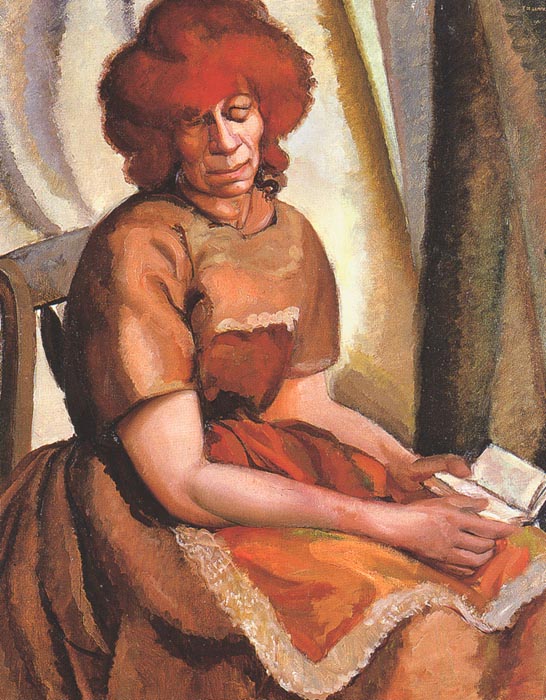
Redheaded Woman Reading — Tamara de Lempicka

redheaded-woman-reading-1922

“Nam-Bok the Unveracious” — Jack London

“Nam-Bok the Unveracious” by Jack London

“A Bidarka, is it not so! Look! a bidarka, and one man who drives clumsily with a paddle!”

Old Bask-Wah-Wan rose to her knees, trembling with weakness and eagerness, and gazed out over the sea.

“Nam-Bok was ever clumsy at the paddle,” she maundered reminiscently, shading the sun from her eyes and staring across the silver-spilled water. “Nam-Bok was ever clumsy. I remember….”

But the women and children laughed loudly, and there was a gentle mockery in their laughter, and her voice dwindled till her lips moved without sound.

Koogah lifted his grizzled head from his bone-carving and followed the path of her eyes. Except when wide yawns took it off its course, a bidarka was heading in for the beach. Its occupant was paddling with more strength than dexterity, and made his approach along the zigzag line of most resistance. Koogah’s head dropped to his work again, and on the ivory tusk between his knees he scratched the dorsal fin of a fish the like of which never swam in the sea.

“It is doubtless the man from the next village,” he said finally, “come to consult with me about the marking of things on bone. And the man is a clumsy man. He will never know how.”

“It is Nam-Bok,” old Bask-Wah-Wan repeated. “Should I not know my son!” she demanded shrilly. “I say, and I say again, it is Nam-Bok.”

“And so thou hast said these many summers,” one of the women chided softly. “Ever when the ice passed out of the sea hast thou sat and watched through the long day, saying at each chance canoe, ‘This is Nam-Bok.’ Nam-Bok is dead, O Bask-Wah-Wan, and the dead do not come back. It cannot be that the dead come back.”

“Nam-Bok!” the old woman cried, so loud and clear that the whole village was startled and looked at her. Continue reading ““Nam-Bok the Unveracious” — Jack London”

Reading Nude — Theodor Pallady

https://i0.wp.com/uploads3.wikipaintings.org/images/theodor-pallady/reading-nude-nu-la-lecture.jpg

Spetssom — Anders Zorn

The Reader — Federico Zandomeneghi

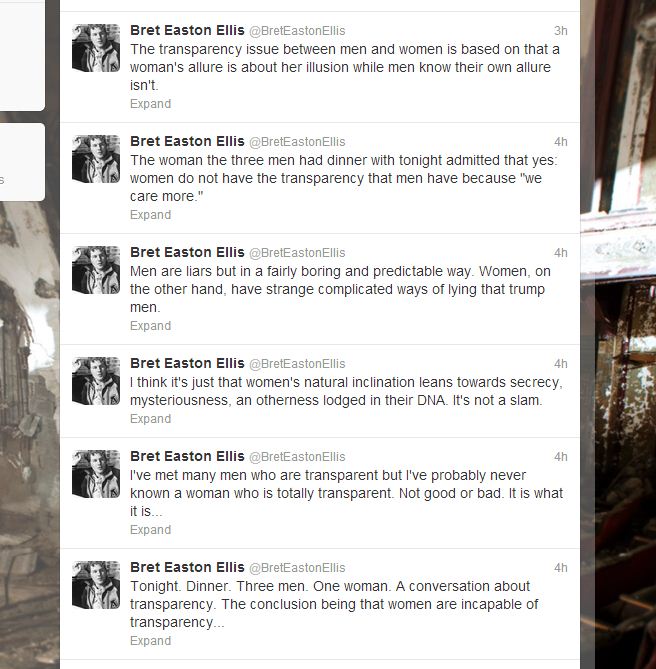
In Which Bret Easton Ellis Finally Comes to Understand Women

Bret Easton Ellis took to Twitter last night to share some more of his profound insights.

Here, he sets the stage for us and delivers a powerful thesis (all in under 140 characters!):

And of course, some supporting details (including a bit of biology):

Mr. Ellis even replies to one of his followers! (I like the touch of self loathing):

A rousing conclusion statement:

And a fitting epilogue:

Bravo!

A Girl Reading — Pierre-Auguste Renoir

Woman Reading — Mary Cassatt

Charles Bukowski, Drunken Creep

“Things Like Kidnapping the Sex Slave” — William T. Vollmann Speaks of Women

More from The Paris Review’s vaults. Highlights from William T. Vollmann’s 2000 interview (the entire thing is precious. Just precious) —

VOLLMANN: One of the things that I had to do occasionally while I was collecting information for that prostitute story, “Ladies and Red Lights” from The Rainbow Stories, was sit in a corner and pull down my pants and masturbate. I would pretend to do this while I was asking the prostitutes questions. Because otherwise, they were utterly afraid of me and utterly miserable, thinking I was a cop.

. . .

I kept thinking when I first began writing that my female characters were very weak and unconvincing. What is the best way to really improve that? I thought, Well, the best way is to have relationships with a lot of different women. What’s the best way to do that? It’s to pick up whores.

. . .

Also, I often feel lonely.

. . .

I almost never sleep with American prostitutes any more, unless they really want me to—if they are going to get hurt if I don’t.

. . .

Anyway, so when I was in Thailand, I went to a town in the south and bought a young girl for the night. This awful brothel—one of these places hidden behind a flowershop with all these tunnels and locked doors and stuff—was like a prison. I tried to help a couple of the girls but you just can’t get them out. I tried and I couldn’t. I made the mistake of going to the police, trying to have the police get them out—all that did was nearly get them arrested and put in jail, because the police are paid off. I managed to get the raid called off by taking all the cops out to dinner and buying them Johnnie Walker. I bought this fourteen-year-old girl and got her in a truck and drove like hell to Bangkok. I was with this other girl at the time—Yhone-Yhone, a street prostitute, a very happy one. She was my interpreter. She put the fourteen-year-old girl at ease and got her to trust me. We got her set up at a school run by a relative of the king of Thailand. I went up north, met her father, gave him some money, and got a receipt for his daughter. He didn’t know she’d been sold to a brothel. When I met him and told him he said, Oh. I didn’t know that, but, well, whatever she wants. He’s not a bad guy, just a total loser. He’s a former Chiang Kai-shek soldier. They’re all squatters there in Thailand. They can’t read or write. He lives on dried dogs and dried snakes.

INTERVIEWER: You own his daughter?

VOLLMANN: That’s right. I own her. She doesn’t particularly like me, but she was really happy to be out of that place. She loves the school. It’s sort of a vocational school. It’s called something like the Center for the Promotion of the Status of Women. Many former prostitutes are in there.

. . .

The common motif is just prostitution and love.

. . .

I want to take some responsibility and act as well as write. I don’t mean to be an actor, but rather to accomplish things . . . do things that will help people somehow . . . things like kidnapping the sex slave. It would be great if I could make my contribution to abolishing the automobile or eliminating television or something like that.

The AV Club Interviews James Ellroy

The AV Club interviews noir postmodernist James Ellroy about his forthcoming memoir, The Hilliker Curse. Here’s Ellroy, the cranky old man–

I very much enjoyed the process of interdicting the culture. I’m older; I have a great love of the English parlance. I can’t stand dipshit, tattooed, lacquered, varnished, depilatoried younger people talking their stupid shit, stage-sighing, saying “It’s like, I’m like, whatever,” and talking in horrible clichés, rolling their eyes when they disapprove of something. I saw that the culture was pandering more and more to this kid demographic. And in the course of driving from here to there, I began to see more and more billboards for vile misogynistic horror films, white-trash reality-TV shows, neck-biting fucked-up vampire flicks, and stoned-out teenage-boy pratfall comedies. Bad drama, bad comedy, that portrayed life preposterously, frivolously, and ironically, and that got to me. So I would drive here, there, and elsewhere through residential neighborhoods in order to avoid billboards. Since I wasn’t married and had no more in-law commitments, and was starting over again in a new locale, I developed strong friendships with male colleagues where we share the common goal of work and earning money, and I became fixated on women in my late 50s more than I’ve ever been fixated on women in my woman-fixated fucking life. My time in the dark felt productive rather than reductive, and the rest of the chronology, you know from the book. And I’m comfortable living in this manner, which people find hard to believe that I’m happy. It’s a gas. It’s a gas.

Emma Donoghue Uncovers the Six Most Perennially Popular Plot Motifs of Attraction Between Women in Literature

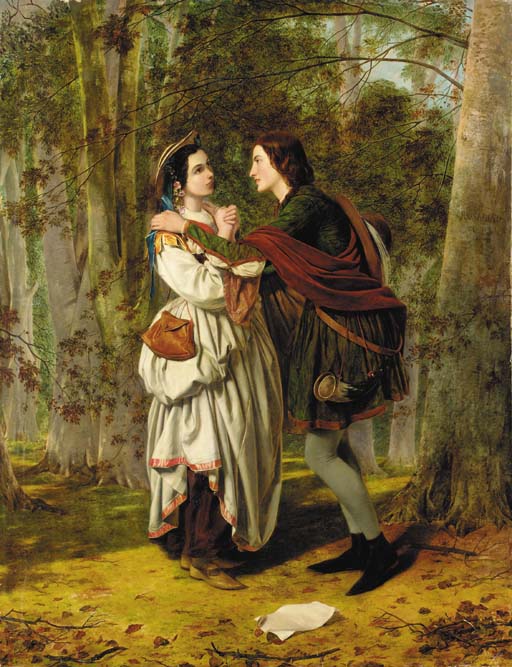
Rosalind and Celia -- Henry Nelson O'Neil

In her new book Inseparable: Desire Between Women in Literature (on sale May 25, 2010 from Knopf), Emma Donoghue discusses the six most common recurring girl-on-girl plots in literature. From her introduction:

TRAVESTIES: Cross-dressing (whether by a woman or a man) causes the “accident” of same-sex desire.

INSEPARABLES: Two passionate friends defy the forces trying to part them.

RIVALS: A man and a a woman compete for a woman’s heart.

MONSTERS: A wicked woman tries to seduce and destroy an innocent one.

DETECTION: The discovery of a crime turns out to be the discovery of same-sex desire.

OUT: A woman’s life is changed by the realization that she loves her own sex.

We’re enjoying Donoghue’s book so far. It proceeds from this initial folkloric classification with a balance of erudition and wit and a keen eye for the desire writhing between the lines. More to come.

Summer Reading List: Tales of Romance

Summer lovin’: have a blast. You don’t have to read harlequin schlock to get romantically fulfilled on the beach this year.
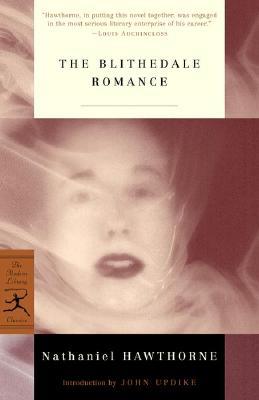
Why not start with an overlooked, under-read classic from American Renaissance master Nathaniel Hawthorne. The Blithedale Romance is a fictionalized account of Hawthorne’s time on Brooke Farm–here called Blithedale–an attempt at a utopian commune founded by artists and free-thinkers. Free lovin’, amorous passions, and, uh, farming. Great stuff–and romance is right in the title.
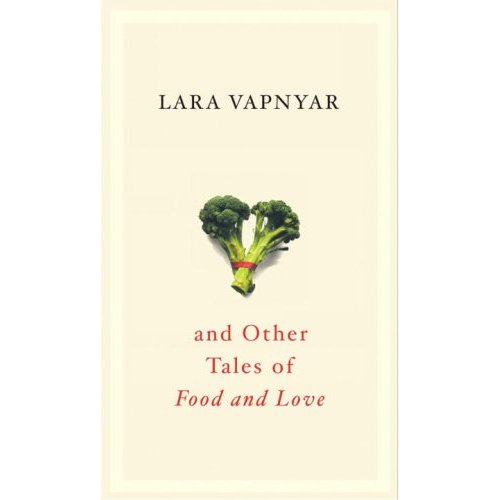
For lighter yet still substantial fare, check out Lara Vapnyar’s Broccoli and Other Tales of Food and Love, a delicious collection of snack-sized short stories (please, please, please forgive this awful extended metaphor). Sly, smart, and occasionally sexy, Vapnyar’s tales of dislocated immigrants continue to linger on the palate long after they’ve been digested (sorry!). The recipe section at the end is the sweetest dessert (ok, I swear I’m done now).
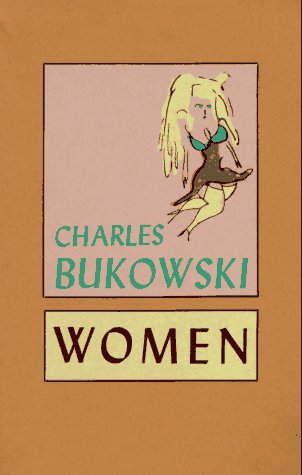
If you like your love stories rougher around the edges, check out Charles Bukowski’s only masterpiece, Women. This rambling novel follows alter-ego Henry Chinaski’s late-in-life successful turn with the ladies. Ugly, unforgiving, honest, and hilarious, Women is one of my favorite books. Also, unlike Henry Miller’s Tropic books, you’ll actually finish this one.

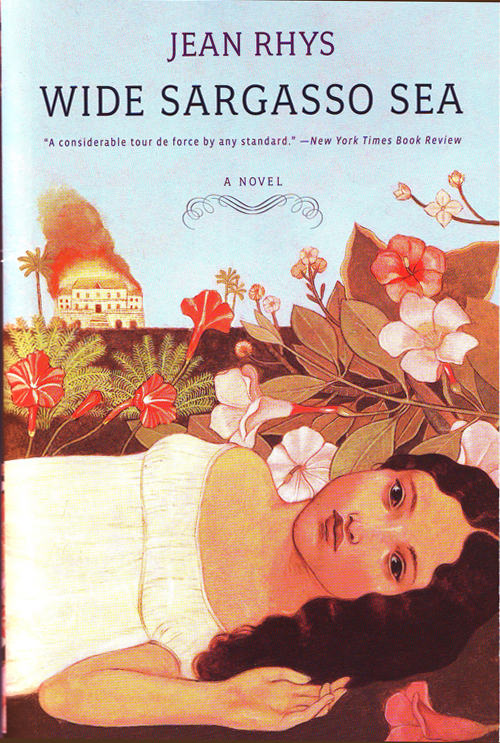
We finally read Charlotte Brontë’s Jane Eyre last summer, and believe it or not, the book is pretty great. Truly a romantic classic, but also a fine comment on gender, class, and social mores in general. And if you like it, check out Jean Rhys’s Wide Sargasso Sea, which tackles the back-story of a certain crazy lady in the attic who didn’t exactly get a voice in Jane Eyre.

Finally, if you want to get very specific, don’t hesitate to search the Romantic Circles website. Plenty of resources and lots of electronic texts: your source for all things Blake, Wordsworth, Coleridge, Shelley, Keats, and more. Good stuff.

Crimes by Women

True crimes. Get lurid.

Crime Never Pays!

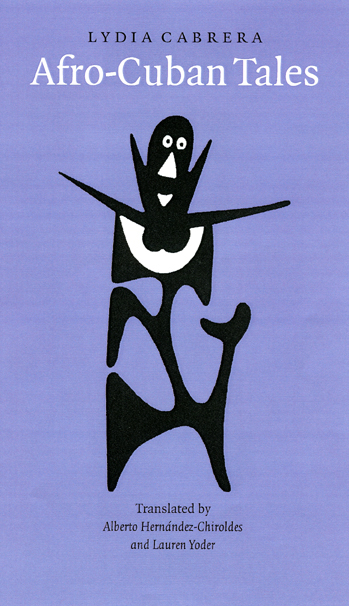
Lydia Cabrera–Afro-Cuban Tales

afro-cuban-tales.jpg

In a sublime synthesis of traditional folklore and imagistic surrealism, Lydia Cabrera’s Afro-Cuban Tales questions the normative spaces occupied by bodies. Deriving from animist tradition, her characters exist in an impossible multiplicity of spaces, being at once animals and plants, humans and gods. Cabrera’s characters endure trials of biological identity and social co-existence, and through these problems they internalize authority, evince taboos, and create a social code. Cabrera’s trickster characters provoke, challenge, or otherwise disrupt the symbolic order of this code. In “Bregantino Bregantín,” a story that recalls Freud’s primal horde theory, as well as the work of more contemporary theorists such as Julia Kristeva and Judith Butler,  narcissist Bull kills all the males of his kingdom and takes all the women for himself.  The sadistic titular turtle of “Papa Turtle and Papa Tiger” uses the power of his dead friend’s antlers to shame, torment, and torture the other animals of his community. And in the magical realism of “Los Compadres,” Capinche seeks to put the horns on his best friend Evaristo by sleeping with his wife–a transgression that ends in necrophilia. This union of sex and death, creation and destruction is the norm in Cabrera’s green and fecund world; the trickster’s displacements of order invariably result in reanimation, transformation, and regeneration—the drawing, stepping-over, and re-drawing of boundaries. A couple of days, Bob hipped me to this really cool Run Wrake short film called Rabbit. While not directly related to Afro-Cuban Tales, this film nonetheless captures the book’s key themes and motifs of death and resurrection, transformation and language, and the trickster’s power to disrupt social and familial codes. Highly recommended.

Charles Bukowski

I must have been in the 1oth or 11th grade when I borrowed three Charles Bukowski novels from M***ael J***ings. These were:

Women, easily my favorite and Bukowski’s best. I didn’t return this one.

The short story collection, Tales of Ordinary Madness. I kept this one too, but it is no longer in my possession. Loaned out, never to be returned.

And another collection, The Most Beautiful Woman in Town. I think I gave this back; anyway, I don’t have it anymore.

I was reading Henry Miller and Hemingway at the time, and macho Bukowski fit right in. Something about being a teenager, trying to gain access to the “adult world”–or something like the adult world. How to act, what to say. I read just about all the short stories that Bukowski wrote. Factotum and Post Office were two of my favorites. Everyday when I see our mailman I think of Post Office.

 Our mailman is old, and skinny as a sick girl, and he has a nose like a bird’s beak to boot. He runs his entire route; he has a strange little knock-kneed hustle. He always tells me to “Stay safe” when I see him. He’s withered. Post Office makes working for the post office sound like an annihilating, damning, Sisyphean task. I wonder: “Does the mailman not feel safe?”

Charles Bukowski

Bukowski painted some pictures.

Factotum was recently made into a movie starring Matt Dillon as Bukowski’s alter-ego, Henry Chinaski. Mickey Rourke played the “real” Bukowski in a horrible-looking movie called Barfly. I haven’t seen either film.

So Bukowski’s sort of been “branded” commodified as “type”–like Hemingway and Miller (and HST, and Anaïs Nin, and Wm Burroughs,  and Nietzsche, and so on) He becomes a stolen writer, a lazy gesture, a footnote in the movie Swingers. Then again, maybe a few people saw that movie and picked up Hollywood, a really funny late-period Bukowski novel about making the film that will come to be Barfly. In Hollywood, Bukowski endures the trouble of having other people manipulate his writing and sweats sweats sweats that he might have sold out.