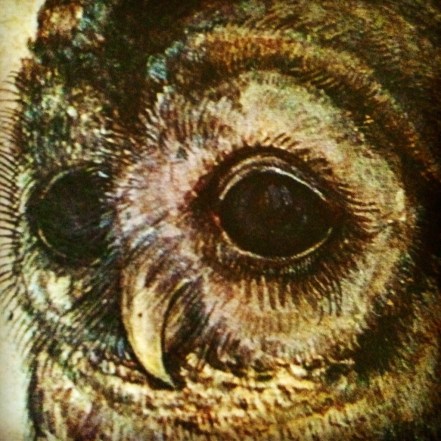
The Wonder Ring — Stan Brakhage

Brown and Gold — James McNeill Whistler

Robert Downey Sr. and PT Anderson Talk About Putney Swope

Fir Forest I — Gustav Klimt

https://i0.wp.com/uploads4.wikipaintings.org/images/gustav-klimt/fir-forest-i.jpg

“Stone Is Not Stone” — Carson McCullers

“Stone Is Not Stone” by Carson McCullers–

There was a time when stone was stone
And a face on the street was a finished face.
Between the Thing, myself and God alone
There was an instant symmetry.
Since you have altered all my world this trinity is twisted:

Stone is not stone
And faces like the fractioned characters in dreams are incomplete
Until in the child’s inchoate face
I recognize your exiled eyes.
The soldier climbs the glaring stair leaving your shadow.
Tonight, this torn room sleeps
Beneath the starlight bent by you.

Camille Monet Reading — Pierre-Auguste Renoir

Nemo — Moebius

Nemo

Marilyn Monroe Explains Relativity to Albert Einstein (A Scene from Nic Roeg’s Film Insignificance)

Reading Chris Ware’s Building Stories / Disconnect

20121206-181909.jpg

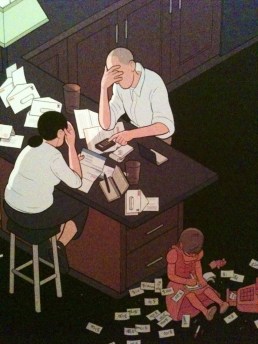
“Disconnect,” one of the longer episodes in Chris Ware’s novel Building Stories, serves as a reminder of Ware’s strength as a prose writer. Wordiness tends to kill illustrated storytelling, at least in my estimation. Sure, there are exceptions—Joe Sacco and Harvey Pekar come to mind—but in general, I think comics are at their best when thought and word bubbles are uncluttered (or nonexistent).  Ware clearly understands the economy of his medium, and some of Building Stories’ finest moments have been wordless ones where Ware constructs the story in pure imagery. We can see so much of the plot and themes of  “Disconnect” in this full page, for instance:
20121206-181944.jpg

But Ware also packs plenty of storytelling into his prose in “Disconnect,” where he continues the story of Lonely Girl, who it’s probably better to now call Married Mom—I still think of her as Lonely Girl though, after first really meeting her in “September 23rd, 2000,” an episode ostensibly narrated by her diary. “Disconnect” is a second diary of sorts, her internal narration guiding us subtly through episodes in her life over a series of years. “Disconnect” focuses on LG/MM raising her young daughter against the backdrop of a strained marriage.

Lonely Girl/Married Mom’s observations ring particularly true. She points out that “When your children aren’t around, you miss them with every fiber of your being—but when they are, you just want to get them to bed so you can go read the news or something,” an observation simultaneously profound, disturbing, and banal. When our heroine recalls how her relationship to her pet cat changed after her child was born, I also saw shades of myself:  “The day we brought Lucy home, almost to the minute, all applied personality to Miss Kitty evaporated, and we saw her for what she was—an animal—and an animal who we were beholden to feed and house, with, suddenly it seemed, little to offer in return.”

Through Lonely Girl/Married Mom, Ware paints a portrait of modern disconnection and alienation, and, even as we sympathize with the heroine, Ware also allows us to see through her—or rather, to see what she can’t see, or to see what she refuses to see. The effect is an irony that tips into small, banal tragedy.

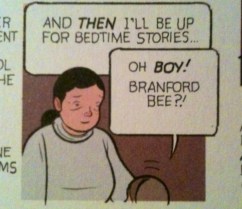
Ware’s prose is usually overshadowed by his gifts as a draftsman, an architect—he’s the builder of Building Stories, a fact that this chapter alludes to, both internally, intertextually, and metatextually. We learn, for example, that Branford the Bee is a story within a story:
20121206-181917.jpg

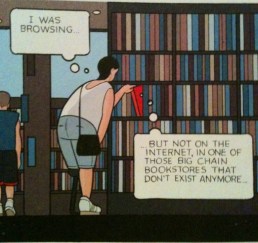
This nesting of stories emerges in the final part of “Disconnect,” wherein our aged narrator—addressing her grown daughter—relates a dream:
20121206-181924.jpg

The scene culminates so beautifully that it brought a little tear to my eye. Most postmodern novels contain (often more than once) their own descriptions, and Building Stories is no exception:
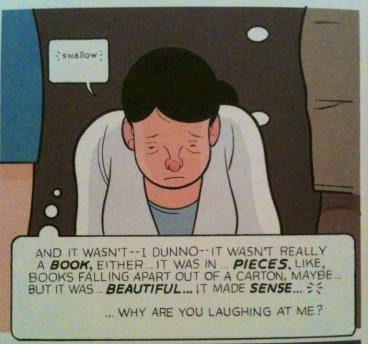
20121206-181934.jpg

And yet what we see here isn’t postmodern cleverness or empty gimmickry, but the evocation of dream and imagination and desire and creation—the spirit of the book, of what it means to build stories. Reading the final panels of “Disconnect,” I immediately recalled the epigraph to Building Stories (it’s on the interior of the box lid, by the colophon and dedication):

20121206-181951.jpg


And the Children Shall Inherit the Earth — Chris Buzzelli

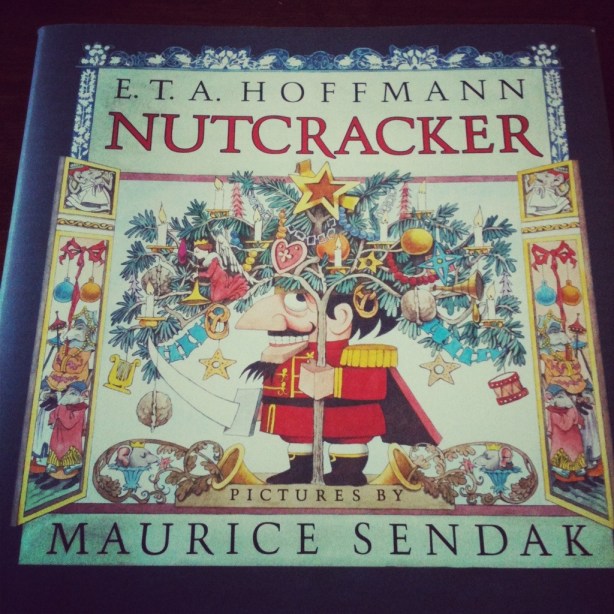
Win a Copy of Maurice Sendak’s Nutcracker

20121118-123043.jpg

The good people at Random House are giving away a copy of ETA Hoffman’s Nutcracker illustrated by Maurice Sendak to one lucky Biblioklept reader. The book is beautiful, so you’ll have to work for it. The first person to answer all of the following questions correctly will be sent a copy of the book (sorry, US addresses only). Email answers and your mailing address to biblioklept.ed[at]gmail[dot]com.

Okay, folks, we got a winner. Congrats to Mihaela Geaman who was the first to send in a set of correct answers. Answers below:

1. Which Sendak book most often appears on the ALA’s 100 Most Frequently Challenged Books list?

2. Which two American Renaissance era writers did Sendak frequently cite as favorites?

3. What English artist did Sendak “borrow” images from for his collaboration with Robert Graves?

4. What fictional character did Sendak consider his “twin”?

5. What tragic news story inspired elements of Sendak’s book Outside Over There?

ANSWERS

1. In the Night Kitchen

2. Emily Dickinson & Herman Melville

3. Beatrix Potter

4. Mickey Mouse

5. The Lindbergh baby kidnapping

“Meditatio” — Ezra Pound

“Meditatio,” Ezra Pound

When I carefully consider the curious habits of dogs
I am compelled to conclude
That man is the superior animal.

When I consider the curious habits of man
I confess, my friend, I am puzzled.

Still Life — MC Escher

https://i0.wp.com/uploads0.wikipaintings.org/images/m-c-escher/still-life.jpg

Fowl in a Damson Tree — Charles Tunnicliffe

https://i0.wp.com/uploads5.wikipaintings.org/images/charles-tunnicliffe/fowl-in-a-damson-tree%281%29.jpg

“Somebody Wants To Love You” — Redd Kross (Live in 1982)

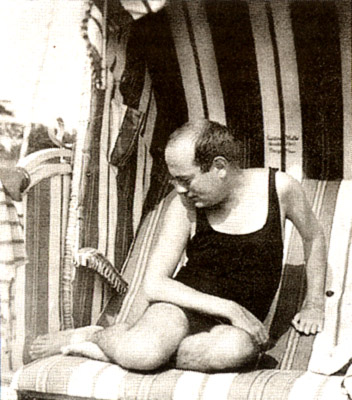
Theodor Adorno Shows Off His Sexy Legs

Three Beautiful Books For Children (and Adults)

As the season for giving arrives, Biblioklept reviews three beautiful books that children and adults alike will enjoy.

20121118-123043.jpg

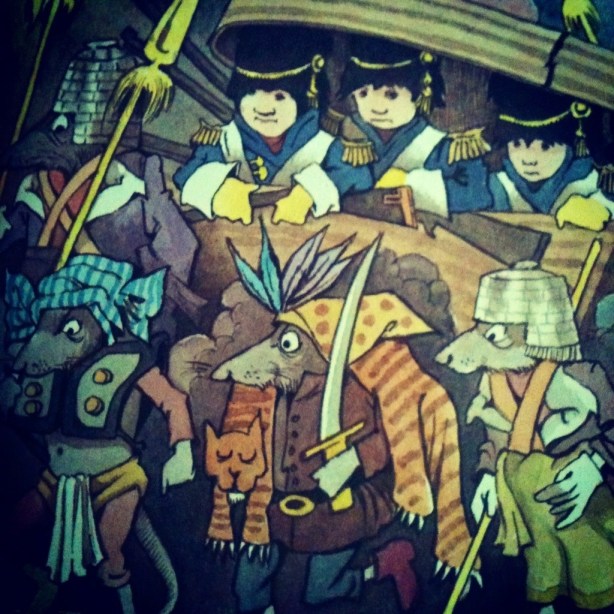
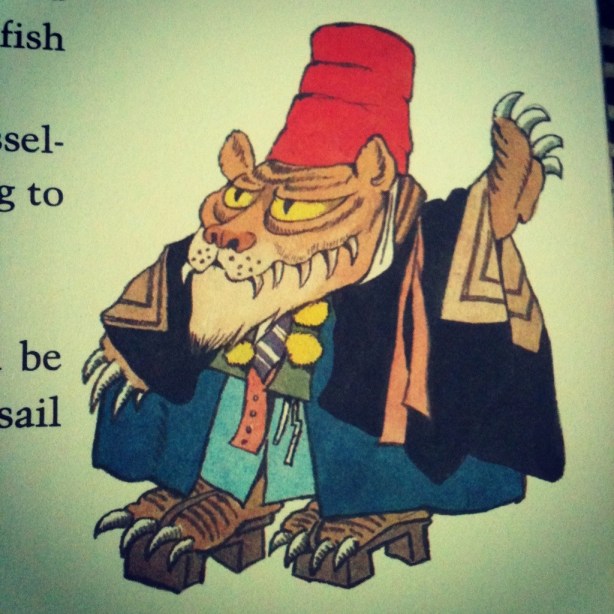
First up is E.T.A. Hoffman’s 1816 Christmas classic Nutcracker in translation by Ralph Manheim and beautifully illustrated by the late Maurice Sendak. In 1983, Sendak designed sets and costumes for the Pacific Northwest Ballet’s adaptation of Nutcracker and in 1984 he translated some of those designs into a book edition.

20121118-123123.jpg

According to a 2001 profile with NPR, Sendak was initially unsure about working on what he considered “the most bland and banal of ballets.” However, upon reading Hoffman’s original text, Sendak discovered a work full of “weird, dark qualities that make it something of a masterpiece,” an observation he notes in his introduction to Nutcracker.

The NPR profile notes that Sendak intended to bring “Hoffmann’s original story back to audiences, especially by having the main character, a girl named Clara, brought back into the story.” Sendak believed

The whole ballet is about her and for the most part you get her in act one, and then she discreetly disappears for the rest of the work. My feeling is this has to be disturbing to children. . . . [She goes] where the wild things are . . . She is overwhelmed with growing up and has no knowledge of what this means. I think the ballet is all about a strong emotional sense of something happening to her, which is bewildering.

20121118-123102.jpg

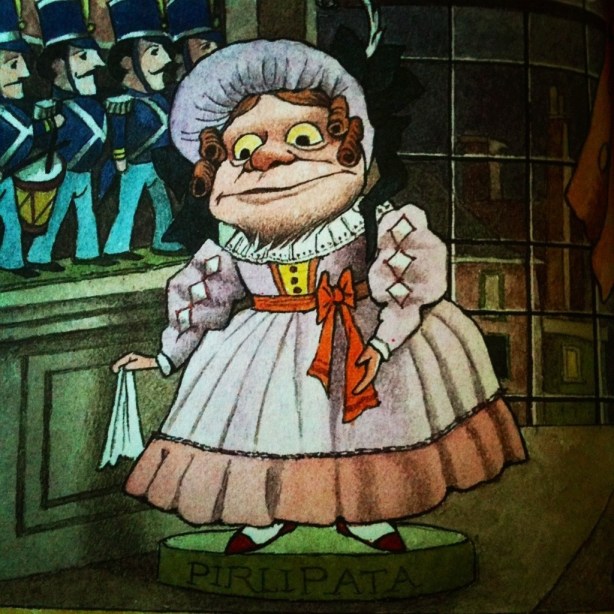
These “strange, weird” qualities—the same tones that made Sendak’s Where the Wild Things Are a classic of children’s literature—are on display in Nutcracker. Hoffman’s text in Manheim’s translation has a wonderfully episodic, even picaresque quality that restores a sense of adventure—and even peril—to the smooth play we might be familiar with sitting through each December.

Nutcracker’s reading level, length, and tone make it likely appropriate for children over eight or nine, but younger children will enjoy reading the story through Sendak’s marvelous and strange illustrations.

Nutcracker is available in a new hardback edition from Random House.

20121118-123054.jpg

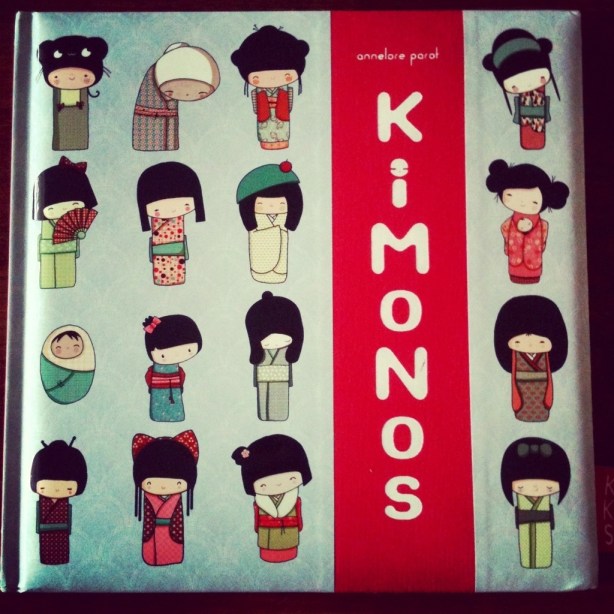
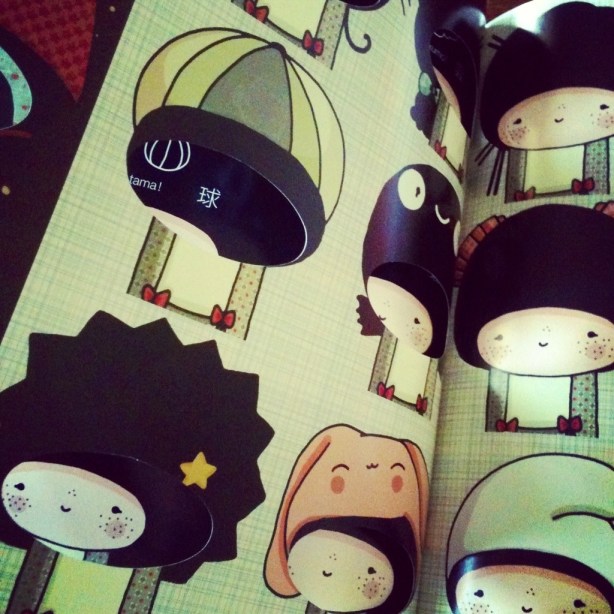
Next up is Annelore Parot’s Kokeshi Kimonos from Chronicle Books.

20121205-150255.jpg

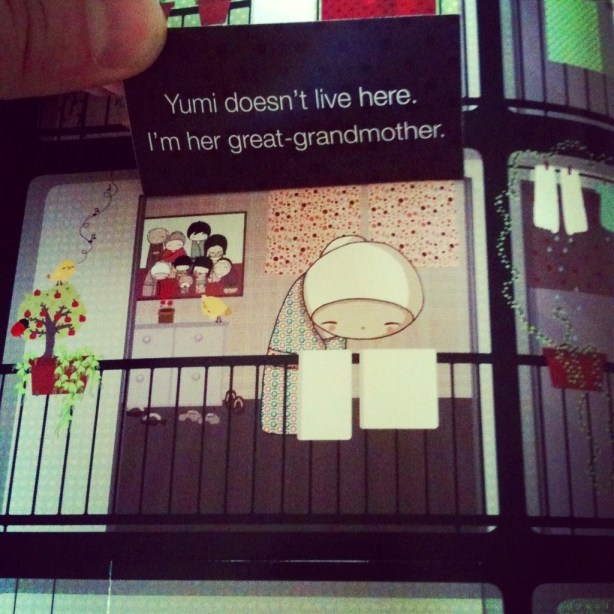
Koskeshi Kimonos is a fun and stylish book that uses kokeshi dolls to showcase facets of Japanese culture including attire and family life. The book features folding flaps, pull out sections, and other interactive features that will appeal to younger children. It’s the sort of aesthetically charming book that adults can enjoy as well.

20121205-150303.jpg

Kokeshi Kimonos will likely appeal to younger readers—five to nine—and seems particularly suited to girls (although this doesn’t mean boys wouldn’t enjoy it, of course). The cute kokeshis are a wonderful alternative to the sterile, plastic world of Barbie and other facile dolls.

20121205-150310.jpg

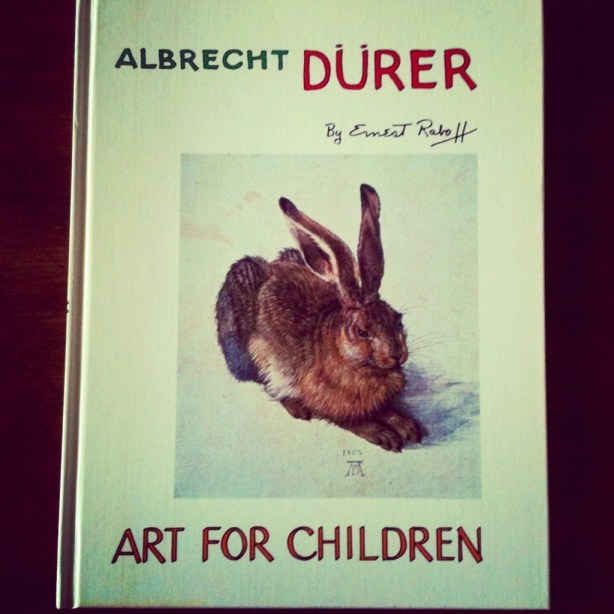
Finally, Ernest Raboff’s Albrecht Dürer, part of his Art for Children series. The book is out of print but not impossible to find.

20121205-150318.jpg

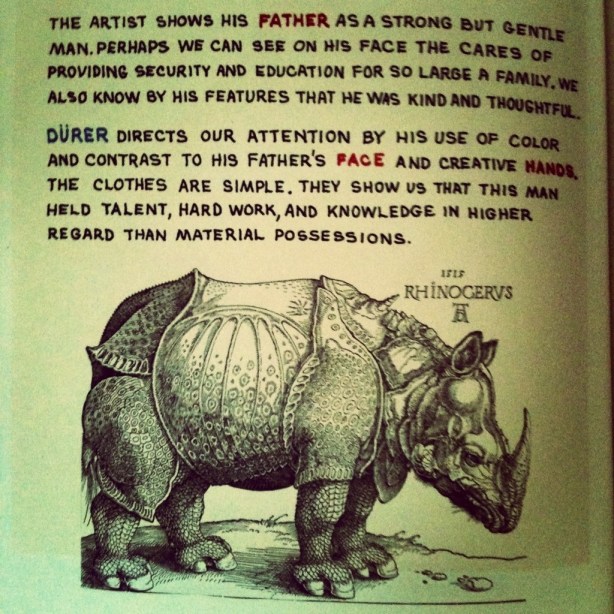
Raboff presents Dürer’s life simply and in clear context, using about a dozen beautiful  prints from the German master, as well as many of his etchings. Raboff also hand letters the book, and provides his own sketches and illustrations occasionally to clarify and explain Dürer’s work.

20121205-150327.jpg

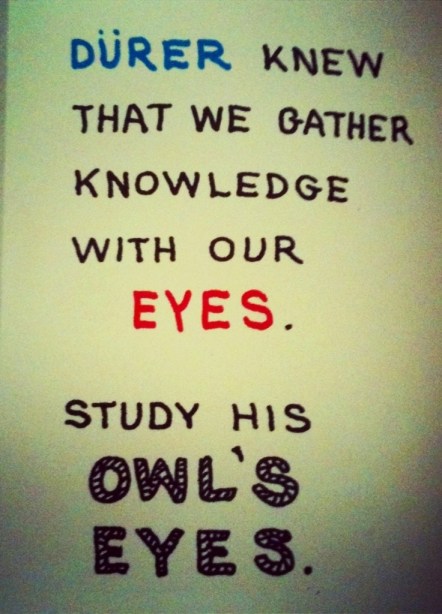
What I love most about Raboff’s book though is the way he integrates elements of art appreciation into his book in subtle, simple ways. Lovely:

20121205-150335.jpg

20121205-150343.jpg