Maurice Sendak’s Erotic Illustrations for Herman Melville’s Pierre (Book Acquired, 5.09.2014)

20140520-162625-59185259.jpg

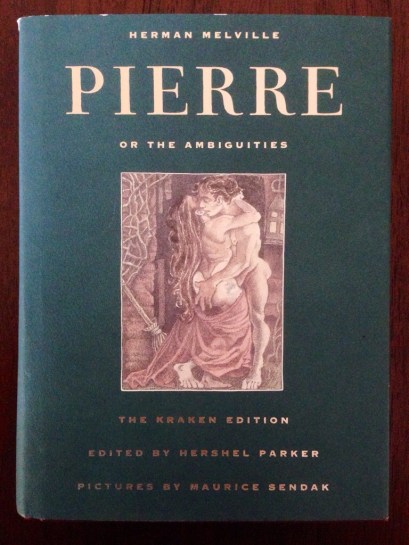
Pierre, Herman Melville’s follow up to Moby-Dick, was, without a doubt, the most challenging, perplexing, befuddling book I read in school. I still don’t get it.

Still, I love Melville, and I love Maurice Sendak, so when I saw this unused copy of the Kraken addition for half-cover price at my favorite local used bookshop, I couldn’t resist.

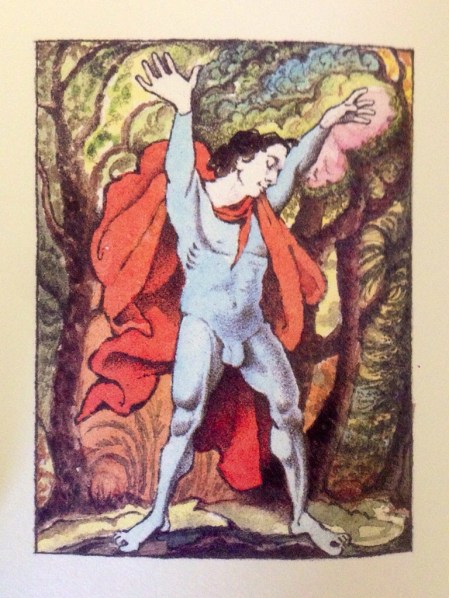
Sendak’s bawdy illustrations recall William Blake to me—great stuff—although I’ll probably read Moby-Dick or The Confidence Man again before I make time for Pierre.

Read more about this edition of Pierre here.

20140520-162627-59187043.jpg

20140520-162630-59190560.jpg Continue reading “Maurice Sendak’s Erotic Illustrations for Herman Melville’s Pierre (Book Acquired, 5.09.2014)”

Bittersweet Reminiscences of The Life Aquatic

Aeneas and the Sibyl in the Underworld — Jan Brueghel the Elder

“Retaliation” — The Marquis de Sade

“Retaliation”

by

The Marquis de Sade

A worthy citizen of Picardy, the descendant perhaps of one of those illustrious troubadours from the banks of the Oise or the Somme whose sluggish existence has only been rescued from the shadows some ten or twelve years ago by a great writer of our time, a brave and honest citizen, I repeat, lived in the town of Saint-Quentin so famous for the great men it has given to literature. He lived there in honorable estate, himself, his wife and a cousin thrice removed, a nun of a convent in the town. The cousin thrice removed was a little brunette, bright-eyed, with a mischievous little face, a turned-up nose and a slender figure; she suffered under the weight of twenty-two years, and had been a nun for four of them. Sister Petronilla, for such was her name, had in addition a pretty voice and a much greater disposition for love than for religion. As for M. d’Esclaponville, as our citizen was called, he was a fine jovial fellow of about twenty-eight, who loved his cousin supremely and Mme d’Esclaponville nothing like so well, since he had been sleeping with her for ten years already, and a habit of ten years’ standing is quite fatal to the fires of hymen. Mme d’Esclaponville — for it is necessary to depict her, a writer would be despised if he did not portray people in an age where only pictures are required, and where even a tragedy would not be received unless the canvas-mongers found at least half a dozen subjects in it — Mme d’Esclaponville, as I was saying, was a somewhat insipid blonde, slightly washed-out, but very white-skinned, with pretty eyes, well-fleshed, and with those great chubby checks that are commonly described by the world as “a good squeeze.” Continue reading ““Retaliation” — The Marquis de Sade”

The Library — Jacob Lawrence

The Encounter on 2 bis rue Perre — Victor Brauner

“Trapped by a Thing Called Love” | Dance Scene, Only Lovers Left Alive

The horrible secret of adulthood (Life in Hell)

horrible

Curation and Creation in Only Lovers Left Alive, Jim Jarmusch’s Vampire Film

20140520-082414-30254444.jpg

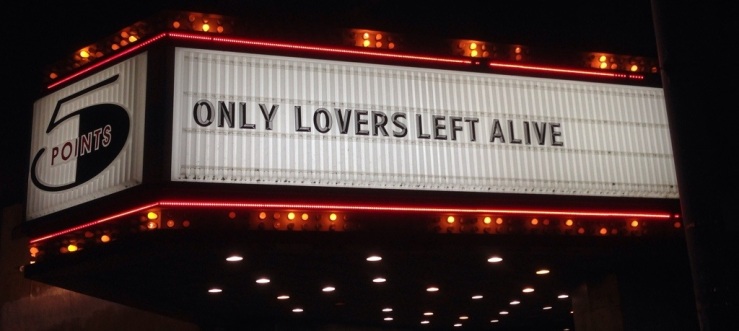
Jim Jarmusch’s latest film Only Lovers Left Alive is excellent. 

Moody, sometimes funny, always gorgeous, and largely plotless, the film centers on two vampires—Adam and Eve, played by Tom Hiddleston and Tilda Swinton—who fill their long lives with music, literature, and love. At its core, the film is an elegiac love song to aesthetic originary creation in the age of the curator.

As Mike D’Angelo points out in his smart review

What really interests Jarmusch is immortality, or at least longevity. How would we behave if we lived for centuries, and were free to do pretty much anything we wanted? What sort of aesthetes and collectors might we become? … In this world, the vampire’s primary function is to appreciate the things we humans take for granted; they’re much more like curators than monsters.


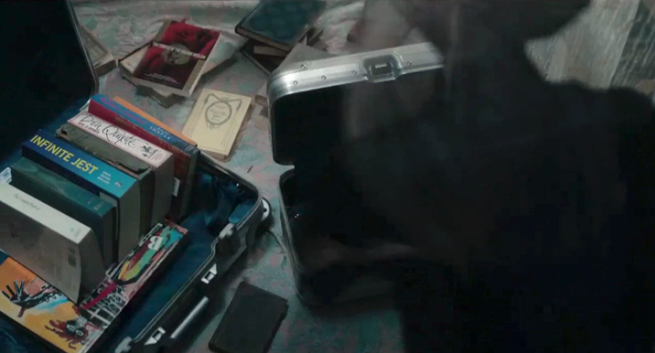
Eve’s curatorial powers are enviable—she merely has to touch an object to know its age (and quality). She touches Adam’s beloved Gibson guitar, declaring “1905.” As she packs her suitcase full of books (Don QuixoteInfinite Jest, and Kafka all make the cut), she scrolls her fingers through pages briskly but lovingly, seeming to absorb each one instantly.
book5

Adam’s curatorial impulses manifest in his collection of antique musical and electronic equipment, his claustrophobic crumbling mansion a mad scientist’s lab of sight and sound. Adam creates plodding dirges, death songs, elegies for the end of romance. Reclusive cult hero, he hides in the outskirts of Detroit from his growing fanbase who demand to know who made this music. Like Wyatt, the masterful forger of William Gaddis’s novel The Recognitions, Adam wonders what people want from the person that they couldn’t get from the work of art. Still, as he mournfully complains to Eve, Adam wants a reflection, something to echo back to him. His fans—the “zombies”—are not enough.

adam

Eve’s library and Adam’s studio allow Jarmusch to perform his own curatorial impulses. On one wall in a room of Adam’s mansion hang the portraits of dozens of writers and musicians, including Blake, Poe, Twain, and Christopher Marlowe. Marlowe it turns out is a vampire—and the real author of Shakespeare to boot. 

It might be tempting to accuse Jarmusch of merely providing fan service for hipsters, but there’s more going on here than simple name-checking. Adam’s wall isn’t simply a shrine for hero-worship. Instead, it feels like a gallery of family portraits. 

Some viewers may find Adam and Eve’s aesthetic obsessions insufferable. As if in anticipation of this criticism—and as a sort of counter argument—Jarmusch plants an internal critique of his lovers in the film in the form of Eve’s kid sis Ava, an impulsive, strangely immature, and ultimately tacky vampire. In her acrimonious parting with Adam and Eve, Ava curses the pair as “condescending snobs.” She is, of course, absolutely correct.only-lovers-left-alive02
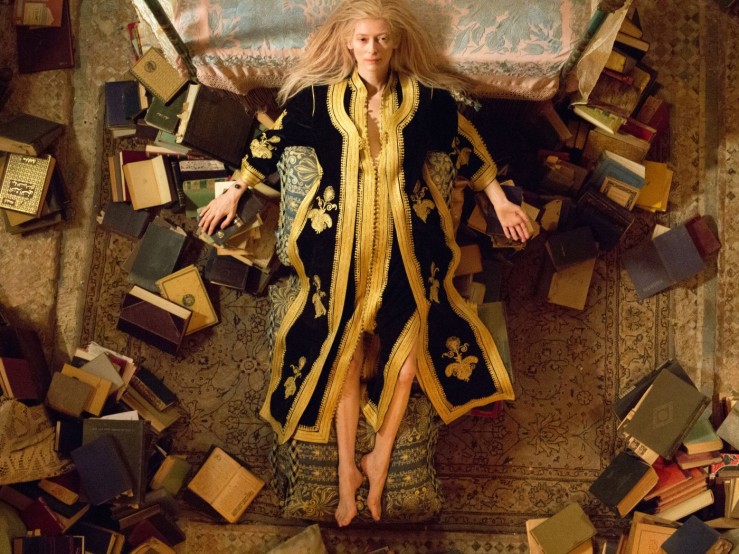
Adam and Eve are snobs, but perhaps living through eons will do that to a body, so what should we expect? Adam, black-haired, always dressed in black, veers along a desperate, suicidal spectrum, writing dirges for the end of the world. Eve, golden-haired, clothed in white, must constantly remind Adam of eternal recurrence, a motif figured in Jarmusch’s repeated shots of spinning 45rpm records. Adam mourns the death of Detroit, but Eve tells him that it will bloom again when the “cities of the South are burning.”

Only Lovers Left Alive is peppered with these notes of apocalypse, but Eve tempers them with a kind of weary optimism: She and her lover will survive, and they will preserve what is worth preserving, worth loving. Not only will they curate, they will also create. As the film rushes to its ending in Tangier (my biggest criticism is that we could use another half hour)—oh, and that word “ending”: yeah, look out, fair warning, some spoilers ahead—as the film rushes to its ending, Adam and Eve experience intense blood withdrawal.  Continue reading “Curation and Creation in Only Lovers Left Alive, Jim Jarmusch’s Vampire Film”

Scrubwoman, Astor Library — John French Sloan

“As books multiply to an unmanageable excess, selection becomes more and more a necessity for readers” (Thomas De Quincey)

As books multiply to an unmanageable excess, selection becomes more and more a necessity for readers, and the power of selection more and more a desperate problem for the busy part of readers. The possibility of selecting wisely is becoming continually more hopeless as the necessity for selection is becoming continually more pressing. Exactly as the growing weight of books overlays and stifles the power of comparison, pari passu is the call for comparison the more clamorous; and thus arises a duty correspondingly more urgent of searching and revising until everything spurious has been weeded out from amongst the Flora of our highest literature, and until the waste of time for those who have so little at their command is reduced to a minimum. For, where the good cannot be read in its twentieth part, the more requisite it is that no part of the bad should steal an hour of the available time; and it is not to be endured that people without a minute to spare should be obliged first of all to read a book before they can ascertain whether in fact it is worth reading. The public cannot read by proxy as regards the good which it is to appropriate, but it can as regards the poison which it is to escape. And thus, as literature expands, becoming continually more of a household necessity, the duty resting upon critics (who are the vicarious readers for the public) becomes continually more urgent — of reviewing all works that may be supposed to have benefited too much or too indiscriminately by the superstition of a name. The praegustatores should have tasted of every cup, and reported its quality, before the public call for it; and, above all, they should have done this in all cases of the higher literature — that is, of literature properly so called.

From Thomas De Quincey’s essay “The Literature of Knowlege and the Literature of Power,” part of The Poetry of Pope.

He’s puffing like a grampus. / I don’t like talking in a vacuum.

20140519-133341-48821616.jpg

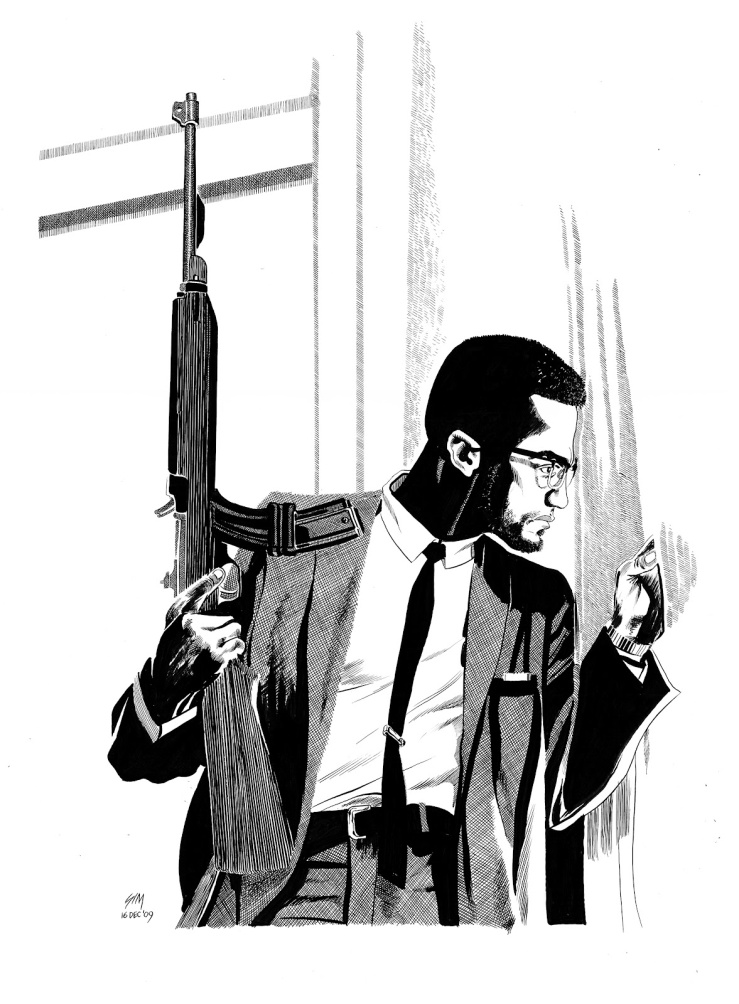
Malcolm X — Dave Sim

sim_malcolm_x

“The Voyage” — Katherine Mansfield

“The Voyage”

by

Katherine Mansfield

The Picton boat was due to leave at half-past eleven. It was a beautiful night, mild, starry, only when they got out of the cab and started to walk down the Old Wharf that jutted out into the harbour, a faint wind blowing off the water ruffled under Fenella’s hat, and she put up her hand to keep it on. It was dark on the Old Wharf, very dark; the wool sheds, the cattle trucks, the cranes standing up so high, the little squat railway engine, all seemed carved out of solid darkness. Here and there on a rounded wood-pile, that was like the stalk of a huge black mushroom, there hung a lantern, but it seemed afraid to unfurl its timid, quivering light in all that blackness; it burned softly, as if for itself.

Fenella’s father pushed on with quick, nervous strides. Beside him her grandma bustled along in her crackling black ulster; they went so fast that she had now and again to give an undignified little skip to keep up with them. As well as her luggage strapped into a neat sausage, Fenella carried clasped to her her grandma’s umbrella, and the handle, which was a swan’s head, kept giving her shoulder a sharp little peck as if it too wanted her to hurry… Men, their caps pulled down, their collars turned up, swung by; a few women all muffled scurried along; and one tiny boy, only his little black arms and legs showing out of a white woolly shawl, was jerked along angrily between his father and mother; he looked like a baby fly that had fallen into the cream.

Then suddenly, so suddenly that Fenella and her grandma both leapt, there sounded from behind the largest wool shed, that had a trail of smoke hanging over it, “Mia-oo-oo-O-O!” Continue reading ““The Voyage” — Katherine Mansfield”

RIP Gordon Willis

hero719_willis1

RIP Gordon Willis, 1931-2014

Swallows — Edouard Manet