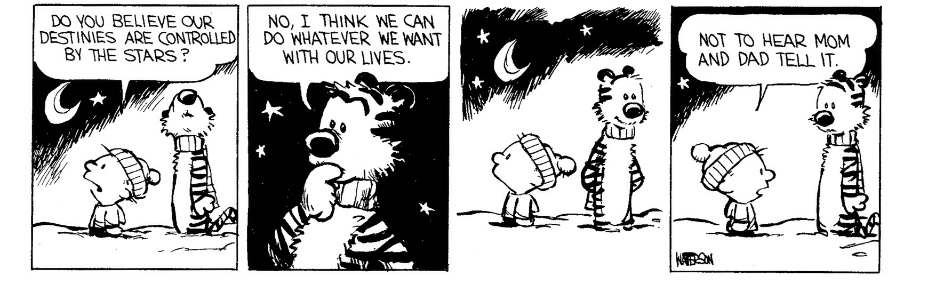
Destinies (Calvin and Hobbes)

IMG_0135

I review my review of Thomas Pynchon’s novel Inherent Vice an hour before seeing PTA’s film adaptation

I’m leaving to (finally) see Paul Thomas Anderson’s film Inherent Vice in a few minutes.

I’m going with my uncle. (I also saw No Country for Old Men with him in the theater. This point seems hardly worth these parentheses).

Below, in block quotes, is my review of Thomas Pynchon’s Inherent Vice (which I published here—the review obviously—in 2009). My 2015 comments are interposed.
inherent_vice

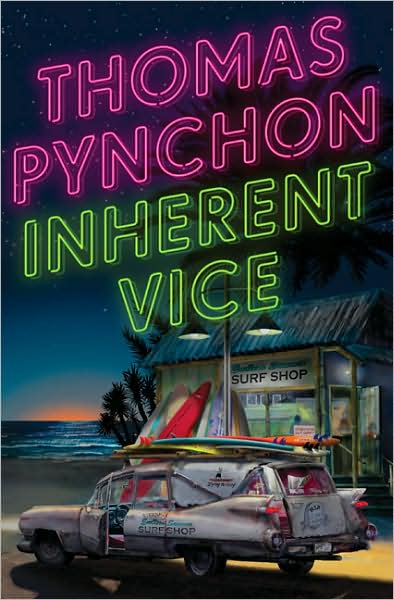
Thomas Pynchon’s latest novel, Inherent Vice

Oh god I used to bold face key terms jesus christ sorry.

is a detective-fiction genre exercise/parody set in a cartoonish, madcap circa-1970 L.A. redolent with marijuana smoke, patchouli, and paranoia.

“genre exercise”…”madcap”…ugh!

Navigating this druggy haze is private detective Doc Sportello, who, at the behest of his ex-girlfriend, searches for a missing billionaire in a plot tangled up with surfers, junkies, rock bands, New Age cults, the FBI, and a mysterious syndicate known as the Golden Fang–and that’s not even half of it.

Not a bad little summary, bro.

At a mere 369 pages, Inherent Vice is considerably shorter than Pynchon’s last novel Against the Day, not to mention his masterpieces Gravity’s Rainbow and Mason & Dixon, and while it might not weigh in with those novels, it does bear plenty of the same Pynchonian trademarks: a strong picaresque bent, a mix of high and low culture, plenty of pop culture references, random sex, scat jokes, characters with silly names (too many to keep track of, of course), original songs, paranoia, paranoia, paranoia, and a central irreverence that borders on disregard for the reader.

Uh…

And like Pynchon’s other works, Inherent Vice is a parody, a take on detective noir, but also a lovely little rip on the sort of novels that populate beaches and airport bookstores all over the world. It’s also a send-up of L.A. stories and drug novels, and really a hate/love letter to the “psychedelic 60s” (to use Sportello’s term), with much in common with Pynchon’s own Vineland (although comparisons to Elmore Leonard, Raymond Chandler, The Big Lebowski and even Chinatown wouldn’t be out of place either).

When I heard the PTA was adapting Inherent Vice, I thought: Wait, the Coens already did that before Pynchon wrote the book.

While most of Inherent Vice reverberates with zany goofiness and cheap thrills,

Clichés, bro.

Pynchon also uses the novel as a kind of cultural critique, proposing that modern America begins at the end of the sixties (the specter of the Manson family, the ultimate outsiders, haunts the book). The irony, of course–and undoubtedly it is purposeful irony–is that Pynchon has made similar arguments before: Gravity’s Rainbow locates the end of WWII as the beginning of modern America; the misadventures of the eponymous heroes of Mason & Dixon foreground an emerging American mythology; V. situates American place against the rise of a globally interdependent world.

Uh…

If Inherent Vice works in an idiom of nostalgia, it also works to undermine and puncture that nostalgia. Feeling a little melancholy, Doc remarks on the paradox underlying the sixties that “you lived in a climate of unquestioning hippie belief, pretending to trust everybody while always expecting be sold out.” In one of the novel’s most salient passages–one that has nothing to do with the plot, of course–Doc watches a music store where “in every window . . . appeared a hippie freak or a small party of hippie freaks, each listening on headphones to a different rock ‘n’ roll album and moving around at a different rhythm.” Doc’s reaction to this scene is remarkably prescient:

. . . Doc was used to outdoor concerts where thousands of people congregated to listen to music for free, and where it all got sort of blended together into a single public self, because everybody was having the same experience. But here, each person was listening in solitude, confinement and mutual silence, and some of them later at the register would actually be spending money to hear rock ‘n’ roll. It seemed to Doc like some strange kind of dues or payback. More and more lately he’d been brooding about this great collective dream that everybody was being encouraged to stay tripping around in. Only now and then would you get an unplanned glimpse at the other side.

Oh cool you finally quoted from the book. Not a bad little riff.

If Doc’s tone is elegiac, the novel’s discourse works to undercut it, highlighting not so much the “great collective dream” of “a single public self,” but rather pointing out that not only was such a dream inherently false, an inherent vice, but also that this illusion came at a great price–one that people are perhaps paying even today. Doc’s take on the emerging postmodern culture is ironized elsewhere in one of the book’s more interesting subplots involving the earliest version of the internet. When Doc’s tech-savvy former mentor hips him to some info from ARPANET – “I swear it’s like acid,” he claims – Doc responds dubiously that “they outlawed acid as soon as they found out it was a channel to somethin they didn’t want us to see? Why should information be any different?” Doc’s paranoia (and if you smoked a hundred joints a day, you’d be paranoid too) might be a survival trait, but it also sometimes leads to this kind of shortsightedness.

Will PTA’s film convey the ironies I found here? Or were the ironies even there?

Intrinsic ironies aside, Inherent Vice can be read straightforward as a (not-so-straightforward) detective novel, living up to the promise of its cheesy cover. Honoring the genre, Pynchon writes more economically than ever, and injects plenty of action to keep up the pace in his narrative. It’s a page-turner, whatever that means, and while it’s not exactly Pynchon-lite, it’s hardly a heavy-hitter, nor does it aspire to be.

I’m not sure if I believe any of that, bro. Did I believe it even when I wrote it? It’s a shaggy dog story, and shaggy dogs unravel, or tangle, rather—they don’t weave into a big clear picture. And maybe it is a heavy hitter. (Heavy one-hitter).

At the same time, Pynchon fans are going to find plenty to dissect in this parody, and should not be disappointed with IV‘s more limited scope (don’t worry, there’s no restraint here folks–and who are we kidding, Pynchon is more or less critic-proof at this point in his career, isn’t he?). Inherent Vice is good dirty fun, a book that can be appreciated on any of several different levels, depending on “where you’re at,” as the hippies in the book like to say. Recommended.

Oh geez.

Okay, I should write more but my uncle says it’s time to roll.

John the Evangelist — Carlo Crivelli

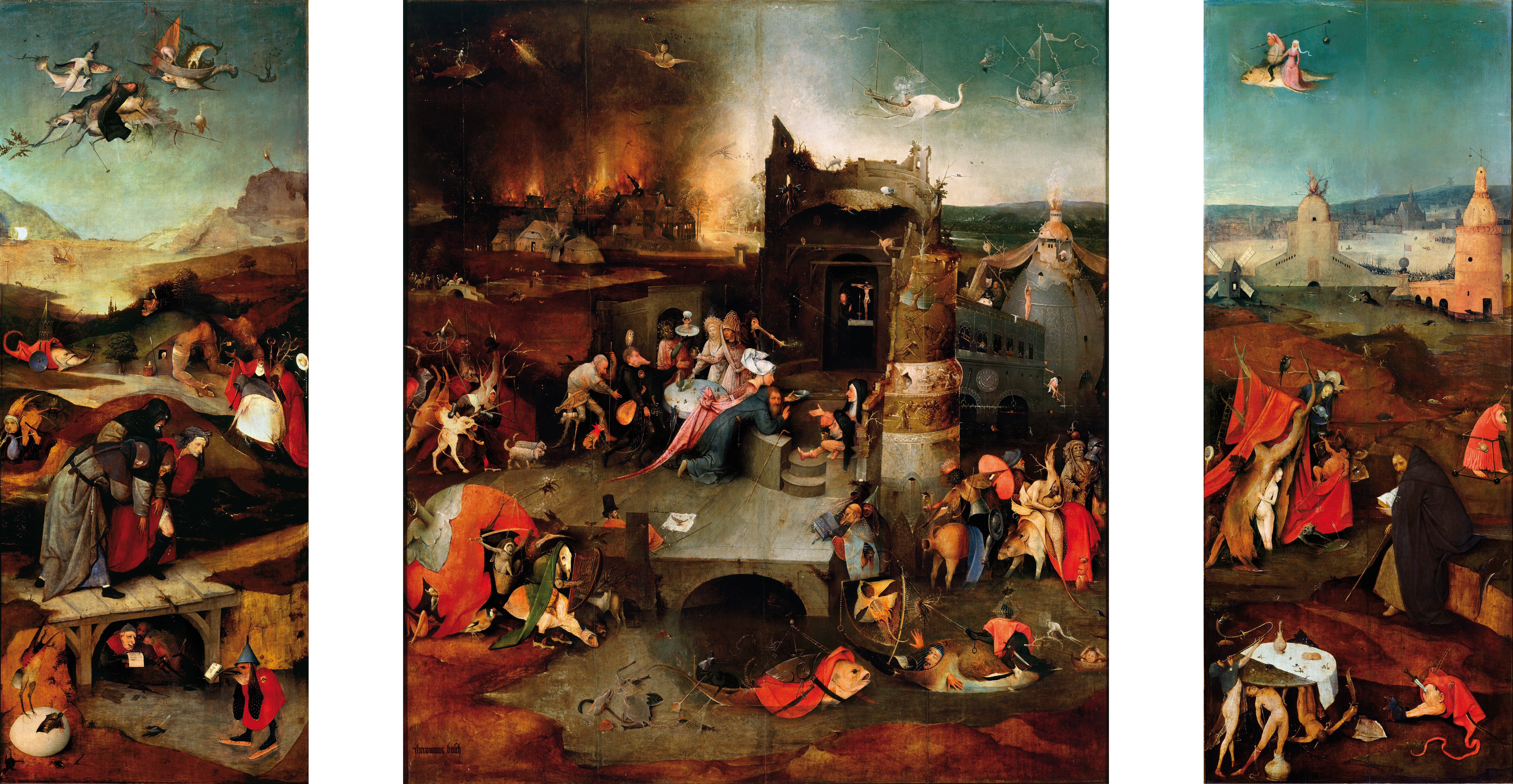
The Temptation of St. Anthony (Detail) — Hieronymus Bosch

19

“Civilization” — Tom Clark

a

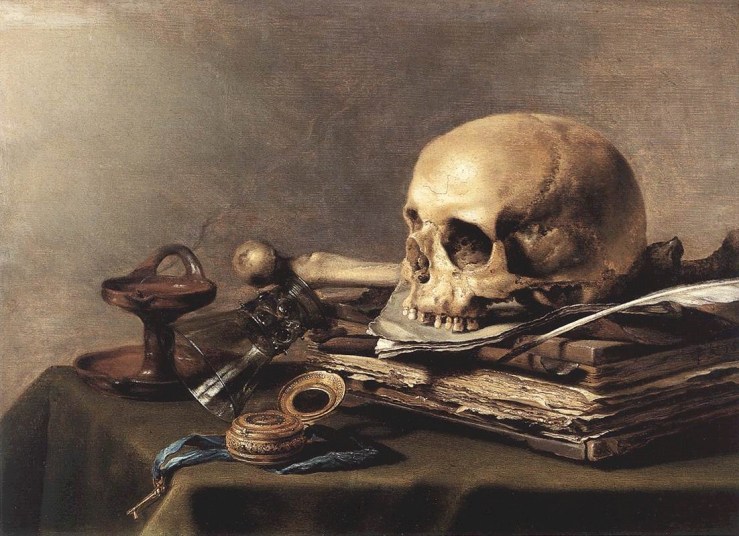
Vanitas — Pieter Claesz

tumblr_ltm1vlfhl01r5569zo1_1280

Read “The Storm,” a short story by Kate Chopin

“The Storm”

by

Kate Chopin

I

The leaves were so still that even Bibi thought it was going to rain. Bobint, who was accustomed to converse on terms of perfect equality with his little son, called the child’s attention to certain sombre clouds that were rolling with sinister intention from the west, accompanied by a sullen, threatening roar. They were at Friedheimer’s store and decided to remain there till the storm had passed. They sat within the door on two empty kegs. Bibi was four years old and looked very wise.

“Mama’ll be ‘fraid, yes, he suggested with blinking eyes.

“She’ll shut the house. Maybe she got Sylvie helpin’ her this evenin’,” Bobint responded reassuringly.

“No; she ent got Sylvie. Sylvie was helpin’ her yistiday,’ piped Bibi.

Bobint arose and going across to the counter purchased a can of shrimps, of which Calixta was very fond. Then he retumed to his perch on the keg and sat stolidly holding the can of shrimps while the storm burst. It shook the wooden store and seemed to be ripping great furrows in the distant field. Bibi laid his little hand on his father’s knee and was not afraid.

II

Calixta, at home, felt no uneasiness for their safety. She sat at a side window sewing furiously on a sewing machine. She was greatly occupied and did not notice the approaching storm. But she felt very warm and often stopped to mop her face on which the perspiration gathered in beads. She unfastened her white sacque at the throat. It began to grow dark, and suddenly realizing the situation she got up hurriedly and went about closing windows and doors.

Out on the small front gallery she had hung Bobint’s Sunday clothes to dry and she hastened out to gather them before the rain fell. As she stepped outside, Alce Laballire rode in at the gate. She had not seen him very often since her marriage, and never alone. She stood there with Bobint’s coat in her hands, and the big rain drops began to fall. Alce rode his horse under the shelter of a side projection where the chickens had huddled and there were plows and a harrow piled up in the corner.

“May I come and wait on your gallery till the storm is over, Calixta?” he asked.

Come ‘long in, M’sieur Alce.”

His voice and her own startled her as if from a trance, and she seized Bobint’s vest. Alce, mounting to the porch, grabbed the trousers and snatched Bibi’s braided jacket that was about to be carried away by a sudden gust of wind. He expressed an intention to remain outside, but it was soon apparent that he might as well have been out in the open: the water beat in upon the boards in driving sheets, and he went inside, closing the door after him. It was even necessary to put something beneath the door to keep the water out.

“My! what a rain! It’s good two years sence it rain’ like that,” exclaimed Calixta as she rolled up a piece of bagging and Alce helped her to thrust it beneath the crack.

She was a little fuller of figure than five years before when she married; but she had lost nothing of her vivacity. Her blue eyes still retained their melting quality; and her yellow hair, dishevelled by the wind and rain, kinked more stubbornly than ever about her ears and temples.

The rain beat upon the low, shingled roof with a force and clatter that threatened to break an entrance and deluge them there. They were in the dining room the sitting room the general utility room. Adjoining was her bed room, with Bibi’s couch along side her own. The door stood open, and the room with its white, monumental bed, its closed shutters, looked dim and mysterious.

Alce flung himself into a rocker and Calixta nervously began to gather up from the floor the lengths of a cotton sheet which she had been sewing.

lf this keeps up, Dieu sait if the levees goin’ to stan it!” she exclaimed.

“What have you got to do with the levees?”

“I got enough to do! An’ there’s Bobint with Bibi out in that storm if he only didn’ left Friedheimer’s!”

“Let us hope, Calixta, that Bobint’s got sense enough to come in out of a cyclone.”

She went and stood at the window with a greatly disturbed look on her face. She wiped the frame that was clouded with moisture. It was stiflingly hot. Alce got up and joined her at the window, looking over her shoulder. The rain was coming down in sheets obscuring the view of far-off cabins and enveloping the distant wood in a gray mist. The playing of the lightning was incessant. A bolt struck a tall chinaberry tree at the edge of the field. It filled all visible space with a blinding glare and the crash seemed to invade the very boards they stood upon. Continue reading “Read “The Storm,” a short story by Kate Chopin”

Geological Evolution — Salvador Dali

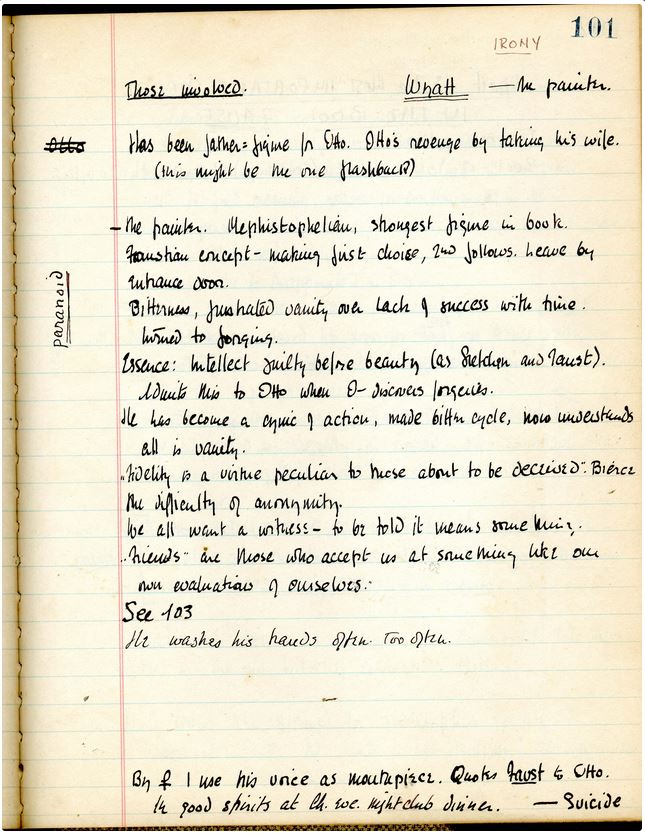
“Those involved. Wyatt — A painter” — William Gaddis’s autograph notes for The Recognitions

irony

More great stuff from Washington University’s Modern Literature Collection.


Judith with the Head of Holofernes — Lucas Cranach the Elder

10550_tumblr_vp_kdu_rto_oo

“I was simply trying to write about people” — Faulkner on the origins of “A Rose for Emily”

William Faulkner: Yes, sir.

Unidentified participant: Sir, it has been argued that “A Rose for Emily” is a criticism of the North, and others have argued saying that it is a criticism of the South. Now, could this story, shall we say, be more properly classified as a criticism of the time?

William Faulkner: Now that I don’t know because I was simply trying to write about people. The writer uses environment—what he knows—and if there’s a symbolism in which the—the lover represented the North and the—and the—the woman who murdered him represents the South, I don’t say that’s not valid and not there, but it was no intention of the writer to—to say, “Now let’s see, I’m going to write a piece in which I will—will use a symbolism for the North and another symbol for the South,” that he was simply writing about people, a story which he thought was—was tragic and true because it—it came out of the—out of the human heart, of human aspiration, the human—the conflict of—of conscience with—with glands, with the Old Adam. It was a conflict not between the North and South so much as between, well, you might say, God and Satan.
Yes, sir.

Unidentified participant: Sir, just a little more on that thing. You say it’s a conflict between God and Satan. Well, I don’t quite understand what—what you mean there. Who is—did one represent the […]?

William Faulkner: The conflict was—was in Miss Emily, that she knew that you do not murder people. She was—she had been trained that—that—that you do not take a lover, you marry. You don’t take a lover. She had broken all the—the—the laws of her tradition, her background, and she had finally broken the law of God, too, which says you do not take human life. And she knew she was doing wrong, and that’s why her—her own life was wrecked. Instead of having murdered one lover, and then to go on and—and take another and when she used him up to murder him, she was expiating her crime.
Yes, ma’am.

Unidentified participant: But can’t a person like Miss Emily, though she did do all the things that she had been taught not to, and being a sensitive sort of a woman, it was sure to have told on her, but do you think it’s fair to feel pity for her because, in a way, she made her adjustment, and it seemed to have wound up in a happy sort of a way—certainly tragic—but maybe it suited her just fine.

William Faulkner: Yes, it may have, but then I don’t think that—that one should withhold pity simply because the—the subject of the pity, object of the pity, is pleased and satisfied. I think the—the pity is in—in the—the human striving against its own nature, against its own conscience. That’s what deserves the pity. It’s not the fate of the individual. It’s man in conflict with his heart or with his fellows or with his environment. That’s—that’s what deserves the pity. It’s not that the man suffered or that he fell off the house or was run over by the train. It’s that he was—that man is trying to do the best he can with his—his desires and impulses, against his—his own moral conscience and the— the conscience of—the social conscience of—of his time and his place, the—the little town he must live in, the family he’s a part of.

Via/audio.

Reading a Book — Felice Casorati

tumblr_msbssc4MqC1rrnekqo1_1280

The Forbidden Spark — Adrian Borda

the_forbidden_spark-1

Falstaff in the Laundry Basket — Henry Fuseli

“A Sweet Tail (Gypsies)” — Gertrude Stein

“A Sweet Tail (Gypsies)”

by

Gertrude Stein

Curves.

Hold in the coat. Hold back ladders and a creation and nearly sudden extra coppery ages with colors and a clean voice gyp hoarse. Hold in that curl with a good man. Hold in cheese. Hold in cheese. Hold in cheese.

A cool brake, a cool brake not a success not a re-sound a re-sound and a little pan with a yell oh yes so yet change, famous, a green a green colored oak, a handsome excursion, a really handsome log, a regulation to exchange oars, a regulation or more press more precise cold pieces, more yet in the teeth within the teeth. This is the sun in. This is the lamb of the lantern with chalk. With chalk a shadow shall be a sneeze in a tooth in a tin tooth, a turned past, a turned little corset, a little tuck in a pink look and with a pin in, a pin in.

Win lake, eat splashes dig salt change benches.

Win lake eat splashes dig salt change benches.

Can in.

Come a little cheese. Come a little cheese and same same tall sun with a little thing to team, team now and a bass a whole some gurgle, little tin, little tin soak, soak why Sunday, supreme measure. Continue reading ““A Sweet Tail (Gypsies)” — Gertrude Stein”

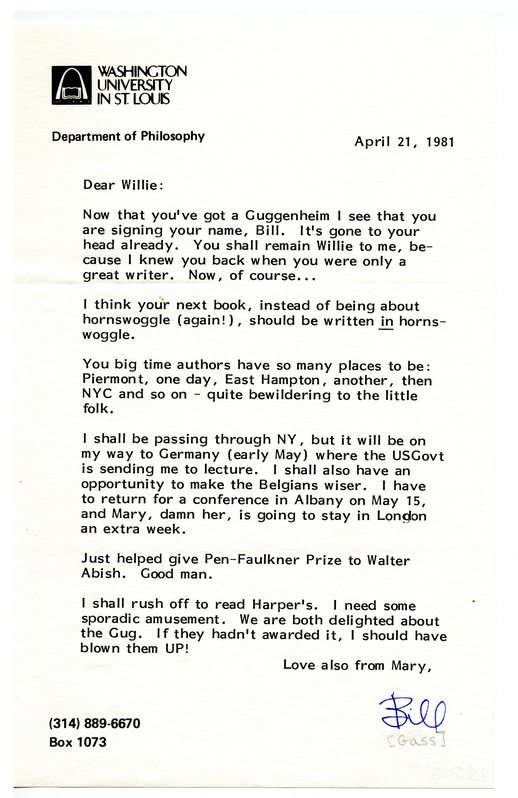
“Dear Willie” — William H. Gass Writes to William Gaddis

dear

From Washington University’s marvelous Modern Literature Collection.


The Cut Long-Term Experiment — Matsui Fuyuko

wo04