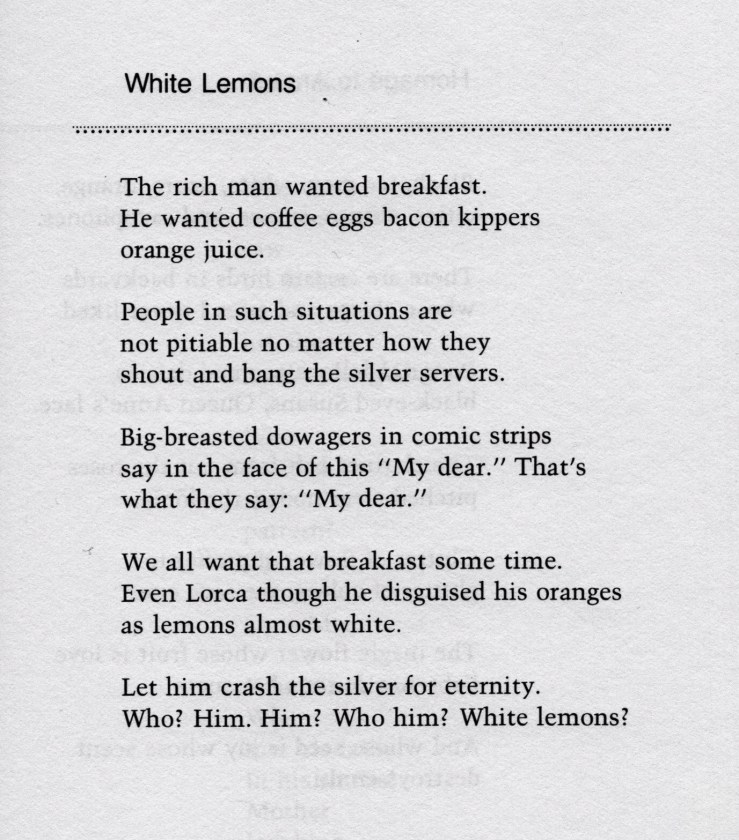
“White Lemons” — Gilbert Sorrentino

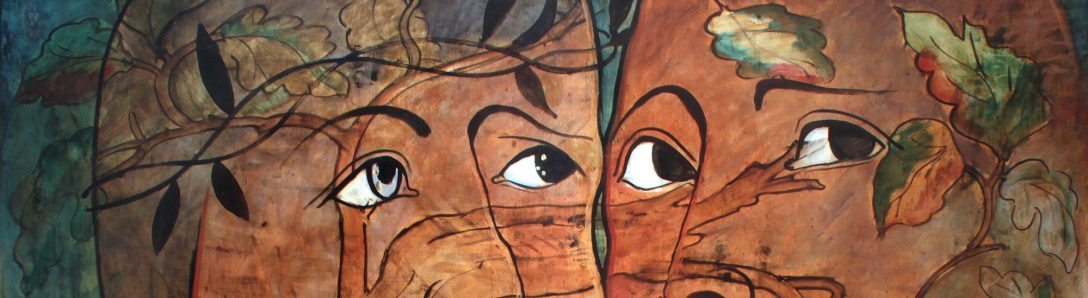
IMG_7210

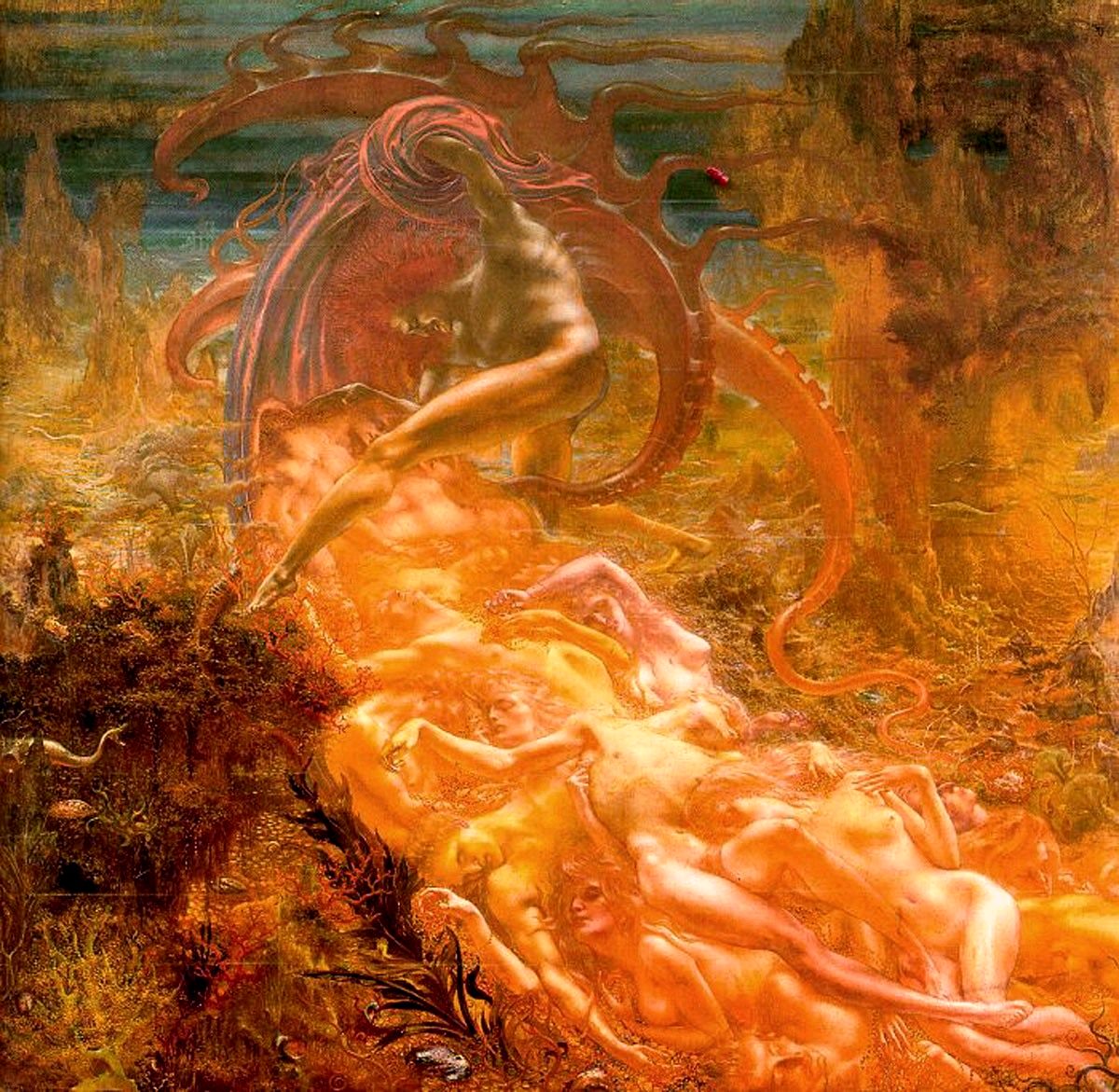
The Treasures of Satan — Jean Delville

tumblr_lpgcfbJH4A1qz4yqio1_1280

How can you tell if somebody’s sad? *Whether (Infinite Jest)

‘How can you tell if somebody’s sad?’A quick smile. ‘You mean whether someone’s sad.’

A smile back, but still earnest: ‘That improves it a lot. Whether someone’s sad, how can you tell so you’re sure?’

Her teeth are not discolored; she gets them cleaned at the dentist all the time for the smoking, a habit she despises. Hal inherited the dental problems from Himself; Himself had horrible dental problems; half his teeth were bridges.

‘You’re not exactly insensitive when it comes to people, Love-o,’ she says.

‘What if you, like, only suspect somebody’s sad. How do you reinforce the suspicion?’

‘Confirm the suspicion?’

‘In your mind.’ Some of the prints in the deep shag he can see are shoes, and some are different, almost like knuckles. His lordotic posture makes him acute and observant about things like carpet-prints.”

“How would I, for my part, confirm a suspicion of sadness in someone, you mean?’

‘Yes. Good. All right.’

‘Well, the person in question may cry, sob, weep, or, in certain cultures, wail, keen, or rend his or her garments.’

Mario nods encouragingly, so the headgear clanks a little. ‘But say in a case where they don’t weep or rend. But you still have a suspicion which they’re sad.’

She uses a hand to rotate the pen in her mouth like a fine cigar. ‘He or she might alternatively sigh, mope, frown, smile halfheartedly, appear downcast, slump, look at the floor more than is appropriate.”

“But what if they don’t?’

‘Well, he or she may act out by seeming distracted, losing enthusiasm for previous interests. The person may present with what appears to be laziness, lethargy, fatigue, sluggishness, a certain passive reluctance to engage you. Torpor.’

‘What else?’

‘They may seem unusually subdued, quiet, literally “low.” 

—From David Foster Wallace’s novel Infinite Jest.

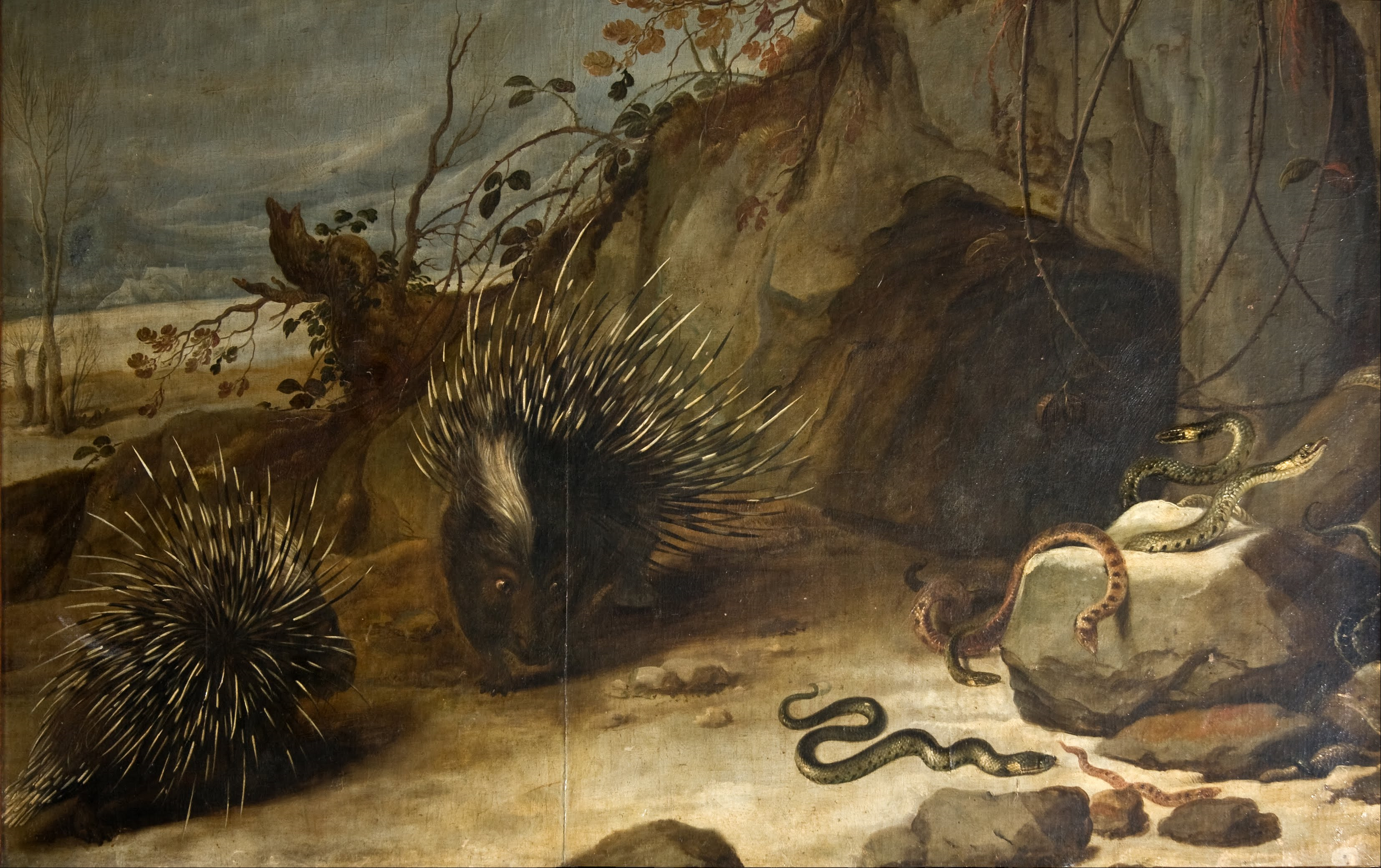
Porcupines and Vipers — Frans Snyders

The aim of the artist (William H. Gass)

The aim of the artist ought to be to bring into the world objects which do not already exist there, and objects which are especially worthy of love. We meet people, grow to know them slowly, settle on some to companion our life. Do we value our friends for their social status, because they are burning in the public blaze? do we ask of our mistress her meaning? calculate the usefulness of our husband or wife? Only too often. Works of art are meant to be lived with and loved, and if we try to understand them, we should try to understand them as we try to understand anyone—in order to know them better, not in order to know something else.

–More from William H. Gass’s essay “The Artist and Society” (1968). Collected in Fiction and the Figures of Life.

The Mediterranean Cat — Balthus

Pasolini’s Decameron

Moonsiren — Leonora Carrington

tumblr_llug6mAJKX1qcnlh2o1_1280

That queerly persistent U.S. myth that cynicism and naïveté are mutually exclusive (Infinite Jest)

It’s of some interest that the lively arts of the millennial U.S.A. treat anhedonia and internal emptiness as hip and cool. It’s maybe the vestiges of the Romantic glorification of Weltschmerz, which means world-weariness or hip ennui. Maybe it’s the fact that most of the arts here are produced by world-weary and sophisticated older people and then consumed by younger people who not only consume art but study it for clues on how to be cool, hip — and keep in mind that, for kids and younger people, to be hip and cool is the same as to be admired and accepted and included and so Unalone. Forget so-called peer-pressure. It’s more like peer-hunger. No? We enter a spiritual puberty where we snap to the fact that the great transcendent horror is loneliness, excluded encagement in the self. Once we’ve hit this age, we will now give or take anything, wear any mask, to fit, be part-of, not be Alone, we young. The U.S. arts are our guide to inclusion. A how-to. We are shown how to fashion masks of ennui and jaded irony at a young age where the face is fictile enough to assume the shape of whatever it wears. And then it’s stuck there, the weary cynicism that saves us from gooey sentiment and unsophisticated naïveté. Sentiment equals naïveté on this continent (at least since the Reconfiguration). One of the things sophisticated viewers have always liked about J. O. Incandenza’s The American Century as Seen Through a Brick is its unsubtle thesis that naïveté is the last true terrible sin in the theology of millennial America. And since sin is the sort of thing that can be talked about only figuratively, it’s natural that Himself’s dark little cartridge was mostly about a myth, viz. that queerly persistent U.S. myth that cynicism and naïveté are mutually exclusive. Hal, who’s empty but not dumb, theorizes privately that what passes for hip cynical transcendence of sentiment is really some kind of fear of being really human, since to be really human (at least as he conceptualizes it) is probably to be unavoidably sentimental and naïve and goo-prone and generally pathetic, is to be in some basic interior way forever infantile, some sort of not-quite-right-looking infant dragging itself anaclitically around the map, with big wet eyes and froggy-soft skin, huge skull, gooey drool. One of the really American things about Hal, probably, is the way he despises what it is he’s really lonely for: this hideous internal self, incontinent of sentiment and need, that pules and writhes just under the hip empty mask, anhedonia. 

—From David Foster Wallace’s novel Infinite Jest.

Little Nemo Visits the Moon — Winsor McCay

Little_Nemo_moon

Romancing the Casserole — Mary Pratt

“The Egg,” a short story by Sherwood Anderson

“The Egg”

by

Sherwood Anderson


My father was, I am sure, intended by nature to be a cheerful, kindly man. Until he was thirty-four years old he worked as a farmhand for a man named Thomas Butterworth whose place lay near the town of Bidwell, Ohio. He had then a horse of his own and on Saturday evenings drove into town to spend a few hours in social intercourse with other farmhands. In town he drank several glasses of beer and stood about in Ben Head’s saloon–crowded on Saturday evenings with visiting farmhands. Songs were sung and glasses thumped on the bar. At ten o’clock father drove home along a lonely country road, made his horse comfortable for the night and himself went to bed, quite happy in his position in life. He had at that time no notion of trying to rise in the world.

It was in the spring of his thirty-fifth year that father married my mother, then a country schoolteacher, and in the following spring I came wriggling and crying into the world. Something happened to the two people. They became ambitious. The American passion for getting up in the world took possession of them.

It may have been that mother was responsible. Being a schoolteacher she had no doubt read books and magazines. She had, I presume, read of how Garfield, Lincoln, and other Americans rose from poverty to fame and greatness and as I lay beside her–in the days of her lying-in–she may have dreamed that I would someday rule men and cities. At any rate she induced father to give up his place as a farmhand, sell his horse and embark on an independent enterprise of his own. She was a tall silent woman with a long nose and troubled grey eyes. For herself she wanted nothing. For father and myself she was incurably ambitious.

The first venture into which the two people went turned out badly. They rented ten acres of poor stony land on Griggs’s Road, eight miles from Bidwell, and launched into chicken raising. I grew into boyhood on the place and got my first impressions of life there. From the beginning they were impressions of disaster and if, in my turn, I am a gloomy man inclined to see the darker side of life, I attribute it to the fact that what should have been for me the happy joyous days of childhood were spent on a chicken farm. Continue reading ““The Egg,” a short story by Sherwood Anderson”

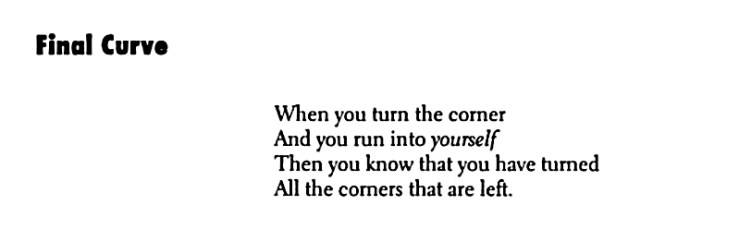
“Final Curve” — Langston Hughes

final curve

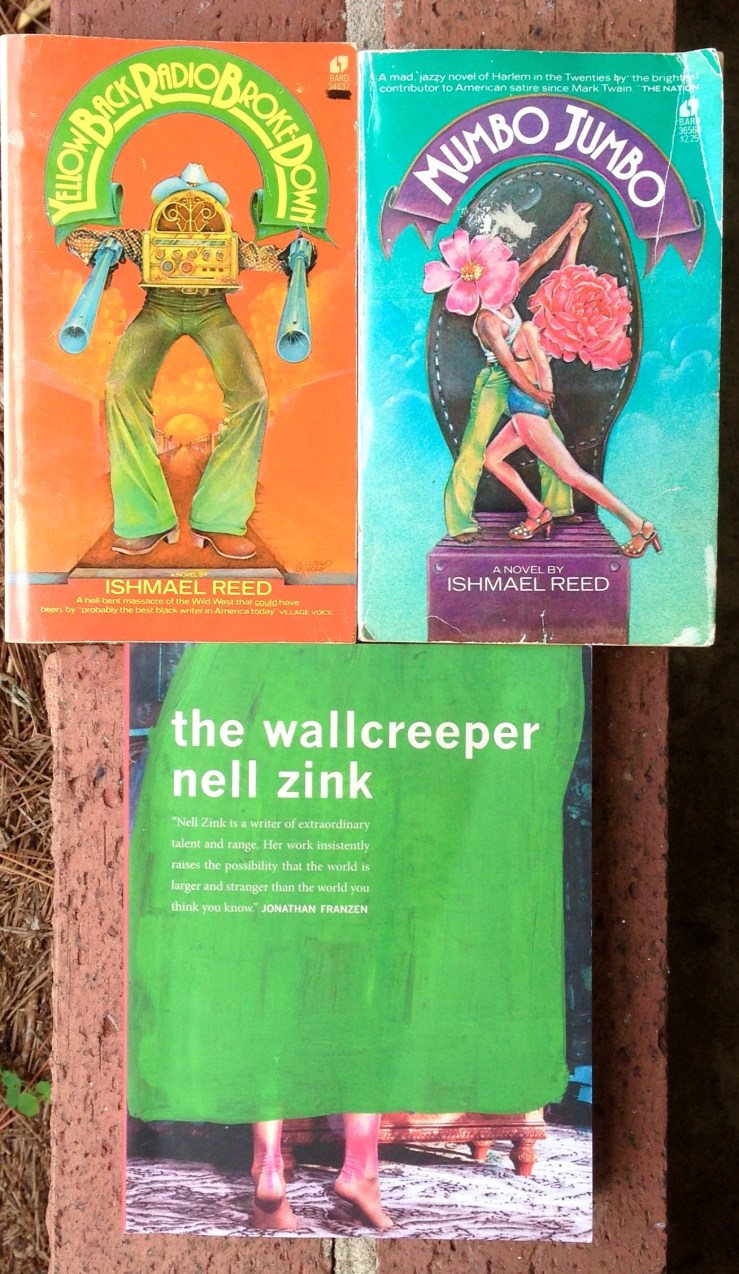
Ishmael Reed/Nell Zink (Books acquired, 6.24.2015)

image

Went to my favorite bookstore today to get a copy of The Borrowers for my daughter and to replace a copy of Ishmael Reed’s Mumbo Jumbo, which I bought last month, read, and then gave away to a friend. I still aim to write something about it on the blog (hence replacing it), but short term: The book is extraordinary—metatextual, intratextual, very, very funny, filled with erudite citations and scathing humor. I can’t believe I hadn’t read it until now.

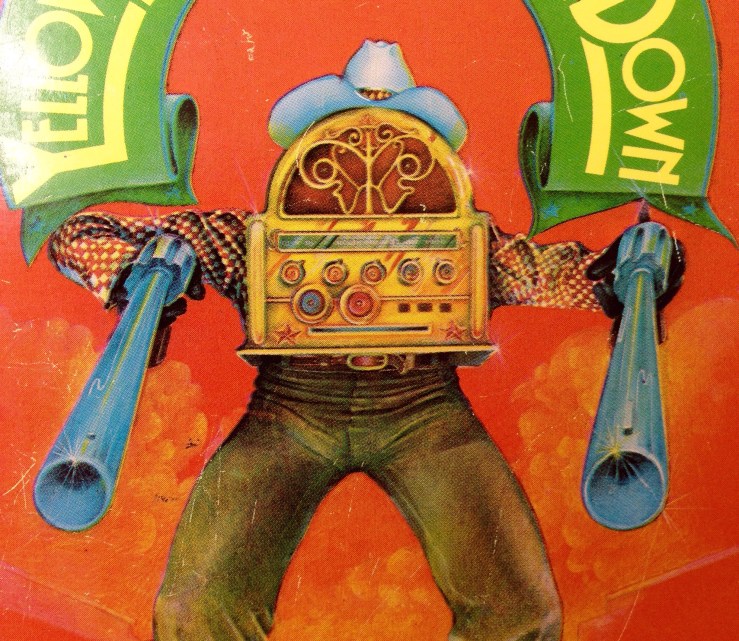
So, as I went to replace the copy I’d bought in May with the same edition, I spied this mass market paperback edition, which kinda sorta matches the copy of Yellow Back Radio Broke-Down—which hey look at that cover, how could I not pick it up?

image

I also found a copy of Nell Zink’s novel The Wallcreeper, which I’ve heard good things about from smart people.

Gothic Novel — Georgy Kurasov

Georgy Kurasov Gothic Novel 40 x 30

Seated Figure of Summer — Giuseppe Arcimboldo

Two citations (David Foster Wallace/William H. Gass) and a (not so) very short note on the muck of contemporary consciousness

‘I miss TV,’ Orin said, looking back down. He no longer smiled coolly.

‘The former television of commercial broadcast.’

‘I do.’

‘Reason in several words or less, please, for the box after REASON,’ displaying the board.

‘Oh, man.’ Orin looked back up and away at what seemed to be nothing, feeling at his jaw around the retromandibular’s much tinier and more vulnerable throb. ‘Some of this may sound stupid. I miss commercials that were louder than the programs. I miss the phrases “Order before midnight tonight” and “Save up to fifty percent and more.” I miss being told things were filmed before a live studio audience. I miss late-night anthems and shots of flags and fighter jets and leathery-faced Indian chiefs crying at litter. I miss “Sermonette” and “Evensong” and test patterns and being told how many megahertz something’s transmitter was broadcasting at.’ He felt his face. ‘I miss sneering at something I love. How we used to love to gather in the checker-tiled kitchen in front of the old boxy cathode-ray Sony whose reception was sensitive to airplanes and sneer at the commercial vapidity of broadcast stuff.’

‘Vapid ditty,’ pretending to notate.

‘I miss stuff so low-denominator I could watch and know in advance what people were going to say.’

‘Emotions of mastery and control and superiority. And pleasure.’

‘You can say that again, boy. I miss summer reruns. I miss reruns hastily inserted to fill the intervals of writers’ strikes, Actors’ Guild strikes. I miss Jeannie, Samantha, Sam and Diane, Gilligan, Hawkeye, Hazel, Jed, all the syndicated airwave-haunters. You know? I miss seeing the same things over and over again.’ …

The man tended to look up at him like people with legs look up at buildings and planes. ‘You can of course view entertainments again and again without surcease on TelEntertainment disks of storage and retrieval.’

Orin’s way of looking up as he remembered was nothing like the seated guy’s way of looking up. ‘But not the same. The choice, see. It ruins it somehow. With television you were subjected to repetition. The familiarity was inflicted. Different now.’

‘Inflicted.’

‘I don’t think I exactly know,’ Orin said, suddenly dimly stunned and sad inside. The terrible sense as in dreams of something vital you’ve forgotten to do. The inclined head’s bald spot was freckled and tan. ‘Is there a next item?’

—From David Foster Wallace’s novel Infinite Jest (1996).


Perception, Plato said, is a form of pain.

The working consciousness, for instance, is narrow, shuttered by utility, its transitions eased by habit past reflection like a thief. Impulses from without or from within must use some strength to reach us, we do not go out to them. Machines are made this way. Alert as lights and aimed like guns, they only see the circle of their barrels. How round the world is; how like a well arranged. Thus when desire is at an ebb and will is weak, we trail the entertainer like a child his mother, restless, bored and whining: what can I do? what will amuse me? how shall I live? Then

L’ennui, fruit de la morne incuriosite,

Prend les proportions de l’immortalite.

The enjoyment of sensation as sensation, a fully free awareness, is very rare. We keep our noses down like dogs to sniff our signs. Experience must mean. The content of an aimless consciousness is weak and colorless; we may be filled up by ourselves instead—even flooded basements, some days, leak the other way—and then it’s dread we feel, anxiety.

To tie experience to a task, to seek significance in everything, to take and never to receive, to keep, like the lighter boxer, moving, bob and weave, to fear the appearance of the self and every inwardness: these are such universal characteristics of the average consciousness that I think we can assume that popular culture functions fundamentally with regard to them.

—From William H. Gass’s essay “Even if, by All the Oxen in the World.” (1968). Collected in Fiction and the Figures of Life. The lines of verse are from Baudelaire, which I suppose is a third citation, no?


Continue reading “Two citations (David Foster Wallace/William H. Gass) and a (not so) very short note on the muck of contemporary consciousness”