Voyage d’Hermès — Moebius

Moebius-VoyageHermes-6

“The Human Abstract” — William Blake

“The Human Abstract”

by William Blake


Pity would be no more,
If we did not make somebody Poor:
And Mercy no more could be,
If all were as happy as we;

And mutual fear brings peace;
Till the selfish loves increase.
Then Cruelty knits a snare,
And spreads his baits with care.

He sits down with holy fears,
And waters the ground with tears:
Then Humility takes its root
Underneath his foot.

Soon spreads the dismal shade
Of Mystery over his head;
And the Catterpillar and Fly,
Feed on the Mystery.

And it bears the fruit of Deceit,
Ruddy and sweet to eat;
And the Raven his nest has made
In its thickest shade.

The Gods of the earth and sea
Sought thro’ Nature to find this Tree
But their search was all in vain:
There grows one in the Human Brain

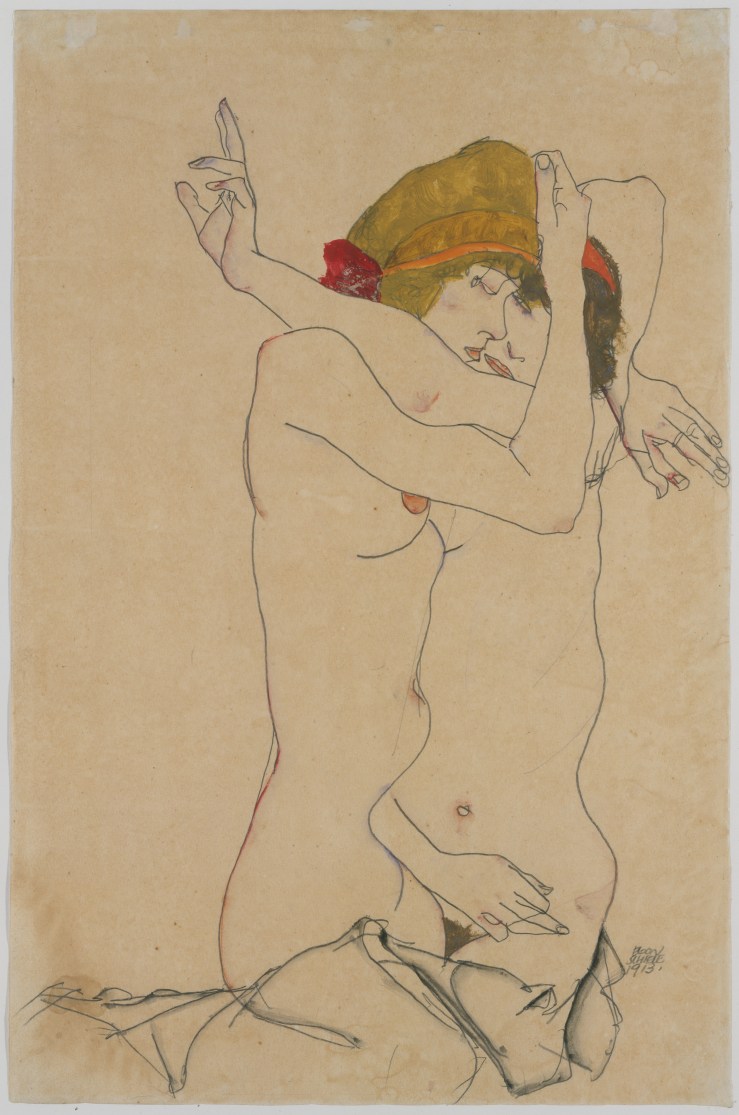
Two Women Embracing — Egon Schiele

DT6691

“On my volcano grows the grass” — Emily Dickinson

volc

Portrait of a Girl Reading — Thomas Sully

“My husband met some women online and I found out” | Read Joanna Walsh’s story “Online”

Electric Literature has published “Online,” a story from Joanna Walsh’s forthcoming collection VertigoYou can buy Vertigo now from the indie imprint Dorothy (I ordered Vertigo along with Marianne Fritz’s The Weight of Things), the publisher who brought us Nell Zink’s The Wallcreeper.

The first few paragraphs of Walsh’s “Online”:

My husband met some women online and I found out.

His women were young, witty, and charming, and they had good jobs—at least I ignored the women he had met online who were not young, witty, and charming, and who did not have good jobs—and so I fell more in love with my husband, reflected as he was, in the words of these universally young, witty, and charming women.

I had neglected my husband.

Now I wanted him back.

So I tried to be as witty and charming as the women my husband had met online.

I tried to take an interest.

At breakfast, I said to him, “How is your breakfast?”

He said to me, “Fine, thanks.”

I said to him, “What do you like for breakfast?”

(Having lived with him for a number of years, I already know what my husband likes for breakfast, and this is where the women online have the advantage of me: they do not yet know what my husband likes for breakfast and so they can ask him what he likes for breakfast and, in that way, begin a conversation.)

He did not answer my question.

Read the rest of “Online” at Electric Literature.

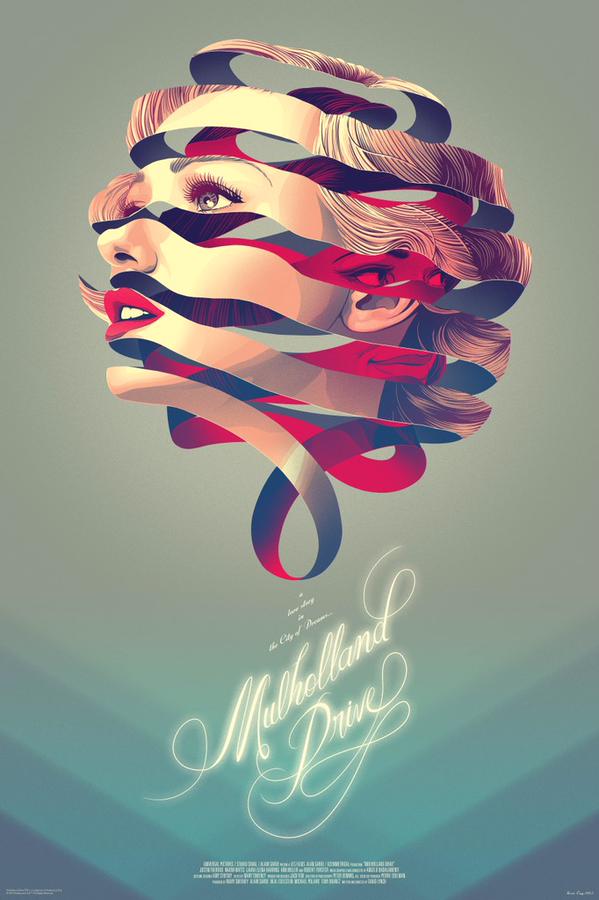
Mulholland Drive film posters by Kevin Tong

CPmndKaUEAAcEVS CPmndKcVEAELUWT

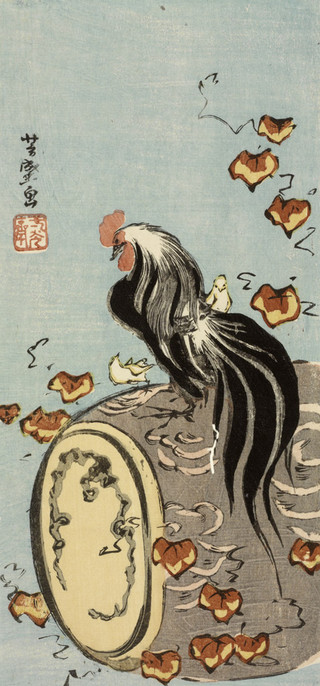
Cockerel, Ivy, and Drum — Utagawa Yoshimori

RISDM 34-289

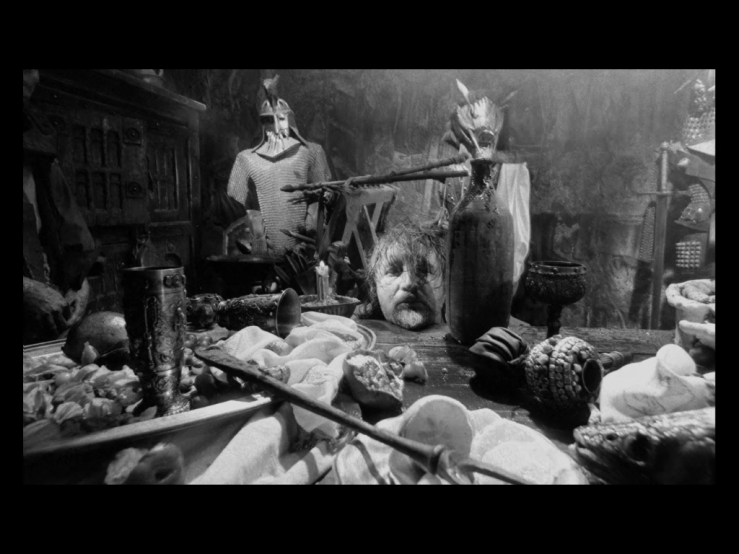
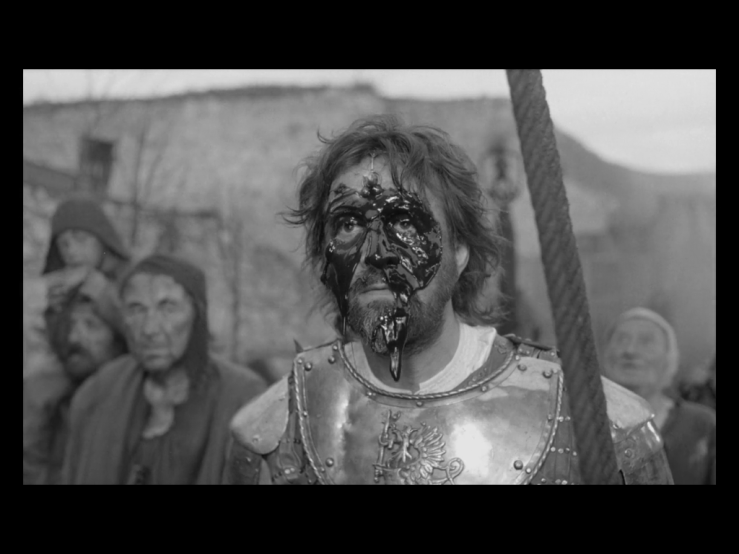
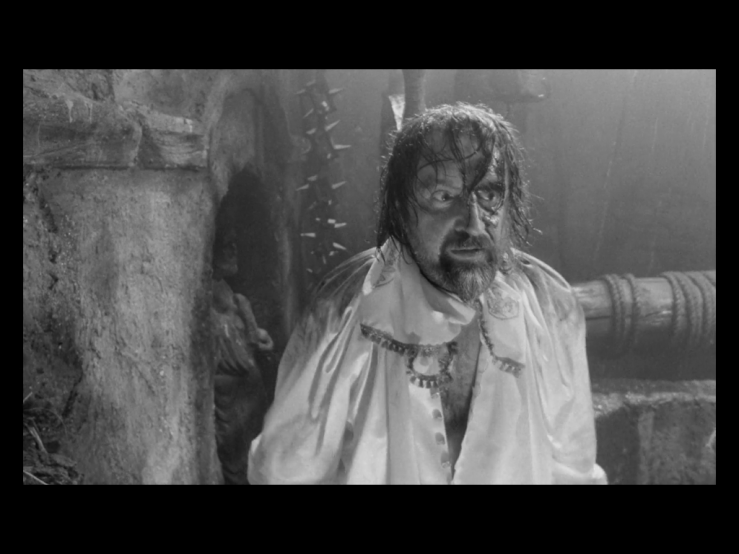
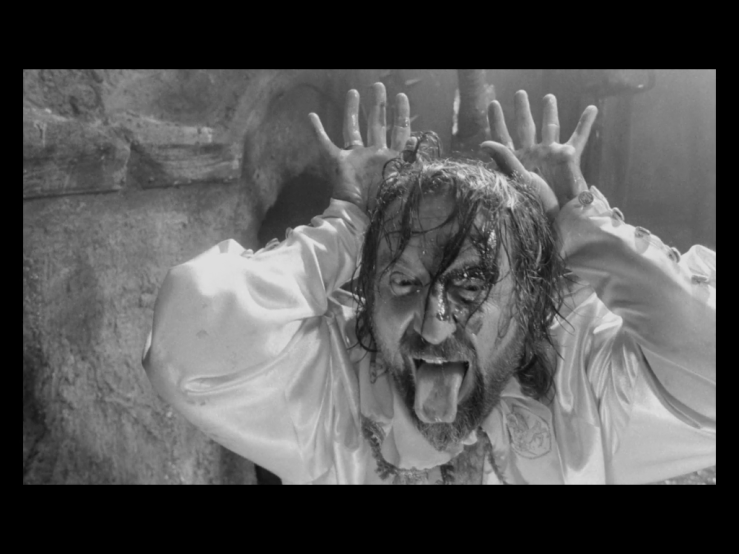
Faces of Don Rumata (Hard to Be a God)

IMG_0343 IMG_0336 IMG_0338 IMG_0340 Continue reading “Faces of Don Rumata (Hard to Be a God)”

“The History of the Apple Tree” — Henry David Thoreau

“The History of the Apple Tree”

by

Henry David Thoreau

from “Wild Apples.”


It is remarkable how closely the history of the Apple-tree is connected with that of man. The geologist tells us that the order of the Rosaceae, which includes the Apple, also the true Grasses, and the Labiatae or Mints, were introduced only a short time previous to the appearance of man on the globe.

It appears that apples made a part of the food of that unknown primitive people whose traces have lately been found at the bottom of the Swiss lakes, supposed to be older than the foundation of Rome, so old that they had no metallic implements. An entire black and shrivelled Crab-Apple has been recovered from their stores.

Tacitus says of the ancient Germans, that they satisfied their hunger with wild apples (agrestia poma) among other things.

Niebuhr observes that “the words for a house, a field, a plough, ploughing, wine, oil, milk, sheep, apples, and others relating to agriculture and the gentler way of life, agree in Latin and Greek, while the Latin words for all objects pertaining to war or the chase are utterly alien from the Greek.” Thus the apple-tree may be considered a symbol of peace no less than the olive.

The apple was early so important, and generally distributed, that its name traced to its root in many languages signifies fruit in general. [Greek: Maelon], in Greek, means an apple, also the fruit of other trees, also a sheep and any cattle, and finally riches in general.

The apple-tree has been celebrated by the Hebrews, Greeks, Romans, and Scandinavians. Some have thought that the first human pair were tempted by its fruit. Goddesses are fabled to have contended for it, dragons were set to watch it, and heroes were employed to pluck it.

The tree is mentioned in at least three places in the Old Testament, and its fruit in two or three more. Solomon sings,—”As the apple-tree among the trees of the wood, so is my beloved among the sons.” And again,—”Stay me with flagons, comfort me with apples.” The noblest part of man’s noblest feature is named from this fruit, “the apple of the eye.”

The apple-tree is also mentioned by Homer and Herodotus. Ulysses saw in the glorious garden of Alcinous “pears and pomegranates, and apple-trees bearing beautiful fruit” (kai maeleui aglaokarpoi). And according to Homer, apples were among the fruits which Tantalus could not pluck, the wind ever blowing their boughs away from him. Theophrastus knew and described the apple-tree as a botanist.

According to the Prose Edda, “Iduna keeps in a box the apples which the gods, when they feel old age approaching, have only to taste of to become young again. It is in this manner that they will be kept in renovated youth until Ragnarök” (or the destruction of the gods).

I learn from Loudon that “the ancient Welsh bards were rewarded for excelling in song by the token of the apple-spray;” and “in the Highlands of Scotland the apple-tree is the badge of the-clan Lamont.” Continue reading ““The History of the Apple Tree” — Henry David Thoreau”

Autumn — Giuseppe Arcimboldo

The Damned Being Cast into Hell — Frans Francken the Younger

The Damned Being Cast into Hell

Curious One — Bryan Olson

Temptation

Fabled horde, legion of horribles | Blood Meridian riff

The captain watched through the glass.

I suppose they’ve seen us, he said.

They’ve seen us.

How many riders do you make it?

A dozen maybe.

The captain tapped the instrument in his gloved hand.

They dont seem concerned, do they?

No sir. They dont.

The captain smiled grimly. We may see a little sport here before the day is out.

The first of the herd began to swing past them in a pall of yellow dust, rangy slatribbed cattle with horns that grew agoggle and no two alike and small thin mules coalblack that shouldered one another and reared their malletshaped heads above the backs of the others and then more cattle and finally the first of the herders riding up the outer side and keeping the stock between themselves and the mounted company. Behind them came a herd of several hundred ponies. The sergeant looked for Candelario. He kept backing along the ranks but he could not find him. He nudged his horse through the column and moved up the far side. The lattermost of the drovers were now coming through the dust and the captain was gesturing and shouting. The ponies had begun to veer off from the herd and the drovers were beating their way toward this armed hides the painted chevrons and the hands and rising suns and birds and fish of every device like the shade of old work through sizing on a canvas and now too you could hear above the pounding of the unshod hooves the piping of the quena, flutes made from human bones, and some among the company had begun to saw back on their mounts and some to mill in confusion when up from the offside of those ponies there rose a fabled horde of mounted lancers and archers bearing shields bedight with bits of broken mirrorglass that cast a thousand unpieced suns against the eyes of their enemies. A legion of horribles, hundreds in number, half naked or clad in costumes attic or biblical or wardrobed out of a fevered dream with the skins of animals and silk finery and pieces of uniform still tracked with the blood of prior owners, coats of slain dragoons, frogged and braided cavalry jackets, one in a stovepipe hat and one with an umbrella and one in white stockings and a bloodstained weddingveil and some in headgear of cranefeathers or rawhide helmets that bore the horns of bull or buffalo and one in a pigeontailed coat worn backwards and otherwise naked and one in the armor of a Spanish conquistador, the breastplate and pauldrons deeply dented with old blows of mace or sabre done in another country by men whose very bones were dust and many with their braids spliced up with the hair of other beasts until they trailed upon the ground and their horses’ ears and tails worked with bits of brightly colored cloth and one whose horse’s whole head was painted crimson red and all the horsemen’s faces gaudy and grotesque with daubings like a company of mounted clowns, death hilarious, all howling in a barbarous tongue and riding down upon them like a horde from a hell more horrible yet than the brim tone land of Christian reckoning, screeching and yammering and clothed in smoke like those vaporous beings in regions beyond right knowing where the eye wanders and the lip jerks and drools.

Oh my god, said the sergeant.

  1. The legion of horribles passage comes near the end of Ch. IV of Cormac McCarthy’s Blood Meridian, and is probably the passage I see cited most often from the book—which makes sense: It comes early enough in the novel and doesn’t really need much context—other than its own language—to mean. And of course its language—well, that’s the occasion, yes? The passage condenses the book’s violence into a baroque and surreal fevered dream (to steal a phrase from the passage). We have here an ornate parcel, a prefiguration of ecstatic violence.
  2. I remember the first time I read this passage. It was 2008, very late at night, and it just sort of short circuited whatever brains I had left. I had to go back and start the novel again, hit reset.  I’m revisiting Blood Meridian (I’ve reread it at least once every year since I first read it, a common practice of many of its fans I’ve realized over the years) after having just revisited Suttree. Blood Meridian always seems funnier and darker, and somehow—how?!—more violent.
  3. The legion of horribles passage is not acutely violent in and of itself; rather it stages the violence that explodes in the next few paragraphs, a dizzying, overwhelming violence. Scenes of rape and murder.
  4. I claimed in my first paragraph that the passage doesn’t require context, but here’s some anyway: We have there at the beginning Captain White and his sergeant. White—appropriately named—plans to lead his unauthorized band of irregulars into Mexico to loot and spoil and steal. He’s recruited the kid, the would-be protagonist of Blood Meridian. With its vile nativism, xenophobia, and racism, Captain White’s recruitment monologue (which doesn’t really persuade the kid as much as the simple promise of a horse, rifle, and saddle) wouldn’t be out of place in American politics today. White’s racism makes his initial impression of the fabled horde that will kill all but a handful of his men—and, spoiler, behead him—all the more ironic/moronic: “We may see a little sport here before the day is out,” he grimly jests. This seems to me almost the set-up to a punchline, with a long excursion into a description of the advancing “horde from hell” as the meat of the joke (Joke!?), with the final punchline/payoff in the sergeant’s dry horrified realization: “Oh my god.”
  5. In Suttree, McCarthy synthesizes American literature; in Blood Meridian, he’s condensing something more primal. Myth and history, time and space, whorled into blood and violence.
  6. We can see this condensation of myth and history in the very language of the legion of horribles passage. McCarthy offers a nightmare vision of time collapsed into a single violent, overwhelming space—and as I go now to pull an example, I find that there are too many, that the passage is all example, all detail, all image.
  7. Or, okay, hell, just one image then—the “armor of a Spanish conquistador, the breastplate and pauldrons deeply dented with old blows of mace or sabre done in another country by men whose very bones were dust”—there, that’s it, that’s all of it, history, myth, violence.
  8. Or just the words themselves, the diverse diction, culled from so many roots and tongues (attic, biblical)—and the compounding of words (bloodstained, weddingveil, headgear, cranefeathers, rawhide, pigeontailed, etc.), the compression and synthesis of words, the force of the words. The onomatopoeia. The barbaric yawps.
  9. What happens next? Okay, I’d say, Read the book—but I’ve already told you—the horde eviscerates White’s men. The kid survives, somehow, and the first section of Blood Meridian seems to end—as if this fabled horde, this legion of horribles were merely a preamble to the darker violence to come—a preview of the Glanton Gang and their sinister commandant Judge Holden.

Portia — John Everett Millais

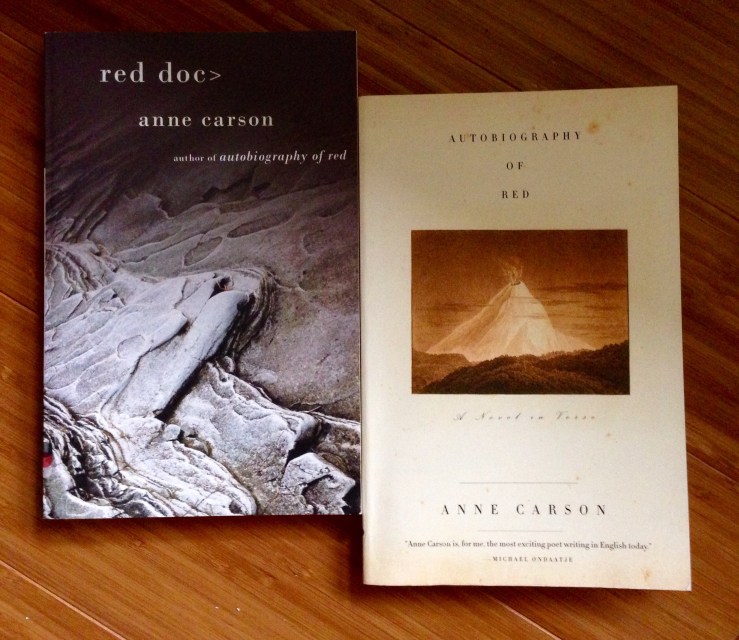
Two by Anne Carson (Books acquired, 9.14.2015)

IMG_8416

Still recovering from Anne Carson’s Autobiography of Red. Haven’t felt so zapped by a book in a long time. Amazing. Try to write something about it on here soon. Million thanks again to BLCKDGRD for sending it my way.