My Father — George Adolphus Storey

My Father 1868 by George Adolphus Storey 1834-1919

My Father, 1868 by George Adolphus Storey (1834–1919)

They found the Dead Father standing in a wood, slaying | Donald Barthelme

They found the Dead Father standing in a wood, slaying. First he slew a snowshoe rabbit cleaving it in twain with a single blow and then he slew a spiny anteater and then he slew two rusty numbats and then whirling the great blade round and round his head he slew a wallaby and a lemur and a trio of ouakaris and a spider monkey and a common squid. Then moving up and down the green path in his rage he dispatched a macaque and a gibbon and fourscore innocent chinchillas who had been standing idly by watching the great slaughter. Then he rested standing with the point of his sword stuck in the earth and his two hands folded upon the hilt. Then he again as if taken by a fit set about the bloody work slaying a prairie dog and a beaver and a gopher and a dingo and a honey badger and an otter and a house cat and a tapir and a piglet. Then his anger grew and he called for a brand of even greater weight and length which was brought him by a metaphorically present gillie and seizing it with his two fine-formed and noble hands he raised it above his head, and every living thing within his reach trembled and every dead thing within his reach remembered how it got that way, and the very trees of the wood did seem to shrink and step away. Then the Dead Father slew a warthog and a spotted fawn and a trusting sheep and a young goat and a marmoset and two greyhounds and a draghound. Then, kicking viciously with his noble and shapely foot at the piles of the slain, raw and sticky corpses drenching the earth in blood on every side, he cleared a path to a group of staring pelicans slicing the soft white thin necks of them from the bodies in the wink of an eye. Then he slew a cassowary and a flamingo and a grebe and a heron and a bittern and a pair of ducks and a shouting peacock and a dancing crane and a bustard and a lily-trotter and, wiping the sacred sweat from his brow with one ermine-trimmed sleeve, slew a wood pigeon and a cockatoo and a tawny owl and a snowy owl and a magpie and three jackdaws and a crow and a jay and a dove. Then he called for wine. A silver flagon was brought him and he downed the whole of it in one draught looking the while out of the corner of his ruby eye at a small iguana melted in terror against the limb of a tree. Then he tossed the silver flagon into the arms of a supposititious cupbearer sousing the cupbearer’s hypothetical white tunic with the red of the (possible) wine and split the iguana into two halves with the point of his sword as easily as one skilled in the mystery fillets a fish. Then the Dead Father resumed his sword work in earnest slaying diverse small animals of every kind, so that the heaps mounted steaming to the right and to the left of him with each passionate step. A toad escaped.

From Donald Barthelme’s novel The Dead Father.

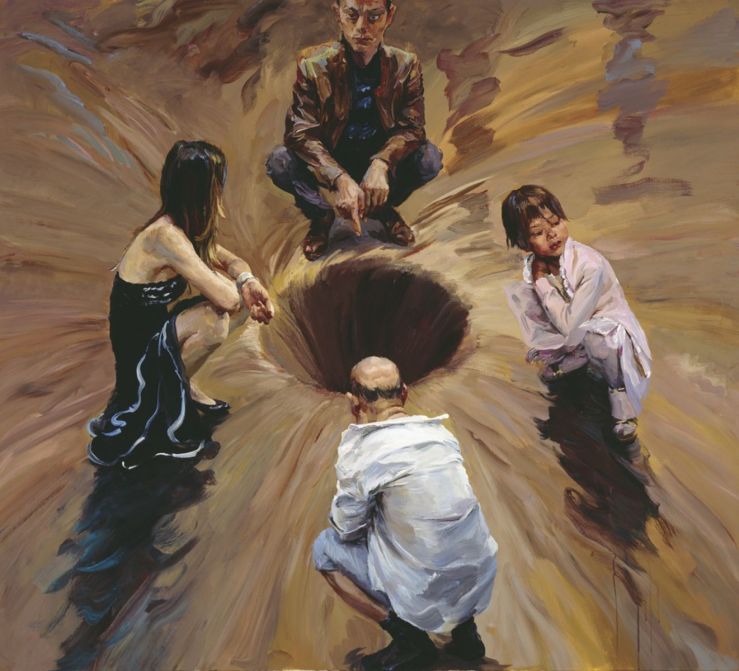
Smartphones — Chen Danqing

chen-danqing-smartphones-2016-oil-on-canvas-180x160cm

Smartphones, 2016 by Chen Danqing (b. 1953)

“I am, outside. Incredible panic rules.” (Dream Song 46) — John Berryman

2020-06-19_174036

Rédoine Faïd’s Outlaw, a crime memoir-in-interviews (Book acquired, 27 April 2020)

img_5690

I finally made some time this afternoon to dip into Rédoine Faïd’s memoir-in-interviews, Outlaw: Armed and Dangerous. It’s a propulsive, fast read so far–I put away the first 60 pages in one reading. Faïd, fresh out of prison, tells his life story to journalist Jérôme Pierrat. The book is newly-translated by John Galbraith Simmons and J.G. Barque, and available from Contra Mundum Press. Their blurb:

Memoirs of celebrated criminals purvey vivid personal stories while spawning sharp questions about the cultures that produced them. In Outlaw: Author Armed & Dangerous, Rédoine Faïd, of Algerian immigrant parents, born and raised in the housing projects surrounding Paris, recounts his career as an infamous and renowned bandit. Drawing inspiration and instruction from a host of films and television series, Faïd styled himself and was known to friends and accomplices as “Doc” — after Steve McQueen in the legendary suspense thriller, The Getaway.

With self-discipline and a striking ability to learn from experience, Faïd carried off his first robberies while still a teenager. He soon graduated from petty thievery to armed robbery, targeting computer component suppliers, jewelry stores, banks, and most memorably, armored trucks. A master of disguise, with bulletproof vest and a .357 Magnum as a prop to encourage compliance, he led a crew that operated with careful planning but eschewed bloodshed and physical violence.

In imitation of Michael Mann’s Heat, Faïd and his cohorts donned hockey masks for one job, sometimes even quoting from other famous heist films during their capers. When bold plans went wrong, he reacted with fast thinking that served him well — until it didn’t, and he was arrested and imprisoned in 1998.

Outlaw was first published in France in 2009, after which Faïd was imprisoned again. Subsequently, his dramatic escapes from jail, in 2013 and 2018, made front-page news in France and around the world.

Interviewed by journalist Jérôme Pierrat, who specializes in crime and investigative reportage, Rédoine Faïd tells his own story with panache and humor, darkened by introspection and cautionary tales. His story, like that of a character out of a Jean-Pierre Melville film or Dassin’s Rififi, is not only intriguing, it is also as compelling as any high-grade thriller. Three months after his daring helicopter escape from Réau Prison in 2018, Faïd was captured again. He currently remains in jail.

Postmodernist discourses are often exclusionary | bell hooks

Postmodernist discourses are often exclusionary even when, having been accused of lacking concrete relevance, they call attention to and appropriate the experience of “difference” and “otherness” in order to provide themselves with oppositional political meaning, legitimacy, and immediacy. Very few African-American intellectuals have talked or written about postmodernism. Recently at a dinner party, I talked about trying to grapple with the significance of postmodernism for contemporary black experience. It was one of those social gatherings where only one other black person was present. The setting quickly became a field of contestation. I was told by the other black person that I was wasting my time, that “this stuff does not relate in any way to what’s happening with black people.” Speaking in the presence of a group of white onlookers, staring at us as though this encounter was staged for their benefit, we engaged in a passionate discussion about black experience. Apparently, no one sympathized with my insistence that racism is perpetuated when blackness is associated solely with concrete gut level experience conceived either as opposing or having no connection to abstract thinking and the production of critical theory. The idea that there is no meaningful connection between black experience and critical thinking about aesthetics or culture must be continually interrogated.

My defense of postmodernism and its relevance to black folks sounded good but I worried that I lacked conviction, largely because I approach the subject cautiously and with suspicion. Disturbed not so much by the “sense” of postmodernism but by the conventional language used when it is written or talked about and by those who speak it, I find myself on the outside of the discourse looking in. As a discursive practice it is dominated primarily by the voices of white male intellectuals and/or academic elites who speak to and about one another with coded familiarity. Reading and studying their writing to understand postmodernism in its multiple manifestations, I appreciate it but feel little inclination to ally myself with the academic hierarchy and exclusivity pervasive in the movement today.

The first two paragraphs of bell hooks’ 1990 essay “Postmodern Blackness.” I encourage you to read the other thirteen paragraphs here.

Resolution — Yu Hong

facf2650004b57ebcbf59641d90ed922

Resolution, 2015 by Yu Hong (b. 1966)

A Short History of Modern Painting –Mark Tansey

1vf9zt_4qaut_2340x1316

A Short History of Modern Painting, 1982 by Mark Tansey (b. 1949)

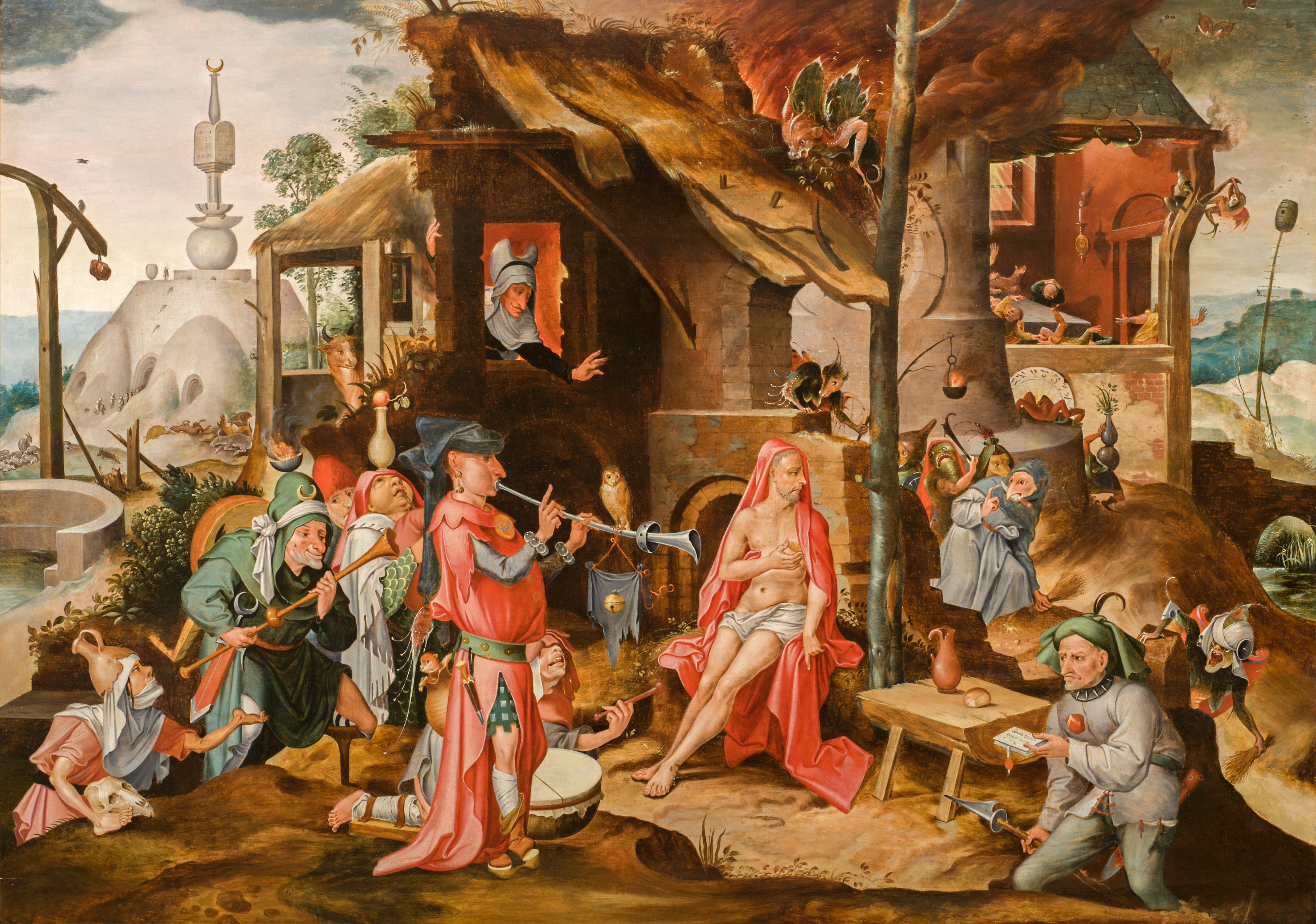
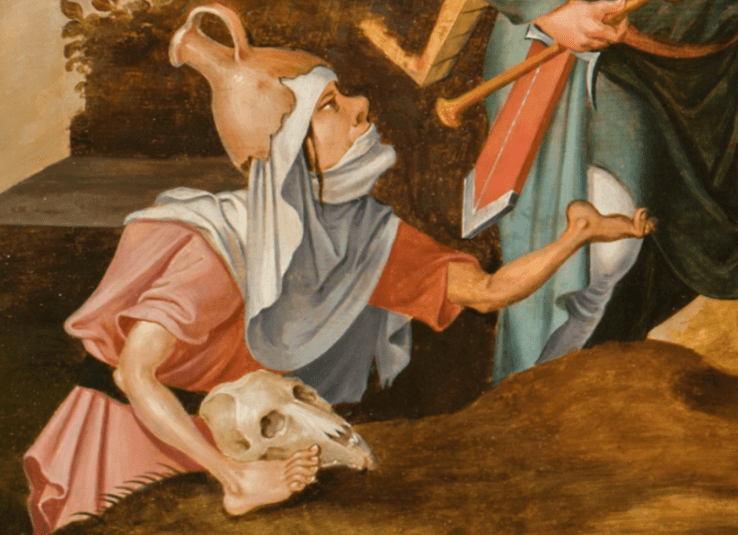
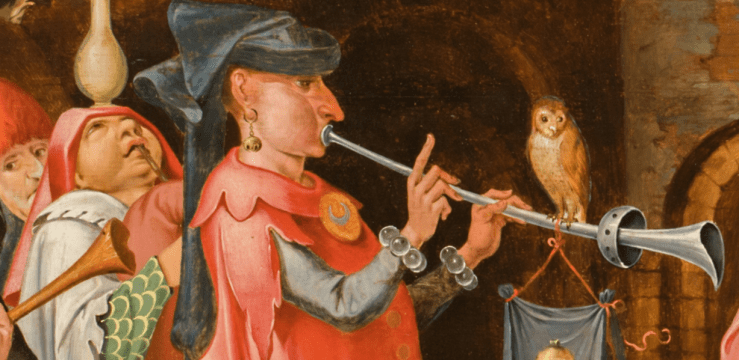
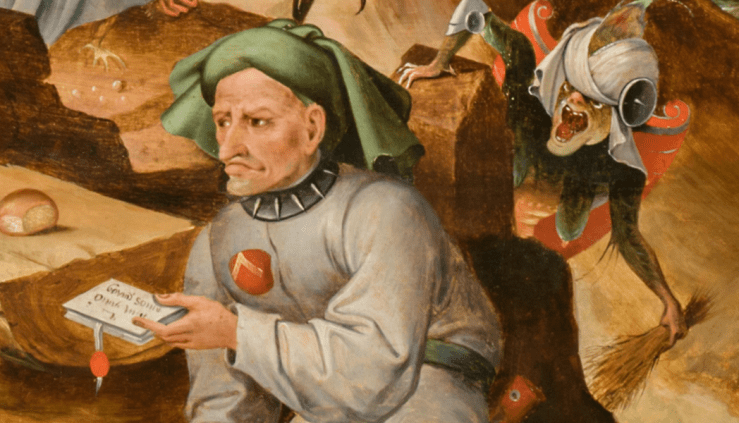
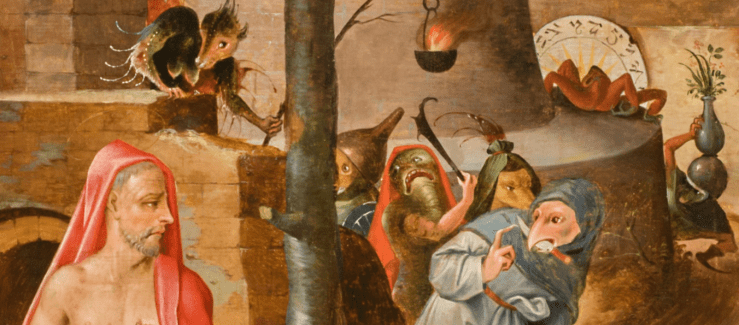
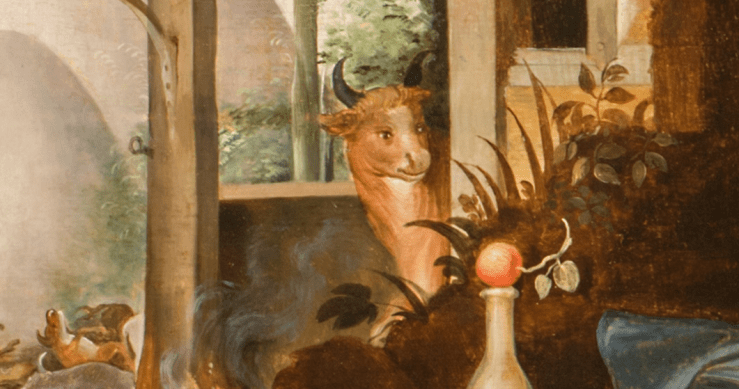
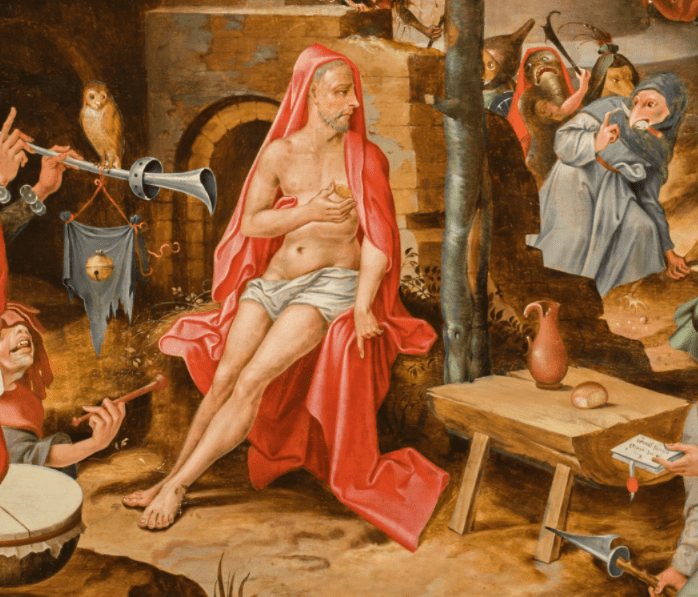
The Mocking of Job — Jan Mandyn

the_mocking_of_job_28jan_mandijn29

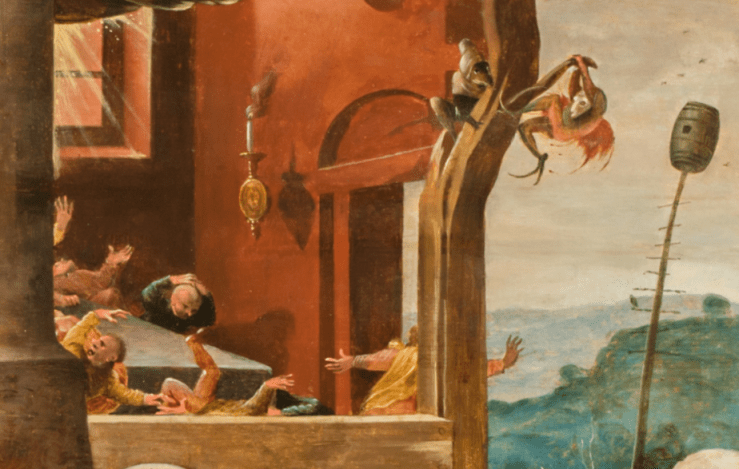
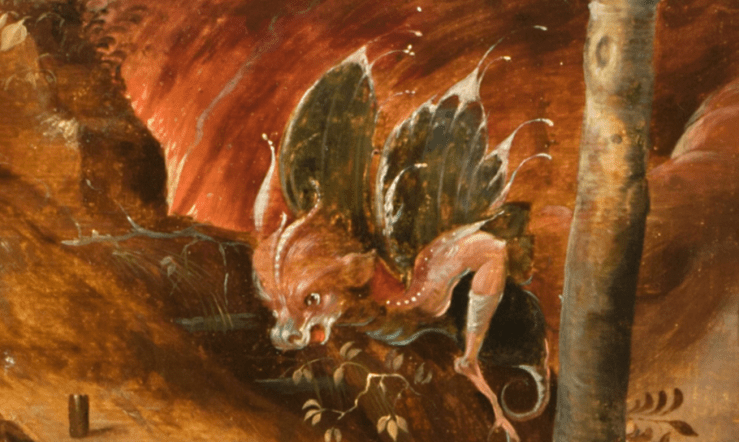
Screenshot 2020-06-17 at 11.50.11 AMScreenshot 2020-06-17 at 11.49.53 AMScreenshot 2020-06-17 at 11.47.54 AMScreenshot 2020-06-17 at 11.47.25 AMScreenshot 2020-06-17 at 11.47.02 AMScreenshot 2020-06-17 at 11.46.44 AMScreenshot 2020-06-17 at 11.46.27 AMScreenshot 2020-06-17 at 11.46.01 AMScreenshot 2020-06-17 at 11.45.40 AMScreenshot 2020-06-17 at 11.48.12 AM

“Suffer me that I may speak; and after that I have spoken, mock on” (Job 21: 3, KJV)

The Mocking of Job, c. 1550 by Jan Mandyn (attributed; c. 1500-1559)

“The Painting after Lunch” — Clarence Major

“The Painting after Lunch”

by

Clarence Major


It wasn’t working. Didn’t look back. Needed something else. So
I went out. After lunch I saw it in a different light, like a thing
emerging from behind a fever bush, something reaching the
senses with the smell of seaweed boiling, and as visible as yellow
snowdrops on black earth. Tasted it too, on the tongue Jamaica
pepper. To the touch, a velvet flower. Dragging and scumming, I
gave myself to it stroke after stroke. It kept coming in bits and fits,
fragments and snags. I even heard it singing but in the wrong key
like a deranged bird in wild cherries, having the time of its life.

Catalogue these books (A passage from Joyce’s Uylsses)

What final visual impression was communicated to him by the mirror?

The optical reflection of several inverted volumes improperly arranged and not in the order of their common letters with scintillating titles on the two bookshelves opposite.

Catalogue these books.

Thom’s Dublin Post Office Directory, 1886.

Denis Florence M’Carthy’s Poetical Works (copper beechleaf bookmark at p. 5).

Shakespeare’s Works (dark crimson morocco, goldtooled).

The Useful Ready Reckoner (brown cloth).

The Secret History of the Court of Charles II (red cloth, tooled binding).

The Child’s Guide (blue cloth).

The Beauties of Killarney (wrappers).

When We Were Boys by William O’Brien M. P. (green cloth, slightly faded, envelope bookmark at p. 217).

Thoughts from Spinoza (maroon leather).

The Story of the Heavens by Sir Robert Ball (blue cloth).

Ellis’s Three Trips to Madagascar (brown cloth, title obliterated).

The Stark-Munro Letters by A. Conan Doyle, property of the City of Dublin Public Library, 106 Capel street, lent 21 May (Whitsun Eve) 1904, due 4 June 1904, 13 days overdue (black cloth binding, bearing white letternumber ticket).

Voyages in China by “Viator” (recovered with brown paper, red ink title).

Philosophy of the Talmud (sewn pamphlet).

Lockhart’s Life of Napoleon (cover wanting, marginal annotations, minimising victories, aggrandising defeats of the protagonist).

Soll und Haben by Gustav Freytag (black boards, Gothic characters, cigarette coupon bookmark at p. 24).

Hozier’s History of the Russo-Turkish War (brown cloth, 2 volumes, with gummed label, Garrison Library, Governor’s Parade, Gibraltar, on verso of cover).

Laurence Bloomfield in Ireland by William Allingham (second edition, green cloth, gilt trefoil design, previous owner’s name on recto of flyleaf erased).

A Handbook of Astronomy (cover, brown leather, detached, 5 plates, antique letterpress long primer, author’s footnotes nonpareil, marginal clues brevier, captions small pica).

The Hidden Life of Christ (black boards).

In the Track of the Sun (yellow cloth, titlepage missing, recurrent title intestation).

Physical Strength and How to Obtain It by Eugen Sandow (red cloth).

Short but yet Plain Elements of Geometry written in French by F. Ignat. Pardies and rendered into Engliſh by John Harris D. D. London, printed for R. Knaplock at the Biſhop’s Head, MDCCXI, with dedicatory epiſtle to his worthy friend Charles Cox, eſquire, Member of Parliament for the burgh of Southwark and having ink calligraphed statement on the flyleaf certifying that the book was the property of Michael Gallagher, dated this 10th day of May 1822 and requeſting the perſon who should find it, if the book should be loſt or go aſtray, to reſtore it to Michael Gallagher, carpenter, Dufery Gate, Enniſcorthy, county Wicklow, the fineſt place in the world.

From James Joyce’s Ulysses.

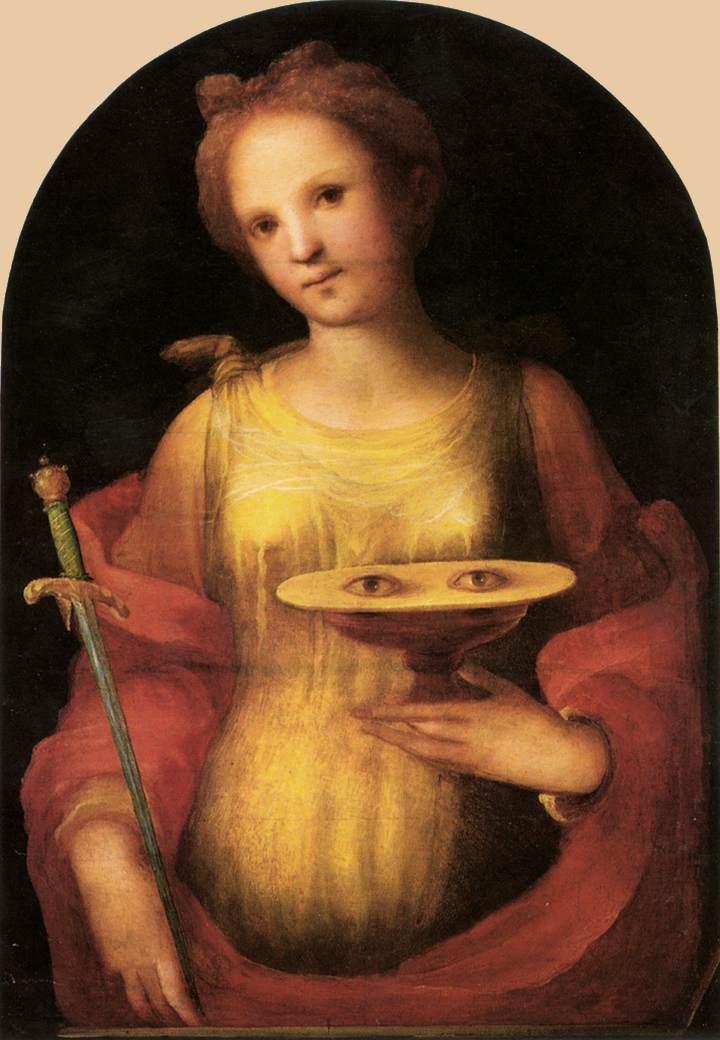
St. Lucy — Domenico Beccafumi

saint_lucy_by_domenico_di_pace_beccafumi

St. Lucy, 1521 by Domenico Beccafumi (1486-1551)

Books acquired, 8 June 2020 and 13 June 2020

img_5670

My birthday was last Sunday. My favorite bookstore is closed on Sundays, so as a treat to myself I browsed it Monday afternoon. I was looking for specific titles by Nalo Hopkinson and Kit Reed (no luck), as well as another Muriel Spark. I picked up Spark’s third novel, Momento Mori and read it this week. It’s a good book, but nowhere near the sharp excellence of Loitering with Intent. I also found a first edition paperback of William H. Gass’s first novel, Omensetter’s Luck. I should’ve left it for some kid to find—I have a Meridian first edition of Omensetter’s already—but I couldn’t. I hate the collector in me.

img_5658

I also picked up Charles Wright’s novel The Messenger, despite already having an omnibus that collects all three of Wright’s novels. Couldn’t help it; the mass-market cover was too good (although James Baldwin’s name doesn’t have to be quite that big, does it?).

Early in the week I got an email containing my daughter’s summer reading directions–Paul Coelho’s The Alchemist and Howard Zinn’s A Young People’s History of the United States. I treated myself to another Muriel Spark–an especially short one, about a nunnery—The Abbess of Crewe. 

img_5668

On the Map — William Coldstream

On the Map 1937 by Sir William Coldstream 1908-1987

On the Map, 1937 by William Coldstream (1908-1987)

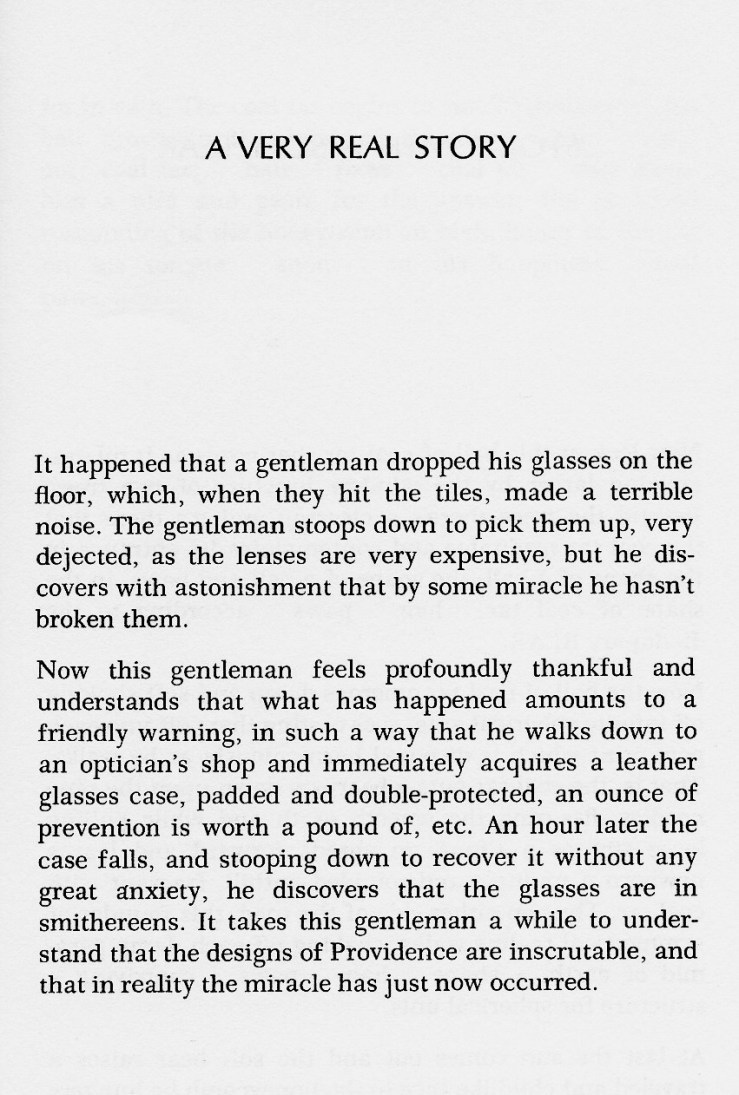
“A Very Real Story” — Julio Cortázar

2020-03-06_151902_4

(English translation by Paul Blackburn.)

The Man with the Cubist Head — Julio Larraz 

the-man-with-the-cubist-head2018oil-on-canvas62x70in.hi-res.

The Man with the Cubist Head, 1987 by Julio Larraz (b. 1944)

Blog about some recent reading

img_5662

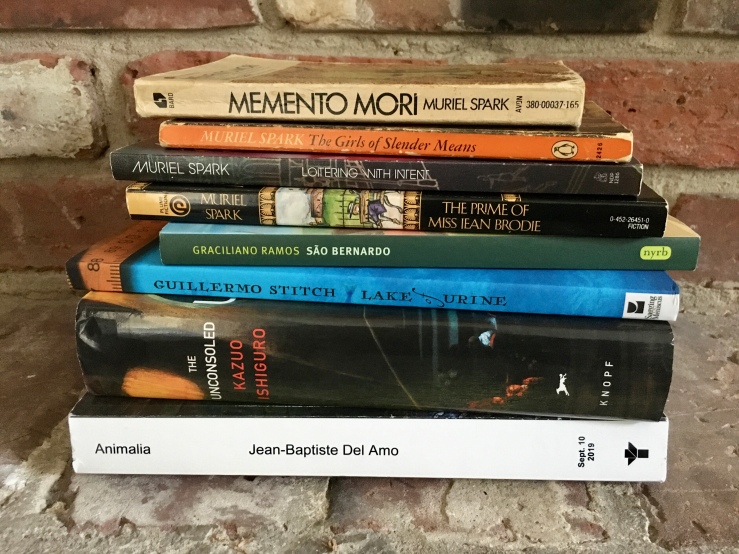
From bottom to top:

I finally started Jean-Baptiste Del Amo’s Animalia last week. I took the book with me to a place we rented near Black Mountain, North Carolina for a week. I purposefully took only Animalia, leaving behind two books I was in the middle of—Muriel Spark’s Loitering with Intent and Guillermo Stitch’s Lake of Urine. I used the adverb purposefully in the previous sentence, although I’m not sure what my purpose was. I think I just wanted an associative break from the past few months. I read geographically, even in my own home. I read the first section of Animalia, often overwhelmed by its abject lifeforce. The novel begins in rural southwest France at the end of the nineteenth century, focusing on a family farm. The preceding sentence is a bad description: Animalia is, so far anyway, a visceral, naturalistic, and very precise rendering of humans as animals. I don’t think I’ve ever been as intrigued as to how a novel was translated, either. In Frank Wynne’s English translation, Del Amo’s prose carries notes and tones evocative of Faulkner or Cormac McCarthy. Del Amo employs precise Latinate words, using, for example, genetrix, instead of mother, as in this paragraph:

The genetrix, a lean, cold woman, with a ruddy neck and hands that are ever busy, affords the child scant attention. She is content merely to instruct her, to pass on the skills for those chores that are the preserve of their sex, and the child quickly learns to emulate her in her tasks, to mimic her gestures and her bearing. At five years old, she holds herself stiff and staid as a farmer’s wife, feet planted firmly on the ground, clenched fists resting on her narrow hips. She beats the laundry, churns the butter and draws water from the well or the spring without expecting affection or gratitude in return. Before Éléonore was born, the father twice impregnated the genetrix, but her menses are light, irregular, and continued to flow during the months when, in hindsight, she realizes that she was pregnant, though her belly had barely begun to swell. Although scrawny, she had a pot-belly as a child, her organs strained and bloated from parasitic infections contracted through playing in dirt and dungheaps, or eating infected meat, a condition her mother vainly attempted to treat with decoctions of garlic.

The paragraph, from early in Animalia, conveys the prose’s abject flavor. Read the rest of the excerpt at Granta.

Kazuo Ishiguro’s The Unconsoled is over 500 pages but somehow does not read like a massive novel, partly, I suppose, because the novel quickly teaches you how to read the novel. The key for me came about 100 pages in, when the narrator goes to a showing of 2001: A Space Odyssey starring Clint Eastwood and Yul Brynner. There’s an earlier reference to a “bleeper” that stuck out too, but it’s at the precise moment of this alternate 2001 that The Unconsoled’s just-slightly-different universe clicked for me. Following in the tradition of Kafka’s The CastleThe Unconsoled reads like a dream-fever set of looping deferrals. Our narrator, Ryder, is (apparently) a famous pianist who arrives at an unnamed town, where he is to…do…something?…to help restore the town’s artistic and aesthetic pride. (One way we know that The Unconsoled takes place in an alternate reality is that people care deeply about art, music, and literature.) However, Ryder keeps getting sidetracked, entangled in promises and misunderstanding, some dark, some comic, all just a bit frustrating. There’s a great video game someone could make out of The Unconsoled—a video game consisting of only side quests perhaps. Once the reader gives in to The Unconsoled’s looping rhythms, there’s an almost hypnotic pleasure to the book. Its themes of family disappointment, artistic struggle, and futility layer like musical motifs, ultimately suggesting that the events of the novel could take place entirely in Ryder’s consciousness, where he orchestrates all the parts himself. Under the whole thing though is a very conventional plot though—think a Kafka fanfic version of Waiting for Guffman. I loved it.

I will be posting a proper review of Guillermo Stitch’s Lake of Urine some time this month, so I won’t remark at length on it. I’m a little under halfway through (had to restart after returning from the mountains), and it seems to me that the plot is impossible to describe. Or maybe it’s really simple: A rural couple, Norabole and Bernard, escape from their small town and move to the big city (“Big City”). Norabole very quickly becomes the CEO of a huge company, with an eye toward creating “the world’s first Gothic conglomerate” (she plans to get an exorcist on the board, as well as having the company partake in an annual seance). Meanwhile, Bernard struggles to find employment and whips up seven course meals for his Noarbole. He also has apparently contracted (contracted?!) xenoglossiaLake of Urine is energetic and very funny and so so weird. Stitch seems to be doing whatever he wants on the page and I dig it.

I really enjoyed Graciliano Ramos’s novel São Bernardo (new translation by Padma Viswanathan), mostly for the narrator’s voice (which reminded me very much of Al Swearengen of Deadwood). Through somewhat nefarious means, Paulo Honorio takes over the run-down estate he used to toil on, restores it to a fruitful enterprise, screws over his neighbors, and exploits everyone around him. He decries at one point that “this rough life…gave me a rough soul,” which he uses as part confession and part excuse for his failure to evolve to the level his younger, sweeter wife would like him to. São Bernardo is often funny, but has a mordant, even tragic streak near its end. Ultimately, it’s Honorio’s voice and viewpoint that engages the reader. He paints a clear and damning portrait of himself and shows it to the reader—but also shows the reader that he cannot see himself. Good stuff.

Four by Muriel Spark. I’d never read her until May, and I’ve just been gobbling these up. I started with The Prime of Miss Jean Brodie, which is fantastic, and then read The Girls of Slender Means, which I liked even more than Prime. Slender Means unself-consciously employs some postmodern techniques to paint a vibrant picture of what the End of the War might feel like. The novel unexpectedly ends in a negative religious epiphany. (And the whole thing coincides with the bombings of Hiroshima and Nagasaki.) I then read Loitering with Intent, which is my favorite so far—just sharp as hell, and chock full of patterns and loops that I want to go back to again. I definitely will reread that one. I’m near the end of Memento Mori, a novel that concerns aging, memory, loss, and coming to terms with death. I was surprised to learn that this was Spark’s third novel, and that she would’ve been around 41—my age—when it was published. Most of the characters are over seventy, and Spark seems to inhabit their consciousness with a level of acuity that surprises me. Memento Mori is sharp and witty, but, barring some last minute shift, it’s not been my favorite Spark—but it’s still very good, and I want to read more. Any suggestions?