“Horses,” a short story by Stephen Crane

“Horses”

by

Stephen Crane


Richardson pulled up his horse, and looked back over the trail where the crimson serape of his servant flamed amid the dusk of the mesquit. The hills in the west were carved into peaks, and were painted the most profound blue. Above them the sky was of that marvellous tone of green—like still, sun-shot water—which people denounce in pictures.

José was muffled deep in his blanket, and his great toppling sombrero was drawn low over his brow. He shadowed his master along the dimming trail in the fashion of an assassin. A cold wind of the impending night swept over the wilderness of mesquit.

“Man,” said Richardson in lame Mexican as the servant drew near, “I want eat! I want sleep! Understand—no? Quickly! Understand?”

“Si, señor,” said José, nodding. He stretched one arm out of his blanket and pointed a yellow finger into the gloom. “Over there, small village. Si, señor.”

They rode forward again. Once the American’s horse shied and breathed quiveringly at something which he saw or imagined in the darkness, and the rider drew a steady, patient rein, and leaned over to speak tenderly as if he were addressing a frightened woman. The sky had faded to white over the mountains, and the plain was a vast, pointless ocean of black.

Suddenly some low houses appeared squatting amid the bushes. The horsemen rode into a hollow until the houses rose against the sombre sundown sky, and then up a small hillock, causing these habitations to sink like boats in the sea of shadow.

A beam of red firelight fell across the trail. Richardson sat sleepily on his horse while his servant quarrelled with somebody—a mere voice in the gloom—over the price of bed and board. The houses about him were for the most part like tombs in their whiteness and silence, but there were scudding black figures that seemed interested in his arrival. Continue reading ““Horses,” a short story by Stephen Crane”

The Knucklebone Player — Frederic Leighton

aalq001773_600x

The Knucklebone Player, 1867 by Frederic Leighton (1830-1896)

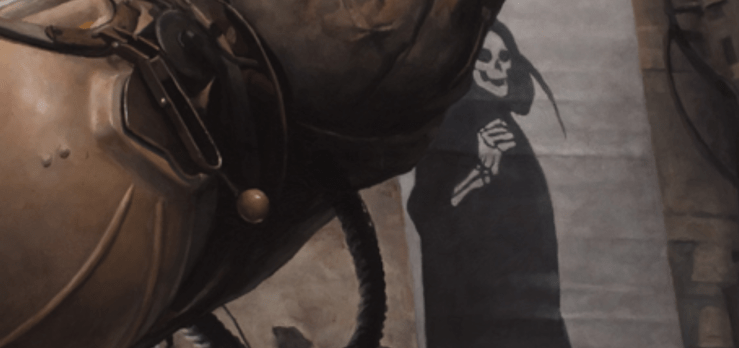
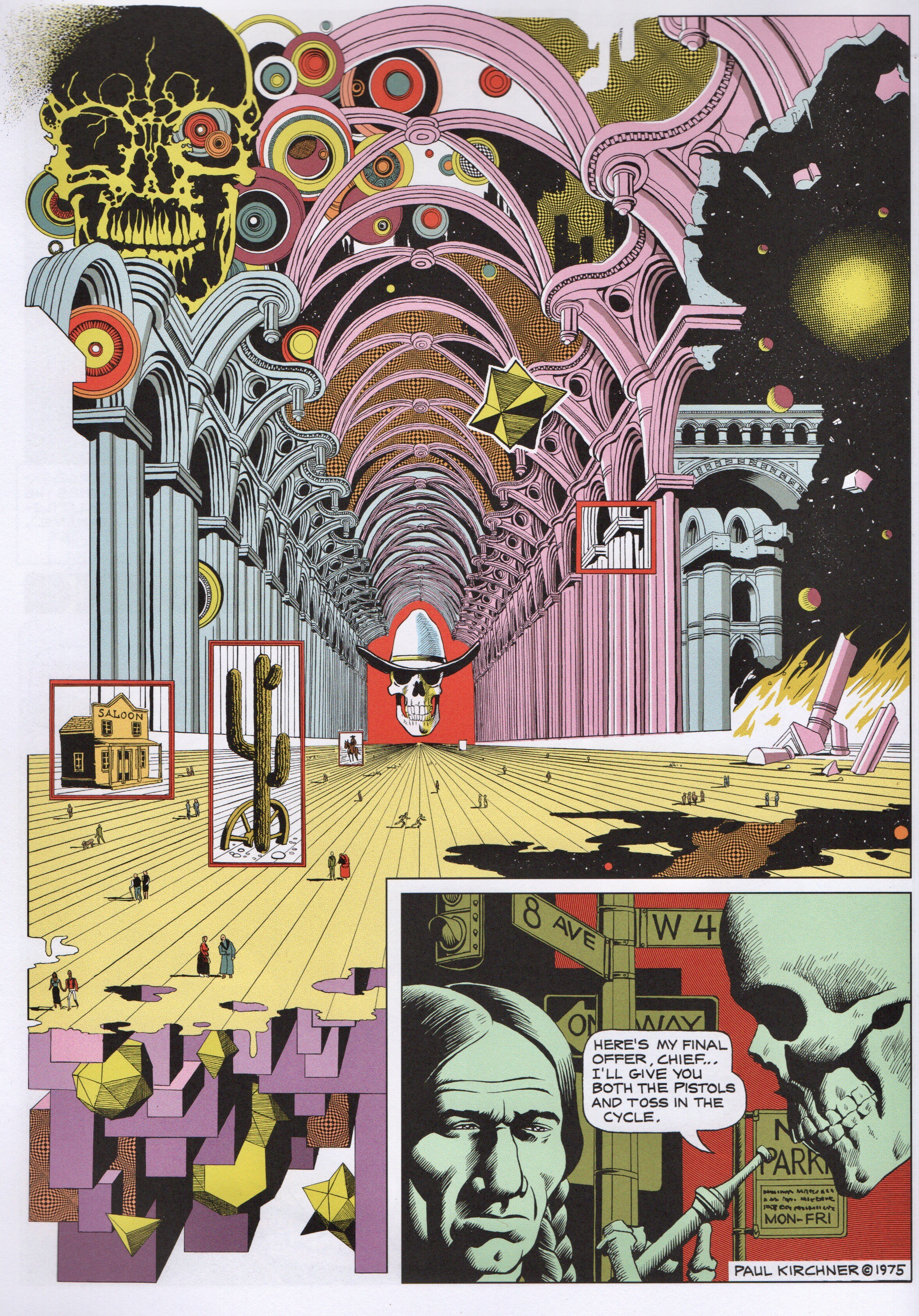
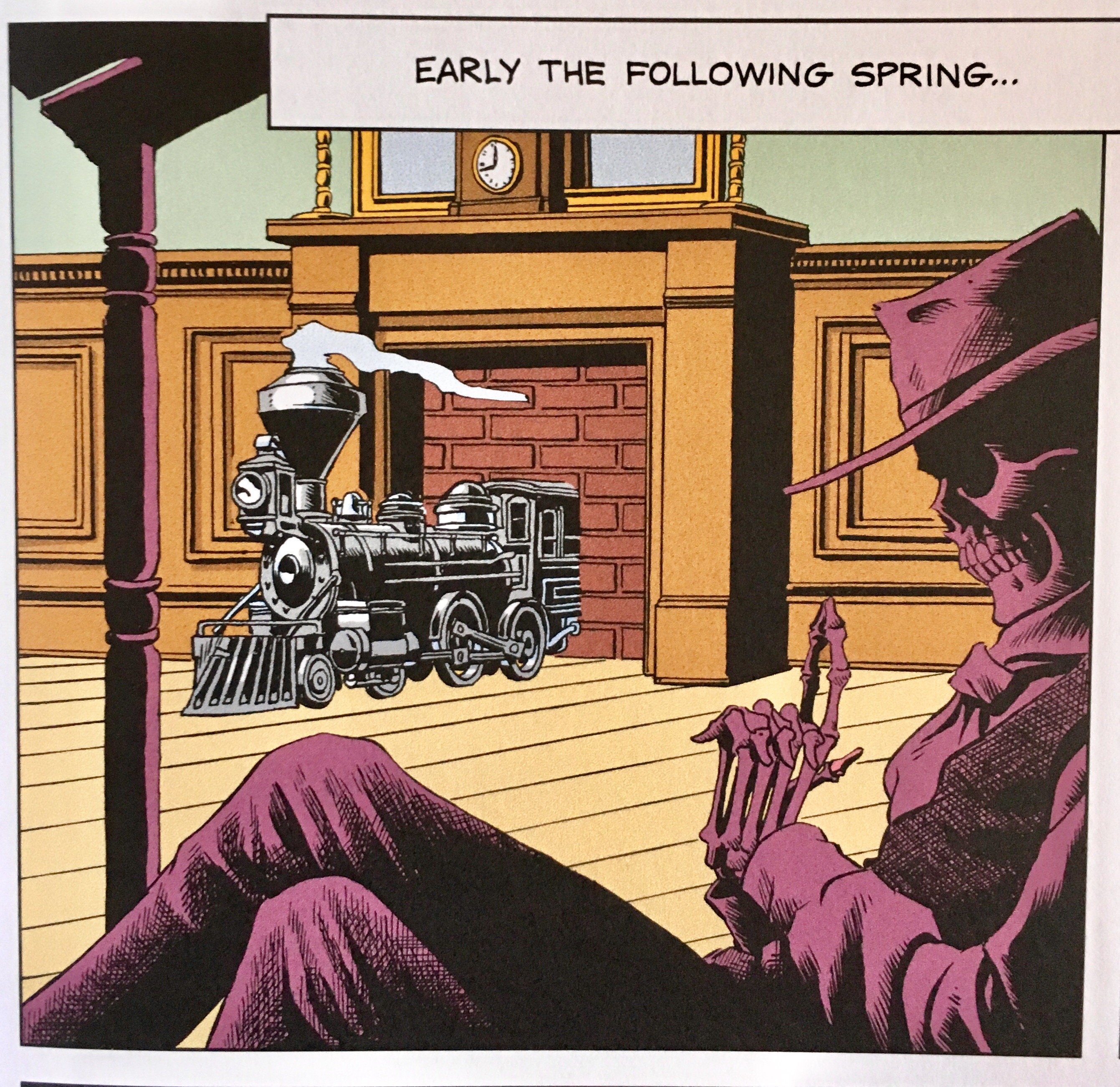
A page from Paul Kirchner’s Dope Rider

img_8368

From “Dope Rider in ‘Meanwhile Back at the Ranch'” by Paul Kirchner. Originally published in High Times #5, Aug.-Sept. 1975. Republished in Awaiting the Collapse, Tanibis Editions.


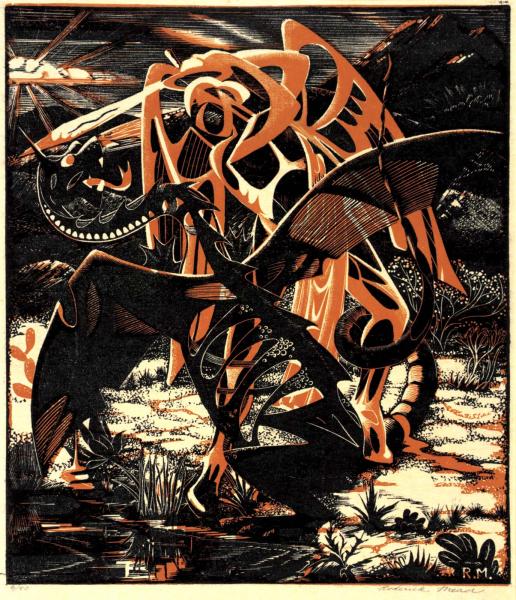
St. Michael and the Dragon — Roderick Mead

1974-122-6_1a

St. Michael and the Dragon, 1939 by Roderick Mead (1900-1971)

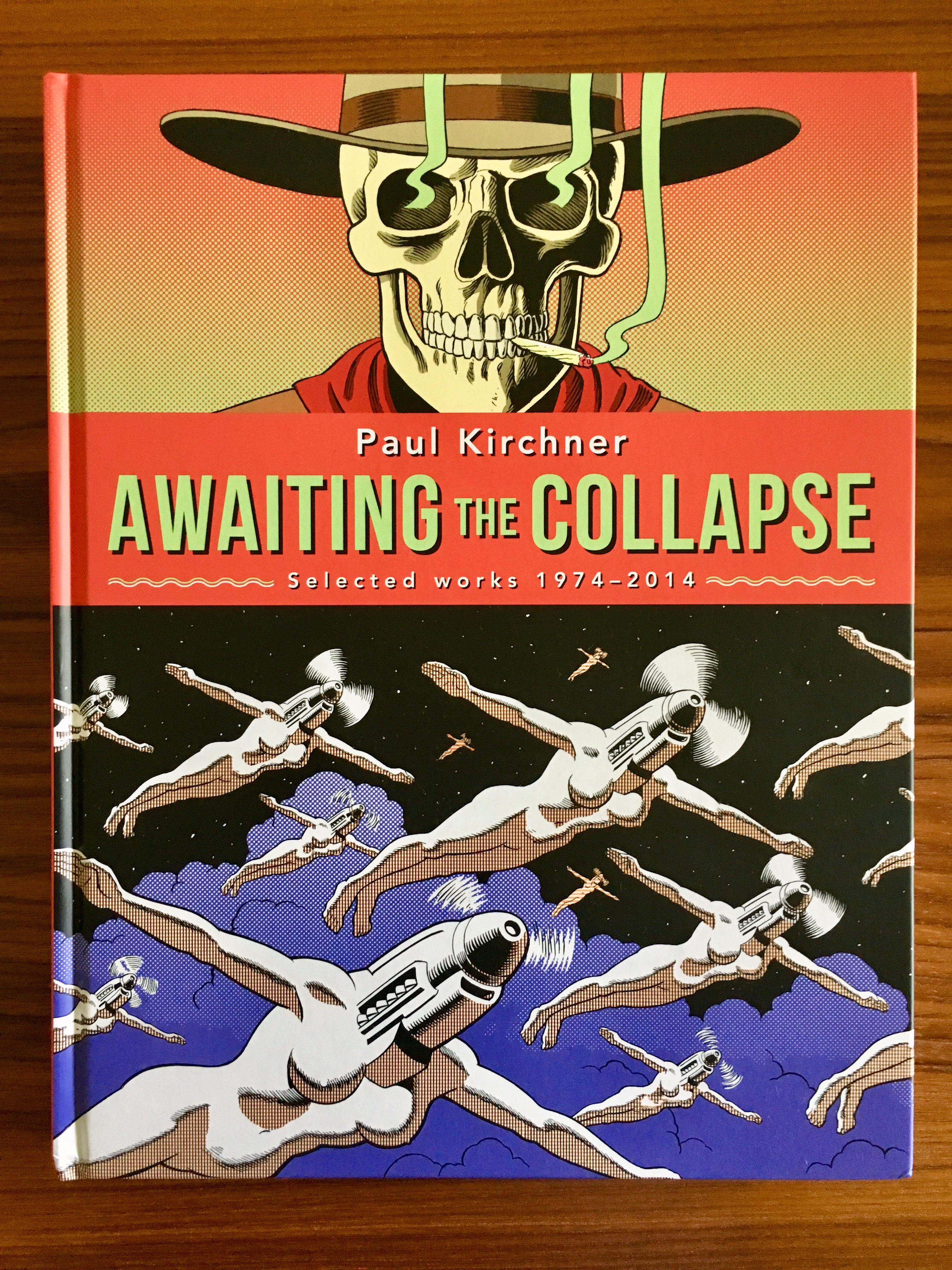
Paul Kirchner’s Awaiting the Collapse (Book acquired, 2 Nov. 2017)

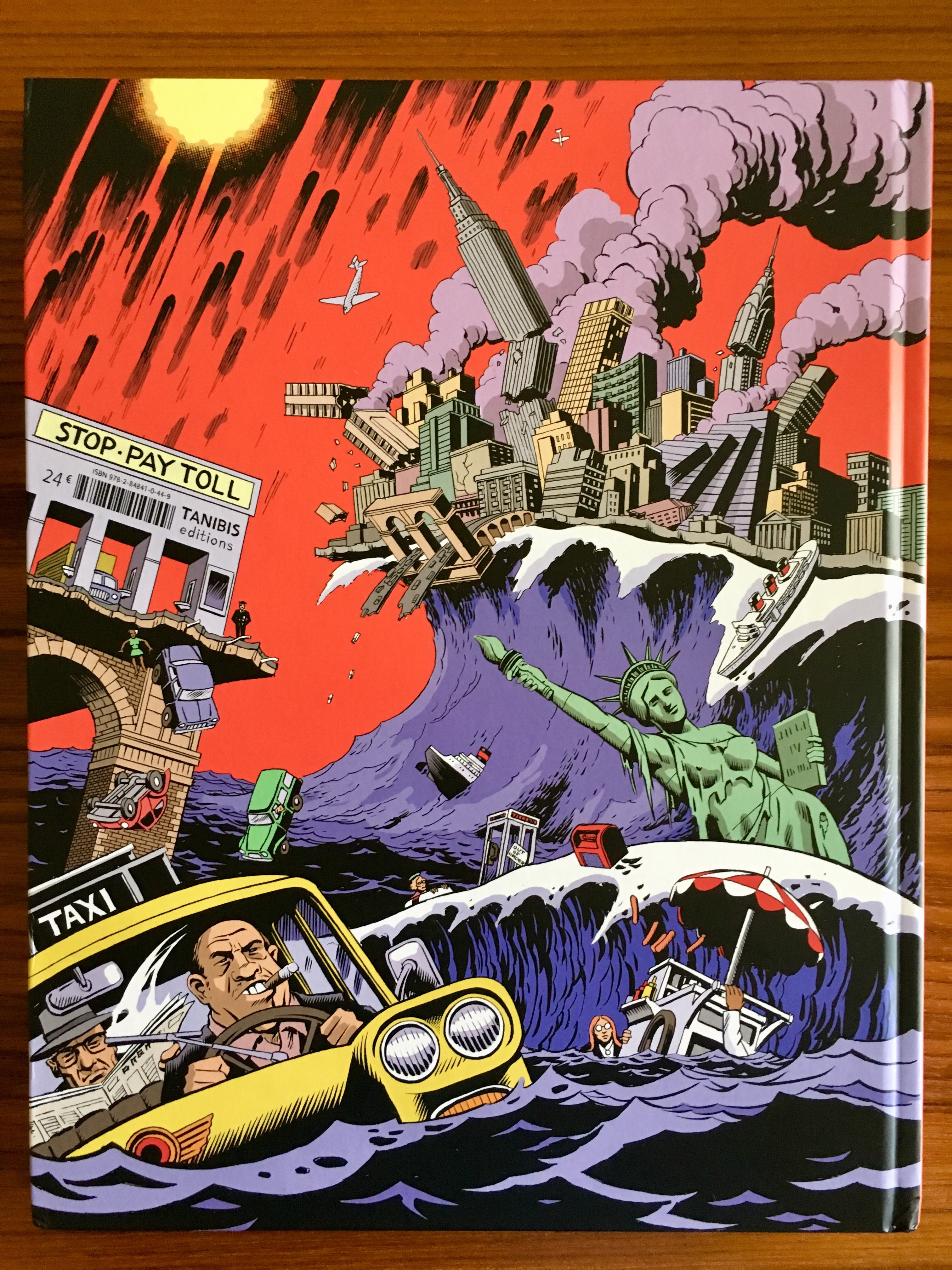
Awaiting the Collapse collects some of the finest and most surreal comix from Paul Kirchner, from the 1970s up through this decade. The book is big and bold and gorgeous. Here’s the back cover:

Awaiting the Collapse is new in hardback from Tanibis Editions, the same good people who brought us hardback editions of The Bus (which I reviewed here), and The Bus 2 (which I reviewed here). A large portion of Collapse features Kirchner’s surreal western Dope Rider strips, which have been hard to find on the internet. It also collects the covers that Kirchner did for Screw magazine, as well as dozens of other one-offs and vignettes, comix in different modes, moods, and manners.

The collection ends with a nice long essay (including numerous photographs, strips, and illustrations) by Kirchner called “Sex, Drugs & Public Transportation: My Strange Trip Through Comics.” I haven’t gotten to it yet because I’m trying to restrain myself from gobbling the collection up all at once.

Here’s Tanibis’s blurb:

This third collaboration between French publishing house Tanibis and comic book artist Paul Kirchner is a collection of the artist’s works, most of them initially published in counter-culture magazines in the 1970s and the 1980s and some dating from his return to comics in the 2010s.

Roughly a third of the stories star Dope Rider, the pot-smoking skeleton whose psychedelic adventures take him through colorful vistas equally reminiscent of Sergio Leone’s spaghetti western films and of the surrealistic paintings of René Magritte and Salvador Dalí. These stories were originally drawn for the marijuana-themed magazine High Times but were also for Kirchner an excuse to create his very own brand of visual poetry.

An other third of the book is a miscellaneous collection of comics whose stories range from the loony (the sextraterrestrial invasion of Earth in “They Came from Uranus”) to the satirical (“Critical mass of cool”) and the outright subversive (if you ever wondered what games toys play at night, read “Dolls at Midnight”).

This book also features a broad selection of the covers Kirchner made for the pornographic tabloid Screw in the 1970s.

Awaiting the Collapse finally contains a previously unpublished essay by Paul Kirchner about his career and his influences, which helps put in perspective the works published in this book.

I promise I’ll have a review of Awaiting the Collapse up soon; for now, let me just underline my enthusiasm—it’s weird and wonderful and gorgeous stuff.

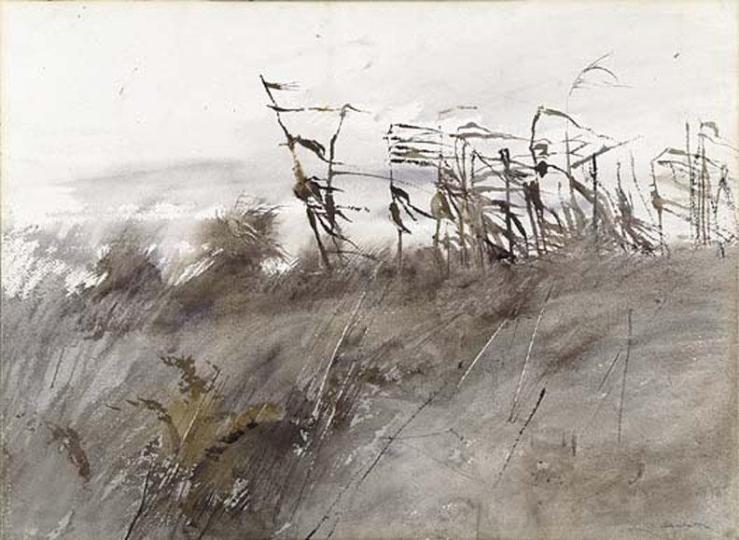
November First — Andrew Wyeth


andrew-wyeth-november-first

November First, 1950 by Andrew Wyeth (1917-2009)

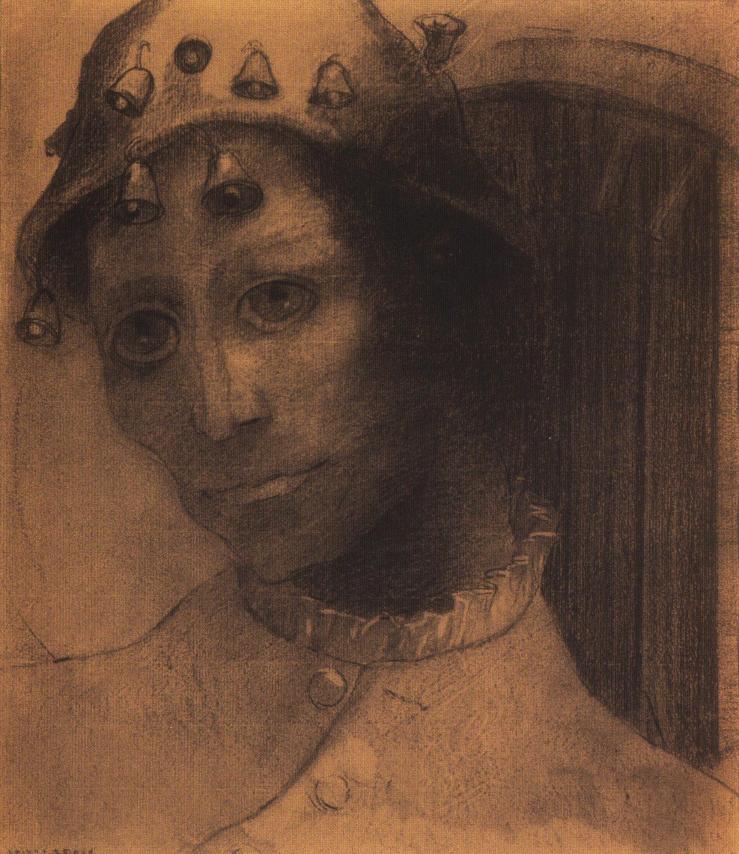
The Smiling Spider — Odilon Redon

the-smiling-spider-1891

The Smiling Spider, 1891 by Odilon Redon (1840-1916)

Selections from One-Star Amazon Reviews of Bram Stoker’s Dracula

[Editorial note: The following citations come from one-star Amazon reviews of Bram Stoker’s novel Dracula. I’ve preserved the reviewers’ original punctuation and spelling. More one-star Amazon reviews].


Crapula

hack author

Painfully verbose

he lives in a castle!

hard to understand

NOTHING is happening

find an abridged version

I have read many horror novels

may be the worst book ever written

being the avid vampire fan that I am

attempt to cash in on the vampire craze

cavort lasciviously with the sons of the devil

Watch the movie and save yourself some time

I’m always willing to read new vampire fiction

epistolary format is monotonous and repetitive

Turns out the vampire in this book is an old guy

It was so stupid and the movie was even stupider

If you’re like me, just tring this book to make yourself feel brave, forget it

I think I have been hacked or my late wife’s daughter is using our account

Any vampire fan knows that vampires roam the streets of upper middle class suburbia

Over the past couple years I’ve started a collection of vampire books which totals over 100 now

I’ll be returning this on my next trip to the library and sticking to the teen reading section for finding my next vampire novel

I fully realize that this is a fictional/fantasy tale containing elements that obviously require a certain amount of leeway and suspension of belief, but

Epostolary novel told from multiple perspectives about the vampire, Count Dracula, who is trying to invade London and turn everyone else into vampires. A bunch of rich guys and a chick decide to stop him.

no relationship between Lucy and the Count-which i suppose makes more sense as to why he bit her

up pops a homoerotic cover with naked men, one whose penis is exposed in the background

the book is down hill from the time Dracula is in London and it is decided that he must be destroyed

the method being used to advance the plot being in disuse since quite some time

he is not a suave romantic movie/play character but an angry stupid animal

Amazon markets this book not to children but homosexual adult men

The movie was so much better even with Keanu Reeves’ awful acting

what are the standards when it comes to classic books

It started so well and I don’t know what happen?

I do not recommend this product to anyone else

Maybe I’ve read too much Sookie and Twilight

it is a great deterrent to the modern reader

unspoiled virgins or destroyed whores

I was looking for the epic love story

the female characters are cloistered

No gore, no horror, no nothing

worthless female characters

illlogical under pinnings

There’s no STORY here

creepy, and disgusting

In style it is archaic

a very weird book

I call it a joke

no romance

boring plot

Sucked.

The Vagabonds — Jan Toorop

the-vagabonds-1891

The Vagabonds, 1891 by Jan Toorop (1858-1928)

Unfinished #14, Holy Spirit — Dragan Bibin

tumblr_os6xrbb2sq1uqpzx8o2_1280

Unfinished #14, Holy Spirit, 2017 by Dragan Bibin (b. 1984)

2001, Blaise Larmee’s enigmatic deconstruction of the graphic novel (Book acquired, 16 Oct. 2017)

img_8267

Blaise Larmee’s 2001 is new from 2dcloud. It showed up at the house a few weeks ago, its minimalist cover strange and intriguing.

img_8266.jpg

I’m not sure what the book is—is it a sort of metatextual commentary on Larmee’s webcomic of the same name? A kind of autobiographical riff? A deconstruction of the graphic novel form?

img_8271

What Larmee’s book is is not as compelling, ultimately, as how it is—sketchy, loose, messy; littered with hi-res scans–receipts, crushed cans and bottles, a house key—scraps from the real that call attention to the narrative’s artifice.

img_8270

2001 is strange and fascinating in its fragmentary, elusory nature. Check it out.

img_8268

The Witches’ Sabbath — Salvator Rosa

salvator_rosa_-_the_witches27_sabbath_-_google_art_project

The Witches’ Sabbath, 1654 by Salvator Rosa (1615-1673)

“A Ghost,” a short story by Guy de Maupassant

“A Ghost”

by

Guy de Maupassant

Translated by M. Charles Sommer


We were speaking of sequestration, alluding to a recent lawsuit. It was at the close of a friendly evening in a very old mansion in the Rue de Grenelle, and each of the guests had a story to tell, which he assured us was true.

Then the old Marquis de la Tour-Samuel, eighty-two years of age, rose and came forward to lean on the mantelpiece. He told the following story in his slightly quavering voice.

“I, also, have witnessed a strange thing—so strange that it has been the nightmare of my life. It happened fifty-six years ago, and yet there is not a month when I do not see it again in my dreams. From that day I have borne a mark, a stamp of fear,—do you understand?

“Yes, for ten minutes I was a prey to terror, in such a way that ever since a constant dread has remained in my soul. Unexpected sounds chill me to the heart; objects which I can ill distinguish in the evening shadows make me long to flee. I am afraid at night.

“No! I would not have owned such a thing before reaching my present age. But now I may tell everything. One may fear imaginary dangers at eighty-two years old. But before actual danger I have never turned back, mesdames.

“That affair so upset my mind, filled me with such a deep, mysterious unrest that I never could tell it. I kept it in that inmost part, that corner where we conceal our sad, our shameful secrets, all the weaknesses of our life which cannot be confessed.

“I will tell you that strange happening just as it took place, with no attempt to explain it. Unless I went mad for one short hour it must be explainable, though. Yet I was not mad, and I will prove it to you. Imagine what you will. Here are the simple facts:

“It was in 1827, in July. I was quartered with my regiment in Rouen.

“One day, as I was strolling on the quay, I came across a man I believed I recognized, though I could not place him with certainty. I instinctively went more slowly, ready to pause. The stranger saw my impulse, looked at me, and fell into my arms.

“It was a friend of my younger days, of whom I had been very fond. He seemed to have become half a century older in the five years since I had seen him. His hair was white, and he stooped in his walk, as if he were exhausted. He understood my amazement and told me the story of his life.

“A terrible event had broken him down. He had fallen madly in love with a young girl and married her in a kind of dreamlike ecstasy. After a year of unalloyed bliss and unexhausted passion, she had died suddenly of heart disease, no doubt killed by love itself.

“He had left the country on the very day of her funeral, and had come to live in his hotel at Rouen. He remained there, solitary and desperate, grief slowly mining him, so wretched that he constantly thought of suicide.

“‘As I thus came across you again,’ he said, ‘I shall ask a great favor of you. I want you to go to my château and get some papers I urgently need. They are in the writing-desk of my room, of our room. I cannot send a servant or a lawyer, as the errand must be kept private. I want absolute silence. Continue reading ““A Ghost,” a short story by Guy de Maupassant”

Mental Places: A Conversation with Gerald Murnane

“The Man with the Pumpkin Head,” a very short story by Robert Walser

Pumpkinhead (Self-Portrait) — Jamie Wyeth

062N09503_8RXZWCapture

Capture

Pumpkinhead (Self-Portrait), 1972 by Jamie Wyeth (b. 1946)