Jason — J.M.W. Turner

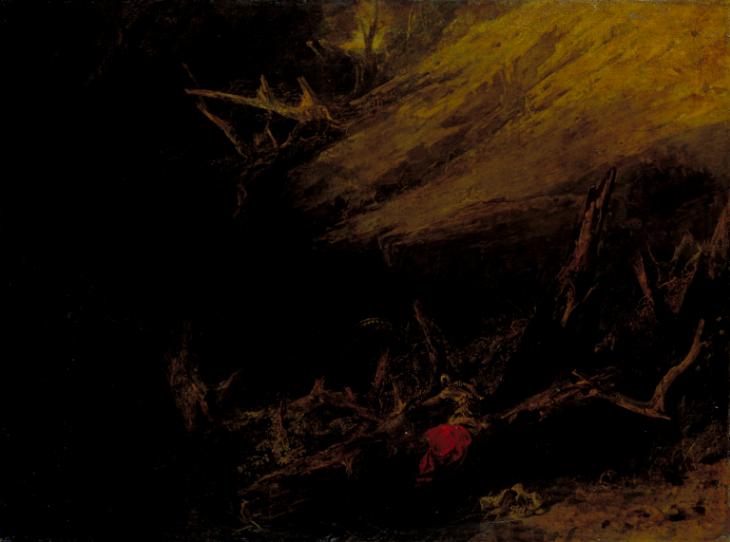
Jason exhibited 1802 by Joseph Mallord William Turner 1775-1851

Jason, 1802 by Joseph Mallord William Turner (1775–1851)

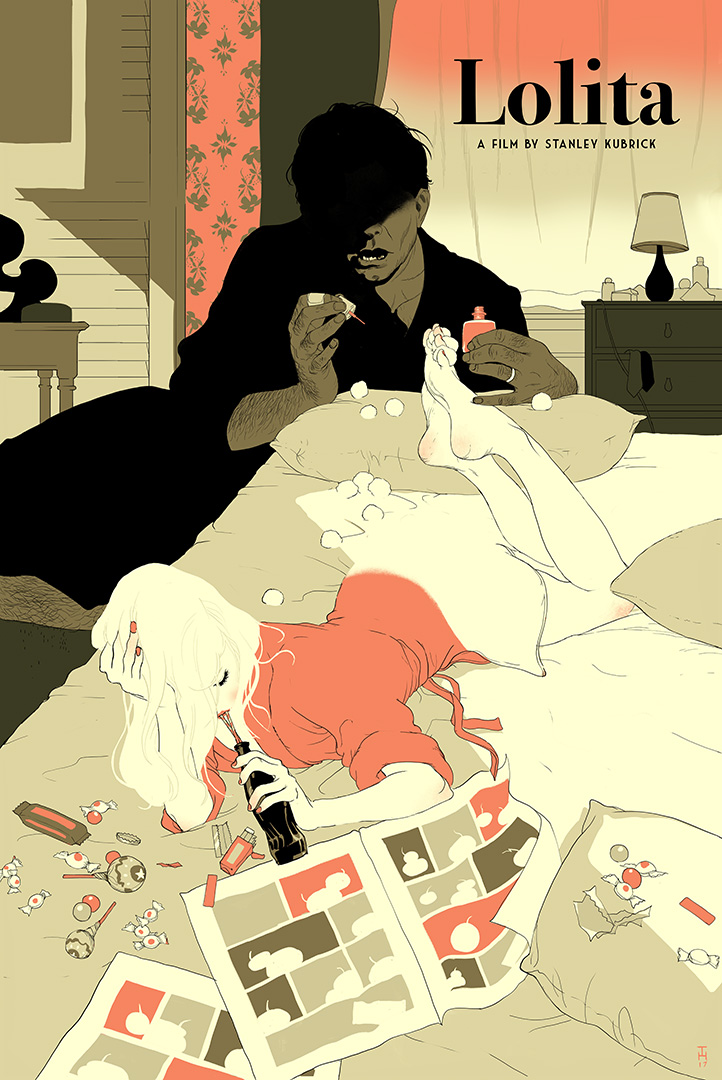
Tomer Hanuka’s film posters for Stanley Kubrick’s Lolita

lolita_reg72.jpglolita_var72.jpg

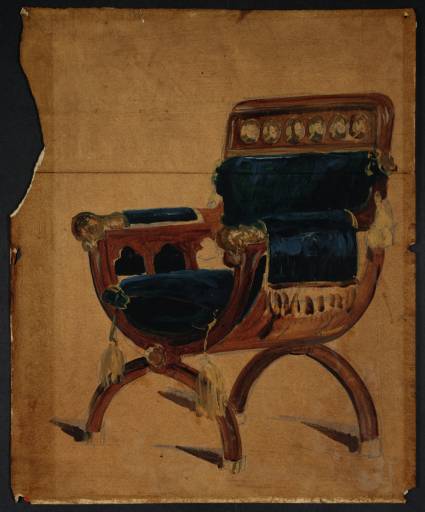
An Arm Chair — J.M.W. Turner

D05959_9.jpg

An Arm Chair, c.1801 by Joseph Mallord William Turner (1775–1851)

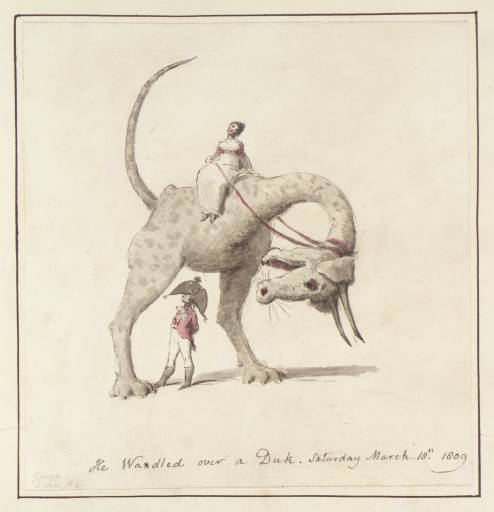
Two-Legged Ass-Headed Monster — George Dance

1. Caricature. A Woman Seated on a Two-Legged Ass-Headed Monster Straddling a Man in Military Uniform 1809 by George Dance 1741-1825

1. Caricature. A Woman Seated on a Two-Legged Ass-Headed Monster Straddling a Man in Military Uniform, 1809 by George Dance (1741–1825)

The Bed, The Chair, Waiting — Eric Fischl

the-bed-the-chair-waiting.jpg!Large

The Bed, The Chair, Waiting, 2000 by Eric Fischl (b. 1948)

An illustrated Devil’s Dictionary (Book acquired, 14 April 2017)

img_5948

I couldn’t pass up this 1958 illustrated edition of Ambrose Bierce’s caustic classic The Devil’s Dictionary. It’s published by The Peter Pauper Press, with art by Joseph Low. I took the matching dust jacket off for the scan above. A sample of the innards:

img_5950

Selections from One-Star Amazon Reviews of Margaret Atwood’s The Handmaid’s Tale

[Editorial note: The following citations come from one-star Amazon reviews of Margaret Atwood’s novel The Handmaid’s Tale. (For the record, I think The Handmaid’s Tale is pretty great).

 I’ve preserved the reviewers’ original punctuation and spelling. More one-star Amazon reviews].


shrill

Strange

no hope

anti male story

boring and odd

Feminist dogma

anti-religious zeal

poorly researched

futuristic yet dated

no good verses evil

Political propaganda

socialist point of view

Too many adjectives!!

extremely depressing

It all-around too much

tries to be all futuristic

I’m not a Christian, but

Overuse of punctuation

Sorry but no one liked it

a lot of words were used

twisted grossness and blah

Not a feminist novel for sure

Actually, it is about infertility

Written by a 12-year-old shut in

It’s hard to glean what happened

Not realistic as a futuristic fantasy

pointless exercise in self-contempt

annoying stream-of-consciousness style

these fertile women aren’t treated badly

an academic’s paranoid bondage fantasy

a lot of sexual situations and foul language

The reader is always in a confused state of mind

The main character doesn’t grow or learn anything

The author created a lot of terms but didn’t explain them

literally fills the pages by talking about grocery shopping

obviously has an ax to grind with Judeo-Christian principle

There isn’t much focus on what women are not allowed to do

Mostly just someone running errands in an American dystopia

an author who obviously doesn’t understand the passages from the Bible

main character is weak, conviction less and incapable of making any exciting moves

I’m going to bury it in the ground and let the worms eat all those words unfit for human consumption

drones on and on about brick sidewalks and rays of sunlight and tulips and blue stripes on kitchen towels

Is this supposed to be 1984, Brave New World, or even Hunger Games? If you compare it to any of those books, it is utter fail.

Chair — Matthias Weischer

chair.png

Chair, 2004 by Matthias Weischer (b. 1974)

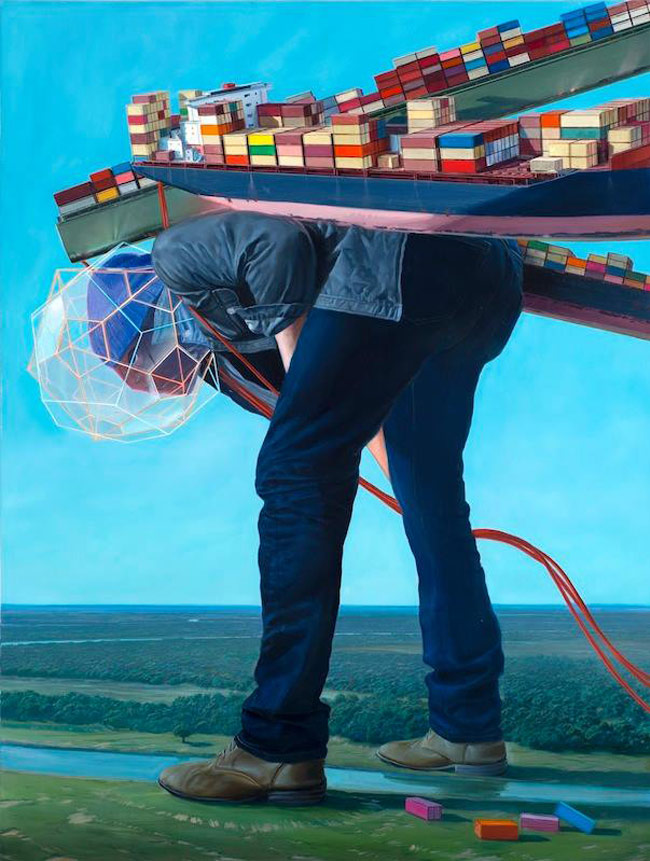
Shore for the Unmanned — Jean-Pierre Roy

JPRoy-Shore-for-the-Unmanned

Shore for the Unmanned, 2014 by Jean-Pierre Roy (b. 1974)

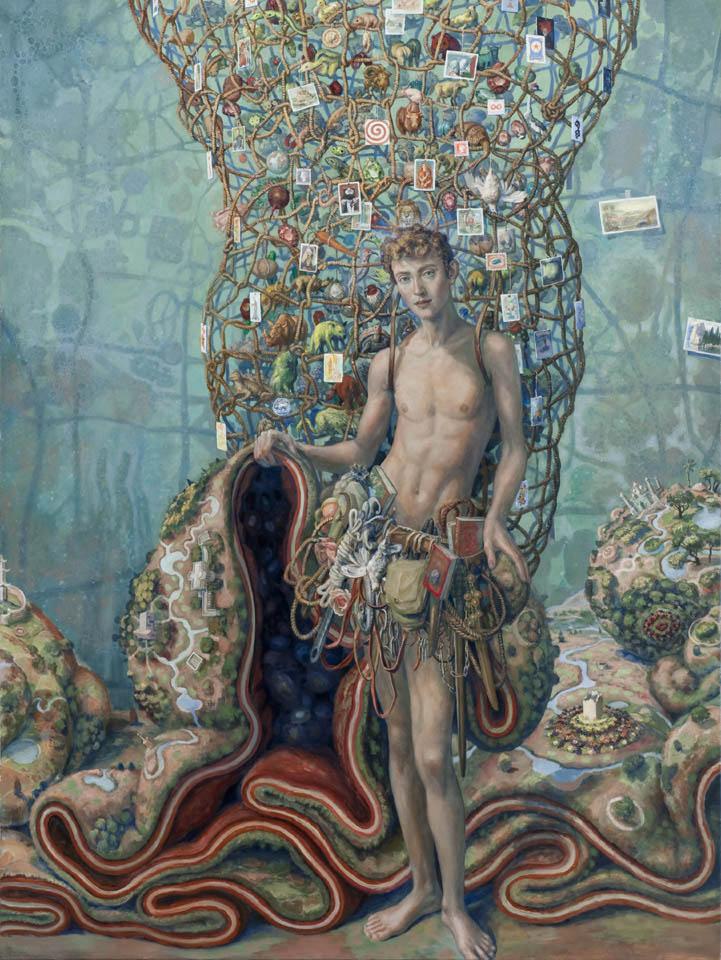
Self Portrait as Great Scout Leader III — Julie Heffernan

Great Scout Leader III_2010_72x54

Self Portrait as Great Scout Leader III, 2010 by Julie Heffernan (b. 1956)

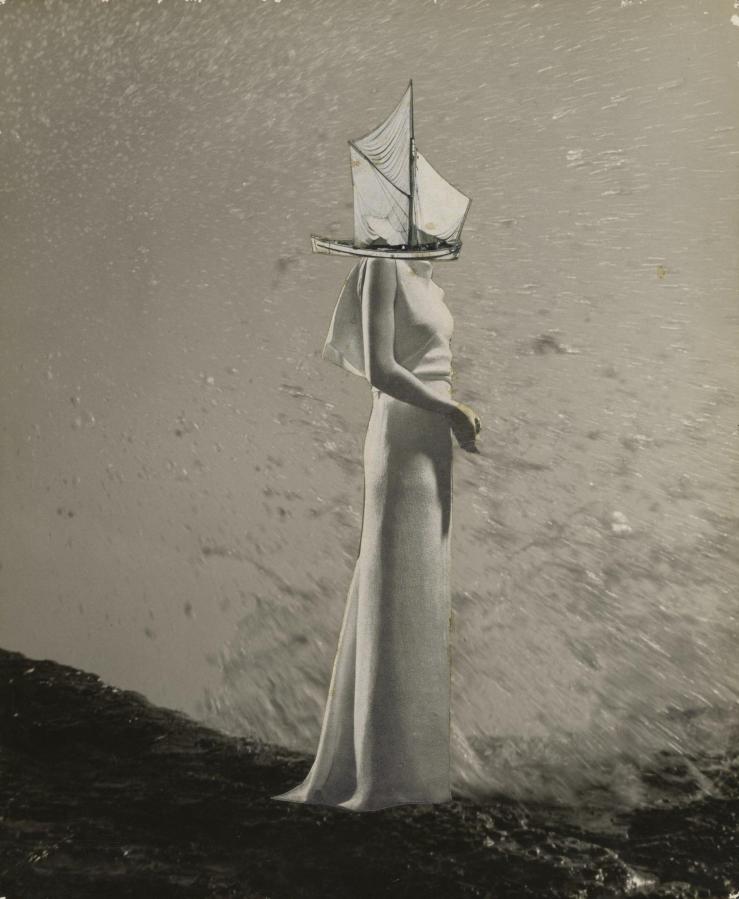
A Chronicle of Drifting — Kansuke Yamamoto

007-kansuke-yamamoto-theredlist

A Chronicle of Drifting, 1949 by Kansuke Yamamoto (1914-87)

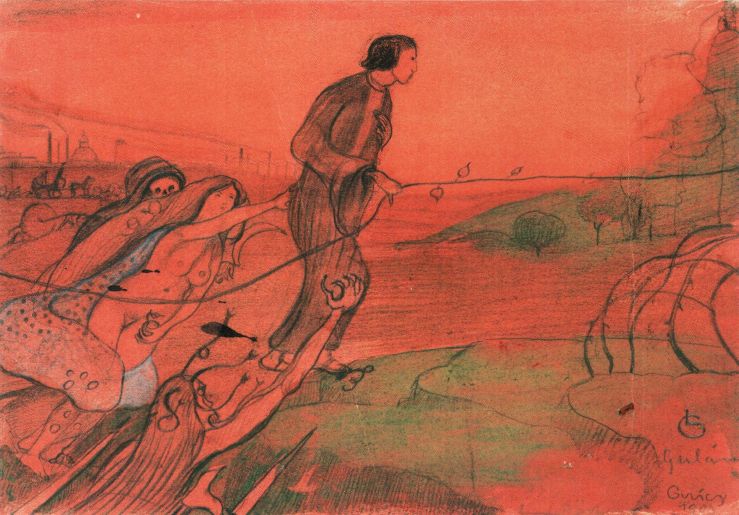
Dream — Lajos Gulácsy

Gulácsy_Dream_1903

Dream, 1903 by Lajos Gulácsy (1882-1932)

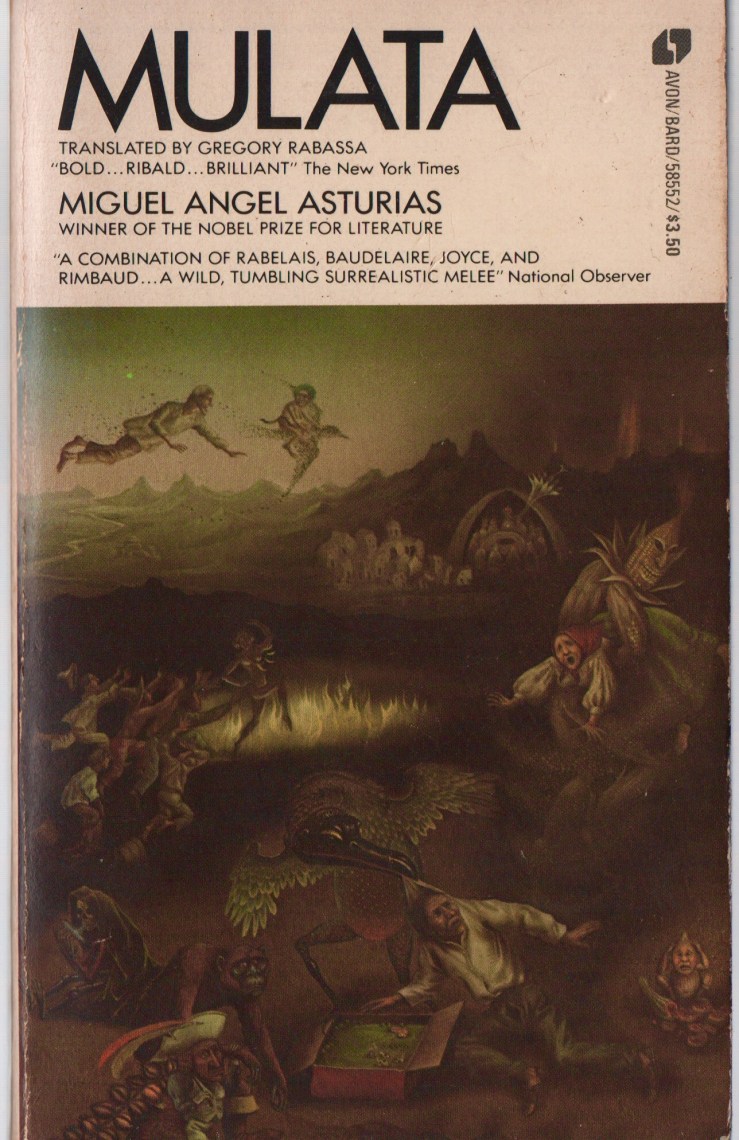
Miguel Ángel Asturias’s weird novel Mulata (Book acquired, 14 April 2017)

img_5940

I admit that I picked up Miguel Ángel Asturias’s 1963 novel Mulata de Tal because of the cover and blurb alone. This 1982 translation is by Gregory Rabassa, and part of a series of Latin American authors that Avon/Bard put out in really cool attractive mass market paperbacks in the 1980s. The titles can be hit or miss, but I like the energy of the first two chapters of Mulata. Back cover blurb:

img_5941

Sunday Comics

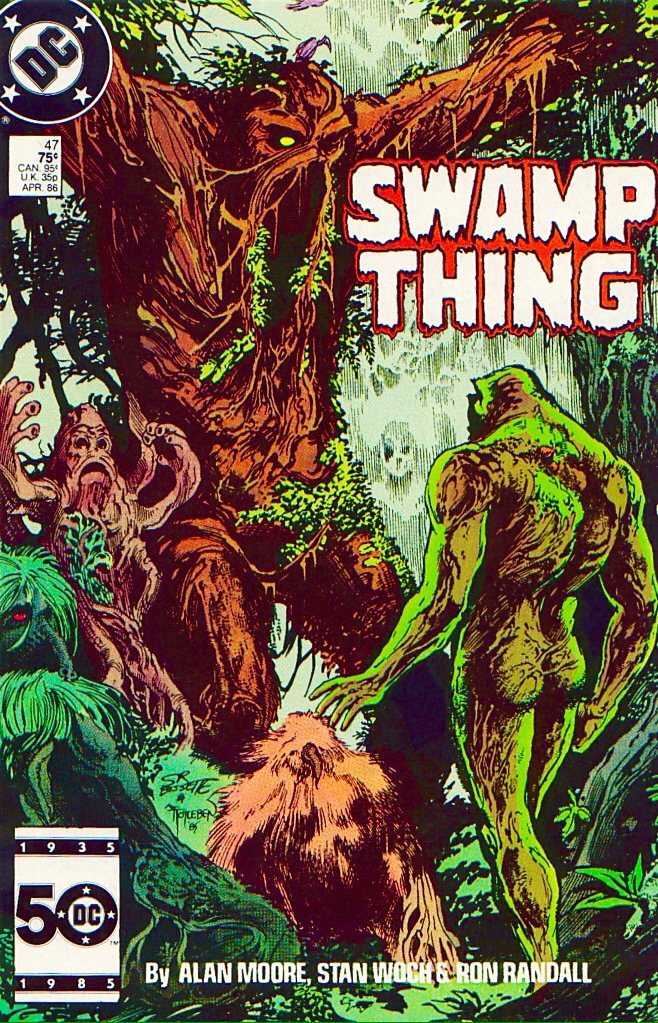
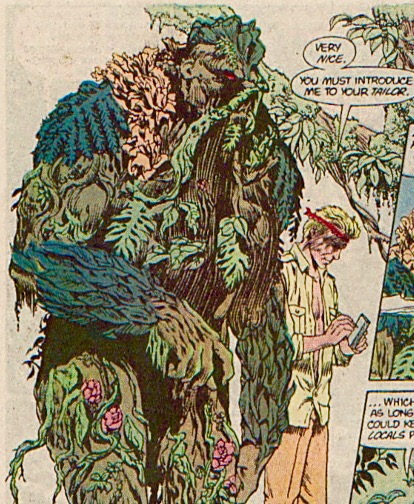
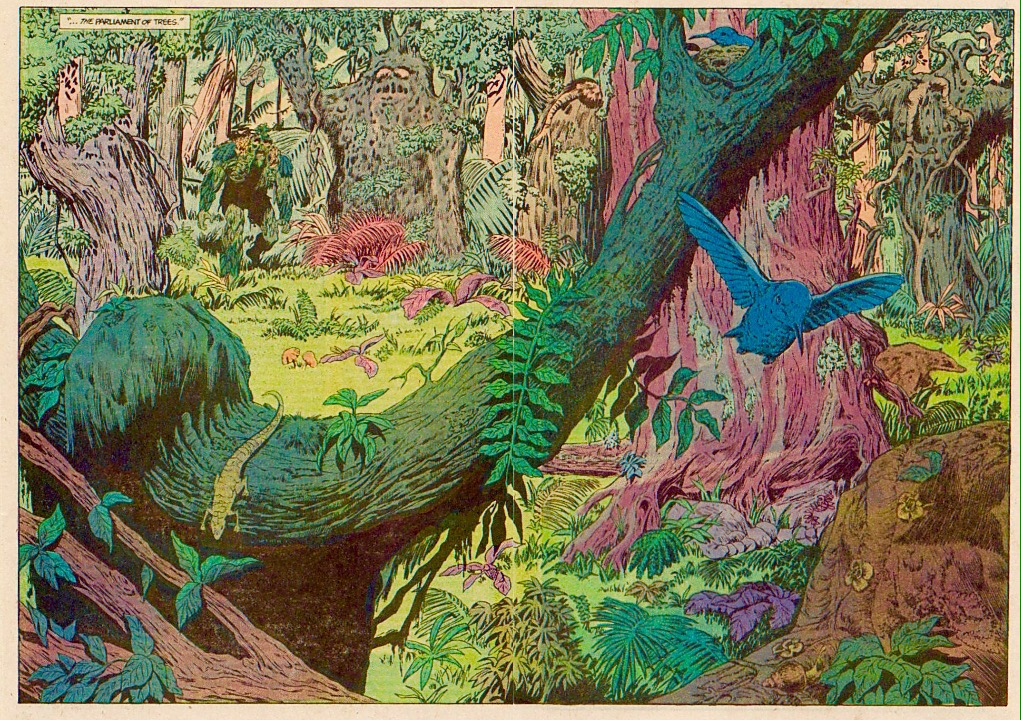
Pages and panels from “The Parliament of Trees,” Swamp Thing #47 (April, 1986) by Alan Moore with guest art by Stan Woch and Ron Randall and colors by Tatjana Wood. Seemed appropriate for Earth Day weekend (and I’m still burning through Moore’s run on Swamp Thing.

In this issue, Swamp Thing goes to South America via his death/resurrection power.

–and gets a new “costume”—

He meets other flora Elementals: There’s a cool splash page:

Cormac McCarthy’s essay “The Kekulé Problem,” a meditation on language and consciousness

img_5259

The science magazine Nautilus has published Cormac McCarthy’s essay “The Kekulé Problem.” This is the first piece of nonfiction that McCarthy has published. It’s a fascinating essay that takes its name from a dream of Friedrich August Kekulé, “father of organic chemistry.” Kekulé dreamed of an ouroboros, an unconscious insight that led him to “discover” the ring-structure of the benzene molecule. (Thomas Pynchon writes about Kekulé’s dream in Gravity’s Rainbow, by the way).  Anyway, it’s a nice piece on a complex subject, and it’s fun to watch McCarthy move from lucid, transparent, and direct prose into wry fragments that are, well, more McCarthyesque. From the essay––

The evolution of language would begin with the names of things. After that would come descriptions of these things and descriptions of what they do. The growth of languages into their present shape and form—their syntax and grammar—has a universality that suggests a common rule. The rule is that languages have followed their own requirements. The rule is that they are charged with describing the world. There is nothing else to describe.

All very quickly. There are no languages whose form is in a state of development. And their forms are all basically the same.

We dont know what the unconscious is or where it is or how it got there—wherever there might be. Recent animal brain studies showing outsized cerebellums in some pretty smart species are suggestive. That facts about the world are in themselves capable of shaping the brain is slowly becoming accepted. Does the unconscious only get these facts from us, or does it have the same access to our sensorium that we have? You can do whatever you like with the us and the our and the we. I did. At some point the mind must grammaticize facts and convert them to narratives. The facts of the world do not for the most part come in narrative form. We have to do that.

David Berman goes to Israel in the 2007 documentary Silver Jew

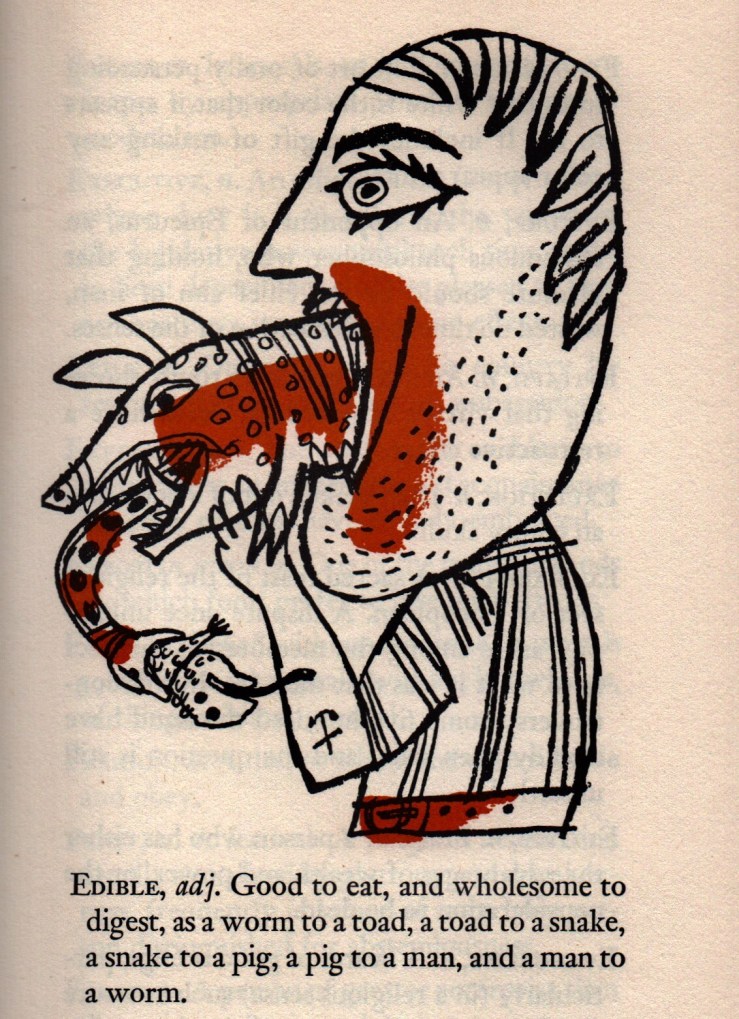
Edible (Ambrose Bierce)

From Ambrose Bierce’s The Devil’s Dictionary. 

Originally published in 1906; the image is from The Peter Pauper Press’s 1958 illustrated edition, with art by Joseph Low.