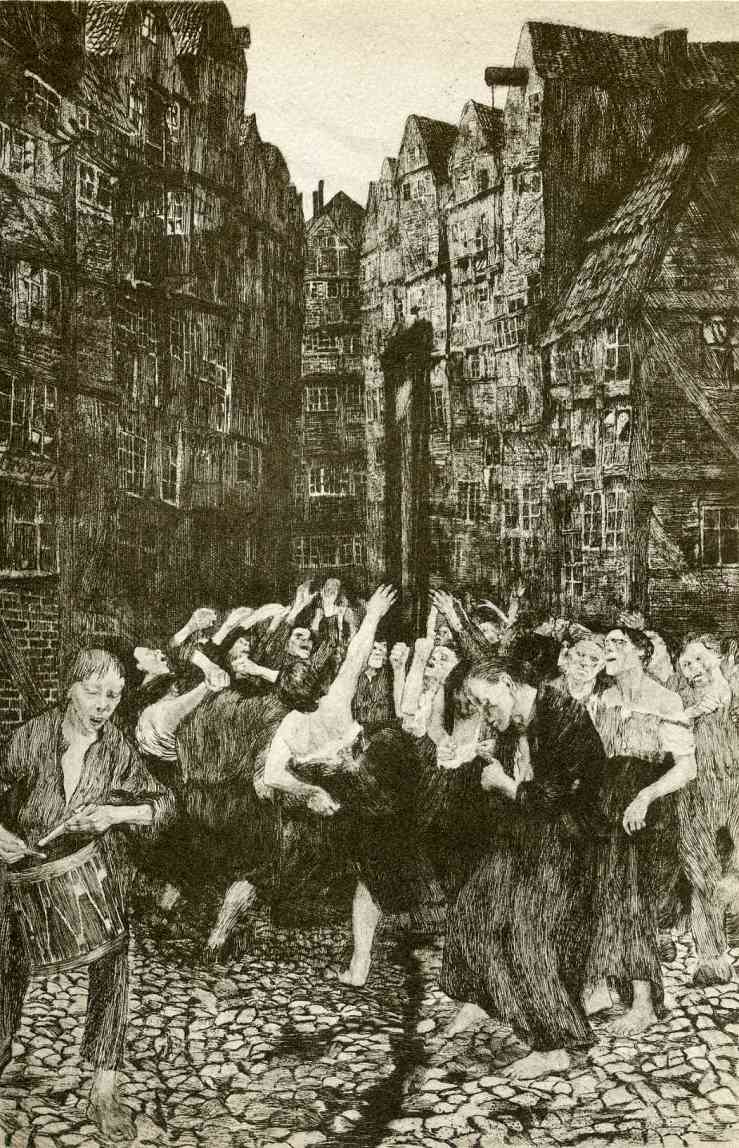
The Carmagnole (Dance around the Guillotine) — Kathe Kollwitz (1867-1945)

The Carmagnole (Dance around the Guillotine) — Kathe Kollwitz (1867-1945)

Judith and Holofernes, c. 1554 by Giorgio Vasari (1511-74)
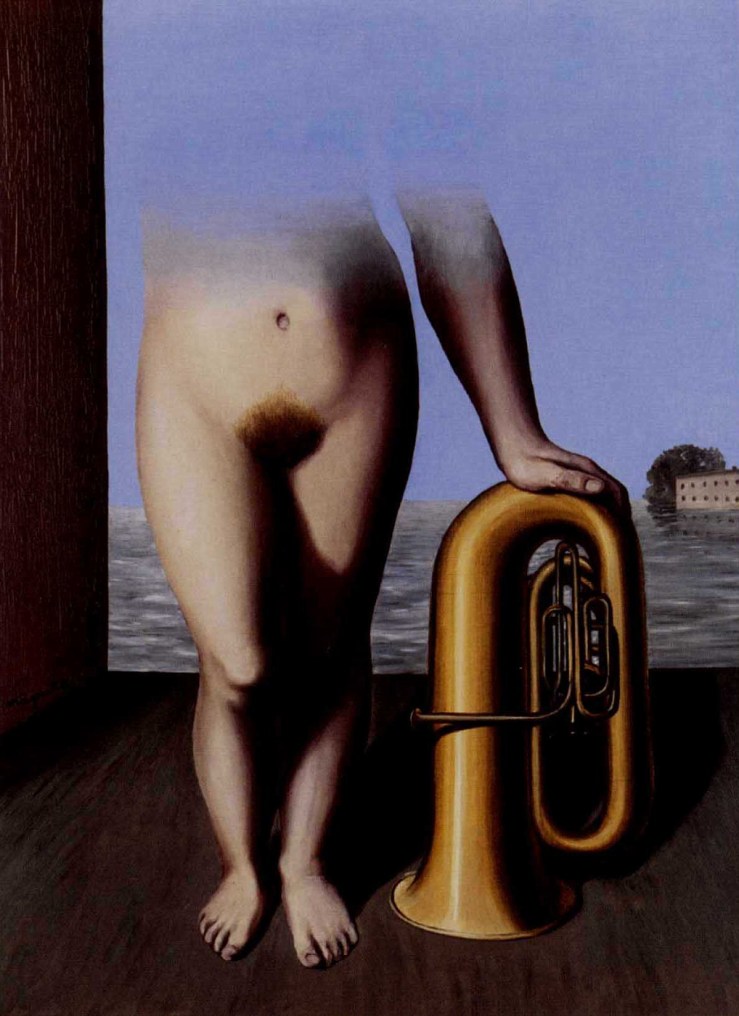
L’Inondation (The Flood), 1928 by Rene Magritte (1898-1967)
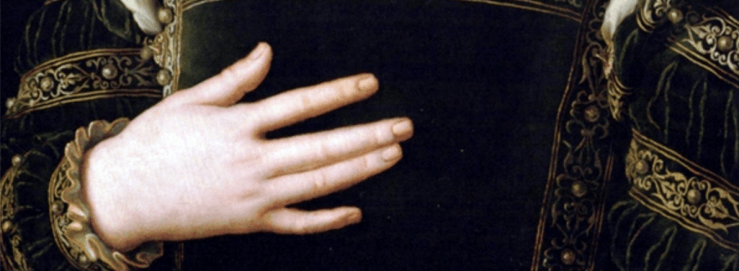

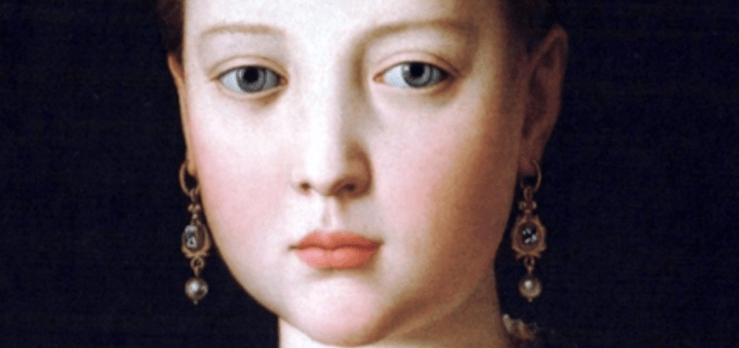
Portrait of Maria de’ Medici, 1553 by Agnolo Bronzino (1503-72)
“The Great Carbuncle”
by
Nathaniel Hawthorne
At nightfall once in the olden time, on the rugged side of one of the Crystal Hills, a party of adventurers were refreshing themselves after a toilsome and fruitless quest for the Great Carbuncle. They had come thither, not as friends nor partners in the enterprise, but each, save one youthful pair, impelled by his own selfish and solitary longing for this wondrous gem. Their feeling of brotherhood, however, was strong enough to induce them to contribute a mutual aid in building a rude hut of branches and kindling a great fire of shattered pines that had drifted down the headlong current of the Amonoosuck, on the lower bank of which they were to pass the night. There was but one of their number, perhaps, who had become so estranged from natural sympathies by the absorbing spell of the pursuit as to acknowledge no satisfaction at the sight of human faces in the remote and solitary region whither they had ascended. A vast extent of wilderness lay between them and the nearest settlement, while scant a mile above their heads was that bleak verge where the hills throw off their shaggy mantle of forest-trees and either robe themselves in clouds or tower naked into the sky. The roar of the Amonoosuck would have been too awful for endurance if only a solitary man had listened while the mountain-stream talked with the wind.
The adventurers, therefore, exchanged hospitable greetings and welcomed one another to the hut where each man was the host and all were the guests of the whole company. They spread their individual supplies of food on the flat surface of a rock and partook of a general repast; at the close of which a sentiment of good-fellowship was perceptible among the party, though repressed by the idea that the renewed search for the Great Carbuncle must make them strangers again in the morning. Seven men and one young woman, they warmed themselves together at the fire, which extended its bright wall along the whole front of their wigwam. As they observed the various and contrasted figures that made up the assemblage, each man looking like a caricature of himself in the unsteady light that flickered over him, they came mutually to the conclusion that an odder society had never met in city or wilderness, on mountain or plain.
The eldest of the group—a tall, lean, weatherbeaten man some sixty years of age—was clad in the skins of wild animals whose fashion of dress he did well to imitate, since the deer, the wolf and the bear had long been his most intimate companions. He was one of those ill-fated mortals, such as the Indians told of, whom in their early youth the Great Carbuncle smote with a peculiar madness and became the passionate dream of their existence. All who visited that region knew him as “the Seeker,” and by no other name. As none could remember when he first took up the search, there went a fable in the valley of the Saco that for his inordinate lust after the Great Carbuncle he had been condemned to wander among the mountains till the end of time, still with the same feverish hopes at sunrise, the same despair at eve. Near this miserable Seeker sat a little elderly personage wearing a high-crowned hat shaped somewhat like a crucible. He was from beyond the sea—a Doctor Cacaphodel, who had wilted and dried himself into a mummy by continually stooping over charcoal-furnaces and inhaling unwholesome fumes during his researches in chemistry and alchemy. It was told of him—whether truly or not—that at the commencement of his studies he had drained his body of all its richest blood and wasted it, with other inestimable ingredients, in an unsuccessful experiment, and had never been a well man since. Another of the adventurers was Master Ichabod Pigsnort, a weighty merchant and selectman of Boston, and an elder of the famous Mr. Norton’s church. His enemies had a ridiculous story that Master Pigsnort was accustomed to spend a whole hour after prayer-time every morning and evening in wallowing naked among an immense quantity of pine-tree shillings, which were the earliest silver coinage of Massachusetts. The fourth whom we shall notice had no name that his companions knew of, and was chiefly distinguished by a sneer that always contorted his thin visage, and by a prodigious pair of spectacles which were supposed to deform and discolor the whole face of nature to this gentleman’s perception. The fifth adventurer likewise lacked a name, which was the greater pity, as he appeared to be a poet. He was a bright-eyed man, but woefully pined away, which was no more than natural if, as some people affirmed, his ordinary diet was fog, morning mist and a slice of the densest cloud within his reach, sauced with moonshine whenever he could get it. Certain it is that the poetry which flowed from him had a smack of all these dainties. The sixth of the party was a young man of haughty mien and sat somewhat apart from the rest, wearing his plumed hat loftily among his elders, while the fire glittered on the rich embroidery of his dress and gleamed intensely on the jewelled pommel of his sword. This was the lord De Vere, who when at home was said to spend much of his time in the burial-vault of his dead progenitors rummaging their mouldy coffins in search of all the earthly pride and vainglory that was hidden among bones and dust; so that, besides his own share, he had the collected haughtiness of his whole line of ancestry. Lastly, there was a handsome youth in rustic garb, and by his side a blooming little person in whom a delicate shade of maiden reserve was just melting into the rich glow of a young wife’s affection. Her name was Hannah, and her husband’s Matthew—two homely names, yet well enough adapted to the simple pair who seemed strangely out of place among the whimsical fraternity whose wits had been set agog by the Great Carbuncle. Continue reading ““The Great Carbuncle,” a story by Nathaniel Hawthorne”
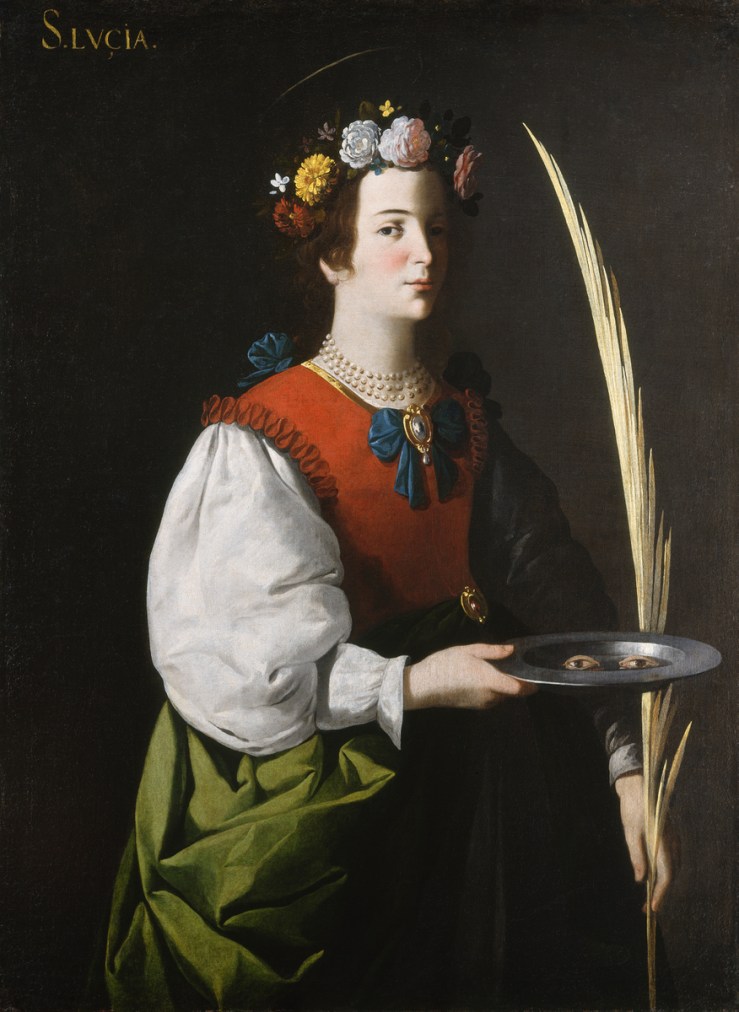
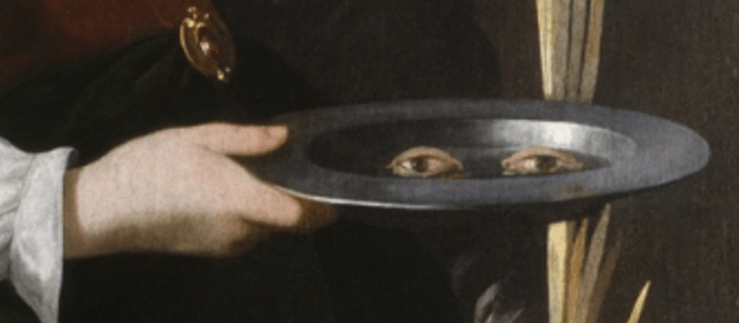
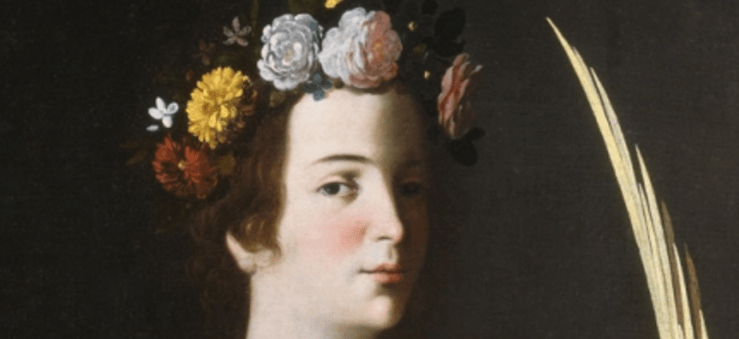
Saint Lucy, c.1625-30 by Francisco de Zurbarán (1598-1664)
May 1st.–. . . Every day of my life makes me feel more and more how seldom a fact is accurately stated; how, almost invariably, when a story has passed through the mind of a third person, it becomes, so far as regards the impression that it makes in further repetitions, little better than a falsehood, and this, too, though the narrator be the most truth-seeking person in existence. How marvellous the tendency is! . . . Is truth a fantasy which we are to pursue forever and never grasp?
My cold has almost entirely departed. Were it a sunny day, I should consider myself quite fit for labors out of doors; but as the ground is so damp, and the atmosphere so chill, and the sky so sullen, I intend to keep myself on the sick-list this one day longer, more especially as I wish to read Carlyle on Heroes.
There has been but one flower found in this vicinity,–and that was an anemone, a poor, pale, shivering little flower, that had crept under a stone-wall for shelter. Mr. Farley found it, while taking a walk with me.
. . . This is May-Day! Alas, what a difference between the ideal and the real!
Nathaniel Hawthorne’s journal entry for May 1st, 1841. From Passages from the American Note-Books.
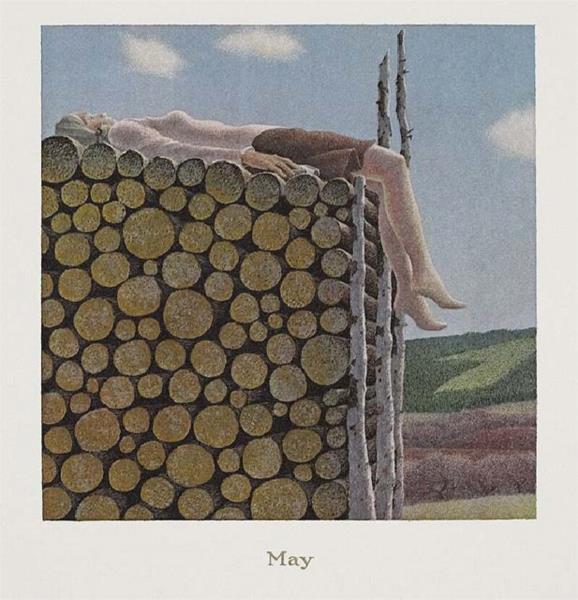
May, 1979 by Alex Colville (1920-2013)
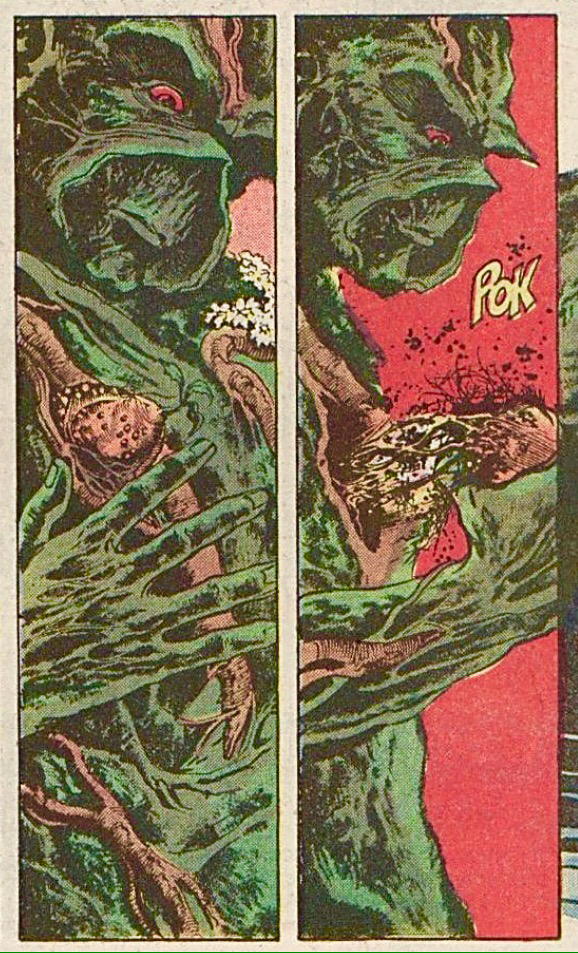
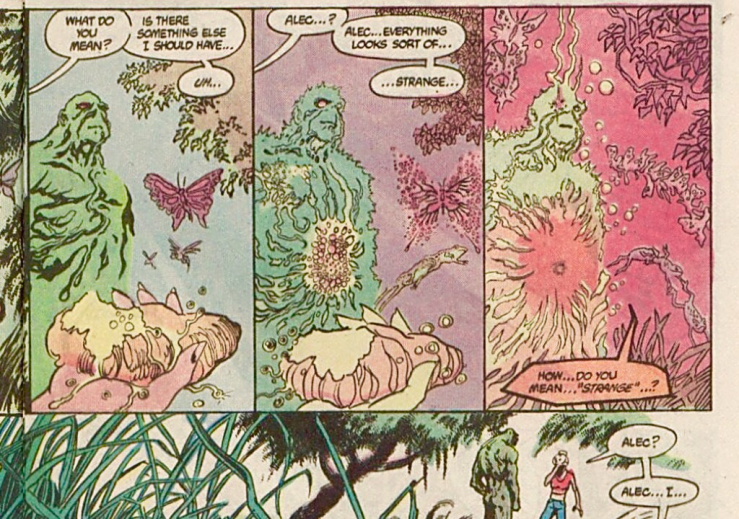
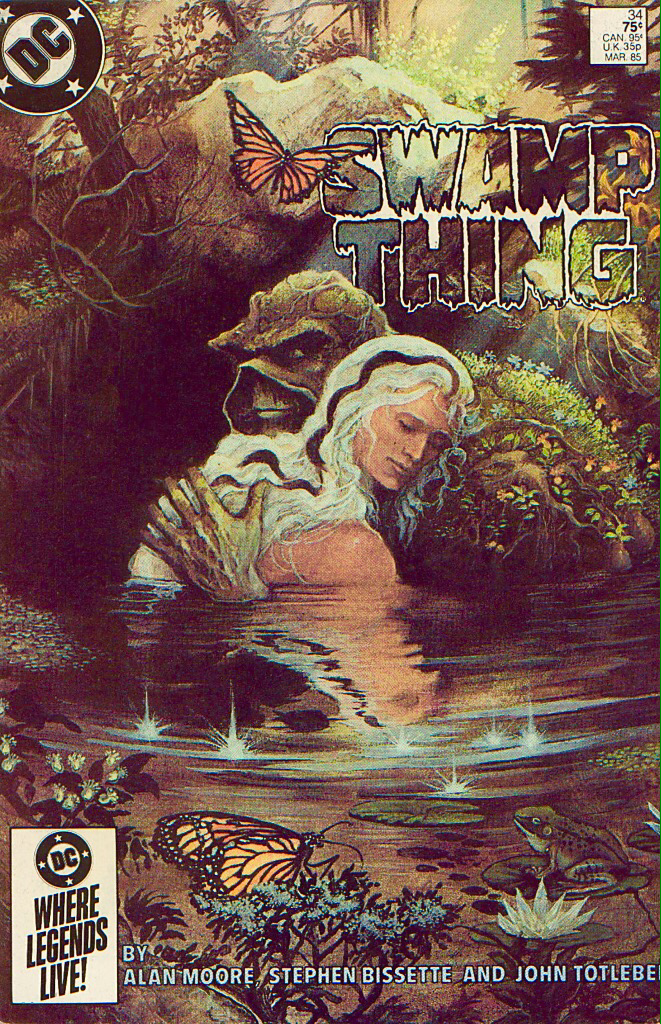
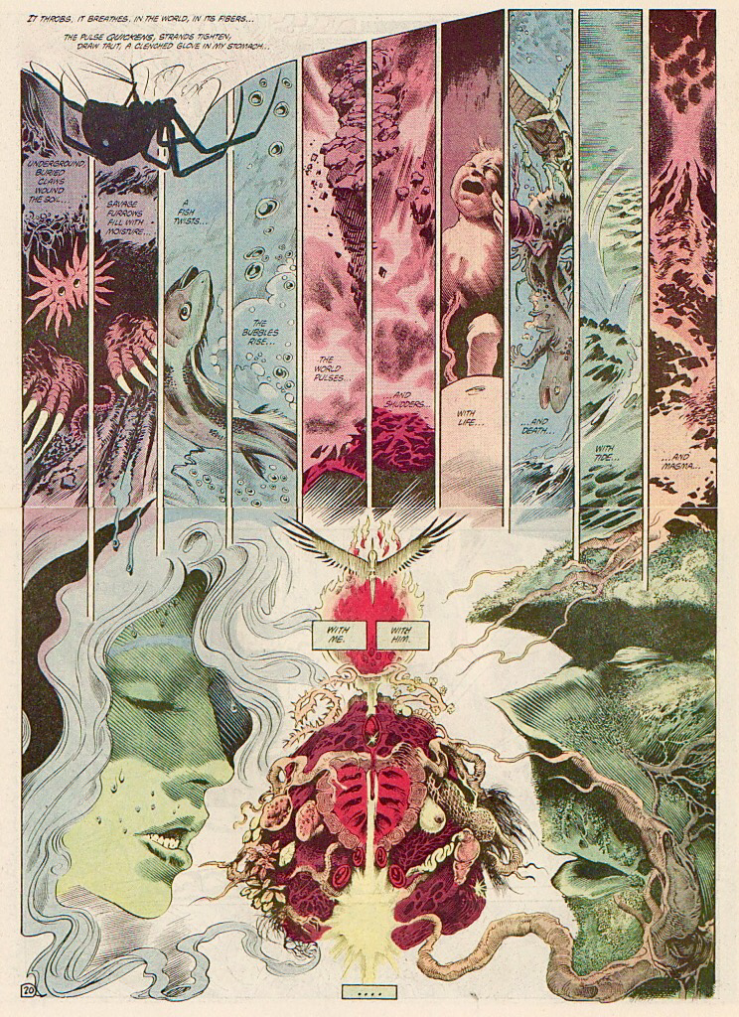
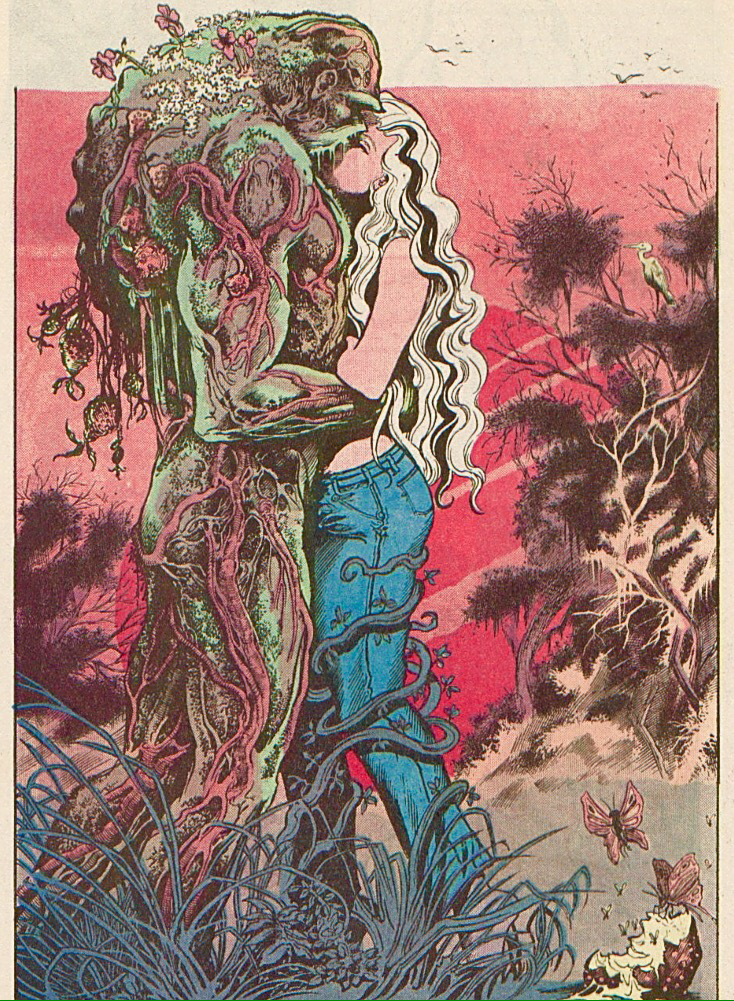
Swamp Thing #34 (March 1985), “Rite of Spring” is one of the best “mainstream” comic books I’ve ever read. I need to write a full thing on it, but for today, some panels, splashes, and the cover. Art by Stephen Bissette and John Totleben; coloring by Tatjana Wood. Script by Alan Moore.
April 30th.–. . . I arose this morning feeling more elastic than I have throughout the winter; for the breathing of the ocean air has wrought a very beneficial effect, . . . What a beautiful, most beautiful afternoon this has been! It was a real happiness to live. If I had been merely a vegetable,–a hawthorn-bush, for instance,–I must have been happy in such an air and sunshine; but, having a mind and a soul, . . . I enjoyed somewhat more than mere vegetable happiness. . . . The footsteps of May can be traced upon the islands in the harbor, and I have been watching the tints of green upon them gradually deepening, till now they are almost as beautiful as they ever can be.
Nathaniel Hawthorne’ journal entry for April 30th, 1840. From Passages from the American Note-Books.

Late Harvest, 2012 by David Pettibone
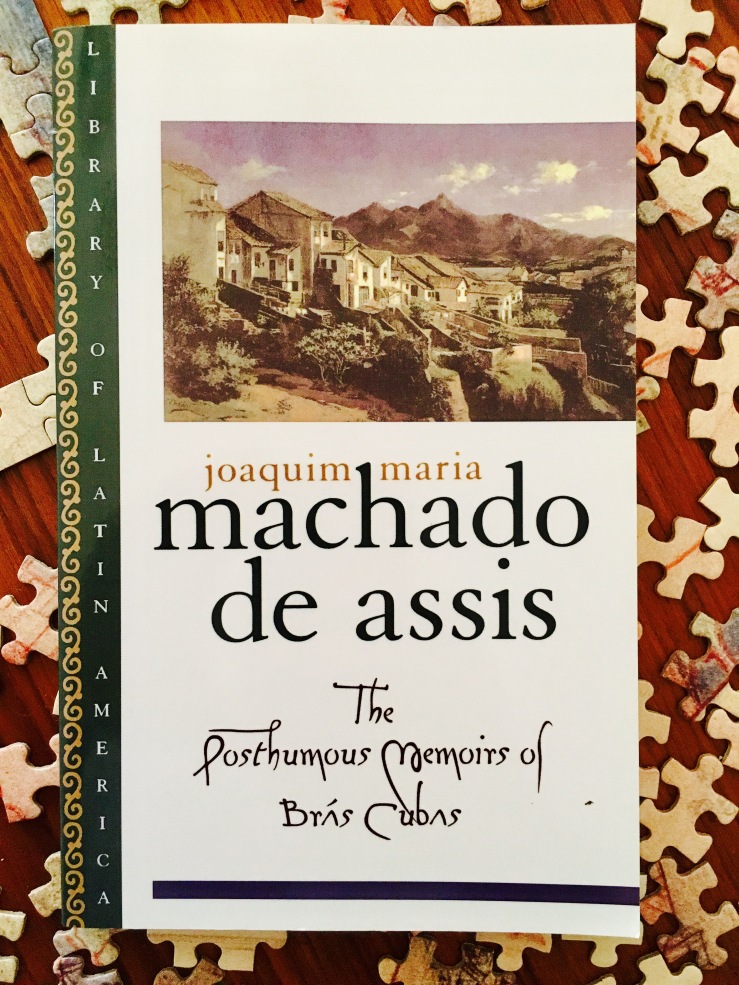
I picked up Brazilian author Joaquim Maria Machado de Assis’s 1881 novel The Posthumous Memoirs of Brás Cubas today. I picked it up because of an oblique recommendation via Twitter a few weeks ago when I was raving about Antonio di Benedetto’s novel Zama.
I got Gregory Rabassa’s translation (I dipped my toe into his translation of Miguel Ángel Asturias’s 1963 novel Mulata a few weeks ago).
Brás Cubas reminds me a lot of Tristram Shandy so far—short sharp funny chapters that bop forward and backward. The 1881 novel anticipates anticipates a style and form that we now describe as “postmodern.” I’ll share a few excerpts in the future, but for now, here’s the Wikipedia summary (lazy, I know, but I think it’s a bit better than this Oxford UP edition’s blurb):
The novel is narrated by the dead protagonist Brás Cubas, who tells his own life story from beyond the grave, noting his mistakes and failed romances.
The fact of being already deceased allows Brás Cubas to sharply criticize the Brazilian society and reflect on his own disillusionment, with no sign of remorse or fear of retaliation. Brás Cubas dedicates his book to the first worm that gnawed his cold body: “To the worm who first gnawed on the cold flesh of my corpse, I dedicate with fond remembrance these Posthumous Memoirs” (Portuguese: Ao verme que primeiro roeu as frias carnes do meu cadáver dedico com saudosa lembrança estas Memórias Póstumas). Cubas decides to tell his story starting from the end (the passage of his death, caused by pneumonia), then taking “the greatest leap in this story”, proceeding to tell the story of his life since his childhood.
The novel is also connected to another Machado de Assis work, Quincas Borba, which features a character from the Memoirs (as a secondary character, despite the novel’s name), but other works of the author are hinted in chapter titles. It is a novel recalled as a major influence by many post-modern writers, such as John Barth or Donald Barthelme, as well as Brazilian writers in the 20th century
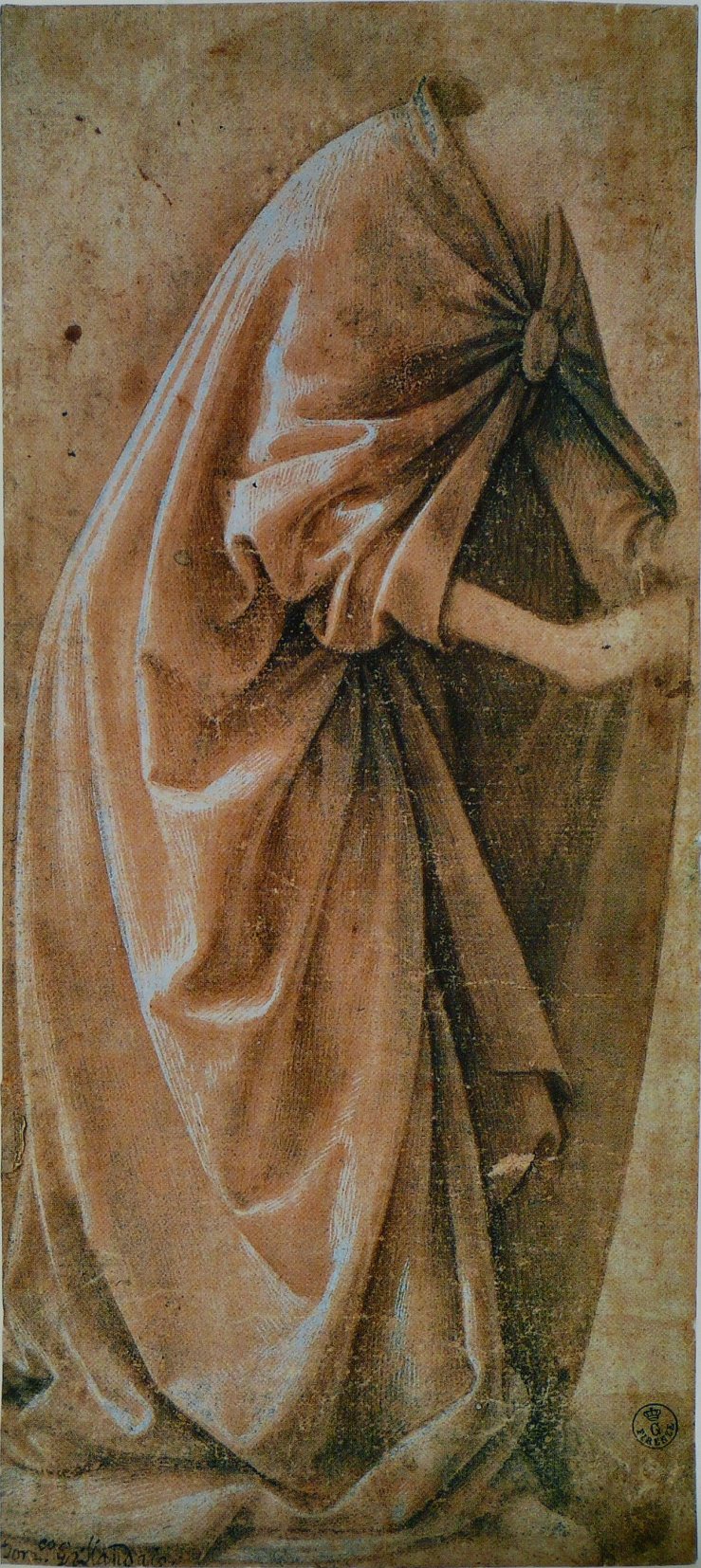
Study of Garments, c. 1491 by Domenico Ghirlandaio (1449-94)
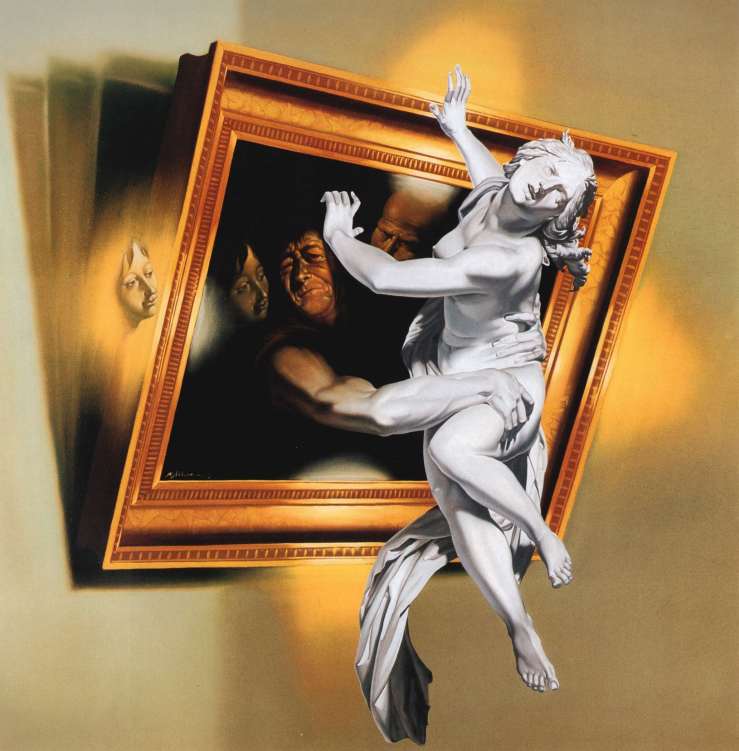
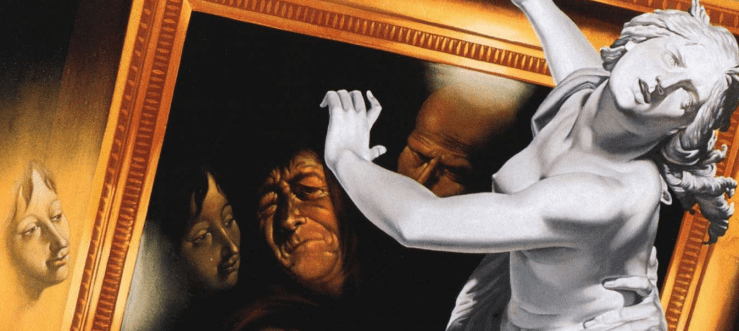
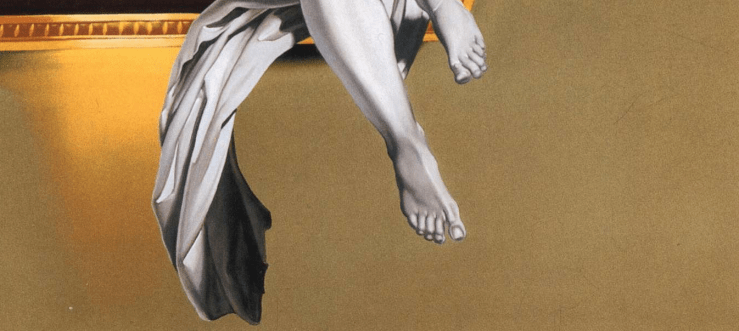
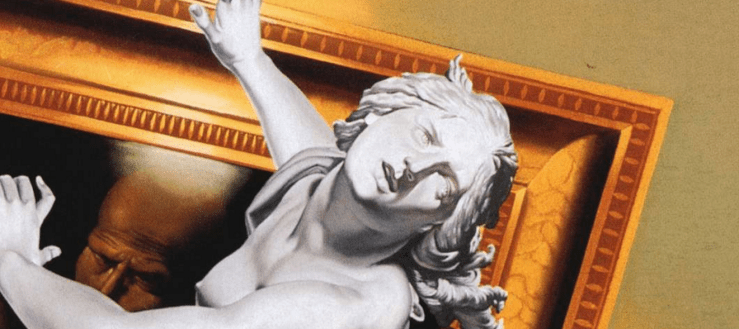
L’Enlevement de Proserpine (The Abduction of Proserpina), 1985 by Nicolae Maniu (b. 1944)
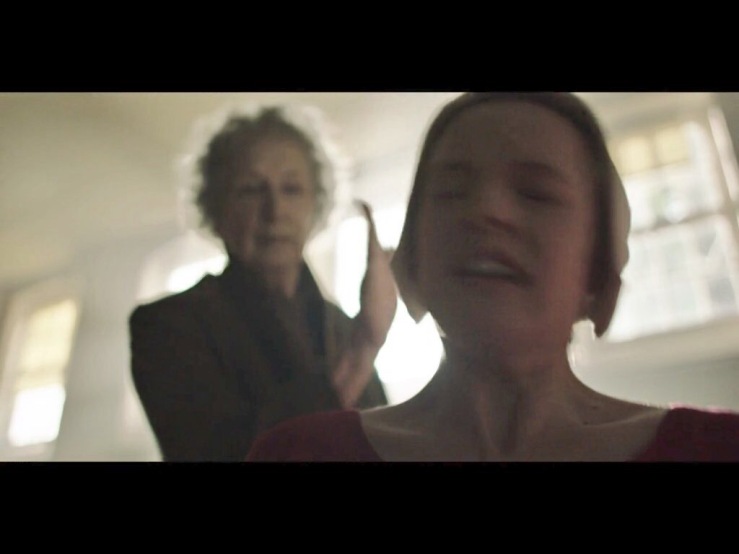
From Margaret Atwood’s essay of 10 March 2017 in The New York Times:
In this series I have a small cameo. The scene is the one in which the newly conscripted Handmaids are being brainwashed in a sort of Red Guard re-education facility known as the Red Center. They must learn to renounce their previous identities, to know their place and their duties, to understand that they have no real rights but will be protected up to a point if they conform, and to think so poorly of themselves that they will accept their assigned fate and not rebel or run away.
The Handmaids sit in a circle, with the Taser-equipped Aunts forcing them to join in what is now called (but was not, in 1984) the “slut-shaming” of one of their number, Jeanine, who is being made to recount how she was gang-raped as a teenager. Her fault, she led them on — that is the chant of the other Handmaids.
Although it was “only a television show” and these were actresses who would be giggling at coffee break, and I myself was “just pretending,” I found this scene horribly upsetting. It was way too much like way too much history. Yes, women will gang up on other women. Yes, they will accuse others to keep themselves off the hook: We see that very publicly in the age of social media, which enables group swarmings. Yes, they will gladly take positions of power over other women, even — and, possibly, especially — in systems in which women as a whole have scant power: All power is relative, and in tough times any amount is seen as better than none. Some of the controlling Aunts are true believers, and think they are doing the Handmaids a favor: At least they haven’t been sent to clean up toxic waste, and at least in this brave new world they won’t get raped, not as such, not by strangers. Some of the Aunts are sadists. Some are opportunists. And they are adept at taking some of the stated aims of 1984 feminism — like the anti-porn campaign and greater safety from sexual assault — and turning them to their own advantage. As I say: real life.
Which brings me to three questions I am often asked.
First, is “The Handmaid’s Tale” a “feminist” novel? If you mean an ideological tract in which all women are angels and/or so victimized they are incapable of moral choice, no. If you mean a novel in which women are human beings — with all the variety of character and behavior that implies — and are also interesting and important, and what happens to them is crucial to the theme, structure and plot of the book, then yes. In that sense, many books are “feminist.”
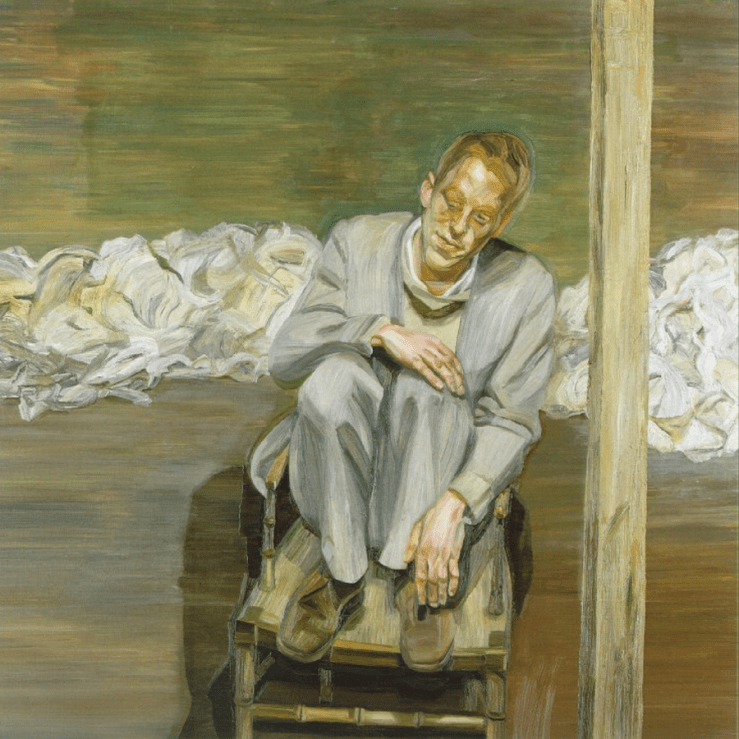
Red Haired Man on a Chair, 1963-64 by Lucian Freud

