Indeed the reality of a nervous sloth (Baudelaire)

“See My Jumper Hanging On the Line” — R.L. Burnside

R.L. Burnside at home in Independence, Mississippi in the summer of 1978.

From Alan Lomax’s American Patchwork Project.

Bonus track:

Self-Portrait as a Lute Player — Artemisia Gentileschi

Artemisia_Gentileschi_-_Self-Portrait_as_a_Lute_PlayerScreenshot 2017-03-22 at 9.45.52 AMScreenshot 2017-03-22 at 9.46.08 AMScreenshot 2017-03-22 at 9.45.29 AMScreenshot 2017-03-22 at 9.46.25 AM

Autoritratto come suonatrice di liuto (Self-Portrait as a Lute Player), 1615-1617 by Artemisia Gentileschi (1593-1653).

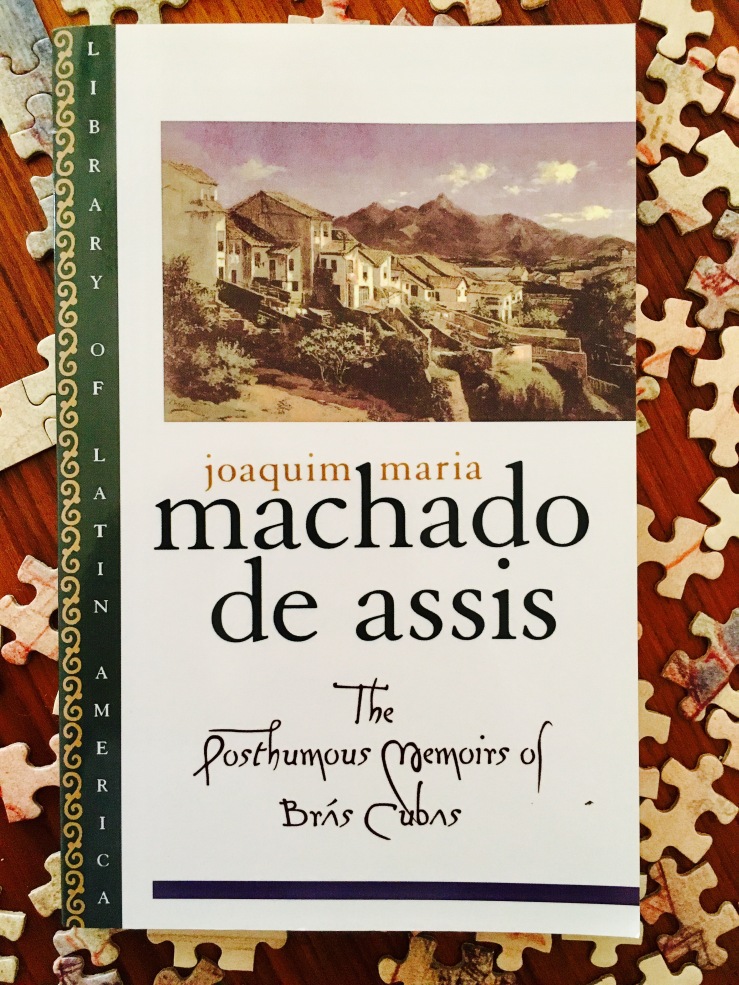
Daniel Borzutzky poems (Books acquired, 9 March 2017)

Big thanks to BLCKDGRD for sending me two books of poetry by Daniel Borzutzky. I’d never read Borzutzky before, but I dig it so far. These poems are abject—stuff about what it means to have a body, to have some horror at having a body, etc.

A bit from “The Blazing Cities of Your Rotten Carcass Mouth,” collected in The Performance of Becoming Human:

Paradise No. 16 — Fu Lei

fulei

Screenshot 2017-03-21 at 10.38.02 AMScreenshot 2017-03-21 at 10.36.40 AMScreenshot 2017-03-21 at 10.37.05 AMScreenshot 2017-03-21 at 10.38.21 AM

Paradise No. 16, 2014 by Fu Lei (b. 1958).

Gustav Klimt in His Blue Painter’s Smock — Egon Schiele

Egon_Schiele_-_Gustav_Klimt_im_blauen_Malerkittel_-_1913Screenshot 2017-03-20 at 10.32.51 PMScreenshot 2017-03-20 at 10.33.38 PM

Gustav Klimt im blauen Malerkittel (Gustav Klimt in His Blue Painters Smock), 1913 by Egon Schiele (1890-1918).

“Spring” — William Carlos Williams 

Spring — Giuseppe Arcimboldo


Spring, 1573 by Giuseppe Arcimboldo (1526 or 1527 – 1593). 

Sunday Comics 


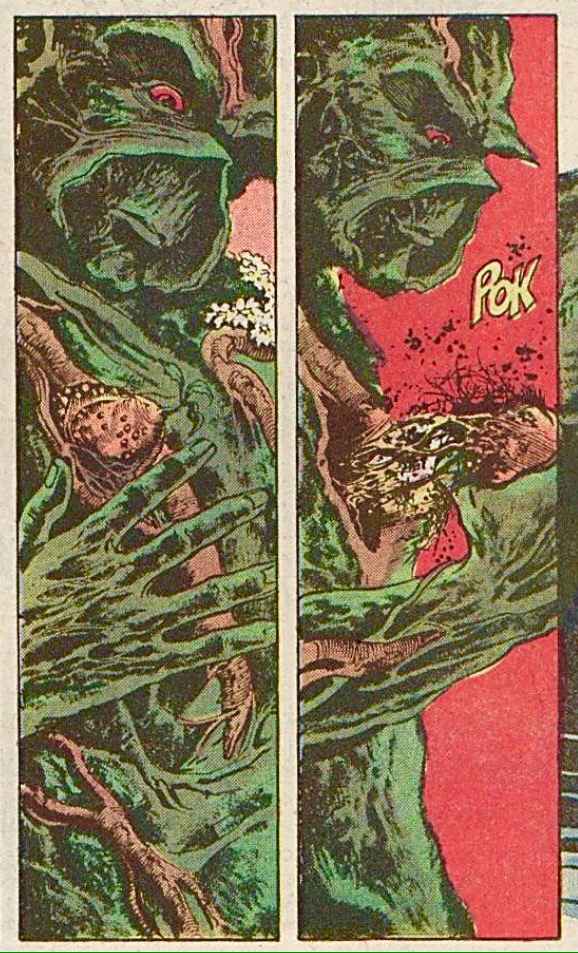
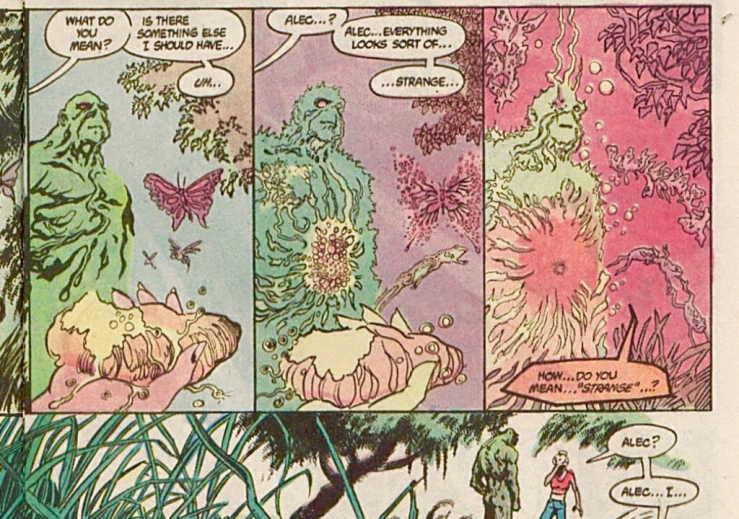
RIP Bernie Wrightson, 1948-2017

Self-Portrait (as “New Woman”) — Frances Benjamin Johnston

Frances_Benjamin_Johnston,_full-length_portrait,_seated_in_front_of_fireplace,_1896

Self-Portrait (as “New Woman”), 1896 by Frances Benjamin Johnston (1864–1952)

A list of “Irish heroes and heroines of antiquity” from James Joyce’s Ulysses

One of my favorite passages in Ulysses (it’s from the “Cyclops” chapter, episode 12)—

He wore a long unsleeved garment of recently flayed oxhide reaching to the knees in a loose kilt and this was bound about his middle by a girdle of plaited straw and rushes. Beneath this he wore trews of deerskin, roughly stitched with gut. His nether extremities were encased in high Balbriggan buskins dyed in lichen purple, the feet being shod with brogues of salted cowhide laced with the windpipe of the same beast. From his girdle hung a row of seastones which dangled at every movement of his portentous frame and on these were graven with rude yet striking art the tribal images of many Irish heroes and heroines of antiquity, Cuchulin, Conn of hundred battles, Niall of nine hostages, Brian of Kincora, the Ardri Malachi, Art MacMurragh, Shane O’Neill, Father John Murphy, Owen Roe, Patrick Sarsfield, Red Hugh O’Donnell, Red Jim MacDermott, Soggarth Eoghan O’Growney, Michael Dwyer, Francy Higgins, Henry Joy M’Cracken, Goliath, Horace Wheatley, Thomas Conneff, Peg Woffington, the Village Blacksmith, Captain Moonlight, Captain Boycott, Dante Alighieri, Christopher Columbus, S. Fursa, S. Brendan, Marshal Mac-Mahon, Charlemagne, Theobald Wolfe Tone, the Mother of the Maccabees, the Last of the Mohicans, the Rose of Castille, the Man for Galway, The Man that Broke the Bank at Monte Carlo, The Man in the Gap, The Woman Who Didn’t, Benjamin Franklin, Napoleon Bonaparte, John L. Sullivan, Cleopatra, Savourneen Deelish, Julius Caesar, Paracelsus, sir Thomas Lipton, William Tell, Michelangelo, Hayes, Muhammad, the Bride of Lammermoor, Peter the Hermit, Peter the Packer, Dark Rosaleen, Patrick W. Shakespeare, Brian Confucius, Murtagh Gutenberg, Patricio Velasquez, Captain Nemo, Tristan and Isolde, the first Prince of Wales, Thomas Cook and Son, the Bold Soldier Boy, Arrah na Pogue, Dick Turpin, Ludwig Beethoven, the Colleen Bawn, Waddler Healy, Angus the Culdee, Dolly Mount, Sidney Parade, Ben Howth, Valentine Greatrakes, Adam and Eve, Arthur Wellesley, Boss Croker, Herodotus, Jack the Giantkiller, Gautama Buddha, Lady Godiva, The Lily of Killarney, Balor of the Evil Eye, the Queen of Sheba, Acky Nagle, Joe Nagle, Alessandro Volta, Jeremiah O’Donovan Rossa, Don Philip O’Sullivan Beare. A couched spear of acuminated granite rested by him while at his feet reposed a savage animal of the canine tribe whose stertorous gasps announced that he was sunk in uneasy slumber, a supposition confirmed by hoarse growls and spasmodic movements which his master repressed from time to time by tranquillising blows of a mighty cudgel rudely fashioned out of paleolithic stone.

Self-Portrait with Cropped Hair — Frida Kahlo

self-portrait-with-cropped-hair-by-frida-kahlo-1940

Screenshot 2017-03-17 at 8.50.08 PM

Screenshot 2017-03-17 at 8.49.48 PM

Screenshot 2017-03-17 at 8.50.32 PMScreenshot 2017-03-17 at 8.49.16 PM

The older we get the more we write elegies | RIP Derek Walcott

RIP Derek Walcott, 1930-2017

Hear him read his poem “For Oliver Jackman” around the 6:00 mark.

Screenshot 2017-03-17 at 3

Bellona — Rembrandt

DP146454

Screenshot 2017-03-16 at 9.27.00 PMScreenshot 2017-03-16 at 9.27.56 PMScreenshot 2017-03-16 at 9.28.57 PM

THE DIARY OF A CORONER would be a work likely to meet with large popular acceptance | Nathaniel Hawthorne’s journal entry for March 16th, 1854

March 16th.–Yesterday, at the coroner’s court, attending the inquest on a black sailor who died on board an English vessel, after her arrival at this port. The court-room is capable of accommodating perhaps fifty people, dingy, with a pyramidal skylight above, and a single window on one side, opening into a gloomy back court. A private room, also lighted with a pyramidal skylight, is behind the court-room, into which I was asked, and found the coroner, a gray-headed, grave, intelligent, broad, red-faced man, with an air of some authority, well mannered and dignified, but not exactly a gentleman,–dressed in a blue coat, with a black cravat, showing a shirt-collar above it. Considering how many and what a variety of cases of the ugliest death are constantly coming before him, he was much more cheerful than could be expected, and had a kind of formality and orderliness which I suppose balances the exceptionalities with which he has to deal. In the private room with him was likewise the surgeon, who professionally attends the court. We chatted about suicide and such matters,–the surgeon, the coroner, and I,–until the English case was ready, when we adjourned to the court-room, and the coroner began the examination. The English captain was a rude, uncouth Down-Easter, about thirty years old, and sat on a bench, doubled and bent into an indescribable attitude, out of which he occasionally straightened himself, all the time toying with a ruler, or some such article. The case was one of no interest; the man had been frost-bitten, and died from natural causes, so that no censure was deserved or passed upon the captain. The jury, who had been examining the body, were at first inclined to think that the man had not been frostbitten, but that his feet had been immersed in boiling water; but, on explanation by the surgeon, readily yielded their opinion, and gave the verdict which the coroner put into their mouths, exculpating the captain from all blame. In fact, it is utterly impossible that a jury of chance individuals should not be entirely governed by the judgment of so experienced and weighty a man as the coroner. In the court-room were two or three police officers in uniform, and some other officials, a very few idle spectators, and a few witnesses waiting to be examined. And while the case was going forward, a poor-looking woman came in, and I heard her, in an undertone, telling an attendant of a death that had just occurred. The attendant received the communication in a very quiet and matter-of-course way, said that it should be attended to, and the woman retired.

THE DIARY OF A CORONER would be a work likely to meet with large popular acceptance. A dark passageway, only a few yards in extent, leads from the liveliest street in Liverpool to this coroner’s courtroom, where all the discussion is about murder and suicide. It seems, that, after a verdict of suicide the corpse can only be buried at midnight, without religious rites.

“His lines are cast in pleasant places,”–applied to a successful angler.

A woman’s chastity consists, like an onion, of a series of coats. You may strip off the outer ones without doing much mischief, perhaps none at all; but you keep taking off one after another, in expectation of coming to the inner nucleus, including the whole value of the matter. It proves, however, that there is no such nucleus, and that chastity is diffused through the whole series of coats, is lessened with the removal of each, and vanishes with the final one which you supposed would introduce you to the hidden pearl.

From Nathaniel Hawthorne’s journal entry for March 16th, 1854. Collected in Passages from the English Note-Books.

Woman after a Bath — Goyo Hashiguchi

hashiguchi-goyo-a-thumb

Esther before Ahasuerus — Artemisia Gentileschi

DT1440.jpg