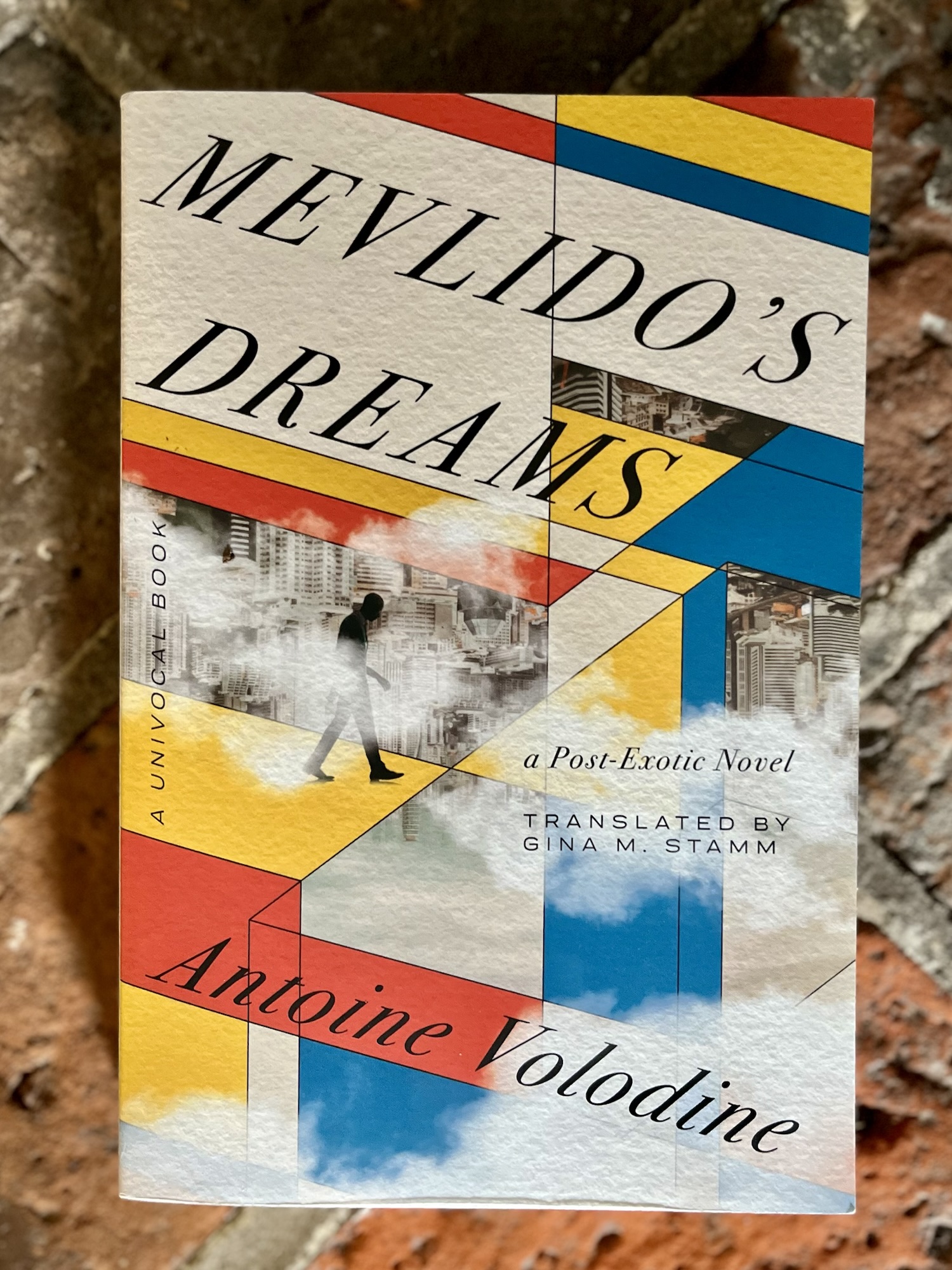
It still believes in night | A review of Antoine Volodine’s post-exotic novel Mevlido’s Dreams

Antoine Volodine’s 2007 novel Mevlido’s Dreams is a bleak, dystopian noir novel set several centuries in the future in the ruined city-state of Oulang-Oulane. Here, weary revolutionary Mevlido lives in a decaying ghetto called Henhouse Four, an eerie quarter inhabited by indigents, junkies, and other remnants of failed uprisings who must contend with the giant mutated birds who terrorize the borough.

Once a soldier of the revolution, Mevlido now serves as a policeman, yet he may also be a double or even triple agent, a sleeper sent through time from a kind of liminal afterlife, a bardo between death and rebirth. The novel drifts between waking and dream states, war memories and spectral futures, as Mevlido’s fragmented consciousness becomes a vessel for Volodine’s haunting post-exotic vision of history, language, and apocalypse.

About halfway through the novel, Mevlido’s bardo boss offers a handy summary of the apocalypse:

They’ve become an inexplicable species. They are just getting out of multiple wars of extermination, but a new conflict is already in sight. The population has decreased by a hundredfold, even more. Entire continents are currently uninhabitable. Those who have survived remain socially organized, but they no longer believe in themselves, or in society. They’ve inherited political systems to which they’ve lost the keys; for them ideology is a prayer devoid of meaning. The ruling classes have become criminalized, the poor obey them. Both classes act as if they were already dead. And as if, on top of that, they don’t even care. … Something in them has changed. You’d think that they no longer have the ability to differentiate between life, dreams, and death.

Our hero will be reborn into this turmoil, his consciousness a roiling mess of anxious irreality. “Even if I’m dreaming, I’m in reality,” he concludes at one point, as if to anchor himself in his mission. What that mission is, exactly, is never fully clear to Mevlido or the reader. Or perhaps the mission is very clear; as translator Gina M. Stamm puts it in her introduction, the plot of Mevlido’s Dreams “has the elements of a fairly classic tragic romance: man and woman are in love, the world prevents their being together, man descends into tragic circumstances.” This motif repeats in dreamlike iterations in the novel; Mevlido drifts through a post-exotic wasteland following orders no one remembers giving, haunted by his dead wife Verena Becker, whose presence threads through his days like a recurring dream or a flickering film reel.

We come to learn that Verena Becker died cruelly, murdered by the “child soldiers” who were pressed in to service by agents of the exploitative upper class. In Mevlido’s present time (or, more specifically one of Mevlido’s present times), the child soldiers are now “ex-child soldiers,” reviled refugees who hide under new identities, hoping to avoid the vengeance of people like Mevlido. The vengeance is not aimed just at these foot soldiers though; one of the novel’s heroes, Sonia Wolguelane, plots the assassination of the upper-echelon genociders who, now absolved of their war crimes, continue to rule the city-state with their one-time political foes. Here is Volodine’s description of one of the men Wolguelane assassinates:

Toni Müller, forty-nine years old, delegate to the Office of Fuel, policy officer during the final project of pacification of the remaining zones, initiator of the so-called controlled genocide practice, threatened with legal action after the disappearance of the Wongres, the Spanish, and the Myrzes, sued for not having been able to provide an explanation for the mysterious annihilation of the inhabitants of the Philippines. Amnestied. Director of the petroleum trusts in the remaining zones, billionaire, numerous books of economics published in his name, numerous honorific titles. During his last self-criticism, he admitted having constantly hidden from the masses the fact that he didn’t share the household chores with his wife.

While the apocalyptic stakes here are swollen to hyperbolic levels, Volodine’s critique of how the ruling class wields power nevertheless applies neatly to our own 21st-century blues. Henry Kissinger, for example, died fat and happy. I’m reminded too here of Thomas Pynchon’s critique of power, particularly in Gravity’s Rainbow, where the narrator laments that the Nazi war criminal Weissmann will not be punished but rather elevated, set to sit “among the successful academics, the Presidential advisers, the token intellectuals who sit on boards of directors. He is almost certainly there. Look high, not low.” Look low for the preterite heroes of Mevlido’s Dreams though. They are the “faded zombies, probably candidates for another hallucinatory expedition, left-behinds who imagine they will be able to leave again.”

I am making the novel sound too grim. It is rich, and much of that richness comes from a bureaucratic, deadpan humor, the laughter of exhausted ideologues trapped in their own paperwork. But what happens to faith in any ideology when it is sundered from observable reality? Consider this exchange, in which a lost Mevlido tries to communicate with a band of men who fail to recognize him as a human being:

“Incredible,” says one of the normal ones, “it’s still talking.”

“And what is it talking about?” asks the red cap.

“About the night,” says the fat one.

“It’s talking about the night?” the bare-chested one asks, surprised.

“Yes, it must still believe in night,” says one of the normal ones.

“Incredible,” says the other normal one, “it still believes in night.”

And beneath the satire, there’s love. Volodine writes love as a metaphysical condition, a persistence that outlasts ideology, memory, and even death. The tenderness between Mevlido and Verena gives the novel its pulse. It’s the one human rhythm left in a mechanical world. Stamm’s translation conveys this rhythm in clipped, moody sentences, wounded and precise.

Like Volodine’s 2014 novel Radiant Terminus, Mevlido’s Dreams operates in the twilight between horror and tenderness. But Mevlido’s Dreams is quieter, more interior—a story of a single man’s dissolution told in flickering vignettes. It reads like the afterimage of a life projected on a cracked wall.

That light, dim and trembling, is what Volodine and Stamm preserve. Mevlido’s Dreams reads not like a film script but like a film itself: shadowy scenes unfolding in silence, broken by bursts of deadpan dialogue and ghostly humor. You can see the ash swirling, hear the echo of curses in an alley haunted by mutant birds.

Oulang-Oulane feels shot through a grim lens, intense, ugly, beautiful, like something from Tarkovsky’s Stalker or a Béla Tarr film, with scenes of desolation punctuated by tenderness. Volodine isn’t cinematic because he borrows film tropes, but because he composes through atmosphere and rhythm. His sentences drift like a camera through fog and memory.

That line above—“it still believes in night”—could be the novel’s credo. Dreaming isn’t retreat; it’s resistance. Writing, too. Mevlido’s Dreams works as both a political fable and a séance for the lost, a way of keeping consciousness flickering in the dark. Highly recommended.
 

Sunday Comix

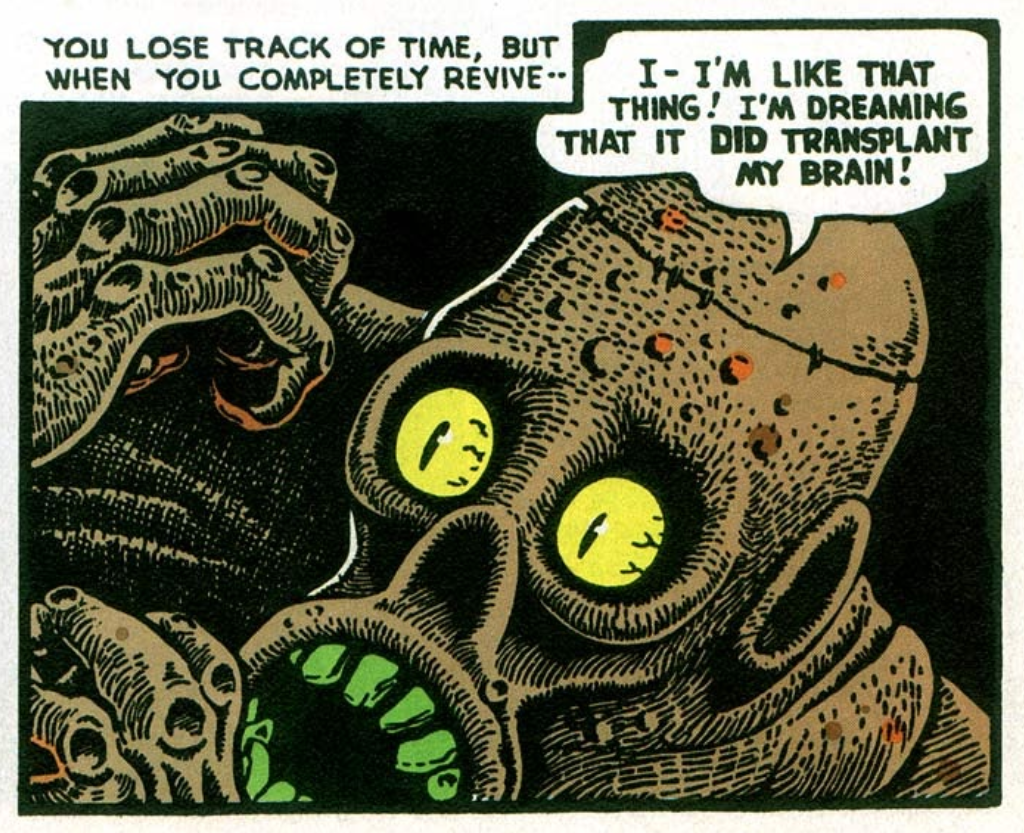
From “Nightmare World” by Basil Wolverton. Published in Weird Tales #3, Sept. 1952, Stanely Morse Publications.

Man Reading — Erwin Fabian

Man Reading, 1941 by Erwin Fabian (1915-2020)

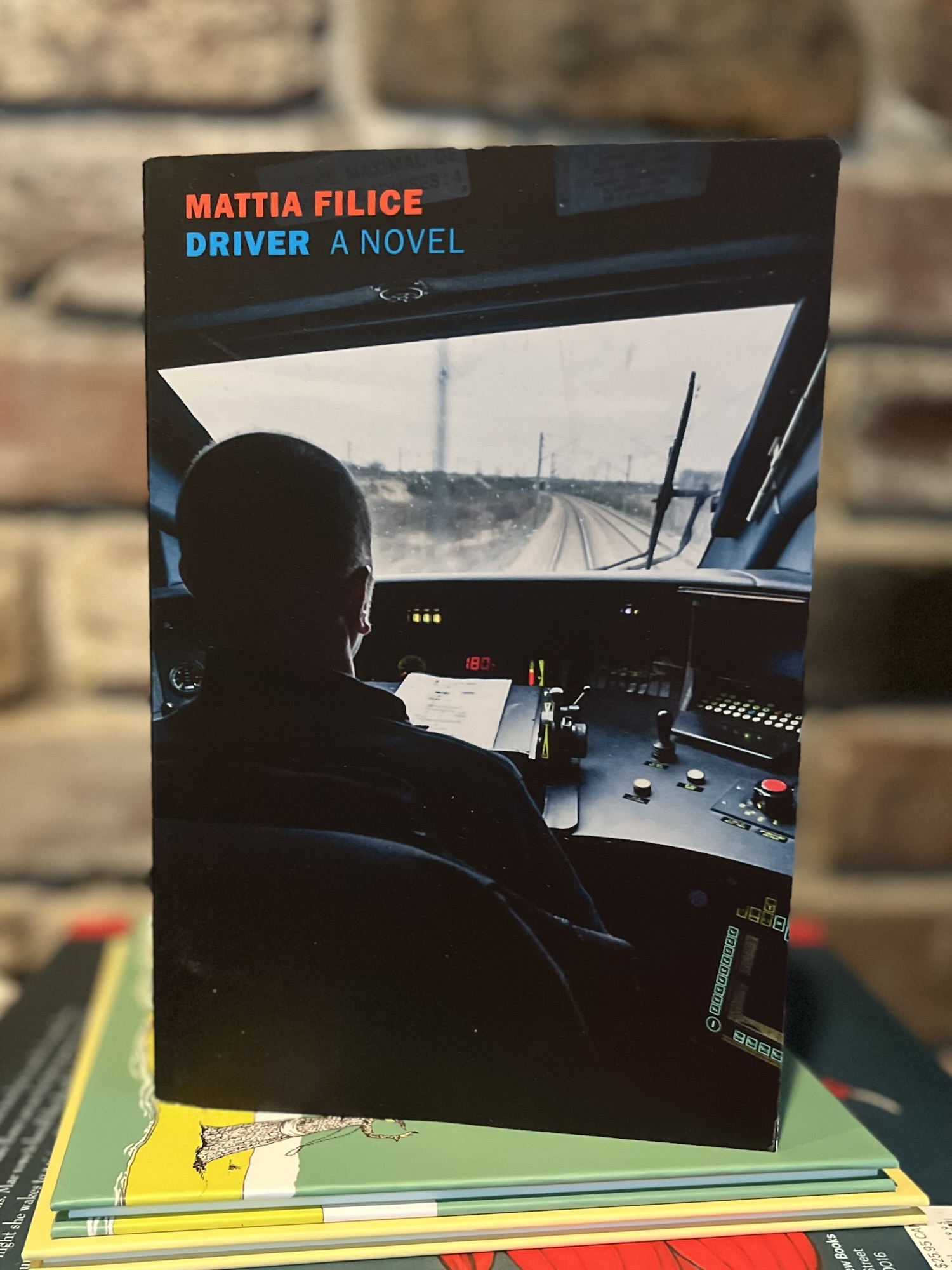
Mattia Filice’s Driver (Book acquired, 26 Sept. 2025)

Mattia Filice’s Driver is new in English translation by Jacques Houis. Here’s NYRB’s blurb:

Driver is a book about a young man from the provinces who moves to Paris and studies to become a train driver. As he learns about trains and their intricate workings, he is transported into a world in constant motion, with its own laws and codes and specialized language, its own heroes and legends and manifold dangers. Written in a style as surprising and eclectic as a night on the rails—packed with inside jokes and allusions that extend from Arthur Rimbaud to hip-hop and beyond—Driver takes us deep into the world of the train, until it becomes, like the ship in Moby-Dick, a microcosm of the world at large.

Drawing on twenty years of experience driving trains, Mattia Filice writes memorably about solitude and sleepless nights in the cab, accidents and breakdowns, but also about the lives and personalities of his fellow workers and the conversations and solidarity they share, both on the job and on the picket line, in what is a continual struggle to improve the conditions of work.

Unsentimental yet full of feeling, Driver is both an unusual and formally adventurous novel about labor and life and a stirring ode to the power of the collective.

Surprisingly, NYRB’s blurb doesn’t mention the novel’s striking style; on the page, the episodes of Driver look like poems that sometimes coalesce into prose. The chapter titles and section titles also seem to cast the novel as a take on knight’s quest. Compelling stuff.

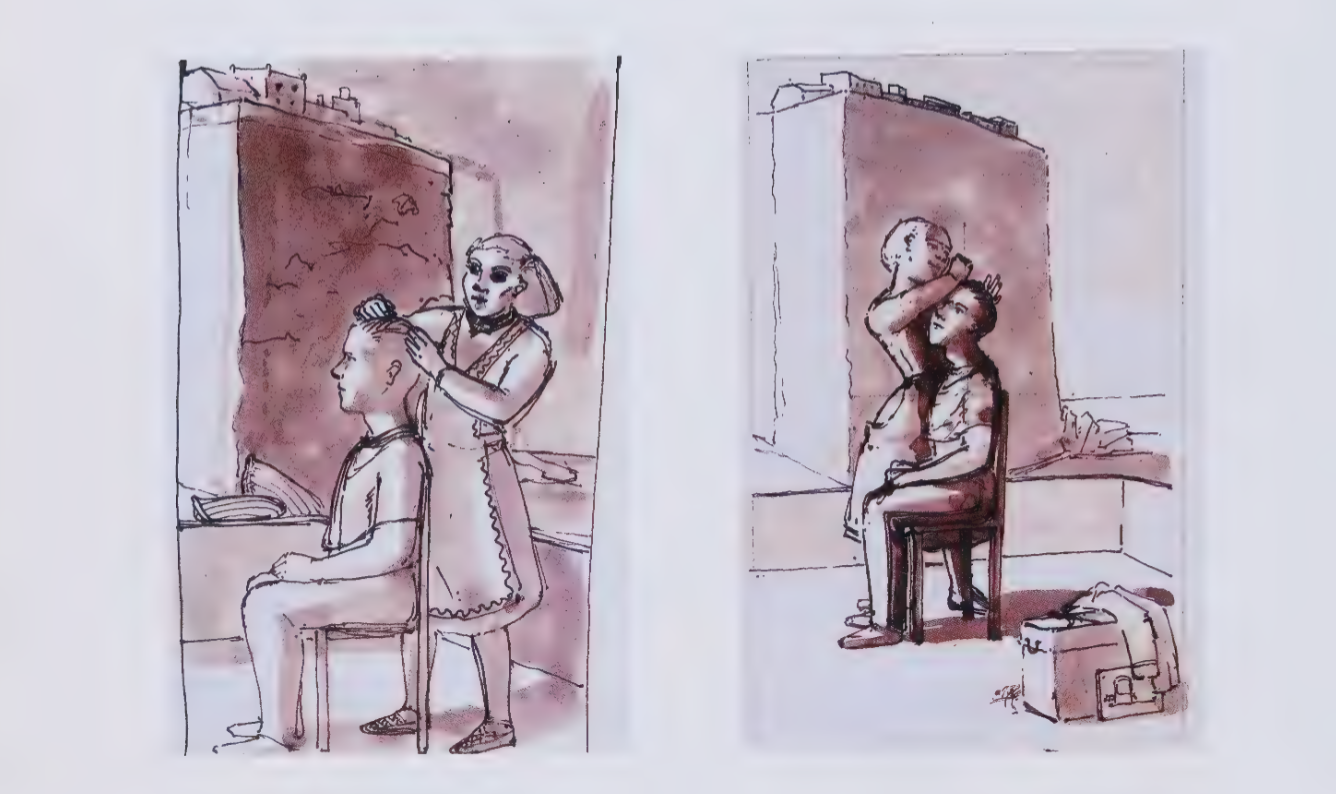
Studies for Departure — Paula Rego

Two studies for Departure, 1988 by Paula Rego (1935–2022)

reserved for those who have been mutilated in the war

“October”

by

Tom Clark


The rain falls like dirty string
on the tomb
of the human race

The girl with the red scarf
and the sassy face throws
her flowers on the wet leaves

Her name is Marie
I met her last Tuesday
on the Métro

You know how it is in the springtime
A man just can’t say no
especially when he is sitting in the seat

reserved for those who have been mutilated in the war

Thomas Pynchon’s Shadow Ticket (Book acquired, 30 Sept. 2025)

Here are the first four paragraphs of Thomas Pynchon’s ninth novel Shadow Ticket:

When trouble comes to town, it usually takes the North Shore Line. What with tough times down the Lake in Chicago, changes in the wind, Prohibition repeal just around the corner, Big Al in the federal pokey in Atlanta, Outfit affairs grown jumpy and unpredictable, anybody needing an excuse to get out of town in a hurry comes breezing up here to Milwaukee, where it seldom gets more serious than somebody stole somebody’s fish.

 Hicks McTaggart has been ankling around the Third Ward all day keeping an eye on a couple of tourists in Borsalinos and black camel hair overcoats up from the home office at 22nd and Wabash down the Lake, the Chicago Outfit handling whatever needs to be taken care of in Milwaukee since Vito Guardalabene cashed in his chips ten years ago, though Vito’s successor Pete Guardalabene is still considered head man in the Ward, gets his picture in the social pages smiling at weddings and so forth.

 Loitering in the alleyway in back of Pasquale’s Bella Palermo, Hicks can hear sounds of noodle-flexing sociability, smell spaghetti sauce and garlic frying and sfinciuni bagherese baking over an olive-branch fire, and it’s making him hungry, though this close to payday his lunch menu is a thermos of coffee and a buttermilk cruller stashed in a pocket someplace.

 The explosion when it comes seems to be from somewhere across the river and nearer the Lake. Forks and glassware pause between tabletop and mouth, as if everybody’s observing a moment of stillness, and nobody seems surprised.

An explosion! There we go.

Mass-market Monday | Philip K. Dick’s Dr. Bloodmoney

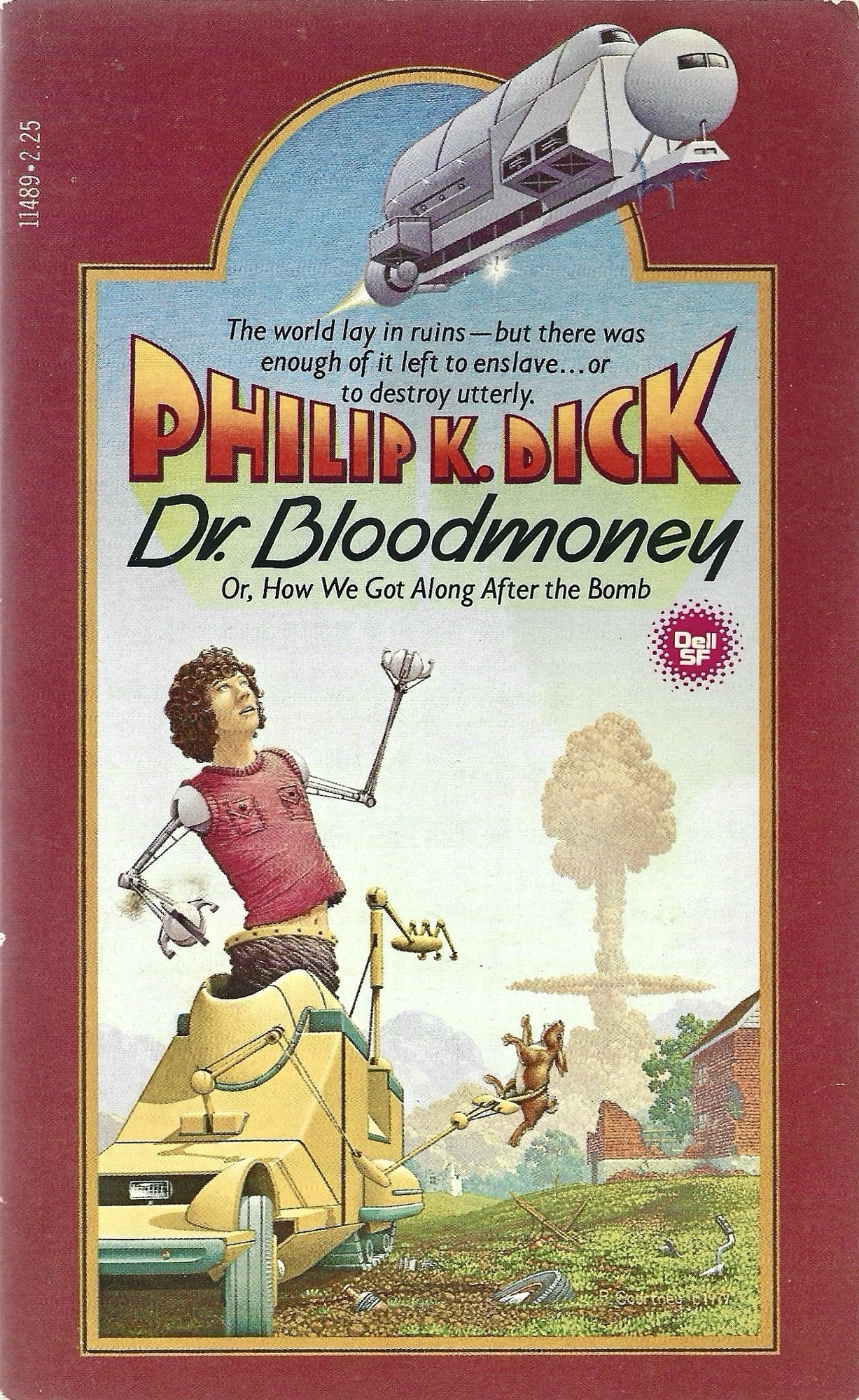
Dr. Bloodmoney, or, How We Got Along After the Bomb, Philip K. Dick, 1965. Dell Books (1980). Cover art by Richard Courtney (not credited; cover signed R. Courtney); no designer credited. 304 pages. Continue reading “Mass-market Monday | Philip K. Dick’s Dr. Bloodmoney”

Sunday Comix

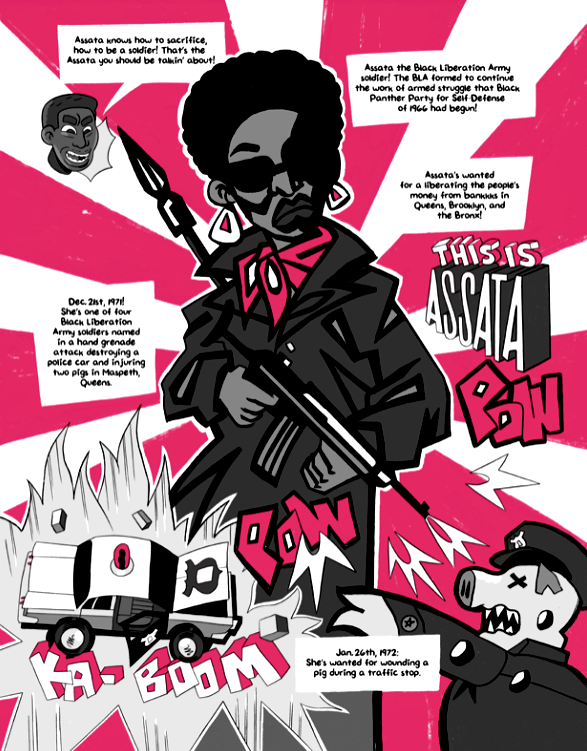
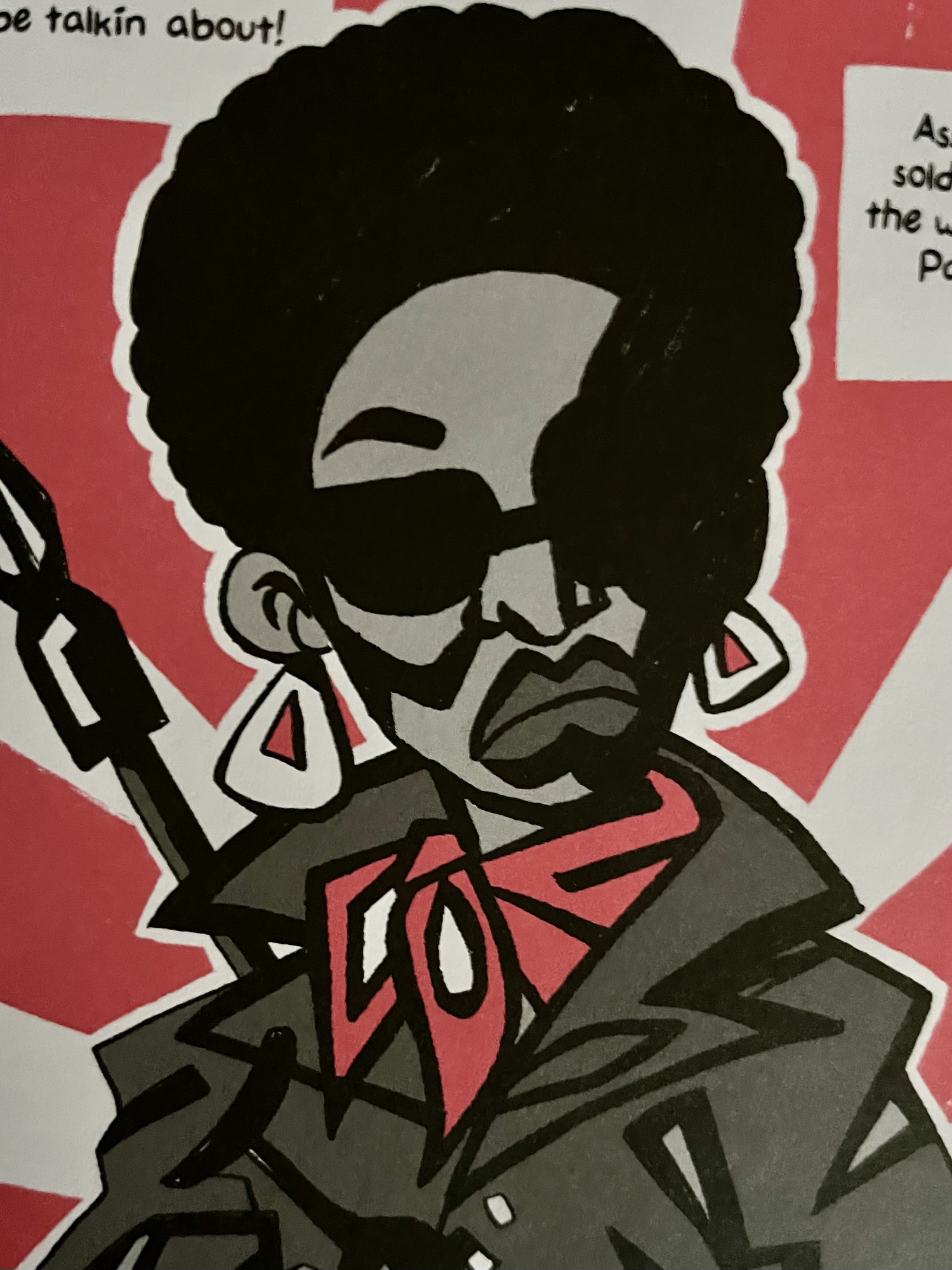
A page from Ben Passmore’s graphic novel Black Arms to Hold You Up, Pantheon, 2025. Assata Shakur passed away on 25 Sept. 2025. She was free.


Ben Passmore’s Black Arms to Hold You Up (Book acquired, 23 Sept. 2025)

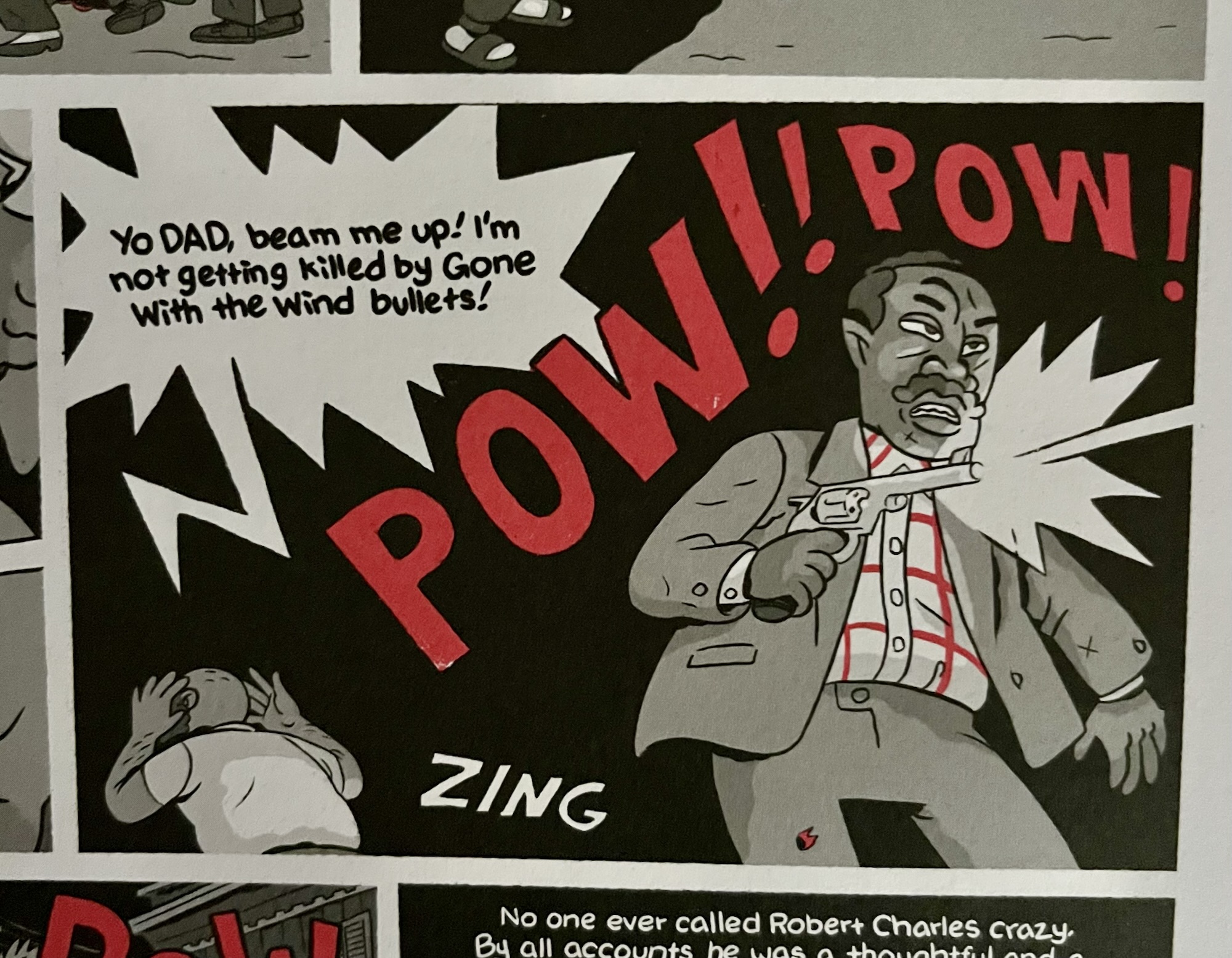
I was psyched to get an early copy of Ben Passmore’s Black Arms to Hold You Up this week. I love the dramatic vibrancy of Passmore’s cartooning, and his economic use of black, white, gray, and red throughout the book. I should have a review out around its release on 7 Oct. 2025.

Here is publisher Pantheon’s blurb:

It’s the summer of 2020, and downtown Philly is up in flames. “You’re not out in the streets with everyone else?” Ronnie asks his ambivalent son, Ben, shambling in with arms full of used books: the works of Malcom X, Robert F. Williams, Assata and Sanyika Shakur, among others. “Black liberation is your fight, too.”

So begins Black Arms to Hold You Up, a boisterous, darkly funny, and sobering march through Black militant history by political cartoonist Ben Passmore. From Robert Charles’s shootout with the police in 1900, to the Black Power movement in the 1960s, to the Los Angeles and George Floyd uprisings of the 1990s and 2020, readers will tumble through more than a century of armed resistance against the racist state alongside Ben—and meet firsthand the mothers and fathers of the movement, whose stories were as tragic as they were heroic.

What, after so many decades lost to state violence, is there left to fight for? Deeply researched, vibrantly drawn, and bracingly introspective, Black Arms to Hold You Up dares to find the answer.

You Are Very Tacky and Everyone Hates You — Sarah Theresa Lee

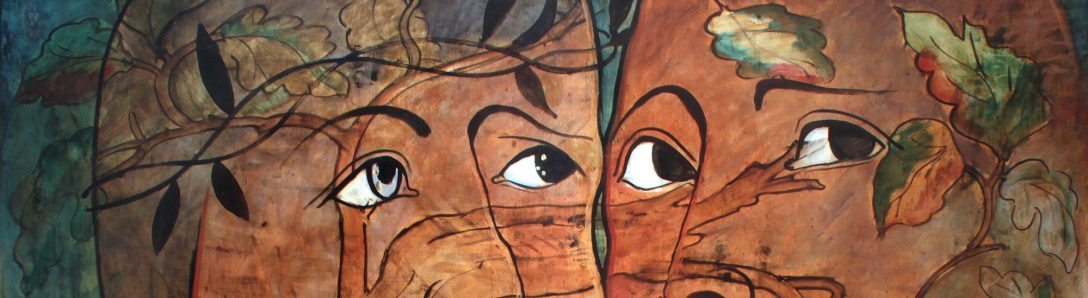
You Are Very Tacky and Everyone Hates You, 2025 by Sarah Theresa Lee (b. 1980)

A previously unpublished Dream Song by John Berryman

“The applause of the world comes to an empty heart”

by

John Berryman


The applause of the world comes to an empty heart,
sure the man is thinking now of something else,
something else, a fearless end
‘I have lost, of course, the fear of death’, BUT.
Messages enchant me, as from Ireland
I am an old middle-aged man about to do his best

love old men
The bartender did just call me ‘my friend’
I say the wonder is these busy caves
explored by men, & then by men, & then
by cold & dismal
engineers, are so costless

Deep in the angels let the good coat come
& I will wheedle home, who misséd you,
I can’t fix him. He’ll go down there apart,
that would be the wicked part of him that falls.
Henry has in Ireland no friend.
Alone, in the half-dark


Read five more previously-unpublished Dream Songs at Conjunctions. The poems are collected in the forthcoming volume Only Sing: 152 Uncollected Dream Songs, edited by Shane McCrae.


Voyager — Kerry James Marshall

Voyager, 1992 by Kerry James Marshall (b. 1955)

Siegfried Kracauer’s Ginster (Book acquired, 16 Sept. 2025)

Siegfried Kracauer’s 1928 novel Ginster is forthcoming in translation by Carl Skoggard from NYRB. Their blurb:

Ginster is a war novel about not going to war; about how war, far from the front, comes to warp every aspect of outer and inner life and to infect the workings of language itself. The subject is World War I, but this novel by the brilliant twentieth-century sociologist, journalist, and film critic Siegfried Kracauer, first published in 1928, has as much to say about what it means to live under the sulking great powers and blood-imbrued satrapies of today as it does about the inflamed self-righteousness of late imperial Germany. In Ginster, as in Greek tragedy, massacre occurs offstage, arriving only as “news,” but the everyday horror of a society engineered for the continual production of violence is not to be denied. Ginster, the Chaplinesque antihero, intent chiefly on saving his own skin, works hard to keep his distance from the war machine, and yet making a living, he discovers, is all about keeping it running. How different, in the end, is his dreamy self-absorption from the empty military language that has come to pervade every aspect of civilian life in the homeland?

Sunday Comix

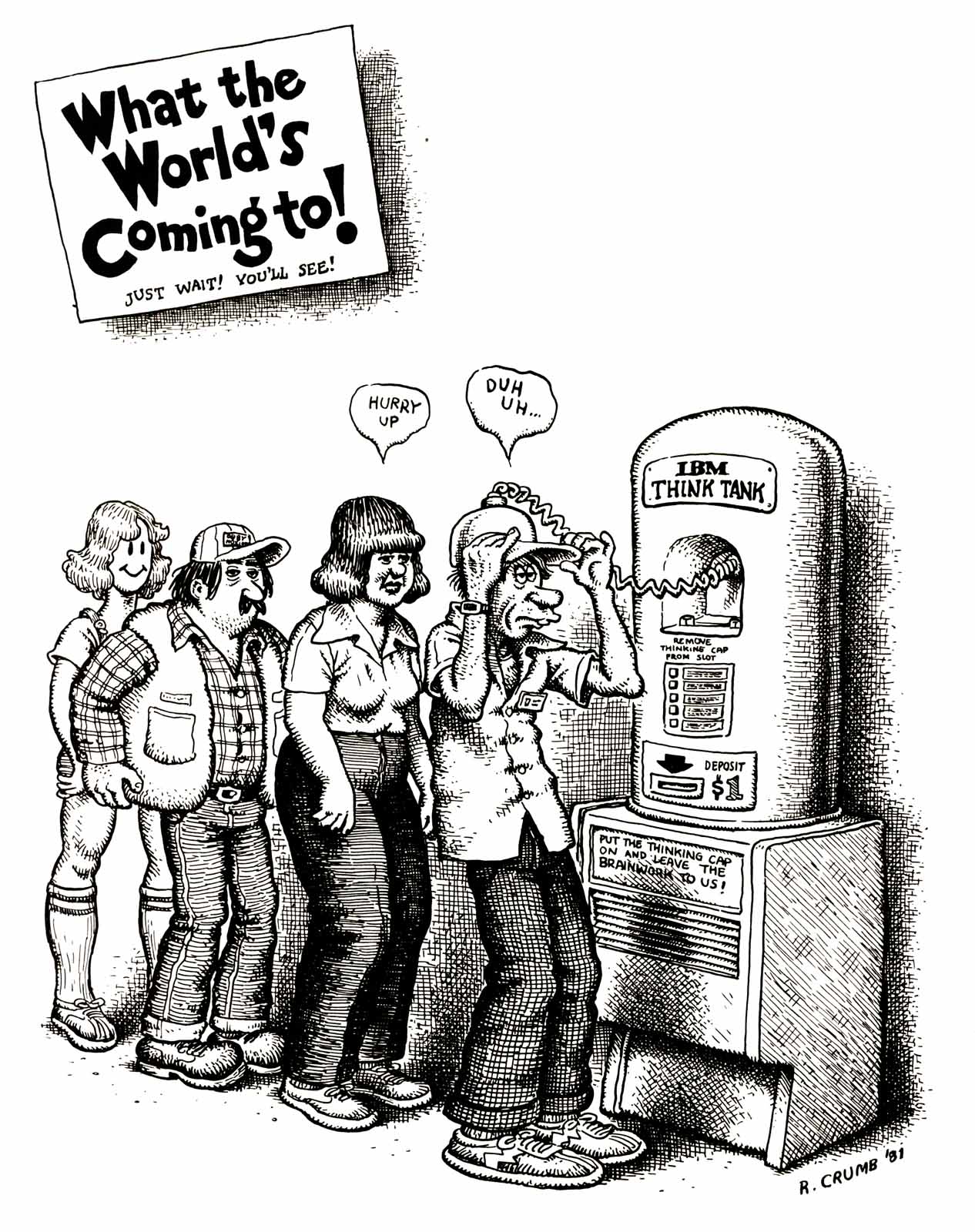
A one-pager by Robert Crumb from Weirdo #2, Summer 1981, Last Gasp.

Combat — Taylor Schultek 

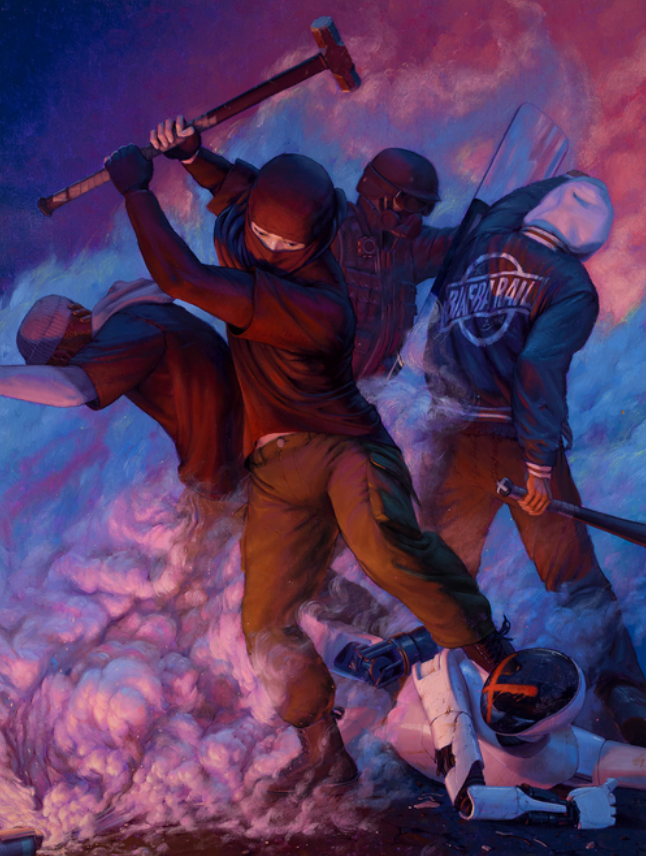
Combat, 2025 by Taylor Schultek (b. 1990)

“I Had Raised Dust,” a short vision from Daniil Kharms

“I Had Raised Dust”

by

Daniil Kharms

translated by

Neil Cornwell


I had raised dust. Children were running after, me, tearing their clothing. Old men and old women fell from roofs. I whistled, I roared, my teeth chattered and I clattered like an iron bar. Lacerated children raced after me and, falling behind, broke their thin legs in their awful haste. Old men and old women were skipping around me. I rushed on! Filthy, rachitic children, looking like toadstools, got tangled under my feet. Running was hard going. I kept remembering things and once I even almost fell into the soft mush of old men and women floundering on the ground. I jumped, snapped a few heads off toadstools and trod on the belly of a thin old woman, who at this emitted a loud crunch and softly muttered – They’ve worn me out. – Not looking back, I ran on further. Now under my feet was a clean and smooth pavement. Occasional streetlamps lit my way. I ran up to the bath-house. The welcoming bath-house flickered in front of me and the cosy but stifling bath-house steam was already in my nostrils, ears and mouth. Without undressing, I ran straight through the changing-room, then past the taps, the tubs and the planks, to the shelf. A hot white cloud surrounds me, I hear a weak but insistent sound. I seem to be lying down.

And at this point, a mighty relaxation stopped my heart.