New in Paperback: Novels from Marilynne Robinson and Per Petterson and Memoirs from Michelle Maisto and Michael Greenberg

mr_home

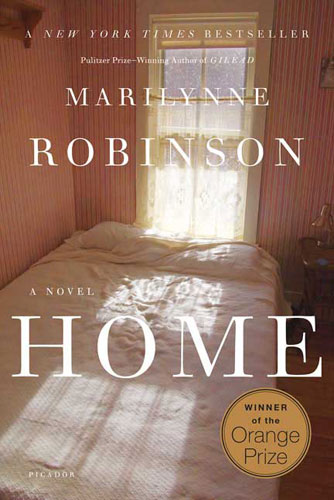
Home, Marilynne Robinson‘s follow-up to her 2004 Pulitzer Prize winning novel Gilead, tells the story of Jack Boughton, the miscreant prodigal son of Reverend Boughton (narrator of Gilead). Jack returns home after twenty years of petty theft and carousing to find his father dying and his sanctimonious sister Glory coping with a broken heart. Robinson handles the pain and secrets of the Boughton family in prose that is both spare and beautiful; there’s a simplicity here that belies the extraordinary spiritual puzzles into which Robinson’s characters delve. The result is that odd rarity: a literary novel of complexity and depth that’s also an ease and pleasure to digest, even in all its bitterness. Home is available in trade paperback from Picador September 8th, 2009.
tosiberia

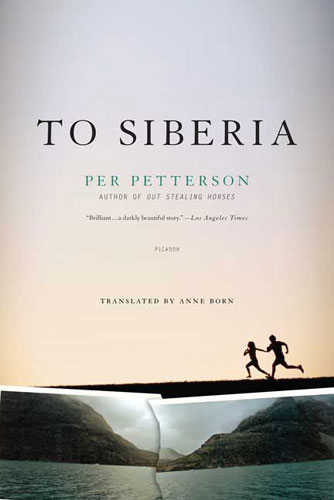
Also new in trade paperback from Picador on September 8th is Per Petterson’s novel To Siberia. Translated by Anne Born, To Siberia is the story of a Danish girl who lives in the isolated northernmost Jutland peninsula. Wishing to escape her neglectful parents and suicidal grandfather, she dreams of exotic Siberia. Set during the WWII Nazi occupation, To Siberia rhetorically mirrors the grim, cold reality of that era. Petterson delivers his tale in a crisp, almost brittle manner. There’s a translucence to the prose, a Nordic frankness that makes Petterson’s presentation of the girl’s infatuation with her older brother Jesper doubly strange. Her love and desire for him veers toward almost mythical incest, yet Petterson’s restraint reins in even the barest hints of hyperbole, leaving the reader to her own inferences. Like the grim story of Hans and Gretel, or the story of the tin soldier and his beloved ballerina, To Siberia is painful in its bleakness, but also beautiful in its imaginative underpinnings.
gastronomy

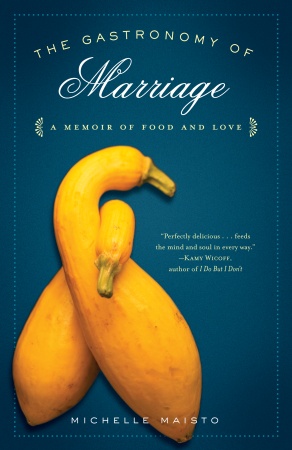
Michelle Maisto’s memoir The Gastronomy of Marriage, a Random House trade paperback original available September 8th, 2009, tells the story of Michelle’s courtship and marriage with her husband Rich, using the dining table as a lens to examine romantic relationships. Like many recent books about food, Gastronomy is interspersed with recipes, some of which sound pretty good (like the one for artichoke pie). Maisto’s is a memoir about planning for a wedding, told from a female perspective, and it might not have the widest appeal for many male readers, but it is well-written, if light, fare.
hurry down

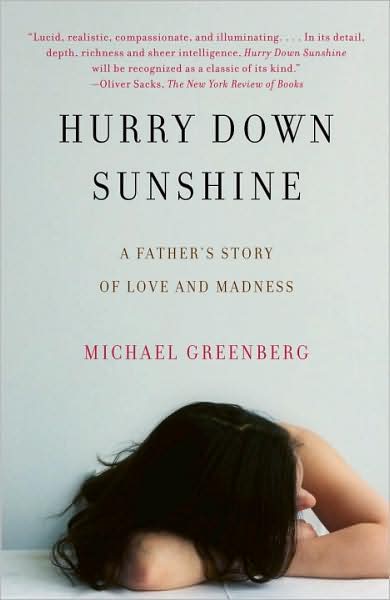
Far heavier is Michael Greenberg’s memoir Hurry Down Sunshine. Released in hardback last year to high critical acclaim, Greenberg’s memoir relates the true story of his daughter’s manic breakdown and subsequent committal to a mental hospital. Written in a spare, even terse style, with present-tense immediacy, Greenberg telegraphs his despair and frustration about his daughter’s condition with harrowing results. Greenberg even waxes a little on James Joyce’s own troubles with his daughter Lucia, as well as the poet Robert Lowell‘s bouts of manic depression.Literary angles aside, the book is not so much about his daughter’s mental condition, in the end, as it is about his own challenges as the parent of an ill child. Hurry Down Sunshine is available in trade paperback from Vintage books, September 8th, 2009.
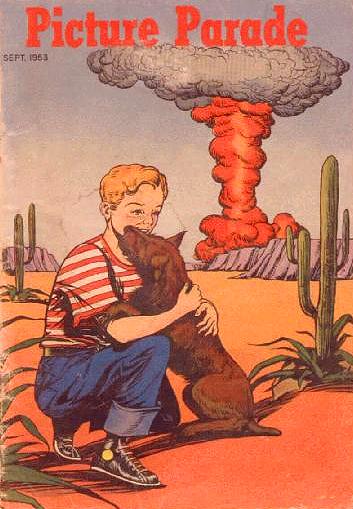
Picture Parade — Weird Comic Book Covers Gallery

PictureParade01

Not sure exactly who should get credit for putting together this great little collection of bizarro comic book covers, but muchas gracias nonetheless. Just a few images from a really cool gallery:

FirebrandsOfChrist

Bouncer10-nn

CaptainMarvelAdventures075

Back To School

I think I did a similar post two years ago. I teach, I gotta go back to school, the fall, the kids, blah, blah, blah. Anyway. I’ll try to get one proper book review out per week. I’ve got seven or eight really choice looking promo copies and galleys stacked up here, including new trade paperback editions of Marilynne Robinson’s Home and Per Petterson’s To Siberia. Vintage also has a really cool original by Patrick Alexander coming out in September; it’s called Marcel Proust’s Search for Lost Time and its subtitle, A Reader’s Guide to The Remembrance of Things Past pretty much sums it up. I’ve read the first 100 pages and it’s really great, and let’s face it, unless some kinda windfall happens where I can just read books all day, I’m never gonna get around to Proust, so, yeah, this’ll have to do. Proper reviews forthcoming, blah, blah, blah. (Even though William Gaddis’s The Recognitions ain’t gettin’ no shorter).

Waltz Rulz
Waltz Rulz

While I’m doing lazy reviews, let me just say that Quentin Tarantino’s latest film, Inglourious Basterds is a glorious bastard of a mixed-up masterpiece. Christoph Waltz steals the show as SS Col. Hans Landa, but the real star, as usual, is Tarantino’s sense of cinema (whatever that means; c’mon, I was upfront, this is lazy reviewing). Plenty of folks have kinda sorta hated on (or outright hated on) this film, but I loved it. A revenge film about cinema posing as a Western faking as a WWII flick. Great stuff.

steampunk_12

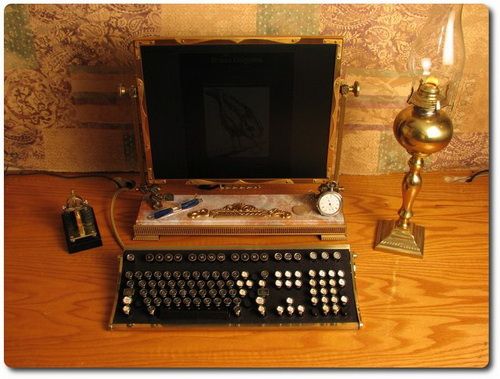
The last time I did one of these hacky “Back To School” posts, I brought up William Gibson for some reason–which gives me a good transition to this excellent steampunk photoset. While Gibson’s novel The Difference Engine (with co-author Bruce Sterling) is often cited as a progenitor of steampunk, many of the images in the set correspond to ideas Gibson put forth in his “Bridge Trilogy” — he envisioned a future of “organic” computers that some of these folks have gone out and made. I’d like one. Jeez, this is really bad writing, but, hey, back to school right. Like that Deftone’s song (yeah, I know the Deftones aren’t cool or hip or whatever, and I’ve never heard one of their albums, but M2 used to play that video all the time when I was in college 10 years ago and I thought it was pretty great).Cheers.

An Ill-dressed, Underfed, Overdrunken Group of Squatters with Minds So Highly Developed That They Were Excused from Good Manners

gaddis_large

I just love this passage from William Gaddis’s The Recognitions. Mocking “hipsterism” has been around forever (or at least 50 years):

And by now they were at the door of the Viareggio, a small Italian bar of nepotistic honesty before it was discovered by exotics. Neighborhood folk still came, in small vanquished numbers and mostly in the afternoon, before the two small dining rooms and the bar were taken over by the educated classes, an ill-dressed, underfed, overdrunken group of squatters with minds so highly developed that they were excused from good manners, tastes so refined in one direction that they were excused for having none in any other, emotions so cultivated that the only aberration was normality, all afloat here on sodden pools of depravity calculated only to manifest the pricelessness of what they were throwing away, the three sexes in two colors, a group of people all mentally and physically the wrong size.

The Music of Pynchon’s Inherent Vice

Thomas Pynchon‘s latest novel, Inherent Vice is loaded with musical references–the radio’s always buzzing, bands are always hammering out jams, and hero Doc Sportello is always singing a verse or two. Wouldn’t it be cool if someone would take the time to make a playlist of all the tunes in the book? Okay, that was a lame set-up. Obviously somebody did take the time, and according to the text accompanying the original list at Amazon (yeah, I’m shamelessly cutting and pasting and also saving you time), “the playlist that follows is designed exclusively for Amazon.com, courtesy of Thomas Pynchon.” Hmmmm…wonder if Pynchon made the list himself–after all, he writes his own book jacket blurbs, and he even narrated the trailer for Inherent Vice. Pretty cool. Links go to downloads (not free, sorry) or artist pages. In cases of no links, the band or artist is one of Pynchon’s original creations (although we’d really, really love to hear “Soul Gidget,” or really anything by Meatball Flag). Bonus vid after the list.

William Burroughs Speaks

OBIT BURROUGHS

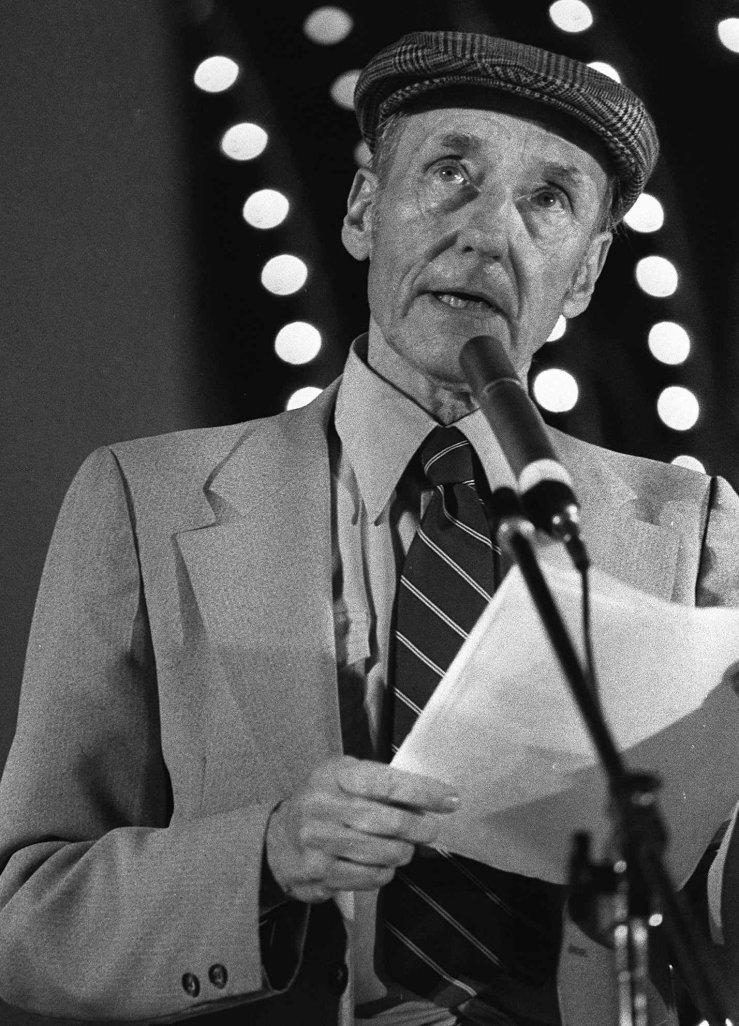
There are some great downloads available at Naropa University’s Internet Archive, including some lucid-but-still-weird lectures from William Burroughs. We highly recommend Burroughs’s 1979 lecture on creative reading, where he dissects Conrad and Gysin among others, waxes on heroic tropes, and talks about assassins. Also good is a 1980 forum on public discourse (Ginsberg introduces and sticks around). Good stuff.

Historic Photos of University of Florida Football–Kevin McCarthy

UFA-uapc8859

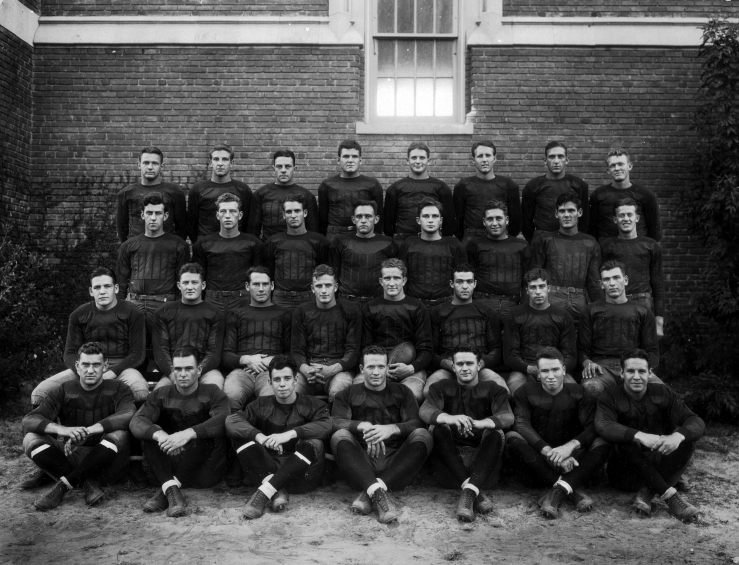
Prejudices up front: not only did I attend the University of Florida, but so did my parents, my wife, and many of my lifelong friends. I was raised on Gator football, and some of my family members, when cut, are known to bleed orange and blue. I think that Tebow is something of a national treasure (surely, had not Clinton succeeded in freeing journalists Euna Lee and Laura Ling from a North Korean labor camp, we would’ve sent Tebow), and I acted like a silly fool when I got to meet Urban Meyer last year (he was recruiting players at the high school where I teach English). Not only am I predisposed to liking a book like Historic Photos of University of Florida Football, I also happen to be a former student of the author, University of Florida professor Kevin McCarthy (I will never forget him calling me over to his desk after class one morning, poking me in the chest and commanding me, “Come to class!”).

So, yeah, it’s possible that I’m enthusiastically biased about a book combining archival photos of the Gators with insightful text and captions. Fans of the Florida State Seminoles probably know that this book isn’t for them upfront, but that’s okay. True Gator fans will not be disappointed. Historic Photos of University of Florida Football (new from Turner Publishing) is as much a history text is it is a survey of Gator football, following a team from its humble origins at the turn of last century (McCarthy informs us that “its 1904 team in Lake City was outscored 224-0,”) to its present glories as National Champions.

1930 UF Homecoming
1930 UF Homecoming

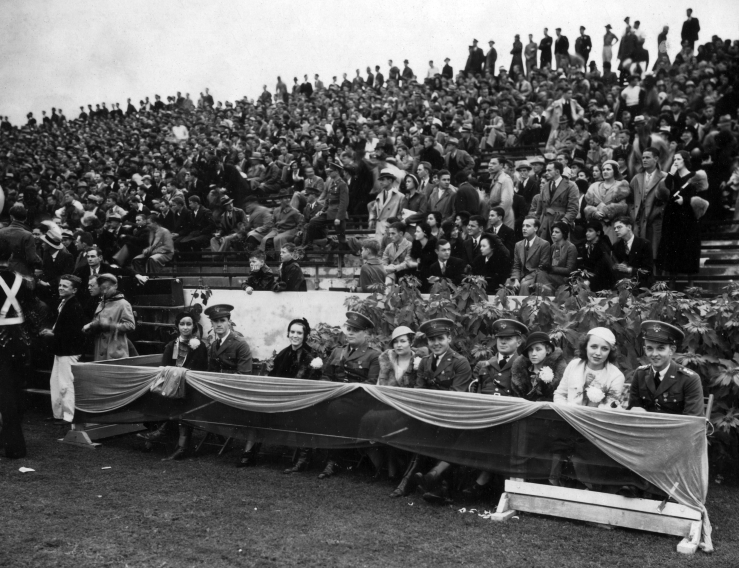
Most of the book chronicles the early days of Florida football (over half of the 200 images date from before 1960), and while some fans might be disappointed in a lack of more recent photographs, it’s worth pointing out that in our current media-saturated age it’s not so hard to come by these. Far more interesting are pics of the old days, with sweatered all-male cheerleading squads, bulky leather helmets, and folks dressed up to the nines to go to a football game (if you’ve ever lived in Gainesville you know that even in October a suit jacket, let alone a tie and pants, are pretty uncomfortable). Many of these photos capture the energy and intensity of the game, as well as a sense of nostalgia for a time when college football wasn’t so commercialized.

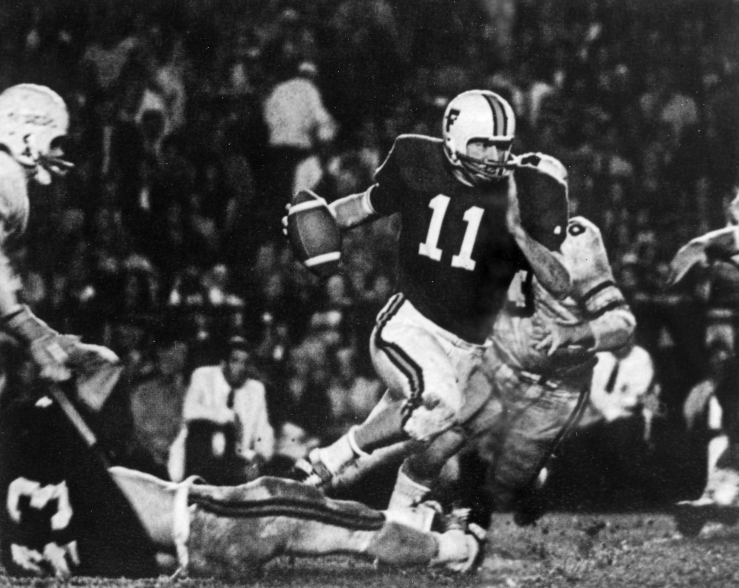
Steve Spurrier, 1965

The images collected here transmit a love for both the Florida Gators, as well as a sense of respect for the traditions of college football in general. As the Gators’ indomitable legacy grows, surely this book will one day be referred to as “Volume I,” as there are plenty more touchdowns to be scored, games to be won, and historical moments to be made. Recommended for Bull Gators everywhere.

No Great Book Is Explicable

About the same time I was finishing up James Wood’s How Fiction Works, I was also beginning William Gaddis‘s massive tome The Recognitions. So far the book is fantastic–I’m about 180 pages in–but it’s (very, very) long and there’s a big stack of upcoming releases here that needs to be digested for review, so who knows if I’ll finish it anytime soon. Anyway, I thought this notation from William H. Gass‘s brilliant introduction does a fantastic job of speaking to both the limits of literary criticisms (like Wood’s) as well as underscoring the value of reading–and rereading:

No great book is explicable, and I shall not attempt to explain this one. An explanation–indeed, any explanation–would defile it, for reduction is precisely what a work of art opposes. Easy answers, convenient summaries, quiz questions, annotations, arrows, highlight lines, lists of its references, the numbers of its sources, echoes, and influences, an outline of its design–useful as sometimes such helps are–nevertheless seriously mislead. Guidebooks are useful, but only to what is past. Interpretation replaces the original with the lamest sort of substitute. It tames, disarms. “Okay, I get it,” we say, dusting our hands, “and that takes care of that.” “At least I understand Kafka” is a foolish and conceited remark.

Philip Guston Literally Paints Gass
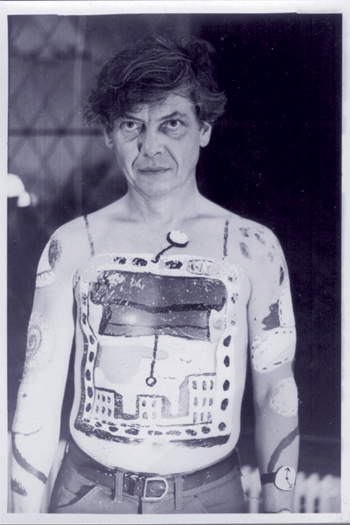
Philip Guston Literally Paints William H. Gass

Inherent Vice Trailer

Trailer for Thomas Pynchon’s new novel, Inherent Vice. Is it weird that books have trailers now? Not sure…

Imperial Vollmann, Populist Beach Reading, and Henry Louis Gates, Jr.

A few odds and ends (and perhaps a bit of ranting):

vollmann_imperial_cover1

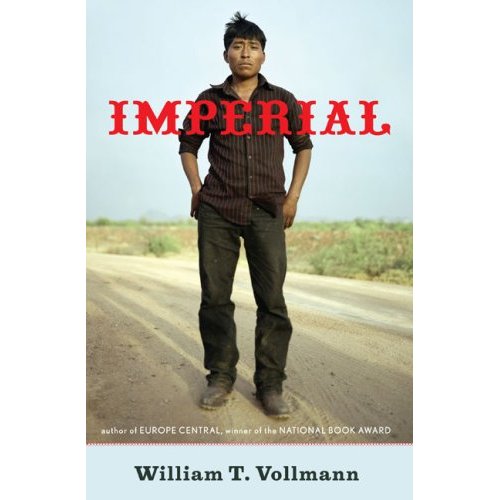
Read this fascinating profile of William Vollmann from this week’s New York Times. It makes me wish I had nothing to do but read everything this maniac writes. Vollmann’s new book Imperial comes out today from Viking. You can read an excerpt here.

Not really surprisingly, Vollmann did not make NPR‘s reader poll for the 100 Best Beach Books Ever. J.K. Rowling’s Harry Potter series topped a list that pretty much consists of a bunch of drivel (Twilight, Divine Secrets of the Ya-Ya Sisterhood), drivel posing as non-drivel (The Kite Runner, The Time Traveler’s Wife), overrated “classics,” (To Kill A Mockingbird), and a few surprises (Cormac McCarthy’s The Road is a fantastic book, but is it really best enjoyed on a sunny beach?)

TheClassicSlaveNarratives7517_f

This one didn’t make the beach reading list either. For a few years now, selections from The Classic Slave Narratives have been required reading in my high school classroom. I usually emphasize sections from Olaudah Equiano and Frederick Douglass, two masterful writers whose complex syntax and diction can be stunning, if not overwhelming, to the average AP student. I think that these narratives speak to why writing matters, and, importantly in today’s idiocracy, why reading matters as well. These first-person accounts of the horrors of slavery need to be read, and editor Henry Louis Gates, Jr. does a great job of setting the stage in his remarkable introduction to the collection. It’s sad, intellectually tragic, really, that Gates’s recent arrest should be given so much credit for sparking a “debate” or “teachable moment” about race, when Gates’s own scholarship makes the rootedness of racial tension in this country so plain. When a demagogue like Glenn Beck calls President Obama a “racist,” or a big fat idiot like Rush Limbaugh suggests that Obama simply has a “chip on his shoulder” because he’s black, we can see precisely why the first-person narratives of Equiano, Douglass, Mary Prince, and Harriet Jacobs are so important. These dangerous lunatics repeatedly suggest on their shows that America needs to keep its “traditions,” that our “history” is a strength, and that somehow the past was a place of better values. Perhaps if they read something outside of the dominant narrative they’d understand why someone might want to reappraise historically traditional values (and also, why someone might have a chip on his shoulder). But I’ve digressed from my main point: The Classic Slave Narratives is a valuable and important collection, and the stories collected here are a real entry point for any genuine discussion on race.

Cronenberg Does DeLillo

David_Cronenberg2_bw

Via the AV Club:

Because he likes nothing more than to bring impossible-to-adapt novels to the big screen (see: Naked Lunch, Crash), Canadian super-genius David Cronenberg is set to direct the feature adaptation of Don DeLillo’s Cosmopolis. Released in 2003 to mixed notices, DeLillo’s book takes place almost entirely inside the limousine of a 28-year-old billionaire asset manager as he makes his way slowly across Manhattan in order to get a haircut. Traffic is slowed by everything from a Presidential motorcade to a rapper’s funeral, and several character [sic] slip into the limo alongside him. The trick for Cronenberg is to figure out how to make his hero’s adventure remotely cinematic, but if he pulls it off, the book has plenty to say about life in the new economy.

Shooting will commence in Toronto and New York next year.

We’ve thoroughly enjoyed Cronenberg’s last couple of films (A History of Violence, Eastern Promises) but his adaptations of J.G. Ballard’s Crash was problematic at best, and his take on William Burroughs’s Naked Lunch doesn’t even make for a good flawed film, in our humble expert opinion (here’s our review). We didn’t really like Cosmopolis either. Still, our interest is piqued. Here’s Cronenberg discussing Viggo Mortensen’s bathhouse fight scene in Eastern Promises:

Waiting for The Visitor

We’re pretty psyched about Jim O’Rourke‘s upcoming album, The Visitor, out on Drag City September 8th. O’Rourke hasn’t put out a “pop” record (as opposed to “experimental,” something of a false dichotomy really) since 2001’s Insignificance. Apparently, the new record is in the vein of one of our all-time favorite records, 1997’s Bad Timing. Supposedly the record will take the form of one long suite of music called “The Visitor,” and according to this interview from last year, “pretty much everyone is going to be disappointed.” He also says that the new record will be “pt. 4” after Bad Timing, Eureka, and Insignificance, so it’s hard to imagine being disappointed. Here’s the (we think) Nic Roeg connection (quick note: the three albums just cited are named after Nic Roeg films): in 1976’s The Man Who Fell to Earth, David Bowie plays a space alien stranded on Earth who records an album under the name The Visitor. Here’s the cover of The Visitor:

orourke-covermain

Here’s a Eureka-era audio interview with O’Rourke that you can download. He talks about his prolific powers, the influence of Godard and Roeg on his work, hierarchy and didacticism in music, the cheesy sax solo on “Eureka” (“Of course it’s stupid!”), and why listening to music is a process of education. Good stuff. Or, if you want music, not words, here’s the sorta kinda rarity, “Never Again,” from the Chicago 2018 comp. Also good stuff.

Javier Moreno on the Geometry of Bolaño’s Fiction

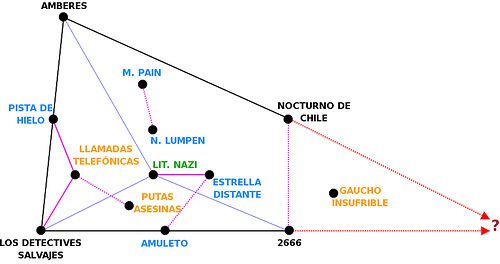
Still working through this Roberto Bolaño jag: I will finish By Night in Chile tonight or tomorrow, and I’ll get to my own thoughts on that then. For now: while looking for an interview in English with Bolaño, I came across this marvelous essay in The Quarterly Conversation–a site Biblioklept links to, oddly enough, yet I missed it (probably because it’s a few years old). In “Roberto Bolaño: A Naïve introduction to the geometry of his fictions,” Javier Moreno doesn’t really analyze or criticize or Bolaño’s oeuvre ; instead, he treats the work like a strange, maddening (and fun, beautiful) game. And if you’ve read Bolaño, you know how appropriate that approach is. Here is Moreno’s attempt to diagram Bolaño’s corpus:

triangle

That question mark represents what Moreno suggests is Bolaño’s “unreachable book,” a tome that (might) exist as the dialogic interplay of all of Bolaño’s works. Moreno concludes (more or less; concludes is really not the right word) that 2666 is that “unreachable book”; he writes:

I believe that even if Bolaño hadn’t died prematurely 2666 would still have been published posthumously. The “real” and impossible 2666 was larger and richer. My guess is that if Bolaño had lived forever 2666 would have been at the very end of the diagram, located in the vertex where the question mark is. Since he died, since he was mortal (too mortal) after all, we have to resign ourselves to the promise of a triangle and only dream of its asymptotic completion.

Consider this fragment of an interview as evidence for Moreno’s claim:

Amambay Guevara: What’s the novel you dream of writing?

Roberto Bolaño: One novel that will be called 2666.

Ricardo Bello: That novel, 2666, would it be a science fiction one? Would it be located in Latin America?

Roberto Bolaño: Partially, it will be science fiction. It will take place in the state of Sonora, north of México, and in Arizona.

I think Moreno’s essay is pretty great–it’s the sort of writing I like, and its tone is spot on for the psychology and rhythm of Bolaño’s writing. Still, I think you’d probably go crazy thinking about what’s at the end of that triangle, of some great work out there, intangible, unfinished, unclaimed, disparate. In the end, Moreno gives up on his diagram, writing:

The system doesn’t stay still. That’s the way it is. Conscious of the impossible task, I resign. I cannot capture it. I cannot shoot the video. The dots are moving as I stare at them, still puzzled, marveled by their strangeness and beauty. The diagram, after all, is just a waste of time.

I like the way his line about moving dots subtly recalls the strange ending of The Savage Detectives. Also, I’m not sure that the diagram is a waste of time. I think that what Moreno might not see (or shit, maybe he does see it, how would I know) in his own diagram is that that question mark might not be some unwritten masterpiece, but rather it might be the reader who enters into the game with Bolaño and his texts. The irony is that that is precisely what Moreno has done. And–sign of a great critic–he’s made me want to read more.

Kafka’s Metamorphosis Cover Gallery

metamorphosis-jacket-of-first-book-edition

Not sure if anything can top the subtle pain and alienation this original edition. Still, it doesn’t really translate any of the humor in Kafka’s masterpiece. More after the jump.

Continue reading “Kafka’s Metamorphosis Cover Gallery”

Hemingway House

DSC02393

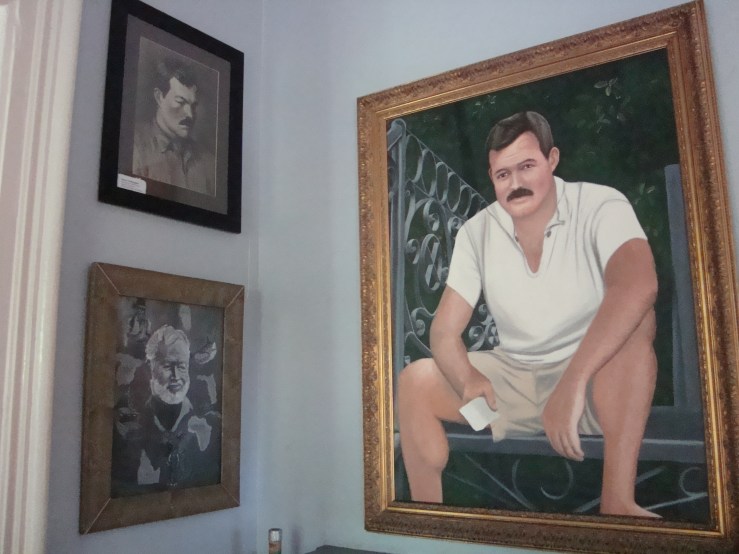
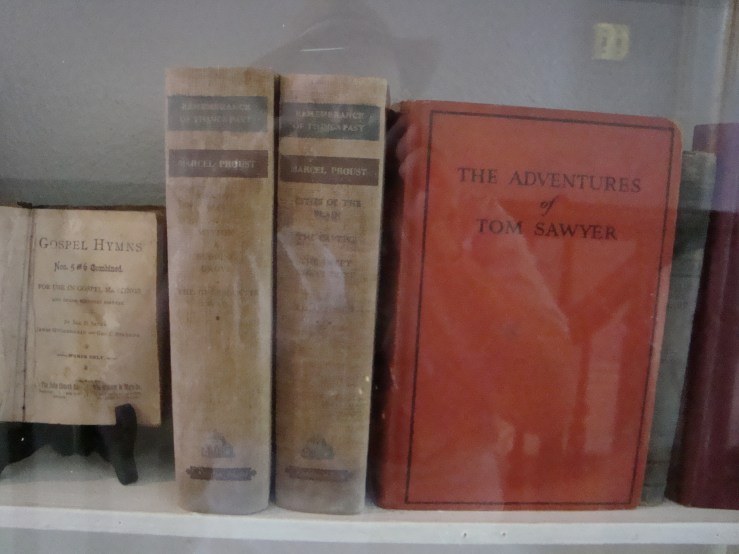
We spent a long July 4th weekend in beautiful Key West, celebrating freedom via endless barhopping and overeating. Somehow, between the Key lime margaritas, street beers, and moonlight reggaeton, we managed to stumble into Hemingway House (officially named The Ernest Hemingway Home & Museum), the house where Hemingway lived for most of the 1930s, and the place where he wrote some of his best stuff. I had been to Hemingway house almost two decades ago, when I was about twelve or thirteen. I was obsessed with Hemingway then, so I took the tour. This time, however, it was too hot. My wife works for a museum, so we got in free, which also affects how one values/reviews a place of interest, so bear that in mind when I say that, unless you’re a literary nut, go ahead and skip Hemingway House and head to Kelly’s for a drink or six. Still, the house is beautiful, outfitted with plenty of artifacts related to Papa, including some books from his personal library that I photographed and included below. (I was the only nerd photographing the books; everyone seemed far more interested in the ancestors of Hemingway’s freakish cats).Here are the books (more after the jump):

DSC02407

Continue reading “Hemingway House”

“What Lies Beyond Violent Drunkeness” — Guy Debord on Drinking Booze

guydebord1jv7

In the following short chapter from his 1989 memoir Panegryic, Volume 1, Situationist mastermind Guy Debord writes a love letter to alcohol. He explains why he loves to drink, what he loves to drink, and where he loves to drink, and he does so with a scholar’s flair for quotation and an anarchic humor. Towards the end, he attacks the current state of mass-produced wines, liquors, and beers, complaining that regional flavors and varieties are being destroyed. Great stuff!

Wines, spirits and beers: the moments when some of them became essential and the moments when they returned have traced out the main course and meanders of days, weeks and years. Two or three other passions, which I will talk about, have almost continually taken up a lot of space in this life. But drinking has been the most constant and the most present. Among the small number of things that I have liked and known how to do well, what I have assuredly known how to do best is drink. Even though I have read a lot, I have drunk even more. I have written much less than most people who write; but I have drunk much more than most people who drink. I can count myself among those of whom Baltasar Gracián, thinking about an elite distinguishable only among the Germans — but here very unfair, to the detriment of the French, as I think I have shown — could say: “There are those who have got drunk only once, but it has lasted them a lifetime.” […]

Continue reading ““What Lies Beyond Violent Drunkeness” — Guy Debord on Drinking Booze”

Ulysses “Seen” — Robert Berry

telemachus-color-18

Because of its daunting reputation, many readers shy away from James Joyce’s Ulysses, when really the book is not nearly as challenging as some literati would have you believe. It’s funny and poignant and moving, and sure, it’s loaded with so many allusions that you’d have to spend a lifetime sorting them out, but once you get into its rhythm, its voices, it’s actually not that hard to read, and it’s certainly one of the most rewarding books I’ve ever read. One of the key difficulties for readers new to Ulysses is simply penetrating those first few pages, getting a visual for what’s going on with Buck Mulligan and young Stephen. Because Joyce is transposing events, both mythically, religiously, and chronologically, the opening is particularly challenging–especially because Joyce doesn’t explicate these shifts for the reader. There are plenty of aids out there, of course, from Harry Blamires’s The New Bloomsday Book to Joseph Campbell‘s fantastic lectures, and readers new to the book should not feel daunted or put off by the fact that this book might require a good. Led by Robert Berry, the folks at  Throwaway Horse have started a new project, a comic book representation of Ulysses that is, to say the least, wildly ambitious. I’ll let them put it in their own words:

“Ulysses ‘SEEN’” is the inaugural project of Throwaway Horse LLC. Throwaway Horse is devoted to fostering understanding of public domain literary masterworks by joining the visual aid of the graphic novel with the explicatory aid of the internet. By creating “Web 2.0” versions of these works, we hope to proliferate and help to not only preserve them, but ensure their continued vitality and relevance. Throwaway Horse projects are meant to be mere companion pieces to the works themselves—by outfitting the reader with the familiar gear of the comic narrative and the progressive gear of web annotations, we hope that a tech-savvy new generation of readers will be able to cut through jungles of unfamiliar references and appreciate the subtlety and artistry of the original books themselves which they otherwise might have neglected.

So far, Berry has illustrated the first chapter (commonly referred to as “Telemachus”). Berry’s work is far more detailed than I initially had imagined was possible, and there are even useful annotations by scholar Mike Barsanti. This is truly a massive project, given the level of detail Berry has committed to the first chapter, and I think it will be an invaluable resource to readers new to Ulysses as well as those who’ve already been through the book before. Here’s hoping that we’ll get all the way to Molly’s final monologue!

(Thanks to Nick for the tip).