Nothing remarkable to record | Nathaniel Hawthorne’s journal entry for July 31st, 1837

July 31st.–Nothing remarkable to record. A child asleep in a young lady’s arms,–a little baby, two or three months old. Whenever anything partially disturbed the child, as, for instance, when the young lady or a by-stander patted its cheek or rubbed its chin, the child would smile; then all its dreams seemed to be of pleasure and happiness. At first the smile was so faint, that I doubted whether it were really a smile or no; but, on further efforts, it brightened forth very decidedly. This, without opening its eyes.–A constable, a homely, good-natured, business-looking man, with a warrant against an Irishman’s wife for throwing a brick-bat at a fellow. He gave good advice to the Irishman about the best method of coming easiest through the affair. Finally settled,–the justice agreeing to relinquish his fees, on condition that the Irishman would pay for the mending of his old boots!

I went with Monsieur S—- yesterday to pick raspberries. He fell through an old log bridge thrown over a hollow; looking back, only his head and shoulders appeared through the rotten logs and among the bushes.–A shower coming on, the rapid running of a little barefooted boy, coming up unheard, and dashing swiftly past us, and showing the soles of his naked feet as he ran adown the path, and up the opposite rise.

Nathaniel Hawthorne’s journal entry for July 31st, 1837. From Passages from the American Note-Books.

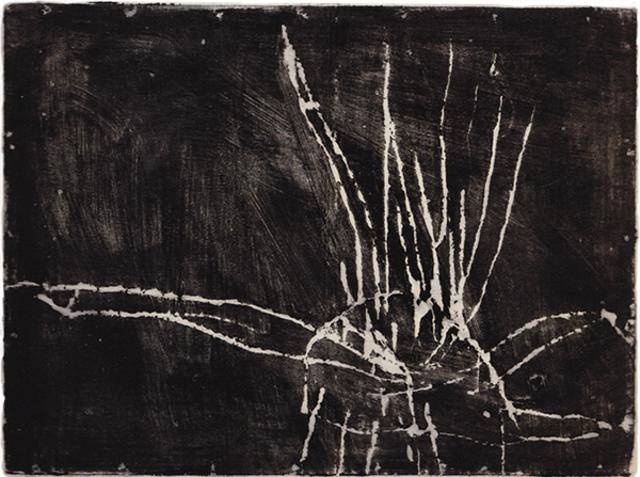
The Friends — Gustav Klimt

the-women-friends-1917

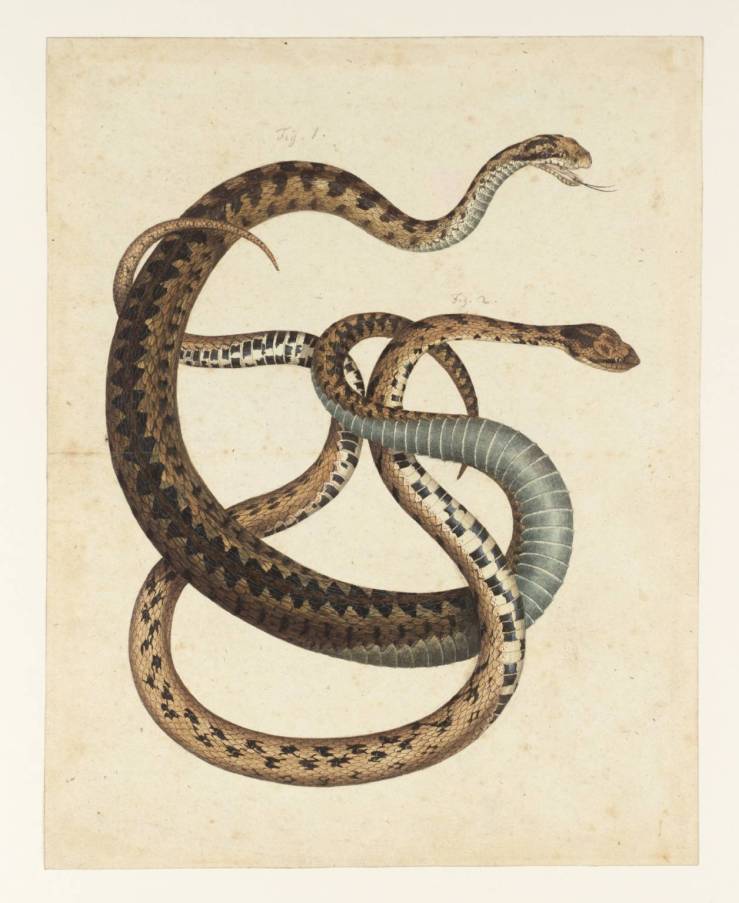
Netherlandish Proverbs (detail) — Pieter Bruegel the Elder

Screenshot 2016-06-26 at 11.40.49 AM

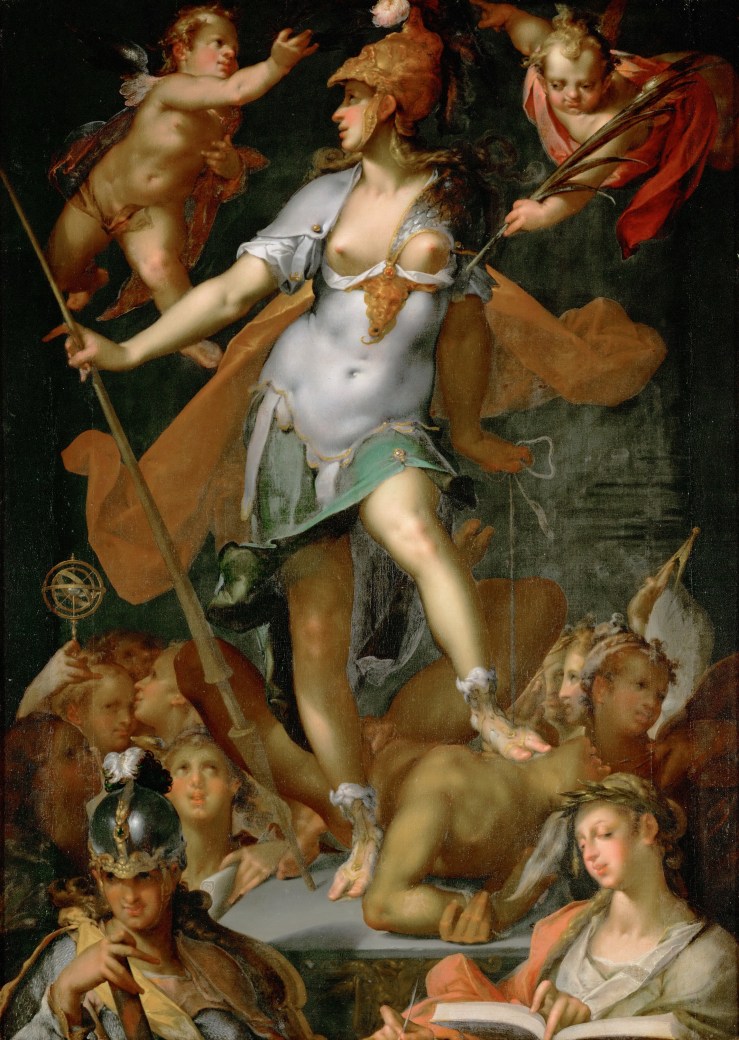
Lucretia Borgia Reigns in the Vatican in the Absence of Pope Alexander VI — Frank Cadogan Cowper

frank_cadogan_cowper_-_lucretia_borgia_reigns_in_the_vatican_in_the_absence_of_pope_alexander_vi_-_google_art_project

The Apple of Discord — Thomas Hart Benton

art-addicts-anonymous-thomas-hart-benton-the-apple-of-discord-1949-1427430439_org

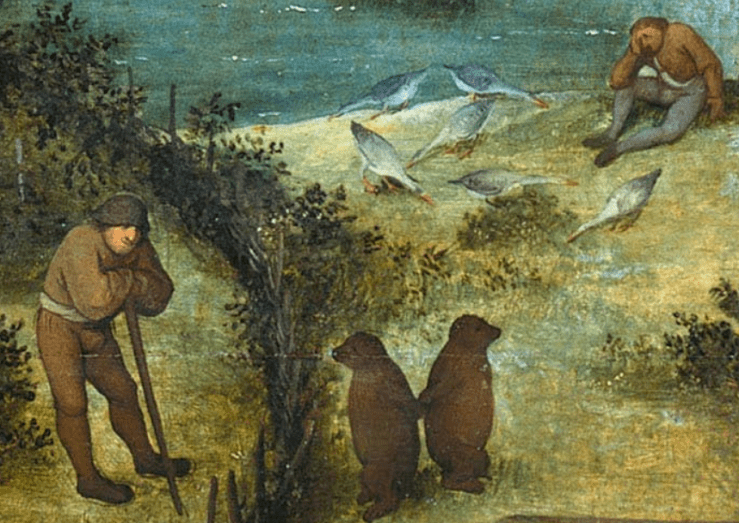
Netherlandish Proverbs (detail) — Pieter Bruegel the Elder

Screenshot 2016-06-26 at 11.34.18 AM

The Land Baby — John Collier

the-land-baby-1899

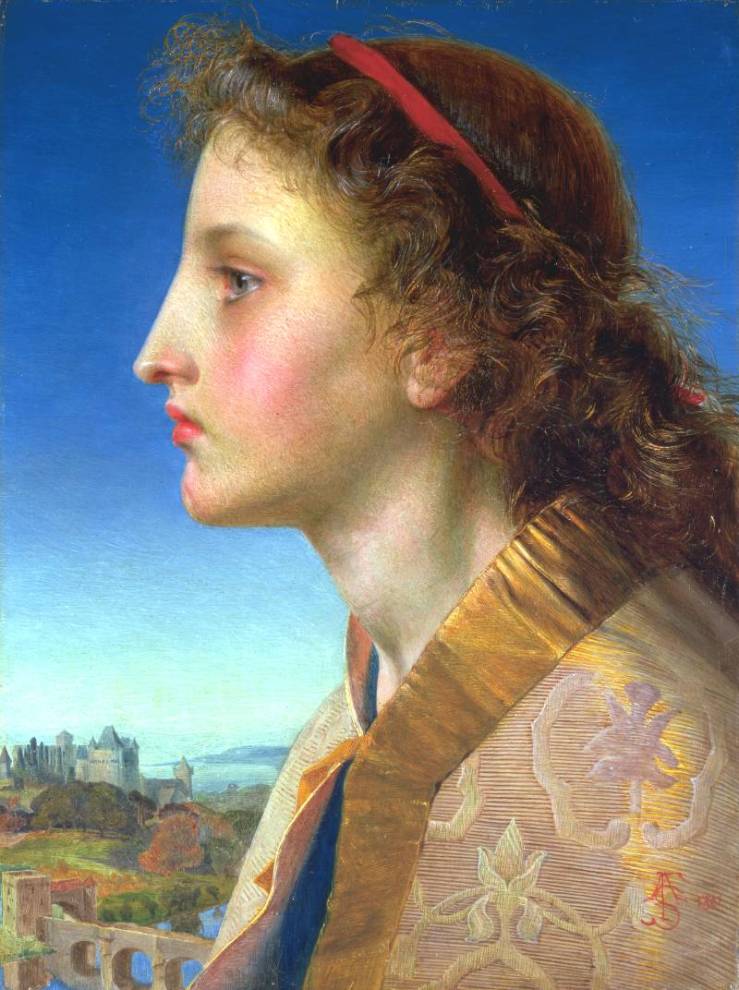
Anthony of Padua — Kehinde Wiley

el137-43-web

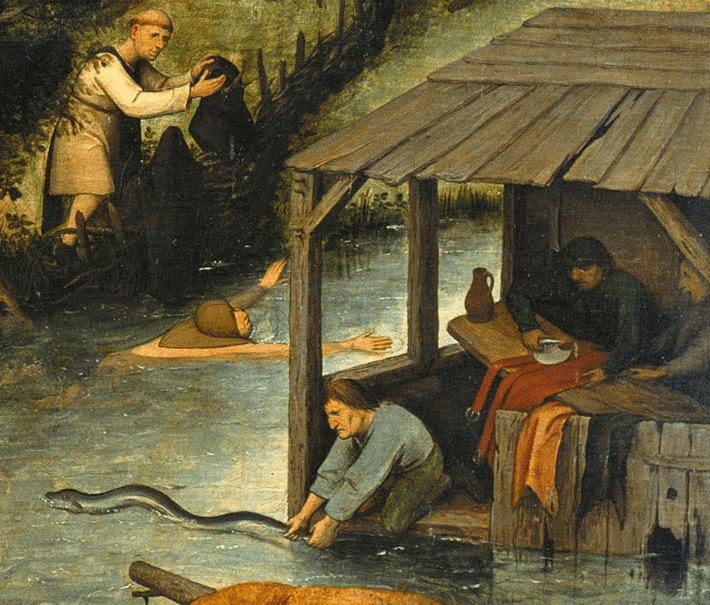
Netherlandish Proverbs (detail) — Pieter Bruegel the Elder

Screenshot 2016-06-26 at 11.32.48 AM.png

Another short report from The Charterhouse of Parma

img_3114
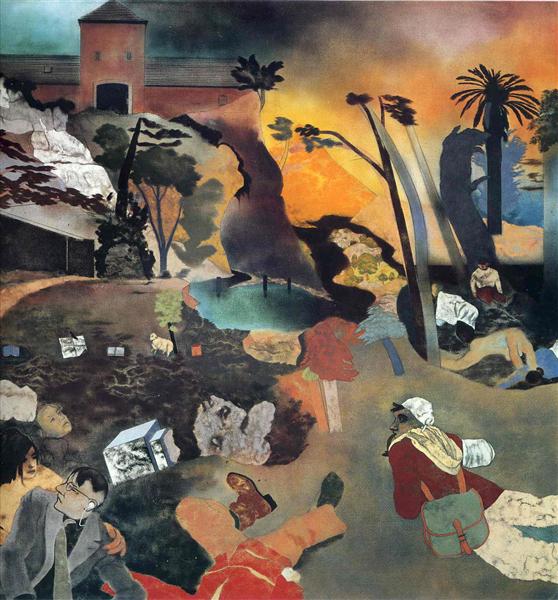
Robert Andrew Parker’s ilustration to Ch. 4 of The Charterhouse of Parma

After many, many false starts, I’ve finished Stendhal’s 1839 cult classic The Charterhouse of Parma.  (I read Richard Howard’s 1999 Modern Library translation).

I really, really wanted to quit around Ch. 25 (of 28). I’ll admit at times I broke a rule I’d made nearly two decades ago, now: I allowed my mind to wander. I thought of other things: A variation on a muffin recipe I was planning to make for my kids. A possible review of William Friedkin’s 1977 film Sorcerer. Lunch. What book I might read next as an antidote to Charterhouse.

The end of the novel is an utter slog. No duels, no escapes. Just courtly intrigues and courtly romances. And ironic sermons. Then, in the last chapter, a new character shows up! Some dandy named Gonzo! Out of nowhere! To move the plot along! (Stendhal pulls a similar stunt in the back half of the novel, when it first starts to really drag—he brings in a lunatic-bandit-poet-assassin named Ferrante).

And then—okay, maybe this is something close to a spoiler, but I don’t think so—and then, Stendhal seems to get bored with his novel. In the last chapter, he skips a few years in a few sentences (this, in a novel where every damn decision each character frets over goes on and on for paragraphs) and then kills everyone (not really. But really, sorta. I mean, the last chapter of The Charterhouse of Parma almost feels like season six of Game of Thrones, where the action is accelerated at a pace that seems to ironize all the previous scheming and plotting).

Stendhal supposedly dictated Charterhouse over 50-something days (I think I read that somewhere…I’ve yet to read Howard’s afterword to the novel, or Balzac’s study…I’ll save those for later, after I remember the best bits of the novel more fondly). But where was I? Oh, yeah: Stendhal supposedly dictated Charterhouse over a two-month period, and I get the feeling he was getting bored with it there at the end. Which is in some ways appropriate, as The Charterhouse of Parma is all about boredom. Phrases like “boring,” “bored,” and “boredom” pop up again and again. There’s something wonderfully modernist (or Modernist) about that.

img_3115
Robert Andrew Parker’s ilustration to Ch. 11 of The Charterhouse of Parma

Of course all that boredom is punctuated with moments of wonderful action—battles and duels! Indeed, Charterhouse never really surpasses its fourth chapter, a strikingly modern depiction of the Battle of Waterloo.

Stendhal is great at conveying action and violence while stripping it from Romantic illusions—and at the same time, he presents those Romantic illusions, making them ironic (again—this is probably one of the first Modern novels, and I’m sure someone has already said that somewhere, but hey).

Stendhal is also wonderfully adept at capturing a human mind thinking. Whether it’s the Machiavellian machinations of Count Mosca, or our (ever)greenhorn hero Fabrizio, or the real hero of Charterhouse, Fabrizio’s aunt Gina, Stendhal takes pains to show his characters thinking through their problems and schemes. Not only do the heroes and villains of The Charterhouse of Parma think, they think about what other characters will think (about what they have thought…). The novel in some ways is about metacognition. But thought about thought may be a product of boredom. And it often produces boredom.

Balzac was a great admirer of Charterhouse, as was Italo Calvino, and countless writers too. Indeed, the novel is, I suppose, a cult favorite for writers, which makes sense: Stendhal crowds each page with such psychological realism, such rich life, that every paragraph seems its own novel. I’ll admit that by page 400 or so I was exhausted though.

I’ve noted here a few times that Charterhouse is a “Modernist” novel; perhaps “proto-Modernist” is the term I need. (Again—I’m sure that countless lit critics have sussed over this; pardon my ignorant American ass). And yet Charterhouse also points back at the novels before it, the serialized novels, the epistolary novels, the romances and histories and etceteras of the seventeenth and sixteenth centuries. My favorite lines of the novel were often our ironic narrator’s brief asides like, “Doubtless the reader grows tired…” or “The conversation went on for hours more in trivial detail…” or “The letter went on for pages more after the same fashion…” (These aren’t actual quotes, dear reader, but I think I offer a fair paraphrase here). Stendhal’s modernism, or Modernism, or proto-Modernism, or whatever, is his wily irony, his winking at the novel’s formal characteristics. My own failing, then, is to perhaps want more of this. As I wrote last time I riffed on it, what I suppose I want is a postmodern condensation of The Charterhouse of Parma, such as Donald Barthelme’s 1968 story “Eugénie Grandet,” which parodied Honoré de Balzac’s 1833 novel Eugénie Grandet. 

Screenshot 2016-07-25 at 5.08.00 PM

How much of Balzac’s novel is lovingly leapt through right here?!

This wish of mine is of course my failure, not the novel’s.

The Charterhouse of Parma is undoubtedly an oddity, a work of genius, often thrilling, and often an utter slog. I suppose I’m glad that I finally finished it after so many years of trying, but I’m not sure if I got what I wanted out of it. The failure is mine.

I’ll close with the novel’s final line though, which I adore:

TO THE HAPPY FEW

I Drew a Picture in the Sand and the Water Washed It Away — Ivan Albright

319865

Posted in Art

Nathaniel Hawthorne’s journal entry for July 24th, 1837

July 24th.–I bathed in the river on Thursday evening, and in the brook at the old dam on Saturday and Sunday,–the former time at noon. The aspect of the solitude at noon was peculiarly impressive, there being a cloudless sunshine, no wind, no rustling of the forest-leaves, no waving of the boughs, no noise but the brawling and babbling of the stream, making its way among the stones, and pouring in a little cataract round one side of the mouldering dam. Looking up the brook, there was a long vista,–now ripples, now smooth and glassy spaces, now large rocks, almost blocking up the channel; while the trees stood upon either side, mostly straight, but here and there a branch thrusting itself out irregularly, and one tree, a pine, leaning over,–not bending,–but leaning at an angle over the brook, rough and ragged; birches, alders; the tallest of all the trees an old, dead, leafless pine, rising white and lonely, though closely surrounded by others. Along the brook, now the grass and herbage extended close to the water; now a small, sandy beach. The wall of rock before described looking as if it had been hewn, but with irregular strokes of the workman, doing his job by rough and ponderous strength,–now chancing to hew it away smoothly and cleanly, now carelessly smiting, and making gaps, or piling on the slabs of rock, so as to leave vacant spaces. In the interstices grow brake and broad-leaved forest-grass. The trees that spring from the top of this wall have their roots pressing close to the rock, so that there is no soil between; they cling powerfully, and grasp the crag tightly with their knotty fingers. The trees on both sides are so thick, that the sight and the thoughts are almost immediately lost among confused stems, branches, and clustering green leaves,–a narrow strip of bright blue sky above, the sunshine falling lustrously down, and making the pathway of the brook luminous below. Entering among the thickets, I find the soil strewn with old leaves of preceding seasons, through which may be seen a black or dark mould; the roots of trees stretch frequently across the path; often a moss-grown brown log lies athwart, and when you set your foot down, it sinks into the decaying substance,–into the heart of oak or pine. The leafy boughs and twigs of the underbrush enlace themselves before you, so that you must stoop your head to pass under, or thrust yourself through amain, while they sweep against your face, and perhaps knock off your hat. There are rocks mossy and slippery; sometimes you stagger, with a great rustling of branches, against a clump of bushes, and into the midst of it. From end to end of all this tangled shade goes a pathway scarcely worn, for the leaves are not trodden through, yet plain enough to the eye, winding gently to avoid tree-trunks and rocks and little hillocks. In the more open ground, the aspect of a tall, fire-blackened stump, standing alone, high up on a swell of land, that rises gradually from one side of the brook, like a monument. Yesterday, I passed a group of children in this solitary valley,–two boys, I think, and two girls. One of the little girls seemed to have suffered some wrong from her companions, for she was weeping and complaining violently. Another time, I came suddenly on a small Canadian boy, who was in a hollow place, among the ruined logs of an old causeway, picking raspberries,–lonely among bushes and gorges, far up the wild valley,–and the lonelier seemed the little boy for the bright sunshine, that showed no one else in a wide space of view except him and me.

Remarkable items: the observation of Mons. S—- when B—- was saying something against the character of the French people,–“You ought not to form an unfavorable judgment of a great nation from mean fellows like me, strolling about in a foreign country.” I thought it very noble thus to protest against anything discreditable in himself personally being used against the honor of his country. He is a very singular person, with an originality in all his notions;–not that nobody has ever had such before, but that he has thought them out for himself. He told me yesterday that one of his sisters was a waiting-maid in the Rocher de Caucale. He is about the sincerest man I ever knew, never pretending to feelings that are not in him,–never flattering. His feelings do not seem to be warm, though they are kindly. He is so single-minded that he cannot understand badinage, but takes it all as if meant in earnest,–a German trait. He values himself greatly on being a Frenchman, though all his most valuable qualities come from Germany. His temperament is cool and pure, and he is greatly delighted with any attentions from the ladies. A short time since, a lady gave him a bouquet of roses and pinks; he capered and danced and sang, put it in water, and carried it to his own chamber; but he brought it out for us to see and admire two or three times a day, bestowing on it all the epithets of admiration in the French language,–“Superbe! magnifique!” When some of the flowers began to fade, he made the rest, with others, into a new nosegay, and consulted us whether it would be fit to give to another lady. Contrast this French foppery with his solemn moods, when we sat in the twilight, or after B—- is abed, talking of Christianity and Deism, of ways of life, of marriage, of benevolence,–in short, of all deep matters of this world and the next. An evening or two since, he began singing all manner of English songs,–such as Mrs. Hemans’s “Landing of the Pilgrims,” “Auld Lang Syne,” and some of Moore’s,–the singing pretty fair, but in the oddest tone and accent. Occasionally he breaks out with scraps from French tragedies, which he spouts with corresponding action. He generally gets close to me in these displays of musical and histrionic talent. Once he offered to magnetize me in the manner of Monsieur P—-.

Nathaniel Hawthorne’s journal entry for July 24th, 1837. From Passages from the American Note-Books.

Three Books

img_3109

The Holy Terrors by Jean Cocteau. Translated from the French by Rosamond Lehman. Trade paperback by New Directions (ninth printing). Illustrations throughout by Cocteau. The cover design by David Ford adapts one of Cocteau’s original illustrations. I wish I had read this book when I was much younger than when I did read this book.

img_3110

The Hospital Ship by Martin Bax. First edition trade paperback from New Directions. Cover illustration by Michael Foreman, cover design by Gertrude Huston. The Hospital Ship is a cult novel with a cult so small that I’m not sure it exists, exactly. I wrote about the novel here a few years back.

img_3111

The Lime Twig by John Hawkes. Trade paperback by New Directions (sixteenth printing). Cover by Rudolph de Harak. I still haven’t read The Lime Twig so I picked it up the other day. If I had read it I could say, “These books are black and white and read all over.” (Forgive me forgive me forgive me…).

Corridor in the Asylum — Vincent van Gogh

dp108505