Thomas S. Klise’s The Last Western (Book acquired, 3 Jan. 2018)

dsogdprvaaettv2

So after maybe one tumbler of scotch too many, I finally broke down and just ordered a copy of Thomas S. Klise’s out-of-print cult novel The Last Western (1974) online. I’d been looking for it in used bookshops for awhile after reading it as a pirate ebook earlier this year. I’ll admit I’m a bit disappointed in the quality of this mass market paperback I paid fifteen U.S. dollars for, but it’s nice to have the novel to check against the ebook (like, if I ever get off my ass to really write about it). The Last Western is a prescient, zany, often sad political/religious thriller set in a kinda-sorta future—a dystopia just a shade off from our own current dystopia. The central figure, Willie, is a multiracial baseball phenom who eventually becomes the Pope. Despite its clean, lucid, straightforward prose style, Klise’s novel definitely has a heavy 70s vibe to it; fans of Vonnegut and Ishmael Reed would likely dig The Last Western. Its later cult fame seems to stem from its resonance with Infinite Jest, a novel that resembles it in several ways (although Wallace said he’d never heard of it). Anyway, I’ve said this before, but I think that some brave indie should reprint The Last Western so folks like me could buy nice new crisp well-bound copies.

William H. Gass’s The Tunnel (Book acquired, 22 Jan. 2018)

img_8960

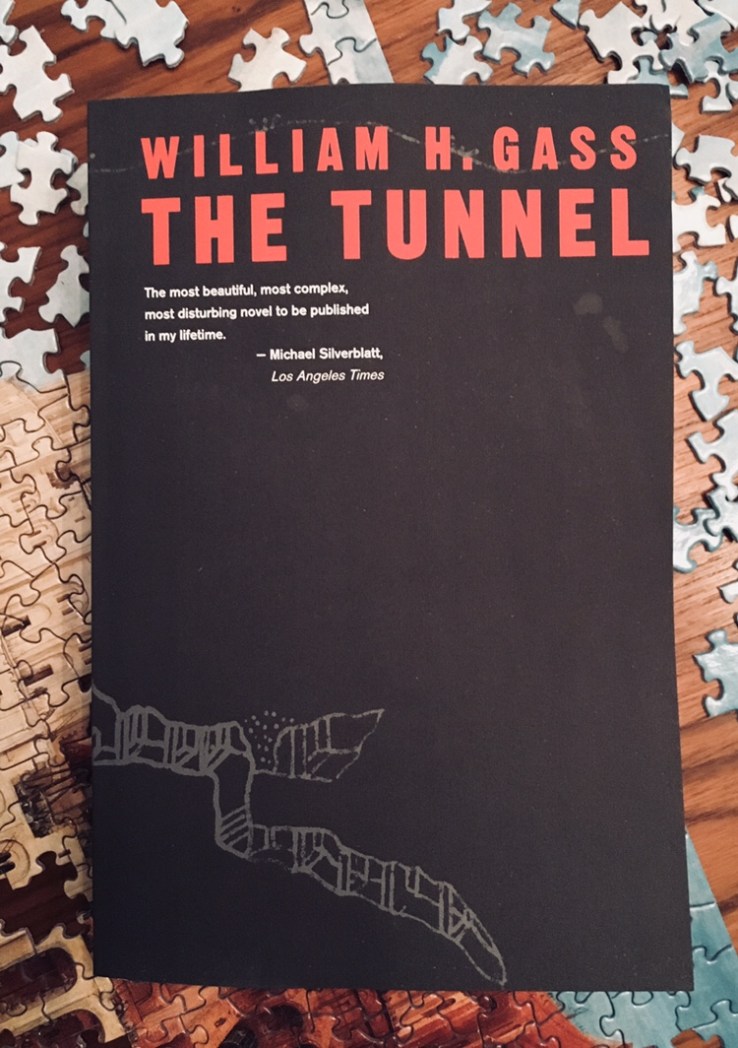
The great late great William H. Gass’s very big novel The Tunnel was one of four books I put on my 2018 Good Intentions Reading List that I didn’t previously own. (I did check it out from the library a few years back and download the audiobook—read by Gass himself–but I didn’t make a big dent). I ordered it from my favorite bookstore and it came in yesterday. The Tunnel is one of three Great Big Books I plan to (attempt to) read this year, including Middlemarch and some novel called War & Peace. I’ll probably start The Tunnel first.

Here are two selections from The Tunnel:

img_8962

An Invocation to the Muse

O brood O muse upon my mighty subject like a holy hen upon the nest of night.
O ponder the fascism of the heart.
Sing of disappointments more repeated than the batter of the sea, of lives embittered by resentments so ubiquitous the ocean’s salt seems thinly shaken, of let-downs local as the sofa where I copped my freshman’s feel, of failures as frequent as first love, first nights, last stands; do not warble of arms or adventurous deeds or shepherds playing on their private fifes, or of civil war or monarchies at swords; consider rather the slightly squinkered clerk, the soul which has become as shabby and soiled in its seat as worn-out underwear, a life lit like a lonely room and run like a laddered stocking.
Behold the sagging tit, the drudge-gray mopped-out cunt-corked wife, stale as yesterday’s soapy water or study the shiftless kind, seedy before any bloom, thin and mean as a weed in a walk;
Smell the grease that stands rancid in the pan like a second skin, the pan aslant on some fuel-farting stove, the stone in its corner contributing what it can to the brutal conviviality of close quarters,
Let depression like time-payments weigh you down; feel desperation and despair like dust thick in the rug and the ragged curtains, or carry puppy pee and plate-scrapings, wrapped in the colored pages of the Sunday paper, out to the loose and blowing, dog-jawed heap in the alley;
Spend your money on large cars, loud clothes, sofa-sized paintings, excursions to Hawaii, trinkets, knicknacks, fast food, golf clubs, call girls, slimming salons, booze;
Suffer shouting, heat rash, chilblains, beatings, betrayal, guilt, impotence, jail, jealousy, humiliation, VD, vermin, stink.
Sweat through a St. Louis summer and sing of that.
O muse, I cry, as loudly as I can, while still commanding a constricted scribble, hear me! help me! but my nasty echo answers: one muse for all the caterwauling you have called for! where none was in that low-life line of work before?
It’s true. I’ll need all nine for what I want to do—perhaps brand new—all nine whom Hesiod must have frigged to get his way, for he first spoke their secret names and hauled their history by the snout into his poem. For what I want to do …
Which is what—exactly? to deregulate Descartes like all the rest of the romancers? to philosophize while performing some middle-age adultery? basically enjoying your anxieties like raw lickker when it’s gotten to the belly? I know—you want to make the dull amazing, you want to Heidegger some wholesome thought, darken daytime for the TV, grind the world into a grain of Blake.
O, I deny it! On the contrary! I shall not abuse your gift. I pledge to you, if you should choose me, not to make a mere magician’s more of less, to bottle up a case of pop from a jigger of scotch. I have no wish to wine water or hand out loaves and fishes like tickets on a turkey. It is my ambition to pull a portent—not a rabbit but a raison d’être—from anything—a fish pond, top hat, fortune cookie—you just name it—a prophecy in Spengler’s fanciest manner, a prediction of a forlorn future for the world from—oh, the least thing, so long as it takes a Teutonic tone—a chewed-over, bubble-flat wad of baseball gum, say, now hard and sour in the street, with no suggestion of who the player’s picture was, impersonal despite its season in someone’s spit, like a gold tooth drawn from a Jew’s jaw.
Misfits, creeps, outcasts of every class; these are my constituents—the disappointed people—and if I could bring my fist down hard on the world they would knot together like a muscle, serve me, strike as hard as any knuckle.
Hey Kohler—hey Koh—whistle up a wind. Alone, have I the mouth for it? the sort of wind I want? Imagine me, bold Kohler, calling out for help—and to conclude, not to commence—to end, to bait, to 30, stop, leave off, to hush a bye forever … to untick tock.

Big fat War and Peace (Book acquired, 12 Jan. 2018)

dtx7fmrumaauwj2

Huge thankyous to BLCKDGRD for sending me a spare copy of some obscure Russian novel called War and Peace. Now I have to read the damn thing. (The only Tolstoy I’ve really read is Hadji Murad).

Eliot’s Middlemarch, Murdoch’s Net (Books acquired, 2 Jan. 2018)

img_8860

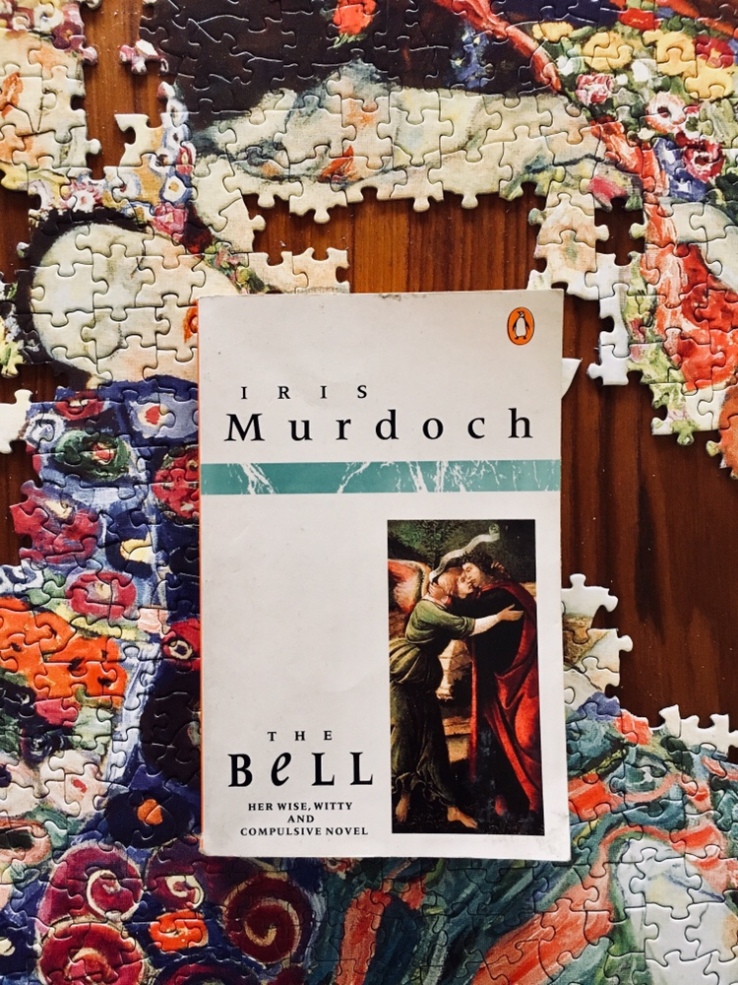
I put George Eliot’s Middlemarch and Irish Murdoch’s The Bell on my 2018 Good Intentions Reading List. I didn’t own either of these novels, which necessitated a trip to my friendly neighborhood bookstore (a labyrinthine maze comprised of, like, 2 million books. I’m not exaggerating). Improbably, I couldn’t find a copy of The Bell, so I picked up a nice Penguin edition of Under the Net. I also couldn’t find William Gass’s big novel The Tunnel—another of the books I put on my 2018 list that I don’t own—but I knew it wasn’t there because I’ve been checking for its fat spine for over a year. I’m gonna have to buy it elsewhere, alas. (I saw a copy there a few years ago and held off buying it because I was buying William Gaddis’s The Recognitions at the time, and buying two great big novels like that seemed too indulgent. Alas). My beloved store did of course have like a gajillion copies of War and Peace (which it’s weird I don’t have a copy), but my internet pal BLCKDGRD told me he’d send me one, so I held off. Plus—like, Middlemarch is already pretty damn long. I picked up the Norton Critical Edition, just out of habit, and then downloaded the e-book to my iPad via Project Gutenberg. My Norton Critical Edition of Adventures of Huckleberry Finn lists “Samuel Langhorne Clemens” as the author, and not “Mark Twain”—why does this Norton list “George Eliot” and not “Mary Anne Evans”? I actually don’t really care that much.

So who else is reading Middlemarch this year?


Paul Kirchner’s Awaiting the Collapse (Book acquired, 2 Nov. 2017)

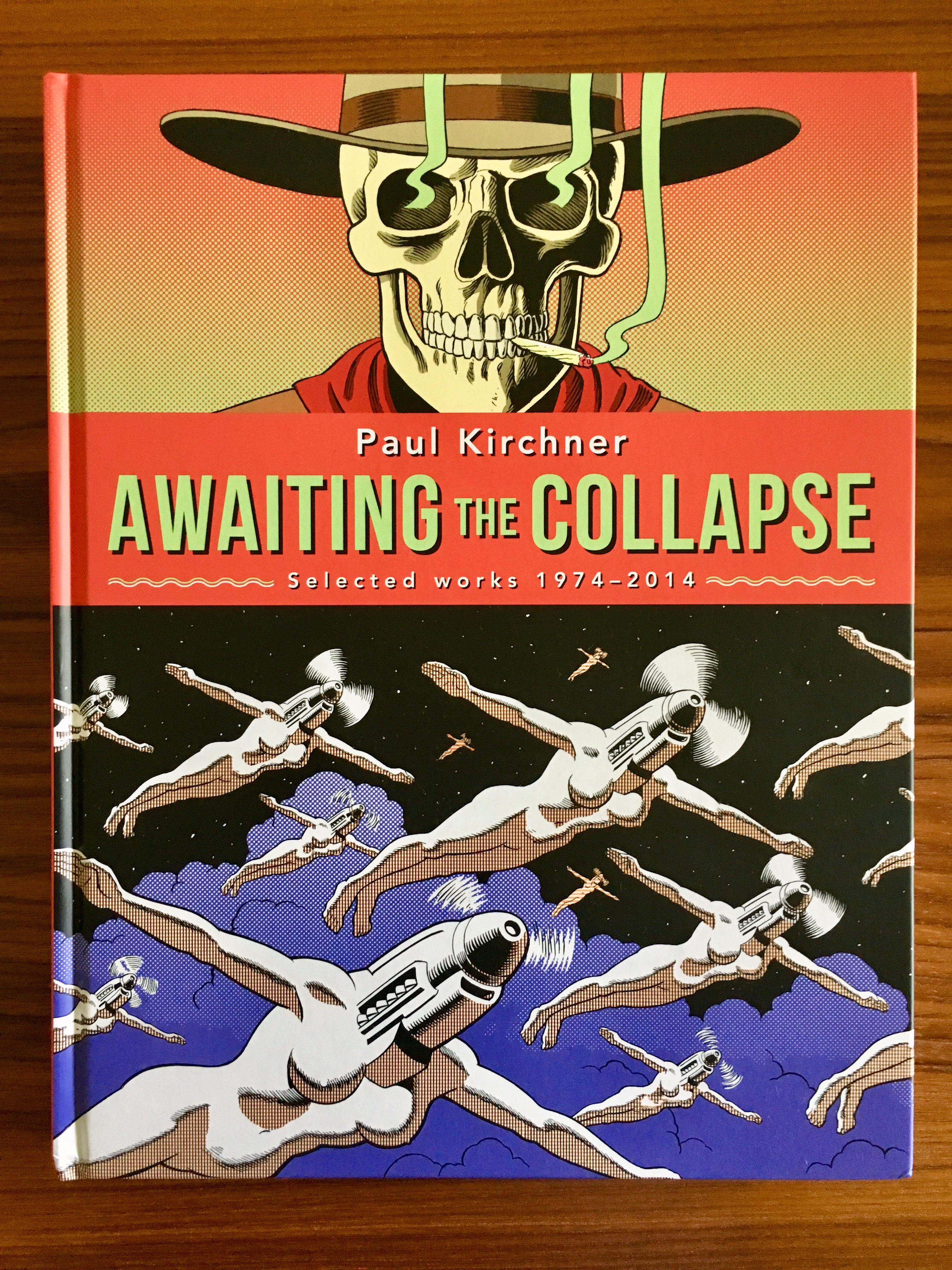
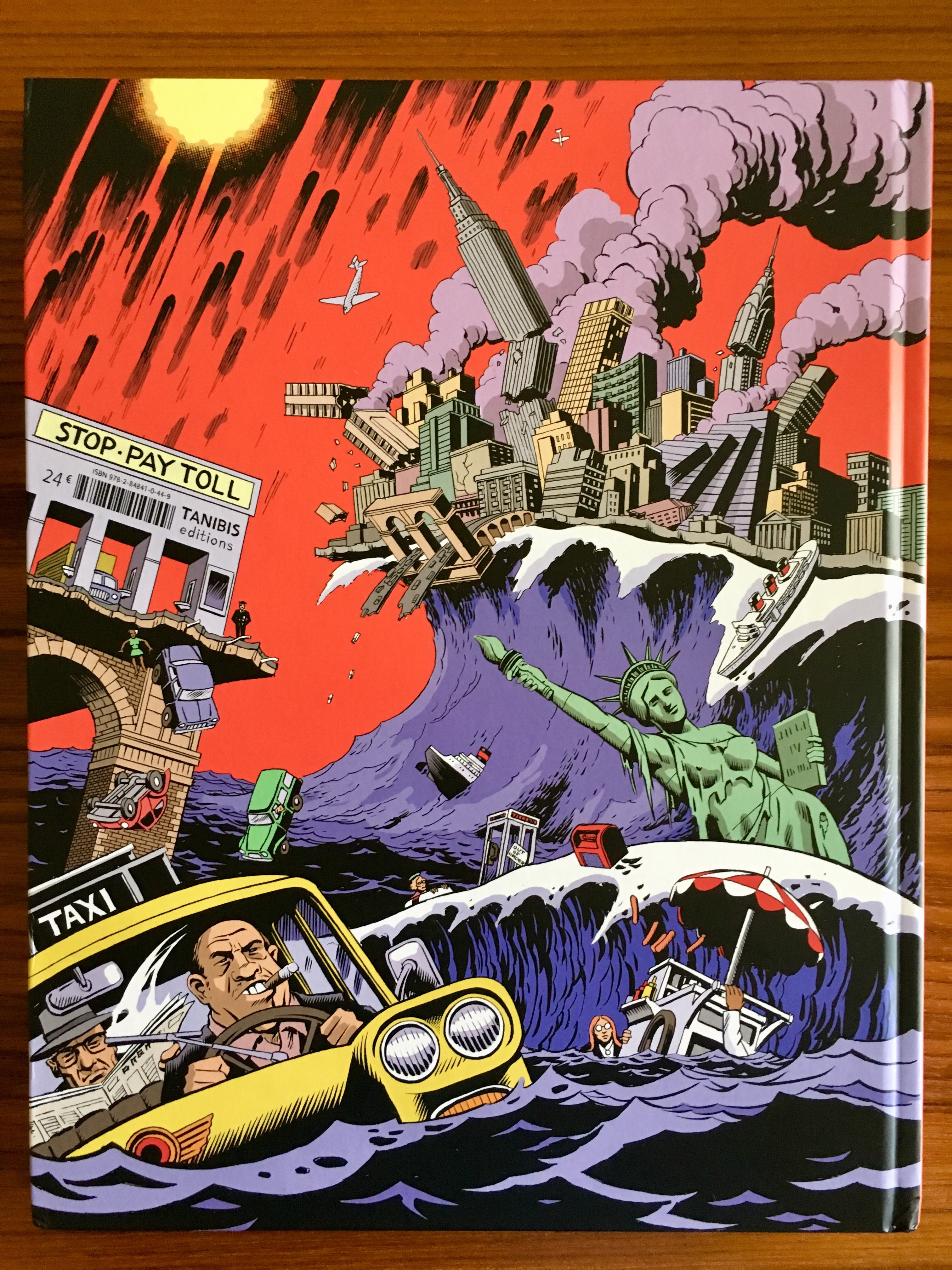
Awaiting the Collapse collects some of the finest and most surreal comix from Paul Kirchner, from the 1970s up through this decade. The book is big and bold and gorgeous. Here’s the back cover:

Awaiting the Collapse is new in hardback from Tanibis Editions, the same good people who brought us hardback editions of The Bus (which I reviewed here), and The Bus 2 (which I reviewed here). A large portion of Collapse features Kirchner’s surreal western Dope Rider strips, which have been hard to find on the internet. It also collects the covers that Kirchner did for Screw magazine, as well as dozens of other one-offs and vignettes, comix in different modes, moods, and manners.

The collection ends with a nice long essay (including numerous photographs, strips, and illustrations) by Kirchner called “Sex, Drugs & Public Transportation: My Strange Trip Through Comics.” I haven’t gotten to it yet because I’m trying to restrain myself from gobbling the collection up all at once.

Here’s Tanibis’s blurb:

This third collaboration between French publishing house Tanibis and comic book artist Paul Kirchner is a collection of the artist’s works, most of them initially published in counter-culture magazines in the 1970s and the 1980s and some dating from his return to comics in the 2010s.

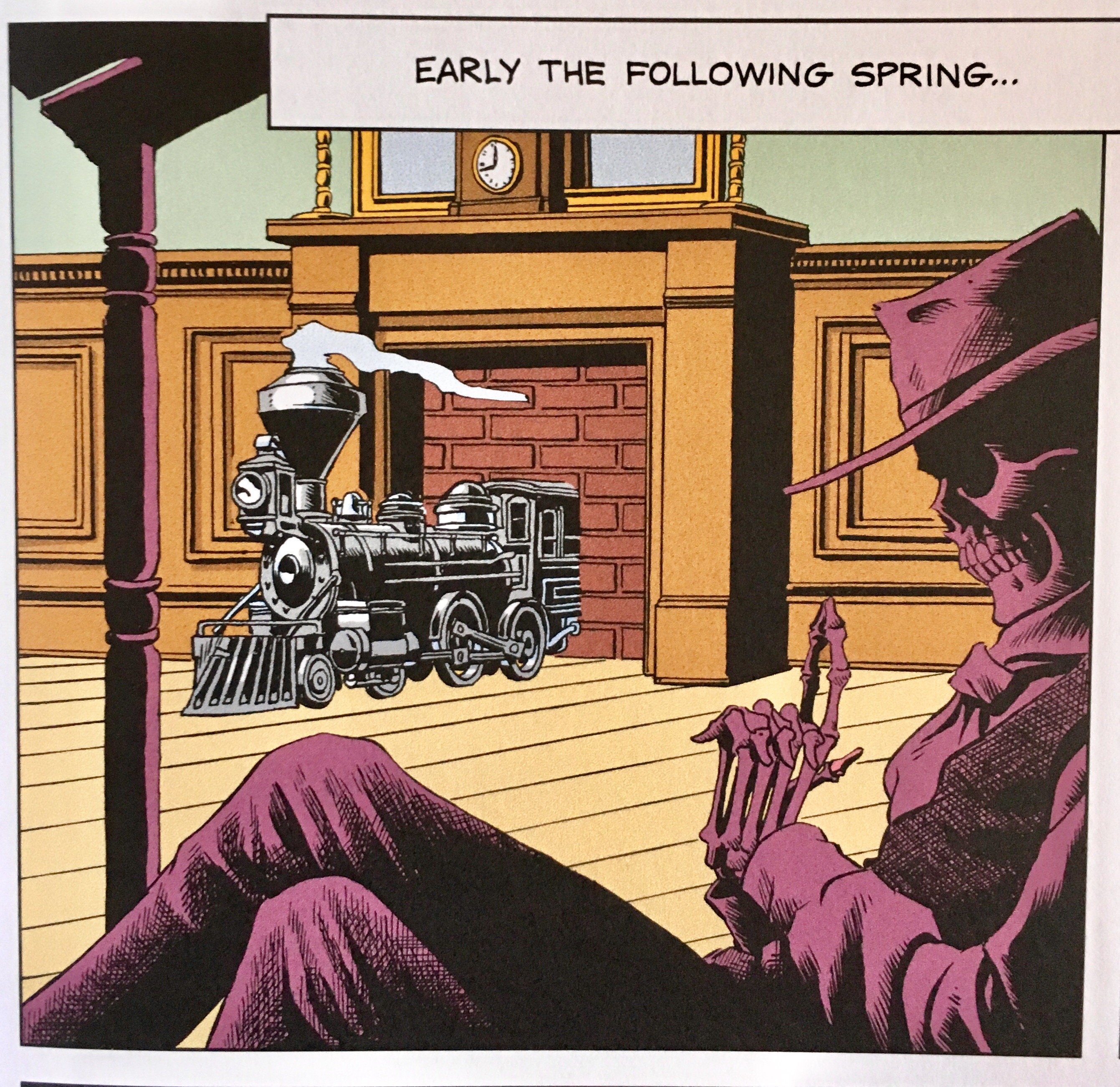
Roughly a third of the stories star Dope Rider, the pot-smoking skeleton whose psychedelic adventures take him through colorful vistas equally reminiscent of Sergio Leone’s spaghetti western films and of the surrealistic paintings of René Magritte and Salvador Dalí. These stories were originally drawn for the marijuana-themed magazine High Times but were also for Kirchner an excuse to create his very own brand of visual poetry.

An other third of the book is a miscellaneous collection of comics whose stories range from the loony (the sextraterrestrial invasion of Earth in “They Came from Uranus”) to the satirical (“Critical mass of cool”) and the outright subversive (if you ever wondered what games toys play at night, read “Dolls at Midnight”).

This book also features a broad selection of the covers Kirchner made for the pornographic tabloid Screw in the 1970s.

Awaiting the Collapse finally contains a previously unpublished essay by Paul Kirchner about his career and his influences, which helps put in perspective the works published in this book.

I promise I’ll have a review of Awaiting the Collapse up soon; for now, let me just underline my enthusiasm—it’s weird and wonderful and gorgeous stuff.

2001, Blaise Larmee’s enigmatic deconstruction of the graphic novel (Book acquired, 16 Oct. 2017)

img_8267

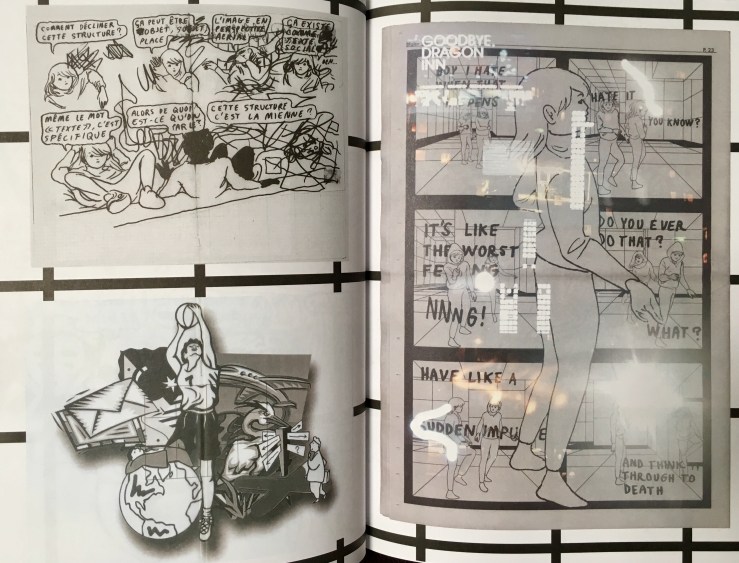
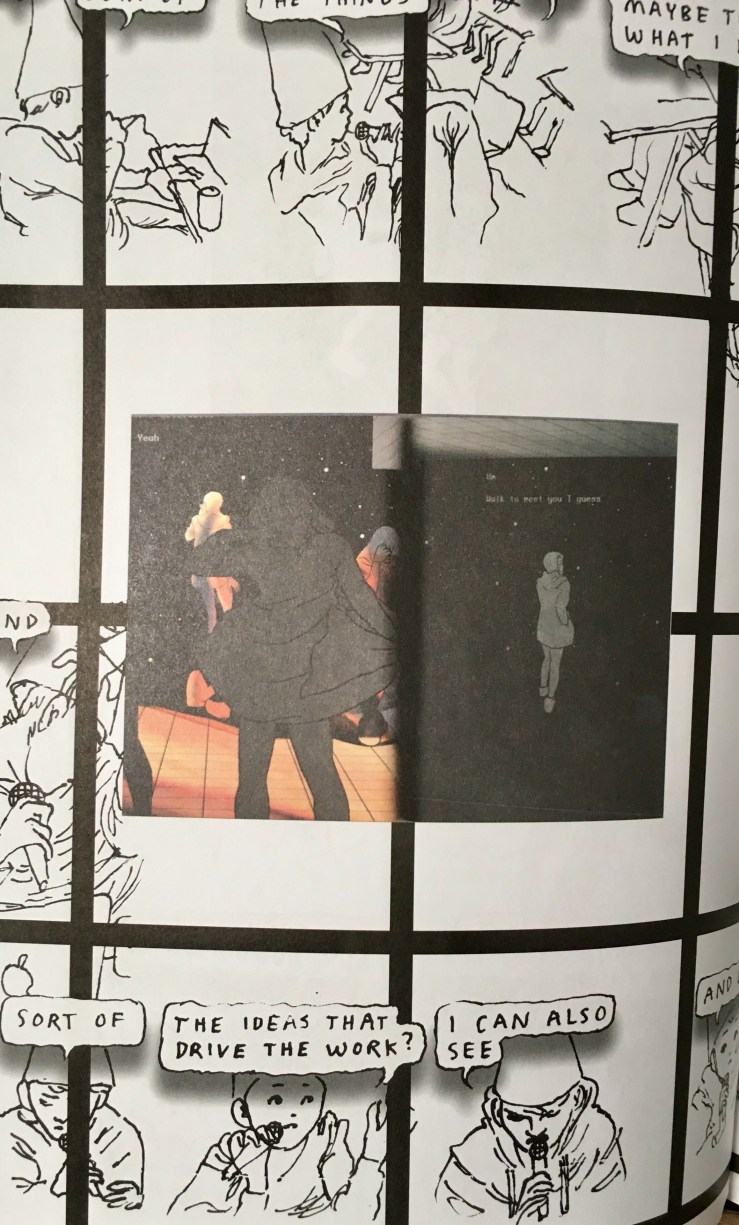
Blaise Larmee’s 2001 is new from 2dcloud. It showed up at the house a few weeks ago, its minimalist cover strange and intriguing.

img_8266.jpg

I’m not sure what the book is—is it a sort of metatextual commentary on Larmee’s webcomic of the same name? A kind of autobiographical riff? A deconstruction of the graphic novel form?

img_8271

What Larmee’s book is is not as compelling, ultimately, as how it is—sketchy, loose, messy; littered with hi-res scans–receipts, crushed cans and bottles, a house key—scraps from the real that call attention to the narrative’s artifice.

img_8270

2001 is strange and fascinating in its fragmentary, elusory nature. Check it out.

img_8268

Ellison/Vollmann (Books acquired, 20 Oct. 2017)

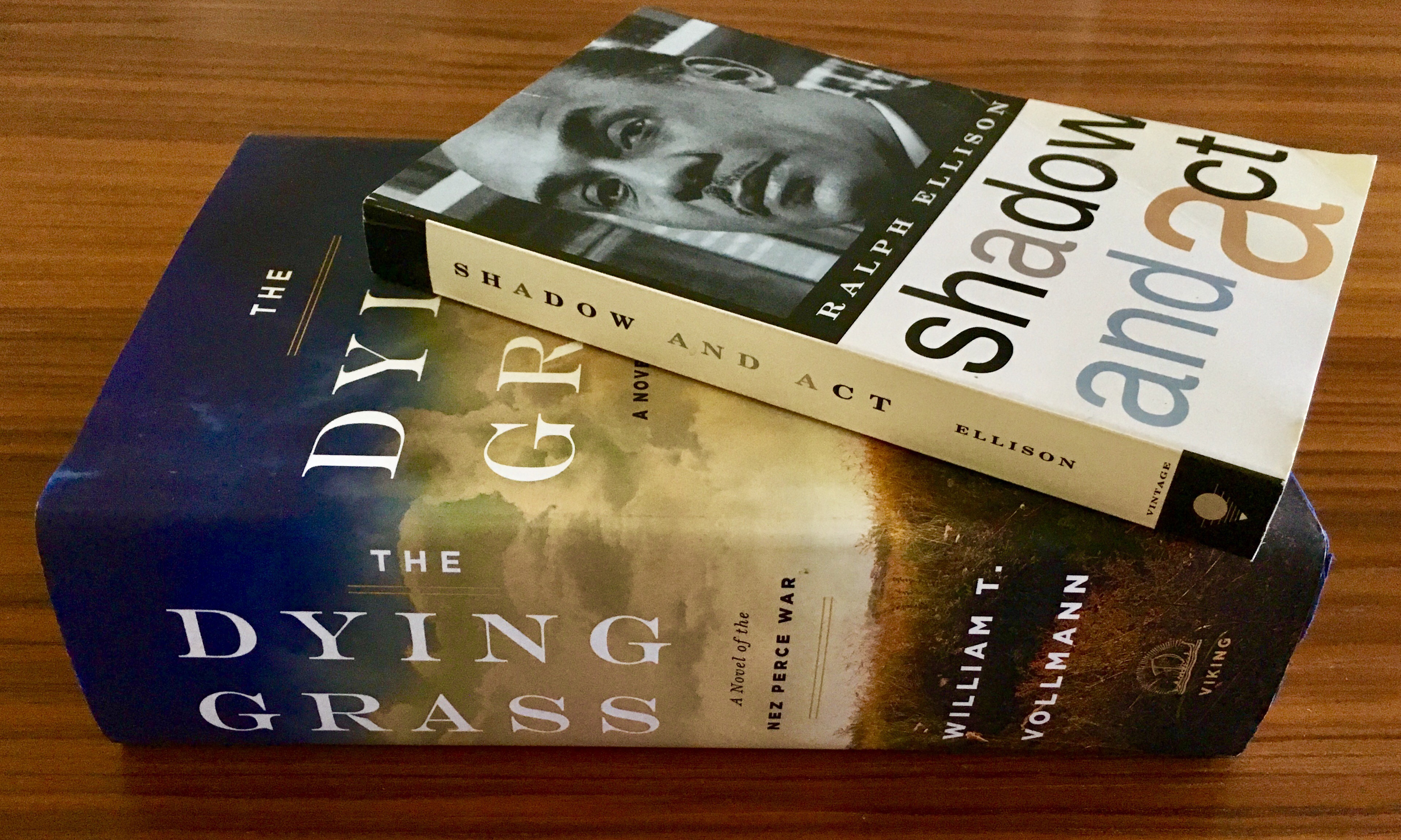
I tried William Vollmann’s The Dying Grass a few times last year, both as an audiobook and as an ebook, but it got the best of me. Spotted it at my favorite used book store for a measly twelve bucks, so. Like, we’ll see—although it’s much, much more accessible in print than on screen—the form, the lines on the page—they makes more sense, evoke Whitman more than the ebook or the audio. I also picked up Ralph Ellison’s collection Shadow and Act somewhat randomly—just started reading it and got carried away. Great stuff.

Hermit of Peking (Book acquired 28 Sept. 2017)

img_8122

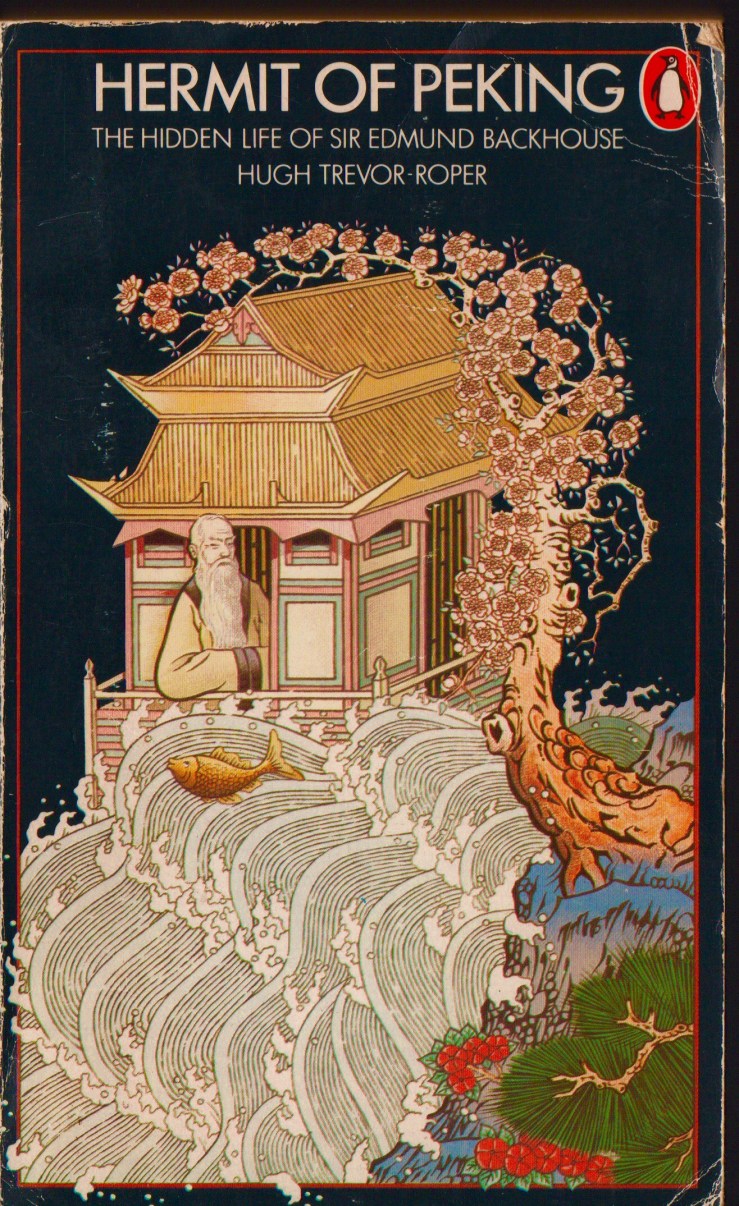
My daughter asked to go to our favorite used bookstore a few weeks ago, and while she was milling around the children’s section, I dipped through the adjacent biographies area, an area I admit I seldom visit. Hugh Trevor-Roper’s Hermit of Peking was literally lying on the floor. The Arcimboldosque cover (by Peter Brookes—the political cartoonist?) caught my eye. The blurb, which notes that Sir Edmund Backhouse was “one of the most outrageous forgers, confidence trickster and eccentrics of the century” intrigued me; I posted the pic on Twitter and a good source vouched for Hermit. I picked it up. Read more about Backhouse’s frauds and schemes here.


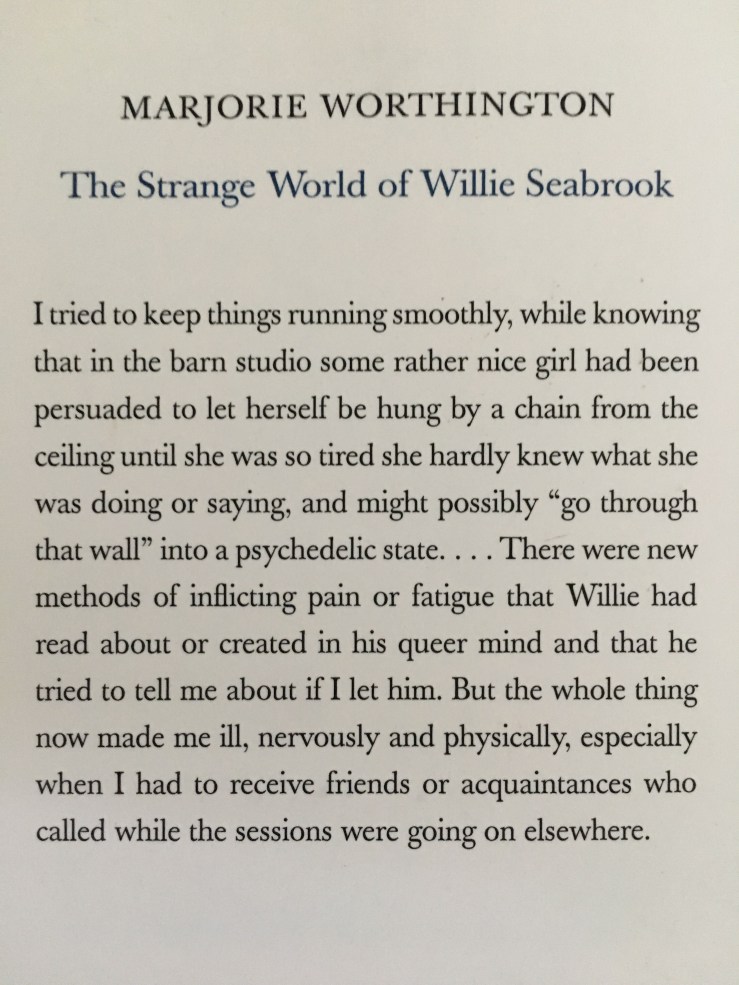
Marjorie Worthington’s The Strange World of Willie Seabrook (Book acquired 26 Sept. 2017)

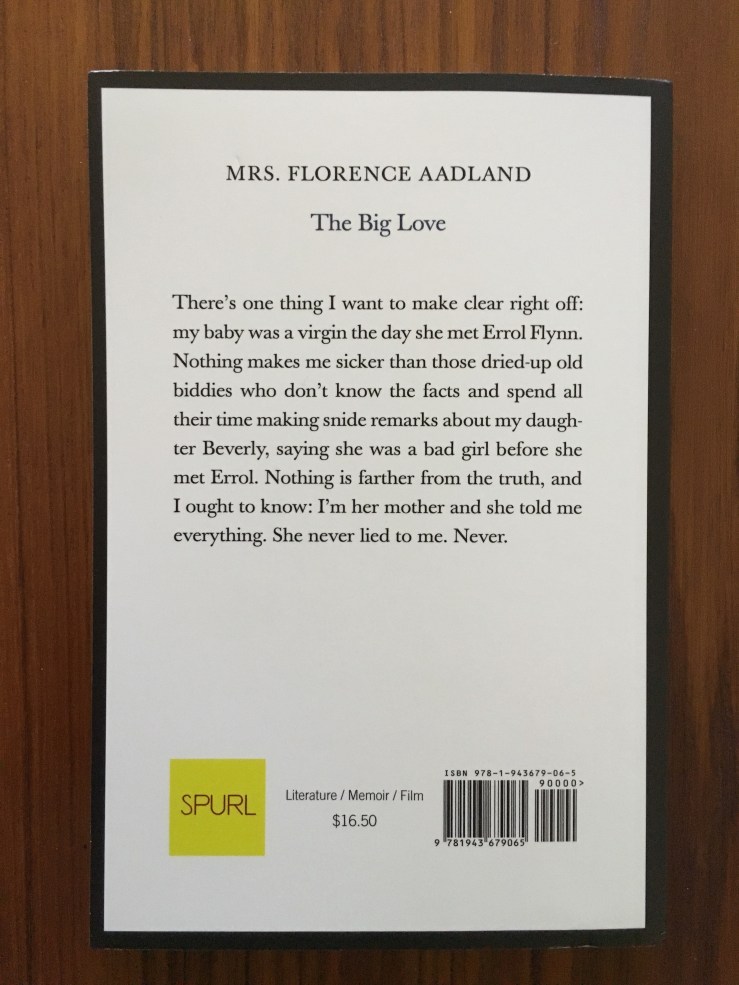
Marjorie Muir Worthington’s 1966 memoir about her relationship with occultist and fellow Lost Generation weirdo William Seabrook is forthcoming in a new edition from indie Spurl. It looks fascinating. Their blurb:

This is the somber, quietly stunning account of American author Marjorie Worthington’s life and relationship with William Seabrook.

A bestselling writer on the exotic and the occult, Seabrook was an extraordinary figure from the 1920s to the 1940s who traveled widely and introduced voodoo and the concept of the “zombie” to Americans in his book The Magic Island.

In 1966, years after his death from suicide, Worthington, a novelist and Seabrook’s second wife, cast her eye on their years living in France as lost-generation expatriates; their time traveling in the Sahara desert (where Seabrook researched his book The White Monk of Timbuctoo); their friendships with Aldous Huxley, Gertrude Stein, and Michel Leiris; and the gradual erosion of their relationship.

Worthington was with Seabrook in France and later New York when his life became consumed by alcohol, and he took the drastic step of committing himself to a mental institution for a cure; though he wrote about the institution in his book Asylum, he remained an alcoholic. He was also fixated by sadistic games he played with women, which he and the surrealist Man Ray photographed, and which he later viewed as a way to initiate altered psychological states through pain.

The Strange World of Willie Seabrook is an intimate look at the complicated, torturous relationship of two writers. Seabrook was a sadist, yet to Worthington he was also enthralling; he was an alcoholic, but she believed she could protect him. Even after he had hurt her emotionally, she stayed near him. In brilliantly depicted moments of folie à deux, we watch Worthington join Seabrook in his decline, and witness the shared claustrophobic, psychological breakdown that ensues.

Campbell, Dahl, Dick, Zelazny (Books acquired, 18 Sept. 2017)

dkca5zzxcaupkfj

I returned to classes on Monday after 10 humid, uncomfortable, and often scary days “off” due to Hurricane Irma. In the slim hour and change between my last lecture and my kids’ school dismissal, I swung by my favorite used bookshop. I was worried that it might have flooded, but the waters didn’t get to the inventory (well over a million books).

I picked up a a PKD Daw edition, a mass market paperback, Deus Irae, co-authored with Roger Zelazny. I’ve been picking up pretty much any early PKD mass market ppbk; new editions of his stuff tend to be pretty boring. I had to pick between two editions:

dkbor9ovoaaprkg

I also picked up Eddie Campbell’s Alec: How to Be an Artist, which I gobbled up the other day in two sittings. There’s a pretty neat canon of graphic novels at the end, which I’ll share later this week. The cover looks like an illustration of Roberto Bolaño to me.

I also picked up two Roald Dahl books we didn’t have, Esio Trot and Danny the Champion of the World, which my kids read immediately and greedily.

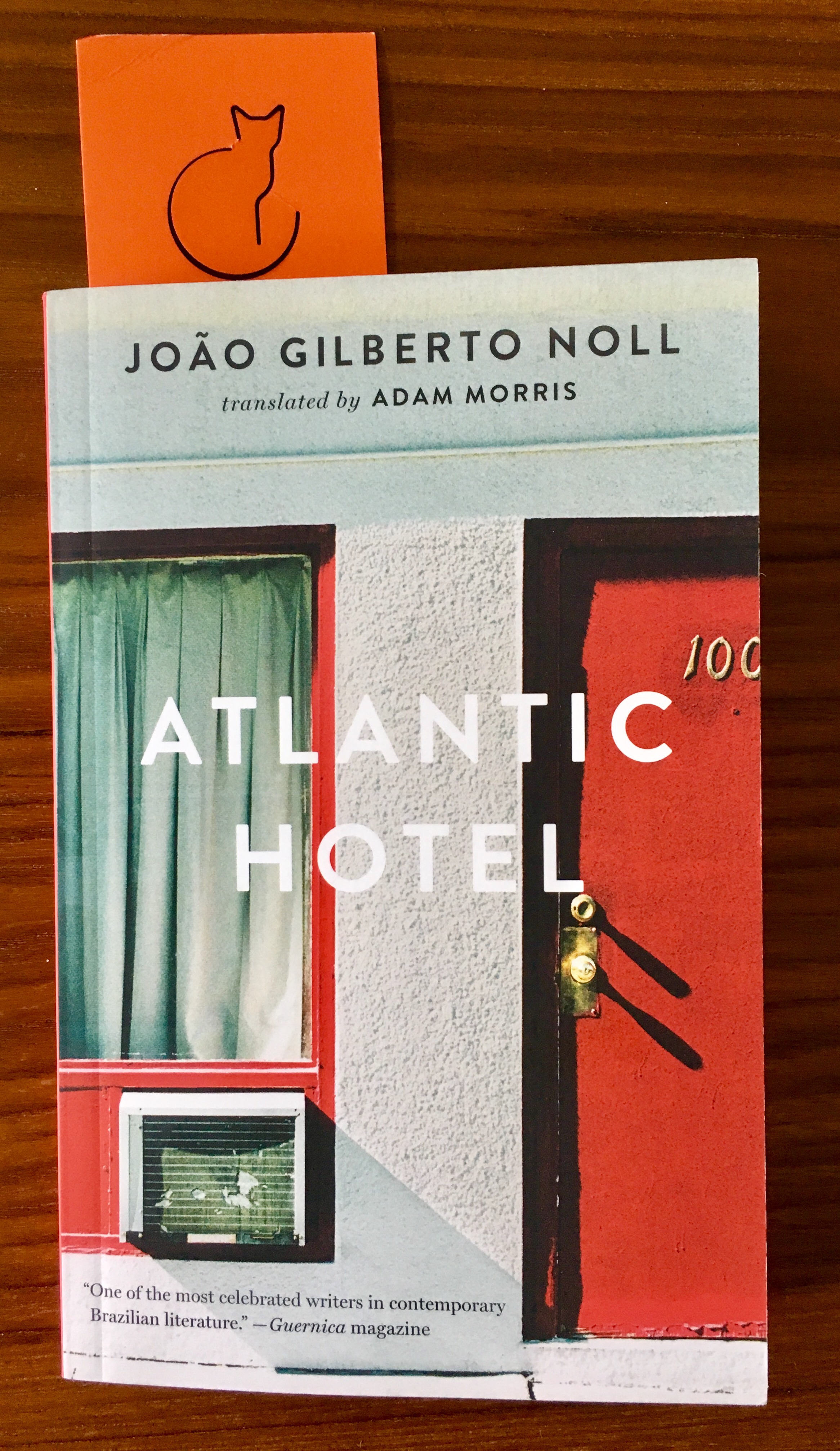
João Gilberto Noll’s Atlantic Hotel (Book acquired, 14 August 2017)

João Gilberto Noll’s novella Atlantic Hotel is new English translation by Adam Morris from Two Lines Press. I loved loved loved the last one I read by Noll, Quiet Creature on the Corner. Full review to come; for now, here’s Two Lines’ blurb:

Compared by critics to filmmaker David Lynch—and deeply influenced by Clarice Lispector—João Gilberto Noll is esteemed as one of Brazil’s living legends. Following the breakthrough success of last year’s Quiet Creature on the Corner, Two Lines Press now presents Noll’s career-defining work, Atlantic Hotel.

Just who narrates the dark and mysterious Atlantic Hotel? First he books a room where a murder has occurred, claiming he’s just arrived from the airport. But then he suddenly leaves, telling a cabbie he’s an alcoholic headed for detox. After that he hops on an all-night bus across Brazil, where he begins to seduce a beautiful American woman. Next he’s recognized as a soap opera actor. Then he impersonates a priest.

At length he knocks on a very wrong door in a small town: when it opens he’s looking down the barrel of a gun. He falls down unconscious, and when he awakes something terrible is happening to him…

Two or three Barry Hannahs, depending on how you look at it (Books acquired, 14 and 18 Aug. 2017)

img_7707-1

Earlier this summer I visited Alias East Books East in Los Angeles, where the clerk kindly let me handle a signed first edition of Barry Hannah’s novel RayIt was like sixty bucks, so I didn’t handle it too fondly. But somehow the image of the signature rattled around in my silly skull all summer—probably because I spent a big chunk of July slurping up Long, Last, Happy. I wanted to find out some info about Hannah’s last quartet of stories—the last four stories in L, L, H—and doing a search of his name in Twitter led me to a link for a signed first-edition hardback copy of his slim 1985 collection Captain Maximus. (The title is a joke on his then-editor, Gordon “Captain Fiction” Lish, who apparently Hannah referred to as “Captain Minimus” in some of their letters). I might have had a scotch or two, but I bid on the book (eighteen bucks). No one else bid on it, so it’s mine now.

The cover is lovely, purple and orange, designed by Fred Marcellino, and under the bright shiny jacket is this:

img_7709

I love the reserved arrogance of those initials!

And of course the signature, dated five years after the book’s publication and geographically anchored to the town my grandfather and namesake attended college in—

img_7710

I didn’t actually own a copy of Captain Maximus beforehand, and I think the only stories from it included in Long, Last, Happy (which, by the way is a great starting place for Hannah) are “Fans,” “Ride, Fly, Penetrate, Loiter” and “Even Greenland” (you can read “Even Greenland” at Ben Marcus’s website). This particular copy has clearly never been read.  Which leads me to this afternoon. I went to my favorite used bookstore to pick up a copy of Ishmael Reed’s The Terrible Threes—I just finished The Terrible Twos, a novel that is too prescient and too funny and too cruel and you should read it read it read it—and well anyway, I went to see if maybe they had a copy of Yonder Stands Your Orphan, which they didn’t the last time I was there, but they did today. Under it was a well-thumbed 1986 Penguin paperback edition of Captain Maximus. I need to read Yonder (which hell by the way my god what a bad cover c’mon people) before I can write the Thing I want to write on the final stories in Long, Last, Happy (or at least I think I need to read it, or anyway, I want to). And the second copy of Captain Maximus, at three dollars in store credit, is something I don’t have to worry about cramming into a pocket or dropping into a bathtub or eventually giving away to a friend.

On buying a second copy of William Gaddis’s JR (Book acquired, 5 Aug. 2017)

img_7680

I was at the bookstore last week, killing a spare hour, looking for nothing in particular, when I spotted a first edition Knopf paperback copy of William Gaddis’s novel J R. The book is one of my favorites—I first read it in 2012 and then again in 2016 (which maybe means I’ll reread it again in 2020?). I’ll cobble really quickly from my 2016 review here:

Only a handful of novels are so perfectly simultaneously comic and tragic. Moby-Dick? Yes. Gravity’s Rainbow? Absolutely. (G R and J R, a duo published two years apart, spiritual twins, massive American novels that maybe America hardly deserves (or, rather: theses novels were/are totally the critique America deserves)). I guess maybe what I’m saying is J  R is the Great American Novel to Come . . .

The book is a performance, an opera, an essay on America, a howl, a condemnation, a farce, a romance, a tragedy. When I read it in 2012 I couldn’t believe how prescient it was, a feeling reconfirmed with force four years later. J R diagnoses and describes and ridicules American corporatism, the industrial-military-entertainment-banking-education-etc. -complex. And then it weeps.

. . . in J R the reader becomes the performer, making the voices, singing the voices, (muttering the voices), navigating all the trash, the entropy—J R is a novel of unraveling, where art trips over commercial trash and literal trash–old ads, betting tickets, stock ticker tape, phone book pages, train tickets, scraps. Is there another American novel so aware of its own textuality, its own metatextuality—I mean one that doesn’t goddamn wink all the time at its readers like so much clever postmodern slop?

Well so and anyway, I was browsing the shelves of my local, looking for nothing, as I said, although I was ambling through the “GA-” section in the hopes of maybe picking up a copy of William Gass’s The Tunnel, when I spied the J R, with its bold oh-so-seventies design, its big stiff spine unbroken and seemingly unbent. After handling it a few minutes, I resigned myself to a pic and a tweet—

I didn’t intend to buy another paperback copy of J R, even a first edition, even though it was only seven bucks, and even though I have trade credit out the ying-yang there—I mean, I have a perfectly fine Penguin edition; better to leave the J R  for some other person to acquire, no? But qithin a few minutes Twitter folks had talked me out of my plan to not acquire it, advice that was perhaps not unwanted.

img_7681

The Knopf edition—the cover design is by Janet Halverson, by the way—has a much longer summary blurb than my 1993 edition (and indeed, a much longer summary blurb than one usually sees on a paperback). The Penguin edition features an introduction by Frederick Karl (that readers should wait to read until after they’ve finished the book), a bibliography of “Suggestions for Further Reading,” and a new dedication page:  “For Matthew: Once more unto the breach, dear friend, once more” (I’m guessing the dedication is to Gaddis’s son Matthew). The ’93 Penguin does not have this though:

img_7683

But! The Penguin edition’s colophon promises that “Errors in the original publication have been corrected by the author for the first Penguin edition” (1985 btw).

Other than that, the two edition are pretty much typographically the same—the pages are aligned, and both editions are consistent with the same typographical oddities, like JR’s famous handwritten “Alsaka” memo and his logo designs and Gibbs’s pocket scrap citations.

The big difference between the two editions (besides the cover, obviously) can be summed up in this image—the seventies Knopf is above the nineties Penguin:

img_7682

The Penguin edition is slightly larger with much better binding. I’ve read it twice and I never had to break its spine; I’m pretty sure that the Knopf I picked up has never been read—and also that a serious reading would crack its spine pretty badly.

The most recent edition of J R is from Dalkey, and includes an essay by Rick Moody as its introduction. I don’t have a copy of it, but it has 752 pages—the other editions have 726 pages (which the Gaddis Annotations project match up to). I’ve handled the Dalkey, and I recall it being smaller and stiffer than the Penguin. Basically, I think, as of now, the Penguin edition is probably the best option for anyone wanting to read the book. So I love the cover of the 70’s first edition I’ve got, but I doubt I’ll be reading it soon (or, like in 2020 when I read the book again).

The Book of Emma Reyes (Book acquired, 3 Aug. 2017)

img_7636

This one looks pretty cool. The Book of Emma Reyes, an epistolary “memoir,” is new in hardback from Penguin, in English translation by Daniel Alarcón.  Here’s Penguin’s blurb/bio:

Eli Valley’s comix collection Diaspora Boy

img_7589

Diaspora Boy, new from O/R Books, collects Eli Valley’s comix from the past decade.

Here’s O/R’s blurb:

Eli Valley’s comic strips are intricate fever dreams employing noir, horror, slapstick and science fiction to expose the outlandish hypocrisies at play in the American/Israeli relationship. Sometimes banned, often controversial and always hilarious, Valley’s work has helped to energize a generation exasperated by American complicity in an Israeli occupation now entering its fiftieth year.

This, the first full-scale anthology of Valley’s art, provides an essential retrospective of America and Israel at a turning point. With meticulously detailed line work and a richly satirical palette peppered with perseverating turtles, xenophobic Jedi knights, sputtering superheroes, mutating golems and zombie billionaires, Valley’s comics unmask the hypocrisy and horror behind the headlines. This collection supplements the satires with historical background and contexts, insights into the creative process, selected reactions to the works, and behind-the-scenes tales of tensions over what was permissible for publication.

Brutally riotous and irreverent, the comics in this volume are a vital contribution to a centuries-old tradition of graphic protest and polemics.

Diaspora Boy, subtitled Comics on Crisis in America and Israel, is enormous (if a slim 144 pages). Valley’s comix are reproduced on full pages; his thick inks and worried lines are never cramped here—and neither are his words. Here’s a shot of the book with a Penguin novel as a comparison point:

img_7590

The anthology makes great use of its oversized format. On the left-hand pages, Valley introduces each comic (all chronologically-ordered, by the way) with a short essay that offers context, personal reflections, and even analysis or interpretation. The comics are then reproduced on the right-hand pages. You can see this below, in Valley’s mash-up of Kafka’s The Trial with the Knesset vs. J Street hearings:

img_7593

The cultural, political—and personal—contexts that Valley provides are perhaps essential for many readers, like me, who may know a bit about comix and Kafka, but are perhaps lost when it comes to a discussion of a “hearing into the heart and soul of Diaspora Jewry” (as Valley puts it).

Valley is constantly riffing on American popular culture, mining comic books, films, television and music for his bitter mash-ups, as in “Choose Your Own Apocalypse” below, a comic that turns the Iran debate into a grotesque and ironic Choose Your Adventure tale:

img_7596

img_7597

Like many comix artists, Valley’s target audience is nebulous—or rather maybe it’s just himself. He appropriates American culture’s broad shared mythic signifiers to satirize the incredibly specific details of an American Jew’s relationship to Israel—namely, his relationship. The first comic in the collection, 2007’s “What if Batman and Robin Worked in the American Jewish Community?” satirically captures Valley’s teenage anxieties about his relationship to Jewish identity:

img_7599

In his thorough (and completely necessary) introduction to Diaspora Boy, Valley recounts at some length a complicated relationship with his parents, both Ba’alei Teshurva (he points out that this Hebrew expression “literally means ‘Masters of Return,'” but continues then characterizes it as “a fancy way of of saying ‘Born Again Jews'”). Valley writes that his father interrogated him daily as to whether or not his new friends and acquaintances in his public high school were Jewish or not, and it’s hard not to read these personal anxieties into Valley’s comix (even if I know it’s not good criticism to extrapolate that Valley is “Johnny” in the Batman riff above). Valley’s mother later left the orthodoxy and the marriage, becoming “secular.” Valley positions them, perhaps, as two poles of “reverence and rebellion” which inform his work.

img_7594-1

The “reverence” might be hard to spot. In their press page for Diaspora Boy, after three quotes praising Valley’s comix, O/R includes some scathing gems: from former New Republic publisher Marty Peretz: “Your work is disgusting. And also stupid”; Abraham Foxman, former National Director of the Anti-Defamation League: “Bigoted, unfunny”; neocon hack Bret Stephens: “Grotesque…Wretched.” It’s plain to see how conservatives like these might be offended by Valley’s comix. Indeed, it’s not just the message, but the form that they might object to—Valley’s style is sharp but rough, its subtlety relying almost wholly on an extremely ironic viewpoint.

img_7595

If it’s easy to see how conservatives might resent Valley’s satire, it’s also possible to see how moderates or liberals might misunderstand these comix too. Cartooning has always been a form with an inherently broad appeal. Editorial cartoons are meant to telegraph their ideas quickly and coherently, message and medium intertwined. Valley’s cartoons are harder to suss out. The layering of meaning is intense, magnified. Comic book heroes become displaced into ironic inversions of themselves, consumed by self-hatred. Literary tropes are twisted into a complex entanglement of Jewish-American cultural relations. Biblical stories are transposed into  hallucinatory modern horror stories. And in turn contemporary figures—political, economic, cultural, etc.—are subsumed into the same mythic tropes that superheros operate within. It can all be a bit perplexing, and readers who only glance over the surface will miss the real message.

Thus, Valley’s introduction to the volume and his prefaces to each comic become essential context to understanding how to read these comix. The need for political context is especially strong when a cartoon has lost some of its currency due, simply, to the passing of time (they were editorials, after all). However, even when Valley is satirizing a particular news story or political moment that we might have forgotten, a viewpoint comes through, coherent and biting but sincere under all the ironic mechanisms in play. I’ll give Valley the last word here, letting him characterize his own project:

The comics in this collection take pride in Diaspora. Not just in a general sense but in a specific strain of Diaspora experience: the secular, post-Enlightenment, universalist Judaism informed by centuries of Jewish narrative tradition as well as by the experience of living in and amongst other communities. Among other things, it transformed memories of inequality into a lasting cultural norm of solidarity with the oppressed. Theses comics celebrate, relish, and dialogue with that history, a strain of Diaspora that finds far more inspiration in early and mid-twentieth-century social justice movements than in anything wrought in the contemporary Middle East. That is Jewish Pride: pride in the Jewish tradition practiced, experienced, and cherished by the vast majority of American Jews today. And for me, it’s personal. If I’d been brought up solely in the strain of secularism and social justice, I probably wouldn’t have come to filter political passions through an emphatically Jewish lens.


Two Dicks (Books acquired, 17 July 2017)

img_7554

A Maze of Death, first DAW printing, 1983. Cover art by Bob Pepper.

The Transmigration of Timothy Archer, first Timescape printing, 1983.  Cover artist uncredited.

img_7555

I still regret that I failed to pick up this tattered copy of Clans of the Alphane:

Seriously though, these tasteful covers are pretty boring. Compare/contrast:

img_7553

Landolfi and Klossowski but not Klise (Books acquired/not acquired 11 July 2017)

img_7525

Having a spare hour, I searched my favorite local used book store again for a copy of Thomas S. Klise’s 1974 cult novel The Last Western. I’d like to write about The Last Western more, and I only have a samizdat digital copy (clearly made by someone who deeply loves this out of print novel). It’d be nice to check the digital copy against an actual book of course. Anyway, I didn’t find the Klise, despite extending my search to, um, westerns. (I see interlibrary loan in my future). Really, any indie press that brings The Last Western back into print will find plenty of readers (and champions for the book).

I did find a hardback Viking copy of a Tommaso Landolfi collection Words in Commotion, and read one of the shorter stories, “The Werewolf,” in the shop and then picked it up. Here’s Publisher’s Weekly’s 1986 review:

Little known in this country when he died in 1979, Landolfi is scarcely better recognized today, a situation this collection of 24 stories, with an introduction by Italo Calvino, is intended to remedy. Landolfi did not aspire to amuse or entertain in the usual sense; he preferred to confound and mystify. Even in his relatively conventional stories he scarcely bothered to inquire into motive or seek resolution. In “Uxoricide,” for example, a wife-murderer sets out to kill the shrew for reasons that do not seem quite sufficient, so that the act itself appears brutal and sadistic. In “A Woman’s Breast,” a man lusts after that part of a stranger until he attains it, is thereupon sickened by the sight and discovers odd morbidities within himself. Landolfi’s overriding interests–language and its literary possibilities, metaphysics, literary criticism—necessarily limit his audience. He saw the writer as one who spits words (see the title story), and he set himself against the critics who accused him of being “utterly indecipherable and mysterious.” That is, however, a challenge hurled at the reader.

You can read “Gogol’s Wife,” probably Landolfi’s most famous story, here.

img_7526

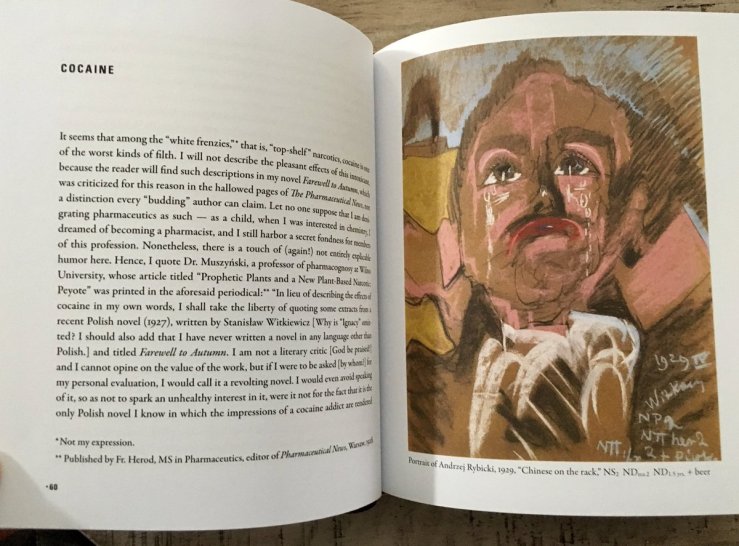
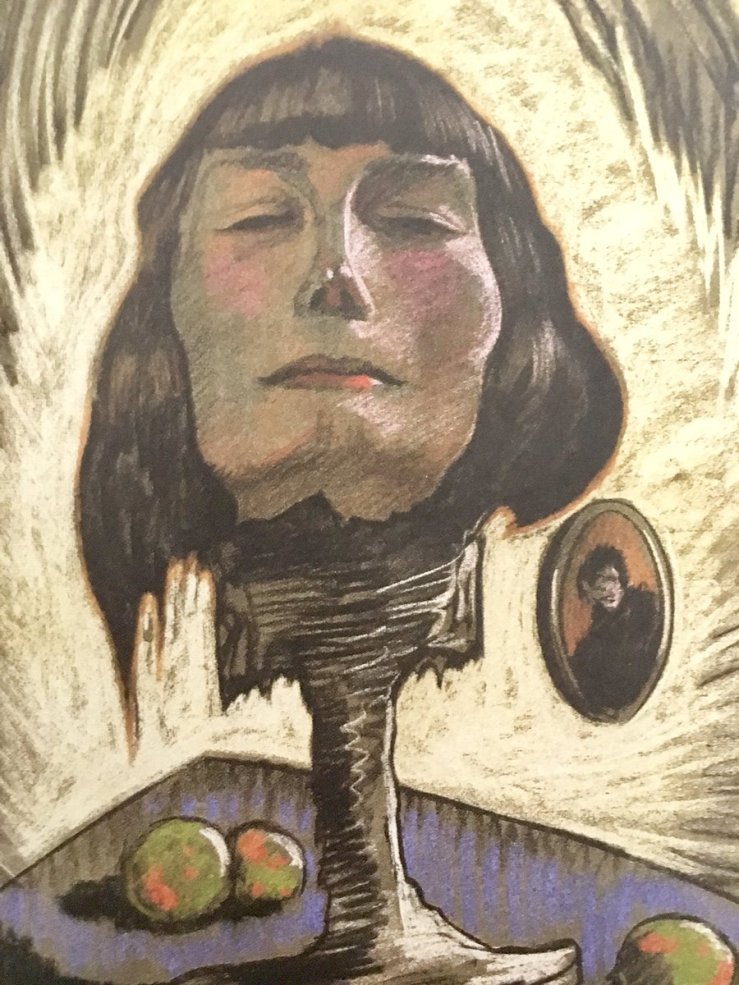
I also picked up a Grove Press first edition of Pierre Klossowski’s Roberte Ce Soir & The Revocation of the Edict of Nantes, two midcentury erotic novels. Austryn Wainhouse translates. Klossowski was the elder brother of the painter Balthus. Here’s the back cover, and an illustration of Klossowski’s (I’ll post the rest of the illustrations later):

img_7527

img_7533