Blog about some recent reading

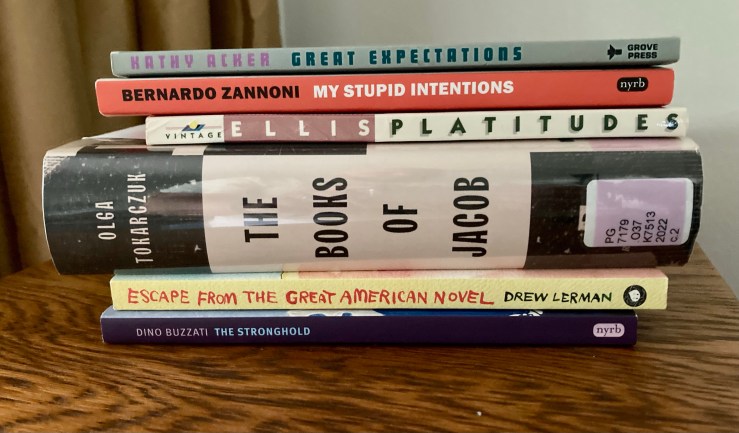
With the end of the spring term (and, frankly, a renewed commitment to weeknight sobriety), I’ve been reading a lot more and a lot faster the past few weeks. Top to bottom:

I pulled Kathy Acker’s Great Expectations out a few nights ago and ended up reading all of it over two nights and two mornings. Not the best starting point for Acker but strangely super, super readable.

Bernardo Zannoni’s My Stupid Intentions: I actually haven’t even done one of those silly “book acquired” posts for this one: I picked it up and just kept reading. Totally zapped me, fantastic stuff: a brash, sharp, sardonic animal rant against god his own self. Loved loved loved it.

I’ve got about a third left of Trey Ellis’s first 1988 novel Platitudes, and it’s really good—reminds me a lot of Ishmael Reed’s middle period stuff, Fran Ross’s Oreo, David Foster Wallace’s early fiction, and even Bret Easton Ellis. Platitudes is a send up of coming-of-age novels conveyed through linguistic channel surfing.

I finished the audiobook of Olga Tokarczuk’s novel The Books of Jacob (translated by Jennifer Croft) this afternoon. I’d been switch-hitting between the novel and audiobook, but gave over to my earplugs during a week of long commutes and longer chores—but returning to the print version for the images, maps, and, uh names. This is a novel larded with names and names and names. The Books of Jacob is a (and I don’t use this hackneyed bookworld word lightly) kaleidoscopic biopic of the 18th-c. messianic cult leader Jacob Frank. Close to 1000 pages/36 hours, The Books of Jacob is exhaustive, exhilarating, and exhaustive. Best of all, at the end of all, we don’t really know Jacob—we just get picture after perspective after point of view on the self-proclaimed savior.

I wrote about Drew Lerman’s Escape from the Great American Novel yesterday, right?

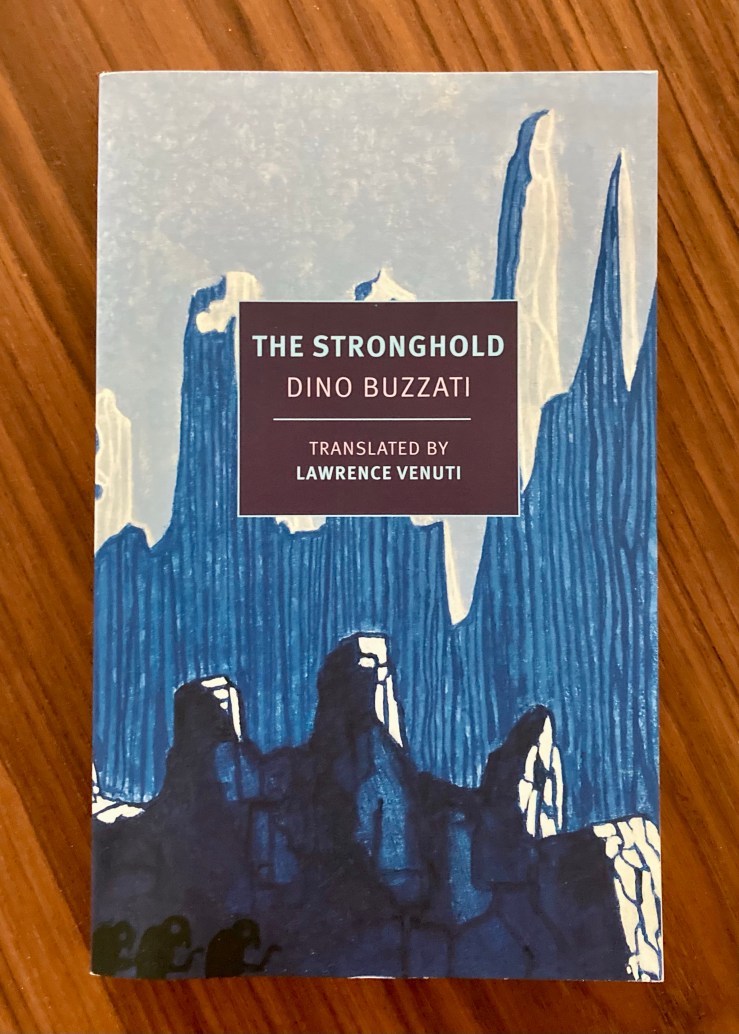
I also managed to get out a review of Lawrence Venuti’s new English translation of Dino Buzzati’s novel The Stronghold, which is strong holding the bottom of the stack above.

A review of The Stronghold, Dino Buzzati’s novel of deferred hope and ecstatic boredom

Dino Buzzati’s 1940 novel Il deserto dei Tartari (retitled The Stronghold in Lawrence Venuti’s new English translation) takes place in an unidentified time in an unidentified country. Our protagonist is Giovanni Drogo, freshly graduated from an unspecified military academy and ready for a thrilling life of combat and adventure at his new post, Fortezza Bastiani, a fortress at the border of the Tartar steppe. He and his fellow soldiers wait in the hope of attaining glory.

And they continue to wait.

The nebulous Tartars repeatedly fail to appear, offering only the vaguest hints of their alien existence. The soldiers of Fortezza Bastiani live a life of anxious monotony, their desires and hopes for the heroics of war flattened by the boredom of day to day life. It’s all very existentialist.

From the opening pages of The Stronghold, Buzzati conjures a strange but familiar world, usually telegraphed in brisk, unadorned prose (a style he honed in his career as a journalist). Everything is slightly off, slightly anxious. Initially, a reader might chalk the disquieting style up to our viewpoint-character Drogo’s own hesitancy as he enters into a new life as a military officer, but we soon find ourselves in an uncanny realm.

The world of the fortezza is somehow simultaneously dull and enthralling. Consider Drogo’s first glimpse of the fortress:

Fortezza Bastiani was neither imposing, with its low walls, or beautiful in any  way. Its towers and ramparts weren’t picturesque. Absolutely nothing alleviated its starkness or recalled the sweet things of life. Yet Drogo gazed at it, hypnotized, as on the previous night at the base of the gorge. And an inexplicable ardor penetrated his heart.

This “inexplicable ardor” is nevertheless ambiguous in its penetration; after learning he is nominally free to choose a different, perhaps more invigorating post, Drogo elects to transfer from the fort. However, his commanding officer suggests that he stay for four months to avoid bureaucratic problems with the higher ups. That four-month season of waiting turns into a lifetime of waiting. And then waiting some more.

Drogo and his fellow soldiers hunger for the glory of contesting the Tartars, an enemy they know utterly nothing about. Like almost every sociopolitical, cultural, and even technological detail in The Stronghold, the specific nature of the Tartar enemy is collapsed into something closer to a fairy tale or a rumor. Vague and dreamlike, the Tartars are not a geopolitical entity; they are not even an other, but rather the figment of an other, the kernel of a dream that promises action. And this dim promise keeps the soldiers waiting at the Fortezza:

From the northern desert would arrive their fortune, the occasion of their exploits, the miraculous hour that befalls everyone at least once. Because of this vague eventuality, which grew increasingly uncertain with time, grown men wasted the best part of their lives there.

The narrator, hovering in Drogo’s consciousness, imagines an interlocutor explaining to one of these soldiers that his “entire life will be the same, utterly the same, till the very last moment” — and then imagines the hypothetical soldier’s response: “Something else must come to pass, something truly worthy.” Drogo here believes he has grasped the “transparent secret” of the soldiers of the Fortezza, but also imagines himself an “uncontaminated onlooker.” But it’s too late. Drogo too has committed to waiting for something else to come to pass.

Nothing comes to pass—or nearly nothing. (One might read The Stronghold as an extended riff on Kafka’s wonderful parable “Before the Law.“) However, this is not to say though that Buzzati’s portraiture of tedium is itself tedious. The boredom he conjures is an ecstatic boredom, anxious and writhing, exploding in strange, magical moments of hallucinations and night terrors.

In one of the novel’s most extraordinary sequences, “fragile apparitions, quite like fairies” enter Drogo’s dreams, bearing away to some spectacular land Drogo’s fallen comrade who is now converted to a child dressed in a rich velvet suit. In another episode, a mysterious horse appears from the desert, sending the men into fits of hope and despair culminating in a horrific incident that underscores the absurdities of military rigor. Late in the novel, a much-older Drogo’s desire for action, for something to come to pass, tips into near-comic paranoia, as he and a younger officer fool around with a telescope to no avail.

After all this waiting in hope, The Stronghold concludes with a devastating Kafkaesque punchline which I shall not spoil here.

It will be clear to most seasoned readers that Kafka was an influence on Buzzati even without Venuti’s afterword, which details Buzzati’s admiration for the Bohemian writer. Buzzati does not ape the older master so much as evoke the same state of anxious alterity we find in texts like “The Great Wall of China” and The Castle. Stepping into The Stronghold, one is reminded of other branches of the Kafka tree, like Kazuo Ishiguro’s The Unconsoled, Kobo Abe’s The Woman in the Dunes, Alasdair Gray’s Lanark, and Albert Camus’ The Stranger, among many others.

Like many Kafkaesque works, one might be inclined to fob his own allegorical readings onto The Stronghold. In his afterword, Venuti points out that early English-language readings of Buzzati’s novel tended to interpret Il deserto dei Tartari as an anti-totalitarian tract. Il deserto dei Tartari was first translated as The Tartar Steppe by Stuart Hood in 1952, and many of its contemporary critics read the novel against the backdrop of the Cold War.

While praising the “remarkable accomplishment” of Hood’s translation, Venuti differentiates his own “historically oriented interpretation” of the novel; namely, his attempt to more emphatically underline Il deserto dei Tartari’s “latent critique” of fascism. Venuti points out that “Hood had twice rendered the generic ‘stivali’ (boots) with the politically marked term ‘jackboots,'” adding, “I tripled its use.”

Venuti also discusses at some lengths his choice to change Hood’s title. He writes that Buzzati initially wanted to title the book La fortezza, but this name was rejected by the novel’s publisher who worried it might be misunderstood by the reading public. In his attempt to further historicize his translation (and differentiate it from Hood’s), Venuti elected to remove Steppe from the title fearing it “might be taken as an anachronistic reference to the Soviet Union.” He also avoided The Fort or The Fortress as a possible titles, worried they might underscore Buzzati’s “debt to Kafka’s The Castle.” Venuti eventually settled on The Stronghold, suggesting that this title helps to emphasize the “cult of virility championed during the Fascist period” while also “conveying the sheer tenaciousness of the soldier’s heroic fantasies, as well as their inability to escape their debilitating obsession.”

I haven’t read Hood’s translation of Il deserto dei Tartari, but I appreciated Venuti’s, which, as I pointed out above, takes place in an unidentified time in an unidentified country. The novel’s eerie, fable-like quality—a quality that resists historicity—is what most engages me. Buzzati’s book captures the paradox of a modern life that valorizes the pursuit of glory (or at least happiness) while simultaneously creating a working conditions that crush the human spirit. We can find this paradox in Herman Melville’s Bartleby or Mike Judge’s Office Space; we can find it in Antonio di Benedetto’s Zama or Mike Judge’s Enlightened; we can find if in David Foster Wallace’s The Pale King or Dan Erickson’s recent show Severance. I could go on of course.

Some of these boredom narratives seek to assuage us, or make us laugh or cry—in recognition, spite, pity, despair, or hope. Some of these boredom narratives find resistance in art, or in just plain resistance. Buzzati’s novel offers something more like a warning. It is not possible to be an “uncontaminated onlooker” in one’s own life. It’s not enough to wait forever, even if we wait in hope.

The Stronghold is available now from New York Review Books.

The other project was a scheme for entirely abolishing all words whatsoever

We next went to the school of languages, where three professors sat in consultation upon improving that of their own country.

The first project was, to shorten discourse, by cutting polysyllables into one, and leaving out verbs and participles, because, in reality, all things imaginable are but norms.

The other project was, a scheme for entirely abolishing all words whatsoever; and this was urged as a great advantage in point of health, as well as brevity. For it is plain, that every word we speak is, in some degree, a diminution of our lungs by corrosion, and, consequently, contributes to the shortening of our lives. An expedient was therefore offered, “that since words are only names for things, it would be more convenient for all men to carry about them such things as were necessary to express a particular business they are to discourse on.” And this invention would certainly have taken place, to the great ease as well as health of the subject, if the women, in conjunction with the vulgar and illiterate, had not threatened to raise a rebellion unless they might be allowed the liberty to speak with their tongues, after the manner of their forefathers; such constant irreconcilable enemies to science are the common people. However, many of the most learned and wise adhere to the new scheme of expressing themselves by things; which has only this inconvenience attending it, that if a man’s business be very great, and of various kinds, he must be obliged, in proportion, to carry a greater bundle of things upon his back, unless he can afford one or two strong servants to attend him. I have often beheld two of those sages almost sinking under the weight of their packs, like pedlars among us, who, when they met in the street, would lay down their loads, open their sacks, and hold conversation for an hour together; then put up their implements, help each other to resume their burdens, and take their leave.

But for short conversations, a man may carry implements in his pockets, and under his arms, enough to supply him; and in his house, he cannot be at a loss. Therefore the room where company meet who practise this art, is full of all things, ready at hand, requisite to furnish matter for this kind of artificial converse.

Another great advantage proposed by this invention was, that it would serve as a universal language, to be understood in all civilised nations, whose goods and utensils are generally of the same kind, or nearly resembling, so that their uses might easily be comprehended. And thus ambassadors would be qualified to treat with foreign princes, or ministers of state, to whose tongues they were utter strangers.

From Jonathan Swift’s novel Gulliver’s Travels.

Hawthorne is a writer | From Kathy Acker’s Blood and Guts in High School

Hawthorne is a writer

Writers create what they do out of their own frightful agony and blood and mushed-up guts and horrible mixed-up insides. The more they are in touch with their insides the better they create. If you like a writer’s books read his books, the books aren’t pure suffering; if you want to publish/help the writer, do it business-like, but don’t get into the writer’s personal life thinking if you like the books you’ll like the writer. A writer’s personal life is horrible and lonely. Writers are queer so keep away from them. I live in pain, but one day, Hawthorne said, I’m going to be happy I’m going to be so happy even if I’m not alive anymore. There’s going to be a world where the imagination is created by joy not suffering, a man and a woman can love each other again they can kiss and fuck again (a woman’s going to come along and make this world for me even though I’m not alive anymore).

From Kathy Acker’s novel Blood and Guts in High School.

Father Fairing’s Sewer Rat Parish | Thomas Pynchon

They were entering Fairing’s Parish, named after a priest who’d lived topside years ago. During the Depression of the ’30s, in an hour of apocalyptic well-being, he had decided that the rats were going to take over after New York died. Lasting eighteen hours a day, his beat had covered the breadlines and missions, where he gave comfort, stitched up raggedy souls. He foresaw nothing but a city of starved corpses, covering the sidewalks and the grass of the parks, lying belly-up in the fountains, hanging wrynecked from the streetlamps. The city—maybe America, his horizons didn’t extend that far—would belong to the rats before the year was out. This being the case, Father Fairing thought it best for the rats to be given a head start—which meant conversion to the Roman Church. One night early in Roosevelt’s first term, he climbed downstairs through the nearest manhole, bringing a Baltimore Catechism, his breviary and, for reasons nobody found out, a copy of Knight’s Modern Seamanship. The first thing he did, according to his journals (discovered months after he died) was to put an eternal blessing and a few exorcisms on all the water flowing through the sewers between Lexington and the East River and between Eighty-sixth and Seventy-ninth Streets. This was the area which became Fairing’s Parish. These benisons made sure of an adequate supply of holy water; also eliminated the trouble of individual baptisms when he had finally converted all the rats in the parish. Too, he expected other rats to hear what was going on under the upper East Side, and come likewise to be converted. Before long he would be spiritual leader of the inheritors of the earth. He considered it small enough sacrifice on their part to provide three of their own per day for physical sustenance, in return for the spiritual nourishment he was giving them.

Accordingly, he built himself a small shelter on one bank of the sewer. His cassock for a bed, his breviary for a pillow. Each morning he’d make a small fire from driftwood collected and set out to dry the night before. Nearby was a depression in the concrete which sat beneath a downspout for rainwater. Here he drank and washed. After a breakfast of roast rat (“The livers,” he wrote, “are particularly succulent”) he set about his first task: learning to communicate with the rats. Presumably he succeeded. An entry for 23 November 1934 says:

Ignatius is proving a very difficult student indeed. He quarreled with me today over the nature of indulgences. Bartholomew and Teresa supported him. I read them from with me today over the nature of indulgences. Bartholomew and Teresa supported him. I read them from the catechism: “The Church by means of indulgences remits the temporal punishment due to sin by applying to us from her spiritual treasury part of the infinite satisfaction of Jesus Christ and of the superabundant satisfaction of the Blessed Virgin Mary and of the saints.”

“And what,” inquired Ignatius, “is this superabundant satisfaction?”

Again I read: “That which they gained during their lifetime but did not need, and which the Church applies to their fellow members of the communion of saints.”

“Aha,” crowed Ignatius, “then I cannot see how this differs from Marxist communism, which you told us is Godless. To each according to his needs, from each according to his abilities.” I tried to explain that there were different sorts of communism: that the early Church, indeed, was based on a common charity and sharing of goods. Bartholomew chimed in at this point with the observation that perhaps this doctrine of a spiritual treasury arose from the economic and social conditions of the Church in her infancy. Teresa promptly accused Bartholomew of holding Marxist views himself, and a terrible fight broke out, in which poor Teresa had an eye scratched from the socket. To spare her further pain, I put her to sleep and made a delicious meal from her remains, shortly after sext. I have discovered the tails, if boiled long enough, are quite agreeable.

Evidently he converted at least one batch. There is no further mention in the journals of the skeptic Ignatius: perhaps he died in another fight, perhaps he left the community for the pagan reaches of Downtown. After the first conversion the entries begin to taper off: but all are optimistic, at times euphoric. They give a picture of the Parish as a little enclave of light in a howling Dark Age of ignorance and barbarity.

Rat meat didn’t agree with the Father, in the long run. Perhaps there was infection. Perhaps, too, the Marxist tendencies of his flock reminded him too much of what he had seen and heard above ground, on the breadlines, by sick and maternity beds, even in the confessional; and thus the cheerful heart reflected by his late entries was really only a necessary delusion to protect himself from the bleak truth that his pale and sinuous parishioners might turn out no better than the animals whose estate they were succeeding to. His last entry gives a hint of some such feeling:

When Augustine is mayor of the city (for he is a splendid fellow, and the others are devoted to him) will he, or his council, remember an old priest? Not with any sinecure or fat pension, but with true charity in their hearts? For though devotion to God is rewarded in Heaven and just as surely is not rewarded on this earth, some spiritual satisfaction, I trust, will be found in the New City whose foundations we lay here, in this Iona beneath the old foundations. If it cannot be, I shall nevertheless go to peace, at one with God. Of course that is the best reward. I have been the classical Old Priest—never particularly robust, never affluent—most of my life. Perhaps

The journal ends here. It is still preserved in an inaccessible region of the Vatican library, and in the minds of the few old-timers in the New York Sewer Department who got to see it when it was discovered. It lay on top of a brick, stone and stick cairn large enough to cover a human corpse, assembled in a stretch of 36-inch pipe near a frontier of the Parish. Next to it lay the breviary. There was no trace of the catechism or Knight’s Modern Seamanship.

“Maybe,” said Zeitsuss’s predecessor Manfred Katz after reading the journal, “maybe they are studying the best way to leave a sinking ship.”

The stories, by the time Profane heard them, were pretty much apocryphal and more fantasy than the record itself warranted. At no point in the twenty or so years the legend had been handed on did it occur to anyone to question the old priest’s sanity. It is this way with sewer stories. They just are. Truth or falsity don’t apply.

From Thomas Pynchon’s 1963 novel V.

img_2194

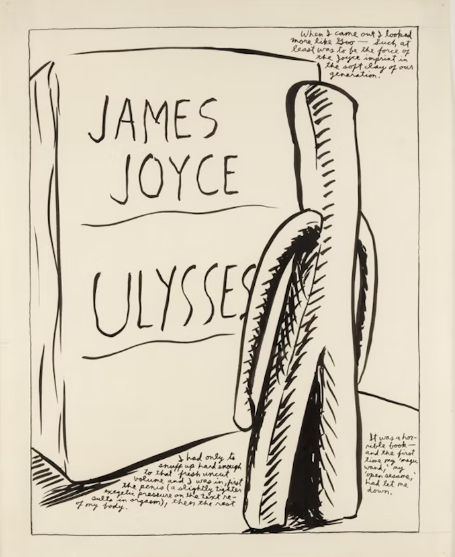
Untitled (James Joyce Ulysses) — Raymond Pettibon

Untitled (James Joyce Ulysses), 1995 by Raymond Pettibon (b. 1957)

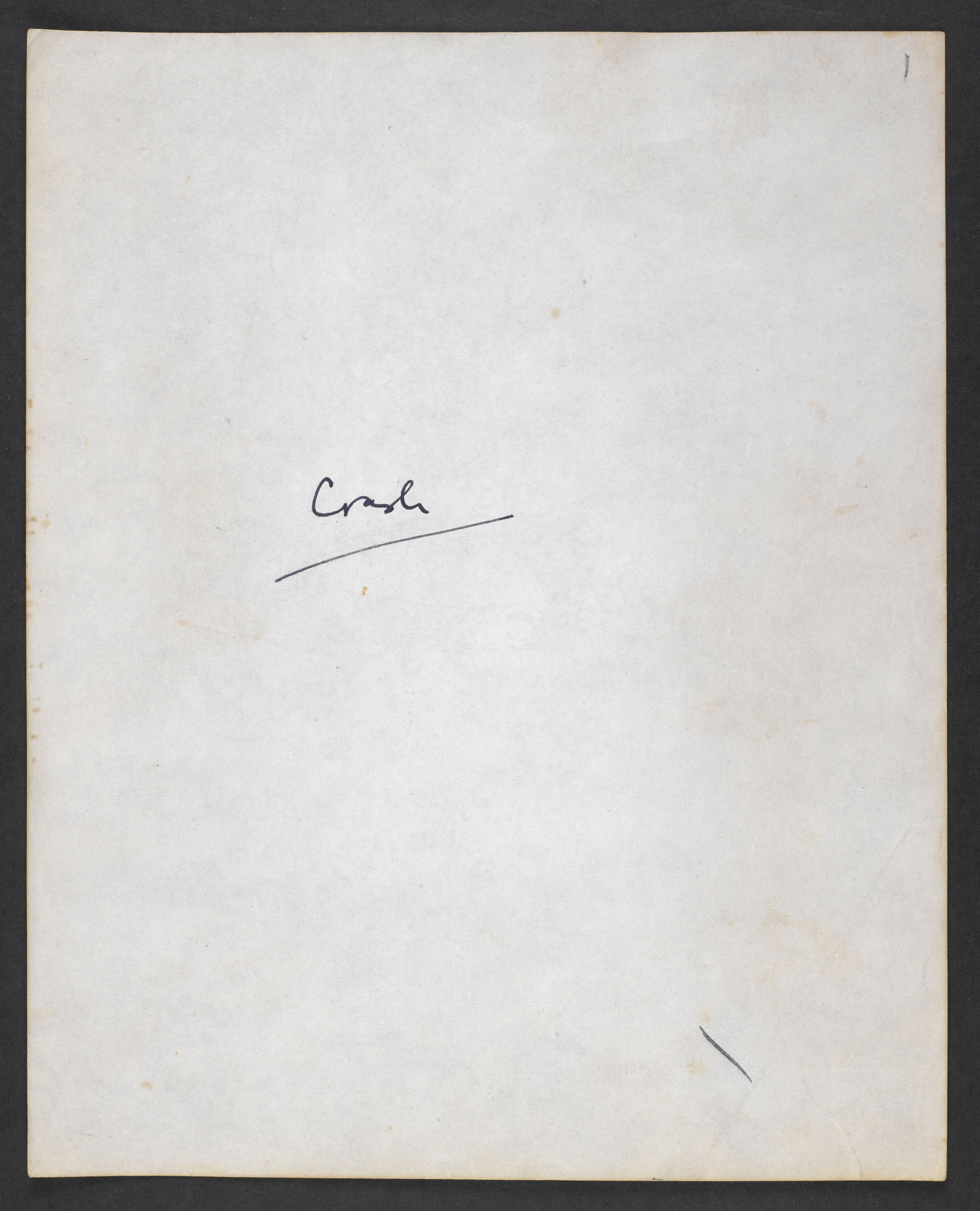
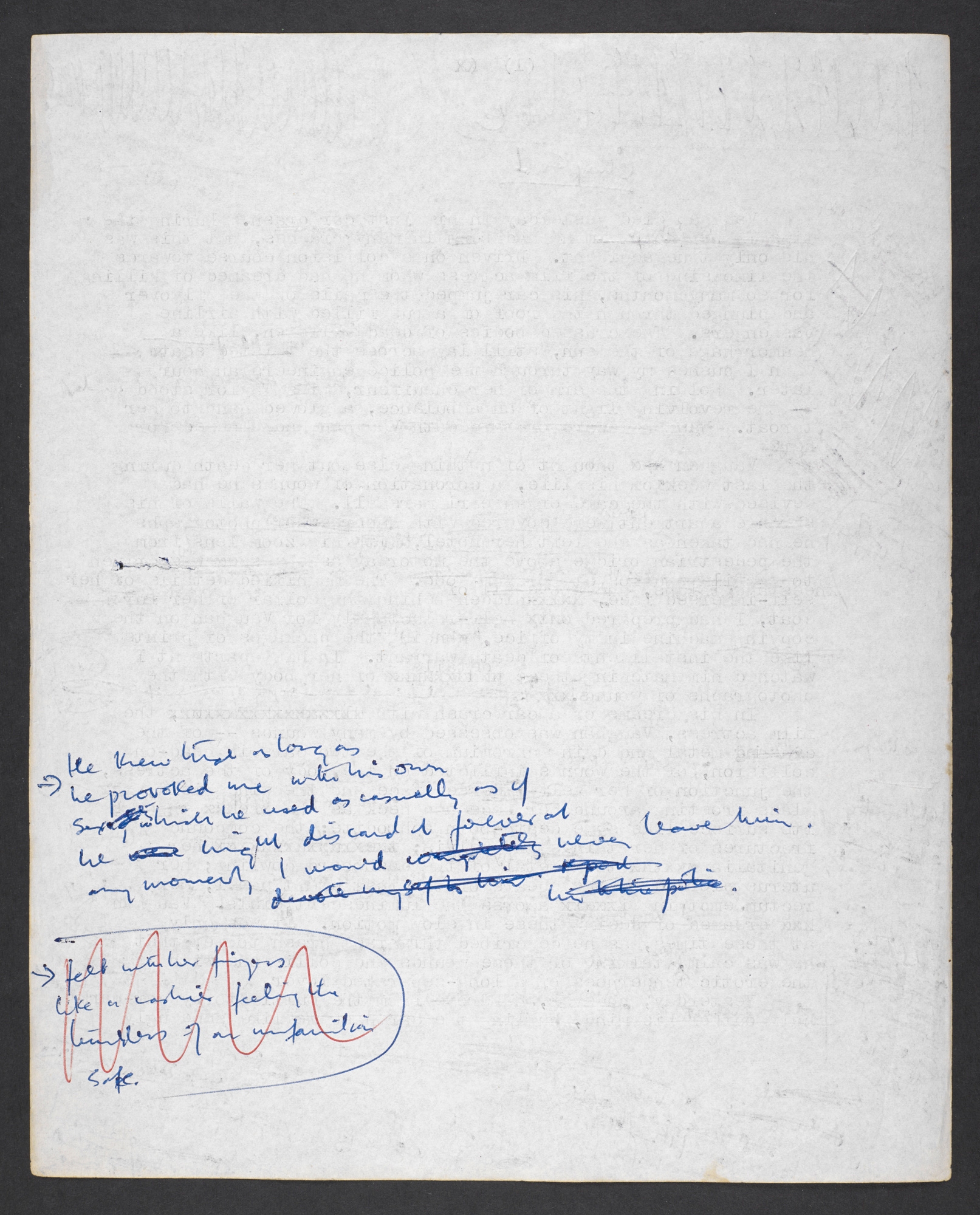
Vaughan died yesterday in his last car crash | J.G. Ballard’s typescript, hand-revised draft of the opening page of Crash

Via/more.

St. Patrick and the Druid, an episode from Finnegans Wake (with explication from Joseph Campbell)

On pages 611-613 of James Joyce’s Finnegans Wake, St. Patrick meets the archdruid Balkelly:

Tunc. Bymeby, bullocky vampas tappany bobs topside joss pidgin fella Balkelly, archdruid of islish chinchinjoss in the his heptachromatic sevenhued septicoloured roranyellgreenlindigan mantle finish he show along the his mister guest Patholic with alb belongahim the whose throat hum with of sametime all the his cassock groaner fellas of greysfriaryfamily he fast all time what time all him monkafellas with Same Patholic, quoniam, speeching, yeh not speeching noh man liberty is, he drink up words, scilicet, tomorrow till recover will not, all too many much illusiones through photoprismic velamina of hueful panepiphanal world spectacurum of Lord Joss, the of which zoantholitic furniture, from mineral through vegetal to animal, not appear to full up to-gether fallen man than under but one photoreflection of the several iridals gradationes of solar light, that one which that part of it (furnit of heupanepi world) had shown itself (part of fur of huepanwor) unable to absorbere, whereas for numpa one pura —— duxed seer in seventh degree of wisdom of Entis–Onton he savvy inside true inwardness of reality, the Ding hvad in idself id est, all objects (of panepiwor) allside showed themselves in trues coloribus resplendent with sextuple gloria of light actually re-tained, untisintus, inside them (obs of epiwo). Rumnant Patholic, stareotypopticus, no catch all that preachybook, utpiam, tomorrow recover thing even is not, bymeby vampsybobsy tap — panasbullocks topside joss pidginfella Bilkilly–Belkelly say pat — fella, ontesantes, twotime hemhaltshealing, with other words verbigratiagrading from murmurulentous till stridulocelerious in a hunghoranghoangoly tsinglontseng while his comprehen-durient, with diminishing claractinism, augumentationed himself in caloripeia to vision so throughsighty, you anxioust melan-cholic, High Thats Hight Uberking Leary his fiery grassbelong- head all show colour of sorrelwood herbgreen, again, nigger- blonker, of the his essixcoloured holmgrewnworsteds costume the his fellow saffron pettikilt look same hue of boiled spinasses,other thing, voluntary mutismuser, he not compyhandy the his golden twobreasttorc look justsamelike curlicabbis, moreafter, to pace negativisticists, verdant readyrainroof belongahim Exuber High Ober King Leary very dead, what he wish to say, spit of superexuberabundancy plenty laurel leaves, after that com-mander bulopent eyes of Most Highest Ardreetsar King same thing like thyme choppy upon parsley, alongsidethat, if please-sir, nos displace tauttung, sowlofabishospastored, enamel Indian gem in maledictive fingerfondler of High High Siresultan Em-peror all same like one fellow olive lentil, onthelongsidethat, by undesendas, kirikirikiring, violaceous warwon contusiones of facebuts of Highup Big Cockywocky Sublissimime Autocrat, for that with pure hueglut intensely saturated one, tinged uniformly, allaroundside upinandoutdown, very like you seecut chowchow of plentymuch sennacassia Hump cumps Ebblybally! Sukkot?

Punc. Bigseer, refrects the petty padre, whackling it out, a tumble to take, tripeness to call thing and to call if say is good while, you pore shiroskuro blackinwhitepaddynger, by thiswis aposterioprismically apatstrophied and paralogically periparo-lysed, celestial from principalest of Iro’s Irismans ruinboon pot before, (for beingtime monkblinkers timeblinged completamen-tarily murkblankered in their neutrolysis between the possible viriditude of the sager and the probable eruberuption of the saint), as My tappropinquish to Me wipenmeselps gnosegates a handcaughtscheaf of synthetic shammyrag to hims hers, seeming-such four three two agreement cause heart to be might, saving to Balenoarch (he kneeleths), to Great Balenoarch (he kneeleths down) to Greatest Great Balenoarch (he kneeleths down quite-somely), the sound salse sympol in a weedwayedwold of the firethere the sun in his halo cast. Onmen.

That was thing, bygotter, the thing, bogcotton, the very thing, begad! Even to uptoputty Bilkilly–Belkelly-Balkally. Who was for shouting down the shatton on the lamp of Jeeshees. Sweating on to stonker and throw his seven. As he shuck his thumping fore features apt the hoyhop of His Ards.

Thud.

Good safe firelamp! hailed the heliots. Goldselforelump! Halled they. Awed. Where thereon the skyfold high, trampa-trampatramp. Adie. Per ye comdoom doominoom noonstroom. Yeasome priestomes. Fullyhum toowhoom.


Continue reading “St. Patrick and the Druid, an episode from Finnegans Wake (with explication from Joseph Campbell)”

First riff: The Letters of William Gaddis, “Growing Up, 1930–1946”

The Letters of William Gaddis, ed. Steven Moore, NYRB, 2023

Chapter One: “Growing Up, 1930-1946”

Earliest letter:

To Edith Gaddis (mother), 9 Dec. 1930

Latest letter:

To Frances Henderson Diamond (early love interest), 13 March 1946

Synopsis, citations, and observations:

Most of the letters collected by Moore in this first section of Letters are addressed to Edith Gaddis, whom Moore appropriately describes as “the heroine of the first half of this book: his confidante, research assistant, financial benefactor, his everything.”

His everything clearly includes everything, but I would’ve thrown in the words earliest audience. The letters featured in this earliest chapter show only the barest germ of the writer into which Gaddis would evolve—but they do show a tenacious foundation for practice, one facilitated by a loving, motherly reader.

Here is the first letter in the volume:

Merricourt
Dec. 9, 1930

Dear Mother.

Our vacation is from Sat. Dec. 20. to January 4.
We are making scrapbooks and lots of things. We are learning about the Greek Gods.
I am making an airplane book.

With love
Billy

Little Billy is a few weeks shy of eight years old here, attending boarding school in Connecticut. He attended Merricourt from the time he was five—around the same time his mother Edith separated from his father, William T. Gaddis.

It’s clear why Moore would single out this particular letter for inclusion. The mechanical notion of “making” books, in particular books from scrap, recalls Jack Gibbs, hero of J R., who keeps scraps of newspapers and magazines in his pockets). Our boy was always a scissors-and-paste man.

The Letters gets through childhood and adolescence fairly quickly (a few scant pages) before we find 17-year old Bill sailing on the Caribbean on the SS Bacchus. There’s not much to the Caribbean adventure, but it does initiate an early theme of The Letters—young Bill goes on adventures, often getting in over his head, but also expanding his worldview. “A good part of the crew are colored but they’re okay too,” he writes to Mama Gaddis, a cringeworthy line, sure, but also one that underscores that Our Hero is a man of privilege.

A year later he’s at Harvard.

But not at Harvard for long!

This theme of attending and departing Harvard goes on a bit in the first part of Letters. (Gaddis never earned a degree). Young Bill fell ill his first semester (making him part of a famous fraternity of sick writers: Joyce, O’Connor, Kafka, Walser, Keats, Crane, Wharton, etc.),

What to do? Our Hero heads West, eventually landing in Arizona to recuperate.

Eastern Boy Gaddis’s Western Adventure is especially humorous against the backdrop of his literary oeuvre to come, particularly The Recognitions, which sardonically roasted poseurs (while simultaneously lifting up the efforts of counterfeiters who channel True Art). Our Boy decides to be a cowboy. In a letter to Mama Edith dated 17 Jan. 1942, he details his cowboy outfit:

I have gotten a pair of blue jeans ($1.39) and a flannel shirt (98¢) for this riding—expect to get another pair of jeans today—and later perhaps a pair of “frontier pants” and a gabardine shirt. No hat as yet as they do seem sort of “dudey”—but I can see that it too will become almost a necessity before too long.

The letter is part of an early genre that Gaddis hacked away at, if never perfecting: Mom, need money. 

It continues:

As for wanting anything else—well there are things down here that make me froth just to look at them!—belts such as I never dreamed of—rings—beautiful silver and leather work—but I figure I don’t need any of it now and will let it go until I’ve been around a bit more and seen more of these things that I’ve always known must exist somewhere!

We’ve all been twenty, all made questionable fashion choices, all wanted Beautiful Things We Could Not Afford. (Most of us have not had the misfortune to have our private letters published.)

Letters includes a photograph of Cowboy Bill, duded up in boots with horse. He did not give up the affect easily; in a later letter from the fall of 1942, when he’d returned to Harvard, he requested the following of Dear Mother:

Say when you get a chance could you start the following things on their way up here to make our room more habitable[:] the leopard skin on the lodge closet door—the spurs on the floor nearby—both of Smokey’s pictures—the small rug—both machetes and the little Mexican knife & sheath & chain to the right of the east hayloft windows (one machete is over hayloft door—the other on edge of balcony)—also any thing else you think might look intriguing on our wall—oh yes the steers’ horns—

Bill Gaddis spent much of the year bumming around the American West, getting to Los Angeles, Wyoming, and as far as east as St. Louis, where he meets a woman

hard of hearing—and her son Otto, who’s about 23—is sort of—simple. He went thru college—then started in at Harvard (!) and then cracked up it seems.

The first time I read The Recognitions, I found Otto a repugnant poseur of the worst stripe. Reading and rereading The Letters and Gaddis’s first novel, I find myself far more sympathetic.

The version of Young Gaddis we get from these early letters will resonate with anyone who’s held artistic ambitions. He’s callow, largely unread, generally ignorant of just how ignorant he is, charming, brave, and foolish. And while his reliance on his mama’s money transfers can occasionally irk, there’s a deep tenderness in his writing to her—for her. Again, almost every one of these letters are written to and for Edith.

William Thomas Gaddis Junior’s father and namesake hardly pops up in the discourse (at least in Moore’s edit), but a letter to Edith dated 26 Jan. 1942 is unusually detailed on the paternal topic:

And then as you say this slightly ironic setup—about my father. …As you said it has not been a great emotional problem for me, tho it does seem queer; you see I still feel a little like I must have when I said “I have no father; I never had a father!,” and since things have been as they have, I have never really missed one—honestly—and only now does it seem queer to me. All I know of fathers I have seen in other families, and in reading, and somehow thru the deep realization I have gained of their importance; of father-and-son relations; and families: not just petty little groups, but generations—a name and honour and all that goes with it—this feeling that I have gained from other channels without ever having missed its actual presence: somehow these are the only ties I feel I have with him.

Father-son relationships wrinkle queerly throughout Gaddis’s novel, always deferrals and deflections, whether Wyatt-Otto in The Recognitions or Bast-JR in J R or the King Lear tirade of Gaddis’s final letter to the world, Agapē Agape.

Gaddis returned to Harvard in the fall of 1942 (“devil to pay for eight months hence I guess”). He reads Nietzsche and Schopenhauer, or at least tells his mother he reads Nietzsche and Schopenhauer—but I believe him. Reading Nietzsche and Schopenhauer seems like a thing a young man might do. In a letter of December 1942, “so angry now am about to fly,” he complains of being recommended a history book that “turns out to be history of Communism and Socialism–Marxism–enough to make me actively ill.” A postscript lauds William Saroyan but worries that “G Stein is still a little beyond!” Our Lad has room to grow.

By the spring of 1943, Gaddis is working on the Harvard Lampoon. He would eventually become the President of the Lampoon (or, um, ‘Poon, as he writes his Mama). This project seems to entirely consume him, distracting him from his studies.

Gaddis was eventually kicked out of Harvard after an “incident” with the police (Our Boy was drunk and disorderly). The last few letters in the collection are bitter and a bit sad. Gaddis worked as a fact checker at The New Yorker for not-quite-a-year, with scant letters from this period appearing in Letters. There is a letter from a vacation to Montreal in the summer of 1945 that attests the following disillusionment:

Frankly the more I move along the more I find that every city is quite like the last one.

Not long after, Gaddis would start writing material that would wind up in The Recognitions.

NYRB 2023 updates to the Dalkey Archive’s 2013:

In addition to a smattering of letters to women who are not Edith Gaddis, NYRB’s new edition includes two new pictures–Gaddis’s Harvard 1944 yearbook picture and a professional head shot of Frances Henderson Diamond. There’s also this close-up of a photograph of children included in the Dalkey edition, clarifying which kid is Billy Gaddis.

Love Our Dude’s pipe!

Virginia Woolf’s Jacob’s Room, but just the punctation

” , ” , , ” . ” , ; ; , . ; ; . ‘ . . . . ; ; ; . ” … , ” . ” , ‘ ” ( , , , — — ) , ” ‘ ” — — ! . ” ? ” . ” ‘ . . . ” ” … , ” , , ” , , ‘ … . ” ‘ — — – , – . : : . , , . , ‘ , , – . ‘ , , , , , , . . . ” — — ! — — ! ” . ” , ” . , ; ; . ? ; ; , – . . — — — — ! – . . — — , — — . , , ‘ , , — — . ” — — ! — — ! ” . , , . ” — — , ” , , , , . ” — — , ” , , , ‘ . ” — — ! — — ! ” , . . , , , , , — — . ; — — . ” , ! ‘ … ” , , . . , , . , , . , , , . , , , ; , . . – , – — — ” , , ” — — . ! . . , , , , , , , , , . ( – ) , – , , , , . . . , , , . . . ” ! ! ” , . . . . . . . , , — — ‘ , , , . , – , . ” ! ” . , . ” ? , ! ! , . ‘ ? ! . , ” , ‘ . ‘ , . , , ‘ , . , . , . ‘ . , , – , – , . – ; , , , — — , , . . ‘ . ‘ . ; . ” , , , ” , ; ; , – , , . . , , , , . – ‘ . ; . . ” , ” . . ” ‘ , . ‘ , ” , , , , , , , . ‘ . . ” ? ” . ” ‘ , ” . ” , ‘ , ” , , , , , ‘ , , , , — — ? , , . . ” ! ” , . . . . ‘ ‘ . ; ; ‘ . . . ; – ; . ; ‘ . – – . , . , , . . . . . ” , ” . ” , . . , ” , ” . ” – ; ; . ” ‘ ? ” . ” ‘ , ” . . . ” , ‘ ? ” , . ” ‘ , ” . . ” ‘ . , , , . ” ” ‘ — — , ” , – . , – , . ” ? ” . , , . , , . , . – , . . . . . ” ? ” , . . . ” – , , ” . , ‘ , . . . , ; . . ; ‘ , . , , , , . ! , , ! , , . – . . . . . . . . ‘ — — , – . . ; . , . ; – . , , , , ; – . , , . ‘ . – . . . ‘ – ; – , ; , . ” . ” — — ” ” — — ” ” — — ” ‘ ” — — ” ‘ ! ” ” ‘ — — , . ” ” ‘ ‘ , ” . ” ‘ . ” ” — — . ” ” ; , . ” ( . . ) , , , , . – . ; , ; ; ; ; , ‘ , — — ? ? , — — , , ; — — , , , . , ‘ ‘ , , , , ‘ . ; ‘ . , ; ; , , , , , , – . ” , ” ; , , , , , , — — , . . , , ? , ‘ , . , ; , , , , , , , , , , ‘ , . ; , , , , ‘ — — . , . ” ‘ , ? ” . , ‘ , . ” ! ” . . – , , , . , , , . , , , . . . . , . , . . ; . . ; ; , , , . ; . ” ‘ , ” . . , , . , . , . ; , . — — , , . . , , . ‘ ; , , ; ; ; ; – ; . , , , . ; . ; ; – ; ; . ; ; . – . . . – . , , . . . , , ; . , , , , – , , ( ) , , . ; , . , ; ; . ; . . . . , , – , , , – , , , , , , , . ( ) . ‘ ; — — . ; — — ; — — ; ‘ — — ; . ? — — ‘ . , . ‘ . , ‘ , ! ‘ . – ; – ; . . — — . , ‘ ? . , ‘ ; , , , . ” , ” – , , ; ; ‘ . ” ‘ , . . , . . – ! – ! ” ” – ! – ! ” , , . , . ” ? ” . , . ” ? ” , . ” ‘ , ” . . ” ‘ — — , ‘ — — , ‘ . . , . ” ” , . ! ” , ‘ , . , , , . , , , , , — — — — , . , , , , . , , — — . ? . — — . . . . , . ” . , ? — — — — , — — ” . , . ” , – – — — — — ” ” . ” , . . . , – , – , , . . . ” ? ” , . ” ‘ ! ” , . ” ‘ . ‘ , ‘ . ‘ ! ” , . ‘ , . ” ! ” , . , , . ‘ , . – , – , . ‘ , ” , ” , , — — . , , — — . ” . , ” . — — ” ? ” , . , . ” … ” . . ” , ” , , , ; , ; . , ; , , , – , . – , ; ; , , . ‘ , , . : ” . ” . ‘ ( ) ; ( ) ; — — , , , — — , , , – , , . . ‘ — — , . , . . . ” , ” . , . , . , . , , ” . . ” . ; ; . , , . . . . ” , ” ( . ‘ , , ) . ” , ” . , , , , . , . – . . – ( ) . . . , , – . . . ; , . ‘ – . . . . . – . . . – . . , . ” . ” . , , . , , , , . . . . , . , , . ” ! ” . . , . , , , . , – . – . ‘ , — — , . . , . , , , . ; . . , . , , . , . , , . , . . , . ” ‘ , , ” , , ” ‘ – . ” . ‘ . , – — — , — — ‘ . . , – , . . ” , ” . , . , ” ‘ , , . . ” ; . , . — — ‘ . – , , , ‘ , – , ‘ – . ( ) , , , , . – — — ‘ — — , , – , . , . , . — — — — . ‘ — — — — . , — — . . . . , , ; ; , . . , . ; , . – , , – , . — — , . . , . . , , . , . , . . , . . – , . , , . . . . , , – , . . . . , , , , , . ” , ! ” . . ” – , . , ” . , . ‘ , , : ” – , . . ” . . . ? : ” , , ! ” . . , – , ; , , . , , – , , , , ‘ , . ‘ . , , , ‘ , . — — — — , , , , , … , , ; , , , ; , , ; ; , ; , , — — . , , , ” … … . ” , . ” . , , ” . – . , , , , . . ? . ” ” , ? ; , . , ” . . . , ” , , , , , , – , , . ” , ” . , , ” ‘ ‘ ‘ , ‘ ” … . , , , – . . ” , , ” . , – , ” ‘ … … … ” , , – – , , , , , , , . , – . . ; , , , — — . ” , ” , ” ‘ . . ” . . ” . … , … , , ” . . . , . ” , ” . ” . ” ” , ” , . ” , ” . , , ” , . ” ” , ” . ” ? ” . , . ” , , ” , . , , , . ” – , ” . , , . . , , , . – , – ‘ ( , ) . – , , . , . , . ; … . . ? — — . ( ) , ( ) , . . . , . , , , — — ! , , ! , , , ‘ . , … , … , , … — — — — . , . – — — . , . — — — — … . . . ‘ . ( ) : ” , ‘ ” ? : … . , , , — — — — , , , , , ? . , , . . , , — — , , . , ‘ – , , : ” ” ; . ” … ” , ; , . , – , , , – , – . . , , , , , , , . — — ‘ — — . . , ‘ , , , ? , ? , , , . , , , . . ; ; . , , , , , , . , , . — — – — — . ; , . – ; , , . … — — , , — — . , , . , ‘ ? – — — ; — — . — — , . , . ‘ — — ? , ( , , – ) , – . , — — , ; , – – . . , , , , , ( — — , ) , . — — , , , , , . . , , ‘ . . ‘ ; ; , , . ” , ” , . , , , – , . ” , ” . . ” . ? ” . ; , , , — — . . . . . . , , , , , . , . . , , — — . ” , ” . , , , , , , . , . , , , , , , , — — — — ” , , ? ” , . ” ‘ , , ” , . . . . , , . . , , , — — . , . . — — . , . . . . — — ? , – , , – ? ? ; , , . , , . ” , ” , ” . ” . – , . . ‘ . , . , . ; – — — — — . ” ‘ ‘ ! ” . , , . ” , , ! ” , . ” , ! ” ” ! ” , — — . ” , ” , – , — — — — , — — ! , , ? , , ? . . . — — . , , , . ; . . , , , — — — — ; ; ; ; ‘ ; — — ” , , ” . . . — — — — — — — — — — , , , , , , , — — , , , , , . , , , , , . , – . — — ; , , – . ‘ ; , , . , , , . , , ; ; , , , . . ” ‘ , ” . , . , , , , — — ‘ . , , , . ” – – – , ” , , , . ” – – – ! ” , . ” ‘ ‘ , ” . ” . ” . , . , – , , , … ” ‘ , ” . ” ‘ , ” ( , ) . ” , ” . ( . ) ” , ” , . ” ? ” . ‘ . ” ‘ , , ” . ” , , ‘ ! ” , , . ‘ . , , . ” … … ” . , . ; ; – . , . ‘ , , ‘ ; ; ; ‘ . , . ‘ , , . , . ; , , ; , – . . ‘ . ; ; , , ; ; — — , — — ” ? ” ; ; ‘ , , . , ; ; ; ; ; . , ‘ . , — — . , , , , ‘ . . , , – . , ; . – , . [ – ; , ] , , , , , , ; , . , , , ; , . ; . , ; ; ; . ‘ ; — — , , ; . , , , , ( ‘ , , ) , ! ! ” . ” ; . , , ; ; ; ; . . ‘ . , , , , – , , , , , , , . . ‘ , , , , , , , , , , , . — — . , . , , – , . , , ; ; . , , — — — — ‘ , . , ‘ , , . ” , . ‘ . , ‘ ? ” , , , , , ” ” — — , , , , ; , ; ; , ; . . ; — — — — , , , , . . , ‘ , , , , , , — — ‘ . . , , , , . , , , , ; , , , , . — — — — ? ” ? ” , , , , ‘ , , , , , , , , , , . . . , , , , : ” , ? ” — — , , ‘ . , , , . , . , , . , , , , ; , . , — — , , , , , . , , , , , ‘ , , — — . ” ‘ ‘ , ” , , . , , . . . ? – , , , , , , , , ; . ; . , . , , , , . . ? . , , , , ; , , ; ; , — — , , — — ; ; ; , , . : ” — — ! — — ! ” , , , , , , . . , – , ; , , ‘ . . — — , . , — — , , , , ; , , , , , . ? — — — — , ! ‘ . , , , , , , — — , , . , , , , — — , ; , , , , . , , , . ; , . . , – , ; , , , — — . , – , — — — — . . , . , , , . ? ? ? ? , — — , ; , . ‘ — — , , , , – . . . ; ; , – , , . , ? . . . ; ; , ( ) ; ; – ; ; , , , . , , , , , , , , , , . , – , ? ? ? , . . ” … … . ” ? , , ; . ” ” — — . , , , , . , , , , . ” . ” ‘ . . . ” , ” . , . , , . ” , , ” , ‘ . ; . , . . . — — , , , . , , , , , , ‘ . ‘ . . – . . . , , , . , , , , : ” — — — — – . ” ‘ , , – ? , , , . ! – – . , , , , , , , – , . , , . , ; . . , , , , . , ; ; — — . – . . , . , , , , , . . – – … . , . . , , . . . ; — — — — ? , ; – – ; , , , , . ; , , ; ; ; , , , ; . . , , , , , , , . , , — — ! . . , ; . , , , . , — — , , — — , , . , . , , , , , ; , , – , , , , . , , . , , . , , , . ; , , . , – . ? . . , . . . ‘ , , ‘ , ; . ( ) … . . ‘ . ‘ . ‘ , … . ‘ . ” … ” . . , , , ; . ; ; , , , . , , . ; . – . . ” ‘ , ” . . ” … ” . ; – . , , , , ? ” … ” . ” , ” , . ” . ” , , , , , — — , — — , , , , , – , , , ‘ , . ” , ” , ” . ” . ” ‘ ‘ ? ” . ” , ” . ” , ” . ” , ” . ” , ” . ” , ” , ” . ” ” ‘ ‘ , , ” . ” ‘ , ” . ” — — ‘ — — ” ” , , ” , . ” ‘ … ” . ” ‘ … ” ” ? ” . ” — — – , ” . ” ‘ , ” . ” ‘ , ” . ” , ” . ” ‘ . ” ” . ” ” ? ” . ; , , , . / * ” : ; ; , , ” * / . ” / * , ? ” * / . ; , , ; , , , . / * ” , , , ” * / . , ; ; . / * ” , ” * / , , , , . ‘ ; ; – – ‘ , ‘ , , . , – ; , , . . ; , , , . , . . . ‘ . , , , … , , . . ; . , . . . , , , – . ; ; , . , , , ‘ , , ‘ . . ” — — . ” ” , , . ” ‘ . , . . , . , – . , . , , . , , . ‘ , ‘ ‘ , . , . , , . , , . . , , , . , , , , , , . , , . . , , , , , , ‘ , . ‘ . , ‘ . , , . , . … . , . , – . , . , , , . , , . ‘ . . . ” . ? ” . , . , . . . ” , . , ” . , . ‘ . . . ” , ” . . ” … . , . ? ” – . , , . ; ; , , . . . . . . ( ; ) . . . . . . . ; . . . ; ; ” , ” . . ” ‘ — — ‘ , ” . . . . ‘ . ” , , ” ; ; . . , , . . ; ; , , ; . . . , . . . , , . . . ‘ . . , , , . , . , ; , ; , , , . . ; . . – ; , , . , , . ; – . . . . . , , , , , . – , , , — — — — — — — — . , , , . , , , , . , , – , . . , , , , , . – . . – ! , – . , , – , – – . ‘ . . . . , , , , . ” , , ! ” . , , ” , , ” ‘ , . . ‘ , . : ” , , . , ‘ ? … . ” , , – , . , , , – , . . . . ” , ? ” . ” . ‘ . ” . . ” , ” , ” … . ” , , . ” ? ” . ” . ” . . ” , ” , , . ” — — . . , . ” , . . ” , ” . . . , . ” , . , ” . ” . . ” ” — — , . , ” . ” ; , ” . ” , . . ” ” , ” . . ” ‘ , ” . ” … ” . ” , ” . , . . , , , ; , , , , . . ” , , ” . , ‘ . ” ? ” . ” ? , ” . . ” , . ‘ . ” ” ‘ . ” . . ‘ . , , : ” , , , … . ” ” , ” , . . . ” , ” . . – . ” , ” . ” , ” . , . ” … . ? ” – . ” , ” . ” , ” . ” , , ” . . ” , ! ‘ ! ” , . ” , ” , . . . ” ! ” . . ” ! ” . . , . ” … ” . ” ‘ … ” . ” , ” . ” , ” . ” , , , ” . ” . … ” . ” ‘ , ” . . . ” ‘ , ” . ” . ” ” ? ” . ” , ” . . ” , ; , ; , ; … ” . ” , ” . ” , ” . ‘ . ” ? ” , . ” ‘ — — ? ” . ” , , ” . . ” ? — — . ” ” , , ‘ , ” . ” , ‘ . ” ” ‘ , ” . ” , ” . ” ? ” , . ” ! ” . – . . . , , – . . . ” ; , ” . , . . ‘ , . ” , . , ” , , . . ” , ” . . , ; . ” , ” . . ” , ” . ” . ” ” , ” . . ” , ” , . ” – . ” ” … ” , … ” , , ” … , ” , ! ” . ” ? ” . ” , ” . , , . ” , . ” ; . . ” , ” … . ” ‘ … ” . ” , ” . , , . ” ‘ . ” ” ! ” , . ‘ . ” , ” . . ” ‘ — — ‘ ! ” . ” ‘ ! ” ” ‘ , ” , . . ” ! ” , . – , , , . ; . ” , ” , , , ‘ . ” , ” , . ” … ” , ” … . ” ” , ” , . ” … ” , ” , , ” , , . ” … … ” . . ” , , ” , . ” , ” , . ” , ‘ , ” . ” , , ” , ; . ” ‘ — — , ” , , . , , . , . ” ! ” . ” ? ” . ” , , ” . . ” , , , ” . , , – , . . , . ” – , ” . ” – , ” . ” – , ” . : ” – , . ! ” ” . ! ” . , . ” ! ” ” , , ” . . ” , ” , . ” , ” , , ” ‘ , ” , . , , – . ‘ , , , . ; . — — , ‘ — — ‘ , — — . , , , – , , . – . , , . ” , ; , — — , ! ” . ‘ . . . . ‘ . ‘ . . . ; , , , — — ” , ” ” . ” ; , , , — — . , ‘ , — — , . , , , , , . ‘ , , . , , , , … . ? . . , , . , ‘ ; ; . . . , , . — — . ‘ , , . ‘ , , . , ‘ , , , , , , , , … . , , . ‘ . ‘ , . ” ‘ ? , … . ‘ ‘ ? — — — — … . ? , ! ” — — — — … , , , , … , , ; . . ‘ , , ; ; . , ‘ , , ; , – , , , . . ; ; ; ; ; , . , , , , – , . ; . ; . , . , , , . , , , , ‘ , . , , , , ; . , , , , , . ” — — ‘ ” — — . — — , , , — — , , , , , , . – ‘ , , , , — — , — — , , , , ‘ , , , . . ; , , , . , , , , , , ; ; ; , . , , . , , – – – – — — , , , , . ” ? ? ? ” . ‘ . . . ; ‘ . . , . , ( ) , ; , — — , ( ) , . – , , , , – , . – , , ; , ; . , , ; . , ‘ , ; , ; … … , . , ; , , , . . . — — . — — ; ‘ ; , ; ; ? , ‘ , ‘ — — ‘ — — ; , , , . — — . ! , ; , : – ; . , – – , , . . ” ! ” . ” ‘ ! ” ; , . ” ; , ” , . . . ” ! ” , ; . , , , , , . , ; ; ; . . . , . — — , , , ; , , — — ‘ , , . . , , – . . . — — – — — . ( . ‘ , . , ) , , . , ; , ‘ , . . , – , … . ” ” — — . ” – . ” ” , ” , ” – . ” . , , : ” ” ( ) . ” ” … , , , , , , . ? – . ? ( ‘ ) . — — , . . ? ” , ” . ” . , , ‘ … ” . . . , ! ” , , , ” , , ” ‘ — — ‘ ” — — ? . , ‘ , , , , . . ‘ . , , ‘ , ” , ” , ‘ … . . ” , ” , : ” , . ” . . . ‘ ‘ , . ; ‘ . ; … . , , – . , . , . , . , , , . , — — , , , — — ? . . . ( ” ‘ – . ‘ . , . — — . — — . ” ) ” , , ? ” ( ” . — — — — ‘ . ” ) ” ‘ , . , … . ” ( ” . , , . ‘ . ‘ . ! ” ) . ” ? ” ( ” ‘ ? ” ) , – , ‘ . — — — — — — — — , – , , . , — — ; ; ; . — — , , ‘ , ‘ , , , ‘ . . , , , — — , , , ; ( ) ; . . ” , ” , ‘ , . ” , ‘ . ” . , , . ‘ . . — — ; ; — — . . ” ‘ . ‘ ! ” . ; . , ‘ . . . , – . . — — – . . , . . . , , , , , ; ; . ‘ , , – , – . , , , ; ; ; . ” , ” , , ” ‘ ! ” — — , ; , . – . ‘ ; , . , ” ” . – . , , , . . ” ‘ ! ” , , . , , , . . . ” , ” , , , ” . ” . . , , – . . ; , . ” , ” , ‘ – – , ” . ” — — , — — ‘ , ‘ ‘ , ( ‘ ) , ‘ . — — . — — ; ? , , . , ; ; , , . . . , , , , . ” , ” , ” . ” . , – , . . — — — — , , , , , , , , , , , , ; ; . . . , , ” , ” ; , , – … . . . . , , , ; ; . . . , , . ; – . , . — — , – , , , , ‘ , . ‘ , . , , , , . , ‘ ; , , . , , , ; , , . ? , : . , , ; , , ; . , , , . – . , ; ; ; ; , . . . ; ; ; ; ‘ , , ( ) , – . . , , . . , , ; ; . ‘ . . , , . . ( ) , — — — — ; , , , , , — — , . ; ; . , . ? . . , – ; — — , , , , , . . , , . . – . – . . . . , . . . , — — — — , . . , . , , , . , – , . . . . , , , , , . : ” ? … … . ‘ … . , . ” . ” . ‘ … . , ‘ ? … ” . ; . – ‘ , — — — — . ? , ‘ . ” ‘ — — … ” . ” ‘ ‘ , . ‘ . ” ; ; . ” , … ” . . ” – … … … … ! ” ! . . . . . — — ” , , ‘ . ! ? , ! ‘ , . . . ” . — — . , . . . . . – . . ” ‘ , ” . , , . ; ; . ? ? , ? ? . , , , , , . , . ; ; ‘ ; ‘ . ? — — . , . ! ‘ — — . , , – . , , , . . . , . , , , , , , – , , , , , , . ” ‘ , ” . . . . – . , . , , ; . . , . . ‘ , , , , ; ‘ , . , , . . , , – , – , , , ” ‘ , ” , , . . . – , . ; , . . . . , , . , , , . . ; ; . . , . ; ; ; — — . , , ; — — ‘ , , ‘ . . ‘ ; , , . . — — — — . . . . , , , . ‘ , ‘ , , . , , . . ; . , , , , , — — , , ‘ . ; , ? — — . . . ; , , . , . . , , – , – , . ‘ – , , , , . ‘ , , . , , , , , – , . . , , : / * ‘ , * / , , . ! , , , . ” , ” . , , — — . . . . ; , . ” , ” . ” , ” . . ” , ” . , , . . ” , ” , , ” ‘ . . , ” , . , , , , ” — — , . ” ” , ” . , ” . ! . ” ” ‘ ? ” , . ” … ? ” . , . ” … ” . . ” ‘ , ” . , ” . ‘ . . ” ” ! ” . ” , ” . . ” , ” . ” , ” . ” , ” , , ” . ” ” ? ” . . ” , ” . . ” . ! ” , . ” . . , . ? — — , — — , . . ! , . ! ” ” ‘ , ” . . ” , ” . ” , . , ‘ … . ” ” ‘ , ” . . ” , ” . ” … . . , . ” ” ? ” . . ” , ” . ” ? ” . . ” , ” . ” ? ” . . ” , ” . ” , ” . . ” ? ” . . ” … ” . ; . ; ; , . ” — — ” . . . , , , : ” ! ” ” ! ” . ” — — . ” ” , , ” . . ” . ” ” ? ” . ” — — ‘ … ” ” . , , ” . ” — — ! ” . ” ‘ , ? ” . ” . ” ” ? ” , . ” ? ” . ” , . ” ” ‘ , ” . ” , ” , . ” , . ‘ , . . ” ” ‘ , . , ” , . ” ‘ ? ” / * ” ? ? ? ” * / . , . ” , ” , , – . / * ” , ; . , ” * / . ” ! ” , ; ; . ” ? ” . ” , ” . ” ? ” ” . ” ” . . . . , . . … ” . ” ‘ . . ‘ ? , , — — , — — , , — — , , , — — . . , . , . — — , ” , . . ” ? ” . . ” . , ” . ” . ” ” , ” . . ” . , ? — — — — . . , ? ” . , , . , . ” ? ” . ” , . . , ” . . – . . , , , , , , ” . — — . . — — . — — . ” ” , ” . , . . – , , , , , , , . , , , , … . ” , ? ” … ” , . ” … , , ; – ; ‘ ; ; : ” — — — — — — , ” , , , , . , ; , , , , , , – , , . , ‘ , , — — ‘ , , . , , , , , ‘ , , , — — — — ‘ , ; ; , , . . ” , – ? ” ; ” ‘ , . . . , . , , ‘ , . ‘ . , , . , . . — — ” . . , , , ( , , ) , ‘ , ” , ” — — . . ; , . , , — — , , , – ‘ . . ” , ” , . ‘ ; ; ; ; . ; , , , , , ; . , , — — , — — ? — — , , , . ‘ . , , , , , , ; ; ; , , . ; , , , , – – . . – . ; , , . , , . – , , . , , , . , , , , , . , — — , , , , . . , , . — — , – , , , , , . , ; ; – — — ‘ . — — , , , — — ‘ ‘ . , , . , ‘ ; ; . , . , — — . , , , . . ” , , ‘ ? ? ; … . ” . . , … , – , ; ? , , — — ? ? . . . ” , ” , , , , ? , , ? , , – , , , , ? ; , , , — — ? — — . , . . . – . , , , – , ( ) , , , . ! ; , . . . . ; . ; . ; , ; , , . ‘ . — — . , , , , , . . . . — — ; — — — — . , , , – , . . , , , – , – , ( ) . ‘ . . . . , , , , . . ; ; ; ; . ; , ; , , , , . . . ‘ , ; — — , , ; — — , ; . ” ‘ ! ” , ‘ ? , . . , — — ‘ . , , . , . . . , . , . – . . … . . ; ; – ; ; ( , ) — — , , . ” — — , ” . , . ; . ? ” , ” . , , , , , , , , ‘ , ‘ ‘ , ( ) ‘ , , ; ; – , , , , — — . . . , . . ‘ , ( ) . . . – , . ; . . . ; . . . . . – . ‘ , , . . — — — — , . , ‘ ? . – . . , . . , , , . . – . – . , , . . , , . – . , — — . ; , , , . . – , , , , ‘ , . ; ; — — , . , , , – , — — ? . ? — — , ‘ . . . , . , , . ( ! . . . ‘ . ) . . . . , , , ; . ! , , . ‘ . , . , , . . . . — — . . , , ‘ . – ; , . — — . . . . . ‘ . . … . ‘ ‘ … . , , … . … . … . … . … . . … . . . . , , , . . . . . ( , ) , . , , ; ; , , . ( ) , ; . , , . ; . , . . ‘ . , ; . – , ; – – ; . , , . , , ‘ , . ” ? ” , . ” ‘ , , ” ‘ . , . . ” ” — — ” ” — — . , . — — . , , , , . , , , , . . ‘ , , , , , , . , , ; ; , , , , : ” ! ! ! ” – , , . . , , , , , , . ; , , , , ” , ” , , , , . , . . . , , , . , , , ; ; , – — — . . , , , . , ‘ , . . ; ; , ? , : : ” , ” , ” ” ” ” ” , ” ” . ” ; . ( , , ) . ” ” — — , , , — — – . ( ” ‘ , ” ) . ” , ” ; ” ” — — , . ” , ” , , , — — — — ; , , — — — — , . ” – ‘ , , ” , ; , , . . . ” , , ” , . , , , – , . – . — — , – . ” , ” , . ‘ , ‘ ? . , , , , , , ‘ , . . ” , ” , ” . ” , , , , . , , , . ‘ . ” , ” . . . . . . . ; ; . ; . ” , ” . , ‘ ; ; ; . ” , ” . ” , ” . ‘ ; ” , – — — ” ” – , ” , . ( , , ‘ ? ) ” ” — — ” ” — — ” , ” . , . ? . , ? , , , , , , – ( , ) , , , . , , – . ” ? ” . ” , ‘ — — . ” ” ‘ , ” , . ‘ , … . , . — — – . . , , , . , . ‘ , , , . . ” ‘ ‘ , ” . ” . ” ” ? ” . . ” – ? ” , – . ” , ” , . ” ‘ , ” . ” , ” . , . . . . ; ; . , , ( ) , , , . , . ” ” ‘ , . , – ; ; , . . ‘ ‘ . . , , – , ? , , — — , , . , . , ” , ‘ , ” , . — — ( ” ! ” ) , . ‘ , , ” , ” , . , ” — — . ” , . . , , , , , . — — , , ‘ . — — — — , , , , , , , . , — — ! . , , . . . . ‘ . — — — — ” , ” , ” ‘ ? ” ! , . , , , . . ? . . ; , ‘ . ‘ . . – ; , – . ? , — — — — . , . , . . . . ‘ . . . . . . , , , . . , , . – , , , , ( ) , ( ) . – . , , , . . . . — — , ! , , . . . . , , , ; , , , , . , , . ” ‘ , ” , . , . , . . — — , . , . . . . . . , , ; , , ; , . ‘ – ; – . . ; . . ( ‘ – ) ‘ , , . — — , , , . , , , — — . – . . . — — , , ‘ , . ; – . , . ; . . , , , . ; . – , , – , , — — , , , , . , . ‘ ‘ ; , , , , ; ; . , ; ; ; , ” ! ! ” ‘ . . . . , , ‘ , ‘ ; , ‘ . ; , , – , , ” ! ” , , , , . . , , , , ( ) , , , . . ‘ . ‘ ‘ , ‘ , , . , , , , , ; ; , , – , . , ; ; . , , , . ? ” ‘ . ” ” ? ” ” . ” , . . ‘ , , ‘ , ‘ , , , , : ” , , ‘ . ” … , . ‘ . , . , , , , . ; . , . ” ” , . , , , ‘ ‘ . , , , , . . – . , ( ; ) . ” ? ” , , , , , . ” , , , ” , , . . . ” , ” ( ) . , , , – , . – , ‘ , , ‘ . , , , , . — — , , … . . ‘ . , , , , , . ( ) . , – , . . , , . ; ; ; . , . . – ; – ; ; , , , . , . , , – – . . , – . , . . , , — — . . . , , ‘ . , . ; . , , , , , . , , , , , . . . . , . . . , , . ; . ‘ , , . – . ? ? , , , , . . . ; ; — — . , , , , , , , , , . . – . . ‘ . , . , . , . . , , , – , , , , ‘ , , , . , . , – , , , ‘ . . . , , , , . ‘ . , , . , . . ; . ; ; ; ; . . . , . ” , , — — , ‘ , ” , , , . , , , . . , , , , . . , , . ; . ; . . , , . – . ; , . , – , , , ; ; — — , , . . , – , , . . , , , , . , ; ; ; . , , , . . . . . . – . ” , ‘ , ” . , , , — — , , , . ‘ , , , , . . . , , . . . , , . , . ‘ . . . , . . . , , , , , , , , , . ” , , ” , . ” , ” . ” , ” . . . , – , : ” ! ” . , , . , , , ; ; ” ‘ , ” . . . , , , , , . . , , ( – , ) . , , , , – ; , — — , . . ” , ” , . ‘ , , , , ? , , , , , , . – . , . . — — , ; ; . . . . , , . . , , , . , , . . , , , . . . – . . . ; . ; . – . . . ‘ . , . , . . , , , . , . , — — ‘ — — – . , , , , ; — — , . ! , . . . . ” , , ‘ , ” ‘ . ” ‘ , ” , ; . ” , ” , ‘ . . ” , ! ” . , – . ” . . . . ” . ; . . . . , , . . ? , , , , – . ” ? ” . , . ” . . , ” . . . , , . , . , , ; ; ; ; . , , , , ? , . , , , , , , , . . . . — — . . . , , , , , . ” , . ” ” ‘ . — — ” , , , , , . ” , ” , – , – , , ” ‘ ‘ ” ; . ” ‘ ! ” . ” ‘ , , ” , – . — — ‘ ! ‘ , ‘ ? , ; , , – ” ? ” . ‘ . . . — — , – . — — , . , ‘ ‘ . . . ‘ — — ‘ , . . , , ; – ! . . ; . . , ; – , , — — , . ; ; , , ? ” , ” , . . ‘ , , — — . ( ) . . ‘ — — ; , , — — – , , – . . , , . . , . — — , – . , . – ; ; ‘ , , , ; . , , ; , , . . . ” , ” , – – . , ! . ; ; ( ) , – , , . , . , , , — — . . . . . ” ‘ ? ” . ” . ” – ; ; . ? ” , ” . – ? . ; ; ; . — — . ” ? ” . ” , ” . , , . . — — . . . . . , , . . . – . – , – – . . ; . – . . ? . . . , , , ( ) , — — . ” , ” . , ” – . ” ( , ; – ; , , ) , , , , , , , , . . – , , . , . . ( , ‘ , . ) ” ‘ , , ” , , , , . ” , , ? ” , , . , , . ” ? ” . ” , , ” . ” , ” . . ” ‘ , ” . ” ‘ . ‘ ” … . ” ‘ ‘ , ” . ” , ‘ . , ” . ” , , ” . ” . ‘ , . ‘ . . ‘ , ‘ ” , , – . ” , – ! ” . ” ‘ , ‘ ” , . ” , ” , . ” ? ” ” – , ” . ” , , ” . ” , ” . ” . . . ‘ ? , . , ‘ ? ” ” ‘ , , , ” , , , ‘ . ” ‘ , , ‘ ” , . ” – – … . , ” . ” ‘ . ” . , . ; , . ; ; ; . ” , , ” , ” ‘ ‘ . … ” … ” … . ‘ . . — — , . ” ” ‘ , ” , ” . , ‘ , . ” . ” ‘ , . ” . ” , ? ” . ” ‘ , ” , . ” , , ” , . ” ‘ , ” . ” ‘ ‘ , ” , . ” . ‘ . ‘ . ‘ … ” . ” , ” , . ” ‘ … ” , , , , . ” , ‘ . . . . . , … . ” . ” ‘ — — ‘ , ” . ” , ” . ” ‘ . ” . ” , . , . . , . . ‘ . . . — — ? ‘ . – , . ” ” ? ” . ” ? ‘ . , … . ” ” , ” . ” ‘ ? ” . ” , . ” ” … ” , . ” … ” ” , ‘ , ” . , . , ‘ . ” ! ! ” . ” ! ” , – . ” , ” , . , , . . . . – . , ! – , . , , ; ; ; – . , , – . . ” ? ” , . ; ; . ” ? ” , . ” , ” ; . , . – , , . ” ‘ , ” , . ” ‘ , ” , . ” . . — — … . ‘ ” ; . . ” ‘ , ” . ” ? … , , ‘ . — — ‘ ? — — ‘ . ‘ . — — … ” ” , ” , . ” ‘ . ” ” , ‘ , ” , . ” ‘ . ‘ . ” ” , ” . ” , ” . ” ‘ , ” , . ” ‘ . , . ” ” , . ‘ . , ? ” ” ‘ , ” . ” ! ” . ” . ” ” , , ” , ” ‘ . ” ” , ” . ” , ‘ . , . . . ” ” — — – ” . ” ‘ , ? , . . , — — ‘ . ” , , , ; . . . . ‘ . , , , , . — — . , , , ; , — — ; ; , , , , , ; ; , , . , , , ‘ . , , , , , , , . . , — — – ” ‘ , ” . , . ” … ” . , , , ” … . ” . . , ; ; . ” , ” . , , . , . ” , ” . . ” . ” . . ” ? ” . . ” , ” . . . ” , ” . , . ” ‘ , ” . ” , . ” ” , ” . . ” , , , ” . . . — — . ; . ” , ” . , . , , . , . ” ! ” . . . , . . – . . ; , , . . . . . , . . , ? . . , . , , , . ” , . , — — ” . . , ? . ‘ – ? . , , , ? . . – ” , ” , . , , ” , ” ” . ” , , , , . . , , , — — , . . , , . , , – . . , , , – . – , – . , , , . , . , , ” ! ” , ; , ; . . . . . , , . ” … , ” . , , ” . . ” ” , ” . . . . . . . . ‘ . , , , . , , — — ? ? , , . — — . , , . , . — — . ; – , . ‘ . . – , , . , . , , , , . , . , – , . . . . . , – – , . , , , , . , , . , ‘ . , , . — — — — . , . , . ” , ” . ” , ” , ” , ” . . , . — — . , , , , , , . . ; – . . — — . – , . , , — — , . . , . , . … . — — — — ‘ … . ” — — , ” , , — — , , , , . , , . ” ! ” , ” ! ” . – , . , ; ; ; ; ; ‘ ; ; ; . – ; . ? , , . , , , , , . ‘ ; — — — — . . . ( ) — — , , , , — — ; — — . . ; . — — , — — ; ” ” ; , , ; , , . , , . , , , ; ; . ” ‘ ‘ , ” . . . . . . – , — — — — , . , – , , , , , , . . . , , – , , , , . ” – , ” , . ” . ” , , . , , . . , , . — — , ? — — . , ‘ — — , , — — , . ; . ? , — — , , , , , – , . , , . , , , ” , ” . , ” ” ; . . , – , . ” , ” , ” . ” ” , , ” , . ” ‘ , ” , . , , , , , , , ‘ . ” , ” . ” . ” — — ‘ . , ‘ , , . . ‘ . — — ‘ , , , , ‘ . ‘ . , , , , , . — — , , ‘ , . . ” , ” , ” — — ” — — , . . ; ; , . ; — — , . , , ; , . ; ; ‘ ; . ; . . , — — — — ? — — — — ” , ” , , ” ‘ . ” , . ; ; ; — — — — , , , — — . . ” , ” . , ” — — — — . . , . , ” , , , . ” . ” — — — — , , , . ! . . . . . , , , , . , , . , , , . ; . ” , ” . . . , , , – . ” , ” . . ; ; ; . ; . ; . ” , ” . . ” , ; … ” ” , ” , . , . ; , , ; – – , — — , , , – , , — — , . ; . , , ; – , , , , . ” , ” , . . . ‘ . ” , ” . . ” , ” , . ( ” , , ” . ) . , ; . , , . , ( , ) , , ( , ) , . , , , . ” ! ” . ” ? ” , . ” , ” . ” . ” , , . . . ; . ( — — ‘ ? ) ‘ ; ; ( ) ? ” , ” , ” ” — — , , . , , – – , . . . . ” , ” , ” , ” . : ” . , , . ” , , , ” , ” . . . ; ; , , , . , , , , , . — — , , . ‘ . . . . , . , , , , — — ‘ . . . , , , , , , . . . , , , , , , , . ” , ” . , , . , , . , — — , , — — ! ! ! . ” , , ” , ‘ . ‘ , , , . ” , ” , ” . ” ” , ” . ” . ” ” , ” . , ‘ , , , , . – , , . ; . ” , ” . , . , . ” ‘ , ” , . ; , , , , ” ‘ . ” ; , , . ” ‘ , ” . ” ‘ – – ‘ ; … ” . . ; ; ; . ; ( , – , , , , , , , , – , ) , , . , , . ” ! ” ( ) . ” ! ” ( ) . ” … ! ” . , . , . ! ; . . ” , ” , , . . , . ; . . , . , , , , , ; , , ; , , . ; , , , ( ) ; , , . , , , , , , , , , . . , , , , , . . , — — , , , — — ; , , ( ) . , , , , ; , , , , . ” , , , ” , . ” , ” – . , . ; . . . , . . ” ‘ , ” . ” . ” ” ” , , — — — — — — ” ‘ — — — — ‘ — — , , , , ” — — , , , , , , , ‘ , . ; ; ; ; , , , , . ; , . . . ; ; . . ‘ , , , , , , . . ? . . . , , , . , ; ; ; . ( — — . ) . , , — — — — ; , , ‘ . . . ; ; , , — — ? . . ; . ! , , . , , , — — , , , , ; , . ” — — ! ” . . ” , ” , , . ( , ; . ) ” , ” , , . ( , , . ) , , , – . . , . , . , , , , , , . , , , , . . ; – ; , , , . — — ( . ) ‘ ; ; ‘ — — . ” ! ” , , , , , , ; ; . ” , ” , , ” ? — — ? ” , , , , , , , , , . , , , , , — — . ( . ) — — , , , , . ” , ” . , — — , , . , , . ; , ( ) ; ; , — — , ” , ” , ” . , . ” , — — ( , ) — — . . . . ” , ” , , , ” . . ” ” ? ” . ” ‘ . ” ” , — — . , ‘ . , ” , , . ? – ? . , , . , , . , , . . , ; , . , ‘ , . – . , — — , . ? , ( – ) ‘ , , ; , – , ‘ — — . ! , . , , — — . ‘ . . — — . ” … ” . ” , ” . , ” . ” , ‘ , . ” , , ” , ” — — . ” . — — , ‘ . ” ? ” . ” , , , ” . . ” ‘ . ” ” . ” ” , ? ” ” , ‘ . ‘ . . ” ” , . , ” . , , ” . ? , . ” . , , . — — — — – , , , , . , . ( , — — ) . ; ( ) . , , , , , , , – . , , , , , , . . , . , – ; , , – . . , , . ; . , , — — . ” ? ” , – , – . ” ? ” . . , , ; . , ( ) . ” ! ” , . , ” ! ” . . . . , . ‘ . , . ; ; . . . , , , . , . ” , ” . , . , — — — — , , , . — — . . . ” ? ” . ” , ” . , . ” , ” , . . . ” – , ” , , . . , , – : ” , — — ‘ ? , — — ? ” , , , , , , — — . , , . – , . ” , ” . ” . , … . … . … . ” ” , ” . ” . ” ” ‘ , ” . ” , ” . ” – . ” ” , ” , . . ” – , ” . ” ‘ – — — ? ” ” ? ” ” , ” . ” ? ” . ” . ” ” , ” . , , — — . ” , ” . ” — — . ? — — ! ‘ . . ” . ” ? ” . ” , ” . — — — — ? . ” ‘ , ” . ” — — . ‘ — — ! ” . ” … ” . ” , , ” . ” , ” , ” ? … . ” ” , ” . ” . ” . , . . . , . — — . ” , ” . ” . , ” . ” , ” . . ” , ” . ” . . ” . . ” , , ” . ” , … ” ” . ” ” ? ” . ” ! ” . . ; ; . , ; . , ; , . ” ‘ , , ” . ” — — , ” . ; — — . . , , . , , , . ‘ . ” , ” . ” . ? ” ( . ) . . . — — — — — — — — . . . . ; . , . – , . ‘ , , , , — — , ! — — . . . ; ? ; ; ? , ? , . ‘ – . ‘ . . , ( ) , – ; , , . . , , , ” ? ? ” ” ? ? ” , , – . , , ‘ : ” , ? ” — — ‘ . ” ? ? ” , ; ; , , – – . — — . . . , . , . , , , , . — — , , , — — . , , ; . ‘ , . ‘ . ‘ . , , . , – , — — , , . , , , – – , — — . , – , , , ? . ” , ” . , . – , . ( ) , , ” , ” , , , . . ( – ) , , . , , , . ; ; ; ; ; . — — — — , ; ; . ; ; ; ; . ; ; – . . , ; – ; – ; . – ; ; ; , , , , ‘ , ; ; ; . ” , ” . ; ; . , , . ” , ” . ; , , ; . ” , ” . ; , ; , ; ; , , . ” , ” . ” ” , , , , , , . ! ! ; ; ; , ? ” , ” . . , — — ; ; ( ) . ” ? ” . ” ? ” ” ‘ , ” . ” ‘ . , ” . ” ? ” ” , ” . , ; ‘ . ” ! ” . . . , , , , — — , ! — — , , ; ; ; ; . ‘ ? ‘ — — ‘ — — ‘ ? ? . , . — — — — , — — , ” ” — — . ” ! ” , . — — — — . , , , — — — — ” , ” ( ) . — — , . . — — , . , , ; , , , . ” , ” , . . ” , ” . ” — — – ” . . ” ‘ , ? ” . ” ‘ ? ” — — , , . , , . , . … , — — . ” ‘ , ” , ” . ” ? ? , , . ” ! ! ” ; . , , ; ; ‘ ; , — — ? — — . . . , , , . ; – . ” , ” ; . ” , ” , , , . ; . ‘ ; . ( ” ! ! ” . ) ” ‘ , ” . ” , ” . . ; ; , , . ” ‘ … ‘ ” . ” , . ! ! ” — — — — — — . ; . ” , ! , . ! ” , , , , , . ” – ! ” . – . ” – ! ” — — , , . , , , , , , . ; ; , , . ; ; – ; ; ; , , , . ‘ , , , , , , . , , . . . . . ‘ . , . ; ; ; ; , — — , , , ; , , . ; , , – , , . , , . ; ; , , . ; ; — — — — . , , . ; , , , ; . . . ” ‘ , ” , . ” . ” . , , , , , . ? , ( ) . ” , ” , ” . ” . . . ” ? ” , . ” , ” , – , ” . ” . ; , . ” ‘ , ” , . — — ? ” ! ” , – . ” , ” . ” ? ” ” , , ” – , . ” , , ” . ” . . . . ” – – , , , . , , , , ; . , . , ‘ , , . , , , ‘ , . . — — , , , – . ( ) , , , ; , , ; , , ( ) – , , , ; . ” ‘ , ” , , , — — ; , , , . ” . , ” . ” , ” , , . ” . ” . ” ? ” , . , , , . ; ; ; . ; , , – , , , , , , . , , , . ; — — ; ; ; ; ; , , . ; . – . ; ; ; ; ; ; . , ( ) , , , . , , , – , , , , – , . , , – . — — , – , – — — . , , ; , ; , , , , , , , , ; . , , , . , ; ; – ; , , , , , . , , – . , , . , , ; ; , , , , . ? , , . . , – , . , , . ” , ” . . ” ‘ ‘ , ” . ” . ” ; ; , , . ” , ” . , , ” … ” ” , ” – , ” . ” ” — — ” , ‘ , ” — — ? ” , , — — ” , ! ” . ; ; . ” ‘ , ” , , ; , , . , , . , , – , , – . – , ‘ . . , . – , . . , , , , . ” ! ” . , . ” ! ” . . ” ! , ” . . ” ‘ — — , ” , . . . ” ? ” . , . . , , ; , , , , , , , — — — — ( ) ; . ‘ . ; ; – ; ; , , . . – . – ; ; , , , . . . , – , , , , . , . . ” ? ” , , , . ” , ” . ” . ” , , , . , ; . ? ? ? . . . ” , ” . ” . . ? ? ” , ‘ . . , , . , ; ‘ . , – , . – . ” , ” . ‘ . . . … . , ; . – , . . ‘ . ‘ . , , , . . . ” ! ! ” , . . ” ! ” , . . ” , . ? ” ‘ .


Virginia Woolf’s Jacob’s Room, but just the punctuation.
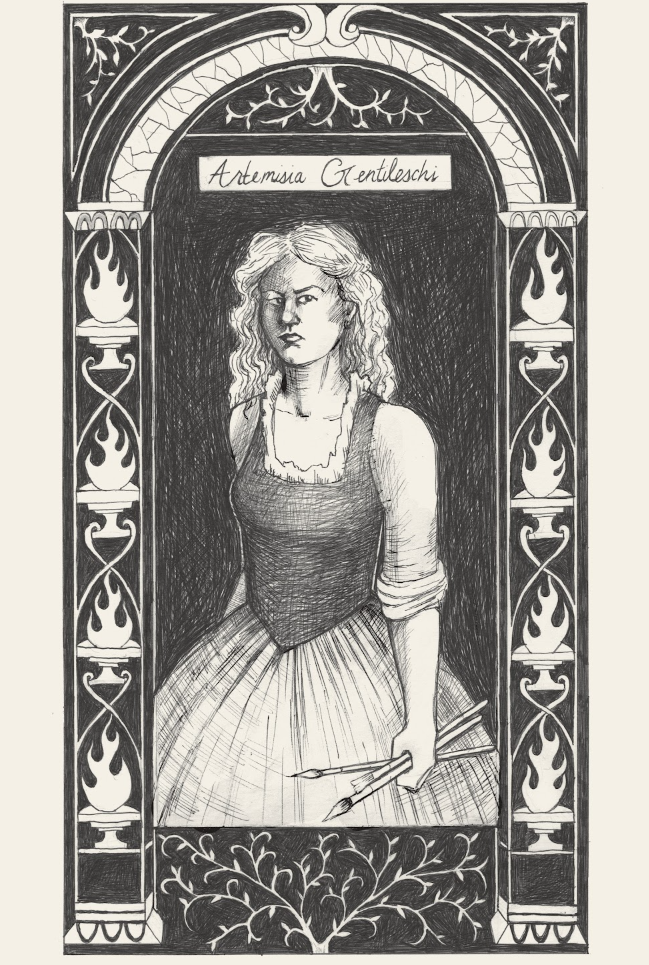
Portrait of Artemisia Gentileschi — Gina Siciliano

A portrait of the artist Artemisia Gentileschi by Gina Siciliano. From Siciliano’s brilliant biographyI Know What I Am: The Life and Times of Artemisia Gentileschi.

Gravity’s Rainbow annotations (so far)

img_4025

I’ll be adding to these and then doing more the next time (?!) I read Gravity’s Rainbow.*

Pages 82-83: The White Visitation, etc.

Page 103: Black Markets, King Kong, etc.

Pages 148-49: Preterite/Elect, Lurianic Kabbalah, Uncanny X-Men, etc.

Page 203: Rainbows, Fuck-yous, Plastic Man, etc.

Pages 204-05: Paper, mise en abyme, a silkenness of girls, etc.

Page 256: “Real America,” Hughes contra Whitman, BANZAI!, etc.

Pages 257-58: The War, nimbus clouds, Zoot Suit Riot!, etc.

Page 299: Tannhäuser, horny expectations, etc.

Page 364: Knights and fools, dendrites and axons, etc.

Pages 412-13:  Ouroboros, organic chemistry, tarot, etc.

Page 419: Innocence, experience, Wm Blake, Wagner’s Ring cycle, etc.

Page 539: Critical Mass, Weismann’s tarot reading, Rilke, hymns, etc.

[Ed. note–I published these links to my notes, riffs, and images connected to a re-reading of Gravity’s Rainbow back in November of 2016. Today marks the 50th anniversary of the publication of Pynchon’s great novel.]

This expedition to see Céline was organized in 1958 by Allen Ginsberg | William S. Burroughs

This expedition to see Céline was organized in 1958 by Allen Ginsberg who had got his address from someone. It is in Meudon, across the river from Paris proper. We finally found a bus that let us off in a shower of French transit directions: “Tout droit, Messieurs …” Walked for half a mile in this rundown suburban neighborhood, shabby villas with flaking stucco—it looked sort of like the outskirts of Los Angeles—and suddenly there’s this great cacophony of barking dogs. Big dogs, you could tell by the bark. “This must be it,” Allen said. Here’s Céline shouting at the dogs, and then he stepped into the driveway and motioned to us to come in. He seemed glad to see us and clearly we were expected. We sat down at a table in a paved courtyard behind a two-story building and his wife, who taught dancing—she had a dancing studio—brought coffee.

Céline looked exactly as you would expect him to look. He had on a dark suit, scarves and shawls wrapped around him, and the dogs, confined in a fenced-in area behind the villa, could be heard from time to time barking and howling. Allen asked if they ever killed anyone and Céline said, “Nooo. I just keep them for the noise.” Allen gave him some books, Howl and some poems by Gregory Corso and my book Junky. Céline glanced at the books without interest and laid them sort of definitively aside. Clearly he had no intention of wasting his time. He was sitting out there in Meudon. Céline thinks of himself as the greatest French writer, and no one’s paying any attention to him. So, you know, there’s somebody who wanted to come and see him. He had no conception of who we were.

Allen asked him what he thought of Beckett, Genet, Sartre, Simone de Beauvoir, Henri Michaux, just everybody he could think of. He waved this thin, blue-veined hand in dismissal: “Every year there is a new fish in the literary pond.

“It is nothing. It is nothing. It is nothing,” he said about all of them.

“Are you a good doctor?” Allen asked.

And he said: “Well … I am reasonable.”

Was he on good terms with the neighbors? Of course not.

“I take my dogs to the village because of the Jeeews. The postmaster destroys my letters. The druggist won’t fill my prescriptions.…” The barking dogs punctuated his words.

We walked right into a Céline novel. And he’s telling us what shits the Danes were. Then a story about being shipped out during the war: the ship was torpedoed and the passengers are hysterical so Céline lines them all up and gives each of them a big shot of morphine, and they all got sick and vomited all over the boat.

He waved goodbye from the driveway and the dogs were raging and jumping against the fence.

From With William Burroughs, by Victor Bockris. The speaker is, of course, Burroughs, prompted by a question from Bockris. It’s from the chapter entitled “Dinner with Nicolas Roeg, Lou Reed, Bockris-Wylie, and Gerard Malanga: New York 1978.” Roeg and Reed come off as total pricks.

On A.V. Marraccini’s ekphrastic, discursive book We the Parasites

Detail from The Age of Alexander, 1959 by Cy Twombly

“The best and most skilled of parasites live, reproduce, and die, without their hosts ever really knowing, or at least being able to do anything about it,” declares A.V. Marraccini, early in her new book We the Parasites. “I’m not even a good parasite because painters or novelists can see me seeing them, drawing off their vital fluid, forming new and odd things in my dark-lobed ovarians, and then shoving them out, hastily and fitfully, into the world of papers and reviews.”

We the Parasites belongs in part to that “world of papers and reviews,” that world of criticism, but it also exists on the other side of any genre margin we might wish to impose. A.V. Marraccini’s book is generative, creative, fruitful, a hybrid that points to something beyond the lyric essay. It is stuffed with art and poetry and life; it is erudite and frequently fun; it is moody and sometimes melodramatic, but tonally consistent.

Marraccini’s central metaphor is that critics are parasites. This metaphor gives Marraccini space in which to wander: through history, through art. Through her own history and her present consciousness. She concocts a discursive ekphrasis that zigs and zags from the commensalism of figs and wasps to the paintings of Cy Twombly to John Updike’s novel 1963 The Centaur.

These nimble discursions are one of the primary joys in reading We the Parasites. Marraccini will offer a nice chunk of an H.D. poem before grafting an entire section of Cy Twombly’s Wikipedia page into her text. The particular section Marraccini excises details the so-called Phaedrus incident, in which “Cambodian-French artist Rindy Sam [was arrested] after she kissed one panel of Twombly’s triptych Phaedrus. The panel, an all-white canvas, was smudged by Sam’s red lipstick and she was tried in a court in Avignon for ‘voluntary degradation of a work of art.’ …The prosecution described the act as a ‘sort of cannibalism, or parasitism…'” Marraccini goes on to describe Twombly’s Phaedrus as “a sort of cannibalism or parasitism on Theocritus.”

Apart from Marraccini herself, Cy Twombly strikes me as the major figure of We the Parasites. This statement is arguable, as others loom–Alexander the Great, Rainer Maria Rilke, the pseudonymous “Chiron,” one-time mentor to Marraccini who insists she read Updike’s novel The Centaur. But it’s Twombly whom Marraccini most frequently and successfully trains her ekphrastic powers on. Her multivalent reading of Twombly’s 1959 painting The Age of Alexander consumes the end of the book, and no wonder, for she attests that she sees the painting in her sleep, finding in its grafts a symbolic aesthetic language that approaches her own obsessions of parasitism:

Am I “over interpreting” this painting? Probably. It certainly meant nothing about wounds and fish louses to Cy Twombly. Were I writing an historical or academic argument I would have to care then, about the boundary conditions for believability, for perceived intent, and for context. Whatever this is, I’ve now called them off. I can say anything, which is nothing so much as dangerously overwhelming. I do this all the time to the whole world; see it as a layering of partially readable signs and portents, like some unlucky augur forever staring into the guts of sheep, the flightpath of certain birds. This often calls for melodrama, especially when the drama of the world as it really is doesn’t result in any kind of expected catharsis, Aristotelian or otherwise. I map myself onto whatever interpretation I’ve divined for that day, that hour, and then map myself back into the world again in another looping cycle.

Detail from The Age of Alexander, 1959 by Cy Twombly

While she never states it directly, Marraccini’s appreciation for Twombly’s paintings seems to come as an aesthetic reaction to their hybridity, their apparent incompleteness, their textual overdetermination. Many of Twombly’s paintings seem like studies, unfinished things that the viewer must complete with their own gaze. (Perhaps such thoughts or feelings went through Rindy Sam’s mind right before she kissed Phaedrus.) In a section of We the Parasites that has nothing to do with Twombly, she writes

Sometimes the study is better than the finished thing as it is here, suffused with longing. The provisionality of the study leaves room for it to be free. Right now, like time and the future, language is also provisional, so provisional and free that it feels like you might fall of something huge and intractable every time you write a sentence. There is danger here, with passion, the same frisson always but configured anew. No one is touching anyone’s strange body.

“No one is touching anyone’s strange body.” This is not some tortured metaphor, no. We the Parasites is a stealth plague memoir. 2020 and Covid-19 hang over the book, inverting its would-be-flânerie into flânerie for silent nights, cybernights, flânerie for necessary introversion. We stroll (or jog, or even run) along with Marraccini (a “3 a.m. cryptid”) and her private thoughts, late at night in dead quiet London. She scavenges with some foxes. She names the foxes. She thinks about Twombly; she thinks about an old love; she thinks about “Chiron.”

But We the People is not a straightforward Covid-19 memoir (it is not a straightforward anything)—its memoir intentions are largely aesthetic, often dwelling on Marraccini’s feelings of being an outsider in the Oxbridge world she now inhabits:

I’m a thief; a  thousand hundred generations of starving Sicilian farmers indenturing their backs to some steep, rocky crag, a thousand hundred shtetl girls married off young. I’m from a hot, flat suburb of a third-rate city near a swam and the sea, I’m nothing from nowhere to you. I’ve seen the seen the asphalt burble in the heat before a thunderstorm in the summer. Do you think that there are barbarians? That I am one? Well, barbar then.

(Oh, you’re also from Florida? I thought after reading these sentences.)

But I don’t think that Marraccini really would accept the mantle of barbarian. There’s a defensive hedging in some of We the Parasite’s erudition; there are times our author need not try so hard. The prose flows finer (or coarser, as necessary) when the hedges give way: “We always go back to Homer, or I do, the I who wants to be the authoritative we,” Marraccini admits. The next sentence highlights the anxiety inherent in the pretense of critical authority: “I have also always been late to Homer, that same belatedness that creeps up everywhere again.” The anxiety here echoes an early sentiment, one I believe plainly felt by anyone who has ever dared to write about art:

All the battles royale are decided…How do you look at the plain, the beach, the walls of the city, the oak trees and the cauldrons on the tripods over small fires—how do you look at it all and live with the fact that you are always after? Always, somehow, about to break into tenderness and despair?

And yet an abiding love and appreciation and a desire to communicate that love and appreciation overcomes this despair. Like any writer sensitive enough to attend to all the before that they have come after, Marraccini understands the risk and guts it takes to write. The critic may be a parasite, but the critic does not seek to remove art from the world—the critic seeks to enliven the art, to expand its lifeforce:

If I am greedy for, say, a novel, or Bruegel’s Fall of Icarus, or the piano sonatas of the Younger of the Scarlattis, I don’t take it from the world. Or I do, a version of it, and put it in my Simoneidean memory house which is perhaps also a private brothel. But the Bruegel is still there, the Scarlatti, the novel, to seduce other people, other critics. Parasites want their hosts to live so they can spread.

But We the Parasites isn’t exactly a work of sustained criticism, nor is it a lyric essay, nor a memoir. It grafts elements of those genres, in the spirit of works by authors like W.G. Sebald, S.D. Chrostowska, Claudine Rankine, Ben Lerner, and Maggie Nelson. I’ve tried to give enough of a sample of the prose and scope of Marraccini’s book here to let potential readers determine whether or not this is their cup of figs and wasps. I admired much in We the People, and even admired it when it irritated me. I look forward to seeing what Marraccini will do next. Recommended.

We the Parasites is new from Sublunary Editions.

All games aspire to the condition of war | From McCarthy’s Blood Meridian

The judge smiled. Men are born for games. Nothing else. Every child knows that play is nobler than work. He knows too that the worth or merit of a game is not inherent in the game itself but rather in the value of that which is put at hazard. Games of chance require a wager to have meaning at all. Games of sport involve the skill and strength of the opponents and the humiliation of defeat and the pride of victory are in themselves sufficient stake because they inhere in the worth of the principals and define them. But trial of chance or trial of worth all games aspire to the condition of war for here that which is wagered swallows up game, player, all.

Suppose two men at cards with nothing to wager save their lives. Who has not heard such a tale? A turn of the card. The whole universe for such a player has labored clanking to this moment which will tell if he is to die at that man’s hand or that man at his. What more certain validation of a man’s worth could there be? This enhancement of the game to its ultimate state admits no argument concerning the notion of fate. The selection of one man over another is a preference absolute and irrevocable and it is a dull man indeed who could reckon so profound a decision without agency or significance either one. In such games as have for their stake the annihilation of the defeated the decisions are quite clear. This man holding this particular arrangement of cards in his hand is thereby removed from existence. This is the nature of war, whose stake is at once the game and the authority and the justification. Seen so, war is the truest form of divination. It is the testing of one’s will and the will of another within that larger will which because it binds them is therefore forced to select. War is the ultimate game because war is at last a forcing of the unity of existence. War is god. Brown studied the judge.

You’re crazy Holden. Crazy at last.

The judge smiled.

From Chapter XVII of Cormac McCarthy’s novel Blood Meridian.

The tale of the enemy padrino | From Cormac McCarthy’s novel Cities of the Plain

Why would a man want an enemy for a padrino?

For the best of reasons. Or the worst. This man of whom we speak was a dying man when his lastborn came into the world. A son. His only son. So what did he do? He called upon that man who once had been a friend to him but now was his sworn enemy and he asked that man to be padrino to his son. The man refused of course. What? Are you mad? He must have been surprised. It had been years since last they spoke and their enemistad was a deep and bitter thing. Perhaps they had become enemies for the same reason they had once been friends. Which often happens in the world. But this man persisted. And he had the–how do you say–el naipe? En su manga.

The ace.

Yes. The ace up his sleeve. He told his enemy that he was dying. There was the naipe. Upon the table. The man could not refuse. All choosing was taken from his hands.

The blind man raised one hand into the smoky air in a thin upward slicing motion. Now comes the talk, he said. No end to it. Some say that the dying man wished to mend their friendship. Others that he had done this man some great injustice and wished to make amends before leaving this world forever. Others said other things. There is more than meets the eye. I say this: This man who was dying was not a man given to sentimentality. He also had lost friends to death. He was not a man given to illusions. He knew that those things we most desire to hold in our hearts are often taken from us while that which we would put away seems often by that very wish to become endowed with unsuspected powers of endurance. He knew how frail is the memory of loved ones. How we close our eyes and speak to them. How we long to hear their voices once again, and how those voices and those memories grow faint and faint until what was flesh and blood is no more than echo and shadow. In the end perhaps not even that.

He knew that our enemies by contrast seem always with us. The greater our hatred the more persistent the memory of them so that a truly terrible enemy becomes deathless. So that the man who has done you great injury or injustice makes himself a guest in your house forever. Perhaps only forgiveness can dislodge him.

Such then was this man’s thinking. If we may believe the best of him. To bind the padrino to his cause with the strongest bonds he knew. And there was more. For in this appointment he also posted the world as his sentinel. The duties of a friend would come under no great scrutiny. But an enemy? You can see how nicely he has caught him in the net he has contrived. For this enemy was in fact a man of conscience. A worthy enemy. And this enemy-padrino now must carry the dying man in his heart forever. Must suffer the eyes of the world eternally on him. Such a man can scarce be said to author any longer his own path.

The father dies as die he must. The enemy become padrino now becomes the father of the child. The world is watching. It stands in for the dead man. Who by his audacity has pressed it into his service. For the world does have a conscience, however men dispute it. And while that conscience may be thought of as the sum of consciences of men there is another view, which is that it may stand alone and each man’s share be but some small imperfect part of it. The man who died favored this view. As I do myself. Men may believe the world to be–what is the word? Voluble.

Fickle.

Fickle? I dont know. Voluble then. But the world is not voluble. The world is always the same. The man appointed the world as his witness that he might secure his enemy to his service. That this enemy would be faithful to his duties. That is what he did. Or that was my belief. At times I believe it yet.

How did it turn out?

Quite strangely.

The blind man reached for his glass. He drank and held the glass before him as if studying it and then he set it on the table before him once again.

Quite strangely. For the circumstance of his appointment came to elevate this man’s padrinazgo to the central role of his life. It brought out what was best in him. More than best. Virtues long neglected began almost at once to blossom forth. He abandoned every vice. He even began to attend Mass. His new office seemed to have called forth from the deepest parts of his character honor and loyalty and courage and devotion. What he gained can scarcely be put into words. Who would have foreseen such a thing?

What happened? said John Grady

The blind man smiled his pained blind smile. You smell the rat, he said.

Yes.

Quite so. It was no happy ending. Perhaps there is a moral to the tale. Perhaps not. I leave it to you.

What happened?

This man whose life was changed forever by the dying request of his enemy was ultimately ruined. The child became his life. More than his life. To say that he doted upon the child says nothing. And yet all turned out badly. Again, I believe that the intentions of the dying man were for the best. But there is another view. It would not be the first time that a father sacrificed a son.

The godchild grew up wild and restless. He became a criminal. A petty thief. A gambler. And other things. Finally, in the winter of nineteen and seven, in the town of Ojinaga, he killed a man. He was nineteen years of age. Close to your own, perhaps.

The same.

Yes. Perhaps this was his destiny. Perhaps no padrino could have saved him from himself. No father. The padrino squandered all he owned in bribes and fees. To no avail. Such a road once undertaken has no end and he died alone and poor. He was never bitter. He scarcely seemed even to consider whether he had been betrayed. He once had been a strong and even a ruthless man, but love makes men foolish. I speak as a victim myself. We are taken out of our own care and it then remains to be seen only if fate will show to us some share of mercy. Or little. Or none.

Men speak of blind destiny, a thing without scheme or purpose. But what sort of destiny is that? Each act in this world from which there can be no turning back has before it another, and it another yet. In a vast and endless net. Men imagine that the choices before them are theirs to make. But we are free to act only upon what is given. Choice is lost in the maze of generations and each act in that maze is itself an enslavement for it voids every alternative and binds one ever more tightly into the constraints that make a life. If the dead man could have forgiven his enemy for whatever wrong was done to him all would have been otherwise. Did the son set out to avenge his father? Did the dead man sacrifice his son? Our plans are predicated upon a future unknown to us. The world takes its form hourly by a weighing of things at hand, and while we may seek to puzzle out that form we have no way to do so. We have only God’s law, and the wisdom to follow it if we will.

The maestro leaned forward and composed his hands before him. The wineglass stood empty and he took it up. Those who cannot see, he said, must rely upon what has gone before. If I do not wish to appear so foolish as to drink from an empty glass I must remember whether I have drained it or not. This man who became padrino. I speak of him as if he died old but he did not. He was younger than I am now. I speak as if his conscience or the world’s eyes or both led him to such rigor in his duties. But those considerations quickly fell to nothing. It was for love of the child that he came to grief, if grief it was. What do you make of that?

I dont know.

Nor I. I only know that every act which has no heart will be found out in the end. Every gesture.

From Cormac McCarthy’s novel Cities of the Plain.

Blog about some recent reading

I finished A. V. Marraccini’s We the Parasites very very early Friday morning and then sneaked in two hours of sleep before a nine a.m. alarm. We the Parasites is a discursive  ekphrasis, its finest moments concentrated on Cy Twombly (and his historical painting The Age of Alexander in particular). Marraccini turns her lens also to John Updike’s novel The Centaur, Jean Genet, and pomegranates and wasps. 2020 and Covid-19 hang over the book, inverting its would-be-flânerie: It’s flânerie for silent nights, cybernights, flânerie for necessary introversion.

I’m about 100 pages into Cities of the Plain, the final book of Cormac McCarthy’s Border Trilogy. I read it maybe fifteen years ago and recall almost nothing about it other than McCarthy uniting the two heroes of the first two books, John Grady Cole and Billy Parham. So far, the novel is a far quicker read than the first two Border novels—more direct, more cinematic, less adolescent, its intensities tamped by experience. About thirty pages in, McCarthy devotes two entire pages to a description of changing a tire. It’s beautiful.

Nest in the Bones collects a career-spanning selection of Antonio Di Benedetto short stories (in translation by Martina Broner). I’ve been trying to read one or two a day. Many of the early stories are quite short, and Di Benedetto perhaps shows a bit too much debt to Kafka here, but the oddity of it all is wonderful.

It is true that William S. Burroughs was fond of dinners with famous and interesting people, and was totally fine with having a young, perhaps good looking Victor Bockris serve as a nexus and recorder for such events, events that have nothing to do with big-ell Literature. But my favorite thing here (as was the case with Allen Ginsberg’s nineties jaunt with Burroughs in the same vein, Don’t Hide the Madness), my favorite thing here is how Burroughs undercuts any pretension or redirects conversation to his own strange obsessions.