I saw only one tower standing to the south, and that one ringed with fire | Denis Johnson

At the moment, I was heading anywhere at all for breakfast, but when I heard the desk clerk’s radio playing news that an aircraft, I assumed a sightseeing plane, had struck Tower Two of the World Trade Center, I decided to jump on the number 3 subway half a block west, and go have a look.

As I headed toward Eighth Avenue I tried calling Mark Ahearn about lunch, but my cellphone only hammered out a rapid-fire beep. Please don’t ask me how this can be true: I traveled through the busy lobby and walked for half a long block on a crowded Manhattan street and then boarded the World Trade Center subway completely unaware that I was participating in a citywide disaster, and moving toward its center.

The World Trade Center station came a few stops south of Twenty-Third Street, but we didn’t get there. After Christopher Street the train halted in the tunnel and waited, humming. It gave a screech, lurched backward slightly, and stopped again. Somehow the general news had infiltrated the sealed subterranean environment that something historically enormous was happening very nearby, and it got quiet in our compartment, and almost everybody entered into a small, desperate battle with a worthless cellphone. The train moved forward and gained speed, but began braking long before Houston Street, the next station, where it halted with several rear cars sticking out behind into the tunnel. For a tense minute, whoever spoke only whispered. Then came a shout—“Tell us what’s going on!” and others raised the same cry until we heard the conductor’s PA saying something about the tracks, the tracks…“Due to the catastrophe, this train will not go farther. Please exit out the forward cars onto the platform. Do not go onto the tracks.” We were all on our feet, maneuvering selfishly, angling for the doors. But the doors didn’t open. The engine stopped. “Open the doors! Open the doors!” The engine started. A man shouted, “Just everybody stand still!” People from the car behind had pried their way into ours, and somebody almost went down. A woman said, “Stop that, you fool!” A man in front of me pushed a teenage boy beside him. With the meat of his fist he began beating the back of the boy’s head. And I jumped into the fray, didn’t you, Harrington, like a monkey, yes you did, and got yourself an elbow in the eye. The doors to the compartment flew open and people clambered out onto the station’s platform, where a dreadlocked man in a crimson athletic suit jumped up and down on a bench as if it were a trampoline, screaming “God, see what we’re doing to each other down here.” When I came up into the street, dizzy and one-eyed, I couldn’t get my bearings. I saw only one tower standing to the south, and that one ringed with fire. I asked a man nearby—“Where are we? I can’t see the other tower.” He said, “It fell” and I said, “No it didn’t.” He didn’t argue. We stood in the middle of the street with thousands of other people, all of us motionless, like a frozen parade, all silent. I began to believe the man. We watched the flames spreading through the building’s upper stories over the course of about twenty minutes, and then the eighteen-hundred-foot structure seemed to curtsy and dip left, and then it went down.

I turned around and looked at the people behind me. I saw shocked laughter, weeping, horror, bewilderment. The young man next to me bawled at the top of his lungs. I was afraid to ask him if he had a loved one in the buildings afraid to talk to him at all, but he raised his agonized, Christly face to me and suddenly laughed, saying, “Buddy, you are working on one heck of a black eye.” We stood far from the buildings—at least a mile, I’d say—far enough that we didn’t feel the ground shake, and we heard nothing but sirens, and official-sounding voices screaming, “Get out of the street! Stay out of the street!” and others too—“They’re attacking the Capitol!—the Pentagon!—the White House!”

Cop cars and ambulances heaped with dust and chunks of concrete came at us out of the south. I started walking that direction, I don’t know why, but I soon realized I was the only person heading downtown, and then the tide of panic pressing toward me was too heavy to go against, and I turned around and let it take me north.

From Denis Johnson’s short story “Doppelgänger, Poltergeist.” Collected in  The Largesse of the Sea Maiden, 2017.


Blog about the first paragraph of Arkady and Boris Strugatsky’s surreal novel The Snail on the Slope

I have been listening to Arkady and Boris Strugatsky’s 1972 novel The Snail on the Slope on audiobook over the last two weeks.

This new English translation is by Olena Bormashenko, who also translated Roadside Picnic and Hard to Be a God. (I listened to Roadside Picnic last year—this fantastic audiobook is read by Robert Forster—and read Bormashenko’s translation of Hard to Be a God after watching Aleksei German’s 2013 film adaptation. All are excellent). Chris Andrew Ciulla narrates the new audiobook of The Snail on the Slope and he does a very good job. 

Like I said, I’ve been listening to this new translation of The Snail on the Slope for a few weeks. I should be done (the book is only 9.5 hours), but I’ve listened to most of the chapters twice, and restarted the book once, because The Snail on the Slope is fucking bonkers. The novel is a wild trip, full of bizarre transformations, failed plans, jungle swamps,  marching ants, deadlings, mushrooms, foolish bureaucrats, and broken calculators—it’s abject, savage, funny, and just so fucking weird, a bizarre beast tumbling around on its own radical logic. I have about 3 hours left, but I don’t think I’ll muster a review—or a summary, I mean. Or anyway—

I mean, here’s my review: I love itI love its strange mucky weirdness, its refusal to clearly delineate the contact points of its allegorical satire, its sheer absurdity, its utter alterity. But a summary seems too much to ask so—

Here is publisher Chicago Review Press’s blurb—

The Snail on the Slope is a neglected masterpiece by Russian science fiction greats Arkady and Boris Strugatsky, who thought of it as their “most complete and important work.” now, in a stunning translation, this tour de force is ready to be introduced to a new generation of American readers. The novel takes place in two worlds. One is the Administration, an institution run by a surreal, Kafkaesque bureaucracy whose aim is to govern the forest below. The other is the Forest, a place of fear, weird creatures, primitive but garrulous people, and violence. Peretz, who works at the Administration, wants to visit the Forest. Candide crashed in the Forest years ago and wants to return to the Administration. Their journeys are surprising and bizarre, and readers are left to puzzle out the mysteries of these foreign environments. Brilliant, enigmatic, and revelatory, The Snail on the Slope is one of the greatest literary works to come out of Soviet Russia.

Here is the cover + blurb of Bantam’s 1980 edition of The Snail on the Slope (translated by Alan Meyers). Bob Larkin’s cover is more interesting to me than the “respectable” cover that Chicago Review Press put together so—

thsnlnthsl1980

This edition was apparently recalled, distribution was halted, and existing copies were destroyed.

The German cover (credited to Ute Osterwalder and Hans Ulrich Osterwalder) is also pretty cool—

dschnckmhn1978

But I promised in this blog’s headline to riff on the first paragraph, which isn’t that long, but in some ways reveals the sheer oddity of The Snail on the Slope. So here is that paragraph:

From this height, the forest looked like dappled, fluffy foam; like a gigantic, world-encompassing porous sponge; like an animal that had once lain hidden in wait, then had dozed off, becoming overgrown with coarse moss. Like a shapeless mass, hiding a face no one had ever seen.

The viewer at this height is one of the novel’s two heroes, Peretz, who dangles his feet over the forest that calls to him. I could go on about Peretz’s attraction to the unknowable forest, but let’s look instead at the similes the Strugatskys (and their translator Bormashenko) deploy here:

The forest is like

  1. foam
  2. a sponge
  3. a dozing, bemossed animal
  4. an indefinite mass with an unseen face

The utter alterity of the forest is announced at the novel’s outset. This shifting series of similes shows that the central space of The Snail on the Slope cannot have a fixed definition—it cannot even have a stable referent of similitude. Rather, the forest is ever-shifting, from the playful guise of a space of “fluffy foam” to the sinister aspect of a “shapeless mass” that hides an unknown (and unknowable) visage. The Strugatskys shuttle us from simile to simile, foregrounding one of the novel’s central themes—language has a limited purchase of reality. Peretz, a surrogate for the reader, cannot settle on a simile, which only entices him more: What is this place? What would it mean to know this place—in language? Significantly, Peretz is a linguist, but he—and the reader–have no training to properly comprehend what enfolds when The Snail on the Slope takes us into the forest. And this is the fucked up joy of the novel—one weird transformation morphs into another, similes unwinding in a stretch toward an ultimate referent that refuses to arrive on time.

“Youwarkee” — Jorge Luis Borges

yo

A gathering impossible / General merriment (From Pynchon’s Against the Day)

A DAY OR TWO LATER, Lew went up to Carefree Court. The hour was advanced, the light failing, the air heated by the Santa Ana wind. Palm trees rattled briskly, and the rats in their nests up there hung on for dear life. Lew approached through a twilit courtyard lined with tileroofed bungalows, stucco archways, and the green of shrubbery deepening as the light went. He could hear sounds of glassware and conversation.

From the swimming pool came sounds of liquid recreation—feminine squeals, deep singlereed utterances from high and low divingboards. The festivities here this evening were not limited to any one bungalow. Lew chose the nearest, went through the formality of ringing the doorbell, but after waiting a while just walked in, and nobody noticed.

It was a gathering impossible at first to read, even for an old L.A. hand like Lew—society ladies in flapper-rejected outfits from Hamburger’s basement, real flappers in extras’ costumes—Hebrew headdresses, belly-dancing outfits, bare feet and sandals—in from shooting some biblical extravaganza, sugar daddies tattered and unshaven as street beggars, freeloaders in bespoke suits and sunglasses though the sun had set, Negroes and Filipinos, Mexicans and hillbillies, faces Lew recognized from mug shots, faces that might also have recognized him from tickets long cold he didn’t want to be reminded of, and here they were eating enchiladas and hot dogs, drinking orange juice and tequila, smoking cork-tip cigarettes, screaming in each others’ faces, displaying scars and tattoos, recalling aloud felonies imagined or planned but seldom committed, cursing Republicans, cursing police federal state and local, cursing the larger corporate trusts, and Lew slowly began to get a handle, for weren’t these just the folks that once long ago he’d spent his life chasing, them and their cousins city and country? through brush and up creek-beds and down frozen slaughterhouse alleyways caked with the fat and blood of generations of cattle, worn out his shoes pair after pair until finally seeing the great point, and recognizing in the same instant the ongoing crime that had been his own life—and for achieving this self-clarity, at that time and place a mortal sin, got himself just as unambiguously dynamited.

He gradually understood that what everybody here had in common was having survived some cataclysm none of them spoke about directly—a bombing, a massacre perhaps at the behest of the U.S. government. . . .

“No it wasn’t Haymarket.”

“It wasn’t Ludlow. It wasn’t the Palmer raids.”

“It was and it wasn’t.” General merriment.

—Thomas Pynchon’s novel Against the Day. Happy Labor Day.


It was September now (Cormac McCarthy’s Suttree)

It was September now, a season of rains. The gray sky above the city washed with darker scud like ink curling in a squid’s wake. The blacks can see the boy’s fire at night and glimpses of his veering silhouette slotted in the high nave, outsized among the arches. All night a ruby glow suffuses the underbridge from his garish chancel lamps. The city’s bridges all betrolled now what with old ventriloquists and young melonfanciers. The smoke from their fires issues up unseen among the soot and dust of the city’s right commerce.

Sometimes in the evening Suttree would bring beers and they’d sit there under the viaduct and drink them. Harrogate with questions of city life.

You ever get so drunk you kissed a nigger?

Suttree looked at him. Harrogate with one eye narrowed on him to tell the truth. I’ve been a whole lot drunker than that, he said.

Worst thing I ever done was to burn down old lady Arwood’s house.”

“You burned down an old lady’s house?

Like to of burnt her down in it. I was put up to it. I wasnt but ten year old.

Not old enough to know what you were doing.

Yeah.–Hell no that’s a lie. I knowed it and done it anyways.

Did it burn completely down?

Plumb to the ground. Left the chimbley standin was all. It burnt for a long time fore she come out.

Did you not know she was in there?

I disremember. I dont know what I was thinkin. She come out and run to the well and drawed a bucket of water and thowed it at the side of the house and then just walked on off towards the road. I never got such a whippin in my life. The old man like to of killed me.

Your daddy?

Yeah. He was alive then. My sister told them deputies when they come out to the house, they come out there to tell her I was in the hospital over them watermelons, she told em I didnt have no daddy was how come I got in trouble. But shit fire I was mean when I did have one. It didnt make no difference.

Were you sorry about it? The old lady’s house I mean.

Sorry I got caught.

Suttree nodded and tilted his beer. It occurred to him that other than the melon caper he’d never heard the city rat tell anything but naked truth.

A vignette from Cormac McCarthy’s Suttree—a transition scene perhaps, but one that draws Suttree and Harrogate closer, even as it underlines their differences.

In my review of Suttree a few years back, I argued that the novel is a grand synthesis of American literature, brimming with literary allusions. I singled out Faulkner’s “A Rose for Emily” as the basis for a later scene with Harrogate, so I can’t help but think of Faulkner’s “Barn Burning” here.

No writer has produced such inconsistent characters as nature herself has (From Melville’s The Confidence-Man)

…it may be urged that there is nothing a writer of fiction should more carefully see to, as there is nothing a sensible reader will more carefully look for, than that, in the depiction of any character, its consistency should be preserved. But this, though at first blush, seeming reasonable enough, may, upon a closer view, prove not so much so. For how does it couple with another requirement—equally insisted upon, perhaps—that, while to all fiction is allowed some play of invention, yet, fiction based on fact should never be contradictory to it; and is it not a fact, that, in real life, a consistent character is a rara avis? Which being so, the distaste of readers to the contrary sort in books, can hardly arise from any sense of their untrueness. It may rather be from perplexity as to understanding them. But if the acutest sage be often at his wits’ ends to understand living character, shall those who are not sages expect to run and read character in those mere phantoms which flit along a page, like shadows along a wall? That fiction, where every character can, by reason of its consistency, be comprehended at a glance, either exhibits but sections of character, making them appear for wholes, or else is very untrue to reality; while, on the other hand, that author who draws a character, even though to common view incongruous in its parts, as the flying-squirrel, and, at different periods, as much at variance with itself as the butterfly is with the caterpillar into which it changes, may yet, in so doing, be not false but faithful to facts.

If reason be judge, no writer has produced such inconsistent characters as nature herself has. It must call for no small sagacity in a reader unerringly to discriminate in a novel between the inconsistencies of conception and those of life as elsewhere. Experience is the only guide here; but as no one man can be coextensive with what is, it may be unwise in every ease to rest upon it. When the duck-billed beaver of Australia was first brought stuffed to England, the naturalists, appealing to their classifications, maintained that there was, in reality, no such creature; the bill in the specimen must needs be, in some way, artificially stuck on.

But let nature, to the perplexity of the naturalists, produce her duck-billed beavers as she may, lesser authors some may hold, have no business to be perplexing readers with duck-billed characters. Always, they should represent human nature not in obscurity, but transparency, which, indeed, is the practice with most novelists, and is, perhaps, in certain cases, someway felt to be a kind of honor rendered by them to their kind. But, whether it involve honor or otherwise might be mooted, considering that, if these waters of human nature can be so readily seen through, it may be either that they are very pure or very shallow. Upon the whole, it might rather be thought, that he, who, in view of its inconsistencies, says of human nature the same that, in view of its contrasts, is said of the divine nature, that it is past finding out, thereby evinces a better appreciation of it than he who, by always representing it in a clear light, leaves it to be inferred that he clearly knows all about it.

But though there is a prejudice against inconsistent characters in books, yet the prejudice bears the other way, when what seemed at first their inconsistency, afterwards, by the skill of the writer, turns out to be their good keeping. The great masters excel in nothing so much as in this very particular. They challenge astonishment at the tangled web of some character, and then raise admiration still greater at their satisfactory unraveling of it; in this way throwing open, sometimes to the understanding even of school misses, the last complications of that spirit which is affirmed by its Creator to be fearfully and wonderfully made.

At least, something like this is claimed for certain psychological novelists; nor will the claim be here disputed. Yet, as touching this point, it may prove suggestive, that all those sallies of ingenuity, having for their end the revelation of human nature on fixed principles, have, by the best judges, been excluded with contempt from the ranks of the sciences—palmistry, physiognomy, phrenology, psychology. Likewise, the fact, that in all ages such conflicting views have, by the most eminent minds, been taken of mankind, would, as with other topics, seem some presumption of a pretty general and pretty thorough ignorance of it. Which may appear the less improbable if it be considered that, after poring over the best novels professing to portray human nature, the studious youth will still run risk of being too often at fault upon actually entering the world; whereas, had he been furnished with a true delineation, it ought to fare with him something as with a stranger entering, map in hand, Boston town; the streets may be very crooked, he may often pause; but, thanks to his true map, he does not hopelessly lose his way. Nor, to this comparison, can it be an adequate objection, that the twistings of the town are always the same, and those of human nature subject to variation. The grand points of human nature are the same to-day they were a thousand years ago. The only variability in them is in expression, not in feature.

But as, in spite of seeming discouragement, some mathematicians are yet in hopes of hitting upon an exact method of determining the longitude, the more earnest psychologists may, in the face of previous failures, still cherish expectations with regard to some mode of infallibly discovering the heart of man.

From Herman Melville’s novel The Confidence-Man.

RIP Tom Clark

img_0843

RIP Tom Clark, 1941-2018

The American poet Tom Clark died in the first hour of Saturday, August 18th, 2018 in Berkely California. The cause of the death happened a few hours earlier, late Friday night, as a motorist collided his sedan into Tom Clark as Clark tried to cross the street. Clark was 77.

Tom Clark authored over two dozen poetry collections, many published by Black Sparrow Press. He also wrote a number of literary biographies, including a pair on Jack Kerouac, bios of Robert Creeley and Charles Olson, and a biography of John Keats called Junkets from a Sad Planet that is actually a series of poems. (But also actually a biography of Keats). Clark was the poetry editor for The Paris Review from 1963-1973 (maybe you read his interview with Allen Ginsberg there). Clark was also a blogger—an excellent blogger. He updated his blog a few hours before the car collision that killed him.

I first read Tom Clark in the middle of September, 2013. I read Fractured Karma (1990) and I had never heard of him before. I know the time specifically not because I have a good memory (I don’t), but because I wrote about it then:

I picked up Tom Clark’s Fractured Karma two weeks ago somewhat randomly. My local bookshop had reorganized some shelves, putting all the Black Sparrow titles together. Fractured Karma must have been on top, because I don’t see how else I would’ve picked up a book with the word “karma” in the title. The book opened to this page:

20130927-141831.jpg

That’s all there is on that page, and something about it—the form, the phrasing—cracked me up. It’s part of a long poem called “He was born blind” about the British comedy actor George Formby. The poem is amazing: I read it there in the store. It reminded me immediately of David Markson’s notecard novels—something about how Clark includes so much reality into his poem. But there’s also this perceptive (if oblique) sense of humor behind it all. I ended up devouring the book, reading the whole thing that weekend. It was one of those holy shit reading moments, frankly. Once I finish typing this I’m going to go pick my kids up and we’re going to go to the bookstore and I’m going to get another Tom Clark book and read it this weekend.

I actually did go to the bookstore after writing that post and pick up another book by Clark, Sleepwalker’s Fate (1992). The store had several books by Clark, and I wasn’t sure which one to get. I remember that the title Sleepwalker’s Fate stood out, so I picked it up and thumbed through it, and I remember reading the poem “Terminator Too” there in the store—it did something electric to me—the goofy title, the winking irony, but also the earnestness of the poem, which paraphrases a few lines from Wordsworth’s Preface to Lyrical Ballads. Here it is:

“Terminator Too” by Tom Clark—

Poetry, Wordsworth
wrote, will have no
easy time of it when
the discriminating

powers of the mind
are so blunted that
all voluntary
exertion dies, and

the general
public is reduced
to a state of near
savage torpor, morose,

stuporous, with
no attention span
whatsoever; nor will
the tranquil rustling

of the lyric, drowned out
by the heavy, dull
coagulation
of persons in cities,

where a uniformity
of occupations breeds
cravings for sensation
which hourly visual

communication of
instant intelligence
gratifies like crazy,
likely survive this age.

Sleepwalker’s Fate is a good starting place to read Tom Clark’s poetry, as are Fractured Karma and the collection Paradise Revisited (1984). Here’s one from Paradise Revisited:

IMG_3222

The later poetry collection Like Real People (1995) is also pretty great. It includes this humdinger:

Like Real People also includes a series of autobiographical sketches and stories told in an engaging but straightforward manner. The epilogue there is particularly good—Clark mulls over what it means to write an autobiography, straining against his anxieties over framing his own life stories. Tellingly, he lards the essay with quotes and ideas from other folks. Clark’s poetry often takes on the form of translation, citation, history, or reinterpretation (as we see in “Terminator Too,” above), and works like Empire of Skin (1997) and Junkets on a Sad Planet (1994) are particularly ambitious. Empire of Skin is a series of poems that take on the history of the American fur trade through a lens critical of Manifest Destiny. Junkets on a Sad Planet is an impressionistic series of riffs on Keats’ short life (“junkets” is a pun). From Junkets

img_0847

What a lovely condensation of biography, history, and poetic anxiety!

I’ll close with one of my favorite Clark poems, “Heavy,” which discharges poetic anxiety. Clark dedicated the poem to Jack Kerouac and Charles Olson—the gods in the first line, perhaps?–figures he would later write biographies on.

Peace be with Tom Clark.

heavy

Read “The Policemen’s Ball,” a short story by Donald Barthelme

“The Policemen’s Ball”

by

Donald Barthelme


Horace, a policeman, was making Rock Cornish Game Hens for a special supper. The Game Hens are frozen solid, Horace thought. He was wearing his blue uniform pants.

Inside the Game Hens were the giblets in a plastic bag. Using his needlenose pliers Horace extracted the frozen giblets from the interior of the birds. Tonight is the night of the Policemen’s Ball, Horace thought. We will dance the night away. But first, these Game Hens must go into a three-hundred-and-fifty-degree oven.

Horace shined his black dress shoes. Would Margot “put out” tonight? On this night of nights? Well, if she didn’t– Horace regarded the necks of the birds which had been torn asunder by the pliers. No, he reflected, that is not a proper thought. Because I am a member of the force. I must try to keep my hatred under control. I must try to be an example for the rest of the people. Because if they can’t trust us. . .the blue men. . .

In the dark, outside the Policemen’s Ball, the horrors waited for Horace and Margot.

Margot was alone. Her roommates were in Provincetown for the weekend. She put pearl-colored lacquer on her nails to match the pearl of her new-bought gown. Police colonels and generals will be there, she thought. The Pendragon of the Police himself. Whirling past the dais, I will glance upward. The pearl of my eyes meeting the steel gray of high rank.

Margot got into a cab and went over to Horace’s place. The cabdriver was thinking: A nice-looking piece. I could love her.

Horace removed the birds from the oven. He slipped little gold frills, which has been included in the package, over the ends of the drumsticks. Then he uncorked the wine, thinking: This is a town without pity, this town. For those whose voices lack the crack of authority. Luckily the uniform. . . Why won’t she surrender her person? Does she think she can resist the force? The force of the force?

“These birds are delicious.”

Driving Horace and Margot smoothly to the Armory, the new cabdriver thought about basketball.

Why do they always applaud the man who makes the shot?

Why don’t they applaud the ball?

It’s the ball that actually goes into the net.

The man doesn’t go into the net.

Never have I seen a man going into the net.

Twenty thousand policemen of all grades attended the annual fete. The scene was Camelot, with gay colors and burgees. The interior of the Armory had been roofed with lavish tenting. Police colonels and generals looked down on the dark uniforms, white gloves, silvery ball gowns.

“Tonight?”

“Horace, not now. This scene is so brilliant. I want to remember it.”

Horace thought: It? Not me?

The Pendragon spoke. “I ask you to be reasonable with the citizens. They pay our salaries after all. I know they are difficult sometimes, obtuse sometimes, even criminal sometimes, as we often run across in our line of work. But I ask you despite all to be reasonable. I know it is hard. I know it is not easy. I know that for instance when you see a big car, a ’70 Biscayne hardtop, cutting around a corner at a pretty fair clip, with three in the front and three in the back, and they are all mixed up, ages and sexes and colors, your natural impulse is to– I know your first thought is, All those people! Together! And your second thought is, Force! But I must ask you in the name of force itself to be restrained. For force, that great principle, is most honored in the breach and the observance. And that is where you men are, in the breach. You are fine men, the finest. You are Americans. So for the sake of America, be careful. Be reasonable. Be slow. In the name of the Father and the Son and of the Holy Ghost. And now I would like to introduce Vercingetorix, leader of the firemen, who brings us a few words of congratulation from that fine body of men.”

Waves of applause for the Pendragon filled the tented area.

“He is a handsome older man,” Margot said.

“He was born in a Western state and advanced to his present position through raw merit,” Horace told her.

The government of Czechoslovakia sent observers to the Policemen’s Ball. “Our police are not enough happy,” Colonel-General Cepicky explained. “We seek ways to improve them. This is a way. It may not be the best of all possible ways, but. . . Also I like to drink the official whiskey! It makes me gay!”

A bartender thought: Who is that yellow-haired girl in the pearl costume? She is stacked.

The mood of the Ball changed. The dancing was more serious now. Margot’s eyes sparkled from the jorums of champagne she had drunk. She felt Horace’s delicately Game Hen-flavored breath on her cheek. I will give him what he wants, she decided. Tonight. His heroism deserves it. He stands between us and them. He represents what is best in society: decency, order, safety, strength, sirens, smoke. No, he does not represent smoke. Great billowing oily black clouds. That Vercingetorix has a noble look. With whom is Vercingetorix dancing, at present?

The horrors waited outside patiently. Even policemen, the horrors thought. We get even policemen, in the end.

In Horace’s apartment, a gold frill was placed on a pearl toe.

The horrors had moved outside Horace’s apartment. Not even policemen and their ladies are safe, the horrors thought. No one is safe. Safety does not exist. Ha ha ha ha ha ha ha ha ha ha!

A piebald parliament (From Melville’s The Confidence-Man)

As among Chaucer’s Canterbury pilgrims, or those oriental ones crossing the Red Sea towards Mecca in the festival month, there was no lack of variety. Natives of all sorts, and foreigners; men of business and men of pleasure; parlor men and backwoodsmen; farm-hunters and fame-hunters; heiress-hunters, gold-hunters, buffalo-hunters, bee-hunters, happiness-hunters, truth-hunters, and still keener hunters after all these hunters. Fine ladies in slippers, and moccasined squaws; Northern speculators and Eastern philosophers; English, Irish, German, Scotch, Danes; Santa Fé traders in striped blankets, and Broadway bucks in cravats of cloth of gold; fine-looking Kentucky boatmen, and Japanese-looking Mississippi cotton-planters; Quakers in full drab, and United States soldiers in full regimentals; slaves, black, mulatto, quadroon; modish young Spanish Creoles, and old-fashioned French Jews; Mormons and Papists Dives and Lazarus; jesters and mourners, teetotalers and convivialists, deacons and blacklegs; hard-shell Baptists and clay-eaters; grinning negroes, and Sioux chiefs solemn as high-priests. In short, a piebald parliament, an Anacharsis Cloots congress of all kinds of that multiform pilgrim species, man.

As pine, beech, birch, ash, hackmatack, hemlock, spruce, bass-wood, maple, interweave their foliage in the natural wood, so these mortals blended their varieties of visage and garb. A Tartar-like picturesqueness; a sort of pagan abandonment and assurance. Here reigned the dashing and all-fusing spirit of the West, whose type is the Mississippi itself, which, uniting the streams of the most distant and opposite zones, pours them along, helter-skelter, in one cosmopolitan and confident tide.

From Herman Melville’s novel The Confidence-Man: His Masquerade.

Scenes and characters | Nathaniel Hawthorne’s journal entry for August 11th, 1838

August 11th.–This morning, it being cloudy and boding of rain, the clouds had settled upon the mountains, both on the summits and ridges, all round the town, so that there seemed to be no way of gaining access to the rest of the world, unless by climbing above the clouds. By and by they partially dispersed, giving glimpses of the mountain ramparts through their obscurity, the separate clouds lying heavily upon the mountain’s breast. In warm mornings, after rain, the mist breaks forth from the forests on the ascent of the mountains, like smoke,–the smoke of a volcano; then it soars up, and becomes a cloud in heaven. But these clouds to-day were real rain-clouds. Sometimes, it is said, while laboring up the mountain-side, they suddenly burst, and pour down their moisture in a cataract, sweeping all before it.

Every new aspect of the mountains, or view from a different position, creates a surprise in the mind.

Scenes and characters–A young country fellow, twenty or thereabouts, decently dressed, pained with the toothache. A doctor, passing on horseback, with his black leather saddle-bags behind him, a thin, frosty-haired man. Being asked to operate, he looks at the tooth, lances the gum, and the fellow being content to be dealt with on the spot, he seats himself in a chair on the stoop with great heroism. The doctor produces a rusty pair of iron forceps; a man holds the patient’s head; the doctor perceives that, it being a difficult tooth to get at, wedged between the two largest in his jaws, he must pull very hard; and the instrument is introduced. A turn of the doctor’s hand; the patient begins to utter a cry, but the tooth comes out first, with four prongs . The patient gets up, half amazed, pays the doctor ninepence, pockets the tooth, and the spectators are in glee and admiration.

There was a fat woman, a stage-passenger to-day,–a wonder how she could possibly get through the door, which seemed not so wide as she. When she put her foot on the step, the stage gave a great lurch, she joking all the while. A great, coarse, red-faced dame. Other passengers,–three or four slender Williamstown students, a young girl, and a man with one leg and two crutches.

One of the most sensible men in this village is a plain, tall, elderly person, who is overseeing the mending of a road,–humorous, intelligent, with much thought about matters and things; and while at work he has a sort of dignity in handling the hoe or crowbar, which shows him to be the chief. In the evening he sits under the stoop, silent and observant from under the brim of his hat; but, occasion calling, he holds an argument about the benefit or otherwise of manufactories or other things. A simplicity characterizes him more than appertains to most Yankees.

A man in a pea-green frock-coat, with velvet collar. Another in a flowered chintz frock-coat. There is a great diversity of hues in garments. A doctor, a stout, tall, round-paunched, red-faced, brutal-looking old fellow, who gets drunk daily. He sat down on the step of our stoop, looking surly, and speaking to nobody; then got up and walked homeward, with a morose swagger and a slight unevenness of gait, attended by a fine Newfoundland dog.

A barouche with driver returned from beyond Greenfield or Troy empty, the passengers being left at the former place. The driver stops here for the night, and, while washing, enters into talk with an old man about the different roads over the mountain.

People washing themselves at a common basin in the bar-room! and using the common hair-brushes! perhaps with a consciousness of praiseworthy neatness!

A man with a cradle on his shoulder, having been cradling oats. I attended a child’s funeral yesterday afternoon. There was an assemblage of people in a plain, homely apartment. Most of the men were dressed in their ordinary clothes, and one or two were in shirtsleeves. The coffin was placed in the midst of us, covered with a velvet pall. A bepaid clergyman prayed (the audience remaining seated, while he stood up at the head of the coffin), read a passage of Scripture and commented upon it. While he read and prayed and expounded there was a heavy thunderstorm rumbling among the surrounding hills, and the lightning flashed fiercely through the gloomy room; and the preacher alluded to GOD’S voice of thunder.

It is the custom in this part of the country–and perhaps extensively in the interior of New England–to bury the dead first in a charnel-house, or common tomb, where they remain till decay has so far progressed as to secure them from the resurrectionists. They are then reburied, with certain ceremonies, in their own peculiar graves.

O. E. S—-, a widower of forty or upwards, with a son of twelve and a pair of infant twins. He is a sharp, shrewd Yankee, with a Yankee’s license of honesty. He drinks sometimes more than enough, and is guilty of peccadilloes with the fair sex; yet speaks most affectionately of his wife, and is a fond and careful father. He is a tall, thin, hard-featured man, with a sly expression of almost hidden grave humor, as if there were some deviltry pretty constantly in his mind,–which is probably the case. His brother tells me that he was driven almost crazy by the loss of his wife. It appears to me that men are more affected by the deaths of their wives than wives by the deaths of their husbands. Orrin S—- smokes a pipe, as do many of the guests.

A walk this forenoon up the mountain ridge that walls in the town towards the east. The road is cut zigzag, the mountain being generally as steep as the roof of a house; yet the stage to Greenfield passes over this road two or three times a week. Graylock rose up behind me, appearing, with its two summits and a long ridge between, like a huge monster crouching down slumbering, with its head slightly elevated. Graylock is properly the name for the highest elevation. It appeared to better advantage the higher the point from which I viewed it. There were houses scattered here and there up the mountain-side, growing poorer as I ascended; the last that I passed was a mean log-hut, rough, rude, and dilapidated, with the smoke issuing from a chimney of small stones, plastered with clay; around it a garden of beans, with some attempt at flowers, and a green creeper running over the side of the cottage. Above this point there were various excellent views of mountain scenery, far off and near, and one village lying below in the hollow vale.

Having climbed so far that the road seemed now to go downward, I retraced my steps. There was a wagon descending behind me; and as it followed the zigzag of the road I could hear the voices of the men high over my head, and sometimes I caught a glimpse of the wagon almost perpendicularly above me, while I was looking almost perpendicularly down to the log-hut aforementioned. Trees were thick on either hand,–oaks, pines, and others; and marble occasionally peeped up in the road; and there was a lime-kiln by the wayside, ready for burning.

Graylock had a cloud on his head this morning, the base of a heavy white cloud. The distribution of the sunshine amid mountain scenery is very striking; one does not see exactly why one spot should be in deep obscurity while others are all bright. The clouds throw their shadows upon the hill-sides as they move slowly along,–a transitory blackness. 

I passed a doctor high up the road in a sulky, with his black leather saddle-bags.

Hudson’s Cave is formed by Hudson’s Brook. There is a natural arch of marble still in one part of it. The cliffs are partly made verdant with green moss, chiefly gray with oxidation; on some parts the white of the marble is seen; in interstices grow brake and other shrubs, so that there is naked sublimity seen through a good deal of clustering beauty. Above, the birch, poplars, and pines grow on the utmost verge of the cliffs, which jut far over, so that they are suspended in air; and whenever the sunshine finds its way into the depths of the chasm, the branches wave across it. There is a lightness, however, about their foliage, which greatly relieves what would otherwise be a gloomy scene. After the passage of the stream through the cliffs of marble, the cliffs separate on either side, and leave it to flow onward; intercepting its passage, however, by fragments of marble, some of them huge ones, which the cliffs have flung down, thundering into the bed of the stream through numberless ages. Doubtless some of these immense fragments had trees growing on them, which have now mouldered away. Decaying trunks are heaped in various parts of the gorge. The pieces of marble that are washed by the water are of a snow-white, and partially covered with a bright green water-moss, making a beautiful contrast.

Among the cliffs, strips of earth-beach extend downward, and trees and large shrubs root themselves in that earth, thus further contrasting the nakedness of the stone with their green foliage. But the immediate part where the stream forces its winding passage through the rock is stern, dark, and mysterious. 

Along the road, where it runs beneath a steep, there are high ridges, covered with trees,–the dew of midnight damping the earth, far towards midnoon. I observed the shadows of water-insects, as they swam in the pools of a stream. Looking down a streamlet, I saw a trunk of a tree, which has been overthrown by the wind, so as to form a bridge, yet sticking up all its branches, as if it were unwilling to assist anybody over.

Green leaves, following the eddies of the rivulet, were now borne deep under water, and now emerged. Great uprooted trees, adhering midway down a precipice of earth, hung with their tops downward.

There is an old man, selling the meats of butternuts under the stoop of the hotel. He makes that his station during a part of the season. He was dressed in a dark thin coat, ribbed velvet pantaloons, and a sort of moccasons, or shoes, appended to the legs of woollen stockings. He had on a straw hat, and his hair was gray, with a long, thin visage. His nuts were contained in a square tin box, having two compartments, one for the nuts, and another for maple sugar, which he sells in small cakes. He had three small tin measures for nuts,–one at one cent, others at two, four, and six cents; and as fast as they were emptied, he filled them again, and put them on the top of his box. He smoked a pipe, and talked with one man about whether it would be worth while to grow young again, and the duty of being contented with old age; about predestination and freewill and other metaphysics. I asked him what his sales amounted to in the course of a day. He said that butternuts did not sell so well as walnuts, which are not yet in season; that he might to-day have sold fifty cents’ worth; of walnuts, never less than a dollar’s worth, often more; and when he went round with a caravan, he had sold fifteen dollars’ worth per day, and once as much as twenty dollars’ worth. This promises to be an excellent year for walnuts. Chestnuts have been scarce for two or three years. He had one hundred chestnut-trees on his own land, and last year he offered a man twenty-five cents if he would find him a quart of good chestnuts on them. A bushel of walnuts would cost about ten dollars. He wears a pair of silver-rimmed spectacles.

A drunken fellow sat down by him, and bought a cent’s worth of his butternuts, and inquired what he would sell out to him for. The old man made an estimate, though evidently in jest, and then reckoned his box, measures, meats, and what little maple sugar he had, at four dollars. He had a very quiet manner, and expressed an intention of going to the Commencement at Williamstown to-morrow; His name, I believe, is Captain Gavett.
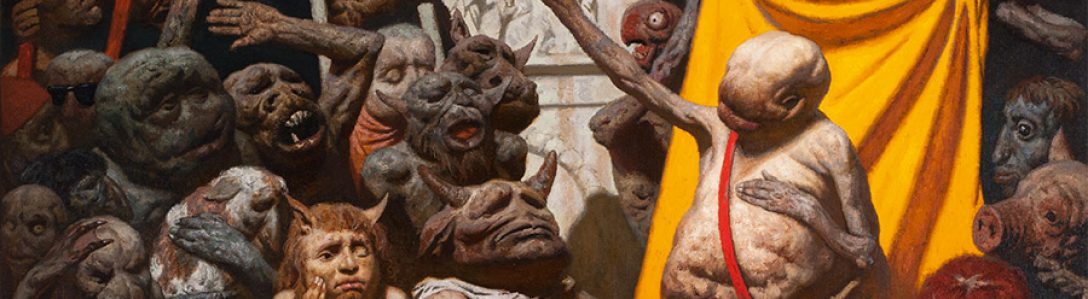
From Nathaniel Hawthorne’s journal entry for August 11th, 1838. From Passages from the American Note-Books.

Among the productions of the river’s margin | Nathaniel Hawthorne’s journal entry for August 6th, 1842

After breakfast I took my fishing-rod, and went down through our orchard to the river-side; but as three or four boys were already in possession of the best spots along the shore, I did not fish. This river of ours is the most sluggish stream that I ever was acquainted with. I had spent three weeks by its side, and swam across it every day, before I could determine which way its current ran; and then I was compelled to decide the question by the testimony of others, and not by my own observation. Owing to this torpor of the stream, it has nowhere a bright, pebbly shore, nor is there so much as a narrow strip of glistening sand in any part of its course; but it slumbers along between broad meadows, or kisses the tangled grass of mowing-fields and pastures, or bathes the overhanging boughs of elder-bushes and other water-loving plants. Flags and rushes grow along its shallow margin. The yellow water-lily spreads its broad flat leaves upon its surface; and the fragrant white pond-lily occurs in many favored spots,–generally selecting a situation just so far from the river’s brink that it cannot be grasped except at the hazardof plunging in. But thanks be to the beautiful flower for growing at any rate. It is a marvel whence it derives its loveliness and perfume, sprouting as it does from the black mud over which the river sleeps, and from which the yellow lily likewise draws its unclean life and noisome odor. So it is with many people in this world; the same soil and circumstances may produce the good and beautiful, and the wicked and ugly. Some have the faculty of assimilating to themselves only what is evil, and so they become as noisome as the yellow water-lily. Some assimilate none but good influences, and their emblem is the fragrant and spotless pond-lily, whose very breath is a blessing to all the region round about. . . . Among the productions of the river’s margin, I must not forget the pickerel-weed, which grows just on the edge of the water, and shoots up a long stalk crowned with a blue spire, from among large green leaves. Both the flower and the leaves look well in a vase with pond-lilies, and relieve the unvaried whiteness of the latter; and, being all alike children of the waters, they are perfectly in keeping with one another. . . .

From Nathaniel Hawthorne’s journal entry for August 6th, 1842. From Passages from the American Note-Books.

“Bartleby” is the first great epic of modern Sloth (Thomas Pynchon)

By the time of “Bartleby the Scrivener: A Story of Wall-Street” (1853), acedia had lost the last of its religious reverberations and was now an offense against the economy. Right in the heart of robber-baron capitalism, the title character develops what proves to be terminal acedia. It is like one of those western tales where the desperado keeps making choices that only herd him closer to the one disagreeable finale. Bartleby just sits there in an office on Wall Street repeating, “I would prefer not to.” While his options go rapidly narrowing, his employer, a man of affairs and substance, is actually brought to question the assumptions of his own life by this miserable scrivener — this writer! — who, though among the lowest of the low in the bilges of capitalism, nevertheless refuses to go on interacting anymore with the daily order, thus bringing up the interesting question: who is more guilty of Sloth, a person who collaborates with the root of all evil, accepting things-as-they-are in return for a paycheck and a hassle-free life, or one who does nothing, finally, but persist in sorrow? “Bartleby” is the first great epic of modern Sloth, presently to be followed by work from the likes of Kafka, Hemingway, Proust, Sartre, Musil and others — take your own favorite list of writers after Melville and you’re bound sooner or later to run into a character bearing a sorrow recognizable as peculiarly of our own time.

From Thomas Pynchon’s 1993 essay “Sloth; Nearer, My Couch, to Thee.”

A nest of chimney-swallows was washed down the chimney into the fireplace | Nathaniel Hawthorne’s journal entry for August 1st, 1837

August 1st.–There having been a heavy rain yesterday, a nest of chimney-swallows was washed down the chimney into the fireplace of one of the front rooms. My attention was drawn to them by a most obstreperous twittering; and looking behind the fire-board, there were three young birds, clinging with their feet against one of the jambs, looking at me, open-mouthed, and all clamoring together, so as quite to fill the room with the short, eager, frightened sound. The old birds, by certain signs upon the floor of the room, appeared to have fallen victims to the appetite of the cat. La belle Nancy provided a basket filled with cotton-wool, into which the poor little devils were put; and I tried to feed them with soaked bread, of which, however, they did not eat with much relish. Tom, the Irish boy, gave it as his opinion that they were not old enough to be weaned. I hung the basket out of the window, in the sunshine, and uponlooking in, an hour or two after, found that two of the birds had escaped. The other I tried to feed, and sometimes, when a morsel of bread was thrust into its open mouth, it would swallow it. But it appeared to suffer very much, vociferating loudly when disturbed, and panting, in a sluggish agony, with eyes closed, or half opened, when let alone. It distressed me a good deal; and I felt relieved, though somewhat shocked, when B—- put an end to its misery by squeezing its head and throwing it out of the window. They were of a slate-color, and might, I suppose, have been able to shift for themselves.–The other day a little yellow bird flew into one of the empty rooms, of which there are half a dozen on the lower floor, and could not find his way out again, flying at the glass of the windows, instead of at the door, thumping his head against the panes or against the ceiling. I drove him into the entry and chased him from end to end, endeavoring to make him fly through one of the open doors. He would fly at the circular light over the door, clinging to the casement, sometimes alighting on one of the two glass lamps, or on the cords that suspended them, uttering an affrighted and melancholy cry whenever I came near and flapped my handkerchief, and appearing quite tired and sinking into despair. At last he happened to fly low enough to pass through the door, and immediately vanished into the gladsome sunshine.–Ludicrous situation of a man, drawing his chaise down a sloping bank, to wash in the river. The chaise got the better of him, and, rushing downward as if it were possessed, compelled him to run at full speed, and drove him up to his chin into the water. A singular instance, that a chaise may run away with a man without a horse!

Nathaniel Hawthorne’s journal entry for August 1st, 1837. From Passages from the American Note-Books.

Selections from One-Star Amazon Reviews of Melville’s Moby-Dick

[Ed. note: The following citations come from one-star Amazon reviews of Herman Melville’s novel Moby-Dick. To be very clear, I think Moby-Dick is fantasticbut I also enjoy seeing what people compelled to write negative reviews of the book on Amazon had to say. What follows are selections of one-star Amazon reviews; I’ve preserved the reviewers’ unique styles of punctuation and spelling].


Yechh.

It made for a smashing movie.

If you want to read lots of meaningless whale trivia read the book.

Boy gets whale. Boy loses whale. Boy gets whale. Spawns yawns

I think if you made it into a short comic strip, you would have liked it.

I bought this book for a friend in jail. Alas, he was unable to read it because the font was too small.

Ray Bradbury, who wrote the screenplay for this novel, (a la Gregory Peck) couldn’t even finish the damn thing!

If you like a story with nonessential information and an author that is entirely to verbose, then this book is for you.

I am quite the fan of stories which involve man eating sea creatures, such as Jaws. Moby Dick is nothing compared to such classics, I fear.

Throughout the book, you may read one chapter with some action only to be followed by 5 or 6 chapters of tangents that are not necessary to understand the story.

Moby Dick, was a horrible waiste of time. Along with its wordy paragraphs, it also talked about uninteresting issues. It is also to long, and you don’t hear of them encountering the whale until the end of the book.

The only people who like this book are english teachers who derive a feeling of moral superiority from forcing others to read this incredibly bad novel.

First of all, classiflying it as fiction is a mistake. Probably a good 60% of the book is non-fiction – chapter after chapter dedicated to every imaginable detail of the biology of the whale and every imaginable nuance of whaling.

I love literatur just as much as the next guy but we must face it 100 years or so ago American literature was reall weak and lagging from the rest of the world, perhaps now they’re starting to catch up with writers like Ann Rice and them.

I have seen better writing in a Hallmark card! Boring! Give me a good ole copy of Elvis and Me! A true story that really tugs at your heart strings! I sleep with that one under my pillow! Keep Moby Dick away from my bed!

Those chapters about Ishmael sleeping with whatever his name was and Ishamel had such a good time with the other guy’s arm over him and leg over him that he didn’t know if he was straight or gay any more.

i personally didn’t enjoy the philosophical or deep side of the book, i have read much much better books in that regard.

There is no suspense, and I find the idea of people hunting whales offensive. Offensive with a capital O.

Honestly, Over 400 pages devoted to killing a whale because it ate your hand? Come on.

It is hard to read. like work. Doubt he could get published today.

What is the whales motivation? You dont know.

It is 540somepages of boring whaling details.

No wonder Melville flopped as a writter.

OMG, this is tedious and torture to read.

I HATE this book. Why? It’s BORING!

Moby Ick’s more like it.

They will not do us any good—the good books (William H. Gass)

gass_01_body

They will not do us any good—the good books—no—if by good we mean good looks, good times, good shoes; yet they still offer us salvation, for salvation does not wait for the next life, which is anyhow a vain and incautious delusion, but is to be had, if at all, only here—in this one. It is we who must do them honor by searching for our truth there, by taking their heart as our heart, by refusing to let our mind flag so that we close their covers forever, and spend our future forgetting them, denying the mind’s best moments. They extend the hand; we must grip it. Spinach never made Popeye strong sitting in the can. And the finest cookbook ever compiled put not one pot upon the stove or dish upon the table. Here, in the library that has rendered you suspect, you have made their acquaintance—some of the good books. So now that you’ve been nabbed for it, you must become their lover, their friend, their loyal ally. But that is what the rest of your life is for. Go now, break jail, and get about it.

From William H. Gass’s essay “To a Young Friend Charged with Possession of the Classics.” Collected in A Temple of Texts.

A review of Roberto Bolaño’s novella By Night in Chile

djhkew-vaaavpst

Toward the end of the 130 page monologue that is Roberto Bolaño’s novella By Night in Chile, narrator Father Sebastián Urrutia Lacroix claims that “An individual is no match for history.” His statement neatly encapsulates (what might be) the dominant theme of By Night in Chile, namely an individual person’s capacity and ability to correctly–and sanely–somehow measure, attest to, confront, and witness the horror and brutality of history. In this case, Bolaño’s narrator, a Catholic priest–and conservative literary critic (and, of course, failed poet)–Father Urrutia, via a sweeping deathbed confession of sorts, recounts his life story, leading inexorably to Pinochet’s coup and its attendant subsequent draconian reforms and abuses. While it would be a mistake to reduce Bolaño’s rich novella to one conflict, I think the root of Urrutia’s struggle emanates from his inability to come to terms with his role as an intellectual (let alone an artist, critic, or priest) complicit somehow in Pinochet’s crimes. Throughout the book, from the very beginning, Urrutia blames his inner turmoil on a “wizened youth” (I don’t want to spoil this antagonist’s identity, but puzzling out that paradoxical appellation provides a major clue), a kind of idealist who stands apart from the dying priest, mocking and taunting him. After his claim that “An individual is no match for history,” Urrutia avers that “The wizened youth has always been alone, and I have always been on history’s side.” For Urrutia, this is of paramount importance, not just as a Catholic priest (which, it must be pointed out, is a role he doesn’t seem particularly suited for) but also as a literary critic and intellectual: Urrutia wants to systematize and critique history, to be “on the right side of history,” to quote Barack Obama. And yet his own attempt to narrativize his own life ironizes and critiques this very possibility at every turn–he is a sham, a charlatan, motivated and prompted by fear and even hate.

And on that attempt to narrativize a life: I would call By Night in Chile an anti-bildungsroman. Although Urrutia relates a life story, the free flow of psychic impressions that characterizes his telling slip and sail and rock and crash throughout years and over decades, often flowing backwards and forwards, sometimes spending pages on what could only be considered inconsequential minutiae, while at times glossing over the profoundest events with little more than a word or two. It is often what Urrutia does not remark upon that characterizes what is of the greatest importance in this work, and this is a testament to the power of Bolaño’s writing, to his command of voice. In one of the greatest performances of the novel, Urrutia describes the time right before, during, and after Pinochet’s coup. The passage is less than four pages, and for every contemporary action of immediate consequence, Urrutia seems to provide twice as many examples of his retreat into the past: ” . . . the first anti-Allende march was organized, with people banging pots and pans, and I read Aeschylus and Sophocles and Euripides, all the tragedies, and Alkaios of Mytilene and Aesop and Hesiod and Herodotus . . . .” Urrutia doesn’t bother to scrutinize or analyze the visceral reality of history in the making around him, regressing instead to the comfort of established philosophical tradition–the history of Herodotus in favor of the chaos, anarchy, and brutality happening around him. He’s really quite a terrible priest, and as an intellectual he refuses to be engaged. Confident that he will always be “on history’s side,” he refuses to actively even try come to terms with history until he’s dying. And thus we get the narrative of By Night in Chile.

This reckoning with the past takes the form of a long monologue but, as those familiar with Bolaño will attest, there are plenty of other voices here, stories nested within stories like Russian dolls. The force and vitality of Urrutia’s speech is astonishing; one envisions the monologue as a single immediate and discrete exhalation, a stream of memory, the living wail of a dying man. Bolaño’s rhetorical style here conveys this ironic energy. He employs long (very, very long) sentences, sometimes going on for several pages, and often uses little or no transitions between what should be major shifts of space and time. There are plenty of references to writers, of course, many obscure, and more motifs and leitmotifs than I can work out here (or elsewhere, to be honest). I’m going to go out on a limb and suggest that the book is probably even more intense in the original Spanish, although I think Chris Andrews has done a brilliant job translating here, just as he did in Last Evenings on Earth. And since I’ve brought up that book, I’m going to make another suggestion: if you’ve yet to read Bolaño, you should, and Last Evenings of Earth (or 2666 if nearly a thousand pages doesn’t seem too daunting)is probably the best place to start–which is kind of another way of saying that By Night in Chile is not the best entry point to Bolaño–at least not for anyone intimately familiar with Latin American history. It’s not that By Night is particularly challenging or hard to read. However, I think that this particular book will probably be better enjoyed with more context. As Rodrigo Fresán points out in his essay “The Savage Detective,” (published in the March 2007 issue of The Believer), By Night in Chile could be (should be?) read as part of one cohesive book along with Amulet and Distant Star. Indeed, as many critics have pointed out, Bolaño’s works seem to coalesce into one great work, a secret universe parallel to Tolkien’s Middle Earth or Faulkner’s Yoknapatawpha. Urrutia’s voice enriches this universe, but one must have something of a foothold on Bolaño’s themes in order to appreciate the complex ironies of By Night in Chile. Or maybe not. Maybe this is a great entry point to Bolaño. Either way, great book. Highly recommended.


Editorial note: Biblioklept ran the original version of this review in July of 2010. I saw the new cover for By Night in Chile today in a bookstore I was visiting in a town that I do not live in, and the new cover—the picture of which is the only new “content” for this review—is the occasion for republishing this Bolaño review.

Blog about Denis Johnson’s story “Strangler Bob”

Screenshot 2018-07-25 at 5.28.36 PM
Detail from Newgate Exercise Yard by Gustave Dore, 1872

Denis Johnson’s story “Strangler Bob” is the third selection in The Largesse of the Sea Maiden. At about 20 pages, it’s also the shortest piece in the collection (the other four stories run between 40 and 50 pages). While still a bit longer than the stories in Johnson’s seminal collection Jesus’ Son, “Strangler Bob” nevertheless seems to pulse from that same vein, its narrator Dink another iteration of Jesus’ Son’s Fuckhead. Indeed, “Strangler Bob” feels a bit like an old sketch that’s been reworked by Johnson into something that fits thematically into Largesse.

Here’s the opening paragraph of “Strangler Bob” in full, which gives us the basic premise and setting (and you can’t beat those two opening sentences):

You hop into a car, race off in no particular direction, and blam, hit a power pole. Then it’s off to jail. I remember a monstrous tangle of arms and legs and fists, with me at the bottom gouging at eyes and doing my utmost to mangle throats, but I arrived at the facility without a scratch or a bruise. I must have been easy to subdue. The following Monday I pled guilty to disturbing the peace and malicious mischief, reduced from felony vehicular theft and resisting arrest because—well, because all this occurs on another planet, the planet of Thanksgiving, 1967. I was eighteen and hadn’t been in too much trouble. I was sentenced to forty-one days.

Those forty-one days take us from Thanksgiving to the New Year, with the story’s spiritual climax occurring on Christmas Eve.

Before we get to that climax Johnson builds an unexpectedly rich world in the county lockup, populating it with young toughs who can’t yet see how bad the paths they’ve chosen will be. The men of Johnson’s jail aren’t simply down on their luck or somehow morally misunderstood. They are jovial young fuck-ups who plan to continue fucking up their lives the minute they get out.

A lot of the stage-setting and background characterization in “Strangler Bob” reads like picaresque sketches that Johnson had lying about unused from decades ago. Much of the early part of the story is dedicated to “the blond sociopathic giant Jocko,” a sort of prince of the jail who saves a crazy kid from being murdered by the other inmates. Such scenes give the story a ballast of baroque energy and even an unexpectedly-comic realism, but they don’t fully fit into the main theme of the story, which is hunger.

On his first day in the jail the narrator Dink is warned not to oversleep or he will have his breakfast stolen. Hardheaded, he sleeps in anyway, but learns from his mistake:

After that I had no trouble rousing myself for the first meal, because other than the arrival of food we had nothing in our lives to look forward to, and the hunger we felt in that place was more ferocious than any infant’s. Corn flakes for breakfast. Lunch: baloney on white. For dinner, one of the canned creations of Chef Boyardee, or, on lucky days, Dinty Moore. The most wonderful meals I’ve ever tasted.

Hunger in “Strangler Bob” is an expression of the deep boredom the prisoners feel, and mealtimes become the only way these men measure the passing of time. The hunger in “Strangler Bob” is not just a desire for food, but rather something to fill up the void, the space, the empty feeling. In this world, romantic adventure is ironized into confined torpor:

Dundun, BD and I formed a congress and became the Three Musketeers—no hijinks or swashbuckling, just hour upon hour of pointless conversation, misshapen cigarettes, and lethargy.

Dundun and BD are perhaps unlikely friends for Dink—

Dundun was short and muscled, I was short and puny, and BD was the tallest man in the jail, with a thick body that tapered up toward freakishly narrow shoulders.

—but their fellowship holds together because they had “long hair and chased after any kind of intoxicating substance.” Thanks to BD they get their mitts on some LSD:

BD told us he had a little brother, still in high school, who sold psychedelic drugs to his classmates. This brother came to visit BD and left him a hotrod magazine, one page of which he’d soaked in what he told BD was psilocybin, but was likelier just, BD figured, LSD plus some sort of large-animal veterinary tranquilizer. In any case: BD was most generous. He tore the page from the magazine, divided it into thirds, and shared one third with me and one with Donald Dundun, offering us this shredded contraband as a surprise on Christmas Eve.

The ink from the newsprint turns their tongues black. Narrator Dink seems to think that the LSD was not evenly distributed on the page though—BD trips the hardest, seeing snow falling indoors, but Dink seems to think he’s mostly unaffected, while Dundun denies any effect at all. However, consider this exchange between Dink and Dundun, which suggests that they might be tripping harder than they think:

“I’m feeling all the way back to my roots. To the caves. To the apes.” He turned his head and looked at us. His face was dark, but his eyeballs gave out sparks. He seemed to be positioned at the portal, bathed in prehistoric memories. He was summoning the ancient trees—their foliage was growing out of the walls of our prison, writhing and shrugging, hemming us in.

A sloppy and unnecessary Freudian analysis of the three kids parcels them out easily as id (Dundun the apeman), super ego (BD the strange moralist), and ego, our narrator who rejects any kind of spirituality in a world where “Asian babies fried in napalm.”

Dink’s cellmate, the eponymous Strangler Bob, poses a challenge to the narrator’s easy nihilism though. Even though Dink believes that he’s not affected by the LSD, his encounter with Bob on Christmas Eve reads like a bad trip:

The only effect I felt seemed to coalesce around the presence of Strangler Bob, who laughed again—“Hah!”—and, when he had our attention, said, “It was nice, you know, it being just the two of us, me and the missus. We charcoaled a couple T-bone steaks and drank a bottle of imported Beaujolais red wine, and then I sort of killed her a little bit.”

To demonstrate, he wrapped his fingers around his own neck while we Musketeers studied him like something we’d come on in a magic forest.

Dundun then exclaims that Strangler Bob is “the man who ate his wife” — but Bob admonishes that his cannibalism was greatly exaggerated:

Strangler Bob said, “That was a false exaggeration. I did not eat my wife. What happened was, she kept a few chickens, and I ate one of those. I wrung my wife’s neck, then I wrung a chicken’s neck for my dinner, and then I boiled and ate the chicken.”

The hunger in Strangler Bob is perverse and abject; his crime is of a moral magnitude far more intense than the malicious hijinks the youthful Musketeers have perpetrated–it’s taboo, a challenge to all moral order. He’s also an oracle of strange dooms:

He said, “I have a message for you from God. Sooner or later, you’ll all three end up doing murder.” His finger materialized in front of him, pointing at each of us in turn—“Murderer. Murderer. Murderer”

We learn in the final melancholy paragraphs of the story that Bob’s prophecy comes true, more or less. In those paragraphs too there is a moment of grace, albeit a grace hard purchased. Of the latter part of his life, the Dink tells us:

I was constantly drunk, treated myself as a garbage can for pharmaceuticals, and within a few years lost everything and became a wino on the street, drifting from city to city, sleeping in missions, eating at giveaway programs.

It’s worth noting that if Dink were 18 in the fall of 1967, he would likely have been born in 1949, the year that Denis Johnson was born. The narrators of two other stories in Largesse are also born in or around 1949, and it’s my belief that all of the narrators are essentially the same age, and all are pseudoautofictional iterations of Johnson.

In “Strangler Bob,” Dink is an iteration that fails to thrive, that can’t survive addiction and recovery and enter into a new life. He does not heed Bob’s warning, and at the end of the story he laments that he is a poisoned person who has poisoned others:

When I die myself, B.D. and Dundun, the angels of the God I sneered at, will come to tally up my victims and tell me how many people I killed with my blood.

These final lines push the narrator into a place of bare remorse and regret, as he reflects back on his time in the jail, which he describes in retrospect as “some kind of intersection for souls.” Dink now sees that he’s failed to acknowledge the messengers that might have sent him on a better path. Angels come in strange forms.

Very early Christmas morning on the planet of 1967, after “the festival of horrors” that constituted the LSD trip, Strangler Bob gives one last message, a strange delivered in Dink’s grandmother’s voice:

I studied him surreptitiously over the edge of the bunk, and soon I could see alien features forming on the face below me, Martian mouth, Andromedan eyes, staring back at me with evil curiosity. It made me feel weightless and dizzy when the mouth spoke to me with the voice of my grandmother: “Right now,” Strangler Bob said, “you don’t get it. You’re too young.” My grandmother’s voice, the same aggrieved tone, the same sorrow and resignation.

“You’re too young” — wisdom is purchased through folly, pain, terrible mistakes, crimes and sins. The narrator’s grandmother ventriloquizes Strangler Bob, but she doesn’t have a moral message, just tired pain.

The voice here is Denis Johnson’s voice too, inhabiting a mad oracle, warning some version of himself that exists today.


You can read “Stranger Bob” online here.

I wrote about the title story in The Largesse of the Sea Maiden here.

I wrote about the second story, “The Starlight on Idaho” here.