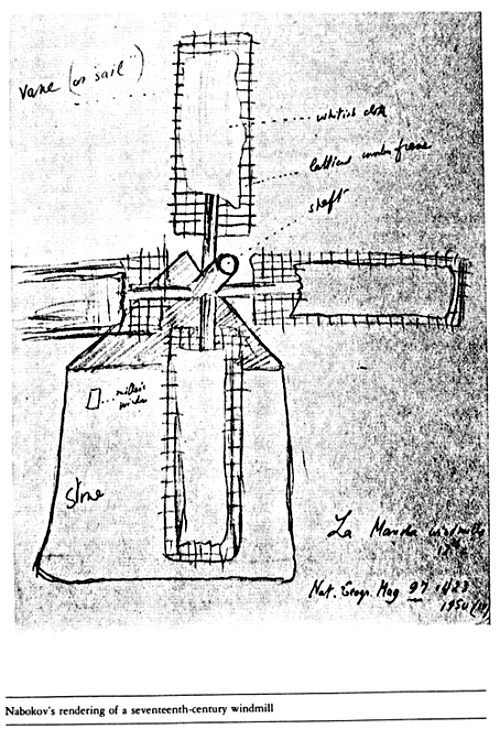
Windmill Drawing — Vladimir Nabokov

Capture

(From Vladimir Nabokov’s Lectures on Don Quixote).

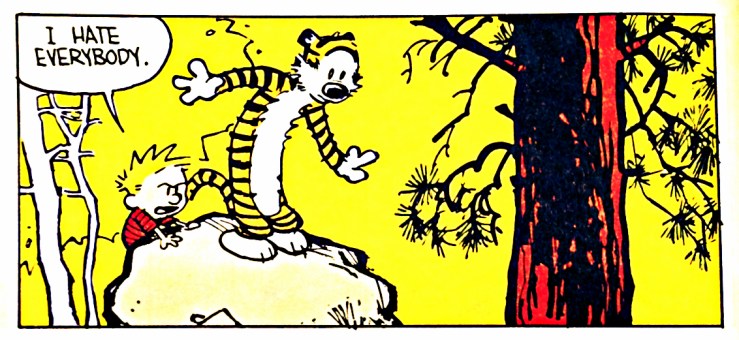
I Hate Everybody (Calvin & Hobbes)

ch

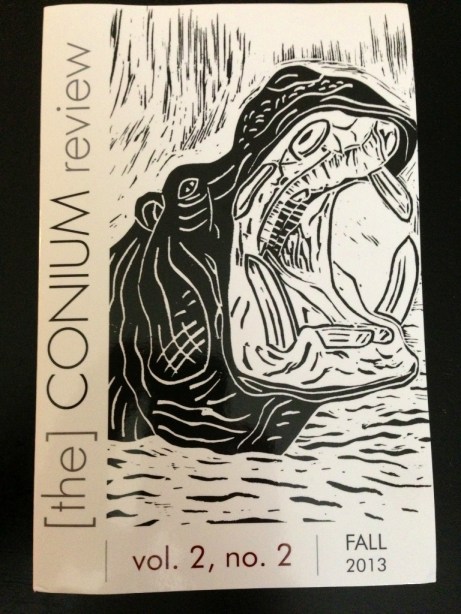
The Conium Review, Vol. 2, No. 2 (Book Acquired, 8,19.2013)

20130824-102848.jpg

This came in the mail a few weeks ago; I read a few of the poems and flash fictions, but haven’t had made time for the stories or the novella. From the The Conium Review’s website:

This issue of The Conium Review contains seventeen poems, five pieces of flash fiction, four short stories, and one novella. The contributing poets and writers are Elena Botts, Valentina Cano, Paola Capó-García, Patrick Cole, Darren C. Demaree, Thomas Dodson, Edward A. Dougherty, Ginger Graziano, Alamgir Hashmi, Kyle Hemmings, Nicholas Kriefall, Connie A. Lopez-Hood, Carlo Matos, Gretchen McGill, Robert McGuill, Thomas Mundt, Catherine Owen, Natalie Peeterse, Richard King Perkins II, Octavio Quintanilla, Charles Rafferty, Scott Ragland, Jonathan H. Roberts, M. A. Schaffner, Jacob Schepers, Claude Clayton Smith, and Emily Strauss. The cover art is courtesy of Loren Kantor.


RIP Seamus Heaney

gm655_01

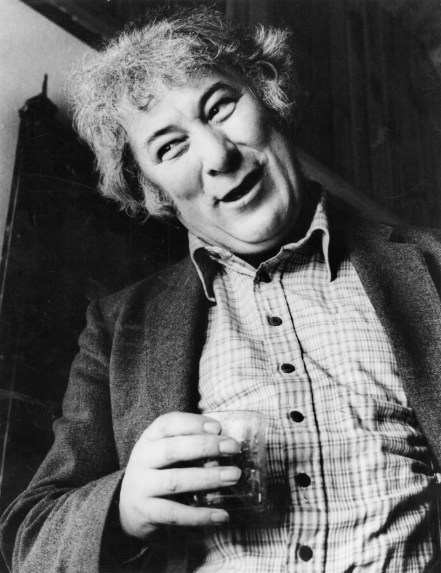
RIP Seamus Heaney, 1939-2013

“Funeral Rites”

I shouldered a kind of manhood
stepping in to lift the coffins
of dead relations.
They had been laid out

in tainted rooms,
their eyelids glistening,
their dough-white hands
shackled in rosary beads.

Their puffed knuckles
had unwrinkled, the nails
were darkened, the wrists
obediently sloped.

The dulse-brown shroud,
the quilted satin cribs:
I knelt courteously
admiting it all

as wax melted down
and veined the candles,
the flames hovering
to the women hovering
behind me.
And always, in a corner,
the coffin lid,
its nail-heads dressed

with little gleaming crosses.
Dear soapstone masks,
kissing their igloo brows
had to suffice

before the nails were sunk
and the black glacier
of each funeral
pushed away.

II

Now as news comes in
of each neighbourly murder
we pine for ceremony,
customary rhythms:

the temperate footsteps
of a cortège, winding past
each blinded home.
I would restore

the great chambers of Boyne,
prepare a sepulchre
under the cupmarked stones.
Out of side-streets and bye-roads

purring family cars
nose into line,
the whole country tunes
to the muffled drumming

of ten thousand engines.
Somnambulant women,
left behind, move
through emptied kitchens

imagining our slow triumph
towards the mounds.
Quiet as a serpent
in its grassy boulevard

the procession drags its tail
out of the Gap of the North
as its head already enters
the megalithic doorway.

III

When they have put the stone
back in its mouth
we will drive north again
past Strang and Carling fjords

the cud of memory
allayed for once, arbitration
of the feud placated,
imagining those under the hill

disposed like Gunnar
who lay beautiful
inside his burial mound,
though dead by violence

and unavenged.
men said that he was chanting
verses about honour
and that four lights burned

in corners of the chamber:
which opened then, as he turned
with a joyful face
to look at the moon.

“…in the direction of increasing entropy” (Another Riff on Pynchon’s Novel Against the Day)

1. So in the final pages of Against the Day, Thomas Pynchon takes us back to those heroes of the ether who initiated the book, the Chums of Chance. They’ve been absent for a long stretch, with only the occasional mention here or there to assure us that yes, they are still in the narrative, but under its surface, or, rather—invisible (this, in a novel full of invisibility).

2. Example: in a maddening moment, we learn that, via Pugnax’s girlfriend, a dog named Ksenija, “the Chums of Chance had been invisibly but attentively keeping an eye on the progress of Reef’s family exfiltration from the Balkan Peninsula.”

3. Several chapters later, Pynchon makes our sky-heroes visible again; they’ve dramatically expanded the size of their ship Inconvenience and have essentially declared independence from Chums headquarters.

They learn of a strange “updraft” over the Sahara desert that spells new adventure—

Tonight’s meeting was about whether or not to take the Inconvenience into the great updraft over the Sahara without somebody paying for it in advance. Miles called the session to order by bashing upon a Chinese gong acquired years before from an assassination cult active in that country, during the boys’ unheralded but decisive activities in the Boxer Rebellion (see The Chums of Chance and the Wrath of the Yellow Fang), and wheeled around a refrigerated Champagne cart, refilling everyone’s glass from a Balthazar of ’03 Verzenay.

4. And so of course they go, and we get this remarkable passage:

 And as they entered and were taken, Chick Counterfly thought back to his first days aboard the Inconvenience, and Randolph’s dark admonition that going up would be like going north, and his own surmise that one could climb high enough to descend to the surface of another planet. Or, as the commander had put it then, “Another ‘surface,’ but an earthly one . . . all too earthly.”

—and jeez I hate to break in, but I just have to point out that Pynchon is citing himself here, that the lines that Chick Counterfly recollects go all the way back to page nine, to the first chapter of the book.

5. Continuing:

The corollary, Chick had worked out long ago, being that each star and planet we can see in the Sky is but the reflection of our single Earth along a different Minkowskian spacetime track. Travel to other worlds is therefore travel to alternate versions of the same Earth. And if going up is like going north, with the common variable being cold, the analogous direction in Time, by the Second Law of Thermodynamics, ought to be from past to future, in the direction of increasing entropy.

So the great grand theme of bilocation gets tied in here to the novel’s hard sci-fi tropes, all pointing to “increasing entropy.” There are other Chums on other Earths, bilocating into other systems that are breaking “in the direction of increasing entropy.”

6. Which is a fairly accurate description of both the plot and the structure of Against the Day. The novel is shaggy and seemingly fails to cohere because it is a stylistic approximation of entropy.

7. And a few paragraphs later, we get a demonstration of this program. Miles Blundell, the most mystical and reflective Chum, is able to perceive the violence and terror of The Great War that rages below the Chums—who, bilocated, displaced cannot see it—it’s invisible. 

Blundell:

“Those poor innocents,” he exclaimed in a stricken whisper, as if some blindness had abruptly healed itself, allowing him at last to see the horror transpiring on the ground. “Back at the beginning of this . . . they must have been boys, so much like us. . . . They knew they were standing before a great chasm none could see to the bottom of. But they launched themselves into it anyway. Cheering and laughing. It was their own grand ‘Adventure.’ They were juvenile heroes of a World-Narrative—unreflective and free, they went on hurling themselves into those depths by tens of thousands until one day they awoke, those who were still alive, and instead of finding themselves posed nobly against some dramatic moral geography, they were down cringing in a mud trench swarming with rats and smelling of shit and death.”

“Miles,” said Randolph in some concern. “What is it? What do you see down there?”

Miles points out that the “boys” fighting in the war are “so much like” the Chums — “juvenile heroes of a World-Narrative” on their “own grand ‘Adventure'” and then punctures the high heroic rhetoric that marked the Chums episode up until this point, his analysis culminating in the abject image of “a mud trench swarming with rats and smelling of shit and death.” The language and sentiment of the Chums is bilocated, unraveling in the direction of increasing entropy.
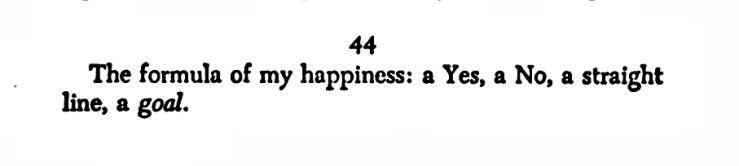
Happiness Formula (Nietzsche)

capture3

Teaser Trailer for James Franco’s Film Adaptation of Cormac McCarthy’s Novel Child of God

So James Franco has taken a stab at Faulkner and one of Faulkner’s literary descendants, Cormac McCarthy—in the same year no less. Franco has adapted McCarthy’s 1973 novel Child of God; the film will play this weekend at the Toronto Film Festival.

Here is my review of McCarthy’s novel Child of God.

“The Bet” — Anton Chekhov

“The Bet” by Anton Chekhov

I

It was a dark autumn night. The old banker was pacing from corner to corner of his study, recalling to his mind the party he gave in the autumn fifteen years before. There were many clever people at the party and much interesting conversation. They talked among other things of capital punishment. The guests, among them not a few scholars and journalists, for the most part disapproved of capital punishment. They found it obsolete as a means of punishment, unfitted to a Christian State and immoral. Some of them thought that capital punishment should be replaced universally by life-imprisonment.

“I don’t agree with you,” said the host. “I myself have experienced neither capital punishment nor life-imprisonment, but if one may judge a priori, then in my opinion capital punishment is more moral and more humane than imprisonment. Execution kills instantly, life-imprisonment kills by degrees. Who is the more humane executioner, one who kills you in a few seconds or one who draws the life out of you incessantly, for years?”

“They’re both equally immoral,” remarked one of the guests, “because their purpose is the same, to take away life. The State is not God. It has no right to take away that which it cannot give back, if it should so desire.”

Among the company was a lawyer, a young man of about twenty-five. On being asked his opinion, he said:

“Capital punishment and life-imprisonment are equally immoral; but if I were offered the choice between them, I would certainly choose the second. It’s better to live somehow than not to live at all.”

There ensued a lively discussion. The banker who was then younger and more nervous suddenly lost his temper, banged his fist on the table, and turning to the young lawyer, cried out:

“It’s a lie. I bet you two millions you wouldn’t stick in a cell even for five years.”

“If you mean it seriously,” replied the lawyer, “then I bet I’ll stay not five but fifteen.”

“Fifteen! Done!” cried the banker. “Gentlemen, I stake two millions.”

“Agreed. You stake two millions, I my freedom,” said the lawyer.

So this wild, ridiculous bet came to pass. The banker, who at that time had too many millions to count, spoiled and capricious, was beside himself with rapture. During supper he said to the lawyer jokingly:

“Come to your senses, young roan, before it’s too late. Two millions are nothing to me, but you stand to lose three or four of the best years of your life. I say three or four, because you’ll never stick it out any longer. Don’t forget either, you unhappy man, that voluntary is much heavier than enforced imprisonment. The idea that you have the right to free yourself at any moment will poison the whole of your life in the cell. I pity you.”

And now the banker, pacing from corner to corner, recalled all this and asked himself:

“Why did I make this bet? What’s the good? The lawyer loses fifteen years of his life and I throw away two millions. Will it convince people that capital punishment is worse or better than imprisonment for life? No, no! all stuff and rubbish. On my part, it was the caprice of a well-fed man; on the lawyer’s pure greed of gold.” Continue reading ““The Bet” — Anton Chekhov”

W.G. Sebald Poem-Fragment

Capture

Don Quixote — Ub Iwerks

Teju Cole’s Dictionary of Received Ideas

Yesterday on Twitter, Teju Cole shared a series of definitions—some ironic, some hilarious funny, all perceptive.

The series of definitions immediately reminded me of Ambrose Bierce’s sardonic work The Devil’s Dictionary, but Cole later tweeted that he had Gustave Flaubert’s Le Dictionnaire des Idées Reçues (The Dictionary of Received Ideas) in mind as a model.

Cole reiterated Flaubert’s influence again when he published the tweets today at The New Yorker under the title “In Place of Thought“—a little sample:

AMERICAN. With the prefix “all,” a blonde.

CHILDREN. The only justification for policy. Always say “our children.” The childless have no interest in improving society.

HILARIOUS. Never simply say “funny.”

HIP HOP. Old-school hip hop, i.e., whatever was popular when you were nineteen, is great. Everything since then is intolerable.

HIPSTER. One who has an irrational hatred of hipsters.

INTERNET. A waste of time. Have a long online argument with anyone who disagrees.

JAZZ. America’s classical music. The last album was released in 1965.

LITERALLY. Swear you’d rather die than use “literally” as an intensifier.

POET. Always preceded by “published.” Function unknown.

Bonus—from Flaubert’s Dictionnaire:

BLACK – Always preceded by “pitch”.

CHILDREN – Affect a lyric tenderness towards  them, when people are about.

INTRODUCTION — Obscene word.

LITERATURE — Idle pastime.

METAPHORS — Always too many in poems. Always too many in anybody’s writing.

OPTIMIST — Synonym for imbecile.

POETRY — Entirely useless; out of date.

THINK (TO) — Painful. Things that compel us to think are generally neglected.

Fascination and Voyeuristic Attraction (Notes from Susan Sontag’s Notebook, 8/28/65)

My fascination with:

Disembowellment [sic]

Stripping down

Minimum conditions (from Robinson Crusoe to concentration camps)

Silences, muteness

My voyeuristic attraction to:

Cripples (Trip to Lourdes—they arrive from Germany in sealed trains)

Freaks

Mutants

—Notes from Susan Sontag’s notebook dated 8/28/65 Marseilles; published as part of the collection As Consciousness Is Harnessed to Flesh.


Proust Penchant (Glen Baxter)

Rumours of my penchant

“Lines” — John Keats

Capture

“The two basic stories of all times are Cinderella and Jack the Giant Killer” and other notes from F. Scott Fitzgerald

  1. Art invariably grows out of a period when in general the artist admires his own nation and wants to win its approval. This fact is not altered by the circumstances that his work may take the form of satire for satire is the subtle flattery of a certain minority in a nation. The greatest artists grow out of these periods as the tall head of the crop. They may seem not to be affected but they are.
  2. Great art is the contempt of a great man for small art.
  3. The queer slanting effect of the substantive, the future imperfect, a matter of intuition or ear to O’Hara, is unknown to careful writers like Bunny and John.
  4. When the first rate author wants an exquisite heroine or a lovely morning, he finds that all the superlatives have been worn shoddy by his inferiors. It should be a rule that bad writers must start with plain heroines and ordinary mornings, and, if they are able, work up to something better.
  5. Man reads good reviews of his book so many times that he begins finally to remodel his style on them and use their rhythms.
  6. Realistic details like Dostoiefski glasses
  7. The two basic stories of all times are Cinderella and Jack the Giant Killer—the charm of women and the courage of men. The 19th century glorified the merchant’s cowardly son. Now a reaction.
  8. The Steinbeck scene. Out of touch with that life. The exact observation there.
  9. The episodic book, (Dos P. + Romaine etc.) may be wonderful, but the fact remains that it is episodic, and and such definition implies a limitation. You are with the character until the author gets tired of him—then you leave him for a while. In the true novel, you have to stay with the character all the time, and you acquire a sort of second wind about him, a depth of realization.
  10. In a short story, you have only so much money to buy just one costume. Not the parts of many. One mistake in the shoes or tie, and you’re gone.
  11. Play—For Act II. Something happens that to audience, changes entire situation, such as significant suitcase to country, or old terror apparently buried in Act I.

—From F. Scott Fitzgerald’s The Notebooks.

The Chums of Chance Reading List (Thomas Pynchon’s Against the Day)

hgdTitles of The Chums of Chance books mentioned in Thomas Pynchon’s Against the Day:

  • The Chums of Chance and the Evil Halfwit
  • The Chums of Chance and the Curse of the Great Kahuna
  • The Chums of Chance and the Ice Pirates
  • The Chums of Chance Nearly Crash into the Kremlin
  • The Chums of Chance and the Caged Women of Yokohama
  • The Chums of Chance and the Wrath of the Yellow Fang
  • The Chums of Chance at Krakatoa
  • The Chums of Chance Search for Atlantis
  • The Chums of Chance in Old Mexico
  • The Chums of Chance in the Bowels of the Earth
  • The Chums of Chance at the Ends of the Earth

The Chums of Chance bits have been some of my favorites in Pynchon’s Against the Day, and have given me more than one occasion to riff. There’s something wonderfully generative (and even generous) about these pulpy, romantic titles—an invitation to daydream, to fly with the boys a bit.

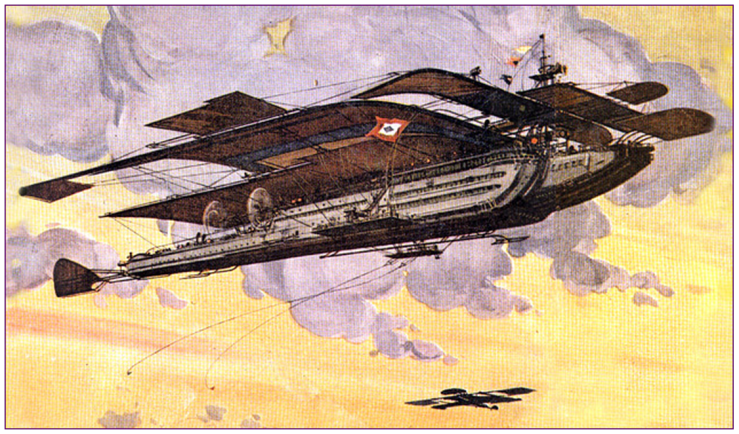
The painting of the airship at the top is by Harry Grant Dart, whose comic strip The Explorigator undoubtedly influenced Pynchon’s vision of The Chums of Chance. You can perhaps glean some of that inspiration in this 1908 broadside:

Explorigator19080503Intro


But Where Is the Lamb? (Book Acquired, 8.23.2013)

20130824-102817.jpg

But Where Is the Lamb? by James Goodman. The book is about Genesis ch. 22, the story where God says to Abraham, kill me your son. Good design on this one:

20130824-102824.jpg

Publisher Random House’s blurb:

“I didn’t think he’d do it. I really didn’t think he would. I thought he’d say, whoa, hold on, wait a minute. We made a deal, remember, the land, the blessing, the nation, the descendants as numerous as the sands on the shore and the stars in the sky.”

So begins James Goodman’s original and urgent encounter with one of the most compelling and resonant stories ever told—God’s command to Abraham to sacrifice his son Isaac.

A mere nineteen lines in the book of Genesis, it rests at the heart of the history, literature, theology, and sacred rituals of Judaism, Christianity, and Islam. For more than two millennia, people throughout the world have grappled with the troubling questions about sacrifice, authority, obedience, and faith to which the story gives rise. Writing from the vantage of “a reader, a son, a Jew, a father, a skeptic, a historian, a lover of stories, and a writer,” Goodman gives us an enthralling narrative history that moves from its biblical origins to its place in the cultures and faiths of our time. He introduces us to the commentary of Second Temple sages, rabbis and priests of the late antiquity, and early Islamic exegetes (some of whom imagined that Ishmael was the nearly sacrificed son). He examines Syriac hymns (in which Sarah stars), Hebrew chronicles of the First Crusade (in which Isaac often dies), and medieval English mystery plays. He looks at the art of Europe’s golden age, the philosophy of Kant and Kierkegaard, and the panoply of twentieth-century interpretation, sacred and profane, including the work of Bob Dylan, Elie Wiesel, and A. B. Yehoshua. In illuminating how so many others have understood this story, Goodman tells a gripping and provocative story of his own.