Sunday Comix

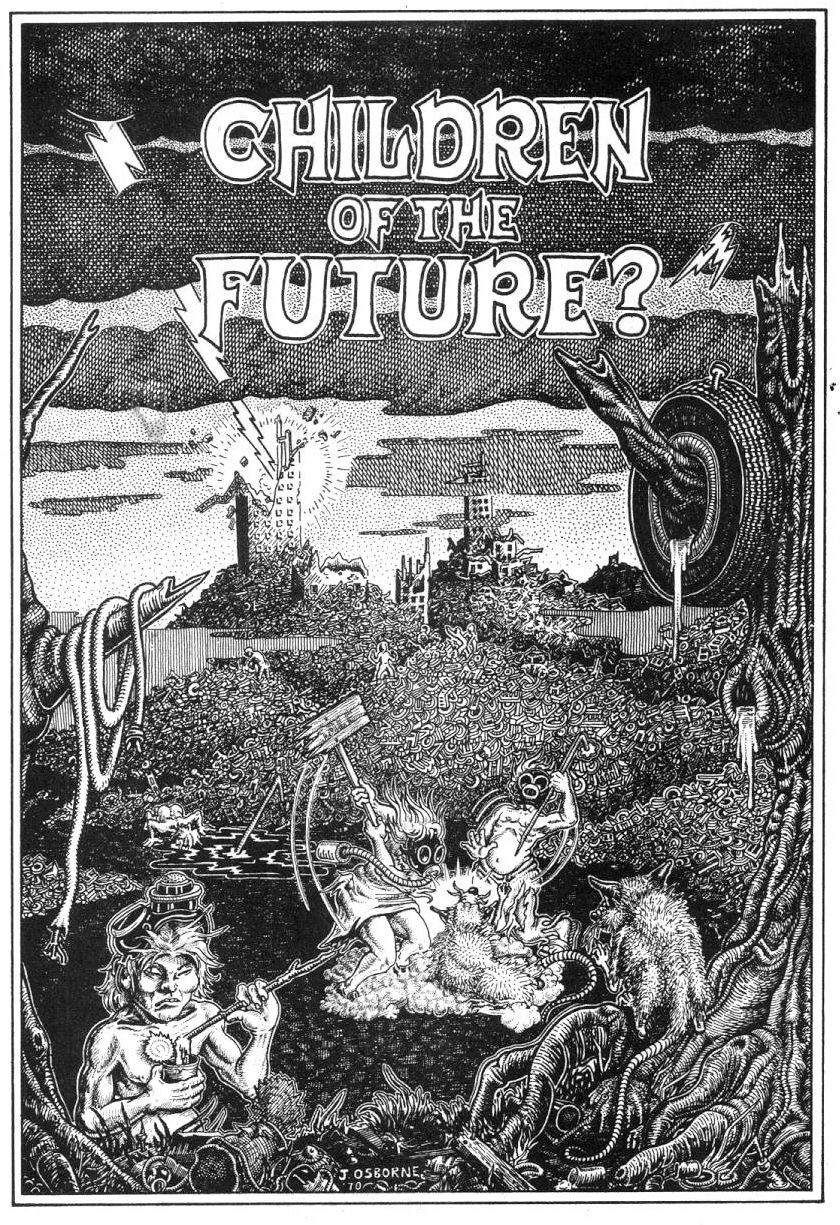
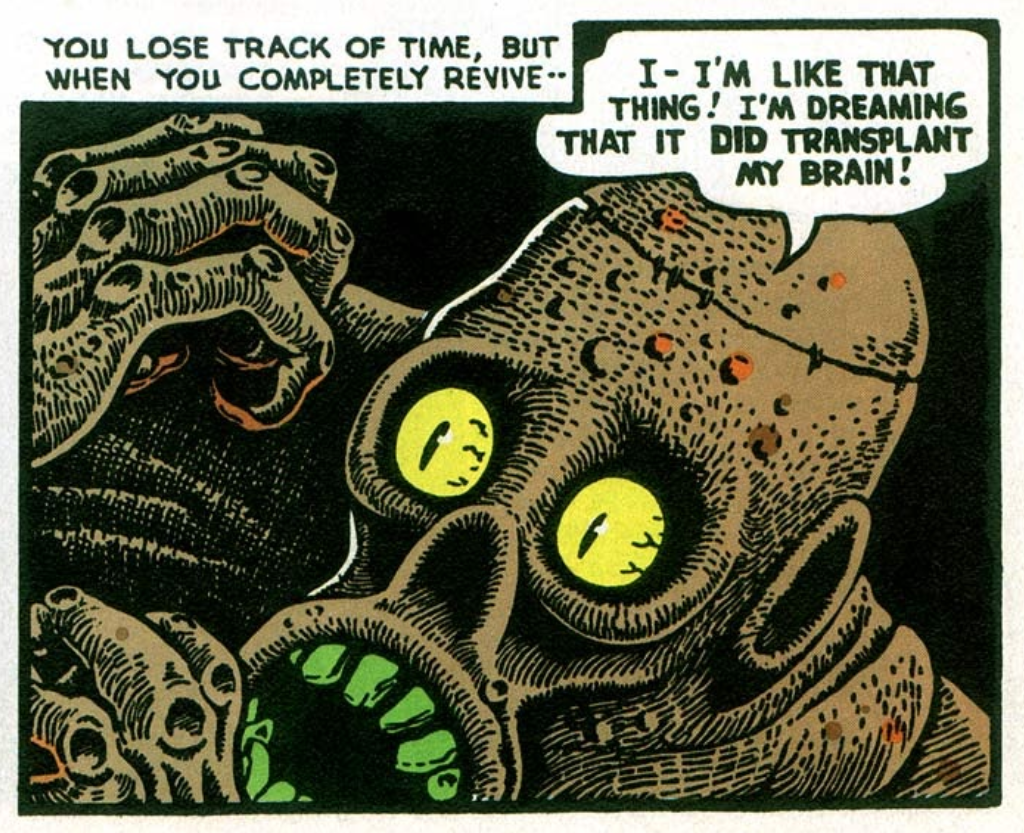
Cover for Slow Death #2, 1970 by Jack Jackson and Dave Sheridan

“Paolo Ucello, Painter” — Marcel Schwob

“Paolo Ucello, Painter”

by

Marcel Schwob

from Imaginary Lives

translated by Lorimer Hammond


His real name was Paolo di Dono, but the Florentines called him Uccelli or Paul of the Birds because of the many bird figures and painted beasts in his house, for he was too poor to feed live animals or to obtain those strange species he did not know.

At Padua he was said to have executed a fresco of the four elements, with an image of a chameleon representing the air. He had never seen one, so he made it a sort of pot bellied camel with a gaping snout (while the chameleon, explains Vasari, resembles a small dry lizard and the camel is a great humped beast). Uccello was not concerned with the reality of things but in their multiplicity and the infinity of their lines. He made fields blue, cities red, and cavaliers in black armour on ebony horses with blazing mouths, the lances of the riders radiating toward every quarter of the heavens. He had a fancy for drawing the mazocchio, a headdress made of wooden hoops so covered that th
e cloth fell down in pleats all about the wearer’s face. Uccello drew pointed ones and square ones and others in pyramids and cones, following every intricacy of their perspectives so studiously as to find a world of combinations in their folds. The sculptor Donatello used to say to him: “Ah, Paolo, you leave the substance for the shadow.”

The Bird continued his patient work, assembling circles, dividing angles, examining all creatures under all their aspects. From his friend Giovanni Manetti, the mathematician, he learned of the problems of Euclid, then shut himself up to cover panels and parchments with points and curves. Aided by Filippo Brunelleschi, he perpetually employed himself at the study of architecture, but he had no intention to build. He wanted only to know the directions of lines from foundation to cornice, the convergences of parallels together with their intersections, the manner in which vaulting turns upon its keys and the perspective of ceiling beams as they appear to unite at the ends of long rooms. He drew all beasts, all their movements and all the gestures of men, reducing these things to simple lines.

Then like an alchemist who mixes ores and metals in his furnace, watching their fusion in hope of finding the secret of gold, Uccello would throw all his forms into a crucible, mix them, mingle them and melt them, striving to transmute them into one ideal form containing all. That was why Paolo Uccello lived like an alchemist at the back of his little house. He believed he might find the knowledge to merge all lines into a single aspect; he wanted to see the universe as it should be reflected in the eye of God, all figures springing from one complex centre. Near him lived Ghiberti, della Robbia, Brunelleschi and Donatello, each one proud and a master of his art. They railed at poor Uccello for his folly of perspectives, with his house full of cobwebs empty of provisions. But Uccello was prouder than they. At each new combination of lines he imagined he had discovered the way. It was not imitation he sought, but the sovereign power to create all things, and his strange drawings of pleated hats were to him more revealing than magnificent marble figures by the great Donatello.

That was how The Bird lived: like a hermit, with his musing head wrapped in his cape, noting neither what he ate nor what he drank.

One day along a meadow, near a ring of old stones deep in the grass, he saw a laughing girl with a garland on her head. She wore a thin dress held to her hips by a pale ribbon and her movements were supple as the reeds she gathered. Her name was Selvaggia. She smiled at Uccello. Noting the flexion of her smile when she looked at him, he saw the little lines of her lashes, the patterned circles of the iris, the curve of her lids and all the minute interlacements of her hair. Considering the garland across her forehead, he described it to himself in a multitude of geometric postures, but Selvaggia knew nothing of all that, for she was only thirteen.

She took Uccello by the hand and he loved her. She was the daughter of a Florentine dyer, her mother was dead and another woman had come to her father’s house and had beaten her. Uccello took her home with him. Selvaggia used to kneel all day by the wall whereon Uccello traced his universal forms.

She never understood why he preferred to regard those straight and arched lines instead of the tender face she raised to him. At night, when Manetti or Brunelleschi came to work with Uccello, she would sleep at the foot of the scaffolding, in the circle of shadow beyond the lamplight. In the morning she arose before him, rejoicing because she was surrounded by painted birds and coloured beasts.

Uccello drew her lips, her eyes, her hair, her hands; he recorded all the attitudes of her body but he never made her portrait as did other painters when they loved a woman. For The Bird had no pleasure imitating individuals. He never dwelt in the one place – he tried to soar over all places in his flight.

So Selvaggia’s forms were tossed into his crucible along with the movements of beasts, the lines of plants and stones, rays of light, billowings of clouds above the earth and the rippling of sea waves.

Without thought for the girl, he lived in eternal meditation upon his crucible of forms.

There came a time when nothing remained to eat in Uccello’s house. Selvaggia did not speak of this to Donatello or the others; she kept her silence and died. Uccello drew the stiffening lines of her body, the union of her thin little hands, her closed eyes. He no more realized she was dead than he had ever realized she was alive. But he threw these new forms among all the others he had gathered.

The Bird grew old. His pictures were no longer understood by men, who recognized in them neither earth nor plant nor animal, seeing only a confusion of curves. For many years he had been working on his supreme masterpiece which he hid from all eyes. It was to embrace all his research and all the images he had ever conceived. The subject was Saint Thomas, incredulous, tempting the wrath of Christ. Uccello completed this work when he was eighty. Calling Donatello to his house he uncovered it piously before him and Donatello said: “Oh, Paolo, cover your picture!” Though The Bird questioned him, the great sculptor would say no more, then Uccello knew he had accomplished a miracle. But Donatello had seen only a mass of lines.

A few years later they found Paolo Uccello dead in his bed, worn out with age. His face was covered with wrinkles, his eyes fixed on some mysterious revelation. Tight in his rigid hand he clutched a little parchment disc on which a network of lines ran from the centre to the circumference and returned from the circumference to the centre.

4 July 2025

Posted in Art

Blog about recent (non)reading

I read one novel in May 2025, the historical graphic biography The Woman with Fifty Faces: Maria Lani and the Greatest Art Heist That Never Was, by Jon Lackman and Zack Pinson. I think it was the only book I’ve read in full in the past two months. It was excellent and I owe it a full review.

I’ve read so so so many Wikipedia pages lately, tunneling down there almost every night (even all night) over the last six weeks. Last night I think I started, for some reason I can’t recall, on Julia Lennon’s page, maybe around eleven pm, and a few hours later I was reading about the visual systems of cuttlefish (this is when my wife woke up and told me to go to sleep). I didn’t start Leonora Carrington’s The Stone Door and I didn’t finish Augusto Monterroso’s The Rest Is Silence, even though they were on my cute little night stand.

I read a big chunk of The Rest Is Silence last Monday at the beach. I took my son and his friends there; despite their claims to being “goth” (or whatever, false claims) they wanted to hang out all day at Hannah Park. So we did that. I walked for a few miles and then discreetly drank a carton of sauvignon blanc and almost finished The Rest Is Silence and then promptly forgot all of the feeling of having read it, having replaced that feeling with the blazing Florida heat (a heat obscured by a heavy gray Atlantic breeze). There was a camp of young musicians wading in the water. I don’t know how I recognized them as teenage musicians, other than years of recognizing such persons in public — the same way I can recognize, say, college football coaches out for barbecue on a Saturday afternoon or late Friday. Some people just look like some people. I chatted with one of the music camp coaches. A lot of these kids hadn’t ever been to the ocean, he assured me, which he didn’t have to. Their movements against the waves showed it. I’m sure they are all graceful with their chosen instruments. Like I said, the slim novella was gone. The sand covered it over (this is a stupid metaphor; I am all rotten inside lately).

I have also not finished Paul Kirchner’s The Bus 3, mostly because I wanted to not finish it, to save it for a different shade of my disposition that is sure to arrive any day now. I love what Paul Kirchner has done, and I have never felt the strips whimsical; or, rather, their whimsy struck me as wise, a sharper whimsy. I’m having a hard time laughing lately.

I read a big chunk of an anthology called The New Gothic about three weeks ago. It was in the house we — we my family, my wife and kids — were staying at in Minori, a smallish town in the Amalfi Coast of Italy. We spent the first fifteen days of June in Italy to celebrate my daughter’s 18th birthday and high school graduation. In a lovely little house on the side of a mountain (maybe it was a big hill, I’m a Florida boy), in a small shelf of mostly non-English language books, I picked out The New Gothic and read tales by Coover, Carter, Vollmann and others. The book is a love letter to Poe, really, with a wonderful introductory essay by editors Bradford Morrow and Patrick McGrath.

The story that really stood out though was Lynne Tillman’s “A Dead Summer.” This particular paragraph made me cry:

The Mets were doing better, but with so many new players on the team, she didn’t have the same relationship to them. Her dead friend had loved the Mets too. Sometimes she watched a game just for him, as if he could use her as a medium. She was sure his spirit was hovering near her, especially at those times. But she did not speak of this to her boyfriend who was talking about breaking up. That night she let him gag her. She didn’t have anything to say anyway, not anything worthwhile. She read that the Ku Klux Klan had marched in Palm Beach.

The story is about grief and bad dreams set against a terrifying American political backdrop. The notion of witnessing something so that one’s dead friend might use your eyes as a medium is what did me in. I’ve had such thoughts a few times in the last two months after my best friend died unexpectedly, moments where I thought I might somehow channel his spirit to, say, listen to the new Pulp record. But I don’t think he’s haunting me.

(I didn’t steal The New Gothic from the house in Minori, although I thought about it for two or three minutes.)

I have almost finished reading the stories in Debbie Urbanski’s collection Portalmania (it is a “collection” but I suspect it is a stealth novel — about escapes, transitions, aesexuality, monsters, uh, portals, etc.). Review to come. (I will absolutely get might shit together, any day now.)

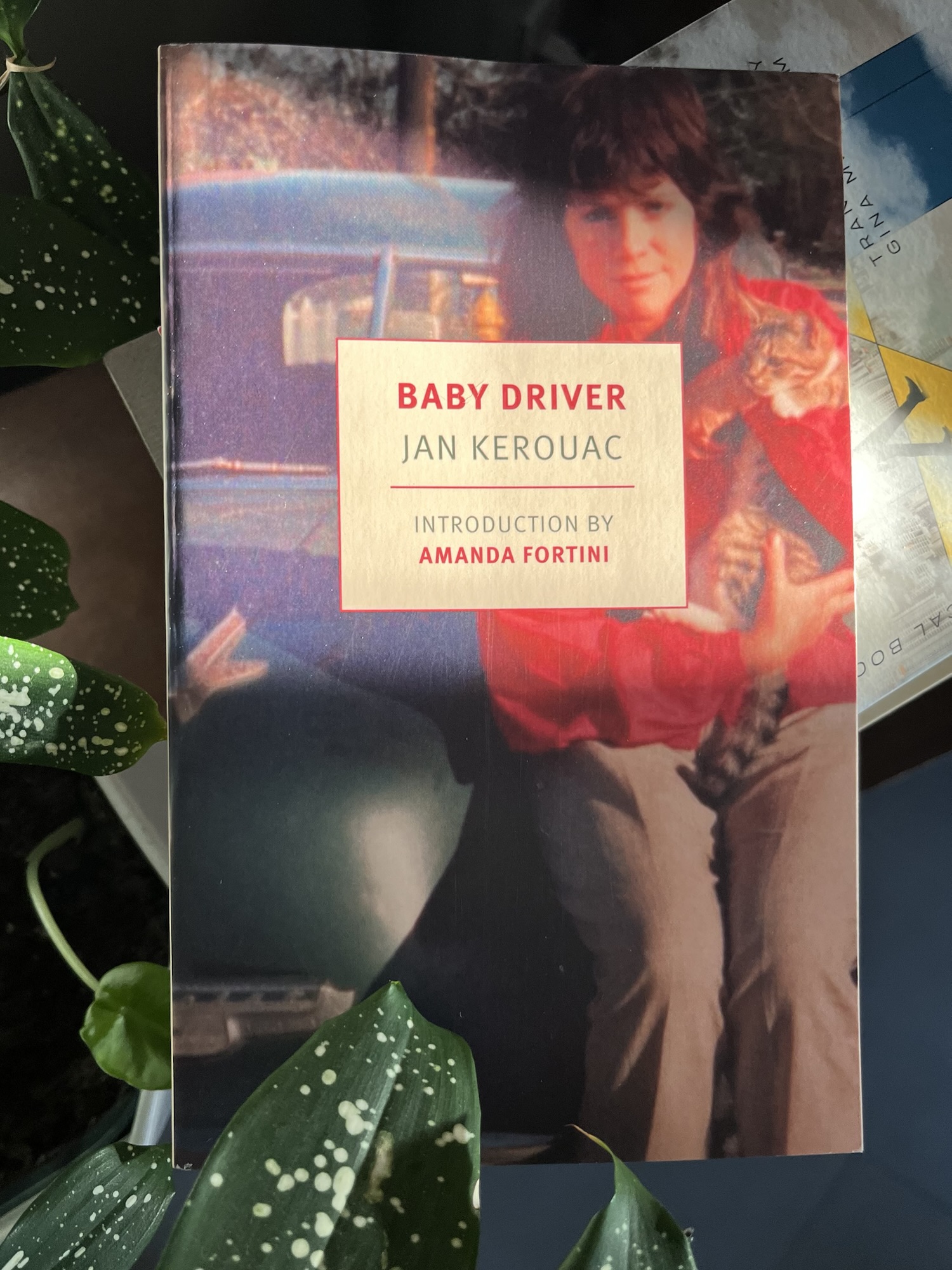
I read and reviewed Mauro Javier Cárdenas’s American Abductions back in March. It’s only in this stack — this organizing picture that I use as an outline — because it is the most timely novel in America right now. It is a novel I read, loved, and highly recommend. Its narrative power surpasses the timeliness I’ve imposed upon it.

I was, what?, maybe 200, 225 pages? into Stephen Dixon’s massive novel Frog before I abandoned it. I was really loving it, its tics, repetitions, its noisy monotonous howl, its droll jabs at normal fucking people. It could have been one of my favorite novels ever, I think, but I’m not sure I’ll ever wade back in. I tried a few times, but it’s all enmeshed with some bad intense feelings I felt in early May.

Which is what? I guess? another way of saying that reading is just a series of feelings for me now. Maybe at some point I thought of reading novels as an intellectual exercise, and maybe at one point I turned that into an ideal of an aesthetics of reading — but I don’t care about any of that shit now.

I believe in reading for

pleasure

pain

other feelings, in between and otherwise.

Mass-market Monday | Eco-Fiction

Eco-Fiction, 1971, ed. John Stadler. Pocket Books (1971). No cover artist or designer credited. 206 pages.

The cover art is by Michael Eagle (you can see his signature in the illustration).

In addition to the names listed on the back cover, this collection also features stories by J.G. Ballard, Frank Herbert, J.F. Powers and more.

The vignette “The Turtle” condenses all of The Grapes of Wrath–and most of Steinbeck’s themes in general–into four paragraphs.


“The Turtle”

by

John Steinbeck

The concrete highway was edged with a mat of tangled, broken, dry grass, and the grass heads were heavy with oat beards to catch on a dog’s coat, and foxtails to tangle in a horse’s fetlocks, and clover burrs to fasten in sheep’s wool; sleeping life waiting to be spread and dispersed, every seed armed with an appliance of dispersal, twisting darts and parachutes for the wind, little spears and balls of tiny thorns, and all waiting for animals or the hem of a woman’s skirt, all passive but armed with appliances of activity, still, but each possessed of the anlage of movement.

The sun lay on the grass and warmed it, and in the shade under the grass the insects moved, ants and ant lions to set traps for them, grasshoppers to jump into the air and flick their yellow wings for a second, sow bugs like little armadillos, plodding restlessly on many tender feet. And over the grass at the roadside a land turtle crawled, turning aside for nothing, dragging his high-domed shell over the grass: His hard legs and yellow-nailed feet threshed slowly through the grass, not really walking, but boosting and dragging his shell along. The barley beards slid off his shell, and the clover burrs fell on him and rolled to the ground. His horny beak was partly opened, and his fierce, humorous eyes, under brows like fingernails, stared straight ahead. He came over the grass leaving a beaten trail behind him, and the hill, which was the highway embankment, reared up ahead of him. For a moment he stopped, his head held high. He blinked and looked up and down. At last he started to climb the embankment. Front clawed feet reached forward but did not touch. The hind feet kicked his shell along, and it scraped on the grass, and on the gravel. As the embankment grew steeper and steeper, the more frantic were the efforts of the land turtle. Pushing hind legs strained and slipped, boosting the shell along, and the horny head protruded as far as the neck could stretch. Little by little the shell slid up the embankment until at last a parapet cut straight across its line of march, the shoulder of the road, a concrete wall four inches high. As though they worked independently the hind legs pushed the shell against the wall. The head upraised and peered over the wall to the broad smooth plain of cement. Now the hands, braced on top of the wall, strained and lifted, and the shell came slowly up and rested its front end on the wall. For a moment the turtle rested. A red ant ran into the shell, into the soft skin inside the shell, and suddenly head and legs snapped in, and the armored tail clampled in sideways. The red ant was crushed between body and legs. And one head of wild oats was clamped into the shell by a front leg. For a long moment the turtle lay still, and then the neck crept out and the old humorous frowning eyes looked about and the legs and tail came out. The back legs went to work, straining like elephant legs, and the shell tipped to an angle so that the front legs could not reach the level cement plain. But higher and higher the hind legs boosted it, until at last the center of balance was reached,  the front tipped down, the front legs scratched at the pavement, ad it was up. But the head of wild oats was held by its stem around the front legs.

Now the going was easy, and all the legs worked, and the shell boosted along, waggling from side to side. A sedan driven by a forty-year-old woman approached, She saw the turtle and swung to the right, off the highway, the wheels screamed and a cloud of dust boiled up. Two wheels lifted for a moment and then settled. The car skidded back onto the road, and went on, but more slowly. The turtle had jerked into its shell, but now it hurried on, for the highway was burning hot.

And now a light truck approached, and as it came near, the driver saw the turtle and swerved to hit it. His front wheel struck the edge of the shell, flipped the turtle like a tiddly-wink, spun it like a coin, and rolled it off the highway. The truck went back to its course along the right side. Lying on its back, the turtle was tight in its shell for a long time. But at last its legs waved in the air, reaching for something to pull it over. Its front foot caught a piece of quartz and little by little the shell pulled over and flopped upright. The wild oat head fell out and three of the spearhead seeds stuck in the ground. And as the turtle crawled on down the embankment, its shell dragged dirt over the seeds. The turtle entered a dust road and jerked itself along, drawing a wavy shallow trench in the dust with its shell. The old humorous eyes looked ahead, and the horny beak opened a little. His yellow toe nails slipped a fraction in the dust.

Sunday Comix

From “A Folk Tale” by Gilbert Hernandez, Love and Rockets #27, 1982

Leonora Carrington’s The Stone Door (Book acquired, 22 June 2025)

Superpsyched about this one. NYRB’s jacket copy:

The Stone Door is an omen, an incantation, and an adventure story rolled into one. Built in layers like a puzzle box, it is the tale of two people, of love and the Zodiac and the Kabbalah, of Transylvania and Mesopotamia converging at the Caucasus, of a mad Hungarian King named Böles Kilary and of a woman’s discovery of an initiatory code that leads to a Cyclopean obstacle, to love, self, and awareness, to the great stone door of Kescke and beyond.

Written at the end of World War II but not published until 1977 and long unavailable, The Stone Door is at once a celebration of the union of the surrealist painter Leonora Carrington and her husband, the Hungarian-born photographer Chiki Weisz, and an argument for the unification of the male and the female as a means of liberating the human race.

Flying Fish — Ōno Bakufu

Flying Fish, 1938 by Ōno Bakufu (1888-1976)

Señor Mustache Mustache Who Has Two Faces — Leonora Carrington

Illustration for “The Monster of Chihuahua,” from The Milk of Dreams by Leonora Carrington (1917 – 2011)

Untitled — Enzo Cucchi

Untitled, 2014 by Enzo Cucchi (b. 1949)

“Burke and Hare, Assassins” — Marcel Schwob

“Burke and Hare, Assassins”

by

Marcel Schwob

from Imaginary Lives

translated by Lorimer Hammond


Mr. William Burke rose from the meanest obscurity to eternal renown. Born in Ireland, he started life as a shoemaker, later practicing his trade for several years in Edinburgh where he made the acquaintance of Mr. Hare, on whom he had the greatest influence. In the collaboration of Messrs. Burke and Hare the inventive and analytic powers belonged, no doubt, to Mr. Burke, but their two names remain inseparable in art, as inseparable as the names of Beaumont and Fletcher. Together they lived, together they worked, and they were finally taken together. Mr. Hare never protested against the popular favour particularly attached to the person of Mr. Burke. Disinterestedness so complete seldom has its recompense. It was Mr. Burke who bequeathed his name to the special process that brought the two collaborators into fame. The monosyllable “Burke” will live long on the lips of men, while even now Hare’s personality seems to have disappeared into that oblivion which spreads unjustly over obscure labours.

Into his work Mr. Burke brought the faerie fancy of the green island where he was born. His soul was evidently steeped in old tales and folklore, and there was something like a far away, musty odour of the Arabian Nights in all he did. Like a caliph pacing a nocturnal garden in Baghdad, he desired mysterious adventures, curious for the glamour of strange people and unknown things.

Like a huge black slave armed with a heavy scimitar, he found for his voluptuousness no more fitting conclusion than the death of others, but his Anglo-Saxon originality led him to succeed in drawing the most practical ends from his fanciful Celtic prowlings. When his artistic joy is sated what does the black slave do with his headless carcasses? With barbarity entirely Arab, he slices them into quarters and salts them down in the cellar. What good does he get from that? Nothing. Mr. Burke was infinitely superior.

Somehow Mr. Hare served him as a sort of Dinarzade. It seemed as if the inventive powers of Mr. Burke were especially excited by the presence of his friend. The broad illusion of their dream permitted them to lodge their most pompous visions in a garret. Mr. Hare had a small chamber on the sixth floor of a tall house filled very full of Edinburghers. A sofa, a large desk and several toilet utensils were undoubtedly all the furnishings, including a bottle of whisky with three glasses on a little table. It was Mr. Burke’s rule to invite some passerby at nightfall, but he never received more than one at a time and never twice the same. He would walk through the streets examining all faces that piqued his curiosity. Frequently he chose at random, addressing the stranger with as much politeness as one could ask of a Haroun al Raschid.

The stranger would then stumble up six flights of stairs to Mr. Hare’s garret where they gave him the sofa and offered him Scotch whisky to drink. Then Mr. Burke would ask him about the most surprising incidents of his life. He was an insatiable listener, was Mr. Burke. The stranger’s recital was always interrupted before daybreak by Mr. Hare, whose manner of interrupting was invariably the same and very impressive. He had a habit of passing behind the sofa and putting his hands over the speaker’s mouth while Mr. Burke would suddenly sit down on the gentleman’s chest at the same moment. The two of them would remain thus, motionless, imagining the conclusion they never heard. In this manner Messrs. Burke and Hare terminated a large number of histories the world has never learned. When the tale was definitely stopped with the suffocation of the teller, they would explore the mystery, stripping the unknown man, admiring his jewelry, counting his money, reading his letters. Certain items of correspondence were often not without interest. Then they would lay the corpse away to cool in Mr. Hare’s big desk.

And now Mr. Burke would demonstrate the practical force of his genius. To waste none of the adventure’s pleasure, he held that the body should be fresh but not warm.

In the first years of the nineteenth century medical students had a passion for anatomy, though religious prejudices made it difficult for them to secure subjects for dissection. Mr. Burke’s clear mind had taken note of this scientific dilemma. No one knows how he first established an alliance with that venerable and learned practitioner, Dr. Knox, of the faculty of Edinburgh. Perhaps Mr. Burke had followed his public lectures in spite of the fact that his imagination inclined rather to artistic things. It is certain, however, that he promised to aid Dr. Knox as best he could, and that Dr. Knox agreed to pay him for his pains. The scale of prices varied, declining from the choice corpses of young men to the less desirable remains of the aged. The latter interested Dr. Knox only moderately and Mr. Burke held the same opinion, for old men, he claimed, always had less imagination. Dr. Knox came to be known among his colleagues for his splendid knowledge of anatomy. This dilettante life, led so enjoyably by Messrs. Burke and Hare, brought them to what was certainly the classic period of their career.

For the power of Mr. Burke’s genius soon led him beyond rules and regulations of a tragedy in which he had always a story to listen to and a confidence to keep. Alone he progressed (it is useless to consider the influence of Mr. Hare) towards a sort of romanticism. No longer satisfied with the setting provided by Mr. Hare’s garret, he invented a procedure to make use of the nocturnal fogs.

Numerous imitators have somewhat sullied the originality of his manner, but here is the veritable tradition of the master.

Mr. Burke’s fertile imagination had grown weary of tales eternally reverting to human experiences. The result never equaled his expectation. So he came at last to value only the actual aspect of death… for him unfailingly varied.

He concentrated his drama in the dénouement. The quality of the actors no longer mattered; he trained them at random, and his only property of the theatre was a canvas mask filled with pitch. Mask in hand, he would walk out on foggy nights accompanied by Mr. Hare. Approaching the first individual who chanced to pass, he would walk a few steps in front, then turn and place the mask quickly and firmly over the subject’s face. Immediately Messrs. Burke and Hare would grasp the arms of their actor, one on each side. The mask full of pitch presented simply a genial instrument for stifling cries and strangling. It was tragic. The fog muffled the gestures of the rôle and softened them. Some of the actors seemed to mimic drunken men. This short scene over, Messrs. Burke and Hare would take a cab in which they would disrobe their guest, Mr. Hare caring for the costumes while Mr. Burke delivered the cadaver fresh and clean to Dr. Knox.

Unlike most biographers it is here I leave Messrs. Burke and Hare, at the peak of their glory.

Why destroy such an artistic effect by requiring them to languish along to the end of their lives, revealing their defects and their deceptions? We need only remember them, mask in hand, walking abroad on foggy nights. For their end was sordid like so many others. One of them, it appears, was hanged and Dr. Knox was forced to quit Edinburgh.

Mr. Burke left no other works.

The Disappeared — Ken Unsworth

The Disappeared, 1988 by Ken Unsworth (b. 1931)

The Night Heron — Lionel Lindsay

The Night Heron, 1935 by Lionel Lindsay (1874-1961)

Reputed Fair — Jesse Mockrin

Reputed Fair, 2023 by Jesse Mockrin (b. 1981)

Sunday Comix

From New Mutants #25, 1985 by Bill Sienkiewicz and Chris Claremont

“6/21” — Adrienne Rich

Konstantin Vaginov’s Goat Song (Book acquired, c. early May 2025)

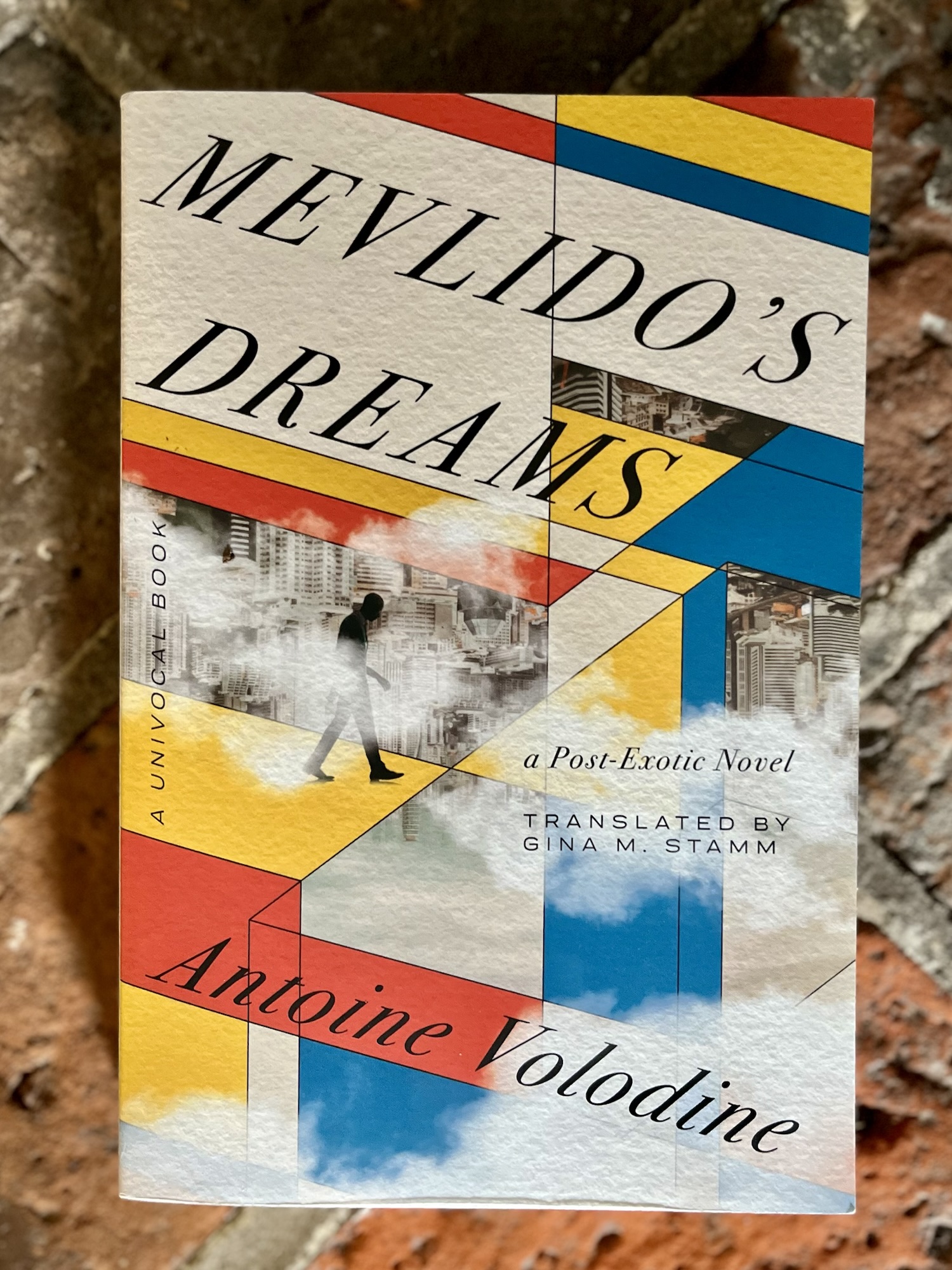
I kinda sorta lost a big chunk of May this year, and some of the books that arrived at Biblioklept World Headquarters slipped through the cracks. Here, the cliche slipped through the cracks means got piled up in the wrong pile. Ainsley Morse’s and Geoff Cebula’s translation of Konstantin Vaginov’s Goat Song was one of these slipped-crack-wrong-pile titles. The volume actually collects two short novels by Vaginov: Goat Song, and Works and Days of Whistlin. Publisher NYRB’s blurb:

Konstantin Vaginov was an early and exemplary figure of Soviet modernist writing in all its agonized and glorious contradictions. Born into an educated middle-class family, Vaginov came of age with the Revolution. His novels of the late 1920s and early ’30s are daringly experimental and tragically nostalgic, using mercilessly ironic prose to mourn the loss of prerevolutionary intellectual culture. Adrift in the brave new Soviet world, Vaginov’s protagonists attempt to conjure the recent and distant past by stockpiling old books and songs, vulgar baubles and bad jokes, newspaper clippings, coins, and graffiti.

This volume contains two novels: Goat Song features thinly veiled portraits of Vaginov’s contemporaries as they flounder and self-destruct in their new bracingly materialist circumstances. Echoing Gogol, Dostoyevsky, and Bely, Goat Song is both a classic Petersburg city text and its swan song: “Now there is no Petersburg . . . the author is a coffin-maker by trade, not a cradle expert.”

Works and Days of Whistlin follows the novelist Whistlin as he unscrupulously mines the lives of his friends and fellow citizens for literary material. His exploitation of human material is a wry commentary on the concurrent efforts to industrialize and collectivize the Soviet economy, at a horrific human cost.