By the time this cigarette is finished, a rusted elegance will emerge

Anna Seghers’s short story collection, The Dead Girls’ Class Trip (Book acquired, 14 May 2021)

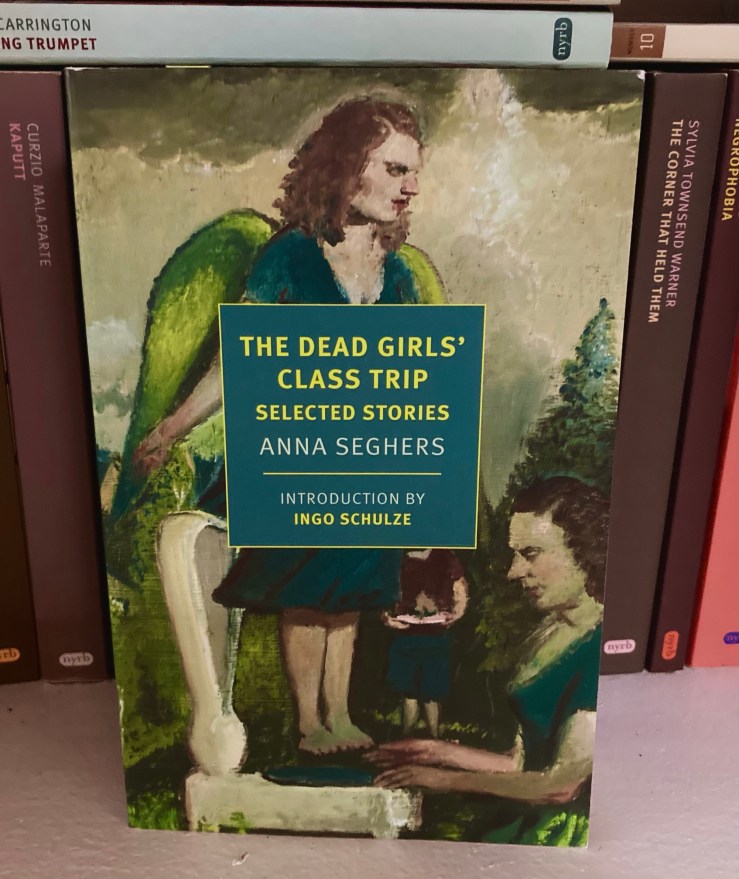
NYRB have a collection of Anna Seghers’s short stories coming out next month. The Dead Girls’ Class Trip is both translated and edited by Margot Bettauer Dembo and includes an introduction by German author Ingo Schulze. There are sixteen stories in the collection, some quite long and others quite short. Many have ominous titles, like “Jan Is Going to Die,” “Shelter,” “The End,” “A Man Becomes a Nazi,” and the title story, of course. I read a shorter tale the other day, “The Square,” and it was a depressing little ominous microfiction. I also read “The Three Trees,” three micros arboreally bound. The first piece, “The Knight’s Tree,” condenses history, humor, and despair into a few sentences:

The Dead Girls’ Class Trip drops mid June from NYRB. Their blurb:

Best known for the anti-fascist novel The Seventh Cross and the existential thriller Transit, Anna Seghers was also a gifted writer of short fiction. The stories she wrote throughout her life reflect her political activism as well as her deep engagement with myth; they are also some of her most formally experimental work. This selection of Seghers’s best stories, written between 1925 and 1965, displays the range of her creativity over the years. It includes her most famous short fiction, such as the autobiographical “The Dead Girls’ Class Trip,” and others, like “Jans Is Going to Die,” that have been translated into English here for the first time. There are psychologically penetrating stories about young men corrupted by desperation and women bound by circumstance, as well as enigmatic tales of bewilderment and enchantment based on myths and legends, like “The Best Tales of Woynok, the Thief,” “The Three Trees,” and “Tales of Artemis.” In her stories, Seghers used the German language in especially unconventional and challenging ways, and Margot Bettauer Dembo’s sensitive and skilled translation preserves this distinction.

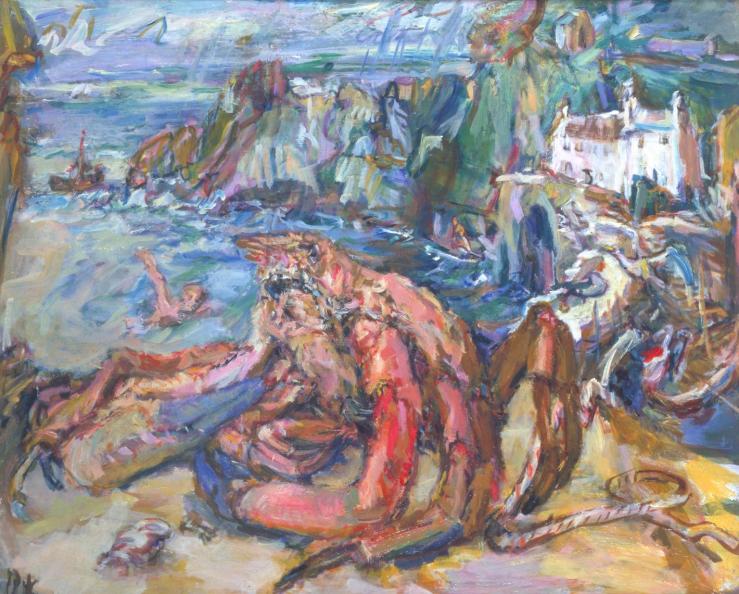
The Crab — Oskar Kokoschka

The Crab, 1940 by Oskar Kokoschka (1886-1980)

Blog about some recent reading

The last little bit of Spring trickles away here in North Florida, where beautiful days with highs of 82℉ promise to turn into burning sweaty hell in the next week or two. The Spring 2021 semester is behind me, and I’ve found a lot more time to read. So, re: pic, bottom to top:

Paul Kirchner’s latest collection Dope Rider: A Fistful of Delerium is dope goofy gorgeousness. I’ve been taking it a page a day or so and am about to run out of the stash. I hope to have a review of it soon (maybe in The Comics Journal, where I reviewed Kirchner’s last collection, Hieronymus & Bosch).

Paul Kirchner

I also read some comix by Drew Lerman, and wrote about them here.

Drew Lerman

I picked up Rachel Cusk’s much-lauded novel Outline a few weeks ago at a Friends of the Library Sale. It was not for me. The flat, “tell-don’t-show” style didn’t bother me—indeed the prose is very “readable” (whatever that means)—but I found myself rolling my eyes a lot. A lot of smart people like this novel (and the trilogy it initiates), so maybe I fundamentally misread it. And in fairness, the whole contemporary autoficiton thing has left me cold, with the possible exception of Elena Ferrante’s so-called Neopolitan Novels, which I loved.

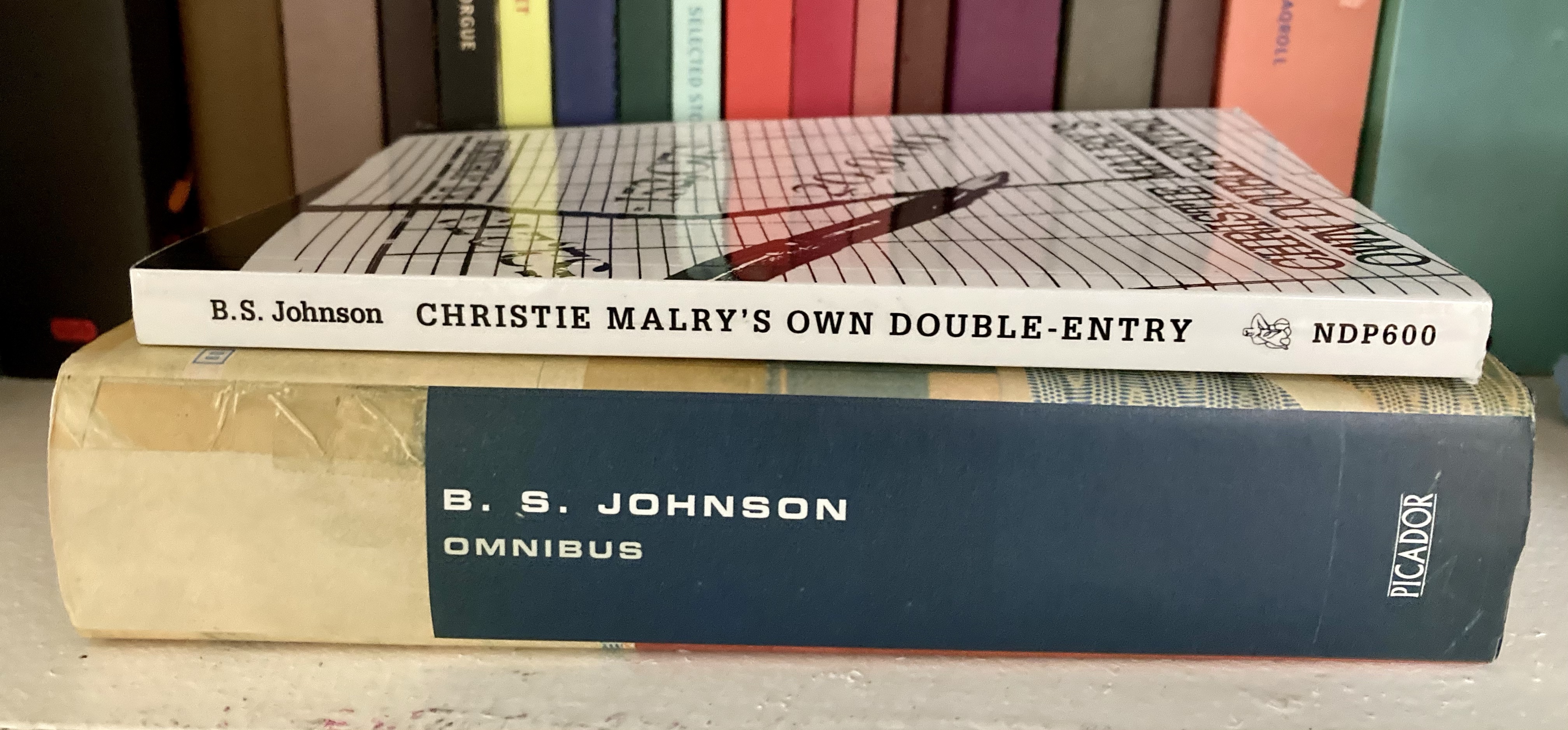
I read four B.S. Johnson novels in something of a blur. Johnson was an English avant-gardiste writing primarily in the 1960s. I wrote a bit about some of the novels hereChristie Malry’s Own Double-Entry ended up being my favorite, with Albert Angelo a close second. I thought Trawl was extremely tedious. I broke down and ordered a copy of his “novel in a box,” The Unfortunates—maybe I’ll muster the energy for something bigger on Johnson.

I’m a little over half way through Patrick Suskind’s Perfume (trans. by John E. Woods), and I really dig it—it feels like a long time since I’ve read a good ole fashioned historical novel told in the third-person omniscient/free indirect style. Set in France in the mid-1700’sPerfume is the story of Jean-Baptiste Grenouille, a perfume genius, a freak, a murderer. I’d seen Tom Twyker’s film adaptation years ago, but the novel is richer, taking us deeper into Grenouille’s strange mind. Great stuff.

I recently finished Norah Lange’s fragmentary memoir, Notes from Childhood (trans. by Charlotte Whittle). It’s a propulsive and rich read, a loving but unsentimental, magical without a trace of whimsy. I wrote about it a bit here.

New Snake Creek comix from Drew Lerman

I’ve been a fan of Drew Lerman’s strip Snake Creek for a few years now. Reviewing Lerman’s first collection (simply titled Snake Creek) in The Comics Journal, Brian Nicholson wrote that,

Looking at these strips, you’re looking at something that recalls George Herriman, Harvey Kurtzman, Robert Crumb, Daniel Clowes, Matt Groening, but also thinking: What if Stanley Elkin drew a comic strip?

What if Elkin drew a comic strip indeed?

Like Elkin, Lerman plays with a variety of voices and rhythms in his work. There’s a zaniness to the Snake Creek world, but also an almost-melancholy seriousness to it as well. His main characters are Dav and Roy. Roy is something of a would-be tortured artist; Roy his familiar/foil, a spritely interlocutor to bounce ideas off of. Like the swamp-dwellers of Walt Kelly’s seminal strip Pogo, there’s a real affection between the two characters that anchors the surreal plasticity of Lerman’s work in genuine emotion.

I got three Snake Creek comix last week and tried not to read them too quickly on Sunday afternoon. I needed to get the bad taste of a Serious Contemporary Novel out of my brain, and Detective! Double Digest did the trick. There are two stories here: Lerman’s “Cryonic Pain: A Snake Creek Mystery” and on the literal flipside, Pete Faecke’s “The Big Love Triangle” (which has a scuzzy punk noir vibe).

From Pete Faecke’s “The Big Love Triangle.”

Lerman’s detective story is an existentialist affair—a goofing riff on the myth of Sisyphus and the burden of a consciousness constrained by mortality and time. It’s also full of verbal slapstick and surreal shenanigans.

From Drew Lerman’s “Cryonic Pain.”
Back cover of Drew Lerman’s Schtick

Schtick is a mini-comic in full color compromised of five vignettes, each one a riff or routine rooted in vaudevillian humor and composed in an original vernacular. The longest of the pieces, “Herbit and Sheiler,” is an extended play on linguistic misunderstandings—good stuff.

From Drew Lerman’s strip “Levi & Cohn,” Schtick

My favorite of the three comix is the most recent, “Head Trip,” the cover feature for the latest issue of the Miami-based comics journal Spiny Orb Weaver. (The issue also features an essay by comics critic Rob Clough, an autobiographical comic by Chris López, and a lengthy interview with Lerman, conducted by SOW editor Neil Brideau.)

Detail from Drew Lerman’s cover for Spiny Orb Weaver no. 2

“Head Trip” sees Dav and Roy trying to take Snake Creek’s most anguished character, Head on a Stone, on an adventure he can remember. Unable to move or communicate, but nevertheless burdened by consciousness, Head on a Stone is a tragic figure, a “pulsing node of dread,” as Dav puts it. Dav and Roy decide, in their wisely wisdom, to take the large rock seafaring. What follows is an ironic series of tragic-comic-tragic-etc. reversals of fortune (as well as some of Lerman’s most lyrical work to date with his strip). “Head Trip” is as linguistically loose and visually goofy as we might expect from anything set in the Snake Creek universe, and also achieves a level of poignancy we might not expect. Great stuff.

From Drew Lerman’s “Head Trip.”


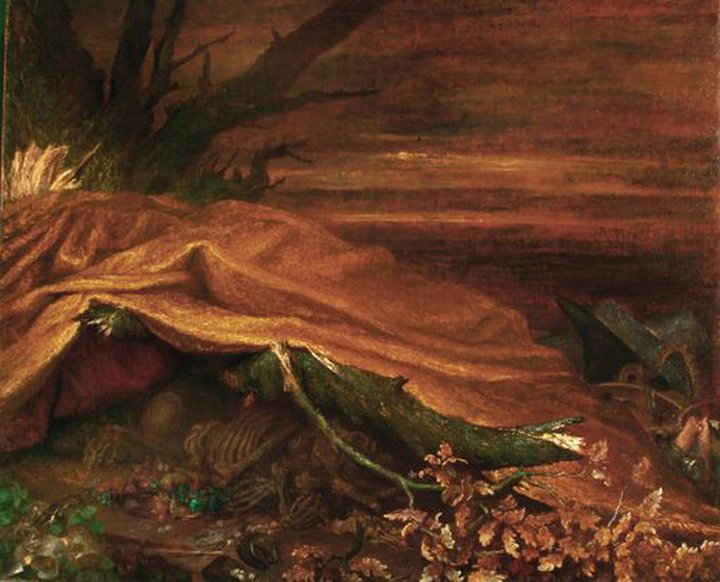
Can These Bones Live? — George Frederic Watts

Can These Bones Live?, 1898 by George Frederic Watts (1817–1904)

Don’t understand

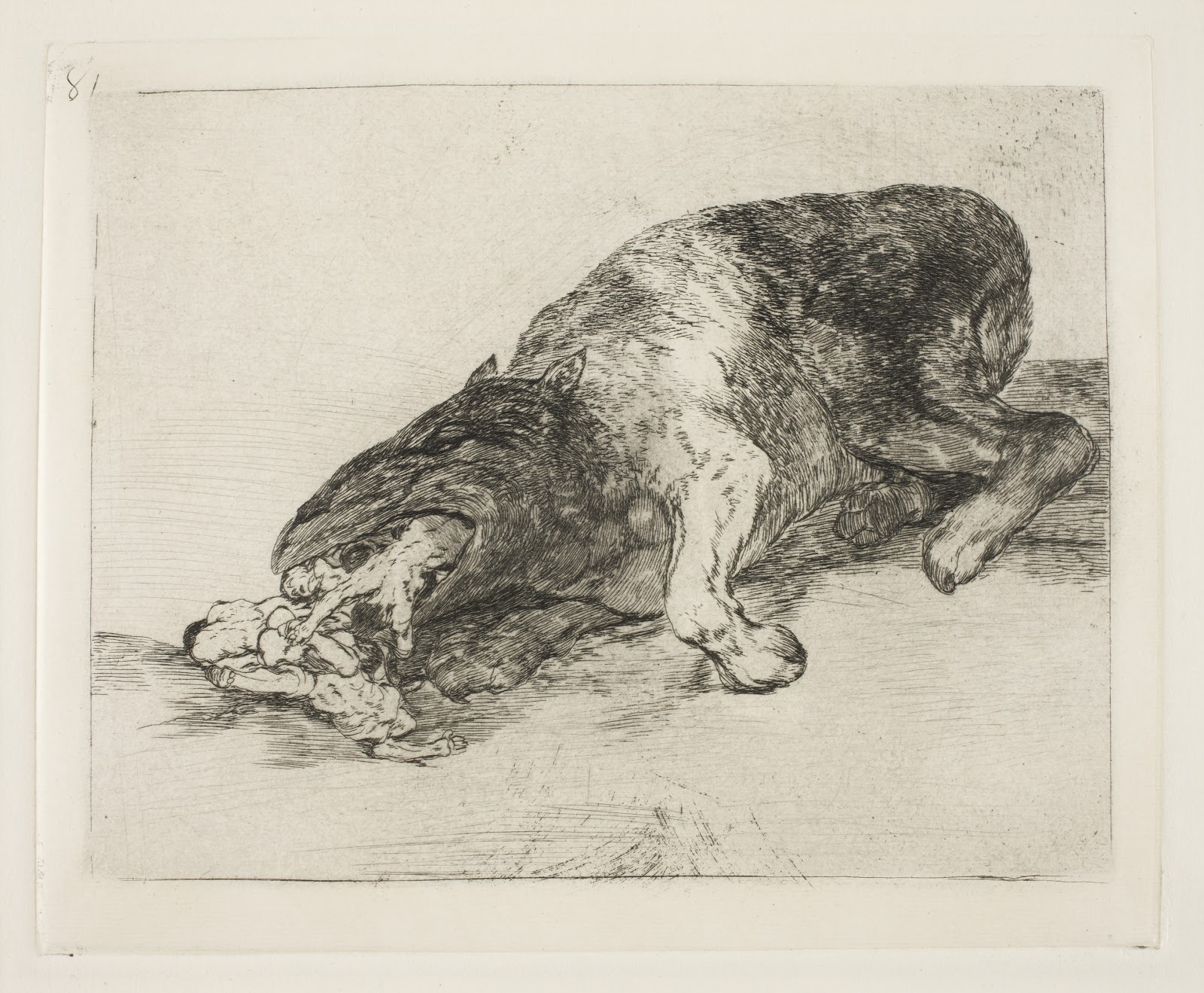
Fierce Monster! — Francisco Goya

Fierce Monster!, 1810s, by Francisco Goya (1746-1828). From The Disasters of War.

“Upon Arrival” — Lena Khalaf Tuffaha

“Upon Arrival”
by
Lena Khalaf Tuffaha

You will need to state the reason for your visit.
Don’t say because I want to walk down old roads
and caress stone walls the color of my skin.
You will need to state the reason for your visit.
Don’t say because the olives are ready for harvest
and I will coax the fruit from the trees,
press it into liquid gold.
You will need to state the reason for your visit.
Don’t say because my parents’ house
still sits empty on a bluff overlooking the sea,
the green shutters my grandfather had just painted
remain sealed shut
and the army listed the property’s owners
as absentees.
You will need to state the reason for your visit.
Don’t say because I am carrying prayers in my suitcase
for a people who wait,
and I’ll unfold them
embroidered linens of verse
and spread them out across the land.

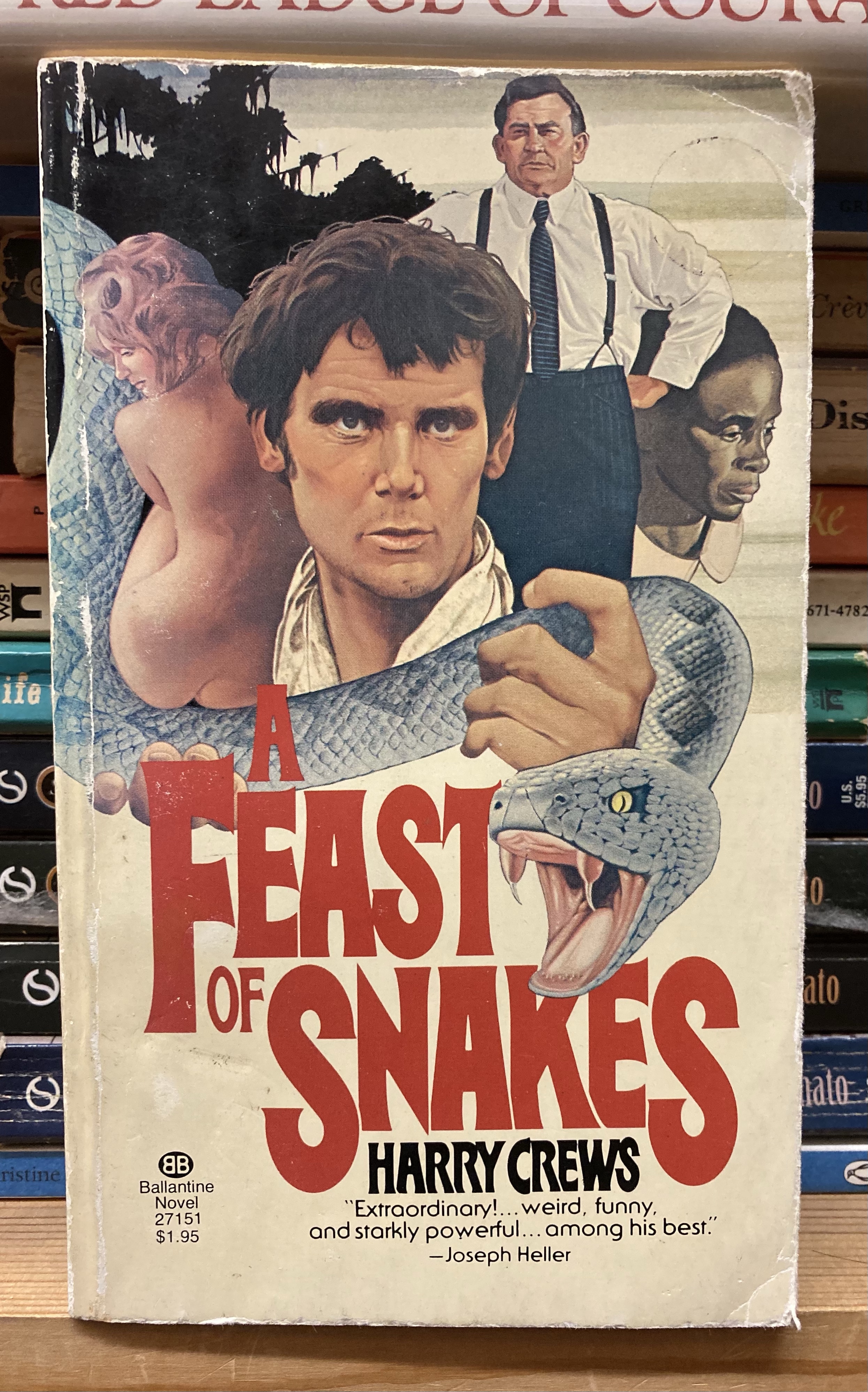
A lurid paperback copy of Harry Crews’s lurid novel A Feast of Snakes (Lurid book acquired, 14 May 2021)

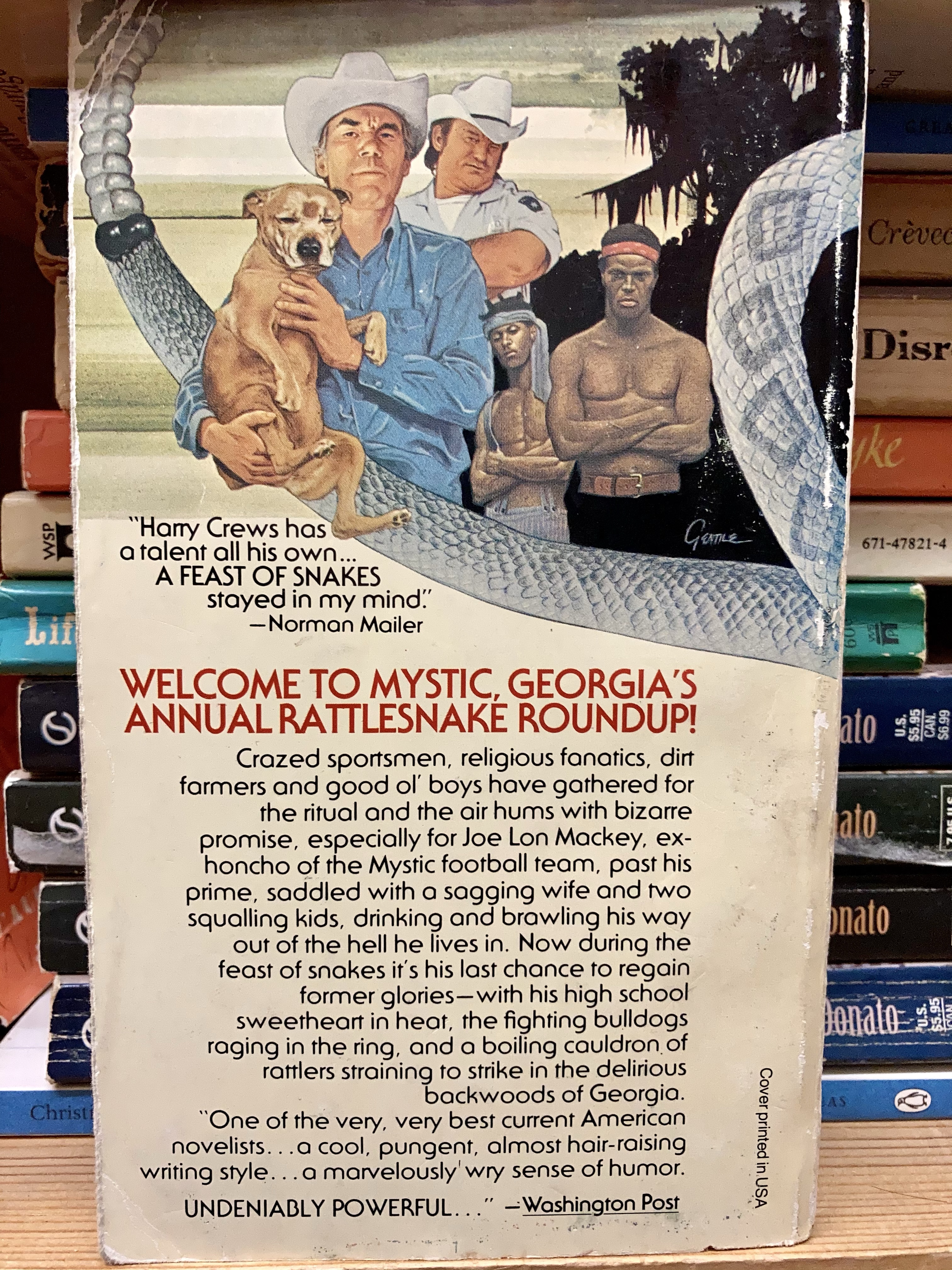
I love to browse my local used bookstore of a Friday afternoon. This afternoon I came across a copy of my favorite Harry Crews novel, A Feast of Snakes. It’s a 1978 massmarket edition from Ballantine. The lurid cover captures the novel’s lurid spirit. It wraps around; here’s the back (I’d scan the whole thing flat but I don’t think the book’s spine would survive):

The art seems to be signed with the (last I’m guessing?) name “Gentile.” If anyone can confirm I’d appreciate it.

I shared the cover on Twitter, where one user pointed out that the publishers seemed to be “pre-emptively casting the film,” with Ed Asner in a supporting role. I’m guessing they would’ve wanted Burt Reynolds for Joe Lon.

The cover captures the sweaty abjection of A Feast of Snakes—it’s a nasty, gnarly novel that pushes the so-called “Southern Grotesque” style into new, gross, territory. If you haven’t read Crews, it’s a perfect starting point (although I’m sure that the novel is like, problematic or whatever in many, many ways). I love the cover, as I’ve said–it fits the novel wonderfully, unlike the more “respectable” cover for my 1998 edition (which I’ll be trading in now):


From the novel: not quite a recipe for snakes:

When they got to his purple double-wide, Joe Lon skinned snakes in a frenzy. He picked up the snakes by the tails as he dipped them out of the metal drums and swung them around and around his head and then popped them like a cowwhip, which caused their heads to explode. Then he nailed them up on a board in the pen and skinned them out with a pair of wire pliers. Elfie was standing in the door of the trailer behind them with a baby on her hip. Full of beer and fascinated with what Joe Lon could feel—or thought he could—the weight of her gaze on his back while he popped and skinned the snakes. He finally turned and looked at her, pulling his lips back from his teeth in a smile that only shamed him.

He called across the yard to her. “Thought we’d cook up some snake and stuff, darlin, have ourselves a feast.”

Her face brightened in the door and she said: “Course we can, Joe Lon, honey.”

Elfie brought him a pan and Joe Lon cut the snakes into half-inch steaks. Duffy turned to Elfie and said: “My name is Duffy Deeter and this is something fine. Want to tell me how you cook up snakes?”

Elfie smiled, trying not to show her teeth. “It’s lots of ways. Way I do mostly is I soak’m in vinegar about ten minutes, drain’m off good, and sprinkle me a little Looseanner redhot on’m, roll’m in flour, and fry’m is the way I mostly do.”

The novel should now try simply to be Funny, Brutalist, and Short | From B.S. Johnson’s novel Christie Marly’s Own Double-Entry

‘Christie,’ I warned him, ‘it does not seem to me possible to take this novel much further. I’m sorry.’

‘Don’t be sorry,’ said Christie, in a kindly manner, ‘don’t be sorry. We don’t equate length with importance, do we ? And who wants long novels anyway ? Why spend all your spare time for a month reading a thousand-page novel when you can have a comparable aesthetic experience in the theatre or cinema in only one evening ? The writing of a long novel is in itself an anachronistic act : it was relevant only to a society and a set of social conditions which no longer exist.’

‘I’m glad you understand so readily,’ I said, relieved.

‘The novel should now try simply to be Funny, Brutalist, and Short,’ Christie epigrammatised.

‘I could hardly have expressed it better myself,’ I said, pleased, ‘I’ve put down all I have to say, or rather I will have done in another twenty-two pages, so surely. . . .”

‘So I do go on a little longer ?’ interrupted Christie.

‘Yes, Christie, you go on to the end,’ I assured him, and myself went on : ‘Surely no reader will wish me to invent anything further, surely he or she can extrapolate only too easily from what has gone before ?’

‘If there is a reader,’ said Christie. ‘Most people won’t read it.’

‘Politicians, policemen, some educators and many others treat “most people” as idiots.’

‘So writers may too ?’

‘On the contrary. “Most people” are right not to read novels today.’

‘You’ve said all this before.’

‘I’m very likely to say it again, too, since it’s true.’

A pause. Then suddenly Christie said :

‘Your work has been a continuous dialogue with form ?’

‘If you like,’ I replied diffidently.

‘Only one of the things it’s been,’ said Christie generously. ‘It’s something to aspire to, becoming a critic ! Though there are too many exclamation marks in this novel already.’

Another pause. One of the girls in what is ill-reputed to be a brothel opposite hung out the shirt of what might be her ponce. Christie smiled gently, turned back to me.

‘But I am to go on for a while ?’

‘Of course,’ I assured him again.

‘Until I have everything ?’

‘Yes, Christie, until you have everything.’

The excerpt above is the complete text of Ch. XXI of B.S. Johnson’s 1973 novel, Christie Marly’s Own Double-Entry. The title of the chapter is “In which Christie and I have it All Out; and which You may care to Miss Out.” The chapter begins with this epigraph:

. . . the novel, during its metamorphosis in respect of content and form, necessarily regards itself ironically. It denies itself in parodistic forms in order to be able to outgrow itself.
Széll Zsuzsa
Válságés regény (p. 101)
Akadémia (Hungary) 1970
transl. by Novák Gyorgy

This particular chapter might stand as a synecdoche of Christie Marly’s Own Double-Entry itself.

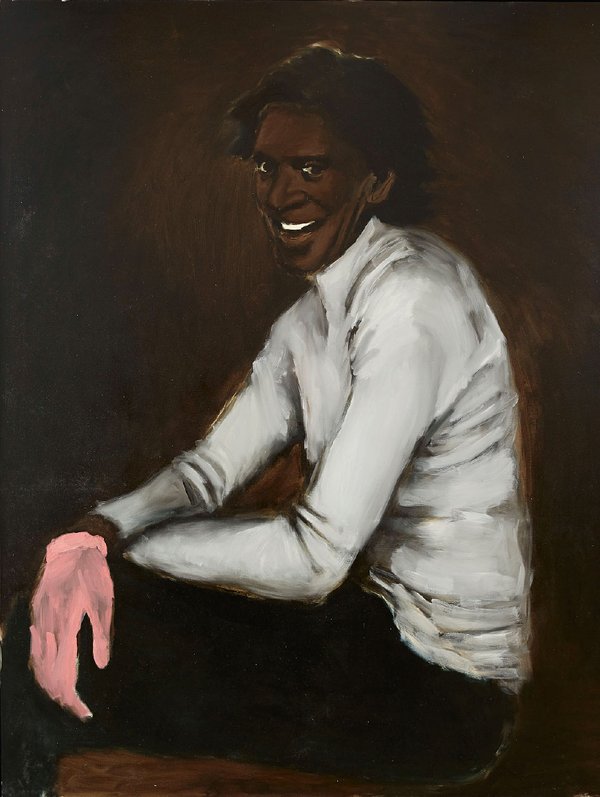
Wrist Action — Lynette Yiadom-Boakye

Wrist Action, 2010 by Lynette Yiadom-Boakye (b. 1977)

Watch — Eric Fischl

Watch, 2015 by Eric Fischl (b. 1948)

“Once There Came a Man” — Stephen Crane

“Once There Came a Man”
by
Stephen Crane

Once there came a man
Who said:
“Range me all men of the world in rows.”
And instantly
There was a terrific clamor among the people
Against being ranged in rows.
There was a loud quarrel, world-wide.
It endured for ages;
And blood was shed
By those who would not stand in rows,
And by those who pined to stand in rows.
Eventually, the man went to death, weeping.
And those who stayed in the bloody scuffle
Knew not the great simplicity.

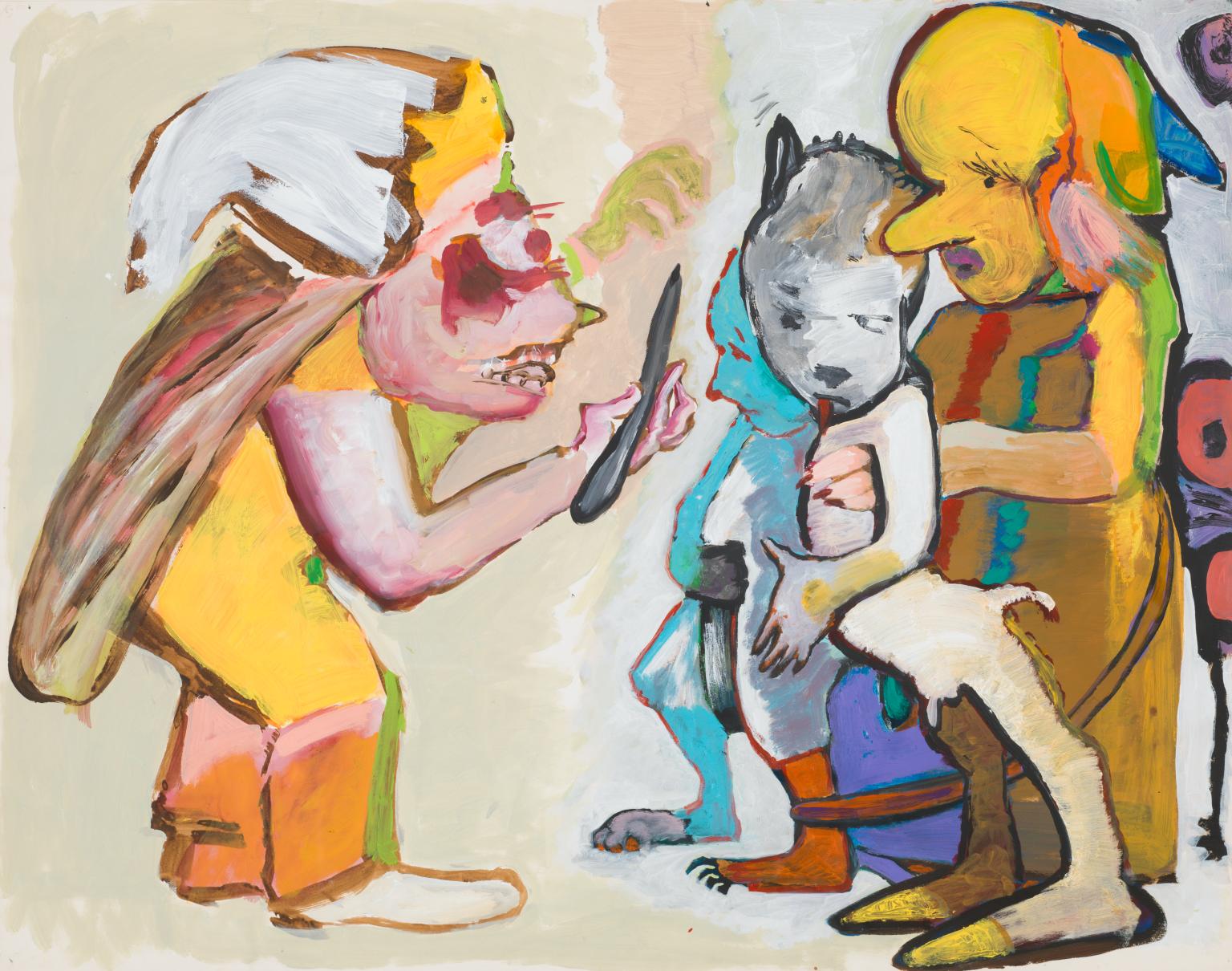
Nanny, Small Bears and Bogeyman — Paula Rego

Nanny, Small Bears and Bogeyman, 1982 by Paula Rego (b. 1935)

Four novels by the sixties avant-garde novelist B.S. Johnson (Books acquired the first week of May, 2021)

I think the first time I heard of the British experimental novelist B.S. Johnson was some time around 2008 or so, when New Directions republished his “book in a box,” The Unfortunates (1969). I thought it sounded like a cool but maybe gimmicky idea at the time, and then Johnson dropped off my radar until more recently. I started to see his name pop up when I’d search out more information about the British avant-garde novelist Ann Quin, whose novel Berg I consider perfect.

So I asked around and ended up finding an online copy of Picador’s omnibus reissue of three of Johnson’s novels: Albert Angelo (1964), Trawl (1966), and House Mother Normal (1971). I also ordered Johnson’s penultimate novel Christie Malry’s Own Double-Entry (1973) (as well as a copy of The Unfortunates which has yet to arrive).

I tucked into the omnibus last week, starting with Albert Angelo, which I think is the superior of the three novels the edition collects (I’ve still got a final third of Trawl to go, but I can’t see it turning a corner). AA is an experimental pastiche, a bildungsroman that ironizes the künstlerroman. Our hero Albie, trained as an architect, makes his so-called living as a substitute teacher in some of London’s rougher schools. His narrative is an assemblage of stream-of-consciousness, dramatic dialogues, advertisements, and other rhetorical techniques—including literally cutting out parts of a few pages.
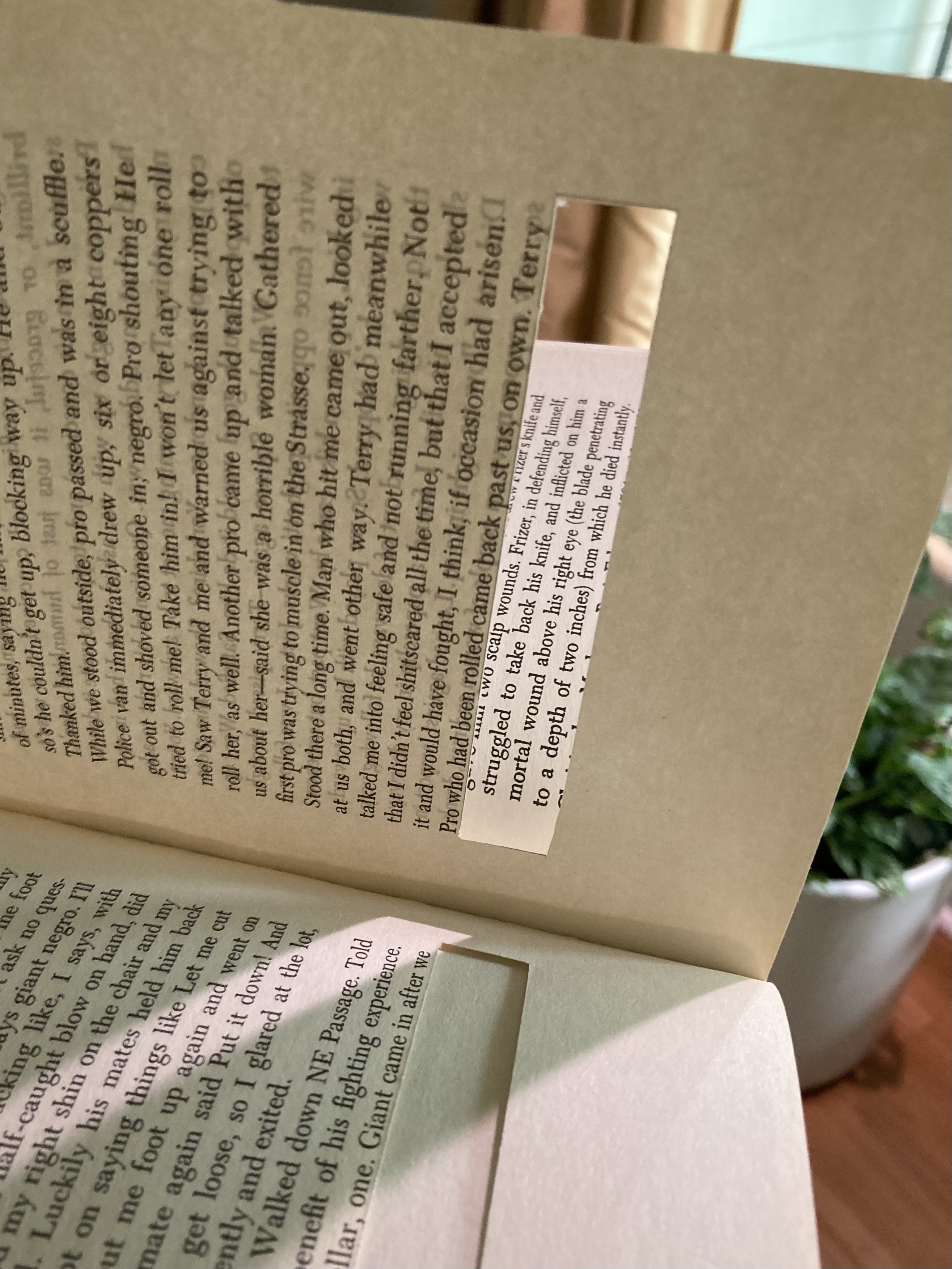
Albie is angry and witty and generally good company throughout the brief novel. Albert Angelo will resonate with teachers who remember those rough first years—sympathy with the students, anger at the system, but also a realization that they are in a kind of battle to earn the respect of their pupils. (Near the end of the novel, we get a litany of student essays that Albie has assigned. The subject: Albie himself. Student reviews are, for the most part, scathing.) Johnson’s assemblage is impressive, energetic, and still feels fresh over fifty years later.

House Mother Normal is also a lively novel, with an energy we might not expect in a novel subtitled A Geriatric Comedy. The novel takes place over a few hours in a single day in a nursing homes, telling the same “narrative” from the viewpoint of eight residents—as well as the titular house mother. Each resident (and the house mother) gets twenty-one pages to relate their version of the days events. Or, more accurately, we dwell in their consciousness for those twenty-one pages. Some residents are of clearer minds than others, but together, they offer a fragmented minor Sadean saga that is both abject and occasionally moving.

Trawl is a more “traditional” novel, at least in the modernist sense. Unlike House Mother Normal and Albert AngeloTrawl takes a straightforward, stream-of-consciousness first-person tack, detailing three weeks the narrator—a version of Johnson himself—spent on a deep-sea trawler in the Barents Sea. It’s a sort of memoir, loosely figured around the various women that the narrator has successfully or unsuccessfully bedded, with dips into his childhood billeted away from his London family in World War II. In between, we get snapshots of life on the trawler. The unifying theme of the book is shame, paralleled with the narrator’s desire to create a work of Great Art. The narrator peppers his memoir with interjections that the whole thing is boring, worthless, and meaningless. Like I mentioned above, I haven’t gotten to the end of Trawl, but it became a slog about a third of the way in. Johnson’s narrator hems and haws, hedges and defers—and comments on his hemming and hawing. It seems to approach the confessional style of American poetry in the l950s and 1960s without revealing too much. I don’t know. There’s something guarded about it, even as it tries to be a naked affair. I’m hoping I like Christie Malry’s Own Double-Entry more. Here’s publisher New Direction’s blurb:

In a brief but productive career, B.S. Johnson (1933-73) was recognized as the most original of the English experimental writers of his generation. Combining a bellicose avant-gardism with pointed social concerns, he won the praise of critics and fellow writers as well as a readership not usually gained by a literary maverick. Christie Malry’s Own Double-Entry is Johnson’s most broadly humorous book, though as readers will discover, his humor has a bite. Christie is a simple man. His job in a bank puts him next to but not in possession of money. He encounters the principles of Double-Entry Bookkeeping and adapts them in his own dramatic fashion to settle his account with society. Under the column headed “Aggravation” for offenses received from society (the unpleasantness of the bank manager is the first on an ever-growing list), debit Christie; under “Recompense,” for offenses given back (scratching the façade of an office block), credit Christie. All accounts are to be settled in full, and they are — in the most alarming way.

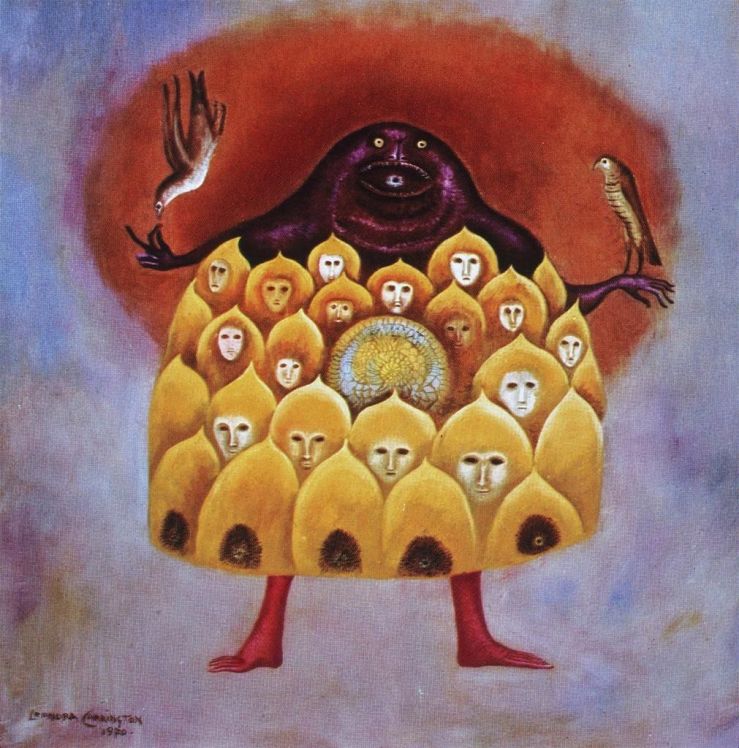
The God Mother — Leonora Carrington

08a11b329eca88910d78417434a56882

The God Mother, 1970 by Leonora Carrington (1917–2011)