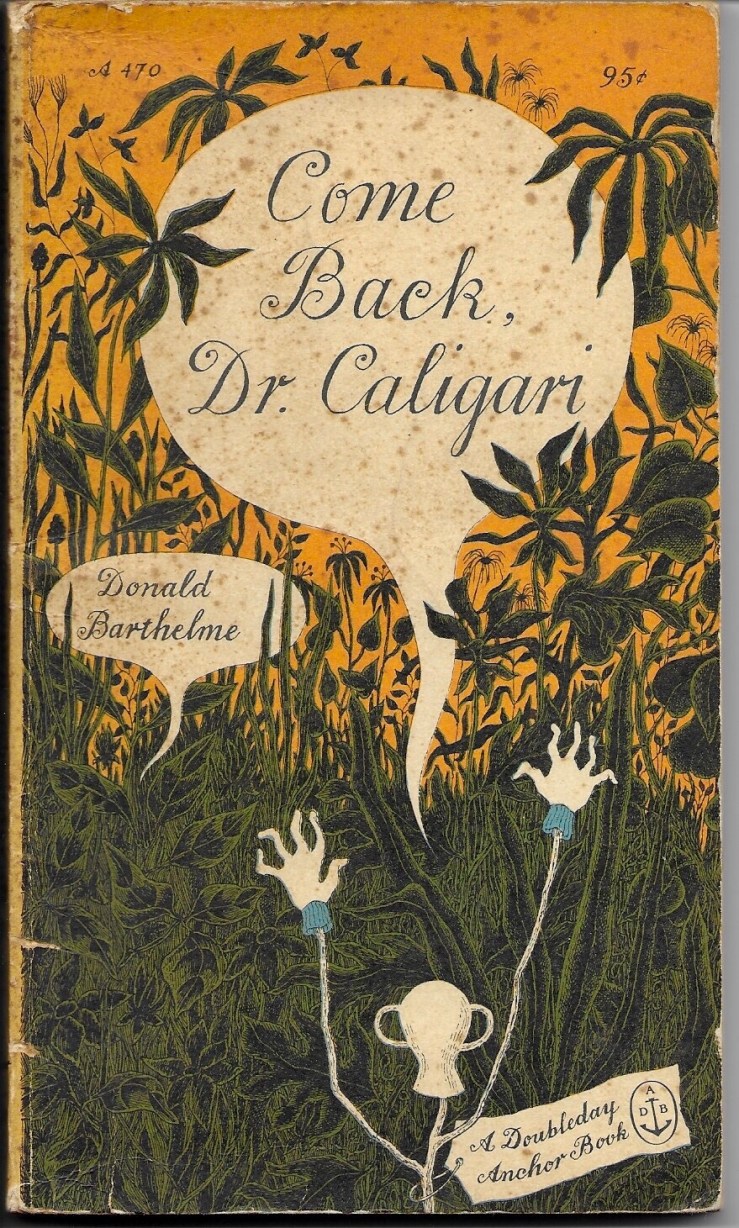
Three Books (Books acquired, 16 Oct. 2020–John Barth, Walker Percy, and Padgett Powell)

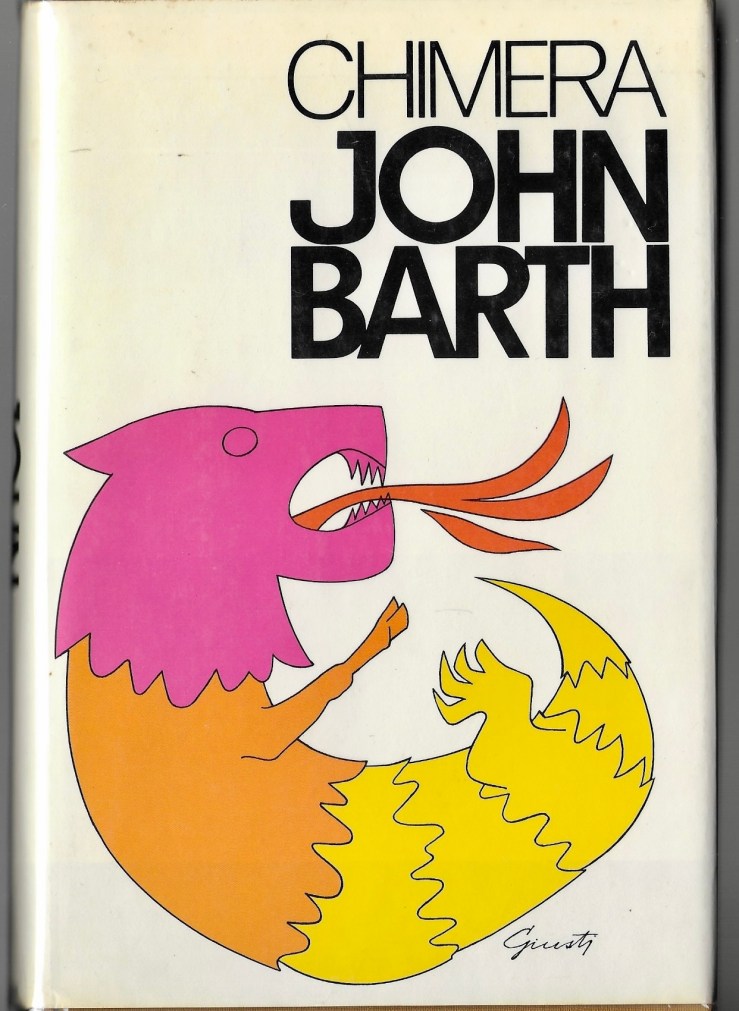
Chimera by John Barth. First edition 1973 hardback from Random House. Jacket design by George Giusti.

I couldn’t pass up this pristine first edition Barth today when browsing the used bookstore with my kids. I first read Chimera twenty or more years ago, as an undergrad, and it broke my brain a bit.

The Last Gentleman by Walker Percy. Second printing 1972 trade paperback from Noonday. Cover design by Janet Halverson.

Earlier this year in the same used bookshop I came across a first edition hardback copy of Percy’s 1971 novel Love in the Ruins. I hadn’t read Percy at the time (I’ve since loved his later novel Lancelot and been kinda sorta iffy on his famous debut The Moviegoer), but Janet Halverson’s oh-so-seventies Schoolhouse Rock!ish cover grabbed my attention. I really wish I’d bought it now (I think it was six bucks). Two weeks ago I came across two more Percys (Percies?) with Halverson covers, but let them be. But not today—at least not for this copy of The Last Gentleman.

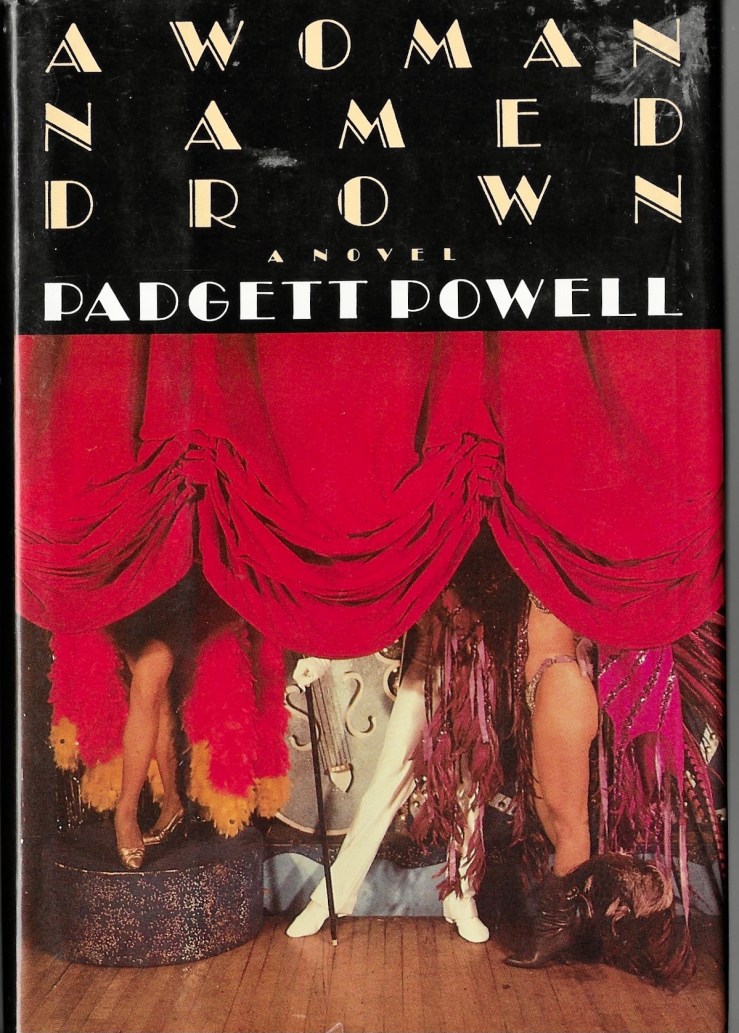
A Woman Named Drown by Padgett Powell. First edition 1987 hardback from FS&G.. Jacket design by Cynthia Krupat, using a photograph by William Wegman.

On the aforementioned-fortnight-last trip to the bookstore, I picked up, somewhat at random, Padgett Powell’s first novel Edisto. I finished it in three days, enjoying it very much, so I couldn’t pass up this copy of his slim second novel today.

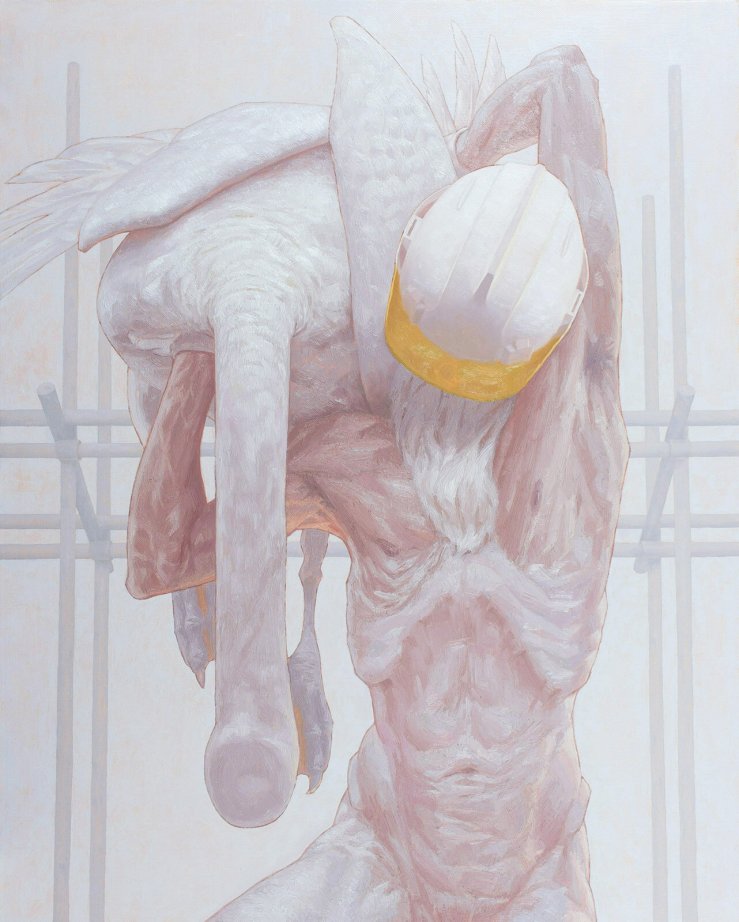
Atlas — Dragan Bibin

Atlas, 2020 by Dragan Bibin (b. 1984)

Did not make the second show

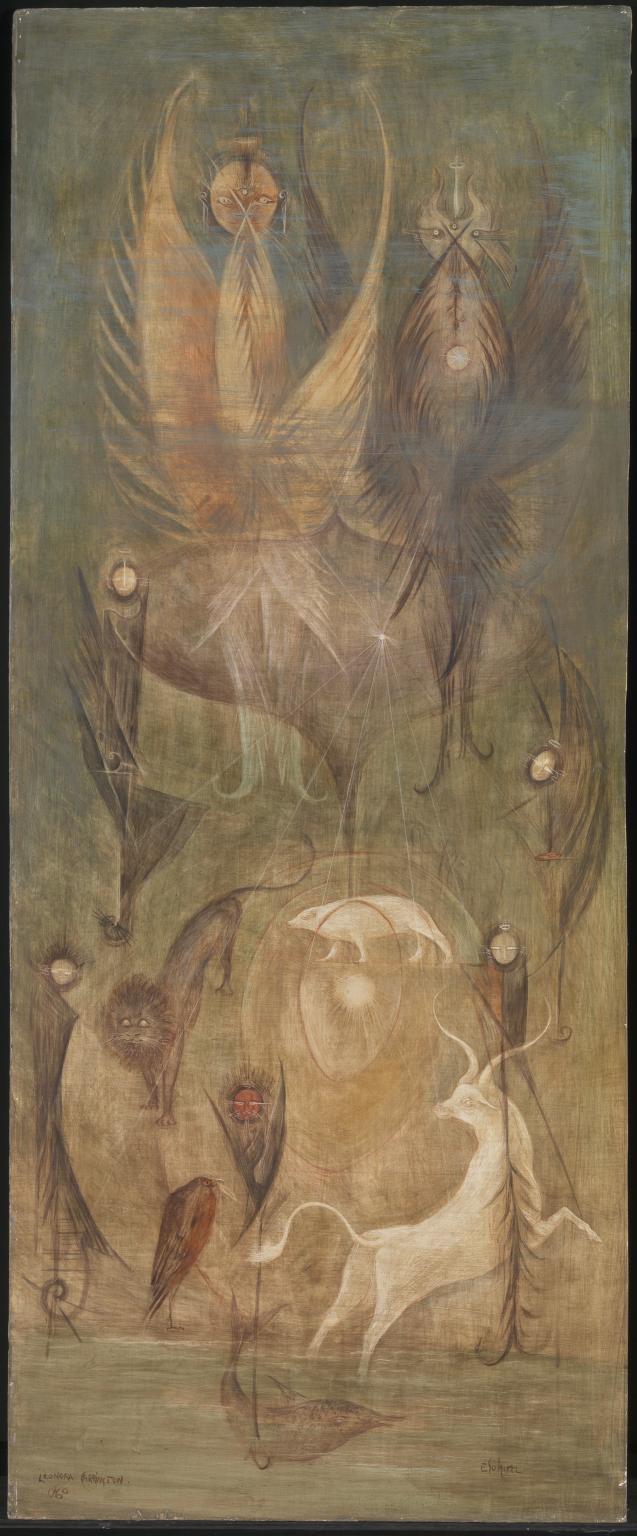
Eluhim — Leonora Carrington

Eluhim, 1960 by Leonora Carrington (1917–2011)

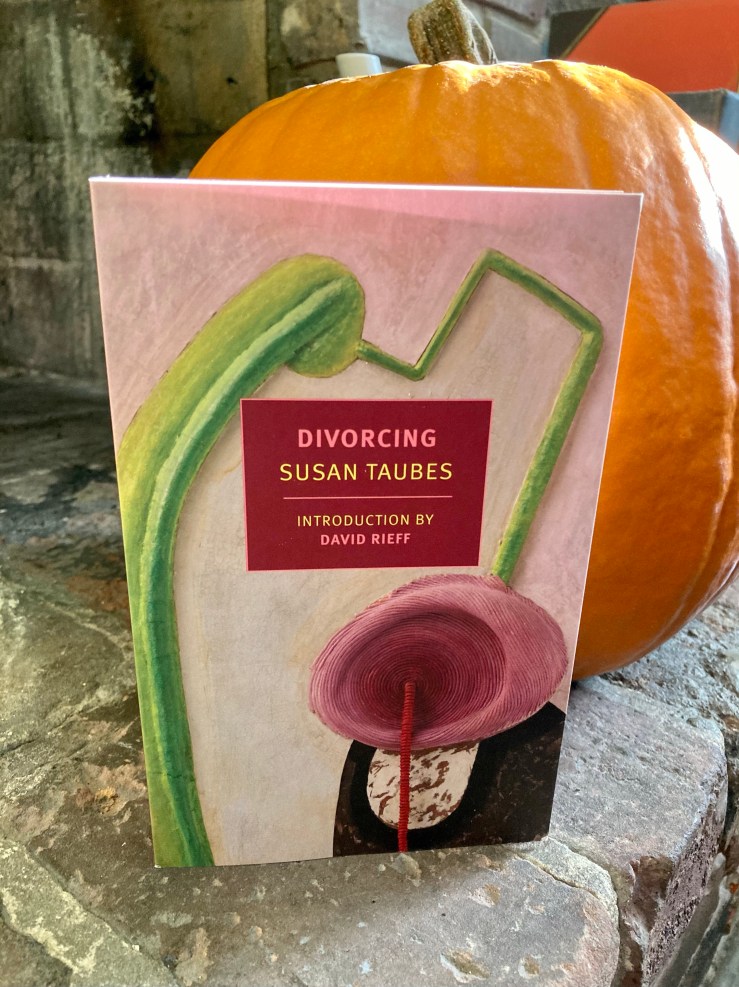
Susan Taubes’s Divorcing (Book acquired, 14 Oct. 2020)

Susan Taubes’s forgotten semi-autobiographical novel Divorcing is being republished by NRYB.

I had never heard of Taubes until Divorcing showed up at Biblioklept World Headquarters yesterday. Divorce was Taubes’s first, and only (to my knowledge) novel. It was first published in 1969 and received a mixed (and somewhat sexist) review in The New York Times by Hugh Kenner. A few days after the review was published, Taubes committed suicide by walking into the Atlantic Ocean. Her body was identified by her friend and contemporary Susan Sontag.

Here’s NYRB’s blurb for Divorcing:

Dream and reality overlap in Divorcing, a book in which divorce is not just a question of a broken marriage but names a rift that runs right through the inner and outer worlds of Sophie Blind, its brilliant but desperate protagonist. Can the rift be mended? Perhaps in the form of a novel, one that goes back from present-day New York to Sophie’s childhood in pre–World War II Budapest, that revisits the divorce between her Freudian father and her fickle mother, and finds a place for a host of further tensions and contradictions in her present life. The question that haunts Divorcing, however, is whether any novel can be fleet and bitter and true and light enough to gather up all the darkness of a given life.

Susan Taubes’s startlingly original novel was published in 1969 but largely ignored at the time; after the author’s tragic early death, it was forgotten. Its republication presents a chance to discover a splintered, glancing, caustic, and lyrical work by a dazzlingly intense and inventive writer.

Here’s a note on Taubes from one of Sontag’s 1965 journal entries. Sontag’s son edited the journals collected in As Consciousness is Harnessed to Flesh: Journals and Notebooks 1964-1980, and provides the note that Sontag identified Taubes’s body:

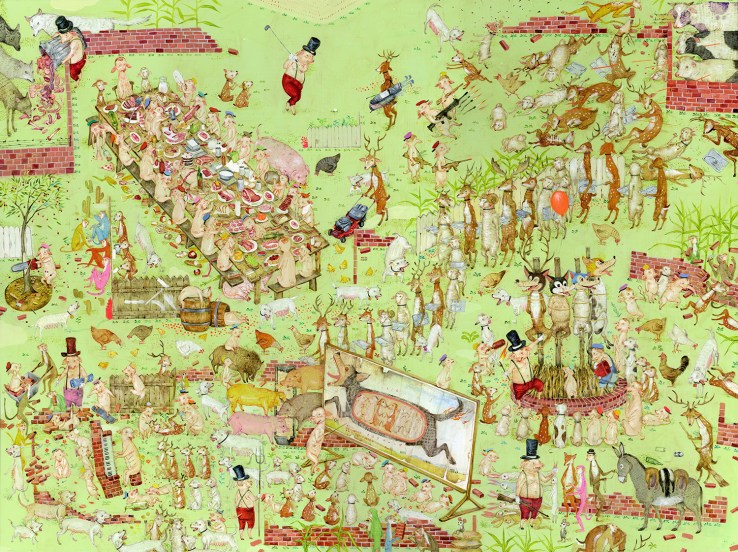
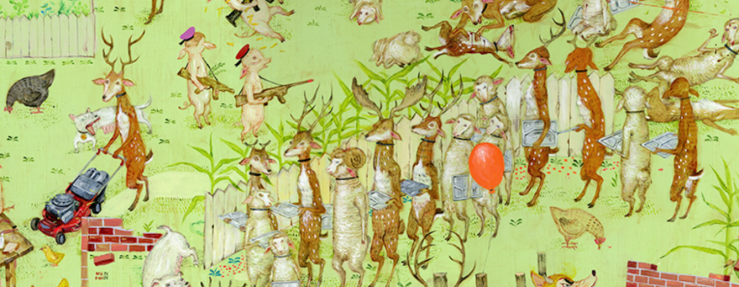
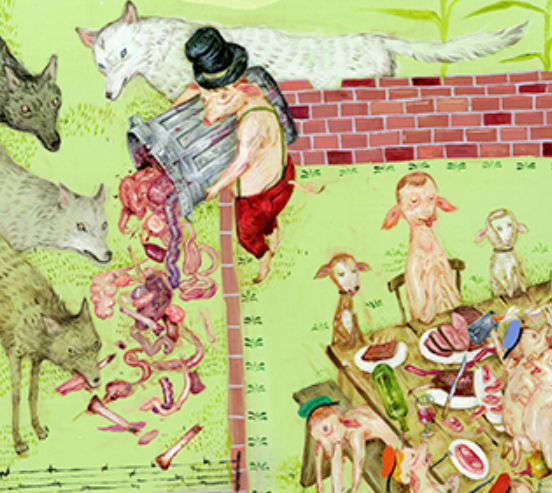
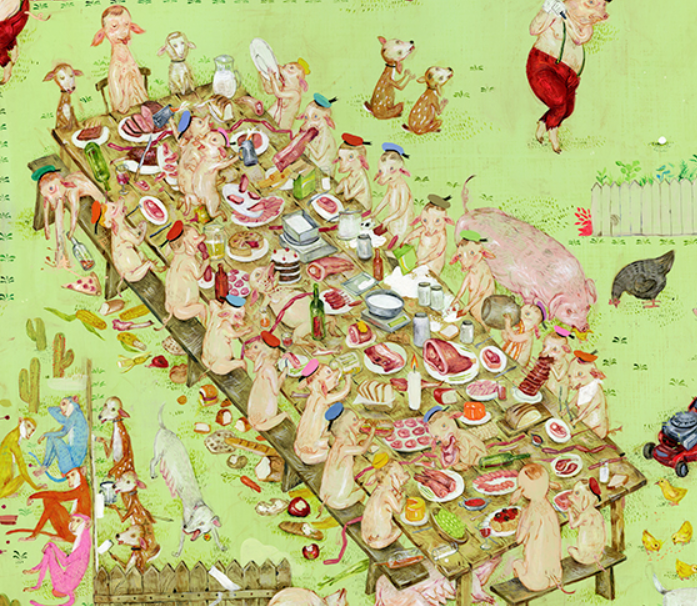
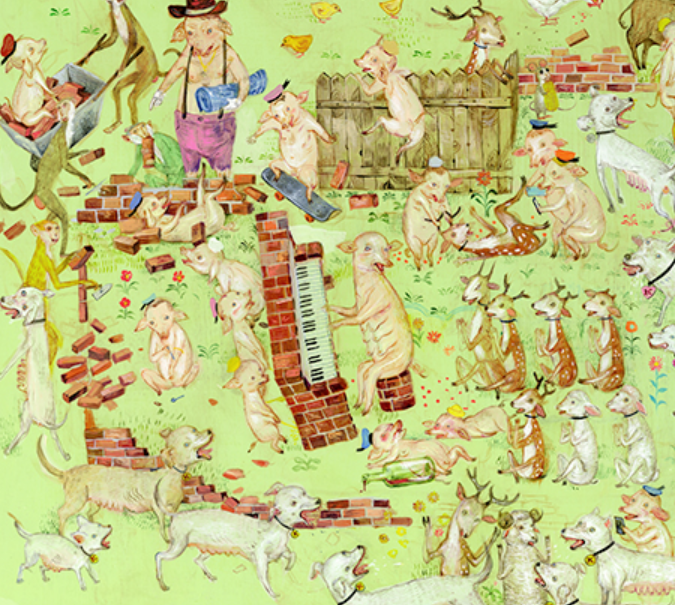
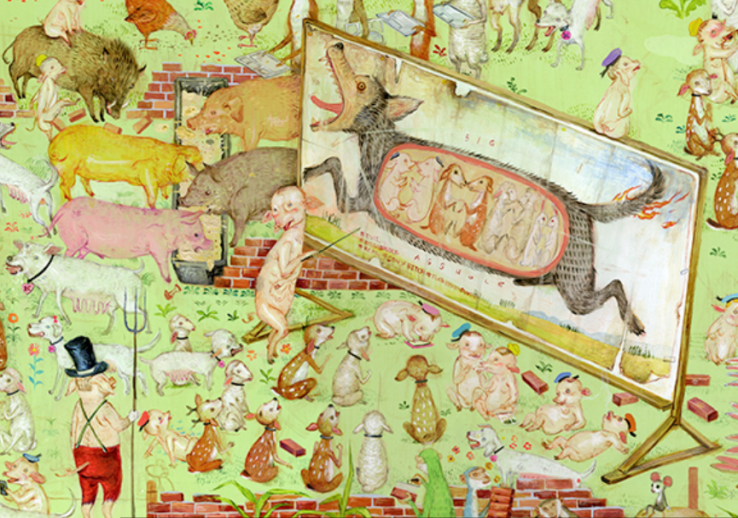
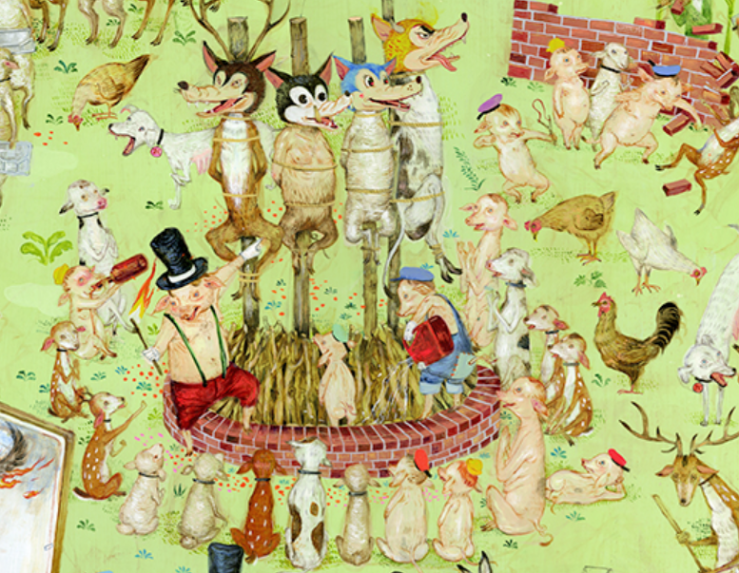
My Little Pigs — Mu Pan

My Little Pigs, 2020 by Mu Pan (b. 1976)

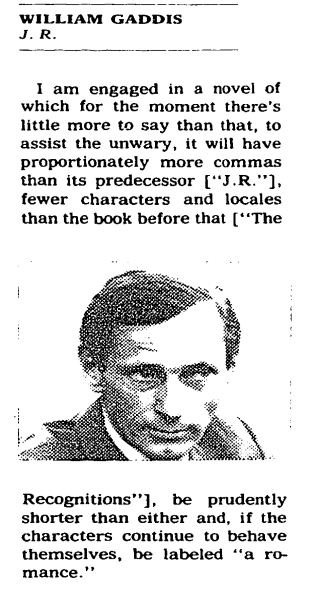
Little more to say (William Gaddis)

William Gaddis’s contribution to a 6 June 1982 New York Times article asking numerous authors what their next book will be. I suppose that Carpenter’s Gothic, being a Gothic, is a romance.

Read “The Piano Player,” a very short story by Donald Barthelme

“The Piano Player”

by Donald Barthelme

from Come Back, Dr. Caligari (1964)


Outside his window five-year-old Priscilla Hess, square and squat as a mailbox (red sweater, blue lumpy corduroy pants), looked around poignantly for someone to wipe her overflowing nose. There was a butterfly locked inside that mailbox, surely; would it ever escape? Or was the quality of mailboxes stuck to her forever, like her parents, like her name? The sky was sunny and blue. A filet of green Silly Putty disappeared into fat Priscilla Hess and he turned to greet his wife who was crawling through the door and her hands and knees.

“Yes?” he said. “What now?”

“I’m ugly,” she said, sitting back on her haunches. “Our children are ugly.”

“Nonsense,” Brian said sharply. “They’re wonderful children. Wonderful and beautiful. Other people’s children are ugly, not our children. Now get up and go back out to the smokeroom. You’re supposed to be curing a ham.”

“The ham died,” she said. “I couldn’t cure it. I tried everything. You don’t love me any more. The penicillin was stale. I’m ugly and so are the children. It said to tell you goodbye.”

“It?”

“The ham,” she said. “Is one of our children named Ambrose? Somebody named Ambrose has been sending us telegrams. How many do we have now? Four? Five? Do you think they’re heterosexual?”

She made a moue and ran a hand through her artichoke hair. “The house is rusting away. Why did you want a steel house? Why did I think I wanted to live in Connecticut? I don’t know.”

“Get up,” he said softly, “get up, dearly beloved. Stand up and sing. Sing Parsifal.”

“I want a Triumph,” she said from the floor. “A TR-4. Everyone in Stamford, every single person, has one but me. If you gave me a TR-4 I’d put our ugly children in it and drive away. To Wellfleet. I’d take all the ugliness out of your life.”

“A green one?”

“A red one,” she said menacingly. “Red with red leather seats.”

“Aren’t you supposed to be chipping paint?” he asked. “I bought us an electric data processing system. An IBM.”

“I want to go to Wellfleet,” she said. “I want to talk to

Edmund Wilson and take him for a ride in my red TR-4. The children can dig clams. We have a lot to talk about, Bunny and me.”

“Why don’t you remove those shoulder pads?” Brian said kindly. “It’s too bad about the ham.”

“I loved that ham,” she said viciously. “When you galloped into the University of Texas on your roan Volvo, I thought you were going to be somebody. I gave you my hand. You put rings on it. Rings that my mother gave me. I thought you were going to be distinguished, like Bunny.”

He showed her his broad, shouldered back. “Everything is in flitters,” he said. “Play the piano, won’t you?”

“You always were afraid of my piano, she said. “My four or five children are afraid of the piano. You taught them to be afraid of it. The giraffe is on fire, but I don’t suppose you care.”

“What can we eat,” he asked, “with the ham gone?”

“There’s some Silly Putty in the deepfreeze,” she said tonelessly.

“Rain is falling,” he observed. “Rain or something.”

“When you graduated from the Wharton School of Business,” she said, “I thought at last! I thought now we can move to Stamford and have interesting neighbors. But they’re not interesting. The giraffe is interesting but he sleeps so much of the time. The mailbox is rather interesting. The man didn’t open it at 3:31 P.M. today. He was five minutes late. The government lied again.”

With a gesture of impatience, Brian turned on the light. The great burst of electricity illuminated her upturned tiny face. Eyes like snow peas, he thought. Tamar dancing. My name in the dictionary, in the back. The Law of Bilateral Good Fortune. Piano bread perhaps. A nibble of pain running through the Western World. Coriolanus.

“Oh God,” she said, from the floor. “Look at my knees.”

Brian looked. Her knees were blushing.

“It’s senseless, senseless,” she said. “I’ve been caulking the medicine chest. What for? I don’t know. You’ve got to give me more money. Ben is bleeding. Bessie wants to be an S.S. man. She’s reading The Rise and Fall. She’s identified with Himmler. Is that her name? Bessie?”

“Yes. Bessie.”

“What’s the other one’s name? The blond one?”

“Billy. Named after your father. Your Dad.”

“You’ve got to get me an air hammer. To clean the children’s teeth. What’s the name of that disease? They’ll all have it, every single one, if you don’t get me an air hammer.”

“And a compressor,” Brian said. “And a Pinetop Smith record. I remember.”

She lay on her back. The shoulder pads clattered against the terrazzo. Her number, 17, was written large on her chest. Her eyes were screwed tight shut. “Altman’s is having a sale,” she said, “Maybe
I should go in.”

“Listen,” he said. “Get up. Go into the grape arbor. I’ll trundle the piano out there. You’ve been chipping too much paint. ”

“You wouldn’t touch that piano,” she said. “Not in a million years.”

“You really think I’m afraid of it?”

“Not in a million years,” she said, “you phoney.”

“All right,” Brian said quietly. “All right.” He strode over to the piano. He took a good grip on its black varnishedness. He began to trundle it across the room, and, after a slight hesitation, it struck him dead.

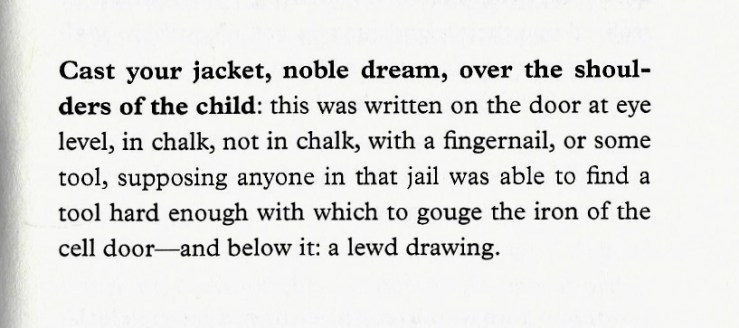
Cast your jacket, noble dream, over the shoulders of the child (Pierre Senges)

From Studies of Silhouettes by Pierre Senges. English translation by Jacob Siefring. Get it from Sublunary Editions.

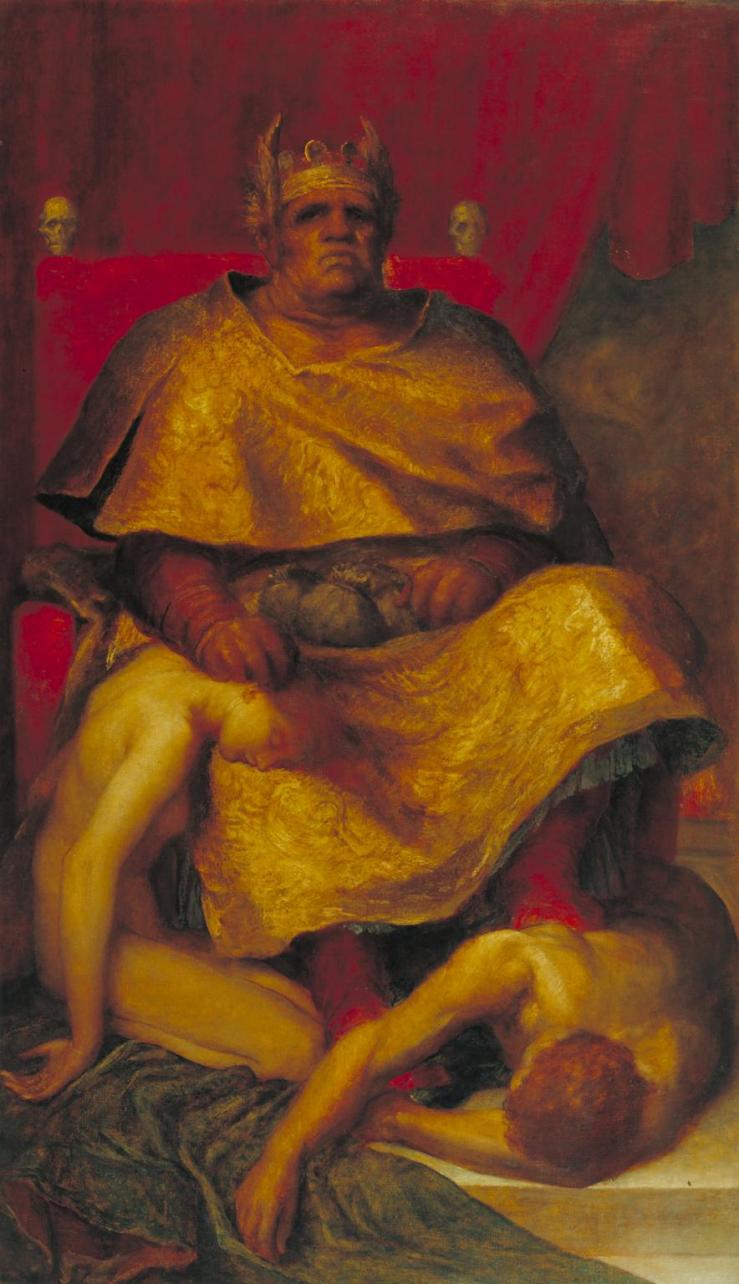
Mammon — George Frederic Watts

Mammon,1885 by George Frederic Watts (1817-1904)

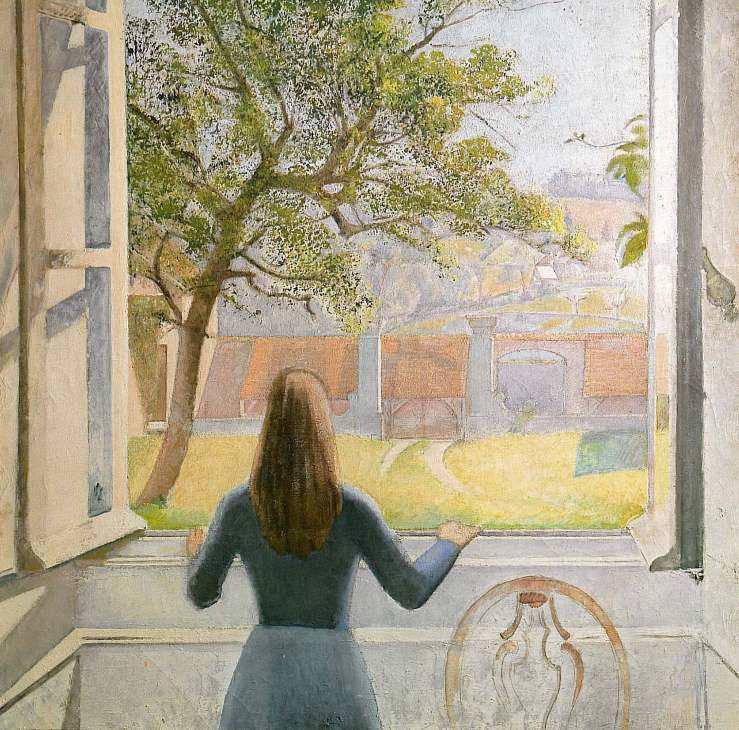
Girl at a Window — Balthus

Girl at a Window, 1957 by Balthus (1908–2001)

“Glass of Water Encounter” — Terese Svoboda

“Glass of Water Encounter”

by

Terese Svoboda


She dances only in her necklace,
scotch-lit surely. He touches his glasses.

Nightie-less, dugs whipping, hair sprung,
some music inside, out, wet tongue

tip at her lip, no mere palsied shuffle,
both bony feet lifted, elbows awful.

Shakespeare’s banshee of wailing parts,
a woman with hair, a woman with warts.

He’s fixed to the floor. Dear Heloise:
do other presumed-sane mothers do this—

wait in the dark after the ball
to strip for their sons at the end of the hall?

A dream, insists his sister
but his first wife knows better.

Arabella and the General — Hilary Harkness

Arabella and the General, 2020 by Hilary Harkness (b. 1971)

A Man Who Suddenly Fell Over — Michael Andrews

A Man Who Suddenly Fell Over, 1952 by Michael Andrews (1928–1995)

William Gass: The writer really doesn’t build the truth into the sentence, the reader does, especially if the sentence is well constructed.

Marc Chénetier: Wouldn’t you say that one of the reasons why the writer is of necessity very skeptical is that his or her trade consists of knowing how the idea of a truth can be built into a sentence? Therefore, the skepticism would derive from the awareness of the manipulations that are at work—

William Gass: The writer really doesn’t build the truth into the sentence, the reader does, especially if the sentence is well constructed. That was one of the things that Plato was worried about, because the poets were so persuasive, whereas the sentences of science, expressed in highly mathematical terms, are not the kind of soft bed that one wants to lie in. Rhetorical constructions have enormous seduction, but the writer doesn’t build the belief in it. What you build is something that has unity and emotional power that the reader, then, is liable to latch onto. A good writer should be able to make any point of view sound terrific. Shakespeare could do it, of course. Then that terrificness has nothing to do with the truth, it has to do with being terrific.

From a discussion on William Gaddis’s speech/essay “Old Foes with New Faces.”

Gaddis delivered the speech at the International Writers Center as part The Writer and Religion Conference at Washington University in St. Louis, Missouri, 23-26 Oct. 1994. The discussion held afterwards was moderated by Marc Chénetier and the panelists were Wayne Fields, William Gass, and Heide Ziegle (and Gaddis, of course).

The essay, discussion, as well as other essays and discussions are collected in  The Writer and Religion, ed. by William H. Gass and Lorin Cuoco.

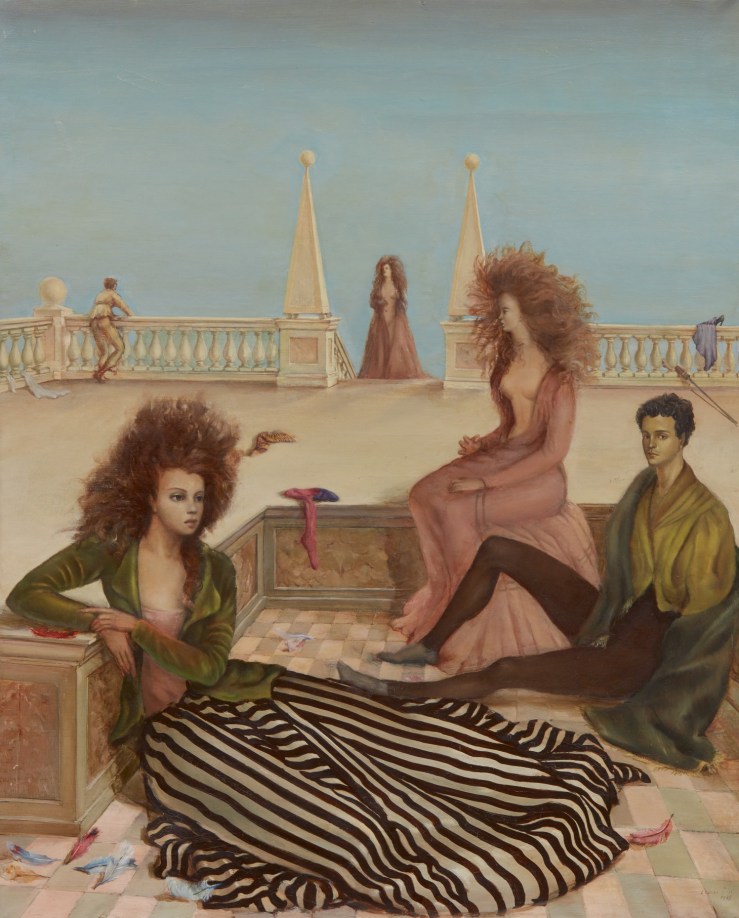
Figures on a Terrace — Leonor Fini

Figures on a Terrace, 1938 by Leonor Fini (1908–1996)

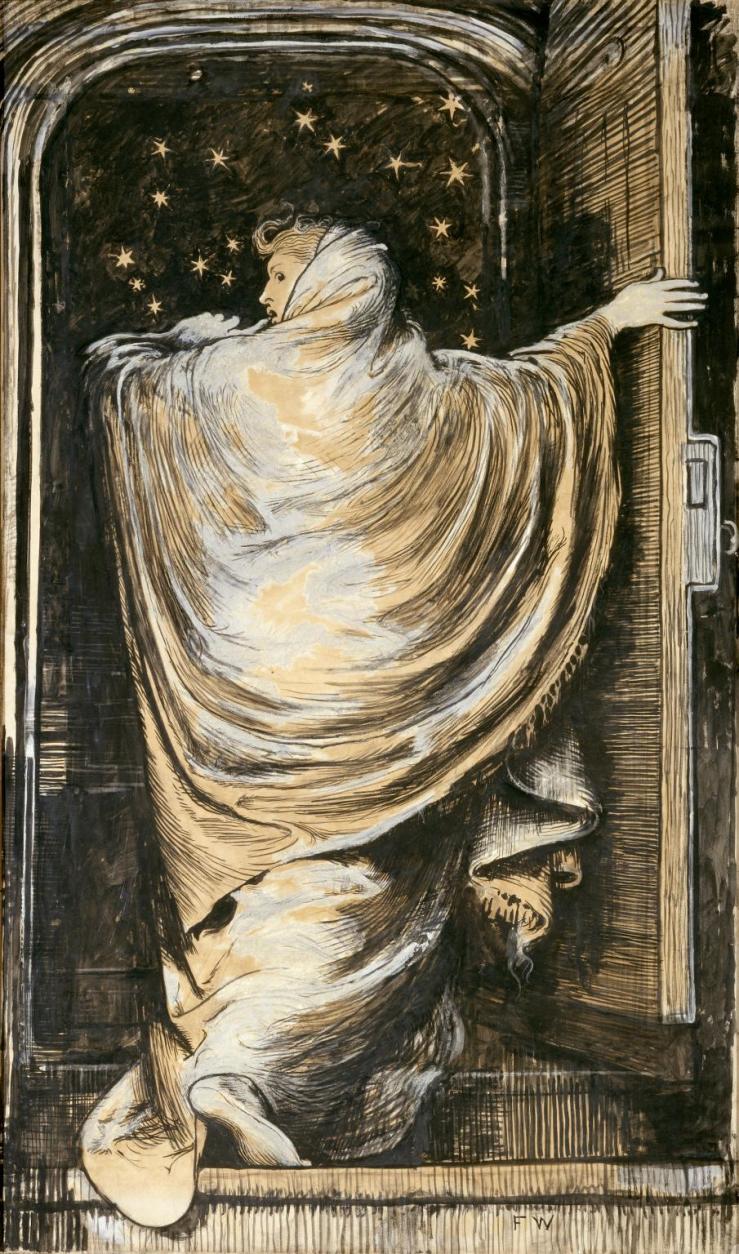
The Woman in White — Frederick Walker

The Woman in White, 1871 by Frederick Walker (1840–1875)