Blog about “All My Happiness Is Gone,” a song from David Berman’s new band Purple Mountains

Screenshot 2019-05-17 at 3.48.03 PM

A few hours ago, my best friend send me a text with a link to listen to “All My Happiness Is Gone,” the first single from David Berman’s new band Purple Mountains. We’d been excited to hear the tune since it was announced last week. It’s been over a decade since Berman’s last record, Lookout Mountain, Lookout Sea came out, and I’ve missed his voice. The six records the Silver Jews put out between 1994 and 2008 were formative to me. I remember each distinctly as evocations of time and place, the songs on each record emotional spaces different versions of me inhabited.

I’ve listened to “All My Happiness Is Gone” about half a dozen times now, and listened to the two remixes of it a couple of times too. I really like the song—it’s sad and moving, a song about aging and friendship and, uh, despair, a song that opens with, “Friends are warmer than gold when you’re old / And keeping them is harder than you might suppose.”

When we were 15, my best friend, the one who texted me a link to listen to “All My Happiness Is Gone” a few hours ago, we were between bands. Or really, we were calling the music we made together in our bedrooms a band. We’d soon hook up with a drummer, and then another drummer, other players, and so on, different iterations of an amateur psych art rock band that played shows in clubs and smaller clubs, houses, record stores, art galleries and you get the idea. Anyway, when we were 15, between bands, we recorded what we called an “album” (an album!) on my then-girlfriend’s older brother’s 4-track. The tape we made is and was awful, but we covered the Silver Jews’ song “Trains Across the Sea,” all two chords of it, with what I still think of as a kind of clumsy grace, my best friend delivering the lead vocal with an admirably faulty feigned maturity. We even adapted the line “In 27 years I’ve drunk 50, 000 beers” to better suit our own then slim duration, even though we had to stretch the syllables in “15” a bit too far for the meter. Over the past 25 years I’ve recorded hundreds of hours of music, a lot of it with this friend, and that cover of “Trains Across the Sea” is maybe my favorite thing we ever did.

Wait—didn’t I say that this was a blog about “All My Happiness Is Gone,” a new song by the band Purple Mountains? I did, I know—but I can’t write about music. Sorry. It’s better to just hear the song, right? Here it is:

The first two minutes of this video aren’t part of the single edit, but I like the way Berman’s plunky guitar meanders around the melody and rhythm of the song before the canned orchestra propels us into the sad sad sad lyric. The intro also balances out the end of the song, which doesn’t so much conclude as it slows into near-collapse, stretched thin like the spirit of the song itself: ” …the fear’s so strong it leaves you gasping / No way to last out here like this for long.”

Berman’s albums with the Silver Jews were always tinged with melancholy or even outright depression, but there was always, at least in my estimation, a leavening irony. Take “Honk If You’re Lonely,” from American Water, for instance, in which Berman celebrates and sends up classic country tunes, and, ultimately connects to his audience: “Honk if you’re lonely tonight / If you need a friend to get through the night.” Two decades later in “All My Happiness Is Gone,” Berman sounds like the one who needs a friend:

Mounting mileage on the dash
Double darkness falling fast
I keep stressing, pressing on
Way deep down at some substratum
Feels like something really wrong has happened
And I confess I’m barely hanging on

The music is simple and sweet, moving between two chords for the most part—the second chord lingering just a bit longer before the chorus hits, the same trick that Berman pulled off in “Trains Across the Sea.” The chorus, in which Berman repeats the titular line with a plaintive sadness that hurts me, hangs around a melody that reads like a country goth cribbing of Modern English’s “I Melt with You.” It’s a bit of an emotional apocalypse, which is kinda maybe what you want from a sad song, but the sadness seems so sincere, the despair so visceral, that again, it hurts. Maybe share it with a friend.

Cupbearer — Edward Burra

Cupbearer 1929 by Edward Burra 1905-1976

Cupbearer, 1929 by Edward Burra (1905–1976)

The Hero of a Hundred Fights — JMW Turner

The Hero of a Hundred Fights c.1800-10, reworked and exhibited 1847 by Joseph Mallord William Turner 1775-1851

The Hero of a Hundred Fights c.1800–10, reworked and exhibited 1847 by Joseph Mallord William Turner (1775–1851)

The spilled, the broken world (From Thomas Pynchon’s Vineland)

So the bad Ninjamobile swept along on the great Ventura, among Olympic visitors from everywhere who teemed all over the freeway system in midday densities till far into the night, shined-up, screaming black motorcades that could have carried any of several office seekers, cruisers heading for treed and more gently roaring boulevards, huge double and triple trailer rigs that loved to find Volkswagens laboring up grades and go sashaying around them gracefully and at gnat’s-ass tolerances, plus flirters, deserters, wimps and pimps, speeding like bullets, grinning like chimps, above the heads of TV watchers, lovers under the overpasses, movies at malls letting out, bright gas-station oases in pure fluorescent spill, canopied beneath the palm trees, soon wrapped, down the corridors of the surface streets, in nocturnal smog, the adobe air, the smell of distant fireworks, the spilled, the broken world.

A description of the postmodern Preterite world from Thomas Pynchon’s 1990 novel Vineland. 

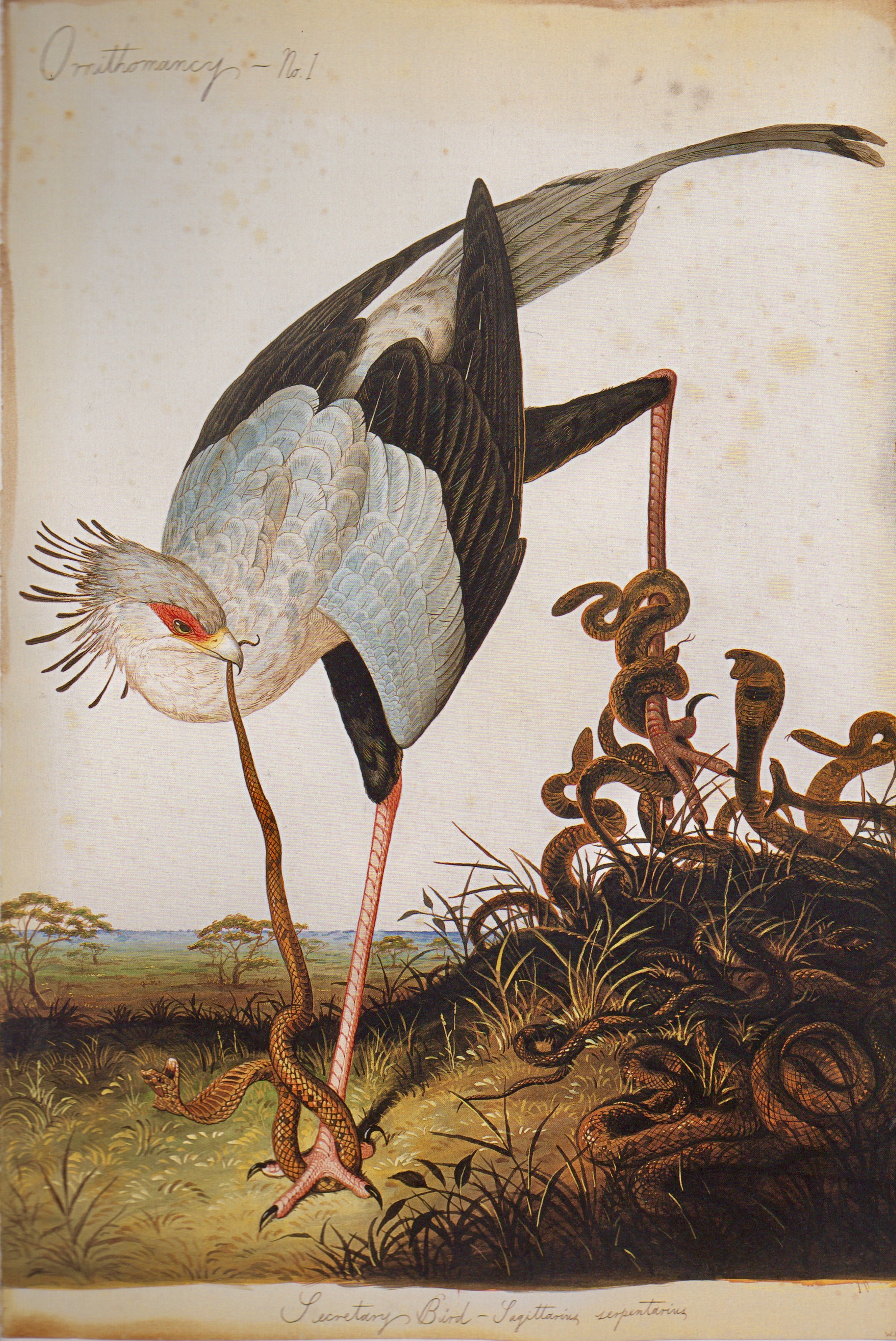
Ornithomancy No. 1 — Walton Ford

img_2830

Ornithomancy No. 1, 2000 by Walton Ford (b. 1960)

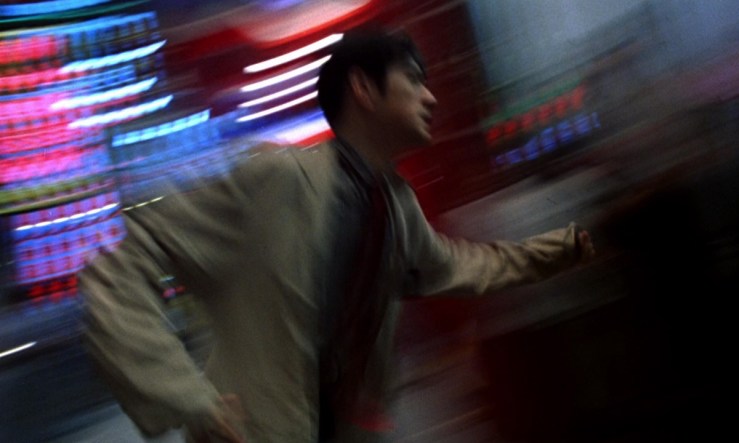
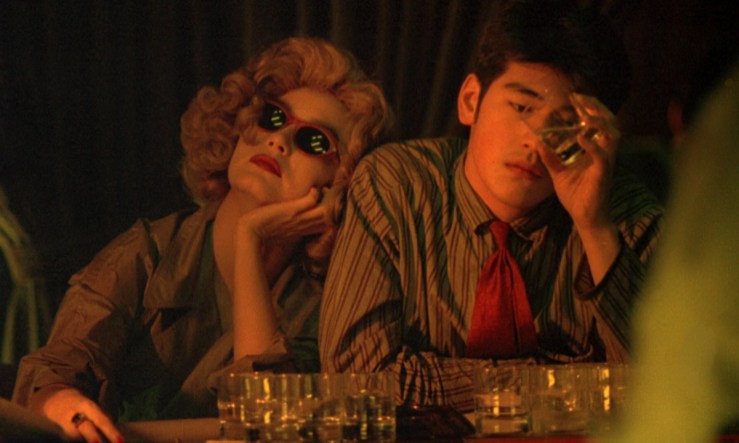
27 still frames from Wong Kar-Wai’s Chungking Express

chungking-express-001chungking-express-005chungking-express-013chungking-express-044chungking-express-064chungking-express-067 Continue reading “27 still frames from Wong Kar-Wai’s Chungking Express”

“American Airlines Sutra” — Ishmael Reed

“American Airlines Sutra”

by

Ishmael Reed


put yr cup on my tray
the stewardess said 40,000
feet up. (well i’ve
never done it that way. what
have i got to lose.)

i climb into a cab & the
woman driver is singing
along with Frank Sinatra
“how was your flight coming in?”

(another one. these americans,
only one thing on their
minds).

Darwin — Juan Travieso

9c20ae5e4affc0c67d6c9ce600543449

Darwin, 2018 by Juan Travieso (b. 1987)

Shotgun — James Rieck

shotgun

Shotgun, 2012 by James Rieck (b. 1965)

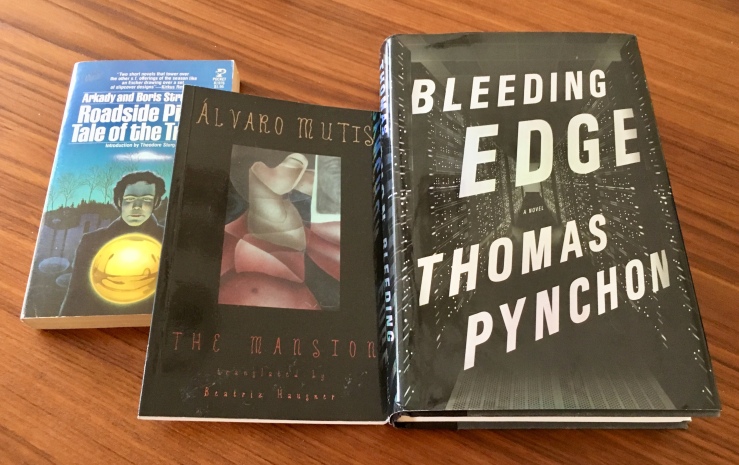
Strugatsky brothers/Mutis/Pynchon (Books acquired, 8 May 2019)

img_2805

I went to the bookstore on Pynchon in Public Day, 2019 to pick up the only Thomas Pynchon novel I don’t own, Bleeding Edge. I’ve given the book a shot or three, checking it out from the library, but it’s never quite clicked for me. I’m reading Vineland right now though, the other Pynchon novel I haven’t previously read, and finally really digging it. So maybe I’ll read Bleeding Edge after (although I think I’ll probably immediately reread Vineland after reading Vineland).

img_2806

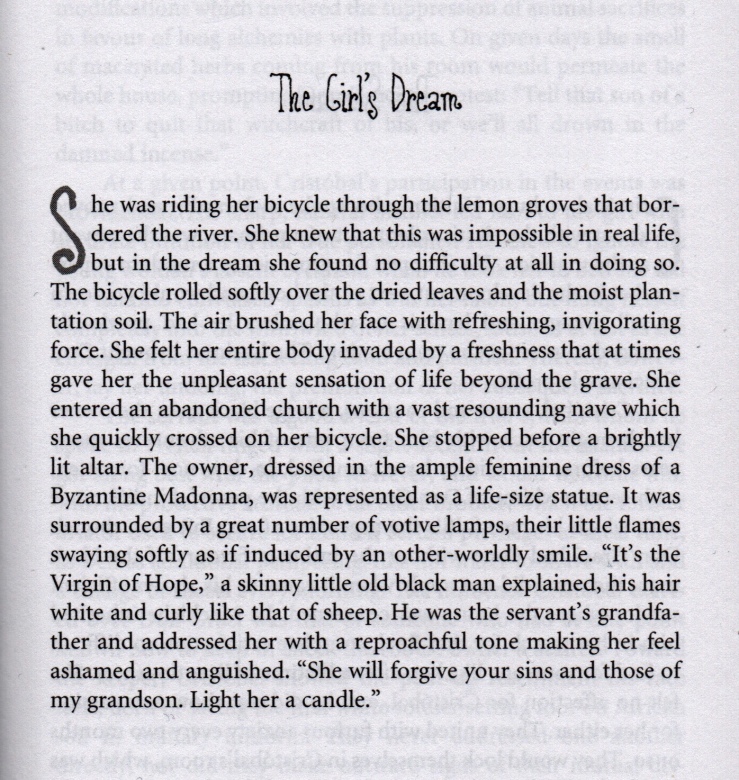
I have a little mental list of books and authors I look for while browsing, including the Australian writer Gerald Murnane whom I did not find a scrap by—but I did unexpectedly find The Mansion, a collection of early short stories and fragments by Colombian author Álvaro Mutis. Here’s one of those little sections (in translation by Beatriz Hausner):

img_2807

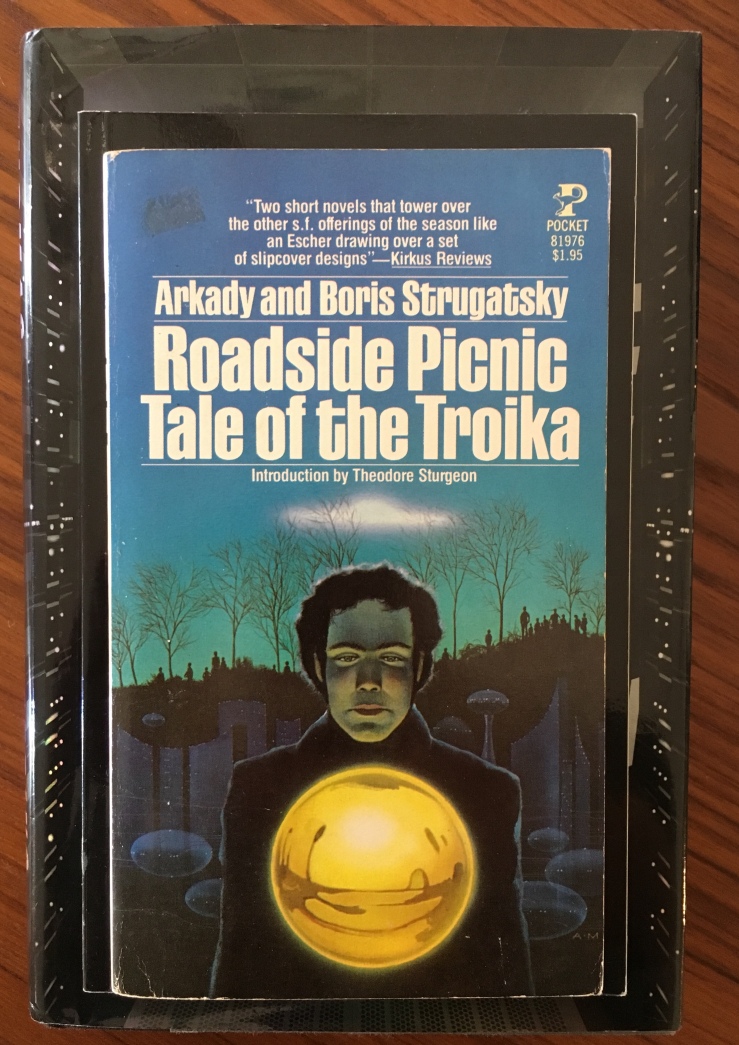
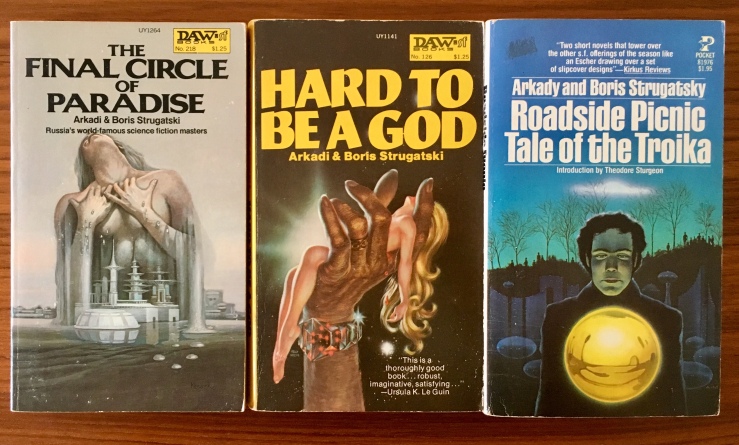
I also like to scan the massmarket scifi paperbacks at this particular used bookstore for original US editions of works by the Strugatsky Brothers. I’ve been a bit lucky lately, finding Hard to Be a God and The Final Circle of Paradise—and I was thrilled to find the Pocket edition of Roadside Picnic/Tale of the Troika. I read Olena Bormashenko’s 2012 translation of this book a few years ago, and loved it (I also really dug her translation of the Strugatsky’s superweird novel The Snail on the Slope). This translation is by Antonina W. Bouis, and includes an introduction by Theodore Sturgeon. I haven’t read Tale of the Troika, but Sturgeon describes it as a satire that evokes “Kafkaesque horror.” Sounds delightful.

img_2809

Home — Cinta Vidal

home-55x80cm-oilonwoodpanel-viewpoints-thinkspacegallery-sept2018-lr

Home, 2018 by Cinta Vidal (b. 1979)

The Mother Conspiracy (Gravity’s Rainbow)

Otto is earnestly explaining his views on the Mother Conspiracy. It’s not often a sympathetic girl will listen. The Mothers get together once a year, in secret, at these giant conventions, and exchange information. Recipes, games, key phrases to use on their children. “What did yours use to say when she wanted to make you feel guilty?”

“‘I’ve worked my fingers to the bone!’” sez the girl.

“Right! And she used to cook those horrible casseroles, w-with the potatoes, and onions—”

“And ham! Little pieces of ham—”

“You see, you see? That can’t be accidental! They have a contest, for Mother of the Year, breast-feeding, diaper-changing, they time them, casserole competitions, ja—then, toward the end, they actually begin to use the children. The State Prosecutor comes out on stage. ‘In a moment, Albrecht, we are going to bring your mother on. Here is a Luger, fully loaded. The State will guarantee you absolute immunity from prosecution. Do whatever you wish to do—anything at all. Good luck, my boy.’ The pistols are loaded with blanks, natürlich, but the unfortunate child does not know this. Only the mothers who get shot at qualify for the finals.

Here they bring in psychiatrists, and judges sit with stopwatches to see how quickly the children will crack. ‘Now then, Olga, wasn’t it nice of Mutti to break up your affair with that long-haired poet?’ ‘We understand your mother and you are, ah, quite close, Hermann. Remember the time she caught you masturbating into her glove? Eh?’ Hospital attendants stand by to drag the children off, drooling, screaming, having clonic convulsions. Finally there is only one Mother left on stage. They put the traditional flowered hat on her head, and hand her the orb and scepter, which in this case are a gilded pot roast and a whip, and the orchestra plays Tristan und Isolde.

From Thomas Pynchon’s novel Gravity’s Rainbow.

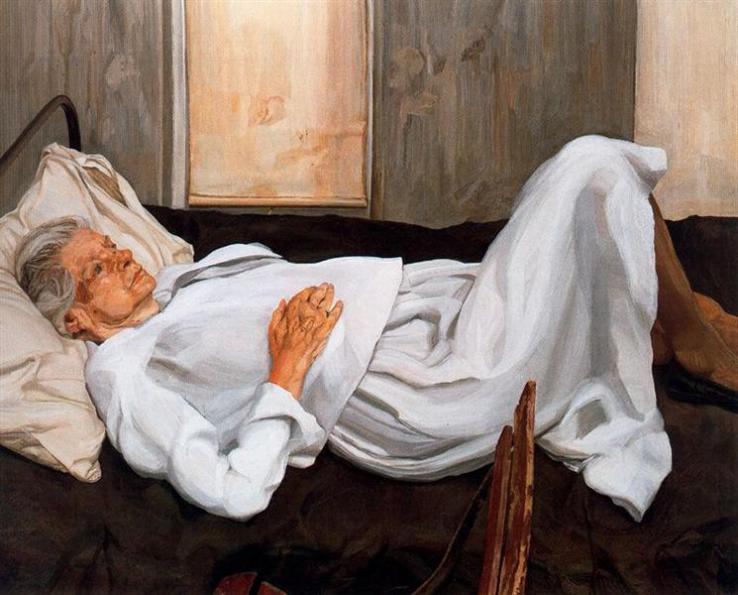
The Painter’s Mother — Lucian Freud

the-painter-s-mother-1984.jpglarge

The Painter’s Mother, 1984 by Lucian Freud (1922-2011)

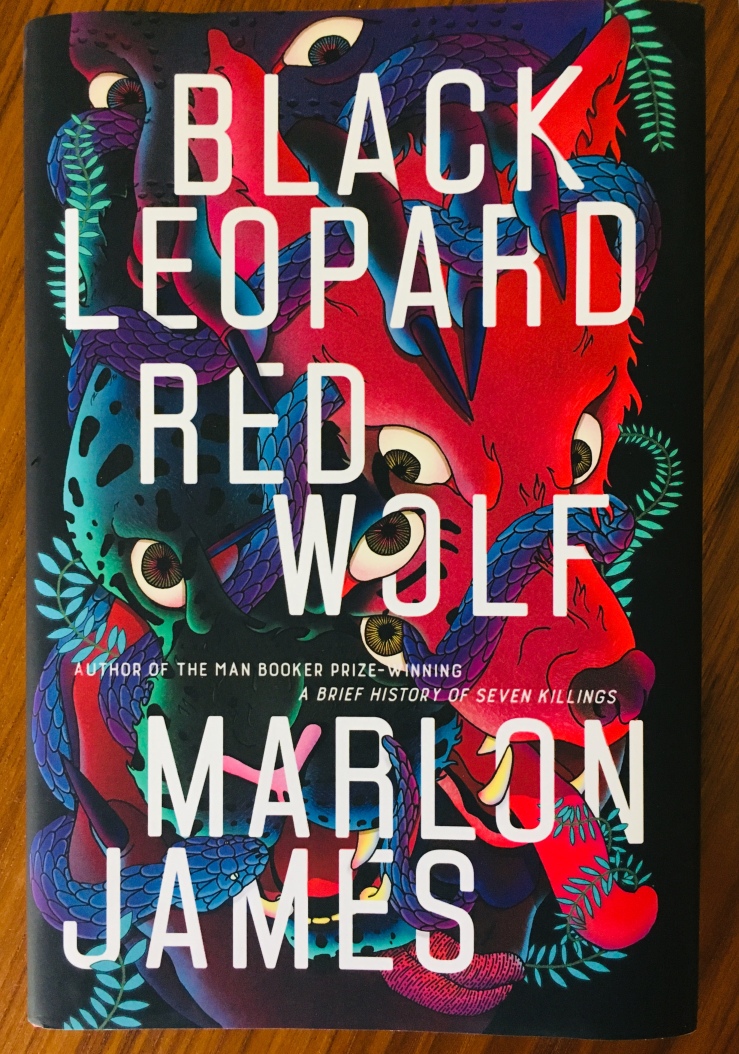
Marlon James’s Black Leopard, Red Wolf is a postmodern fantasy novel that challenges the conventions of storytelling itself

img_2496

Marlon James’s novel Black Leopard, Red Wolf is a postmodern fantasy that takes place in medieval sub-Saharan Africa. Set against the backdrop of two warring states, the North Kingdom and the South Kingdom, Black Leopard, Red Wolf is the story—or stories, really—of Tracker, a man “with a nose” who can track down pretty much anyone (as long as he’s got the scent).

The central quest of Black Leopard, Red Wolf is for Tracker to find and recover a missing child of great importance. An explanation of exactly how and why the child is so important is deferred repeatedly; indeed, James’s novel is as much a detective story as it is a fantasy. In his detective-quest, Tracker partners with a number of strange allies: a talkative giant (who tells us repeatedly that he is not a giant), an anti-witch who places charms on Tracker, a duplicitous Moon Witch, a skin-shedding warrior-spy, a sandy-colored soldier from an alien land, a surly archer, a very smart buffalo, and more, more, more.

I used the word allies above, but truculent Tracker is just as likely to fight against the members of his fellowship as he is to fight with them. Black Leopard, Red Wolf runs on the same logic we find in comic books, where heroes fight each other first and then figure out why they are fighting each other after the fact. Sure, they’ll band together to fight lightning zombies, vampires, or roof-walking night demons—but they’re just as likely to go at each other with brass knuckles, axes, or arrows right after.

Chief among Tracker’s  allies/rivals is the Leopard, a shapeshifter. Throughout the book, Tracker and the Leopard fall in and fall out, fight and fuck, laugh and scream. Their bond is forged early in the novel, when they work together to rescue Mingi children, outcast mutants with strange appearances and stranger abilities. These children become an ersatz family for Tracker and provide an emotional ballast to a novel that often reads like a violent tangle of chaotic, meaningless tangents.

The fact that Leopard and Tracker—the title characters for the novel (Tracker gets his eye sucked out by a were-hyena and replaces it with a magical wolf eye; don’t ask)—the fact that Leopard and Tracker save children, particularly strange children is central to understanding their motivations in their quest to save the missing child.

From the outset though, the reader has to doubt just how successful the quest will be. Black Leopard, Red Wolf opens with these intriguing sentences: “The child is dead. There is nothing left to know.” These lines for foreground the novel’s two major themes: radical infanticide and the problem of knowing what we know and (story)telling what we know.

James’s novel uses infanticidal threat as the impetus for its central plot, the fellowship’s quest to save a child. In the backdrop though is Tracker’s oedipal rage toward his father/grandfather (don’t ask), a rage born out of the infanticidal threats Tracker himself has survived. Tracker has survived, but he is not at peace. He is perhaps the angriest narrator I have ever read, quick to temper and driven by (oedipal) impulses of revenge against a target he cannot name. His anger boils over repeatedly, and not just at his foes, but at his partners and his lovers—the Leopard, in particular.

At the same time, Black Leopard, Red Wolf transports us to scenes of strange love and strange families. James’s novel shows how radical love—Tracker and his Mingi children—might mediate, disrupt, or upend the impulses of revenge. And yet there is nothing permanent or stable in this postmodern novel.

Indeed, Black Leopard, Red Wolf is very much about the problem of how we know what we know and how we can express what we know. Tracker is our narrator, but he doesn’t tell us his story straight (there is nothing straight about this queer novel). Tracker tells his stories—the novel—to someone he addresses as inquisitor, but we never learn how Tracker came to be the inquisitor’s captive. Like Sheherezade in One Thousand and One Nights, Tracker seems to spin his story as a life-saving trick.

Black Leopard, Red Wolf is a tangle, a fluid that courses this way and that, a jumble of time and space. Like the “Ten and Nine Doors” that Tracker’s fellowship uses to teleport from one city-state to another, the narrative leaps through time and space, discursive and discontinuous. Tracker nests his narrative as well. We get tales inside tales inside tales, a matryoshka doll without a clear and definite shape. I occasionally felt submerged in reading James’s novel, as if I’d disappeared into an undersea cave only to find some strange current that bore me elsewhere.

Late in Black Leopard, Red Wolf, Tracker neatly summarizes the novel’s deconstruction of a stable truth, and then reverses the roles, demanding testimony from the inquisitor:

And that is all and all is truth, great inquisitor. You wanted a tale, did you not? From the dawn of it to the dusk of it, and such is the tale I have given you. What you wanted was testimony, but what you really wanted was story, is it not true? Now you sound like men I have heard of, men coming from the West for they heard of slave flesh, men who ask, Is this true? When we find this, shall we seek no more? It is truth as you call it, truth in entire? What is truth when it always expands and shrinks? Truth is just another story.

James has planned to write two sequels to Black Leopard, Red Wolf in what he is calling his “Dark Star” trilogy, and he’s stated that each entry in the series will, like an episode in Akira Kurosawa’s 1950 film Rashomon, tell the story from another perspective. After all, “Truth is just another story.”

Of course, Tracker’s telling can be confounding, even exhausting. James’s prose often feels picaresque, one-damn-thing-happening-after-another, a phantasmagoria of sex and violence signifying nothing—only it doesn’t signify nothing. It means something. Many readers won’t want to puzzle that out though.

A lot of the plot is delivered after the fact of the action. We get a form of clunky post-exposition—another form of storytelling, really, with one character summarizing the fragmented details the reader has been wading through for another character. In a kind of metatextual recognition of his tale’s messiness, James will often wink at the reader through his characters. Summarizing pages and pages of plot for the Leopard (and the reader), Tracker finds himself befuddled:

I told the Leopard all this and this is truth, I was more confused by the telling than he was by listening. Only when he repeated all that I said did I understand it.

A few chapters later, the pattern repeats. “The more you tell me the less I know,” one character tells another. Even storytelling can’t stabilize the truth.

While the plot’s unwieldiness can become tiresome, it is not a defect of the book as much as an intentional feature. However, some of the battle scenes fall into a kind of mechanical repetition of blank violence. Tracker tells us again and again how he “hacked” or “yanked,” etc. in scenes that become duller and duller as there are more of them.

The book is far more fun when it’s weirder—Tracker getting trapped by a mutant spider demon who sprays webs all over his face, or Tracker swimming with mermaids to the land of the dead, or Tracker and his companion visiting a technologically-advanced tree city-state ruled by a mad queen. James’s best set pieces don’t need battles to reverberate with energy.

The sex is more interesting than the violence in Black Leopard, Red Wolf—and there’s plenty of both. “Fantastic beasts, fantastic urges,” our lead characters repeat to themselves. James’s novel is deeply horny, its characters fluidly shifting into all kinds of weird fucking. Tracker partners with various members of his fellowship in more ways than one. Sex is magic in Black Leopard, Red Wolf, too—only ten pages in, Tracker ejaculates on a witch, she flicks his semen into a river, fish eat it, and turn into mermaids who lead him to the land of the dead.

There’s so much more in Black Leopard, Red Wolf that I haven’t touched on. The novel is lurid and horny, abject and affecting. It’s often quite funny, and, in the end, it turned out to be unexpectedly moving. It’s also exhausting and confusing, and will likely prove divisive for many readers. It’s clear that Lord of the Rings was a reference point for James (the word “fellowship” is oft-repeated in his novel), but Black Leopard, Red Wolf reminded me more of Jonathan Littell’s The Kindly Ones than it did a traditional fantasy.

In its vivid weirdness and pure invention, James’s book also reminded me of Brian Catling’s novel The Vorrh. However, Catling’s novel often takes the colonialist viewpoint. Black Leopard, Red Wolf  points to a fantasy that could reverse our own history, potentially obliterate that viewpoint’s existence. When Tracker asks the inquisitor, “Now you sound like men I have heard of, men coming from the West for they heard of slave flesh, men who ask, Is this true?”, his questioning seems to point to the larger implications of the James’s Dark Star universe—a precolonial space with a looming threat from the West. Late in Black Leopard, Red Wolf, one character warns the others that the warring between the North and South Kingdoms, between tribes and city-states must end. There’s an existential threat on the horizon. I find the potential storytelling here intriguing.

Black Leopard, Red Wolf is clearly Not for Everybody. It’s violent and strange, and the sex in it will likely upset conservative readers. It’s also shaggy and unwieldy. It probably has a future as a cult novel. You just sort of have to go with its fluid (in every sense of that word) program and enjoy the ride. I enjoyed it very much and am looking forward to the sequel.
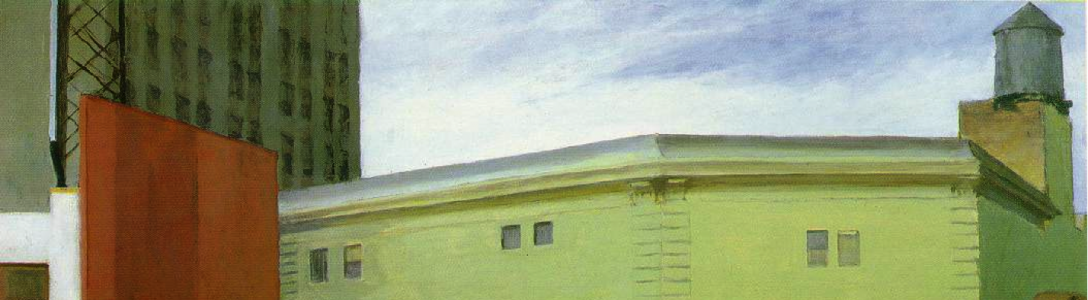

Ballad for Frida Kahlo — Alice Rahon

39904213081_6bbf547675_b

Ballad for Frida Kahlo, 1966  by Alice Rahon (1904–1987)

Ilketshall — Stuart Pearson Wright

ilketshall

Ilketshall, 2014 by Stuart Pearson Wright (b. 1975)

One Too Many — Clive Smith

717368_clive-smith-interiors-04

One Too Many, 2001 by Clive Smith (b. 1967)