“For the Anniversary of My Death”
by
W.S. Merwin
“For the Anniversary of My Death”
by
W.S. Merwin


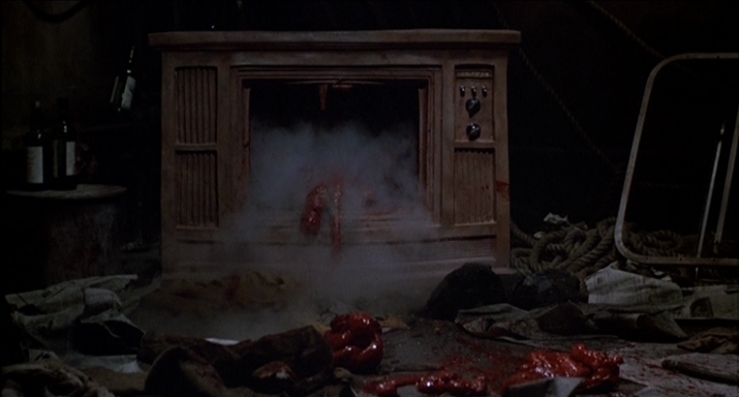
From Videodrome, 1983. Directed by David Cronenberg with cinematography by Mark Irwin. Via FilmGrab.
“The Plot”
by
Jorge Luis Borges
English translation by Andrew Hurley
To make his horror perfect, Caesar, hemmed about at the foot of a statue by his friends’ impatient knives, discovers among the faces and the blades the face of Marcus Junius Brutus, his ward, perhaps his very son—and so Caesar stops defending himself, and cries out Et tu, Brute? Shakespeare and Quevedo record that pathetic cry.
Fate is partial to repetitions, variations symmetries. Nineteen centuries later, in the southern part of the province of Buenos Aires, a gaucho is set upon by other gauchos, and as he falls he recognizes a godson of his, and says to him in gentle remonstrance and slow surprise (these words must be heard, not read): Pero, ¡che! Heches, but he does not know that he has died so that a scene can be played out again.

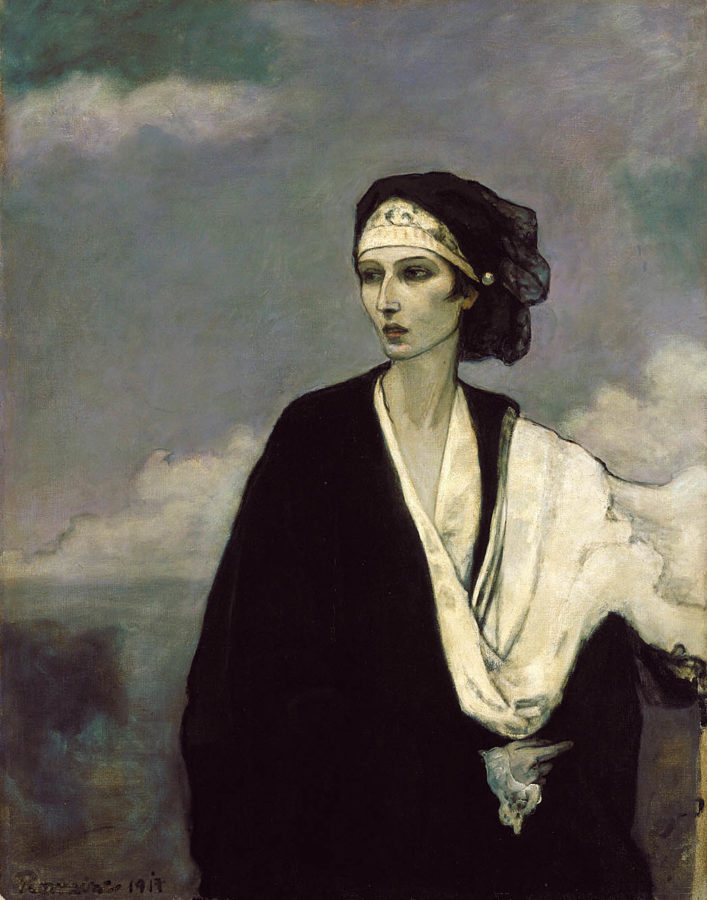
Ida Rubinstein,1917 by Romaine Brooks (1874-1970)

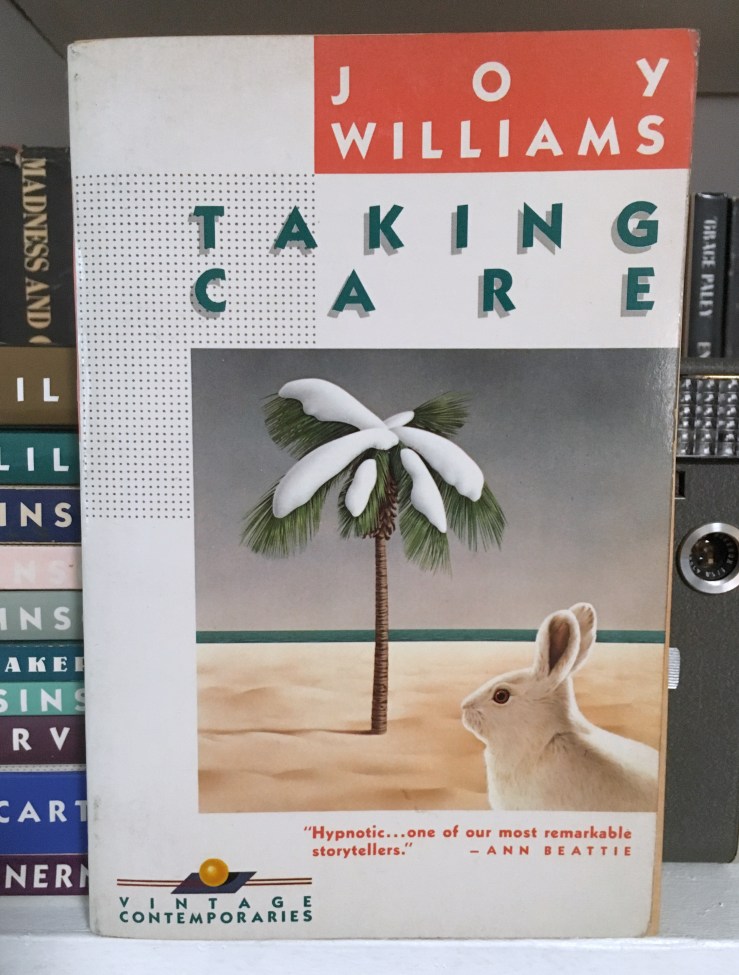
Let’s begin with a paragraph from Joy Williams’ story “Winter Chemistry.” Let’s begin with this paragraph because I think it makes a better argument for reading Joy Williams’ story “Winter Chemistry” than I ever could. Here’s the paragraph:
Judy Cushman and Julep Lee had become friends the summer before when they were on the beach. It was a bitter, shining Maine day and they were alone except for two people drowning just beyond the breaker line. The two girls sat on the beach, eating potato chips, unable to decide if the people were drowning or if they were just having a good time. Even after they disappeared, the girls could not believe they had really done it. They went home and the next day read about it in the newspapers. From that day on, they spent all their time together, even though they never mentioned the incident again.
The paragraph is a perfect little short story on its own, the second part of its second sentence deployed in a simple, casually devastating manner (“they were alone except for two people drowning just beyond the breaker line”). There’s a wonderful ambiguity to the whole passage, an ambiguity most resonant in the second “they” of the fourth sentence—what is the referent of that “they”? The drowned victims? Or the girls who witnessed the drowning, inert, snacking?
Stripes of ambiguity like this one run throughout the sixteen stories in Joy Williams’ 1982 debut collection Taking Care. Williams’ characters—often young girls or young women—cannot quite fit what they immediately perceive into a coherent schema of the phenomenological world.
In the opening story, “The Lover,” for instance, Williams portrays a woman dissociating, told in a present-tense, free indirect style that trips into our hero’s troubled mind:
The girl wants to be in love. Her face is thin with the thinness of a failed lover. It is so difficult! Love is concentration, she feels, but she can remember nothing. She tries to recollect two things a day. In the morning with her coffee, she tries to remember and in the evening, with her first bourbon and water, she tries to remember as well. She has been trying to remember the birth of her child now for several days. Nothing returns to her. Life is so intrusive! Everyone was talking. There was too much conversation! … The girl wished that they would stop talking. She wished that they would turn the radio on instead and be still. The baby inside her was hard and glossy as an ear of corn. She wanted to say something witty or charming so that they would know she was fine and would stop talking. While she was thinking of something perfectly balanced and amusing to say, the baby was born.
There are over a dozen exclamation marks in “The Lover,” deployed in artful disregard for the conventional creative writing advice that eschews using those pointed poles. I don’t think I’ve ever seen a story use exclamation marks so effectively: “There was too much conversation!” Williams evokes her character’s emerging anxiety as it tips close to mania. We never discover a cause for her dissociation and neither does she. We get only the fallout, the effects, sentences piling together without a clear destination other than dissociation. She tries to find some kind of an answer, calling up an AM radio show called Action Line to talk to the Answer Man:
The girl goes to the telephone and dials hurriedly. It is very late. She whispers, not wanting to wake the child. There is static and humming. “I can’t make you out,” the Answer Man shouts. “Are you a phronemophobiac?” The girl says more firmly, “I want to know my hour.” “Your hour came, dear,” he says. “It went when you were sleeping. It came and saw you dreaming and it went back to where it was.”
A later story in Taking Care, “The Excursion,” returns to the themes of dissociation we saw in “The Lover.” In “The Excursion,” a girl named Jenny is unstuck in time. Her consciousness reels between childhood and adulthood; memories of her parents compound with adult experiences with her lover in Mexico. The result is startling, disorienting, and often upsetting. (And again, Williams deploys her exclamation marks like artful verbal pricks).
“The Lover” and “The Excursion” are probably the two most formally-daring stories in Taking Care, but their ambiguous spirit is part and parcel of the collection as a whole. Consider “Shorelines,” a rare first-person perspective story, which begins with the narrator trying to set order where there is none:
I want to explain. There are only the two of us, the child and me. I sleep alone. Jace is gone. My hair is wavy, my posture good. I drink a little. Food bores me. It takes so long to eat. Being honest, I must say I drink. I drink, perhaps, more than moderately, but that is why there is so much milk. I have a terrible thirst. Rum and Coke. Grocery wine. Anything that cools. Gin and juices of all sorts. My breasts are always aching, particularly the left, the earnest one, which the baby refuses to favor. First comforts must be learned, I suppose. It’s a matter of exposure.
“I want to explain,” our unnamed narrator declares, but her mind seems to wander away from this mission almost immediately. Who is Jace, and where has he gone? We never really find out, but we do get puzzling, upsetting clues, like this one:
It has always been Jace only. We were children together. We lived in the same house. It was a big house on the water. Jace remembers it precisely. I remember it not as well. There were eleven people in that house and a dog beneath it, tied night and day to the pilings. Eleven of us and always a baby. It doesn’t seem reasonable now when I think on it, but there were always eleven of us and always a baby. The diapers and the tiny clothes, hanging out to dry, for years!
Is Jace the father of the baby? Is he the narrator’s brother? The tingling ambiguities remain as the story concludes, the narrator still waiting on a return that may or may not happen.
What makes Williams’ ambiguities resonate so strongly is her precise evocation of place. Her stories happen in real physical space, the concrete details of which often contrast strongly with her character’s abstracted consciousnesses. “Shorelines” is one of several Florida stories in the collection, and Williams writes authoritatively about the Sunshine State without devolving into the caricature or grotesquerie that pervades so much writing about Florida. (As a Floridian, nothing annoys me quite so much in fiction as certain writers’ tendencies to exoticize Florida).
“Shepherd” is another of Wiliams’ Florida stories. (And one of her dog stories. And grief stories. And unnamed-girl-hero stories). It is set in the Florida Keys, where Williams lived for some time—her early career was in doing research for the U.S. Navy Marine Laboratory in Siesta Key, Florida. (Williams’ best-selling book is actually a history and tour guide of the Florida Keys). “Shepherd” is a sad story, one of the most basic stories in literature, really: Your dog dies. The story is ultimately about perception. After the dog’s death, the girl’s boyfriend cannot comprehend her grief. He scolds her:
“I think you’re wonderful, but I think a little realism is in order here. You would stand and scream at that dog, darling.” …
“I wasn’t screaming,” she said. The dog had a famous trick. The girl would ask, “Do you love me?” and he would leap up, all fours, into her arms. Everyone had been amazed.
While most readers will sympathize with the girl, her boyfriend’s perspective introduces an unsettling ambiguity. And yet Williams, or at least her character, resolves some of this ambiguity in what I take to be the story’s thesis:
Silence was a thing entrusted to the animals, the girl thought. Many things that human words have harmed are restored again by the silence of animals.
Taking Care is a bipolar book. Florida is one of its poles. Maine, where Williams grew up, is the other. “Winter Chemistry” (originally published in a different version as “A Story about Friends”) is a Maine story. In “Winter Chemistry,” two teenage girls, bored, play at something they don’t have the language for yet. Their game entails spying on their chemistry teacher, whom they both maybe are in love with. The girls may not comprehend what their emerging sexuality entails, but they do feel the physical world. Consider Williams’ evocation of Maine’s winter:
The cold didn’t invent anything like the summer has a habit of doing and it didn’t disclose anything like the spring. It lay powerfully encamped—waiting, altering one’s ambitions, encouraging ends. The cold made for an ache, a restlessness and an irritation, and thinking that fell in odd and unemployable directions.
The story propels the aching duo in “odd and unemployable directions” — and towards an unexpected violence foreshadowed earlier in the summer, as the two munched chips on the beach, watching a pair of swimmers drown.
In “Train,” Williams gives us another pair of girls, Danica and Jane. They are traveling from Maine to Florida, traversing the poles of Williams’ Taking Care. They explore “the entire train, from north to south” and find most of the adults drunk, or at least getting there. Jane’s parents, the Muirheads, clearly, strongly, definitively out of love, are in a fight. The adult world’s authority is always under suspicion in Taking Care. And yet the adults in Williams’ stories see what the children cannot yet see:
“Do you think Jane and I will be friends forever?” Dan asked.
Mr. Muirhead looked surprised. “Definitely not. Jane will not have friends. Jane will have husbands, enemies and lawyers.” He cracked ice noisily with his white teeth. “I’m glad you enjoyed your summer, Dan, and I hope you’re enjoying your childhood. When you grow up, a shadow falls. Everything’s sunny and then this big Goddamn wing or something passes overhead.”
“Oh,” Dan said.
The theme of caretaking evinces most strongly in the titular story. “Taking Care” seems to be set in Maine, although it’s not entirely clear. The story focuses on “Jones, the preacher,” who “has been in love all his life”; indeed, “Jones’s love is much too apparent and it arouses neglect.” Jones takes care of himself only so that he can take care of others. His wife is diagnosed with cancer; his daughter, in the midst of a nervous breakdown, has run away to Mexico, leaving Jones to care for her infant daughter, his only grandchild. The story is devastating in its evocation of love and duty, and ends although its ending is ambiguous, it nevertheless concludes on an achingly-sweet grace note.
Jones’s enduring, patient love is unusual in Taking Care, where friendships splinter, marriages fail, and children realize their parents’ vices and frailties might be their true inheritance. These are stories of domestic doom and incipient madness, alcoholism and lost pets. There’s humor here, but the humor is ice dry, and never applied as even a palliative to the central sadness of Taking Care. Williams’ humor is something closer to cosmic absurdity, a recognition of the ambiguity at the core of being human, of not knowing. It’s the humor of two girls eating chips on a beach, unable to decide if the people they are gazing at are drowning or just having a good time.
I enjoyed many of the stories in “Taking Care” very much, and especially enjoyed the stranger, more formally-adventurous ones, like “The Lover” and “The Excursion.” I look forward to reading more of Joy Williams’ work. Highly recommended.

Caged Pie, 1962 by Wayne Thiebaud (b. 1920)
“Dialog Outside the Lakeside Grocery”
by
Ishmael Reed
The grocery had provided him with
boxes of rotten lettuce
He was loading them onto a
yellow pick-up truck
He was a frail white man and
wore a plaid woolen shirt and
frayed dungarees
I was sitting in a gray chevrolet
rent-a-dent
“I have eight adult geese and
twenty-six ducks,” he said
and i said
“I’ll bet you have a big management
problem,” and he said
“They’re no trouble at all. My
wife raised two of them in the house.
When she goes near their pen
the geese waddle towards her
and nibble the lettuce out of her
hand”
“I’d never think of killing them”
he said
“They keep me out of the bars”

The Fools, 2017 by Agostino Arrivabene (b. 1967)

Dreamer, 2007 by Falk Gernergross (b. 1973)

The Dancer, 2018 by Claire Tabouret (b.1981)
March 11th.–After the ground had been completely freed of snow, there has been a snow-storm for the two days preceding yesterday, which made the earth all white again. This morning at sunrise, the thermometer stood at about 18 degrees above zero. Monument Mountain stands out in great prominence, with its dark forest-covered sides, and here and there a large, white patch, indicating tillage or pasture land; but making a generally dark contrast with the white expanse of the frozen and snow-covered lake at its base, and the more undulating white of the surrounding country. Yesterday, under the sunshine of mid-day, and with many voluminous clouds hanging overit, and a mist of wintry warmth in the air, it had a kind of visionary aspect, although still it was brought out in striking relief. But though one could see all its bulgings, round swells, and precipitous abruptnesses, it looked as much akin to the clouds as to solid earth and rock substance. In the early sunshine of the morning, the atmosphere being very clear, I saw the dome of Taconic with more distinctness than ever before, the snow-patches, and brown, uncovered soil on its round head, being fully visible. Generally it is but a dark blue unvaried mountain-top. All the ruggedness of the intervening hill-country was likewise effectively brought out. There seems to be a sort of illuminating quality in new snow, which it loses after being exposed for a day or two to the sun and atmosphere.

Big Dreamer with an Ode to the Dawn by Adrian Cox (b. 1988)
“Miss Furr and Miss Skeene”
by
Gertrude Stein
Helen Furr had quite a pleasant home. Mrs. Furr was quite a pleasant woman. Mr. Furr was quite a pleasant man. Helen Furr had quite a pleasant voice a voice quite worth cultivating. She did not mind working. She worked to cultivate her voice. She did not find it gay living in the same place where she had always been living. She went to a place where some were cultivating something, voices and other things needing cultivating. She met Georgine Skeene there who was cultivating her voice which some thought was quite a pleasant one. Helen Furr and Georgine Skeene lived together then. Georgine Skeene liked travelling. Helen Furr did not care about travelling, she liked to stay in one place and be gay there. They were together then and travelled to another place and stayed there and were gay there.
They stayed there and were gay there, not very gay there, just gay there. They were both gay there, they were regularly working there both of them cultivating their voices there, they were both gay there. Georgine Skeene was gay there and she was regular, regular in being gay, regular in not being gay, regular in being a gay one who was one not being gay longer than was needed to be one being quite a gay one. They were both gay then there and both working there then.
They were in a way both gay there where there were many cultivating something. They were both regular in being gay there. Helen Furr was gay there, she was gayer and gayer there and really she was just gay there, she was gayer and gayer there, that is to say she found ways of being gay there that she was using in being gay there. She was gay there, not gayer and gayer, just gay there, that is to say she was not gayer by using the things she found there that were gay things, she was gay there, always she was gay there.
They were quite regularly gay there, Helen Furr and Georgine Skeene, they were regularly gay there where they were gay. They were very regularly gay.
To be regularly gay was to do every day the gay thing that they did every day. To be regularly gay was to end every day at the same time after they had been regularly gay. They were regularly gay. They were gay every day. They ended every day in the same way, at the same time, and they had been every day regularly gay.
The voice Helen Furr was cultivating was quite a pleasant one. The voice Georgine Skeene was cultivating was, some said, a better one. The voice Helen Furr was cultivating she cultivated and it was quite completely a pleasant enough one then, a cultivated enough one then. The voice Georgine Skeene was cultivating she did not cultivate too much. She cultivated it quite some. She cultivated and she would sometime go on cultivating it and it was not then an unpleasant one, it would not be then an unpleasant one, it would be a quite richly enough cultivated one, it would be quite richly enough to be a pleasant enough one.
They were gay where there were many cultivating something. The two were gay there, were regularly gay there. Georgine Skeene would have liked to do more travelling. They did some travelling, not very much travelling, Georgine Skeene would have liked to do more travelling, Helen Furr did not care about doing travelling, she liked to stay in a place and be gay there.
They stayed in a place and were gay there, both of them stayed there, they stayed together there, they were gay there, they were regularly gay there. Continue reading “Read “Miss Furr and Miss Skeene,” a fiction by Gertrude Stein”

Agbogo-Mmuo, 1972 by Ben Enwonwu (1917-1994)

Ishmael Reed’s 1974 novel The Last Days of Louisiana Red is a sharp, zany satire of US culture at the end of the twentieth century. The novel, Reed’s fourth, is a sequel of sorts to Mumbo Jumbo (1972), and features that earlier novel’s protagonist, the Neo-HooDoo ghost detective Papa LaBas.
In Mumbo Jumbo, Reed gave us the story of an uptight secret society, the Wallflower Order, and their attempt to root out and eradicate “Jes’ Grew,” a psychic virus that spreads freedom and takes its form in arts like jazz and the jitterbug. The Last Days of Louisiana Red also employs a psychic virus to drive its plot, although this transmission is far deadlier. “Louisiana Red” is a poisonous mental disease that afflicts black people in the Americas, causing them to fall into a neo-slave mentality in which they act like “Crabs in the Barrel…Each crab trying to keep the other from reaching the top.”
The Last Days of Louisiana Red begins with Ed Yellings, “an american negro itinerant who popped into Berkeley during the age of Nat King Cole. People looked around one day and there he was.” Yellings is the West Coast counterpart to New-York-based Papa LeBas, a fellow Worker of Neo-HooDoo who fights against the secret forces of psychic slavery.
Sliding into the mythological motif that ripple through Louisiana Red, Reed writes,
When Osiris entered Egypt, cannibalism was in vogue. He stopped men from eating men. Thousands of years later when Ed Yellings entered Berkeley, there was a plague too, but not as savage. After centuries of learning how to be subtle, the scheming beast that is man had acquired the ability to cover up.
Yellings’ mission is to destroy the psychic cannibalism that afflicts his people. He gets to it, and earns “a reputation for being not only a Worker [of the voodoo arts] but a worker too.” Yellings’ working class bona fides helps solidify his sympathies and his mission:
Since he worked with workers, he gained a knowledge of the workers’ lot. He knew that their lives were bitter. He experienced their surliness, their downtroddenness, their spitefulness and the hatred they had for one another and for their wives and their kids. He saw them repeatedly go against their own best interests as they were swayed and bedazzled by modern subliminal techniques, manipulated by politicians and corporate tycoons, who posed as their friends while sapping their energy. Whose political campaigns amounted to: “Get the Nigger.”
As always, Reed’s diagnosis of late 20th-century American culture seems to belong, unfortunately, just as much to our own time, giving his novels a perhaps-unintended sheen of prescience. Reed’s work points to dystopia, even as his heroes work for freedom and justice. And yet Reed gives equal air time to the forces that oppress freedom and justice, forces that find expression in “Louisiana Red”:
Louisiana Red was the way they related to one another, oppressed one another, maimed and murdered one another., carving one another while above their heads, fifty thousand feet, billionaires few in custom-made jet planes equipped with saunas tennis courts swimming pools discotheques and meeting rooms decorated like a Merv Griffin Show set….
The miserable workers were anti-negro, anti-chicano, anti-puerto rican, anti-asian, anti-native american, had forgotten their guild oaths, disrespected craftsmanship; produced badly made cars and appliances and were stimulated by gangster-controlled entertainment; turned out worms in the tuna fish, spiders in the soup, inflamatory toys, tumorous chickens, d.d.t. in fish and the brand new condominium built on quicksand.
As a means to fight the culture of erosion, decay, and entropy, Yellings founds the Solid Gumbo Works. Here, he manufactures a gumbo—a spell, really—to combat “Louisiana Red.” In the process he manages to cure cancer, which pisses off a lot of big corporations, and pretty soon Yellings is murdered. Papa LeBas is sent in from New York to solve the case.
Papa LeBas runs into trouble pretty quickly, mostly by way of Yellings’ adult children: Wolf, Street, Sister, and the provocative and gifted Minnie, who leads a group of militants called the Moochers. Each of the children seem to embody an allegorical parallel to some aspect of the American counterculture of the late sixties and seventies, allowing Reed to mash up genres and skewer ideologies. There are a lot flavors in this gumbo: voodoo lore and California history bubble in the same pot as riffs on astrology and Cab Calloway’s hit “Minnie the Moocher.” Reed frequently compares and contrasts East with West, New York with California, underscoring the latter’s anxieties of influence about being the New World of the New World. Throughout the novel, we get routines on Amos & Andy, slapstick pastiches straight out of George Herriman’s Krazy Kat comix, hysterical nods to Kafka. Reed plays off early blaxploitation films like Sweet Sweetback’s Baadasssss Song and Superfly (not to mention Putney Swope), and synthesizes these tropes with kung fu imagery and neo-Nazi nostalgia garb. He turns Aunt Jemima into a loa at one point.
Reed’s prose ping-pongs between genres, skittering from pulp fiction noir to surrealist frenzies, from bizarre sex to raucous action, from political essaying to postmodernist mythologizing. Through these stylistic shifts, Reed satirizes a host of ideologies that feed into “Louisiana Red.” Aspects of the Berkeley youth movement, radical feminism, free love, and intellectual hucksterism all get skewered, but through an allegorical lens—Reed dares us, often explicitly (by way of a character named Chorus) to read Louisiana Red as an allegorical retelling of Sophocles’ Antigone.
This retelling is both tragic and comic though, premodern and postmodern, a carnival of varied voices. The chapters are short, the sentences sting, and the plot shuttles along, pivoting from episode to episode with manic picaresque glee. Reed’s narrator is always way out there in front of both the reader and the novel’s characters, hollering at us to keep up.
Ultimately, The Last Days of Louisiana Red is a bit of a shaggy dog. It’s not that it doesn’t have a climax—it does, it has lots of climaxes, some quite literal. And it’s not that the novel doesn’t have a point—it very much does. Rather, it’s that Reed employs his detective story as a frame for the larger argument he wants to make about American culture. Sure, Papa LaBas gets to the bottom of Yellings’ murder, but that’s not ultimately what the narrative is about.
When we get to the final chapter, we find LaBas, sitting alone “on a plain box” in the empty offices of the Solid Gumbo Works reflecting on the case in a way that, in short, sums up what The Last Days of Louisiana Red is about:
He thought of the eaters and the eaten of this parable on Gumbo…all ‘oppressed people’ who often, like Tod Browning ‘Freaks,’ have their own boot on their own neck. They exist to give the LaBases, Wolfs and Sisters of these groups the business, so as to prevent them from taking care of Business, Occupation, Work. They are the moochers who cooperate with their ‘oppression,’ for they have the mentality of the prey who thinks his destruction at the fangs of the killer is the natural order of things and colludes with his own death. The Workers exist to tell the ‘prey’ that they were meant to bring down killers three times their size, using the old morality as their guide: Voodoo, Confucianism, the ancient Egyptian inner duties, using the technique of camouflage, independent camouflages like the leopard shark, ruler of the seas for five million years. Doc John, ‘the black Cagliostro,’ rises again over the American scene. The Workers conjure and command the spirit of Doc John to walk the land.
So here, near the end of The Last Days of Louisiana Red, Papa LeBas—and Ishmael Reed, of course—conjures up the spirit of Doctor John, the voodoo healer who escaped slavery and brought knowledge of the hoodoo arts to his people. There’s a promise of hope and optimism here at the novel’s end, despite its many bitter flavors. But the passage cited above is not the final moments of Louisiana Red—no, the novel, ends, despite what I wrote about its being a shaggy dog story, with a marvelous punchline.
Ishmael Reed remains an underappreciated novelist whose early work seems as vital as ever. The Last Days of Louisiana Red is probably not the best starting place for him, but it’s a great novel to read right after Mumbo Jumbo, which is a great starting place to read Reed. In any case: Read Reed. Highly recommended.
“The Fish”
by
Elizabeth Bishop
I caught a tremendous fish
and held him beside the boat
half out of water, with my hook
fast in a corner of his mouth.
He didn’t fight.
He hadn’t fought at all.
He hung a grunting weight,
battered and venerable
and homely. Here and there
his brown skin hung in strips
like ancient wallpaper,
and its pattern of darker brown
was like wallpaper:
shapes like full-blown roses
stained and lost through age.
He was speckled with barnacles,
fine rosettes of lime,
and infested
with tiny white sea-lice,
and underneath two or three
rags of green weed hung down.
While his gills were breathing in
the terrible oxygen
—the frightening gills,
fresh and crisp with blood,
that can cut so badly—
I thought of the coarse white flesh
packed in like feathers,
the big bones and the little bones,
the dramatic reds and blacks
of his shiny entrails,
and the pink swim-bladder
like a big peony.
I looked into his eyes
which were far larger than mine
but shallower, and yellowed,
the irises backed and packed
with tarnished tinfoil
seen through the lenses
of old scratched isinglass.
They shifted a little, but not
to return my stare.
—It was more like the tipping
of an object toward the light.
I admired his sullen face,
the mechanism of his jaw,
and then I saw
that from his lower lip
—if you could call it a lip—
grim, wet, and weaponlike,
hung five old pieces of fish-line,
or four and a wire leader
with the swivel still attached,
with all their five big hooks
grown firmly in his mouth.
A green line, frayed at the end
where he broke it, two heavier lines,
and a fine black thread
still crimped from the strain and snap
when it broke and he got away.
Like medals with their ribbons
frayed and wavering,
a five-haired beard of wisdom
trailing from his aching jaw.
I stared and stared
and victory filled up
the little rented boat,
from the pool of bilge
where oil had spread a rainbow
around the rusted engine
to the bailer rusted orange,
the sun-cracked thwarts,
the oarlocks on their strings,
the gunnels—until everything
was rainbow, rainbow, rainbow!
And I let the fish go.

Mourning and Fecundity II, 2011 by Vincent Desiderio (b. 1955)