The Nipple I Never Knew — Katherine Kuharic

201520the20nipple20i20never20knew20281024x68129_0

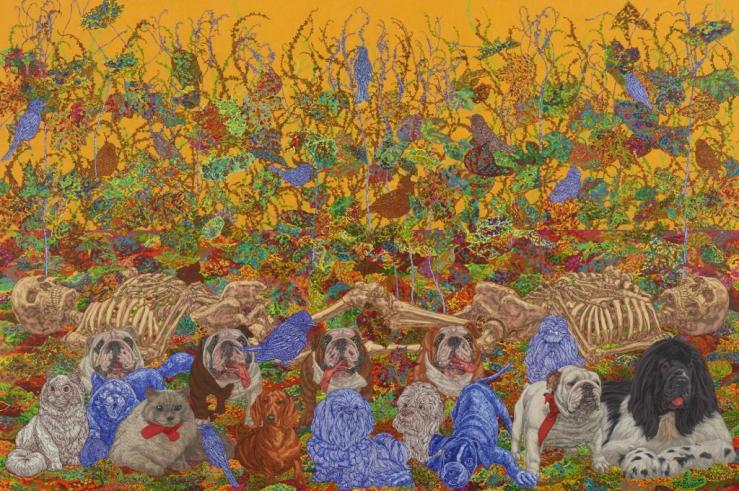
The Nipple I Never Knew, 2015 by Katherine Kuharic (b. 1962)

Minnie Cunningham at the Old Bedford — Walter Richard Sickert

Minnie Cunningham at the Old Bedford 1892 by Walter Richard Sickert 1860-1942

Minnie Cunningham at the Old Bedford, 1892 by Walter Richard Sickert (1860–1942)

“Living in a Simulation” — Tom Clark

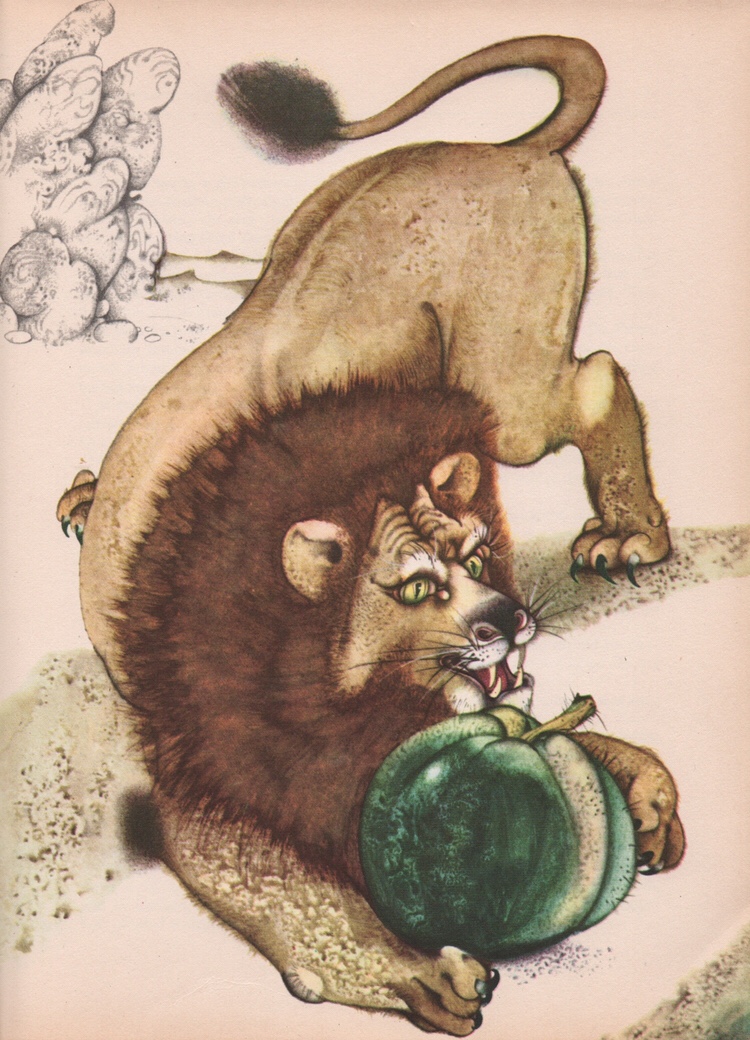
Luděk Maňásek’s illustration for “The Melon Child”

img_8996

Luděk Maňásek’s illustration for “The Melon Child.” From Jaroslav Tichý’s Persian Fairy Tales, Hamlyn, 1970. (English translations in the collection are by Jane Carruth).

Peeping — Ikenaga Yasunari

126

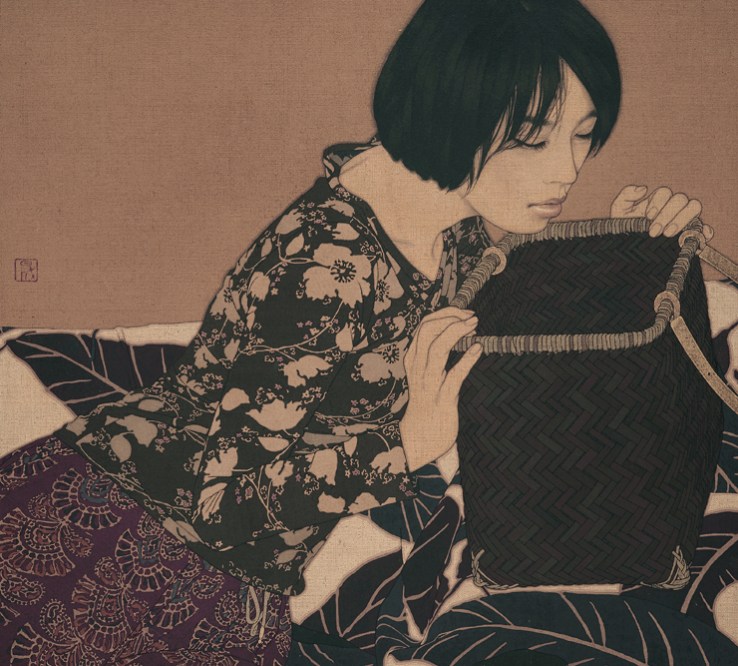
「覗く・恵美子」(Peeping, Emiko) by Ikenaga Yasunari

The Last Jedi and the Anxiety of Influence

58f13f34dd0895d2098b4814-1888

Let me start by erasing my own anxieties about “reviewing” The Last Jedi (2017, dir. Rian Johnson). I saw it over a month ago in a packed theater with my wife and two young children. We loved it. I haven’t seen it since then, although I’d like to. Because I’ve only seen it once, this “review” will be far lighter on specific illustrating examples than it should be. Now, with some of those (writing) anxieties dispersed, if not exactly erased:

The Last Jedi strikes me as one of the best Star Wars films to date, of a piece with The Empire Strikes Back (1980, dir. Irvin Kershner) and Revenge of the Sith (2005, dir. George Lucas).

Not everyone agrees with me. Clearly, a lot of people hated Rian Johnson’s take on Star Wars. I won’t repeat the laundry list of gripes about The Last Jedi, but instead offer this: the numerous noisy denunciations of The Last Jedi can be rebutted via the terms, tropes, and tones of any of the previous films themselves. Put another way, anything “wrong” (tone choices, plot devices, casting, etc.) with The Last Jedi can be found to be “wrong” with any of the previous films. Furthermore, I don’t intend to directly rebut gripes about The Last Jedi here. Most attacks on the film simply amount to iterations of, “This film did not do what I wanted this film to do,” to which my reply would be, “Well, good.”

“Well, good” — the passionate reactions to The Last Jedi show the film’s power—both narratively and more importantly, aesthetically—to disturb a cultural sense of what the Star Wars franchise “is” or “is not.” In burning down much of the mythos (again, both narratively and aesthetically) of the films that preceded it, The Last Jedi opens up new space for the series to grow.

I enjoyed The Last Jedi’s most immediate predecessor,  The Force Awakens (2015, dir. J.J. Abrams), but was critical of its inability to generate anything truly new. Riffing on The Force Awakens, I wrote that the film “is a fun entertainment that achieves its goals, one of which is not to transcend the confines of its brand-mythos. . . [the film] takes Star Wars itself (as brand-mythos) as its central subject. The film is ‘about’ Star Wars.” And, more to the point:

Isn’t there a part of us…that wants something more than the feeling of (the feeling of) a Star Wars film? That wants something transcendent—something beyond that which we have felt and can name? Something that we don’t know that we want because we haven’t felt it before?

The Last Jedi transcends the narrative stasis of The Force Awakens. “Stasis” is probably not a fair word to describe TFA. Abrams’s film excited viewers, roused emotions, offered engaging new characters, and even killed off a classic character via the classic Star Wars trope of Oedipal anxiety erupting in violent rage. TFA’s stasis is the static-but-not-stagnant excitement of having expectations confirmed. In contrast, Rian Johnson’s The Last Jedi punctures viewer expectations at almost every opportunity, aesthetically restaging tropes familiar to the series but then spinning them out in new, unforeseen directions.

The Last Jedi echoes visual tropes from The Empire Strikes Back in particular. Indeed, many fans believed that Rian Johnson’s TLJ would (or even should) reinterpret Irvin Kershner and Lawrence Kasdan’s entry into the series, much as J.J. Abrams had restaged A New Hope (1977, dir. George Lucas) with The Force Awakens. Instead, Johnson pushes the Star Wars narrative into new territory, with an often playful (and sometimes absurd) glee that has clearly upset many fans.

Johnson’s (successful) attempt to reinvent Star Wars might best be understood in terms of what the literary critic Harold Bloom has called the anxiety of influence. Bloom uses the anxiety of influence to describe an artist’s intense unease with all strong precursors. To succeed, new artists must overcome their aesthetic progenitors. Bloom compares the anxiety of influence to the Oedipal complex. An artist has to symbolically kill what has come before in order to thrive.

An apt description of franchise filmmaking’s inherent anxiety of influence can be found in Dan Hassler-Forest’s essay “The Last Jedi: Saving Star Wars from Itself,”  published last year in the Los Angeles Review of Books:

An overwhelming anxiety of influence predictably permeates any new director’s attempt to elaborate on the world’s most famous entertainment franchise. In J. J. Abrams’s hands, this anxiety was clearly that of a fan-producer struggling to meet other fans’ expectations while also establishing a viable template for future installments. In doing so, his cinematic points of reference never seemed to extend far beyond the Spielberg-Lucas brand of Hollywood blockbusters that shaped his generation of geek directors, and he tried desperately to make up for what he lacks in auteurist vision with energy, self-deprecating humor, and generous doses of fan service.

But Rian Johnson is a filmmaker of an entirely different caliber. Just as Irvin Kershner and Lawrence Kasdan once added complexity, wit, and elegance to Lucas’s childish world of spaceships and laser swords, Johnson makes his whole film revolve around characters’ fear of repeating the past, and both the attraction and the risk of breaking away from tradition.

A break with any tradition, however, paradoxically confirms the power of that tradition. Johnson understands and clearly respects the Star Wars tradition. Despite what his detractors may believe, Johnson hasn’t erased or trampled upon the Star Wars mythos in The Last Jedi; rather, as the Modernist manifesto commanded, he’s made it new. Continue reading “The Last Jedi and the Anxiety of Influence”

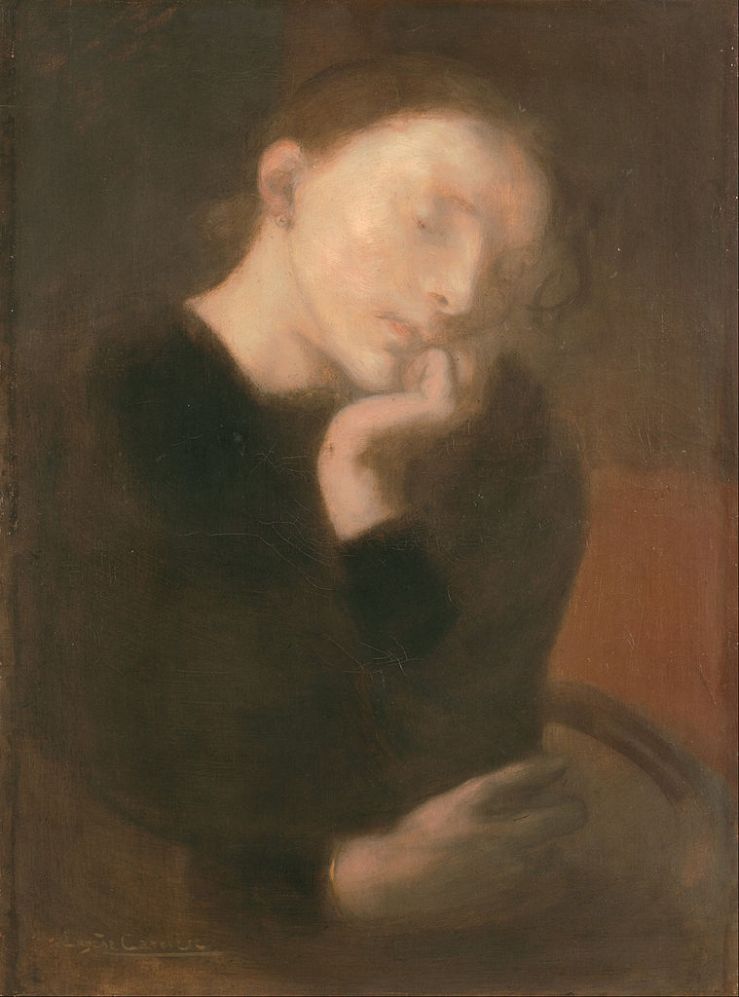
Meditation — Eugene Carriere

meditation-1890

Meditation, 1890 by Eugene Carriere (1849-1906)

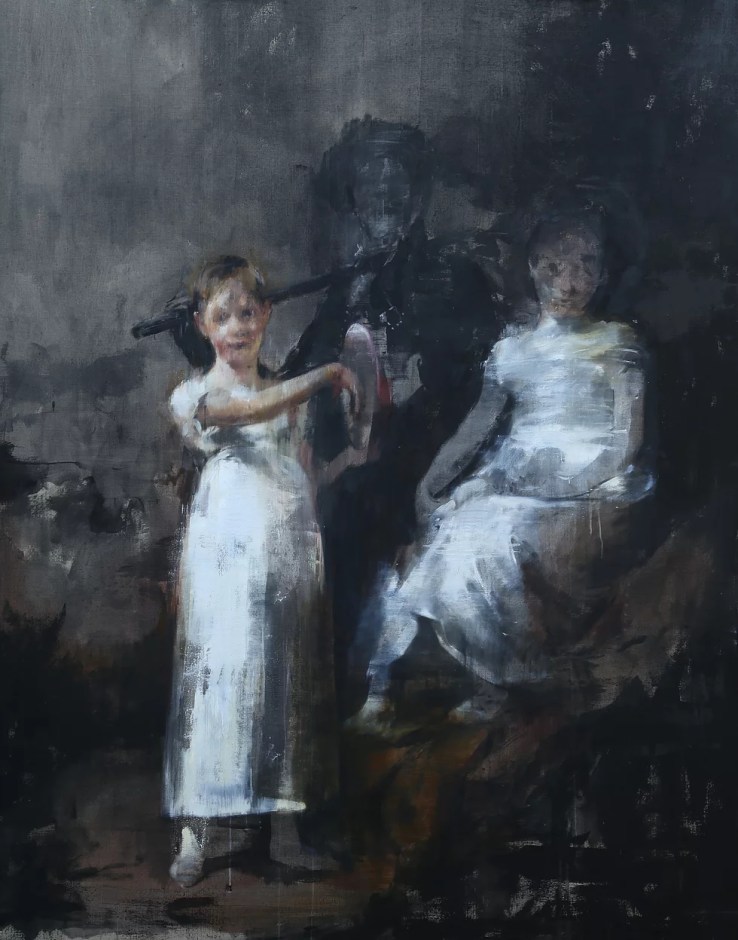
The Elphinston Children (After Sir Henry Raeburn) — Jake Wood-Evans

jwe

The Elphinston Children (After Sir Henry Raeburn), 2016 by Jake Wood-Evans (b. 1980)

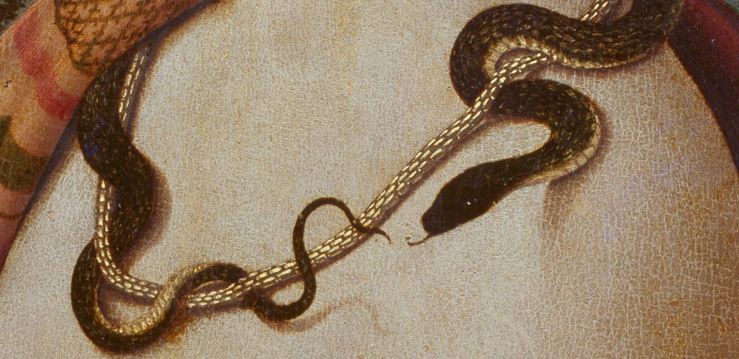
Portrait of Simonetta Vespucci — Piero di Cosimo

abcpiero_di_cosimo_-_portrait_de_femme_dit_de_simonetta_vespucci_-_google_art_project

Portrait of Simonetta Vespucci, c. 1480 by Piero di Cosimo (1462–1522)

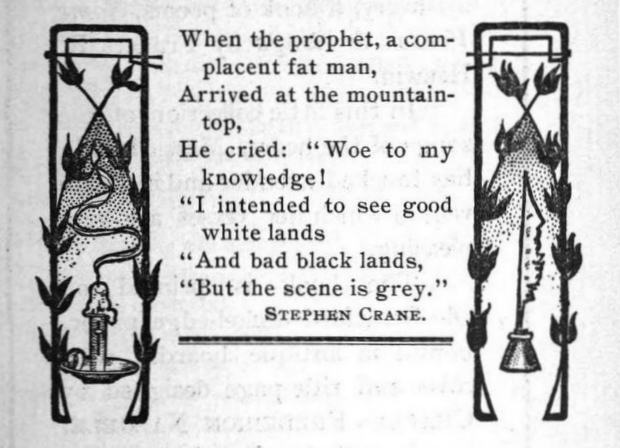
The scene is grey (Stephen Crane)

crane

Robert Coover on genre fiction

Which genres do you avoid?

The conventional novel, only readable if the writing’s stunningly or quirkily great. On the other hand, sci-fi, detective novels, westerns, pornography, spy stories, horror and romance, though very conservative forms, are all more like folk and fairy tales, and so much more alluring to a writer trying to burrow inside the collective psyche.

From Robert Coover’s “By the Book” interviewette in today’s New York Times

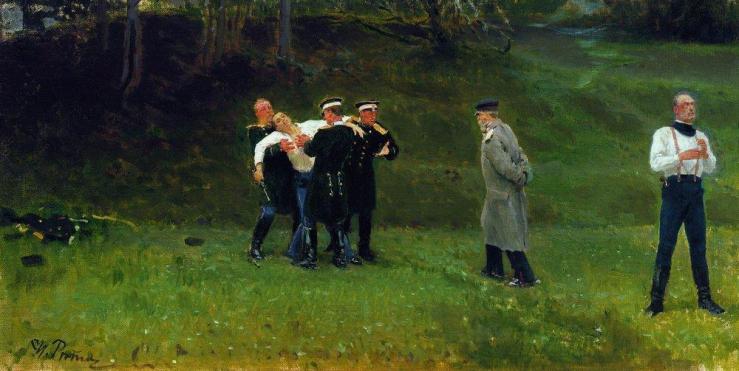
The Duel — Ilya Repin

the-duel-1897

The Duel, 1897 by Ilya Repin (1844-1930)

Selections from One-Star Amazon Reviews of Virginia Woolf’s Mrs. Dalloway

[Editorial note: The following citations come from one-star Amazon reviews Virginia Woolf’s novel Mrs. DallowayI’ve preserved the reviewers’ original punctuation and spelling. More one-star Amazon reviews.].


I had been warned about Woolf

written, I believe, to impress rather than to relate.

I don’t appreciate her writing and keep coming back for more

I may not be giving it a fair review since I only made it to page 65

pages and pages of surreal metaphors that go on for 10 paragraphs

Woolf had a huge obsession with semi-colons

The book just does not make any sense

I really liked the movie “the Hours”

nonsensical semi-flashbacks

Groundbreaking prose?

I tried, I really did

describing nothing

Written by a lesbian

Kind of like F. Scott Fitzgerald’s works

DO read “The Hours”, you will be impressed

I kept losing track of which character was musing about nothing

I suppose Woolf is considered a genius since she was apparently a cavalier writer of her generation

Let us listen to an old farty woman stream her consciousness to us to hear, pointless thoughts that go nowhere

I’m grateful that contemporary writers can at least string together 2 sentences that follow one another in a logical sequence

Lets burn every sentence she ever penned to end all the unneccesary suffering that curious readers have to go through when they first pick up “Mrs. Dalloway.”

My suggestion: just watch The Hours – you’ll get all the beauty and none of the confusion

the person responsible, Virginia Wolf, has been dead for quite some time now

i have no interest in reading about that lifestyle

am stuck in her growling semicolons

slower than a tortoise

ramblings of a lunatic

As bad as Faulkner

So much language

dreadfully boring

run-on sentences

“literary” drivel

terribly written

so many words

and never getting to a plot

Stream of conscience you say?

I normally enjoy stream of consciousness

The narrative reads like the inner thoughts of a sugar crazed autistic kid with ADD in the middle of a carnival

everyone i know who likes this book only does so because he or she was told by some professor that it’s supposed to be good and can provide no evidence to confirm it

This book certainly shows the depravity of man and a self-centered life and the meaningless found amongst those who think of none but themselves.

The absence of spacing to differentiate between each character’s thought process makes for unnecessary confusion

I really liked the idea of the story taking place over the course of one day

THIS BOOK IS WORSE THAN AIDS!

meandering and repetetive

will suffice as kindling

The party! The party!

VW was mentally-ill

“Dense”

put me off

definitley not a fun read

pretty gross hair and stuff on it/ in it

I had had to read it, or was supposed to

haven’t been able to get past the first chapter

lovely idea, virginia and i applaud you for your creativity

I felt like I was reading some writing student’s homework assignment

The Hours is better, despite its inspiration

this story line is too depressing for me

Descriptions were beaten to death

Not one thing uplifting

I am an avid reader!

the book failed

hyphens

CHECK THE RECORD / CHECK THE RECORD / CHECK THE GUY’S TRACK RECORD

RIP Mark E. Smith, 1957-2018

A review of Ursula K. Le Guin’s novel The Lathe of Heaven

The City I Dream, Victor Brauner

George Orr is not well. The meek protagonist of Ursula K. Le Guin’s novel The Lathe of Heaven abuses prescription drugs in a desperate and unsuccessful attempt to stop himself from falling asleep. Orr doesn’t want to sleep because he believes that his dreams come true—that they literally alter reality—but in such a way that no one but Orr realizes that the world has changed. Orr gets caught using a “Pharmacy Card” that doesn’t belong to him, and is court-ordered to begin treatment with a sleep research psychiatrist, Dr. William Haber. Although Haber initially doesn’t believe Orr’s claim to be cursed with “effective dreams” that transform reality, he soon realizes that Orr’s dreams somehow do come true. Then, via hypnotic suggestion (and an “Augmentor” device), Haber begins wielding Orr’s gift/curse as a clumsy tool to “better” the world.

The world of The Lathe of Heaven is grim, gray, dystopian. Published in 1971 and set in Portland in the palindromic year of 2002, Le Guin’s novel is depressingly prescient. Not only does she capture the onset of seventies malaise (the ashes of hope that burned out in the sixties), she also points to a future of environmental catastrophe:

Very little light and air got down to street level; what there was was warm and full of fine rain. Rain was an old Portland tradition, but the warmth—70° F on the second of March—was modern, a result of air pollution. Urban and industrial effluvia had not been controlled soon enough to reverse the cumulative trends already at work in the mid-twentieth century; it would take several centuries for the CO2 to clear out of the air, if it ever did. New York was going to be one of the larger casualties of the Greenhouse Effect, as the polar ice kept melting and the sea kept rising…

This is also a world of urban sprawl, overpopulation, malnutrition, and total war (a clusterfuck in the Middle East, wouldn’t you know). The government is a vague and menacing presence here—vaguely totalitarian, vaguely Big Brotheresque. We learn of the “New Federal Constitution of 1984,” one of many references to Orwell’s book. (The most obvious is our passive hero’s name).

So it’s no wonder that Haber sets about to create a utopia, right? Wouldn’t you, like, try to make the world a better place if you could? Haber is repeatedly described as a “benevolent man”—Le Guin withholds the word dictator—but the central theme comes through repeatedly: Is it possible to alter reality for the greater good? Or do we simply exist in nature, a part of everything around us?

Haber’s experiments with Orr’s mind have unintended consequences. How might we, say, cure overpopulation? How about an awful plague. Orr’s “effective dreams” revise history, rewrite reality, remap consciousness. But he’s never quite able to pull off the massive tasks Haber sets for him—end racism, end war, cure the damaged ecosystem (Le Guin is extremely pessimistic on this last front). Orr is burdened with the consciousness of multiple realities, and feels deep guilt for his role in uncreation. He starts to go crazy:

“I am cracking,” he said. “You must see that. You’re a psychiatrist. Don’t you see that I’m going to pieces? Aliens from outer space attacking Earth! Look: if you ask me to dream again, what will you get? Maybe a totally insane world, the product of an insane mind. Monsters, ghosts, witches, dragons, transformations—all the stuff we carry around in us, all the horrors of childhood, the night fears, the nightmares. How can you keep all that from getting loose? I can’t stop it. I’m not in control!”

Continue reading “A review of Ursula K. Le Guin’s novel The Lathe of Heaven”

If civilization has an opposite, it is war (Ursula K. Le Guin)

Tibe spoke on the radio a good deal. Estraven when in power had never done so, and it was not in the Karhidish vein: their government was not a public performance, normally; it was covert and indirect. Tibe, however, orated. Hearing his voice on the air I saw again the long-toothed smile and the face masked with a net of fine wrinkles. His speeches were long and loud: praises of Karhide, disparagements of Orgoreyn vilifications of “disloyal factions,” discussions of the “integrity of the Kingdom’s borders,” lectures in history and ethics and economics, all in a ranting, canting, emotional tone that went shrill with vituperation or adulation. He talked much about pride of country and love of the parentland, but little about shifgrethor, personal pride or prestige. Had Karhide lost so much prestige in the Sinoth Valley business that the subject could not be brought up? No; for he often talked about the Sinoth Valley. I decided that he was deliberately avoiding talk of shifgrethor because he wished to rouse emotions of a more elemental, uncontrollable kind. He wanted to stir up something which the whole shifgrethor-pattern was a refinement upon, a sublimation of. He wanted his hearers to be frightened and angry. His themes were not pride and love at all, though he used the words perpetually; as he used them they meant self-praise and hate. He talked a great deal about Truth also, for he was, he said, “cutting down beneath the veneer of civilization.”

It is a durable, ubiquitous, specious metaphor, that one about veneer (or paint, or pliofilm, or whatever) hiding the nobler reality beneath. It can conceal a dozen fallacies at once. One of the most dangerous is the implication that civilization, being artificial, is unnatural: that it is the opposite of primitiveness… Of course there is no veneer, the process is one of growth, and primitiveness and civilization are degrees of the same thing. If civilization has an opposite, it is war. Of those two things, you have either one, or the other. Not both. It seemed to me as I listened to Tibe’s dull fierce speeches that what he sought to do by fear and by persuasion was to force his people to change a choice they had made before their history began, the choice between those opposites.

From Ursula Le Guin’s 1969 novel The Left Hand of Darkness. The bold emphases are mine—mea culpa, I couldn’t help it.

On Ursula K. Le Guin’s Hainish novels


img_1190

“Are we not Men?”

— The Island of Dr. Moreau, H.G. Wells (1896)

“A country, a people…Those are strange and very difficult ideas.”

— Four Ways to Forgivenss, Ursula K. Le Guin (1995)

—Each of the novels in Ursula K. Le Guin’s so-called Hainish cycle obliquely addresses Wells’s question by tackling those strange and very difficult ideas of “a country, a people.” The best of these Hainish books do so in a manner that synthesizes high-adventure sci-fi fantasy with dialectical philosophy.

—What am I calling here “the best”? Well—

The Left Hand of Darkness

Planet of Exile/City of Illusions (treat as one novel in two discursive parts)

The Dispossessed

—(How oh how oh how dare I rank The Dispossessed—clearly a masterpiece, nay?—so low on that little list? It’s too dialectical, maybe? Too light on the, uh, high adventure stuff, on the fantasy and romance and sci-fi. Its ideas are too finely wrought, well thought out, expertly cooked (in contrast to the wonderful rawness of Rocannon’s World, for example). None of this is to dis The Dispossessed—it’s probably the best of the Hainish books, and the first one casual readers should attend to. (It was also the first one I read way back when in high school)).

—The novels in Le Guin’s so-called Hainish cycle are

Rocannon’s World (1966)

Planet of Exile (1966)

City of Illusions (1967)

The Left Hand of Darkness (1969)

The Dispossessed (1974)

The Word for World is Forest (1976)

Four Ways to Forgiveness (1995)

The Telling (2000)

—Okay, so I decided to include For Ways to Forgiveness in the above list even though most people wouldn’t call it a “novel” — but its four stories (novellas, really) are interconnected and tell a discrete story of two interconnected planets that are part of the Hainish world. And I pulled a quote from it above. So.

—I read, or reread, Le Guin’s so-called Hainish cycle close to the chronological order proposed by the science fiction writer Ian Watson. I don’t necessarily recommend this order.

—(I keep modifying “Hainish cycle” with “so-called” because the books aren’t really a cycle. Le Guin’s world-building isn’t analogous to Tolkien’s Middle Earth or Faulkner’s Yoknapatawpha County. (Except when her world-building is analogous). But let us return to order).

Le Guin on the subject:

People write me nice letters asking what order they ought to read my science fiction books in — the ones that are called the Hainish or Ekumen cycle or saga or something. The thing is, they aren’t a cycle or a saga. They do not form a coherent history. There are some clear connections among them, yes, but also some extremely murky ones. And some great discontinuities (like, what happened to “mindspeech” after Left Hand of Darkness? Who knows? Ask God, and she may tell you she didn’t believe in it any more.)

OK, so, very roughly, then:

Rocannon’s World, Planet of Exile, City of Illusions: where they fit in the “Hainish cycle” is anybody’s guess, but I’d read them first because they were written first. In them there is a “League of Worlds,” but the Ekumen does not yet exist.

—I agree with the author. Read this trilogy first. Read it as one strange book.

—(Or—again—pressed for time and wanting only the essential, read The Dispossessed and The Left Hand of Darkness—but you already knew that, no?).

Continue reading “On Ursula K. Le Guin’s Hainish novels”