The Annunciation (Detail) — Jan van Eyck

annunc4

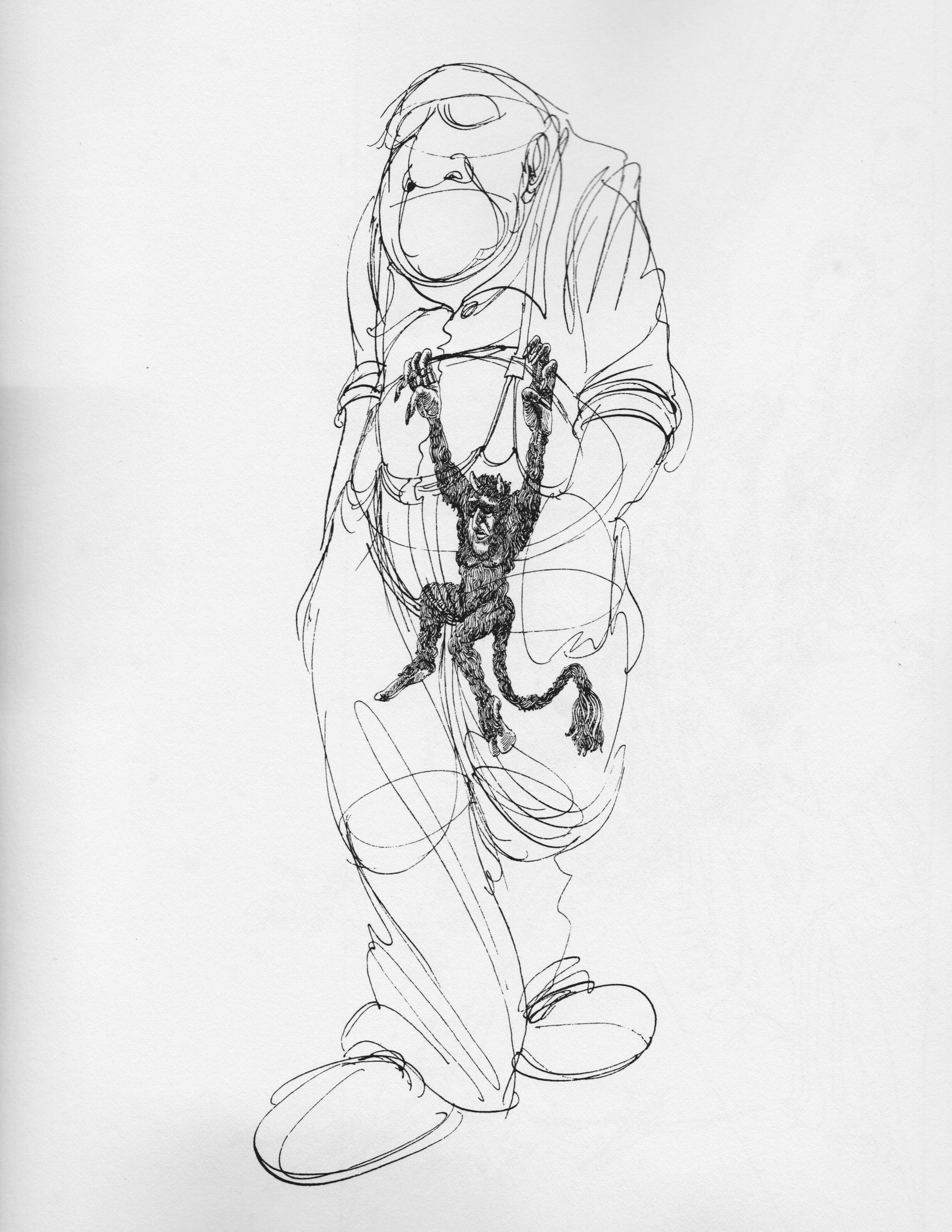
Untitled — Hans-Georg Rauch

img_2026

From HG Rauch’s En Masse (Collier, 1975).

A murder of the joyful young day | Nathaniel Hawthorne’s journal entry for April 19th, 1840

April 19th.–. . . What a beautiful day was yesterday! My spirit rebelled against being confined in my darksome dungeon at the Custom House. It seemed a sin,–a murder of the joyful young day,–a quenching of the sunshine. Nevertheless, there I was kept a prisoner till it was too late to fling myself on a gentle wind, and be blown away into the country. . . . When I shall be again free, I will enjoy all things with the fresh simplicity of a child of five years old. I shall grow young again, made all over anew. I will go forth and stand in a summer shower, and all the worldly dust that has collected on me shall be washed away at once, and my heart will be like a bank of fresh flowers for the weary to rest upon. . . .

6 P.M.–I went out to walk about an hour ago, and found it very pleasant, though there was a somewhat cool wind. I went round and across the Common, and stood on the highest point of it, where I could see miles and miles into the country. Blessed be God for this green tract, and the view which it affords, whereby we poor citizens may be put in mind, sometimes, that all his earth is not composed of blocks of brick houses, and of stone or wooden pavements. Blessed be God for the sky, too, though the smoke of the city may somewhat change its aspect,–but still it is better than if each street were covered over with a roof. There were a good many people walking on the mall,–mechanics apparently, and shopkeepers’ clerks, with their wives; and boys were rolling on the grass, and I would have liked to lie down and roll too.

From Passages from the American Note-Books. 

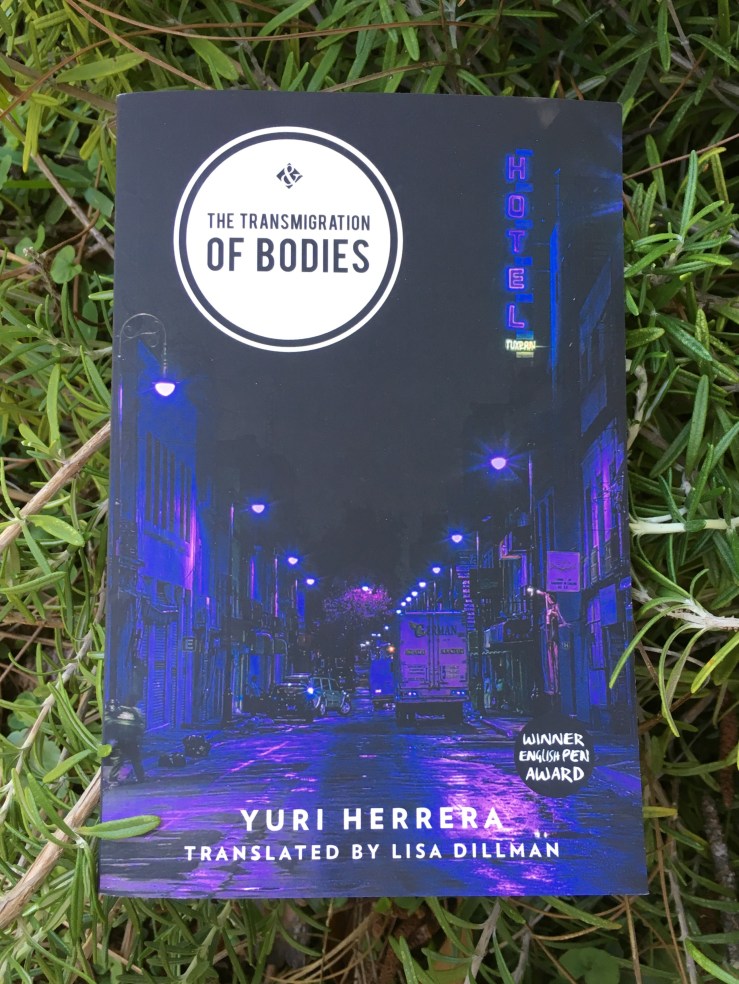
Yuri Herrera’s The Transmigration of Bodies (Book acquired, 4.16.2016; consumed 4.17.2016)

img_2013

I was a big fan of the last novella I read by Yuri Herrera, Signs Preceding the End of the World (also from publisher And Other Stories, and also translated by Lisa Dillman). So I was psyched when his newest offering (in English translation) The Transmigration of Bodies arrived at Biblioklept World Headquarters this weekend. I read the first half of Transmigration yesterday lying in the hammock, just enjoying the hell out of it. Herrera’s style condenses the mythic with the real; Transmigration begins with a surreal plague, flies buzzing over blood—or just some other filth?—and our (anti-)hero, a fixer who goes by The Redeemer. (Everyone in Transmigration gets a hardboiled name: The Dolphin, Three Times Blonde, Unruly, Neeyanderthal. Etc.). Anyway, the book isn’t out until July, so I’ll wait to do a full review until then, but here’s And Other Stories‘ blurb:

A plague has brought death to the city. Two feuding crime families with blood on their hands need our hard-boiled hero, The Redeemer, to broker peace. Both his instincts and the vacant streets warn him to stay indoors, but The Redeemer ventures out into the city’s underbelly to arrange for the exchange of the bodies they hold hostage.

Yuri Herrera’s novel is a response to the violence of contemporary Mexico. With echoes of Romeo and Juliet, Roberto Bolaño and Raymond Chandler, The Transmigration of Bodies is a noirish tragedy and a tribute to those bodies – loved, sanctified, lusted after, and defiled – that violent crime has touched.

Romeo and Juliet, Roberto Bolaño and Raymond Chandler” — yes, absolutely — and I would add Nicolas Winding Refn to that list. Herrera’s vivid neon noir is of a piece with Drive and Only God Forgives, and the grime here recalls his wonderful Pusher trilogy to me. I dig it.

Men Shall Know Nothing of This — Max Ernst

Men Shall Know Nothing of This 1923 by Max Ernst 1891-1976

April comes like an idiot, babbling and strewing flowers (Edna St. Vincent Millay)

spring

The Annunciation (Detail) — Jan van Eyck

annunc3

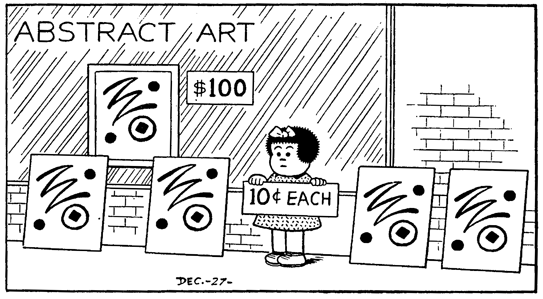
Art dealer (Ernie Bushmiller’s Nancy)

tumblr_lz915f2cmu1qfzuo6o1_1280

Three Books

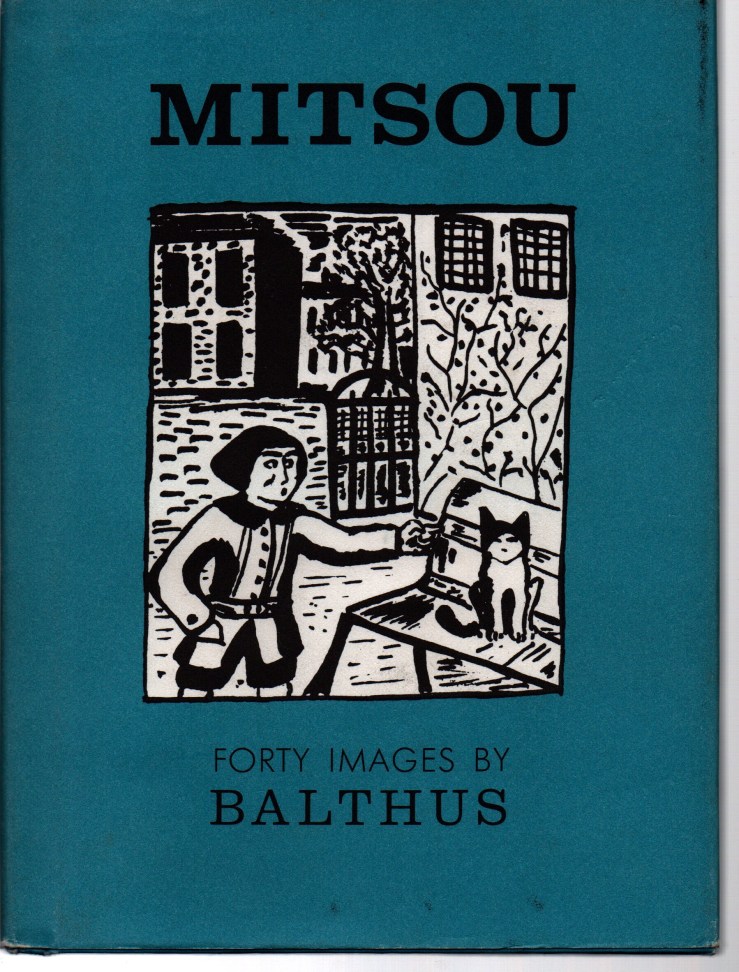
Mitsou by Balthus. Preface by Rainer Maria Rilke (English translation by Richard Miller).  Small first edition hardback published by The Metropolitan Museum of Art, 1984. Design credited to Peter Oldenburg; the cover illustration is by Balthus. Mitsou is Balthus’s story of loving (and losing) his titular pet cat. He was thirteen when he composed the story in 40 ink drawings (the drawings resemble woodblock prints, but aren’t). He gave the illustrations to his mother’s lover, Rainer Maria Rilke, who got them published. My wife gave me this book as a gift before we were married, and I love it. It’s sad.

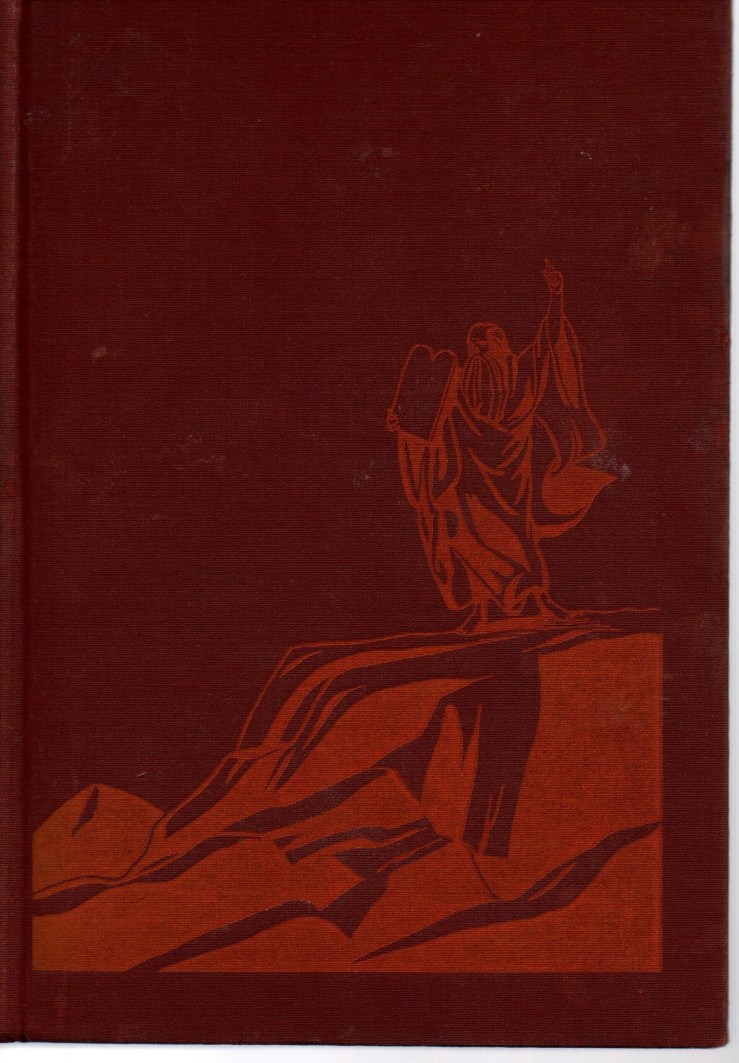
Moses, Man of the Mountain by Zora Neale Hurston. First edition hardback by J.B. Lippincott, 1939. No illustrator or designer credited, by my edition is missing the original jacket. A retelling of the Exodus story.

 Man after Man by Dougal Dixon with illustrations by Philip Hood. First edition hardback from St. Martin’s Press, 1990. Book design by Ben Cracknell; cover art by Philip Hood. It’s Hood’s illustrations that make Dixon’s “future anthropology” of the human race so fascinating. A discursive sci-fi novel of sorts, posing as a textbook.
If You See Something, Say Something — David Lyle

image_2_lg

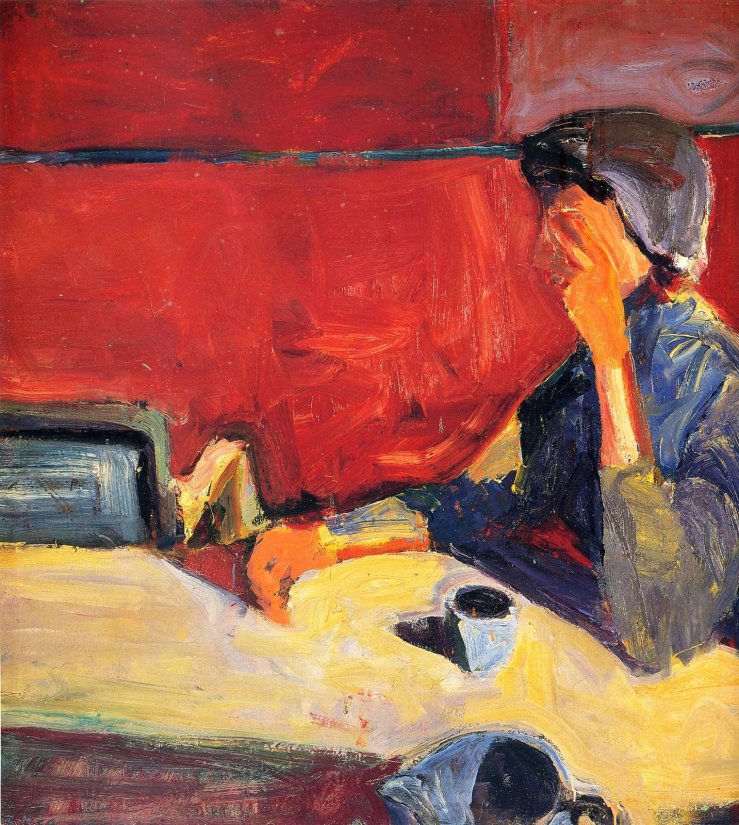
Woman at Table in Strong Light –Richard Diebenkorn

art405

“Small Oak Place” — W.S. Merwin

merwin

The Annunciation (Detail) — Jan van Eyck

annunc2

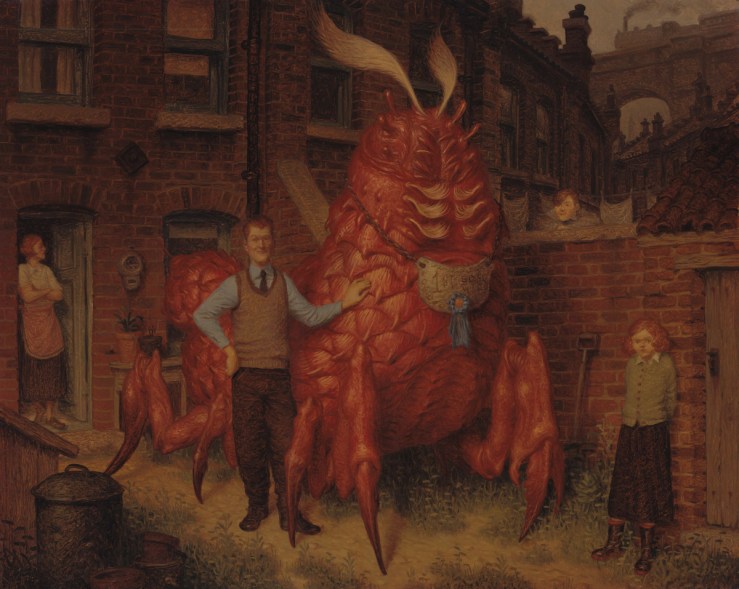
Pride of Northumberland — Peter Ferguson

tumblr_nrgk85szdc1sp51pio6_1280

Beckett directs Beckett

The Annunciation (Detail) — Jan van Eyck

annunciation1

Reasons I didn’t read your novel

  1. The first sentence is not compelling.
  2. Neither are the second, third, or fourth sentences.
  3. Nor the fifth.
  4. (I’m sure the later sentences are sterling, stunning stuff, but I’m sorry, I’m sorry, those earlier efforts couldn’t propel me onward).
  5. Those blurbs: So thickly pasted in glowing praise is your novel that its spine I dare not crack.
  6. Swarming with spiders. Scores of mean spiders. A horde, exploding from your novel’s pages.
  7. Too long.
  8. Your novel is part of a trilogy.
  9. Your novel is basically a fan fiction of a nineteenth-century literary novel.
  10. Your novel is basically a fan fiction of a twentieth-century literary novel.
  11. Your novel-memoir-thing is basically a blog.
  12. All the ghosts in your novel are metaphors.
  13. Ceaseless cyborg sex scenes.
  14. Four chapters in, my only thought is “I’ve read this novel before.”
  15. Your novel is in French.
  16. Your novel is too good and I am too stupid.
  17. Your novel is morally instructive.
  18. Printed in pink ink.
  19. I left it on a plane.
  20. Your novel is upside down.
  21. All of your characters have quirky hobbies; this I cannot abide.
  22. Oh cool, a stranger comes to town?
  23. Every verb attributing speech to a character is modified by an adverb.
  24. Too short.
  25. Too few swamps.
  26. That cover!
  27. Your novel is overtly engaged in social issues.
  28. Your novel is about baseball.
  29. Your novel is “erotic.”
  30. Your novel is extraordinarily well behaved.
  31. Your novel’s extended metaphor is too obvious.
  32. Written on rope.
  33. You are a conceptual poet with bad ideas and boring books.
  34. You had me at Rags to Riches—but back to Rags again?! Not this time.
  35. Exposition!
  36. Not enough cyborg sex.
  37. Your novel is a Word doc.
  38. Your novel is part of a tetralogy.
  39. Your novel was so goddamn excellent that it made my right eye twitch. As if it, my eye, were doing some manic jig. Then, my other eye—the left one—well, your novel was just so literary that that eye got to twitching something awful as well. By the second chapter, my eyes were fairly vibrating, and a clear but steady stream of snot was leaking from my nose. By the fourth chapter, I could no longer feel my lips, and by the beginning of chapter five, I was literally insensate. It took me months to recover, aided by family and friends alike. I will try your novel again when I am stronger.
  40. I drank too much.
  41. Your novel is filled with pressed flowers which I’d rather not disturb.
  42. Deader, better novelists await.
  43. 600 pages of a woman brushing her teeth.
  44. The main character is too likable.
  45. Your novel’s extended metaphor is too oblique.
  46. Your novel’s central character worries about poetry all the time. Poetry!
  47. The batteries died.
  48. No pictures.
  49. I’m too cynical.
  50. Your novel was a brightly-colored bunch of helium balloons—beautiful, sure—but I gave them to my daughter and she—almost immediately—surrendered the string to which they were tethered. Your novel is in heaven now, where it certainly belongs.
  51. Your novel is about a math problem.
  52. Mimesis, ugh.
  53. I gave it to a friend I don’t like.
  54. Not enough chainsaws.
  55. Your novel kept sending me to look up obscure references on Wikipedia, and the Wikipedia pages were more intriguing.
  56. Oh cool, you backpacked through Europe?
  57. Unnecessary end-notes.
  58. You keep emphasizing how brilliant and intelligent and talented this character is, yet nothing in the prose harnesses that brilliant intelligent talent.
  59. Your novel is extraordinarily well meaning.
  60. Your novel is carved into the bark of a very tall tree atop a very tall mountain which I am too physically weak to climb.
  61. Your novel is in Italian.
  62. Your novel is too bossy.
  63. Your central character is invisible, and yet no one is having any fun.
  64. You’ve mistaken “imagination” for “research.”
  65. Too much furniture.
  66. Your novel is just the May 1968 issue of Playboy with your name written on the cover in Sharpie. (Okay, I did read your novel).
  67. Magical realism, eh?
  68. You are a brilliant young novelist, perhaps, but you’ve forgotten to read so many of the brilliant young novelists who came before you.
  69. Your novel is made of poison, which is admittedly appealing, but which I fear will kill me.
  70. Your novel’s characters repeatedly reference other, much better novels (by much deader writers), reminding me that those novels exist.
  71. Pages and pages and pages of weather.
  72. I tucked it under the wheel well of a stranger’s automobile.
  73. All the Southern characters’ speech is rendered in bad phonetic transcription.
  74. Did you buy these epigraphs in bulk?
  75. Your novel is very clever and very unfunny.
  76. Not lurid enough.
  77. I left it out in the rain. It turned to pulp and became a temporary home to small suburban animals—do you find some measure of joy in that? No?
  78. Oh cool, you backpacked across Southeast Asia?
  79. Your novel is cursed.
  80. Your novel is a sustained argument against breakfast, and I can’t get down with that.
  81. Hero’s journey, eh?
  82. The first paragraph is too good. I would only be disappointed by anything that came after.
  83. I like my dirty realism much dirtier.
  84. Your novel was actually a salad, so I ate it.
  85. Having every other character be a Christ figure sounds like a cool idea, but it isn’t.
  86. No dial tone.
  87. Your novel is in Japanese.
  88. Your characters earnestly cite long passages from philosophy.
  89. I’m lazy.
  90. Not enough orcs.
  91. Your novel seems to mistake postmodernism, which is a description, for a prescription.
  92. Your novel is “like X on Y times Z.”
  93. Your “literary novel” fetishizes “genre tropes.”
  94. I didn’t drink enough.
  95. I’m just jealous.
  96. The prose is too dazzling.
  97. Look, we’ve all read Kafka, we get it.
  98. Time is limited, life is short, ashes ashes we all fall etc.
  99. I’ll wait for the movie.