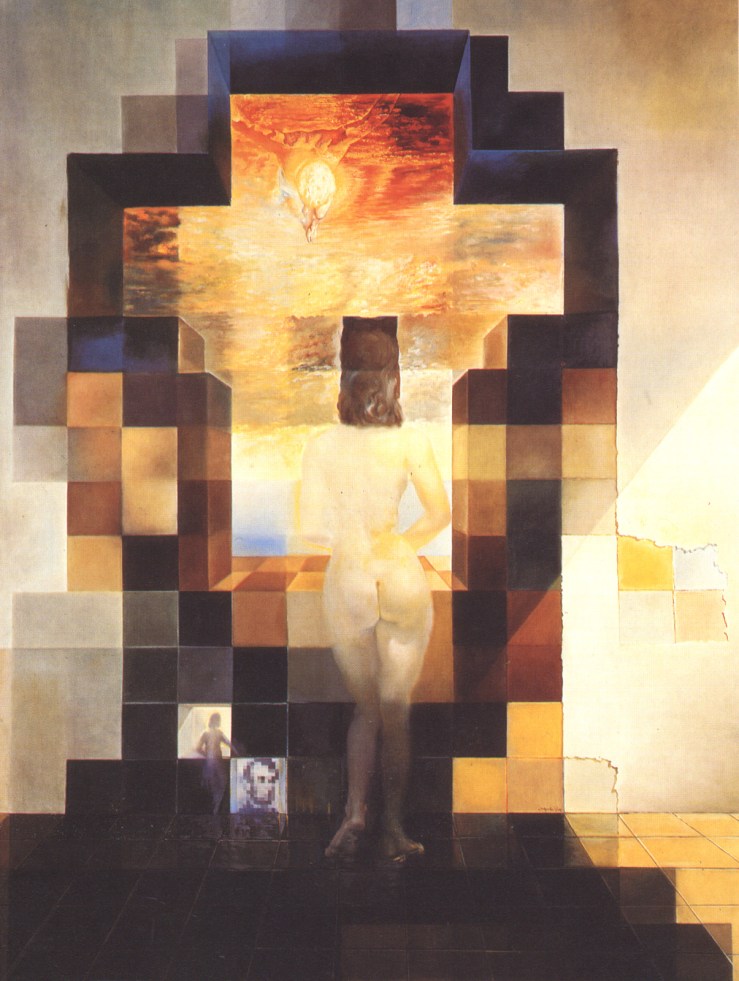
Gala Contemplating the Mediterranean Sea Which at Eighteen Metres Becomes the Portrait of Abraham Lincoln — Salvador Dali

gala-contemplating-the-mediterranean-sea-which-at-eighteen-metres-becomes-the-portrait-of-1976

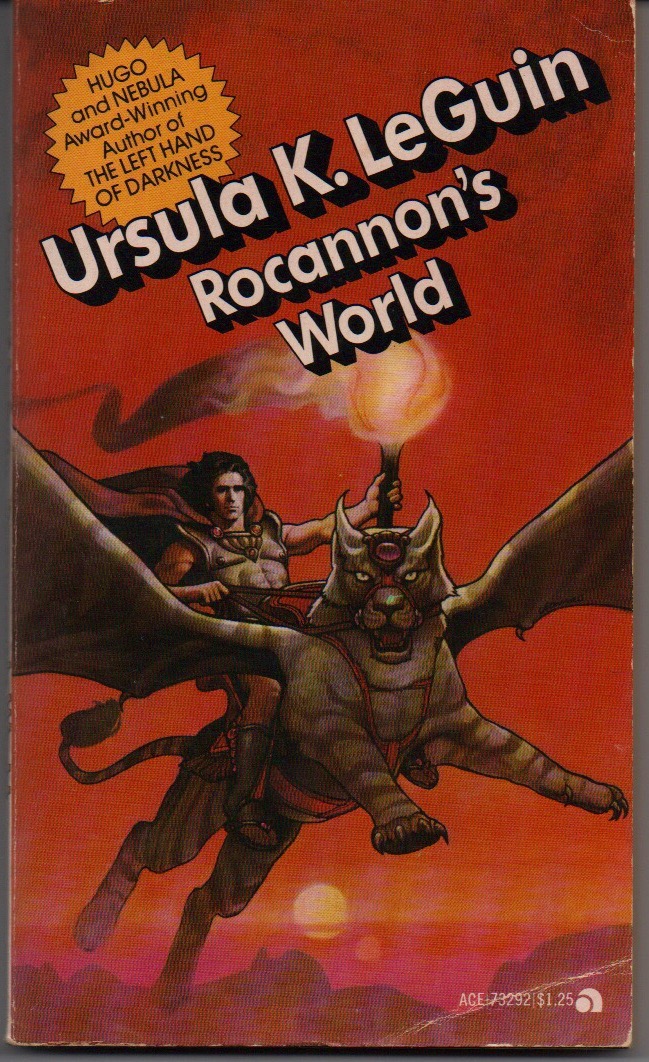
A conversation on Ursula K. Le Guin’s first novel, Rocannon’s World

After I posted a review on this site of Ursula K. Le Guin’s novel The Lathe of Heaven, the novelist Adam Novy recommended that I check out her under-read first novel, Rocannon’s World. So I did. Our email exchanges about the book developed over a few weeks (during which time I ended up reading all of Le Guin’s so-called Hainish novels), and Adam’s analysis of the novel is, I think, especially perceptive. An edit of our conversation is below.

Adam Novy’s novel The Avian Gospels is fantastic. Buy it from Hobart.

img_1534

Edwin Turner: Thanks for suggesting Rocannon’s World, Adam. I’m not really sure how I missed it in my first few forays into Le Guin—when I was younger it might not have been in my school library—but I’m glad I read it. Very vivid stuff. You told me it was your favorite Le Guin. Why?

Adam Novy: There are many reasons why I love Rocannon’s World. The beautiful and exact descriptive writing, and the syntax. Le Guin can really sing. The sadness of the heroes for their vanished civilizations. The way so many passages evoke the feel of hiking. The flying cats. The incomparable ending.

But it’s the way Le Guin explores the idea of agency sets the book apart for me. The protagonists, Semley and Rocannon, take decisive action they believe in, which sets in motion plots that spiral out of control and annihilate their intentions. Rocannon and Semley end up being massive historical figures, yet also tiny cogs in galaxy-sized machines. This comparison of the massive and the tiny is not a calculated stalemate—not the cultivated balance I think a lot of writers feel we must produce these days, as if our calculations will be checked and we might get partial credit—but an ambivalence that’s immune to human desire or even narrative. It’s one of the things I love about Le Guin. Her idea of a human being’s influence in the world is like the ancients’.

This is fascinating to me in a lot of ways, first at the level of plot. How much should a character affect the world around her? Too much power can seem unserious and thrillery, like a fantasy, like competence porn. (A possible new definition of literary fiction is “incompetence porn.”)  Le Guin is just so elegant with this. Semley and Rocannon may be important figures in their communities—Semley is a kind of Duchess and Rocannon is a government anthropologist with administrative dominion over half the galaxy—and yet, by merely performing their own social roles, they ruin everything they care about, including the context in which their identities exist. Le Guin’s formula is magical: a central figure in a community commits a deliberate act, and the consequences are massive, unforeseen, accidental, and diminish this central figure to almost nothing. And yet, despite their total disempowerment, their influence endures in major ways. But even this is misconstrued by people in the future, who tell the history. There is no linear connection between intention and result. The reader feels the ages passing every time Rocannon takes a step.

This leads to the other aspect of the plot I really love, which is political. Rocannon is a bureaucrat in a colonial hegemony, and by honestly yet patronizingly trying to protect the subjects he administrates, he initiates a plot that will destroy them, and himself. He’s a kind of blinkered, well-meaning liberal who does not know what the hell he’s really doing, or how power works, since the force that does the destroying—an anti-government entity called “the enemy”—seems to emanate from the government Rocannon works for. In the end, his people simply don’t belong on the planet, which he only learns when he, too, is a refugee.

ET: But there’s also the sense that Rocannon integrates into the planet—he marries into the Angyar at the end, although we don’t really hear that story. It’s an epilogue that fulfills the legend-structure of the tale. So, on one hand Le Guin’s written this story that’s highly ironic—especially in the ironic title, Rocannon’s World—a title that points to the novel’s themes of colonialism. On the other hand, there’s a sense of discovery and exploration—a kind of High Adventure narrative à la Verne, where our viewpoint character ascends, peers down over the planet from his flying machine (in this case a winged cat).

And then Rocannon sort of achieves his Romantic quest of attaining Semley, or rather the idea of Semley—the exotic, the beautiful, the aristocratic—by marrying into her ancestral chain, and becoming a sort of Duke. This is all very much Fairy Tale stuff, Fantasy stuff. And Le Guin isn’t really synthesizing fantasy tropes with sci-fi in Rocannon’s World. It’s more like she’s tapping into a deeper, mythic vein—so on some level, I think that the novel is really about storytelling itself. There’s something oral and episodic about it, with its riffs on Eurydice and winged men and Valhalla. I reread The Dispossessed after Rocannon’s World. The Dispossessed strikes me as more deliberately structured than Rocannon’s World—more dialectical, more focused, but also centered much more on dialogue-monologue (similar to The Lathe of Heaven). Rocannon’s World is literally more fantastical than The Dispossessed. Do you think that Le Guin’s first novel has been overlooked as a book of ideas? Continue reading “A conversation on Ursula K. Le Guin’s first novel, Rocannon’s World”

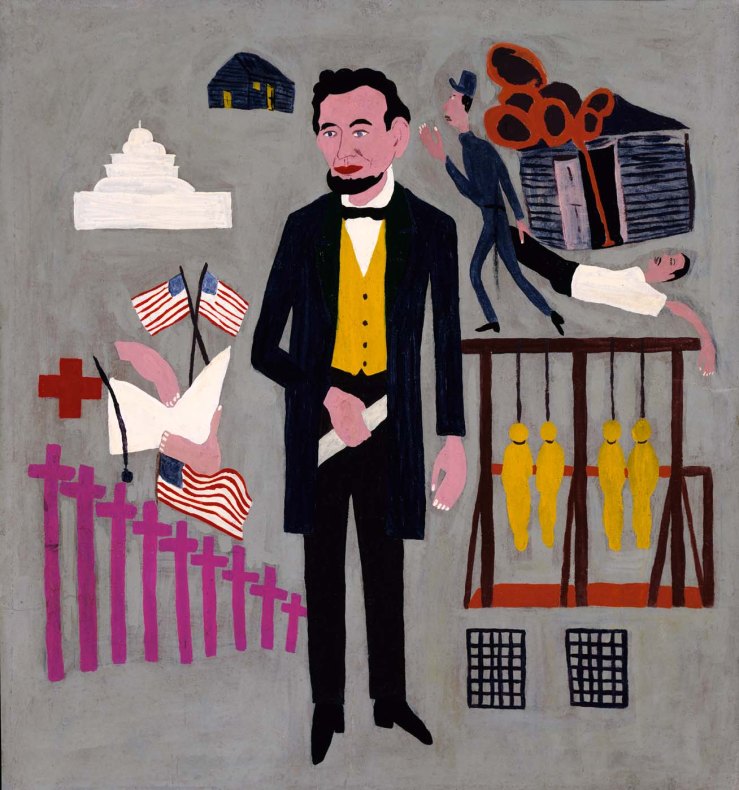
Abraham Lincoln — William H. Johnson

abraham-lincoln-1945

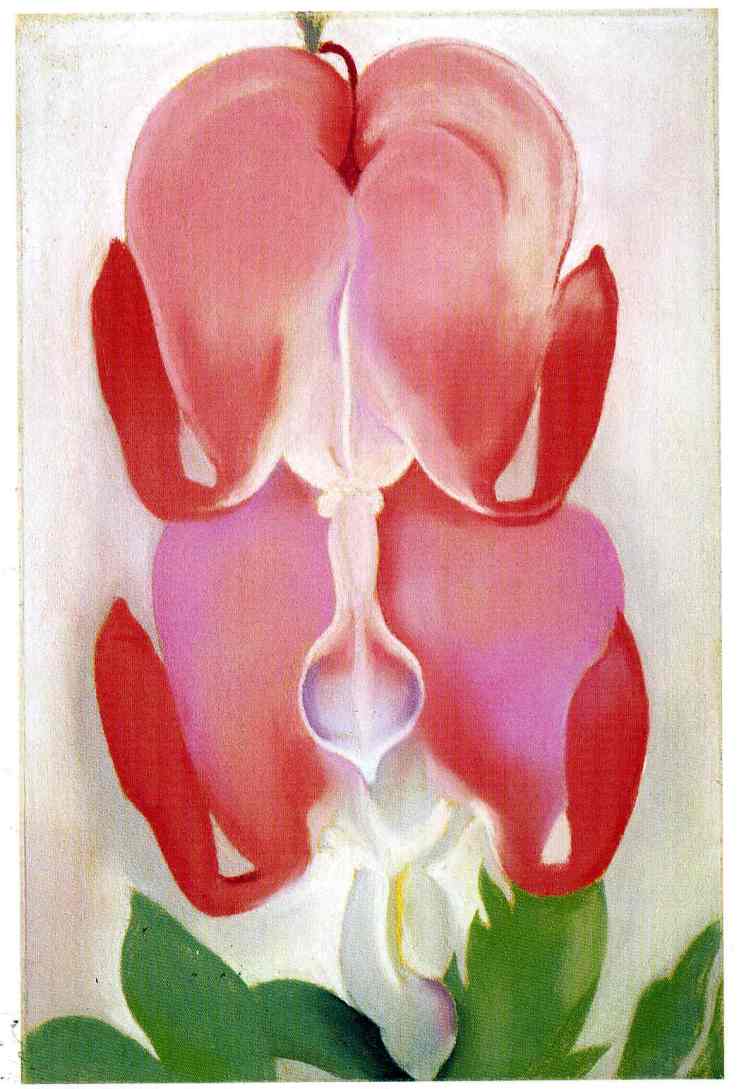
Bleeding Heart — Georgia O’Keeffe

bleeding-heart

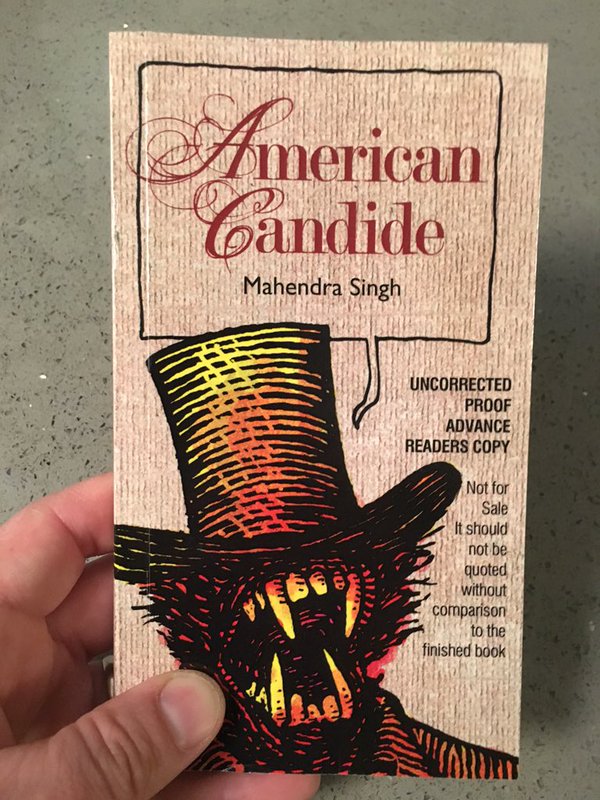
American Candide (Book acquired and consumed this past week, like early-mid February 2016)

capcoafxiaak7r6

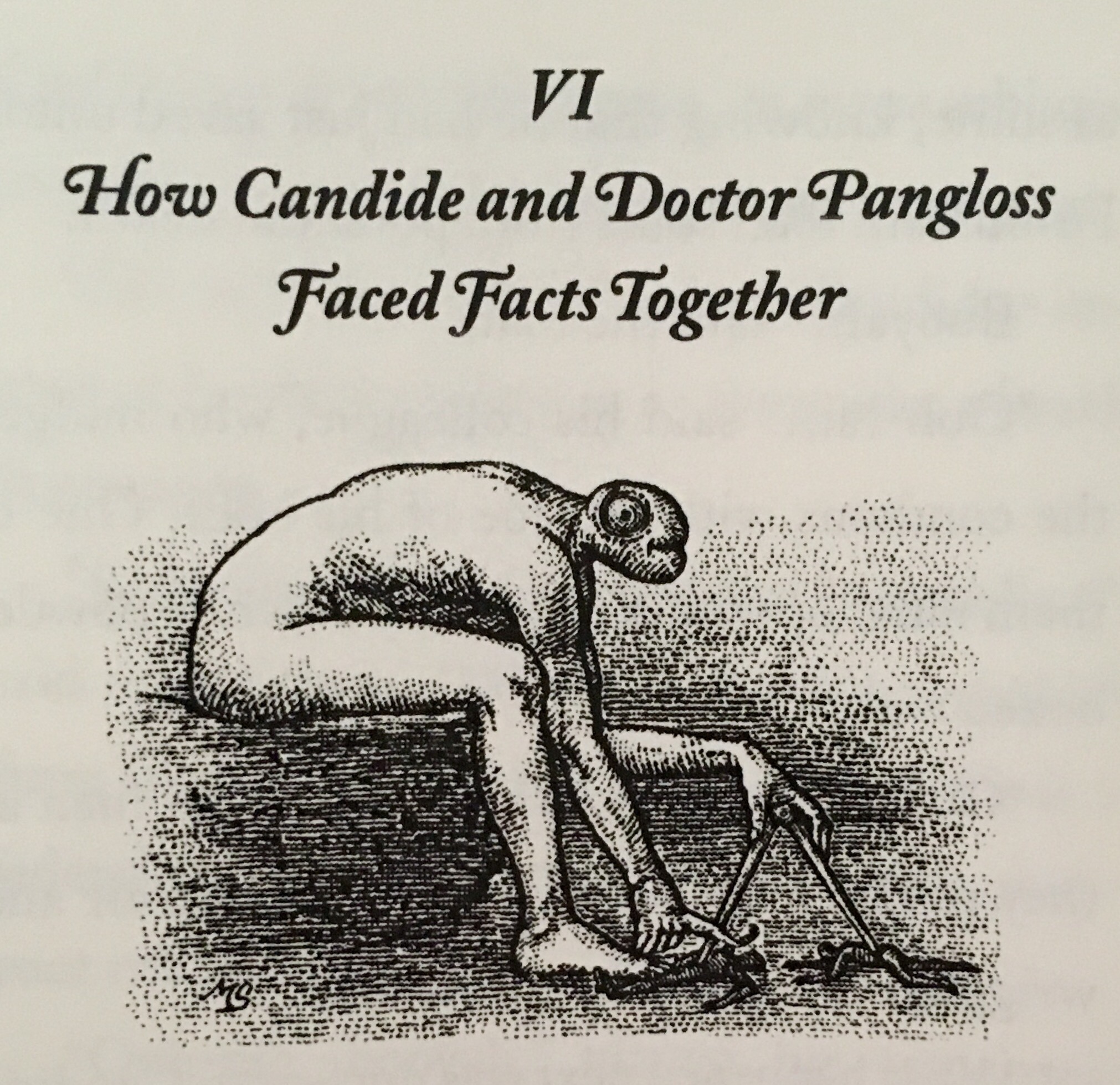
So I ate this one up: Mahendra Singh’s American Candide is terribly funny, except when you stop and think about the satire and why the satire works, and you think, Aw hell, this is terribly sad. I consumed the thing in more or less three sittings. There’s a cliché, right—Better than it has any right to be—I mean, this thing could fall flat on its face, this transposition of Voltaire’s Candide to 21st century America (excuse me, Freedonia)—but Singh’s prose is adroitly devastating; like Candide, he offers a subject, a verb, and then pivots the object or next clause in some darkly satirical direction. Fun fun fun smart smart smart. My only quibble is that I wish Singh’s marvelous illustrations (with nods to Gustave Dore and William Blake, among others, I’m sure) we’re reproduced on full pages.

Back cover blurb:

Voltaire’s most famous literary creation, Candide, is now rebooted for the better-than-best of all possible worlds, 21st-century America. The globe-trotting misadventures of American Candide and his wingnut tutor, Dr. Pangloss, his totally hot BBW Cunegonde plus sundry suicide bombers, illuminati global warmers, insurance cults, sex-crazed illegal aliens and even the Senate Sub-Committee on Homeland Furnishings provides sufficient belly laughs to make exile, destitution, rape, murder and torture into something that happens to other, mostly foreign people, thank God.

 From the jungle slums of darkest Africa to the lily-white McMansions of American suburbia, the human condition wreaks havoc upon Candide and his friends as they search for an American Dream being held against its will in an undisclosed location. College-boy sissies will call it a Juvenalian satire upon America’s penchant for mindless optimism and casual racism but Candide says it’s really ‘rage against the rage, Voltaire-dude!’

Three Books

img_1510


Pierre, or The Ambiguities by Herman Melville. First edition hardback, Harper Collins, 1995. Color illustrations, many blatantly erotic, including the cover, by Maurice Sendak (in the mood of Billy Blake). Design by Cynthia Krupat. The editor Hershel Parker has reconstructed the original, shorter version of Pierre that Melville sabotaged (according to Parker) by adding convoluted subplots (in revenge against the Harper brothers who did not wish to publish the book). This is the so-called “Kraken Edition”; the title comes from a letter Melville sent to Hawthorne. If Moby-Dick was the whale, Pierre was his giant monstrous squid.


img_1512

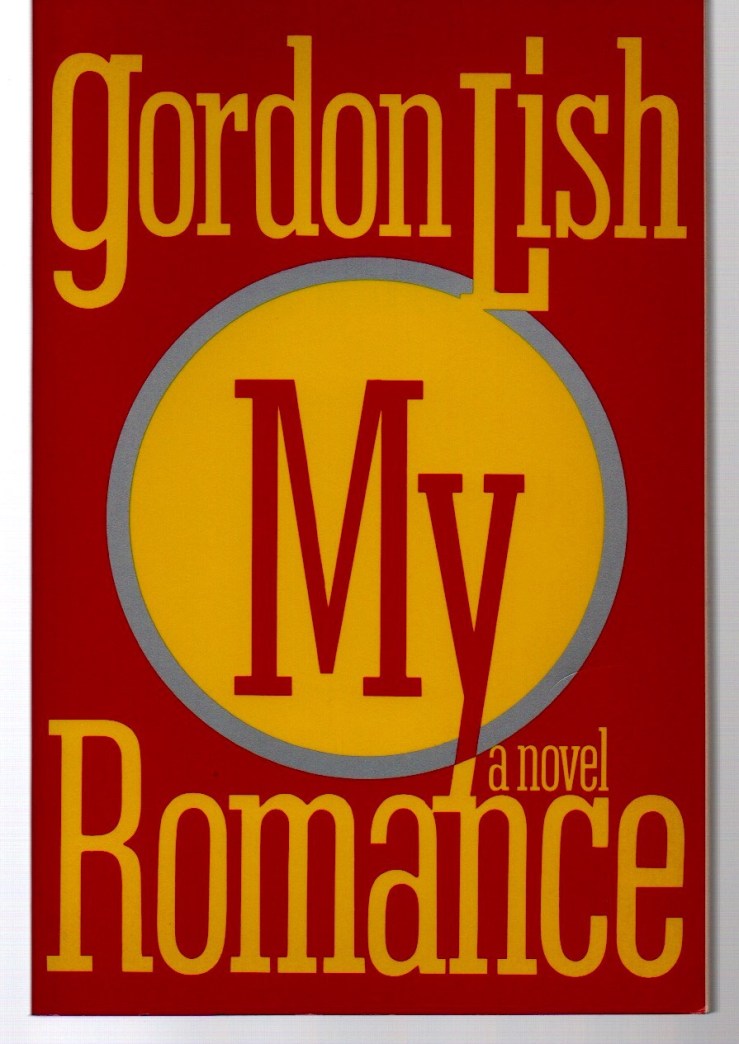
My Romance by Gordon Lish. 1993 Norton trade paperback. Cover design by R.D. Scudellari. There are two paragraphs in this 142-page novel; the first starts on page 1 and ends on page 142; the second begins and ends on page 142 and is all of one sentence.

img_1511


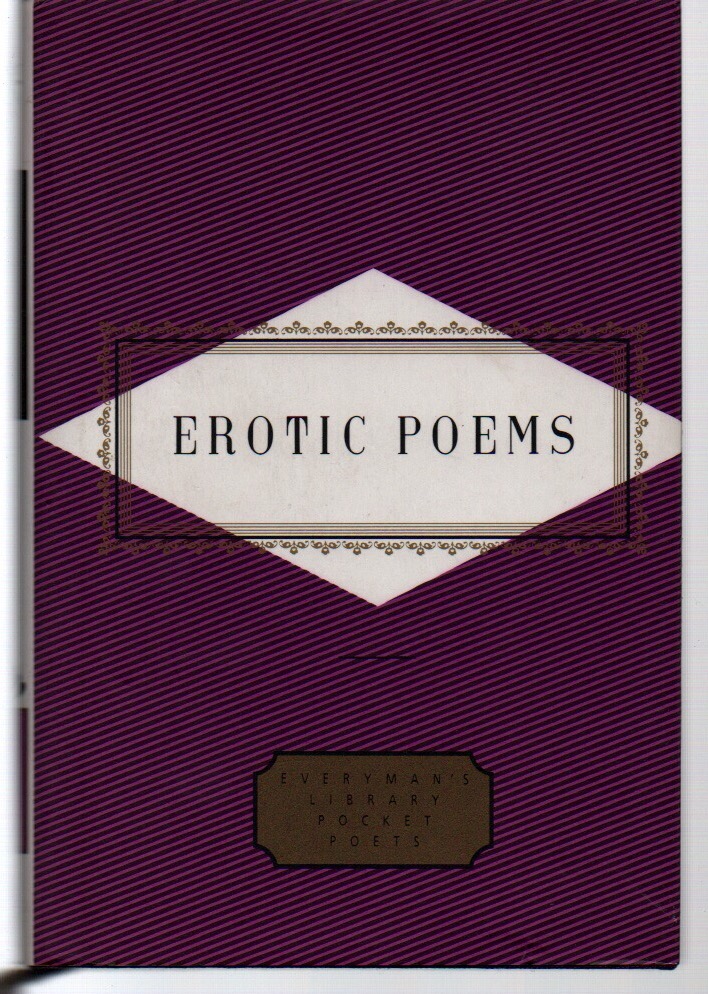
Erotic Poems, an Everyman’s Library Pocket Poets collection. Borzoi/Knopf, tiny hardback 1994. Jacket design by Barbara de Wilde. Happy Valentine’s.

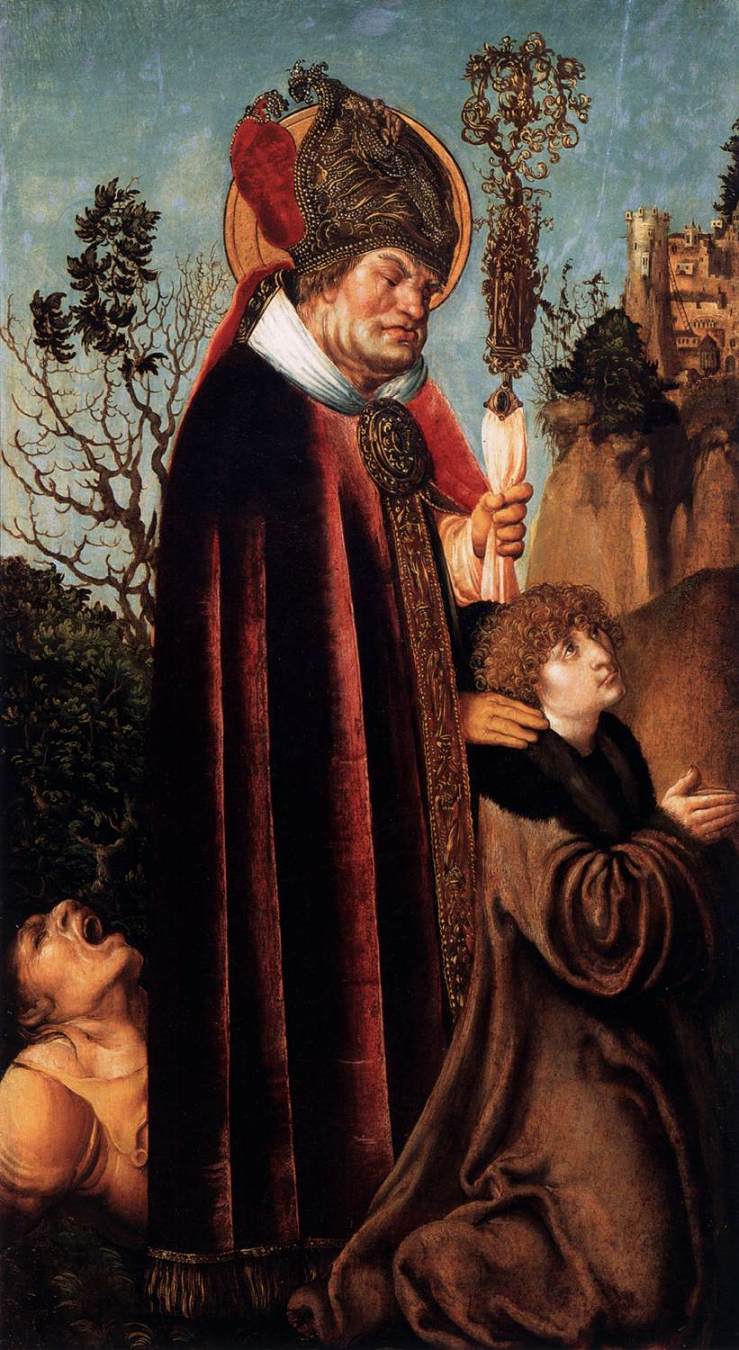
St. Valentine with a Donor — Lucas Cranach the Elder

01altar

Another trailer for that High-Rise film

Not sure about this one…but I love the Ballard novel, so…

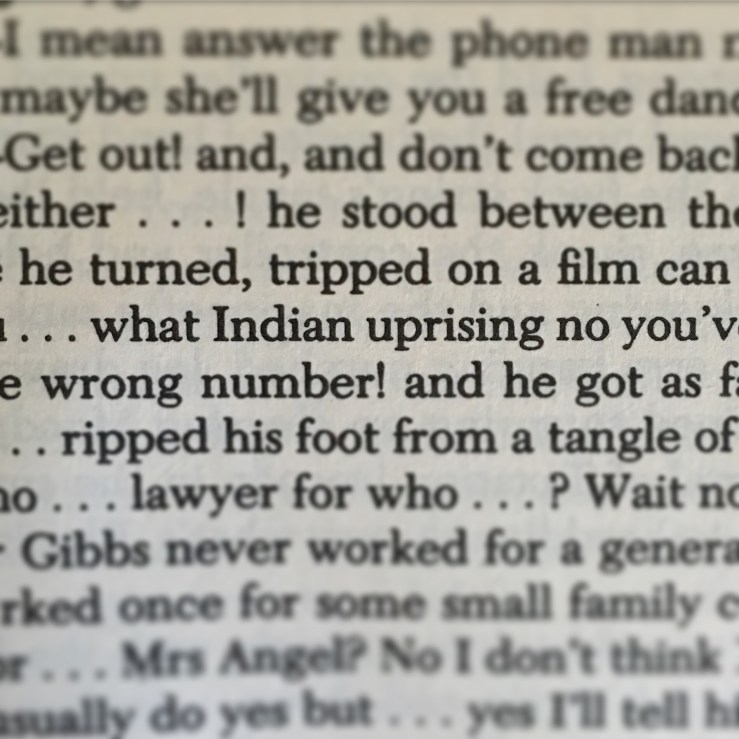
Indian uprising (William Gaddis’s J R)

img_1504

From page 617 of my Penguin edition of William Gaddis’s novel J R, a nod (I think) to Donald Barthelme’s short story “The Indian Uprising.”

Perseus Rescuing Andromeda (detail) — Piero di Cosimo

perseus10

“Giant” — Thomas Bernhard

img_1487-1

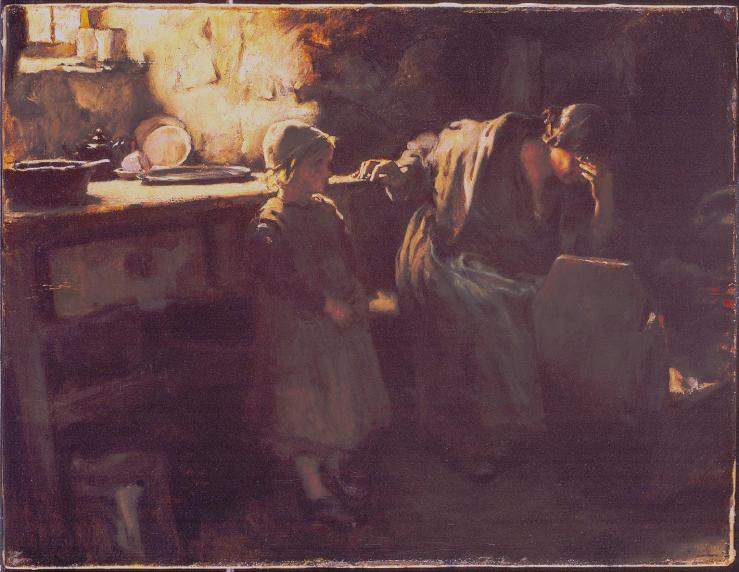
Hushed — Frank Holl

Hushed 1877 by Frank Holl 1845-1888

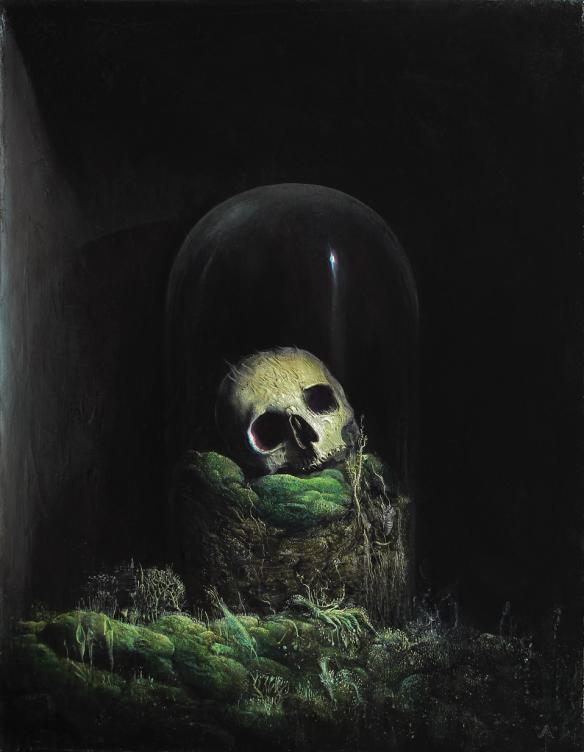
Vanitas Newtoniana — Agostino Arrivabene

resize (3)

Perseus Rescuing Andromeda (detail) — Piero di Cosimo

perseus11

“The Difficulty of Crossing a Field,” a very short tale by Ambrose Bierce

“The Difficulty of Crossing a Field”

by

Ambrose Bierce

from Present at a Hanging and Other Ghost Stories


One morning in July, 1854, a planter named Williamson, living six miles from Selma, Alabama, was sitting with his wife and a child on the veranda of his dwelling.  Immediately in front of the house was a lawn, perhaps fifty yards in extent between the house and public road, or, as it was called, the “pike.”  Beyond this road lay a close-cropped pasture of some ten acres, level and without a tree, rock, or any natural or artificial object on its surface.  At the time there was not even a domestic animal in the field.  In another field, beyond the pasture, a dozen slaves were at work under an overseer.

Throwing away the stump of a cigar, the planter rose, saying: “I forgot to tell Andrew about those horses.”  Andrew was the overseer.

Williamson strolled leisurely down the gravel walk, plucking a flower as he went, passed across the road and into the pasture, pausing a moment as he closed the gate leading into it, to greet a passing neighbor, Armour Wren, who lived on an adjoining plantation.  Mr. Wren was in an open carriage with his son James, a lad of thirteen.  When he had driven some two hundred yards from the point of meeting, Mr. Wren said to his son: “I forgot to tell Mr. Williamson about those horses.”

Mr. Wren had sold to Mr. Williamson some horses, which were to have been sent for that day, but for some reason not now remembered it would be inconvenient to deliver them until the morrow.  The coachman was directed to drive back, and as the vehicle turned Williamson was seen by all three, walking leisurely across the pasture.  At that moment one of the coach horses stumbled and came near falling.  It had no more than fairly recovered itself when James Wren cried: “Why, father, what has become of Mr. Williamson?”

It is not the purpose of this narrative to answer that question.

Mr. Wren’s strange account of the matter, given under oath in the course of legal proceedings relating to the Williamson estate, here follows:

“My son’s exclamation caused me to look toward the spot where I had seen the deceased [sic] an instant before, but he was not there, nor was he anywhere visible.  I cannot say that at the moment I was greatly startled, or realized the gravity of the occurrence, though I thought it singular.  My son, however, was greatly astonished and kept repeating his question in different forms until we arrived at the gate.  My black boy Sam was similarly affected, even in a greater degree, but I reckon more by my son’s manner than by anything he had himself observed.  [This sentence in the testimony was stricken out.]  As we got out of the carriage at the gate of the field, and while Sam was hanging [sic] the team to the fence, Mrs. Williamson, with her child in her arms and followed by several servants, came running down the walk in great excitement, crying: ‘He is gone, he is gone!  O God! what an awful thing!’ and many other such exclamations, which I do not distinctly recollect.  I got from them the impression that they related to something more – than the mere disappearance of her husband, even if that had occurred before her eyes.  Her manner was wild, but not more so, I think, than was natural under the circumstances.  I have no reason to think she had at that time lost her mind.  I have never since seen nor heard of Mr. Williamson.”

This testimony, as might have been expected, was corroborated in almost every particular by the only other eye-witness (if that is a proper term) – the lad James.  Mrs. Williamson had lost her reason and the servants were, of course, not competent to testify.  The boy James Wren had declared at first that he saw the disappearance, but there is nothing of this in his testimony given in court.  None of the field hands working in the field to which Williamson was going had seen him at all, and the most rigorous search of the entire plantation and adjoining country failed to supply a clew.  The most monstrous and grotesque fictions, originating with the blacks, were current in that part of the State for many years, and probably are to this day; but what has been here related is all that is certainly known of the matter.  The courts decided that Williamson was dead, and his estate was distributed according to law.

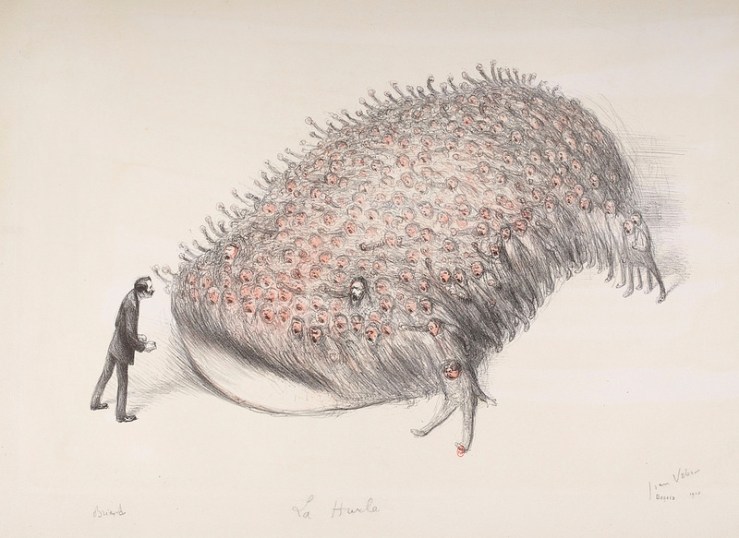
The Howl — Jean Veber

19234680404_c33052824a_c